Category: Japanese History

  • Heian III – Life, Literature, and Ludicrous Eyebrows

    So, in our last two looks at Heian Japan, we discussed the decline of Imperial power in the provinces, as the regional nobility gained control of the military and then economic power, leaving the Imperial court effectively impotent.

    So, what was actually going on at court while the power was slipping away? Well, what usually happens when you have an isolated mini-community of hyper-privileged, completely out of touch, trust fund babies?

    While trust funds obviously didn’t exist in 9th-century Japan, generational wealth absolutely did. The nobility at court was mostly made up of the descendants of the original Yamato families, those who had been the first to come to power in the area around modern Nara.

    After the capital moved permanently to Heian-kyo, the noble families moved permanently, too. Some of these families had direct connections to the Imperial Family itself (real or fictional), which created a fairly insular community of people who busied themselves with court life at the expense of the rest of the nation.

    We’ve already discussed the consequences of that, so we’re not going to focus too much on military or economic decline today, but needless to say, by the mid to late Heian Period, the court was completely out of touch with what was going on in the provinces, which eventually led to disaster.

    Religion

    Buddhism arrived in Japan in the 7th Century, brought in by Chinese and Korean scholars. Like most things imported at that time, Buddhism was largely just a copy of how things were done in China. However, by the Heian Period, a distinct “Japanese” culture was beginning to develop that had an impact on religion too.

    Two influential sects emerged around this time, Tendai and Shingon. Though founded by monks who had visited China, both branches integrated aspects of traditional Japanese religion into their philosophy. By the mid-Heian period, these sects had become politically influential, particularly the Tendai Sect, based at Mt Hiei, just outside Heian-kyo. There, monks were trained for up to 12 years, with the most promising being retained by the order and others taking up positions in the government, blurring the lines between religious and political power.

    On a cultural level, Buddhism played a role not too dissimilar to that of the Catholic Church in Europe. Fantastic temples were constructed, and art, both in the form of painting and sculpture, flourished, sponsored by courtiers looking to curry favour with the increasingly powerful priesthood.

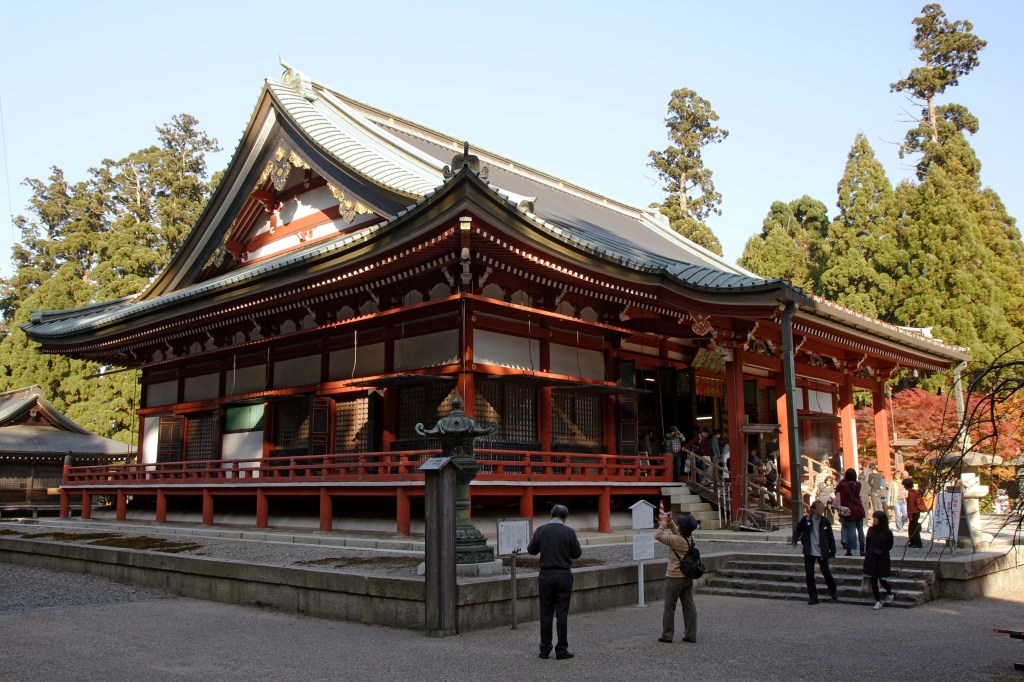
    The Great Lecture Hall at Enryaku-ji, the headquarters of the Tendai Sect. Though this building dates from the 17th Century, it gives some idea of the splendour that the Buddhist sects were capable of.By 663highland – Own work, CC BY 2.5, https://commons.wikimedia.org/w/index.php?curid=8450046

    The Imperial Family and the aristocracy became tightly linked to the Buddhist Sects, with members of noble families often becoming high-ranking members of religious orders, and in turn, Monks, Priests, and Abbots became influential within the government. It is perhaps unsurprising, then, with the two sides so closely linked, that the temples would often preach in support of the Emperor and the status quo.

    Over time, Buddhist Temples would become powerful political players in their own right, and their close association with the Imperial Court led to the image of Buddhism, or at least the organised Buddhist sects to be the religion of the aristocracy, whilst out in the provinces, more traditional Japanese beliefs held sway, further deepening the divide between the Emperor and his people.

    A Novel Idea

    Prior to the Heian Period, writing had been the preserve of noblemen and educated priests. The complex Chinese symbols (Kanji) took years to learn, and most people didn’t have access to education anyway. That began to change during this period. Firstly, the rise of wealthy, and more importantly, large temples, increased the number of people (men) with access to learning. Though still limited, these men would become a key part of the Imperial Bureaucracy.

    The real trailblazers of Heian Literature weren’t priests and nobles, however, but women. As anyone who has ever tried to learn Japanese can tell you, Kanji are awful. There’s about six million of them, and they all have different pronunciations depend on context, mood, or the position of the stars, or something. The point is, Kanji are hard to learn now, and they were hard to learn back then, too, more so given how few people even had access to a textbook, let alone DuoLingo.

    Fortunately, Kanji aren’t the only option when it comes to writing Japanese. Early on, Japanese scholars developed kana, a native script that made it easier to translate certain things into Japanese. As we’ve said, Kanji are hard enough to learn even with dedicated study, and given that women didn’t have dedicated study, the kana (divided into Hiragana and Katakana) were adopted instead.

    Like most places before the 20th century, literacy in Heian Japan was extremely limited. Whilst this obviously meant there wasn’t a wide audience for poems and stories and such, it did lead to a highly specialised type of ‘courtly’ writing. Poetry, in particular, was a mark of good breeding, as was the quality of your handwriting.

    This probably shouldn’t come as a surprise to us; after all, how often do we see politicians and celebrities mocked for their poor spelling and grammar? And don’t get me started on handwriting. Mine is ok now, in my mid-30s, but you’d have needed a scholar of ancient languages to decipher my writing when I was at school.

    I digress; poetry and handwriting were important, is the point.

    Poetry was probably the most common form of literature at the time. Poems would be written for all sorts of occasions, and it was said that a person’s poetry skills could make or break their reputation, which seems a bit extreme, but there you are.

    Poetry was not the only form of literature available to the Heian Court. Stories in a form we would recognise as novels also appeared at this time, perhaps most famously the Tale of Genji, written sometime in the early 11th Century and attributed to Murasaki Shikibu (not her real name), a lady-in-waiting at the court.

    She deserves a post of her own, but the short version is that she is generally accepted as the author of the story, although some scholars also suggest that the last ten chapters or so were written by someone else, possibly her daughter.

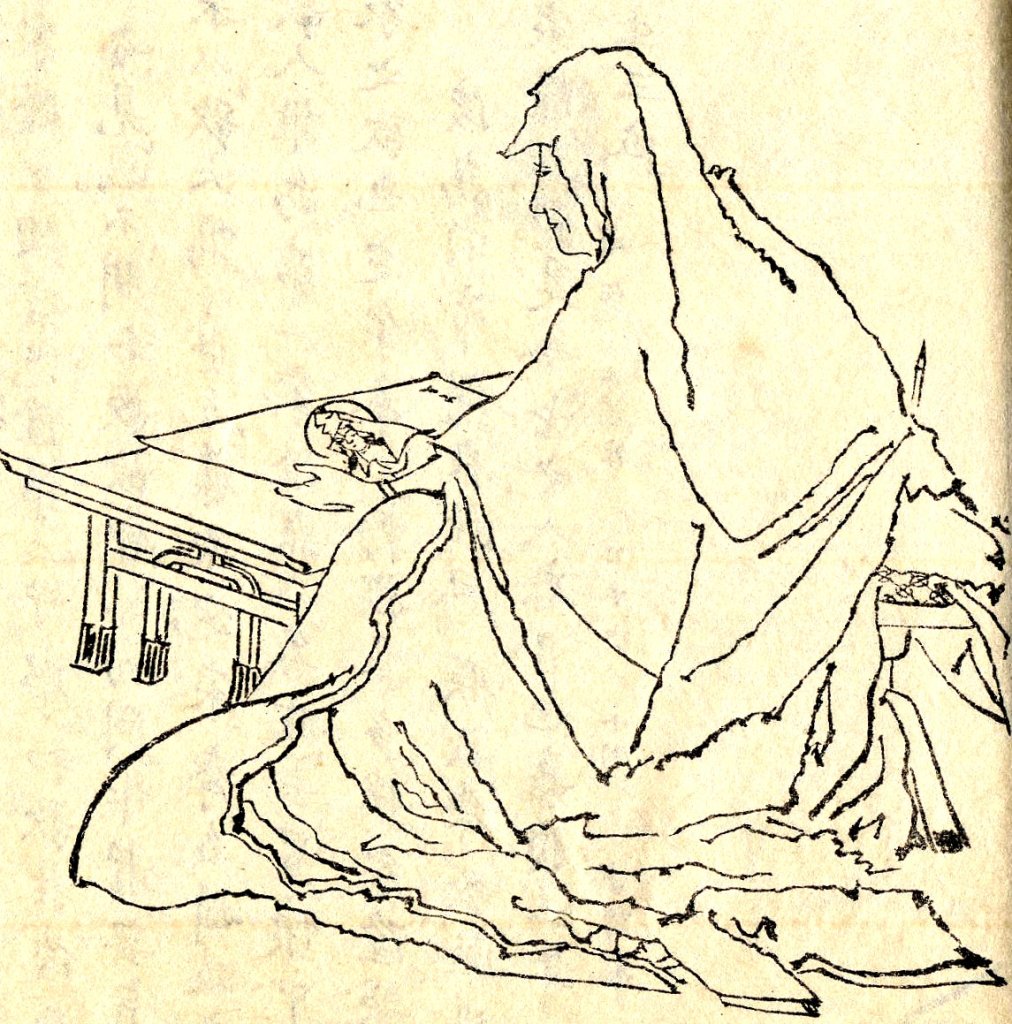
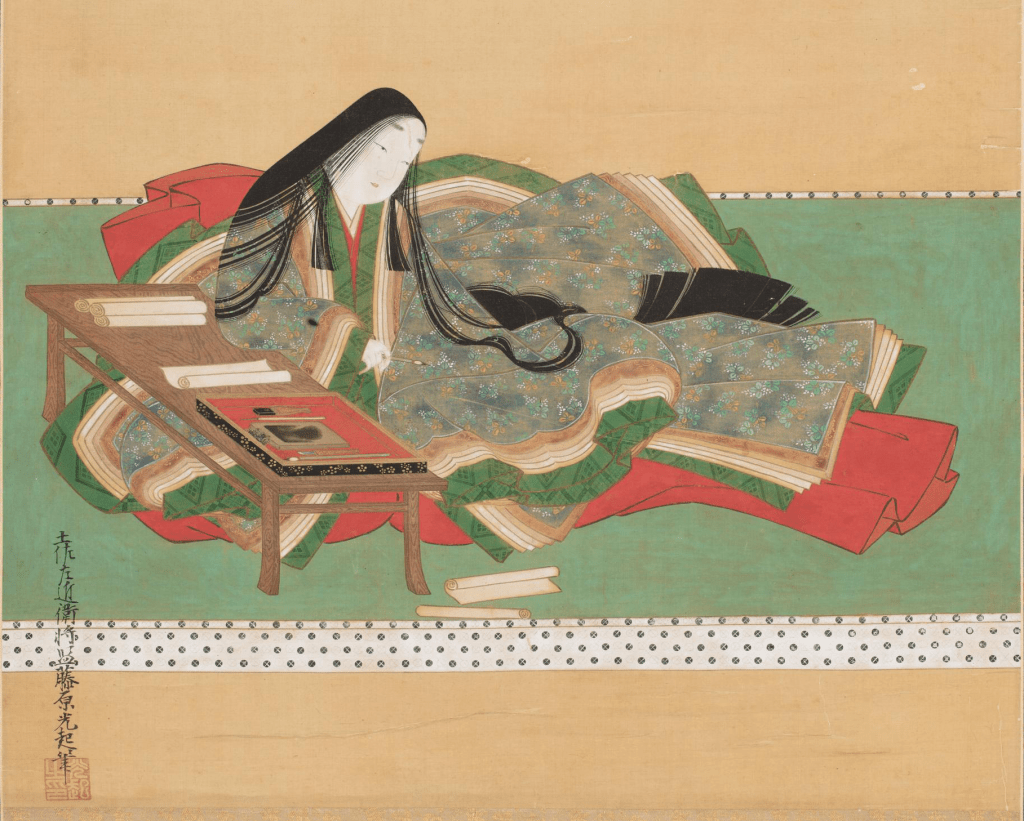
    A 17th-century depiction of Murasaki Shikibu writing the Tale of Genji. Though scholars agree she is the author, there is some debate about the last few chapters.

    Heian Period literature can be a bit impenetrable by today’s standards; courtly culture at the time placed grade emphasis on innuendo, allusion, and almost obtuse vagueness. A great example of this is the fact that the Tale of Genji rarely, if ever, refers to characters by name. Although scholars agree that most of the characters are probably based on real people, it would have been unthinkable for a writer at the time to do something as crass as using a person’s name, even in fiction.

    This, and a highly stylised form of writing, means that works like the Tale are often viewed by modern Japanese in the same way that a modern English-speaking person might see the works of Shakespeare, something that is fundamentally intelligible but is full of language that has long since fallen out of use, leaving us with metaphors that are open to interpretation, to say the least.

    12 Layers

    Fashion and Beauty were as central to the Heian Court as they are to the rich and famous today. Whilst at its core, fashion was about showing off wealth and status (as it is today), the Heian Court had some very unique ideas about what constituted beauty.

    First, the clothes. Now, I’m no one’s idea of fashionable, I dress practically and comfortably. This is probably true of most people and has been for as long as we’ve had clothes. High fashion, however, isn’t about being practical or even comfortable, apparently, and the Heian Court is a great example of this.

    Men and Women were expected to dress differently but with equal flamboyance and impracticality. For men, there were the Sokutai and Ikan, outfits made up of multiple layers that would vary depending on rank, season, and occupation. For example, military officials would dress differently to civilian ones, and versions with fewer layers and shorter sleeves would be worn during the summer months and visa versa.

    Formal wear of a Heian Period military official, photographed in 1990, at the Enthronement Ceremony of Emperor Akihito.
    首相官邸 – https://www.kantei.go.jp/jp/singi/gishikitou_iinkai/dai6/siryou1-1.pdf, CC 表示 4.0, https://commons.wikimedia.org/w/index.php?curid=80965200による

    Generally, Sokutai was the more formal wear, and Ikan was more of a “work” uniform for courtly officials, although the distinction is not always a clear one, as both sets of clothing were highly elaborate by today’s standards.

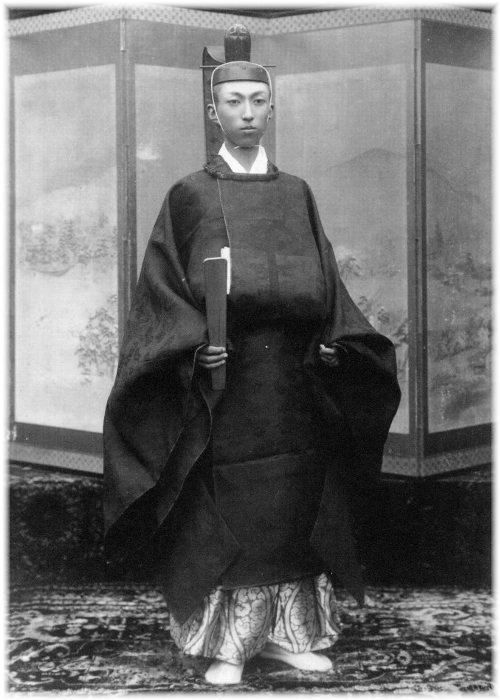
    Marquis Yoshimaro Yamashina, photographed in 1920, wearing the Ikan style of dress.

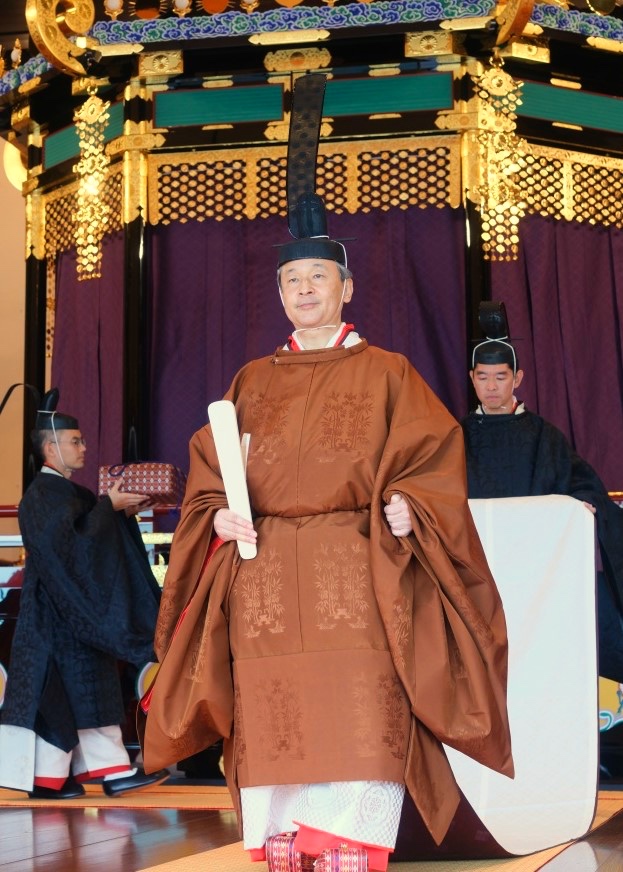
    Despite its flamboyance, Sokutai is still seen in Japan today. Whilst you’re not likely to catch the average Salaryman wearing it on the morning commute, the Imperial Family still wear it, although usually only at ceremonial functions, like Coronations and Royal Weddings.

    The current Emperor, Naruhito, wearing Sokutai at his enthronement ceremony in 2019.
    By 内閣府ホームページ, CC BY 4.0, https://commons.wikimedia.org/w/index.php?curid=89645372

    Sokutai and Ikan are heavy, impractical clothing options, but that’s kind of the point. Wearing a metric tonne of silk and ornaments is a great way to demonstrate that you’re a world apart from the peasantry who are, by the nature of their lives, required to wear cheaper, more practical and (I suspect) more comfortable clothing.

    It was worse for women (surprise, surprise). Whilst male clothing was cumbersome, there were certain practical considerations. Men at the court were generally expected to have some kind of job, which limited how impractical their clothing could be. Court Women, however, unburdened by the expectation of actually doing anything, were consequently expected to dress accordingly.

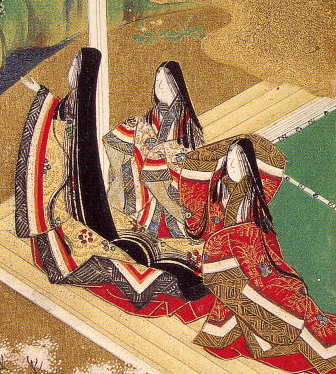
    Introducing the Junihitoe, or Twelve-Layer Robe. Yeah, the name isn’t a red herring; while it is true that there may not have been exactly Twelve Layers, the complexity of the Junihitoe was matched only by the need for appropriate colour coordination.

    Heian Court Ladies wearing Junihitoe in a later illustration.

    The sheer weight of a Junihitoe ensemble is reflective of attitudes towards women at the time. They weren’t expected to do very much except sit around, being attractive and writing poetry. If you think I’m over-generalising, consider that the full weight of all the robes together could be upwards of 20kgs (44lbs) at a time and place where most people averaged about 5ft tall (152.4cm) and rarely weighed in at heavier than 50 kgs (110lbs). Heian Court Ladies could find themselves wearing half their own body weight in silk and accessories. If you can still manage to look pretty under all that, then you’re a better man than me. Or a better Heian Court Lady, but you get the idea.

    If the weight of all that fanciness wasn’t bad enough, fashion dictated that the multiple layers be colour-coordinated according to the season or to other special events. These colours were meant to match the “spirit” of the season, leaning into the Heian Court’s love of symbolism, metaphor, and fancy nonsense.

    The layers were supposed to compliment each other, but given the nature of clothing at court, the layers themselves were generally only visible at the sleeves. This might raise the question, why go to all that trouble for multi-coloured sleeves? But when they were done with all that poetry and story writing, what else was there to do but coordinate your sleeves?

    It’s all in the eyebrows

    So, we’ve already established that Men and Women at the Heian Court were religious, literate, and dressed to impress, but what did they actually look like? More accurately, what did they aspire to look like?

    Even today, beauty standards are more about what people think they should look like rather than what they do, and in the era before photographs, most art presented a highly stylised idea of what people actually looked like. (Yes, we still do that with Photoshop, I know.)

    Much like the beauty of someone’s handwriting and the sheer weight of silk they could handle, someone’s beauty informed what kind of person they were. Basically, being pretty meant you were a good person, but what did being ‘pretty’ actually mean?

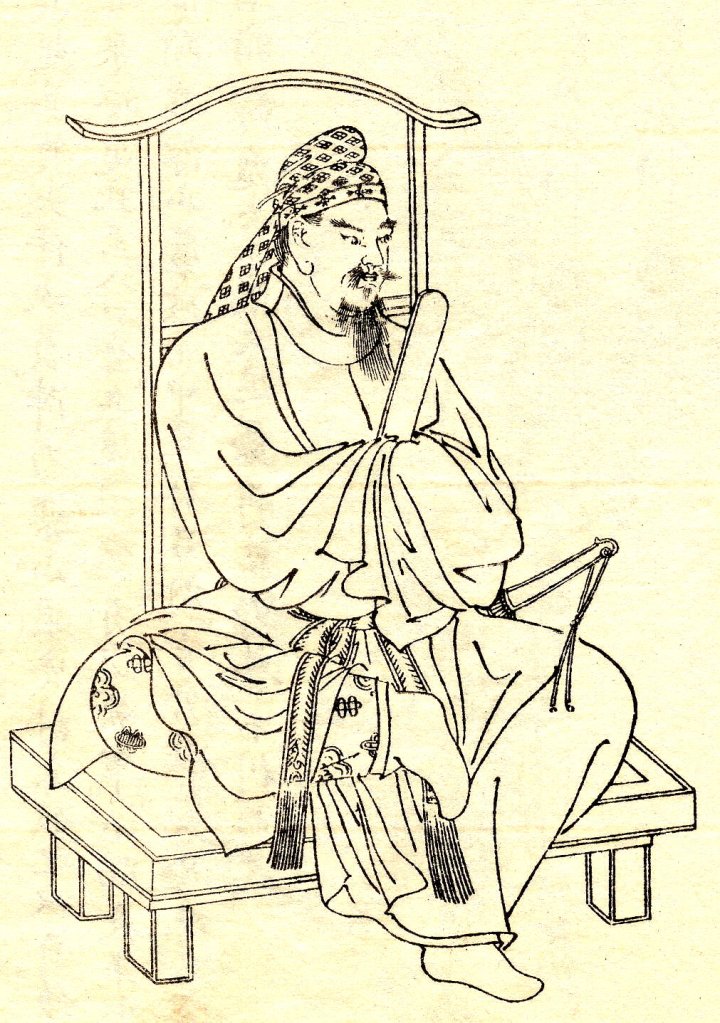
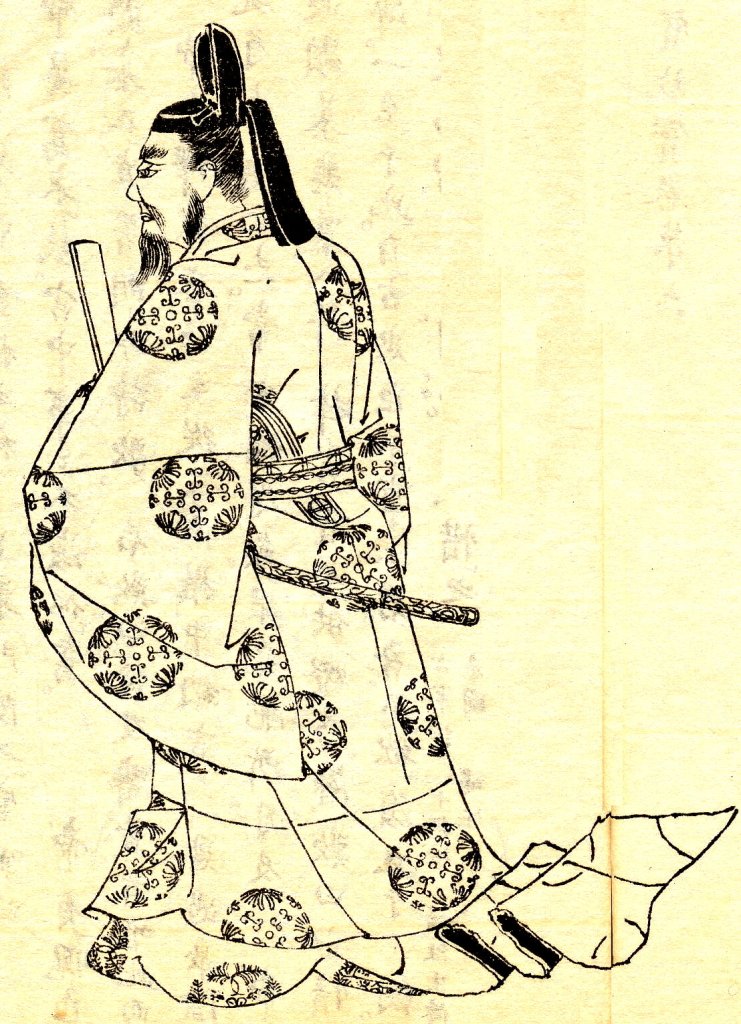
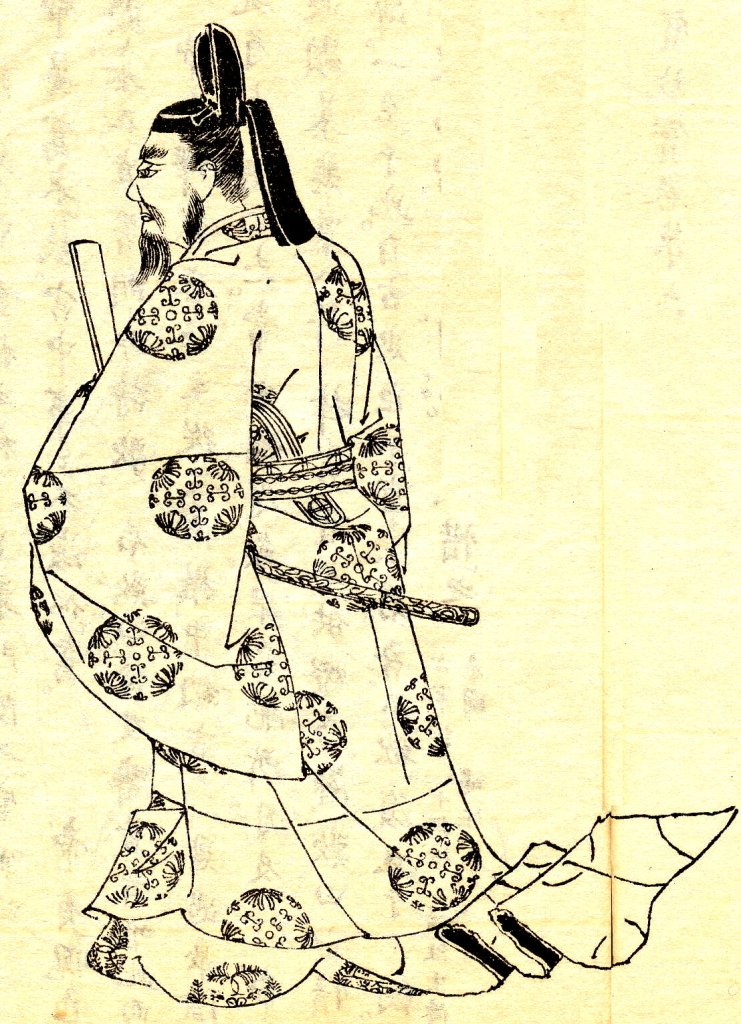
    As you can see in the images above, women grew their hair long and typically kept it loose, with dark, shiny hair being preferred. Men, on the other hand, wore their hair up and sported thin moustaches and beards.

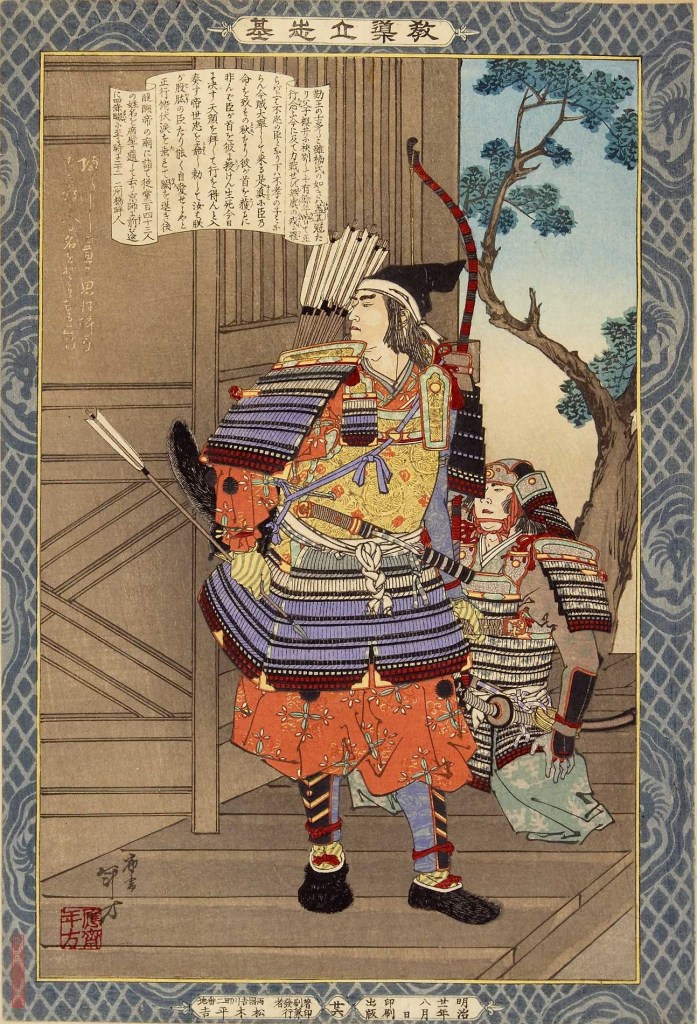
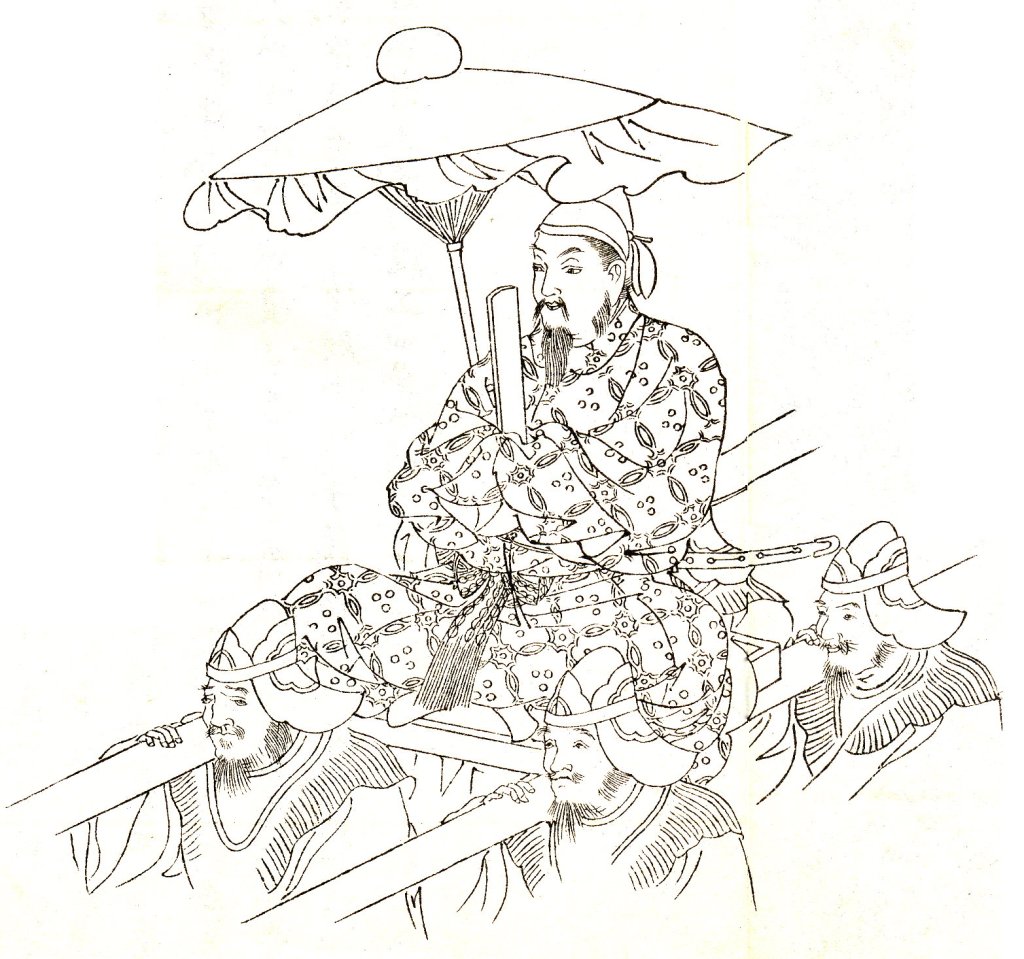
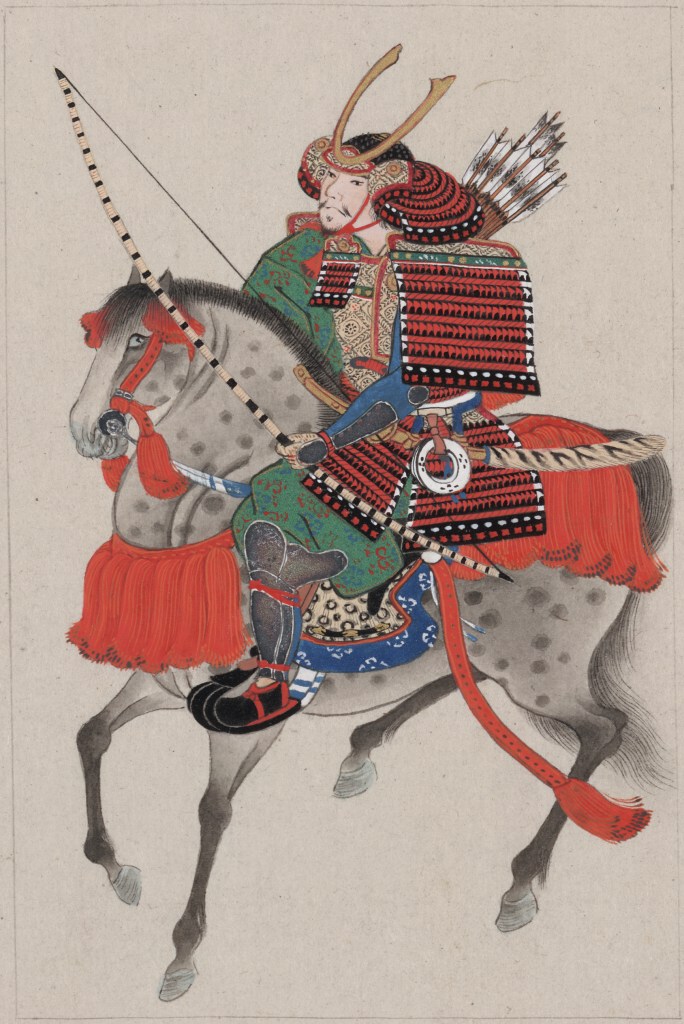
    A later illustration of a Heian Period court official.

    Well, both genders seem to have made use of make-up, usually in the form of skin-whitening powders. This is something that’s come up pretty frequently throughout history: paler skin typically suggests that a person doesn’t spend much time outside. In the pre-modern era, a tan meant working outside, which meant you were a commoner, and if there was one thing the people at the Heian Court would not stand for, is was being thought of as common.

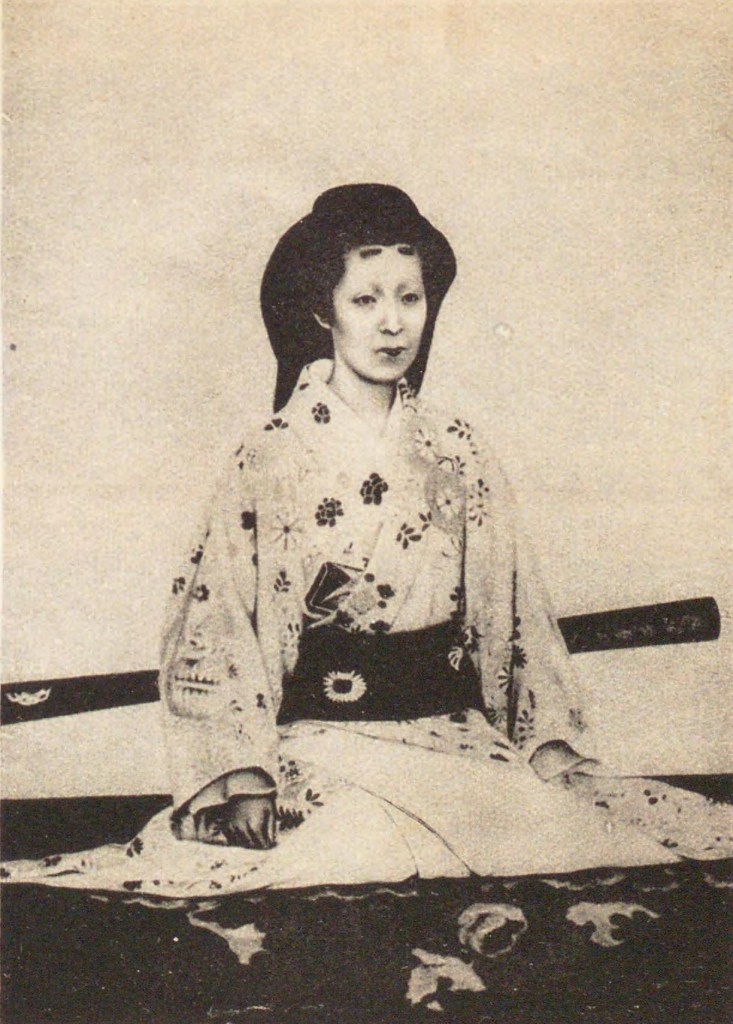
    In addition to whitening powders, women also painted their mouths to look red and small. They also practised a grooming technique called Hikimayu in which the eyebrows were shaved and then drawn way up the forehead, and it’s quite the look.

    An 1850 photograph of Mikako Tokugawa, wife of the last Shogun, showing Hikimayu in all its glory.

    If shaved eyebrows aren’t your thing, how about blackened teeth? Don’t worry, they’re not rotting. Actually, some people speculate that the teeth blackening (Ohaguro) actually contributed to healthy teeth by acting as a kind of sealant, so beauty aside, there’s that.

    The exact reasons for the start of Ohaguro aren’t clear, but one theory holds that, in combination with the whitening powder, painted mouths, and shaved eyebrows, blackened teeth contributed to a “mask-like” appearance that made it easier to hide emotion.

    Heian style fashion would remain in vogue at court for centuries (as seen by traditional dress at Imperial Family events), and this was partly due to the increasing and eventual near total isolation of the Imperial Court in the years that followed the Heian Period.

    We’ve discussed how the rot set in previously, but there is one family who might be more to blame than any other, the Fujiwara, who we’ll talk about next time.

    Sources
    https://en.wikipedia.org/wiki/J%C5%ABnihitoe
    https://ja.wikipedia.org/wiki/%E8%89%B2%E7%9B%AE
    https://ja.wikipedia.org/wiki/%E8%A5%B2%E3%81%AE%E8%89%B2%E7%9B%AE
    https://en.wikipedia.org/wiki/Hikimayu
    https://ja.wikipedia.org/wiki/%E8%A1%A3%E5%86%A0
    https://ja.wikipedia.org/wiki/%E5%AE%BF%E7%9B%B4
    https://en.wikipedia.org/wiki/Enryaku-ji
    https://en.wikipedia.org/wiki/Ohaguro

  • Heian Japan II – Mo’ Shoen, Mo’ Problems.

    Last time, we talked about how the Heian Period began in 794 when Emperor Kanmu moved the capital to Heian-Kyo, where it would remain for the next thousand years.

    We also looked at how the Heian court abdicated its military power to the regional nobility, who, facing a long-term war against the Emishi tribes of Northern and Eastern Japan, no longer put their faith in the large, pretty ineffective conscript armies of the Imperial court, instead establishing private armies of their own, adopting the horse archery tactics of their enemies. Although the days in which the warrior class would dominate the Emperor are still far in the future at this point, the origins of the Samurai can be found here.

    The problems didn’t end with the army, either. Although conscription had been brought in with the Taika reforms of the mid to late 7th century, by the end of the 8th century, the system had largely broken down. This was because it relied on another of the reform’s offspring, control of land.

    Like pretty much everything else in the Taika Reforms, land reform was modelled on the Chinese system. Officially, land was under the control of the state, and every free man was entitled to a certain amount, which would then be taxed. There was no national currency at the time, so taxation was usually a percentage of the harvest.

    A map of fields near Nara in the 8th Century.

    Now, in theory, this meant that everyone had land to support themselves and a regular tax income for the court. However, the system quickly ran into problems. Firstly, unlike the Chinese system, people in Japan couldn’t claim wasteland, even if they farmed it. Additionally, land couldn’t be inherited by someone’s heir. This had the double blow of meaning that there was little reason to expand or enhance holdings, which would have been fine if it had not been for population growth.

    It’s ironic, looking at Japan in 2025, that population growth turned out to be a problem, but there you are.

    As the population grew, so did the demand for food (obviously). The land system couldn’t keep up with demand, so the government eventually changed the law to allow anyone to claim wasteland as long as they farmed it.

    Now, you’d think that’d be problem solved, more land means more food. But no, and the reason is because of taxation.

    Now, as we said, taxation was based on percentages of the harvest, but there were a lot of exemptions. Land owned by temples and powerful noble families was exempt from taxation, which meant a concentration of wealth and resources in the hands of relatively few.

    This meant that when the government relaxed controls on claiming land, the ones who benefited weren’t the farmers but those with the manpower to claim land faster than anyone else. Consequently, the rich got richer, but none of that wealth made it into the Imperial coffers because, as we said, it was all tax-exempt.

    So, you now had a situation where a small portion of the population owned most of the wealth, and this further eroded the government’s ability to function. They’d already lost control of the military, and now they’d lost control of the food supply. That’s 2-0 to the nobility, in case any of you have been keeping score.

    Now, you might ask, if land couldn’t be inherited, then surely the government would regain control of it on the landowner’s death, right? Sorry, nope. Not only did the government change the rules on land reclamation, but also on inheritance. This meant that, after the Temples and Nobles had gobbled up all the good land, they were then able to keep it within their family, creating generational wealth and power.

    Wealth means Power.

    So, what about the peasants who owned their land but weren’t part of the nobility? They’d have a reason to want things to stay as they are and support the status quo, right? Well, no, not exactly.

    As we’ve mentioned, the estates (Shoen in Japanese) of the nobility and temples were tax-exempt. The peasants who owned their own land still had to pay a percentage of each harvest to the Emperor since he technically owned their land.

    Your average Heian-era farmer had probably never even been to Heian-kyo, let alone actually seen the Emperor, so when the tax collectors came, they were the very embodiment of the faceless bureaucracy.

    Now, this might not seem so strange to us, after all, we all pay tax, and how many of us ever meet our head of state? But the world was smaller back then; the rise of the local aristocracy, many of whom had positions of local authority, meant that, as far as the peasantry were concerned, the government wasn’t the Emperor, who might have been hundreds of miles away, but the local magistrate, who was often also the wealthiest landowner.

    This breakdown in authority benefited the nobility politically in the same way as it had economically and militarily, but there was another twist to come. With local political and military control already falling into their hands, the local aristocracy was able to exert considerable pressure on the nominally free peasants around them.

    The exact process isn’t well documented, but we do know that the peasants who controlled their own fields would often sign the ownership of that field over to a powerful local magnate, whether than be a Temple or a noble. In effect, this granted the field tax-exempt status, and instead of tax, the peasant would then pay “rent” to the new owner for the right to keep working the field.

    There are other examples of this happening in a more direct way, with local nobles demanding tribute from free peasants and then confiscating their fields if they couldn’t (or wouldn’t) pay.

    Now, as we’ve said previously, taxation was in the form of harvest or conscription, either into the army or as labour. This didn’t really change that much; harvests were still taxed, and peasants, instead of doing service to the Emperor, were now obliged to serve their local lord.

    It should be pointed out that, under the original system, peasants weren’t tied to the land. They held it in their own name, technically as direct “vassals” of the Emperor. (They weren’t legally vassals in the Feudal sense, mind you.)

    As the Heian period went on, and more and more land was taken by the nobility, the status of peasants also changed. Instead of holding their own land, they were often bound to those same fields, but now in the service of someone else. At first, it was economic necessity; as much as the fields may have been ‘free’, the peasantry still needed to eat, and if that meant working for the lord, then so be it.

    Later, though, economic necessity gave way to legal reality. Everyone was technically subject to the Emperor, but the situation on the ground increasingly disadvantaged the peasants. What had been an economic arrangement became effectively a feudal one as landowners began to deal with local legal matters themselves.

    A peasant (Shomin in Japanese) could now be kicked out of the Shoen (estate) if the Lord didn’t like him, and matters of justice, which had formerly been the reserve of Imperial officials, now became the domain of local lords as well. Where a peasant might have once had the right to petition the Emperor directly, now, the final arbiter of justice was his Lord, and you will probably not be surprised to find out that these Lords often interpreted the ‘law’ in ways that most benefited them.

    Imperial Irrelevance

    So what did the Emperor do about this?

    The answer is simply, nothing really. It’s not that they didn’t know it was happening, but there was precious little they could do. There was no effective means to impose Imperial will on the increasingly independent nobility, and they knew it.

    The Imperial Army, formerly conscripted from the fields, no longer existed, and, lacking any formal currency, the economy had begun to be based almost entirely on rice, which had also long since slipped from Imperial hands.

    There were legal attempts to turn things around. In 1040, a law was passed that officially banned any new lands from being granted tax-exempt status, but it was too little, too late.

    Not that the Imperial Court minded all that much; they kept themselves busy with books, paintings, and some of the most ridiculous eyebrows you’ve ever seen, but we’ll cover that next time.

    Sources

    https://en.wikipedia.org/wiki/Heian_period
    https://en.wikipedia.org/wiki/Sh%C5%8Den
    https://en.wikipedia.org/wiki/Ritsury%C5%8D

  • Heian Japan I – War & Peace

    Due to the sheer volume of information I want to share about the Heian Period, these next few posts are going to be a mix of different things; today, we’re going to talk about some of the military aspects of the early Heian Period, which will be important for later, so pay attention.

    Last time, we looked at the Yamato Period, where a recognisable Imperial system emerged from myriad proto-kingdoms and tribal states. By the late 8th century, following a period of extensive reform, power had been (theoretically) centralised in the hands of the reigning Emperor but was, in reality, in the hands of various noble factions who had no qualms about committing acts of violence in the defence of their interests.

    The Isshi Incident, proving that when you play the Game of Thrones, you win, or some guy cuts your head off.

    After the Isshi Incident in 645, which saw the leadership of the formerly dominant Soga Clan eliminated, the Imperial Throne was able to reassert its independence. One of the co-conspirators in the incident was Nakatomi no Kamatari, who was one of the initiators of the Taika Reforms we looked at last time. He was also a close supporter of Prince Naka no Oe, who had also taken a leading role in the Isshi Incident.

    Now, this isn’t some random tangent; when Prince Naka no Oe became Emperor Tenji in 668, Nakatomi rose still higher. On the latter’s deathbed in 669, the Emperor bestowed a new family name on him. From then on, Nakatomi no Kamatari and his descendants would be known as the Fujiwara.

    New Capital, Old Problems

    The Heian Period is named after and started in the new Imperial Capital, Heian-Kyo, which means City of Peace (or tranquillity, if you’re feeling poetic). It was the 50th Emperor, Kanmu, who moved the capital there in 794, and it remained the seat of the Emperors until 1868. It is better known today as Kyoto.

    Although 794 officially marks the beginning of the Heian Period, the seeds for what would come had already been sown in the years prior. Since the arrival of Buddhism in Japan and the victory of the pro-Buddhist factions that we looked at last time, the Buddhist Clergy had become politically powerful, leading to problems between them, the nobility, and the Emperor.

    In 784, Kanmu initially moved the capital from Heijo-kyo (near modern Nara) to Nagaoka-kyo (confusingly, located mostly in modern Muko, Kyoto Prefecture, not the nearby city of Nagaokakyo).

    The move was, at least in part, motivated by a desire to separate the Imperial Capital from the influence of powerful Buddhist temples that had emerged near Nara. However, the move would prove unsuccessful. Political intrigue followed the court, and less than a year after the move was formalised, the primary architect, Fujiwara no Tanetsugu, was assassinated by a rival faction. (There’s that Fujiwara name again.)

    In the aftermath of the killing, numerous court officials and even members of the Imperial Family were arrested. Some were executed, whilst others were exiled, including the Emperor’s brother, Prince Sawara. Unfortunately, Sawara died en route, and in the years that followed, Nagaoka-kyo suffered several disasters, floods, famines, fires, and the deaths of many important people.

    Now, these days, we might put that down to bad luck or to deliberate attempts to undermine the Emperor, but the people back then were a superstitious lot, and when, in 792, the disasters were blamed on Prince Sawara’s vengeful spirit (Onryo in Japanese) the decision was taken to move the capital once again.

    The Emperor would learn, however, that freeing himself from the influence of powerful priests wasn’t going to be the great liberation he had hoped for, but more on that later.

    The Imperial Army

    We’ve not looked at military stuff very much so far, mostly because there is going to be a lot of that later, but a quick look at the Imperial Army and the war with the Emishi is important for what’s coming.

    Decades before the move to Heian-kyo, the Taika Reforms had led to a restructuring of the young nation’s military. Prior to the reforms, military power was in the hands of regional strongmen (politely called ‘nobility’), whose power was usually based around fortified settlements and the surrounding lands.

    With the Taika Reforms, however, the Imperial Government, inspired by Tang Dynasty China, instituted a system of conscription. The idea was that military power would pass from the hands of the nobles into the hands of the Emperor.

    It didn’t really work out that way, though. Firstly, the burden, as it so often does, fell on the poor, as those with sufficient resources could buy or trade their way out of service (corruption may also have been an issue). Since the poor are generally tied to the land, this led to people fleeing their home regions to avoid the army, with the knock-on effect being fewer people in the fields.

    Another issue was that conscription, by its nature, relies on men who don’t actually want to be there. There are examples throughout history of military service being a way out of economic hardship, but that doesn’t seem to have been so here. Men assigned to the frontier were expected to pay for their own equipment and provisions, meaning that the little money they might earn in the army was quickly spent simply being in the army.

    It is perhaps unsurprising then that the Imperial Army was poorly equipped and badly motivated. This wouldn’t have been much of a problem had their role simply been to keep the peace, but the early Emperors were expansionists, so their poorly motivated army was kept busy.

    The Emishi

    Who were the Emishi? Well, as is often the case, there isn’t a definitive answer. The earliest records we have for them are Chinese and date to the 5th Century, where there is mention of “55 Kingdoms” of “Hairy People of the East”. Exactly who these people were isn’t clear, but they are distinct from the “Japanese” kingdoms that are also recorded.

    It is generally believed that the Emishi were linked to the Jomon, who inhabited Japan before the Yayoi (who became the Yamato and so on). It is also accepted that the Ainu are also connected to the Emishi, but the exact relationship is unclear and may never be known for certain.

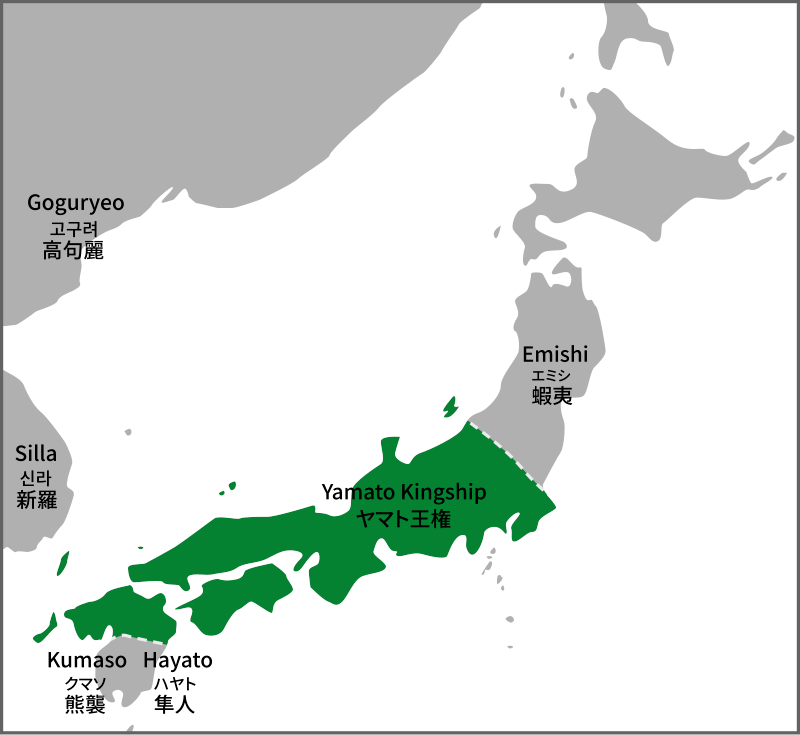
    What is certain is that the Emishi proved to be an opponent that the Yamato initially struggled to overcome. Whilst the independent peoples in Kyushu were subjugated fairly early on (either through force or diplomacy), the Emishi remained largely independent into the 8th Century.

    The Yamato State in the 4th Century. Although the Kumaso and Hayato people would be absorbed, the Emishi would prove far more durable.
    By Samhanin – Own work, source: Yamato ja.png, CC BY 3.0, https://commons.wikimedia.org/w/index.php?curid=121731575

    The Emishi would prove to be resistant to traditional military strategy. They relied on horse archery, using speed and guerilla tactics to defy the Yamato. For most of the 7th and 8th centuries, the Yamato would advance slowly, building forts as they went and dealing with individual Emishi tribes, some of whom would agree to enter Imperial service.

    In 774, the so-called Thirty-eight Years War began when the Emishi launched a series of attacks on Yamato forts in Northern Japan. The Emishi would prove to be successful at first; imperial armies were gathered quickly and sent against the Emishi, only for the Emishi themselves to melt away and reappear somewhere else. Forts, Towns, and Villages were burned, and through the 780’s, the situation spiralled out of control.

    The war would go on for 38 years (hence the name), and it would be a combination of diplomacy and a change in strategy that eventually led to Yamato’s victory and dominance of the North.

    Militarily, the Yamato adopted the mounted archery tactics of their enemy. This couldn’t be done with conscripts from the back end of nowhere, but the local nobility, who had been dealing with the Emishi for years already, were quicker to catch on, and these “Emishi-busting” armies were often smaller, faster moving, and, most importantly, loyal to their local communities over the Imperial Court.

    By the 790s, the strain of constant campaigns against the Emishi had led to a breakdown in the system of conscription. The people didn’t want to be sent to fight, and the Imperial Court couldn’t afford to send them, meaning that military strength now rested entirely in the hands of local nobility, but I’m sure that’ll be fine.

    On the diplomatic front, the Yamato reached out to the tribes who might agree to switch sides, and unsurprisingly, many would. The leaders of these tribes were quickly integrated into local nobility, and it is said that several later Clans could trace their ancestry to Emishi progenitors.

    By the dawn of the 9th century, the Emishi were largely dealt with. Those who had submitted were subsumed by Yamato culture, and over the years, they would become indistinguishable from other Japanese. Those who refused to submit, however, were either destroyed or driven north to Hokkaido, where they would play no further part in the Heian story.

    Now what?

    So, the Emishi are beaten, the Empire has won, and all is right in the world. I’m sure that the fact that military power has fallen completely out of imperial hands into the lap of a regionally powerful nobility that controls not only the military but the economic levers of power after the collapse of central taxation led to a system that relies almost entirely on agricultural output to support itself won’t lead to any problems, will it?

    There’s that foreshadowing again.

    Sources

    https://en.wikipedia.org/wiki/Heian_period
    https://en.wikipedia.org/wiki/Heian-ky%C5%8D
    https://en.wikipedia.org/wiki/Emperor_Kanmu
    https://en.wikipedia.org/wiki/Nagaoka-ky%C5%8D
    https://en.wikipedia.org/wiki/Emishi
    https://en.wikipedia.org/wiki/Fujiwara_no_Kamatari
    https://fee.org/articles/were-japans-taika-reforms-a-good-idea/

  • Yamato – So it Begins.

    The Wa dwell on mountainous islands southeast of Han [Korea] in the middle of the ocean, forming more than one hundred communities. From the time of the overthrow of Chaoxian [northern Korea] by Emperor Wu (BC 140–87), nearly thirty of these communities have held intercourse with the Han [dynasty] court by envoys or scribes. Each community has its king, whose office is hereditary. The King of Great Wa [Yamato] resides in the country of Yamadai.

    Goodrich, Carrington C, ed. (1951). Japan in the Chinese Dynastic Histories: Later Han Through Ming Dynasties. Translated by Tsunoda, Ryusaku. South Pasadena: PD and Ione Perkins. Taken from Wikipedia.

    At the back end of the Yayoi Period (c. 300 BC to 300 AD), the first petty kingdoms began to emerge. These communities initially started out based on agriculture and shared culture (cemeteries and other ritual sites, for example), but by the late Yayoi period, we begin to see evidence of defences being constructed.

    The reconstructed defences at Yoshinogari. Evidence of the changing situation in the Late Yayoi Period.
    By Flamebroil at the English-language Wikipedia, CC BY-SA 3.0, https://commons.wikimedia.org/w/index.php?curid=4443146

    Now, it may seem obvious, but you don’t need defences unless you think someone is going to attack you, and you can’t typically organise coordinated attacks against defended places without someone calling the shots.

    So now, the age-old question, which came first, the Kings or the Wars? Humans have never needed much of an excuse to start killing each other, and evidence for violent deaths reaches back to the Jomon period.

    Violence, however, is not the same thing as war. The marshalling of resources, and the building of defences require organisation, and organisation in those days meant monarchy.

    These days, we tend to associate Monarchs with pomp and ceremony but usually (at least in Europe) very little actual power. In the ancient world, however, you didn’t get to be King or Queen without power, and that power usually came from one of two places.

    Either you were the biggest and the strongest, and you simply killed anyone who got in your way, or you relied on more spiritual power, either magic or religion.

    Now, the late Yayoi people didn’t have writing, so we don’t know very much about how they saw themselves, but the Chinese sources suggest that monarchy and magic were tightly linked.

    When speaking of Himiko, the legendary Queen of Yamatai, the sources speak of a Queen who:

    occupied herself with magic and sorcery, bewitching the people. Though mature in age, she remained unmarried. She had a younger brother who assisted her in ruling the country. After she became the ruler, there were few who saw her. She had one thousand women as attendants, but only one man. He served her food and drink and acted as a medium of communication. She resided in a palace surrounded by towers and stockades, with armed guards in a state of constant vigilance.

    Goodrich, Carrington C, ed. (1951). Japan in the Chinese Dynastic Histories: Later Han Through Ming Dynasties. Translated by Tsunoda, Ryusaku. South Pasadena: PD and Ione Perkins. Taken from Wikipedia.

    If we ignore the trope of any woman in power obviously being a witch, this source tells us that Himiko was viewed as being a user of magic who remained aloof from her people, surrounded by towers, stockades, and armed guards. It is often difficult to separate fact from fiction when it comes to such ancient sources, but the mention of elaborate defences tallies with the archaeological evidence.

    Even if Himiko herself is mythical, the fact that Late Yayoi settlements were being defended by armed guards seems to support the idea that Japan was becoming a more centralised but also more violent place.

    Monumental Tombs

    Another example of centralisation is the emergence of monumental tombs called Kofun. Like the Pyramids of Egypt, Kofun started out as burial chambers of important, presumably royal figures, and they represent significant investments of time and resources.

    The Daisenryo Kofun in Sakai. The largest kofun, it is believed to be the burial place of the semi-legendary Emperor Nintoku, who is said to have died in 399 AD. By Copyright © National Land Image Information (Color Aerial Photographs), Ministry of Land, Infrastructure, Transport and Tourism, Attribution, https://commons.wikimedia.org/w/index.php?curid=120737378

    Kofun can be found across Japan (about 160,000 of them!) with the densest concentration being in modern day Hyogo Prefecture. While these tombs vary widely in their construction the basic idea remains the same, a tomb, grave goods (often looted, unfortunately) and a mound.

    Burial mounds aren’t unique to Japan, but it is a general rule that the more elaborate the grave, the more resources the one who built it has. Now, this sounds obvious: rich people are rich, but being able to marshall sufficient manpower at a time when communication relied entirely on word of mouth demonstrates just how wealthy these kingdoms were becoming.

    It is also important to note that they only started as tombs for important figures. By the later Yamato Period, there is evidence of (admittedly smaller) Kofun being built for relatively low status people, suggesting that wealth and resources had ceased to be the sole domain of monarchs.

    It was modern-day Nara Prefecture, however, where the most powerful and longest-lasting Kingdom got its start.

    Modern Nara Prefecture, centre of the Yamato Kingdom.

    Difficult beginnings

    The actual rise of the Yamato Kingdom is obscure (sorry, I know this keeps happening.) Since we rely almost entirely on Chinese sources to tell us what was going on in the earlier parts of this era, it is perhaps telling that they have relatively little to say about the origins of Yamato.

    Although we don’t know for certain, it is suggested by some that this period was one of violence as rival kingdoms sought to assert dominance over their neighbours. Whilst we may never know for sure, by the early 5th Century, the Yamato Kingdom had risen to dominate most of central Japan.

    Although the first power to dominate a significant part of Japan, the Yamato didn’t have it all their own way. On Kyushu, the Azumi and Hayato peoples were in control. The Azumi were apparently peerless seafarers and seem to have served as the first naval force of the Yamato. The Hayato, though also listed as loyal to the Yamato, were apparently a more tempestuous people, and there are records of several rebellions/wars between the Yamato and Hayato, with the Hayato eventually being subjugated and their population scattered throughout Japan.

    These people may have been related to or be the basis for the mythical Kumaso. Also, natives of Kyushu, the Kumaso, are supposed to have been implacable and dangerous foes of the Yamato, described as ‘bear-like’ (the word ‘Kuma’ means bear in Japanese) and monstrous. The story goes that the Kumaso were eventually defeated by the legendary Yamato Takeru, who killed their last leader by disguising himself as a woman at a feast, which is quite a way to go about it.

    Yamato Takeru ruins the last Kumaso leader’s dinner.

    Chinese Influence

    The Yamato State was heavily influenced by contemporary Chinese culture. This arrived in Japan through trade, cultural exchange, and waves of immigrants. For much of pre-modern history, China was viewed as the centre of the world, especially in Asia, and during these formative years, the Yamato people looked to China as the source of culture and learning.

    Japan maintained direct maritime links with the Chinese Song Dynasty (possibly facilitated by the aforementioned Azumi), but also had close ties to the Kingdoms of Korea. Some sources even go so far as to suggest that hundreds of the noble families of this period actually originated in Korea. In fact, it is speculated (somewhat controversially) that, if the genealogy of the Imperial Family can be believed, they are of Korean origin as well.

    How much we can believe ancient, often conflicting sources is a matter of debate, but we know for certain that Chinese and Korean culture was hugely influential in early Japan. Grave goods uncovered in Kofun show either direct Chinese and Korean origin or are heavily inspired by the same.

    We also know that the early Yamato Kingdom based itself politically on China. It is known that early Yamato rulers petitioned the Chinese Emperors for royal titles, and the Chinese seem to have been happy to oblige.

    In turn, the Yamato Kings bestowed titles of nobility on their subjects, including those in Kyushu, far from the centre of Yamato Power.

    These clans varied in power, but drew legitimacy from the King. Each clan seems to have been ruled by a patriarch, who was responsible for keeping the Clan in line, but also took on a religious role, making sure the Gods (or Kami) of their Clan were kept happy. This is the role of the King in miniature and shows how formalised Yamato society had become. The King was at the top, responsible for the well being of the nation, and he would intercede with the Gods on the Kingdoms behalf.

    Other Chinese innovations taken to by the Japanese were Buddhism (which I know is actually from India, but it arrived in Japan in its Chinese form) and, much to the lamentation of anyone who has ever tried to study Japanese, a written language, the origins of Kanji, Chinese written characters adapted to Japanese speech.

    We’re actually going to continue this look at the deeper impact of Chinese culture next time, as the introduction of new religious and political ideas led to the Taika Reforms, which really deserves its own post.

    Sources
    https://royalsocietypublishing.org/doi/10.1098/rsbl.2016.0028
    https://en.wikipedia.org/wiki/Himiko
    https://en.wikipedia.org/wiki/Yamato_period
    https://en.wikipedia.org/wiki/Azumi_people
    https://en.wikipedia.org/wiki/Yamato_Kingship
    https://en.wikipedia.org/wiki/Hayato_people
    https://en.wikipedia.org/wiki/Kumaso
    https://en.wikipedia.org/wiki/Five_kings_of_Wa
    https://en.wikipedia.org/wiki/Asuka_period

  • Yayoi: How Soggy Fields Changed Japan Forever.

    Last time, we talked about the Jomon People, Japan’s first inhabitants. Those folk existed primarily as Hunter-Gatherers, but around the year 900 BC, a new wave of culture crossed the Tsushima Strait from Korea. No, it’s not some prehistoric version of BTS (can you even imagine?), but settled villages, metalwork, and, most significantly, rice.

    Nowadays, we arguably take agriculture for granted; unless you live and work in the countryside, you may never think about it at all, but the ability to cultivate land and produce crops on it changed humanity. For the first time, our ancestors could produce more food than they needed, and if one man could produce enough food for himself and four or five others (mileage may vary), then those four or five others are no longer needed in the fields, which means they can spend their time doing other things, like art, music, war, and ruling over the farmers. (Ok, so it’s not all good.)

    Agricultural revolutions occurred pretty much everywhere at different times, but the Yayoi period is generally thought to have begun around 300 BC. Now, I have to point out that that is not an exact chronology, firstly, because these things never are, and secondly, because the exact transition between the Jomon and Yayoi periods is pretty murky in some places.

    For example, at the Itazuke Site in Fukuoka Prefecture, the earliest remains of rice paddies have been found in contexts that put them more in the Jomon period than the Yayoi, leading some scholars to suggest that the Yayoi period should actually be dated as starting as early as 800 BC, or perhaps even earlier. However, this remains controversial, and there’s never likely to be an exact timeline.

    The site at Itazuke represents possibly the earliest examples of rice farming yet found, although its exact context remains controversial.
    By Muyo – Own work, CC BY-SA 3.0, https://commons.wikimedia.org/w/index.php?curid=15136810

    While Itazuke probably represents a transitional site, it does raise some interesting questions. For example, was the appearance of irrigated rice paddies a case of technological spread, or was it brought over by waves of immigration? The answer, broadly, is a bit of both.

    The thing with ancient, pre-literate societies is that they weren’t generally big on keeping written records, and something as formal as a census was right out. Consequently, it’s pretty difficult to guess exactly how many people were living in Yayoi Japan; it’s also tricky to figure out where they came from.

    The first suggestion is that the Yayoi peoples represented a series of massive waves of migration over a 500 to 600-year period. Some estimates put the population of Japan at somewhere around 6 million by the end of the Yayoi Period in 300 AD. This represents a population increase of more than 4 million over that period, which some scholars suggest is impossible to explain as being a result of immigration alone.

    Now, this isn’t the sort of blog that’s going to go into where babies come from (there’s plenty enough of that sort of thing on the internet already), but a basic rule of thumb for any society is that food surplus = people surplus. If you have a reliable food source and aren’t running for your life from sabertooth tigers and the like, you’re more likely to have a baby, and what’s more, that baby is more likely to survive to adulthood.

    For archaeologists, the next step is trying to figure out who is having the babies. It’s the women, obviously, but the Yayoi people represent an interesting example of how populations change over time.

    Genetically speaking, you can divide the Yayoi into three broad groups: Early, Middle, and Late. So named because they came to Japan at different times (guess which is which!)

    All three groups share similar genetic traits, suggesting shared ancestry, but while human remains of early Yayoi people show a larger percentage of Jomon DNA, suggesting that immigrants and locals were pretty friendly, the later generation shows much less Jomon DNA, and much more from groups that inhabited Korea at the same time.

    Now, does that mean that the later waves of immigrants were pickier in their partners, or, does it mean that by the later Yayoi Period, anyone with large amounts of Jomon DNA had already moved away, or, to put it bluntly, been bred out of existence?

    The answer is unclear, but probably. We know that the Yayoi and Jomon populations were genetically distinct. We can also estimate that the population during the Jomon Period was around 75,000, whereas by the end of the Yayoi Period, it was 6 million. Outside of Hokkaido, then, it seems reasonable to state that Jomon people were simply swamped.

    Yayoi Culture

    Whilst the Jomon and Yayoi peoples were playing a long-term game of “Kiss, Marry, Avoid” (I know that’s not what it’s really called, but I’m trying to keep things PG), Yayoi culture and language were beginning to spread across the land. It should be pointed out, however, that the spread was not even, nor was it universal. Whilst Yayoi culture came to dominate in Kyushu, in Honshu, the adoption of rice farming and other Yayoi hallmarks was pretty inconsistent.

    For example, evidence of agriculture has been found in the Hokuriku region dating back to 380 to 300 BC. However, in the Tokai region, which is practically next door, the first evidence doesn’t appear until 220 BC in some areas, and as late as 50 BC in others.

    The Hokuriku Region (left) where evidence of agriculture dates back to 380 BC, and the Tokai region (left) where it didn’t appear until 330 years later.

    This inconsistent development isn’t as random as it may first appear. It is generally believed that the Yayoi peoples were a so-called “sea” people, meaning that they came across from Korea and Eastern China by boat (because how else are you going to do it?). It is then reasonable to assume that the transmission of Yayoi culture would follow coastal routes first, before spreading inland over the following decades.

    Rise of Yamatai

    One of the major problems we have with ancient civilisations (some of them, anyway) is that they didn’t write things down. Now, this is likely because they didn’t have a written language, but it’s still a pain. The Yayoi are one such example. What we know about them comes from the archaeological record, and although archaeologists are (usually) pretty good at what they do, without a clear written record, it can be challenging to figure out exactly how the Yayoi people saw themselves.

    Luckily for us, other people nearby did have writing, and they were kind enough to leave some records. The Chinese Han Dynasty kept copious amounts of records about their neighbours, and it is in these sources that we see the first mention of the Japanese islands.

    In the Book of Later Han, in 57 AD, the Chinese Emperor Guangwu gave the Kingdom of Na a gold seal and some other fancy gifts in exchange for the King of Na recognising the Chinese as their overlords. For centuries, the seal, and indeed the Kingdom of Na, were considered to be semi-legendary, but then the seal itself was discovered by accident (by a farmer, apparently), confirming that the Chinese records were accurate and Na (Nakoku in Japanese) really existed.

    The golden seal of the Kingdom of Na. Found in a field in 1784, it confirmed the truth of the Chinese Records, and the existence of Nakoku.
    By Original uploader: User:金翅大鹏鸟 at zh.wikipedia – Transferred from zh.wikipedia to Commons by Shizhao using CommonsHelper., Public Domain, https://commons.wikimedia.org/w/index.php?curid=15840653

    There are sporadic records of other Kingdoms and Tribes existing around Japan (called ‘Wa’ by the Chinese), but their exact nature and even their locations are often a mystery. One state from that era that has had an enduring legacy is Yamatai (Yamataikoku in Japanese.)

    This state features prominently in contemporary Chinese records and was apparently ruled by Queen Himiko, or, in some cases, the “King of Wa,” suggesting that the Chinese believed Yamatai to be the rulers of the whole of Japan (as they understood it) or at least a Kingdom of preeminent power.

    We know very little about Yamatai itself, as the only documentary sources are Chinese records, and the archaeological record is unclear. We’re not even sure where Yamatai was located within Japan, with Northern Kyushu or the Kinai Region (near modern Kyoto, Osaka, and Nara) being proposed.

    The two proposed sites of Yamatai, Northern Kyushu (left, in purple) and Kinai (right, in green).
    By Flora fon Esth – Own work based on the image Provinces of Japan.svg (GFDL et CC-by-3.0), CC BY-SA 3.0, https://commons.wikimedia.org/w/index.php?curid=160605946

    The discovery of the Yoshinogari site in 1986 ignited the popular imagination, and Yamatai and Queen Himiko have been figures in popular culture ever since. Some have suggested that Yoshinogari is a good candidate for the supposed capital of Yamatai. However, this remains highly controversial, and most experts state that Yoshinogari is an important site, but there’s no evidence to support the assertion that it is the capital.

    The reconstructed village at Yoshinogari, and important site, but the capital of Yamatai? Most experts say not.
    By ja:User:Sanjo – Own work, Public Domain, https://commons.wikimedia.org/w/index.php?curid=4954364

    Queen Himiko is said to have died around 248 AD, after she was replaced, first by a King whose name is not recorded, and then by Toyo (Iyo in some records), about whom very little is known.

    When Himiko passed away, a great mound was raised, more than a hundred paces in diameter. Over a hundred male and female attendants followed her to the grave. Then a king was placed on the throne, but the people would not obey him. Assassination and murder followed; more than one thousand were thus slain. A relative of Himiko named Iyo [壹與], a girl of thirteen, was [then] made queen and order was restored. (Zhang) Zheng (張政) (an ambassador from Wei), issued a proclamation to the effect that Iyo was the ruler.

    Tsunoda, Ryusaku, tr (1951), Goodrich, Carrington C (ed.), Japan in the Chinese Dynastic Histories: Later Han Through Ming Dynasties, South Pasadena: PD and Ione Perkins, taken from Wikipedia.

    Ultimately, Yamatai would disappear from the records shortly after Iyo came to the throne, and, as with any records over such long periods of time, we should take the details with a grain of salt.

    That being said, thanks to Chinese records and the hard work of local archaeologists, we know that by the end of the Yayoi Period, kingdoms had begun to emerge across Japan. Like the preceding Jomon Period, the Yayoi Period can’t really be said to have ended, so much as it transitioned into something else.

    Some scholars suggest that Yamatai lent its name to the following Yamato Period, although the exact etymology isn’t clear (nothing ever is with this stuff.)

    Next time, we’ll take a look at the Yamato Period, Japan’s first Imperial State.

    Sources

    https://en.wikipedia.org/wiki/Yamatai https://en.wikipedia.org/wiki/Yoshinogari_site https://en.wikipedia.org/wiki/Nakoku https://en.wikipedia.org/wiki/Yayoi_period https://en.wikipedia.org/wiki/Yayoi_people https://www.cambridge.org/core/journals/antiquity/article/regional-variations-in-the-demographic-response-to-the-arrival-of-rice-farming-in-prehistoric-japan/7E6D28520A04B2F07DDD36908F291808 https://www.cambridge.org/core/journals/evolutionary-human-sciences/article/japan-considered-from-the-hypothesis-of-farmerlanguage-spread/BD91E69AEA3CCAEDC567519EF7F5AA97

  • The Jomon Period – Japan before it was Japan.

    In the beginning…

    In the beginning, there was an egg, thus answering that age old question at least.

    Actually, it wasn’t really an egg, but chaos in the shape of an egg, and all was silent. Then, things began to happen, and three layers were formed. At the top was light, then came Takamagahara, the High Plane of Heaven, and beneath that was the ‘huge, dark mass’ of Earth.

    Next, when the land was young, resembling floating oil and drift like a jellyfish, there sprouted forth something like reed shoots. From these came into existence the deity UMASI-ASI-KABI-PIKODI-NO-KAMI; next, AME-NO-TOKO-TATI-NO-KAMI. These two deities also came into existence as single deities, and their forms were not visible.

    Kojiki, translated by DONALD L. PHILIPPI

    What followed were the Kamiyonanayo, the Seven Generations of Gods. There are a lot of stories about what these guys got up to, which we’ll cover in a different article, but for our purposes, the most important are the last two, Izanagi and Izanami. Now, just so we’re clear, Izanagi and Izanami were husband and wife and brother and sister, but I’m told that kind of thing is cool when it comes to the Gods, apparently.

    Fun fact: Their names literally mean “Male who invites” and “Female who invites” so there’s that…

    Anyway, at that time, the earth, ‘huge and dark’ as it was, looked like floating oil and “drifted like a jellyfish”, so Izanagi was given Tenkei, the Heavenly Spear. He used it to stir up the primordial soup, and when he drew the spear out, a drop of water fell back, and created the island of Onogoroshima, the first of the Japanese Isles.

    Izanagi and Izanami stirring the primordial soup.

    Just in case you were wondering, no, you can’t visit Onogoroshima. Scholars aren’t sure which of the current Japanese islands represents the mythical “first island”, but it’s generally thought to be one of the small islands that surround Awaji-shima, if it exists at all.

    Awaji Island. Could it, or one of the smaller island around it, have been the first?

    There are plenty of other stories about Izanagi and Izanami, like how, upon erecting a holy pillar, they realised they needed to procreate (stop laughing), but all you need to know for now is that Izanagi and his sister-wife are considered to be the progenitors of the Japanese pantheon, and through their daughter Amaterasu (the Sun Goddess), the Japanese Imperial Family.

    Mythology aside, archaeologists generally agree that the first people arrived on what is now the Japanese Archipelago sometime around 36,000 BC, when Japan was still attached to mainland Asia by a land bridge.

    There are few remains of these people, largely because the soil in Japan is highly acidic, but also because it is probable that they lived in coastal areas which are now under water. The only artefacts that have remained are stone tools, and Japan has some of the oldest on record, with some possibly dating to as early as 30,000 BC, a full 20,000 years before appearing in other places.

    There are, however, some big question marks over the actual age of human habitation in Japan, and that is because of…

    The Japanese Paleolithic Hoax

    The short version of this story is that, during the 1970s and 80s, an amateur archaeologist by the name of Shinichi Fujimura began finding artefacts at sites in Miyagi Prefecture, which he claimed to be dated to the Palaeolithic Period. Fujimura quickly earned a reputation as one of Japan’s most prolific archaeologists, and despite concerns raised by some academics, he rose to become Deputy Director of the Tohoku Palaeolithic Institute. His research seemed to suggest that human habitation of Japan stretched back as far as 600,000 years, and several of his sites were listed as being of national importance.

    The problem, as you’ve probably already guessed, was that he made it up. In late 2000, the Mainichi Shimbun newspaper broke the story that Fujimura had been planting artefacts. He would take items from other sites, bury them secretly, and then “discover” them later. After a thorough review of his work, the Japanese Archaeological Agency reported that almost all Fujimura’s work had been based on faked finds, setting back Palaeolithic research in Japan by decades, and forcing the academic community to reassess everything they thought they knew about the period.

    So what do we know?

    Of the Palaeolithic Japanese? Not much, honestly. Japan’s acidic soil and the high level of coastal erosion over the last 30,000 years has meant that human remains are few and far between, and even real artefacts are limited to stone tools. In short, we know that people were here, but who they were, and how they lived, is open to conjecture.

    After about 14,000 BC, however, the record becomes a lot clearer. Fragments of pottery, uncovered in 1998 in Aomori Prefecture, have been dated as early as 14,500 BC, and the distinctive “Cord Marked” (Jomon, in Japanese) style has also been found in Ehime and Nagasaki Prefectures, suggesting that the Jomon people represent the first ‘Japanese’ civilisation.

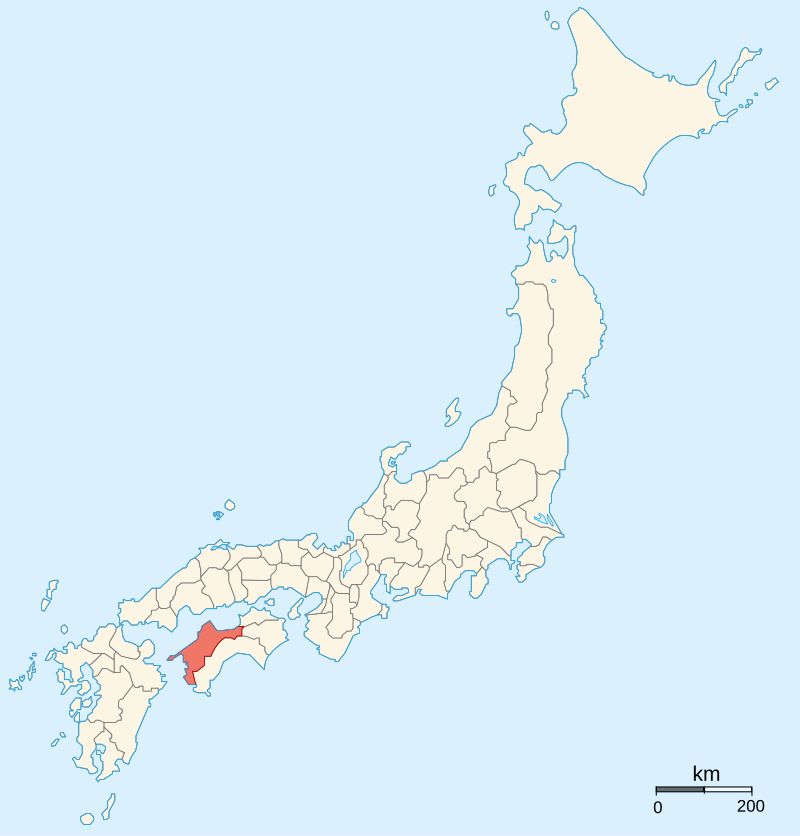
    The locations of Nagasaki, Ehime, and Aomori Prefectures, highlighting just how widespread the Jomon culture was.

    So why is pottery important? Well, the short answer is, pots mean settlement. Why? Because pots break easily. The larger and fancier the pot, the greater the chances that its maker was planning to stay in one place for a while. Early Jomon pottery (around 14,000 BC) is decorated, but still fairly rudimentary, but by 3000 BC, they’re creating works that are almost absurdly flamboyant.

    Early Jomon Pottery, nice decoration, but nothing that’d you’d regret smashing on the kitchen floor.
    Jomon “Flame Style” Pottery from around 3000 BC. The challenge here being to take a sip without lacerating your face.
    By Netherzone – Own work, CC BY-SA 4.0, https://commons.wikimedia.org/w/index.php?curid=158990309

    The first Jomon people, with their basic pots, were mostly hunter-gatherers, and Japan in 14,000 BC was a pretty sweet place to be a hunter-gatherer. The end of the Ice Age brought on a figurative explosion of life, with widespread forests bringing forth more nuts than you could shake a stick at which, incidentally, is how you harvest them.

    This abundant plant life also meant abundant animal life, and deer, boar, and smaller creatures formed a large part of the Jomon diet, along with fish, and huge amounts of shellfish in the coastal regions.

    The Kasori Shellmound. Despite taking around 1000 years to form, it gives you an idea of how key shellfish were to the Jomon diet.
    By Namazu-tron – Self shot and numbers with parenthesis added, CC BY-SA 3.0, https://commons.wikimedia.org/w/index.php?curid=6685921

    Early Jomon people lived in rudimentary Pit Dwellings (literally holes in the ground with a roof), which are not thought to have been permanent or even particularly long-lasting structures. Instead, they suggest that these people were seasonally settled, most likely taking to their villages in the cooler months, before setting out to hunt and gather in more agreeable weather.

    Reconstructed pit dwellings at Kasori.
    By Xser21 – Own work, CC BY-SA 4.0, https://commons.wikimedia.org/w/index.php?curid=78835425

    Settlements developed slowly over time, but gradually became more sophisticated. Around 5000 BC, the first cemeteries appear, but the people themselves seem to have continued to rely on pits as temporary housing, as well for storage of food and other items. This is further evidence that the earlier Jomon people were only semi-sedentary, returning to their buried food supplies periodically, and hopefully not opening the wrong pits!

    By around 3000 BC, however, the Jomon appear to have settled down more permanently. Research at the Sannai-Maruyama Site in Aomori has uncovered examples of raised storehouses replacing pits during this period. Homes, too, appear to have become more complex, with large, wooden longhouses appearing, suggesting not only more settled people but a significant population increase as well. Large-scale building of this type requires considerable manpower, after all.

    A reconstructed storehouse at Sannai-Maruyama. Anyone who has ever built a shed can tell you that this kind of work requires more than one pair of hands.
    By I, Perezoso, CC BY-SA 3.0, https://commons.wikimedia.org/w/index.php?curid=2509930

    Big Eyes, Big Hips

    An increase in settlement also led to an increase in material culture. It’s easy to imagine early peoples limiting themselves to bashing out stone axes and antler arrowheads, but we already know that the Jomon people created pottery that was remarkably complex.

    Other art styles emerged during the later Jomon era as well. Clay figurines called Dogu begin to appear, mostly depicting human (typically female) figures, with exaggerated features, which scholars suggest means they represent some kind of Divine Figure, or are possibly associated with magic and healing.

    Due to the passage of time, many dogu are in poor shape, often missing pieces or smashed to shards. Some, however, remain in relatively good condition, and there is evidence of some having limbs deliberately cut off, giving rise to the belief that these figurines might have been used to “take” illness or injury, which was then removed from the figurine in an attempt to heal its human counterpart. (I don’t know if that worked, but I’m guessing, probably not.)

    The stylised female attributes, (typically consisting of big eyes, small waists, and large hips/buttocks) lead to the conclusion that many of these figurines were related either directly to fertility or to the worship of some kind of mother goddess, which aligns with the interpretations of similar items found around the world.

    The Jomon Venus, an unusually well-preserved example discovered in 1986, is typical of the accentuated female form found in many dogu.
    By Takuma-sa – File:Dogū of Jōmon Venus.JPG, CC BY-SA 3.0, https://commons.wikimedia.org/w/index.php?curid=30994656

    Somewhere between 15 and 18,000 individual Dogu have been found across Japan, from Hokkaido to Kyushu (although not Okinawa), with the richest deposits coming from the north and eastern parts of Japan. It is apparently rarer to find examples of Dogu in other parts of the country, which isn’t surprising, given the population concentrations that current archaeological evidence points to.

    Eastern Japan, the area currently most associated with Jomon Culture.

    Where were they from?

    People move. Sometimes one by one (like a wide-eyed 20-something moving to the other side of the world) and sometimes in groups. In the modern world, we tend to associate large movements of people with refugees, people fleeing war, famine, plague, or natural disasters, but when it comes to talking about the world of 20,000 years ago, things are much murkier.

    So, the question is posed, “Where did the Jomon People come from?” The answer will surprise you!

    Not really, they came from Asia.

    Japan around 20,000 BC, showing the landbridge to Asia.
    Davison A, Chiba S, Barton NH, Clarke B. (2005) “Speciation and Gene Flow between Snails of Opposite Chirality” (in English). PLoS Biology 3 (9, e282). doi:10.1371/journal.pbio.0030282 [1]

    Japan is now, of course, an archipelago made up of over 14,000 islands of various sizes, shapes, and habitability. But before the end of the last Ice Age, it was attached to Asia, and at the time of the Last Glacial Maximum (which is the scientific way of saying “just before the ice melted”), the landbridge stretched from Hokkaido into modern Russia.

    Paleoarchaeologists (experts in old bones, for experts in new bones, you need the Police) have been able to study the remains of Jomon people and have suggested that, instead of a single, homogeneous migration, the Jomon people represent a pretty diverse group of origins.

    Now, genetics are a tricky thing, but people in the know (otherwise known as scientists) hypothesise that the ancestors of the Jomon People had their origins in South-East Asia, before joining a general migration of people following a coastal route that is now in Eastern China and Korea, before finally arriving in Japan.

    Although we’re reasonably certain of when the Jomon People arrived in Japan, the question of how isn’t as clear. There are basically two theories, which needn’t be mutually exclusive.

    The first theory is that the Jomon arrived via boat, travelling from the coast of what is now China, up the Okinawan Island chain, and arriving in Kyushu and Southern Honshu. The second theory is that their ancestors continued up the coast into what is now the Russian Far East, before travelling south across the remains of the land bridge into Hokkaido and Northern Honshu.

    Given that the majority of sites excavated so far have been in the northern parts of the country, the land bridge theory would appear to be the most plausible. Indeed, the 17 sites collectively known by UNESCO as the Jōmon Prehistoric Sites in Northern Japan are all located in the north (as the name suggests).

    However, even the sites already discovered have produced relatively scant remains, and it’s perfectly possible that more Jomon settlements existed in southern and western Japan, sites that are either lost due to natural changes or buried deep beneath Japan’s bustling modern cities, and some, that are just waiting to be discovered.

    Hokkaido, Aomori, Iwate, and Akita, the fourth northernmost prefectures of Japan, and the apparent centre of Jomon culture.

    The Jomon Today

    We know that the Jomon were eventually supplanted by the incoming Yayoi People (who we will talk about in a later post), but what became of the Jomon themselves? Well, like with so many other ancient peoples, their exact fate is open to debate.

    A common suggestion is that, when faced with the incoming Yayoi, the Jomon either migrated or were driven to the northern regions of Japan, where they gradually became the Emishi (another people we’ll discuss later), and the Ainu.

    Now, the exact origins of both these peoples are murky, and there is even debate over whether they were different tribes of the same people, or distinct groups that share distant but common ancestry. It is also possible that the Emishi were a cultural “missing link” between the Jomon and the modern Ainu, but we can save that particular rabbit hole for later.

    The historic homelands of the Ainu, with the pink area a suggested maximum range, based on toponymic (place names) and historical records.
    By Kwamikagami – This image has been extracted from another file, CC BY-SA 3.0, https://commons.wikimedia.org/w/index.php?curid=13262173

    While it will probably never be known for certain how the Jomon became the Emishi, or indeed the Ainu, DNA studies suggest that modern Ainu populations share up to 70% of their DNA with the Jomon, supporting the idea that they are indeed the modern descendants of these ancient people.

    We’ll cover the details of the Ainu in another post, but they represent the most concentrated examples of Jomon DNA in modern Japan, so if there can really be said to be modern Jomon, it’s them.

    What about the modern ‘Japanese’, though? Well, that’s a bit harder to nail down. Firstly, the Jomon themselves don’t seem to have been a single ethnic group, but rather a mixture of different groups arriving at different times.

    There’s also the so-called “admixture paradox”, which is a noticeable imbalance in the amount of paternal (30%) and maternal (15%) DNA, which suggests some fairly obvious patterns in the inter-mingling between Jomon and later Yayoi. As with all things to do with ethnicity and race, there’s a lot of interpretation, and while Jomon DNA has definitely been passed down to modern Japan in one way or another, Jomon Culture has disappeared entirely.

    Or has it?

    Nope.

    Allow me to elaborate. Firstly, the Jomon people themselves had no written language (scholars even disagree over whether the Jomon languages relate to modern Japanese at all) so everything we know, or think we know about them comes from archaeological records.

    Now, archaeology isn’t always an exact science, and particularly when it comes to very ancient sources, there’s a lot of guesswork involved. However, we do know that the Jomon peoples had some sort of religious belief system. They buried their dead in specific ways, and the existence of Dogu suggests some kind of worship, although the specifics aren’t clear.

    Some scholars suggest the origins of the Shinto belief can be found in the Jomon period, as Shintoism is based heavily on traditions of shamanism and reverence for the natural world, it isn’t hard to imagine that having sprouted from an ancient belief in some kind of mother goddess, like the Jomon Venus (I do love a call back).

    There are other, more tangible examples of how Jomon culture influenced modern Japan as well. Archery first appeared during the Jomon era, and although bows and arrows are hardly unique to Japan, the significance that the bow would have for the later development of Samurai culture could conceivably be said to have started with the Jomon.

    Too tenuous for you? Ok, how about Lacquerware? Yeah, that made you pay attention, didn’t it? Lacquerware is something quintessentially Japanese, and it has its origins with the Jomon peoples.

    Tsugaru-nuri. Lacquerware from modern Aomori Prefecture.
    By Kaburamata – Own work, CC BY-SA 4.0, https://commons.wikimedia.org/w/index.php?curid=41576897

    We know this because surviving examples of it have been found at the Kakinoshima Archaeological Site in Hokkaido. Lacquerware has been found there that has been dated to over 9000 years old, making it the oldest examples of the craft in the world.

    Red Lacquerware like this was found at Kakinoshima in Hokkaido, representing the oldest examples of the craft.
    By Mccunicano – Own work, CC BY-SA 4.0, https://commons.wikimedia.org/w/index.php?curid=97142451

    End of an era.

    As with most historical periods, the Jomon Period didn’t just “end”. The year is usually given as being around 300 BC, but this is more for modern convenience than anything. After around 1500 BC, the climate began to shift again, cooling down significantly, and putting serious pressure on societies that relied on seasonal hunting and gathering. As the climate got cooler and wetter, the food supply got smaller, the population started to contract sharply, and settlements began to shrink, or be abandoned entirely.

    During this period (around 900 BC), increasing contacts with, and migration from, what is now Korea, led to a gradual, but dramatic shift in culture. These newcomers brought new agricultural techniques like wet rice farming, which does better in damper climates, as well as the first examples of metalwork found in Japan.

    Although the incoming people (called Yayoi) and the Jomon lived side by side for a long time, eventually, the Jomon were either driven out or absorbed by the new culture, with the last vestiges appearing to survive in Hokkaido until around the 7th Century.

    That, as they say, is that. Next time, we’ll take an in-depth look at the people who replaced the Jomon, the Yayoi.

    Sources: