Tag: 16th century Japan

  • The Second Unifier – Toyotomi Hideyoshi. Part Two.

    The Second Unifier – Toyotomi Hideyoshi. Part Two.

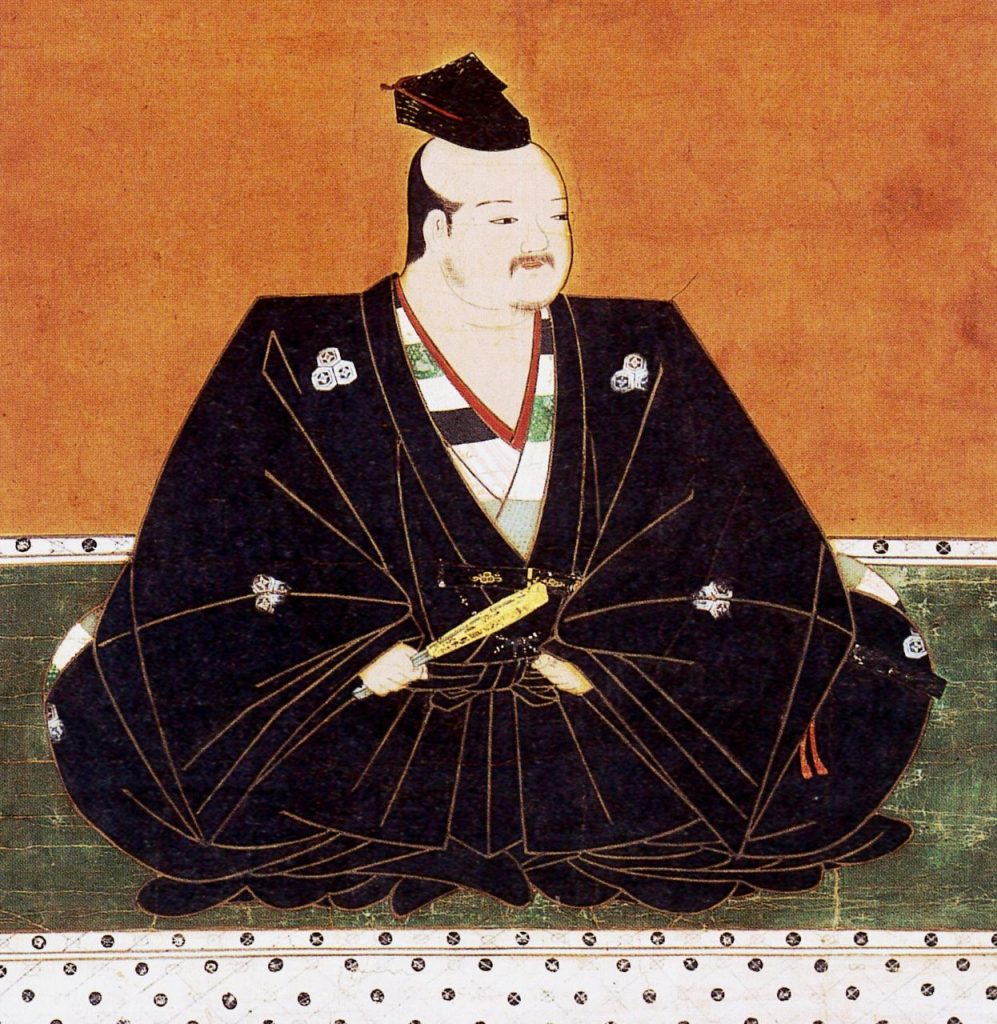
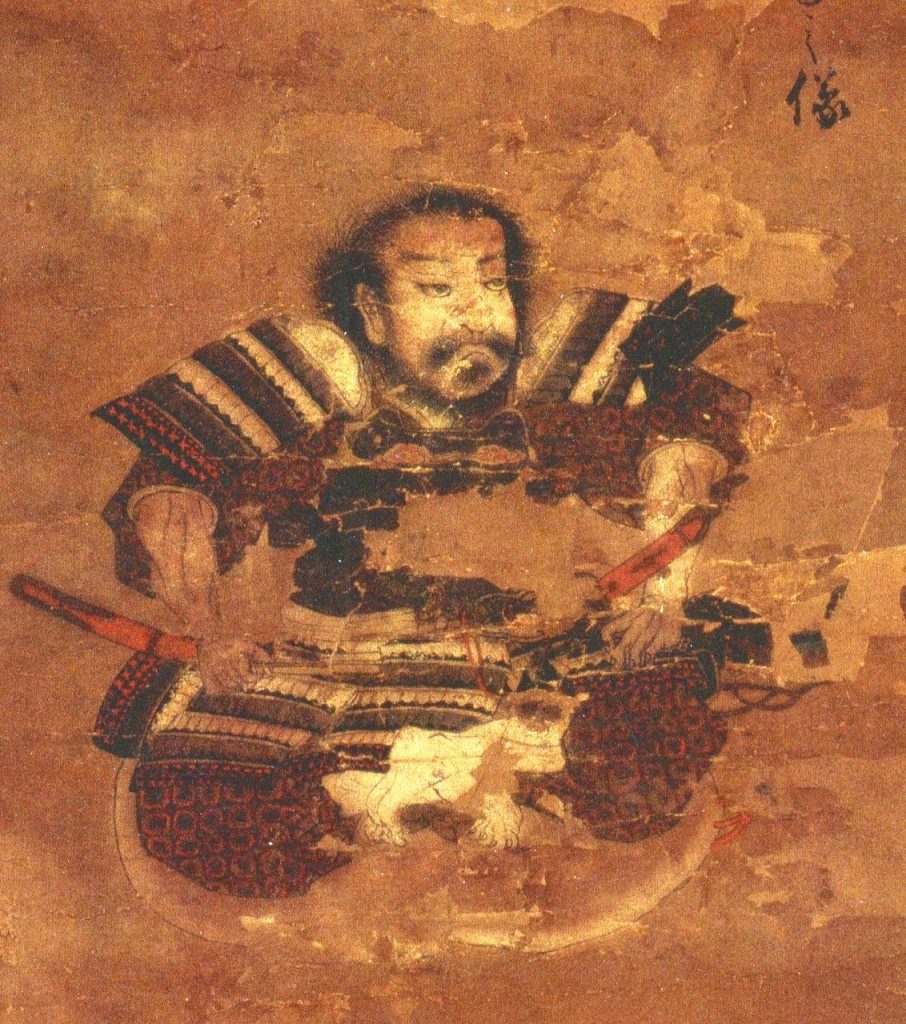
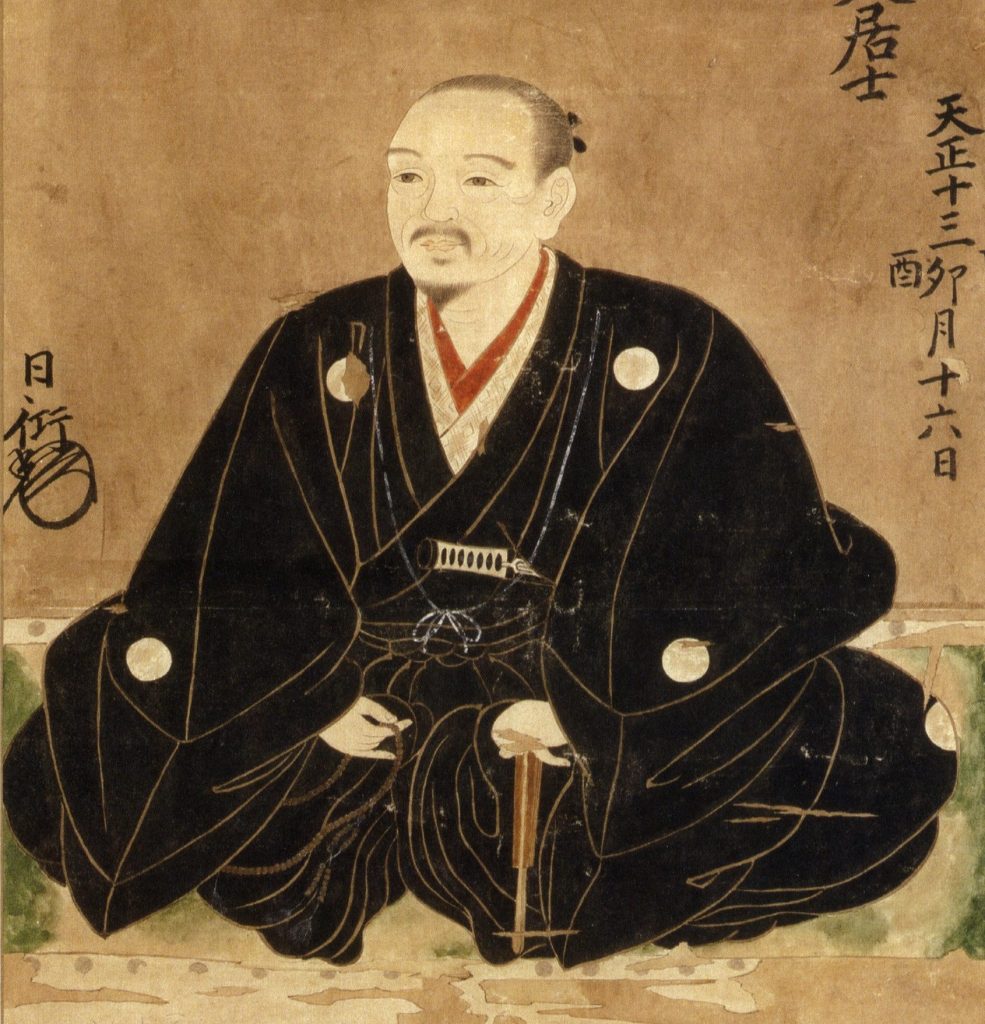
    In 1577, a dispute between Toyotomi Hideyoshi and Shibata Katsuie led to Hideyoshi taking his army home, and leaving Katsuie to battle the mighty Uesugi Kenshin alone, a battle he lost. In the aftermath, Hideyoshi had every reason to fear the wrath of his master, Oda Nobunaga, and he was arguably lucky to keep his head, let alone his position.
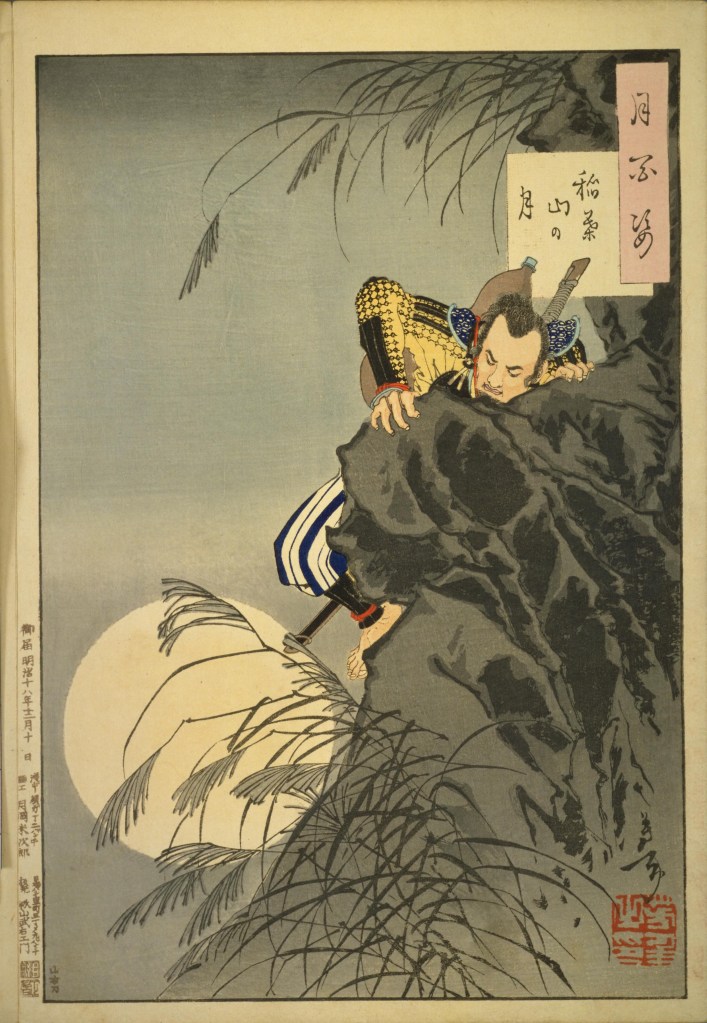
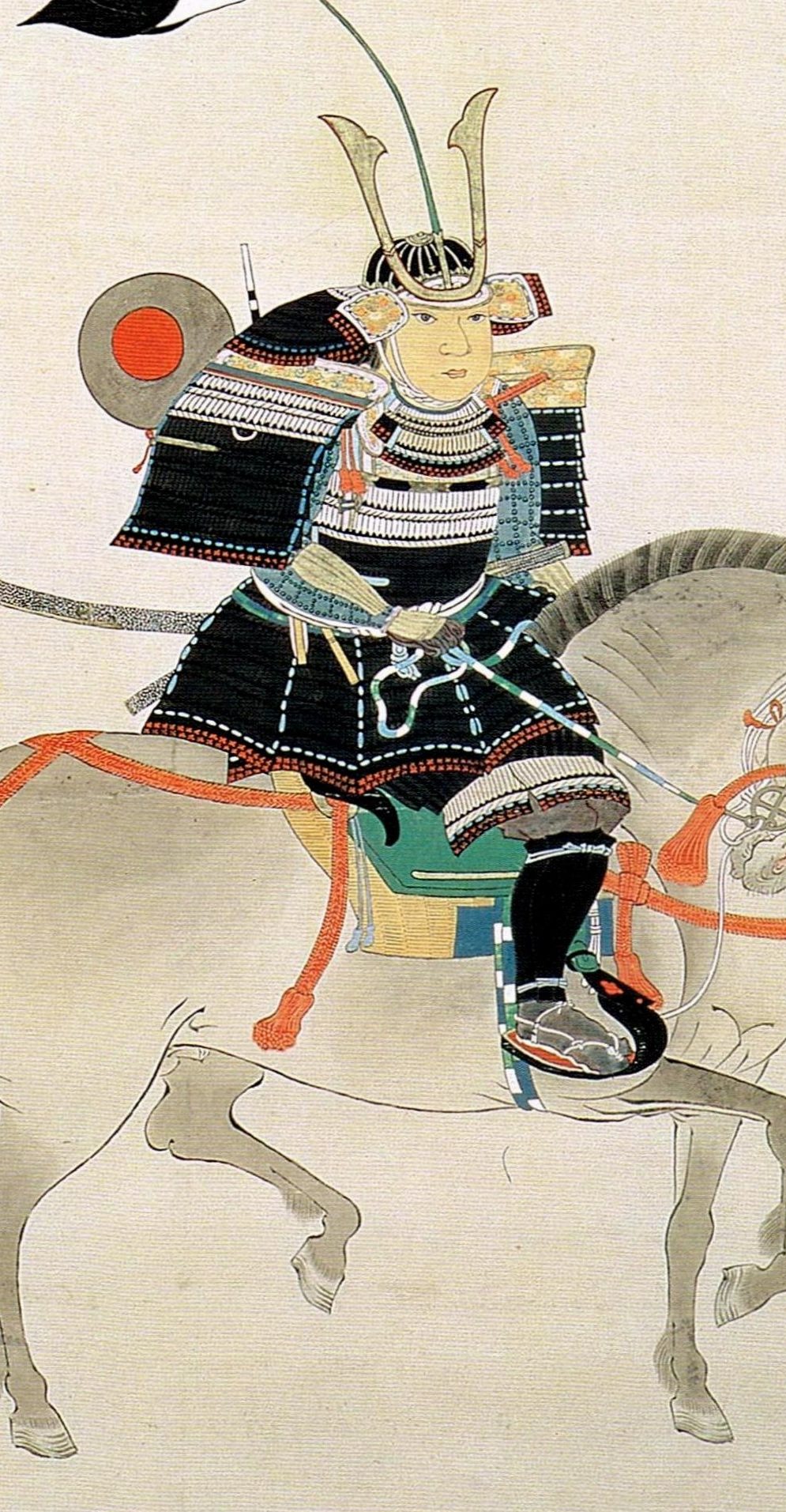
    A 19th-century depiction of Hideyoshi in Nobunaga’s service.

    Nobunaga was well known for his ferocity, but he recognised capable subordinates. Hideyoshi had been reckless, but he had also earned a reputation as a good administrator and leader of men, and it wasn’t long before he was back in the Great Lord’s good books. In late 1577, he was dispatched west to contend with the powerful Mori Clan and by the end of the year, he was in control of Harima Province and advancing into neighbouring Tajima.

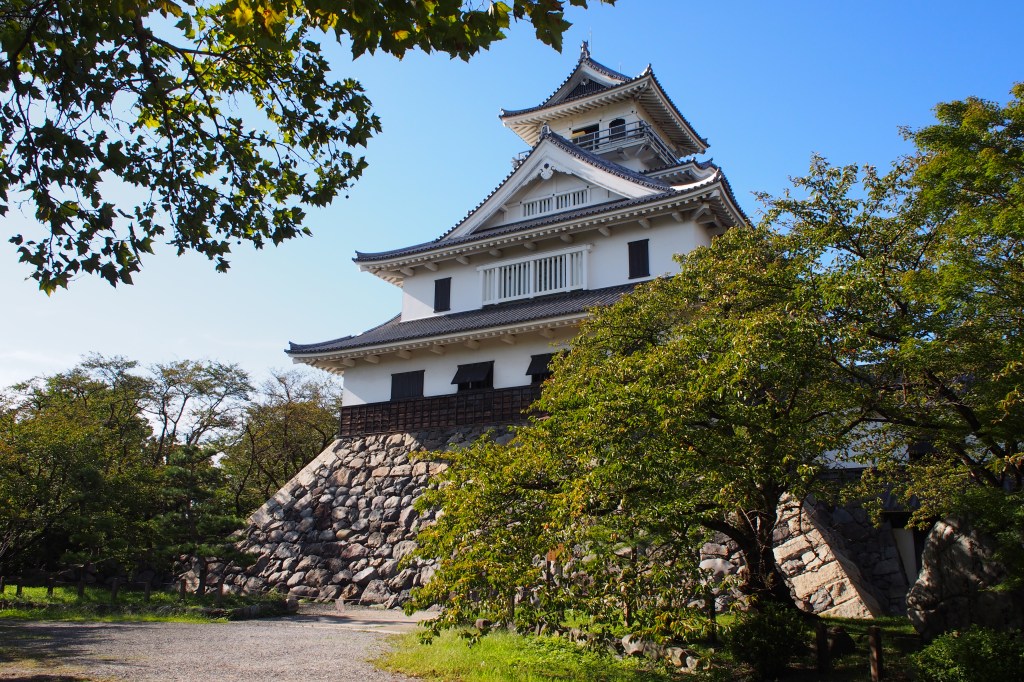
    During this period, Hideyoshi made the famous Himeji Castle his base and used it as a springboard for a series of successful campaigns against the Mori over the next few years. By late 1578, he had subjugated (either through conquest or submission) Bizen and Mimasaka Provinces, in addition to his earlier conquests, and he was poised to advance further when the Araki Clan, based at Arioka Castle, rebelled, obliging him to redeploy his forces to put them down.
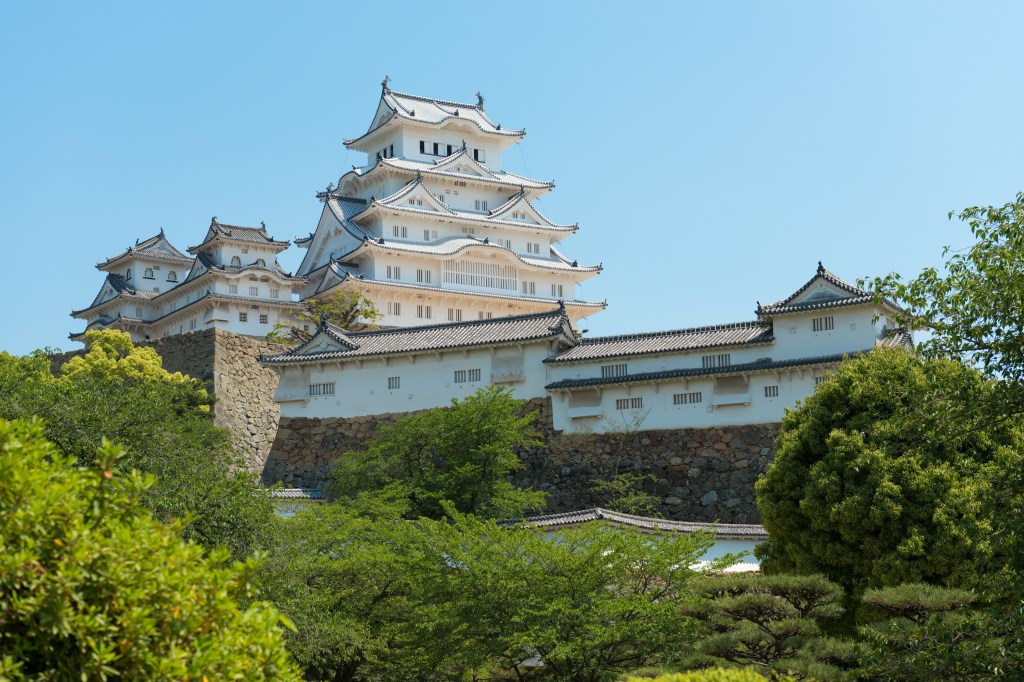
    Himeji Castle as it appears today (after renovations in 2015)
    Niko Kitsakis – 投稿者自身による著作物, CC 表示-継承 4.0, https://commons.wikimedia.org/w/index.php?curid=40135622による

    Able to resume his advance in 1580, Hideyoshi secured Tajima Province, bringing the once-mighty Yamana Clan under his control and incorporating many of their former vassals and members of the clan itself into the new administration, a policy widely praised as the reason that Tajima was swiftly pacified.

    By 1581, he had advanced into Bitchu Province and secured Awaji Island for his master, utilising slow but effective siege tactics, starving his enemies into submission, a time-consuming but strength-preserving strategy. One disadvantage, though, was that it meant you were easy to find should your enemy have sufficient strength elsewhere.
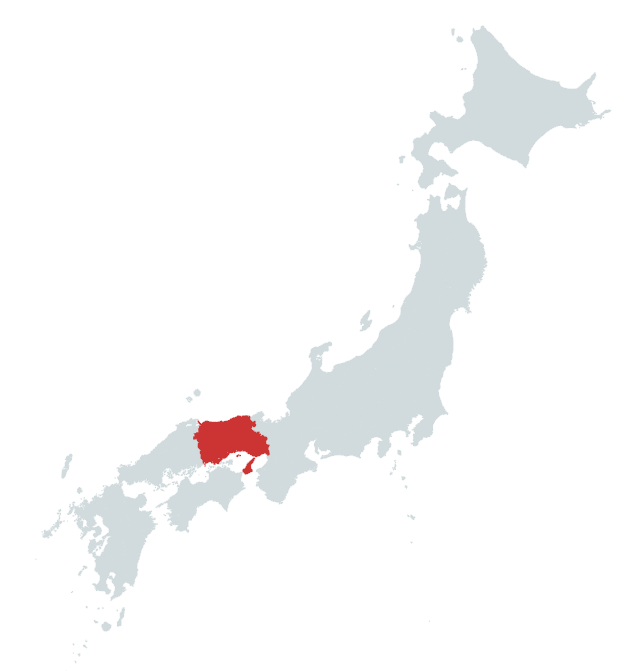
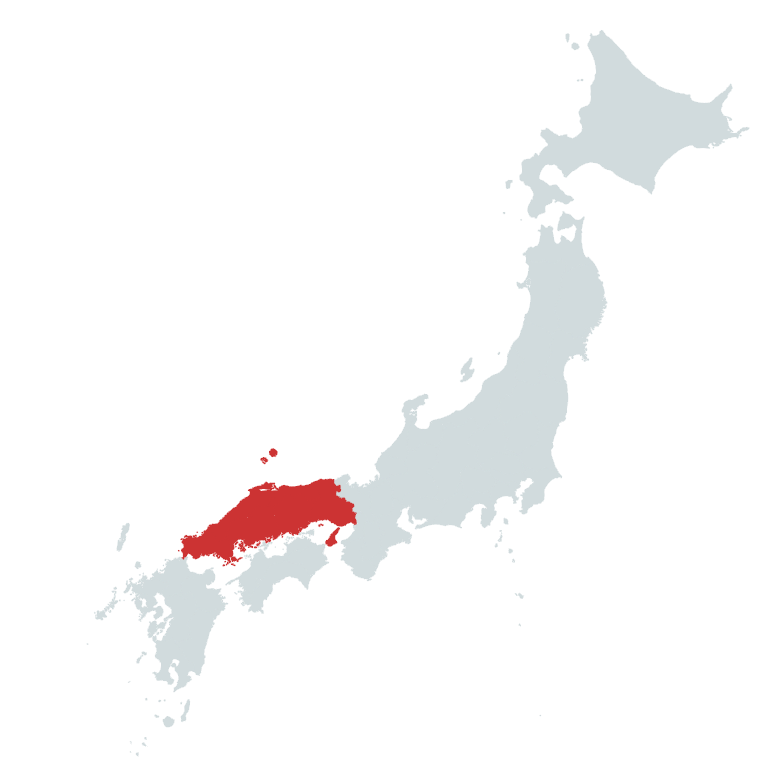
    The area that Hideyoshi either conquered or was fighting in during this period.

    In Spring 1582, Hideyoshi led an army of some 30,000 to besiege the mighty fortress at Takamatsu. Strategically vital for control of Bitchu Province, the castle was defended by 3,000 Mori warriors, who quickly called for aid. Mori Terumoto responded and began mustering an army that would eventually number over 50,000. Hideyoshi now faced a problem: already outnumbered, if he tried to take the formidable fortress by storm, he’d deplete his forces further. On the other hand, trying to starve the garrison, who knew help was on the way, would take too long and risk trapping his army between the walls of the fortress and the vengeful spears of the Mori.

    Hideyoshi responded in a typically inventive fashion. Unable to take the castle by storm, he ordered a levee built and the nearby river dammed, diverting water into Takamatsu itself, flooding the castle to such an extent that the garrison’s food supplies were almost completely ruined and they were reduced to communicating by boat.
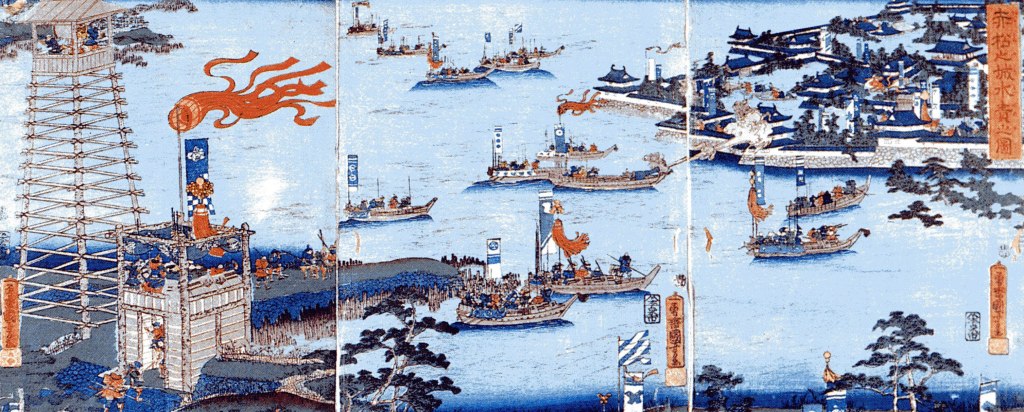
    A later depiction of the Siege of Takamatsu Castle. The tower to the left is Hideyoshi’s observation post, and you can see the castle itself flooded in the background.

    Despite this, the castle still held out, and when news arrived that Terumoto was on the march, Hideyoshi sent a message to Azuchi, requesting immediate reinforcement from Nobunaga. Sensing an opportunity to catch the powerful Mori clan in open battle, where they could be destroyed, Nobunaga quickly dispatched Akechi Mitsuhide to reinforce Hideyoshi, while he went to Kyoto to make arrangements for a larger force that would be sent to finish the job.

    As we already know, Mitsuhide never arrived; instead, he turned his forces around and attacked Nobunaga at his base at Honnoji, killing him and his heir. Hideyoshi was well placed to respond to this betrayal, and he swiftly concluded a peace treaty with the Mori (who were apparently initially unaware of Nobunaga’s death). Some have speculated that his rapid reaction is evidence of his involvement, or at least foreknowledge of the plot, though there’s nothing concrete to suggest that he was anything other than in the right place at the right time.
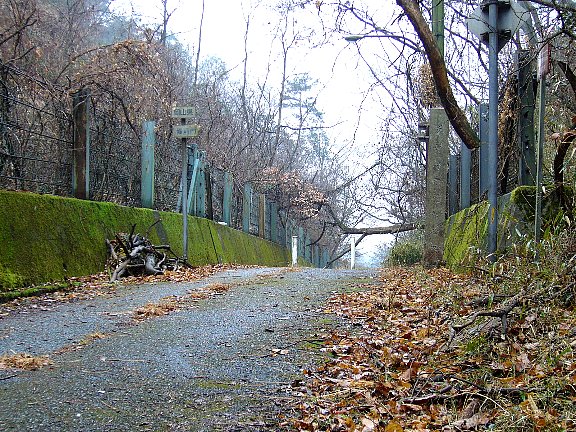
    Funasaka Pass as it appears today. This was one of the narrow routes that Hideyoshi’s army had to contend with during their remarkable march back towards Kyoto.
    Bakkai – 投稿者自身による著作物, CC 表示 3.0, https://commons.wikimedia.org/w/index.php?curid=92337495による

    More to the point, Hideyoshi was far from the only player on the board. Hideyoshi’s former rival, Shibata Katsuie, was to the north, with an army facing the Uesugi, while in the Kanto, Takigawa Kazumasu (sometimes called Sakon) had a large army intended to monitor the Hojo. Nobunaga’s son and heir had been killed during the Honno-ji Incident, but his third son, Nobukatsu, had gathered a force at Sakai (modern Osaka) to conquer Shikoku.

    Any one of these forces could have been the one to avenge Nobunaga’s death and put an abrupt end to Akechi Mitsuhide’s ambitions. Even Tokugawa Ieyasu was a potential avenger, making his famed escape from mortal danger with the (supposed) help of the famous Ninja of Iga. Ieyasu would return to his home in Mikawa and gather his forces, but events would move quickly, and though all parties moved against Mitsuhide, it was Hideyoshi who struck first.

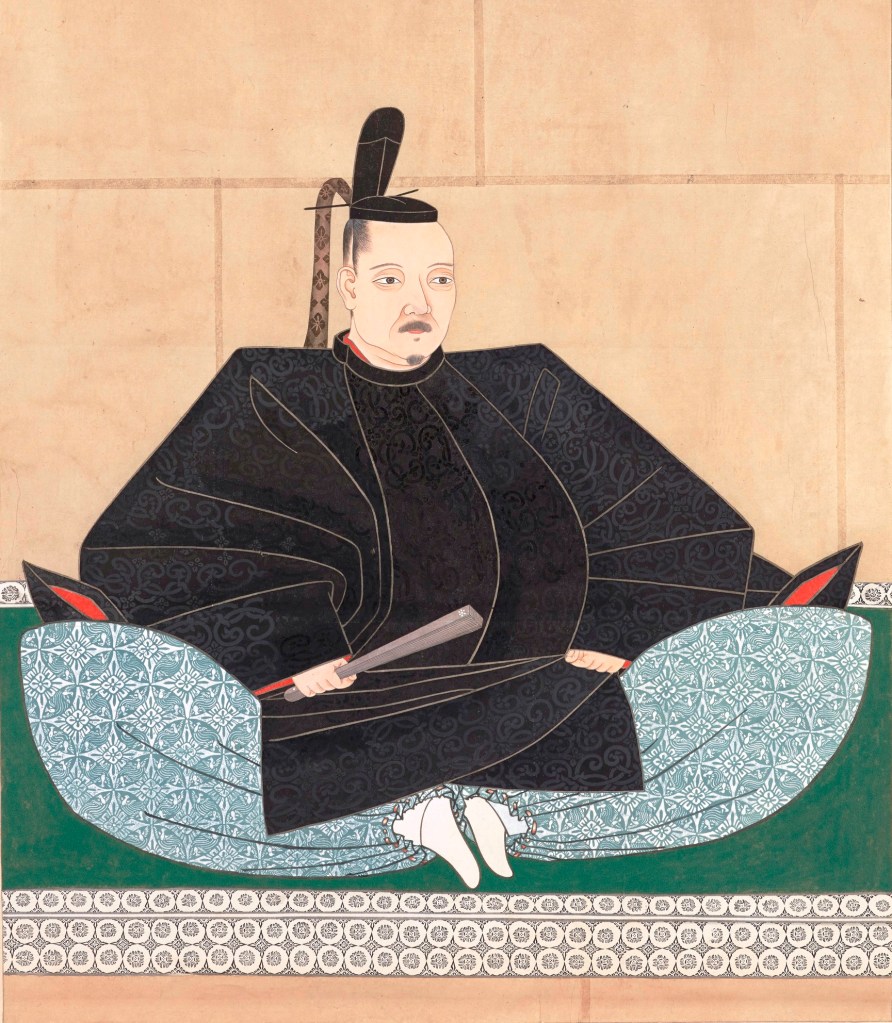
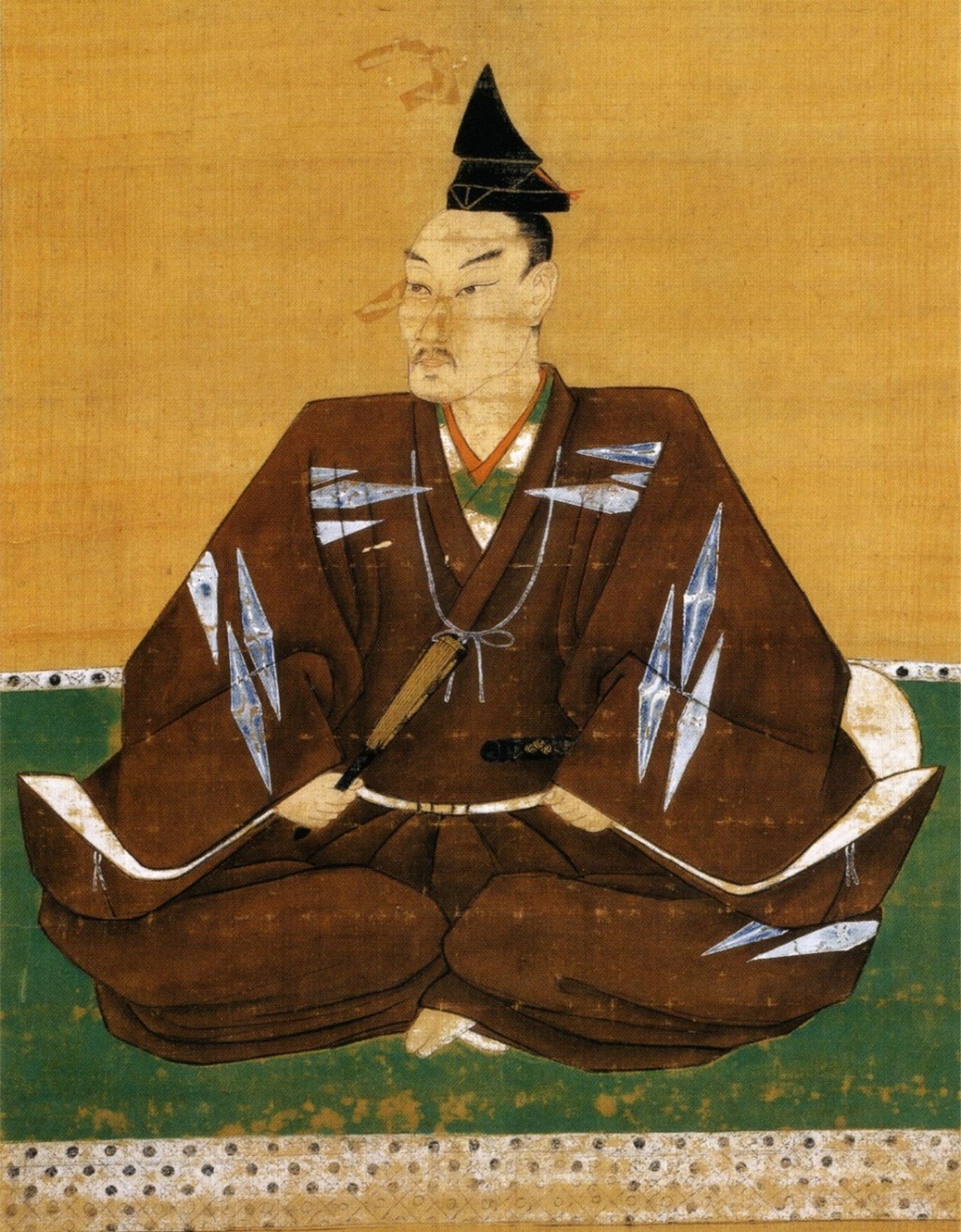
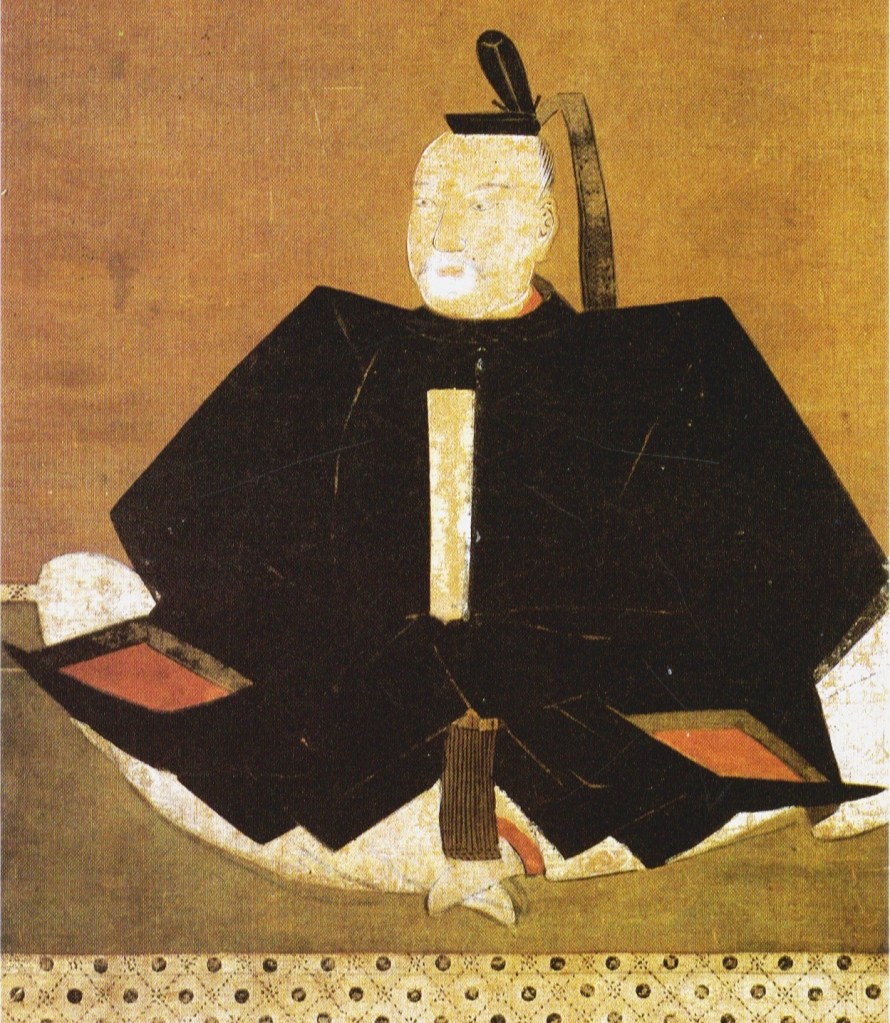
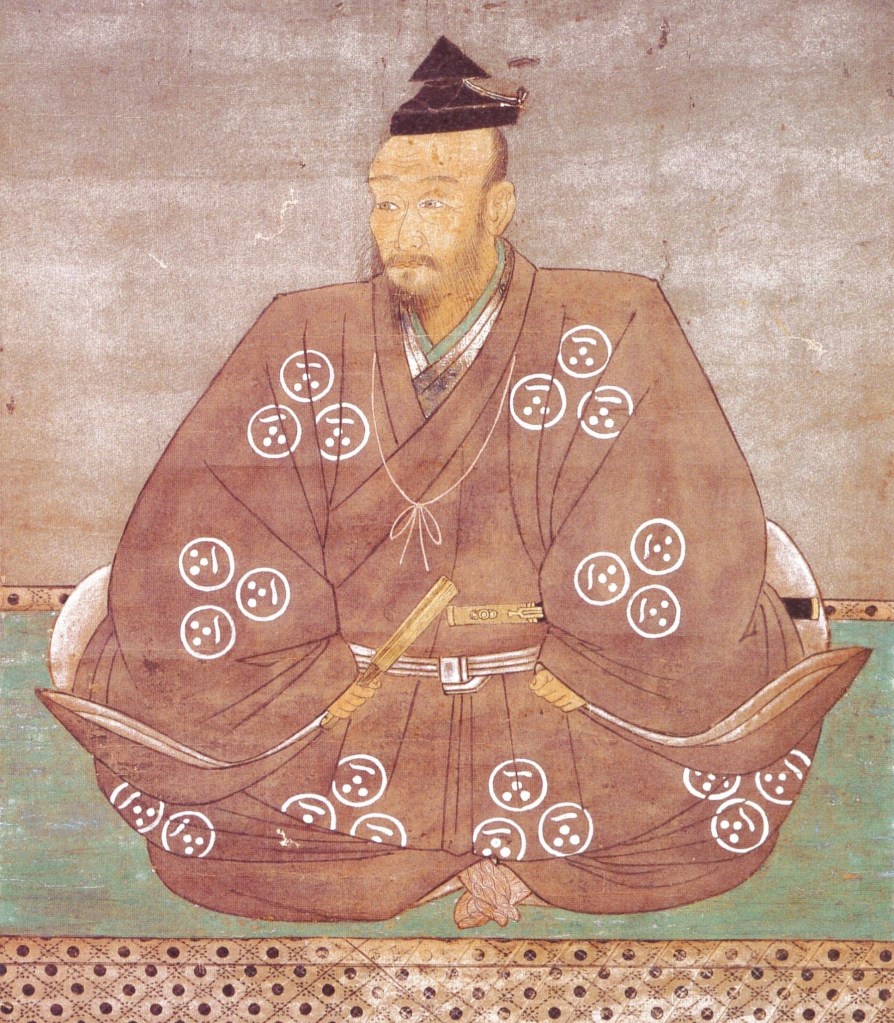
    Tokugawa Ieyasu as he appeared in later life. He was close to Kyoto during the Honnoji Incident and was forced to make a dramatic escape back to Mikawa. Hideyoshi would prove to be faster, but Ieyasu’s time would come.

    In the days following the Honnoji Incident, Mitsuhide moved to consolidate his position. Unfortunately for him, he faced harsh military and political opposition. On the one hand, Nobunaga’s body had not been recovered from the flames, and rumours abounded that he was still alive. Even among those who may have believed Nobunaga was dead, Mitsuhide commanded little respect. He was a traitor, after all, and surrounded by enemies who wished to avenge Nobunaga and take power for themselves.

    Militarily, Mitsuhide was too weak to assert effective control over much territory. He had between 13,000 and 15,000 men, but was obliged to capture and garrison several important castles, whittling his already limited forces down still further. Then there was the speed at which Hideyoshi moved. Mitushide arguably did what he could, and with the limited communications and transportation available at the time, it’s hard to see how he could have moved faster, but Hideyoshi was faster still, and on July 2nd, 1582, just 12 days after Honnoji, the two sides clashed at the Battle of Yamazaki, to the south-east of Kyoto.
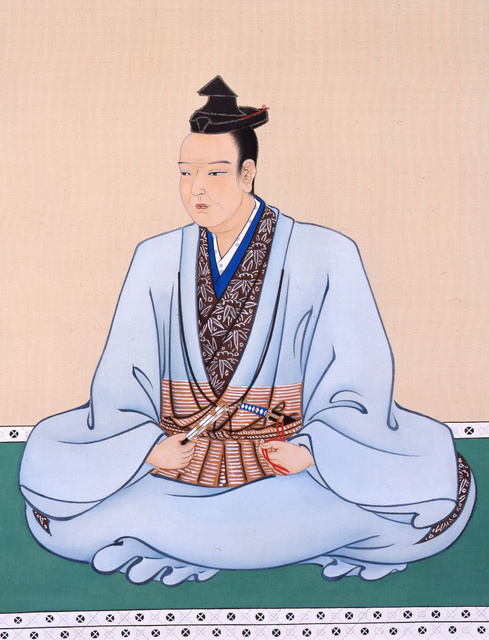
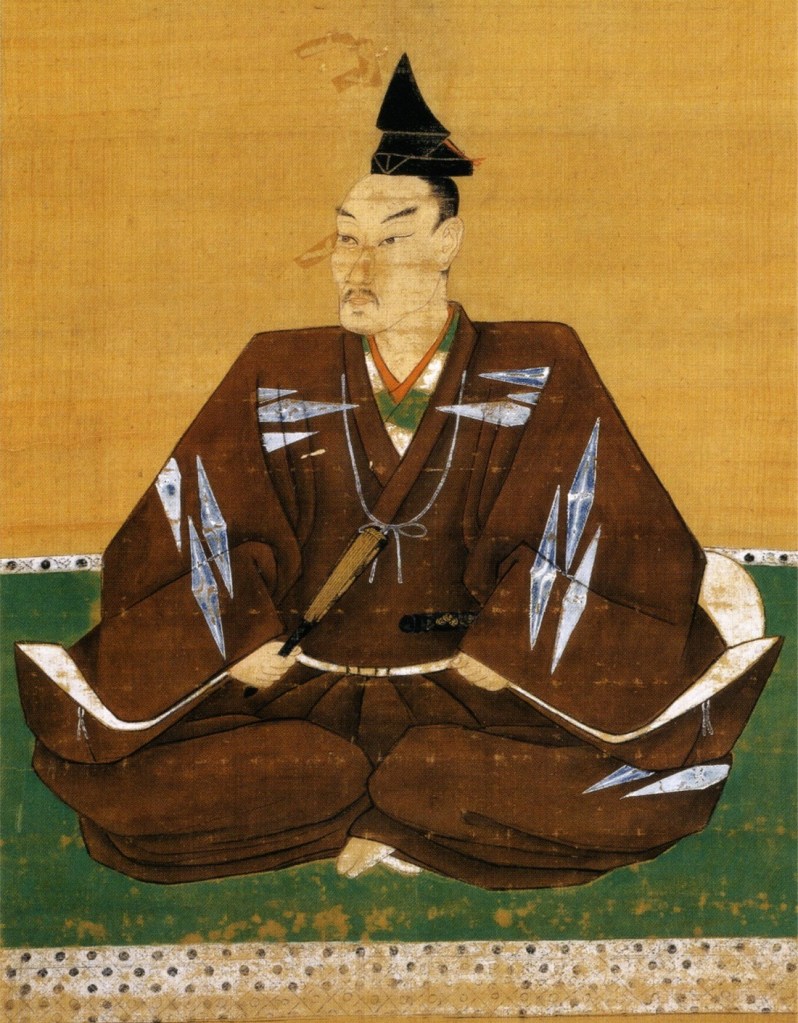
    Akechi Mitsuhide. Historians debate why he decided to betray Nobunaga, but within two weeks of the incident, he’d be dead.

    The numbers vary by source, but Hideyoshi is said to have had between 20 and 40,000 men, while Mitsuihides had 10 to 16,000. Despite the long odds, Mitsuhide’s army was well-positioned, and the ground around Yamazaki was boggy, limiting movement and reducing Hideyoshi’s advantage in numbers.

    Mitsuhide probably understood that a defensive victory against difficult odds would have greatly enhanced his prestige, and for most of the day, Hideyoshi’s army took heavy losses in vicious frontal assaults. Around 4pm, however, reinforcements arrived for Hideyoshi, outflanking Mitsuhide’s position, and causing his army to fall back. As the battle moved to higher and drier ground, Mitsuhide’s force was gradually surrounded and forced back.
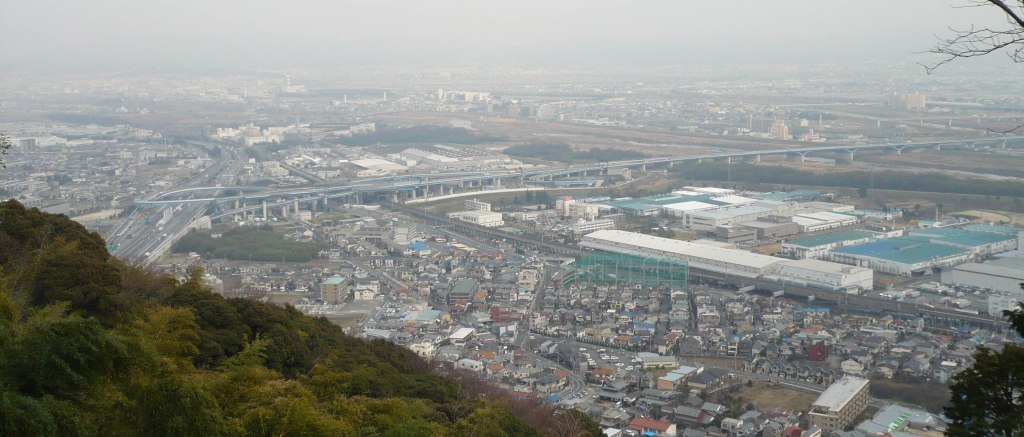
    The battlefield of Yamazaki as it appears today. Historians believe the heaviest fighting took place around the bypass that can be seen in the centre.

    Later sources suggest that the casualties were about the same (around 3,000 each), but under attack from three sides, the morale of Mitushide’s army broke first, and by sunset, their retreat became a rout. When the battle was over, it is said that Mitsuhide had just 700 men remaining. His exact fate isn’t clear; some say he was wounded and committed seppuku, while others suggest he was killed by vengeful peasants or bandits. Either way, his head was brought to Hideyoshi the day after the battle, and then displayed at Honnoji, a powerful statement confirming Hideyoshi as Nobunaga’s ‘avenger’ and giving an enormous boost to his credibility.

    Hideyoshi would spend a few weeks stamping out the last embers of Mitushide’s rebellion, but despite his military successes, he was not unchallenged as Nobunaga’s successor. The other players, who had all been poised to strike, still remained in the field, and each had their own ambition to rule, either directly or through one of Nobunaga’s other sons.

    This would result in the Kiyosu Conference, but we’ll cover that and its consequences next time.

    Sources
    https://ja.wikipedia.org/wiki/%E8%B1%8A%E8%87%A3%E7%A7%80%E5%90%89
    https://ja.wikipedia.org/wiki/%E5%B1%B1%E5%B4%8E%E3%81%AE%E6%88%A6%E3%81%84
    https://ja.wikipedia.org/wiki/%E6%9C%AC%E8%83%BD%E5%AF%BA%E3%81%AE%E5%A4%89
    https://ja.wikipedia.org/wiki/%E4%B8%AD%E5%9B%BD%E5%A4%A7%E8%BF%94%E3%81%97
    https://ja.wikipedia.org/wiki/%E5%B1%B1%E5%90%8D%E5%A0%AF%E7%86%99
    https://ja.wikipedia.org/wiki/%E4%B8%89%E6%9C%A8%E5%90%88%E6%88%A6
    https://ja.wikipedia.org/wiki/%E6%9C%89%E5%B2%A1%E5%9F%8E%E3%81%AE%E6%88%A6%E3%81%84
    https://ja.wikipedia.org/wiki/%E5%A7%AB%E8%B7%AF%E5%9F%8E
    https://ja.wikipedia.org/wiki/%E5%82%99%E4%B8%AD%E9%AB%98%E6%9D%BE%E5%9F%8E%E3%81%AE%E6%88%A6%E3%81%84
    https://ja.wikipedia.org/wiki/%E9%AB%98%E6%9D%BE%E5%9F%8E_(%E5%82%99%E4%B8%AD%E5%9B%BD)
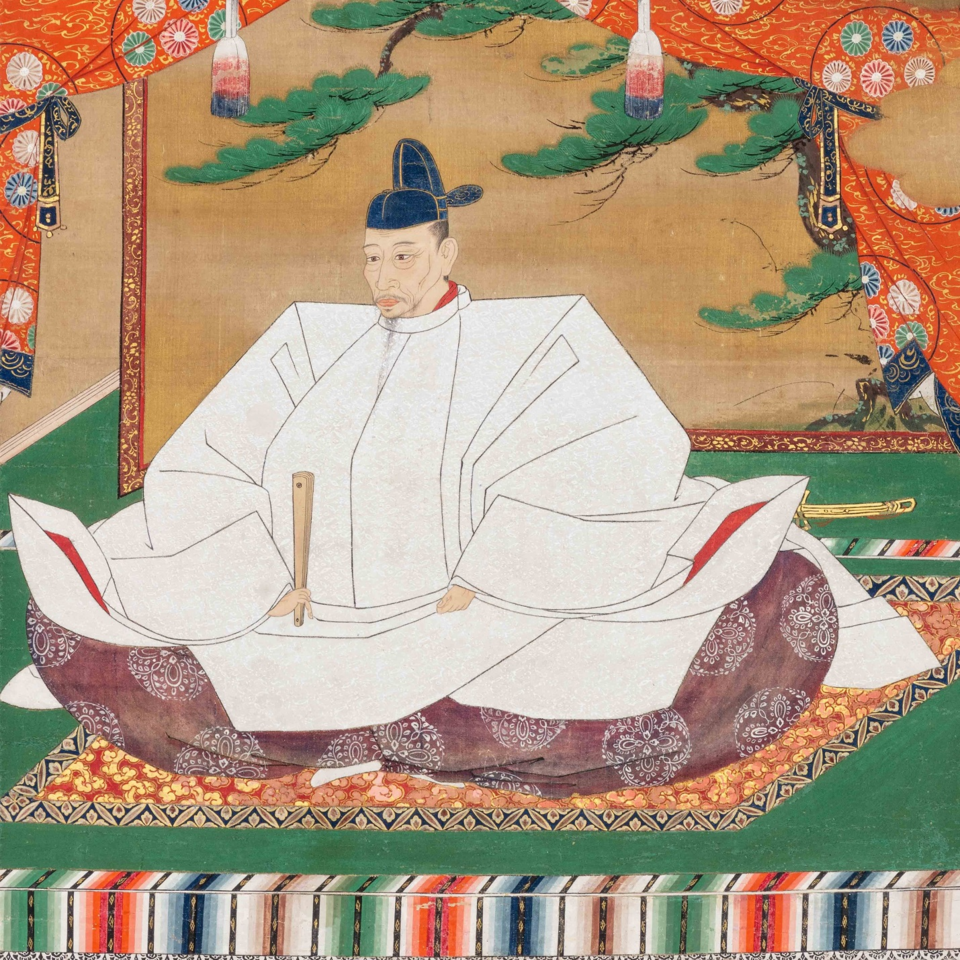
  • The Second Unifier – Toyotomi Hideyoshi. Part One.

    The Second Unifier – Toyotomi Hideyoshi. Part One.

    If the bird will not sing, make it sing.

    Oda Nobunaga’s death in June 1582 left a power vacuum that was ultimately filled by Toyotomi Hideyoshi (then using the family name Hashiba). Hideyoshi’s tale is remarkable even by the standards of the time: from peasant footsoldier to master of the realm, he epitomised the danger and opportunity of the Sengoku Jidai and would be the man most responsible for bringing it to an end.

    Hideyoshi’s origins are suitably mysterious and have been subject to a fair bit of speculation and mythologising, mostly by the man himself. After his rise to power, he is supposed to have spread the rumour that he was a secret bastard of the Emperor, stating that his mother had been a maid in the Imperial Palace and had “grown close to the Emperor’s Body”, which is quite the thing to say about your own mother.

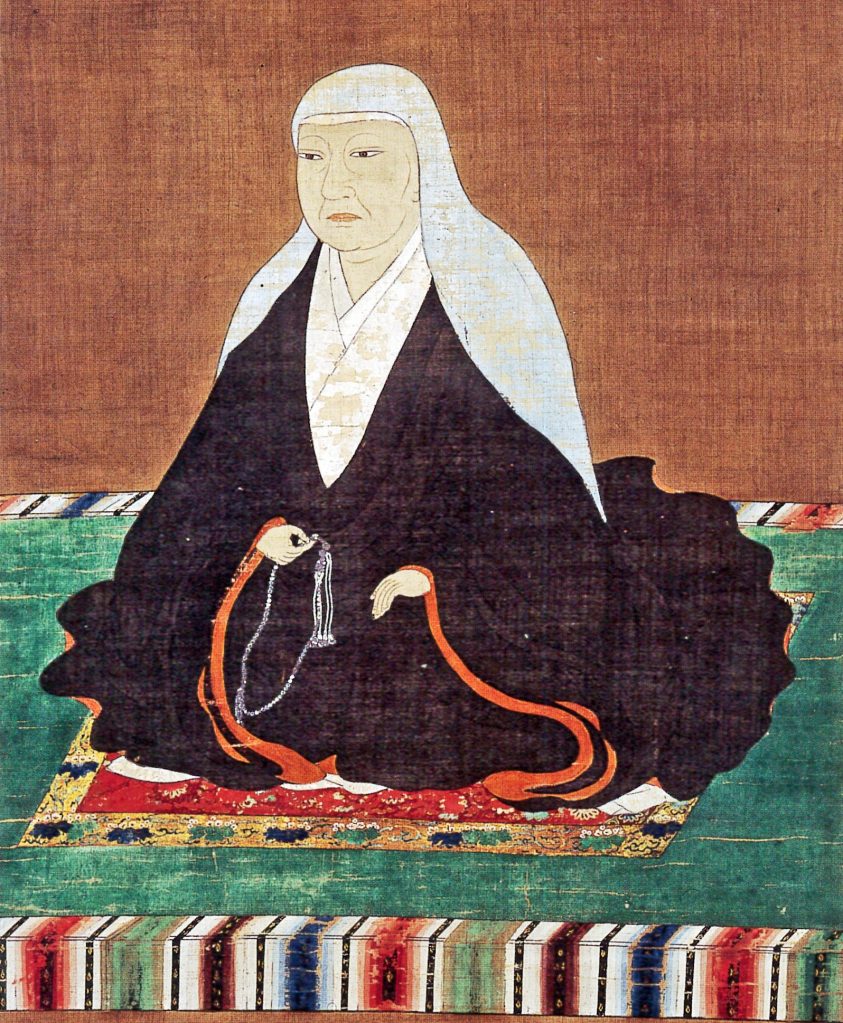
    Hideyoshi’s mother. She is often called Omandokoro, though this is the name she took after becoming a nun, and most sources think her birth name was Naka.

    Less mum-shaming sources suggest that Hideyoshi was born in 1536 or 37 in Owari Province, now part of the modern city of Nagoya. His father, usually recorded as Kinoshita Yaemon, is a similarly mysterious figure, but historians generally agree he was probably of the lower classes, most likely a peasant soldier (Ashigaru). Hideyoshi’s childhood is also poorly recorded, with some sources suggesting his father died when he was 7, after which Hideyoshi entered a monastery, though he left shortly afterwards.

    At the age of 15, he received part of his inheritance and left home to become a wanderer. Sometime later (the dates are unclear), he is recorded as Kinoshita Hideyoshi in the service of the Iio Clan, which, in turn, was a vassal of the Imagawa Clan. It’s not certain exactly when he came into the service of the Oda Clan, but it appears to have been before 1554, when he was serving at Kiyosu Castle (under Oda control) in charge of the kitchens, and in some kind of role in construction or maintenance.

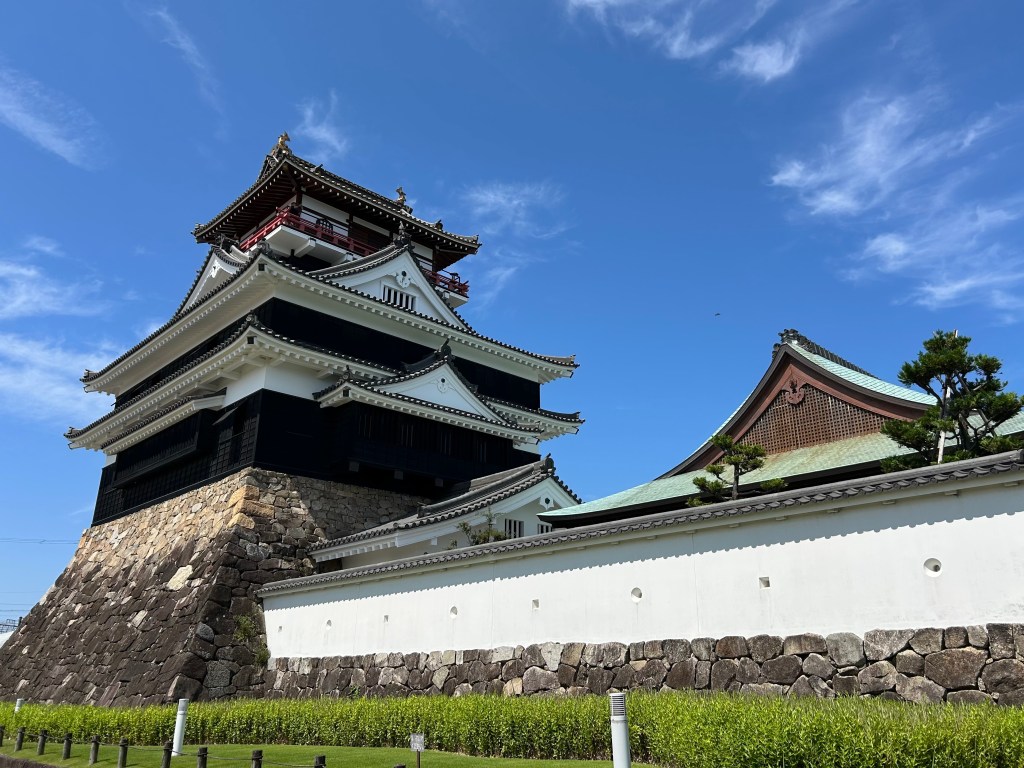
    Kiyosu Castle as it appears today.

    Even this is a matter of some debate, though, as other sources state he didn’t join the Oda until 1558 (though they agree he served at Kiyosu Castle), and a common origin story in English language sources is that he was Nobunaga’s sandal bearer, a story which possibly reflects his role as a kind of ‘military servant’ which might explain how he was able to gain recognition from Nobunaga.

    Even the matter of Hideyoshi’s marriage is subject to debate; it is certain that he married Nene, but her origins and even the year of the marriage aren’t totally clear. Some sources say the marriage took place in 1561, when Nene was 12 or 13, and Hideyoshi was in his 20s. This earlier date is controversial because even though 13 was the age at which girls became adults (legally speaking), it was still considered unusual for a girl to marry as soon as she came of age.

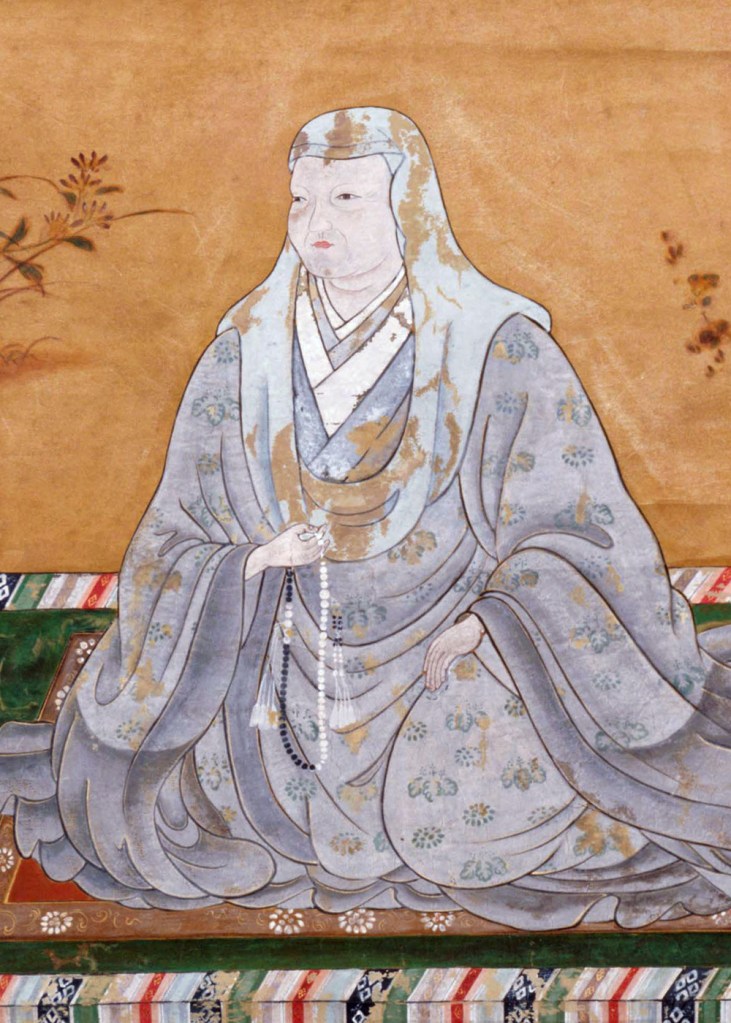
    Hideyoshi’s wife, Nene, who also became a Nun, is often recorded as Kodai-in as a result.

    Another theory is that the marriage took place in 1565, when Nene was 16 or 17, still young by modern standards, but a far more acceptable age at the time. Nene’s adoptive father was Asano Nagakatsu, who would later receive a stipend of 300 Koku from Nobunaga and served as one of his bodyguards. This status suggests that Nagakatsu was of sufficient rank, and the marriage to Nene is often cited as evidence that Hideyoshi was already moving up in the world by the mid-1560s.

    As well as his marriage, further evidence of his rise in Nobunaga’s service appears in 1565 when his name appears as the co-signer on documents assigning fiefs, suggesting he was already one of Nobunaga’s most important vassals. Throughout the back half of the decade, he is recorded as having taken part in several of Nobunaga’s campaigns, notably taking Mitsukuri Castle during the Omi Campaign in 1568.

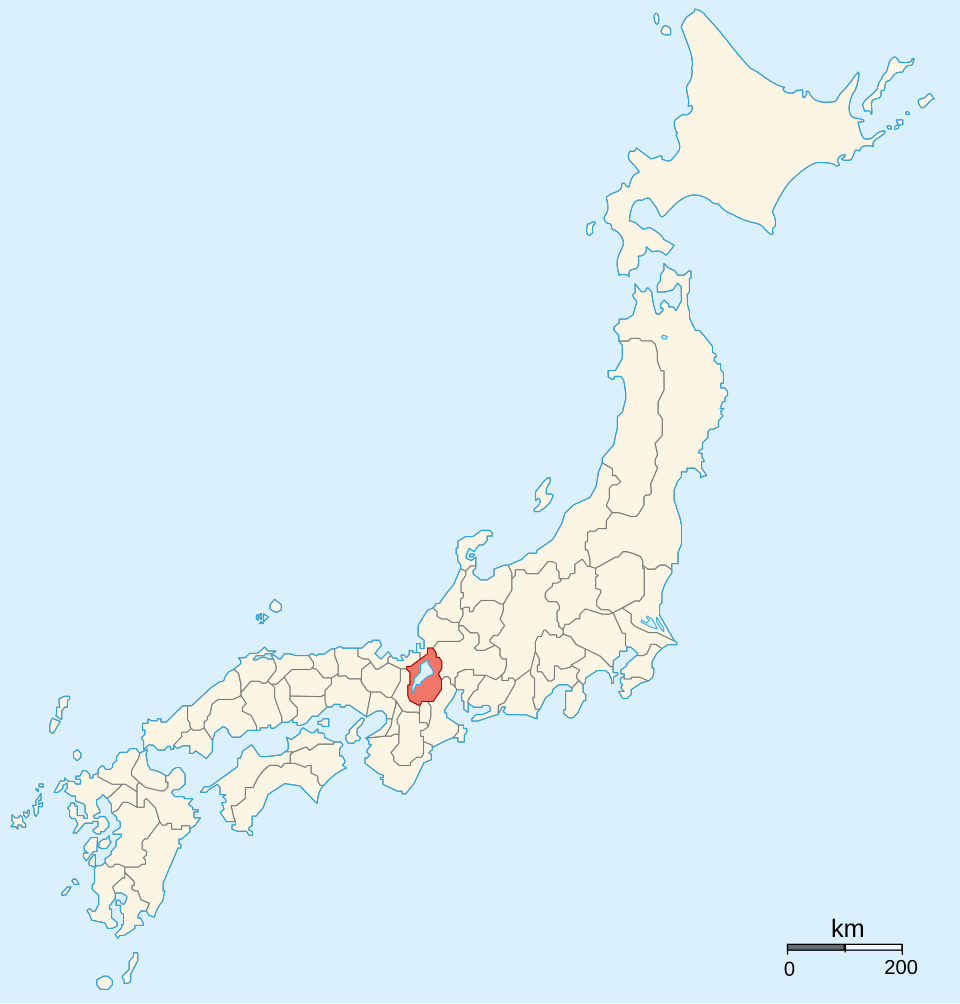
    Omi Province.
    By Ash_Crow – Own work, based on Image:Provinces of Japan.svg, CC BY 2.5, https://commons.wikimedia.org/w/index.php?curid=1690755

    In 1569, in support of the Mori Clan (who were his temporary allies), Nobunaga dispatched a force of some 20,000 to support them against a rebellion, whilst the bulk of the Mori forces were in Kyushu fighting the Otomo clan. This army, led by Hideyoshi, was, by all accounts, a phenomenal success, capturing no fewer than 18 castles in just 12 days and ending the rebellion swiftly.

    A year later, he was part of Nobunaga’s campaign against the Asakura Clan of Echizen Province, which ended when Nobunaga’s brother-in-law, Azai Nagamasa, switched sides, threatening to cut off Nobunaga’s retreat. Though the exact scale of the threat is debated (as I mentioned in my posts on Nobunaga himself), what is certain is that Hideyoshi led the rearguard and was instrumental in ensuring that his master was able to escape.

    Azai Nagamasa, Nobunaga’s brother-in-law, whose betrayal nearly spelt disaster for his campaign.

    After the Battle of Anegawa, in which Nobunaga avenged himself on the Azai-Asakura forces, Hideyoshi was appointed castellan of the strategically important Yokoyama Fortress, from which he would be tasked with keeping up the pressure on the remnants of the Azai-Asakura until their final destruction in 1573.

    I’ve previously mentioned the tradition of changing names among Samurai and how it often leads to confusion when you’re trying to source information about specific figures who may have had several names. While Hideyoshi is generally remembered as “Toyotomi Hideyoshi” in English-language sources, this wasn’t his name until much later. His peasant origins mean that he likely didn’t have a surname at all, and the names he was known by later were either taken from places or bestowed by others.

    Shibata Katsuie
    Niwa Nagahide

    In 1573, Hideyoshi adopted the name Hashiba. The origins of this name are somewhat unclear; a common theory is that he took one character each from Shibata Katsuie and Niwa Nagahide (the Japanese character ‘wa’ can also be pronounced ‘ha’), though this is disputed.

    Along with a name change, the fall of the Azai Clan in 1573 resulted in Hideyoshi receiving their former lands around the shores of Lake Biwa. He based himself at Imahama, which is promptly renamed Nagahama, after Nobunaga. This was not some unique quirk of his, by the way, the ‘giving’ of character from prestigious names was a common occurrence, and was generally treated as a respectful and honoured thing to do.

    Nagahama Castle as it appears today.
    By 663highland, CC BY 2.5, https://commons.wikimedia.org/w/index.php?curid=73322120

    He continued to play a significant role in Nobunaga’s military expansion, serving at the decisive Battle of Nagashino in 1575, and capturing Kiriyama Castle from the powerful Kitabatake Clan of Ise Province the next year. In 1577, Hideyoshi’s star seemed to be on an inexorable rise, but personal rivalries would get in the way.

    Nobunaga dispatched an army under Shibata Katsuie to face Uesugi Kenshin in the north. Now, you may remember from my post about him, but Kenshin was a formidable opponent, a rival to both Hojo Ujiyasu and Takeda Shingen; he was certainly not a man to take lightly. Nobunaga obviously understood this and dispatched reinforcements commanded by Hideyoshi.

    Uesugi Kenshin

    At this point, a simmering feud between Hideyoshi and Katsuie exploded. The exact nature of the argument isn’t recorded in contemporary sources, and later writers could only speculate; however, it is known that Hideyoshi literally took his army and went home. This open defiance of Nobunaga’s orders would have been bad enough, but when Katsuie was defeated shortly afterwards at the Battle of Tedorigawa, Nobunaga was furious.

    Hideyoshi was arguably lucky to keep his head after that, and he would spend some time in the political wilderness. His time would come again, however, and we’ll talk about that next week.

    Sources
    https://ja.wikipedia.org/wiki/%E8%B1%8A%E8%87%A3%E7%A7%80%E5%90%89
    https://ja.wikipedia.org/wiki/%E6%89%8B%E5%8F%96%E5%B7%9D%E3%81%AE%E6%88%A6%E3%81%84
    https://ja.wikipedia.org/wiki/%E9%95%B7%E6%B5%9C%E5%9F%8E_(%E8%BF%91%E6%B1%9F%E5%9B%BD)
    https://ja.wikipedia.org/wiki/%E9%9C%A7%E5%B1%B1%E5%9F%8E
    https://ja.wikipedia.org/wiki/%E9%87%91%E3%83%B6%E5%B4%8E%E3%81%AE%E6%88%A6%E3%81%84
    https://ja.wikipedia.org/wiki/%E5%A7%89%E5%B7%9D%E3%81%AE%E6%88%A6%E3%81%84
    https://ja.wikipedia.org/wiki/%E6%A8%AA%E5%B1%B1%E5%9F%8E_(%E8%BF%91%E6%B1%9F%E5%9B%BD)
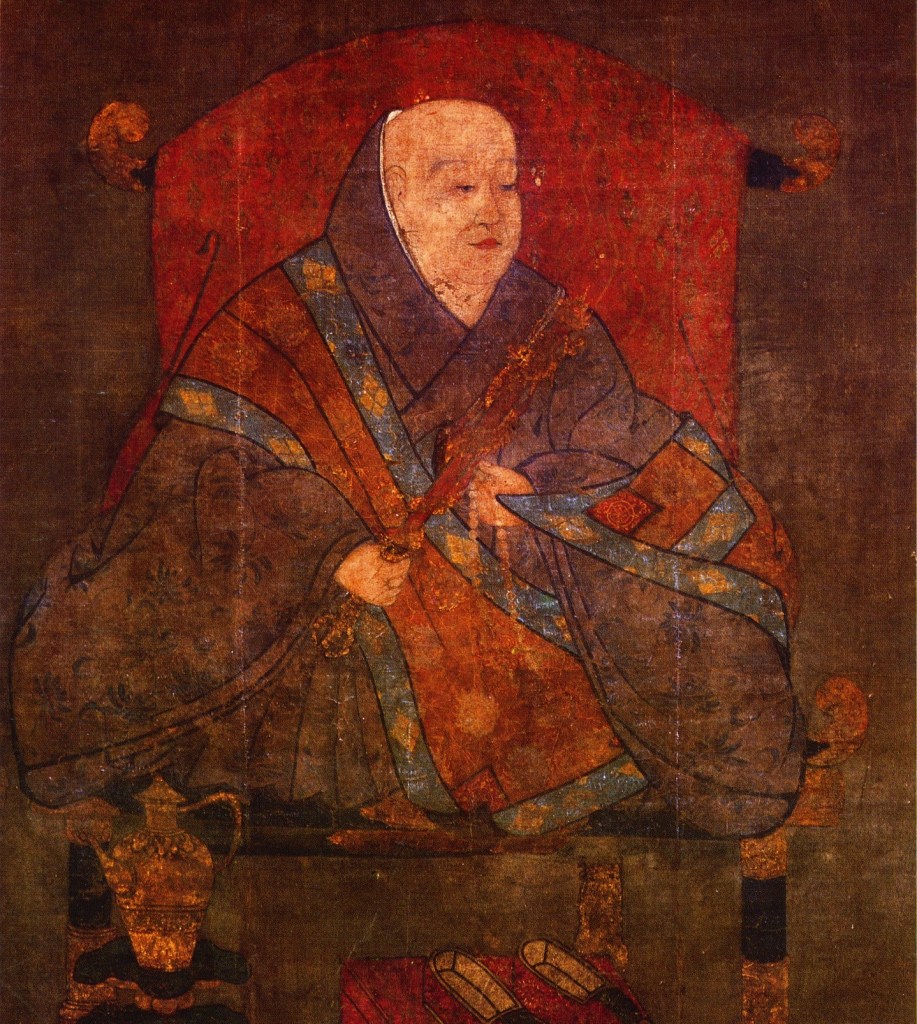
    https://ja.wikipedia.org/wiki/%E4%B8%B9%E7%BE%BD%E9%95%B7%E7%A7%80
    https://ja.wikipedia.org/wiki/%E8%A6%B3%E9%9F%B3%E5%AF%BA%E5%9F%8E%E3%81%AE%E6%88%A6%E3%81%84
    https://ja.wikipedia.org/wiki/%E9%AB%98%E5%8F%B0%E9%99%A2
    https://ja.wikipedia.org/wiki/%E6%B5%85%E9%87%8E%E9%95%B7%E5%8B%9D
    https://ja.wikipedia.org/wiki/%E9%A3%AF%E5%B0%BE%E6%B0%8F
    https://ja.wikipedia.org/wiki/%E5%A4%A7%E6%94%BF%E6%89%80

  • The Hosokawa Rebellion

    The Hosokawa Rebellion

    As we’ve looked at previously, internal clan conflict wasn’t uncommon during the 15th century; in fact, it had gotten to the point that violent succession struggles were almost a fact of life. One exception to this rule had been the Hosokawa Clan.

    In the mid-15th Century, the Hosokawa were just one of several powerful clans that dominated the area around Kyoto, the centre of political power in the realm. While other clans had risen and fallen throughout the Century, the Hosokawa went from strength to strength, in large part because they managed to maintain a stable succession, leading to one of their number, Hosokawa Masatomo, being strong enough to launch the Meio Coup in 1493, giving him effectively complete control of the government and what was left of its prestige.

    Hosokawa Masatomo, who arguably led his clan to the height of its power, and laid the groundwork for its downfall.

    The relative stability of the Hosokawa Clan came to an end with Masatomo, however. He had succeeded his father largely because he had been the only viable candidate and had earned the support of his clan’s vassals after his father’s death. Masatomo apparently didn’t learn from this, however. Firstly, his spiritual beliefs meant that he swore off contact with women, which rather limited his opportunities to father an heir.

    This was no problem, though; adoption was(and continues to be) a widely accepted custom amongst the rich and powerful in Japan, and all Masatomo had to do was select a candidate who could earn the support of the wider Hosokawa Clan, and their position would be (relatively) secure.

    It must have come as quite a shock then, when Masatomo adopted not one, but three sons. To be fair, he didn’t adopt them all at once, and most contemporary sources speculate that his intentions were to split the Hosokawa lands between his new heirs, but you won’t be surprised to learn that it didn’t work out that way.

    No sooner was the ink dry on the adoption documents than rival factions began to form around the three potential heirs. Masatomo didn’t help matters by clearly favouring one son, Sumitomo, over the other two, but the whole situation would have been precarious even under the best of circumstances, and the Hosokawa certainly didn’t enjoy those.

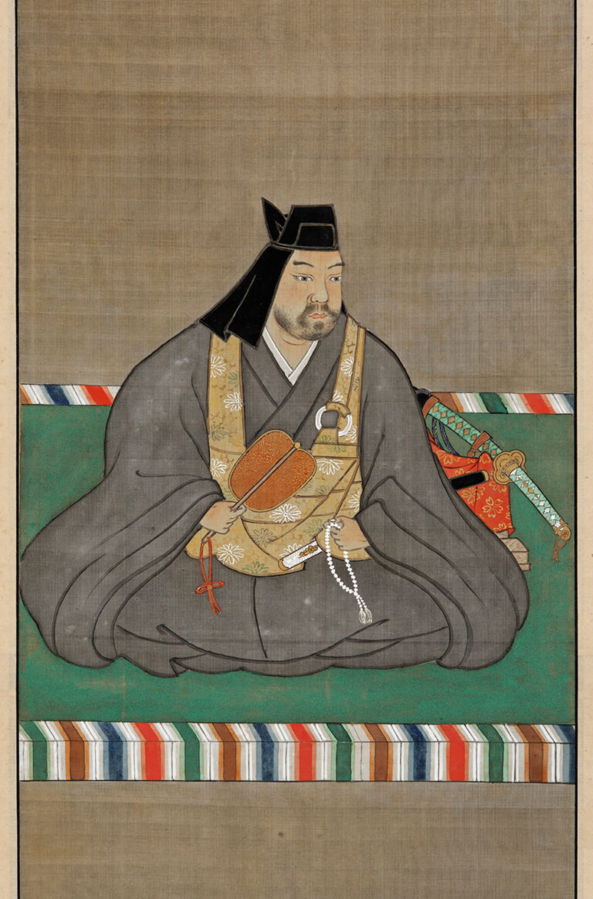
    Hosokawa Sumitomo, Masatomo’s apparently preferred heir.

    We’ve looked at the wide-ranging political problems the Shogunate faced during the latter half of the 15th century, and when Masatomo seized control of the government, he also inherited those problems. It’s hard to see how even the most focused, capable, and diplomatic leader might have reversed the situation the Shogunate found itself in, and unfortunately for the Hosokawa, Masatomo was an eccentric iconoclast, prone to doing things like attempting to fly, deriding long-standing ceremonies, and generally making political enemies wherever he went.

    It is a strange quirk of human history, though, that factions who seem to have hostile (and often violent) intentions towards each other will exist in a kind of tense equilibrium as long as there is someone, or something, that they can focus their ire on. In the early 16th century, that someone was Masatomo.

    None of the three factions was strong enough to openly oppose him, because if they had, they’d have been attacked and wiped out by the other two, who would need little encouragement to remove a rival, even if that meant supporting Masatomo in the short term.

    It is also true that, eventually, the dam always breaks, and when it comes to court politics, that usually means blood. In June 1507, supporters of one of Masatomo’s adopted sons (Sumiyuki) assassinated him in his bathhouse. The next day, they attempted to do the same thing to another son, Sumitomo, but he managed to escape with the help of his allies in the Miyoshi Clan.

    Just a moment ago, I mentioned that one faction couldn’t make a move without antagonising the other three, and that’s exactly what happened. Sumiyuki’s supporters had tried to remove Sumitomo and failed. Now, Sumitomo fled Kyoto and sought the aid of the third brother, Takakuni, who was only too happy to oblige.

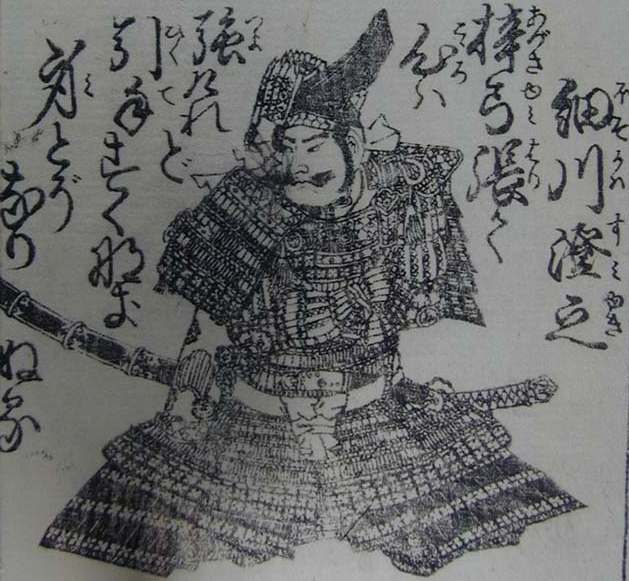
    The stylised end of Hosokawa Sumiyuki.
    Musuketeer.3 – 投稿者自身による著作物, CC 表示-継承 3.0, https://commons.wikimedia.org/w/index.php?curid=24893374による

    The combined forces of Takakuni and Sumitomo were indeed too much for Sumiyuki, and by August, he had been defeated and forced to commit suicide. The question then was who would actually succeed Masatomo. Both Takakuni and Sumitomo could arguably claim to have avenged their adopted father’s death, and both had significant support from the remaining Hosokawa retainers.

    As we mentioned last time, it is at this point that the previously deposed Shogun, Yoshitane, returned to the scene. Given that Masatomo had overthrown him in a coup and installed a puppet, it wasn’t difficult to convince Shogunate loyalists to side with Yoshitane. Suddenly, becoming heir to the Hosokawa Clan wasn’t quite the prize it had been. Though Sumitomo was in the stronger position, he now faced a resurgent Yoshitane, and his brother, Takakuni, saw the way the wind was blowing and threw in his lot with the returning Shogun as well.

    Just as Sumiyuki had been unable to oppose the combined forces of his brothers, Sumitomo did not have the strength to challenge the Shogun and Takakuni. Sumitomo also lost considerable support due to the actions of his supporters in the Miyoshi Clan, who had become overbearing in the short period after their victory.

    So, in April 1508, when Yoshitane and Takakuni marched on Kyoto, Sumitomo and the Miyoshi had little choice but to flee with their puppet Shogun, Yoshizumi. Shortly after this, Yoshitane was reinstated as Shogun, and Takakuni was named the new head of the Hosokawa Clan.

    The once and future Shogun, Yoshitane, picked the right moment to return to the political scene.

    In June the following year, Sumitomo and the Miyoshi attempted to retake the city but were defeated and driven back; however, a counterattack led by Yoshitane was similarly defeated. The back-and-forth nature of the conflict continued until the Battle of Ashiyagawara (sometimes called the Siege of Takao Castle), in the summer of 1511, after which Sumitomo’s victorious forces were able to briefly reoccupy Kyoto.

    ‘Briefly’ is the operative word here, because in September of the same year, Takakuni and Yoshitane’s forces counterattacked, retook Kyoto, and drove Sumitomo and the Miyoshi back to their strongholds in Awa Province, across the Inland Sea on Shikoku.

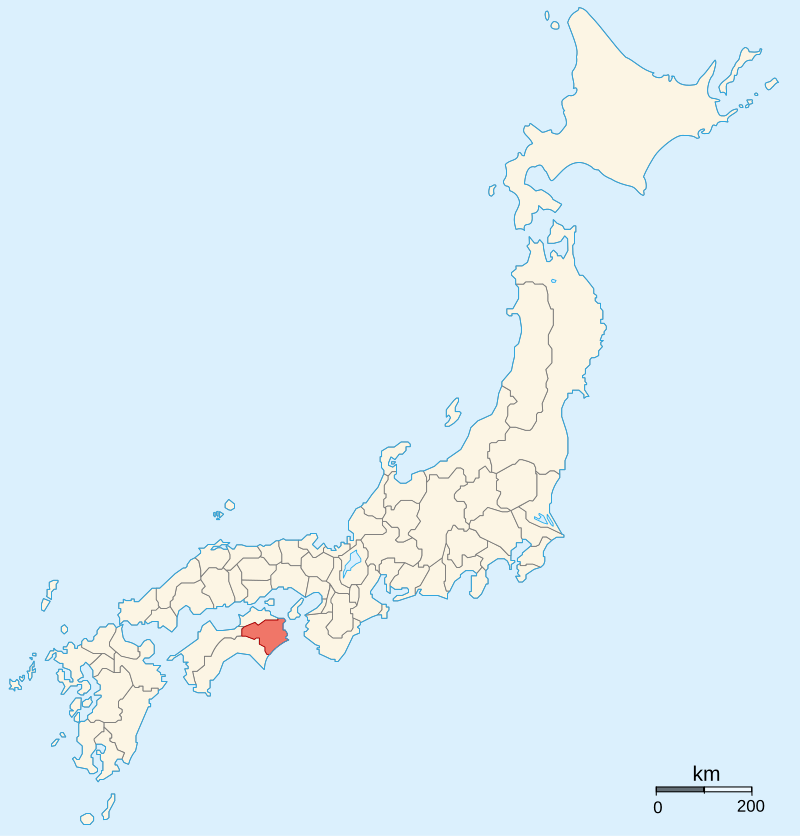
    Awa Province.
    By Ash_Crow – Own work, based on Image:Provinces of Japan.svg, CC BY 2.5, https://commons.wikimedia.org/w/index.php?curid=1652119

    Around this time, Yoshizumi died of illness, and Sumitomo suffered a serious loss of support. Many of his allies had supported Yoshizumi as Shogun, and Sumitomo as his champion, but now Yoshizumi was gone, Yoshitane, who was now firmly entrenched in Kyoto, was the only remaining claimant to the title, and many Shogunate loyalists deserted to him, weakening Sumitomo and strengthening Takakuni.

    Ashikaga Yoshizumi, whose death proved that a puppet shogun is better than no Shogun at all.

    This stalemate did not mean peace, however, and constant, low-level fighting would continue throughout the region and the wider realm; what would later be called the Sengoku Jidai was already well underway, even if the area immediately around Kyoto was relatively quiet.

    In 1517, the stalemate was broken when Miyoshi forces in support of Sumitomo invaded Awaji and used it as a springboard to threaten the mainland. Around this time, the Ouchi Clan, who had supported Takakuni and Yoshitane for the better part of 10 years, left the capital to deal with unrest in their home provinces, caused by the apparent resurgence of Sumitomo and the Miyoshi’s faction.

    The departure of the Ouchi was a major blow to Takakuni, and over the next two years, he saw his position gradually chipped away, as forces defected to Sumitomo or simply abandoned the fight to deal with their own affairs. Finally, in early 1520, Shogun Yoshitane himself switched sides, throwing his support behind Sumitomo and forcing Takakuni to flee Kyoto.

    Ouchi Yoshioki, the head of the Ouchi Clan, whose decision to leave Kyoto seriously weakened Takakuni.

    Takakuni fled to Omi Province, but he wasn’t ready to roll over just yet. Gathering a force of his allies, he counter-attacked in May 1520 and retook the capital. This time, his victory was decisive; he forced the leader of the Miyoshi Clan to commit suicide and even managed to drive Sumitomo back into exile on Shikoku, where he died of illness shortly afterwards.

    The following year, Takakuni exiled the fickle Yoshitane and installed Ashikaga Yoshiharu, the son of Yoshizumi, as Shogun, though he was just as much a puppet ruler as his father had been. Takakuni was appointed kanrei (deputy) for the new Shogun’s enthronement ceremony, but would resign the position immediately afterwards, proving to be the last man to hold the position, according to historical records.

    It wouldn’t be until October 1524 that the last embers of Miyoshi resistance were stamped out on Shikoku, but even then, Takakuni was far from secure in his position. In 1526, he faced serious opposition from within his own clan and was defeated when he tried to march against them. In 1527, this combined force actually managed to drive Takakuni out of Kyoto, and an attempted counterattack was defeated at the Battle of Katsuragawa in March that year.

    Takakuni, ever tenacious, refused to give up, despite being defeated in 1528 and again in 1530. Things finally came to a head for him in 1531, at the Battle of Tennoji, which is often called the Daimotsu Kuzure, which can be translated as “The Fall of the Big Shots” (lit. big names fall, or collapse).

    The Battlefield Memorial of the Fall of the Big Shots.

    Takakuni was defeated. He survived the battle but was captured shortly afterwards, supposedly whilst hiding in an indigo storage barrel at a dye shop, after which he was obliged to commit suicide. Several of his main supporters (the eponymous “Big Names”) suffered similar fates, and Takakuni’s faction disintegrated.

    Takakuni’s body was likely still warm (and probably blue, given his hiding place) when the forces that had opposed him turned on each other. Members of the Hosokawa, Hatakeyama, and Miyoshi Clans all began fighting, and any hope of retaining a stable government in Kyoto was lost.

    Sources
    https://ja.wikipedia.org/wiki/%E6%B0%B8%E6%AD%A3%E3%81%AE%E9%8C%AF%E4%B9%B1
    https://ja.wikipedia.org/wiki/%E5%A4%A7%E7%89%A9%E5%B4%A9%E3%82%8C
    https://ja.wikipedia.org/wiki/%E6%A1%82%E5%B7%9D%E5%8E%9F%E3%81%AE%E6%88%A6%E3%81%84
    https://ja.wikipedia.org/wiki/%E8%B6%B3%E5%88%A9%E7%BE%A9%E6%99%B4
    https://ja.wikipedia.org/wiki/%E7%AD%89%E6%8C%81%E9%99%A2%E3%81%AE%E6%88%A6%E3%81%84
    https://ja.wikipedia.org/wiki/%E8%8A%A6%E5%B1%8B%E6%B2%B3%E5%8E%9F%E3%81%AE%E5%90%88%E6%88%A6
    https://ja.wikipedia.org/wiki/%E8%88%B9%E5%B2%A1%E5%B1%B1%E5%90%88%E6%88%A6
    https://ja.wikipedia.org/wiki/%E4%B8%8B%E7%94%B0%E4%B8%AD%E5%9F%8E
    https://ja.wikipedia.org/wiki/%E8%B6%B3%E5%88%A9%E7%BE%A9%E6%BE%84
    https://ja.wikipedia.org/wiki/%E5%A4%A7%E5%86%85%E7%BE%A9%E8%88%88

  • The Eisho Disturbance

    The Eisho Disturbance

    Last time, we looked at the Meio Coup that saw the Shogun’s kanrei (deputy), Hosokawa Masatomo, take over the government and install a puppet Shogun with himself in effective control. At the end of that post, we also looked at how, despite the coup’s success, Masatomo’s grip on power was far from secure.

    Hosokawa Masatomo, the most powerful man in the realm following the Meio Coup.

    As soon as the dust settled, Masatomo found himself surrounded by problems. Some had been long-standing, violence between powerful clans in the provinces had been a problem for decades, and Shogunate authority outside of Kyoto was tenuous at best.

    Within Kyoto, too, there were enduring rivalries between different factions, sometimes within the same family, all revolving, as it always had, over who would control the throne, or the man (it was always a man) sitting on it. In many ways, Masatomo’s coup can be seen as a continuation of political instability that went back centuries. As long as there had been an Imperial Throne (nearly a thousand years at this point), there had been powerful families vying to control it. That situation hadn’t really changed when the centre of power became the Shogun instead of the Emperor.

    Some of the problems were of Masatomo’s own making, though. He was, but most contemporary accounts describe him as an authoritarian and quite eccentric character. It is easy for us to imagine the Shogun as some all-powerful ruler, but the reality was that there was a considerable amount of power sharing in the capital. This was no democracy, but it was also expected that the powerful clans surrounding the throne would be consulted about government matters and have their seat at the table when it came to running things.

    There had been several examples of powerful families coming to dominate the government, and again, Masatomo was just continuing that trend, but like the families who came before him, centralising all power in one man attracted a lot of hostility from the other clans who now found themselves frozen out.

    The other problem with Masatomo was that he was something of an eccentric iconoclast. A follower of the ascetic Shugendo sect of Buddhism, he lived an austere life, swearing off certain foods, all alcohol and the company of women, though some contemporary sources suggest his aversion to sex wasn’t limited to his male companions, and he was apparently a practitioner of shudo, a kind of ritualised homosexuality that was common amongst Samurai.

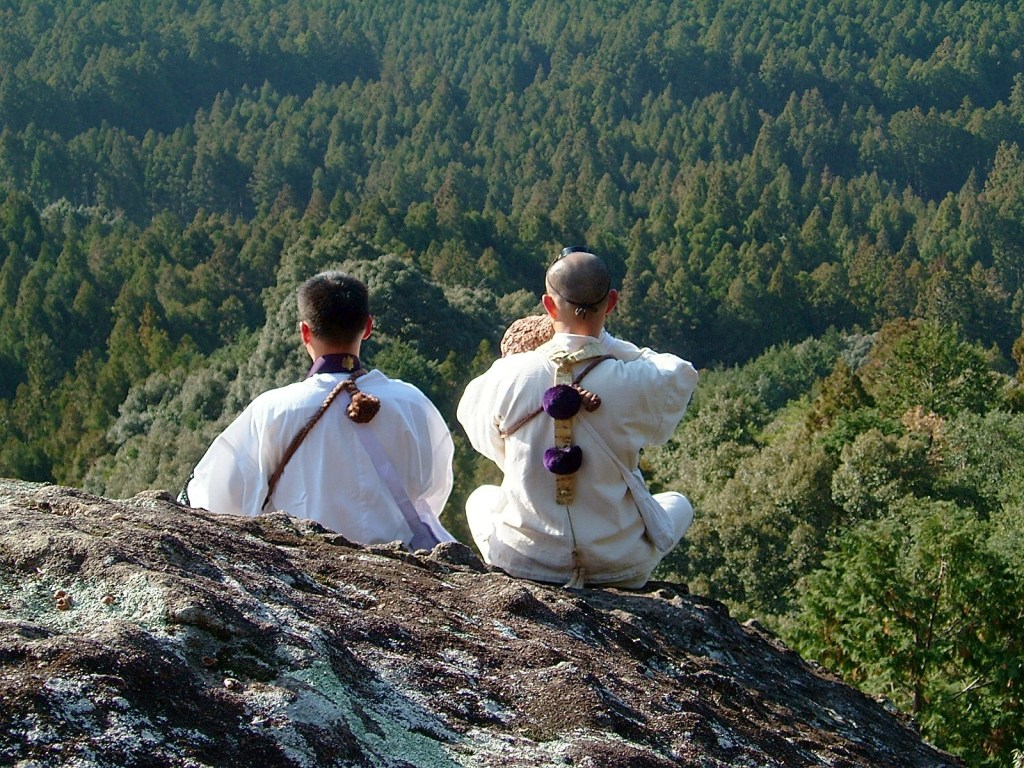
    Modern day practitioners of Shugendo, of which Masatomo was a keen adherent.
    By 唐山健志郎 (Kenshiro Karayama) – 唐山健志郎 (Kenshiro Karayama), CC BY-SA 3.0, https://commons.wikimedia.org/w/index.php?curid=2259089

    Masatomo is supposed to have believed that his religious fervour would allow him to engage in magical feats, such as being able to fly or speak mystical languages. He had more practical eccentricities as well; he would go on long journeys, sometimes alone, and without telling his retainers, meaning that government would effectively come to a halt until he could be found.

    Religious and sexual habits aside, Masatomo also opposed much of the pomp and ceremony surrounding the institutions of government. It is said that he disliked the formal clothing required at certain ceremonies, and the official enthronement of the new Shogun was delayed simply because Masatomo refused to wear the eboshi hat required by tradition.

    A 17th Century depiction of an official wearing the eboshi hat that Masatomo despised.

    Masatomo also had a shockingly (for the time) rational approach to the Imperial Court as well. He is supposed to have opposed the enthronement ceremony of Emperor Go-Kashiwabara on the grounds that, since the Emperor no longer had any real power, there was no point in a grand ceremony. This was technically true, but flew in the face of long-established tradition.

    So a combination of Shogunate weakness, Political problems, and personality issues meant that Masatomo’s position was never strong, and he wouldn’t help matters with some of the decisions he made. Given Masatomo’s apparent aversion to women, he wasn’t able to produce an heir (obviously). This problem wasn’t an uncommon one at the time, and adoption was usually the preferred solution.

    Masatomo, never one to do anything the easy way, adopted three sons, Sumimoto, Sumiyuki, and Takakuni. You may remember, in the period leading up to and including the Onin War, one of the key factors in the instability that gripped the realm was the frequency of internal conflict over clan succession. One of the reasons the Hosokawa Clan had been able to take such a strong position was that they had largely been able to avoid these struggles, with Masatomo succeeding his father relatively smoothly.

    Some contemporary sources suggest that Masatomo’s ultimate plan was to divide the Hosokawa lands between two of these sons, while the third would inherit the position of kanrei and thus real political power. Initially, it seems that Masatomo favoured Sumimoto to succeed him as kanrei, but the fact that all three ‘sons’ came from three different families meant that the succession was now the subject of growing factional rivalries.

    Hosokawa Sumitomo, Masatomo’s choice as heir.

    This situation was precarious, but held together by the sheer force of Masatomo’s will. With power centralised in his hands, he could exert enormous control over what remained of the Shogunate government and its nominal loyalists. This way of doing things required him to be alive, however, which he no longer was after June 23rd, 1507, when he was assassinated.

    The assassins were apparently partisans of Sumiyuki, favouring him as kanrei over Sumitomo, who they also attacked at the same time as his father, though Sumitomo was able to escape with the help of his supporters, led by members of the Miyoshi Clan (a name that will become important later).

    The fact that Sumitomo survived was a problem for Sumiyuki, especially after he fled to Takakuni, the third brother, who agreed to support him and march against Sumiyuki. There was a series of blood battles between the rival factions until Sumitomo’s supporters, led by Miyoshi Yukinaga, took his final refuge at Yushoken, forcing Sumiyuki to commit suicide.

    An image depicting Sumiyaki at the moment of his death.
    Musuketeer.3 – 投稿者自身による著作物, CC 表示-継承 3.0, https://commons.wikimedia.org/w/index.php?curid=24893374による

    It turns out that your enemy’s enemy isn’t always your friend, though, and it wasn’t long before Takakuni and Sumitomo were at each other’s throats. The problem stemmed from Sumitomo’s supporters amongst the Miyoshi Clan, whose strength and growing overbearingness earned them many jealous rivals. Then, in late 1507, former Shogun Yoshitane (who had fled after the Meio Coup) returned to the scene.

    Yoshitane, after fleeing into exile, had been supported by the Ouchi Clan based in modern-day Yamaguchi Prefecture, and now they raised their banners in support of his march on Kyoto. Although not strong enough to take the city at first, shortly after the new year, Takakuni became the focal point for anti-Miyoshi feeling and chose to throw in his lot with the old Shogun.

    This combined force attacked Kyoto and took the city in early April, forcing Sumitomo and Shogun Yoshizumi to flee. Takakuni was recognised as the new head of the Hosokawa Clan, and Yoshitane was reinstated as Shogun, beginning his second reign.

    Sumitomo and Yoshizumi were down but not out, however, and what followed was more than 20 years of strife that is collectively called the Hosokawa Civil War, or Hosokawa Rebellion. This conflict had all the hallmarks of the internal violence that had wracked multiple clans throughout this period, but wrought on a massive scale, involving not just the Hosokawa but their vassals, retainers, and the Shogunate itself.

    Sources
    https://ja.wikipedia.org/wiki/%E6%B0%B8%E6%AD%A3%E3%81%AE%E9%8C%AF%E4%B9%B1
    https://ja.wikipedia.org/wiki/%E7%B4%B0%E5%B7%9D%E9%AB%98%E5%9B%BD
    https://ja.wikipedia.org/wiki/%E4%B8%89%E5%A5%BD%E4%B9%8B%E9%95%B7
    https://ja.wikipedia.org/wiki/%E7%B4%B0%E5%B7%9D%E6%BE%84%E4%B9%8B
    https://ja.wikipedia.org/wiki/%E7%B4%B0%E5%B7%9D%E6%94%BF%E5%85%83

  • The Power in the Provinces Part Two

    The Power in the Provinces Part Two

    Western Japan

    Western Japan was, much like the Kanto, away from the centre of power, but still close enough to be a perpetual source of trouble.

    The Ouchi

    The mon of the Ouchi Clan
    By Mukai – No machine-readable source provided. Own work assumed (based on copyright claims)., CC BY-SA 3.0, https://commons.wikimedia.org/w/index.php?curid=7845833

    At the end of the 15th Century, the Ouchi Clan were one of the strongest in Japan. Based at Yamaguchi, in the furthest west of ‘The West’, they were in an enviable position. Their centre of power was far enough away from Kyoto that they were often spared the worst of the destruction, and the city of Yamaguchi, positioned as it was, near the coast, was a prime location for getting involved in the trade with China and Korea.

    These close links to mainland Asia go back into the mists of time. Unlike many other clans, the Ouchi did not claim descent from one of the ‘Imperial’ Clans (Fujiwara, Minamoto, or Taira). Instead, they claimed as their ancestor a Korean prince, Prince Imseong, although the long years involved make a definitive link impossible to prove.

    During the Nanbokucho Period, the Ouchi proved to be staunch supporters of the Northern Court and the Ashikaga Shoguns, earning them rich rewards, and by the time of the Onin War, they had extended their control into Northern Kyushu, officially on behalf of the Shogun, but effectively ruling their little empire independently.

    During the Onin War, the Ouchi sided with the Yamana Clan and the Western Army. In fact, after the decline of the Yamana during the war, it was the Ouchi who stepped forward and played the leading role in securing Western military victories in the West. When the war ended, the Ouchi regained control of their former territories in northern Kyushu, and would continue to be one of the leading powers at the dawn of the 16th Century.

    Their links to international trade continued during this period as well, in fact, during the mid-16th Century, they would prove to be one of the key clans in what became called “Nanban trade”, literally the “Southern Barbarian Trade”, the ‘Barbarians’ in this case, being the Portuguese, who arrived in Japan in the 1540s.

    Despite their wealth and power, the Ouchi would eventually become overstretched. Facing powerful clans in Kyushu and nearer to home, they would initially see success, crushing the Shoni Clan of Kyushu in 1536, and facing the Amago Clan of Izumo Province in 1541. An initial victory over the Amago was followed by a serious defeat in which the Ouchi clan’s heir was killed.

    Ouchi Yoshitaka, who oversaw the decline of his clan.

    After this, the head of clan, Yoshitaka, began neglecting affairs of government, and the Ouchi would enter a period of steep decline. In 1551, Yoshitaka was killed in a rebellion, and over the next five years, the Ouchi’s once expansive domains were chipped away, as rivals took advantage of the chaos, and even formerly loyal vassals (most notably the Mori Clan) went their own way, often violently.

    The Ouchi would enter terminal decline from this point. There was a brief attempt at a restoration in 1569, but it was crushed by the Mori, and the original Ouchi Clan ceased to exist. A supposed branch of the family, the Yamaguchi Clan, would survive as rulers of the Ushiku Domain, in modern Ibaraki Prefecture, but they appear to have died out in the male line in 1991.

    The Mori

    The mon of the Mori Clan.
    Kashiwamon – 投稿者自身による著作物, CC 表示-継承 4.0, https://commons.wikimedia.org/w/index.php?curid=91163213による

    Like the Hojo in the Kanto Region, the Mori were arguably the most successful clan based in Western Japan. Despite this, the origins of the clan are actually in Sagami Province, close to the modern city of Atsugi in Kanagawa Prefecture. From there, the clan would branch off (as they always seem to) into several different ‘Mori’ Clans, but the one we are focusing on here is the ‘Aki Mori’ Clan, which came to be based in Aki Province in what is today Hiroshima Prefecture.

    During the period of the Kamakura Shogunate, the Mori clan remained largely aloof, and when the Emperor Go-Daigo overthrew the Kamakura, the Mori did not get involved. This actually worked against them as Go-Daigo adopted a “With me or against me” approach, and the Mori temporarily saw their territories forfeit.

    This backfired pretty spectacularly when, just three years into the “Kenmu Restoration”, Emperor Go-Daigo himself was overthrown by the Ashikaga Family, leading to the establishment of the eponymous Shogunate, and the Mori (who had helped the Ashikaga) being restored to their lands.

    Much like every other major Samurai family, the Mori broke up into several branch families that would often end up fighting each other. Their situation in the mid-15th Century was further weakened by the presence of the powerful Ouchi and Amago Clans in the region.

    Through the late 15th Century, the Mori would find themselves caught between these two powers, but in the 16th Century, several savvy political marriages and a few adoptions improved their position considerably, and they would eventually rise to eclipse their former masters, the Ouchi, entirely.

    Mori Motonari, the man who would lead his clan to the height of their power.

    Throughout the Sengoku Period, the Mori would become the power in the West in the same way the Hojo were the power in the East. When Oda Nobunaga (him again!) drove the last Ashikaga Shogun out of Kyoto in 1576, he sought protection from the Mori, who would remain Nobunaga’s chief rivals in the West until his death (spoilers) in 1582.

    The Mori would make peace with Nobunaga’s successor, Toyotomi Hideyoshi and remain a major power, eventually establishing their base at Hiroshima. However, the final battles of the Sengoku period would see the Mori choose the losing side, and they were eventually reduced to just two provinces, which became known as the Choshu Domain.

    There they would remain, implacably opposed to the new government, but far enough away from the capital to be too much trouble to get rid of. During the Meiji Restoration in the 19th Century, it was Choshu, and the Mori clan, who would play a leading role in the modernisation of Japan, but that’s a story for another time.

    The Mori family continued through this period and into the modern era, with the current head being Mori Motohide, who works for Hitachi Steel Works, and became the family head in 2020.

    The Amago

    The mon of the Amago Clan

    The Amago were a branch of another clan, the Kyogoku, who were themselves descended from the Sasaki Clan, whose progenitor was a son of the Emperor Uda, who ruled in the late 9th century.

    Emperor Uda, who ruled from 887-897. The Amago claimed him as their illustrious ancestor.

    The Amago Clan themselves were a relative latecomer; their direct ancestor (the ‘first’ Lord Amago) was Takahisa, who took the name Amago for the area (near Kyoto) where he had his manor. In the early 15th Century, he was appointed as the deputy governor (shugo-dai) of Izumo Province (in modern Shimane Prefecture) on behalf of the Kyogoku Clan, who were obliged to reside in Kyoto.

    We’ve discussed in previous posts how the Shogun’s policy of demanding that Shugo reside in Kyoto led to the rise of independently minded deputies; well, the Amago are one of them. Although officially only deputies, the Amago would take advantage of the chaos of the Onin War to consolidate their power, and by the time the war ended, they were in effective control.

    When the Kyogoku line became extinct in 1514, with the death of the last lord, the Amago graduated from de facto to actual lords of Izumo, and it would be there that they based their power. The rise of the Amago was initially opposed by the Ouchi, and throughout the early 16th Century, they would engage in something of a hostile coexistence, neither side quite able to overcome the other, with the Ouchi focusing on the west, whilst the Amago had their eyes to the east.

    The Amago would eventually rise to be the masters of eight provinces in the region, but in the 1540s, the rise of the Mori clan would lead to the decline of the Ouchi and directly threaten the Amago. The conflict between these clans would drag on for nearly 40 years, but the Mori would eventually prevail, with the surviving members of the Amago family serving as retainers for the Mori throughout the Edo Period.

    The family itself would survive until 1940, when the last head of the clan passed away without an heir.

    The Akamatsu

    The mon of the Akamatsu Clan
    By お茶飲む人 – Own work, CC BY-SA 4.0, https://commons.wikimedia.org/w/index.php?curid=53365103

    Unlike many of the other clans we’ve been looking at, the Akamatsu Clan were a family that peaked early, and then never really recovered. The exact origins of the clan are disputed, with some sources suggesting they descended from the Minamoto Clan, whilst others refute this, leading to some confusion.

    What is not disputed is that the Akamatsu Clan originally supported the Emperor Go-Daigo during the short-lived Kenmu Restoration, earning Harima Province for their trouble, only for the province to be forfeited shortly afterwards during Go-Daigo’s controversial “Alienate everyone as quickly as possible” policy, which saw him overthrown by the Ashikaga Shogunate after just three years.

    The Akamatsu, thoroughly alienated as they were, sided with the Ashikaga and had Harima Province restored to them after their victory, and the clan would be steadfast loyalists of the new Shogunate, at least for a while. The Akamatsu remained faithful, but in 1429, a serious peasant revolt in their home province badly weakened them, and not long after that, the Shogun, Yoshinori, came to the throne and proved to be an effective, but extremely paranoid ruler.

    The exact reasons for the so-called Kakitsu Rebellion are unclear, but members of the Akamatsu Clan assassinated the Shogun in 1441, after which they raised an army only to be crushed by the Shogunate army shortly afterwards.

    Branches of the family would survive, and after conspicuous service during the Onin War, the Akamatsu were actually restored to control of Harima Province. For a while, things were looking up. By 1488, the head of the clan, Masanori, had established control of three provinces, and there was every indication that the Akamatsu would enter the 15th century as one of the major players.

    You’ve probably already guessed that that isn’t what happened, though, and you’d be right, good on you for paying attention. Masanori died suddenly in 1496, and his heir was just four years old, meaning that the clan fell into the hands of so-called ‘Elders’ who were supposed to rule until the little lord came of age.

    Akamatsu Masanori, who might have held things together for his clan, if he’d lived.

    This might have worked in more peaceful times, but in the early days of the Sengoku Jidai, it led to chaos. Before long, different factions of the clan were fighting each other, and the Akamatsu entered a period of steady decline. Even after the lord, Yoshimura, came of age, he couldn’t change the situation.

    It got so bad that Yoshimura was first forced to abdicate in 1521 and was then assassinated shortly afterwards. His son, Harumasa, was young and easier to control, which might be why the ‘elders’ favoured him as ruler.

    There was a brief resurgence in 1531, when Harumasa managed to establish his own rule, but years of infighting had effectively bled the Akamatsu dry, and in 1537, the neighbouring Amago Clan invaded and conquered the Akamatsu’s home province of Harima.

    The Akamatsu would return to Harima, but they were never able to establish control of the whole province ever again, and throughout the 16th century, their power was gradually eroded away, until 1568, when they made the somewhat short-sighted decision to resist Oda Nobunaga, who promptly crushed them and took Harima for himself.

    Branches of the family would survive in one form or another, but they never ruled large territories again. In the modern era, a descendant of the clan, Akamatsu Yoshinori, served in several high positions in the Imperial Navy, eventually being granted the title of Baron. His descendants are still going today, although there’s not a lot of information available online.

    Sources
    https://en.wikipedia.org/wiki/%C5%8Cuchi_clan
    https://ja.wikipedia.org/wiki/%E5%A4%A7%E5%86%85%E6%B0%8F
    https://reichsarchiv.jp/%E5%AE%B6%E7%B3%BB%E3%83%AA%E3%82%B9%E3%83%88/%E7%89%9B%E4%B9%85%E5%B1%B1%E5%8F%A3%E6%B0%8F
    https://en.wikipedia.org/wiki/M%C5%8Dri_clan
    https://ja.wikipedia.org/wiki/%E6%AF%9B%E5%88%A9%E6%B0%8F
    https://ja.wikipedia.org/wiki/%E6%AF%9B%E5%88%A9%E5%85%83%E6%95%AC
    https://ja.wikipedia.org/wiki/%E6%AF%9B%E5%88%A9%E5%85%83%E6%A0%84
    https://ja.wikipedia.org/wiki/%E5%B0%BC%E5%AD%90%E6%B0%8F
    https://en.wikipedia.org/wiki/Akamatsu_clan
    https://ja.wikipedia.org/wiki/%E8%B5%A4%E6%9D%BE%E6%B0%8F