Tag: Akechi Mitsuhide

  • The Second Unifier – Toyotomi Hideyoshi. Part Two.

    The Second Unifier – Toyotomi Hideyoshi. Part Two.

    In 1577, a dispute between Toyotomi Hideyoshi and Shibata Katsuie led to Hideyoshi taking his army home, and leaving Katsuie to battle the mighty Uesugi Kenshin alone, a battle he lost. In the aftermath, Hideyoshi had every reason to fear the wrath of his master, Oda Nobunaga, and he was arguably lucky to keep his head, let alone his position.
    A 19th-century depiction of Hideyoshi in Nobunaga’s service.

    Nobunaga was well known for his ferocity, but he recognised capable subordinates. Hideyoshi had been reckless, but he had also earned a reputation as a good administrator and leader of men, and it wasn’t long before he was back in the Great Lord’s good books. In late 1577, he was dispatched west to contend with the powerful Mori Clan and by the end of the year, he was in control of Harima Province and advancing into neighbouring Tajima.

    During this period, Hideyoshi made the famous Himeji Castle his base and used it as a springboard for a series of successful campaigns against the Mori over the next few years. By late 1578, he had subjugated (either through conquest or submission) Bizen and Mimasaka Provinces, in addition to his earlier conquests, and he was poised to advance further when the Araki Clan, based at Arioka Castle, rebelled, obliging him to redeploy his forces to put them down.
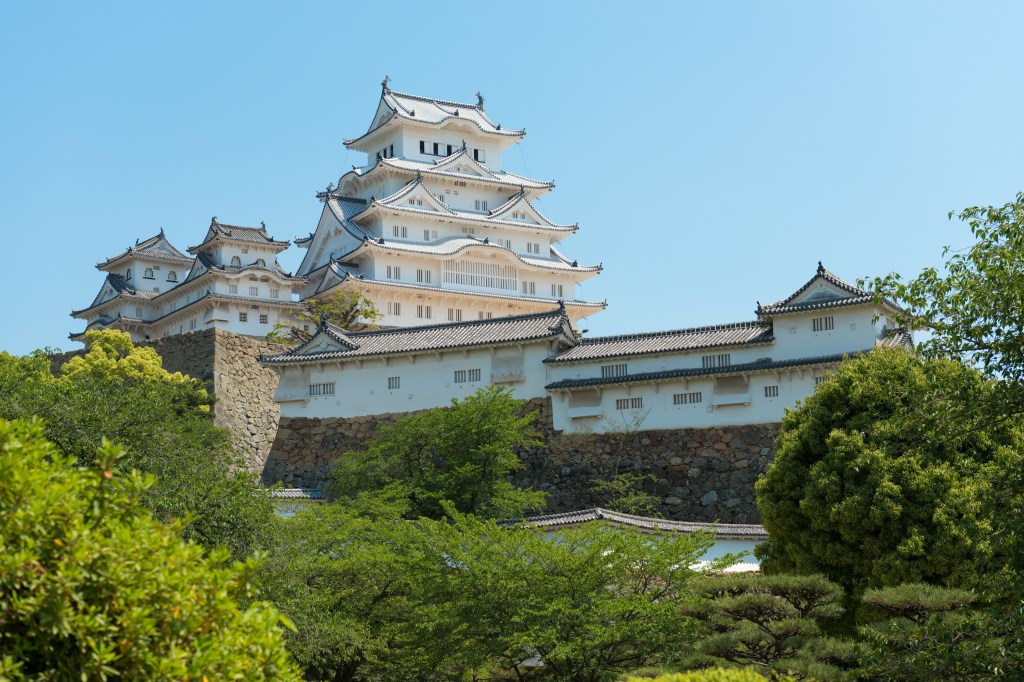
    Himeji Castle as it appears today (after renovations in 2015)
    Niko Kitsakis – 投稿者自身による著作物, CC 表示-継承 4.0, https://commons.wikimedia.org/w/index.php?curid=40135622による

    Able to resume his advance in 1580, Hideyoshi secured Tajima Province, bringing the once-mighty Yamana Clan under his control and incorporating many of their former vassals and members of the clan itself into the new administration, a policy widely praised as the reason that Tajima was swiftly pacified.

    By 1581, he had advanced into Bitchu Province and secured Awaji Island for his master, utilising slow but effective siege tactics, starving his enemies into submission, a time-consuming but strength-preserving strategy. One disadvantage, though, was that it meant you were easy to find should your enemy have sufficient strength elsewhere.
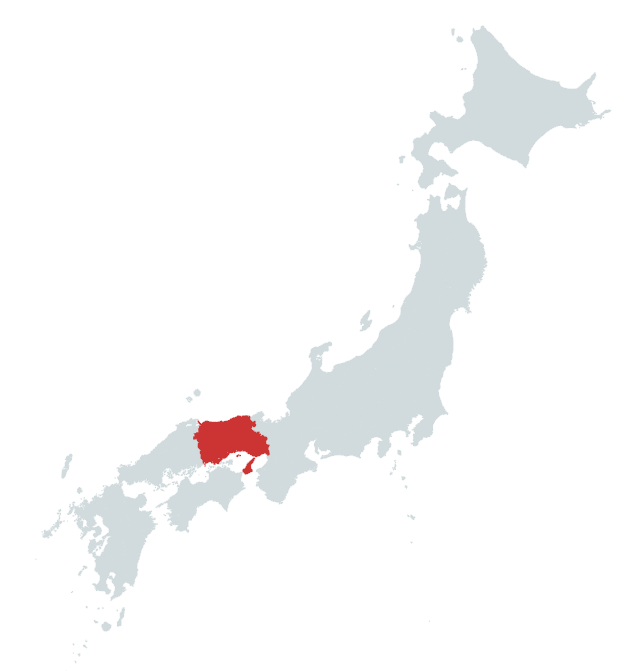
    The area that Hideyoshi either conquered or was fighting in during this period.

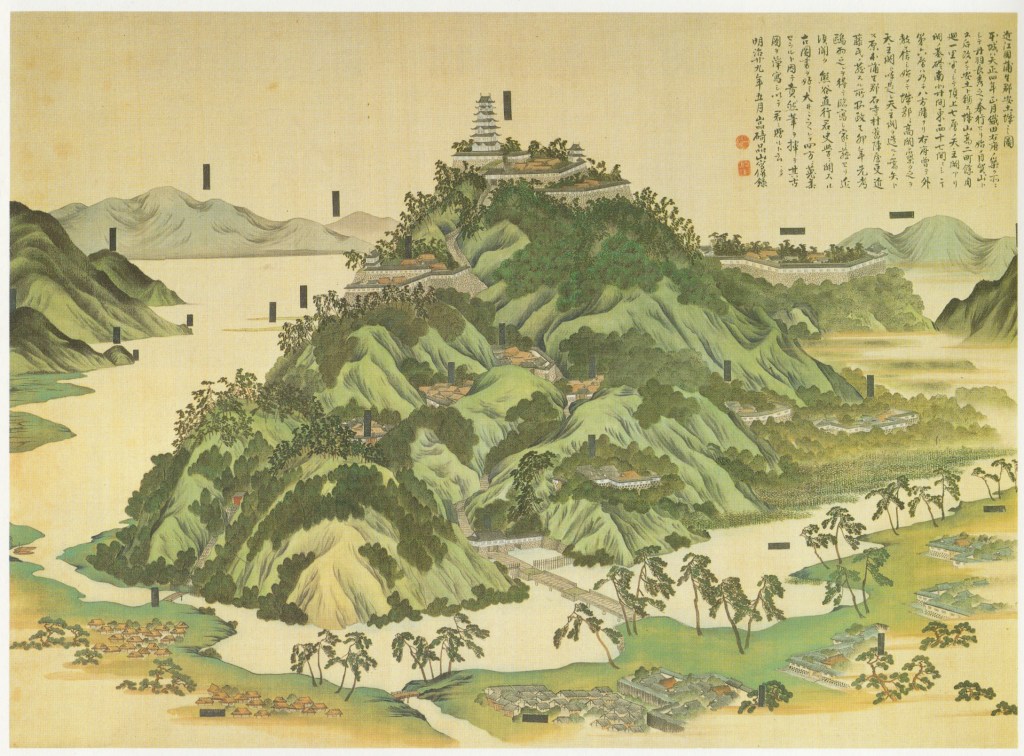
    In Spring 1582, Hideyoshi led an army of some 30,000 to besiege the mighty fortress at Takamatsu. Strategically vital for control of Bitchu Province, the castle was defended by 3,000 Mori warriors, who quickly called for aid. Mori Terumoto responded and began mustering an army that would eventually number over 50,000. Hideyoshi now faced a problem: already outnumbered, if he tried to take the formidable fortress by storm, he’d deplete his forces further. On the other hand, trying to starve the garrison, who knew help was on the way, would take too long and risk trapping his army between the walls of the fortress and the vengeful spears of the Mori.

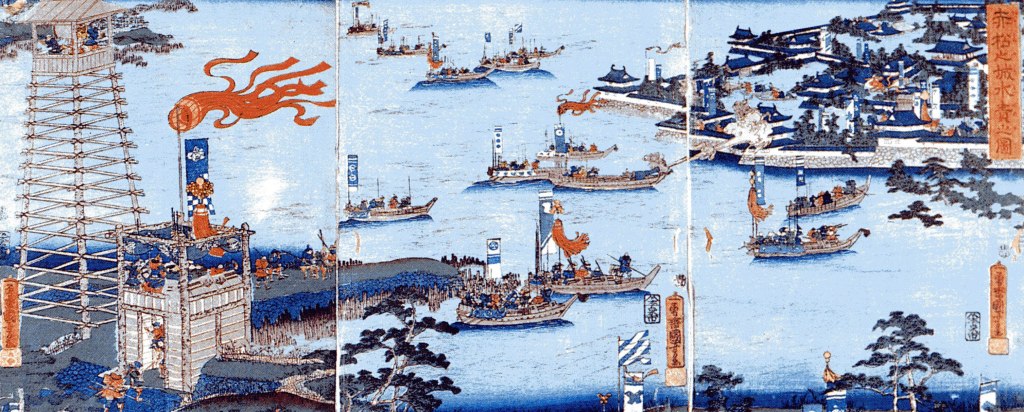
    Hideyoshi responded in a typically inventive fashion. Unable to take the castle by storm, he ordered a levee built and the nearby river dammed, diverting water into Takamatsu itself, flooding the castle to such an extent that the garrison’s food supplies were almost completely ruined and they were reduced to communicating by boat.
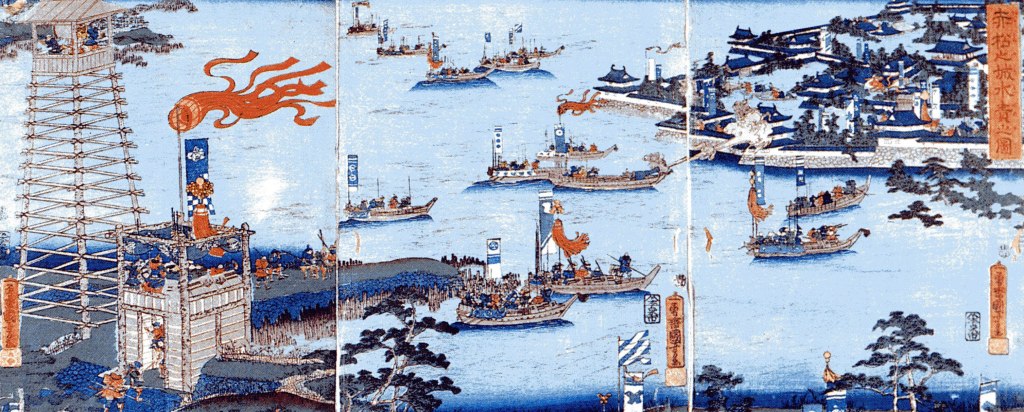
    A later depiction of the Siege of Takamatsu Castle. The tower to the left is Hideyoshi’s observation post, and you can see the castle itself flooded in the background.

    Despite this, the castle still held out, and when news arrived that Terumoto was on the march, Hideyoshi sent a message to Azuchi, requesting immediate reinforcement from Nobunaga. Sensing an opportunity to catch the powerful Mori clan in open battle, where they could be destroyed, Nobunaga quickly dispatched Akechi Mitsuhide to reinforce Hideyoshi, while he went to Kyoto to make arrangements for a larger force that would be sent to finish the job.

    As we already know, Mitsuhide never arrived; instead, he turned his forces around and attacked Nobunaga at his base at Honnoji, killing him and his heir. Hideyoshi was well placed to respond to this betrayal, and he swiftly concluded a peace treaty with the Mori (who were apparently initially unaware of Nobunaga’s death). Some have speculated that his rapid reaction is evidence of his involvement, or at least foreknowledge of the plot, though there’s nothing concrete to suggest that he was anything other than in the right place at the right time.
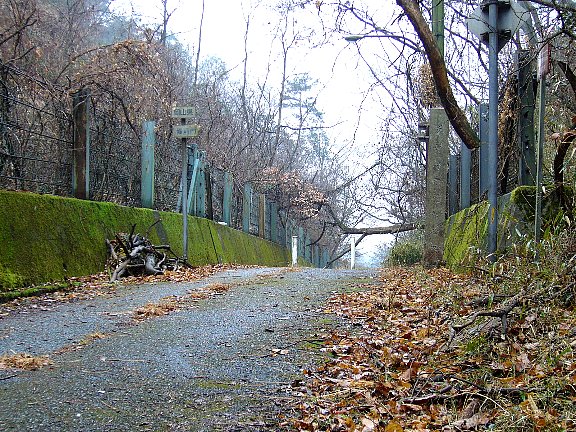
    Funasaka Pass as it appears today. This was one of the narrow routes that Hideyoshi’s army had to contend with during their remarkable march back towards Kyoto.
    Bakkai – 投稿者自身による著作物, CC 表示 3.0, https://commons.wikimedia.org/w/index.php?curid=92337495による

    More to the point, Hideyoshi was far from the only player on the board. Hideyoshi’s former rival, Shibata Katsuie, was to the north, with an army facing the Uesugi, while in the Kanto, Takigawa Kazumasu (sometimes called Sakon) had a large army intended to monitor the Hojo. Nobunaga’s son and heir had been killed during the Honno-ji Incident, but his third son, Nobukatsu, had gathered a force at Sakai (modern Osaka) to conquer Shikoku.

    Any one of these forces could have been the one to avenge Nobunaga’s death and put an abrupt end to Akechi Mitsuhide’s ambitions. Even Tokugawa Ieyasu was a potential avenger, making his famed escape from mortal danger with the (supposed) help of the famous Ninja of Iga. Ieyasu would return to his home in Mikawa and gather his forces, but events would move quickly, and though all parties moved against Mitsuhide, it was Hideyoshi who struck first.

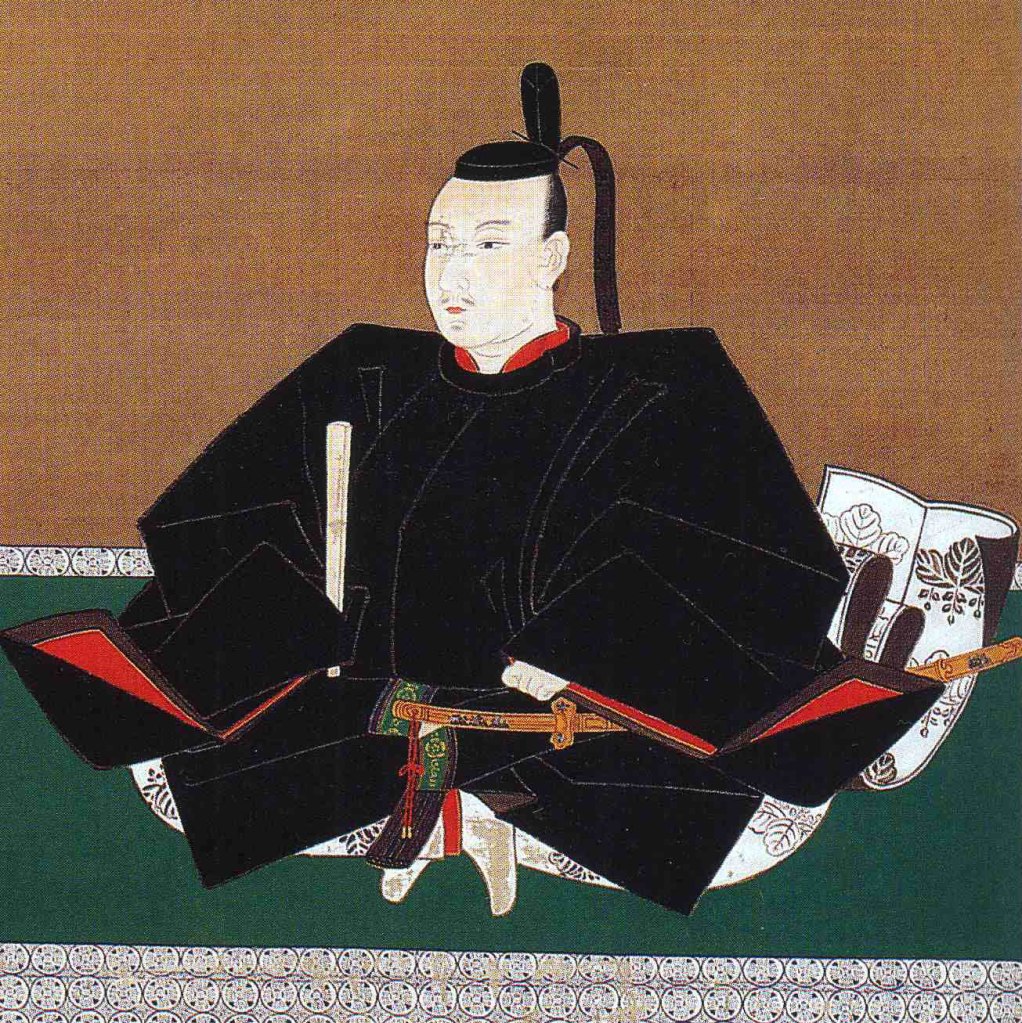
    Tokugawa Ieyasu as he appeared in later life. He was close to Kyoto during the Honnoji Incident and was forced to make a dramatic escape back to Mikawa. Hideyoshi would prove to be faster, but Ieyasu’s time would come.

    In the days following the Honnoji Incident, Mitsuhide moved to consolidate his position. Unfortunately for him, he faced harsh military and political opposition. On the one hand, Nobunaga’s body had not been recovered from the flames, and rumours abounded that he was still alive. Even among those who may have believed Nobunaga was dead, Mitsuhide commanded little respect. He was a traitor, after all, and surrounded by enemies who wished to avenge Nobunaga and take power for themselves.

    Militarily, Mitsuhide was too weak to assert effective control over much territory. He had between 13,000 and 15,000 men, but was obliged to capture and garrison several important castles, whittling his already limited forces down still further. Then there was the speed at which Hideyoshi moved. Mitushide arguably did what he could, and with the limited communications and transportation available at the time, it’s hard to see how he could have moved faster, but Hideyoshi was faster still, and on July 2nd, 1582, just 12 days after Honnoji, the two sides clashed at the Battle of Yamazaki, to the south-east of Kyoto.
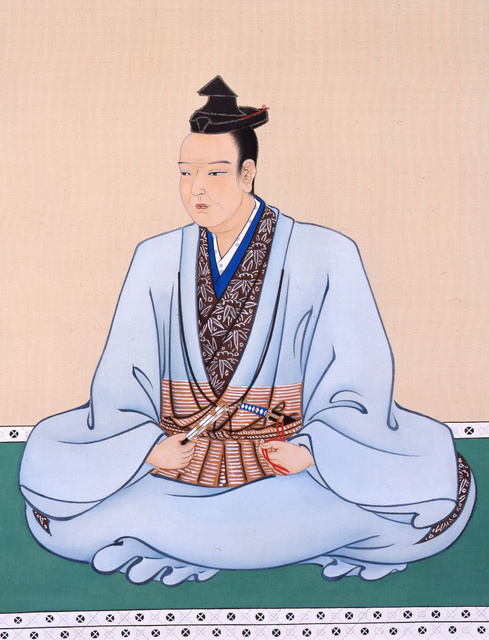
    Akechi Mitsuhide. Historians debate why he decided to betray Nobunaga, but within two weeks of the incident, he’d be dead.

    The numbers vary by source, but Hideyoshi is said to have had between 20 and 40,000 men, while Mitsuihides had 10 to 16,000. Despite the long odds, Mitsuhide’s army was well-positioned, and the ground around Yamazaki was boggy, limiting movement and reducing Hideyoshi’s advantage in numbers.

    Mitsuhide probably understood that a defensive victory against difficult odds would have greatly enhanced his prestige, and for most of the day, Hideyoshi’s army took heavy losses in vicious frontal assaults. Around 4pm, however, reinforcements arrived for Hideyoshi, outflanking Mitsuhide’s position, and causing his army to fall back. As the battle moved to higher and drier ground, Mitsuhide’s force was gradually surrounded and forced back.
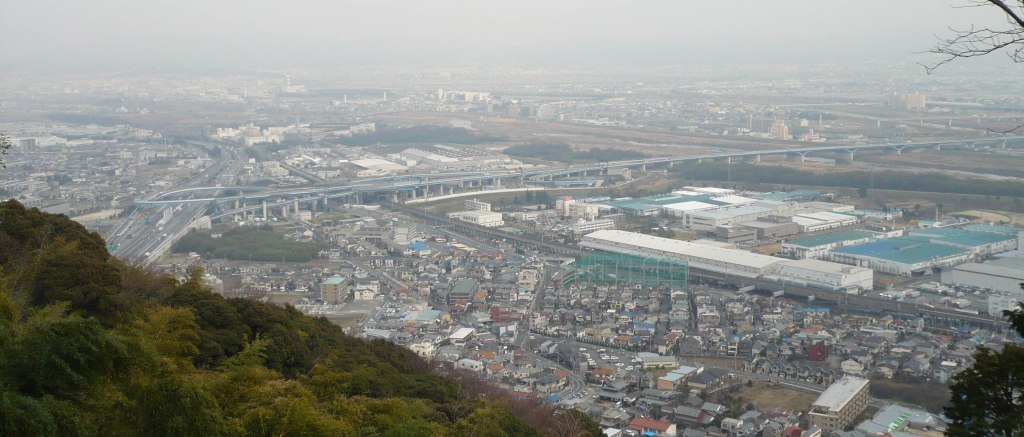
    The battlefield of Yamazaki as it appears today. Historians believe the heaviest fighting took place around the bypass that can be seen in the centre.

    Later sources suggest that the casualties were about the same (around 3,000 each), but under attack from three sides, the morale of Mitushide’s army broke first, and by sunset, their retreat became a rout. When the battle was over, it is said that Mitsuhide had just 700 men remaining. His exact fate isn’t clear; some say he was wounded and committed seppuku, while others suggest he was killed by vengeful peasants or bandits. Either way, his head was brought to Hideyoshi the day after the battle, and then displayed at Honnoji, a powerful statement confirming Hideyoshi as Nobunaga’s ‘avenger’ and giving an enormous boost to his credibility.

    Hideyoshi would spend a few weeks stamping out the last embers of Mitushide’s rebellion, but despite his military successes, he was not unchallenged as Nobunaga’s successor. The other players, who had all been poised to strike, still remained in the field, and each had their own ambition to rule, either directly or through one of Nobunaga’s other sons.

    This would result in the Kiyosu Conference, but we’ll cover that and its consequences next time.

    Sources
    https://ja.wikipedia.org/wiki/%E8%B1%8A%E8%87%A3%E7%A7%80%E5%90%89
    https://ja.wikipedia.org/wiki/%E5%B1%B1%E5%B4%8E%E3%81%AE%E6%88%A6%E3%81%84
    https://ja.wikipedia.org/wiki/%E6%9C%AC%E8%83%BD%E5%AF%BA%E3%81%AE%E5%A4%89
    https://ja.wikipedia.org/wiki/%E4%B8%AD%E5%9B%BD%E5%A4%A7%E8%BF%94%E3%81%97
    https://ja.wikipedia.org/wiki/%E5%B1%B1%E5%90%8D%E5%A0%AF%E7%86%99
    https://ja.wikipedia.org/wiki/%E4%B8%89%E6%9C%A8%E5%90%88%E6%88%A6
    https://ja.wikipedia.org/wiki/%E6%9C%89%E5%B2%A1%E5%9F%8E%E3%81%AE%E6%88%A6%E3%81%84
    https://ja.wikipedia.org/wiki/%E5%A7%AB%E8%B7%AF%E5%9F%8E
    https://ja.wikipedia.org/wiki/%E5%82%99%E4%B8%AD%E9%AB%98%E6%9D%BE%E5%9F%8E%E3%81%AE%E6%88%A6%E3%81%84
    https://ja.wikipedia.org/wiki/%E9%AB%98%E6%9D%BE%E5%9F%8E_(%E5%82%99%E4%B8%AD%E5%9B%BD)
  • The Honnoji Incident – Oda Nobunaga. Part Four.

    The Honnoji Incident – Oda Nobunaga. Part Four.

    “The enemy is at Honnoji” – Akechi Mitsuhide

    By 1582, Oda Nobunaga was the most powerful man in the realm; in fact, it could be argued that he was the most powerful man Japan had seen in centuries. A combination of ruthless political manoeuvring and brutal military campaigns had left him on the verge of finally reuniting the nation and ending the Sengoku Jidai.

    Only the Mori Clan still had the strength to stifle Nobunaga’s ambitions, and in May 1582, he announced his intention to march against them with all his might. The catalyst for this next campaign was a message from Hashiba Hideyoshi, who was besieging Takamatsu Castle (in modern-day Okayama). The message read that Mori Terumoto was marching to relieve the siege, presenting Nobunaga with an opportunity to meet the Mori in open battle and crush them.

    A scene from the Battle of Takamatsu Castle. Hideyoshi attempted to end the siege by flooding the castle, a tactic that was ultimately unsuccessful.

    It is generally accepted by historians that Nobunaga intended not only to defeat the Mori but also subjugate Shikoku and, eventually, Kyushu as well, viewing the campaign against the Mori as part of a wider strategy to bring the entire nation under his command. In preparation for this, he dispatched several generals to support Hideyoshi, most notably Akechi Mitsuhide.

    In the days that followed, Nobunaga was seen to be in good spirits and laid on lavish entertainment for those who came to visit him, including Tokugawa Ieyasu, who departed Azuchi on June 21st, embarking on a tour of Kyoto, Osaka, and the surrounding region. On the same day, Nobunaga’s son and heir, Nobutada, arrived in Kyoto for reasons that aren’t entirely clear (some speculate he meant to accompany Ieyasu). Whatever his purpose, his arrival in the capital meant that when Nobunaga himself departed Azuchi for Kyoto on June 29th, father and son would be in the same place, at the same time.

    Azuchi Castle, Nobunaga’s base, as it appeared around 1582.

    Exactly why Nobunaga went to Kyoto first is debated, with some suggesting he planned to attack Shikoku first, going via Kyoto and the port at Sakai (modern Osaka). Other sources say he went to deal with negotiations at the Imperial Court, and others still suggest he wanted to show off a new tea set he had recently acquired. (This may sound a touch comical to a modern audience, but the tea ceremony was a serious matter in Japan at the time.)

    On June 30th, Nobunaga held said tea ceremony, which was followed by a drinking party, during which Nobunaga’s son, Nobutada, arrived, and father and son drank and talked together, little knowing that it would be their last meeting. Sources tell us that the party ended late, and Nobutada returned to his accommodation at nearby Myokakuji Temple, and Nobunaga retired for the night shortly afterwards.

    Oda Nobutada, Nobunaga’s son and heir.

    Though Honnoji was a temple, as the primary residence of Nobunaga in Kyoto, it wasn’t undefended. Excavations in 2007 found evidence of a moat and some earthworks, suggesting that the site had been partially fortified, though it was far from a fortress, and Nobunaga was protected by only a few dozen servants and his personal entourage.

    Nobunaga clearly didn’t expect to be attacked, and why should he have? He was the most powerful man in the realm, in the heart of the capital city, with hundreds of thousands of warriors at his command. His enemies were far away, and even in the unlikely event that the army under Hideyoshi was defeated, he could call on other, just as formidable forces.

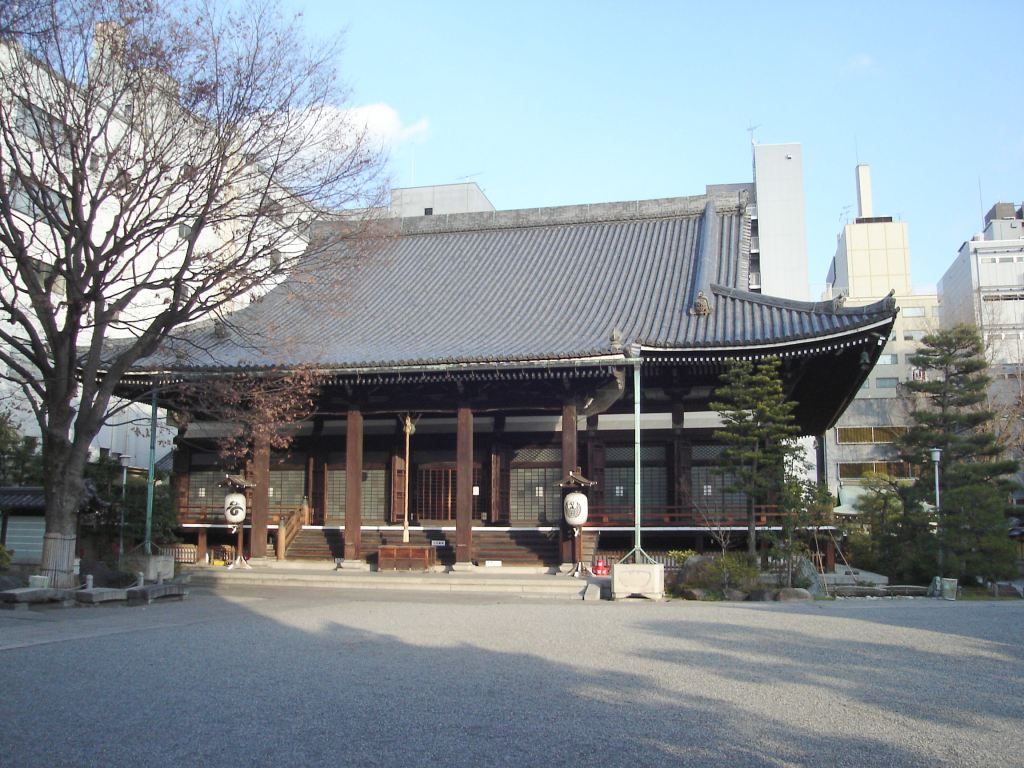
    Honnoji as it appears today. The current temple is located at a different site from that in 1582; after being rebuilt by Hideyoshi in 1592, it was destroyed by fire in 1788 and 1864, and then underwent further renovation in 1928.
    +- – 投稿者自身による著作物, CC 表示-継承 3.0, https://commons.wikimedia.org/w/index.php?curid=107655314による

    One of these was a force of around 13,000 men under Akechi Mitsuhide. In the afternoon of June 30th, Mitsuhide claimed to have received a message from Nobunaga, instructing him to bring his force to Kyoto for review. The letter, if it existed at all, was certainly a forgery, but by that evening, Mitsuhide had arrived at Kameyama (modern Kameoka), north of Kyoto. By the next morning, they had reached the Katsura River, and at this point, it is unclear if Mitsuhide’s army understood their objective.

    Sources from men serving in this force suggest they believed that they were going to attack Tokugawa Ieyasu, nominally on the orders of Nobunaga himself. This is supported by the semi-contemporary “History of Japan”, written by the Jesuit, Luis Frois, which suggests that Mitsuhide’s army believed they were acting under Nobunaga’s secret order, at least initially.

    Akechi Mitsuhide, the man behind the Honnoji Incident.

    At this point, Mitsuhide is supposed to have uttered the famous phrase “The Enemy is a Honnoji” announcing his rebellious intention (as everyone knew that was Nobunaga’s base.) Unfortunately, as dramatic as that scene might have been, the first source for it doesn’t appear until 1641, nearly 60 years after the event, and there are no contemporary sources that tell us what Mitsuhide might or might not have said.

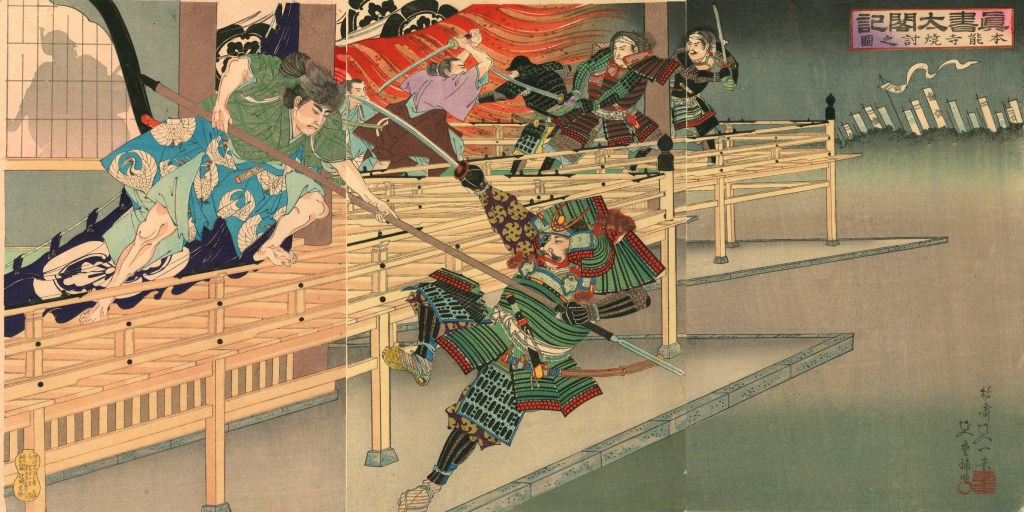
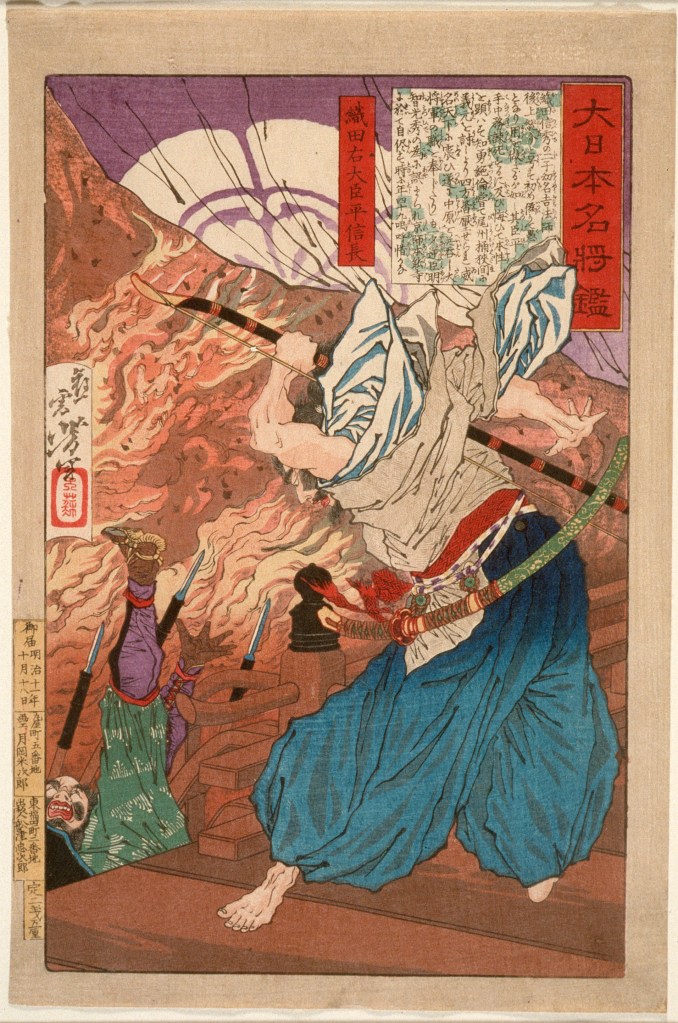
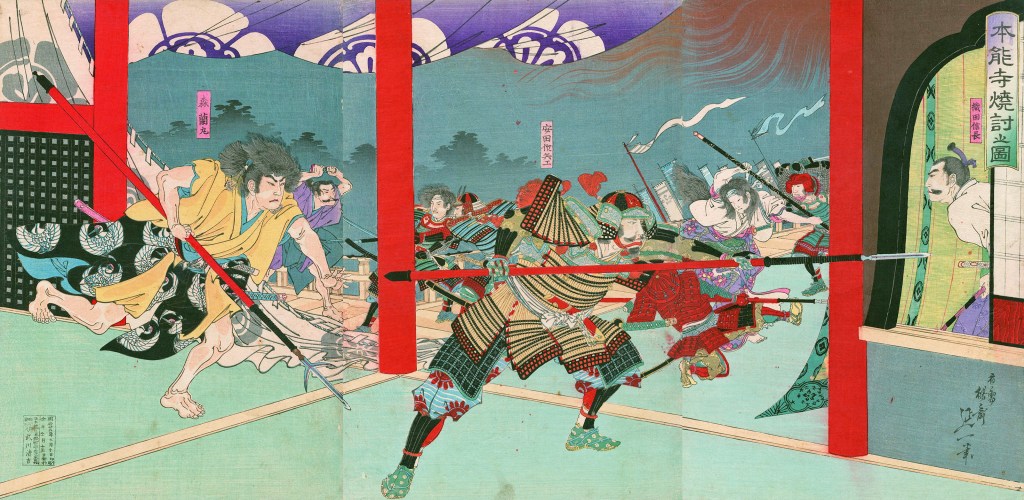
    What we know is that by dawn, Mitsuhides forces had surrounded Honnoji. What followed was a bloody, but ultimately one-sided fight. All sides agree that Nobunaga and his pages fought bravely, but they were hopelessly outnumbered, and the fighting was over by around 8am. We don’t know exactly how Nobunaga died, but the sources agree that he fought with a bow, and then a spear, before suffering some kind of injury (the sources differ) and retreating into the already burning Honnoji, where he presumably committed seppuku.

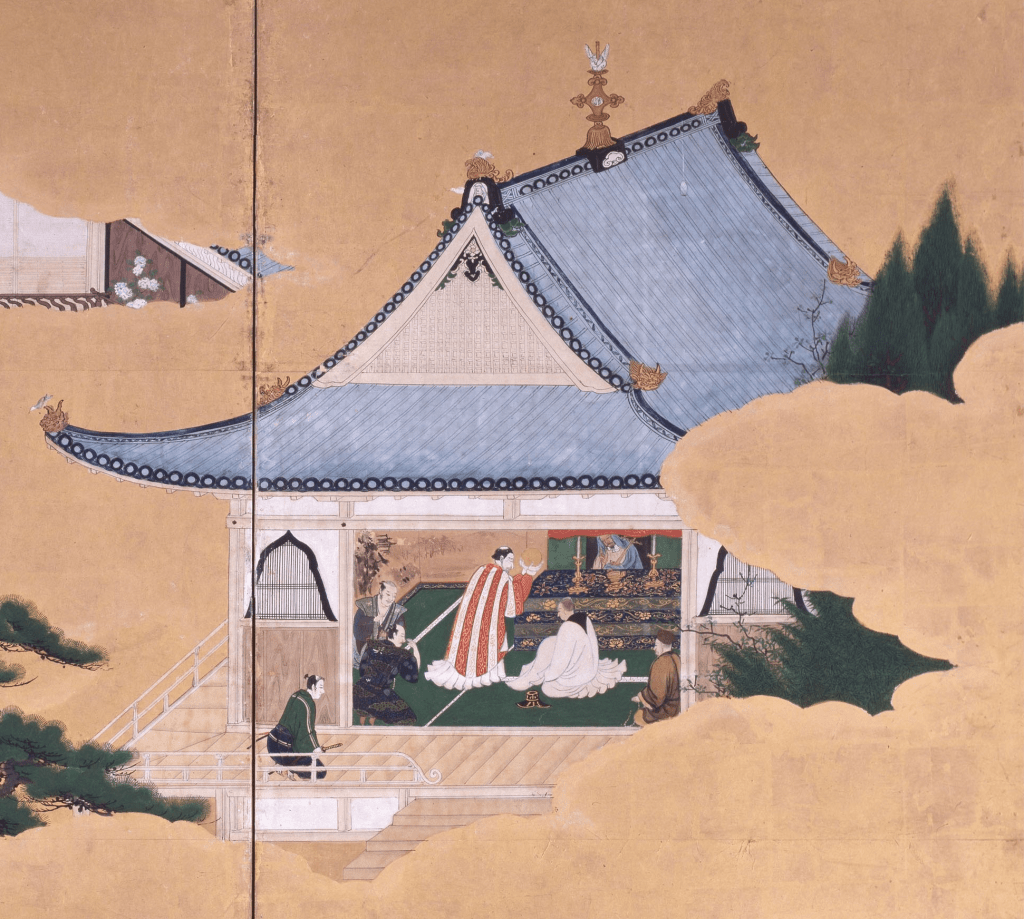
    A 19th-century depiction of Nobunaga’s last stand. Though we don’t know exactly how he died, sources agree he fought bravely until an injury forced him to retreat.

    Nobunaga’s son, Nobutada, had, upon hearing that Honnoji was under attack, rushed to help, only to be overwhelmed and forced back to his own accommodations at Myokakuji Temple, where he too was forced to commit seppuku as the temple burned around him, his body consumed by the flames.

    Rumours of their survival sprang up almost immediately. Since neither body was ever identified (this being before DNA or dental records), Mitsuhide could not prove the deed was done, and any hope he had of securing support went up in the same smoke that Nobunaga and his son had.

    Another 19th-century depiction of Nobunaga’s end. Though heavily stylised, it displays the flames that would ultimately consume Nobunaga’s body.

    Whatever his actual motivation (which we’ll look at in a moment), Mitsuhide’s triumph would be short-lived. Though his forces had successfully killed Nobunaga, his son, Nobutada, and most of his inner circle, and secured Kyoto, the same forces that Nobunaga might have called on to defend him were now focused on avenging him.

    Mitsuhide swiftly withdrew to Azuchi Castle, from where he tried to rally support, and wrote to the Imperial Court, seeking to legitimise his position. There are no records of any response, and he soon ran out of time. Hashiba Hideyoshi had made peace with the Mori (who were apparently initially unaware of Nobunaga’s death) and was now marching against him.

    The site of the Battle of Yamazaki as it appears today, seen from Mt Tenno, from which the battle is sometimes called The Battle of Tennozan.

    Mitsuhide was outnumbered two or three to one, and at the Battle of Yamazaki on July 12th, he was decisively defeated. Although losses were similar on both sides (about 3000), Mitsuhide’s army suffered from serious morale problems and disintegrated as the battle went against them, leaving Mitsuhide with just 700 warriors at day’s end.

    Mitsuhide himself survived the battle, but he was either killed in the aftermath (possibly by bandits or opportunistic peasants) or else committed suicide due to injuries sustained on the battlefield. Whatever his end, he was definitely dead by the time his head was displayed outside the burned remains of Honnoji Temple, on or around July 17th.

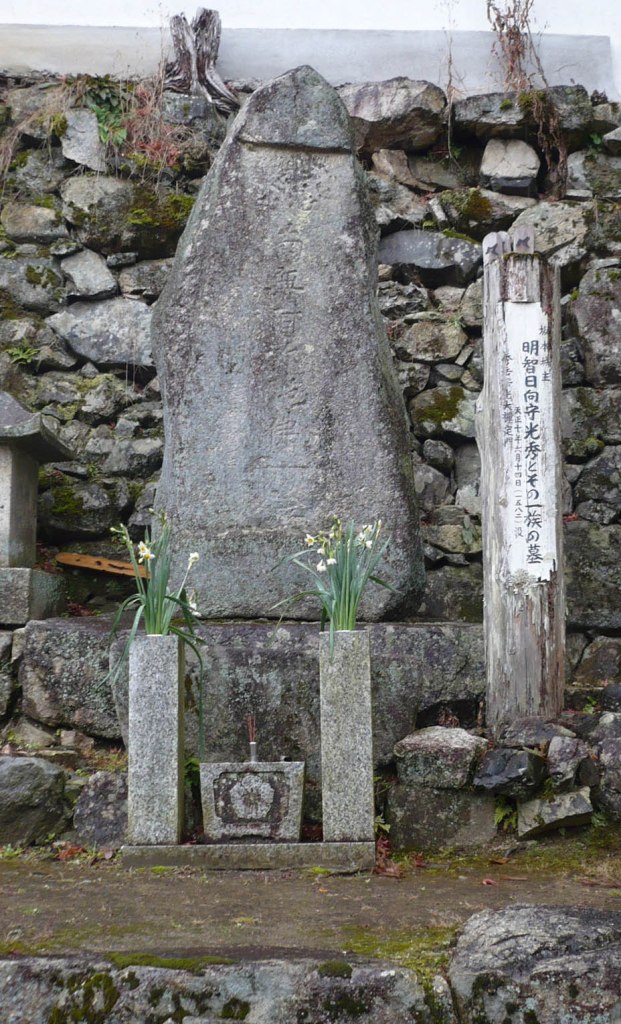
    Akechi Mitsuhide’s grave at Saikyoji Temple in Kyoto.

    No sooner was Mitsuhide dead than questions were raised about why he had betrayed his lord. Though Samurai overthrowing their overlords was nothing new, Nobunaga was uncommonly powerful, and his death threatened to unravel the fragile peace he had secured, especially in light of Mitushide’s failure to secure support or legitimacy in its aftermath.

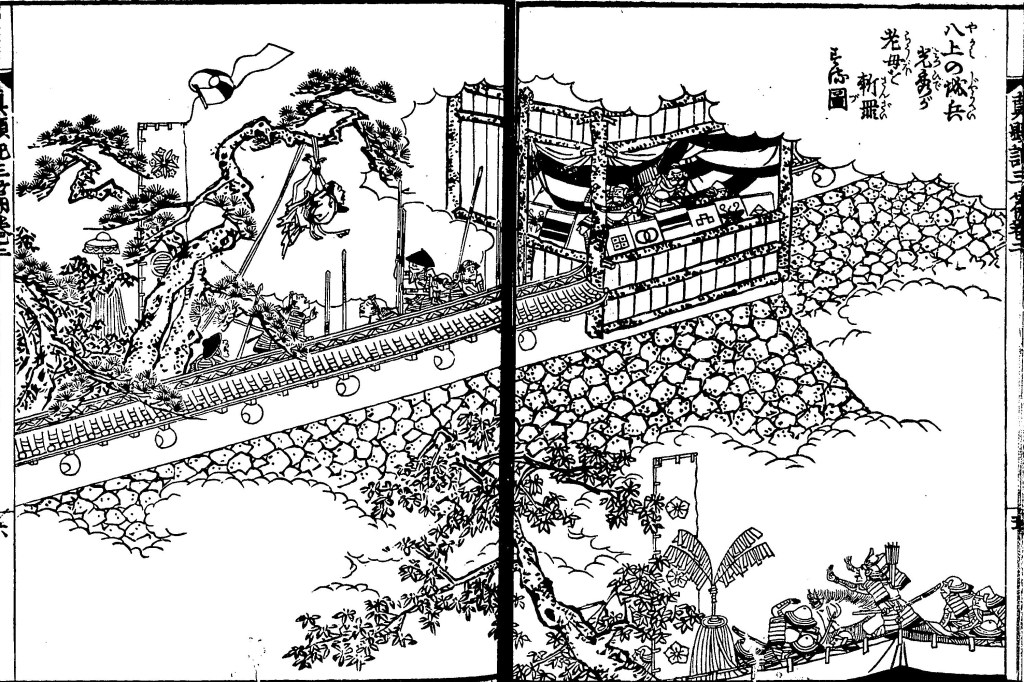
    Contemporary scholars and modern historians continue to debate exactly why Mitsuhide betrayed Nobunaga. He was certainly mistreated and often humiliated, sometimes even being publicly beaten by Nobunaga himself, so simple revenge is a possible motive. Other sources suggest it was to avenge his mother, who had served as a hostage to secure a truce years earlier, only for Nobunaga to break it, resulting in the poor woman being executed.

    Mitsuhide’s mother hangs from a tree in consequence of Nobunaga breaking the truce that her life was the guarantee of.

    If public humiliation and the death of his mother weren’t reason enough, some suggest it was pure ambition; Mitsuhide may simply have wanted the power for himself, and he certainly wouldn’t have been the first to try it. Indeed, some historians speculate that if he had been able to prove that Nobunaga was actually dead, he might have gained some support, and the outcome could have been different.

    Others suggest that Mitsuhide was a partisan of the Shogun, or possibly the Imperial Court, and overthrew Nobunaga in order to restore one or the other to power, though these ideas only emerged in the 20th century, and there’s little contemporary information to go on.

    Nobunaga publicly beats Mitsuhide. Quite why Nobunaga treated him so poorly isn’t clear, but the humiliation almost certainly contributed to his decision to rebel.

    There’s also the speculation that Mitsuhide was working with one of Nobunaga’s other vassals. Some historians argue that Hashiba Hideyoshi was able to turn his army against Mitsuhide very quickly, leading to speculation that he knew the attack was coming. Historians have never conclusively dismissed this, though it has been pointed out that only the fastest of Hideyoshi’s troops actually made it to the Battle of Yamazaki, meaning that the quick turnaround might not have been that quick after all.

    Other theories blame the Imperial Court, or the Mori Clan, for conspiring against a man who had proven to be an existential threat, as well as the Buddhist Clergy, who had plenty of reason to want vengeance on Nobunaga.

    A contemporary depiction of Mass. Though largely dismissed by historians, the possibility that the Jesuits feared Nobunaga would turn on them contributed to the theory that they were involved in his death.

    Another possibility is the Jesuits, who are suggested to have feared that Nobunaga might move against them, though there’s little evidence that he intended to (as he valued foreign trade), and Hideyoshi, his ultimate successor, would prove to be a far greater threat to Christianity in Japan.

    Ultimately, most of this speculation comes from later sources, and there’s no way to know what Mitsuhide intended, only that his plans fell apart before being decisively ended on the battlefield at Yamazaki.

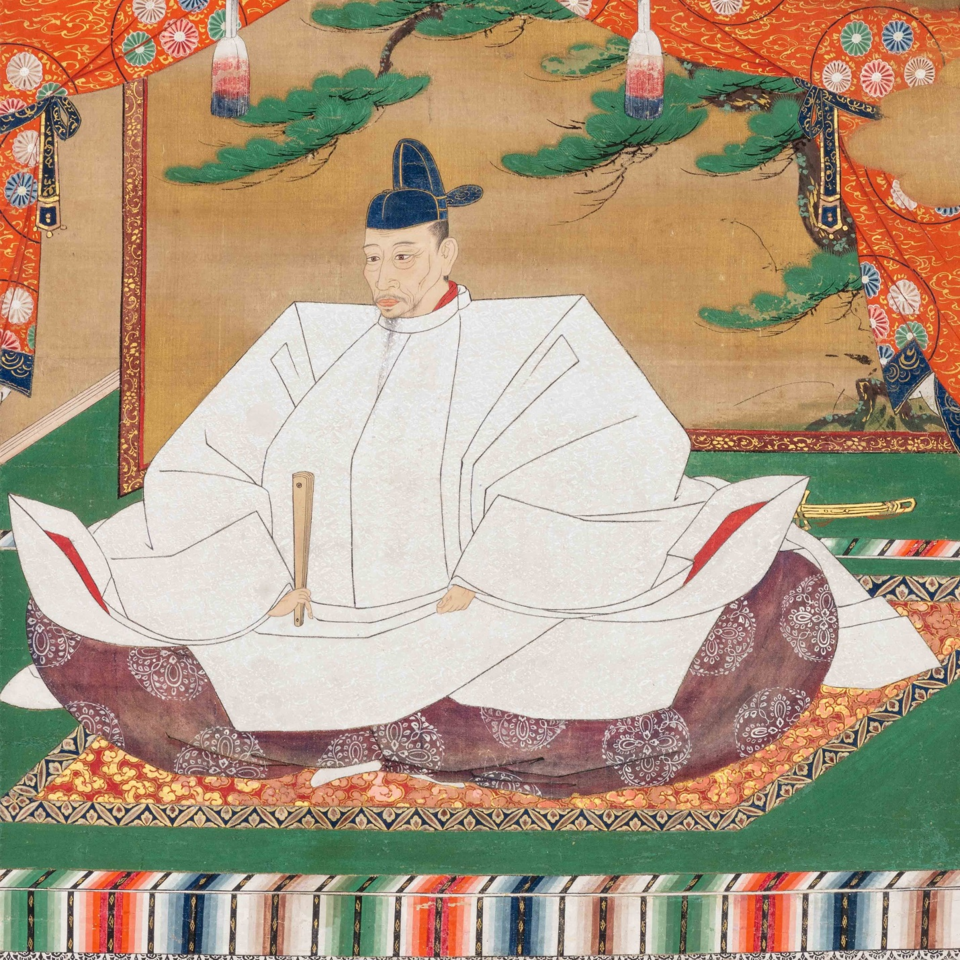
    Hashiba (later Toyotomi) Hideyoshi. His victory at Yamazaki did not make him Nobunaga’s successor, but it did wonders for his prestige.

    Hashiba Hideyoshi’s victory did not mean he inherited Nobunaga’s power, however, and the power struggle that followed threatened to undo the Great Lord’s work, but that’s a story for another time.

    Sources
    https://ja.wikipedia.org/wiki/%E7%B9%94%E7%94%B0%E4%BF%A1%E9%95%B7
    https://ja.wikipedia.org/wiki/%E6%9C%AC%E8%83%BD%E5%AF%BA%E3%81%AE%E5%A4%89
    https://ja.wikipedia.org/wiki/%E6%95%B5%E3%81%AF%E6%9C%AC%E8%83%BD%E5%AF%BA%E3%81%AB%E3%81%82%E3%82%8A
    https://ja.wikipedia.org/wiki/%E6%A1%82%E5%B7%9D_(%E6%B7%80%E5%B7%9D%E6%B0%B4%E7%B3%BB)
    https://ja.wikipedia.org/wiki/%E4%BA%80%E5%B2%A1%E5%B8%82
    https://ja.wikipedia.org/wiki/%E5%82%99%E4%B8%AD%E9%AB%98%E6%9D%BE%E5%9F%8E%E3%81%AE%E6%88%A6%E3%81%84
    https://en.wikipedia.org/wiki/Honn%C5%8D-ji_Incident
    https://en.wikipedia.org/wiki/Akechi_Mitsuhide
    https://ja.wikipedia.org/wiki/%E5%B1%B1%E5%B4%8E%E3%81%AE%E6%88%A6%E3%81%84
    https://ja.wikipedia.org/wiki/%E7%B9%94%E7%94%B0%E4%BF%A1%E5%BF%A0

    If you are interested, the main source for this and the other posts on Oda Nobunaga is the 2011 translation of the Chronicle of Nobunaga, the Kindle version of which can be found here.

  • The First Unifier – Oda Nobunaga. Part Three.

    The First Unifier – Oda Nobunaga. Part Three.

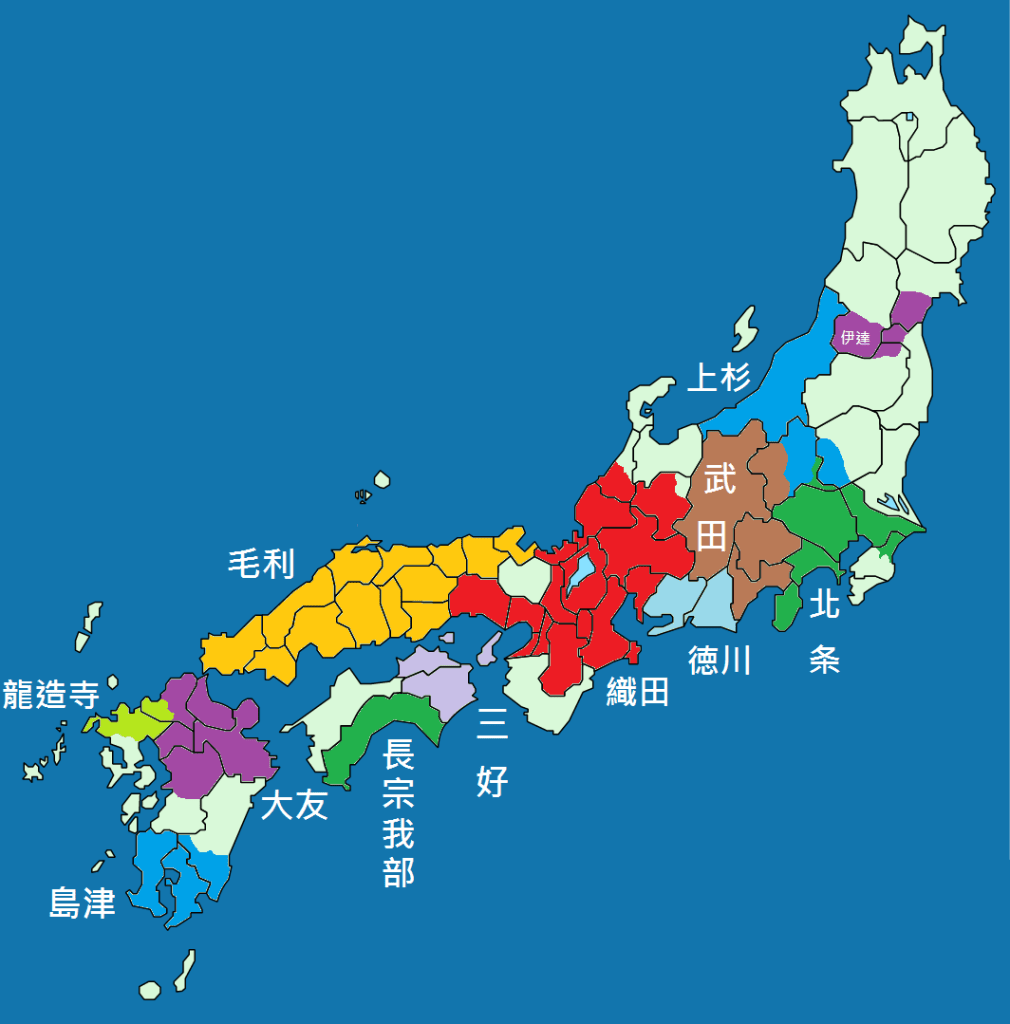
    By 1573, Oda Nobunaga was arguably the strongest warlord of his day, controlling a large territory that dominated central Japan. He had taken control of Kyoto and brought about the end of the Ashikaga Shogunate (though he would never take the title for himself), and with the death of Takeda Shingen, his most dangerous rival had been removed.

    Nobunaga’s position is red. Dominant, but not yet unchallenged.
    By Alvin Lee – Own work, CC BY-SA 4.0, https://commons.wikimedia.org/w/index.php?curid=39200929

    You probably know by now that even a strong position was never completely unchallenged during the Sengoku Jidai, and Nobunaga still had enemies to deal with. In the summer of 1573, he launched a campaign against the Azai-Asakura alliance, whom he had defeated at the Battle of Anegawa in 1570 and now meant to finish off.

    Nobunaga’s forces laid siege to the formidable Odani Castle. When Azai-Asakura forces marched to relieve it, they were ambushed and forced to retreat to Ichijodani Castle with Nobunaga in hot pursuit. The Azai-Asakura were then decisively defeated at the Battle of Tonezaka and tried to retreat again; however, a series of defeats, betrayals, and suicides put an end to the alliance and then to the clans themselves.

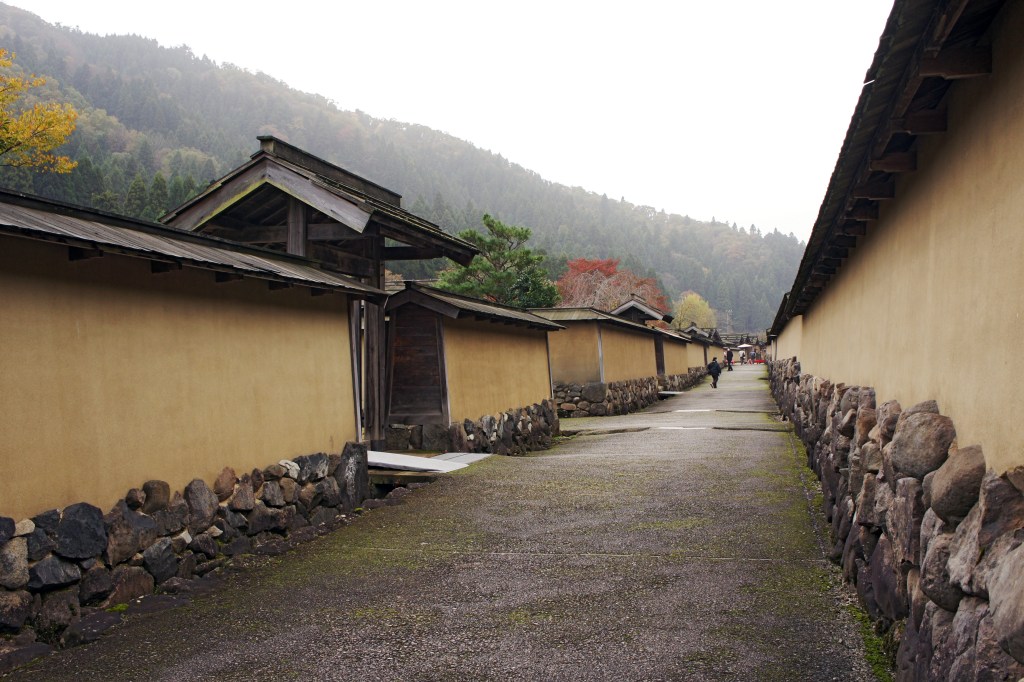
    A modern reconstruction of the castle down around Ichijodani.
    663highland – 投稿者自身による著作物, CC 表示 2.5, https://commons.wikimedia.org/w/index.php?curid=12059706による

    A side note to these events is the end of the marriage between Nobunaga’s sister, Oichi, and Azai Nagamasa, lord of the Azai Clan. When Nagamasa betrayed Nobunaga, Oichi remained faithful and was by his side as Odani Castle came under siege. Some sources say that Oichi gave birth to her third daughter during the siege (though others disagree). There is also debate over how she escaped, with some saying she was aided by a loyal retainer, and others stating that Nobunaga and Nagamasa agreed to let Oichi and her daughters go, a tale often romanticised as demonstrating the love both men had for her.

    Romantic stories aside, with the end of the Azai-Asakura threat, Nobunaga turned his attention to the peasant rebellion in Ise Province (the so-called Nagashima Ikko-Ikki), which had resulted in the death of his younger brother, Nobuoki. The campaign was successful at first, with several outlying forts being taken, but an attempt to secure the rebels’ main fortress at Nagashima failed, and Nobunaga was obliged to fall back after an ambush threatened to cut him off.

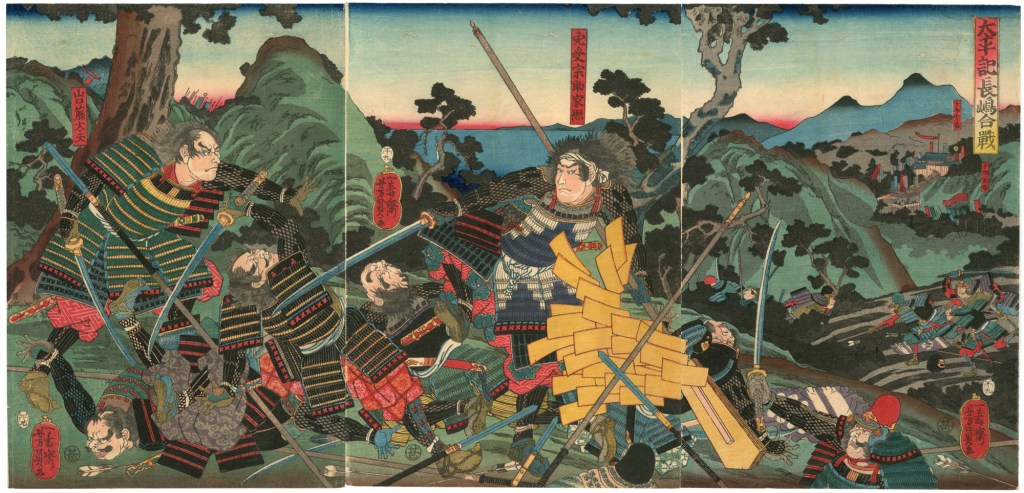
    A 19th-century depiction of the fighting in Nagashima.

    The year would end on a more positive note for him, however, as Ashikaga Yoshiaki, who was still claiming the title of Shogun, was forced to flee Wakae Castle (in modern Osaka) and retreat to Kii Province. In December, Nobunaga’s forces captured the important and wealthy Tamonyama Castle (modern Nara), further securing his territory in central Japan.

    1574 would bring new problems, starting with another peasant rebellion (the Echizen Ikko-Ikki) in territory that Nobunaga had only recently taken from the Azai-Asakura. Shortly after that, a renewed attack by the Takeda, now led by Shingen’s son, Katsuyori, invaded Mino Province. Nobunaga marched to meet them, but the border castles fell before he could arrive, and so he withdrew, avoiding a decisive clash with the Takeda for now.

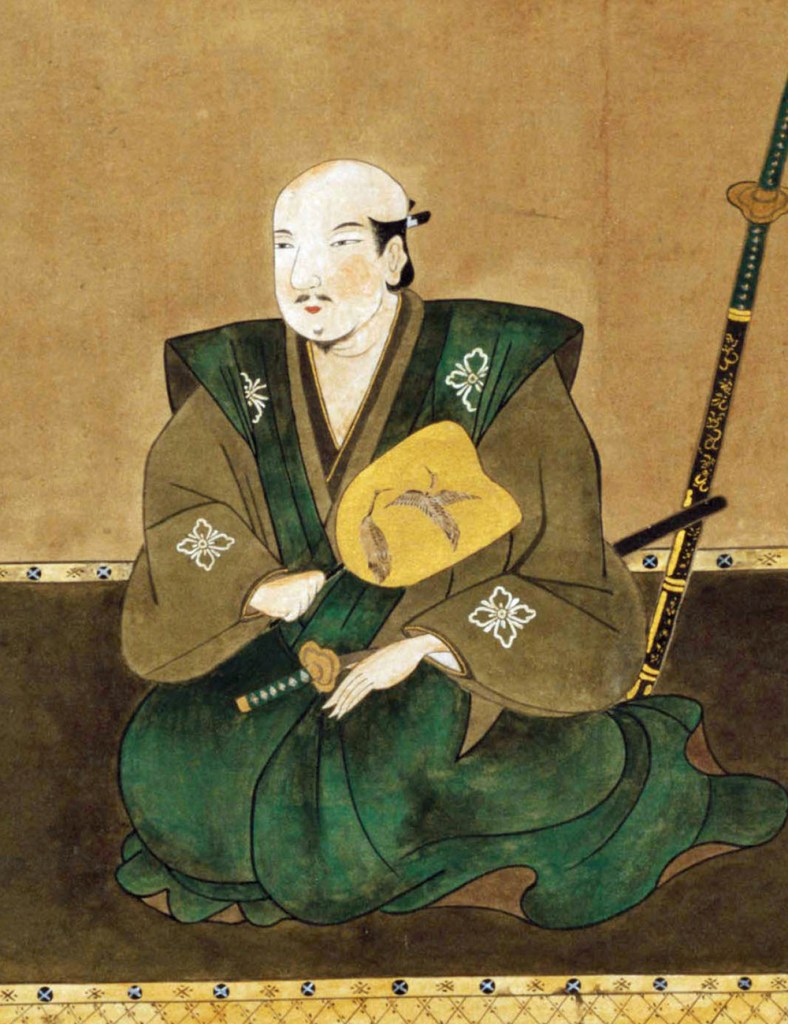
    Takeda Katsuyori

    With crises in all directions, Nobunaga was stretched to his limit, but it was in moments like this where he showed his brilliance and his brutality. The Ikko-Ikki fortress at Nagashima had been a thorn in his side for years, and he set out to remove it in the summer of 1574, surrounding the fortress from land and sea and starving the defenders into surrender by September.

    It is said that some attempted to flee by boat, but Nobunaga stopped them with a volley of gunfire. Suitably provoked, the Ikko-Ikki launched a counterattack that ultimately failed, but killed Nobunaga’s half-brother. In response, Nobunaga had the remaining 20,000 defenders, including women and children, locked up inside the castle, which he then ordered burned.

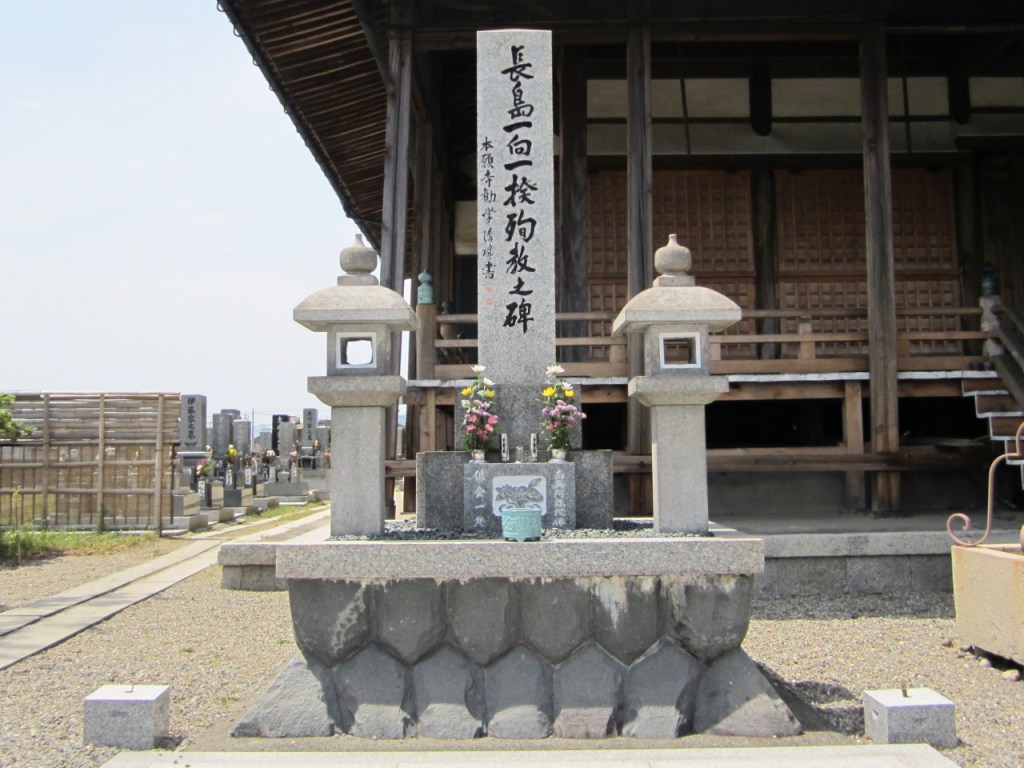
    A memorial to those who were killed during the fall of Nagashima.
    立花左近 – 投稿者自身による著作物, CC 表示-継承 3.0, https://commons.wikimedia.org/w/index.php?curid=20094400による

    With Nagashima subdued, Nobunaga turned his attention to the Takeda, who had launched a series of relatively small-scale invasions throughout 1574, and by April 1575, were besieging the Tokugawa-controlled fortress at Nagashino. What followed was one of the most heavily mythologised battles of the era, and even today, many of the details are open to debate, but what is not in doubt is that the Battle of Nagashino inflicted a mortal wound on the Takeda. They never again posed a serious strategic threat to Nobunaga’s ambitions.

    One of his other long-term enemies was the Temple of Hongan-ji, the spiritual centre of the widespread Ikko-Ikki movement. The movement had been severely weakened by the loss of Nagashima, and in late Summer 1575, Nobunaga crushed the Echizen Ikko-Ikki, further weakening Hongan-ji’s power. This turn of events allowed Nobunaga to establish a short-lived peace in the territory he controlled.

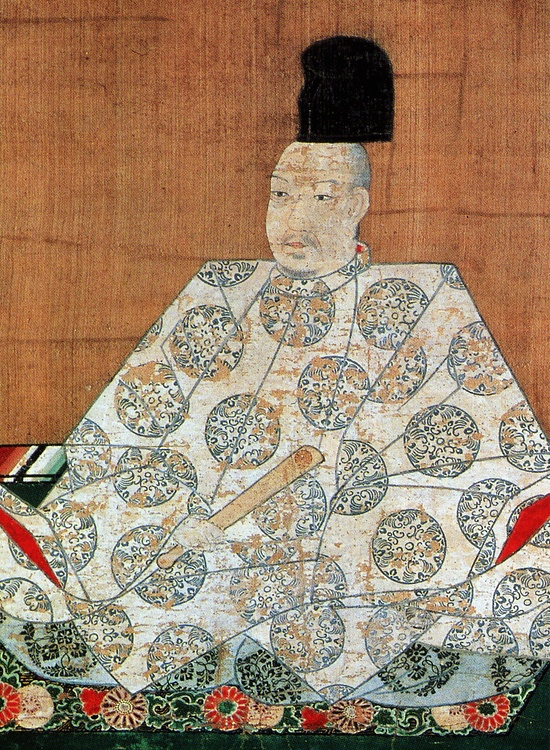
    Emperor Ogimachi (r 1557-1586) was Emperor for most of Nobunaga’s rise to power.

    In November 1575, Nobunaga was appointed Dainagon, and Ukone no Taisho, Chief Councillor, and General of the Right, respectively, positions in the Imperial court which established his position, and right to rule the country (in the Emperor’s name, of course) Around this time Nobunaga also began distributing territory and other titles to his followers on behalf of the Emperor, and it is from this point that historians generally agree that Nobunaga gave up the pretence of supporting the Ashikaga, and began eyeing the position for himself. In light of this, he officially recognised his son, Nobutada, as his heir and gave orders for the construction of a new fortress at Azuchi.

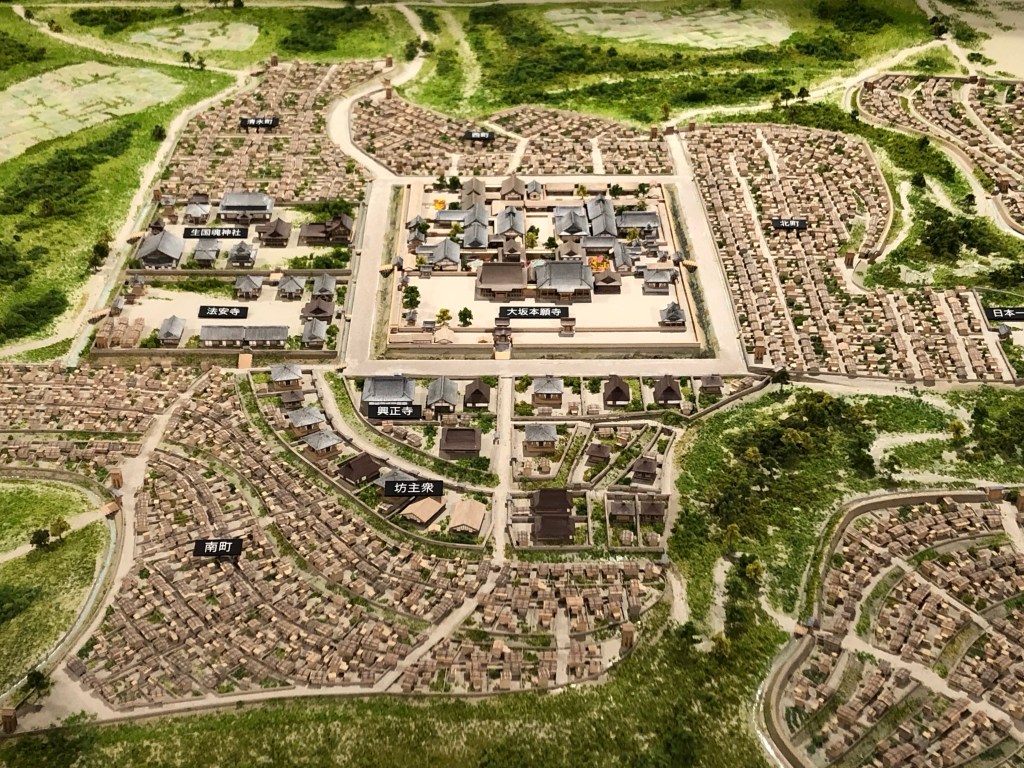
    It couldn’t last, however, and in Spring 1576 Ishiyama Hongan-ji was in arms against him again, supported by a loose coalition of powerful clans, and at least nominally acting on behalf of the exiled Shogun, Yoshiaki. Initial attempts by Oda forces to subdue Hongan-ji failed, but when Nobunaga himself arrived, he won a decisive victory at the Battle of Tennoji, and subsequently laid siege to the vast Ishiyama temple complex.

    This modern recreation shows that the Ishiyama Hongan-ji complex was more akin to a fortified town than a temple.

    Nobunaga might have hoped to repeat his success at Nagashima, but those hopes were to be dashed when a fleet from the Mori Clan destroyed the Oda blockade at the Battle of Kizugawaguchi in August 1576, ensuring that, for the time being, supplies would continue to flow into Ishiyama, and the siege would drag on.

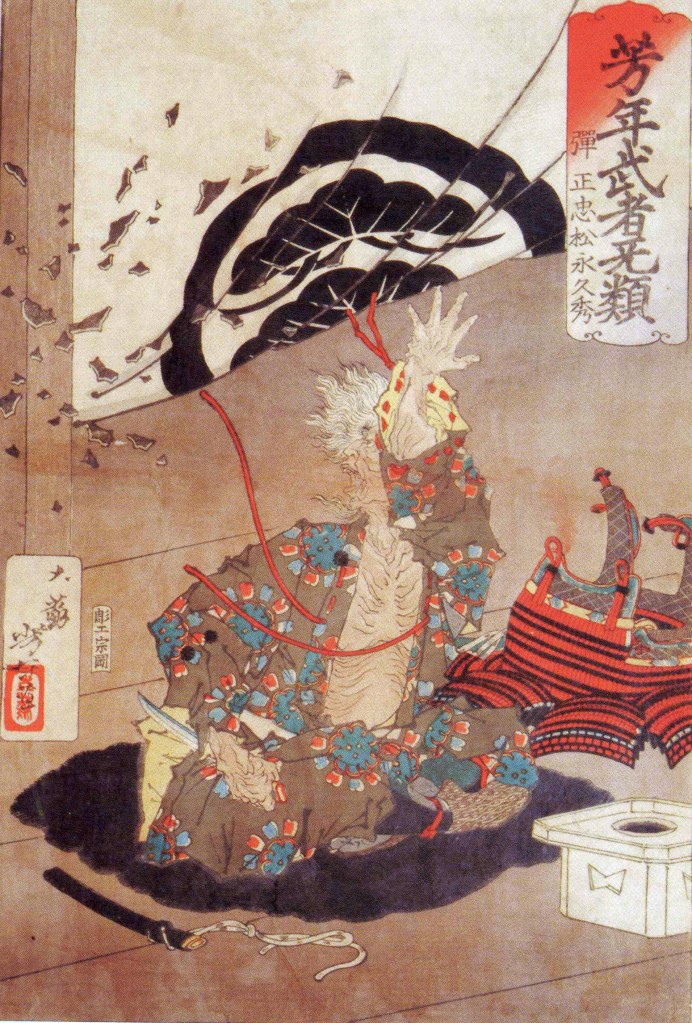
    Meanwhile, in 1577, Nobunaga led an army into Kii Province and forced the surrender of the Saika Clan before withdrawing, only to then have to face a rebellion from the Matsunaga Clan in Ise Province, which was put down in characteristically brutal fashion, with the castle burned, and its occupants forced to commit Seppuku.

    This image depicts Matsunaga Hisahide at the moment of his death. The story goes that Nobunaga offered to spare him in exchange for a rare tea kettle. In response, Hisahide is supposed to have smashed the kettle to pieces before killing himself.

    From 1578 to 1580, Nobunaga was forced to contend with the powerful Mori Clan and their allies for control of Harima Province. Meanwhile, his vassal, Akechi Mitsuhide, successfully subdued the provinces of Tamba and Tango. In late 1580, Nobunaga forced the surrender of Arioka and Miki Castles, bringing the whole of Harima under his control.

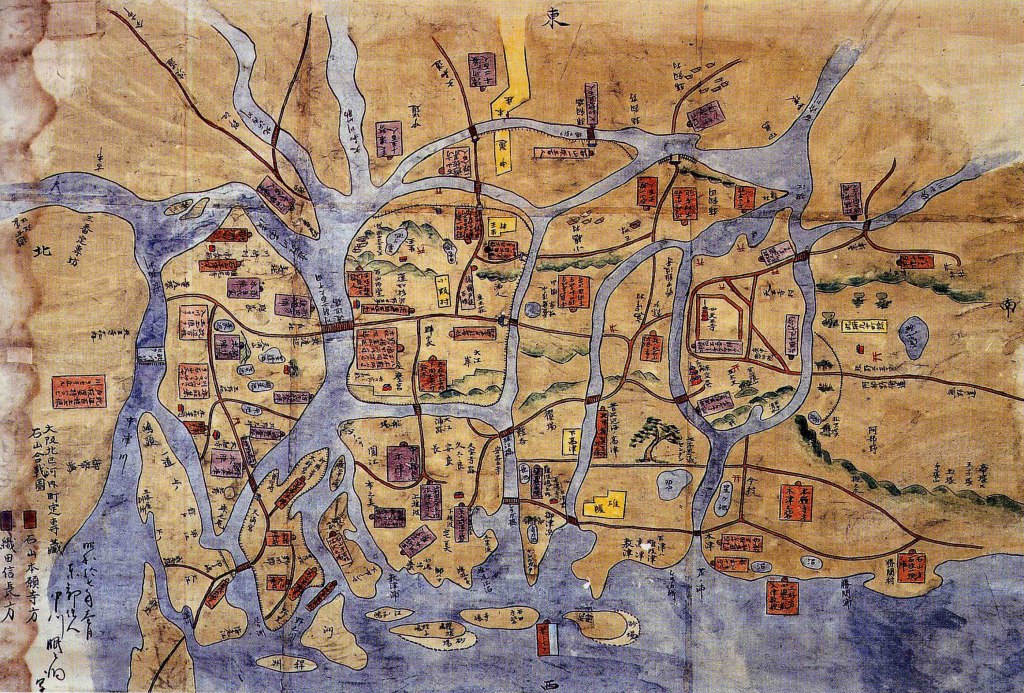
    Meanwhile, the Second Battle of Kizugawaguchi in December 1578 reversed the strategic situation in the seas around Ishiyama (Osaka Bay), when the rebuilt Oda navy inflicted a decisive defeat on the Mori fleet, finally cutting Ishiyama off completely. The siege would last until 1580, however, and it would eventually take an Imperial Order to convince the leadership to surrender, in exchange for being allowed to leave.

    A semi-contemporary image of Ishiyama Hongan-ji during the siege.

    War was never far away, but as 1581 dawned, Nobunaga was stronger than any Daimyo had ever been, and it was seriously possible that if anyone were to bring an end to the Sengoku Jidai and reunite the country, it would be him. However, he still had a few more rivals to overcome first.

    The Battle of Nagashino had been a death blow to the Takeda, but as late as 1582, they were still clinging on, and now Nobunaga made the decision to end them once and for all. Gathering a force of some 100,000 and supported by his ally Tokugawa Ieyasu, Nobunaga invaded Takeda territory in early 1582. The campaign was almost too easy, as Takeda resistance crumbled almost immediately, forts often surrendered without a fight, or after only a token display of defiance, and many former Takeda retainers simply switched sides, or else ran away from the advancing Oda.

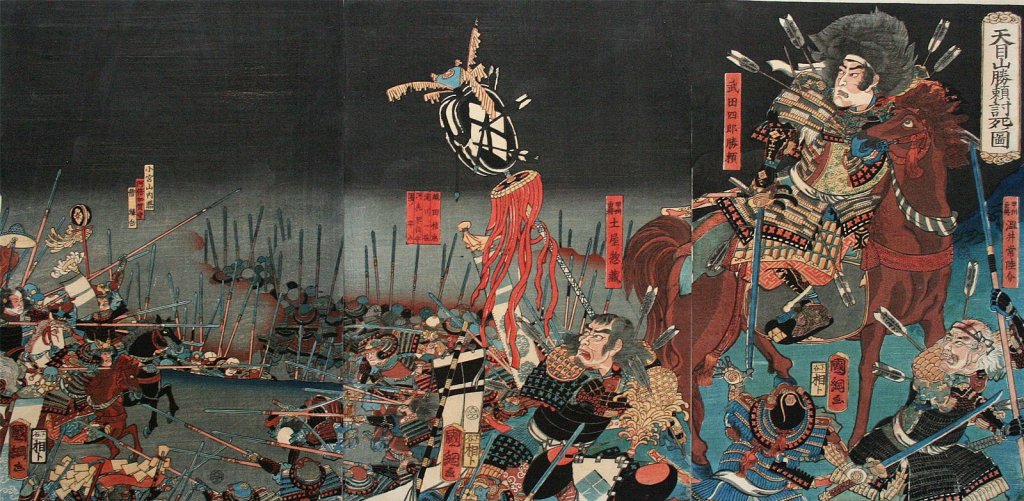
    A heavily stylised (and much later) depiction of the end of Takeda Katsuyori, whose death would signal the end of his clan.

    The Takeda eventually stood their ground at the formidable Takato Castle, but, despite its reputation, it was taken quickly, and what remained of the Takeda began to melt away. Eventually, Takeda Katsuyori and his son Nobukatsu were trapped at Tano (modern Tsuru, Yamanashi Prefecture) and forced to commit Seppuku, bringing an end to the Takeda line and any hope of resistance to Nobunaga.

    With the Takeda gone, Nobunaga took some time to reorganise the newly conquered territories, and then headed home through the lands of his ally Tokugawa Ieyasu, who laid on entertainments, refreshments, and accommodation, all purpose-built for Nobunaga’s visit.

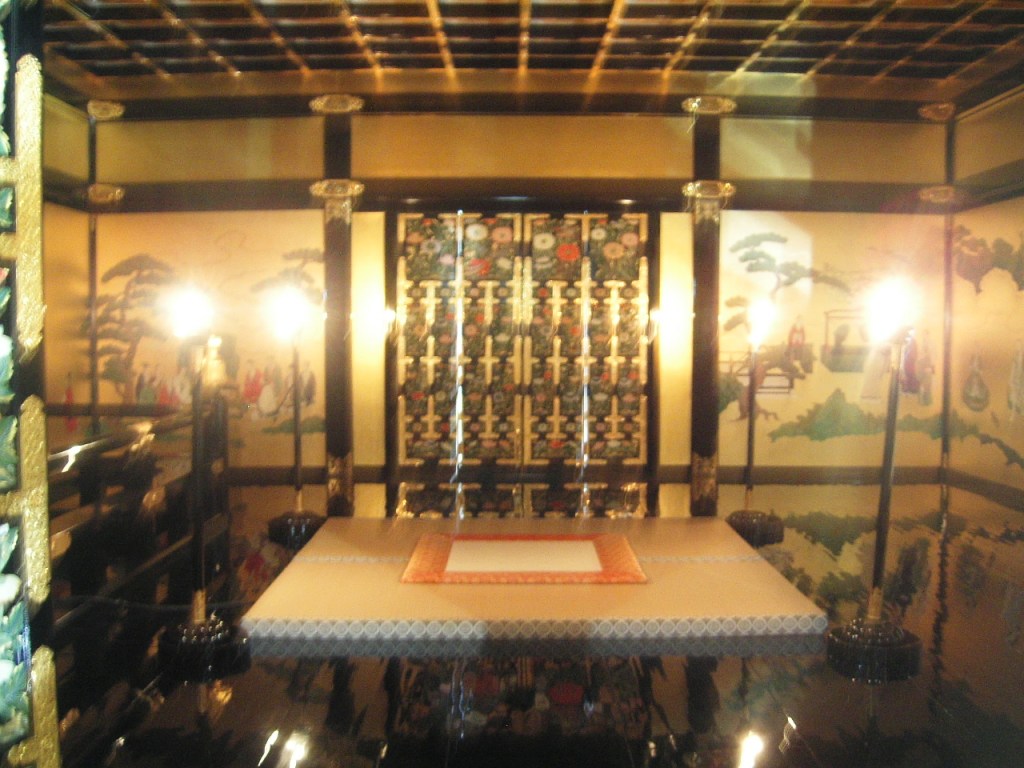
    A reconstruction of Nobunaga’s ‘throne’ at Azuchi.
    日本語版ウィキペディアのMaakunさん – 原版の投稿者自身による著作物, CC 表示-継承 3.0, https://commons.wikimedia.org/w/index.php?curid=115518317による

    By Spring, Nobunaga was back at his base at Azuchi, from where he made plans to invite the Emperor for a formal visit, and rumours began that the court was about to appoint him Shogun, or else some other senior position. The exact nature of this appointment and Nobunaga’s receptiveness to it are unclear, as the sources don’t agree on whether anything was offered at all, let alone what Nobunaga said about it. The Imperial visit was supposedly arranged for the following year, but again, the sources are scant.

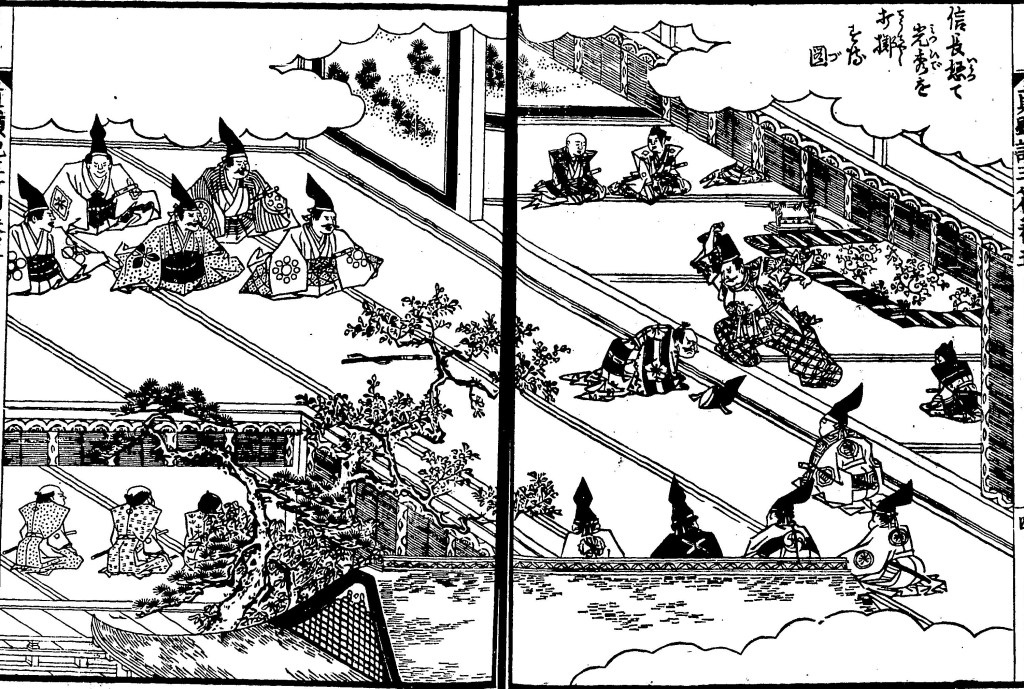
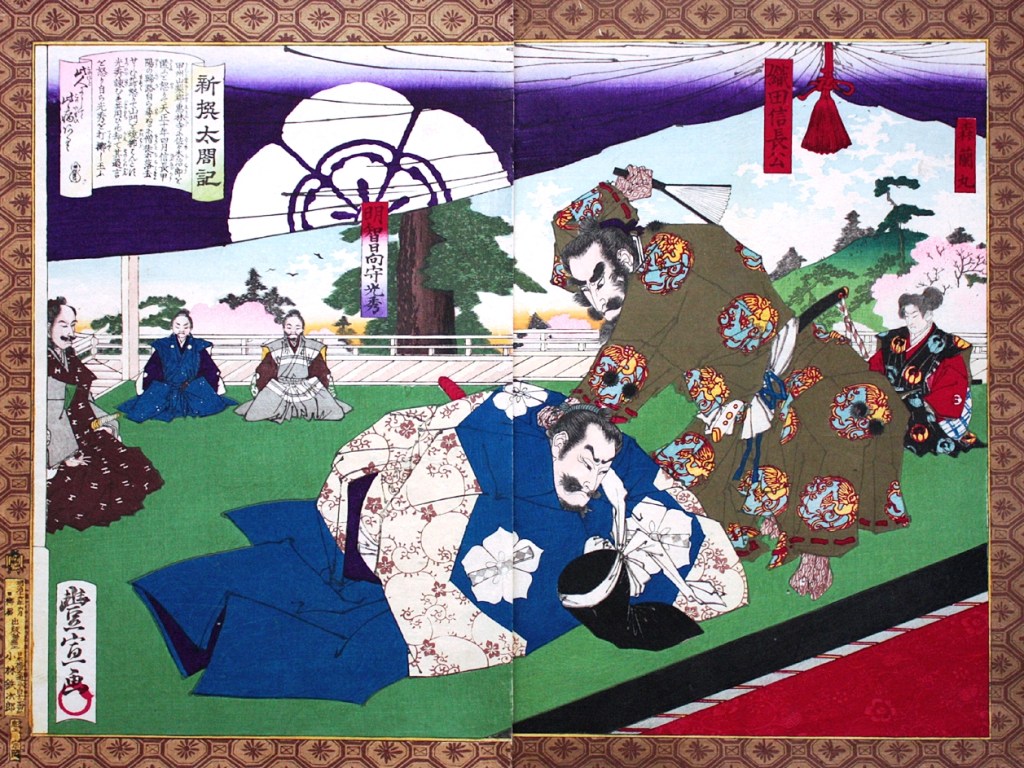
    During this brief period of peace, Nobunaga is supposed to have announced his plans to conquer Shikoku from the Chosokabe. One of his retainers, Akechi Mitsuhide, was apparently unhappy about this, as he had previously acted as an intermediary between Nobunaga and the Chosokabe. Mitsuhide was further agrieved when Nobunaga ordered him to provide entertainment for the visiting Tokugawa Ieyasu. The story goes that Nobunaga accused Mitsuhide of doing a poor job (rightly or not) and launched into a public dressing-down of Mitsuhide that ended (according to some sources) with a literal kick in the backside.

    A 19th-century imagining of Nobunaga publicly chastising Mitsuhide.

    Given the importance of public image in Japan, it is easy to see why Mitsuhide might have felt a genuine grievance over this treatment. There is also a story that Mitsuhide’s mother had once served as a hostage for a truce that Nobunaga had gone on to break, resulting in the poor woman’s death. Whilst some of these stories are poorly sourced at best, what is known is that by the summer of 1582, Akechi Mitsuhide had had enough.

    Sources
    https://ja.wikipedia.org/wiki/%E7%B9%94%E7%94%B0%E4%BF%A1%E9%95%B7
    https://en.wikipedia.org/wiki/Tsuru,_Yamanashi
    https://ja.wikipedia.org/wiki/%E9%AB%98%E9%81%A0%E5%9F%8E
    https://ja.wikipedia.org/wiki/%E7%94%B2%E5%B7%9E%E5%BE%81%E4%BC%90
    https://ja.wikipedia.org/wiki/%E4%B8%89%E6%9C%A8%E5%90%88%E6%88%A6
    https://ja.wikipedia.org/wiki/%E4%BF%A1%E8%B2%B4%E5%B1%B1%E5%9F%8E
    https://ja.wikipedia.org/wiki/%E7%B4%80%E5%B7%9E%E5%BE%81%E4%BC%90
    https://ja.wikipedia.org/wiki/%E5%A4%A9%E7%8E%8B%E5%AF%BA%E3%81%AE%E6%88%A6%E3%81%84_(1576%E5%B9%B4)
    https://ja.wikipedia.org/wiki/%E7%9F%B3%E5%B1%B1%E5%90%88%E6%88%A6
    https://ja.wikipedia.org/wiki/%E7%AC%AC%E4%B8%80%E6%AC%A1%E6%9C%A8%E6%B4%A5%E5%B7%9D%E5%8F%A3%E3%81%AE%E6%88%A6%E3%81%84
    https://ja.wikipedia.org/wiki/%E7%AC%AC%E4%BA%8C%E6%AC%A1%E6%9C%A8%E6%B4%A5%E5%B7%9D%E5%8F%A3%E3%81%AE%E6%88%A6%E3%81%84
    https://ja.wikipedia.org/wiki/%E9%95%B7%E5%B3%B6%E4%B8%80%E5%90%91%E4%B8%80%E6%8F%86