Tag: Ashikaga succession

  • The Meio Coup

    The Meio Coup

    As we’ve discussed previously, by the 1490s, the Ashikaga Shogun was a shadow of its former self. The Onin War had effectively ended even the pretence of Shogunate power, and in the provinces, what would later be called the Sengoku Jidai was already underway.
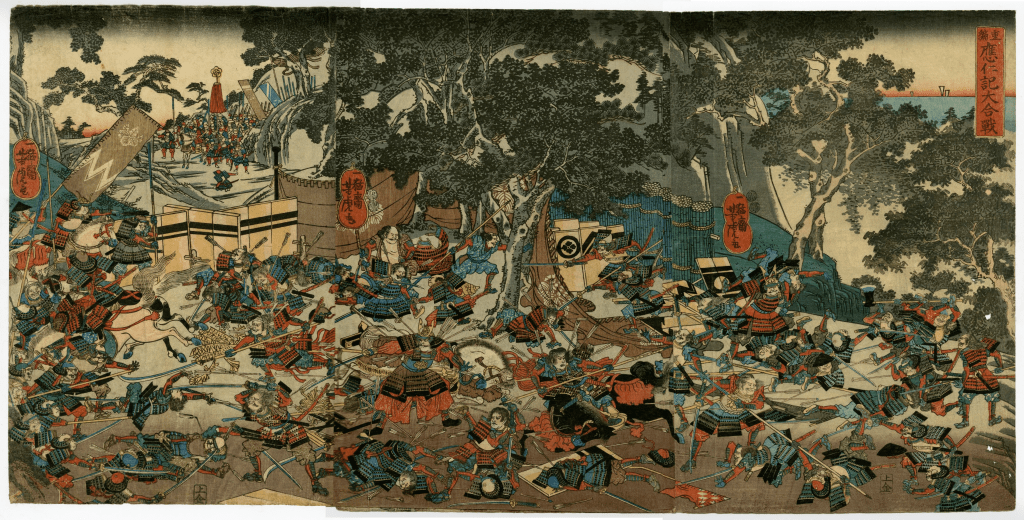
    The Onin War ultimately broke the Shogun’s power.

    There’s a post on the Onin War if you want details, but very briefly, the war was fought over who would succeed Ashikaga Yoshimasa as Shogun, his son (Yoshihisa), or his brother (Yoshimi). When the war ended in 1477, it was his son who became Shogun.

    Yoshihisa was apparently a bit of a lush, and contemporary sources paint him as a young man who was too fond of wine and women. In fact, when he died suddenly in 1489, aged just 25, it was widely blamed on his hedonistic lifestyle (not a bad way to go, mind you).

    Despite his proclivities, Yoshihisa died without a male heir, and it was at this point that the son of the defeated brother, Ashikaga Yoshitane, became Shogun. This might seem like a strange choice, and it certainly wasn’t unopposed, but he apparently had the support of Hino Tomiko, Yoshihisa’s mother, who was widely regarded as one of the most influential women in Japanese history.

    Quite why Tomiko chose to support Yoshitane isn’t documented, but given her reputation for political intrigue, she probably had some long game in mind. Yoshitane wouldn’t actually become Shogun until July 1490, and even when he took the throne, his position was weak.
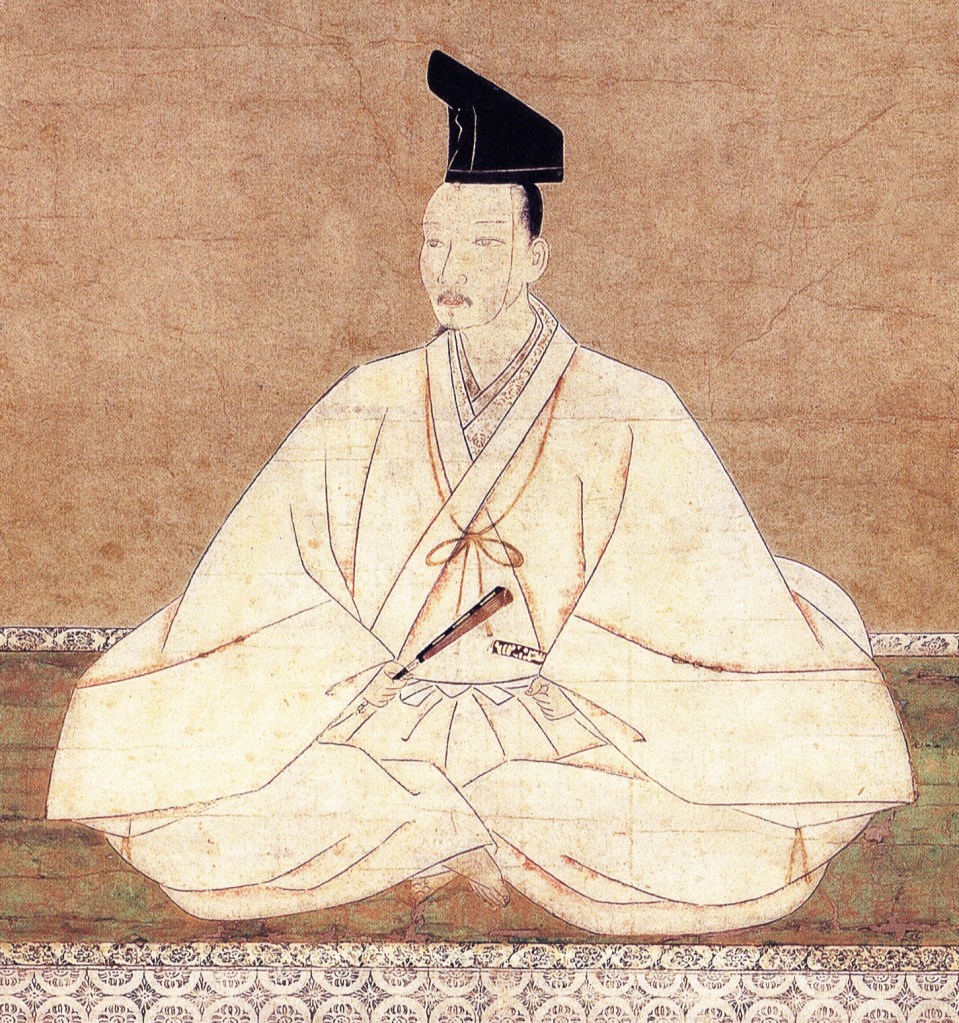
    Ashikaga Yoshitane was a surprising and ultimately controversial choice for Shogun.

    There were myriad problems in and around the Shogun’s government, but the fundamental issue seems to have been that Yoshitane was the son of the man who had been defeated in the Onin War just 13 years earlier. The men who had won that war were still in government, and they weren’t fans of the idea of having to serve someone who was probably going to be out for revenge.

    When Tomiko announced her support for Yoshitane, several high-ranking members of the government resigned their positions rather than serve under him. Initially, this might not have been a problem. Yoshitane was a young man (just 23) who enjoyed the support of one of the realm’s most powerful figures, Hino Tomiko, and the advice and guidance of his father, Yoshimi, who might have been Shogun himself, if things had gone differently.

    Yoshitane was also aided by his kanrei (deputy), Hosokawa Masamoto, an experienced (if slightly eccentric) politician. As seems to be inevitable with the Ashikaga, though, this initial optimism didn’t last. Ashikaga Yoshimi died in January 1491, just months into the new Shogun’s reign, and it seems that his relationship with Hino Tomiko soured too. Some sources (admittedly biased against Tomiko) suggest this was because Yoshitane turned out to be not as compliant as Tomiko had intended, but whatever the reason, Yoshitane was obliged to find a new way to shore up his power.

    To do this, he turned to the time-honoured tradition of his forebears and went to war. The region around Kyoto had been devastated by the Onin War, and recovery had been unequal at best. There were numerous uprisings from angry peasants and religious movements throughout the decades of ‘peace’, and Yoshitane saw an opportunity to flex his muscles and put these troublemakers in their place.

    The first blow was struck against the Rokkaku Clan. Like his predecessors, Yoshitane had few military resources of his own to call on, so he summoned several powerful lords to do the fighting for him. They agreed eagerly, but one figure who opposed the campaign was Hosokawa Masatomo. Quite why the kanrei was against the campaign isn’t clear, but this led to a schism between the Shogun and his most powerful official.

    Hosokawa Masamoto, the Shogun’s Deputy and most powerful official.

    In response, Yoshitane began relying on other lords to do his bidding, attempting to cut Masatomo out of the picture. In 1493, he launched another campaign, this time seeking to bring an end to the division in the once powerful Hatakeyama Clan. This time, Masatomo’s opposition is easier to understand. The Hatakeyama and Hosokawa Clans were historic rivals, and the ‘civil war’ in the Hatakeyama Clan had been to the Hosokawa’s benefit. If the Shogun succeeded in ending the fighting, then the Hatakeyama might regain their strength, and Masatomo couldn’t have that.

    When the Shogun issued orders for an army to be gathered in January 1493, Masatomo went to work. He contacted the faction within the Hatakeyama that the Shogun intended to attack and made arrangements with them to earn their support for what came next. Throughout early spring that year, Masatomo gathered others who were unhappy with Yoshitane. Some were partisans of the armies that had opposed Yoshitane’s father; others were disgruntled with the political situation, like Hino Tomiko, who now sided against the man she had supported just a few years earlier.

    Others were almost certainly just opportunists, but by April, Masatomo was ready to move. He waited for the Shogun’s army to attack the Hatakeyama in Kawachi Province (in modern Osaka), and when Kyoto was vulnerable, he launched his coup.

    It all went relatively smoothly for Masatomo. His forces took the city without much trouble, and Hino Tomiko issued an order commanding that Masatomo take control to restore order, giving his actions the veneer of legality. Masatomo then announced he would depose Yoshitane and replace him with Ashikaga Yoshizumi, who had been adopted by Hino Tomoki and Shogun Yoshimasa.
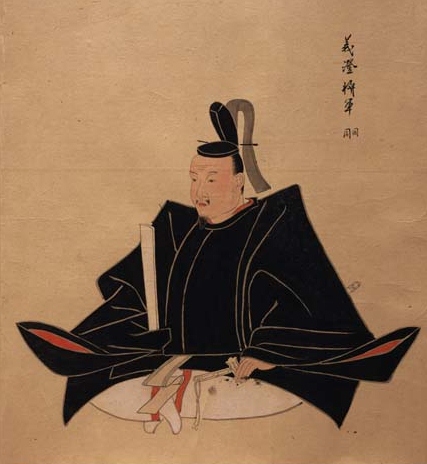
    Ashikaga Yoshizumi, installed as Shogun after the Meio Coup.
    Geneast – 投稿者自身による著作物, CC 表示-継承 3.0, https://commons.wikimedia.org/w/index.php?curid=21645552による

    When the news reached the army in Kawachi, it disintegrated almost immediately, with many vassals supporting the new Shogun and effectively legitimising Masatomo’s coup. Yoshitane could still call on around 8000 loyalists to fight for his cause, but the situation was dire.

    As well as Yoshitane’s (much reduced) loyalists, the Emperor himself was apparently against the coup. You may remember that the Shogun was technically a servant of the Imperial Court, and although it had been centuries since the Emperor had actually had the power to decide who would be Shogun, the idea that someone else could overthrow him was an affront to what remained of Imperial prestige.

    The Emperor was so angry that he even threatened to abdicate, but the impotence of his position was highlighted when Imperial officials pointed out that a) even if he abdicated, the coup would not be reversed, and b) the Imperial Court couldn’t afford the ceremony, and might have to resort to borrowing money for it from the very Shogunate they sought to protest.

    So the Imperial Court prevaricated by engaging in some religious ceremonies that the Emperor was required to attend, and would therefore be unavailable to condone or condemn the coup. This led to a strange stalemate, where the Imperial Court could do nothing to change the course of events, but the Shogunate (controlled by Masatomo) could not compel the court to obey, denying the coup the full support of Japan’s ‘legal’ sovereign.

    Emperor Go-Tsuchimikado was on the throne during the coup and was pretty annoyed about it.

    Political difficulties aside, the reality was that Masatomo was now in control, and to demonstrate this, he ordered an army to be dispatched to Kawachi Province to deal with what was left of the old Shogun’s loyalists. Chronicles at the time suggest the force was as large as 40,000, and, faced with such odds, Yoshitane and his supporters retreated to and fortified a nearby temple, where they hoped to hold out.

    The situation got worse for Yoshitane, however, as a relief force sent by his supporters met Masatomo’s army near Sakai (modern Osaka), where they were defeated, effectively ending any chance Yoshitane had of reversing the coup.

    Not long afterwards, Masatomo’s forces attacked the temple and quickly overwhelmed its defences. Several of Yoshitane’s prominent supporters committed suicide, but Yoshitane himself was captured and taken back to Kyoto and held at the Ryoanji Temple.
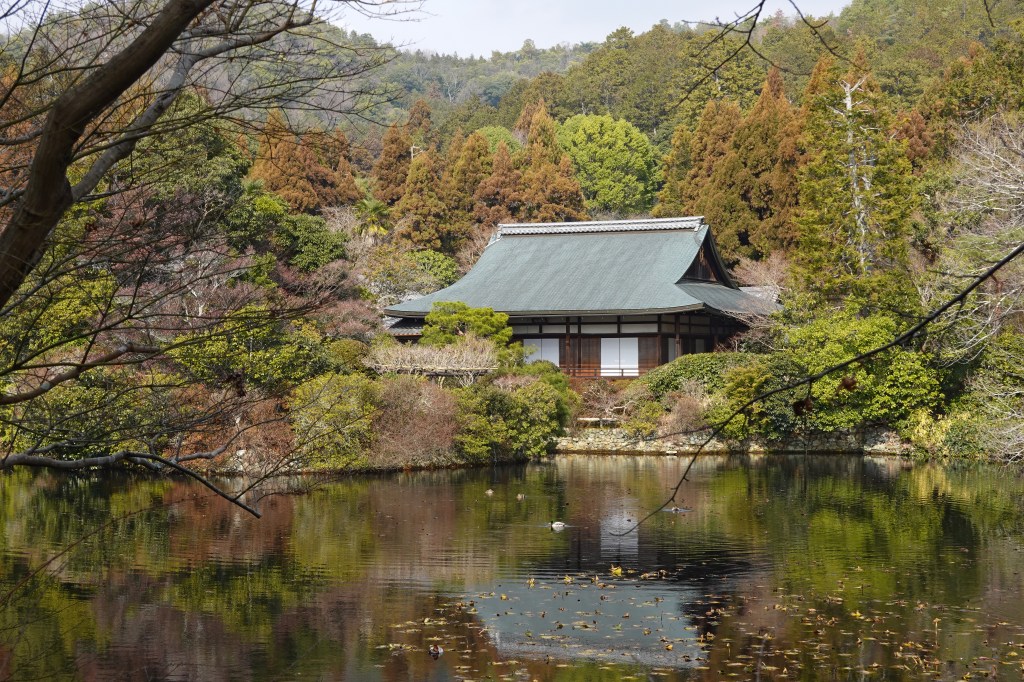
    A modern scene of Ryoanji Temple, where Yoshitane was held. Picturesque as prisons go.
    663highland – 投稿者自身による著作物, CC 表示-継承 4.0, https://commons.wikimedia.org/w/index.php?curid=159351811による

    In the aftermath of this battle, Masatomo had several of his more powerful opponents killed or exiled, and consolidated power in the capital and by the Autumn of 1493, his position was practically unassailable.

    Quite why Masatomo decided to get rid of Yoshitane has been debated from the start. The man himself claimed it was due to the Shogun’s military campaigns putting an unsustainable burden on the more powerful lords, and while there’s probably some truth to that claim, it also seems likely that the relationship between Masatomo and the Shogun had broken down, and Masatomo decided to strike while he was in a position of strength.

    That being said, Masatomo wouldn’t have succeeded if he’d acted alone. The fact that he had the support of Hino Tomiko and that most of Yoshitane’s supporters abandoned him almost immediately suggests that the dissatisfaction with his rule ran deep. It has also been suggested that Tomiko herself was the instigator of the coup, as she had come to regret her earlier decision to support Yoshitane.

    Although the Meio Coup left Masatomo as the dominant political figure in Kyoto, in the long term, it did nothing to reverse the catastrophic decline of Shogunate power. Although the supreme military power, Masatomo, did not have control of the bureaucracy, which remained with Hino Tomiko and her supporters.

    Additionally, the swift collapse of the Shogun’s ‘loyalists’ demonstrated how fragile that system really was, and after the coup, instead of relying on several powerful clans, the Shogunate was forced to rely on one, the Hosokawa and by extension, Masatomo.

    Masatomo certainly didn’t have it all his own way, then, and the situation only got worse when Yoshitane (who had been left alive) escaped captivity in Kyoto and fled to Etchu Province, from where he issued calls for his supporters to deal with Masatomo.

    Masatomo would dispatch an army to deal with Yoshitane, but it was defeated, and not long after that, several powerful clans declared their support for the deposed Shogun, though in reality, they offered little practical support in the short term.

    Internally too, opposition to Masatomo grew as Yoshizumi, who had been a boy when Masatomo installed him as Shogun, grew into a man (as they do) and began trying to assert control of what was supposed to be ‘his’ government, so, despite the success of his coup, Masatomo found himself with problems on all sides, and the power of the Shogun declined further still.

    Sources
    https://ja.wikipedia.org/wiki/%E6%97%A5%E9%87%8E%E5%AF%8C%E5%AD%90
    https://ja.wikipedia.org/wiki/%E6%98%8E%E5%BF%9C%E3%81%AE%E6%94%BF%E5%A4%89
    https://ja.wikipedia.org/wiki/%E8%B6%B3%E5%88%A9%E7%BE%A9%E5%B0%9A
    https://ja.wikipedia.org/wiki/%E8%B6%B3%E5%88%A9%E7%BE%A9%E8%A6%96
    https://ja.wikipedia.org/wiki/%E7%B4%B0%E5%B7%9D%E6%94%BF%E5%85%83
    https://ja.wikipedia.org/wiki/%E8%B6%B3%E5%88%A9%E7%BE%A9%E6%BE%84
    https://ja.wikipedia.org/wiki/%E5%A0%BA
    https://ja.wikipedia.org/wiki/%E9%BE%8D%E5%AE%89%E5%AF%BA
    https://ja.wikipedia.org/wiki/%E5%BE%8C%E5%9C%9F%E5%BE%A1%E9%96%80%E5%A4%A9%E7%9A%87

  • Kanto, Won’to

    Kanto, Won’to

    As we discussed last time, the relationship between the central government in Kyoto and the Kamakura Kubo, the regional military governor, was often quite strained. The decentralised nature of political power in Japan meant that, whilst the Kubo was nominally subordinate to the Shogun, they often acted as semi-independent rulers.

    The power of the kubo was, in theory, checked by the Kanto Kanrei, the Shogun’s direct deputy in the Kanto Region, who had, for decades by this point, been a member of the Uesugi Clan.

    Like most Samurai families, the Uesugi weren’t a single family, but a loose affiliation of siblings, cousins, and other relatives that shared a name and some common ancestry, but little else, with different branches of the Clan cooperating and opposing each other as the situation demanded.

    The strongest branch of the family at this point, and the one holding the position of Kanrei, was the Yamanouchi Uesugi, so named because of their residence in an area of Kamakura called, you guessed it, Yamanouchi. This particular branch of the family actually took over the position from the branch which had risen in rebellion in 1416 and been defeated.

    The Kanrei in the 1430s was Uesugi Norizane. He found himself in a fairly unenviable position. Although the kanrei was officially the subordinate of the Kamakura Kubo, the Shogun in Kyoto had the final say over who would actually hold the position, meaning that, in practice, the kanrei often found himself beholden to the will of the Shogun over that of his direct superior.

    This was probably fine at a time when Kamakura and Kyoto were in agreement, but by now, this was definitely not the case. As we talked about briefly last time, the Kamakura Kubo, Ashikaga Mochiuji, often followed an independent path, and this defiance led to a serious breakdown in his relationship with the Shogun.

    In 1429, the accession of a new Emperor called for a change in the Era name. This was (and arguably still is) a big deal in Japanese culture; whenever a new Emperor ascends the throne, the Era name is changed. It can also be changed after significant or otherwise tragic events, as those in power seek to figuratively draw a line under the past.

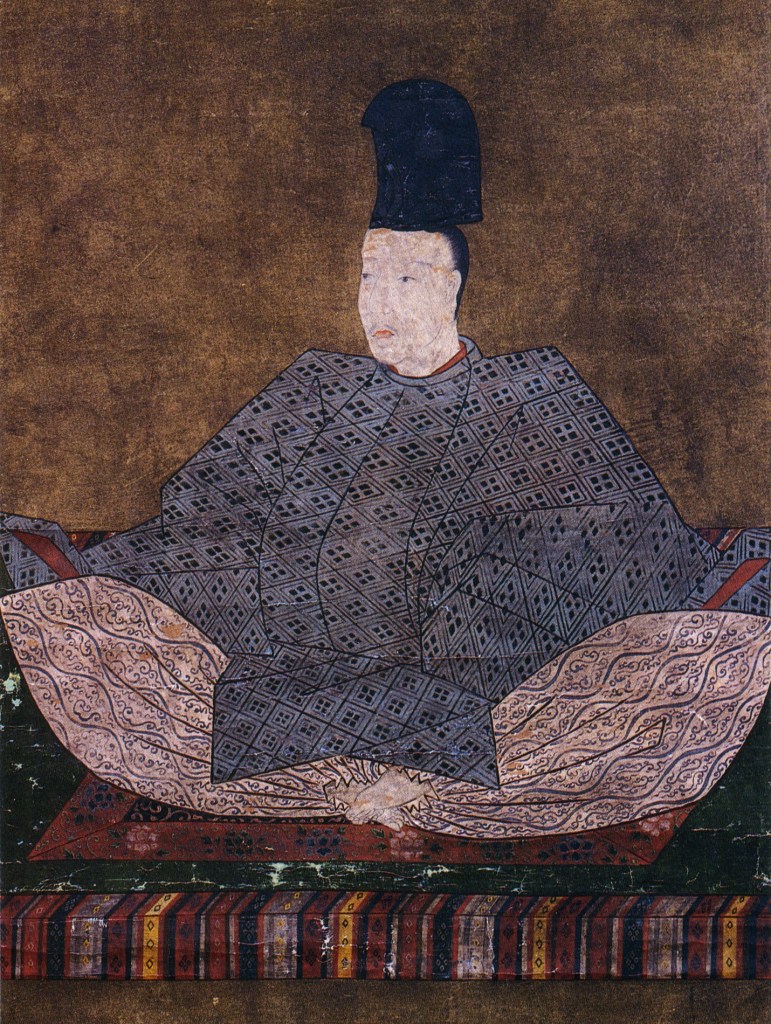
    Emperor Go-Hanazono, whose accession brought about the Era name changed that provoked the showdown between Mochiuji and the Shogun.

    A change of era is often an administrative formality for most, but this time, Mochiuji, being the independent-minded fellow that he was, apparently refused to adopt the new era name. This might seem like a petty decision to us, but it was, in effect, Mochiuji announcing to the world that he didn’t recognise the new era, and by extension, the new Emperor.

    Things got worse following the death of Shogun Yoshimochi in 1431. Mochiuji had expected to be called upon to be the next Shogun, as Yoshimochi had died without heirs. When Ashikaga Yoshinori, a monk, was selected instead, Mochiuji was angry enough to consider marching on Kyoto.

    This is where Uesugi Norizane rejoins our story. He dissuaded his hot-headed master, and no force was sent. In addition, he arranged for formal apologies regarding the Era change and even went so far as to return lands that had been confiscated by Mochiuji to the Shogun.

    Norizane is also recorded as having sent expensive gifts to Kyoto in an attempt to smooth over the considerable animosity that had built up towards Mochiuji there. Norizane was evidently trying to steer a moderate course; he owed his position to the Shogun, but he was nominally subordinate to the Kubo. When these two masters were in opposition, Norizane found himself caught in the middle.

    In 1436, his position got even worse. That year, fighting broke out in Shinano Province between rival factions seeking control of the province. One side called on Mochiuji for help, and he was eager to go, but Norizane intervened, pointing out that Shinano was not one of the provinces that were under the authority of the Kamakura Kubo. Thus, no forces were sent.

    The warlord who had requested Mochiuji’s help was defeated, and in 1437, Mochiuji planned to raise an army and march into Shinano anyway, presumably to avenge his fallen comrade. This time, however, rumours spread that the army was actually to be sent against Norizane.

    Things quickly got out of control after that. Although there was some attempt to negotiate, Norizane fled the Kanto entirely, retreating to the Uesugi stronghold in Echigo Province. There was a brief reconciliation in 1438, but things broke down again quickly afterwards, with Norizane resigning as kanrei.

    This time, Norizane fled to Kozuke Province, and Mochiuji sent an army after him. In response, Norizane called for help from the Shogun, and Yoshinori, who had been waiting for an excuse to deal with the troublesome kubo, readily agreed.

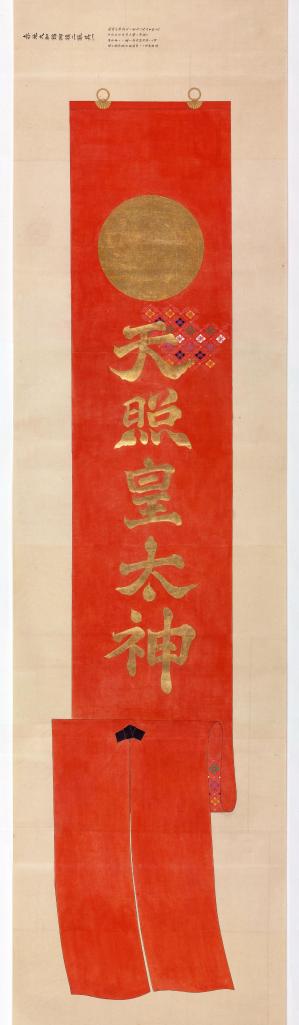
    A coalition of Kanto warlords loyal to the Shogun was assembled, and the Shogun used his influence at court to have an Imperial Banner issued to the army, effectively turning it into an Imperial army, and all those who opposed it into rebels against not only the Shogun but the Emperor himself.

    An example of an Imperial Banner (this one from the 19th Century)

    What impact this had on the morale of Mochiuji and his men isn’t clear, but throughout September and October 1438, their forces were repeatedly defeated, until eventually Mochiuji surrendered and attempted to become.

    Uesugi Norizane, continuing his policy of moderation, pleaded for Mochiuji’s life, and for his son to be allowed to take the position of Kubo. Shogun Yoshinori, however, was in no mood. Mochiuji had been a thorn in his side for decades, and he would not pass up the opportunity to deal with him.

    Mochiuji and his son were forced to commit suicide, and the position of Kamakura Kubo was temporarily abolished. That wouldn’t last long, though, and in 1440, Yoshinori attempted to have his own son appointed as the new kubo.

    Mochiuji (top) commiting suicide after his failed uprising.

    This didn’t sit well with former loyalists of Mochiuji, and a rebellion, led by the Yuki Clan, broke out in the same year, with the stated aim of restoring one of Mochiuji’s sons to their late father’s position.

    In April 1441, the rebellion was defeated, and Mochuji’s surviving children were brought to Kyoto. Yoshinori continued his plans to appoint his son as kubo, but then fate took a turn, as it so often does.

    In June 1441, Yoshinori was invited to a banquet at the residence of the Akamatsu Clan, officially to celebrate the Shogun’s recent victory. When he arrived, the gates were locked, and he was set upon by a band of armed men and cut down.

    The immediate motive of his killer appears to have been either revenge for the confiscation of family property earlier in his reign or the fear of being politically purged. Historians speculate that Yoshinori was becoming increasingly paranoid, with the Imperial Nobility and Samurai class becoming fearful of the possibility of being denounced and facing exile or execution.

    A phrase used by contemporaries to describe this period of Yoshinori’s reign is ‘万人恐怖’ Bannin Kyofu, or Universal Fear, which gives you a good idea of the mood.

    In the immediate aftermath of the killing, rumours of a wider conspiracy abounded, but it soon became clear that the Akamatsu Clan had acted alone; the government’s attention focused on who would be the next Shogun. The most appropriate choice was Yoshinori’s son, Yoshikatsu, but he was just a boy, and it wasn’t until November 1442, 18 months after his father’s death, that Yoshikatsu was elevated to Shogun, despite being just nine.

    With Yoshinori’s death and his replacement by a boy, the strong, often dictatorial power of the Shogun was significantly reduced. Yoshikatsu would rely on a council of powerful lords to handle the realm until he came of age, but that didn’t happen, as Yoshikatsu fell in and died in July 1443, only eight months into his reign. His sudden death led to the spread of several rumours, from a fall from a horse to assassination, but historians generally believe he died of illness, possibly dysentery.

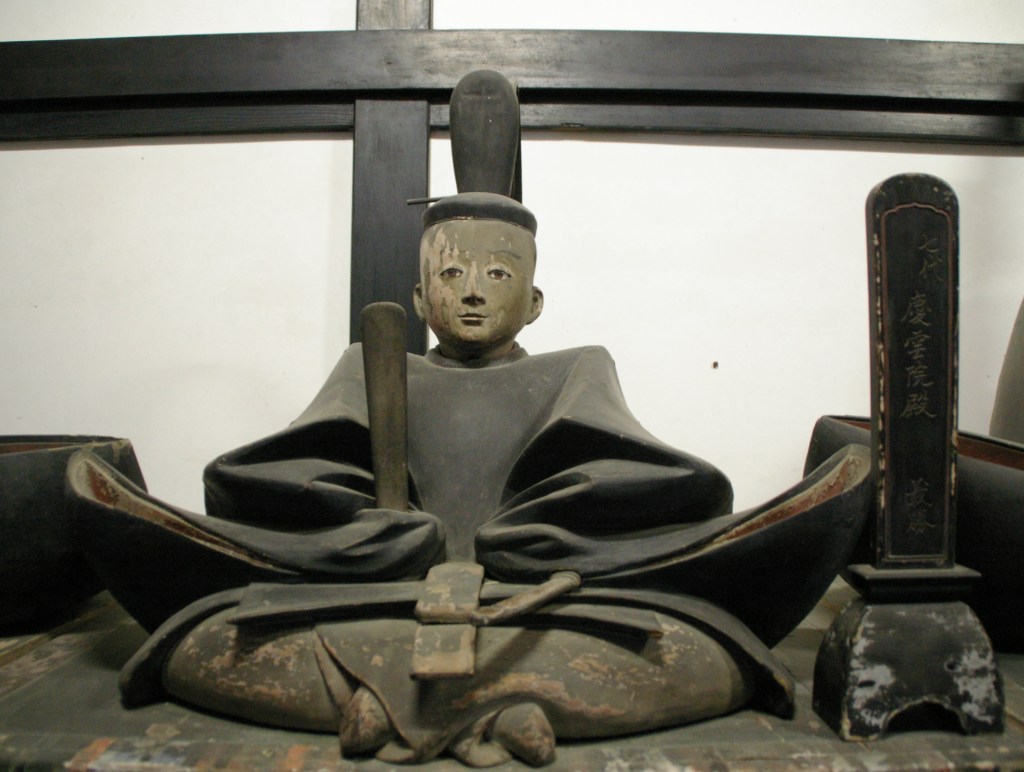
    A wooden statue of Ashikaga Yoshikatsu, whose reign, and life, were tragically short.
    CC 表示 3.0, https://commons.wikimedia.org/w/index.php?curid=9662197

    Yoshikatsu was replaced by his brother, Yoshimasa, who was even younger, and he wouldn’t be officially declared Shogun until 1449, by which time real power had shifted from the Shogunate to several powerful clans.

    Though no one knew it then, the Ashikaga Shogunate had begun what would prove to be a terminal decline.

    Sources
    https://ja.wikipedia.org/wiki/%E9%8E%8C%E5%80%89%E5%85%AC%E6%96%B9
    https://ja.wikipedia.org/wiki/%E8%B6%B3%E5%88%A9%E7%BE%A9%E6%95%99#
    https://ja.wikipedia.org/wiki/%E5%98%89%E5%90%89%E3%81%AE%E4%B9%B1
    https://ja.wikipedia.org/wiki/%E8%B6%B3%E5%88%A9%E7%BE%A9%E5%8B%9D
    https://ja.wikipedia.org/wiki/%E8%B6%B3%E5%88%A9%E7%BE%A9%E6%94%BF
    https://en.wikipedia.org/wiki/Ashikaga_Yoshimasa

  • Collision Course

    Collision Course

    At the end of the last post, we covered an outbreak of rebellion led by the Uesugi Clan in the Kanto Region. This rebellion was put down, and the Uesugi were badly mauled, but the consequences of it would be long-reaching indeed.

    We haven’t spent a lot of time talking about the Kanto recently; most of the events of the preceding Nanbokucho Period happened in and around Kyoto, so this seems like a good opportunity to update you on what was happening in the area, which is now mostly modern Tokyo and its surroundings.

    You may remember that the government, prior to the Ashikaga Shogunate, had been the Kamakura Shogunate, based in the town of the same name. Kamakura itself is in the Kanto and was, at the time, a major population centre.

    When the Kamakura Shogunate was overthrown, the Ashikaga based themselves in Kyoto, but didn’t lose sight of their position in the Kanto. With power in Kyoto confirmed, the first Ashikaga Shogun, Takauji, sent his second son to Kamakura to oversee things there.

    The position of Kamakura Kubo was initially a solely military post, with the mission being to keep order in the provinces. However, within a few decades, it had transformed into a political and administrative position as well, with the kubo being the effective governor of a large area of eastern Japan.

    The territory under the jurisdiction of the Kamakura Kubo. The original provinces are in red, with those in gold and green added later.
    Pqks758 – 投稿者自身による著作物, CC 表示-継承 3.0, https://commons.wikimedia.org/w/index.php?curid=30770440による

    The other major power in the region was the Kanto Kanrei, the Shogunate Deputy in the Kanto region. Originally an administrative position, subject to appointment and dismissal by the Shogun, by the late 14th Century, the position had become the hereditary title of the Uesugi Clan, who used it to become the dominant power in the region.

    Officially, the Kubo was a military position, whilst Kanrei was an administrative one, but the reality was that there was considerable overlap between both positions. The Kanrei was supposed to be subordinate to the Kubo, but the situation on the ground meant that the Kanrei often controlled more land and men than the Kubo.

    There were several clashes between both positions, and the government in Kyoto, but one of the most serious was the Uesugi Rebellion in 1416, which we talked about last time. Although the rebellion was crushed, the situation in the Kanto remained tense in the aftermath.

    Firstly, the Kubo at the time was Ashikaga Mochiuji, who had an unfortunate habit of ignoring instructions from Kyoto that didn’t suit him. In the aftermath of the rebellion, the Shogun, Yoshimochi, had wanted to pursue a policy of reconciliation, similar to that of his father.

    Mochiuji, however, wanted revenge; he saw the powerful clans in the Kanto as a direct threat to his rule and was determined to crush them once and for all. He began taking direct action against families that had joined the rebellion, and despite issuing orders for him to stop, the government in Kyoto proved powerless to curb his violent tendencies.

    Yoshimochi wasn’t idle, however. Although the position of Kamakura Kubo was a powerful one, and Mochiuji had many supporters, there were others who remained opposed to him. Yoshimochi took advantage of this, extending direct vassalage to several important families in the Kanto region and elsewhere. Though these families technically owed allegiance to Kamakura, they were now direct vassals of the Shogun.

    Though this policy may have seemed like a good idea at the time, it would backfire. In 1422, the Oguri Clan, with the implied support of the Shogun, rose in rebellion against Kamakura and Mochiuji. Whether or not the Oguri expected support from Kyoto, it didn’t come, and Mochiuji personally led the army that put the rebels down.

    In response, the Shogun gave serious consideration to military action, but it was eventually decided to do nothing but demand a formal apology from Mochiuji, which he quickly agreed to, bringing an end to the immediate crisis.

    Things jump ahead a little bit here. In 1423, Shogun Yoshimochi retired and officially handed over the title (but not the power) of Shogun to his son, Yoshikazu. This arrangement didn’t last long; Yoshikazu died within two years (apparently from alcohol-related issues).

    The position of Shogun was then left vacant, but since Yoshimochi held the actual power, the government kept going regardless. This changed in 1428, when Yoshimochi himself died, seriously impeding his ability to run the state.

    Yoshimochi had no more sons, so a new Shogun was sought from amongst his brothers. Apparently, they did this by a lottery, and the name drawn was Yoshinori. The problem with that was that Yoshinori (who was also called Yoshinobu for a time) had become a monk during his youth.

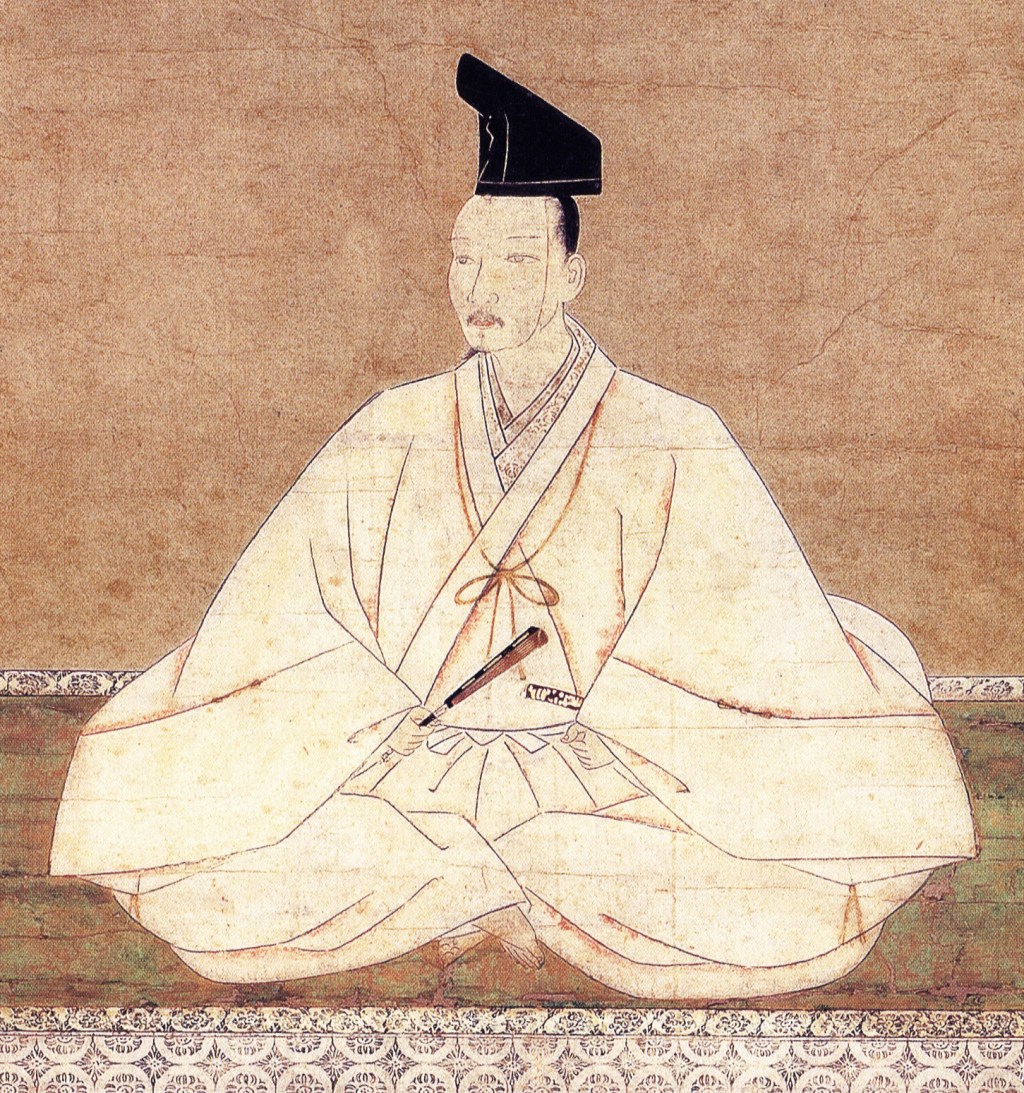
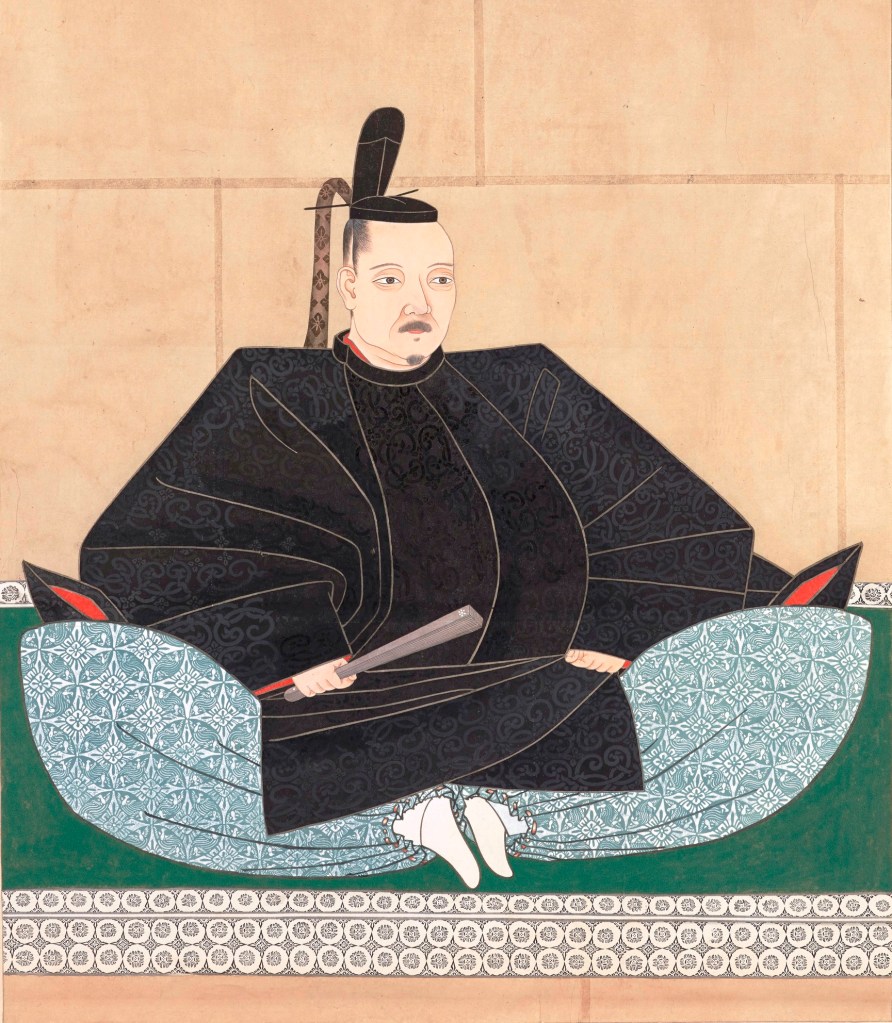
    Ashikaga Yoshinori, an unlikely choice for Shogun.

    There was plenty of precedent for important officials to retire and become monks, but there was none for it happening the other way. At first, the selection of Yoshinori was opposed; he was a monk, for starters, and there were rumours that Mochiuji, the Kamakura Kubo, would be declared Shogun instead.

    Several tense months followed, including the death of one Emperor and the accession of another. It was this new Emperor, Go-Hanazono, who would name Yoshinori Shogun in March 1429. Yoshinori seems to have tried to model himself on his father, the great Yoshimitsu. He attempted to centralise power in Kyoto and curb the influence of powerful local deputies (Kanrei), and he even restarted the trade with China.

    However, Yoshinori was not Yoshimitsu, and the situation for the Shogunate was not as it had been 30 years earlier. Yoshinori would have some success initially, bringing restive lords in Kyushu back in line, and moving to end the Shogun’s reliance on the military strength of the Shugo (governors) as his predecessors had been forced to.

    Trouble was never very far away, however, and in 1433, ongoing conflicts between rival temples in and around Kyoto flared up again. Now, Yoshinori had been a monk of the Tendai Sect, specifically at the Shoren-in Temple.

    Now, the intricacies of temple politics in this era are complex to say the least, but the short version is that there were various sects of Buddhism prominent in Japan at this time. These sects were then often further subdivided, and, in keeping with the style of the time, these factions would often engage in vicious and sometimes violent rivalries with each other.

    At this time, one of the most violent disputes was between the Jimon (Temple Gate) and Sanmon (Mountain Gate) branches of the Enryaku-ji Temple on Mt Hiei, near Kyoto. Yes, you read that right, they were rivals from the same temple complex.

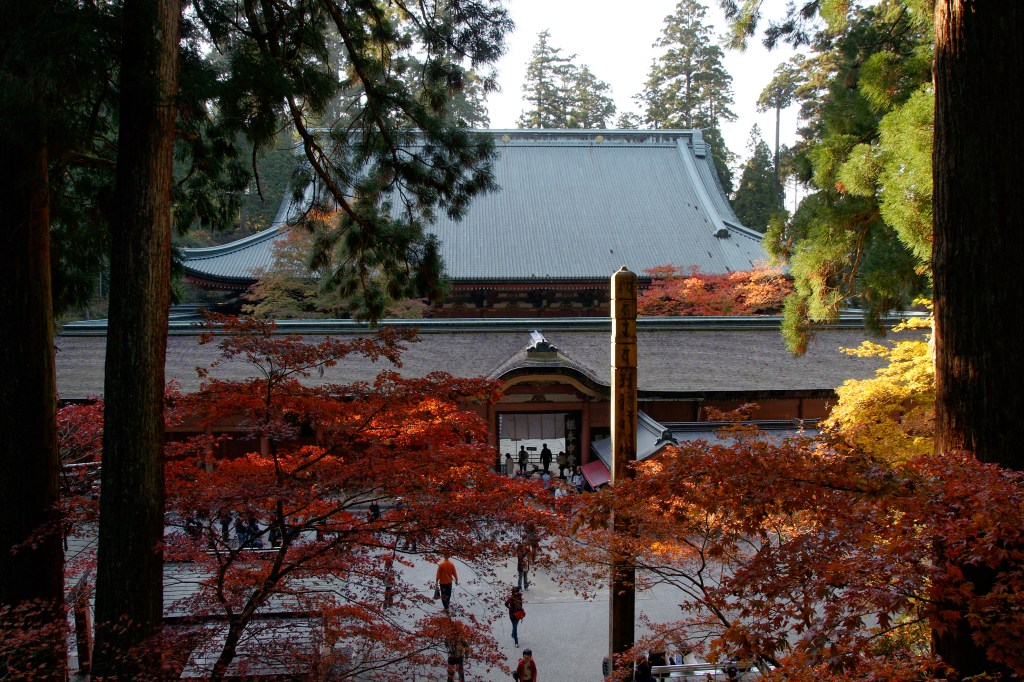
    A modern image of Enryaku-ji. This particular building dates from the 17th Century.
    663highland, CC 表示 2.5, https://commons.wikimedia.org/w/index.php?curid=8449808による

    In July 1433, the monks of the Sanmon Faction submitted a petition of 12 complaints to the Shogun, making allegations of misconduct against the Shogunate officials in charge of religious affairs.

    The Shogun took a conciliatory approach to this, accepted the petition and then apparently dismissed the officials in question. The Sanmon Monks, apparently getting a bit full of themselves, celebrated by burning down Onjo-ji (sometimes known as Mii-Dera), the headquarters of the Jimon Faction.

    Now, the Shogun was understandably annoyed by this. Apparently, the monks of Onjo-ji had refused to join the Sanmon Faction’s petition, but that wasn’t a good enough excuse, and Yoshinori dispatched troops to Mt Hiei, demanding that the monks of Enryaku-ji surrender.

    This they did, but the peace didn’t last long. Within a few months, rumours began spreading that the Monks were conspiring with Ashikaga Mochiuji, apparently trying to curse the Shogun, and general praying for his downfall, which in a superstitious age was a big deal.

    In response, the Shogun confiscated property belonging to the temple and sent troops to surround the temple, effectively putting Enryaku-ji under siege. From July to December 1434, no one could get in or out of Mt Hiei, and the monks were eventually compelled to seek terms of surrender.

    Shogun Yoshinori was in a far less forgiving mood this time, and he was initially reluctant to accept terms. However, under pressure from his own government, he accepted the surrender, and the previously confiscated property was returned.

    This was apparently just a ruse, however, and in February 1435, Yoshinori had four Enryaku-ji monks arrested and beheaded. The monks on Mt Hiei were outraged by this and set fire to their own temple, with 24 of them meeting their ends (more or less willingly) in the flames.

    Mt Hiei is easily visible from Kyoto, and the sight of the temple in flames caused outrage in the city. Yoshinori responded by issuing an edict sentencing anyone who complained about the situation to death, which apparently worked wonders in keeping the population quiet.

    With the Sanmon Faction subjugated, Yoshinori then turned his eyes back to the Kanto. All he needed was a pretext, and luckily for him, one would not be long in coming.

    Sources

    https://ja.wikipedia.org/wiki/%E9%8E%8C%E5%80%89%E5%BA%9C
    https://ja.wikipedia.org/wiki/%E8%B6%B3%E5%88%A9%E6%8C%81%E6%B0%8F
    https://ja.wikipedia.org/wiki/%E9%96%A2%E6%9D%B1%E7%AE%A1%E9%A0%98
    https://ja.wikipedia.org/wiki/%E4%B8%8A%E6%9D%89%E7%A6%85%E7%A7%80%E3%81%AE%E4%B9%B1
    https://en.wikipedia.org/wiki/Ashikaga_Yoshikazu
    https://ja.wikipedia.org/wiki/%E8%B6%B3%E5%88%A9%E7%BE%A9%E9%87%8F
    https://en.wikipedia.org/wiki/Ashikaga_Yoshinori
    https://ja.wikipedia.org/wiki/%E5%BB%B6%E6%9A%A6%E5%AF%BA
    https://en.wikipedia.org/wiki/Jimon_and_Sanmon
    https://en.wikipedia.org/wiki/Mii-dera
    https://ja.wikipedia.org/wiki/%E8%B6%B3%E5%88%A9%E7%BE%A9%E6%95%99#%E6%AF%94%E5%8F%A1%E5%B1%B1%E3%81%A8%E3%81%AE%E6%8A%97%E4%BA%89
    https://ja.wikipedia.org/wiki/%E5%B0%8F%E6%A0%97%E6%BA%80%E9%87%8D%E3%81%AE%E4%B9%B1
    https://ja.wikipedia.org/wiki/%E4%BA%AC%E9%83%BD%E6%89%B6%E6%8C%81%E8%A1%86