Tag: Ashikaga Yoshimasa

  • The Onin War

    The Onin War

    As we discussed last time, Japan in the 1460s was a chaotic place. Rival clans engaged in bloody feuds with each other, and it wasn’t uncommon for members of the same families to take up arms against each other in disputes over who was really in charge, taking sibling rivalry to a whole new level.
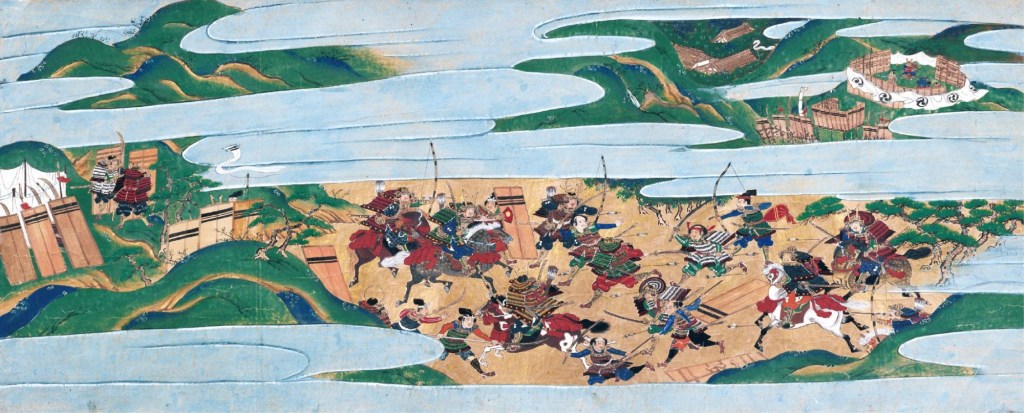
    By this time, endemic warfare was just a part of life in Japan.

    In the centre of this chaos was a Shogun who was so weak he might as well not have existed, and when the violence inevitably reached Kyoto, there was little he could do to stop it.

    The exact origins of the Onin War are disputed, but the main rivals were the Yamana and Hosokawa Clans, arguably the two most powerful clans of their day, with both playing key roles in the government and having control of vast swathes of land, and the wealth, manpower, and allegiances that went along with it.

    Throughout the 1450s and 60s, the Yamana and Hosokawa Clans had been engaged in something of a ‘Cold War’ in which they supported rival factions in numerous proxy wars around Japan, most importantly, the ongoing civil war within the Hatakeyama Clan.

    In January 1467, Yamana supported Hatakeyama forces attacked those of the Hosokawa at the Battle of Goryo Shrine (sometimes just called the Battle of Goryo). Though the battle resulted in a Yamana victory, the intervention of the Shogun brought an end to the immediate hostilities, and both Yamana and Hosokawa partisans remained in the capital.
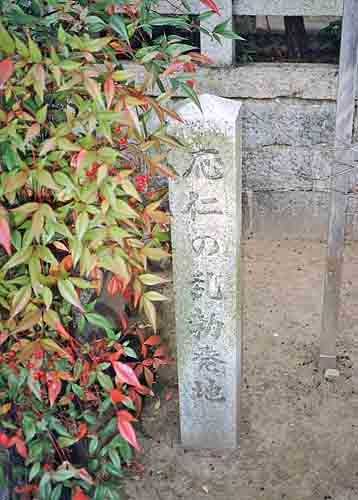
    The marker at Kamigoryo Shrine in Kyoto, showing the spot where the Onin War broke out.

    It has been speculated that both side were willing to let the Shogun mediate because neither of them was ready for all out war, because through early Spring, forces gathered in and around Kyoto, until May of that year, when it is said in some (probably exaggerated) sources that there were more than 270,000 warriors present, with the Hosokawa having a significant advantage in numbers (160,000-110,000).

    Though the Yamana had secured an advantage after Goryo and controlled the Shogun, the Hosokawa did not sit idly by. Their leaders issued orders and summons of their own, and set about raiding Yamana/Shogunate supply lines, and literally burning bridges.

    Due to the location of their relative bases in Kyoto, the Hosokawa and their allies became known as the Eastern Army, and the Yamana and theirs were called the Western Army, and it is by these names that we’ll refer to them going forward.

    Tensions finally boiled over in late May 1467, when forces of the Eastern Army launched a dawn attack against the Western forces around the Shogun’s palace, driving them away, occupying the palace, and bringing the Shogun under their control.
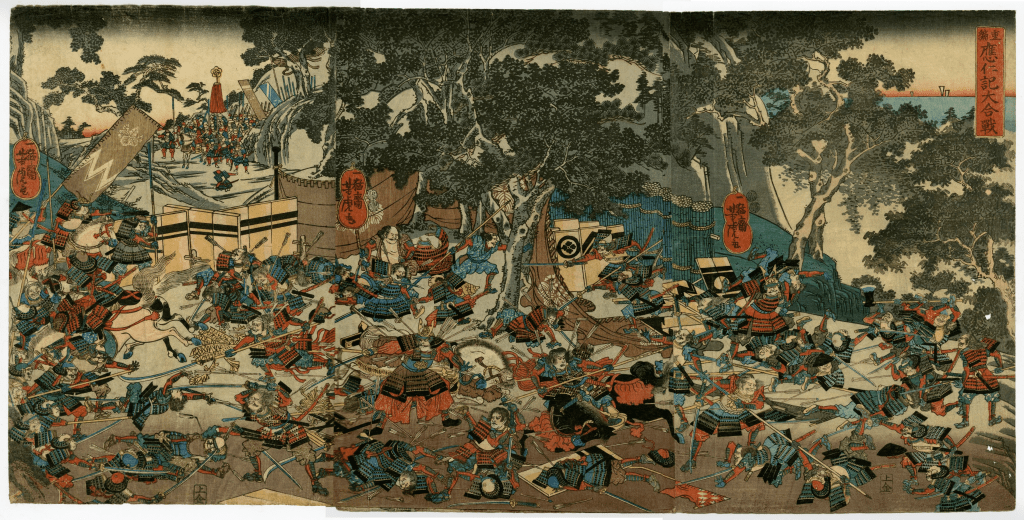
    A scene from later in the war, depicting just how chaotic the battlefield could be.

    Shortly after this victory, Ashikaga Yoshimi (the Shogun’s brother, and still heir) was declared commander in chief, and the Shogun himself handed over an official banner to the Eastern Army, proclaiming them to be the official army of the Shogun, effectively branding the Western army rebels.

    Despite their setback, the Western forces regrouped and attacked Kyoto in August, driving Yoshimi and his supporters out of the city and establishing control for themselves. It is at this point that the Western Army stopped deferring to any Shogunate officials and instead began issuing orders signed by a ‘junta’ of their most senior generals.

    Further attempts by the Western army to press their advantage failed, and several battles throughout September and October ended in bloody stalemate. In December, the Emperor issued a decree stripping all Western generals of their formal Imperial titles in an attempt to further delegitimise their cause; however, it had no practical effect, and as 1467 came to an end, the Western Army was in control of Kyoto, but the war was a stalemate.

    Throughout early 1468, there were sporadic outbursts of fighting in and around Kyoto, leaving large areas of the city in ruins, with the two sides gaining and losing ground in return, until the capital they had been so eagerly fighting over was no longer a prize worth having.

    In the summer of that year, Yoshimi, who had been in hiding away from Kyoto, was persuaded to return to the capital by his brother, the Shogun. This reconciliation was short-lived, however, as it was becoming clear that the Shogun now supported his (still infant) son, Yoshihisa, as heir. The key leaders of the Eastern Army, too, were behind Yoshihisa, and so Yoshimi fled to Mt Hiei, where, in November, messengers arrived from the Western Army, declaring him to be the ‘new Shogun’. From then on, Western Forces began issuing formal declarations from the ‘Shogun’, Yoshimi, although in reality, the generals remained in control, and Yoshimi was effectively isolated on Mt Hiei.

    By early 1469, the conflict had spread to Kyushu and the Kanto as well, where nominally Western and Eastern forces would fight it out in localised episodes of the wider conflict. In reality, however, the complete breakdown in central authority meant that these forces had no loyalty to anyone but themselves, and this fighting is often considered to be the start of the Sengoku Jidai or “Age of the Country at War.”

    As 1469 dragged on, the main forces around Kyoto were exhausted. The capital was a ruin, and the Shogunate’s power, already tenuous, had ceased to exist entirely. There had been many reasons for the outbreak of war, but the main one had been control of the Shogunate; now that there was no real Shogunate to control, neither side had much motivation to continue fighting.

    Rival forces loot Kyoto as the city burns around them. By the end of the Onin War, Kyoto was a ruin.
    Docsubster – 投稿者自身による著作物, CC 表示-継承 4.0, https://commons.wikimedia.org/w/index.php?curid=63970510による

    As Machiavelli said, though “Wars begin when you will, but they do not end when you please,” and the Eastern and Western forces were now discovering how true that was. Although superficially a conflict over the Shogunate, by 1470, factions on both sides had begun working for themselves. There were numerous internal conflicts, feuds, and defections, and by 1471, there were several clans that had switched sides, and some that had done so more than once.

    In 1472, there was a serious effort to make peace, with the leaders of the Yamana and Hosokawa clans (the originators of the feud) agreeing, in principle, to return to the antebellum situation. These terms were unpopular with other factions, however, many of whom had gained significant territories as a result of the war. The head of the Yamana Clan even went so far as to attempt suicide, in a move that historians have suggested shows the extent of his desire to find a settlement, but it did no good, and the fighting dragged on.

    Yamana Sozen, head of the Yamana Clan, whose attempted suicide is supposed to have shown how sincere he was about forging peace.
    By Mt0616 – Own work, CC BY-SA 4.0, https://commons.wikimedia.org/w/index.php?curid=99587678

    At the Shogunate court, a priest commented:

    “The affairs of the nation were being handled, the maids were planning (all the politics of the nation were being planned by Tomiko, a woman), the Shogun (Yoshimasa) was drinking sake, and the feudal lords were wearing dog hats (a reference to a kind of hat worn during mounted archery displays) . It was as if the world was at peace.”

    This quote gives us the impression of a court completely out of touch with the wider world, and indeed, other sources state that Yoshimasa’s drinking was no mere social tipple; he would drink to excess, and it was said that the Emperor got into the habit of joining him, further eroding the respect and prestige of whatever government remained.

    In March and May 1473, first the Yamana, then the Hosokawa Clan heads died, and a new generation took their place. Also in that year, Shogun Yoshimasa retired as Shogun, handing the title over to his nine-year-old son, Yoshihisa, whilst keeping the actual power for himself.

    Peace was finally agreed between the two main protagonists in April 1473, but the war didn’t come to an immediate end; defections and skirmishing continued, and it wasn’t until 1477 that the Western Army was formally disbanded. In November of that year, the Shogunate held a formal celebration, announcing the restoration of peace.

    Despite eleven years of Civil War, very little had actually been achieved. Yoshimasa had remained Shogun and handed the title to his son, Yoshihisa. The rival claimant, Yoshimi, had fled into exile but was formally pardoned in 1478, along with most of those who had supported him.

    Early in the war, the Eastern forces had been granted a banner from the Shogunate, effectively declaring themselves the legitimate party, whilst their Western enemies were branded rebels. In the wake of their victory, then, you might have expected the Eastern leadership to seek ‘justice’ (or more likely, revenge) against the Westerners.

    So why didn’t it happen?

    The answer is fairly simple: the Eastern Army, now just the Shogunate, was too weak. Eleven years of Civil War had resulted in nothing but fatally weakening both sides, and even though they were victorious, no one amongst the Shogun’s supporters had the strength to mete out any kind of justice.
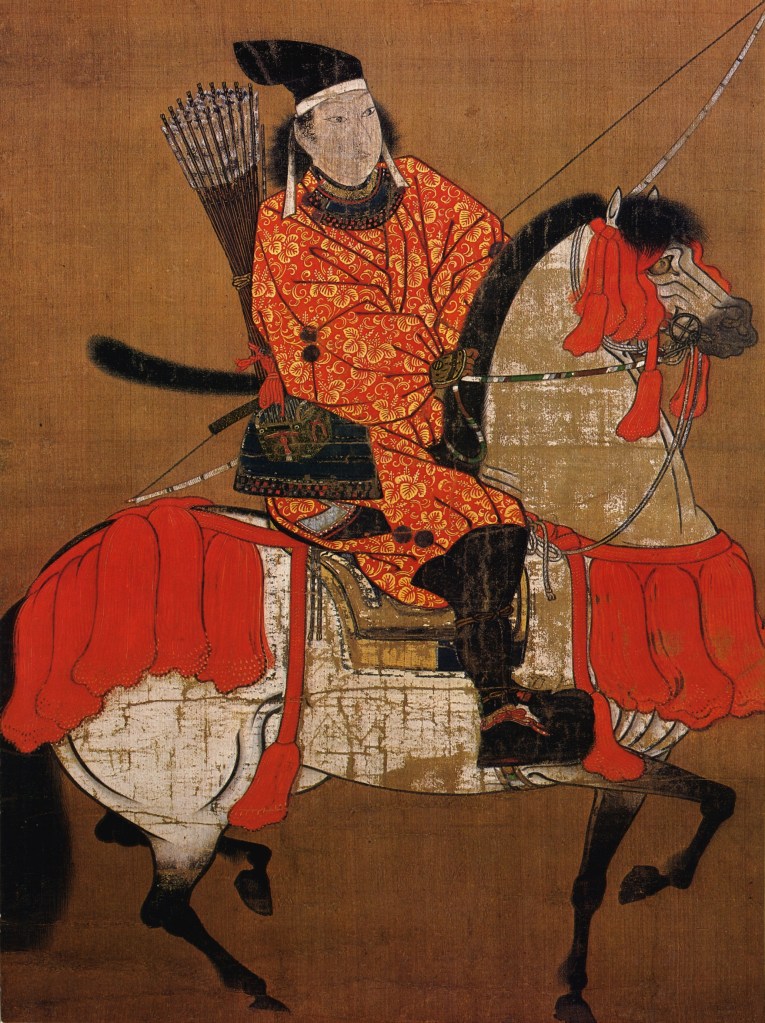
    Ashikaga Yoshihisa, nominally Shogun at this point, but far too weak to actually exercise his power.

    This weakness is best seen in the fact that, despite a formal peace agreement, the fighting didn’t end. Kyoto was a blackened ruin, and the formerly great clans were exhausted, but in the provinces, the war went on, and on, and on.

    Though it would not be called the Sengoku Jidai until much later, the Onin War brought about a period of anarchy that would last for more than 120 years, and the Ashikaga Shoguns would never hold any real authority outside of Kyoto, despite some brief resurgences in the late 15th century.

    It wasn’t just the Shogunate that was weakened; however, many of the shugo, regional lords, had committed considerable resources to the fighting, expending blood and treasure in pursuit of their goals, only to find themselves with little to show for it. In the 1480s, the system of shugo-in, the policy of requiring the lords to remain in Kyoto, formally broke down, and the shugo returned to their provinces, where some were able to restore their wealth and power, but many others became the first victims of gekokujo, (lit. lower rules/overthrows high) in which deputies of nominally lower rank were able to overthrow their masters, a phenomenon that would become common in the century ahead.

    Kyoto itself was also left as a practical ruin by the end of the fighting. The expense of restoring the city and the fact that the Shogun and his wife (Tomiko) were seen as embezzling huge sums of money led to outbreaks of rebellion in the 1480s and only served to further erode what little remained of the Shogun’s authority and prestige.

    The Onin War also foreshadowed several developments of the Sengoku Jidai, especially the end of the reliance on Samurai-only armies. The Samurai as a class had once monopolised war, but they were too few to man the much larger armies required in the 15th Century and later. This led to the rise of the Ashigaru, or Foot Soldiers. Originally peasant levies, the Ashigaru would evolve into something that could be recognised as professional soldiery, and they would play a key role in the wars to come, with one of their number, a man who would eventually be known as Toyotomi Hideyoshi, rising to a position of supreme power a century later.

    Sources
    https://ja.wikipedia.org/wiki/%E5%BF%9C%E4%BB%81%E3%81%AE%E4%B9%B1
    https://ja.wikipedia.org/wiki/%E8%B6%B3%E5%88%A9%E7%BE%A9%E5%B0%9A
    https://ja.wikipedia.org/wiki/%E8%B6%B3%E5%88%A9%E7%BE%A9%E8%A6%96
    https://en.wikipedia.org/wiki/Ashikaga_Yoshimasa
    https://ja.wikipedia.org/wiki/%E8%B6%B3%E5%88%A9%E7%BE%A9%E6%94%BF
  • Road to Disaster

    Road to Disaster

    By the mid-15th Century, Japan was in trouble. That might not come as a surprise for anyone who has read any of my previous posts (or even cast a curious eye over Japanese history to this point), but even by the admittedly tumultuous standards of Shogunate rule, things were bad.

    We’ve focused a lot on the Ashikaga Shogunate and its ongoing efforts to stamp permanent authority on the country, but if we zoom out for a moment, the chaos is evident in microcosm almost everywhere we look.

    There are multiple, long-term reasons for this, but here are several immediate causes: First, the Shogun’s policy of insisting that shugo (provincial lords) permanently reside in Kyoto. Whilst this kept the highest rank of the nobility under close supervision, it also meant that governance of the provinces was left in the hands of deputies, and over the years, these deputies began to operate more or less independently, and not always (if ever) in the interests of their nominal lords in Kyoto, leading to centralisation on paper, but fragmentation in reality.

    Secondly, the nature of Samurai families meant that there was no clear rule of succession. Whilst a lord could be succeeded by his eldest son, in reality, when a lord died, it wasn’t uncommon for any of his relatives who could muster support to stake a claim, leading to frequent outbreaks of serious violence that sometimes lasted for years, and led to even more fragments forming.

    Thirdly, the Ashikaga Shoguns themselves were weak. Since the beginning of their Shogunate, they had relied almost entirely on the support and goodwill of powerful clans. The reasons for this are fairly straightforward. In Japan, as in most feudal societies, power was derived from wealth and manpower, and those were derived from the control of land.

    The Ashikaga, despite being the pre-eminent family, controlled very little land of their own, and therefore had relatively few independent resources that they could call on, meaning that, when it came to everything from collecting taxes to raising armies, they relied heavily on the powerful clans around Kyoto.

    This system was always unstable, but it kind of worked when there was a strong-willed, capable Shogun at the head of things. But what happened when the seat of power was occupied by a weakling, or worse, a child?

    In 1441, that question was foremost in the minds of Japan’s leaders. In June of that year, the Shogun, Ashikaga Yoshinori, was assassinated. Yoshinori has arguably become a paranoid despot by this point, but he was undeniably a leader strong enough to hold the whole system together.

    Ashikaga Yoshinori, arguably a tyrant, but strong enough to keep the whole thing together.

    The impact of his sudden death was compounded by the fact that he had no adult heirs. Now, as I mentioned earlier, the idea that a lord would be succeeded by his eldest wasn’t enshrined in law, but the heir, generally, was expected to at least be grown up. What remained of the Shogunate was now facing not only rebellion but a succession crisis as well.

    The crisis was faced by the Kanrei, or Shogun’s Deputy, Hosokawa Mochiyuki. You might remember hearing the Hosokawa name before. They were a powerful family, and although their fortunes waxed and waned, they had remained central to the Shogun’s government.

    Mochiyuki put Yoshikatsu, the previous Shogun’s son, on the throne, and for a short while, at least, the initial crisis passed. Emphasis on the short , however, within a year, first Mochiyuki, and then Yoshikatsu (at just nine years old) were dead.

    Hosokawa Mochiyuki, the man who held the centre after Yoshinori’s death, but then, like so many great men, died himself not long after.

    Mochiyuki was replaced as kanrei by Hatakeyama Mochikuni, a member of the Hatakeyama Clan (hence the name). The Hatakeyama had been particularly harmed by the tyrannical rule of Ashikaga Yoshinori, and Mochiyuki sought to use his position to undo some of that harm. His intention was to restore certain lands and titles that had been taken from himself and his relatives, which I suppose he thought would serve to redress the balance of power.

    In this, however, he was opposed by the Hosokawa Clan, who had actually done quite well under Shogun Yoshinori and saw no reason to upset the new status quo. What followed was something of a ‘Cold War’ situation in which the Hosokawa and Hatakeyama would seek influence and advantage by engaging in politicking and proxy wars.

    The most visible example of this is how they involved themselves in family disputes. As I mentioned, succession was not a clear-cut thing, and when violent disputes inevitably broke out, the Hosokawa and Hatakeyama would swoop in to offer support for either side.

    From 1455 to 1460, the Hatakeyama themselves fell into civil war over who would be the next leader of the clan. The Shogun threw his support behind his favoured candidate, but it did little good.

    A strong Shogun might have been able to reassert control, but Yoshimasa was not that, and Shogunate support, which might have once been a decisive factor in deciding these disputes, instead became an irrelevance.

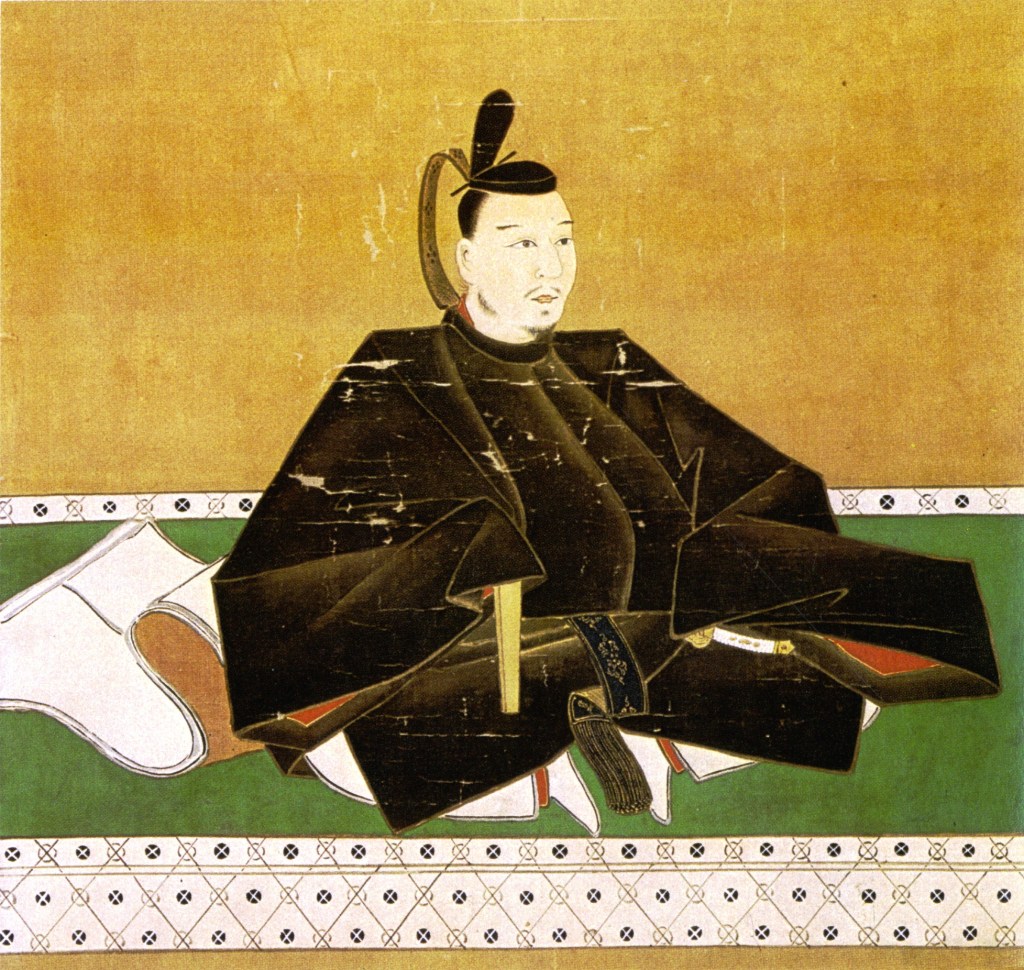
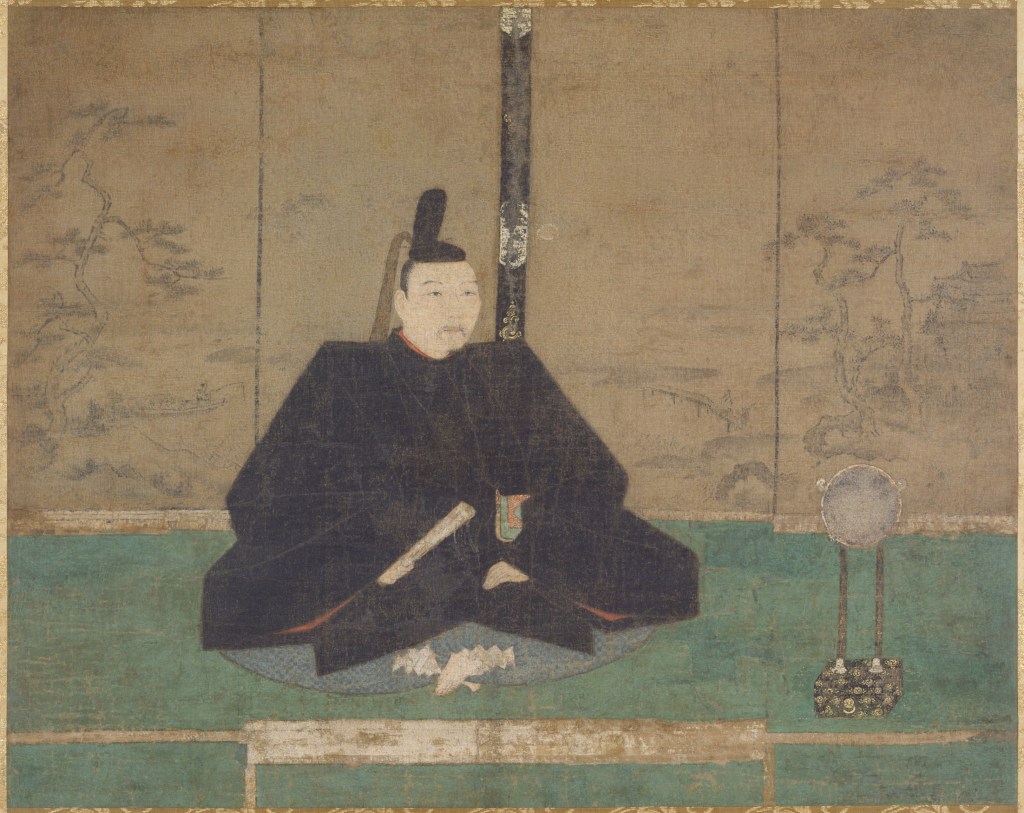
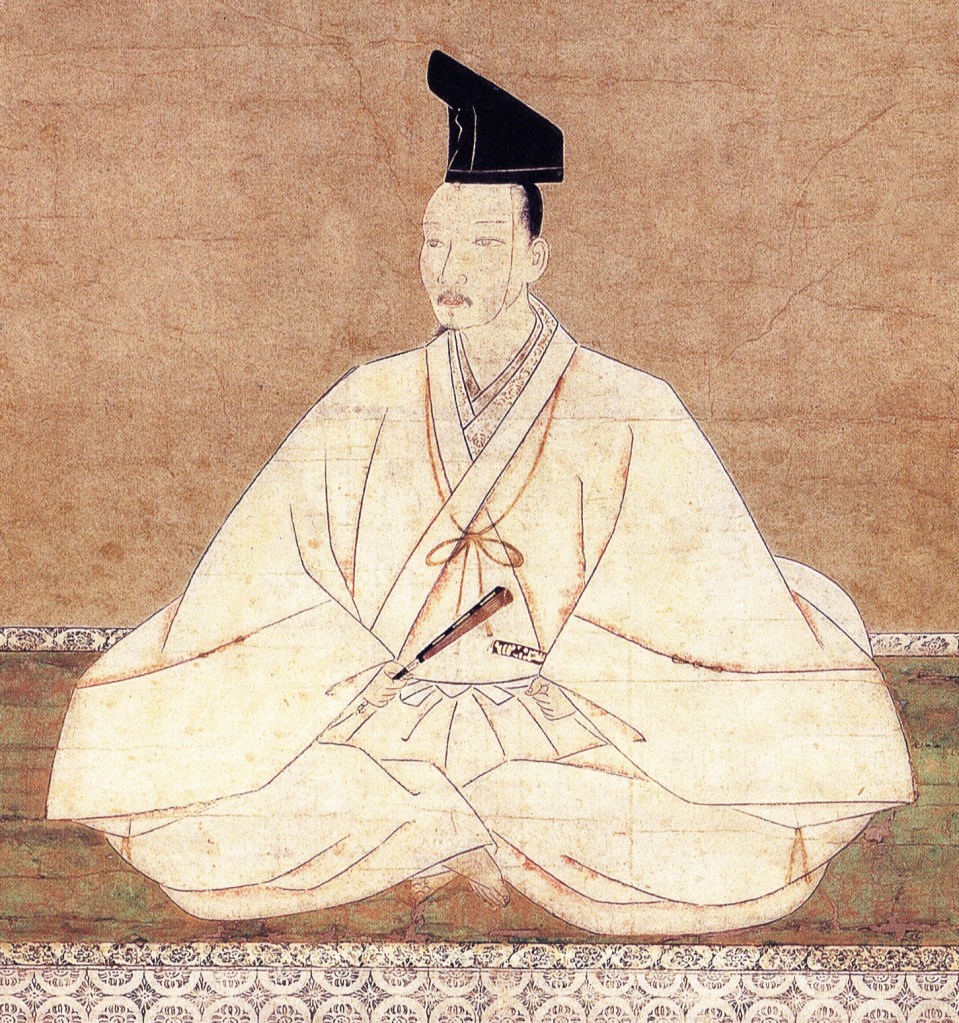
    Ashikaga Yoshimasa, another weak Shogun.

    One of the more serious outbreaks was in the Kanto (again), and when the Shogun ordered the Shiba Clan to dispatch an army to put it down, the Shiba instead collapsed into chaotic infighting over who would be the next head of the clan. The Shogun attempted to impose a new clan head, but this just made things worse. The Shiba were now too embroiled in their own fighting to be much use, and the rebellion in the Kanto went on unopposed.

    By late 1464, then, Japan was in serious crisis. This sense of anxiety was only worsened by the fact that, at age 29 (middle-aged by the standards of the day), Yoshimasa had no children who could serve as his heir (he had two daughters, but no one thought a woman could be Shogun). In November of that year, he solved this problem by calling his brother, Yoshimi, who was a monk, back to secular life and named him his heir.

    With Yoshimi safely back in Kyoto, the question of succession was resolved for now, and the Shogunate could focus on bringing the rest of the country back under control, or so they probably thought.

    In November 1465, just a year later, and to the surprise of many (though hopefully not Yoshimasa), a son and heir, Yoshihisa, was born. I’ve made this point already, but a son didn’t necessarily inherit from his father, and Yoshihisa didn’t automatically become the heir.

    This is where Yoshihisa’s mother, Hino Tomiko, enters the scene. She had actually been Yoshimasa’s wife for a decade at that point, and had given birth to a son in 1459, although the child had only lived for a day. Two daughters followed in 1462 and 1463, and then in 1465, Yoshihisa arrived.

    Like many historical women, Tomiko has been the victim of some seriously unflattering portrayals in contemporary sources, and what followed is possibly an example of that. The Oninki, a source for the origins of what was to come, say that Tomiko was a manipulative woman who saw in her son an opportunity to take power. She secured the support of the Yamana Clan and sought to promote her son as heir, whilst she would take control as regent until he came of age (which was expected to be a long time).

    Her alliance with the Yamana and her attempts to promote her son as heir over the Shogun’s brother were, for centuries, believed to have been the spark that led to the so-called Onin War.

    The problem with this is that the Oninki is literally the only source that places the blame for the war on Tomiko and her scheming. That’s not to say that she didn’t play a part, and the factions that formed in the late 1460s were certainly motivated at least nominally by support for one candidate or another, but Tomiko herself seems to have become a genuinely unpopular figure by the late 15th century (fairly or not) and so the Oninki which is usually believed to have been authored around the late 15th or early 16th centuries may have just been playing on what was, by then, a popular trope.

    Outside of Kyoto, the situation continued to deteriorate. In July 1466, the Shogun attempted to intervene in the Shiba clan’s succession crisis. This time, however, he encountered serious pushback, with several powerful shugo, including the Hosokawa, refusing orders to intervene, and some even stating they would fight for the Shiba against the Shogun.

    In September of that year, rumours abounded that Yoshimi (still officially the heir at this point) was going to be assassinated. Exactly how complicit the Shogun was is unclear, but Yoshimi was sufficiently scared for his life to flee to the protection of the Hosokawa.

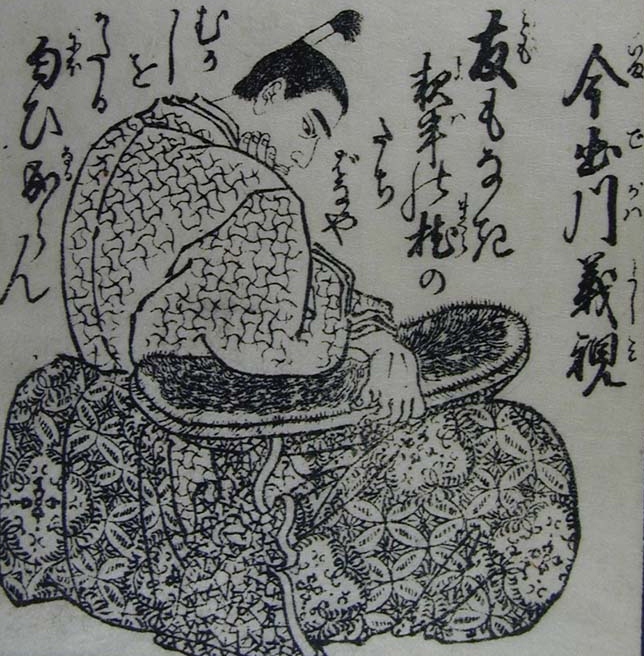
    Ashikaga Yoshimi, the Shogun’s appointed heir.
    Musuketeer.3 – 投稿者自身による著作物, CC 表示-継承 3.0, https://commons.wikimedia.org/w/index.php?curid=24843648による

    At this point, the Hosokawa and the Yamana cooperated to protect Yoshimi and oppose the Shogun. Facing the combined might of these two clans, the Shogun had little choice but to back down. The allies went further when they demanded that the lords who were closest to the Shogun (and were publicly blamed for his decisions) be removed. Several previously powerful supporters of the Shogun were either forced to commit suicide or sent into exile, seriously weakening the ability of the Shogun to run the government, and effectively leaving him in the hands of the Hosokawa-Yamana alliance.

    This alliance of convenience quickly became inconvenient, however. It goes back to the Hatakeyama Clan’s internal dispute that I mentioned earlier. The Hosokawa and Yamana supported rival factions, and when this dispute spilt over into Kyoto, a proverbial line in the sand was drawn.

    The actual combatants were made up of various members of different clans, and it gets very messy, so for ease of use, we’ll just talk about the Hosokawa and Yamana factions, but just know that’s not strictly how it went. For example, there were Hatakeyama, Shiba, and numerous other clans on both sides, which gives you some idea of how chaotic it got.

    At New Year 1467, the Shogun, breaking with tradition, visited the Yamana faction for the celebrations, which was about as clear a statement of support as you can imagine short of openly declaring himself. In response, Hosokawa forces surrounded the Shogun’s palace and attempted to intimidate him into issuing orders against the Yamana faction.

    This attempt failed, however, and the Shogun then issued orders that private feuds should not be settled in Kyoto. The Hosokawa faction seems to have followed these orders, but the Yamana and their supporters did not. As a result, the Hosokawa faction’s allies were forced to retreat to the Kamigoryo Shrine, on the outskirts of Kyoto.

    There, on the evening of January 18th, 1467, they were attacked by allies of the Yamana faction and defeated. At the time, the Shogun intervened swiftly, and there was hope that what became called the Battle of Kamigoryo Shrine would be the end of it.

    Neither side was going to let it lie, however, and throughout early spring, both sides gathered more forces in and around Kyoto, and by May, they were on a collision course.

    Sources
    https://ja.wikipedia.org/wiki/%E5%BF%9C%E4%BB%81%E3%81%AE%E4%B9%B1
    https://ja.wikipedia.org/wiki/%E4%B8%8A%E5%BE%A1%E9%9C%8A%E7%A5%9E%E7%A4%BE
    https://ja.wikipedia.org/wiki/%E5%BE%A1%E9%9C%8A%E5%90%88%E6%88%A6
    https://ja.wikipedia.org/wiki/%E8%B6%B3%E5%88%A9%E7%BE%A9%E8%A6%96
    https://ja.wikipedia.org/wiki/%E7%B4%B0%E5%B7%9D%E6%8C%81%E4%B9%8B
    https://ja.wikipedia.org/wiki/%E7%95%A0%E5%B1%B1%E6%8C%81%E5%9B%BD
    https://en.wikipedia.org/wiki/%C5%8Cnin_War
    https://ja.wikipedia.org/wiki/%E6%97%A5%E9%87%8E%E5%AF%8C%E5%AD%90
    https://en.wikipedia.org/wiki/Hino_Tomiko
    https://ja.wikipedia.org/wiki/%E5%BF%9C%E4%BB%81%E8%A8%98
    https://en.wikipedia.org/wiki/Ashikaga_Yoshimasa
    https://en.wikipedia.org/wiki/Ashikaga_Yoshihisa
    https://ja.wikipedia.org/wiki/%E8%B6%B3%E5%88%A9%E7%BE%A9%E6%94%BF#%E6%96%87%E6%AD%A3%E3%81%AE%E6%94%BF%E5%A4%89

  • Kanto, Won’to

    Kanto, Won’to

    As we discussed last time, the relationship between the central government in Kyoto and the Kamakura Kubo, the regional military governor, was often quite strained. The decentralised nature of political power in Japan meant that, whilst the Kubo was nominally subordinate to the Shogun, they often acted as semi-independent rulers.

    The power of the kubo was, in theory, checked by the Kanto Kanrei, the Shogun’s direct deputy in the Kanto Region, who had, for decades by this point, been a member of the Uesugi Clan.

    Like most Samurai families, the Uesugi weren’t a single family, but a loose affiliation of siblings, cousins, and other relatives that shared a name and some common ancestry, but little else, with different branches of the Clan cooperating and opposing each other as the situation demanded.

    The strongest branch of the family at this point, and the one holding the position of Kanrei, was the Yamanouchi Uesugi, so named because of their residence in an area of Kamakura called, you guessed it, Yamanouchi. This particular branch of the family actually took over the position from the branch which had risen in rebellion in 1416 and been defeated.

    The Kanrei in the 1430s was Uesugi Norizane. He found himself in a fairly unenviable position. Although the kanrei was officially the subordinate of the Kamakura Kubo, the Shogun in Kyoto had the final say over who would actually hold the position, meaning that, in practice, the kanrei often found himself beholden to the will of the Shogun over that of his direct superior.

    This was probably fine at a time when Kamakura and Kyoto were in agreement, but by now, this was definitely not the case. As we talked about briefly last time, the Kamakura Kubo, Ashikaga Mochiuji, often followed an independent path, and this defiance led to a serious breakdown in his relationship with the Shogun.

    In 1429, the accession of a new Emperor called for a change in the Era name. This was (and arguably still is) a big deal in Japanese culture; whenever a new Emperor ascends the throne, the Era name is changed. It can also be changed after significant or otherwise tragic events, as those in power seek to figuratively draw a line under the past.

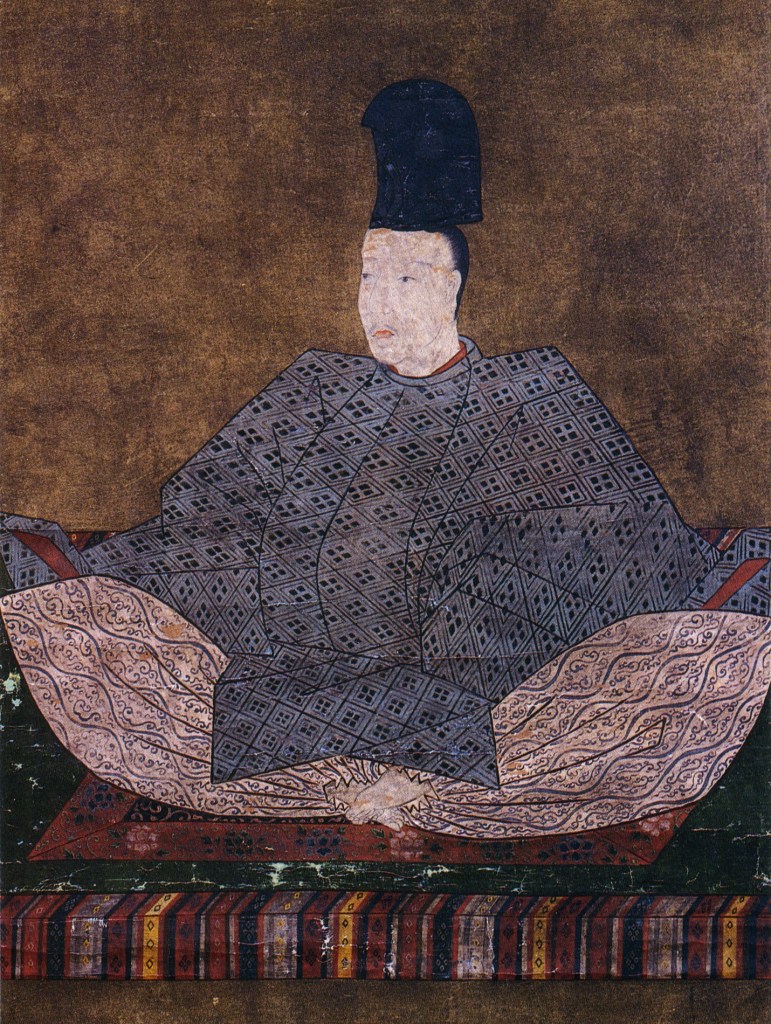
    Emperor Go-Hanazono, whose accession brought about the Era name changed that provoked the showdown between Mochiuji and the Shogun.

    A change of era is often an administrative formality for most, but this time, Mochiuji, being the independent-minded fellow that he was, apparently refused to adopt the new era name. This might seem like a petty decision to us, but it was, in effect, Mochiuji announcing to the world that he didn’t recognise the new era, and by extension, the new Emperor.

    Things got worse following the death of Shogun Yoshimochi in 1431. Mochiuji had expected to be called upon to be the next Shogun, as Yoshimochi had died without heirs. When Ashikaga Yoshinori, a monk, was selected instead, Mochiuji was angry enough to consider marching on Kyoto.

    This is where Uesugi Norizane rejoins our story. He dissuaded his hot-headed master, and no force was sent. In addition, he arranged for formal apologies regarding the Era change and even went so far as to return lands that had been confiscated by Mochiuji to the Shogun.

    Norizane is also recorded as having sent expensive gifts to Kyoto in an attempt to smooth over the considerable animosity that had built up towards Mochiuji there. Norizane was evidently trying to steer a moderate course; he owed his position to the Shogun, but he was nominally subordinate to the Kubo. When these two masters were in opposition, Norizane found himself caught in the middle.

    In 1436, his position got even worse. That year, fighting broke out in Shinano Province between rival factions seeking control of the province. One side called on Mochiuji for help, and he was eager to go, but Norizane intervened, pointing out that Shinano was not one of the provinces that were under the authority of the Kamakura Kubo. Thus, no forces were sent.

    The warlord who had requested Mochiuji’s help was defeated, and in 1437, Mochiuji planned to raise an army and march into Shinano anyway, presumably to avenge his fallen comrade. This time, however, rumours spread that the army was actually to be sent against Norizane.

    Things quickly got out of control after that. Although there was some attempt to negotiate, Norizane fled the Kanto entirely, retreating to the Uesugi stronghold in Echigo Province. There was a brief reconciliation in 1438, but things broke down again quickly afterwards, with Norizane resigning as kanrei.

    This time, Norizane fled to Kozuke Province, and Mochiuji sent an army after him. In response, Norizane called for help from the Shogun, and Yoshinori, who had been waiting for an excuse to deal with the troublesome kubo, readily agreed.

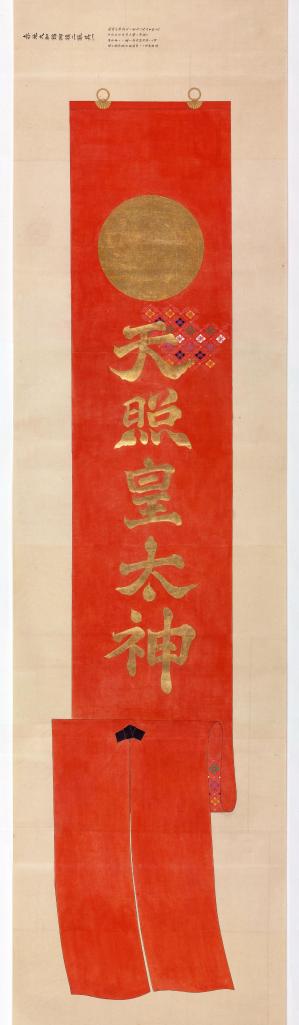
    A coalition of Kanto warlords loyal to the Shogun was assembled, and the Shogun used his influence at court to have an Imperial Banner issued to the army, effectively turning it into an Imperial army, and all those who opposed it into rebels against not only the Shogun but the Emperor himself.

    An example of an Imperial Banner (this one from the 19th Century)

    What impact this had on the morale of Mochiuji and his men isn’t clear, but throughout September and October 1438, their forces were repeatedly defeated, until eventually Mochiuji surrendered and attempted to become.

    Uesugi Norizane, continuing his policy of moderation, pleaded for Mochiuji’s life, and for his son to be allowed to take the position of Kubo. Shogun Yoshinori, however, was in no mood. Mochiuji had been a thorn in his side for decades, and he would not pass up the opportunity to deal with him.

    Mochiuji and his son were forced to commit suicide, and the position of Kamakura Kubo was temporarily abolished. That wouldn’t last long, though, and in 1440, Yoshinori attempted to have his own son appointed as the new kubo.

    Mochiuji (top) commiting suicide after his failed uprising.

    This didn’t sit well with former loyalists of Mochiuji, and a rebellion, led by the Yuki Clan, broke out in the same year, with the stated aim of restoring one of Mochiuji’s sons to their late father’s position.

    In April 1441, the rebellion was defeated, and Mochuji’s surviving children were brought to Kyoto. Yoshinori continued his plans to appoint his son as kubo, but then fate took a turn, as it so often does.

    In June 1441, Yoshinori was invited to a banquet at the residence of the Akamatsu Clan, officially to celebrate the Shogun’s recent victory. When he arrived, the gates were locked, and he was set upon by a band of armed men and cut down.

    The immediate motive of his killer appears to have been either revenge for the confiscation of family property earlier in his reign or the fear of being politically purged. Historians speculate that Yoshinori was becoming increasingly paranoid, with the Imperial Nobility and Samurai class becoming fearful of the possibility of being denounced and facing exile or execution.

    A phrase used by contemporaries to describe this period of Yoshinori’s reign is ‘万人恐怖’ Bannin Kyofu, or Universal Fear, which gives you a good idea of the mood.

    In the immediate aftermath of the killing, rumours of a wider conspiracy abounded, but it soon became clear that the Akamatsu Clan had acted alone; the government’s attention focused on who would be the next Shogun. The most appropriate choice was Yoshinori’s son, Yoshikatsu, but he was just a boy, and it wasn’t until November 1442, 18 months after his father’s death, that Yoshikatsu was elevated to Shogun, despite being just nine.

    With Yoshinori’s death and his replacement by a boy, the strong, often dictatorial power of the Shogun was significantly reduced. Yoshikatsu would rely on a council of powerful lords to handle the realm until he came of age, but that didn’t happen, as Yoshikatsu fell in and died in July 1443, only eight months into his reign. His sudden death led to the spread of several rumours, from a fall from a horse to assassination, but historians generally believe he died of illness, possibly dysentery.

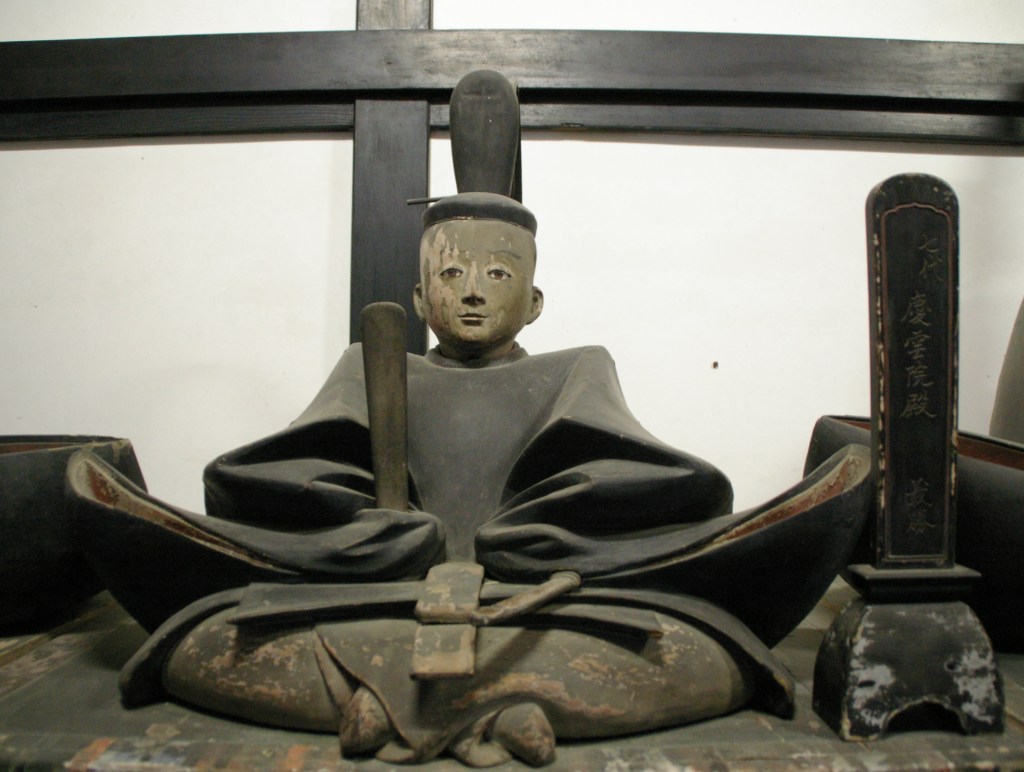
    A wooden statue of Ashikaga Yoshikatsu, whose reign, and life, were tragically short.
    CC 表示 3.0, https://commons.wikimedia.org/w/index.php?curid=9662197

    Yoshikatsu was replaced by his brother, Yoshimasa, who was even younger, and he wouldn’t be officially declared Shogun until 1449, by which time real power had shifted from the Shogunate to several powerful clans.

    Though no one knew it then, the Ashikaga Shogunate had begun what would prove to be a terminal decline.

    Sources
    https://ja.wikipedia.org/wiki/%E9%8E%8C%E5%80%89%E5%85%AC%E6%96%B9
    https://ja.wikipedia.org/wiki/%E8%B6%B3%E5%88%A9%E7%BE%A9%E6%95%99#
    https://ja.wikipedia.org/wiki/%E5%98%89%E5%90%89%E3%81%AE%E4%B9%B1
    https://ja.wikipedia.org/wiki/%E8%B6%B3%E5%88%A9%E7%BE%A9%E5%8B%9D
    https://ja.wikipedia.org/wiki/%E8%B6%B3%E5%88%A9%E7%BE%A9%E6%94%BF
    https://en.wikipedia.org/wiki/Ashikaga_Yoshimasa