Tag: Ashikaga Yoshizumi

  • The Hosokawa Rebellion

    The Hosokawa Rebellion

    As we’ve looked at previously, internal clan conflict wasn’t uncommon during the 15th century; in fact, it had gotten to the point that violent succession struggles were almost a fact of life. One exception to this rule had been the Hosokawa Clan.

    In the mid-15th Century, the Hosokawa were just one of several powerful clans that dominated the area around Kyoto, the centre of political power in the realm. While other clans had risen and fallen throughout the Century, the Hosokawa went from strength to strength, in large part because they managed to maintain a stable succession, leading to one of their number, Hosokawa Masatomo, being strong enough to launch the Meio Coup in 1493, giving him effectively complete control of the government and what was left of its prestige.

    Hosokawa Masatomo, who arguably led his clan to the height of its power, and laid the groundwork for its downfall.

    The relative stability of the Hosokawa Clan came to an end with Masatomo, however. He had succeeded his father largely because he had been the only viable candidate and had earned the support of his clan’s vassals after his father’s death. Masatomo apparently didn’t learn from this, however. Firstly, his spiritual beliefs meant that he swore off contact with women, which rather limited his opportunities to father an heir.

    This was no problem, though; adoption was(and continues to be) a widely accepted custom amongst the rich and powerful in Japan, and all Masatomo had to do was select a candidate who could earn the support of the wider Hosokawa Clan, and their position would be (relatively) secure.

    It must have come as quite a shock then, when Masatomo adopted not one, but three sons. To be fair, he didn’t adopt them all at once, and most contemporary sources speculate that his intentions were to split the Hosokawa lands between his new heirs, but you won’t be surprised to learn that it didn’t work out that way.

    No sooner was the ink dry on the adoption documents than rival factions began to form around the three potential heirs. Masatomo didn’t help matters by clearly favouring one son, Sumitomo, over the other two, but the whole situation would have been precarious even under the best of circumstances, and the Hosokawa certainly didn’t enjoy those.

    Hosokawa Sumitomo, Masatomo’s apparently preferred heir.

    We’ve looked at the wide-ranging political problems the Shogunate faced during the latter half of the 15th century, and when Masatomo seized control of the government, he also inherited those problems. It’s hard to see how even the most focused, capable, and diplomatic leader might have reversed the situation the Shogunate found itself in, and unfortunately for the Hosokawa, Masatomo was an eccentric iconoclast, prone to doing things like attempting to fly, deriding long-standing ceremonies, and generally making political enemies wherever he went.

    It is a strange quirk of human history, though, that factions who seem to have hostile (and often violent) intentions towards each other will exist in a kind of tense equilibrium as long as there is someone, or something, that they can focus their ire on. In the early 16th century, that someone was Masatomo.

    None of the three factions was strong enough to openly oppose him, because if they had, they’d have been attacked and wiped out by the other two, who would need little encouragement to remove a rival, even if that meant supporting Masatomo in the short term.

    It is also true that, eventually, the dam always breaks, and when it comes to court politics, that usually means blood. In June 1507, supporters of one of Masatomo’s adopted sons (Sumiyuki) assassinated him in his bathhouse. The next day, they attempted to do the same thing to another son, Sumitomo, but he managed to escape with the help of his allies in the Miyoshi Clan.

    Just a moment ago, I mentioned that one faction couldn’t make a move without antagonising the other three, and that’s exactly what happened. Sumiyuki’s supporters had tried to remove Sumitomo and failed. Now, Sumitomo fled Kyoto and sought the aid of the third brother, Takakuni, who was only too happy to oblige.
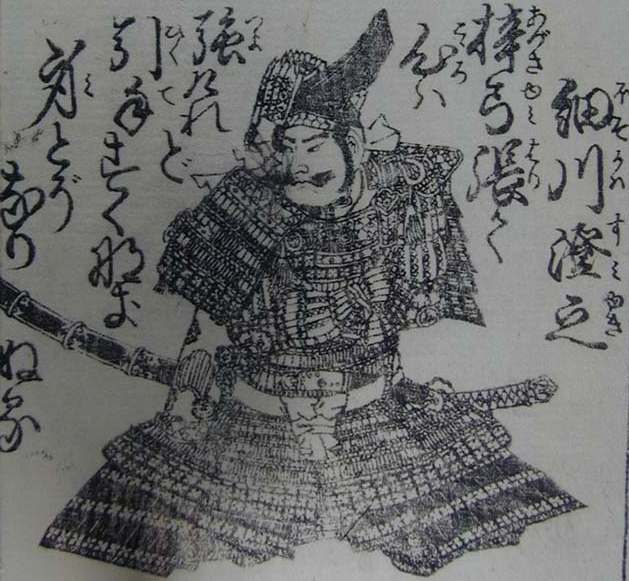
    The stylised end of Hosokawa Sumiyuki.
    Musuketeer.3 – 投稿者自身による著作物, CC 表示-継承 3.0, https://commons.wikimedia.org/w/index.php?curid=24893374による

    The combined forces of Takakuni and Sumitomo were indeed too much for Sumiyuki, and by August, he had been defeated and forced to commit suicide. The question then was who would actually succeed Masatomo. Both Takakuni and Sumitomo could arguably claim to have avenged their adopted father’s death, and both had significant support from the remaining Hosokawa retainers.

    As we mentioned last time, it is at this point that the previously deposed Shogun, Yoshitane, returned to the scene. Given that Masatomo had overthrown him in a coup and installed a puppet, it wasn’t difficult to convince Shogunate loyalists to side with Yoshitane. Suddenly, becoming heir to the Hosokawa Clan wasn’t quite the prize it had been. Though Sumitomo was in the stronger position, he now faced a resurgent Yoshitane, and his brother, Takakuni, saw the way the wind was blowing and threw in his lot with the returning Shogun as well.

    Just as Sumiyuki had been unable to oppose the combined forces of his brothers, Sumitomo did not have the strength to challenge the Shogun and Takakuni. Sumitomo also lost considerable support due to the actions of his supporters in the Miyoshi Clan, who had become overbearing in the short period after their victory.

    So, in April 1508, when Yoshitane and Takakuni marched on Kyoto, Sumitomo and the Miyoshi had little choice but to flee with their puppet Shogun, Yoshizumi. Shortly after this, Yoshitane was reinstated as Shogun, and Takakuni was named the new head of the Hosokawa Clan.
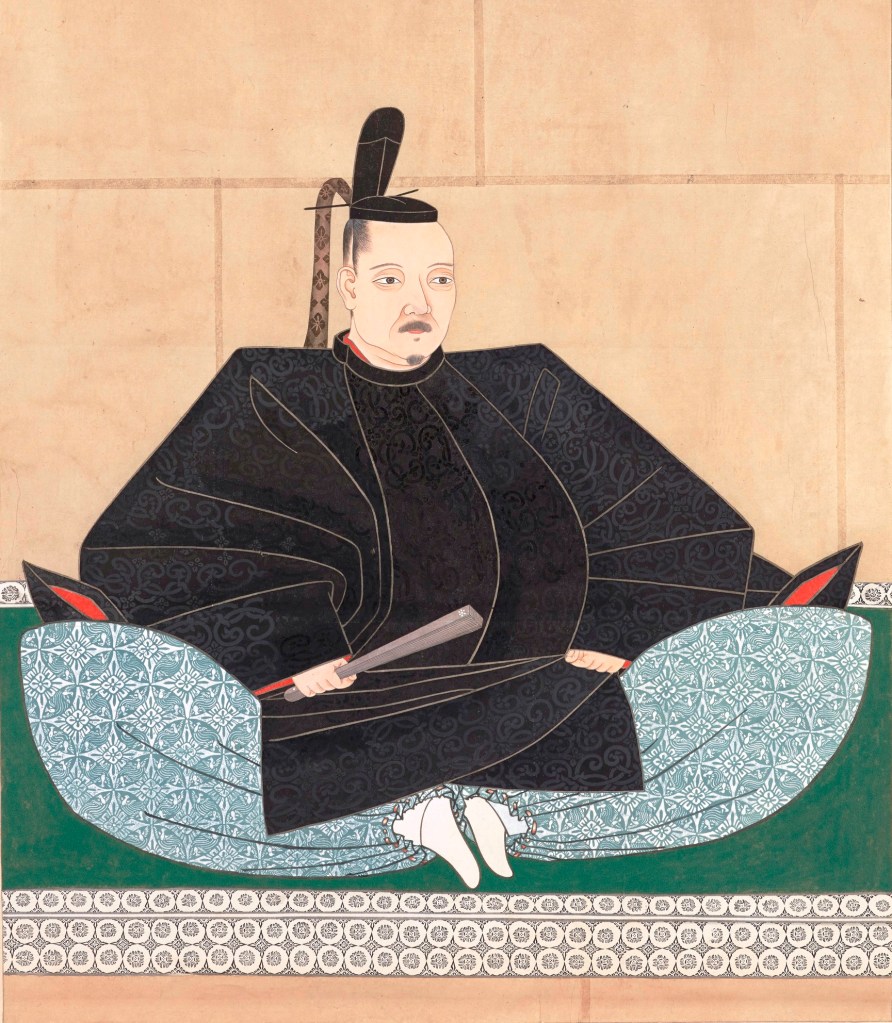
    The once and future Shogun, Yoshitane, picked the right moment to return to the political scene.

    In June the following year, Sumitomo and the Miyoshi attempted to retake the city but were defeated and driven back; however, a counterattack led by Yoshitane was similarly defeated. The back-and-forth nature of the conflict continued until the Battle of Ashiyagawara (sometimes called the Siege of Takao Castle), in the summer of 1511, after which Sumitomo’s victorious forces were able to briefly reoccupy Kyoto.

    ‘Briefly’ is the operative word here, because in September of the same year, Takakuni and Yoshitane’s forces counterattacked, retook Kyoto, and drove Sumitomo and the Miyoshi back to their strongholds in Awa Province, across the Inland Sea on Shikoku.
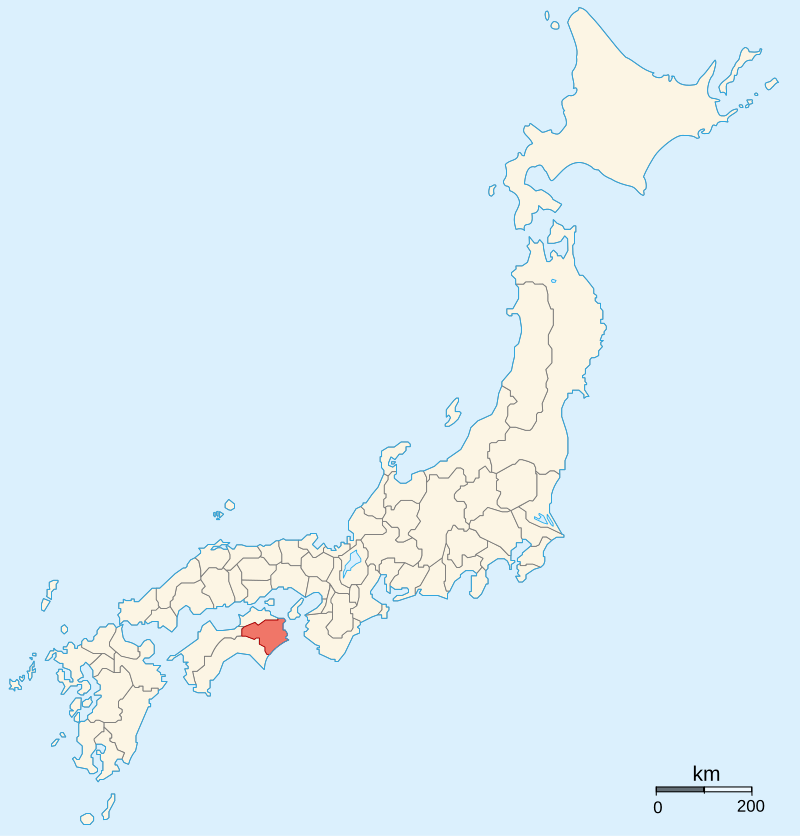
    Awa Province.
    By Ash_Crow – Own work, based on Image:Provinces of Japan.svg, CC BY 2.5, https://commons.wikimedia.org/w/index.php?curid=1652119

    Around this time, Yoshizumi died of illness, and Sumitomo suffered a serious loss of support. Many of his allies had supported Yoshizumi as Shogun, and Sumitomo as his champion, but now Yoshizumi was gone, Yoshitane, who was now firmly entrenched in Kyoto, was the only remaining claimant to the title, and many Shogunate loyalists deserted to him, weakening Sumitomo and strengthening Takakuni.

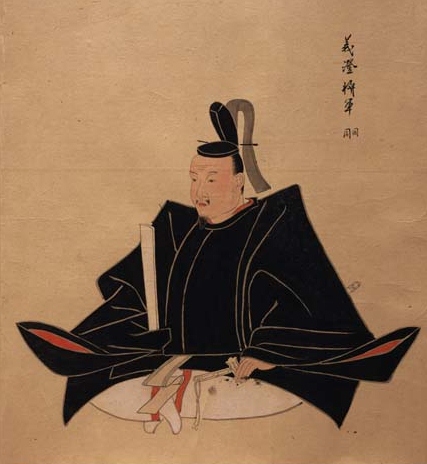
    Ashikaga Yoshizumi, whose death proved that a puppet shogun is better than no Shogun at all.

    This stalemate did not mean peace, however, and constant, low-level fighting would continue throughout the region and the wider realm; what would later be called the Sengoku Jidai was already well underway, even if the area immediately around Kyoto was relatively quiet.

    In 1517, the stalemate was broken when Miyoshi forces in support of Sumitomo invaded Awaji and used it as a springboard to threaten the mainland. Around this time, the Ouchi Clan, who had supported Takakuni and Yoshitane for the better part of 10 years, left the capital to deal with unrest in their home provinces, caused by the apparent resurgence of Sumitomo and the Miyoshi’s faction.

    The departure of the Ouchi was a major blow to Takakuni, and over the next two years, he saw his position gradually chipped away, as forces defected to Sumitomo or simply abandoned the fight to deal with their own affairs. Finally, in early 1520, Shogun Yoshitane himself switched sides, throwing his support behind Sumitomo and forcing Takakuni to flee Kyoto.
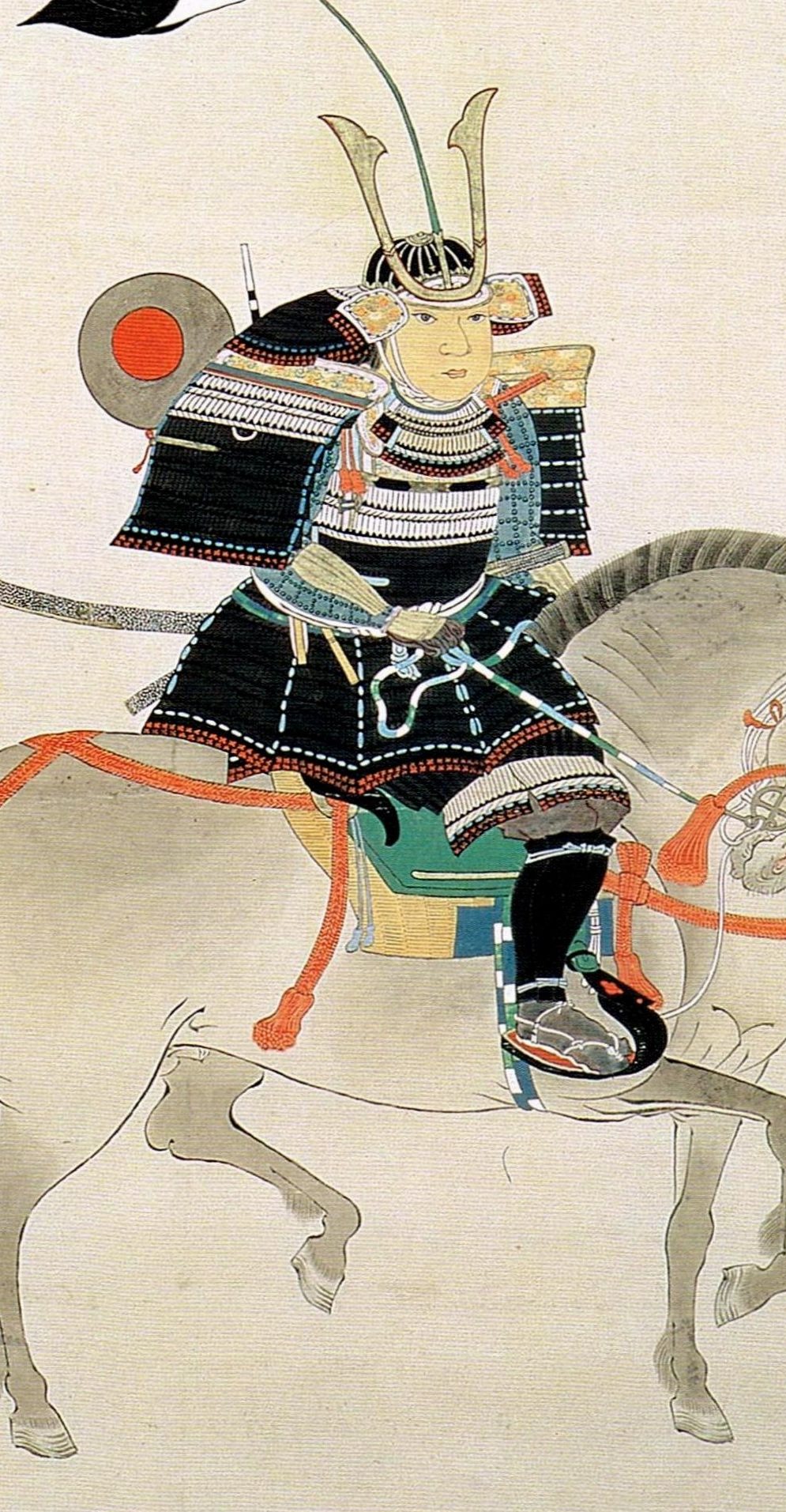
    Ouchi Yoshioki, the head of the Ouchi Clan, whose decision to leave Kyoto seriously weakened Takakuni.

    Takakuni fled to Omi Province, but he wasn’t ready to roll over just yet. Gathering a force of his allies, he counter-attacked in May 1520 and retook the capital. This time, his victory was decisive; he forced the leader of the Miyoshi Clan to commit suicide and even managed to drive Sumitomo back into exile on Shikoku, where he died of illness shortly afterwards.

    The following year, Takakuni exiled the fickle Yoshitane and installed Ashikaga Yoshiharu, the son of Yoshizumi, as Shogun, though he was just as much a puppet ruler as his father had been. Takakuni was appointed kanrei (deputy) for the new Shogun’s enthronement ceremony, but would resign the position immediately afterwards, proving to be the last man to hold the position, according to historical records.

    It wouldn’t be until October 1524 that the last embers of Miyoshi resistance were stamped out on Shikoku, but even then, Takakuni was far from secure in his position. In 1526, he faced serious opposition from within his own clan and was defeated when he tried to march against them. In 1527, this combined force actually managed to drive Takakuni out of Kyoto, and an attempted counterattack was defeated at the Battle of Katsuragawa in March that year.

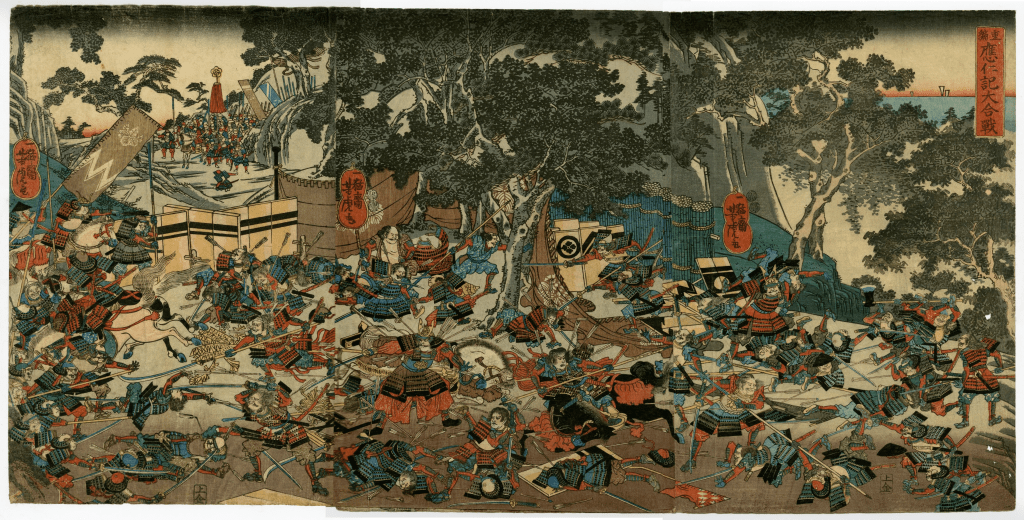
    Takakuni, ever tenacious, refused to give up, despite being defeated in 1528 and again in 1530. Things finally came to a head for him in 1531, at the Battle of Tennoji, which is often called the Daimotsu Kuzure, which can be translated as “The Fall of the Big Shots” (lit. big names fall, or collapse).

    The Battlefield Memorial of the Fall of the Big Shots.

    Takakuni was defeated. He survived the battle but was captured shortly afterwards, supposedly whilst hiding in an indigo storage barrel at a dye shop, after which he was obliged to commit suicide. Several of his main supporters (the eponymous “Big Names”) suffered similar fates, and Takakuni’s faction disintegrated.

    Takakuni’s body was likely still warm (and probably blue, given his hiding place) when the forces that had opposed him turned on each other. Members of the Hosokawa, Hatakeyama, and Miyoshi Clans all began fighting, and any hope of retaining a stable government in Kyoto was lost.

    Sources
    https://ja.wikipedia.org/wiki/%E6%B0%B8%E6%AD%A3%E3%81%AE%E9%8C%AF%E4%B9%B1
    https://ja.wikipedia.org/wiki/%E5%A4%A7%E7%89%A9%E5%B4%A9%E3%82%8C
    https://ja.wikipedia.org/wiki/%E6%A1%82%E5%B7%9D%E5%8E%9F%E3%81%AE%E6%88%A6%E3%81%84
    https://ja.wikipedia.org/wiki/%E8%B6%B3%E5%88%A9%E7%BE%A9%E6%99%B4
    https://ja.wikipedia.org/wiki/%E7%AD%89%E6%8C%81%E9%99%A2%E3%81%AE%E6%88%A6%E3%81%84
    https://ja.wikipedia.org/wiki/%E8%8A%A6%E5%B1%8B%E6%B2%B3%E5%8E%9F%E3%81%AE%E5%90%88%E6%88%A6
    https://ja.wikipedia.org/wiki/%E8%88%B9%E5%B2%A1%E5%B1%B1%E5%90%88%E6%88%A6
    https://ja.wikipedia.org/wiki/%E4%B8%8B%E7%94%B0%E4%B8%AD%E5%9F%8E
    https://ja.wikipedia.org/wiki/%E8%B6%B3%E5%88%A9%E7%BE%A9%E6%BE%84
    https://ja.wikipedia.org/wiki/%E5%A4%A7%E5%86%85%E7%BE%A9%E8%88%88

  • The Eisho Disturbance

    The Eisho Disturbance

    Last time, we looked at the Meio Coup that saw the Shogun’s kanrei (deputy), Hosokawa Masatomo, take over the government and install a puppet Shogun with himself in effective control. At the end of that post, we also looked at how, despite the coup’s success, Masatomo’s grip on power was far from secure.

    Hosokawa Masatomo, the most powerful man in the realm following the Meio Coup.

    As soon as the dust settled, Masatomo found himself surrounded by problems. Some had been long-standing, violence between powerful clans in the provinces had been a problem for decades, and Shogunate authority outside of Kyoto was tenuous at best.

    Within Kyoto, too, there were enduring rivalries between different factions, sometimes within the same family, all revolving, as it always had, over who would control the throne, or the man (it was always a man) sitting on it. In many ways, Masatomo’s coup can be seen as a continuation of political instability that went back centuries. As long as there had been an Imperial Throne (nearly a thousand years at this point), there had been powerful families vying to control it. That situation hadn’t really changed when the centre of power became the Shogun instead of the Emperor.

    Some of the problems were of Masatomo’s own making, though. He was, but most contemporary accounts describe him as an authoritarian and quite eccentric character. It is easy for us to imagine the Shogun as some all-powerful ruler, but the reality was that there was a considerable amount of power sharing in the capital. This was no democracy, but it was also expected that the powerful clans surrounding the throne would be consulted about government matters and have their seat at the table when it came to running things.

    There had been several examples of powerful families coming to dominate the government, and again, Masatomo was just continuing that trend, but like the families who came before him, centralising all power in one man attracted a lot of hostility from the other clans who now found themselves frozen out.

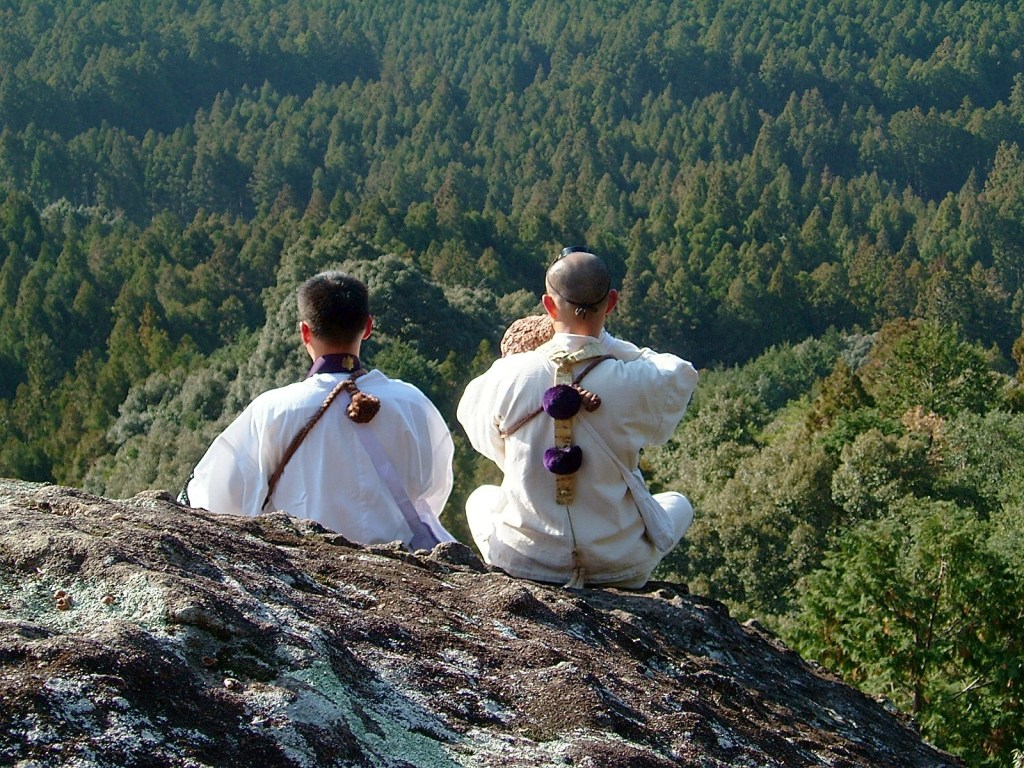
    The other problem with Masatomo was that he was something of an eccentric iconoclast. A follower of the ascetic Shugendo sect of Buddhism, he lived an austere life, swearing off certain foods, all alcohol and the company of women, though some contemporary sources suggest his aversion to sex wasn’t limited to his male companions, and he was apparently a practitioner of shudo, a kind of ritualised homosexuality that was common amongst Samurai.

    Modern day practitioners of Shugendo, of which Masatomo was a keen adherent.
    By 唐山健志郎 (Kenshiro Karayama) – 唐山健志郎 (Kenshiro Karayama), CC BY-SA 3.0, https://commons.wikimedia.org/w/index.php?curid=2259089

    Masatomo is supposed to have believed that his religious fervour would allow him to engage in magical feats, such as being able to fly or speak mystical languages. He had more practical eccentricities as well; he would go on long journeys, sometimes alone, and without telling his retainers, meaning that government would effectively come to a halt until he could be found.

    Religious and sexual habits aside, Masatomo also opposed much of the pomp and ceremony surrounding the institutions of government. It is said that he disliked the formal clothing required at certain ceremonies, and the official enthronement of the new Shogun was delayed simply because Masatomo refused to wear the eboshi hat required by tradition.

    A 17th Century depiction of an official wearing the eboshi hat that Masatomo despised.

    Masatomo also had a shockingly (for the time) rational approach to the Imperial Court as well. He is supposed to have opposed the enthronement ceremony of Emperor Go-Kashiwabara on the grounds that, since the Emperor no longer had any real power, there was no point in a grand ceremony. This was technically true, but flew in the face of long-established tradition.

    So a combination of Shogunate weakness, Political problems, and personality issues meant that Masatomo’s position was never strong, and he wouldn’t help matters with some of the decisions he made. Given Masatomo’s apparent aversion to women, he wasn’t able to produce an heir (obviously). This problem wasn’t an uncommon one at the time, and adoption was usually the preferred solution.

    Masatomo, never one to do anything the easy way, adopted three sons, Sumimoto, Sumiyuki, and Takakuni. You may remember, in the period leading up to and including the Onin War, one of the key factors in the instability that gripped the realm was the frequency of internal conflict over clan succession. One of the reasons the Hosokawa Clan had been able to take such a strong position was that they had largely been able to avoid these struggles, with Masatomo succeeding his father relatively smoothly.

    Some contemporary sources suggest that Masatomo’s ultimate plan was to divide the Hosokawa lands between two of these sons, while the third would inherit the position of kanrei and thus real political power. Initially, it seems that Masatomo favoured Sumimoto to succeed him as kanrei, but the fact that all three ‘sons’ came from three different families meant that the succession was now the subject of growing factional rivalries.

    Hosokawa Sumitomo, Masatomo’s choice as heir.

    This situation was precarious, but held together by the sheer force of Masatomo’s will. With power centralised in his hands, he could exert enormous control over what remained of the Shogunate government and its nominal loyalists. This way of doing things required him to be alive, however, which he no longer was after June 23rd, 1507, when he was assassinated.

    The assassins were apparently partisans of Sumiyuki, favouring him as kanrei over Sumitomo, who they also attacked at the same time as his father, though Sumitomo was able to escape with the help of his supporters, led by members of the Miyoshi Clan (a name that will become important later).

    The fact that Sumitomo survived was a problem for Sumiyuki, especially after he fled to Takakuni, the third brother, who agreed to support him and march against Sumiyuki. There was a series of blood battles between the rival factions until Sumitomo’s supporters, led by Miyoshi Yukinaga, took his final refuge at Yushoken, forcing Sumiyuki to commit suicide.

    An image depicting Sumiyaki at the moment of his death.
    Musuketeer.3 – 投稿者自身による著作物, CC 表示-継承 3.0, https://commons.wikimedia.org/w/index.php?curid=24893374による

    It turns out that your enemy’s enemy isn’t always your friend, though, and it wasn’t long before Takakuni and Sumitomo were at each other’s throats. The problem stemmed from Sumitomo’s supporters amongst the Miyoshi Clan, whose strength and growing overbearingness earned them many jealous rivals. Then, in late 1507, former Shogun Yoshitane (who had fled after the Meio Coup) returned to the scene.

    Yoshitane, after fleeing into exile, had been supported by the Ouchi Clan based in modern-day Yamaguchi Prefecture, and now they raised their banners in support of his march on Kyoto. Although not strong enough to take the city at first, shortly after the new year, Takakuni became the focal point for anti-Miyoshi feeling and chose to throw in his lot with the old Shogun.

    This combined force attacked Kyoto and took the city in early April, forcing Sumitomo and Shogun Yoshizumi to flee. Takakuni was recognised as the new head of the Hosokawa Clan, and Yoshitane was reinstated as Shogun, beginning his second reign.

    Sumitomo and Yoshizumi were down but not out, however, and what followed was more than 20 years of strife that is collectively called the Hosokawa Civil War, or Hosokawa Rebellion. This conflict had all the hallmarks of the internal violence that had wracked multiple clans throughout this period, but wrought on a massive scale, involving not just the Hosokawa but their vassals, retainers, and the Shogunate itself.

    Sources
    https://ja.wikipedia.org/wiki/%E6%B0%B8%E6%AD%A3%E3%81%AE%E9%8C%AF%E4%B9%B1
    https://ja.wikipedia.org/wiki/%E7%B4%B0%E5%B7%9D%E9%AB%98%E5%9B%BD
    https://ja.wikipedia.org/wiki/%E4%B8%89%E5%A5%BD%E4%B9%8B%E9%95%B7
    https://ja.wikipedia.org/wiki/%E7%B4%B0%E5%B7%9D%E6%BE%84%E4%B9%8B
    https://ja.wikipedia.org/wiki/%E7%B4%B0%E5%B7%9D%E6%94%BF%E5%85%83

  • The Meio Coup

    The Meio Coup

    As we’ve discussed previously, by the 1490s, the Ashikaga Shogun was a shadow of its former self. The Onin War had effectively ended even the pretence of Shogunate power, and in the provinces, what would later be called the Sengoku Jidai was already underway.

    The Onin War ultimately broke the Shogun’s power.

    There’s a post on the Onin War if you want details, but very briefly, the war was fought over who would succeed Ashikaga Yoshimasa as Shogun, his son (Yoshihisa), or his brother (Yoshimi). When the war ended in 1477, it was his son who became Shogun.

    Yoshihisa was apparently a bit of a lush, and contemporary sources paint him as a young man who was too fond of wine and women. In fact, when he died suddenly in 1489, aged just 25, it was widely blamed on his hedonistic lifestyle (not a bad way to go, mind you).

    Despite his proclivities, Yoshihisa died without a male heir, and it was at this point that the son of the defeated brother, Ashikaga Yoshitane, became Shogun. This might seem like a strange choice, and it certainly wasn’t unopposed, but he apparently had the support of Hino Tomiko, Yoshihisa’s mother, who was widely regarded as one of the most influential women in Japanese history.

    Quite why Tomiko chose to support Yoshitane isn’t documented, but given her reputation for political intrigue, she probably had some long game in mind. Yoshitane wouldn’t actually become Shogun until July 1490, and even when he took the throne, his position was weak.

    Ashikaga Yoshitane was a surprising and ultimately controversial choice for Shogun.

    There were myriad problems in and around the Shogun’s government, but the fundamental issue seems to have been that Yoshitane was the son of the man who had been defeated in the Onin War just 13 years earlier. The men who had won that war were still in government, and they weren’t fans of the idea of having to serve someone who was probably going to be out for revenge.

    When Tomiko announced her support for Yoshitane, several high-ranking members of the government resigned their positions rather than serve under him. Initially, this might not have been a problem. Yoshitane was a young man (just 23) who enjoyed the support of one of the realm’s most powerful figures, Hino Tomiko, and the advice and guidance of his father, Yoshimi, who might have been Shogun himself, if things had gone differently.

    Yoshitane was also aided by his kanrei (deputy), Hosokawa Masamoto, an experienced (if slightly eccentric) politician. As seems to be inevitable with the Ashikaga, though, this initial optimism didn’t last. Ashikaga Yoshimi died in January 1491, just months into the new Shogun’s reign, and it seems that his relationship with Hino Tomiko soured too. Some sources (admittedly biased against Tomiko) suggest this was because Yoshitane turned out to be not as compliant as Tomiko had intended, but whatever the reason, Yoshitane was obliged to find a new way to shore up his power.

    To do this, he turned to the time-honoured tradition of his forebears and went to war. The region around Kyoto had been devastated by the Onin War, and recovery had been unequal at best. There were numerous uprisings from angry peasants and religious movements throughout the decades of ‘peace’, and Yoshitane saw an opportunity to flex his muscles and put these troublemakers in their place.

    The first blow was struck against the Rokkaku Clan. Like his predecessors, Yoshitane had few military resources of his own to call on, so he summoned several powerful lords to do the fighting for him. They agreed eagerly, but one figure who opposed the campaign was Hosokawa Masatomo. Quite why the kanrei was against the campaign isn’t clear, but this led to a schism between the Shogun and his most powerful official.

    Hosokawa Masamoto, the Shogun’s Deputy and most powerful official.

    In response, Yoshitane began relying on other lords to do his bidding, attempting to cut Masatomo out of the picture. In 1493, he launched another campaign, this time seeking to bring an end to the division in the once powerful Hatakeyama Clan. This time, Masatomo’s opposition is easier to understand. The Hatakeyama and Hosokawa Clans were historic rivals, and the ‘civil war’ in the Hatakeyama Clan had been to the Hosokawa’s benefit. If the Shogun succeeded in ending the fighting, then the Hatakeyama might regain their strength, and Masatomo couldn’t have that.

    When the Shogun issued orders for an army to be gathered in January 1493, Masatomo went to work. He contacted the faction within the Hatakeyama that the Shogun intended to attack and made arrangements with them to earn their support for what came next. Throughout early spring that year, Masatomo gathered others who were unhappy with Yoshitane. Some were partisans of the armies that had opposed Yoshitane’s father; others were disgruntled with the political situation, like Hino Tomiko, who now sided against the man she had supported just a few years earlier.

    Others were almost certainly just opportunists, but by April, Masatomo was ready to move. He waited for the Shogun’s army to attack the Hatakeyama in Kawachi Province (in modern Osaka), and when Kyoto was vulnerable, he launched his coup.

    It all went relatively smoothly for Masatomo. His forces took the city without much trouble, and Hino Tomiko issued an order commanding that Masatomo take control to restore order, giving his actions the veneer of legality. Masatomo then announced he would depose Yoshitane and replace him with Ashikaga Yoshizumi, who had been adopted by Hino Tomoki and Shogun Yoshimasa.

    Ashikaga Yoshizumi, installed as Shogun after the Meio Coup.
    Geneast – 投稿者自身による著作物, CC 表示-継承 3.0, https://commons.wikimedia.org/w/index.php?curid=21645552による

    When the news reached the army in Kawachi, it disintegrated almost immediately, with many vassals supporting the new Shogun and effectively legitimising Masatomo’s coup. Yoshitane could still call on around 8000 loyalists to fight for his cause, but the situation was dire.

    As well as Yoshitane’s (much reduced) loyalists, the Emperor himself was apparently against the coup. You may remember that the Shogun was technically a servant of the Imperial Court, and although it had been centuries since the Emperor had actually had the power to decide who would be Shogun, the idea that someone else could overthrow him was an affront to what remained of Imperial prestige.

    The Emperor was so angry that he even threatened to abdicate, but the impotence of his position was highlighted when Imperial officials pointed out that a) even if he abdicated, the coup would not be reversed, and b) the Imperial Court couldn’t afford the ceremony, and might have to resort to borrowing money for it from the very Shogunate they sought to protest.

    So the Imperial Court prevaricated by engaging in some religious ceremonies that the Emperor was required to attend, and would therefore be unavailable to condone or condemn the coup. This led to a strange stalemate, where the Imperial Court could do nothing to change the course of events, but the Shogunate (controlled by Masatomo) could not compel the court to obey, denying the coup the full support of Japan’s ‘legal’ sovereign.

    Emperor Go-Tsuchimikado was on the throne during the coup and was pretty annoyed about it.

    Political difficulties aside, the reality was that Masatomo was now in control, and to demonstrate this, he ordered an army to be dispatched to Kawachi Province to deal with what was left of the old Shogun’s loyalists. Chronicles at the time suggest the force was as large as 40,000, and, faced with such odds, Yoshitane and his supporters retreated to and fortified a nearby temple, where they hoped to hold out.

    The situation got worse for Yoshitane, however, as a relief force sent by his supporters met Masatomo’s army near Sakai (modern Osaka), where they were defeated, effectively ending any chance Yoshitane had of reversing the coup.

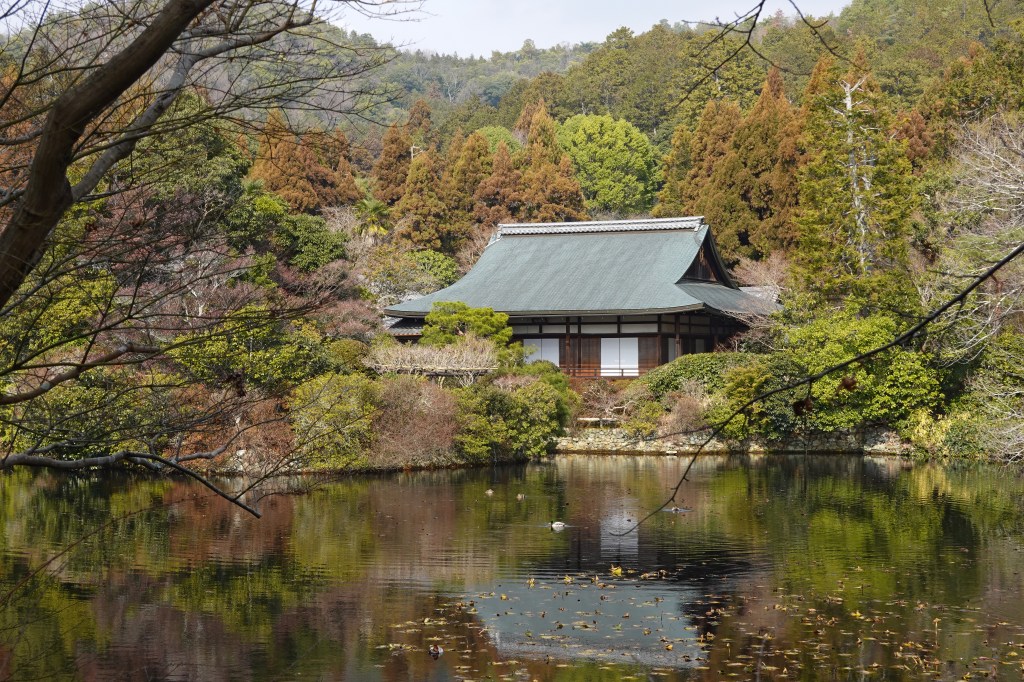
    Not long afterwards, Masatomo’s forces attacked the temple and quickly overwhelmed its defences. Several of Yoshitane’s prominent supporters committed suicide, but Yoshitane himself was captured and taken back to Kyoto and held at the Ryoanji Temple.

    A modern scene of Ryoanji Temple, where Yoshitane was held. Picturesque as prisons go.
    663highland – 投稿者自身による著作物, CC 表示-継承 4.0, https://commons.wikimedia.org/w/index.php?curid=159351811による

    In the aftermath of this battle, Masatomo had several of his more powerful opponents killed or exiled, and consolidated power in the capital and by the Autumn of 1493, his position was practically unassailable.

    Quite why Masatomo decided to get rid of Yoshitane has been debated from the start. The man himself claimed it was due to the Shogun’s military campaigns putting an unsustainable burden on the more powerful lords, and while there’s probably some truth to that claim, it also seems likely that the relationship between Masatomo and the Shogun had broken down, and Masatomo decided to strike while he was in a position of strength.

    That being said, Masatomo wouldn’t have succeeded if he’d acted alone. The fact that he had the support of Hino Tomiko and that most of Yoshitane’s supporters abandoned him almost immediately suggests that the dissatisfaction with his rule ran deep. It has also been suggested that Tomiko herself was the instigator of the coup, as she had come to regret her earlier decision to support Yoshitane.

    Although the Meio Coup left Masatomo as the dominant political figure in Kyoto, in the long term, it did nothing to reverse the catastrophic decline of Shogunate power. Although the supreme military power, Masatomo, did not have control of the bureaucracy, which remained with Hino Tomiko and her supporters.

    Additionally, the swift collapse of the Shogun’s ‘loyalists’ demonstrated how fragile that system really was, and after the coup, instead of relying on several powerful clans, the Shogunate was forced to rely on one, the Hosokawa and by extension, Masatomo.

    Masatomo certainly didn’t have it all his own way, then, and the situation only got worse when Yoshitane (who had been left alive) escaped captivity in Kyoto and fled to Etchu Province, from where he issued calls for his supporters to deal with Masatomo.

    Masatomo would dispatch an army to deal with Yoshitane, but it was defeated, and not long after that, several powerful clans declared their support for the deposed Shogun, though in reality, they offered little practical support in the short term.

    Internally too, opposition to Masatomo grew as Yoshizumi, who had been a boy when Masatomo installed him as Shogun, grew into a man (as they do) and began trying to assert control of what was supposed to be ‘his’ government, so, despite the success of his coup, Masatomo found himself with problems on all sides, and the power of the Shogun declined further still.

    Sources
    https://ja.wikipedia.org/wiki/%E6%97%A5%E9%87%8E%E5%AF%8C%E5%AD%90
    https://ja.wikipedia.org/wiki/%E6%98%8E%E5%BF%9C%E3%81%AE%E6%94%BF%E5%A4%89
    https://ja.wikipedia.org/wiki/%E8%B6%B3%E5%88%A9%E7%BE%A9%E5%B0%9A
    https://ja.wikipedia.org/wiki/%E8%B6%B3%E5%88%A9%E7%BE%A9%E8%A6%96
    https://ja.wikipedia.org/wiki/%E7%B4%B0%E5%B7%9D%E6%94%BF%E5%85%83
    https://ja.wikipedia.org/wiki/%E8%B6%B3%E5%88%A9%E7%BE%A9%E6%BE%84
    https://ja.wikipedia.org/wiki/%E5%A0%BA
    https://ja.wikipedia.org/wiki/%E9%BE%8D%E5%AE%89%E5%AF%BA
    https://ja.wikipedia.org/wiki/%E5%BE%8C%E5%9C%9F%E5%BE%A1%E9%96%80%E5%A4%A9%E7%9A%87