In 1586, the powerful Tensho Earthquake brought about a temporary halt to Hideyoshi’s campaign to subdue the entire realm. In the aftermath, he had made peace with, then accepted the formal submission of Tokugawa Ieyasu, and now turned his attention to Japan’s southern island, Kyushu.
As we’ve looked at in previous posts, the most powerful clan in Kyushu at this time were the Shimazu, who were on the verge of conquering the entire island, and were putting enormous pressure on their long-term rivals, the Otomo, who reached out to Hideyoshi for help. Hideyoshi responded by issuing a ceasefire order, the sobujirei, though scholars disagree if this was an order issued on a case-by-case basis, or a formal law brought in my Hideyoshi.
Regardless of the legal basis, the Otomo swiftly agreed, but the Shimazu remained defiant, with the head of the clan, Shimazu Yoshihisa, going as far as suggesting that the Shimazu, a clan with its long and proud lineage, would never submit to a peasant ‘upstart’ like Hideyoshi. Perhaps unsurprisingly, Hideyoshi didn’t take kindly to this and so ordered the invasion of Kyushu, officially in support of the Otomo.
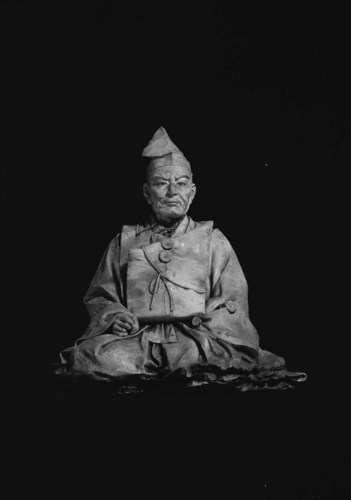
Ginger1192 – 投稿者自身による著作物, CC 表示-継承 3.0, https://commons.wikimedia.org/w/index.php?curid=24854517による
At first, Hideyoshi seems to have tried to avoid committing his own troops to the invasion, instead relying on forces provided by the Mori, Chosokabe and their vassals to do the bulk of the fighting. This strategy may have been wise from a manpower preservation point of view, but the Shimazu proved more than capable of living up to their lineage, defeating the initial landings and giving Hideyoshi the proverbial bloody nose in the process.
Much like the independent clans of Kii Province and the Chosokabe of Shikoku, however, the Shimazu were about to learn that Hideyoshi was a different kind of ruler, able to marshal resources that even the might of Kyushu could not hope to match. Taking the field himself, Hideyoshi is said to have amassed an army of some 300,000, with all the requisite supplies and resources to support such a massive force.
This was possibly the largest army ever assembled in Japan before the modern era (though sources vary), and the Shimazu were swiftly overwhelmed. It is important to note that, despite the overwhelming advantage in numbers, Hideyoshi’s force was not a single, massive bludgeon. He had proven himself a skilled strategist, able to deploy significant force in key areas, using innovative tactics to wear down defenders and capture strategic castles and other territory, rarely relying on brute force to break enemy forces.
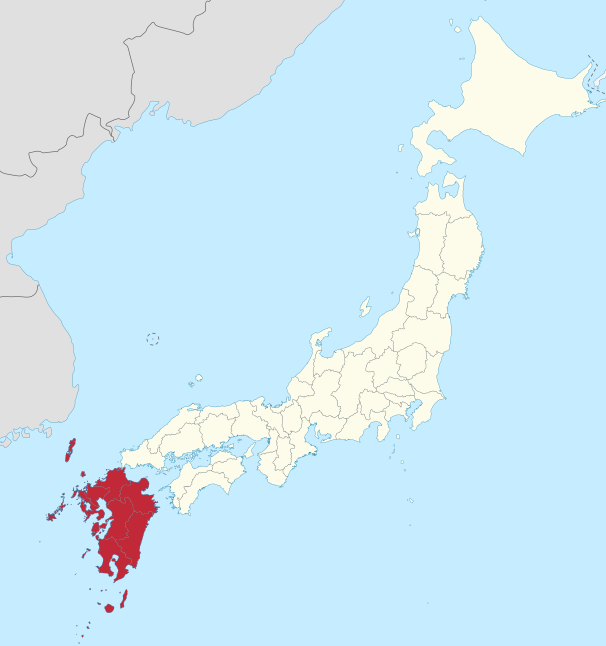
The Shimazu, much like the Chosokabe before them, fought bravely, but they were outmatched from the start, and eventually, Yoshihisa, who had claimed his clan would never submit to an ‘upstart’, was forced to seek peace. The terms were harsh; the Shimazu were forced to give up almost all of Kyushu, and were confined to Satsuma Province in the southwest of the island (in the western half of modern Kagoshima Prefecture).
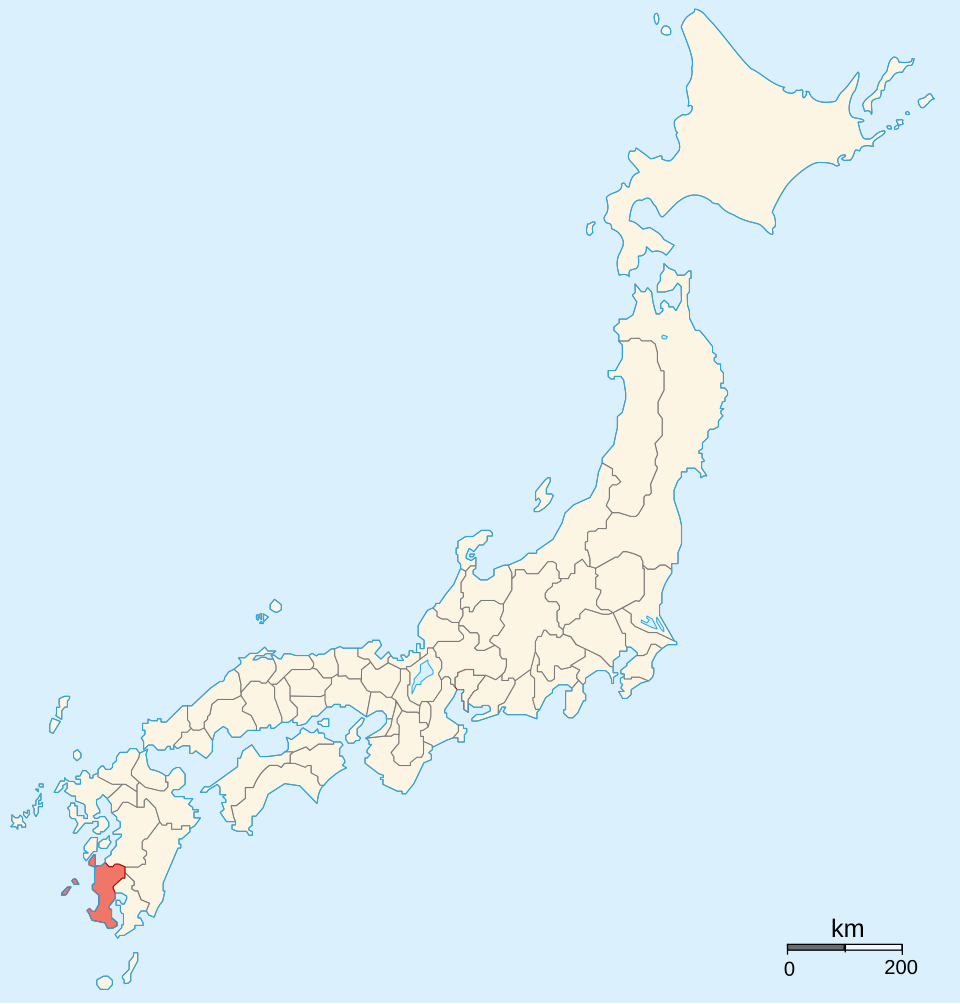
By Ash_Crow – Own work, based on Image:Provinces of Japan.svg, CC BY 2.5, https://commons.wikimedia.org/w/index.php?curid=1691755
The rest of Kyushu was divided up amongst Hideyoshi’s supporters, with the Otomo (who the invasion had nominally been in support of) receiving some, but not all of their lands back.
It is at this point that Hideyoshi turned his attention to a group that have only been briefly mentioned thus far, but who had a significant presence on Kyushu, the Jesuits. We’ll have a detailed look at Portuguese activities in Japan in their own post, but to summarise, after the first arrival of Portuguese merchants in Japan in 1543, they had slowly, but steadily expanded their influence through commerical interests, and the spread of Christianity, ultimately being based at the port of Nagasaki.
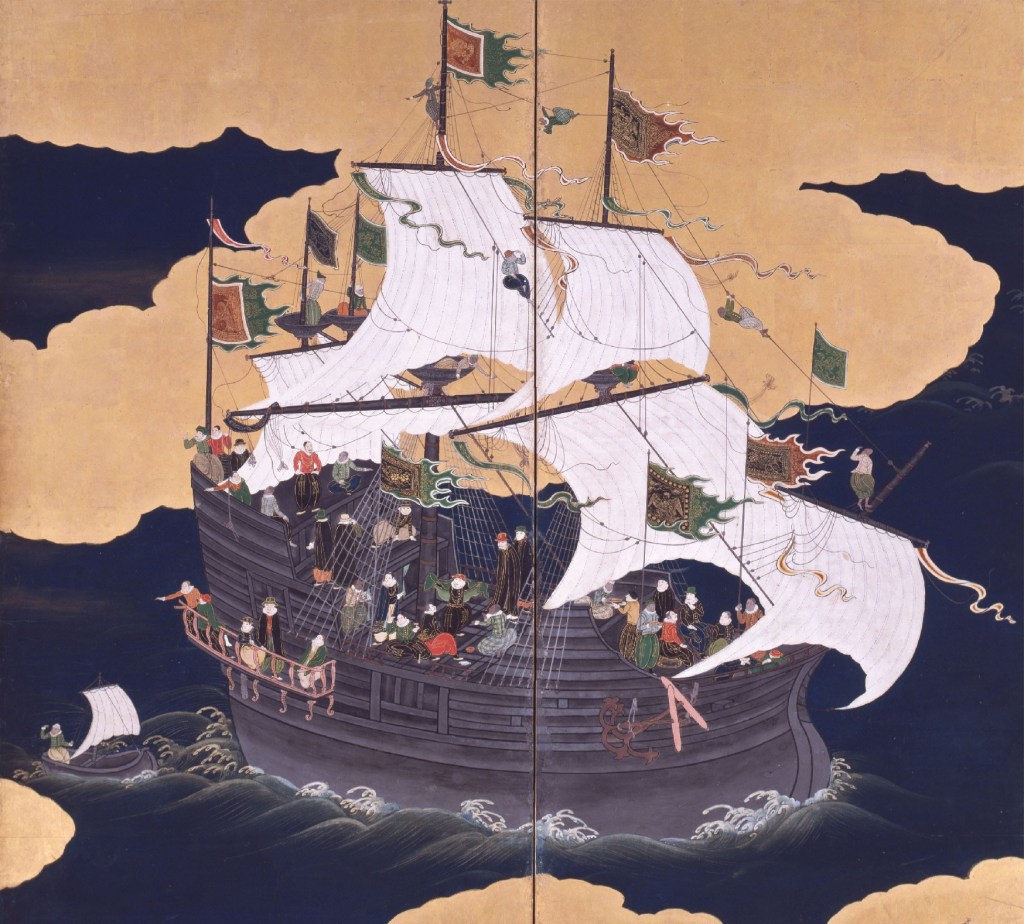
Outside of Kyushu, the attitude of powerful Daimyo towards these Christians seems to have been fairly ambivalent, with most tolerating their presence, but few converting to the foreign religion. Hideyoshi himself issued permits for Christian priests to preach their religion in Osaka, and, according to some sources, he asked Jesuit Priest Gaspar Coelho to assist him in building an armada to be used in the conquest of China once Japan had been unified.
This changed after the subjugation of Kyushu. Sources differ on exactly what occurred, with some blaming the machinations of the native Japanese Buddhist clergy, but the short version is that Hideyoshi became aware of the fact that Nagasaki had effectively been handed over to complete Portuguese control. They had fortified it and were apparently using it as a port through which non-Christian Japanese were sold out of the country as slaves.
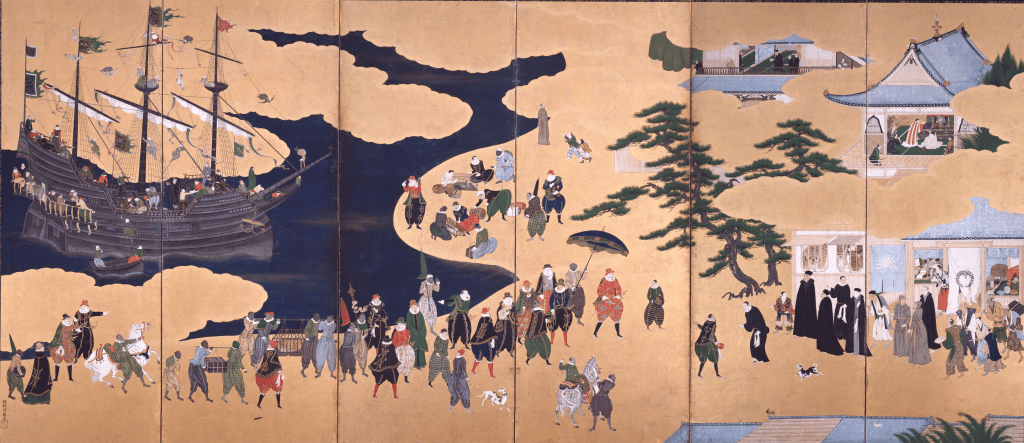
The issue of Japanese being sold as slaves by Portuguese merchants remains controversial (surprise, surprise), with debates raging over the extent of the practice and how involved the Japanese themselves were. There are contemporary sources which indicate that Japanese slaves could be found across Asia, and the concept of ‘unfree labour’ was already well established in Japan at this time, ranging from effective serfdom to labourers convicted to a term of service as punishment for a crime.
Another issue is that one of the primary sources describing Portuguese involvement in slavery also describes them as a people that skin cows and horses alive, and eat the meat raw with their bare hands, suggesting that the purpose of such ‘records’ was more about demonising the Portuguese than recording actual events.
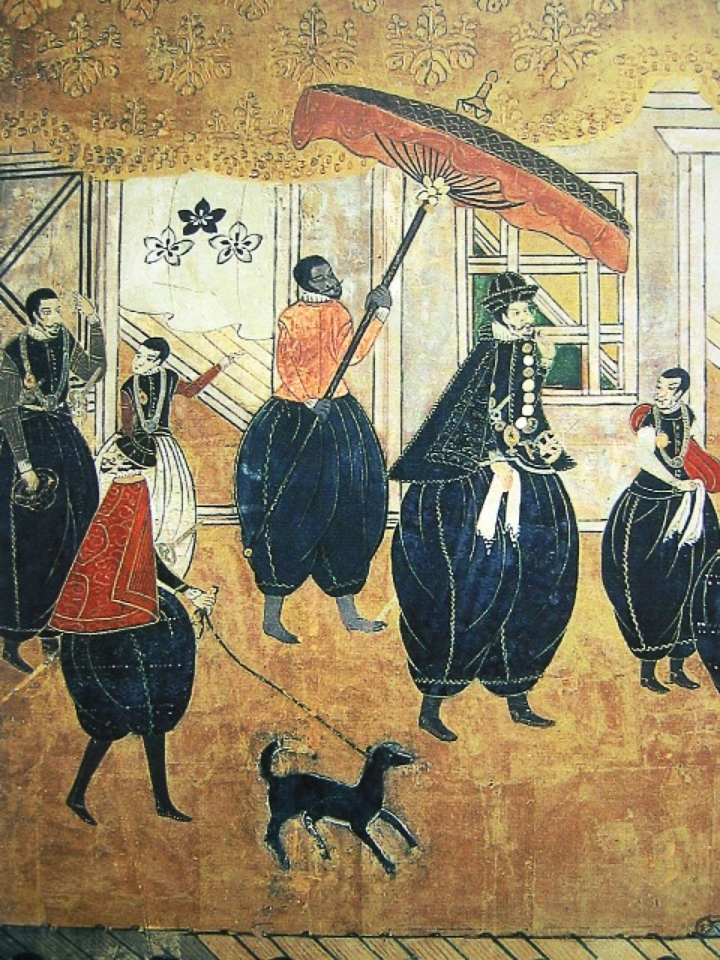
Regardless of how extensive the trade was, it provided a convenient enough excuse for Hideyoshi to act. Though highlighting the fortifications at Nagasaki, and the selling of Japanese as slaves, modern historians more generally agree that the move against the Christians was more about consolidating power, as Hideyoshi believed that Christian theology was a direct threat to the traditional Japanese belief in a divine Emperor, from whom Hideyoshi’s power ultimately derived.
Another theory is that Hideyoshi wanted to control trade with the West, believing (erroneously) that the trade was controlled by the Jesuits, when in reality, religious and commercial interests were separate, and often in conflict (the Jesuits, for example, actively opposed enslaving Japanese) This theory suggests that Hideyoshi hoped that removing the priests would allow him to take direct control of the trade.
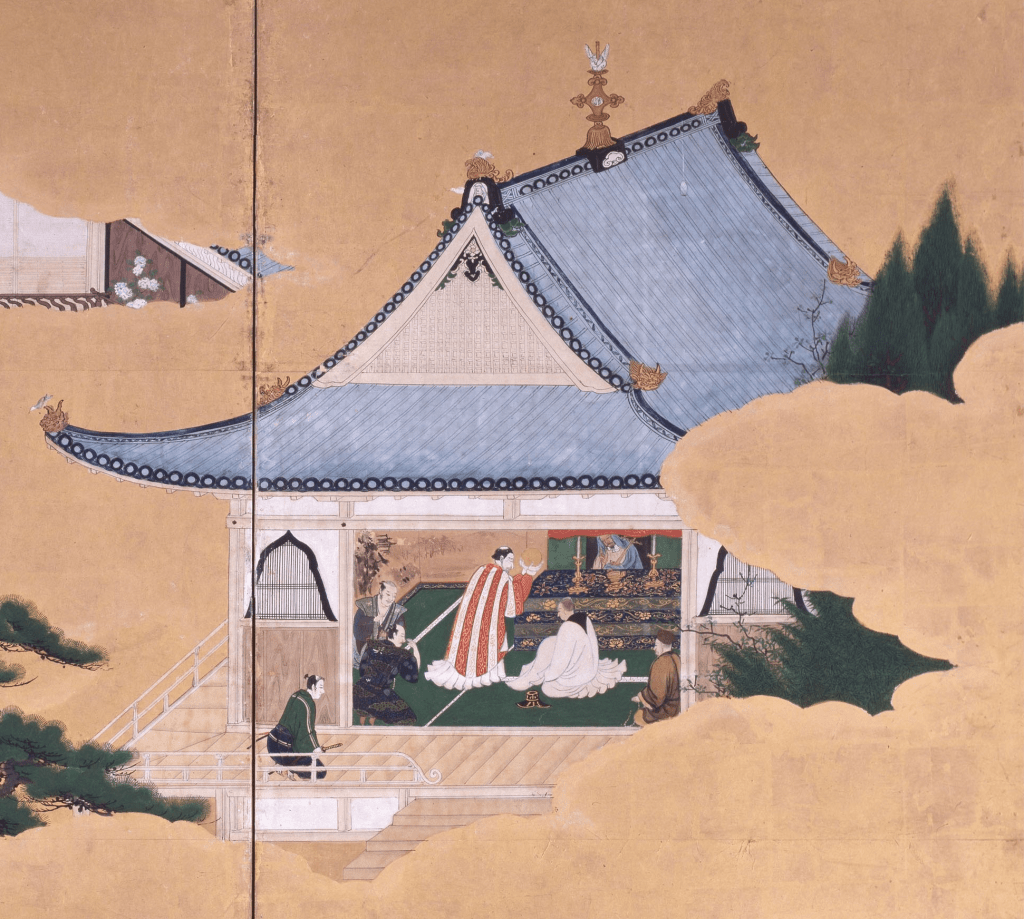
Whether he was motivated by political, religious, or economic reasons (or all three), Hideyoshi issued what became known as the Bateren expulsion order (bateren being the Japanese word for Christian priests, derived from the Latin Patren) in 1587. What followed was a brief campaign of repression against Christianity; the Jesuit base in Kyoto was burned, and territory around Nagasaki was seized.
Ultimately, however, Hideyoshi seems to have largely ignored his own order, keeping several Christian priests as interpreters and scribes, and allowing trade to continue practically unmolested. For now, at least, Hideyoshi had bigger problems than Christian priests.

Sources
https://ja.wikipedia.org/wiki/%E8%B1%8A%E8%87%A3%E7%A7%80%E5%90%89
https://ja.wikipedia.org/wiki/%E4%B9%9D%E5%B7%9E%E5%B9%B3%E5%AE%9A
https://ja.wikipedia.org/wiki/%E3%83%90%E3%83%86%E3%83%AC%E3%83%B3%E8%BF%BD%E6%94%BE%E4%BB%A4
https://ja.wikipedia.org/wiki/%E4%B9%9D%E5%B7%9E%E5%9B%BD%E5%88%86
https://ja.wikipedia.org/wiki/%E6%83%A3%E7%84%A1%E4%BA%8B%E4%BB%A4
https://en.wikipedia.org/wiki/Slavery_in_Japan
 Chris Perry, Author