The Battle of Okehazama in 1560 saw Tokugawa Ieyasu’s masters, the Imagawa, dealt a serious blow at the hands of Oda Nobunaga. In the aftermath, Ieyasu began asserting his independence, and in 1562, the so-called “Kiyosu Alliance” between Ieyasu and Nobunaga was formalised.
百楽兎 – 投稿者自身による著作物, CC 表示-継承 3.0, https://commons.wikimedia.org/w/index.php?curid=1056853による
The Imagawa, however, were down, but not out, and Ieyasu’s position was far from secure, despite his new alliance. In 1563, the “Mikawa Ikko-Ikki” Rebellion broke out, and in early 1564, when the Imagawa announced their intention to crush Ieyasu, several of his vassals in Mikawa switched sides, joining the Ikko-Ikki or else rising against Ieyasu in anticipation of an Imagawa attack.
The name “Ikko-Ikki” suggests that the uprising was similar to other religiously motivated risings that occurred throughout Japan during this period. Indeed, the focal point seems to have been several temples in Mikawa; however, some scholars now suggest that the uprising was motivated more by economic reasons, and some even go so far as to say that Ieyasu may have provoked the rising, or at least took advantage of it to cement his control of Mikawa Province.
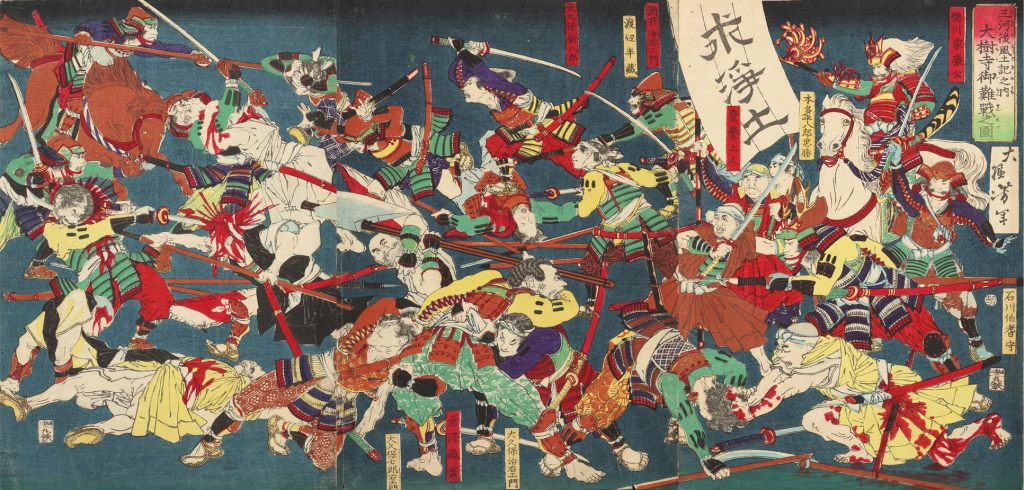
While it’s impossible to know for sure, Ieyasu did much to boost his own reputation in putting down the rebellion. At the Battle of Azukizaka (sometimes called the Battle of Batogahara) in January 1564, Ieyasu led his forces in crushing the rebels, despite ferocious fighting. The story goes that Ieyasu charged the enemy fearlessly, and came under heavy gunfire, with several rounds penetrating his armour, but leaving him uninjured, inspiring his men, and leading some rebels to switch sides.
In the aftermath, Ieyasu banned the Jodo Shinshu sect of Buddhism in Mikawa, only to lift the ban in 1567, just a few years later, lending credence to the argument that the fighting had never been about religious issues but about political control of the province.
Before 1566, Ieyasu’s family name was Matsudaira, but around this time, he petitioned the Emperor to change it to Tokugawa. The exact reasons for this are related to the complex (and often impenetrable) genealogies of the Minamoto and Fujiwara Clans, from whom Ieyasu claimed descent. You may remember that Minamoto and Fujiwara were the names of two of Japan’s most ancient and illustrious families, and it was a big deal to claim descent from them.
This would become much more important later, as only a member of the Minamoto could become Shogun (technically), but that was still decades in the future. At the time, the name change was probably more closely associated with prestige and a desire to assert independence from the Imagawa, with a new name symbolising a new era for the clan.

In 1567, Ieyasu further strengthened his alliance with Nobunaga by marrying his eldest son to Nobunaga’s daughter. However, they were both just nine years old at the time, so the marriage was a political rather than conjugal union. The next year, Ieyasu dispatched forces to support Nobunaga’s march on Kyoto, and in December, he made an alliance with Takeda Shingen and launched a joint invasion of Imagawa territory.
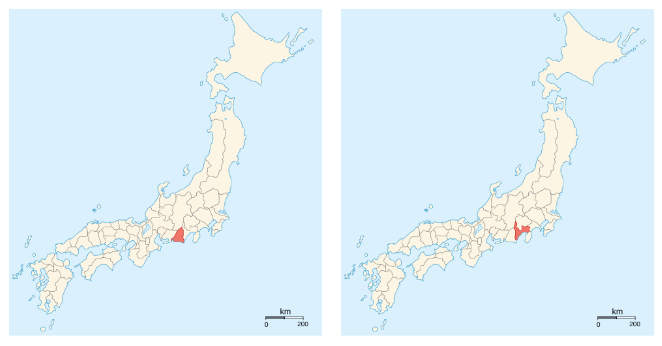
The attack was a success, but the relationship between Ieyasu and Shingen fell apart almost immediately. According to Tokugawa accounts, it had been agreed that Ieyasu would take Totomi Province, and Shingen would take Suruga. However, it wasn’t long before Takeda forces were also crossing into Totomi, in direct violation of the agreement (which may never have existed to begin with).
By Ash_Crow – Own work, based on Image:Provinces of Japan.svg, CC BY 2.5, https://commons.wikimedia.org/w/index.php?curid=1691864
Ieyasu then sought the support of the Hojo Clan, and their Lord, Ujiyasu, who had his own ambitions for the former Imagawa territory. Together, they successfully pushed the Takeda forces back, and in 1570, Ieyasu moved his base from Okazaki Castle in Mikawa Province to Hikuma, which he promptly renamed Hamamatsu, in Totomi. Later that year, he would further prove his value as an ally of Oda Nobunaga by supporting his campaign against the Azai-Asakura Alliance, fighting in the rearguard in the defeat at Kanegasaki, and then providing important reinforcements at the victorious Battle of Anegawa in July.
In 1571, the alliance would be sorely tested, as the last Ashikaga Shogun, Yoshiaki, sought to rally forces in opposition to Oda Nobunaga, with the ultimate goal of restoring his family’s position. The Anti-Nobunaga coalition (which was, importantly, not necessarily pro-Ashikaga) included the forces of the Azai-Asakura Alliance, the powerful temple of Ishiyama Honganji, and Takeda Shingen, among others.
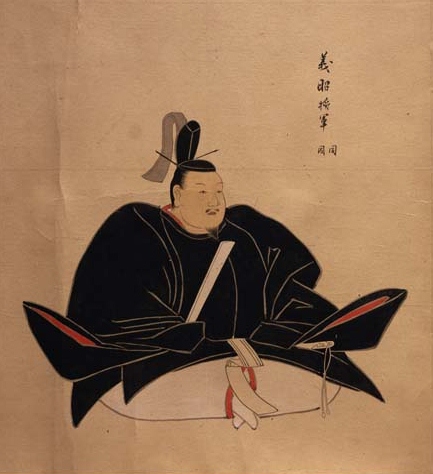
In the aftermath of the defeat of the Imagawa, Hojo Ujiyasu, who had favoured an alliance with Ieyasu against the Takeda, died and was replaced by his son, Ujimasa, who reversed his clan’s diplomatic position and reestablished the alliance with Shingen. At this point, Yoshikai, seeking to take advantage of the pressure he was now under, sought to gain Ieyasu’s support, offering him the position of Kanrei or deputy Shogun in exchange.
Ieyasu refused this offer and chose to retain his alliance with Nobunaga; in response, Takeda Shingen launched an invasion of the Mikawa and Totomi Provinces in September 1572. Leading 20,000 troops, Shingen crossed the Aokuzure Pass, and with the help of several defections amongst Ieyasu’s retainers, swiftly gained control of northern Totomi.
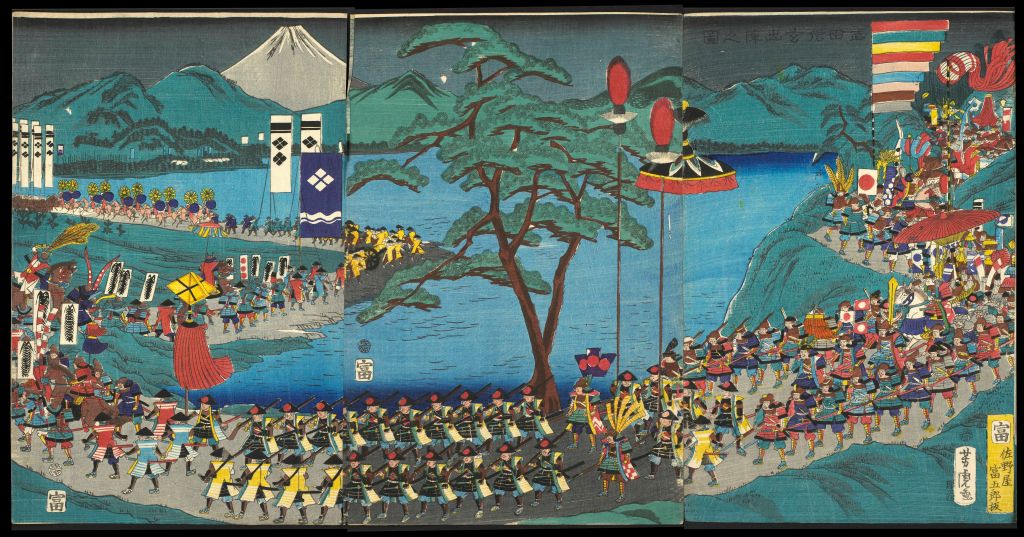
Meanwhile, a separate force invaded Nobunaga’s territory in Mino, meaning that when Ieyasu called for aid, none was readily available. Ieyasu was forced into an impossible situation; his forces were heavily outnumbered by the advancing Takeda, and a pitched battle would almost certainly end in defeat. On the other hand, if he retreated or even stayed on the defensive, he faced the prospect of losing support from his retainers, some of whom had already proved they were willing to switch sides.
The Takeda headed towards the strategically important Futamata Castle, and Ieyasu had no choice but to try to head them off. The advance guards of both armies clashed at the Battle of Hitokotozaka, and the Tokugawa were soundly beaten, causing them to retreat to the relative safety of Hamamatsu, and giving the Takeda a clear path to lay siege to Futamata, which fell shortly afterwards.
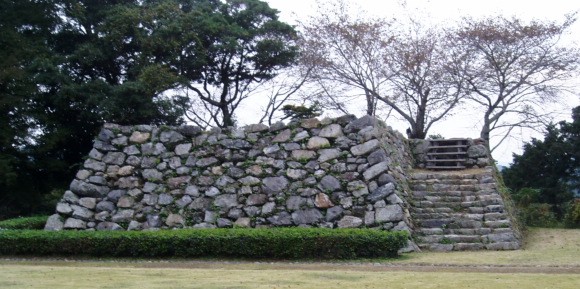
CC 表示-継承 3.0, https://commons.wikimedia.org/w/index.php?curid=427661
In the aftermath of this disaster, still more Tokugawa retainers switched sides and joined the Takeda, and it was assumed that Shingen, whose army, strengthened by defections and reinforcements, now stood at around 30,000 men, would march on Hamamatsu. Instead, the Takeda forces bypassed it entirely. It has been suggested that this was a ploy to lure Ieyasu out of the powerful fortress, giving Shingen the opportunity to destroy him in the open.
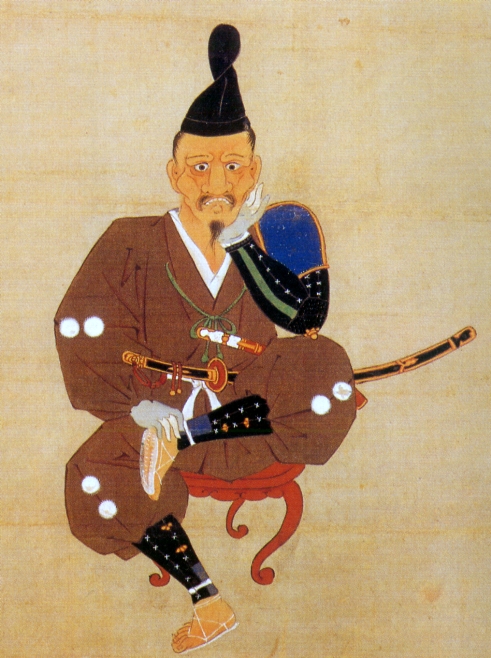
If that was the plan, it worked, and despite urging from his retainers to remain in Hamamatsu, Ieyasu was emboldened by some long-awaited reinforcements from Nobunaga and decided to march out and intercept the Takeda. The result was the disastrous Battle of Mikatagahara, in which the Tokugawa were decisively defeated, with Ieyasu himself only being saved by the bravery of his retainers, who fought a rearguard action so ferocious that Ieyasu was allowed to escape, and the Takeda were convinced to call off the pursuit.
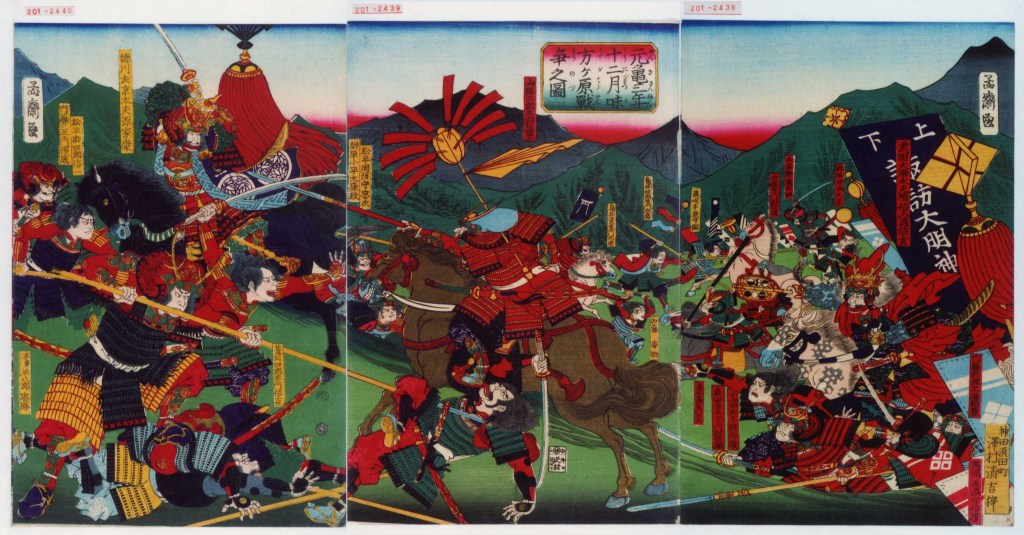
The winter of 1572 saw the Takeda forces camping deep inside Tokugawa territory, whilst Ieyasu himself was holed up in Hamamatsu, his army scattered, and his prospects looking very bleak.
Sources
https://ja.wikipedia.org/wiki/%E5%BE%B3%E5%B7%9D%E5%AE%B6%E5%BA%B7
https://ja.wikipedia.org/wiki/%E4%B8%89%E6%96%B9%E3%83%B6%E5%8E%9F%E3%81%AE%E6%88%A6%E3%81%84
https://ja.wikipedia.org/wiki/%E4%BA%8C%E4%BF%A3%E5%9F%8E%E3%81%AE%E6%88%A6%E3%81%84
https://ja.wikipedia.org/wiki/%E4%B8%80%E8%A8%80%E5%9D%82%E3%81%AE%E6%88%A6%E3%81%84
https://ja.wikipedia.org/wiki/%E8%A5%BF%E4%B8%8A%E4%BD%9C%E6%88%A6
https://ja.wikipedia.org/wiki/%E9%9D%92%E5%B4%A9%E5%B3%A0
https://ja.wikipedia.org/wiki/%E9%87%91%E3%83%B6%E5%B4%8E%E3%81%AE%E6%88%A6%E3%81%84
https://ja.wikipedia.org/wiki/%E5%A7%89%E5%B7%9D%E3%81%AE%E6%88%A6%E3%81%84
https://ja.wikipedia.org/wiki/%E6%8E%9B%E5%B7%9D%E5%9F%8E
https://ja.wikipedia.org/wiki/%E6%B5%9C%E6%9D%BE%E5%9F%8E
https://news.yahoo.co.jp/expert/articles/c8236e8b4e534230da1d01117685da63b98d761a
https://ja.wikipedia.org/wiki/%E5%B0%8F%E8%B1%86%E5%9D%82%E3%81%AE%E6%88%A6%E3%81%84_(1564%E5%B9%B4)
https://ja.wikipedia.org/wiki/%E4%B8%89%E6%B2%B3%E4%B8%80%E5%90%91%E4%B8%80%E6%8F%86
https://ja.wikipedia.org/wiki/%E5%B2%A1%E5%B4%8E%E5%9F%8E
https://ja.wikipedia.org/wiki/%E6%9C%AC%E5%AE%97%E5%AF%BA
 Chris Perry, Author