Tag: Battle of Nagashino

  • The Third Unifier – Tokugawa Ieyasu. Part Three.

    The Third Unifier – Tokugawa Ieyasu. Part Three.

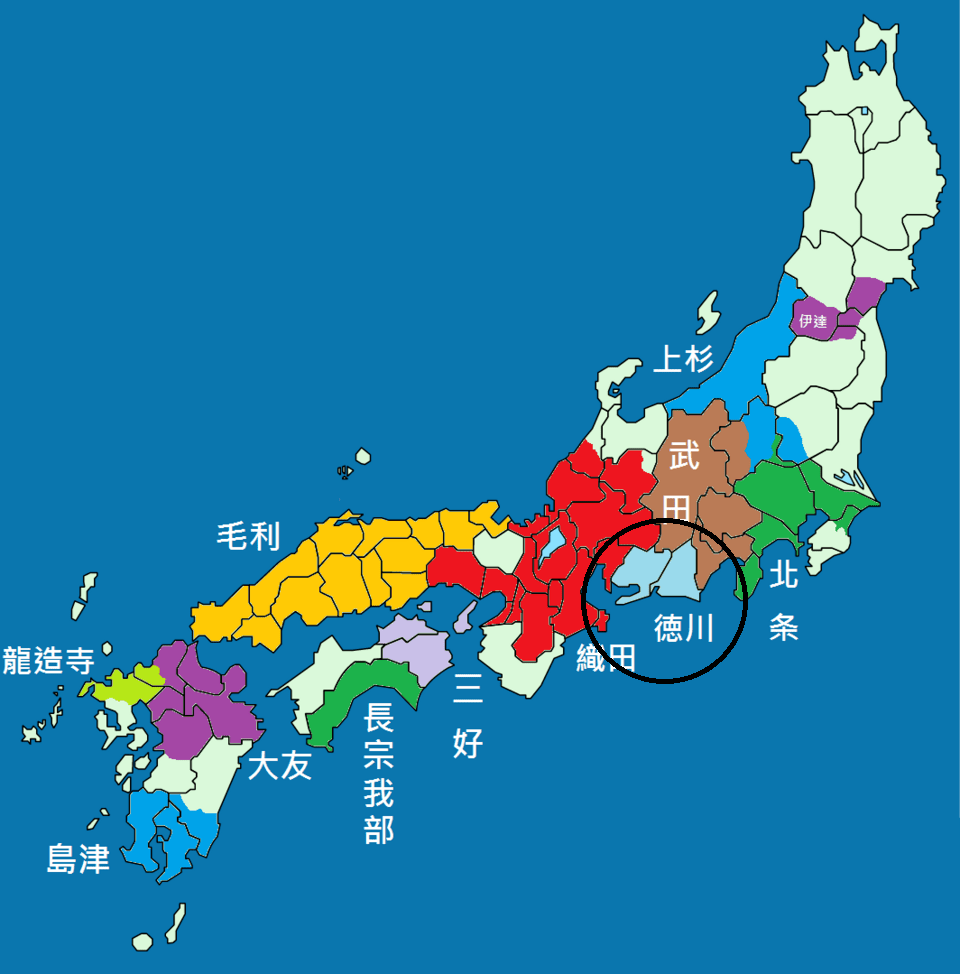
    After the disastrous Battle of Mikatagahara in January 1573, contemporaries might have been forgiven for thinking that Tokugawa Ieyasu was finished. His army had been defeated and scattered, several important fortresses had fallen, and Takeda forces were camped deep inside his home province of Mikawa.

    The Battle of Mikatagahara was a disaster from which Ieyasu might not have recovered.

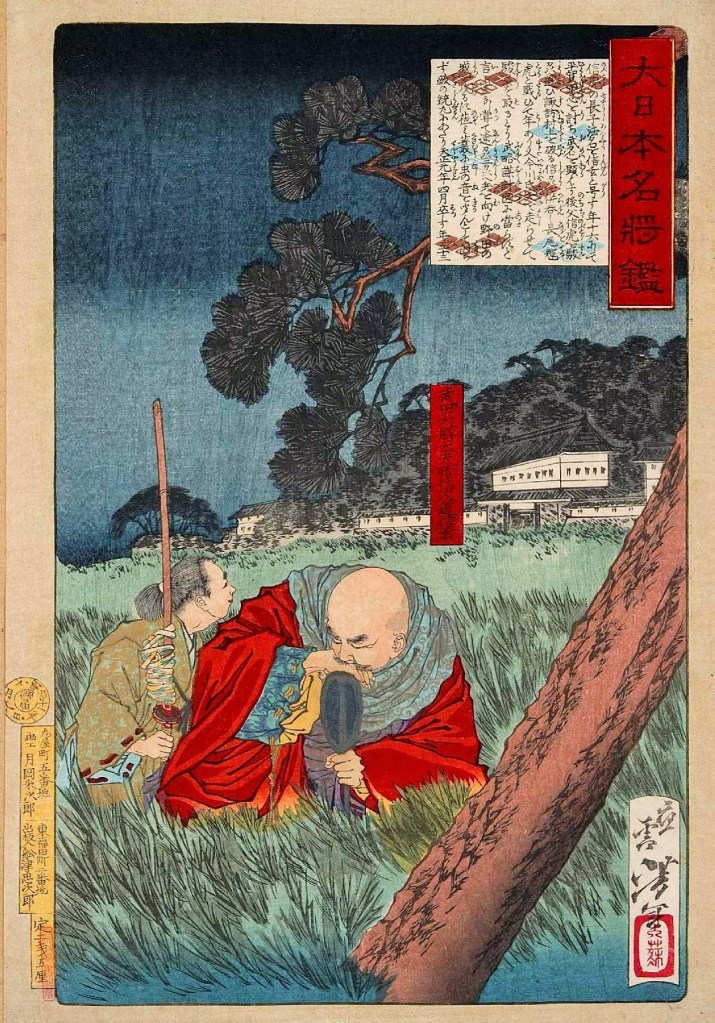
    Fate, however, was on Ieyasu’s side. Though Mikatagahara had been a catastrophe, the Takeda would prove unable to take advantage of their victory. Not long after the Battle, Takeda Shingen, arguably the most formidable warrior of his day, fell ill (some sources say he was wounded in battle, though later stories of Ninja assassinations are likely mythological).

    With their leader bedridden, the Takeda campaign stalled. They tried to keep the full extent of his illness secret, but when Shingen died in May, the once-mighty Takeda army began a full retreat from Mikawa. The Art of War writes that a general should know his enemy, and Ieyasu, student of war that he was, seems to have realised that something was amiss.

    An image depicting Shingen’s illness. He was arguably the most formidable warlord of his day, and his death was a huge strategic boon to the Tokugawa.

    Under Shingen, the Takeda were aggressive and highly capable, but after his (still secret) death, Ieyasu identified several weaknesses and launched a counter-attack, the success of which effectively confirmed his theory that Shingen was gone. With the momentum swinging back towards the Tokugawa, several clans that had defected to the Takeda switched sides again, and Ieyasu was able to swiftly regain the strength lost at Mikatagahara.

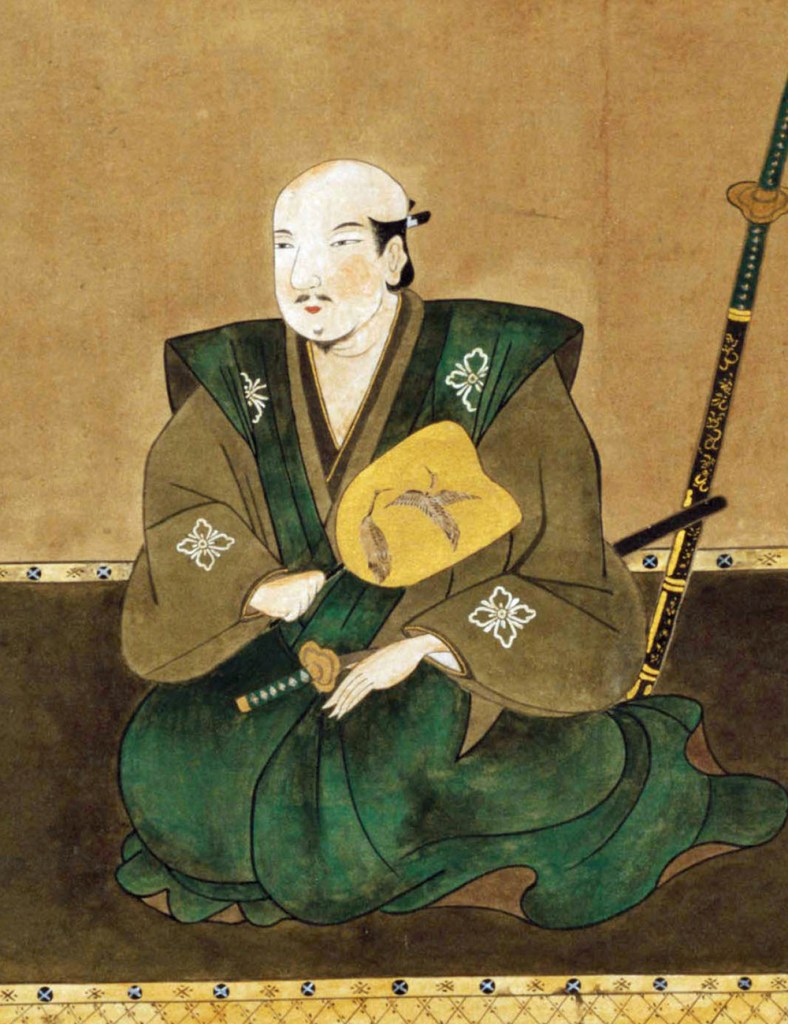
    Shingen’s successor, Katsuyori, has been remembered as a poor imitation of his father, though much of what was recorded about him was written by his enemies. In the short term, however, Katsuyori and Ieyasu were fairly evenly matched, and throughout 1574 and into 1575, they traded blows, with the momentum shifting back and forth.

    Takeda Katsuyori. Though perhaps unfairly maligned in later writings, he would prove unable to live up to his father’s legacy.

    Ieyasu had something that Katsuyori didn’t, however, a powerful ally. The death of Shingen had removed a serious (possibly existential) threat to the ambitions of Oda Nobunaga, and in 1575, he was finally able to dispatch significant forces to support Ieyasu’s ongoing campaign against the Takeda.

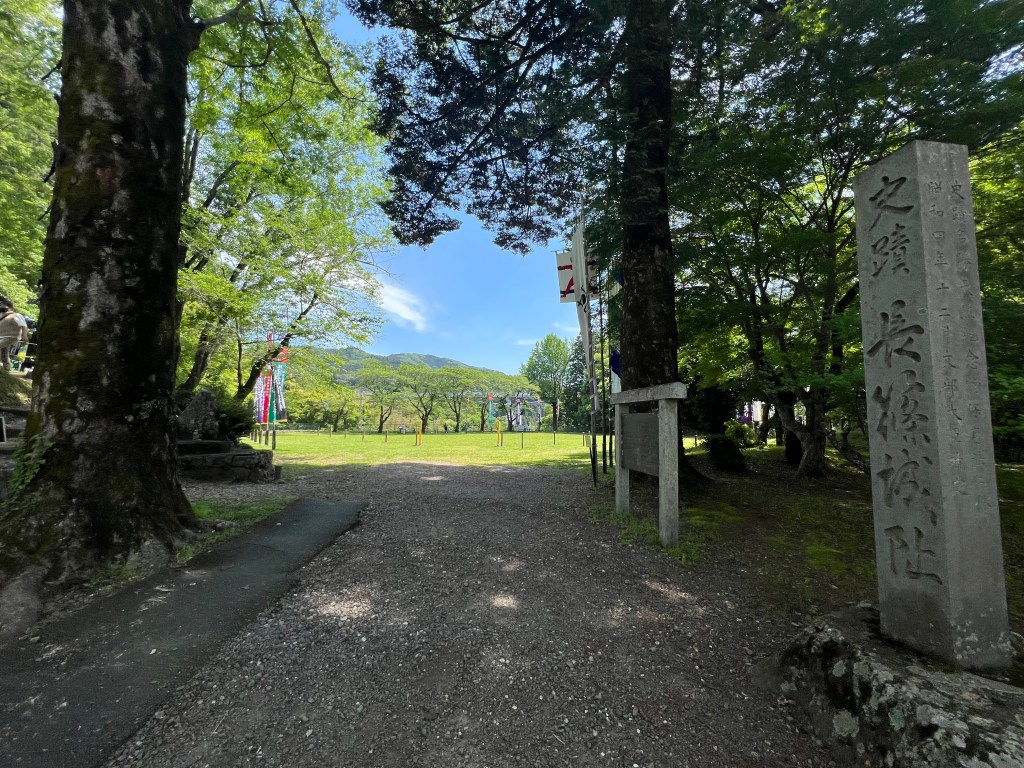
    In early 1575, Takeda forces once again advanced against Mikawa province, laying siege to the strategically important Nagashino Castle. Sources suggest that the Takeda invested the castle with 15,000 men, whilst the defenders numbered only 500. Despite the disparity in strength, the fortress was situated in terrain that made it difficult for the Takeda to bring their full forces to bear, and for a time, the garrison held out.

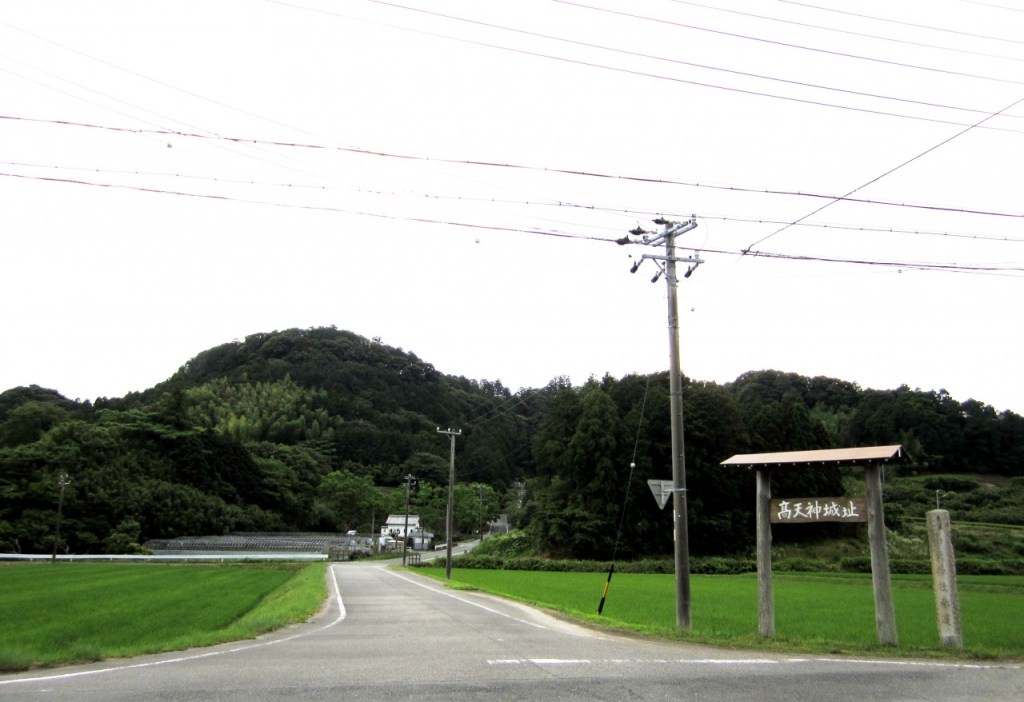
    The site of Nagashino Castle as it appears today.

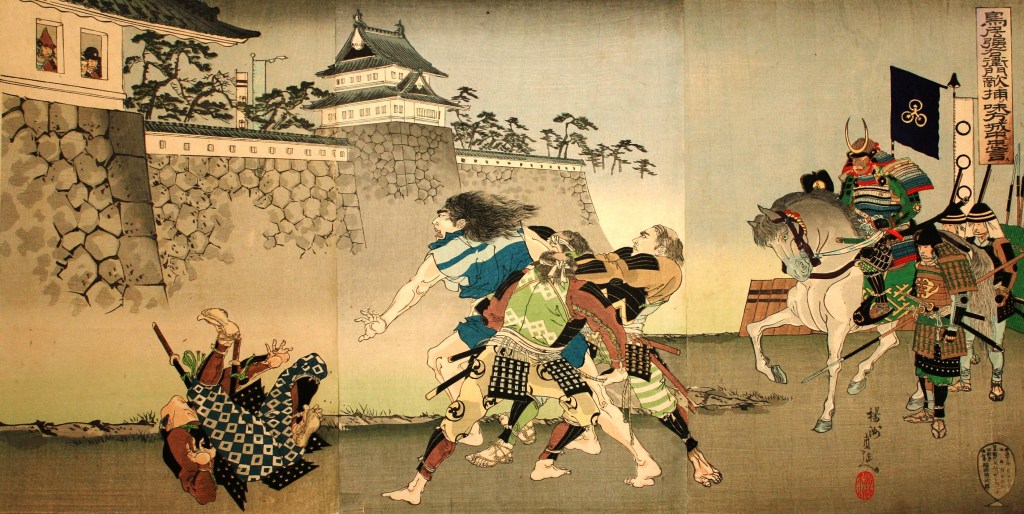
    The situation changed dramatically, however, when the garrison’s food supplies were burned. In response, a messenger, Torii Suneemon, slipped through Takeda’s lines and made it to a combined Oda-Tokugawa army that was supposed to have numbered some 38,000 men (30,000 Oda and 8,000 Tokugawa, which goes some way to demonstrating the power dynamic in this ‘alliance’.)

    Suneemon then tried to return to Nagashino to inform the garrison that help was on the way, but he was instead captured by the Takeda. Katsuyori offered him a deal: if he told the garrison that no help was coming, he’d be set free. Instead, Sunemon shouted that relief was on the way, and the garrison should hold out, for which he was crucified in full view of the walls.

    A later (and somewhat dramatised) depiction of Suneemon exhorting the garrison of Nagashino to keep resisting.

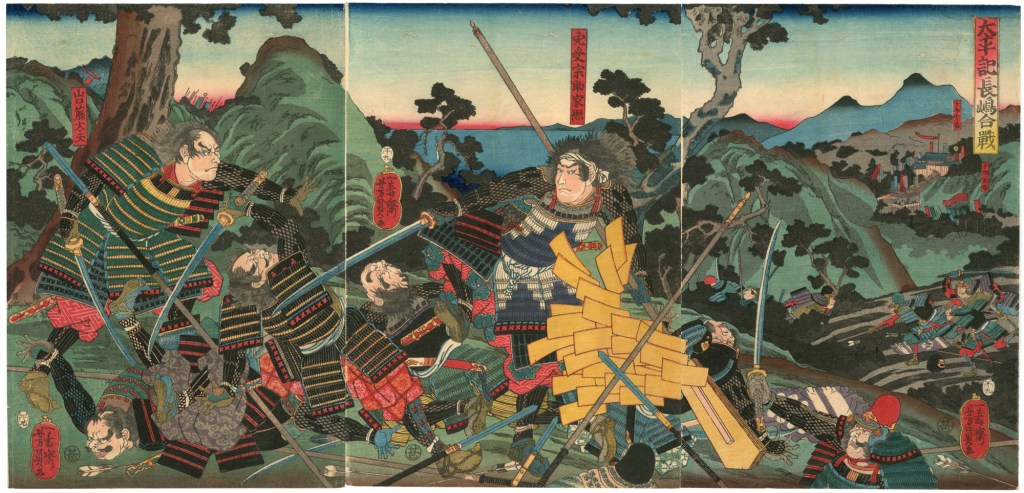
    When the Oda-Tokugawa forces arrived two days later, the garrison was still holding out, and the Takeda turned to give battle. Although the Battle of Nagashino is one of the most famous and decisive battles of the Sengoku Jidai, scholars disagree on what actually happened. Nagashino has long been famous for Nobunaga’s innovative use of massed firearms, with thousands of foot soldiers firing in a three-rank system that kept up a constant hail of fire that decimated the Takeda’s famous cavalry charge.

    The exact number of firearms and the tactics used are still debated, but what is known for sure is that Nagashino represented a blow to the Takeda Clan from which they would never recover. In the aftermath, both Ieyasu and Nobunaga moved to take advantage, extending their control over Suruga and Totomi Provinces, and boxing the Takeda up in their traditional home in Kai and Shinano Province (modern Yamanashi and Nagano prefectures)

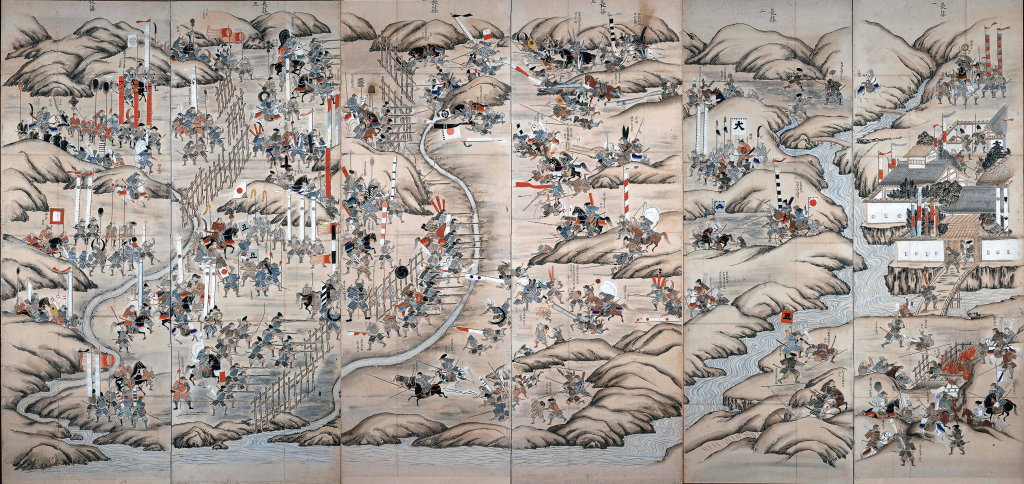
    An 18th-century depiction of the Battle of Nagashino, with the Oda-Tokugawa forces on the left, and Nagashino Castle on the far right.

    Though Ieyasu had been on the winning side, the victory over the Takeda would mark the time when his relationship with Nobunaga ceased to be an alliance of equals. There was no disputing Nobunaga’s power by this point, and the resources at his disposal dwarfed anything Ieyasu could deploy. Consequently, in the aftermath of Nagashino, Ieyasu found himself a vassal to the Great Lord.

    Perhaps the best evidence of how far the relationship had shifted came in 1579, when, on Nobunaga’s order, Ieyasu had his wife and eldest son put to death on suspicion of conspiring with the Takeda to arrange Nobunaga’s assassination.

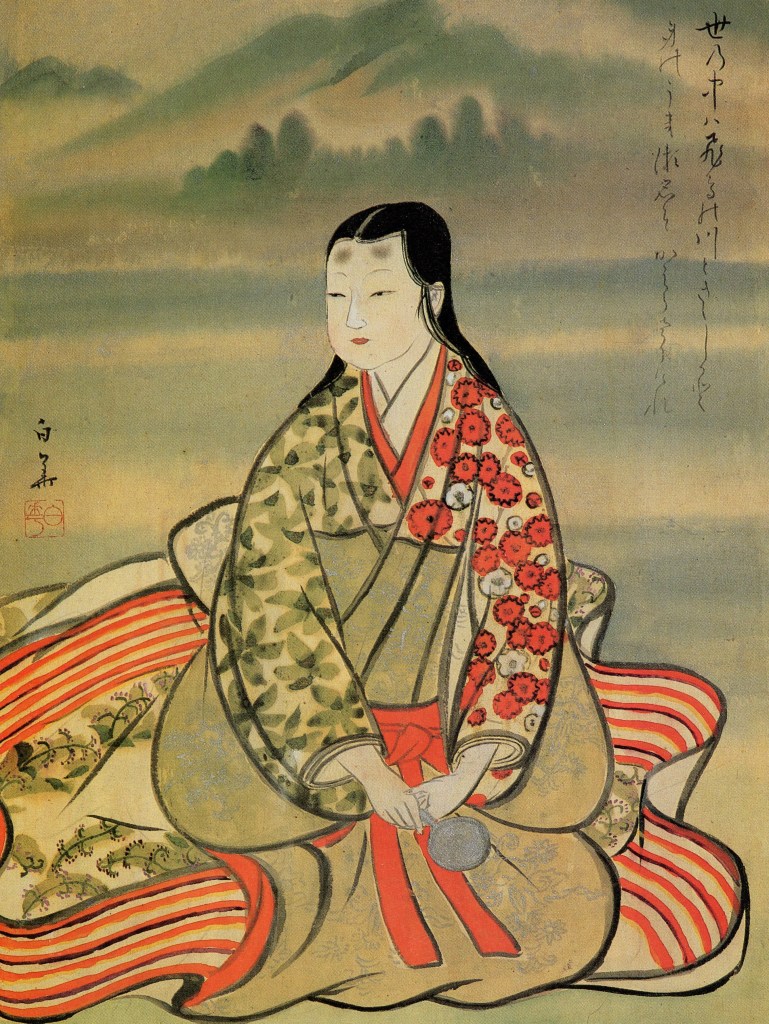
    Ieyasu’s first wife, Lady Tsukiyama.

    The long-held theory was that Lady Tsukiyama, Ieyasu’s wife, and his eldest son, Nobuyasu, were indeed conspiring with the Takeda. Some sources portray Lady Tsukiyama as a scheming, evil woman who seduced men into joining her plot, whilst Nobuyasu is said to have been a cruel, vindictive psychopath who committed acts such as shooting random peasants dead during festivals for no reason other than that they danced poorly.

    The catalyst for their death was apparently Nobunaga’s daughter, Tokuhime, who just so happened to be married to Nobuyasu. It is said that she hated her mother-in-law so much that she concocted the entire plot to have both of them removed.

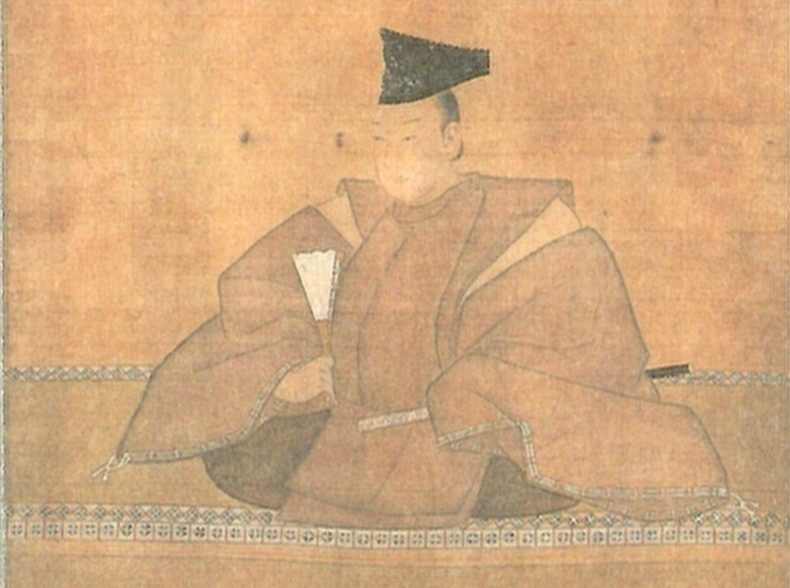
    Ieyasu’s eldest son, Nobuyasu, who was either a traitor, a violent lunatic, the victim of a vindictive wife, or a combination of all three, depending on who you believe.

    There is another school of thought that suggests Nobunaga had nothing to do with the incident and that Ieyasu and Nobuyasu were instead engaged in a long-term feud. Nobuyasu, apparently supported by his mother, is said to have defied his father’s orders and even been plotting open rebellion, with or without the support of the Takeda.

    Faced with such a direct threat to his authority, Ieyasu sought the advice of his overlord, Nobunaga (who also happened to be Nobuyasu’s father in law), who is said to have instructed that, as the matter was an internal family affair, that Ieyasu should do as he thought best, resulting in the execution of Lady Tsukiyama, and Nobuyasu’s seppuku.

    Whether Nobunaga gave the order or Ieyasu acted on his own initiative, this incident highlights the situation Ieyasu faced in the late 1570s. Subordinate to Nobunaga’s power, and insecure at home, despite his successes, there was still no reason to believe that Ieyasu was going to be anything other than a footnote in another man’s story.

    Ooooh, foreshadowing!

    Sources
    https://ja.wikipedia.org/wiki/%E5%BE%B3%E5%B7%9D%E5%AE%B6%E5%BA%B7
    https://ja.wikipedia.org/wiki/%E7%AF%89%E5%B1%B1%E6%AE%BF
    https://ja.wikipedia.org/wiki/%E6%9D%BE%E5%B9%B3%E4%BF%A1%E5%BA%B7
    https://ja.wikipedia.org/wiki/%E9%95%B7%E7%AF%A0%E3%81%AE%E6%88%A6%E3%81%84
    https://ja.wikipedia.org/wiki/%E4%B8%89%E6%96%B9%E3%83%B6%E5%8E%9F%E3%81%AE%E6%88%A6%E3%81%84
    https://ja.wikipedia.org/wiki/%E6%AD%A6%E7%94%B0%E5%8B%9D%E9%A0%BC
    https://ja.wikipedia.org/wiki/%E6%AD%A6%E7%94%B0%E4%BF%A1%E7%8E%84

  • The First Unifier – Oda Nobunaga. Part Three.

    The First Unifier – Oda Nobunaga. Part Three.

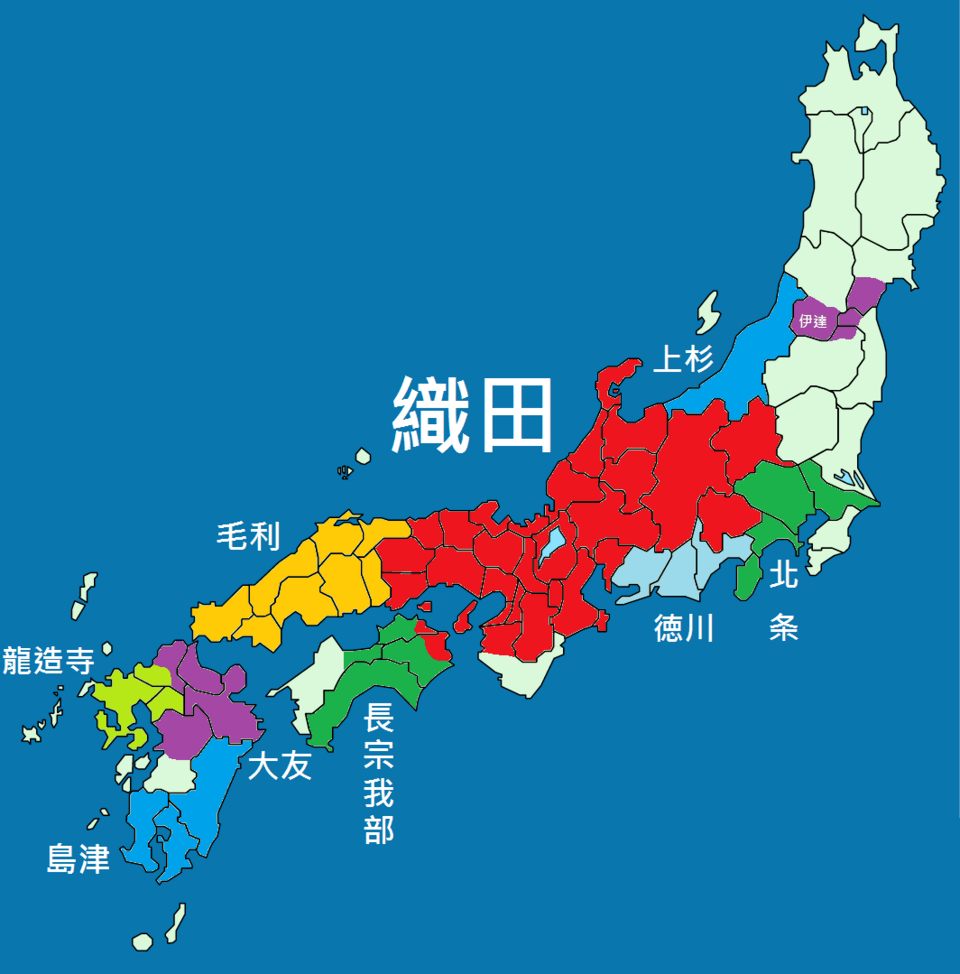
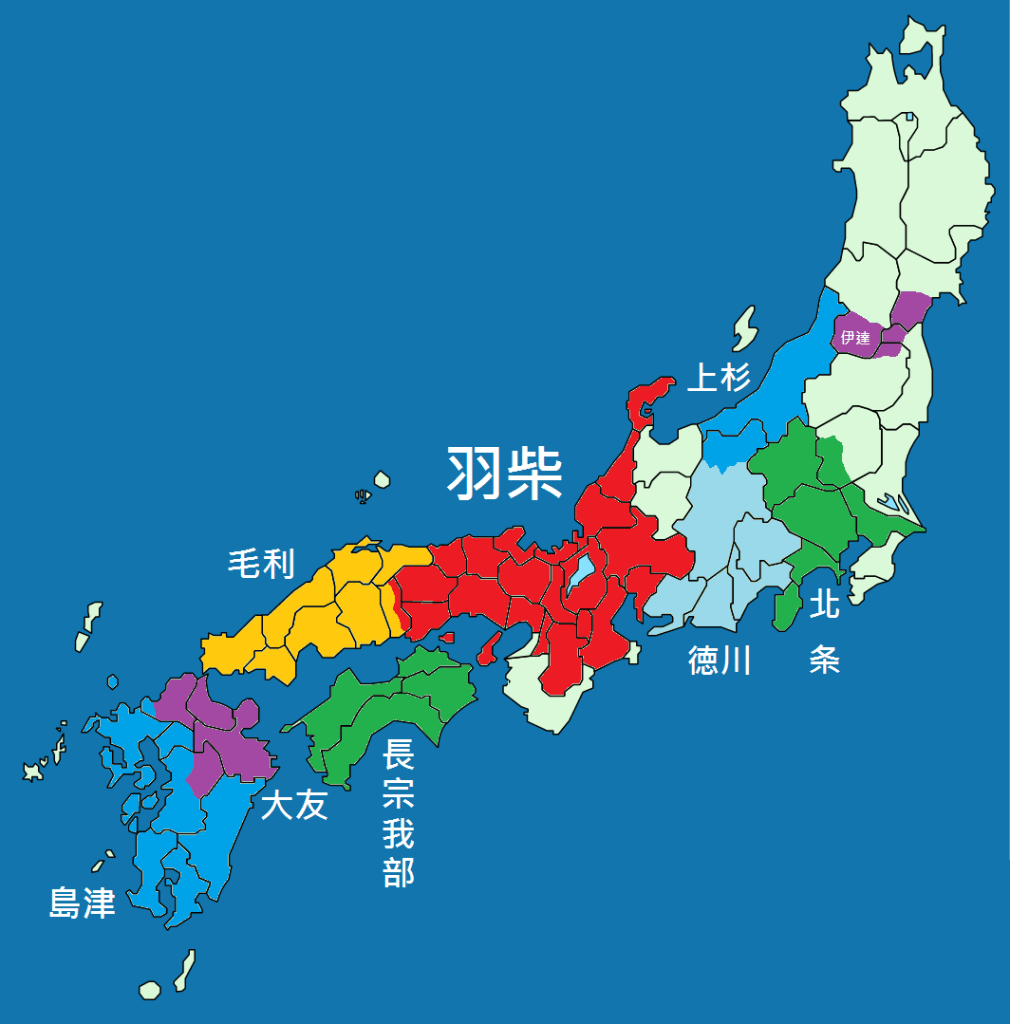
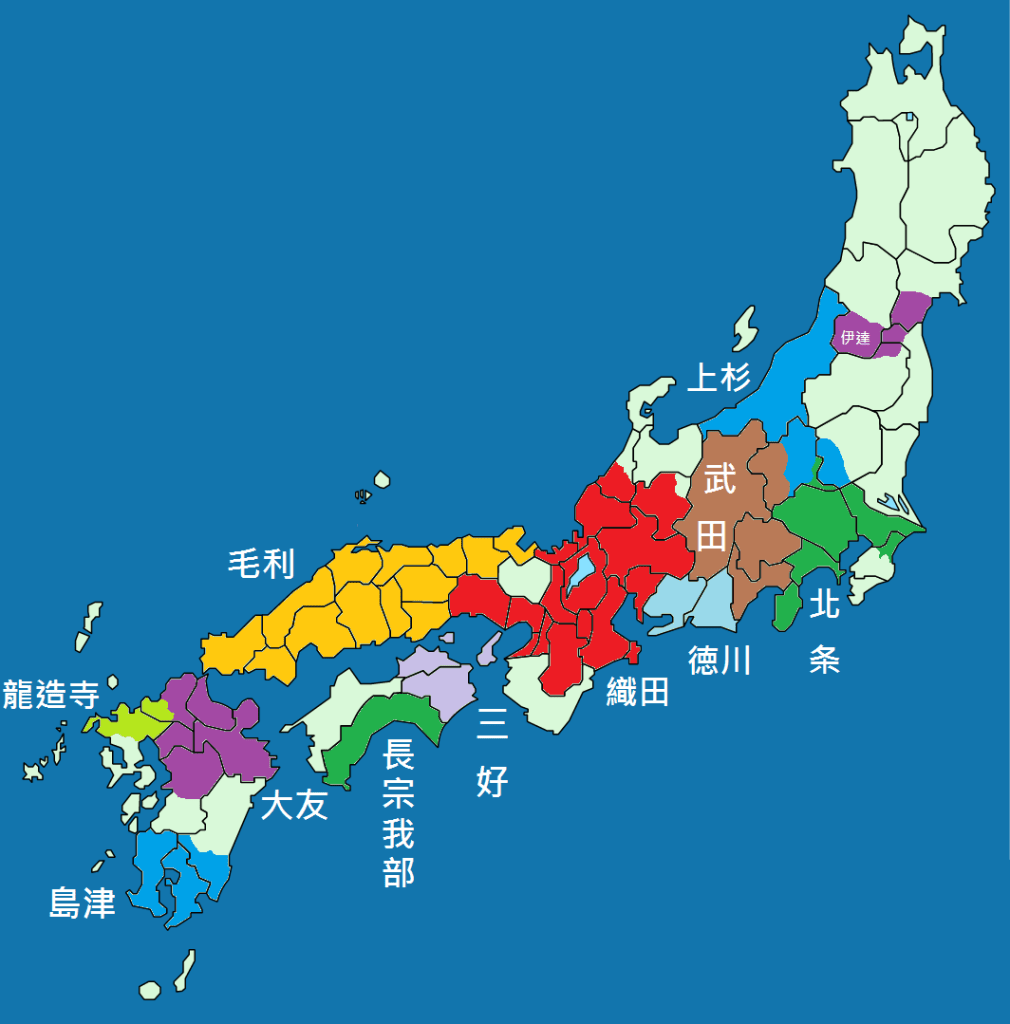
    By 1573, Oda Nobunaga was arguably the strongest warlord of his day, controlling a large territory that dominated central Japan. He had taken control of Kyoto and brought about the end of the Ashikaga Shogunate (though he would never take the title for himself), and with the death of Takeda Shingen, his most dangerous rival had been removed.

    Nobunaga’s position is red. Dominant, but not yet unchallenged.
    By Alvin Lee – Own work, CC BY-SA 4.0, https://commons.wikimedia.org/w/index.php?curid=39200929

    You probably know by now that even a strong position was never completely unchallenged during the Sengoku Jidai, and Nobunaga still had enemies to deal with. In the summer of 1573, he launched a campaign against the Azai-Asakura alliance, whom he had defeated at the Battle of Anegawa in 1570 and now meant to finish off.

    Nobunaga’s forces laid siege to the formidable Odani Castle. When Azai-Asakura forces marched to relieve it, they were ambushed and forced to retreat to Ichijodani Castle with Nobunaga in hot pursuit. The Azai-Asakura were then decisively defeated at the Battle of Tonezaka and tried to retreat again; however, a series of defeats, betrayals, and suicides put an end to the alliance and then to the clans themselves.

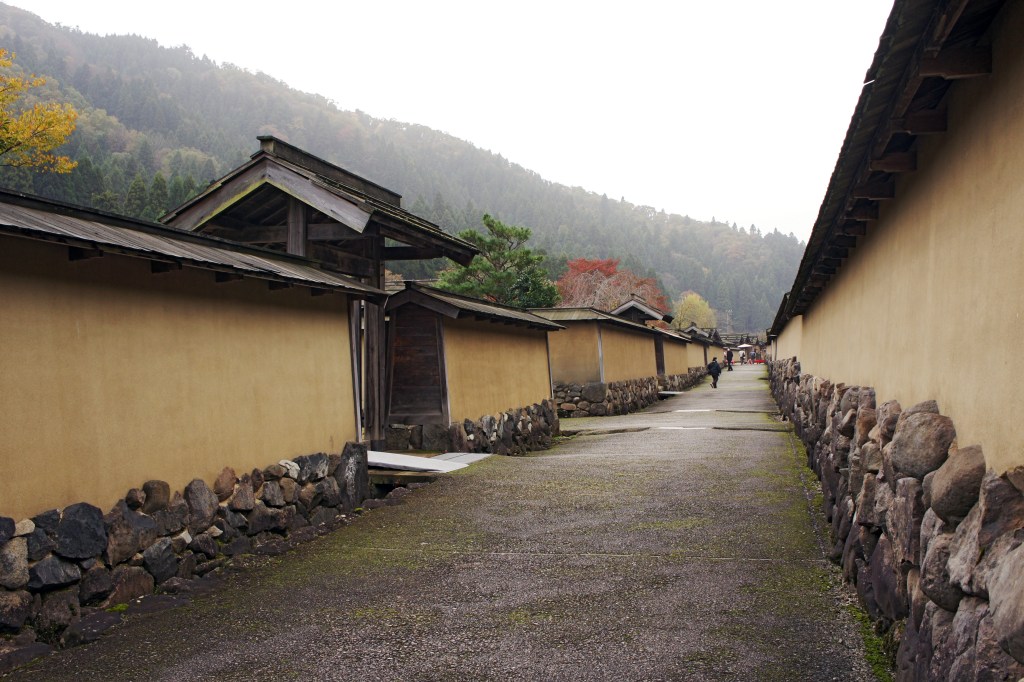
    A modern reconstruction of the castle down around Ichijodani.
    663highland – 投稿者自身による著作物, CC 表示 2.5, https://commons.wikimedia.org/w/index.php?curid=12059706による

    A side note to these events is the end of the marriage between Nobunaga’s sister, Oichi, and Azai Nagamasa, lord of the Azai Clan. When Nagamasa betrayed Nobunaga, Oichi remained faithful and was by his side as Odani Castle came under siege. Some sources say that Oichi gave birth to her third daughter during the siege (though others disagree). There is also debate over how she escaped, with some saying she was aided by a loyal retainer, and others stating that Nobunaga and Nagamasa agreed to let Oichi and her daughters go, a tale often romanticised as demonstrating the love both men had for her.

    Romantic stories aside, with the end of the Azai-Asakura threat, Nobunaga turned his attention to the peasant rebellion in Ise Province (the so-called Nagashima Ikko-Ikki), which had resulted in the death of his younger brother, Nobuoki. The campaign was successful at first, with several outlying forts being taken, but an attempt to secure the rebels’ main fortress at Nagashima failed, and Nobunaga was obliged to fall back after an ambush threatened to cut him off.

    A 19th-century depiction of the fighting in Nagashima.

    The year would end on a more positive note for him, however, as Ashikaga Yoshiaki, who was still claiming the title of Shogun, was forced to flee Wakae Castle (in modern Osaka) and retreat to Kii Province. In December, Nobunaga’s forces captured the important and wealthy Tamonyama Castle (modern Nara), further securing his territory in central Japan.

    1574 would bring new problems, starting with another peasant rebellion (the Echizen Ikko-Ikki) in territory that Nobunaga had only recently taken from the Azai-Asakura. Shortly after that, a renewed attack by the Takeda, now led by Shingen’s son, Katsuyori, invaded Mino Province. Nobunaga marched to meet them, but the border castles fell before he could arrive, and so he withdrew, avoiding a decisive clash with the Takeda for now.

    Takeda Katsuyori

    With crises in all directions, Nobunaga was stretched to his limit, but it was in moments like this where he showed his brilliance and his brutality. The Ikko-Ikki fortress at Nagashima had been a thorn in his side for years, and he set out to remove it in the summer of 1574, surrounding the fortress from land and sea and starving the defenders into surrender by September.

    It is said that some attempted to flee by boat, but Nobunaga stopped them with a volley of gunfire. Suitably provoked, the Ikko-Ikki launched a counterattack that ultimately failed, but killed Nobunaga’s half-brother. In response, Nobunaga had the remaining 20,000 defenders, including women and children, locked up inside the castle, which he then ordered burned.

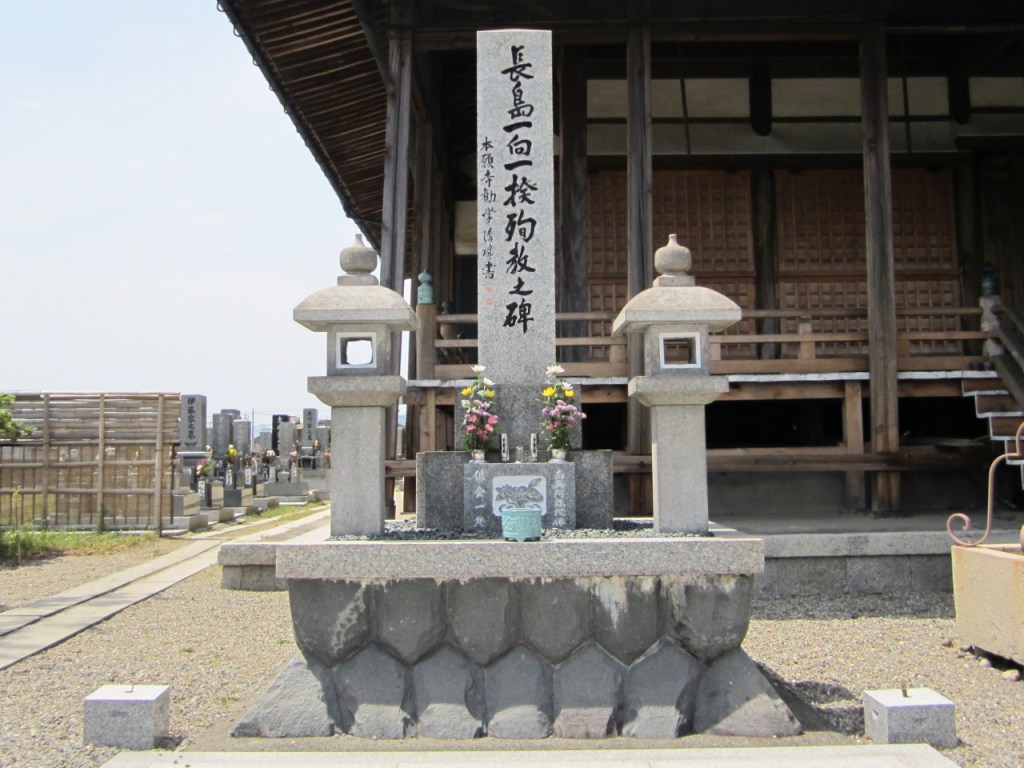
    A memorial to those who were killed during the fall of Nagashima.
    立花左近 – 投稿者自身による著作物, CC 表示-継承 3.0, https://commons.wikimedia.org/w/index.php?curid=20094400による

    With Nagashima subdued, Nobunaga turned his attention to the Takeda, who had launched a series of relatively small-scale invasions throughout 1574, and by April 1575, were besieging the Tokugawa-controlled fortress at Nagashino. What followed was one of the most heavily mythologised battles of the era, and even today, many of the details are open to debate, but what is not in doubt is that the Battle of Nagashino inflicted a mortal wound on the Takeda. They never again posed a serious strategic threat to Nobunaga’s ambitions.

    One of his other long-term enemies was the Temple of Hongan-ji, the spiritual centre of the widespread Ikko-Ikki movement. The movement had been severely weakened by the loss of Nagashima, and in late Summer 1575, Nobunaga crushed the Echizen Ikko-Ikki, further weakening Hongan-ji’s power. This turn of events allowed Nobunaga to establish a short-lived peace in the territory he controlled.

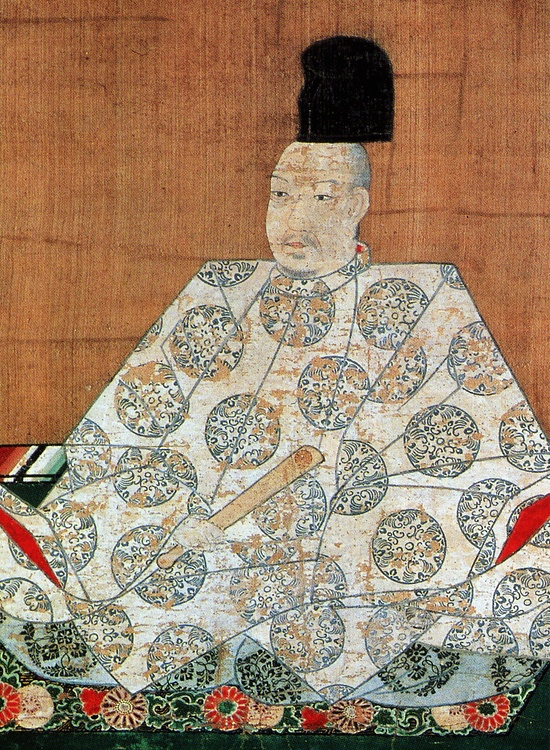
    Emperor Ogimachi (r 1557-1586) was Emperor for most of Nobunaga’s rise to power.

    In November 1575, Nobunaga was appointed Dainagon, and Ukone no Taisho, Chief Councillor, and General of the Right, respectively, positions in the Imperial court which established his position, and right to rule the country (in the Emperor’s name, of course) Around this time Nobunaga also began distributing territory and other titles to his followers on behalf of the Emperor, and it is from this point that historians generally agree that Nobunaga gave up the pretence of supporting the Ashikaga, and began eyeing the position for himself. In light of this, he officially recognised his son, Nobutada, as his heir and gave orders for the construction of a new fortress at Azuchi.

    It couldn’t last, however, and in Spring 1576 Ishiyama Hongan-ji was in arms against him again, supported by a loose coalition of powerful clans, and at least nominally acting on behalf of the exiled Shogun, Yoshiaki. Initial attempts by Oda forces to subdue Hongan-ji failed, but when Nobunaga himself arrived, he won a decisive victory at the Battle of Tennoji, and subsequently laid siege to the vast Ishiyama temple complex.

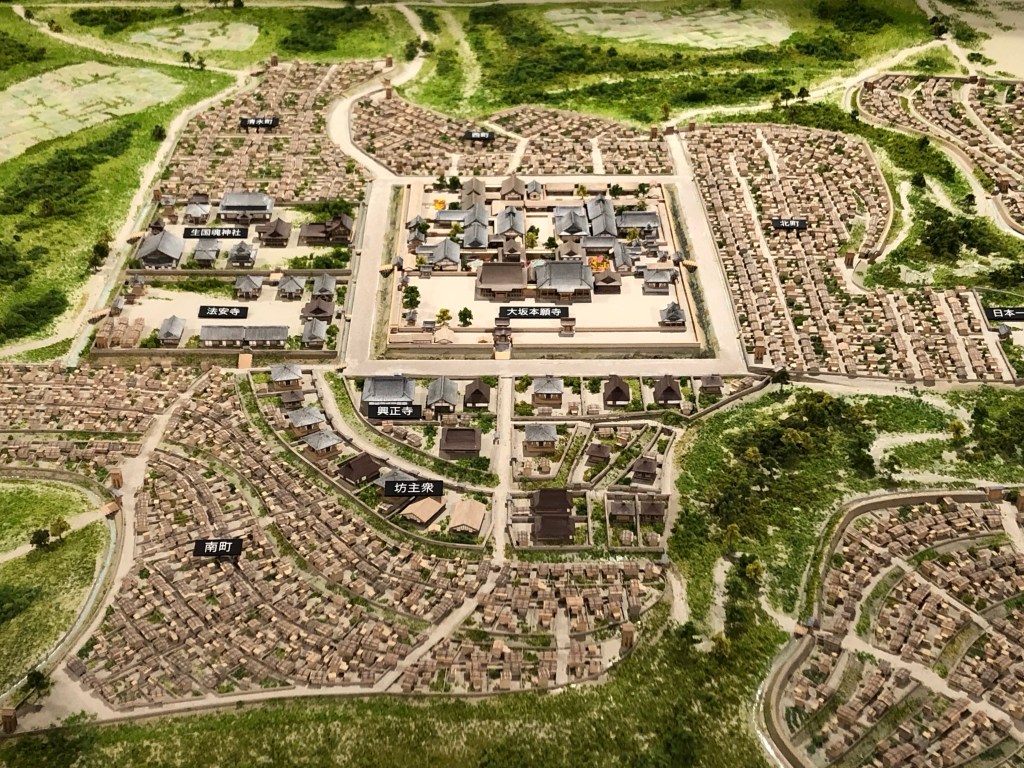
    This modern recreation shows that the Ishiyama Hongan-ji complex was more akin to a fortified town than a temple.

    Nobunaga might have hoped to repeat his success at Nagashima, but those hopes were to be dashed when a fleet from the Mori Clan destroyed the Oda blockade at the Battle of Kizugawaguchi in August 1576, ensuring that, for the time being, supplies would continue to flow into Ishiyama, and the siege would drag on.

    Meanwhile, in 1577, Nobunaga led an army into Kii Province and forced the surrender of the Saika Clan before withdrawing, only to then have to face a rebellion from the Matsunaga Clan in Ise Province, which was put down in characteristically brutal fashion, with the castle burned, and its occupants forced to commit Seppuku.

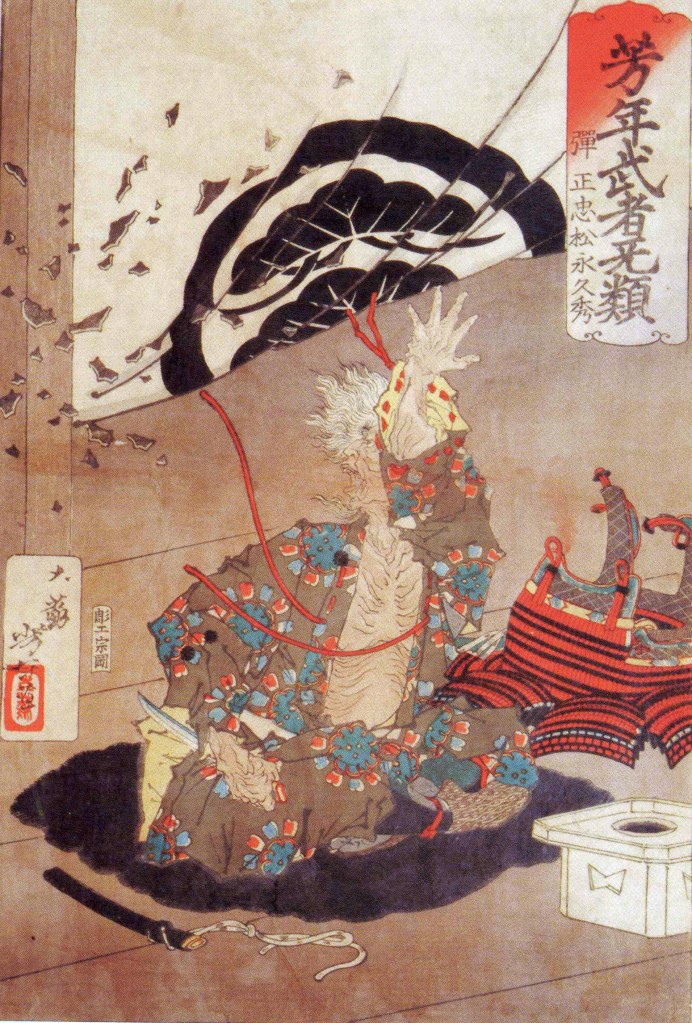
    This image depicts Matsunaga Hisahide at the moment of his death. The story goes that Nobunaga offered to spare him in exchange for a rare tea kettle. In response, Hisahide is supposed to have smashed the kettle to pieces before killing himself.

    From 1578 to 1580, Nobunaga was forced to contend with the powerful Mori Clan and their allies for control of Harima Province. Meanwhile, his vassal, Akechi Mitsuhide, successfully subdued the provinces of Tamba and Tango. In late 1580, Nobunaga forced the surrender of Arioka and Miki Castles, bringing the whole of Harima under his control.

    Meanwhile, the Second Battle of Kizugawaguchi in December 1578 reversed the strategic situation in the seas around Ishiyama (Osaka Bay), when the rebuilt Oda navy inflicted a decisive defeat on the Mori fleet, finally cutting Ishiyama off completely. The siege would last until 1580, however, and it would eventually take an Imperial Order to convince the leadership to surrender, in exchange for being allowed to leave.

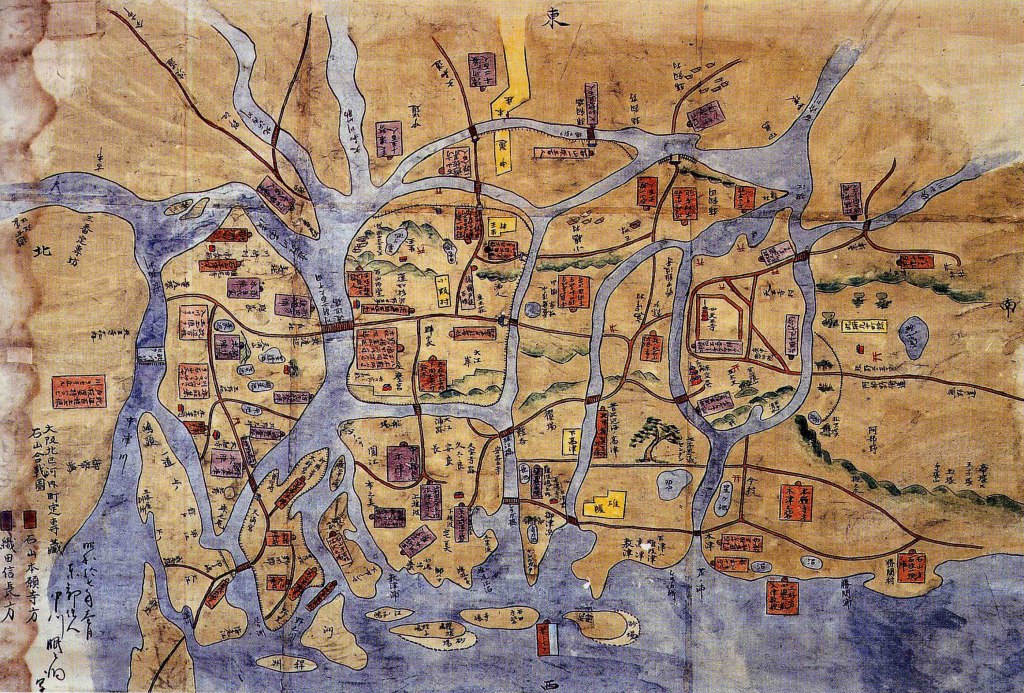
    A semi-contemporary image of Ishiyama Hongan-ji during the siege.

    War was never far away, but as 1581 dawned, Nobunaga was stronger than any Daimyo had ever been, and it was seriously possible that if anyone were to bring an end to the Sengoku Jidai and reunite the country, it would be him. However, he still had a few more rivals to overcome first.

    The Battle of Nagashino had been a death blow to the Takeda, but as late as 1582, they were still clinging on, and now Nobunaga made the decision to end them once and for all. Gathering a force of some 100,000 and supported by his ally Tokugawa Ieyasu, Nobunaga invaded Takeda territory in early 1582. The campaign was almost too easy, as Takeda resistance crumbled almost immediately, forts often surrendered without a fight, or after only a token display of defiance, and many former Takeda retainers simply switched sides, or else ran away from the advancing Oda.

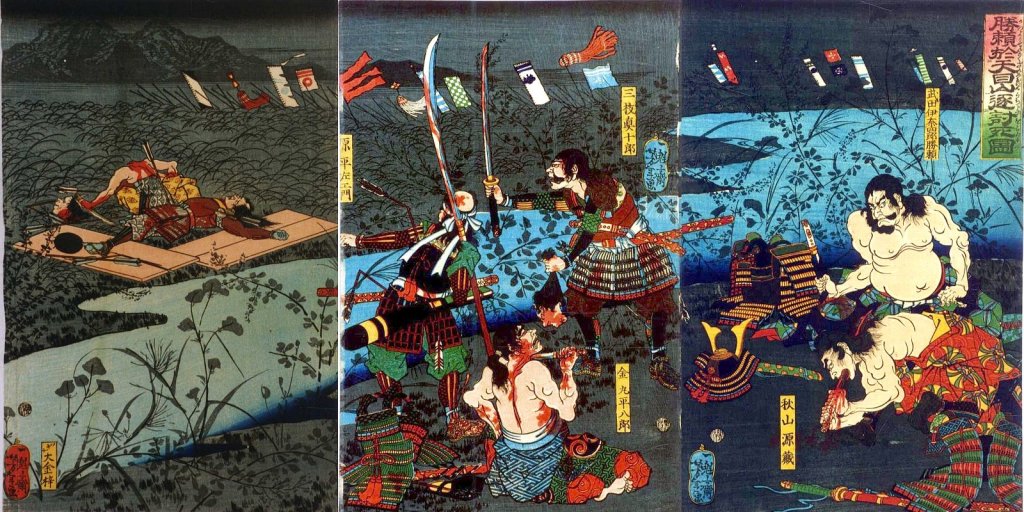
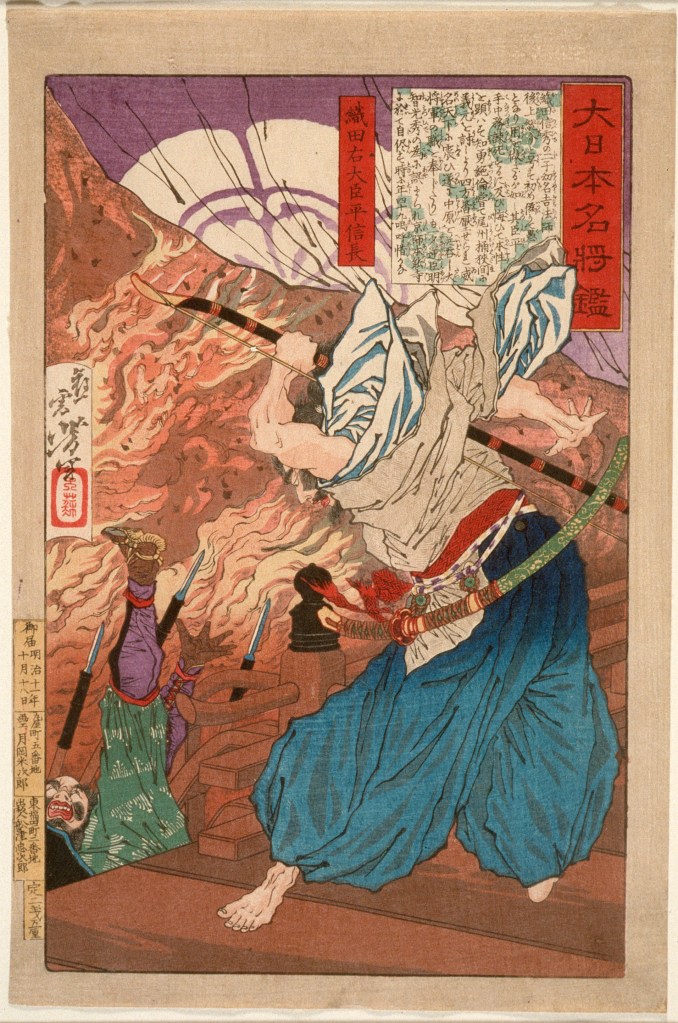
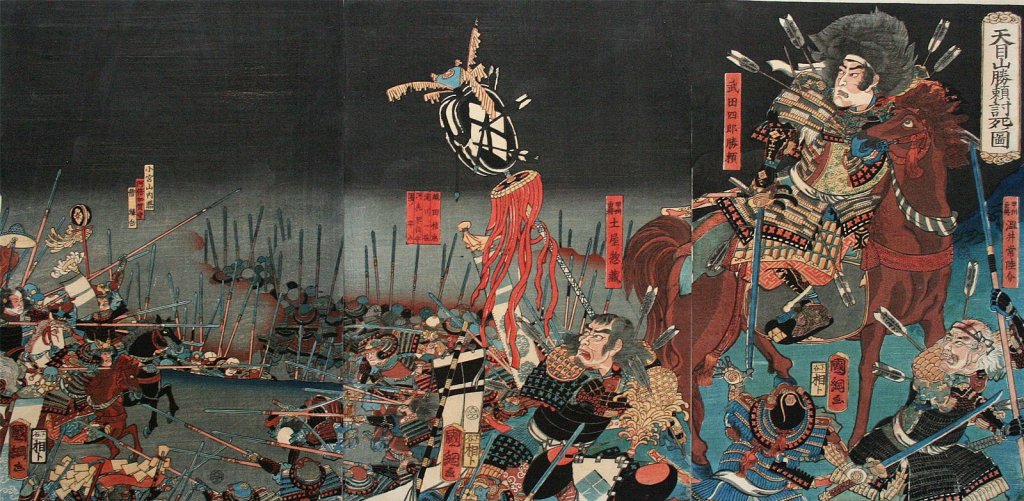
    A heavily stylised (and much later) depiction of the end of Takeda Katsuyori, whose death would signal the end of his clan.

    The Takeda eventually stood their ground at the formidable Takato Castle, but, despite its reputation, it was taken quickly, and what remained of the Takeda began to melt away. Eventually, Takeda Katsuyori and his son Nobukatsu were trapped at Tano (modern Tsuru, Yamanashi Prefecture) and forced to commit Seppuku, bringing an end to the Takeda line and any hope of resistance to Nobunaga.

    With the Takeda gone, Nobunaga took some time to reorganise the newly conquered territories, and then headed home through the lands of his ally Tokugawa Ieyasu, who laid on entertainments, refreshments, and accommodation, all purpose-built for Nobunaga’s visit.

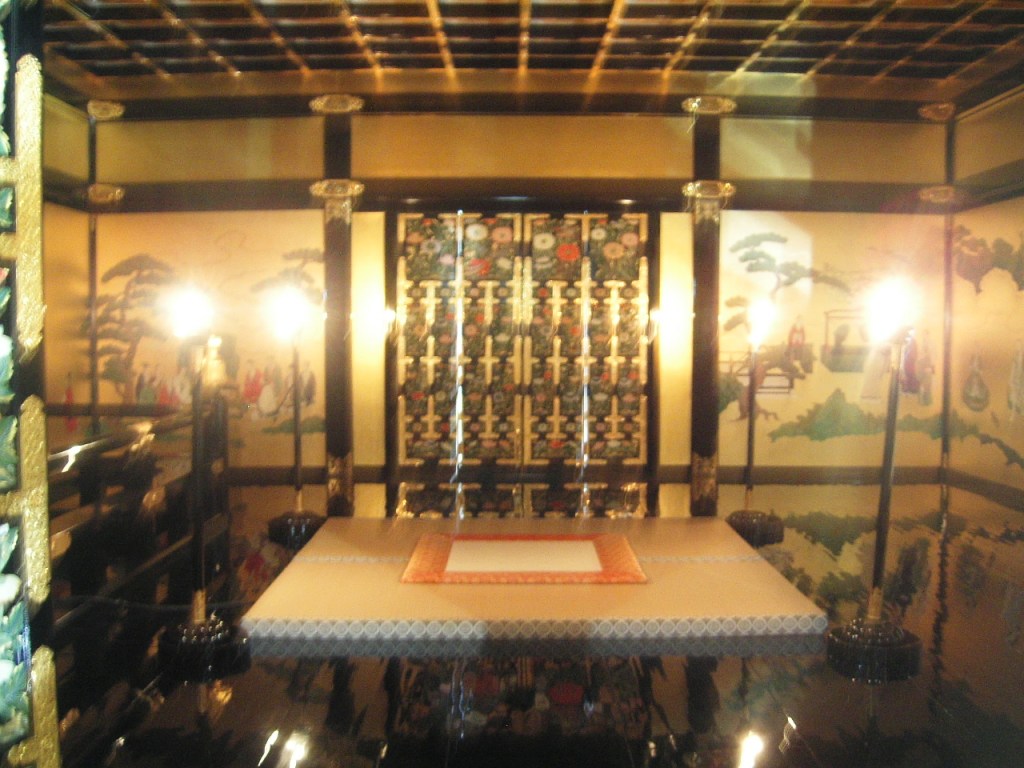
    A reconstruction of Nobunaga’s ‘throne’ at Azuchi.
    日本語版ウィキペディアのMaakunさん – 原版の投稿者自身による著作物, CC 表示-継承 3.0, https://commons.wikimedia.org/w/index.php?curid=115518317による

    By Spring, Nobunaga was back at his base at Azuchi, from where he made plans to invite the Emperor for a formal visit, and rumours began that the court was about to appoint him Shogun, or else some other senior position. The exact nature of this appointment and Nobunaga’s receptiveness to it are unclear, as the sources don’t agree on whether anything was offered at all, let alone what Nobunaga said about it. The Imperial visit was supposedly arranged for the following year, but again, the sources are scant.

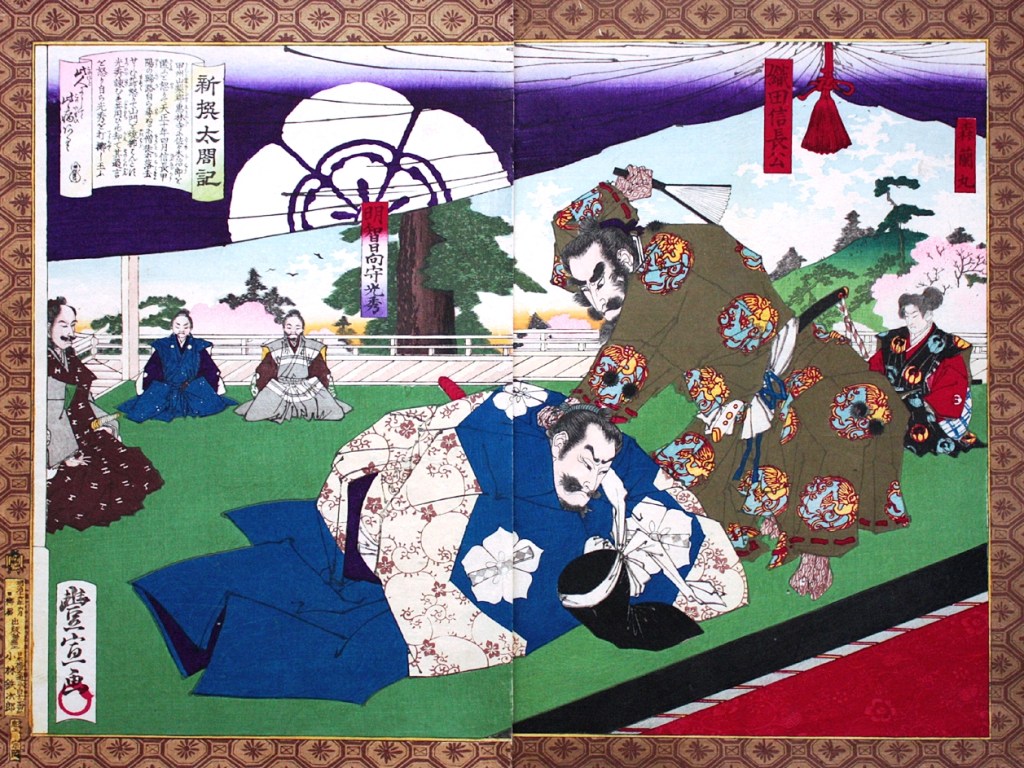
    During this brief period of peace, Nobunaga is supposed to have announced his plans to conquer Shikoku from the Chosokabe. One of his retainers, Akechi Mitsuhide, was apparently unhappy about this, as he had previously acted as an intermediary between Nobunaga and the Chosokabe. Mitsuhide was further agrieved when Nobunaga ordered him to provide entertainment for the visiting Tokugawa Ieyasu. The story goes that Nobunaga accused Mitsuhide of doing a poor job (rightly or not) and launched into a public dressing-down of Mitsuhide that ended (according to some sources) with a literal kick in the backside.

    A 19th-century imagining of Nobunaga publicly chastising Mitsuhide.

    Given the importance of public image in Japan, it is easy to see why Mitsuhide might have felt a genuine grievance over this treatment. There is also a story that Mitsuhide’s mother had once served as a hostage for a truce that Nobunaga had gone on to break, resulting in the poor woman’s death. Whilst some of these stories are poorly sourced at best, what is known is that by the summer of 1582, Akechi Mitsuhide had had enough.

    Sources
    https://ja.wikipedia.org/wiki/%E7%B9%94%E7%94%B0%E4%BF%A1%E9%95%B7
    https://en.wikipedia.org/wiki/Tsuru,_Yamanashi
    https://ja.wikipedia.org/wiki/%E9%AB%98%E9%81%A0%E5%9F%8E
    https://ja.wikipedia.org/wiki/%E7%94%B2%E5%B7%9E%E5%BE%81%E4%BC%90
    https://ja.wikipedia.org/wiki/%E4%B8%89%E6%9C%A8%E5%90%88%E6%88%A6
    https://ja.wikipedia.org/wiki/%E4%BF%A1%E8%B2%B4%E5%B1%B1%E5%9F%8E
    https://ja.wikipedia.org/wiki/%E7%B4%80%E5%B7%9E%E5%BE%81%E4%BC%90
    https://ja.wikipedia.org/wiki/%E5%A4%A9%E7%8E%8B%E5%AF%BA%E3%81%AE%E6%88%A6%E3%81%84_(1576%E5%B9%B4)
    https://ja.wikipedia.org/wiki/%E7%9F%B3%E5%B1%B1%E5%90%88%E6%88%A6
    https://ja.wikipedia.org/wiki/%E7%AC%AC%E4%B8%80%E6%AC%A1%E6%9C%A8%E6%B4%A5%E5%B7%9D%E5%8F%A3%E3%81%AE%E6%88%A6%E3%81%84
    https://ja.wikipedia.org/wiki/%E7%AC%AC%E4%BA%8C%E6%AC%A1%E6%9C%A8%E6%B4%A5%E5%B7%9D%E5%8F%A3%E3%81%AE%E6%88%A6%E3%81%84
    https://ja.wikipedia.org/wiki/%E9%95%B7%E5%B3%B6%E4%B8%80%E5%90%91%E4%B8%80%E6%8F%86