Tag: Cloistered Emperor

  • Peace? I hate the word…

    Peace? I hate the word…

    By the end of the 14th Century, the Ashikaga Shogunate might have been forgiven for thinking it was in a strong position. Under Shogun Yoshimitsu, Kyushu had been pacified, the power of the mighty clans close to the capital had been curtailed, and in 1392, a reconciliation had been arranged between the Northern and Southern Imperial Courts, bringing an end to the Nanbokucho Period.

    In 1395, Yoshimitsu officially retired from the Shogunate to become a monk, and although he retained actual power, the succession of his son, Yoshimochi, was secure. Then, in 1399, the Ouchi Clan rose in rebellion in Kyushu, and in crushing them, the Ashikaga Shoguns no longer faced any serious opposition in the South or West of the realm.

    Around this time, Yoshimitsu sought recognition as “King of Japan” from the Ming Emperor of China, as he had long been an admirer of Chinese culture and politics. Initially, the Chinese refused to recognise him, because, as Shogun, Yoshimitsu was (technically) a servant of the Emperor, whom the Chinese were more inclined to recognise as King.

    When Yoshimitsu retired as Shogun, however, he retained all the power of his position, but was now free of his position as a subordinate of the Emperor. This, combined with a promise to suppress the often serious problem of piracy (wako) in the waters around Korea, persuaded the Chinese to formally recognise Yoshimitsu as “King” and restart trade between Japan and China, in exchange for regular Japanese tribute as ‘subordinates’ to the Ming.

    This trade was not as we might imagine it, where merchants buy and sell according to the laws of supply and demand. Instead, as the Chinese viewed themselves as the centre of the world, they viewed trade as being based on tribute to their Emperor, with gifts being bestowed in return.
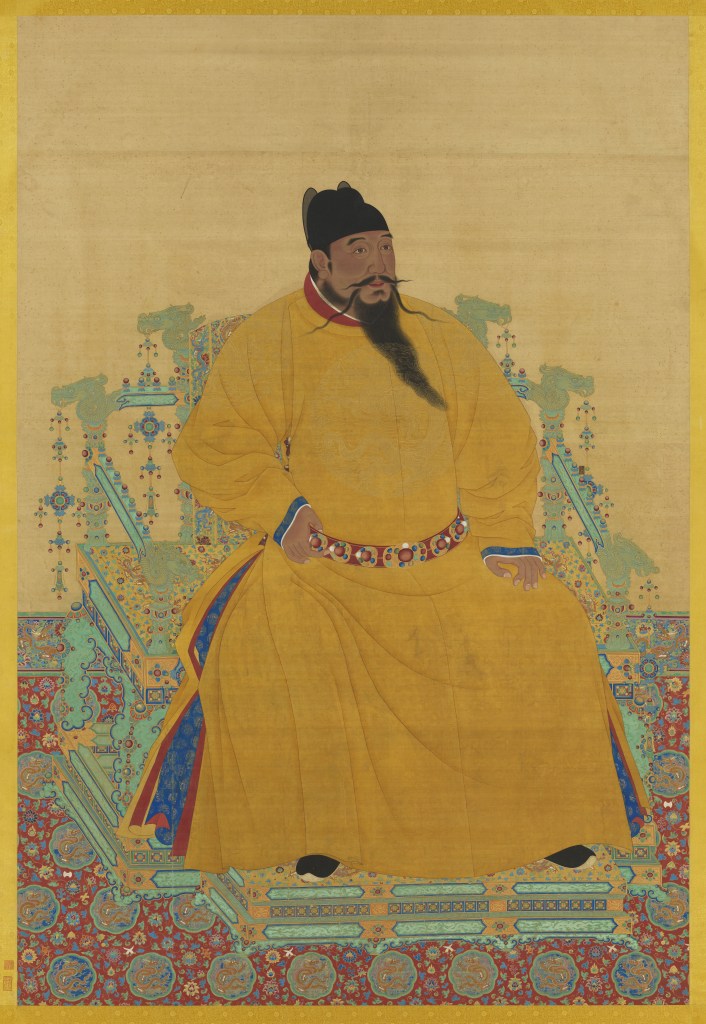
    The Yongle Emperor, who all were expected to bow to, especially if they wanted to trade with China.

    This worldview, combined with the Chinese desire to show off their wealth, meant that Japanese trade missions would often end up with such quantities of goods that they were able to secure enormous profits. One example comes from the merchant, Kusuba Sainin, who claimed that thread purchased for 250 mon in China could easily be sold for 5000 mon back in Japan.

    (The mon is a Japanese unit of currency that wasn’t very well formalised before the Edo Period, making modern purchasing power hard to figure out, but the fact that this represents around 2000% profit gives you an idea of how lucrative this trade could be.)

    These ships were only sent relatively infrequently; in fact, between 1404 and 1547, only 17 trade missions (made up of 84 ships in total) were sent, but the influx of Chinese material and cultural goods, and the Shogunate’s 10% levy on all goods arriving in Japan, meant that it was a major source of revenue and prestige.

    The trade was politically unpopular, however. The Chinese required tribute and acknowledgement of China’s supreme position in the world. Though Yoshimitsu likely viewed this as a diplomatic nicety rather than an actual submission, it didn’t sit right with the prideful Samurai or the Imperial Court, who held that their Emperor was a literal son of heaven, whereas the Chinese Emperor held a mandate that could be lost.

    While Yoshimitsu was alive and politically active, these concerns were largely kept private, but the discontent remained, and Yoshimitsu, it may surprise you to learn, wasn’t going to live forever.

    While he lived, however, Yoshimitsu invested this newfound wealth and power in what became known as Kitayama Culture. A unique blend of Imperial, Samurai, and Chinese aesthetics, it gave birth to many famous aspects of Japanese culture that are still recognisable, such as Noh Theatre and even Origami (which began as a much more formalised system than what we may be used to today).

    Like many before and after him, Yoshimitsu also invested heavily in architecture, aiming to promote the glory and prestige of his family through buildings that were more spectacular than any that came before. Most famously, the Golden Pavilion Temple, Kinkaku-ji, a landmark so famous that the actual name for the temple, the pavilion, is in (Rokuon-ji), is often forgotten.
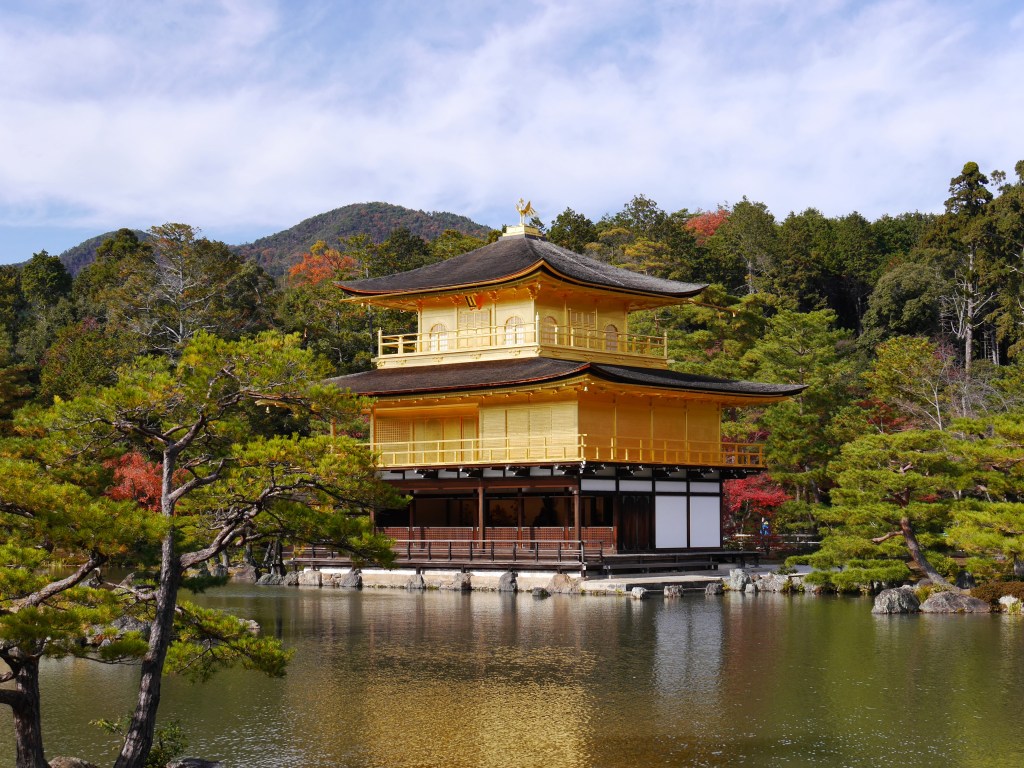
    The Golden Pavilion in Kyoto, so famous that its name is synonymous with Japanese temples the world over.
    By Jaycangel – Own work, CC BY-SA 3.0, https://commons.wikimedia.org/w/index.php?curid=33554210

    As we discussed last time, Yoshimitsu had an unusually close relationship with the Imperial Court, taking up several positions in the Imperial Government, and running things in such a way that it often became unclear exactly when Imperial orders weren’t simply Shogunate ones.

    This came to something of a logical conclusion in 1404 when Yoshimitsu began lobbying for the position of Retired Emperor. You may recall that, in the days before the Shoguns, Emperors would retire to become insei, or Cloistered Emperors, retaining all the actual power, whilst no longer being constrained by the often burdensome nature of an Emperor’s religious responsibilities.

    In the midst of this politicking, in April 1408, Yoshimitsu became ill, dying at the age of 51 in May of the same year. A few days after his passing, the Imperial Court offered to bestow the title of Retired Emperor on him posthumously; however, the new Shogun, Yoshimochi, declined. It has been speculated that this was agreed to previously, as a way to definitely end the Shogunate’s pretensions to the title.

    Either way, Yoshimitsu was dead, and things began to unravel quite quickly. Though Yoshimochi had been named Shogun in 1394, when his father had ‘retired’, his actual accession to the title didn’t go unchallenged. Some suggested that Yoshimitsu had actually preferred his younger son for the role, but had died before updating his will.

    Because of this, the Shogun’s Deputy (kanrei), Shiba Yoshimasa (of the once powerful, and now resurgent Shiba Clan), pushed to have Yoshimochi recognised as Shogun, and in the short term, a crisis was avoided.

    Shiba Yoshimasa had been a powerful figure in the Shogunate for decades, and he had a huge influence over the new Shogun. However, by the time Yoshimochi actually gained power, Yoshimasa was an old man, and in August 1409, he handed the position of Kanrei over to his grandson. The fact that he was a boy of 11 was apparently not a problem, given that Yoshimasa intended to keep real power anyway.

    Whether or not he meant to groom his grandson for the role is unclear, because less than a year later, Yoshimasa was dead and the power of the Shiba Clan at the centre of government was at an end.
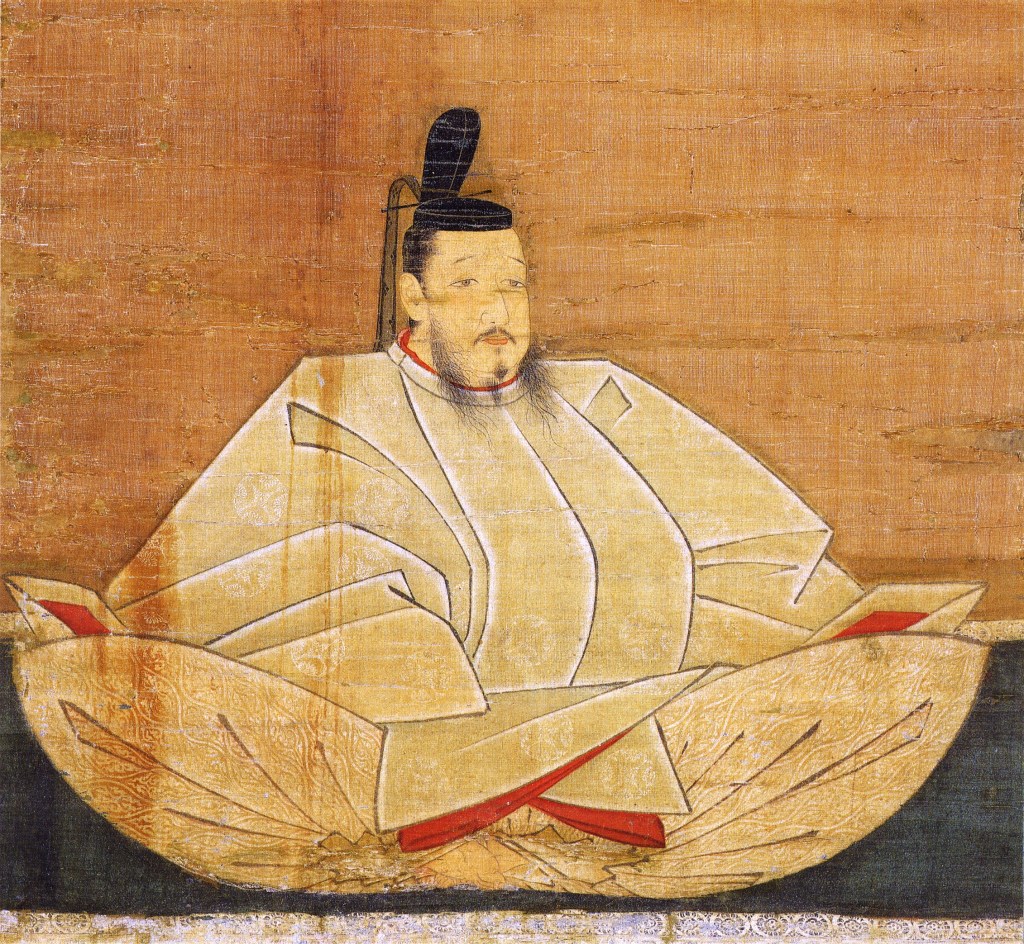
    Ashikaga Yoshimochi, the Fourth Shogun, and very much not his father’s son.

    Unfortunately for the Ashikaga, Yoshimochi turned out not to be his father’s son. No longer under Yoshimasa’s influence, he ended the Chinese trade in 1411 (it would be reinstated later), and in 1415, he faced a serious uprising from loyalists of the former Southern Court, showing that that particular problem had not been resolved.

    More seriously, in 1416, a major rebellion broke out in the Kanto Region, when the locally powerful Uesugi Clan rose up against the Kamakura Kubo, the semi-autonomous military governor in the region.

    Now, this is a bit complex, so pay attention. The Kamakura Kubo had, since the formation of the Ashikaga Shogunate, been in the hands of a branch of the Ashikaga Family, descended from one of the sons of the first Ashikaga Shogun, Takauji. Therefore, as with a lot of Japanese history it was possible to have Ashikaga on both sides of any conflict, going forwards I’ll make sure to be clear which branch of the family I’m talking about, but it’s a bit of headache.

    Confused genealogy aside, the Kubo was, much like their cousins in Kyoto, surrounded by Samurai Clans who were often stronger than the local government. In the Kanto, the most powerful family was the aforementioned Uesugi, and they’d been a real thorn in the side of the Kamakura Ashikaga from the start.

    The Uesugi had often held the title of Kanto Kanrei, which is basically the Shogun’s Deputy in the Kanto Region, in which Kamakura lies. Unsurprisingly, the Kamakura Ashikaga and the Uesugi spent most of their time butting heads, and in 1415, a particularly serious disagreement led to the Uesugi being stripped of the kanrei position.

    You can probably guess what happened next. The Uesugi refused to accept that, and one thing led to another until in late 1416, they rose in rebellion, taking Kamakura in October. Confused reports reached Kyoto later in the month, some of which suggested that the Kamakura Kubo, Mochiuji, was already dead.

    When it became clear that he was, in fact, alive, the Shogun dispatched an army made up of loyal clans to the Kanto to put the rebellion down. This they did, and the Uesugi forces were decisively defeated at the Battle of Seyahara in January 1417, after which their power was severely curtailed.

    In the aftermath, Shogun Yoshimochi accused his brother, Yoshitsugu (who had been that potential rival to the throne we mentioned earlier), of being complicit in, or even behind the rebellion. Yoshitsugu pleaded his innocence (as you do), but, fearing for his life, fled the capital and became a monk.

    Ashikaga Yoshitsugu, who was accused of plotting rebellion by his brother, and killed in 1418.

    That didn’t save him, and in 1418, he either committed suicide or was murdered on his brother’s orders. The man accused of his assassination was later denounced for apparently having an affair with one of the Shogun’s concubines and killed himself, which is just one of those salacious side stories that make studying history such a joy.

    The seeds of more trouble in the Kanto were sown when Mochiuji pursued a policy of revenge against those who had rebelled, despite the Shogun’s official desire for reconciliation. Direct conflict would be a while in coming, but the increasingly defiant Kanto Lords could not be ignored forever.

    Sources

    https://ja.wikipedia.org/wiki/%E8%B6%B3%E5%88%A9%E7%BE%A9%E5%97%A3
    https://ja.wikipedia.org/wiki/%E5%8C%97%E5%B1%B1%E6%96%87%E5%8C%96
    https://ja.wikipedia.org/wiki/%E6%97%A5%E6%98%8E%E8%B2%BF%E6%98%93
    https://ja.wikipedia.org/wiki/%E6%A5%A0%E8%91%89%E8%A5%BF%E5%BF%8D
    https://en.wikipedia.org/wiki/Kinkaku-ji
    https://ja.wikipedia.org/wiki/%E8%B6%B3%E5%88%A9%E7%BE%A9%E6%8C%81
    https://ja.wikipedia.org/wiki/%E4%B8%8A%E6%9D%89%E7%A6%85%E7%A7%80%E3%81%AE%E4%B9%B1
    https://ja.wikipedia.org/wiki/%E8%B6%B3%E5%88%A9%E6%8C%81%E6%B0%8F#%E5%AE%98%E6%AD%B4
    https://ja.wikipedia.org/wiki/%E6%96%AF%E6%B3%A2%E7%BE%A9%E5%B0%86#%E7%AE%A1%E9%A0%98%E5%B0%B1%E4%BB%BB%E3%81%A8%E5%A4%B1%E8%84%9A
    https://ja.wikipedia.org/wiki/%E9%81%A3%E6%98%8E%E8%88%B9

  • Kamakura III – The Jokyu War

    We’ve already talked about Imperial decline during the Heian Period. Over many centuries, central control eroded, until eventually the provinces proved to be ungovernable. Eventually, the power of the Imperial Court was usurped by Minamoto no Yoritomo, who established the Kamakura Shogunate in Kamakura, obviously.

    You may not be surprised to hear that the Emperor wasn’t best pleased with this turn of events. Although the actual power of the Emperor had been largely theoretical for decades, there had always been a veneer of ‘Imperial’ authority. The rise of the first Shogunate, however, did away with that.

    With supreme military power firmly in Yoritomo’s hands, there was little the Emperor could do to change the status quo. However, as we’ve discussed, Yoritomo’s heirs proved not to be the model of their father. By the dawn of the 13th Century, the Kamakura ‘Shogunate’ was in fact ruled by regents, or Shikken, from the Hojo Clan.

    In 1219, the regent was Hojo Yoshitoki, who shared power with his influential sister Hojo Masako, the so-called ‘Nun Shogun’. That year, Masako’s son, Sanemoto, the third Shogun, was assassinated, bringing an end to the line of Minamoto Shoguns (Yoritomo and his two sons). Although the Hojo were already in effective control, the end of the ‘legitimate’ line of Shoguns presented an apparent opportunity for their enemies to challenge them.

    Emperor Go-Toba

    In a period where Emperors were often well-decorated figureheads, Go-Toba stood out. He was highly educated, as most courtiers were, but he had also shown skill at martial arts, earning him respect and loyalty from warrior families in the west and north. Unfortunately for him, the Throne still drew its income from its land holdings, and when the Shogunate appointed officials to oversee those holdings, the money taken in taxes often didn’t find its way to the Emperor.

    Emperor Go-Toba, whose attempts to restore Imperial power would start the Jokyu War.

    After Sanemoto’s assassination in 1219, the Hojo approached Go-Toba about the possibility of one of the Emperor’s sons becoming the next Shogun. Go-Toba attempted to negotiate, seeking the removal of Shogunate officials from Imperial holdings.

    The Shogunate sent a force of 1000 men under Yoshitoki’s brother in an attempt to intimidate the Emperor. Go-Toba wasn’t easily scared, however, and negotiations broke down, although the Emperor would offer a concession; he would allow a member of the Imperial family to become Shogun, as long as it wasn’t a prince of the main royal line.

    The Hojo were satisfied with this, and Kujo Yoritsune, who was only a little over a year old, was chosen as the fourth Shogun. However, because Yoritsune was a baby, the position of the Hojo as regents was secure, and, for a time at least, peace endured.

    The elevation of a member of the Imperial house to the position of Shogun did nothing about the underlying issues, however, and in July 1219, just a few months after the previous negotiations, the military governor of the area around Kyoto, (who had been appointed by the Shogun) was attacked and killed by warriors acting on the Emperor’s orders.

    Some records say that the governor had been planning to launch a coup and make himself Shogun, with Go-Toba, made aware of the plot, acting to stop the plot before it came to fruition. Other sources, however, point out how unlikely it is for Go-Toba to have had a Shogunate official killed as a favour to the Shogun, and it is more likely that the governor either discovered, or was made aware of, the Emperor’s plans, and was removed accordingly.

    The unfortunate fellow apparently took his own life when his residence (which was within the grounds of the Imperial Palace) was surrounded and burned by Imperial loyalists, and whatever the reasons, this was a direct attack by forces representing the Emperor on those representing the Shogun. The Emperor then asked the Shogunate, Court Officials, and local temples and shrines to donate money to help rebuild the burned residence, and, perhaps unsurprisingly, most of them refused to pay up.

    During rebuilding work, rumours spread that Go-Toba was quietly gathering allies and raising an army. It was also alleged that he had asked shrines and temples around the capital to invoke the power of the gods on the Emperor’s behalf, which was quite the provocation, apparently.

    War Begins

    Then, in Spring 1221, Go-Toba gathered troops in the capital under the pretext of protecting religious sites and ceremonies. On May 15th, he dropped the pretext; however, when forces loyal to the Imperial Side attacked the offices of the Shogun in Kyoto, burning them and killing the officials, which, as declarations of war go, is pretty definitive.

    On the same day, Go-Toba issued a formal Imperial decree, ordering all the warriors of the nation to arrest Yoshitoki, who was declared an outlaw and enemy of the court. Within a few days, warriors from across western Japan had risen against the Shogun, and Go-Toba believed, rather flippantly, that the issuance of an Imperial decree would fatally undermine the Shogunate.

    This is one of those times that later writers absolutely love to dramatise. It’s all honour, loyalty, duty unto death, etc. but the reality is that, despite an Imperial Decree, and a counter-decree from Hojo Masako, the majority of the warriors across the nation (those who were directly tied to either side through blood or obligation) sided with whoever they thought would benefit them the most if they won.

    In those calculations, the Shogunate had the advantage; the Shogun had the right to distribute land, and most of the warrior families expected to be rewarded with the lands and titles of those who had sided with the Emperor and the court, who was generally believed to have been likely to favour himself and his courtiers, in the event of their victory.

    So, for all their vaunted ‘honour’, the Samurai would (and not for the last time) side with those they thought would give them the best deal, and by the time they marched, the armies loyal to the Shogun are said to have numbered nearly 200,000.

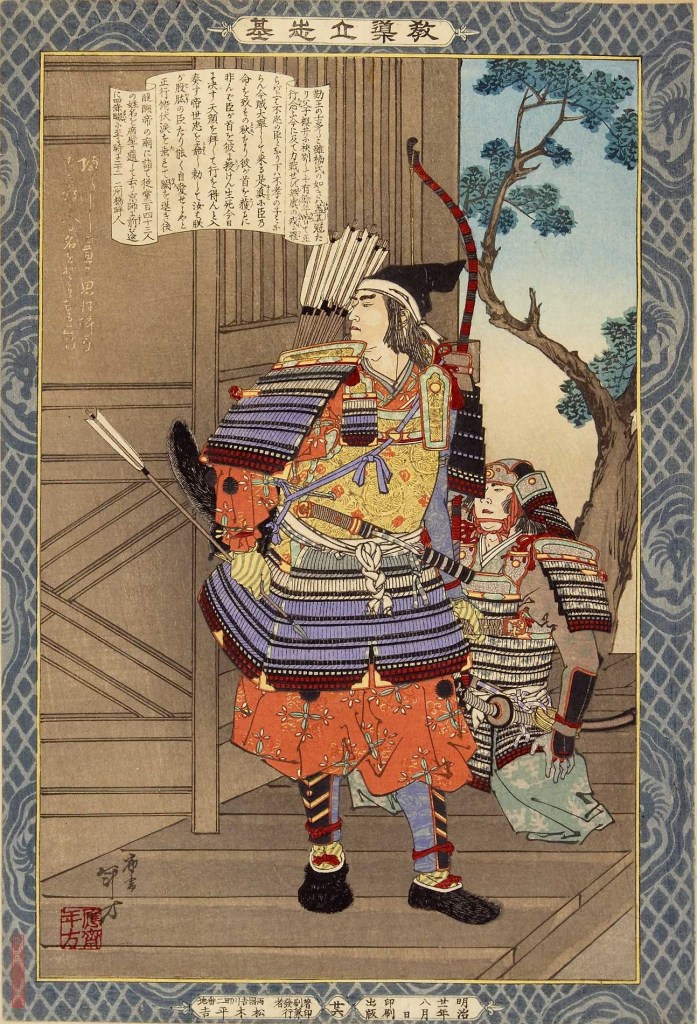
    A later illustration of a Samurai as they might have appeared during the Jokyu War.

    The Shogunate army was actually three separate forces, with 40,000 men heading by a northern route, another force of 50,000 heading through the mountains, and the third, largest force of 100,000, following the main Tokaido Road, with all three marching on Kyoto.

    The Imperial side seems to have been caught off guard by first the size, then the speed of the Shogunate forces. It appears that the Emperor had believed his decree would be enough to secure mass defections, and when the opposite occurred, the forces loyal to the throne were out of position and hugely outnumbered.

    Resistance was scattered and ineffective, with some sources suggesting that the main army took just 22 days to complete the march from Kamakura to Kyoto, which might be an exaggeration, but goes some way to highlighting how badly prepared the Imperial Army was.

    Though the court was able to gather warriors from Western Japan, the numbers were nowhere near what they had expected, and besides, the rapid advance of the Shogunate army meant that reinforcements wouldn’t have been able to reach the capital in time.

    In desperation, Go-Toba went to Mt Hiei, on the outskirts of Kyoto, and pleaded with the famed warrior monks for support. The monks, partly out of opposition to the Emperor, and partly due to their fear of the strength of the Shogun, refused to help, and Go-Toba was left with an army of around 18,000 to defend the capital.

    Outnumbered 5 to 1, Imperial forces took position near Uji, and on June 13th, another Battle of Uji (the third in 50 years) took place. Despite brave resistance, the Imperial side was overwhelmed, and on June 15th, Shogunate forces were in Kyoto. What followed was an orgy of violence, as the houses of Imperial officials and supporters were ransacked and burned, and the citizens suffered at the hands of the rampaging army.

    As Kyoto burned, Go-Toba sent a message to the Shogunate army, withdrawing the Imperial order to arrest Yoshitoki, and blaming the whole thing on his ministers and advisors. Abandoned by the Emperor, some of his supporters fought on in vain, but the final defeat was inevitable, and by July, serious fighting was over, with a few fugitives evading capture until October.

    In the aftermath, Go-Toba was exiled, and eventually replaced as Emperor by Go-Horikawa, and the estates of those who had been killed fighting for the Court, or proscribed afterwards, were distributed to the Shogun’s supporters. Direct control was established over Kyoto, and any semblance of independent military strength was ended; every warrior was now the direct vassal of the Emperor, or else.

    The Shogunate also took control of the purse strings for the court. Prior to the war, the Emperor had held land in his own right and drawn income from it, but now, those lands were ruled directly by the Shogun, and the government in Kamakura could now decide how much, if any, cash the Emperor would get.

    The end of the Jokyu War would mark the zenith of Shogunate, and therefore Hojo power, and for a time, they would rule more or less unchallenged, but some 60 years later, a new threat would emerge.

    Since the dawn of the 13th Century, a previously fractured and quarrelsome people had been united under a single ruler and gone on to conquer an empire the likes of which had never been seen. Though this great conqueror was long dead, his sons and grandsons had continued his work, and in 1260, a new ruler was enthroned, one who would go on to make himself master of China and Korea before seeking new conquests across the sea.

    In 1274, Kublai Khan, grandson of the Great Genghis, had ambitions to make himself master of the world, and he cast his eyes on Japan.

    The Mongols were coming.

    Sources
    https://ja.wikipedia.org/wiki/%E6%89%BF%E4%B9%85%E3%81%AE%E4%B9%B1
    https://en.wikipedia.org/wiki/Kamakura_shogunate
    https://en.wikipedia.org/wiki/Azuma_Kagami
    https://en.wikipedia.org/wiki/J%C5%8Dky%C5%AB_War
    https://en.wikipedia.org/wiki/Emperor_Go-Toba
    https://ja.wikipedia.org/wiki/%E5%BE%8C%E9%B3%A5%E7%BE%BD%E5%A4%A9%E7%9A%87