Tag: Decline of Imperial authority

  • Kamakura III – The Jokyu War

    We’ve already talked about Imperial decline during the Heian Period. Over many centuries, central control eroded, until eventually the provinces proved to be ungovernable. Eventually, the power of the Imperial Court was usurped by Minamoto no Yoritomo, who established the Kamakura Shogunate in Kamakura, obviously.

    You may not be surprised to hear that the Emperor wasn’t best pleased with this turn of events. Although the actual power of the Emperor had been largely theoretical for decades, there had always been a veneer of ‘Imperial’ authority. The rise of the first Shogunate, however, did away with that.

    With supreme military power firmly in Yoritomo’s hands, there was little the Emperor could do to change the status quo. However, as we’ve discussed, Yoritomo’s heirs proved not to be the model of their father. By the dawn of the 13th Century, the Kamakura ‘Shogunate’ was in fact ruled by regents, or Shikken, from the Hojo Clan.

    In 1219, the regent was Hojo Yoshitoki, who shared power with his influential sister Hojo Masako, the so-called ‘Nun Shogun’. That year, Masako’s son, Sanemoto, the third Shogun, was assassinated, bringing an end to the line of Minamoto Shoguns (Yoritomo and his two sons). Although the Hojo were already in effective control, the end of the ‘legitimate’ line of Shoguns presented an apparent opportunity for their enemies to challenge them.

    Emperor Go-Toba

    In a period where Emperors were often well-decorated figureheads, Go-Toba stood out. He was highly educated, as most courtiers were, but he had also shown skill at martial arts, earning him respect and loyalty from warrior families in the west and north. Unfortunately for him, the Throne still drew its income from its land holdings, and when the Shogunate appointed officials to oversee those holdings, the money taken in taxes often didn’t find its way to the Emperor.

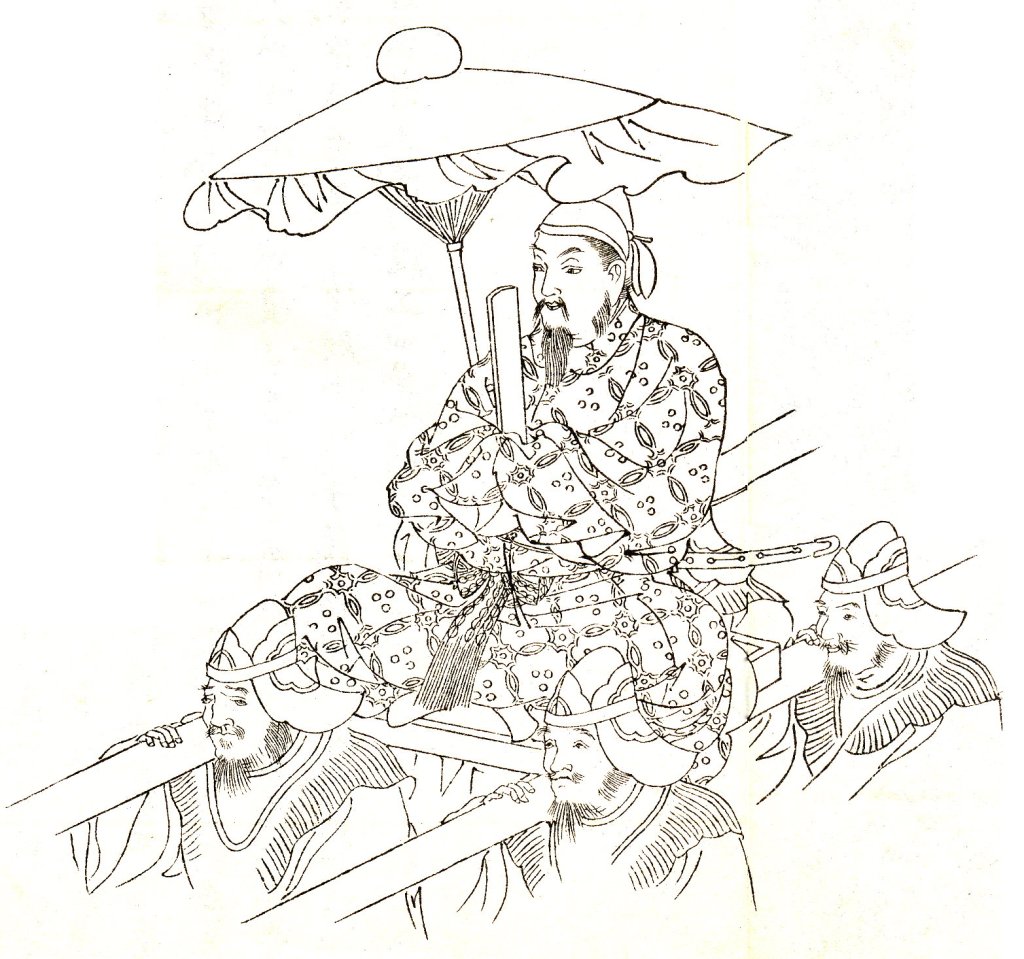
    Emperor Go-Toba, whose attempts to restore Imperial power would start the Jokyu War.

    After Sanemoto’s assassination in 1219, the Hojo approached Go-Toba about the possibility of one of the Emperor’s sons becoming the next Shogun. Go-Toba attempted to negotiate, seeking the removal of Shogunate officials from Imperial holdings.

    The Shogunate sent a force of 1000 men under Yoshitoki’s brother in an attempt to intimidate the Emperor. Go-Toba wasn’t easily scared, however, and negotiations broke down, although the Emperor would offer a concession; he would allow a member of the Imperial family to become Shogun, as long as it wasn’t a prince of the main royal line.

    The Hojo were satisfied with this, and Kujo Yoritsune, who was only a little over a year old, was chosen as the fourth Shogun. However, because Yoritsune was a baby, the position of the Hojo as regents was secure, and, for a time at least, peace endured.

    The elevation of a member of the Imperial house to the position of Shogun did nothing about the underlying issues, however, and in July 1219, just a few months after the previous negotiations, the military governor of the area around Kyoto, (who had been appointed by the Shogun) was attacked and killed by warriors acting on the Emperor’s orders.

    Some records say that the governor had been planning to launch a coup and make himself Shogun, with Go-Toba, made aware of the plot, acting to stop the plot before it came to fruition. Other sources, however, point out how unlikely it is for Go-Toba to have had a Shogunate official killed as a favour to the Shogun, and it is more likely that the governor either discovered, or was made aware of, the Emperor’s plans, and was removed accordingly.

    The unfortunate fellow apparently took his own life when his residence (which was within the grounds of the Imperial Palace) was surrounded and burned by Imperial loyalists, and whatever the reasons, this was a direct attack by forces representing the Emperor on those representing the Shogun. The Emperor then asked the Shogunate, Court Officials, and local temples and shrines to donate money to help rebuild the burned residence, and, perhaps unsurprisingly, most of them refused to pay up.

    During rebuilding work, rumours spread that Go-Toba was quietly gathering allies and raising an army. It was also alleged that he had asked shrines and temples around the capital to invoke the power of the gods on the Emperor’s behalf, which was quite the provocation, apparently.

    War Begins

    Then, in Spring 1221, Go-Toba gathered troops in the capital under the pretext of protecting religious sites and ceremonies. On May 15th, he dropped the pretext; however, when forces loyal to the Imperial Side attacked the offices of the Shogun in Kyoto, burning them and killing the officials, which, as declarations of war go, is pretty definitive.

    On the same day, Go-Toba issued a formal Imperial decree, ordering all the warriors of the nation to arrest Yoshitoki, who was declared an outlaw and enemy of the court. Within a few days, warriors from across western Japan had risen against the Shogun, and Go-Toba believed, rather flippantly, that the issuance of an Imperial decree would fatally undermine the Shogunate.

    This is one of those times that later writers absolutely love to dramatise. It’s all honour, loyalty, duty unto death, etc. but the reality is that, despite an Imperial Decree, and a counter-decree from Hojo Masako, the majority of the warriors across the nation (those who were directly tied to either side through blood or obligation) sided with whoever they thought would benefit them the most if they won.

    In those calculations, the Shogunate had the advantage; the Shogun had the right to distribute land, and most of the warrior families expected to be rewarded with the lands and titles of those who had sided with the Emperor and the court, who was generally believed to have been likely to favour himself and his courtiers, in the event of their victory.

    So, for all their vaunted ‘honour’, the Samurai would (and not for the last time) side with those they thought would give them the best deal, and by the time they marched, the armies loyal to the Shogun are said to have numbered nearly 200,000.
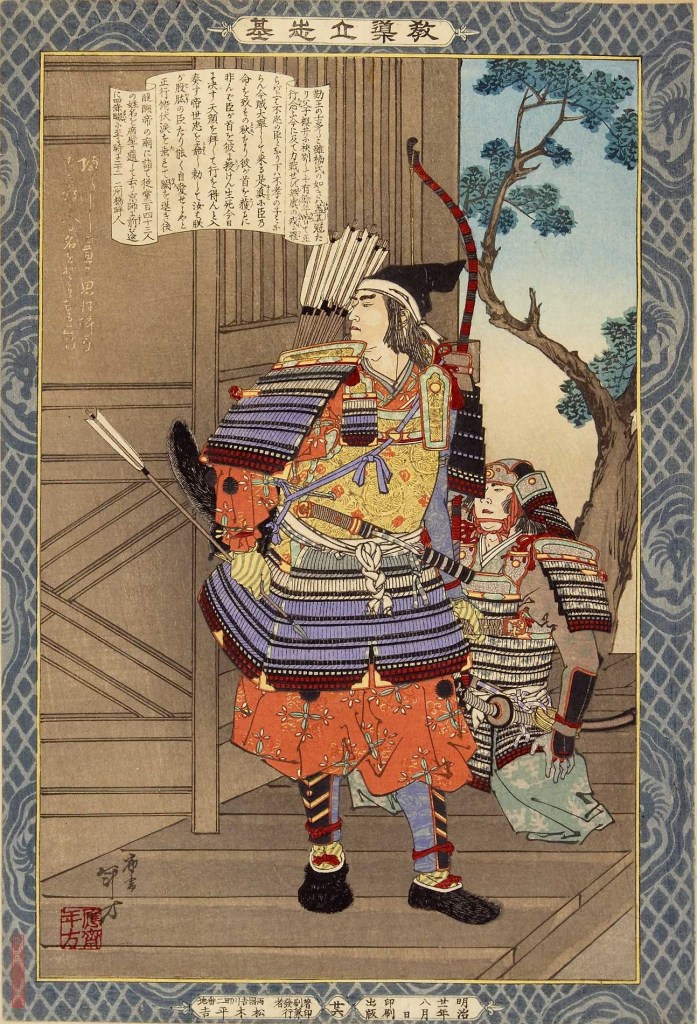
    A later illustration of a Samurai as they might have appeared during the Jokyu War.

    The Shogunate army was actually three separate forces, with 40,000 men heading by a northern route, another force of 50,000 heading through the mountains, and the third, largest force of 100,000, following the main Tokaido Road, with all three marching on Kyoto.

    The Imperial side seems to have been caught off guard by first the size, then the speed of the Shogunate forces. It appears that the Emperor had believed his decree would be enough to secure mass defections, and when the opposite occurred, the forces loyal to the throne were out of position and hugely outnumbered.

    Resistance was scattered and ineffective, with some sources suggesting that the main army took just 22 days to complete the march from Kamakura to Kyoto, which might be an exaggeration, but goes some way to highlighting how badly prepared the Imperial Army was.

    Though the court was able to gather warriors from Western Japan, the numbers were nowhere near what they had expected, and besides, the rapid advance of the Shogunate army meant that reinforcements wouldn’t have been able to reach the capital in time.

    In desperation, Go-Toba went to Mt Hiei, on the outskirts of Kyoto, and pleaded with the famed warrior monks for support. The monks, partly out of opposition to the Emperor, and partly due to their fear of the strength of the Shogun, refused to help, and Go-Toba was left with an army of around 18,000 to defend the capital.

    Outnumbered 5 to 1, Imperial forces took position near Uji, and on June 13th, another Battle of Uji (the third in 50 years) took place. Despite brave resistance, the Imperial side was overwhelmed, and on June 15th, Shogunate forces were in Kyoto. What followed was an orgy of violence, as the houses of Imperial officials and supporters were ransacked and burned, and the citizens suffered at the hands of the rampaging army.

    As Kyoto burned, Go-Toba sent a message to the Shogunate army, withdrawing the Imperial order to arrest Yoshitoki, and blaming the whole thing on his ministers and advisors. Abandoned by the Emperor, some of his supporters fought on in vain, but the final defeat was inevitable, and by July, serious fighting was over, with a few fugitives evading capture until October.

    In the aftermath, Go-Toba was exiled, and eventually replaced as Emperor by Go-Horikawa, and the estates of those who had been killed fighting for the Court, or proscribed afterwards, were distributed to the Shogun’s supporters. Direct control was established over Kyoto, and any semblance of independent military strength was ended; every warrior was now the direct vassal of the Emperor, or else.

    The Shogunate also took control of the purse strings for the court. Prior to the war, the Emperor had held land in his own right and drawn income from it, but now, those lands were ruled directly by the Shogun, and the government in Kamakura could now decide how much, if any, cash the Emperor would get.

    The end of the Jokyu War would mark the zenith of Shogunate, and therefore Hojo power, and for a time, they would rule more or less unchallenged, but some 60 years later, a new threat would emerge.

    Since the dawn of the 13th Century, a previously fractured and quarrelsome people had been united under a single ruler and gone on to conquer an empire the likes of which had never been seen. Though this great conqueror was long dead, his sons and grandsons had continued his work, and in 1260, a new ruler was enthroned, one who would go on to make himself master of China and Korea before seeking new conquests across the sea.

    In 1274, Kublai Khan, grandson of the Great Genghis, had ambitions to make himself master of the world, and he cast his eyes on Japan.

    The Mongols were coming.

    Sources
    https://ja.wikipedia.org/wiki/%E6%89%BF%E4%B9%85%E3%81%AE%E4%B9%B1
    https://en.wikipedia.org/wiki/Kamakura_shogunate
    https://en.wikipedia.org/wiki/Azuma_Kagami
    https://en.wikipedia.org/wiki/J%C5%8Dky%C5%AB_War
    https://en.wikipedia.org/wiki/Emperor_Go-Toba
    https://ja.wikipedia.org/wiki/%E5%BE%8C%E9%B3%A5%E7%BE%BD%E5%A4%A9%E7%9A%87
  • Heian V – Taira, Minamoto, & Tachibana.

    Last time, we talked at length about the Fujiwara family. We looked at how they rose to power and came to dominate the Imperial Court through a combination of violence, intrigue, and incestuous marriages.

    The Minamoto were far from the only noble family, however. Although there were literally dozens of families, cadet branches and noble upstarts, by the beginning of the Heian Era, there were four main houses: the Fujiwara, Taira, Minamoto, and Tachibana families.

    We’ve already talked at length about the Fujiwara and their origins, but what about the other three? First, a bit of background: Emperors generally had more than one consort, though there was technically only supposed to be one “Empress” This was routinely flouted during the Heian Period, especially by the Fujiwara, and besides official wives, the Emperor would take other noble women as concubines.

    In the days before family planning, this meant that any Emperor could have far more children than he knew what to do with. This would frequently lead to instability at court, as rival factions would form around different heirs, but what about the sons who were born to lower ranked women, or otherwise lacked legitimacy and support?

    Well, that’s where the Taira, Minamoto, and Tachibana come in. Technically, these three families didn’t start out as families at all; instead, the names were bestowed on these “extra” Imperial princes, who were excluded from the throne and would then go off and start houses of their own as part of the nobility.

    The Tachibana were the first (708), followed by the Minamoto (814) and the Taira (825), but things get complicated almost immediately. The problem is that one Emperor might bestow the name Minamoto on his grandson, only for another Emperor a generation later to do the same thing, creating two families that share a name.

    Whilst this isn’t uncommon in the modern world (How many Smiths do you know?), it does make it tricky to keep track of who is who when writing up a history blog. For the purposes of keeping things concise, I will be referring to all branches of each clan by the same name unless it’s important to make a distinction.

    It’s honestly not that bad with the Tachibana, as there were only two main branches. Even the Taira only had four, but the Minamoto had twenty-one, and that’s where it gets silly. It’s even worse when you realise that most, if not all, the later Samurai houses claim descent from at least one of the four major Heian Families, but we’ll get to that later.

    Tachibana

    We’ll start, as they say, at the beginning. Though the Fujiwara would emerge in 668, fifty years before the Tachibana, the latter family are the first of these Imperial “offshoots.” (The Fujiwara were pre-eminent but were not founded by the son of an Emperor).

    The Tachibana initially came into being in 708, when court Lady Agatainukai no Michiyo was given the honorary name “Tachibana” by Empress Genmei. The clan’s name was officially changed to Tachibana in 736, when Michiyo’s sons, Katsuragi and Sai, formally adopted the name; both men were direct descendants of Emperor Bidatsu through their father, Prince Minu.

    Initially, the Tachibana seemed to be on course to be one of the main players in Heian Court politics. Though Sai died early, his brother, Katsuragi (who changed his name to Tachibana no Moroe), would rise to high office in the Imperial Government, securing the family’s influence in the short term.

    Tachibana no Moroe, under whom the Tachibana’s star rose considerably.

    Unfortunately, as is so often the case, the son did not prove the equal of the father. Moroe was succeeded by his son, Tachibana no Naramaro. Though Naramaro was granted high office at first when Emperor Shomu retired and was succeeded by his daughter, Empress Koken, Tachibana’s influence was suddenly under threat.

    Koken is another character who deserves an entire post of her own, but the short version is that she favoured and was supported by the Fujiwara under Fujiwara no Nakamoro. Taking advantage of this, Nakamoro acquired lands, wealth, and titles that increased his wealth and power still further.

    Nakamoro’s rise was not without opposition; however, even amongst his own family, jealous cousins and siblings plotted against him, but it was the Tachibana who had the most to lose by his rise and the most to gain from his potential fall.

    In 755, in response to some drunken slander, Tachibana no Naramoro was forced to retire by Fujiwara no Nakamoro and his supporters at court. When Naramoro’s father, Tachibana no Moroe, died in 757, Naramoro, now in control of the Tachibana Clan, made his move.

    Allying themselves with Nakamoro’s disaffected sibling, Fujiwara no Toyonari, the Tachibana planned to raise troops, storm the capital, and overthrow the Fujiwara and their puppet Emperor, replacing them with Tachibana dominance, and putting a more sympathetic Imperial Prince on the throne.

    Unfortunately for the Tachibana, the conspiracy was uncovered, and the conspirators were arrested. Those of Fujiwara blood were sentenced to exile in Kyushu, but Tachibana no Naramoro was sentenced to death. Despite pleas for clemency, they were executed sometime in 757, although the official records of how Naramoro died have been lost.

    The power of the Tachibana at court would never recover, though they would continue to hold positions in the government. The rise of the Fujiwara proved to be inexorable, and the Tachibana were soon eclipsed. The last ‘hurrah’ of the family appears to have been their role in a rebellion in 939 in support of a different Fujiwara.

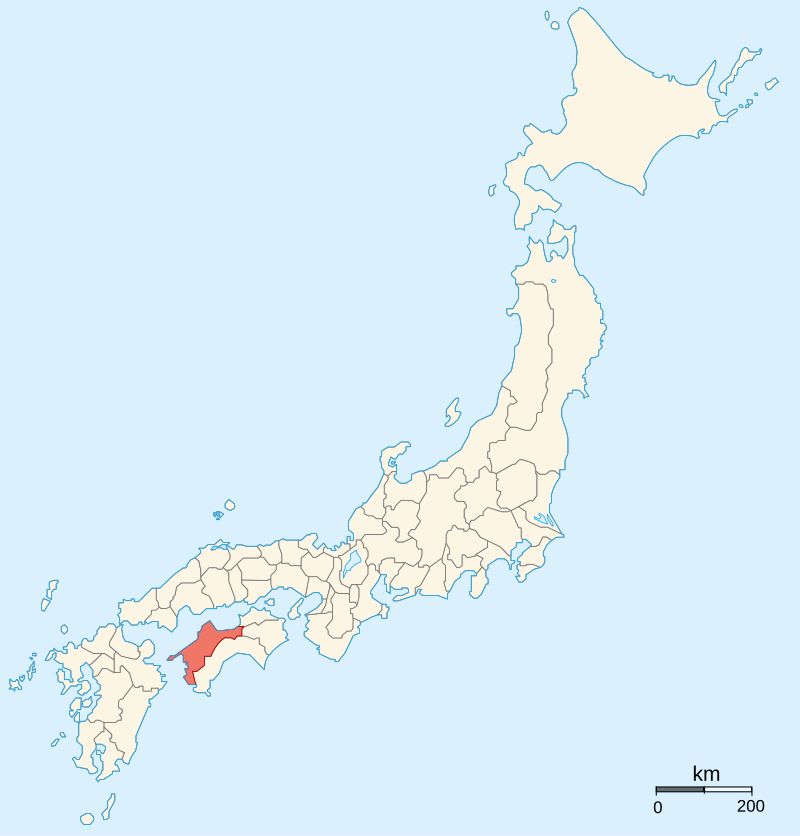
    The rebellion was crushed, and those involved were severely punished, but one member of the family, Tachibana no Toyasu, remained loyal to the Emperor and even took part in the execution of the rebel leader. As a reward, he received lands and titles in Iyo Province, where a branch of the family would survive a while longer, but the days of Tachibana influence at court were over.

    Iyo Province, where the Iyo-Tachibana family were granted lands and titles.
    By Ash_Crow – Own work, based on Image:Provinces of Japan.svg, CC BY 2.5, https://commons.wikimedia.org/w/index.php?curid=1682518

    A final note: there was a Samurai clan called Tachibana based near modern Fukuoka; however, the name is a coincidence, and the later Tachibana were no relation to the Heian Period family.
    Incidentally, this Tachibana family are still there, and they run a ryokan (traditional Japanese inn) based in their ancestor’s former residence.

    Taira

    Much like their contemporaries, the Taira began with grandsons and great-grandsons of several Emperors, and despite the shared name, there were actually four branches of the Taira family that came into being during the 9th Century, and these branches would often split as well. However, for our purposes, it is the line of Taira no Takamochi, founded in 889, that proved to be the most enduring.

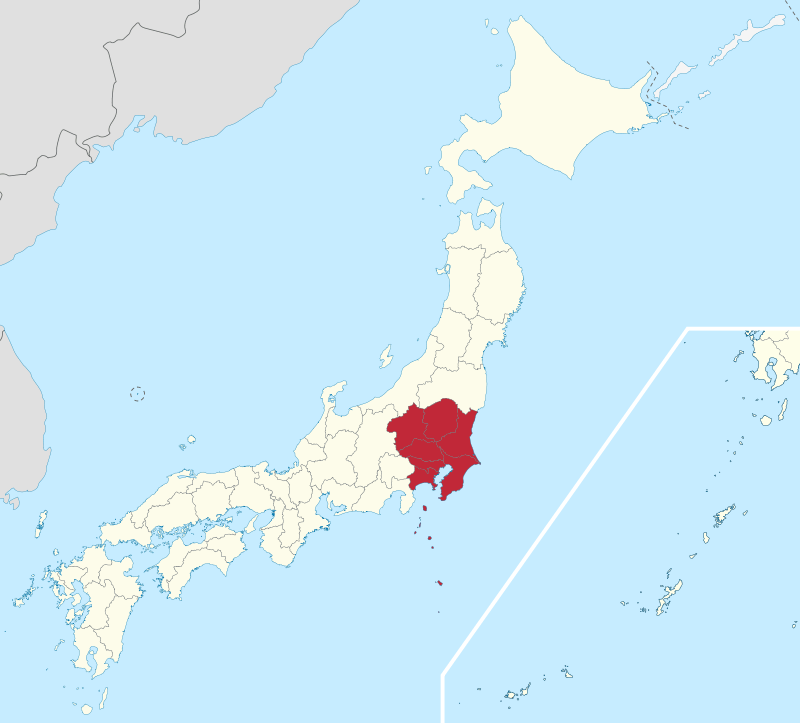
    Unlike the Fujiwara and Tachibana, the Taira’s centre of power was not the court at Heian-Kyo but the provinces, specifically the area of the Kanto plain, which includes the area in and around modern Tokyo, far from the Imperial Capital.

    The Kanto Region, centre of Taira strength, and a long way from the Imperial Court.
    By TUBS – This vector image includes elements that have been taken or adapted from this file:, CC BY-SA 3.0, https://commons.wikimedia.org/w/index.php?curid=16385930

    This distance meant that Taira influence at court was initially weak, but it worked both ways. Whilst the Taira might have been unable to exert much influence on the throne, the throne was equally unable to exert influence on the Taira.

    Consequently, as Imperial control waned in the provinces, the Taira were one of the main beneficiaries, gaining control of vast swathes of farmland and the wealth and power that went along with it. They would also begin to gather large groups of armed men to their service, and by the 10th Century, they were the dominant power in the East.

    The Taira would put this wealth and power to good use, engaging in local feuds without landholders and growing their already considerable resources through the application of force; though some of their opponents would appeal to the Emperor, there was little the Imperial Court could actually do about it, and as long as the Taira focused their efforts on their neighbours, the Court seemed content to turn a blind eye.

    Enter Taira no Masakado. Masakado’s life has been the subject of a lot of dramatisation over the years, so it’s not always possible to figure out exactly who he was or what he did. However, he appears to have gone to Heian-kyo in his late teens, hoping to gain an official position.

    He was out of luck on this score and returned home. There, if the stories are to be believed, he got into a dispute with his uncle over a woman, who may have been his daughter (Masakado’s cousin) or maybe not; again, the sources don’t agree. Another source says that there was a woman, but she was instead the daughter of Minamoto no Mamoru, a powerful local rival to the Taira.

    Still, more sources don’t mention a woman at all, stating that the conflict began as a result of a land dispute, with Masakado’s supposed inheritance being taken by another member of the family.

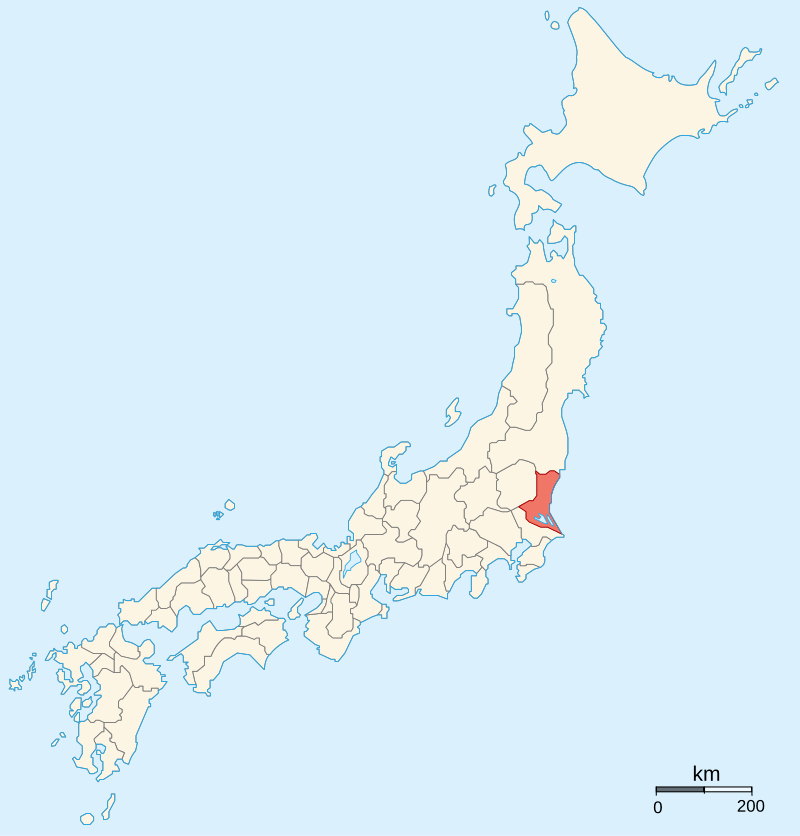
    While the background reasons are likely to never be known for certain, in early 935, Masakado was ambushed somewhere in Hitachi Province, modern Ibaraki Prefecture, by the sons of Minamoto no Mamoru. Masakado survived the attack, fighting off and killing his attackers, and responded by going on a rampage throughout Hitachi Province, burning the homes of his enemies, including the Uncle who he was in dispute with (either about land or his cousin.)

    Hitachi Province, where Masakado’s rebellion began.
    By Ash_Crow – Own work, based on Image:Provinces of Japan.svg, CC BY 2.5, https://commons.wikimedia.org/w/index.php?curid=1682357

    The situation spiralled out of control from there, and there was a series of battles in which Masakado generally prevailed. His enemies called in support from nearby provinces, and though they outnumbered Masakado considerably, he won a series of victories and drove his foes back to their residences.

    At this point, Masakado seems to have been worried about official consequences (because the bloodshed so far was fine, I guess.) At this point, Masakado limited himself to lodging a formal complaint, and when he was summoned to the Imperial Court to explain himself, it was declared to have been a local matter, and all involved were pardoned.

    A later illustration depicting Masakado in battle.

    Now, you might think that official censure would be enough to put the matter to rest, but you’d be wrong. It turns out that if you let powerful local landowners build up their own private armies, they tend to be less keen on obeying central authority.

    Almost as soon as Masakado returned to his province, the fighting resumed. Those who Masakado had defeated now sought revenge and attacked him. This time, it seems Masakado was defeated, and several of his holdings were burned.

    Exactly what led up to the events that followed isn’t clear, but by the end of 939, Masakado had gotten into further disputes with local officials, and he went as far as attacking the provincial headquarters, burning it to the ground, and looting the official storehouses.

    Now, the Imperial Court was pretty ineffectual by this point, but this was a direct attack on their authority, and even the decadent Heian Court couldn’t ignore that. The problem was, what to do about it? There was no Imperial Army, so the court had to rely on the very same local landowners that Masakado had been feuding with in the first place.

    Masakado was declared to be in rebellion, and a coalition army led by Fujiwara no Hidesato, Minamoto no Tsunemoto, and Taira no Sadamori (Masakado’s cousin) crushed the rebels in 59 days.

    Despite dealing with the rebellion relatively easily, the outcome was actually highly problematic for the Court. Although the Rebels had been beaten, it had been local leaders who had done the actual fighting, and even though Masakado had been a Taira, it had been Taira who had played a major role in his defeat.

    It would be some years before the full consequences of this would be felt, but the Taira would remain in place in the East, now with the added assurances that their military strength was not only secure but necessary.

    Minamoto

    So, we move on to the third part of our story today. The Minamoto are last, but most certainly not least, when it comes to discussing the major powers of the Heian Court.

    Like the other great families, the Minamoto got their start when sons and grandsons of Emperors were granted their own houses as a way to compensate them for never being able to sit on the throne. Whilst the Fujiwara, Taira, and Tachibana would spread across the Japan, the Minamoto were the proverbial weeds.

    No fewer than 21 separate branches of the family were created, and although a few would die out within a generation or two, others became central to the history of Japan, with one, the Seiwa Branch, proving to be truly significant indeed.

    Given the sheer number of branches of the Minamoto Family, it isn’t possible to write a history of them that would be concise enough to be readable. Given that I don’t expect you to sit there and read for the next three or four months, we’re going to condense a lot of this information, as a lot of overlaps with events we’ve already discussed, and, as you’ll see, the Minamoto will become extremely important in the latter days of the Heian Period.

    Generally, the Minamoto were a family that is closely identified with the decline of Imperial authority in the provinces. Whereas the Fujiwara and Tachibana concerned themselves with court politics, the Minamoto, like the Taira, focused on building their powerbase away from the capital.

    In many ways, the Minamoto best represents the growing shift in the power dynamic. Although the Fujiwara were largely unchallenged at court during this period, they would be forced to call on the Minamoto to use their military resources to deal with problems in the provinces. Indeed, during Masakado’s rebellion that we mentioned earlier, it was Minamoto forces that played a large role in his defeat.

    Later, it was the Minamoto brothers, Yorinobu and Yorimitsu, who were in the service of the Fujiwara, acting as their enforcers in the provinces. Yorinobu’s son, Yoriyoshi, would lead ‘Imperial’ forces against the rebel Abe Clan in northern Japan during the so-called “Nine Years War”, so named despite lasting Eleven Years.

    Such was the prowess of the Yorinobu’s grandson, Yoshiie, that he was nicknamed “Son of the God of War”, and the martial reputation of the Minamoto was secured.

    By the 11th Century, Japan was divided between rival warlords whose power no longer derived from the Imperial court. They would settle their own matters, often with steel, and the 11th Century would see the nadir and eventual end of the Heian Court’s dominance.

    Sources

    https://en.wikipedia.org/wiki/Minamoto_clan
    https://en.wikipedia.org/wiki/Minamoto_no_Yorinobu
    https://en.wikipedia.org/wiki/Minamoto_no_Yorimitsu
    https://en.wikipedia.org/wiki/Minamoto_no_Yoriyoshi
    https://en.wikipedia.org/wiki/Minamoto_no_Yoshiie
    https://en.wikipedia.org/wiki/Former_Nine_Years%27_War