Tag: Emperor Go-Yozei

  • From Sekigahara to the Shogunate.

    From Sekigahara to the Shogunate.

    In the aftermath of Sekigahara, Ieyasu set about rewarding his supporters and dealing with his opponents. The exact details of who got/lost what are complex (and not particularly interesting), but the main distinction, and the one that would prove to be the most significant, was the separation between Tozama and Fudai Daimyo.

    The exact criteria for what made a Daimyo Tozama or Fudai vary depending on context, but very basically, the Fudai Daimyo were those from families who had supported Ieyasu before his rise to power, either as direct vassals of the Tokugawa Clan, or allies during the Sekigahara Campaign. Meanwhile, the term Tozama originally meant Samurai who had a much looser tie to their lord, and in the context of the post-Sekigahara settlement, the Tozama Daimyo were those lords who had failed to support Ieyasu, or who had actively opposed him.
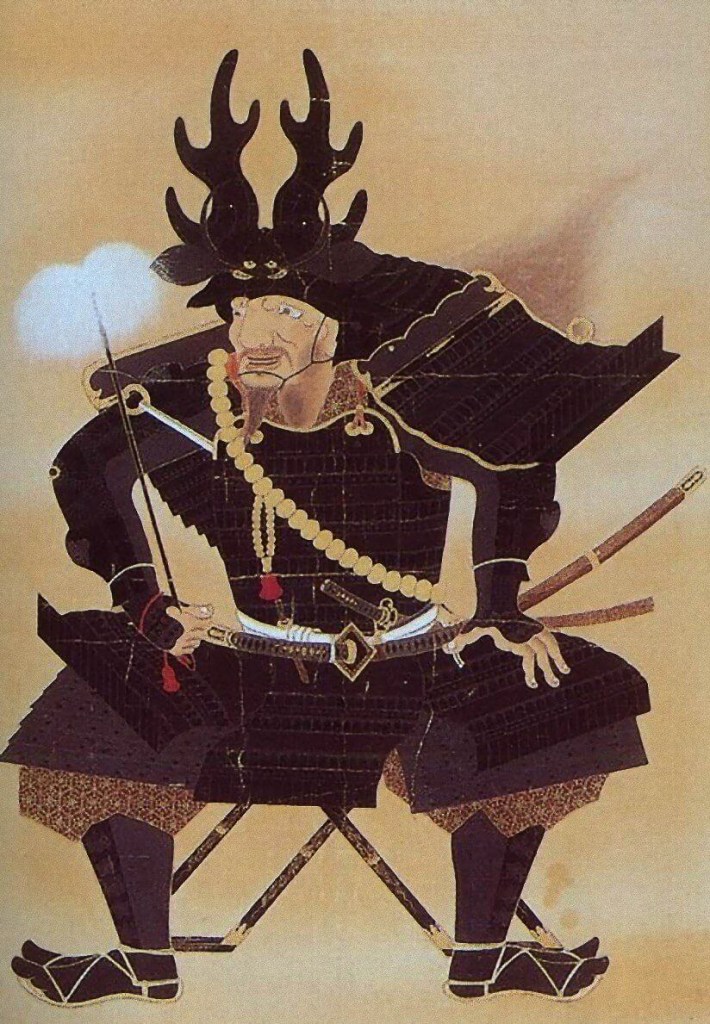
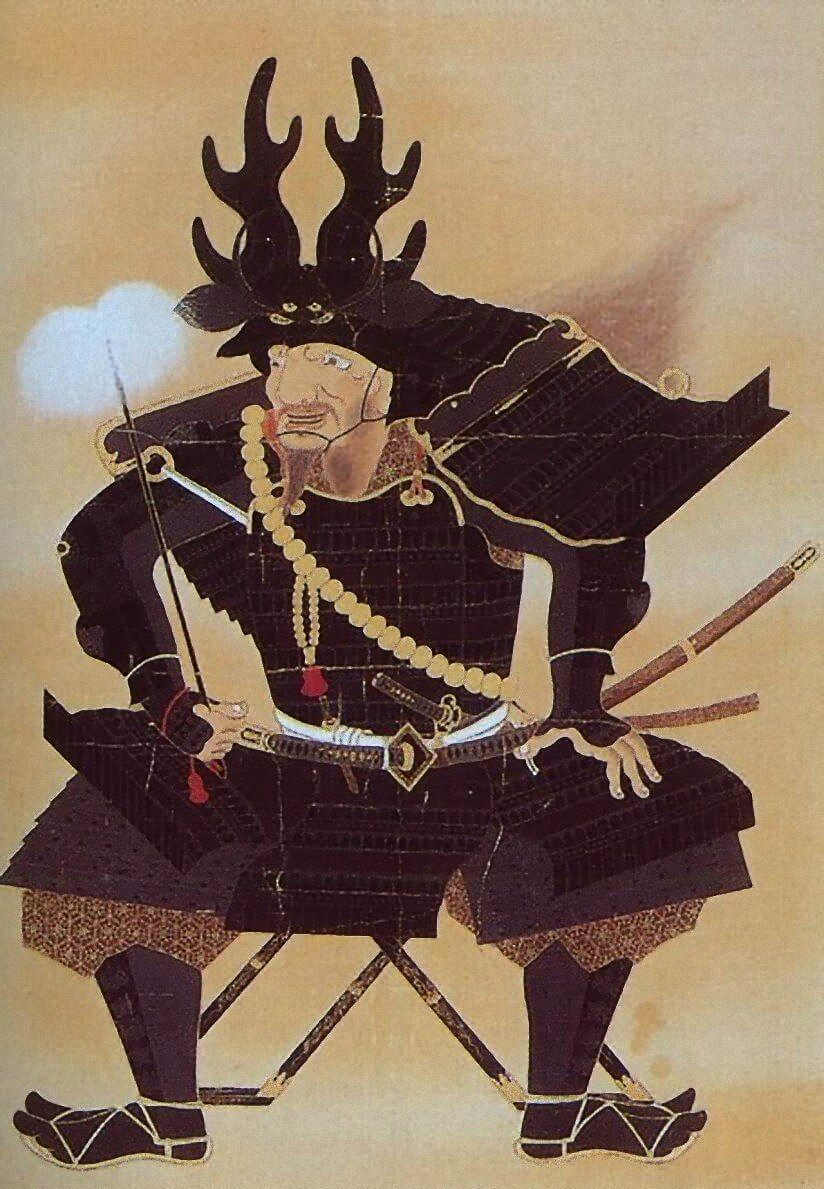
    Honda Tadakatsu, one of the most famous of the early Fudai Daimyo.

    In the centuries to come, the Fudai would provide many members of the new Tokugawa Government; indeed, it was often said that any candidate for a high-ranking position had to be from a Fudai family, which would prove true in all but one case. In exchange for their service, the Fudai were often stationed near the capital, Edo (modern Tokyo), where they could help protect the city.

    On the other hand, the Tozama were usually located much further away and were consequently excluded from government. It wasn’t all bad, however, as the extreme distances of their realms meant that the central government was often obliged to rule them with a light touch, and in later years, several Tozama would be able to accrue significant wealth and power.
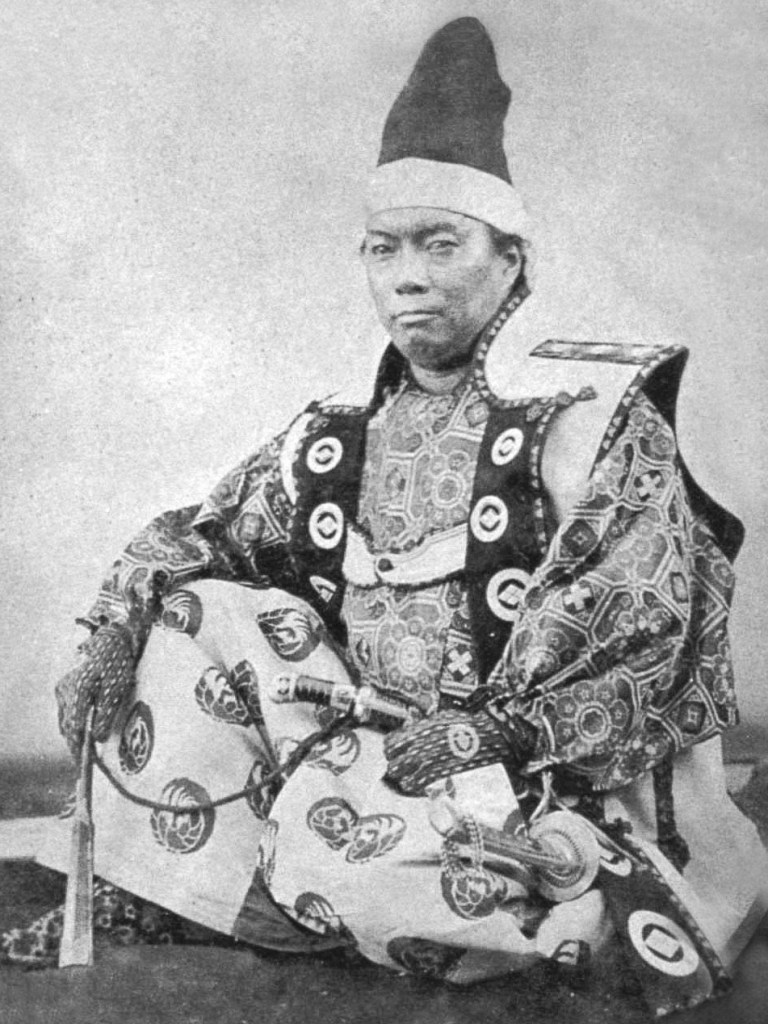
    Matsumae Takahiro, the only Tozama Daimyo to ever hold high rank in the Tokugawa government, though it came at the very end of the Shogunate.

    One family over which a significant question mark remained was the Toyotomi. Ieyasu had gone to great pains not to give the impression that the Sekigahara Campaign had been aimed at the Toyotomi, but in the aftermath, no one seriously expected him to hand over the power he had won, especially given that the incumbent head of the clan, Hideyori, was just seven years old.

    In the short term, Ieyasu explicitly refused to punish either Hideyori or his mother, Lady Yono, and though Toyotomi lands were significantly reduced, and their most powerful supporters either seriously weakened or destroyed outright, the clan, still based at Osaka Castle, retained lands valued at some 650,000 Koku, ensuring their place in the upper echelons of Japanese society.
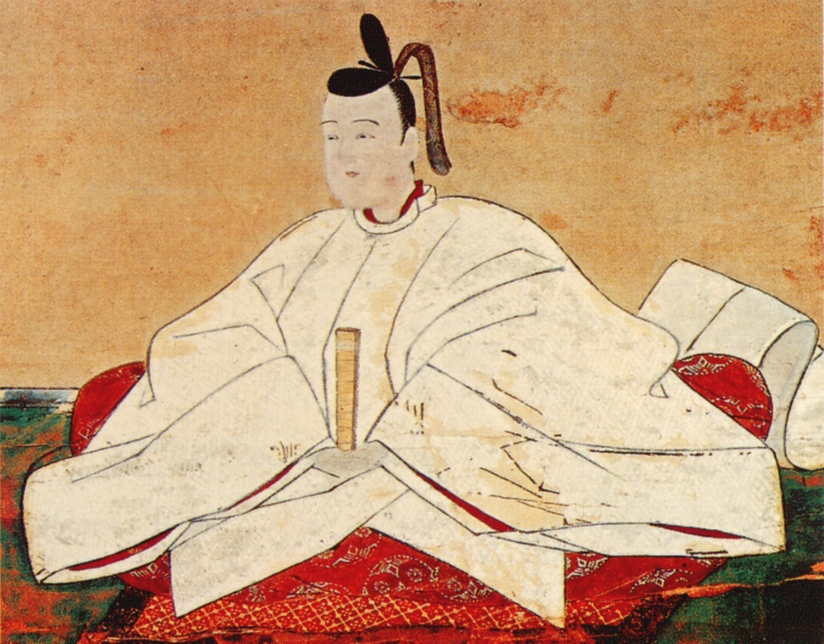
    Toyotomi Hideyori. Despite being Hideyoshi’s heir, he was just seven at the time of Sekigahara, and Ieyasu ensured he wouldn’t be punished for what others had done on his behalf, a decision he would later come to regret.

    Hideyoshi’s title of Kanpaku (regent) was not returned, however. Though it had been vacant since Hideyoshi’s death in 1595, Ieyasu ensured that the title would instead go to a member of the Kujo Family, who had been one of the “Five Regent Houses” prior to Hideyoshi’s usurping the title. In doing so, Ieyasu earned the approval of the Imperial government and demonstrated that awarding such illustrious (if powerless) titles now lay with him alone.

    Despite his now unassailable position, Ieyasu didn’t immediately take the title of Shogun; there were still territories to redistribute and a new political reality to consolidate. It wouldn’t be until early 1603 that Ieyasu was appointed Shogun, as well as being named Minister of the Right, Commander of the Imperial Guard, and Commander of the Ox-Drawn Carts, which may sound a touch silly, but in a time and place with very few wheeled vehicles, this was a big deal.
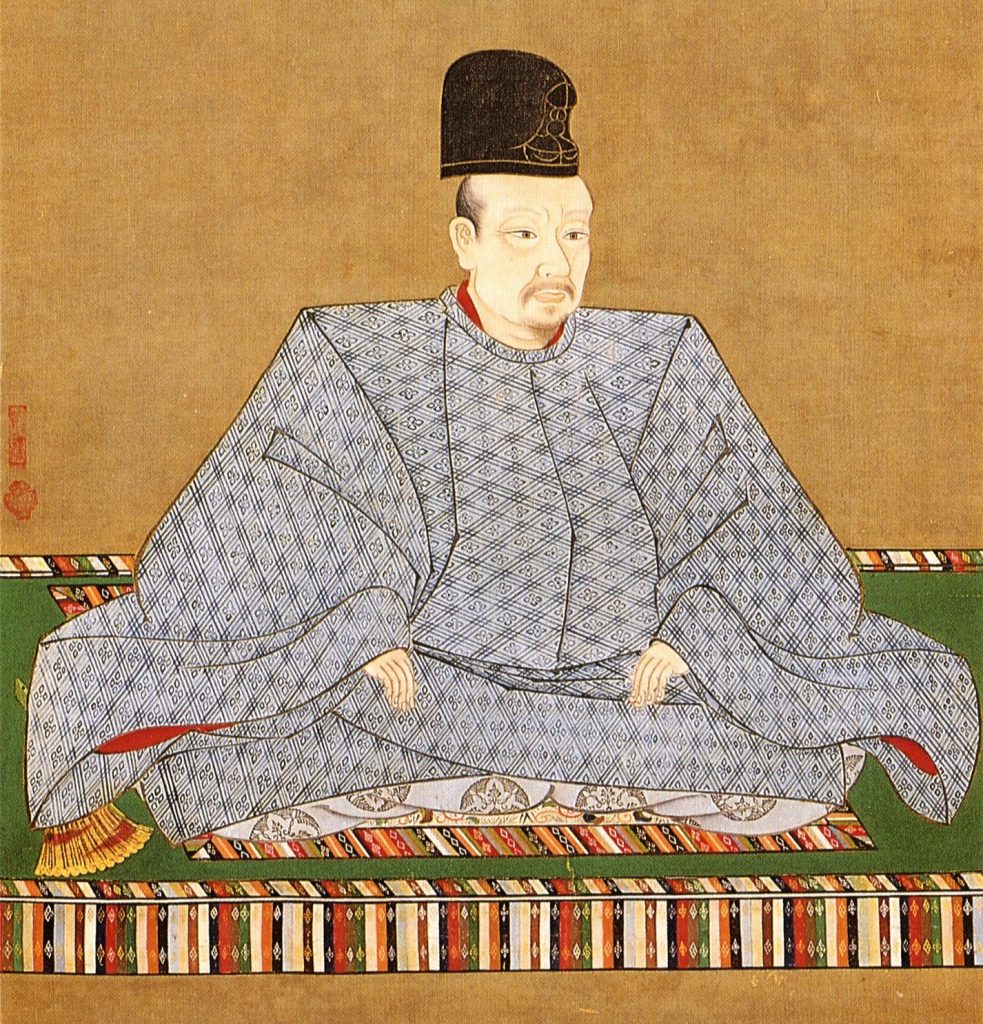
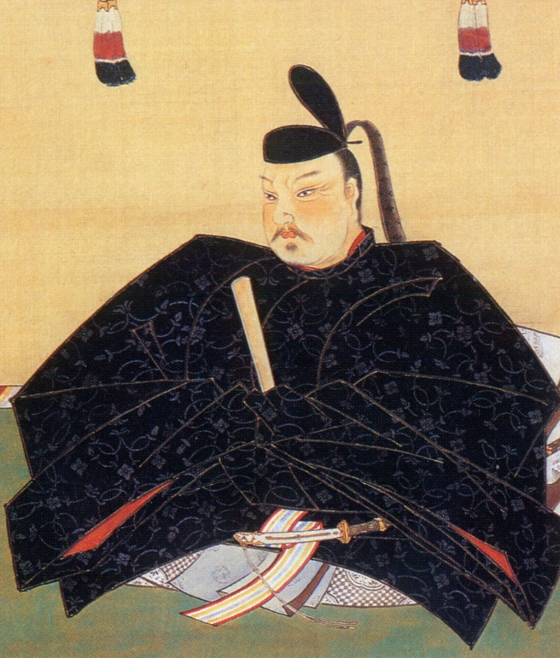
    Emperor Go-Yozei, who was on the throne at the time of Ieyasu’s rise to power, would ultimately be the one to appoint him Shogun.

    Strangely enough, Ieyasu would only be Shogun for a relatively short period. In 1605, he officially resigned the post and asked the court to declare his son, Hidetada, the new Shogun. As you probably already know, this ‘abdication’ was only a formality, as Ieyasu retained formal power whilst freeing himself from the often impractical burden of state ritual.

    The abdication had another purpose; it demonstrated to the realm that, from now on, the position of Shogun would be hereditary and belong to the Tokugawa Clan. Perhaps the greatest testament to Ieyasu’s new power was the fact that the handover of power was conducted almost without opposition, signalling that, at last, the years of chaos were finally over.
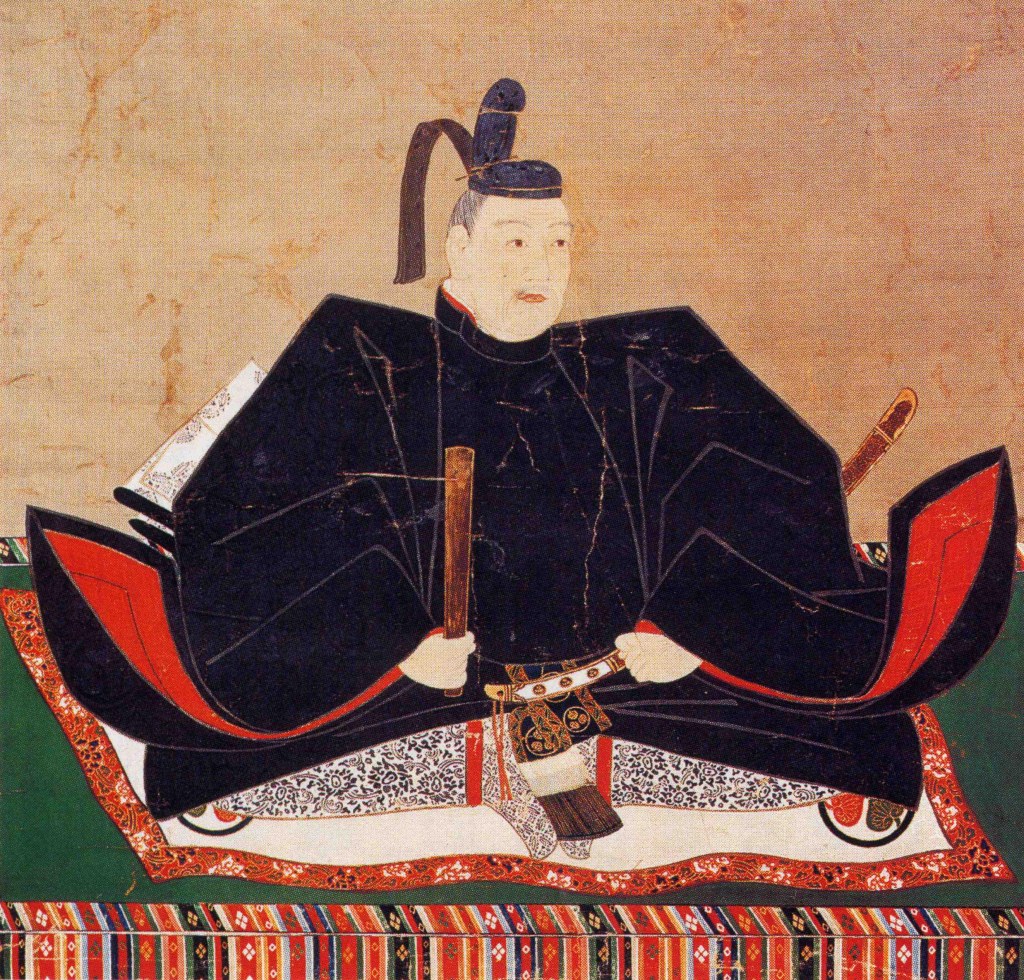
    Tokugawa Hidetada. When he succeeded his father as (nominal) Shogun in 1605, it was the first unchallenged transition of high authority that Japan had seen in decades.

    We’ll take a detailed look at the early years of the Tokugawa Shogunate in a dedicated post, but Ieyasu, now titled “Ogosho” (Retired Shogun), was extremely active in securing his family’s rule and stabilising the realm. Officially, one of Ieyasu’s responsibilities was foreign diplomacy, and during this period, he received envoys from Korea, re-establishing diplomatic relations cut off since Hideyoshi’s invasions, as well as representatives from Spain and the Netherlands, who sought increased trade with Japan.

    One figure who played a significant role in these endeavours was William Adams, the first Englishman in Japan, who will definitely get a post of his own, and helped support the efforts of his countrymen in establishing a permanent (though ultimately short-lived) ‘factory’ to facilitate trade between Japan and England.
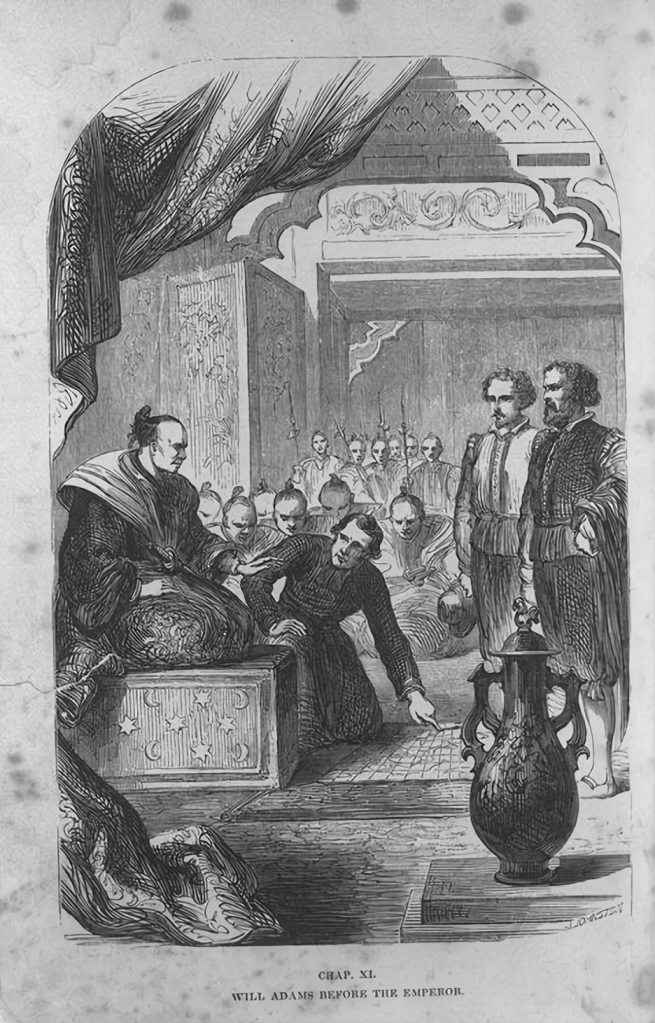
    A 19th-century depiction of William Adams meeting Ieyasu (who is mislabelled “Emperor”). Adams was an important figure, but he was just one of many foreigners who had audiences with Ieyasu during this period.

    With matters at home largely settled, and Japan establishing itself as a reliable trade partner in Asia, but late 1614, Ieyasu would have had good reason to consider his life a remarkable success; he had risen from a regional warlord on the brink of destruction to master of Japan, and established a dynasty that would last for some 250 years.

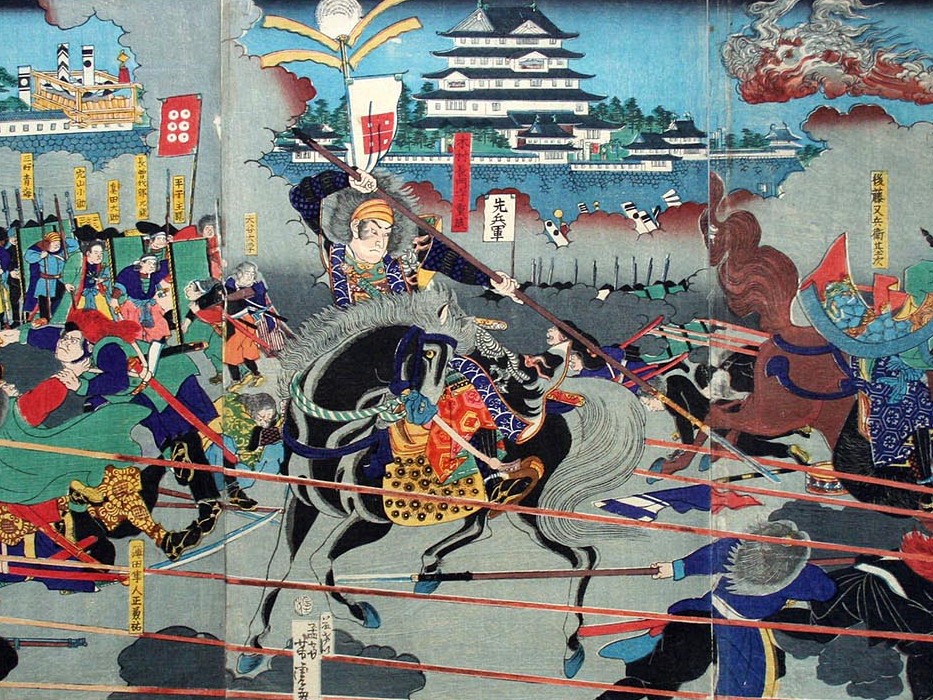
    All was not well, however. Hideyori, whom Ieyasu had chosen to spare in the aftermath of Sekigahara, had grown into a man, and as Hideyoshi’s heir, he began to attract support from those disaffected by the new Tokugawa regime. It would not take long for Ieyasu to find a convenient pretext to eliminate the Toyotomi once and for all.


    Sources
    https://ja.wikipedia.org/wiki/%E5%BE%B3%E5%B7%9D%E5%AE%B6%E5%BA%B7
    https://en.wikipedia.org/wiki/Toyotomi_Hideyori
    https://ja.wikipedia.org/wiki/%E5%BE%B3%E5%B7%9D%E7%A7%80%E5%BF%A0
    https://ja.wikipedia.org/wiki/%E9%96%A2%E3%83%B6%E5%8E%9F%E3%81%AE%E6%88%A6%E3%81%84
    https://ja.wikipedia.org/wiki/%E5%A4%A7%E5%BE%A1%E6%89%80_(%E6%B1%9F%E6%88%B8%E6%99%82%E4%BB%A3)
    https://ja.wikipedia.org/wiki/%E7%89%9B%E8%BB%8A%E5%AE%A3%E6%97%A8
    https://ja.wikipedia.org/wiki/%E9%9A%8F%E8%BA%AB
    https://ja.wikipedia.org/wiki/%E8%AD%9C%E4%BB%A3%E5%A4%A7%E5%90%8D
    https://en.wikipedia.org/wiki/Fudai_daimy%C5%8D
    https://ja.wikipedia.org/wiki/%E5%A4%96%E6%A7%98%E5%A4%A7%E5%90%8D
    https://en.wikipedia.org/wiki/Tozama_daimy%C5%8D
    https://ja.wikipedia.org/wiki/%E6%9D%BE%E5%89%8D%E5%B4%87%E5%BA%83
    https://ja.wikipedia.org/wiki/%E3%82%A6%E3%82%A3%E3%83%AA%E3%82%A2%E3%83%A0%E3%83%BB%E3%82%A2%E3%83%80%E3%83%A0%E3%82%B9
    https://ja.wikipedia.org/wiki/%E5%BE%8C%E9%99%BD%E6%88%90%E5%A4%A9%E7%9A%87

  • The Second Unifier – Toyotomi Hideyoshi. Part Six.

    The Second Unifier – Toyotomi Hideyoshi. Part Six.

    The mon of the Toyotomi Clan.

    By the late 1580s, Hideyoshi was at the very pinnacle of political and military power in Japan. Jesuit records from the time name him “tyrant” and suggest that he has achieved more power over the realm than any warlord before him.

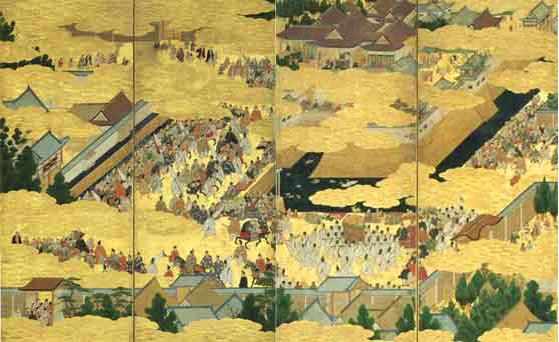
    After the successful conclusion of the Kyushu Campaign, Hideyoshi ordered a new palace built in Kyoto. Called Jurakudai (or Jurakutei in some sources), Toyotomi moved his political base there from Osaka Castle in early 1588, inviting the Emperor Go-Yozei for a feast in April 1588 and obliging powerful Daimyo (such as Tokugawa Ieyasu) to travel there and pay homage to him.

    An image of the Emperor visiting Jurakudai.

    Having secured personal political power, Hideyoshi then turned his attention to pacifying the realm at large. Through his military campaigns, he had subdued most of the powerful Daimyo in the realm, but there remained the issue of establishing peace at the local level as well.

    The Sengoku Jidai exists in the popular imagination as more than a century of conflict, featuring epic clashes between armies of Samurai loyal unto death, and iconic lords like Takeda Shingen, Oda Nobunaga, and Uesugi Kenshin, who were locked in a titanic struggle for ultimate control of the realm.

    Uesugi Kenshin and Takeda Shingen engaged in a duel that probably never happened but remains an enduring, if inaccurate, image of the Sengoku-era battlefield.

    Whilst there is certainly truth to this image, much like any period of civil war, Japanese society at large had become incredibly violent during the 16th century. At the local level, the decentralised nature of Daimyo rule led to the emergence of Jizamurai, literally “Local Samurai”. These men often started out as armed peasants, usually levied into the armies of some local lord, and sent home again when the campaign ended.

    Throughout the 16th century, these Jizamurai gradually achieved military and political influence over their local communities, often being allowed to collect tax revenue on behalf of their lord in exchange for military service, similar to a Knightly Manor in medieval Europe.

    This situation worked fine whilst the realm was fractured into dozens of minor domains, but as consolidation followed conquest in the latter half of the 16th century, tensions between “Samurai” and “Jizamurai” became more of an issue. When a lord was defeated, he was usually killed or deprived of his land, meaning that the Jizamurai would often find themselves serving a new lord to whom they had no personal loyalty, leading to frequent conflicts.

    Ashigaru on campaign. By the late 16th century, the distinction between Warrior and Peasant was often unclear to the point of being non-existent.

    On a societal level, the distinction between Jizamurai and peasants was often academic. Though technically of a higher social status, a Jizamurai usually lived in the village, amongst the peasantry, who would themselves often have access to weaponry and a far greater loyalty to their local Jizamurai than to some powerful Daimyo whom they never saw.

    This led to frequent Peasant Uprisings throughout the Sengoku Period, most famously the Ikko-Ikki, who were motivated by religious fervour but were largely made up of peasants and Jizamurai. It wasn’t just political violence; feuds between villages were common and often escalated into violence, as rival communities would quickly resort to the sword to settle disputes over territory, waterways, and other local matters.

    In 1587, Hideyoshi passed a law forbidding the use of force to resolve such disputes. Though the exact wording of the law has been lost, by looking at the wording of laws from the later Edo Period, which often referred to ‘precedents’ (i.e., earlier laws), we can infer what Hideyoshi’s decrees may have looked like.

    If any villagers or other people in a village engage in a dispute over mountains or waters, using bows, spears, or guns to fight amongst themselves, that entire village shall be punished. – From a decree by Shogun Tokugawa Hidetada -1610

    Scholars debate exactly what Hideyoshi intended with this law, with some suggesting that he meant to disarm and pacify the peasants, whilst others say it was more to do with establishing who had weapons, and who had the right to weapons, part of an ongoing centralisation campaign in which a clearer line was to be drawn between Warrior and Peasant.

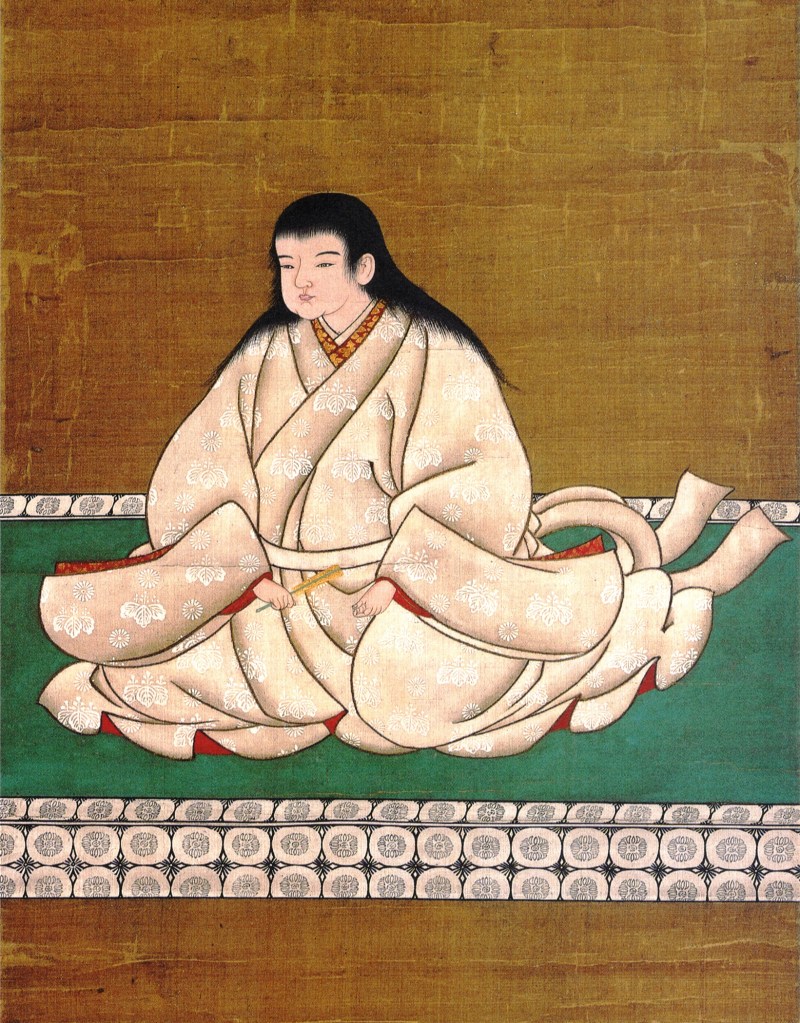
    In 1589, Hideyoshi celebrated the birth of a son, Tsurumatsu, whom he swiftly named as his heir, securing his dynasty for the foreseeable future. The following year, after a series of political slights, he launched a decisive campaign against the Hojo, lords of the Kanto, crushing them in the Odawara Campaign.

    A later, heavily stylised depiction of Hideyoshi’s son, Tsurumatsu.

    Also in 1590, he crushed the defiant clans of Northern Japan in a swift campaign, and it is at this point that the “Sengoku Jidai” is said to have come to an end. For the first time in more than a century, the country was under the control of one man, and the realm would never again fracture as it once had. Despite this, one decision made by Hideyoshi in the aftermath of the Odawara Campaign had already sown the seeds of his clan’s ultimate downfall.

    With the destruction of the Hojo, Hideyoshi offered the five provinces of the Kanto to Tokugawa Ieyasu, in exchange for the three he had originally ruled. At the time, this move was seen as political savvy. It positioned the potentially rebellious Ieyasu farther from Kyoto, and though the five Kanto provinces were nominally richer than the three Ieyasu had given up, they had recently been conquered and were potentially volatile, meaning the move weakened Ieyasu in the short term.

    Tokugawa Ieyasu.

    Hideyoshi, however, had not considered Ieyasu’s political and economic acumen. His base in the Kanto would eventually serve as a springboard for his own rise to power, demonstrated perhaps most clearly by the fact that Japan’s modern capital, Tokyo, is on the same site as Ieyasu’s was, more than 430 years after he moved there, but we’re getting ahead of ourselves.

    The threat from Ieyasu was not Hideyoshi’s only concern, however. In 1591, his brother, Hidenaga, who had proven to be an extremely competent commander and political ally, died in February, followed by his son and heir, the two-year-old Tsurumatsu, in September of the same year.

    Toyotomi Hidenaga

    Following these deep personal and political blows, Hideyoshi adopted his nephew, Hidetsugu, and then retired, handing control of the clan over to him. As was common at the time, Hideyoshi retained true political power; however, becoming known as the Taiko, a title of respect for former regents.

    Also in 1591, with Japan secured, Hideyoshi announced his intention to invade China, launching a brutal invasion of Korea to use it as a base for his main objective. We’ll give the Korean Wars their own post, but for now, we can say that the invasions both highlighted Hideyoshi’s power and brought about political divisions that would ultimately destroy his legacy.


    Sources
    https://ja.wikipedia.org/wiki/%E8%B1%8A%E8%87%A3%E7%A7%80%E5%90%89
    https://ja.wikipedia.org/wiki/%E5%A4%AA%E9%96%A4
    https://ja.wikipedia.org/wiki/%E8%B1%8A%E8%87%A3%E7%A7%80%E9%95%B7
    https://ja.wikipedia.org/wiki/%E6%B7%80%E6%AE%BF
    https://ja.wikipedia.org/wiki/%E8%B1%8A%E8%87%A3%E9%B6%B4%E6%9D%BE
    https://ja.wikipedia.org/wiki/%E5%BE%8C%E9%99%BD%E6%88%90%E5%A4%A9%E7%9A%87
    https://ja.wikipedia.org/wiki/%E5%88%80%E7%8B%A9
    https://ja.wikipedia.org/wiki/%E5%85%B5%E8%BE%B2%E5%88%86%E9%9B%A2
    https://ja.wikipedia.org/wiki/%E5%96%A7%E5%98%A9%E5%81%9C%E6%AD%A2%E4%BB%A4
    https://ja.wikipedia.org/wiki/%E6%B5%B7%E8%B3%8A%E5%81%9C%E6%AD%A2%E4%BB%A4
    https://ja.wikipedia.org/wiki/%E8%81%9A%E6%A5%BD%E7%AC%AC%E8%A1%8C%E5%B9%B8
    https://ja.wikipedia.org/wiki/%E8%81%9A%E6%A5%BD%E7%AC%AC
    https://ja.wikipedia.org/wiki/%E5%9C%B0%E4%BE%8D