Tag: End of the Sengoku Period

  • The Second Unifier – Toyotomi Hideyoshi. The Final Chapter.

    The Second Unifier – Toyotomi Hideyoshi. The Final Chapter.

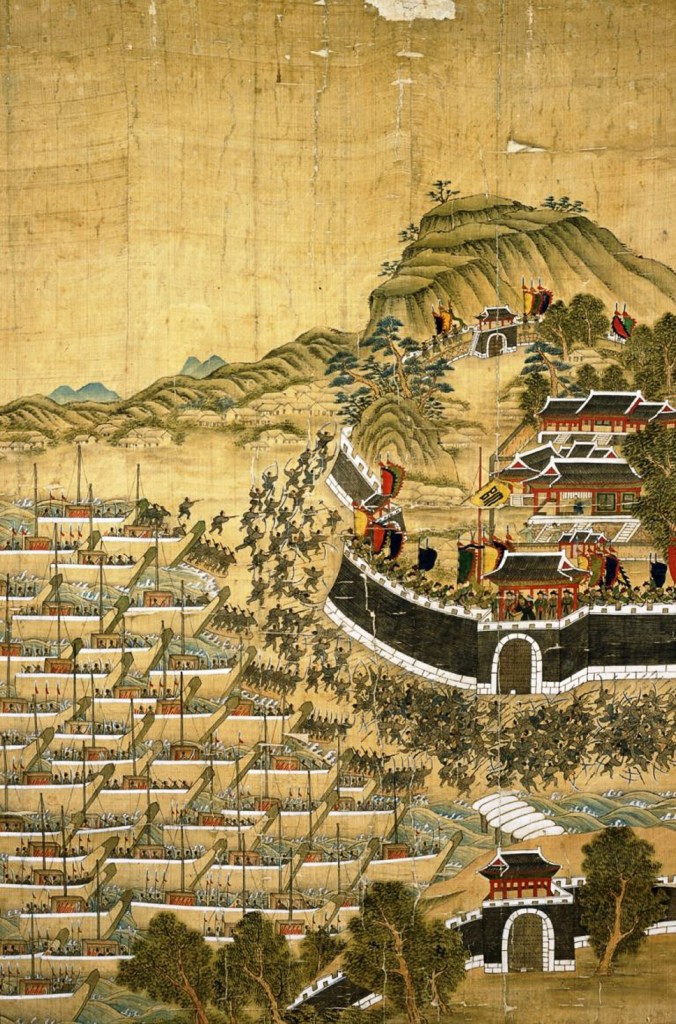
    In 1591, with dominance of Japan secured, Hideyoshi announced his intention to invade Ming China, via Korea, launching the first of two campaigns to subjugate the small kingdom. We’ll take a look at these invasions in more detail later, but in summary, the Japanese landed with a force of some 160,000 veteran warriors and achieved a series of quick successes against the Koreans.

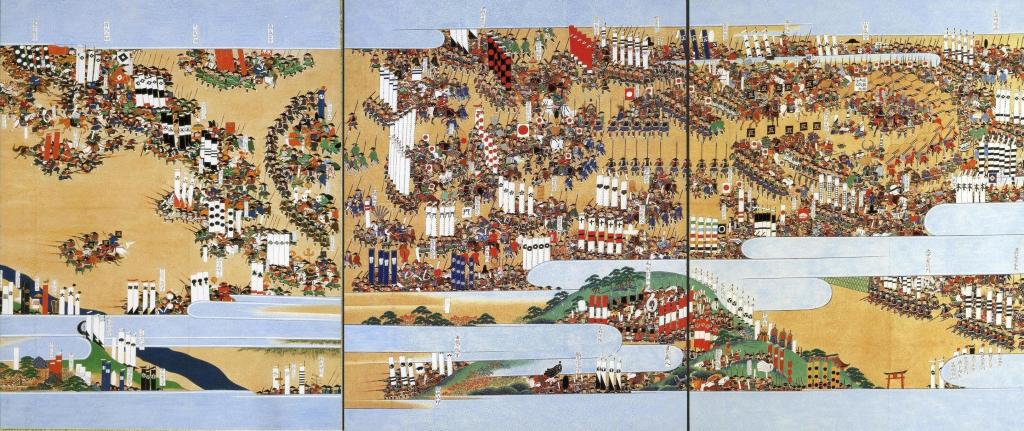
    A contemporary Korean image of the Japanese attack on Busan.

    However, Chinese intervention turned back the invasion, and ultimately led to a stalemate that ended in a negotiated peace in 1593, that saw Japanese warriors remain in the fortresses they have built in the south of the peninsular, from which they would launch a second attempt in 1597, which would end when political changes at home saw the Japanese leave, with both sides declaring ‘victory’.

    Meanwhile, Hideyoshi, who had ordered the invasion but did not travel to Korea himself, was facing problems closer to home. In 1591, his brother, Hidenaga, who had been an important military and political supporter, died. This was followed in short order by Tsurumatsu, Hideyoshi’s two-year-old son and heir, throwing the succession into doubt.

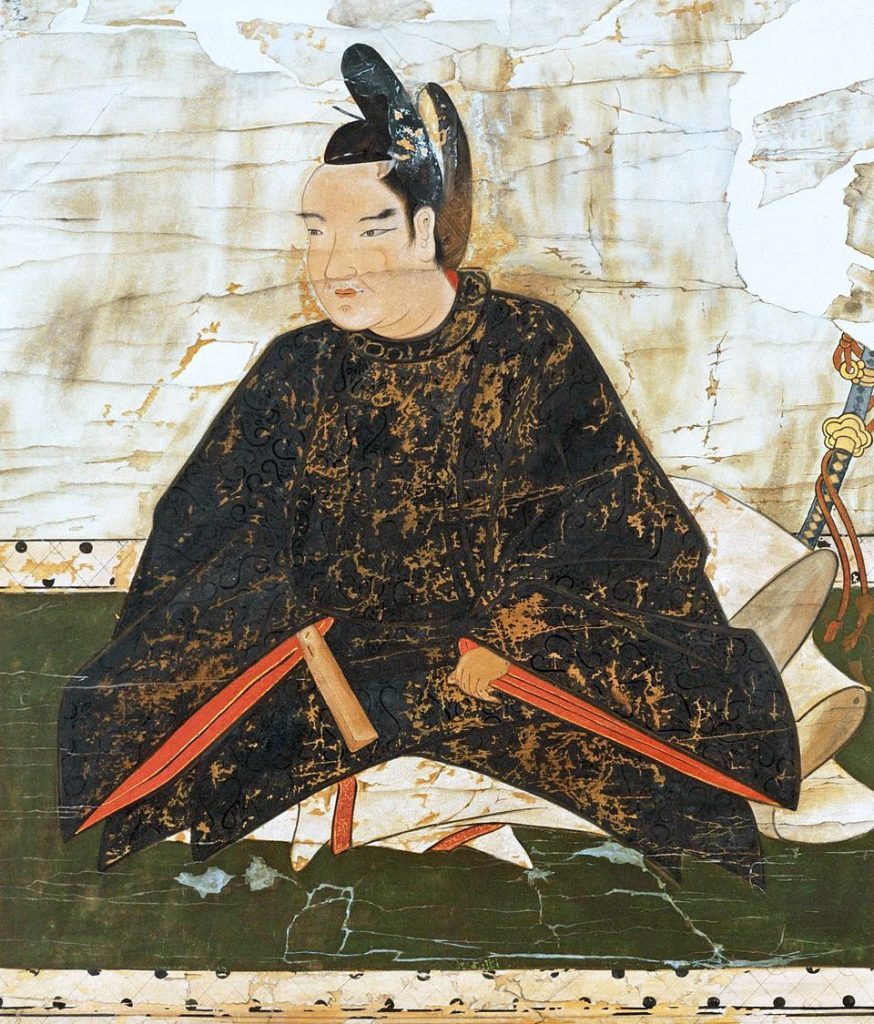
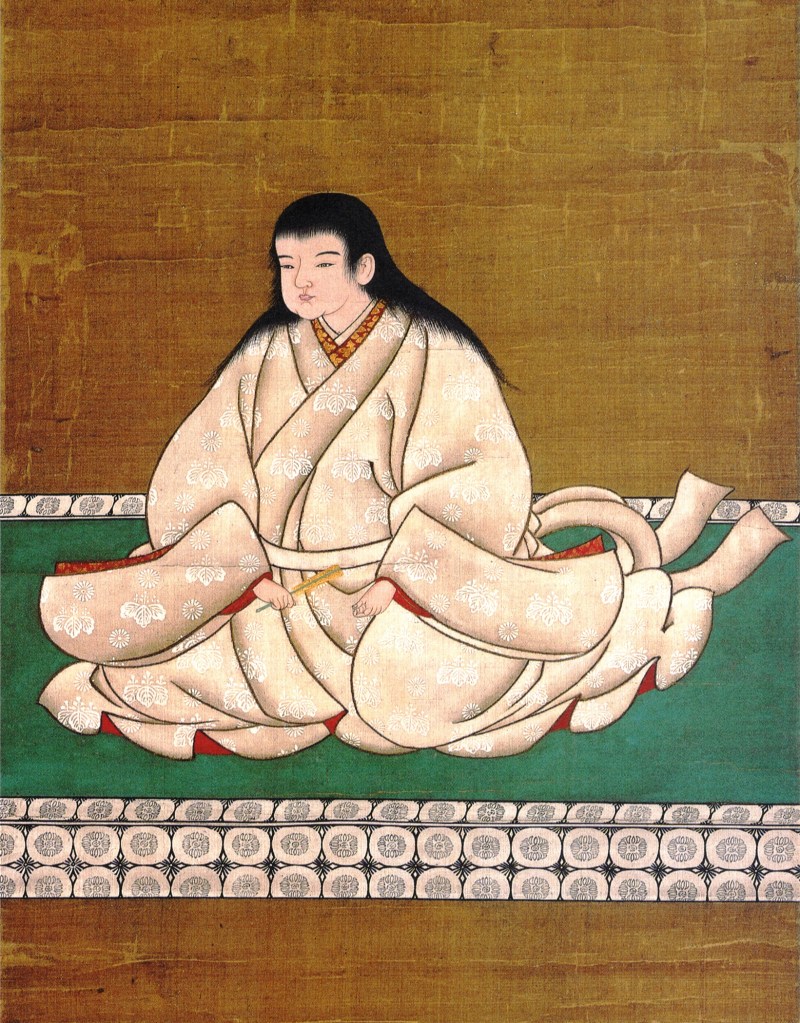
    A stylised image of Tsurumatsu, who was only two when he died.

    In response, Hideyoshi adopted his nephew, Hidetsugu, as heir to the Toyotomi family, and (presumably) eventually to supreme power. This arrangement endured until 1593, when one of Hideyoshi’s concubines, Lady Yodo, gave birth to a second son, Hideyori, whose arrival was apparently widely celebrated.

    That is, widely celebrated by everyone but Hidetsugu, whose position was now under threat. In 1595, rumours began to spread that Hidetsugu was plotting rebellion, and a delegation, led by Ishida Mitsunari, was sent to his residence to investigate. He wrote a five-page letter declaring himself innocent of the accusations, which was promptly delivered to Hideyoshi.

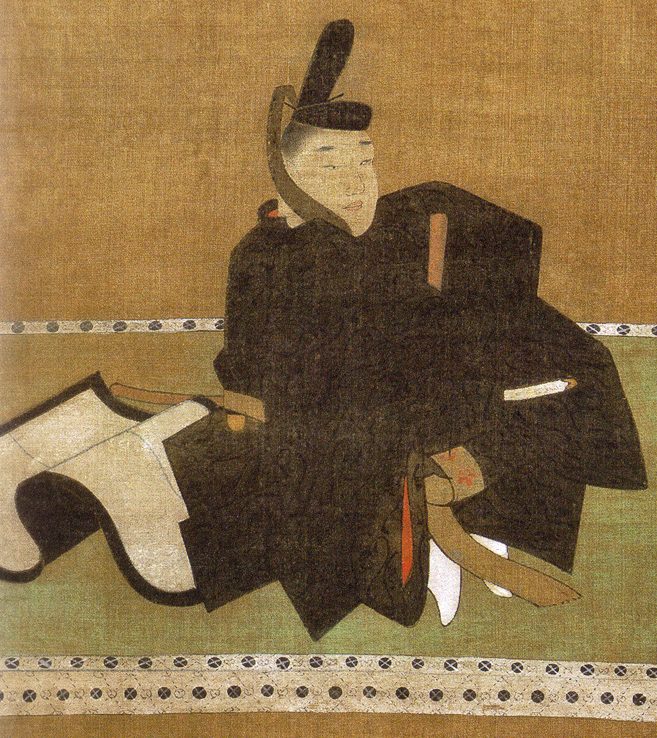
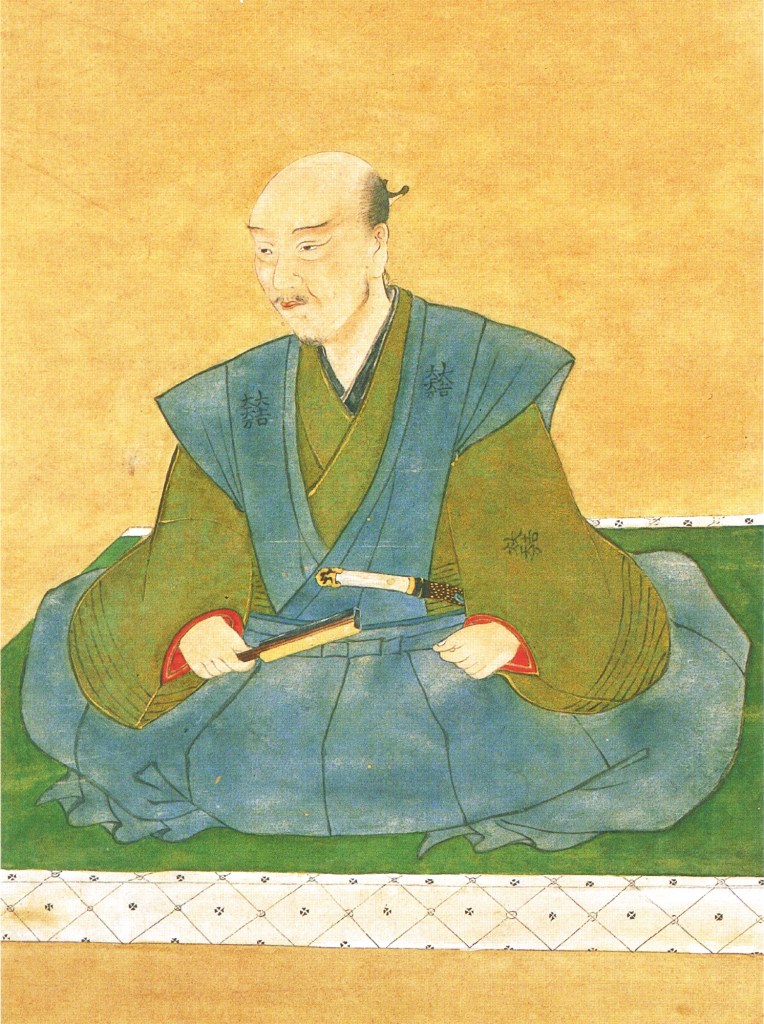
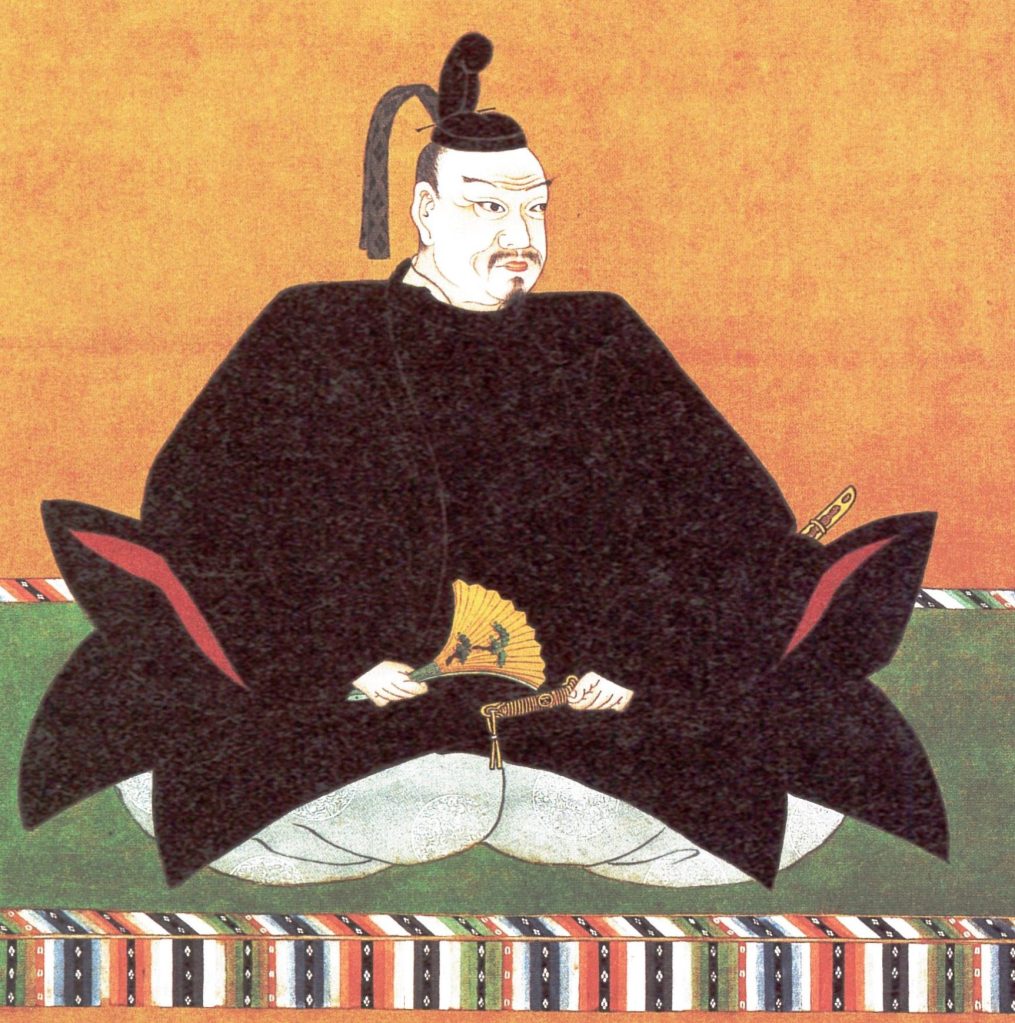
    Toyotomi Hidetsugu

    Hideyoshi then summoned his nephew for an audience, but when Hidetsugu arrived at Fushimi Castle, as ordered, he was denied entry and instead told to shave his head and become a monk. Hidetsugu apparently complied, retiring to Mount Koya. However, even this was not enough, and on August 20th, 1595, an order arrived demanding Hidetsugu commit seppuku.

    Hidetsugu swiftly complied, but even this did not satisfy Hideyoshi, who went further and ordered the deaths of Hidetsugu’s entire family. In the end, 39 people, including children, wives, and concubines, were beheaded at Sanjo Kawara, in Kyoto, and dumped in a mass grave. Some sources say that the commoners who came to watch were so disgusted with the manner of the executions that they began hurling insults at the magistrates responsible, and in the aftermath, a memorial stone dedicated to “Hideyoshi’s Evil” was erected.

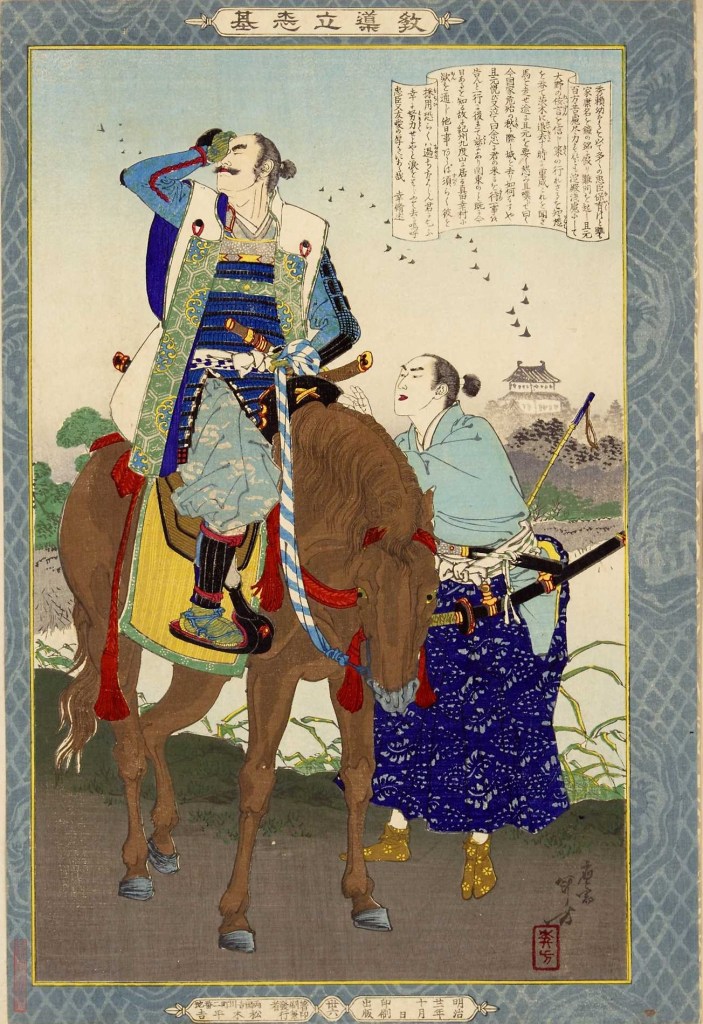
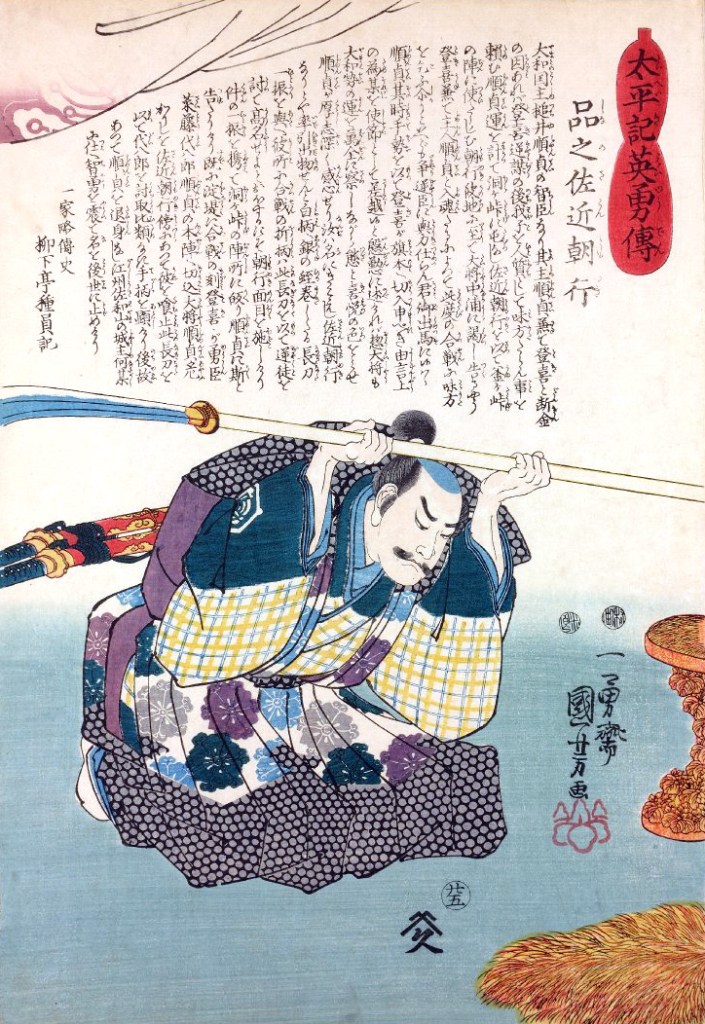
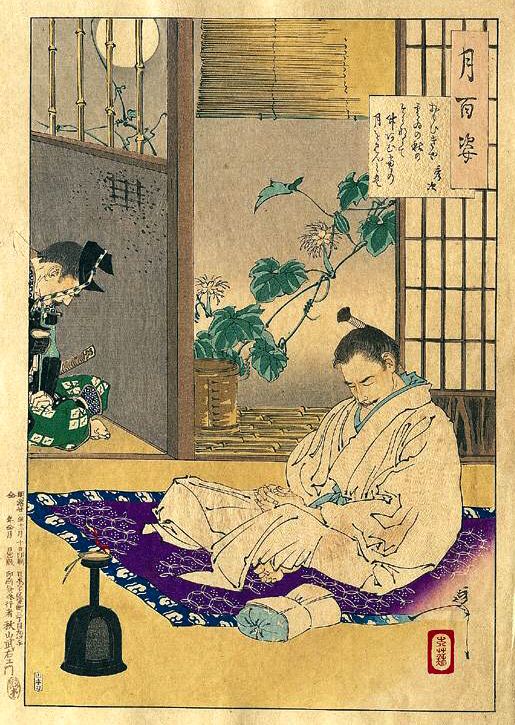
    A 19th-century depiction of Hidetsugu committing seppuku. Even his death did not spare his family from Hideyoshi’s wrath.

    Theories around why Hideyoshi ordered his nephew’s death, and why it was carried out with such thorough brutality, have swirled since the moment Hidetsugu’s head was struck off. A common view is that Hidetsugu really was planning to rebel, or at least Hideyoshi believed he was, and the purge that followed was simply ensuring no one survived to take revenge.

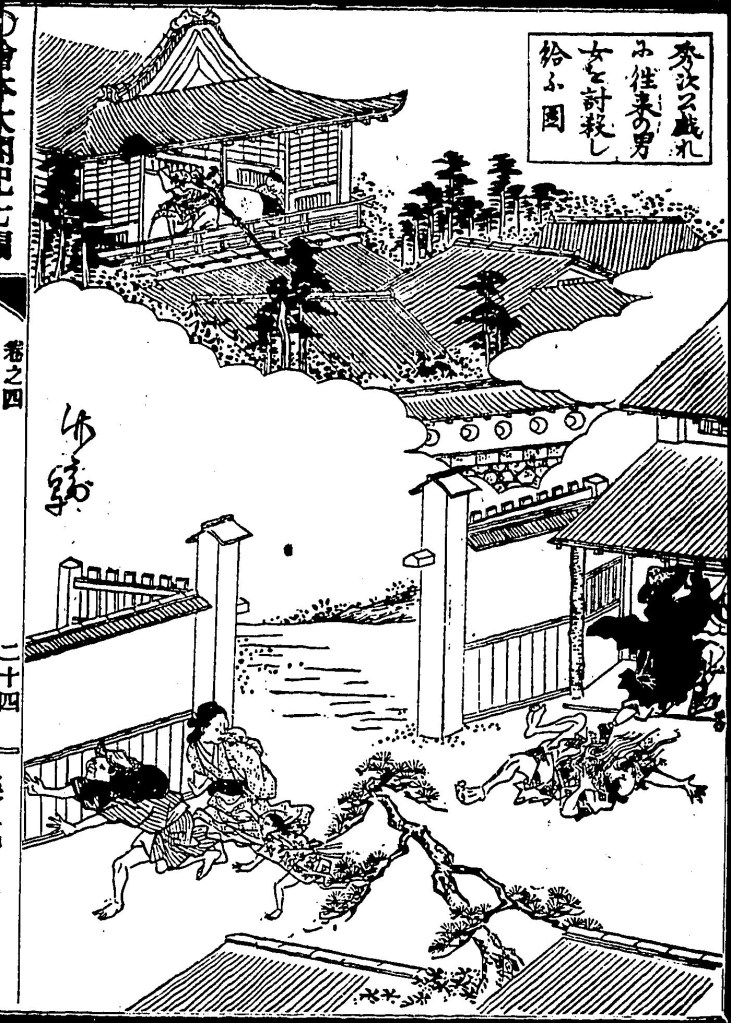
    Another theory is that Hidetsugu himself had earned a reputation as a violent lunatic, routinely hacking people down in the street, and even being known to take potshots at commoners with a musket, earning him the nickname the “Killing Regent”. Modern scholars are generally sceptical of this reputation, however, citing a lack of contemporary sources referring to what should have been a fairly well-known situation.

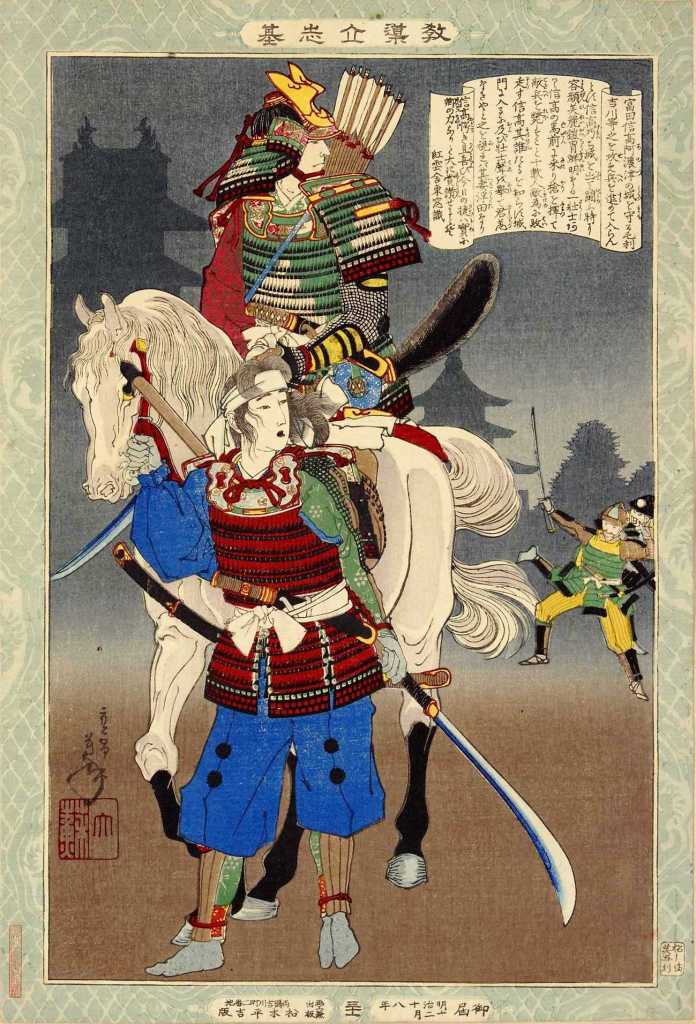
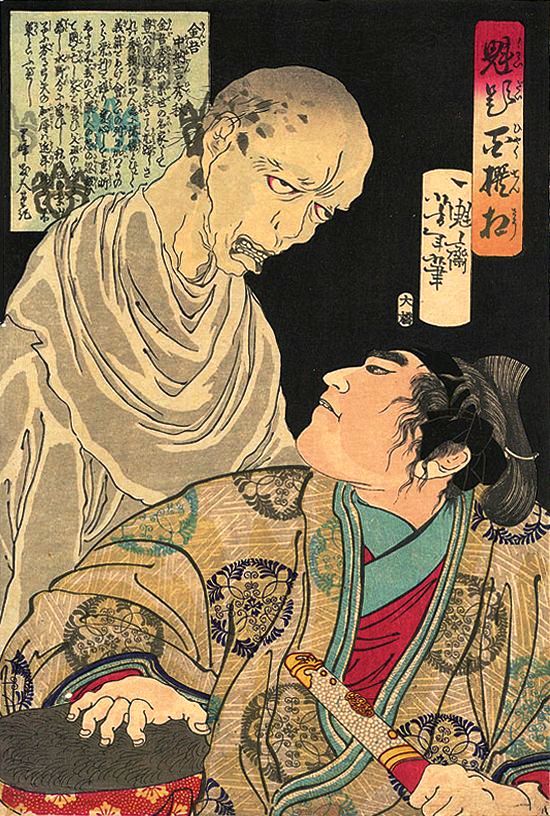
    A much later depiction of Hidetsugu (top left) taking potshots at passersby. Images like this served to discredit Hidetsugu’s memory, but sources from his lifetime make no mention of such behaviour, except in reporting rumours.

    An addition to this theory is that Ishida Mitsunari, and his associates, deliberate sought to slander Hidetsugu in the eyes of Hideyoshi, though again this is now widely seen as a latter invention, written by authors in the Edo Period, decades after the events, and writing at a time when there was active interest in painting both Hideyoshi, and Mitsunari in a bad light.

    All of this paints Hideyoshi in an increasingly tyrannical light, and subsequent events in his reign would not help matters. In 1596, the Keicho-Fushimi Earthquake struck the area around modern Osaka, leading to widespread damage and the deaths of more than a thousand people. Earthquakes are nothing out of the ordinary in Japan, but damage to several temples around Kyoto prompted an inspection by Hideyoshi himself.

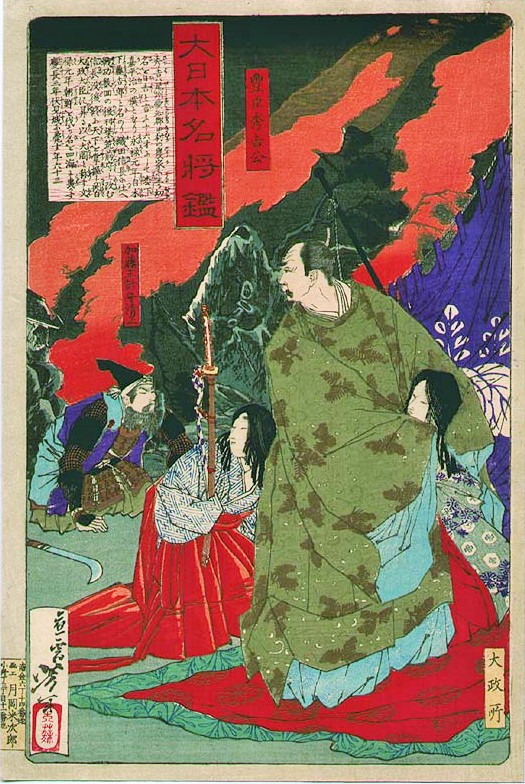
    A 19th-century depiction of Hideyoshi during the Keicho-Fushimi Earthquake.

    At the Hokoji Temple, Hideyoshi had ordered the construction of a “Great Buddha”, which was said to be over 19m tall, making it one of the largest in history. However, in order to speed up construction, Hideyoshi is said to have ordered the construction changed from the traditional bronze to wood. When the earthquake struck, the Buddha was badly damaged as a result of its lighter construction.

    It is said that Hideyoshi, enraged at the damage caused to so expensive a monument, took a bow and shot an arrow into the Buddha’s forehead. Such an act of sacrilege was widely condemned, but scholars disagree over whether it actually happened, as the only sources (again) come from much later. The contemporary sources only say that Hideyoshi, upon inspecting the damage, ordered the Buddha and the hall containing it to be dismantled.

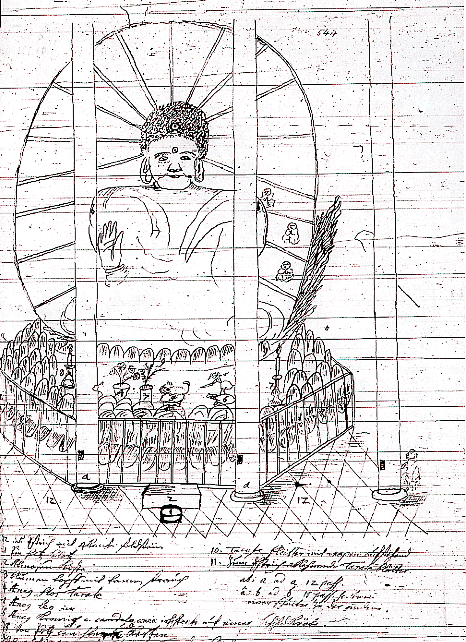
    A sketch by Dutch merchant Engelbert Kaempfer, showing the great Buddha as it appeared in 1691.

    On a side note, both structures would be reconstructed by Hideyoshi’s successor, Hideyori, and the re-consecration of the site would indirectly lead to the downfall and destruction of the Toyotomi Clan in 1615, but that’s a story for another time.

    As we’ve discussed previously, Hideyoshi had issued an order expelling Christian missionaries from Japan back in 1587, but it had generally gone unenforced. That changed in 1596, when the Spanish Galleon, San Felipe, wrecked off the coast of Shikoku. In the immediate aftermath, the local lord (who happened to be a Chosokabe) confiscated the ship’s cargo, and the Spanish complained to Hideyoshi.

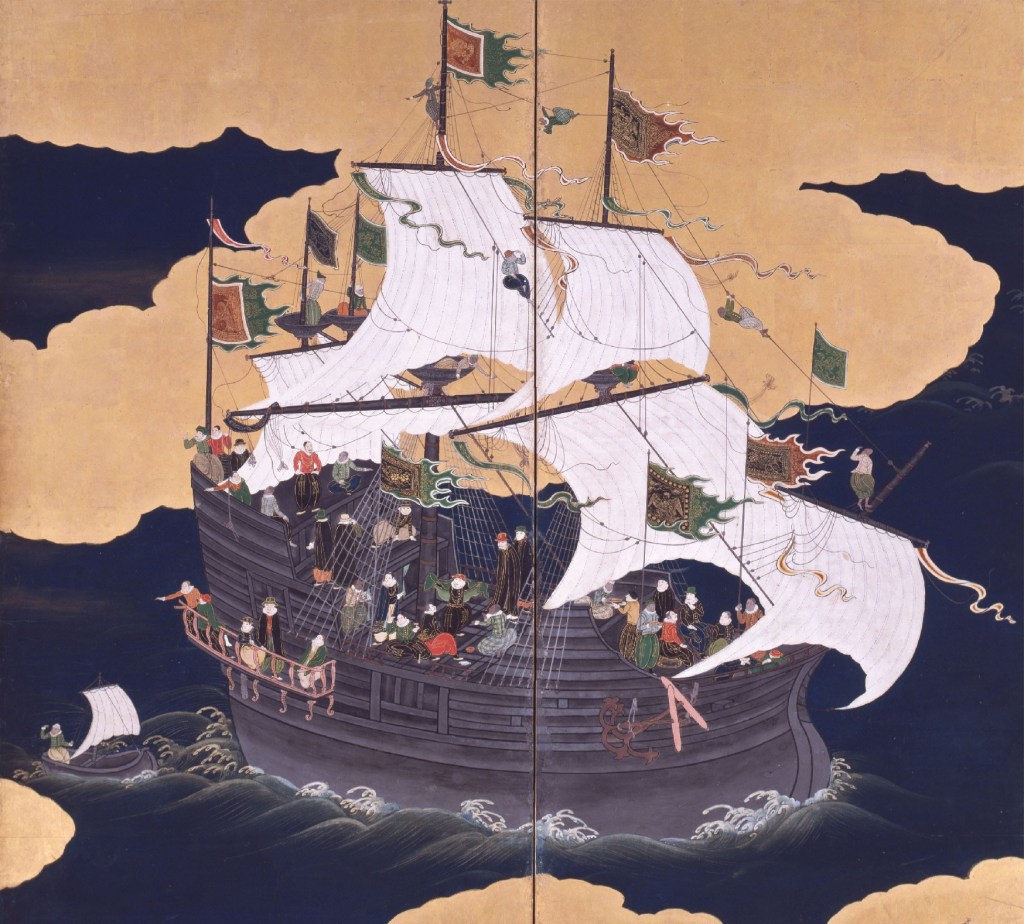
    A European Ship in Japanese waters around the late 16th Century.

    It seems that Hideyoshi himself didn’t much care about the confiscated Spanish treasure; however, one of the crew aboard the San Felipe, a man known as de Hollandia, proved to be a bit of a blowhard. He boasted to the local Japanese authorities that the Spanish Empire was vast, and he produced a map of the world to prove his point.

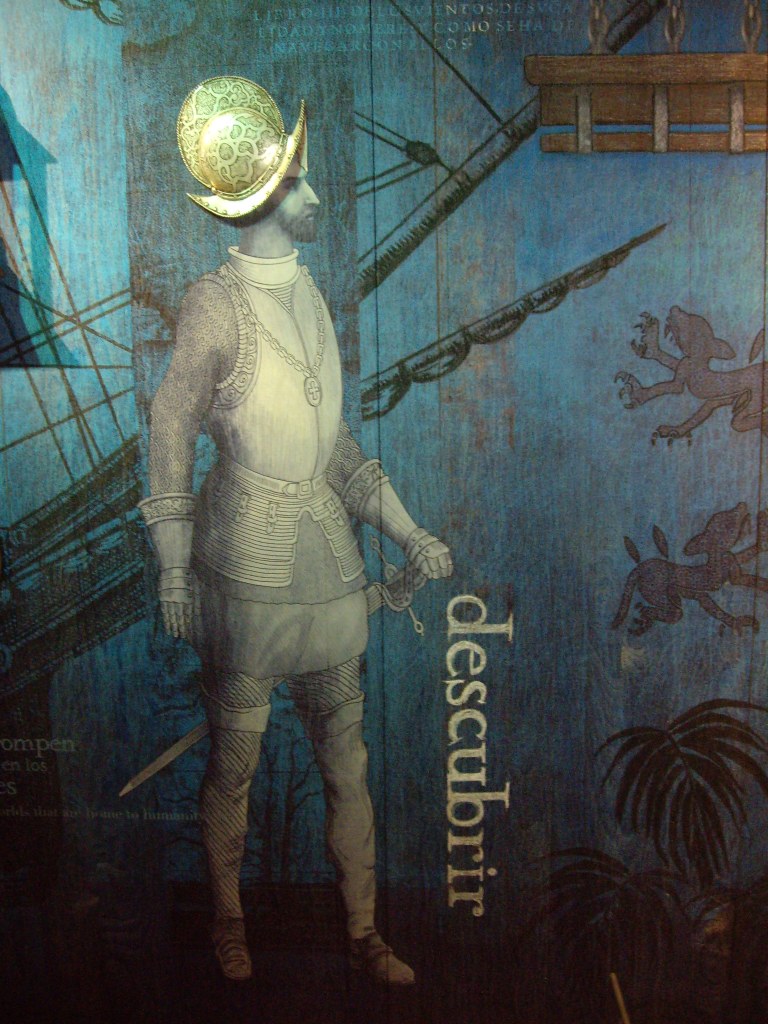
    The Japanese were shocked that the Spanish holdings were so extensive, and when they asked how Spain had come to acquire such territory, de Hollandia made the fateful mistake of claiming that missionaries had gone in first to convert the population, who then served as a vanguard for the Conquistadors who followed.

    The classic image of a Conquistador, this one in Seville, Spain. Though the Conquistadors were very successful in the Americas and the Philippines, they never set foot in Japan, though Hideyoshi had reason to fear they might.
    By CarlosVdeHabsburgo – Own work, CC BY-SA 3.0, https://commons.wikimedia.org/w/index.php?curid=24964604

    Hideyoshi may not have cared about treasure, but he was definitely paying attention now. He took the silver for himself and then ordered all Spanish Friars in Osaka arrested, along with several Japanese converts. In the end, 26 were taken to Nagasaki and publicly executed

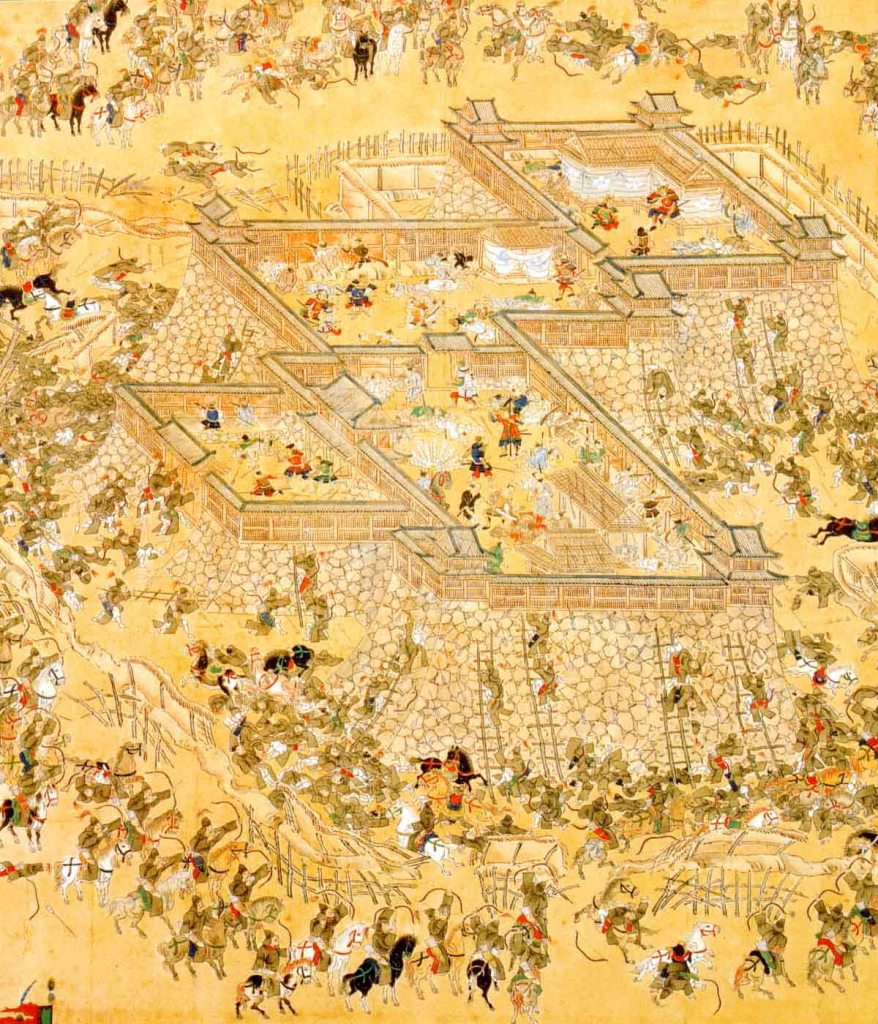
    1596 also saw the restart of conflict in Korea, when negotiations with the Chinese broke down, and Hideyoshi ordered a second invasion, dispatching 140,000 men to reinforce the garrisons already in place. This time, instead of attempting to take the whole of Korea, Hideyoshi planned a more limited campaign, advancing into Gyeongsang Province and securing defensible positions there to serve as staging grounds for another round of conquest later.

    An image depicting the fighting around Ulsan, site of some of the fiercest battles of the second invasion.

    By late 1597, however, Hideyoshi knew he was nearly done. His son and heir, Hideyori, was just a child, and he knew that his succession was far from guaranteed. In order to guarantee a peaceful transfer of power, he summoned five powerful Daimyo to Fushimi, making them swear to rule the realm as a Council of Regents (or Elders) until Hideyori came of age.

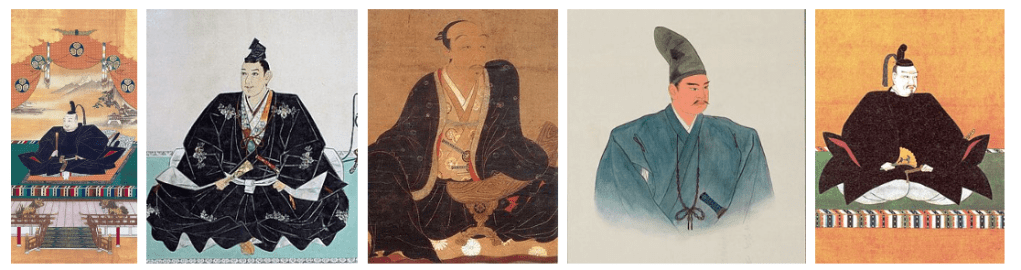
    The five regents were Ukita Hideie, Maeda Toshiie, Uesugi Kagekatsu, Mori Terumoto, and Tokugawa Ieyasu. Of the five, Ieyasu was far and away the most powerful, though he was not strong enough to oppose the other four directly, especially the venerable Maeda Toshiie and Mori Terumoto. This was presumably the point, however, as Hideyoshi wanted to create a council that was made up of men strong enough to rule, but not strong enough to rule alone.

    The Council of Five Elders, from left to right: Tokugawa Ieyasu, Ukita Hideie, Maeda Toshiie, Uesugi Kagekatsu, and Mori Terumoto. Of the five, Ieyasu was the most powerful, and it became the task of the other four to rein him in.

    Hideyoshi passed away in August 1598, and the order he had done so much to create would not long outlive him. The council he had created fell apart within a year, following the death of Maeda Toshiie in 1599 and the political manoeuvring of Tokugawa Ieyasu, who won the decisive Battle of Sekigahara in 1600 and was declared Shogun in 1603.

    Though Hideyori would never rule in his own right, he would continue on as a living example of Hideyoshi’s legacy, but he would eventually fall foul of the rising power of the Tokugawa, and Hideyoshi’s line would come to an end in 1615, though, once again, we are getting ahead of ourselves.


    Sources
    https://ja.wikipedia.org/wiki/%E8%B1%8A%E8%87%A3%E7%A7%80%E5%90%89
    https://ja.wikipedia.org/wiki/%E3%82%B5%E3%83%B3%EF%BC%9D%E3%83%95%E3%82%A7%E3%83%AA%E3%83%9A%E5%8F%B7%E4%BA%8B%E4%BB%B6
    https://ja.wikipedia.org/wiki/%E6%85%B6%E9%95%B7%E4%BC%8F%E8%A6%8B%E5%9C%B0%E9%9C%87
    https://ja.wikipedia.org/wiki/%E6%96%B9%E5%BA%83%E5%AF%BA%E9%90%98%E9%8A%98%E4%BA%8B%E4%BB%B6
    https://ja.wikipedia.org/wiki/%E6%85%B6%E5%B0%9A%E9%81%93
    https://ja.wikipedia.org/wiki/%E6%96%B9%E5%BA%83%E5%AF%BA
    https://en.wikipedia.org/wiki/Yodo-dono
    https://ja.wikipedia.org/wiki/%E8%B1%8A%E8%87%A3%E7%A7%80%E6%AC%A1
    https://ja.wikipedia.org/wiki/%E6%96%87%E7%A6%84%E3%83%BB%E6%85%B6%E9%95%B7%E3%81%AE%E5%BD%B9

  • The Second Unifier – Toyotomi Hideyoshi. Part Six.

    The Second Unifier – Toyotomi Hideyoshi. Part Six.

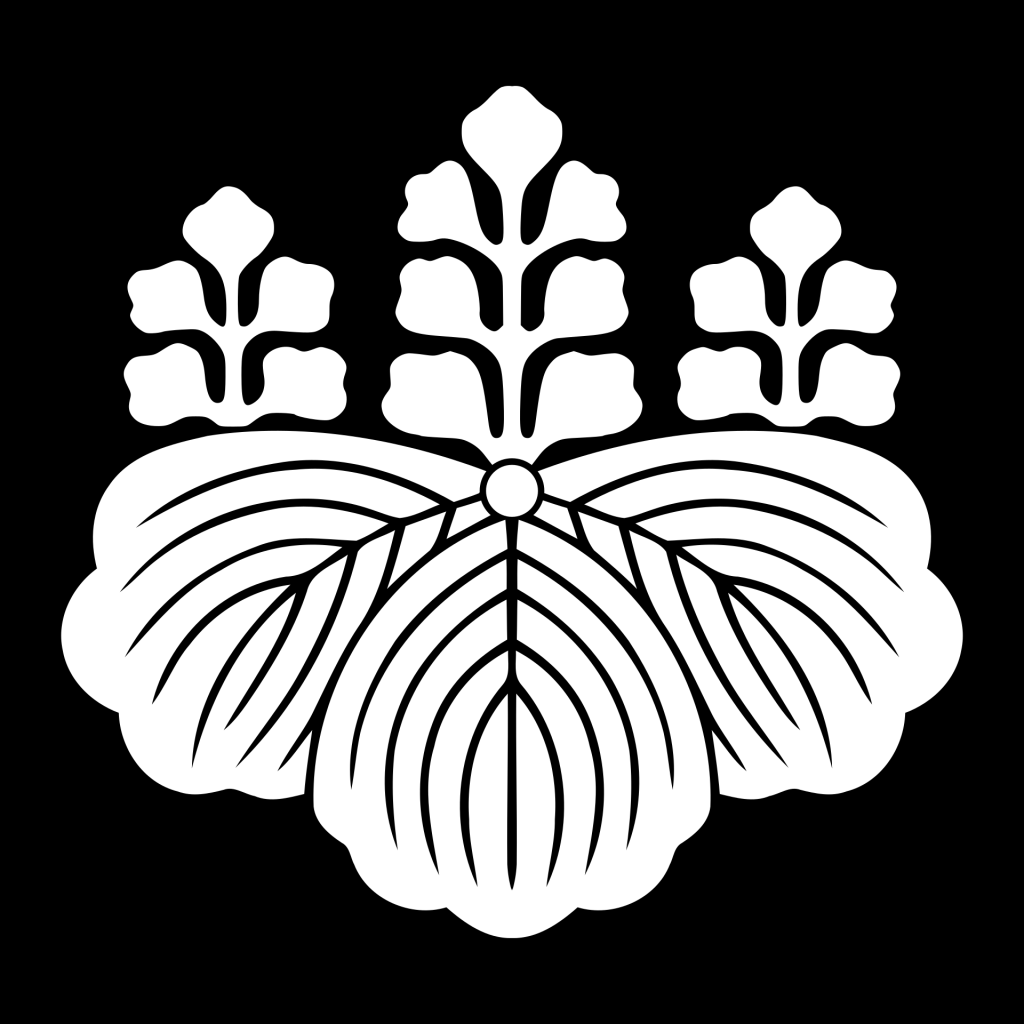
    The mon of the Toyotomi Clan.

    By the late 1580s, Hideyoshi was at the very pinnacle of political and military power in Japan. Jesuit records from the time name him “tyrant” and suggest that he has achieved more power over the realm than any warlord before him.

    After the successful conclusion of the Kyushu Campaign, Hideyoshi ordered a new palace built in Kyoto. Called Jurakudai (or Jurakutei in some sources), Toyotomi moved his political base there from Osaka Castle in early 1588, inviting the Emperor Go-Yozei for a feast in April 1588 and obliging powerful Daimyo (such as Tokugawa Ieyasu) to travel there and pay homage to him.

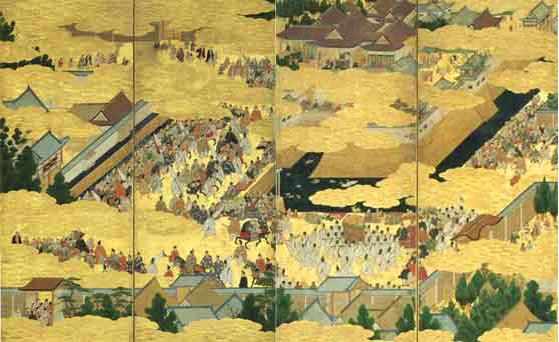
    An image of the Emperor visiting Jurakudai.

    Having secured personal political power, Hideyoshi then turned his attention to pacifying the realm at large. Through his military campaigns, he had subdued most of the powerful Daimyo in the realm, but there remained the issue of establishing peace at the local level as well.

    The Sengoku Jidai exists in the popular imagination as more than a century of conflict, featuring epic clashes between armies of Samurai loyal unto death, and iconic lords like Takeda Shingen, Oda Nobunaga, and Uesugi Kenshin, who were locked in a titanic struggle for ultimate control of the realm.

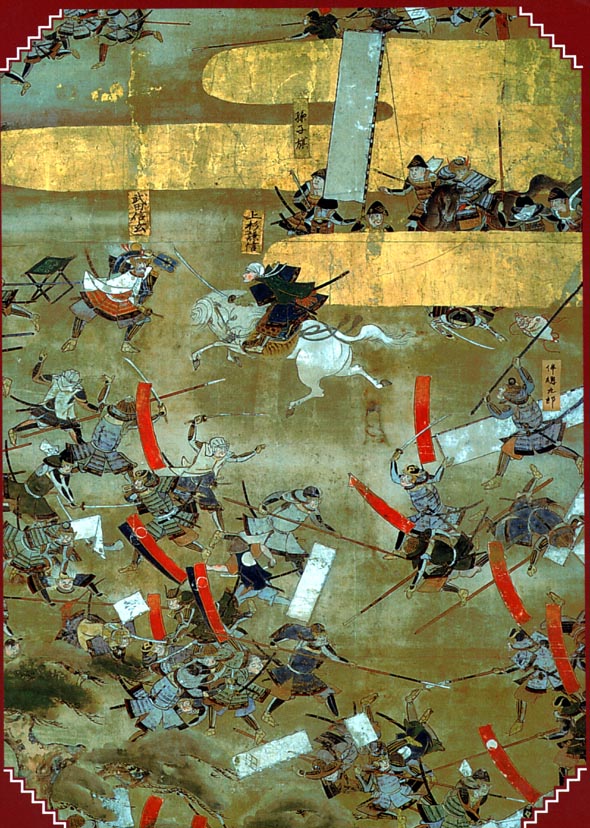
    Uesugi Kenshin and Takeda Shingen engaged in a duel that probably never happened but remains an enduring, if inaccurate, image of the Sengoku-era battlefield.

    Whilst there is certainly truth to this image, much like any period of civil war, Japanese society at large had become incredibly violent during the 16th century. At the local level, the decentralised nature of Daimyo rule led to the emergence of Jizamurai, literally “Local Samurai”. These men often started out as armed peasants, usually levied into the armies of some local lord, and sent home again when the campaign ended.

    Throughout the 16th century, these Jizamurai gradually achieved military and political influence over their local communities, often being allowed to collect tax revenue on behalf of their lord in exchange for military service, similar to a Knightly Manor in medieval Europe.

    This situation worked fine whilst the realm was fractured into dozens of minor domains, but as consolidation followed conquest in the latter half of the 16th century, tensions between “Samurai” and “Jizamurai” became more of an issue. When a lord was defeated, he was usually killed or deprived of his land, meaning that the Jizamurai would often find themselves serving a new lord to whom they had no personal loyalty, leading to frequent conflicts.

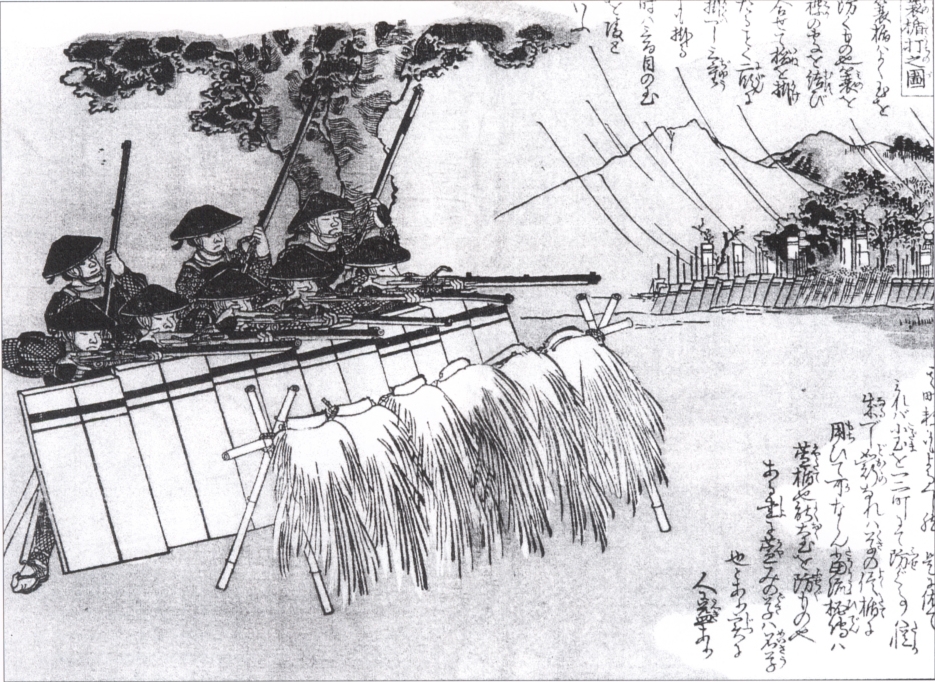
    Ashigaru on campaign. By the late 16th century, the distinction between Warrior and Peasant was often unclear to the point of being non-existent.

    On a societal level, the distinction between Jizamurai and peasants was often academic. Though technically of a higher social status, a Jizamurai usually lived in the village, amongst the peasantry, who would themselves often have access to weaponry and a far greater loyalty to their local Jizamurai than to some powerful Daimyo whom they never saw.

    This led to frequent Peasant Uprisings throughout the Sengoku Period, most famously the Ikko-Ikki, who were motivated by religious fervour but were largely made up of peasants and Jizamurai. It wasn’t just political violence; feuds between villages were common and often escalated into violence, as rival communities would quickly resort to the sword to settle disputes over territory, waterways, and other local matters.

    In 1587, Hideyoshi passed a law forbidding the use of force to resolve such disputes. Though the exact wording of the law has been lost, by looking at the wording of laws from the later Edo Period, which often referred to ‘precedents’ (i.e., earlier laws), we can infer what Hideyoshi’s decrees may have looked like.

    If any villagers or other people in a village engage in a dispute over mountains or waters, using bows, spears, or guns to fight amongst themselves, that entire village shall be punished. – From a decree by Shogun Tokugawa Hidetada -1610

    Scholars debate exactly what Hideyoshi intended with this law, with some suggesting that he meant to disarm and pacify the peasants, whilst others say it was more to do with establishing who had weapons, and who had the right to weapons, part of an ongoing centralisation campaign in which a clearer line was to be drawn between Warrior and Peasant.

    In 1589, Hideyoshi celebrated the birth of a son, Tsurumatsu, whom he swiftly named as his heir, securing his dynasty for the foreseeable future. The following year, after a series of political slights, he launched a decisive campaign against the Hojo, lords of the Kanto, crushing them in the Odawara Campaign.

    A later, heavily stylised depiction of Hideyoshi’s son, Tsurumatsu.

    Also in 1590, he crushed the defiant clans of Northern Japan in a swift campaign, and it is at this point that the “Sengoku Jidai” is said to have come to an end. For the first time in more than a century, the country was under the control of one man, and the realm would never again fracture as it once had. Despite this, one decision made by Hideyoshi in the aftermath of the Odawara Campaign had already sown the seeds of his clan’s ultimate downfall.

    With the destruction of the Hojo, Hideyoshi offered the five provinces of the Kanto to Tokugawa Ieyasu, in exchange for the three he had originally ruled. At the time, this move was seen as political savvy. It positioned the potentially rebellious Ieyasu farther from Kyoto, and though the five Kanto provinces were nominally richer than the three Ieyasu had given up, they had recently been conquered and were potentially volatile, meaning the move weakened Ieyasu in the short term.

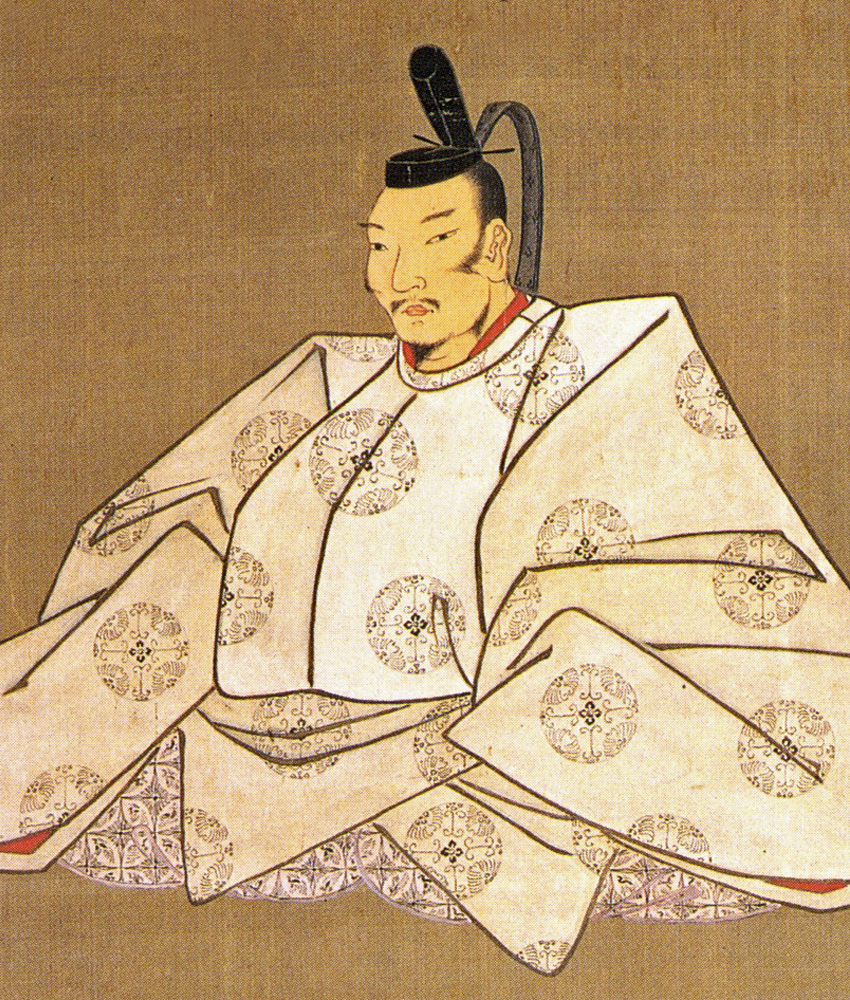
    Tokugawa Ieyasu.

    Hideyoshi, however, had not considered Ieyasu’s political and economic acumen. His base in the Kanto would eventually serve as a springboard for his own rise to power, demonstrated perhaps most clearly by the fact that Japan’s modern capital, Tokyo, is on the same site as Ieyasu’s was, more than 430 years after he moved there, but we’re getting ahead of ourselves.

    The threat from Ieyasu was not Hideyoshi’s only concern, however. In 1591, his brother, Hidenaga, who had proven to be an extremely competent commander and political ally, died in February, followed by his son and heir, the two-year-old Tsurumatsu, in September of the same year.

    Toyotomi Hidenaga

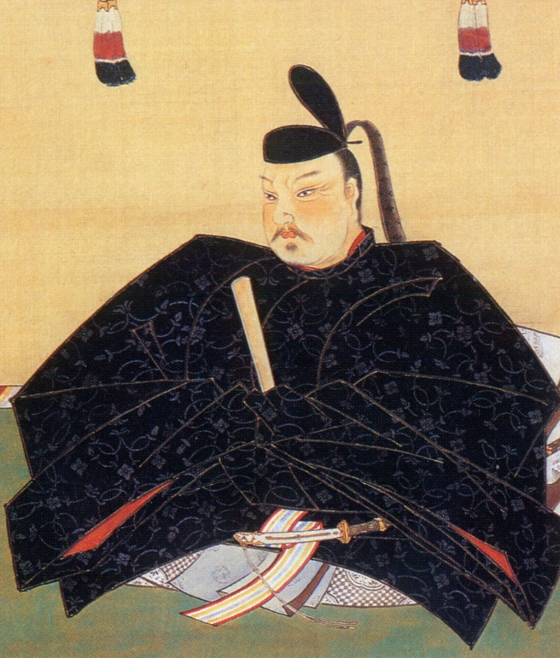
    Following these deep personal and political blows, Hideyoshi adopted his nephew, Hidetsugu, and then retired, handing control of the clan over to him. As was common at the time, Hideyoshi retained true political power; however, becoming known as the Taiko, a title of respect for former regents.

    Also in 1591, with Japan secured, Hideyoshi announced his intention to invade China, launching a brutal invasion of Korea to use it as a base for his main objective. We’ll give the Korean Wars their own post, but for now, we can say that the invasions both highlighted Hideyoshi’s power and brought about political divisions that would ultimately destroy his legacy.


    Sources
    https://ja.wikipedia.org/wiki/%E8%B1%8A%E8%87%A3%E7%A7%80%E5%90%89
    https://ja.wikipedia.org/wiki/%E5%A4%AA%E9%96%A4
    https://ja.wikipedia.org/wiki/%E8%B1%8A%E8%87%A3%E7%A7%80%E9%95%B7
    https://ja.wikipedia.org/wiki/%E6%B7%80%E6%AE%BF
    https://ja.wikipedia.org/wiki/%E8%B1%8A%E8%87%A3%E9%B6%B4%E6%9D%BE
    https://ja.wikipedia.org/wiki/%E5%BE%8C%E9%99%BD%E6%88%90%E5%A4%A9%E7%9A%87
    https://ja.wikipedia.org/wiki/%E5%88%80%E7%8B%A9
    https://ja.wikipedia.org/wiki/%E5%85%B5%E8%BE%B2%E5%88%86%E9%9B%A2
    https://ja.wikipedia.org/wiki/%E5%96%A7%E5%98%A9%E5%81%9C%E6%AD%A2%E4%BB%A4
    https://ja.wikipedia.org/wiki/%E6%B5%B7%E8%B3%8A%E5%81%9C%E6%AD%A2%E4%BB%A4
    https://ja.wikipedia.org/wiki/%E8%81%9A%E6%A5%BD%E7%AC%AC%E8%A1%8C%E5%B9%B8
    https://ja.wikipedia.org/wiki/%E8%81%9A%E6%A5%BD%E7%AC%AC
    https://ja.wikipedia.org/wiki/%E5%9C%B0%E4%BE%8D