Tag: Heian period

  • The Genpei War

    Oh yes, here we go, a good old-fashioned war post! All those posts about economic and social decline are finally paying off! Let’s get into it!

    So, as we’ve discussed, by the mid-12th Century, the Imperial Court was in a bad way. Over the centuries, the throne had been dominated by one powerful clan after another, who would marry into the Imperial family again and again in order to maintain that domination, at the cost of turning their gene pool into more of a muddy puddle. Luckily, Heian Era Japan didn’t have a concept of genetics, so I’m sure it was fine.

    The first of these families had been the Soga, who had been overthrown by the Fujiwara in the Isshi Incident in 645. The Fujiwara had had more or less complete control until the Emperors started abdicating to become insei, that is, cloistered Emperors, or an Emperor with all the power of the throne and none of the restraints that the Fujiwara had taken advantage of.

    With the Fujiwara weakened, their enemies started circling. The Hogen Rebellion in 1156 marked the end of Fujiwara power, as the rival Taira and Minamoto families teamed up to take them down. In a betrayal that will surprise no one, the Taira then shafted the Minamoto in the post-rebellion settlement, taking most of the power and the influence over the Emperor for themselves.

    The Minamoto were understandably a bit put out by that, so they launched a rebellion of their own in 1160. The so-called Heiji Rebellion failed, and the Minamoto were effectively wiped out, their leadership either killed or banished to the provinces.

    For the next 20 years, the Taira ruled as the Fujiwara had, but the problem with a violent takeover is that once one group does it, everyone wants to have a go. The Taira, like the Fujiwara before them, became overly enamoured with court life and neglected the provinces.

    This was unfortunate because, as I mentioned earlier, it was the provinces to which the Minamoto had been banished, and they weren’t in a forgiving mood when it came to the Taira.
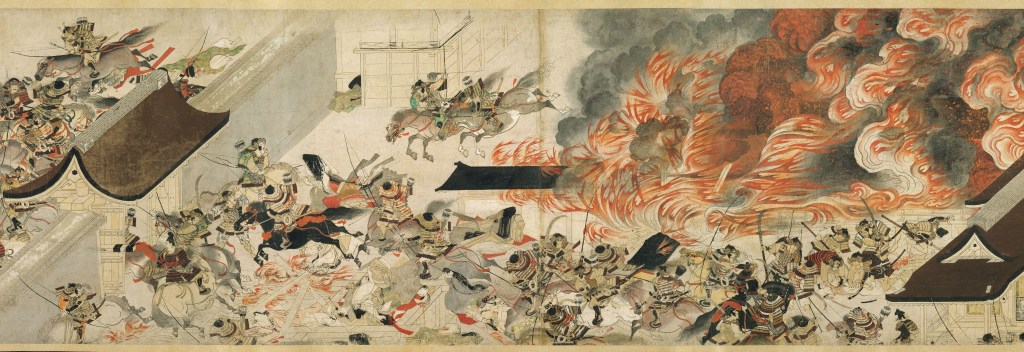
    The Heiji Rebellion in 1160 marked the triumph of the Taira over their Minamoto rivals, at least temporarily.

    The leader of the Taira at this point was Kiyomori. He had led the Taira forces that had overthrown the Fujiwara and then seen off the Minamoto, and he was probably feeling pretty pleased with himself. Using his influence (and presumably the implicit threat of force), he rose through the ranks at court, eventually becoming Daijo-Daijin, which was basically the head of the government and second only to the Emperor (in theory).

    Now, there had obviously been Daijo-Daijin before Kiyomori, but he was significant because he was the first from the buke or warrior families to rise to that rank. Previously, the formal ranks of the Imperial Bureaucracy had been held by members or allies of the Fujiwara, and Kiyomori was an outsider who was seen as having used martial strength to gain his position, which was true, to be fair.

    In 1171, Kiyomori cemented his power at court by having his daughter, Tokuko, marry Emperor Takakura. Now, none of this was particularly new; the Fujiwara had been doing it for centuries, after all, but Kiyomori was different; he was a thug.

    The Fujiwara, for all their faults, had always played the game properly. They knew the rules, understood court etiquette, wrote beautiful poems, all that stuff. Kiyomori wasn’t like that. He’d taken power through military strength, and that was how he intended to keep hold of it. He wasn’t afraid to throw his weight around, and it was a risky business to oppose him.

    In 1177, in response to an alleged coup (the Shishigatani incident), Kiyomori ordered the arrest of dozens of conspirators. That these conspirators were all people who had reason to be offended by Kiyomori was convenient, and some sources speculate that the plot never existed at all, as it appears to have relied entirely on the testimony of a single monk, who Kiyomori had tortured and then beheaded.

    Regardless of whether it was real or not, Kiyomori had reinforced his power. Those who had ‘opposed’ him were dead or exiled, and he filled the vacant posts with family members and allies, further cementing his power and the fury of the opposition against him.

    In 1178, Tokuko gave birth to a son, Antoku, and Kiyomori decided it’d be a good time to remind everyone at court who was really in charge. The so-called Political Crisis of the Third Year of the Jisho Era (which is a bit easier to say in Japanese, I assure you) was basically a military coup d’etat. Kiyomori brought thousands of his warriors from the provinces to the capital and took over.

    There was no longer any pretence, Kiyomori was dictator in all but name, and shortly after the coup, he had Emperor Takakura abdicate in favour of the two-year-old Antoku, who obviously couldn’t rule himself, at which point Kiyomori kindly stepped in as regent.

    You remember what I said about violent takeovers? Well, Kiyomori was about to learn that lesson. The Taira had driven out the Minamoto, but they hadn’t destroyed them, and for twenty years, Kiyomori had ruled in such a way that he alienated just about everyone.

    In 1180, Prince Mochihito, who had been in line for the throne before Kiyomori raised the infant Antoku in his place, raised his banner in rebellion, calling for the opponents of the Taira to gather an army and march on the capital. Unfortunately, for Mochihito, his plan was discovered, and he was forced to flee, eventually arriving at the temple of Mii-Dera in Nara.

    What follows is largely recorded in The Heike Monogatari, which is a pretty epic read, but is largely a fictionalised account of the war, presenting an idealised version of events, in which heroic warriors do heroic things against impossible (and often implausible) odds.

    What we do know is that Mochihito, outnumbered and overwhelmed, was defeated at the Battle of Uji, just outside modern Kyoto, where he was either killed or executed shortly afterwards. Despite his unsuccessful attempts at raising an army, Mochihito’s call to arms did serve to galvanise the opposition to the Taira.

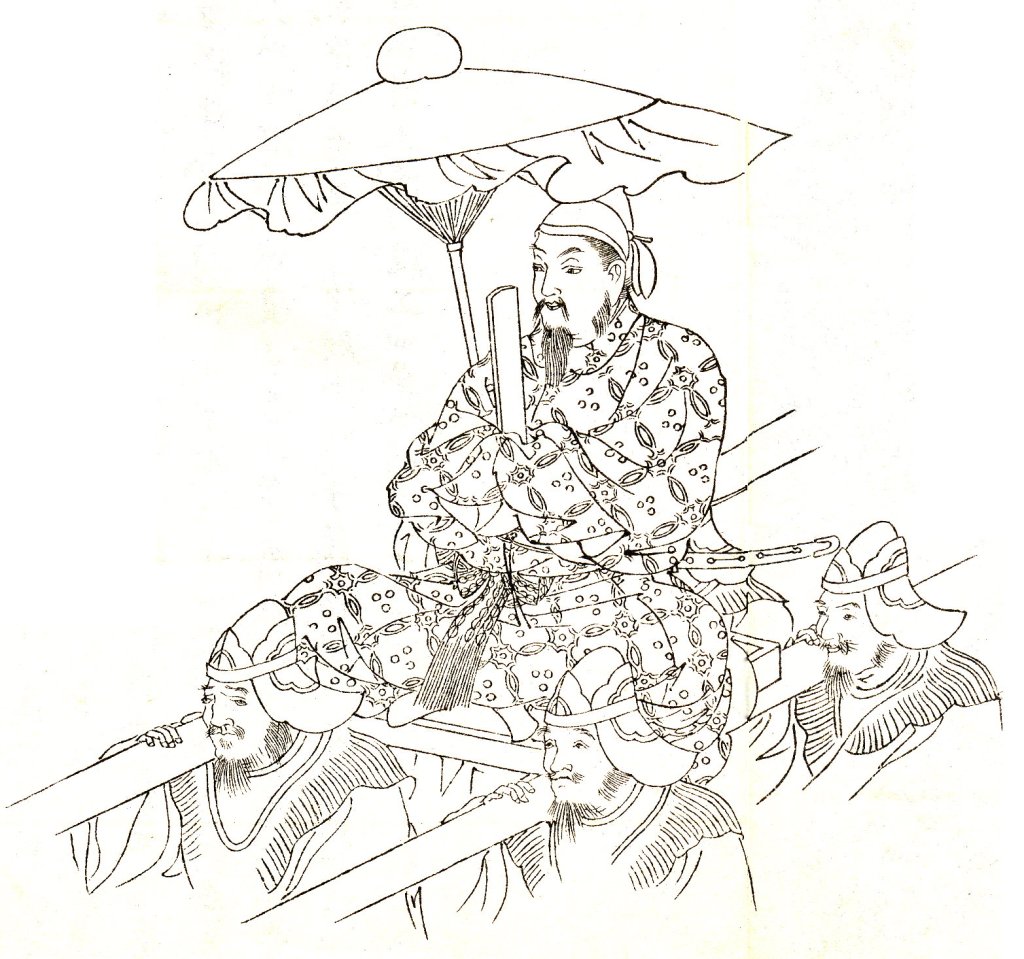
    Prince Mochihito, whose failed rebellion and death at the Battle of Uji served to inspire the opposition to Taira rule.
    ColBase: 国立博物館所蔵品統合検索システム (Integrated Collections Database of the National Museums, Japan), CC 表示 4.0, https://commons.wikimedia.org/w/index.php?curid=92525963による

    It is at this point that Minamoto no Yoritomo enters the stage, he definitely deserves a post of his own, but the short version is that he was 13 in 1160, and the Taira, perhaps feeling pity over his youth, hadn’t executed him, banishing him to the provinces instead.

    Yoritomo, however, had a long memory, and he had spent the last twenty years gaining strength, first over his own clan, and then the surrounding area. His base was the city of Kamakura, in modern-day Kanagawa Prefecture, and it was a relatively long way from the capital.

    When news of Uji reached him, Yoritomo set off looking for a fight. He called for help from the surrounding clans, and although there seems to have been some support, very few actually showed up to fight. In September 1180, Yoritomo had managed to gather just 300 men, and he was attacked by a force ten times that size at the Battle of Ishibashiyama.

    Despite this defeat, Yoritomo was able to escape by sea to Awa Province (in modern Chiba Prefecture), from where he would continue the fight. Meanwhile, the Taira, under Kiyomori, sought to take revenge against the monks who had hidden Prince Mochihito, and attacked and burned the city of Nara.

    Meanwhile, Yoritomo’s uncle was defeated at the Battle of Sunomatagawa in June 1181. The story goes that the Minamoto tried to sneak across a river at night in order to attack the Taira on the other bank. Apparently, their plan failed because Taira sentries were able to distinguish friend from foe by checking who was wet, or not. That seems like remarkable awareness for a battle in the dark, but regardless, the Minamoto failed to surprise the Taira and were defeated.

    Later that year, Yoritomo’s cousin (and sometimes rival) Yoshinaka raised an army in the north and defeated the Taira army sent to stop him, after which, fighting died down for a while.

    Taira no Kiyomori had died earlier in 1181 (the story goes that his fever was so hot anyone who tried to tend him would be burned), and not long after, a famine broke out that would spread across the nation. You can’t fight if you can’t eat, and so what followed was a two-year lull in the fighting, which I imagine wasn’t much comfort to the starving peasants.

    The fighting would resume in 1183, and the Taira would have some initial success, but at the Battle of Kurikara Pass in June of that year, the Taira were decisively defeated, and the momentum shifted to the Minamoto. It was Yoshinaka (Yoritomo’s cousin) and Yukiie (Yoritomo’s Uncle, but not Yoshinaka’s father, I know, it’s confusing) who actually led the Minamoto to the capital.

    As Kiyomori was dead, it fell to his son Munemori to lead the defence of the city. He did this by taking young Emperor Antoku and fleeing west, as you do. It was at this point that the cloistered Emperor, Go-Shirakawa (yeah, he’s still alive at this point!) threw in his lot with Yoshinaka and the Minamoto, calling on them to pursue and destroy the Taira.

    Unfortunately, Yoshinaka had different plans. Fancying himself the rightful leader of the Minamoto, he engaged in a plot against his cousin, Yoritomo, who was by now marching from the East towards the capital. It seems he was initially joined by Yukiie, who then got cold feet and let details of the plot slip.

    Yoshinaka himself became aware that the plot had been discovered and moved first, setting fire to several parts of the capital and taking Go-Shirakawa hostage. It was at this point that Yoritomo’s brothers, Yoshitsune and Noriyori, arrived with a considerable force. They drove Yoshinaka out of the capital, and then killed him at the Second Battle of Uji , bringing an end to the Minamoto Clan’s feuding (for now.)
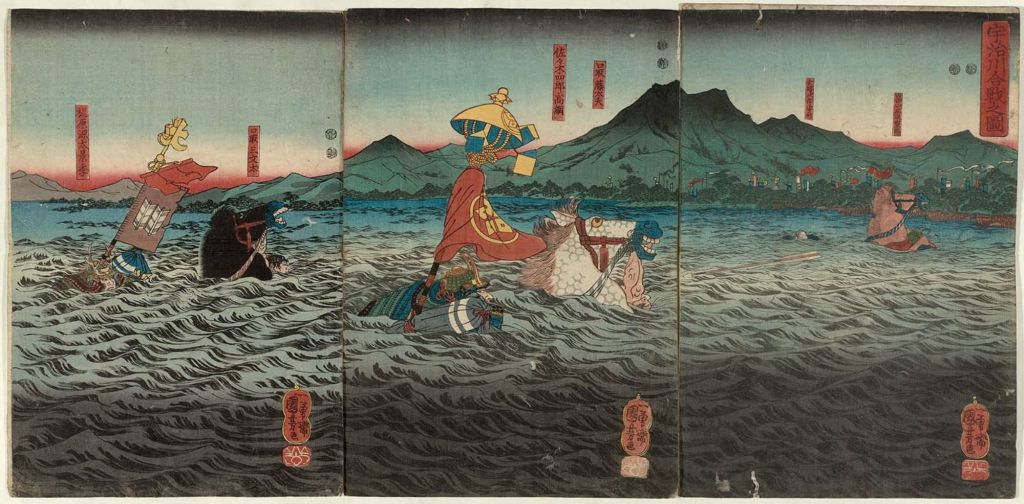
    A scene from the Second Battle of Uji. The bridge had been pulled up, hence the need to swim.

    After this, the momentum was decisively on the side of the Minamoto. They pursued the Taira, who had originally set up camp at Dazaifu, in Kyushu, and fortifying their positions around the Inland Sea, which were the lands the Taira had originally held.

    The Minamoto went on the offensive and defeated the Taira at the Battle of Ichi-no-Tani, near modern-day Kobe, followed up by another victory at Kojima. These successes allowed the Minamoto to drive the Taira out of their strongholds along the coast of the Inland Sea.

    The Taira, in possession of what was apparently the only navy in Japan at the time, and certainly the strongest, retreated to Shikoku, knowing that the Minamoto couldn’t follow. The Minamoto weren’t going to just let the Taira get away, however, and although it took time, they built up their naval strength before launching an attack at Yashima, in modern-day Takamatsu, that took the Taira fortress there, which had also been used as a makeshift palace for Emperor Antoku.

    Driven out of yet another stronghold, the Taira took to their ships and fled. The Minamoto would catch up to them at Dan-no-Ura, in the Straits of Shimonoseki. If you believe the Heike Monogatari (which you shouldn’t), then the Minamoto had 3000 ships to the Taira’s 1000. According to the Azuma Kagami, which is a biased by slightly more believable source, the forces were actually around 800 to 500, which are still considerable forces, but a bit more plausible.

    Despite being outnumbered, the Taira had home advantage and knew the tides and currents better than their foes. They also had the Emperor with them, which they assumed would give their side more legitimacy and encourage their men to fight harder.

    It was a good idea in theory, but it didn’t work. Though the tides were initially in the Taira’s favour, they turned, as tides do, and one of the Taira’s commanders turned as well, as men often do. Surrounded and attacked from all sides, the Taira began committing suicide en masse. One of those who died was six-year-old Antoku. The story goes that his grandmother, Taira no Kiyomori’s widow, took the boy in her arms and jumped with him into the sea. Neither was seen again.

    The Taira also tried to get rid of the Imperial Regalia, tossing them overboard. However, they apparently only managed to dump the mythical Kusanagi Sword and the Yasakani Jewel. The Yata no Kagami, a sacred bronze mirror, was apparently saved when the woman who tried to throw it overboard was killed when she accidentally looked at it.

    All three items were apparently recovered, either on the day of the battle or later, by divers. They are supposedly housed at the Ise Shrine in Mie Prefecture. The fact that no one has been allowed to see the artefacts since Dan-no-Ura is apparently just a coincidence.
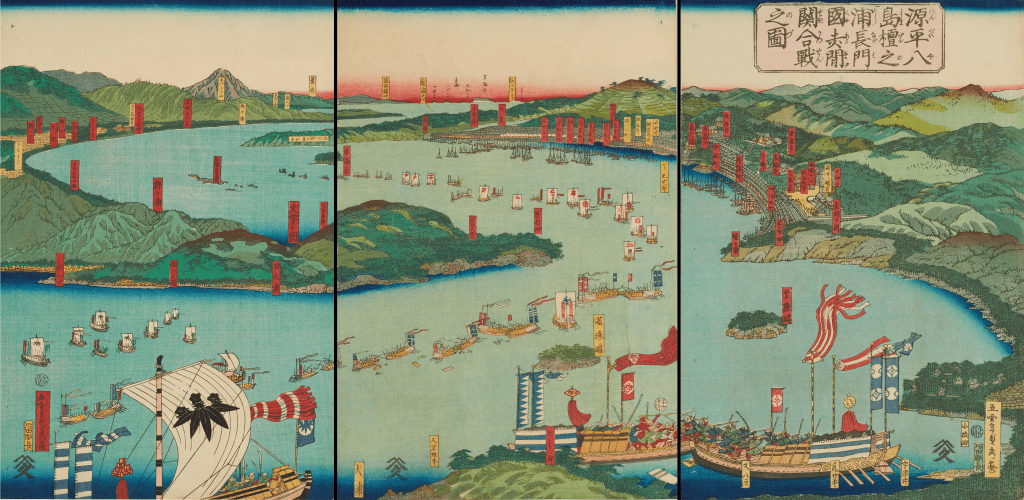
    A later illustration of the Battle of Dan-no-Ura, which brought an end to Taira control of Japan.

    The result of Dan-no-Ura was the end of the Taira as a serious political force. Later that year, the Emperor Go-Shirakawa gave Minamoto no Yoritomo the right to collect taxes and appoint officials, effectively handing control of the state over to him.

    Though it would be some years before Yoritomo would take the formal title, the Genpei War marks the time at which control of Japan shifted from courtiers and Emperors to warriors under a supreme military commander who took a title that had first been used in the earliest days of Imperial rule in Japan, Sei-i Tai Shōgun.

    Cue dramatic music

    Sources
    https://en.wikipedia.org/wiki/Battle_of_Dan-no-ura
    https://en.wikipedia.org/wiki/Battle_of_Uji_(1184)
    https://en.wikipedia.org/wiki/Azuma_Kagami
    https://ja.wikipedia.org/wiki/%E5%B1%8B%E5%B3%B6%E3%81%AE%E6%88%A6%E3%81%84
    https://en.wikipedia.org/wiki/Battle_of_Yashima
    https://ja.wikipedia.org/wiki/%E4%B8%80%E3%83%8E%E8%B0%B7%E3%81%AE%E6%88%A6%E3%81%84
    https://ja.wikipedia.org/wiki/%E8%97%A4%E6%88%B8%E3%81%AE%E6%88%A6%E3%81%84
    https://ja.wikipedia.org/wiki/%E6%BA%90%E8%A1%8C%E5%AE%B6
    https://ja.wikipedia.org/wiki/%E5%80%B6%E5%88%A9%E4%BC%BD%E7%BE%85%E5%B3%A0%E3%81%AE%E6%88%A6%E3%81%84
    https://en.wikipedia.org/wiki/Battle_of_Kurikara_Pass
    https://en.wikipedia.org/wiki/Minamoto_no_Yukiie
    https://en.wikipedia.org/wiki/Minamoto_no_Yoshinaka
    https://en.wikipedia.org/wiki/Battle_of_Sunomata-gawa
    https://en.wikipedia.org/wiki/Battle_of_Ishibashiyama
    https://ja.wikipedia.org/wiki/%E4%BB%A5%E4%BB%81%E7%8E%8B
    https://en.wikipedia.org/wiki/Prince_Mochihito
    https://en.wikipedia.org/wiki/Emperor_Takakura
    https://en.wikipedia.org/wiki/Emperor_Antoku
    https://en.wikipedia.org/wiki/Taira_no_Kiyomori
    https://en.wikipedia.org/wiki/The_Tale_of_the_Heike
    https://en.wikipedia.org/wiki/Battle_of_Uji_(1180)
    https://ja.wikipedia.org/wiki/%E6%B2%BB%E6%89%BF%E3%83%BB%E5%AF%BF%E6%B0%B8%E3%81%AE%E4%B9%B1
    https://ja.wikipedia.org/wiki/%E6%B2%BB%E6%89%BF%E4%B8%89%E5%B9%B4%E3%81%AE%E6%94%BF%E5%A4%89
    https://en.wikipedia.org/wiki/Shishigatani_incident
    https://ja.wikipedia.org/wiki/%E9%B9%BF%E3%82%B1%E8%B0%B7%E3%81%AE%E9%99%B0%E8%AC%80
    https://en.wikipedia.org/wiki/Genpei_War
    https://en.wikipedia.org/wiki/Minamoto_no_Yoritomo
  • Heian V – Taira, Minamoto, & Tachibana.

    Last time, we talked at length about the Fujiwara family. We looked at how they rose to power and came to dominate the Imperial Court through a combination of violence, intrigue, and incestuous marriages.

    The Minamoto were far from the only noble family, however. Although there were literally dozens of families, cadet branches and noble upstarts, by the beginning of the Heian Era, there were four main houses: the Fujiwara, Taira, Minamoto, and Tachibana families.

    We’ve already talked at length about the Fujiwara and their origins, but what about the other three? First, a bit of background: Emperors generally had more than one consort, though there was technically only supposed to be one “Empress” This was routinely flouted during the Heian Period, especially by the Fujiwara, and besides official wives, the Emperor would take other noble women as concubines.

    In the days before family planning, this meant that any Emperor could have far more children than he knew what to do with. This would frequently lead to instability at court, as rival factions would form around different heirs, but what about the sons who were born to lower ranked women, or otherwise lacked legitimacy and support?

    Well, that’s where the Taira, Minamoto, and Tachibana come in. Technically, these three families didn’t start out as families at all; instead, the names were bestowed on these “extra” Imperial princes, who were excluded from the throne and would then go off and start houses of their own as part of the nobility.

    The Tachibana were the first (708), followed by the Minamoto (814) and the Taira (825), but things get complicated almost immediately. The problem is that one Emperor might bestow the name Minamoto on his grandson, only for another Emperor a generation later to do the same thing, creating two families that share a name.

    Whilst this isn’t uncommon in the modern world (How many Smiths do you know?), it does make it tricky to keep track of who is who when writing up a history blog. For the purposes of keeping things concise, I will be referring to all branches of each clan by the same name unless it’s important to make a distinction.

    It’s honestly not that bad with the Tachibana, as there were only two main branches. Even the Taira only had four, but the Minamoto had twenty-one, and that’s where it gets silly. It’s even worse when you realise that most, if not all, the later Samurai houses claim descent from at least one of the four major Heian Families, but we’ll get to that later.

    Tachibana

    We’ll start, as they say, at the beginning. Though the Fujiwara would emerge in 668, fifty years before the Tachibana, the latter family are the first of these Imperial “offshoots.” (The Fujiwara were pre-eminent but were not founded by the son of an Emperor).

    The Tachibana initially came into being in 708, when court Lady Agatainukai no Michiyo was given the honorary name “Tachibana” by Empress Genmei. The clan’s name was officially changed to Tachibana in 736, when Michiyo’s sons, Katsuragi and Sai, formally adopted the name; both men were direct descendants of Emperor Bidatsu through their father, Prince Minu.

    Initially, the Tachibana seemed to be on course to be one of the main players in Heian Court politics. Though Sai died early, his brother, Katsuragi (who changed his name to Tachibana no Moroe), would rise to high office in the Imperial Government, securing the family’s influence in the short term.

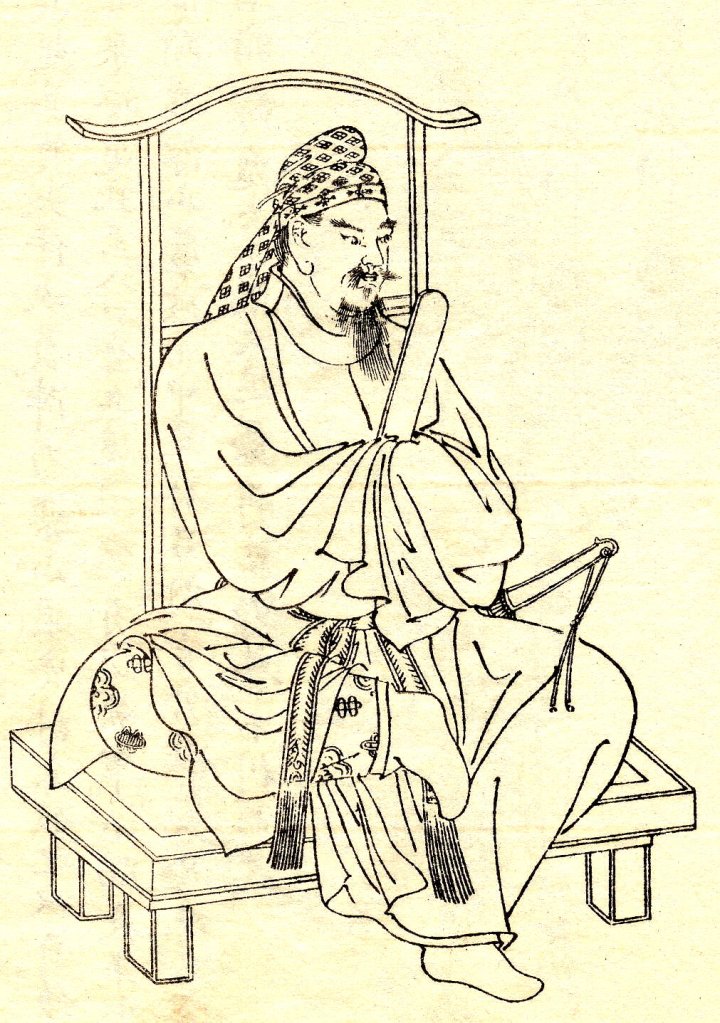
    Tachibana no Moroe, under whom the Tachibana’s star rose considerably.

    Unfortunately, as is so often the case, the son did not prove the equal of the father. Moroe was succeeded by his son, Tachibana no Naramaro. Though Naramaro was granted high office at first when Emperor Shomu retired and was succeeded by his daughter, Empress Koken, Tachibana’s influence was suddenly under threat.

    Koken is another character who deserves an entire post of her own, but the short version is that she favoured and was supported by the Fujiwara under Fujiwara no Nakamoro. Taking advantage of this, Nakamoro acquired lands, wealth, and titles that increased his wealth and power still further.

    Nakamoro’s rise was not without opposition; however, even amongst his own family, jealous cousins and siblings plotted against him, but it was the Tachibana who had the most to lose by his rise and the most to gain from his potential fall.

    In 755, in response to some drunken slander, Tachibana no Naramoro was forced to retire by Fujiwara no Nakamoro and his supporters at court. When Naramoro’s father, Tachibana no Moroe, died in 757, Naramoro, now in control of the Tachibana Clan, made his move.

    Allying themselves with Nakamoro’s disaffected sibling, Fujiwara no Toyonari, the Tachibana planned to raise troops, storm the capital, and overthrow the Fujiwara and their puppet Emperor, replacing them with Tachibana dominance, and putting a more sympathetic Imperial Prince on the throne.

    Unfortunately for the Tachibana, the conspiracy was uncovered, and the conspirators were arrested. Those of Fujiwara blood were sentenced to exile in Kyushu, but Tachibana no Naramoro was sentenced to death. Despite pleas for clemency, they were executed sometime in 757, although the official records of how Naramoro died have been lost.

    The power of the Tachibana at court would never recover, though they would continue to hold positions in the government. The rise of the Fujiwara proved to be inexorable, and the Tachibana were soon eclipsed. The last ‘hurrah’ of the family appears to have been their role in a rebellion in 939 in support of a different Fujiwara.

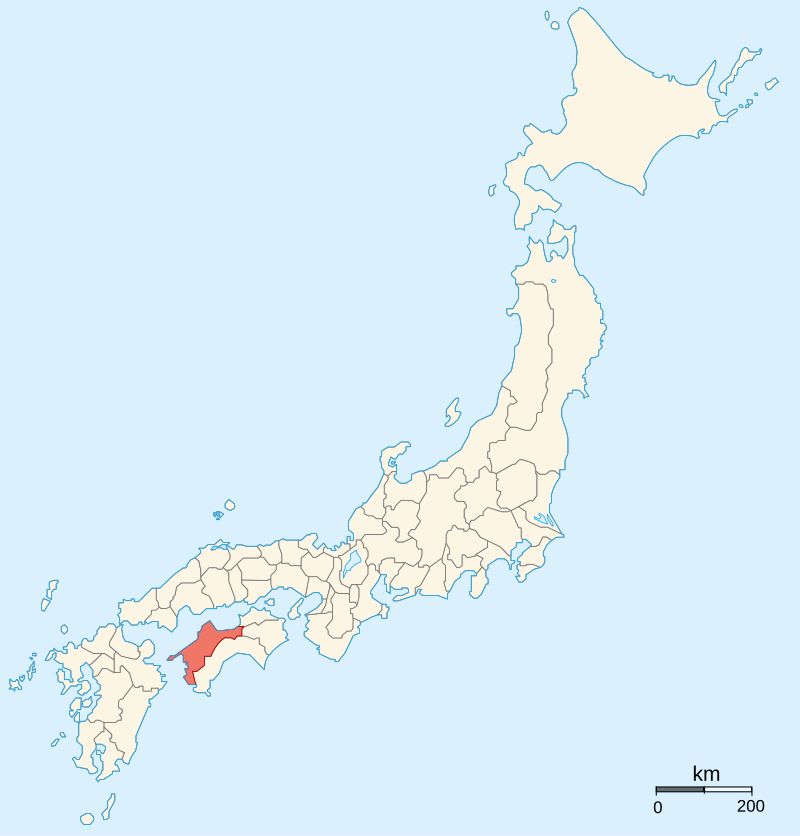
    The rebellion was crushed, and those involved were severely punished, but one member of the family, Tachibana no Toyasu, remained loyal to the Emperor and even took part in the execution of the rebel leader. As a reward, he received lands and titles in Iyo Province, where a branch of the family would survive a while longer, but the days of Tachibana influence at court were over.

    Iyo Province, where the Iyo-Tachibana family were granted lands and titles.
    By Ash_Crow – Own work, based on Image:Provinces of Japan.svg, CC BY 2.5, https://commons.wikimedia.org/w/index.php?curid=1682518

    A final note: there was a Samurai clan called Tachibana based near modern Fukuoka; however, the name is a coincidence, and the later Tachibana were no relation to the Heian Period family.
    Incidentally, this Tachibana family are still there, and they run a ryokan (traditional Japanese inn) based in their ancestor’s former residence.

    Taira

    Much like their contemporaries, the Taira began with grandsons and great-grandsons of several Emperors, and despite the shared name, there were actually four branches of the Taira family that came into being during the 9th Century, and these branches would often split as well. However, for our purposes, it is the line of Taira no Takamochi, founded in 889, that proved to be the most enduring.

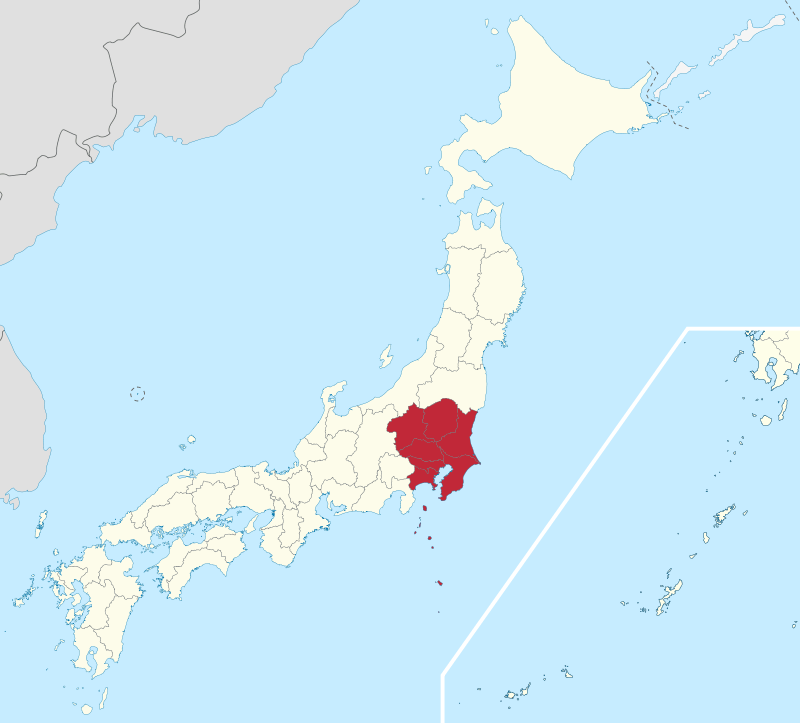
    Unlike the Fujiwara and Tachibana, the Taira’s centre of power was not the court at Heian-Kyo but the provinces, specifically the area of the Kanto plain, which includes the area in and around modern Tokyo, far from the Imperial Capital.

    The Kanto Region, centre of Taira strength, and a long way from the Imperial Court.
    By TUBS – This vector image includes elements that have been taken or adapted from this file:, CC BY-SA 3.0, https://commons.wikimedia.org/w/index.php?curid=16385930

    This distance meant that Taira influence at court was initially weak, but it worked both ways. Whilst the Taira might have been unable to exert much influence on the throne, the throne was equally unable to exert influence on the Taira.

    Consequently, as Imperial control waned in the provinces, the Taira were one of the main beneficiaries, gaining control of vast swathes of farmland and the wealth and power that went along with it. They would also begin to gather large groups of armed men to their service, and by the 10th Century, they were the dominant power in the East.

    The Taira would put this wealth and power to good use, engaging in local feuds without landholders and growing their already considerable resources through the application of force; though some of their opponents would appeal to the Emperor, there was little the Imperial Court could actually do about it, and as long as the Taira focused their efforts on their neighbours, the Court seemed content to turn a blind eye.

    Enter Taira no Masakado. Masakado’s life has been the subject of a lot of dramatisation over the years, so it’s not always possible to figure out exactly who he was or what he did. However, he appears to have gone to Heian-kyo in his late teens, hoping to gain an official position.

    He was out of luck on this score and returned home. There, if the stories are to be believed, he got into a dispute with his uncle over a woman, who may have been his daughter (Masakado’s cousin) or maybe not; again, the sources don’t agree. Another source says that there was a woman, but she was instead the daughter of Minamoto no Mamoru, a powerful local rival to the Taira.

    Still, more sources don’t mention a woman at all, stating that the conflict began as a result of a land dispute, with Masakado’s supposed inheritance being taken by another member of the family.

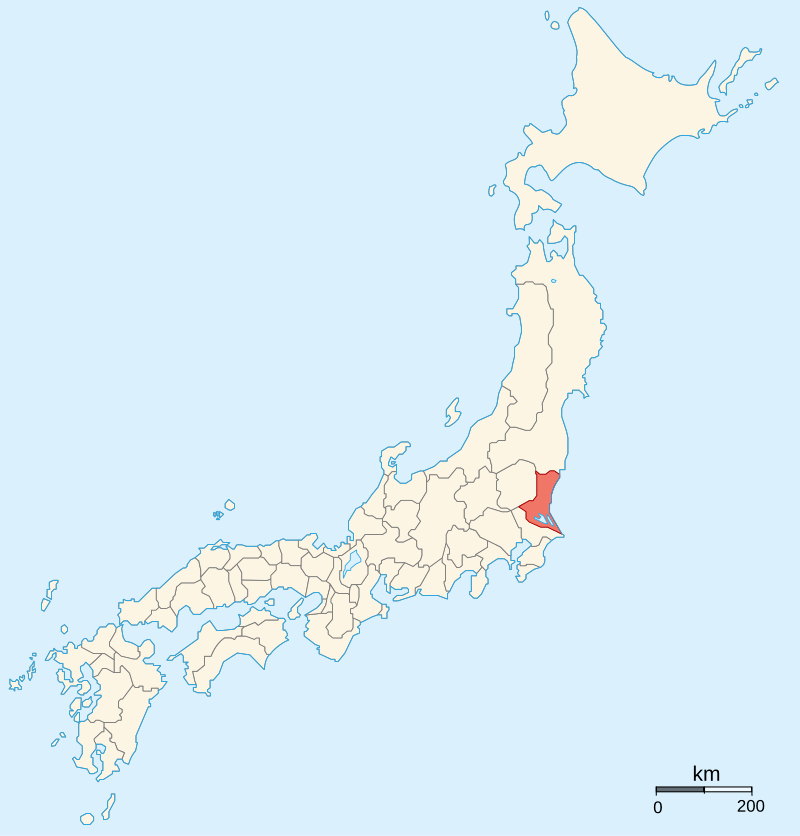
    While the background reasons are likely to never be known for certain, in early 935, Masakado was ambushed somewhere in Hitachi Province, modern Ibaraki Prefecture, by the sons of Minamoto no Mamoru. Masakado survived the attack, fighting off and killing his attackers, and responded by going on a rampage throughout Hitachi Province, burning the homes of his enemies, including the Uncle who he was in dispute with (either about land or his cousin.)

    Hitachi Province, where Masakado’s rebellion began.
    By Ash_Crow – Own work, based on Image:Provinces of Japan.svg, CC BY 2.5, https://commons.wikimedia.org/w/index.php?curid=1682357

    The situation spiralled out of control from there, and there was a series of battles in which Masakado generally prevailed. His enemies called in support from nearby provinces, and though they outnumbered Masakado considerably, he won a series of victories and drove his foes back to their residences.

    At this point, Masakado seems to have been worried about official consequences (because the bloodshed so far was fine, I guess.) At this point, Masakado limited himself to lodging a formal complaint, and when he was summoned to the Imperial Court to explain himself, it was declared to have been a local matter, and all involved were pardoned.

    A later illustration depicting Masakado in battle.

    Now, you might think that official censure would be enough to put the matter to rest, but you’d be wrong. It turns out that if you let powerful local landowners build up their own private armies, they tend to be less keen on obeying central authority.

    Almost as soon as Masakado returned to his province, the fighting resumed. Those who Masakado had defeated now sought revenge and attacked him. This time, it seems Masakado was defeated, and several of his holdings were burned.

    Exactly what led up to the events that followed isn’t clear, but by the end of 939, Masakado had gotten into further disputes with local officials, and he went as far as attacking the provincial headquarters, burning it to the ground, and looting the official storehouses.

    Now, the Imperial Court was pretty ineffectual by this point, but this was a direct attack on their authority, and even the decadent Heian Court couldn’t ignore that. The problem was, what to do about it? There was no Imperial Army, so the court had to rely on the very same local landowners that Masakado had been feuding with in the first place.

    Masakado was declared to be in rebellion, and a coalition army led by Fujiwara no Hidesato, Minamoto no Tsunemoto, and Taira no Sadamori (Masakado’s cousin) crushed the rebels in 59 days.

    Despite dealing with the rebellion relatively easily, the outcome was actually highly problematic for the Court. Although the Rebels had been beaten, it had been local leaders who had done the actual fighting, and even though Masakado had been a Taira, it had been Taira who had played a major role in his defeat.

    It would be some years before the full consequences of this would be felt, but the Taira would remain in place in the East, now with the added assurances that their military strength was not only secure but necessary.

    Minamoto

    So, we move on to the third part of our story today. The Minamoto are last, but most certainly not least, when it comes to discussing the major powers of the Heian Court.

    Like the other great families, the Minamoto got their start when sons and grandsons of Emperors were granted their own houses as a way to compensate them for never being able to sit on the throne. Whilst the Fujiwara, Taira, and Tachibana would spread across the Japan, the Minamoto were the proverbial weeds.

    No fewer than 21 separate branches of the family were created, and although a few would die out within a generation or two, others became central to the history of Japan, with one, the Seiwa Branch, proving to be truly significant indeed.

    Given the sheer number of branches of the Minamoto Family, it isn’t possible to write a history of them that would be concise enough to be readable. Given that I don’t expect you to sit there and read for the next three or four months, we’re going to condense a lot of this information, as a lot of overlaps with events we’ve already discussed, and, as you’ll see, the Minamoto will become extremely important in the latter days of the Heian Period.

    Generally, the Minamoto were a family that is closely identified with the decline of Imperial authority in the provinces. Whereas the Fujiwara and Tachibana concerned themselves with court politics, the Minamoto, like the Taira, focused on building their powerbase away from the capital.

    In many ways, the Minamoto best represents the growing shift in the power dynamic. Although the Fujiwara were largely unchallenged at court during this period, they would be forced to call on the Minamoto to use their military resources to deal with problems in the provinces. Indeed, during Masakado’s rebellion that we mentioned earlier, it was Minamoto forces that played a large role in his defeat.

    Later, it was the Minamoto brothers, Yorinobu and Yorimitsu, who were in the service of the Fujiwara, acting as their enforcers in the provinces. Yorinobu’s son, Yoriyoshi, would lead ‘Imperial’ forces against the rebel Abe Clan in northern Japan during the so-called “Nine Years War”, so named despite lasting Eleven Years.

    Such was the prowess of the Yorinobu’s grandson, Yoshiie, that he was nicknamed “Son of the God of War”, and the martial reputation of the Minamoto was secured.

    By the 11th Century, Japan was divided between rival warlords whose power no longer derived from the Imperial court. They would settle their own matters, often with steel, and the 11th Century would see the nadir and eventual end of the Heian Court’s dominance.

    Sources

    https://en.wikipedia.org/wiki/Minamoto_clan
    https://en.wikipedia.org/wiki/Minamoto_no_Yorinobu
    https://en.wikipedia.org/wiki/Minamoto_no_Yorimitsu
    https://en.wikipedia.org/wiki/Minamoto_no_Yoriyoshi
    https://en.wikipedia.org/wiki/Minamoto_no_Yoshiie
    https://en.wikipedia.org/wiki/Former_Nine_Years%27_War

  • Heian IV – The Fujiwara & The beginning of the end.

    The formation of the Heian Court was not the story of one family (the Imperial family) asserting its dominance over everyone else. Instead, the Court was made up of several clans, who rose and fell according to the vagaries of fate. You may recall that when the Yamato brought the idea of “Emperor” over from China, they switched the concept of a Mandate of Heaven with that of a literal Son of Heaven. This had the double effect of meaning that the Emperor’s rule was now divinely ordained (handy), and he couldn’t be overthrown and replaced by a new dynasty, as happened relatively frequently in China.

    Since the noble families couldn’t take the throne itself, it was controlling the man (or woman) sitting on it that became their objective. There were usually several powerful families at a time, and their rivalries often turned violent, with plots, counter-plots, rebellions, coups, and assassinations all part of the early Imperial political landscape.

    By the mid-7th Century, the dominant family were the Soga. Their path to power was fairly typical of the time. Daughters of the clan were married to sons of the Imperial family, and more than one Emperor had a Soga mother. Through these close family ties, the Soga Clan rose to an almost insurmountable position of influence, but it didn’t last.

    In 645, during the Isshi Incident, the head of the Soga Clan was quite literally cut off. One of the conspirators was Nakatomi no Kamatari, a close friend of Prince Naka no Oe, who would eventually become Emperor Tenji.

    Kamatari would use his close relationship with the future Emperor to amass enormous wealth and influence, and shortly before he died, the newly enthroned Tenji bestowed a new family name on him, Fujiwara, and thus, one of the most influential families in Japanese history got its name.

    Fujiwara no Kamatari, the founder of the Fujiwara Clan.

    The Fujiwara

    The exact origins of the Fujiwara Clan are unclear, but they were originally known as the Nakatomi and claimed descent from the God Ame-no-Koyane, giving them divine origins, although, importantly, of a lesser rank than the Imperial Line.

    The Nakatomi appear to have been largely responsible for religious ceremonies in the early Yamato Court, but after the Isshi Incident, the renamed Fujiwara gradually adopted the same position that the Soga had before them.

    It was the second head of the clan, Fuhito, who really laid the groundwork for Fujiwara dominance, though. Already the scion of a prominent house, he made one daughter the consort of Emperor Monmu and the other the consort of the next Emperor, Shomu. And no, you’re not imagining it; that second daughter would have been Emperor Shomu’s half-aunt. I guess it was ok because both women had different mothers? Maybe?

    Consanguinity notwithstanding, Empress Komyo, as she became known later, was significant; not only was she Fujiwara, but she was the first Empress who was not an offspring of the Imperial house.

    Fuhito would further expand his family’s dominance by having four sons, who would go on to each head a cadet branch of the Fujiwara. When we speak of the “Fujiwara”, we’re actually going to be talking about these four houses. To keep things simple, I’ll just refer to them as “Fujiwara” unless it’s important to make the distinction, but for reference, the four cadet branches were:

    The Kyoke Fujiwara (Capital Fujiwara)
    The Shikike Fujiwara (Ceremonial Fujiwara)
    The Hokke Fujiwara (Northern Fujiwara)
    The Nanke Fujiwara (Southern Fujiwara)

    These four houses would work together, and sometimes in opposition to each other, and the Northern and Southern Fujiwara would eventually split into even more Noble Houses that would continue to influence Japanese politics into the modern era, but more on that later.

    With their power secured by sometimes incestuous marriage, the Fujiwara moved into position to dominate the throne. By the end of the 10th Century, Fujiwara control of the position of regent had become effectively hereditary, and through other advantageous marriages, Fujiwara influence was felt in the provinces too, with lower-ranking members of the main families taking up positions as administrators and local governors (that will become really important later.)

    The Fujiwara wouldn’t have it all their own way. There were several rival families, the most powerful being the Taira and Minamoto, both descended from sons and grandsons of Emperors, and who will get their own post later. There was also the issue of relatively strong Emperors. Political control of the throne depended on controlling the man sitting on it. Some Emperors, like Daigo, who reigned from 897 to 930, proved to be more than a match for the Fujiwara and retained significant control for themselves.

    Despite this, Daigo had Fujiwara consorts, and the clan itself would retain its positions at court. When Daigo died in 930, it wasn’t long before things were back to normal, as far as the Fujiwara and their dominance at court was concerned.

    In 986, Emperor Kazan was pressured by Fujiwara no Kaneie into abdicating under somewhat dubious circumstances. The story goes that Kaneie convinced Kazan to become a monk alongside his son Fujiwara no Michikane. However, when Kazan entered the temple, Michikane said he would like to visit his family one more time before taking the tonsure. Kazan agreed and became a monk while he waited, but Michikane never came back, which is a ballsy move.

    Fujiwara dominance reached its peak in the late 10th and early 11th century under Fujiwara no Michinaga. Michinaga was the third son of Fujiwara no Kaneie, who was succeeded by his son, Michitaka, and then his second son, Michikane, who was regent for only a week before dying; maybe karma for that stunt with former Emperor Kazan?

    A later illustration of Fujiwara no Michinaga.

    Michikane’s son, Korechika, had been named heir to the position of regent, but he was opposed by Michinaga and his supporters. Michinaga was already a man of considerable influence and was favoured by the infant Emperor Ichijo’s mother, who happened to be Michinaga’s sister.

    Michinaga is said to have played on Korechika’s bad relationship with Emperor Kazan and played a ruse that convinced Korechika that Kazan had been visiting the same mistress as him. The story goes that an enraged Korechika then attempted to shoot Kazan with an arrow, which passed through the former Emperor’s sleeve before the man himself fled.

    Korechika was arrested, and though the blame for the attempted shooting fell on servants, he was convicted of having placed a curse on Senshi, Michinaga’s sister and primary supporter. Korechika was exiled to Dazaifu in modern-day Fukuoka, and even though he was pardoned less than a year later and returned to a position in government, his influence was broken, and he was no longer a rival to Michinaga.

    Though Michinaga never officially took the title of regent (Kampaku), his position in the government and influence over successive Emperors meant that he effectively ruled the country in all but name. He continued the policy of marrying his daughters to Emperors and the sons of Emperors, and in 1016, he forced Emperor Sanjo (his nephew and son-in-law) to abdicate in favour of his grandson, Go-Ichijo.

    Michinaga also made an alliance with the Minamoto Clan and made use of the brothers Yorinobu and Yorimitsu as his chief enforcers, particularly in eastern Japan. Under the pair, the Minamoto would deal with enemies of the court (which meant enemies of the Fujiwara) and were rewarded with significant lands of their own, which would eventually lead to the creation of a Minamoto power base far from Imperial control, but more on that later.

    Michinaga would be succeeded by his son, Yorimichi, in 1019, and though they didn’t know it at the time, the Fujiwara were in decline from then on.

    Rise of the Samurai

    As we’ve talked about previously, until the late 8th Century, the Imperial court relied on a system of conscription in order to supply its army with manpower. By the dawn of the 9th Century, however, that system had almost entirely broken down and been gradually replaced with private armies under the control of regional landowners.

    The loss of military power went hand in hand with a decline in economic resources as well. Under the Taika reforms, the land had all technically belonged to the Emperor and was held in his name in return for a percentage of the harvest as tax.

    By the Heian period, however, that system had broken down to. Noble families and powerful temples were able to negotiate tax exemptions for themselves, and local peasants came to avoid tax (and the attached military service) by signing their lands over the local lord in exchange for protection and potentially a better deal tax-wise.

    The private armies that sprung up in the wake of this Imperial decline were made up of men who either had land of their own or else were rewarded with it. These men used their resources to purchase horses, training, and weapons (mostly bows at this point), clearly setting themselves apart from the poorly armed masses of peasant conscripts that had come before.

    We’ve spoken about how families like the Fujiwara would marry into the Imperial line in order to enhance their own prestige and influence, and these newly minted provincial elites would adopt the same strategy on a more local scale.

    The Fujiwara, Minamoto, and Taira families had, by the 11th Century, grown into sprawling clans that would require several dedicated posts to make sense of, but the short version is that most of the members of these clans weren’t the ones playing Game of Thrones in Heian-Kyo. They were dispatched to the provinces by their families to take up positions as governors and other administrators and spread their respective clan’s influence.

    These new administrators may not have had the wealth of their capital-based cousins, but they still carried the illustrious names, and marrying into these families would, in turn, bestow aristocratic status. These new nobles, born far from the throne, had little reason to be loyal to it.

    Initially, military service was on an ‘as needed’ basis, but by the end of the 10th century, as family ties to local districts deepened, the status of this new warrior class would become hereditary. These warriors were not called Samurai at first; the proper term was Bushi (which literally means Warrior), and their families became Buke or warrior families.

    The modern word Bushi is generally applied to all warriors, but it originally applied specifically to men for whom war was their profession, especially those who possessed the expensive armour, weapons, and horse required, meaning the business of making war became limited to a specific class.

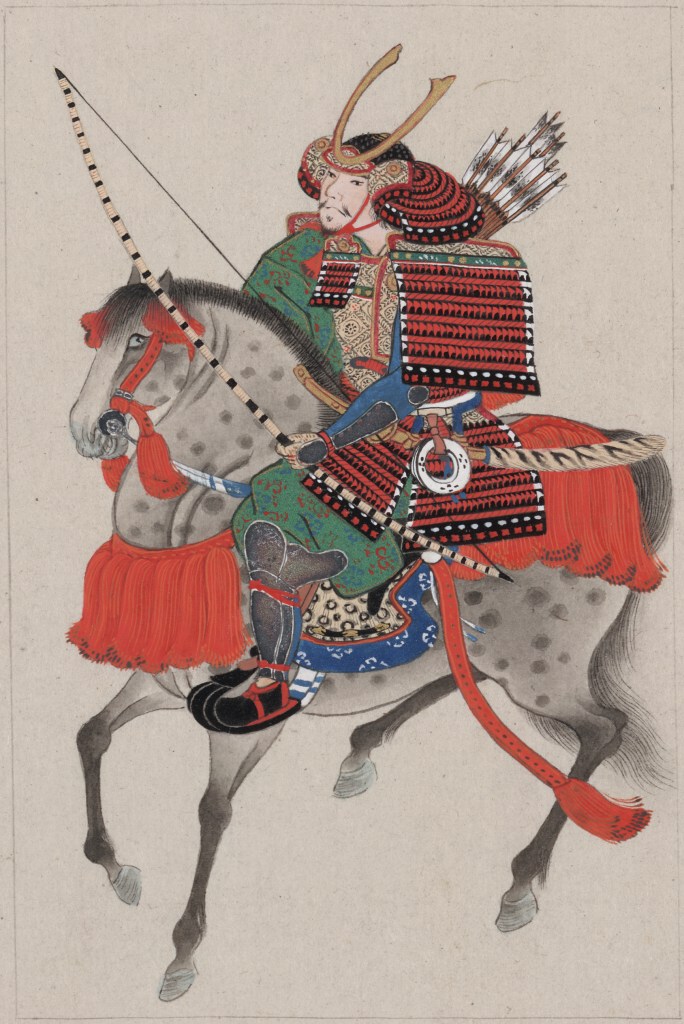
    Despite being known for their famous swords, the earliest Samurai were more associated with bows and horse archery.

    By the 10th and 11th Century, the threat of the Emishi had long since passed, and now the powerful regional nobility found themselves with large private armies with no external enemies to fight. So, they asked themselves, what next?

    Luckily for them, population growth and diminishing resources gave them the perfect excuse to start fighting amongst themselves. Outbreaks of violence became common, and the Imperial court proved to be incapable of putting a stop to it.

    Finding that they could attack their neighbours without any kind of consequences meant that the tenuous loyalty of the regional nobility became no loyalty at all. By the mid-11th Century, even the illusion of Imperial authority was fading, and the Fujiwara, who had seemed unassailable a generation earlier, began to feel the walls closing in.

    Sources
    https://en.wikipedia.org/wiki/Heian_period
    https://en.wikipedia.org/wiki/Fujiwara_no_Kamatari
    https://en.wikipedia.org/wiki/Fujiwara_clan
    https://en.wikipedia.org/wiki/Fujiwara_no_Michinaga
    https://ja.wikipedia.org/wiki/%E8%97%A4%E5%8E%9F%E5%AC%89%E5%AD%90
    https://ja.wikipedia.org/wiki/%E8%97%A4%E5%8E%9F%E9%81%93%E9%95%B7#%E5%9B%BD%E5%AE%9D%E3%83%BB%E5%BE%A1%E5%A0%82%E9%96%A2%E7%99%BD%E8%A8%98
    https://ja.wikipedia.org/wiki/%E8%97%A4%E5%8E%9F%E9%81%93%E9%95%B7
    https://en.wikipedia.org/wiki/Emperor_Kazan
    https://ja.wikipedia.org/wiki/%E4%BE%8D

  • Heian III – Life, Literature, and Ludicrous Eyebrows

    So, in our last two looks at Heian Japan, we discussed the decline of Imperial power in the provinces, as the regional nobility gained control of the military and then economic power, leaving the Imperial court effectively impotent.

    So, what was actually going on at court while the power was slipping away? Well, what usually happens when you have an isolated mini-community of hyper-privileged, completely out of touch, trust fund babies?

    While trust funds obviously didn’t exist in 9th-century Japan, generational wealth absolutely did. The nobility at court was mostly made up of the descendants of the original Yamato families, those who had been the first to come to power in the area around modern Nara.

    After the capital moved permanently to Heian-kyo, the noble families moved permanently, too. Some of these families had direct connections to the Imperial Family itself (real or fictional), which created a fairly insular community of people who busied themselves with court life at the expense of the rest of the nation.

    We’ve already discussed the consequences of that, so we’re not going to focus too much on military or economic decline today, but needless to say, by the mid to late Heian Period, the court was completely out of touch with what was going on in the provinces, which eventually led to disaster.

    Religion

    Buddhism arrived in Japan in the 7th Century, brought in by Chinese and Korean scholars. Like most things imported at that time, Buddhism was largely just a copy of how things were done in China. However, by the Heian Period, a distinct “Japanese” culture was beginning to develop that had an impact on religion too.

    Two influential sects emerged around this time, Tendai and Shingon. Though founded by monks who had visited China, both branches integrated aspects of traditional Japanese religion into their philosophy. By the mid-Heian period, these sects had become politically influential, particularly the Tendai Sect, based at Mt Hiei, just outside Heian-kyo. There, monks were trained for up to 12 years, with the most promising being retained by the order and others taking up positions in the government, blurring the lines between religious and political power.

    On a cultural level, Buddhism played a role not too dissimilar to that of the Catholic Church in Europe. Fantastic temples were constructed, and art, both in the form of painting and sculpture, flourished, sponsored by courtiers looking to curry favour with the increasingly powerful priesthood.

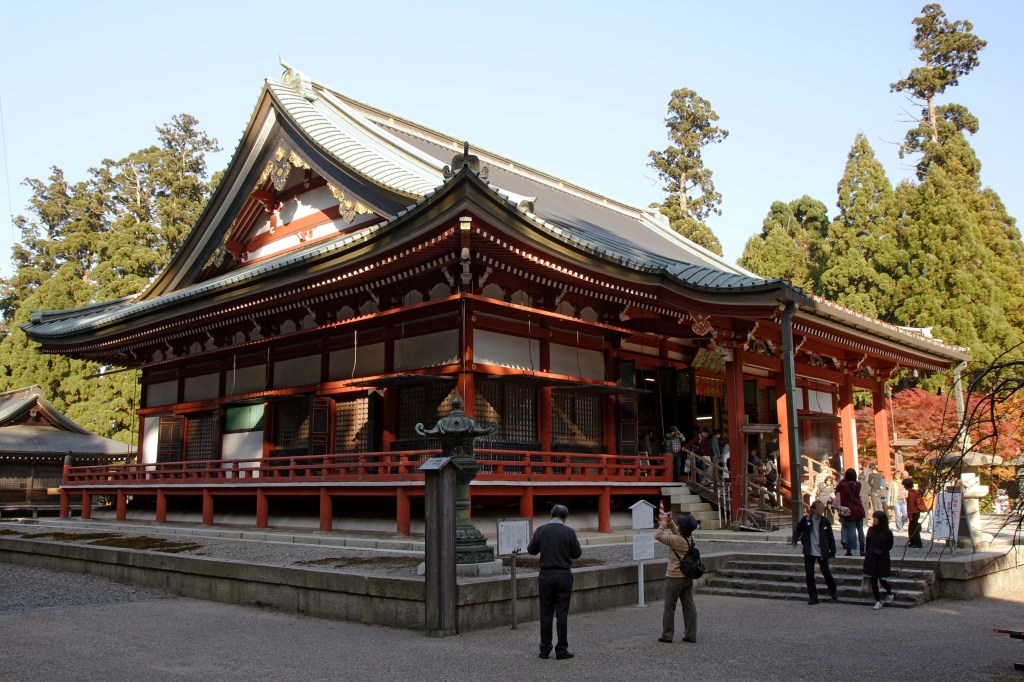
    The Great Lecture Hall at Enryaku-ji, the headquarters of the Tendai Sect. Though this building dates from the 17th Century, it gives some idea of the splendour that the Buddhist sects were capable of.By 663highland – Own work, CC BY 2.5, https://commons.wikimedia.org/w/index.php?curid=8450046

    The Imperial Family and the aristocracy became tightly linked to the Buddhist Sects, with members of noble families often becoming high-ranking members of religious orders, and in turn, Monks, Priests, and Abbots became influential within the government. It is perhaps unsurprising, then, with the two sides so closely linked, that the temples would often preach in support of the Emperor and the status quo.

    Over time, Buddhist Temples would become powerful political players in their own right, and their close association with the Imperial Court led to the image of Buddhism, or at least the organised Buddhist sects to be the religion of the aristocracy, whilst out in the provinces, more traditional Japanese beliefs held sway, further deepening the divide between the Emperor and his people.

    A Novel Idea

    Prior to the Heian Period, writing had been the preserve of noblemen and educated priests. The complex Chinese symbols (Kanji) took years to learn, and most people didn’t have access to education anyway. That began to change during this period. Firstly, the rise of wealthy, and more importantly, large temples, increased the number of people (men) with access to learning. Though still limited, these men would become a key part of the Imperial Bureaucracy.

    The real trailblazers of Heian Literature weren’t priests and nobles, however, but women. As anyone who has ever tried to learn Japanese can tell you, Kanji are awful. There’s about six million of them, and they all have different pronunciations depend on context, mood, or the position of the stars, or something. The point is, Kanji are hard to learn now, and they were hard to learn back then, too, more so given how few people even had access to a textbook, let alone DuoLingo.

    Fortunately, Kanji aren’t the only option when it comes to writing Japanese. Early on, Japanese scholars developed kana, a native script that made it easier to translate certain things into Japanese. As we’ve said, Kanji are hard enough to learn even with dedicated study, and given that women didn’t have dedicated study, the kana (divided into Hiragana and Katakana) were adopted instead.

    Like most places before the 20th century, literacy in Heian Japan was extremely limited. Whilst this obviously meant there wasn’t a wide audience for poems and stories and such, it did lead to a highly specialised type of ‘courtly’ writing. Poetry, in particular, was a mark of good breeding, as was the quality of your handwriting.

    This probably shouldn’t come as a surprise to us; after all, how often do we see politicians and celebrities mocked for their poor spelling and grammar? And don’t get me started on handwriting. Mine is ok now, in my mid-30s, but you’d have needed a scholar of ancient languages to decipher my writing when I was at school.

    I digress; poetry and handwriting were important, is the point.

    Poetry was probably the most common form of literature at the time. Poems would be written for all sorts of occasions, and it was said that a person’s poetry skills could make or break their reputation, which seems a bit extreme, but there you are.

    Poetry was not the only form of literature available to the Heian Court. Stories in a form we would recognise as novels also appeared at this time, perhaps most famously the Tale of Genji, written sometime in the early 11th Century and attributed to Murasaki Shikibu (not her real name), a lady-in-waiting at the court.

    She deserves a post of her own, but the short version is that she is generally accepted as the author of the story, although some scholars also suggest that the last ten chapters or so were written by someone else, possibly her daughter.

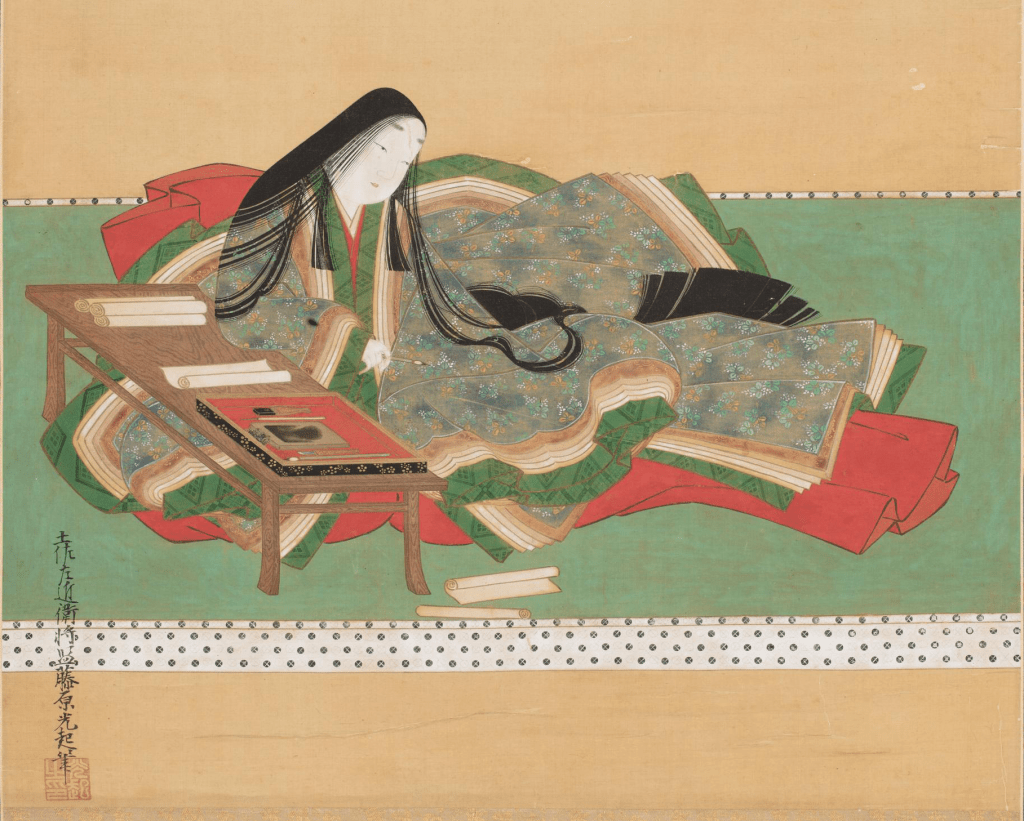
    A 17th-century depiction of Murasaki Shikibu writing the Tale of Genji. Though scholars agree she is the author, there is some debate about the last few chapters.

    Heian Period literature can be a bit impenetrable by today’s standards; courtly culture at the time placed grade emphasis on innuendo, allusion, and almost obtuse vagueness. A great example of this is the fact that the Tale of Genji rarely, if ever, refers to characters by name. Although scholars agree that most of the characters are probably based on real people, it would have been unthinkable for a writer at the time to do something as crass as using a person’s name, even in fiction.

    This, and a highly stylised form of writing, means that works like the Tale are often viewed by modern Japanese in the same way that a modern English-speaking person might see the works of Shakespeare, something that is fundamentally intelligible but is full of language that has long since fallen out of use, leaving us with metaphors that are open to interpretation, to say the least.

    12 Layers

    Fashion and Beauty were as central to the Heian Court as they are to the rich and famous today. Whilst at its core, fashion was about showing off wealth and status (as it is today), the Heian Court had some very unique ideas about what constituted beauty.

    First, the clothes. Now, I’m no one’s idea of fashionable, I dress practically and comfortably. This is probably true of most people and has been for as long as we’ve had clothes. High fashion, however, isn’t about being practical or even comfortable, apparently, and the Heian Court is a great example of this.

    Men and Women were expected to dress differently but with equal flamboyance and impracticality. For men, there were the Sokutai and Ikan, outfits made up of multiple layers that would vary depending on rank, season, and occupation. For example, military officials would dress differently to civilian ones, and versions with fewer layers and shorter sleeves would be worn during the summer months and visa versa.

    Formal wear of a Heian Period military official, photographed in 1990, at the Enthronement Ceremony of Emperor Akihito.
    首相官邸 – https://www.kantei.go.jp/jp/singi/gishikitou_iinkai/dai6/siryou1-1.pdf, CC 表示 4.0, https://commons.wikimedia.org/w/index.php?curid=80965200による

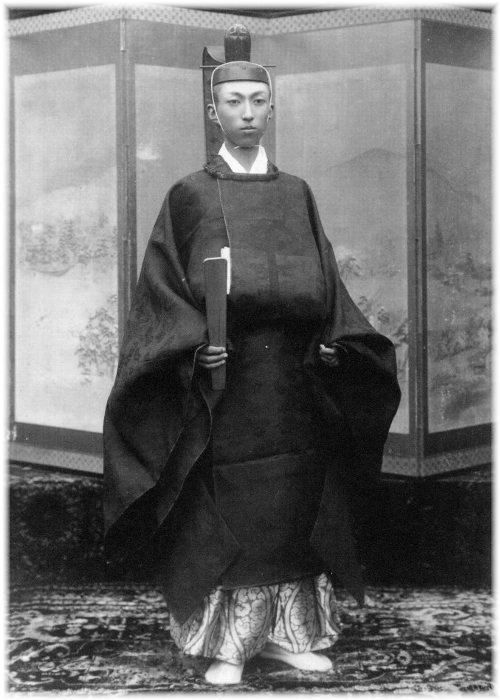
    Generally, Sokutai was the more formal wear, and Ikan was more of a “work” uniform for courtly officials, although the distinction is not always a clear one, as both sets of clothing were highly elaborate by today’s standards.

    Marquis Yoshimaro Yamashina, photographed in 1920, wearing the Ikan style of dress.

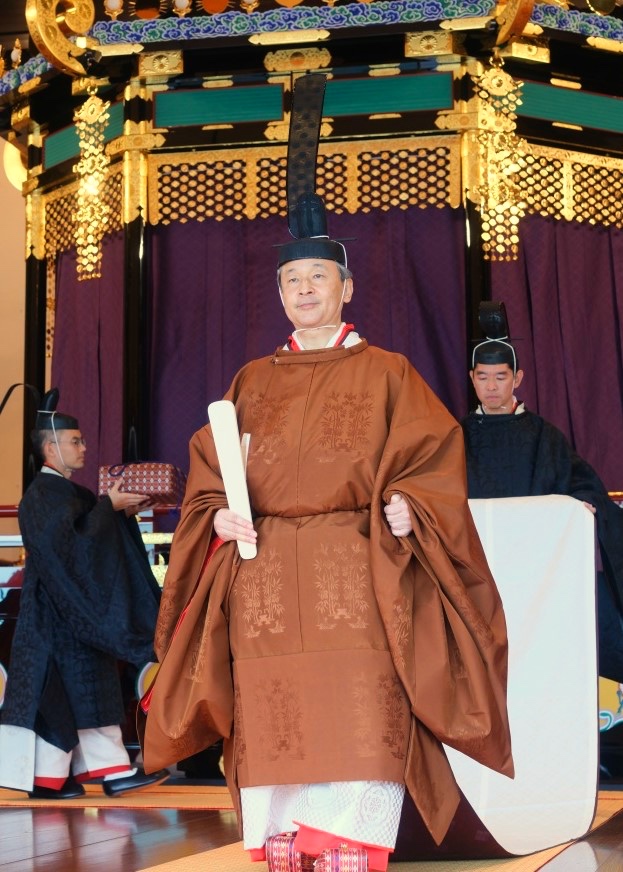
    Despite its flamboyance, Sokutai is still seen in Japan today. Whilst you’re not likely to catch the average Salaryman wearing it on the morning commute, the Imperial Family still wear it, although usually only at ceremonial functions, like Coronations and Royal Weddings.

    The current Emperor, Naruhito, wearing Sokutai at his enthronement ceremony in 2019.
    By 内閣府ホームページ, CC BY 4.0, https://commons.wikimedia.org/w/index.php?curid=89645372

    Sokutai and Ikan are heavy, impractical clothing options, but that’s kind of the point. Wearing a metric tonne of silk and ornaments is a great way to demonstrate that you’re a world apart from the peasantry who are, by the nature of their lives, required to wear cheaper, more practical and (I suspect) more comfortable clothing.

    It was worse for women (surprise, surprise). Whilst male clothing was cumbersome, there were certain practical considerations. Men at the court were generally expected to have some kind of job, which limited how impractical their clothing could be. Court Women, however, unburdened by the expectation of actually doing anything, were consequently expected to dress accordingly.

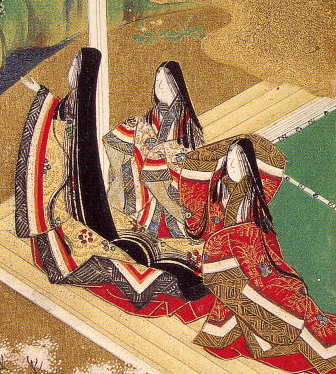
    Introducing the Junihitoe, or Twelve-Layer Robe. Yeah, the name isn’t a red herring; while it is true that there may not have been exactly Twelve Layers, the complexity of the Junihitoe was matched only by the need for appropriate colour coordination.

    Heian Court Ladies wearing Junihitoe in a later illustration.

    The sheer weight of a Junihitoe ensemble is reflective of attitudes towards women at the time. They weren’t expected to do very much except sit around, being attractive and writing poetry. If you think I’m over-generalising, consider that the full weight of all the robes together could be upwards of 20kgs (44lbs) at a time and place where most people averaged about 5ft tall (152.4cm) and rarely weighed in at heavier than 50 kgs (110lbs). Heian Court Ladies could find themselves wearing half their own body weight in silk and accessories. If you can still manage to look pretty under all that, then you’re a better man than me. Or a better Heian Court Lady, but you get the idea.

    If the weight of all that fanciness wasn’t bad enough, fashion dictated that the multiple layers be colour-coordinated according to the season or to other special events. These colours were meant to match the “spirit” of the season, leaning into the Heian Court’s love of symbolism, metaphor, and fancy nonsense.

    The layers were supposed to compliment each other, but given the nature of clothing at court, the layers themselves were generally only visible at the sleeves. This might raise the question, why go to all that trouble for multi-coloured sleeves? But when they were done with all that poetry and story writing, what else was there to do but coordinate your sleeves?

    It’s all in the eyebrows

    So, we’ve already established that Men and Women at the Heian Court were religious, literate, and dressed to impress, but what did they actually look like? More accurately, what did they aspire to look like?

    Even today, beauty standards are more about what people think they should look like rather than what they do, and in the era before photographs, most art presented a highly stylised idea of what people actually looked like. (Yes, we still do that with Photoshop, I know.)

    Much like the beauty of someone’s handwriting and the sheer weight of silk they could handle, someone’s beauty informed what kind of person they were. Basically, being pretty meant you were a good person, but what did being ‘pretty’ actually mean?

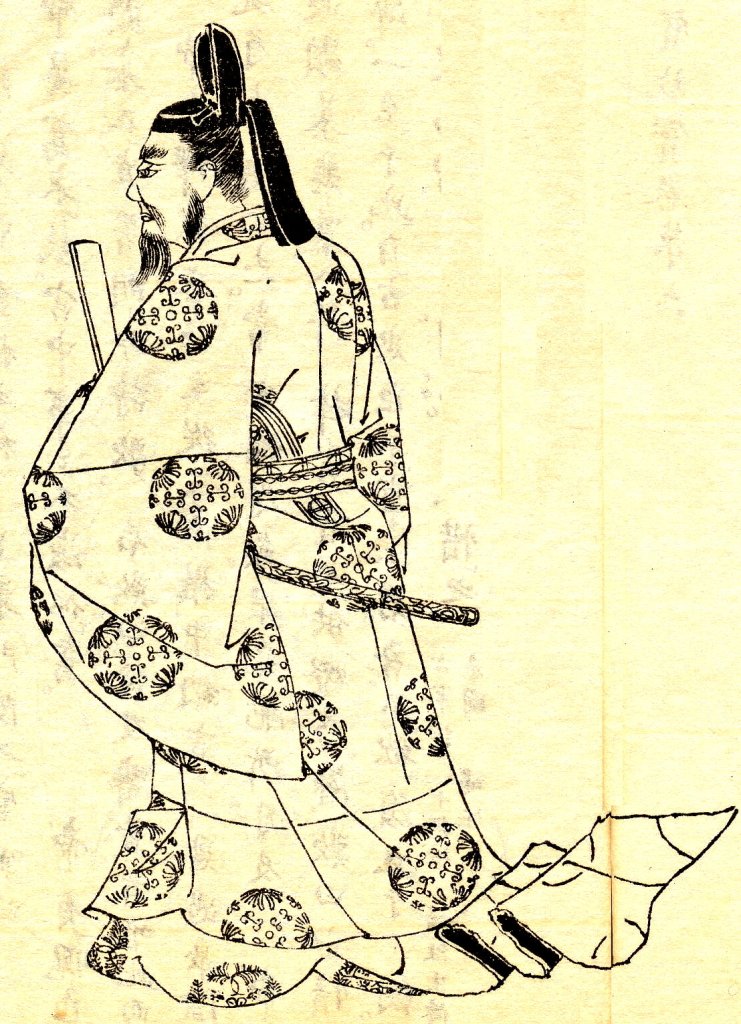
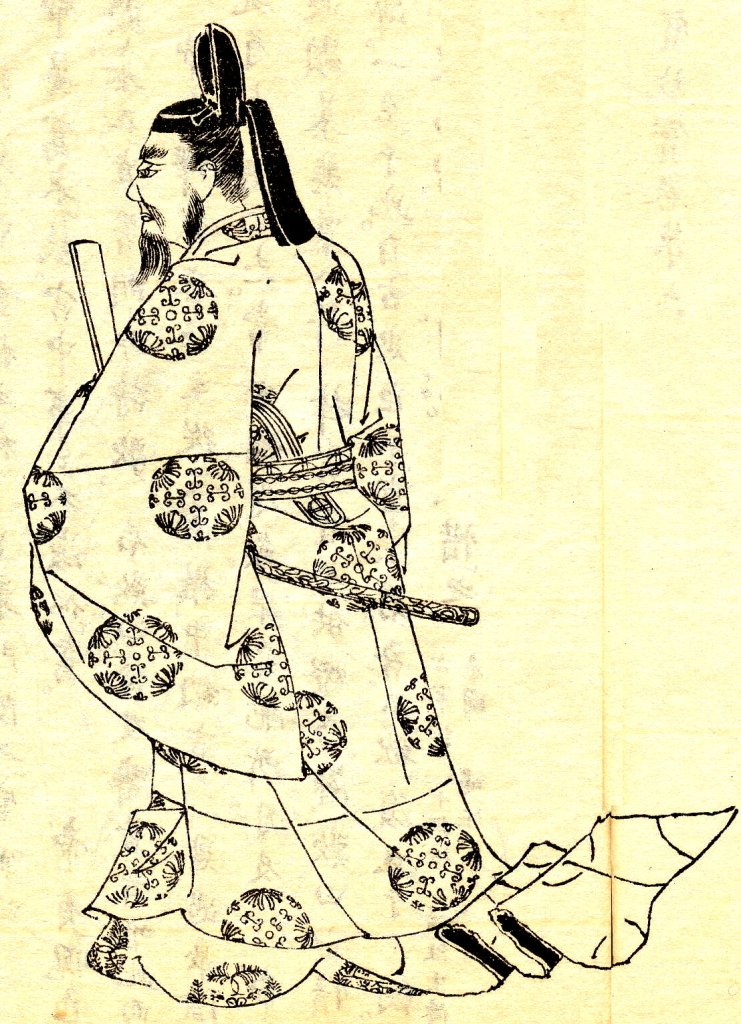
    As you can see in the images above, women grew their hair long and typically kept it loose, with dark, shiny hair being preferred. Men, on the other hand, wore their hair up and sported thin moustaches and beards.

    A later illustration of a Heian Period court official.

    Well, both genders seem to have made use of make-up, usually in the form of skin-whitening powders. This is something that’s come up pretty frequently throughout history: paler skin typically suggests that a person doesn’t spend much time outside. In the pre-modern era, a tan meant working outside, which meant you were a commoner, and if there was one thing the people at the Heian Court would not stand for, is was being thought of as common.

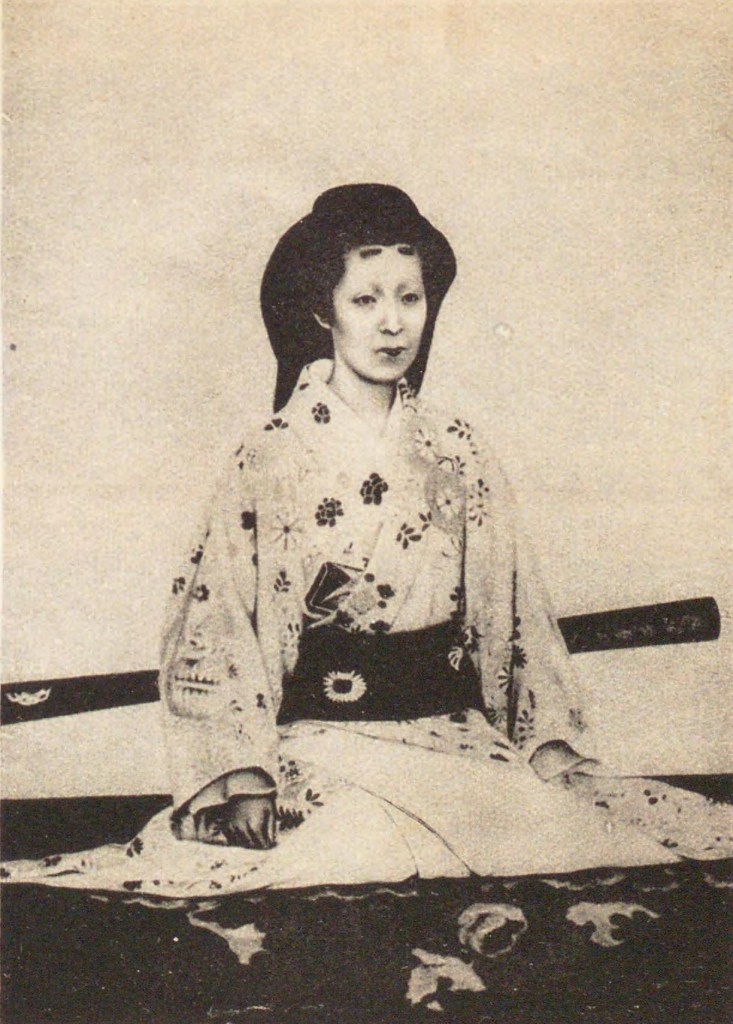
    In addition to whitening powders, women also painted their mouths to look red and small. They also practised a grooming technique called Hikimayu in which the eyebrows were shaved and then drawn way up the forehead, and it’s quite the look.

    An 1850 photograph of Mikako Tokugawa, wife of the last Shogun, showing Hikimayu in all its glory.

    If shaved eyebrows aren’t your thing, how about blackened teeth? Don’t worry, they’re not rotting. Actually, some people speculate that the teeth blackening (Ohaguro) actually contributed to healthy teeth by acting as a kind of sealant, so beauty aside, there’s that.

    The exact reasons for the start of Ohaguro aren’t clear, but one theory holds that, in combination with the whitening powder, painted mouths, and shaved eyebrows, blackened teeth contributed to a “mask-like” appearance that made it easier to hide emotion.

    Heian style fashion would remain in vogue at court for centuries (as seen by traditional dress at Imperial Family events), and this was partly due to the increasing and eventual near total isolation of the Imperial Court in the years that followed the Heian Period.

    We’ve discussed how the rot set in previously, but there is one family who might be more to blame than any other, the Fujiwara, who we’ll talk about next time.

    Sources
    https://en.wikipedia.org/wiki/J%C5%ABnihitoe
    https://ja.wikipedia.org/wiki/%E8%89%B2%E7%9B%AE
    https://ja.wikipedia.org/wiki/%E8%A5%B2%E3%81%AE%E8%89%B2%E7%9B%AE
    https://en.wikipedia.org/wiki/Hikimayu
    https://ja.wikipedia.org/wiki/%E8%A1%A3%E5%86%A0
    https://ja.wikipedia.org/wiki/%E5%AE%BF%E7%9B%B4
    https://en.wikipedia.org/wiki/Enryaku-ji
    https://en.wikipedia.org/wiki/Ohaguro

  • Heian Japan II – Mo’ Shoen, Mo’ Problems.

    Last time, we talked about how the Heian Period began in 794 when Emperor Kanmu moved the capital to Heian-Kyo, where it would remain for the next thousand years.

    We also looked at how the Heian court abdicated its military power to the regional nobility, who, facing a long-term war against the Emishi tribes of Northern and Eastern Japan, no longer put their faith in the large, pretty ineffective conscript armies of the Imperial court, instead establishing private armies of their own, adopting the horse archery tactics of their enemies. Although the days in which the warrior class would dominate the Emperor are still far in the future at this point, the origins of the Samurai can be found here.

    The problems didn’t end with the army, either. Although conscription had been brought in with the Taika reforms of the mid to late 7th century, by the end of the 8th century, the system had largely broken down. This was because it relied on another of the reform’s offspring, control of land.

    Like pretty much everything else in the Taika Reforms, land reform was modelled on the Chinese system. Officially, land was under the control of the state, and every free man was entitled to a certain amount, which would then be taxed. There was no national currency at the time, so taxation was usually a percentage of the harvest.

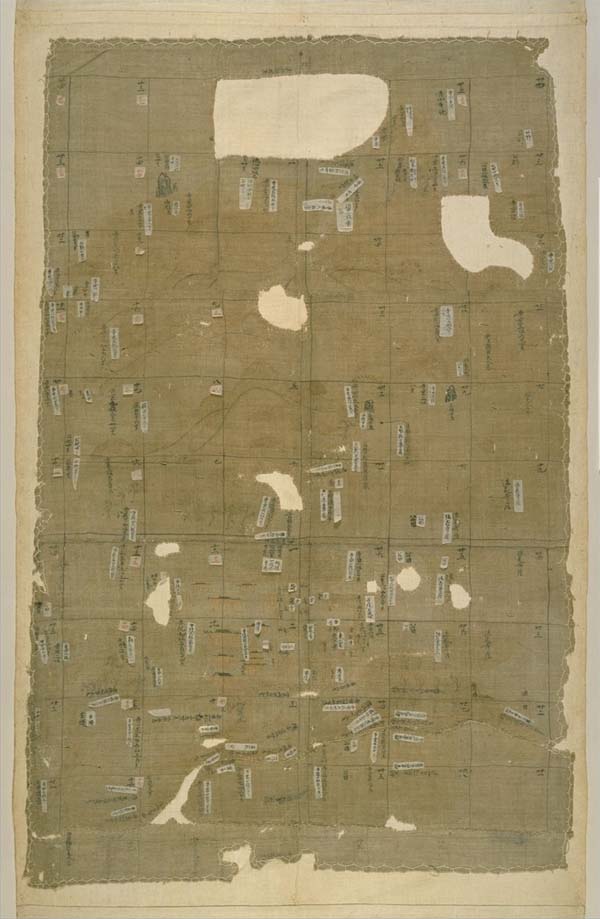
    A map of fields near Nara in the 8th Century.

    Now, in theory, this meant that everyone had land to support themselves and a regular tax income for the court. However, the system quickly ran into problems. Firstly, unlike the Chinese system, people in Japan couldn’t claim wasteland, even if they farmed it. Additionally, land couldn’t be inherited by someone’s heir. This had the double blow of meaning that there was little reason to expand or enhance holdings, which would have been fine if it had not been for population growth.

    It’s ironic, looking at Japan in 2025, that population growth turned out to be a problem, but there you are.

    As the population grew, so did the demand for food (obviously). The land system couldn’t keep up with demand, so the government eventually changed the law to allow anyone to claim wasteland as long as they farmed it.

    Now, you’d think that’d be problem solved, more land means more food. But no, and the reason is because of taxation.

    Now, as we said, taxation was based on percentages of the harvest, but there were a lot of exemptions. Land owned by temples and powerful noble families was exempt from taxation, which meant a concentration of wealth and resources in the hands of relatively few.

    This meant that when the government relaxed controls on claiming land, the ones who benefited weren’t the farmers but those with the manpower to claim land faster than anyone else. Consequently, the rich got richer, but none of that wealth made it into the Imperial coffers because, as we said, it was all tax-exempt.

    So, you now had a situation where a small portion of the population owned most of the wealth, and this further eroded the government’s ability to function. They’d already lost control of the military, and now they’d lost control of the food supply. That’s 2-0 to the nobility, in case any of you have been keeping score.

    Now, you might ask, if land couldn’t be inherited, then surely the government would regain control of it on the landowner’s death, right? Sorry, nope. Not only did the government change the rules on land reclamation, but also on inheritance. This meant that, after the Temples and Nobles had gobbled up all the good land, they were then able to keep it within their family, creating generational wealth and power.

    Wealth means Power.

    So, what about the peasants who owned their land but weren’t part of the nobility? They’d have a reason to want things to stay as they are and support the status quo, right? Well, no, not exactly.

    As we’ve mentioned, the estates (Shoen in Japanese) of the nobility and temples were tax-exempt. The peasants who owned their own land still had to pay a percentage of each harvest to the Emperor since he technically owned their land.

    Your average Heian-era farmer had probably never even been to Heian-kyo, let alone actually seen the Emperor, so when the tax collectors came, they were the very embodiment of the faceless bureaucracy.

    Now, this might not seem so strange to us, after all, we all pay tax, and how many of us ever meet our head of state? But the world was smaller back then; the rise of the local aristocracy, many of whom had positions of local authority, meant that, as far as the peasantry were concerned, the government wasn’t the Emperor, who might have been hundreds of miles away, but the local magistrate, who was often also the wealthiest landowner.

    This breakdown in authority benefited the nobility politically in the same way as it had economically and militarily, but there was another twist to come. With local political and military control already falling into their hands, the local aristocracy was able to exert considerable pressure on the nominally free peasants around them.

    The exact process isn’t well documented, but we do know that the peasants who controlled their own fields would often sign the ownership of that field over to a powerful local magnate, whether than be a Temple or a noble. In effect, this granted the field tax-exempt status, and instead of tax, the peasant would then pay “rent” to the new owner for the right to keep working the field.

    There are other examples of this happening in a more direct way, with local nobles demanding tribute from free peasants and then confiscating their fields if they couldn’t (or wouldn’t) pay.

    Now, as we’ve said previously, taxation was in the form of harvest or conscription, either into the army or as labour. This didn’t really change that much; harvests were still taxed, and peasants, instead of doing service to the Emperor, were now obliged to serve their local lord.

    It should be pointed out that, under the original system, peasants weren’t tied to the land. They held it in their own name, technically as direct “vassals” of the Emperor. (They weren’t legally vassals in the Feudal sense, mind you.)

    As the Heian period went on, and more and more land was taken by the nobility, the status of peasants also changed. Instead of holding their own land, they were often bound to those same fields, but now in the service of someone else. At first, it was economic necessity; as much as the fields may have been ‘free’, the peasantry still needed to eat, and if that meant working for the lord, then so be it.

    Later, though, economic necessity gave way to legal reality. Everyone was technically subject to the Emperor, but the situation on the ground increasingly disadvantaged the peasants. What had been an economic arrangement became effectively a feudal one as landowners began to deal with local legal matters themselves.

    A peasant (Shomin in Japanese) could now be kicked out of the Shoen (estate) if the Lord didn’t like him, and matters of justice, which had formerly been the reserve of Imperial officials, now became the domain of local lords as well. Where a peasant might have once had the right to petition the Emperor directly, now, the final arbiter of justice was his Lord, and you will probably not be surprised to find out that these Lords often interpreted the ‘law’ in ways that most benefited them.

    Imperial Irrelevance

    So what did the Emperor do about this?

    The answer is simply, nothing really. It’s not that they didn’t know it was happening, but there was precious little they could do. There was no effective means to impose Imperial will on the increasingly independent nobility, and they knew it.

    The Imperial Army, formerly conscripted from the fields, no longer existed, and, lacking any formal currency, the economy had begun to be based almost entirely on rice, which had also long since slipped from Imperial hands.

    There were legal attempts to turn things around. In 1040, a law was passed that officially banned any new lands from being granted tax-exempt status, but it was too little, too late.

    Not that the Imperial Court minded all that much; they kept themselves busy with books, paintings, and some of the most ridiculous eyebrows you’ve ever seen, but we’ll cover that next time.

    Sources

    https://en.wikipedia.org/wiki/Heian_period
    https://en.wikipedia.org/wiki/Sh%C5%8Den
    https://en.wikipedia.org/wiki/Ritsury%C5%8D

  • Heian Japan I – War & Peace

    Due to the sheer volume of information I want to share about the Heian Period, these next few posts are going to be a mix of different things; today, we’re going to talk about some of the military aspects of the early Heian Period, which will be important for later, so pay attention.

    Last time, we looked at the Yamato Period, where a recognisable Imperial system emerged from myriad proto-kingdoms and tribal states. By the late 8th century, following a period of extensive reform, power had been (theoretically) centralised in the hands of the reigning Emperor but was, in reality, in the hands of various noble factions who had no qualms about committing acts of violence in the defence of their interests.

    The Isshi Incident, proving that when you play the Game of Thrones, you win, or some guy cuts your head off.

    After the Isshi Incident in 645, which saw the leadership of the formerly dominant Soga Clan eliminated, the Imperial Throne was able to reassert its independence. One of the co-conspirators in the incident was Nakatomi no Kamatari, who was one of the initiators of the Taika Reforms we looked at last time. He was also a close supporter of Prince Naka no Oe, who had also taken a leading role in the Isshi Incident.

    Now, this isn’t some random tangent; when Prince Naka no Oe became Emperor Tenji in 668, Nakatomi rose still higher. On the latter’s deathbed in 669, the Emperor bestowed a new family name on him. From then on, Nakatomi no Kamatari and his descendants would be known as the Fujiwara.

    New Capital, Old Problems

    The Heian Period is named after and started in the new Imperial Capital, Heian-Kyo, which means City of Peace (or tranquillity, if you’re feeling poetic). It was the 50th Emperor, Kanmu, who moved the capital there in 794, and it remained the seat of the Emperors until 1868. It is better known today as Kyoto.

    Although 794 officially marks the beginning of the Heian Period, the seeds for what would come had already been sown in the years prior. Since the arrival of Buddhism in Japan and the victory of the pro-Buddhist factions that we looked at last time, the Buddhist Clergy had become politically powerful, leading to problems between them, the nobility, and the Emperor.

    In 784, Kanmu initially moved the capital from Heijo-kyo (near modern Nara) to Nagaoka-kyo (confusingly, located mostly in modern Muko, Kyoto Prefecture, not the nearby city of Nagaokakyo).

    The move was, at least in part, motivated by a desire to separate the Imperial Capital from the influence of powerful Buddhist temples that had emerged near Nara. However, the move would prove unsuccessful. Political intrigue followed the court, and less than a year after the move was formalised, the primary architect, Fujiwara no Tanetsugu, was assassinated by a rival faction. (There’s that Fujiwara name again.)

    In the aftermath of the killing, numerous court officials and even members of the Imperial Family were arrested. Some were executed, whilst others were exiled, including the Emperor’s brother, Prince Sawara. Unfortunately, Sawara died en route, and in the years that followed, Nagaoka-kyo suffered several disasters, floods, famines, fires, and the deaths of many important people.

    Now, these days, we might put that down to bad luck or to deliberate attempts to undermine the Emperor, but the people back then were a superstitious lot, and when, in 792, the disasters were blamed on Prince Sawara’s vengeful spirit (Onryo in Japanese) the decision was taken to move the capital once again.

    The Emperor would learn, however, that freeing himself from the influence of powerful priests wasn’t going to be the great liberation he had hoped for, but more on that later.

    The Imperial Army

    We’ve not looked at military stuff very much so far, mostly because there is going to be a lot of that later, but a quick look at the Imperial Army and the war with the Emishi is important for what’s coming.

    Decades before the move to Heian-kyo, the Taika Reforms had led to a restructuring of the young nation’s military. Prior to the reforms, military power was in the hands of regional strongmen (politely called ‘nobility’), whose power was usually based around fortified settlements and the surrounding lands.

    With the Taika Reforms, however, the Imperial Government, inspired by Tang Dynasty China, instituted a system of conscription. The idea was that military power would pass from the hands of the nobles into the hands of the Emperor.

    It didn’t really work out that way, though. Firstly, the burden, as it so often does, fell on the poor, as those with sufficient resources could buy or trade their way out of service (corruption may also have been an issue). Since the poor are generally tied to the land, this led to people fleeing their home regions to avoid the army, with the knock-on effect being fewer people in the fields.

    Another issue was that conscription, by its nature, relies on men who don’t actually want to be there. There are examples throughout history of military service being a way out of economic hardship, but that doesn’t seem to have been so here. Men assigned to the frontier were expected to pay for their own equipment and provisions, meaning that the little money they might earn in the army was quickly spent simply being in the army.

    It is perhaps unsurprising then that the Imperial Army was poorly equipped and badly motivated. This wouldn’t have been much of a problem had their role simply been to keep the peace, but the early Emperors were expansionists, so their poorly motivated army was kept busy.

    The Emishi

    Who were the Emishi? Well, as is often the case, there isn’t a definitive answer. The earliest records we have for them are Chinese and date to the 5th Century, where there is mention of “55 Kingdoms” of “Hairy People of the East”. Exactly who these people were isn’t clear, but they are distinct from the “Japanese” kingdoms that are also recorded.

    It is generally believed that the Emishi were linked to the Jomon, who inhabited Japan before the Yayoi (who became the Yamato and so on). It is also accepted that the Ainu are also connected to the Emishi, but the exact relationship is unclear and may never be known for certain.

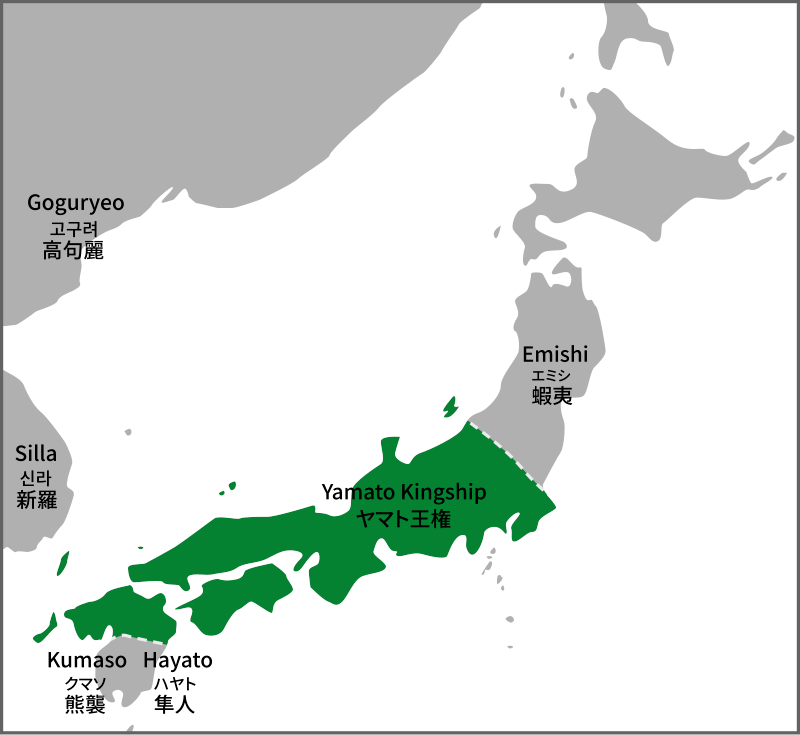
    What is certain is that the Emishi proved to be an opponent that the Yamato initially struggled to overcome. Whilst the independent peoples in Kyushu were subjugated fairly early on (either through force or diplomacy), the Emishi remained largely independent into the 8th Century.

    The Yamato State in the 4th Century. Although the Kumaso and Hayato people would be absorbed, the Emishi would prove far more durable.
    By Samhanin – Own work, source: Yamato ja.png, CC BY 3.0, https://commons.wikimedia.org/w/index.php?curid=121731575

    The Emishi would prove to be resistant to traditional military strategy. They relied on horse archery, using speed and guerilla tactics to defy the Yamato. For most of the 7th and 8th centuries, the Yamato would advance slowly, building forts as they went and dealing with individual Emishi tribes, some of whom would agree to enter Imperial service.

    In 774, the so-called Thirty-eight Years War began when the Emishi launched a series of attacks on Yamato forts in Northern Japan. The Emishi would prove to be successful at first; imperial armies were gathered quickly and sent against the Emishi, only for the Emishi themselves to melt away and reappear somewhere else. Forts, Towns, and Villages were burned, and through the 780’s, the situation spiralled out of control.

    The war would go on for 38 years (hence the name), and it would be a combination of diplomacy and a change in strategy that eventually led to Yamato’s victory and dominance of the North.

    Militarily, the Yamato adopted the mounted archery tactics of their enemy. This couldn’t be done with conscripts from the back end of nowhere, but the local nobility, who had been dealing with the Emishi for years already, were quicker to catch on, and these “Emishi-busting” armies were often smaller, faster moving, and, most importantly, loyal to their local communities over the Imperial Court.

    By the 790s, the strain of constant campaigns against the Emishi had led to a breakdown in the system of conscription. The people didn’t want to be sent to fight, and the Imperial Court couldn’t afford to send them, meaning that military strength now rested entirely in the hands of local nobility, but I’m sure that’ll be fine.

    On the diplomatic front, the Yamato reached out to the tribes who might agree to switch sides, and unsurprisingly, many would. The leaders of these tribes were quickly integrated into local nobility, and it is said that several later Clans could trace their ancestry to Emishi progenitors.

    By the dawn of the 9th century, the Emishi were largely dealt with. Those who had submitted were subsumed by Yamato culture, and over the years, they would become indistinguishable from other Japanese. Those who refused to submit, however, were either destroyed or driven north to Hokkaido, where they would play no further part in the Heian story.

    Now what?

    So, the Emishi are beaten, the Empire has won, and all is right in the world. I’m sure that the fact that military power has fallen completely out of imperial hands into the lap of a regionally powerful nobility that controls not only the military but the economic levers of power after the collapse of central taxation led to a system that relies almost entirely on agricultural output to support itself won’t lead to any problems, will it?

    There’s that foreshadowing again.

    Sources

    https://en.wikipedia.org/wiki/Heian_period
    https://en.wikipedia.org/wiki/Heian-ky%C5%8D
    https://en.wikipedia.org/wiki/Emperor_Kanmu
    https://en.wikipedia.org/wiki/Nagaoka-ky%C5%8D
    https://en.wikipedia.org/wiki/Emishi
    https://en.wikipedia.org/wiki/Fujiwara_no_Kamatari
    https://fee.org/articles/were-japans-taika-reforms-a-good-idea/