As we discussed last time, efforts to bring about peace between the Northern and Southern Courts were largely put to bed by the deaths of Shogun Yoshiakira and Emperor Go-Murakami in 1367-68.
In the Shogunate, Yoshiakira’s heir was his 10-year-old son, Yoshimitsu. As a minor, the Shogun’s power was actually wielded by Hosokawa Yoriyuki, who officially served as Kanrei or Shogun’s Deputy, but was de facto regent. Yoriyuki had earned his place in the government through years of service, including putting down a rebellion and killing his own cousin, Kiyouji.
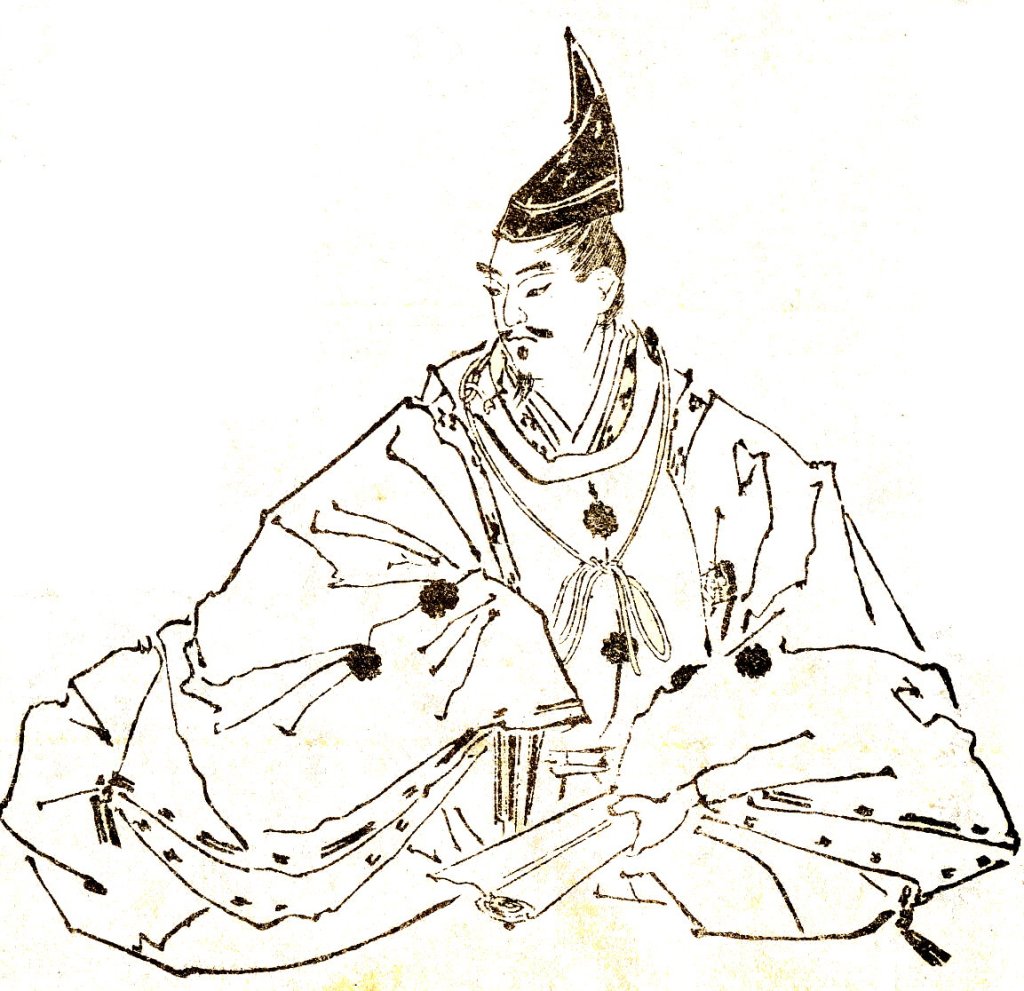
Yoriyuki proved to be a strict, but highly capable politician. He passed, and more importantly, enforced laws against the increasing power of the Shugo (regional lords). For example, he imposed strict sumptuary laws, limiting extravagant spending and luxurious living on the part of the Samurai.
He also made it much more difficult for these lords, who were still technically regional governors, to pass laws on their own, even in the Shogun’s name. Instead, decision-making was to be centralised within the Shogun’s government, and by extension, Yoriyuki. He used the increased administrative power of the government to reduce, if not outright prevent, the practice of rival warlords fighting each other for land.
What had previously been a government that was based almost entirely on the decision and ability of the Shogun now took on a more bureaucratic style, with clear government systems, laws, and systems of enforcement.
Yoriyuki also proved adept at managing the ongoing conflict with the Southern Court. In 1369, he arranged the defection of the powerful Kusunoki Clan to the side of the Northern Court and the Shogun. The next year, he dispatched an army to Kyushu to deal with the Southern Court loyalists there. Its commander, Imagawa Sadayo, was named Kyushu Tandai, effectively military governor, with wide-ranging powers and autonomy from the government.
Yoriyuki would face serious political issues at home as well. In 1370, the Northern Court Emperor wished to abdicate in favour of his son, but a rival faction supported his nephew, and the crisis grew as members of the Shogun’s family, most notably his foster mother (Yoshiakira’s wife) Shibukawa Sachiko, began to get involved.
At this point, Yoriyuki stepped in, presenting the last will and testament of the previous Emperor to force a solution to the crisis that ultimately preserved the peace, but created several new enemies. Sachiko would prove not to be the forgiving kind.
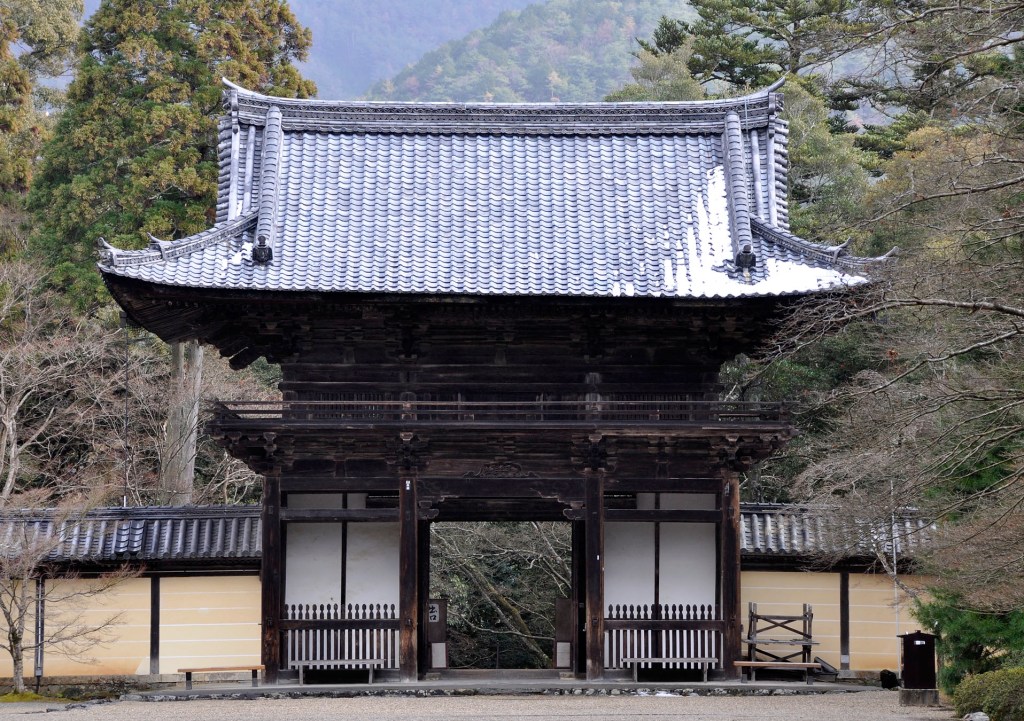
More problems arose when a conflict between rival religious sects broke out over the Shogunate’s apparent favouring of one group over another. The Zen Buddhist Nanzenji had enjoyed Shogunate patronage for years, with the Shogun even going so far as to subsidise the construction of the temple’s Romon (a kind of towered gateway, common in Japanese temples).
Monks from the Onjoji Temple, which followed the more traditional Tendai Sect, protested this and asked the Northern Court to end construction. In response to this, one of the leading monks from Nanzenji (the Zen side, remember) criticised the Tendai Sect in his writing.
This went back and forth for a while, until the Onjoji side decided to petition the Emperor of the Northern Court directly. Yoriyuki prevented the petition from being delivered, but a compromise was reached, in which the offending Zen Monk would be exiled, but the construction of the Romon would continue.
The Tendai side was not satisfied with this, however, and continued pressuring the Northern Court to order the destruction of the romon. Finally, in the summer of 1370, the Northern Court, with Yoriyuki’s permission, gave in and ordered the romon destroyed. One of the leading Zen monks, Shunoku Myoha, resigned in protest, and Yoriyuki had earned himself another powerful enemy.
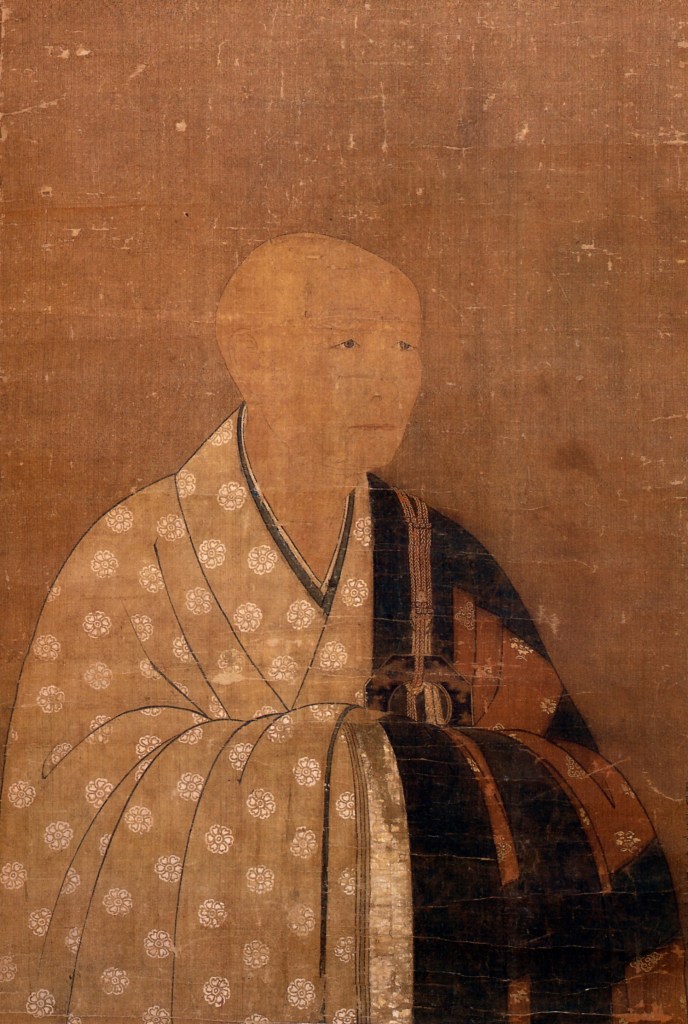
By the late 1370s, Yoriyuki had enemies at court, amongst the priesthood, with rival clans (especially the powerful Yamana, Toki, and resurgent Shiba Clans), as well as ongoing conflict with loyalists of the Southern Court. There was also the campaign in Kyushu, where the Kyushu Tandai, Imagawa Sadayo, was having a hard time dealing with Southern Court loyalists, and the powerful local clans, who saw little reason for loyalty to anyone but themselves.
Apparently, Yoriyuki, aware of these problems, repeatedly tried to resign his positions as kanrei, but was refused every time by Shogun Yoshimitsu, who had by now come of age. Yoriyuki probably knew the writing was on the wall; however, his fall wouldn’t be long in coming.
In 1378, a fresh uprising of Southern Court Loyalists broke out in Kii Province. A force led by Yoriyuki’s son, Yorimoto, was dispatched to put it down, but was defeated. In response, Shogun Yoshimitsu ordered another army raised, this time made up of warriors of the Shiba and Toki Clans, and commanded by the Yamana Clan.
Instead of marching against the rebels in Kii Province, however, this new army came to Kyoto, where they surrounded the Shogun’s palace and demanded that Yoriyuki be removed from power.
With effectively no force to oppose them, the Shogun had little choice but to agree to their demands, and Yoriyuki was dismissed, though he was allowed to return to his home province on Shikoku, where he became a monk. Meanwhile, in the Kanto region, another member of the Ashikaga Clan, Ujimitsu, made his own play for power in the region, aiming to have himself named Kanto Kanrei, which was the Shogun’s Deputy in the Kanto region.
The power in that area, however, was the Uesugi Clan, and when their leader Norikata brought his forces out in opposition to Ujimitsu, the plan quickly fell apart. Norikata entered into secret negotiations with the Shogun, who had the Northern Court issue an order naming Norikata Kanto Kanrei, further solidifying the Uesugi’s power in the region.
The most obvious beneficiaries of the so-called Koryaku Coup were the Shiba clan, as their leader, Shiba Yoshiyuki, was named the new Kanrei. He immediately tried to finish off Yoriyuki by having a rival clan, the Kono, attack and take his lands on Shikoku. This was part of the ongoing rivalry between the Kono and Hosokawa (Yoriyuki’s clan) and ended in failure when the Kono were defeated in battle and their leaders killed. In the aftermath, Shogun Yoshimitsu ordered no further action against Yoriyuki or the Hosokawa.

Musuketeer.3 – 投稿者自身による著作物, CC 表示-継承 3.0, https://commons.wikimedia.org/w/index.php?curid=24825386による
Turning his attention to the Kanto, the Shogun pardoned Ashikaga Ujimitsu, but the peace there was short-lived, and Ujimitsu, as commander of Kamakura (Kamakura Kubo), continued to oppose the Kanto Kanrei, Uesugi Norikata, often violently, and peace would continue to be elusive in the Kanto.
Another consequence of all this was the realisation that the Shogunate’s military weakness had become a political liability. Over-reliance on the often dubious loyalty of powerful clans was no longer viable, so the Shogun ordered the creation of the Hokoshu, a military force that was personally loyal to the Shogun, rather than local lords.
Ashikaga Yoshimitsu, as Shogun, would go on to increase the centralisation and overall power of the Ashikaga Shogunate, and in the years following the Koryaku Coup, he would eventually be responsible for bringing the Nanbokucho Period to an end, but more on that next time.
Sources
https://ja.wikipedia.org/wiki/%E5%8D%97%E5%8C%97%E6%9C%9D%E6%99%82%E4%BB%A3_(%E6%97%A5%E6%9C%AC)
https://en.wikipedia.org/wiki/Ashikaga_shogunate
https://en.wikipedia.org/wiki/Nanboku-ch%C5%8D_period
https://ja.wikipedia.org/wiki/%E8%B6%B3%E5%88%A9%E7%BE%A9%E8%A9%AE#%E5%B0%86%E8%BB%8D%E5%B0%B1%E4%BB%BB%E5%BE%8C
https://en.wikipedia.org/wiki/Ashikaga_Yoshimitsu
https://en.wikipedia.org/wiki/Hosokawa_Yoriyuki
https://ja.wikipedia.org/wiki/%E6%98%A5%E5%B1%8B%E5%A6%99%E8%91%A9
https://ja.wikipedia.org/wiki/%E6%98%8E%E5%BE%B3%E3%81%AE%E4%B9%B1
https://ja.wikipedia.org/wiki/%E5%A5%89%E5%85%AC%E8%A1%86
https://en.wikipedia.org/wiki/H%C5%8Dk%C5%8Dsh%C5%AB
https://ja.wikipedia.org/wiki/%E5%BA%B7%E6%9A%A6%E3%81%AE%E6%94%BF%E5%A4%89
https://ja.wikipedia.org/wiki/%E6%96%AF%E6%B3%A2%E7%BE%A9%E5%B0%86
https://ja.wikipedia.org/wiki/%E7%B4%B0%E5%B7%9D%E9%A0%BC%E4%B9%8B#%E5%BA%B7%E6%9A%A6%E3%81%AE%E6%94%BF%E5%A4%89
 Chris Perry, Author