Tag: Ikko-Ikki

  • The Third Unifier – Tokugawa Ieyasu. Part Two.

    The Third Unifier – Tokugawa Ieyasu. Part Two.

    The Battle of Okehazama in 1560 saw Tokugawa Ieyasu’s masters, the Imagawa, dealt a serious blow at the hands of Oda Nobunaga. In the aftermath, Ieyasu began asserting his independence, and in 1562, the so-called “Kiyosu Alliance” between Ieyasu and Nobunaga was formalised.
    The mon of the Tokugawa.
    百楽兎 – 投稿者自身による著作物, CC 表示-継承 3.0, https://commons.wikimedia.org/w/index.php?curid=1056853による

    The Imagawa, however, were down, but not out, and Ieyasu’s position was far from secure, despite his new alliance. In 1563, the “Mikawa Ikko-Ikki” Rebellion broke out, and in early 1564, when the Imagawa announced their intention to crush Ieyasu, several of his vassals in Mikawa switched sides, joining the Ikko-Ikki or else rising against Ieyasu in anticipation of an Imagawa attack.

    The name “Ikko-Ikki” suggests that the uprising was similar to other religiously motivated risings that occurred throughout Japan during this period. Indeed, the focal point seems to have been several temples in Mikawa; however, some scholars now suggest that the uprising was motivated more by economic reasons, and some even go so far as to say that Ieyasu may have provoked the rising, or at least took advantage of it to cement his control of Mikawa Province.
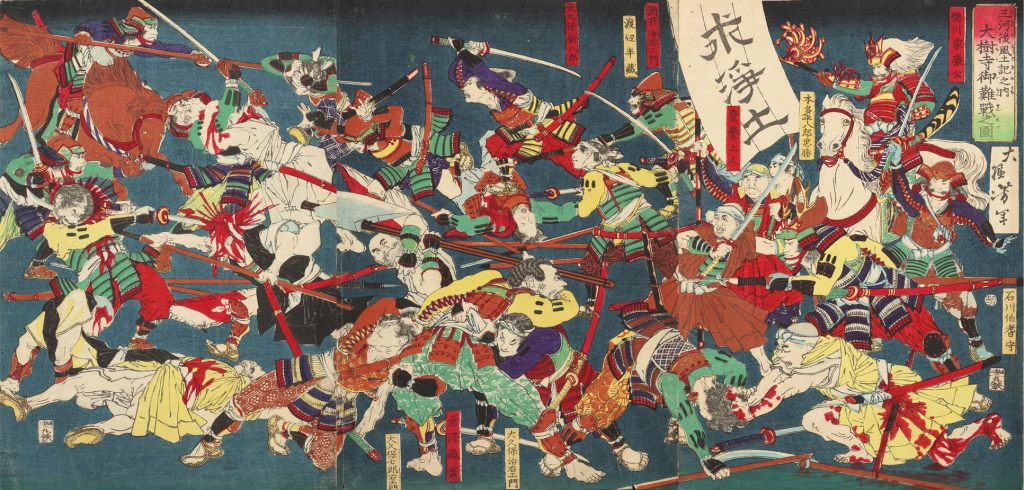
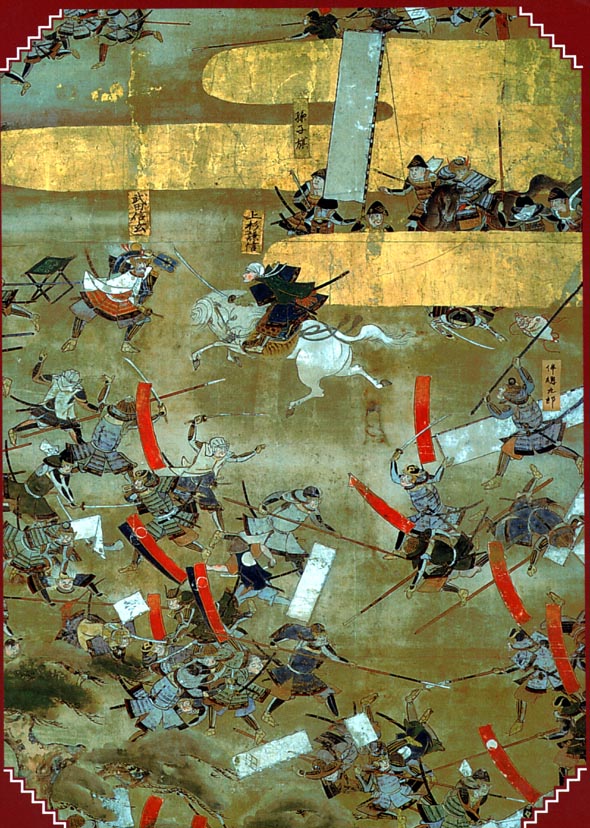
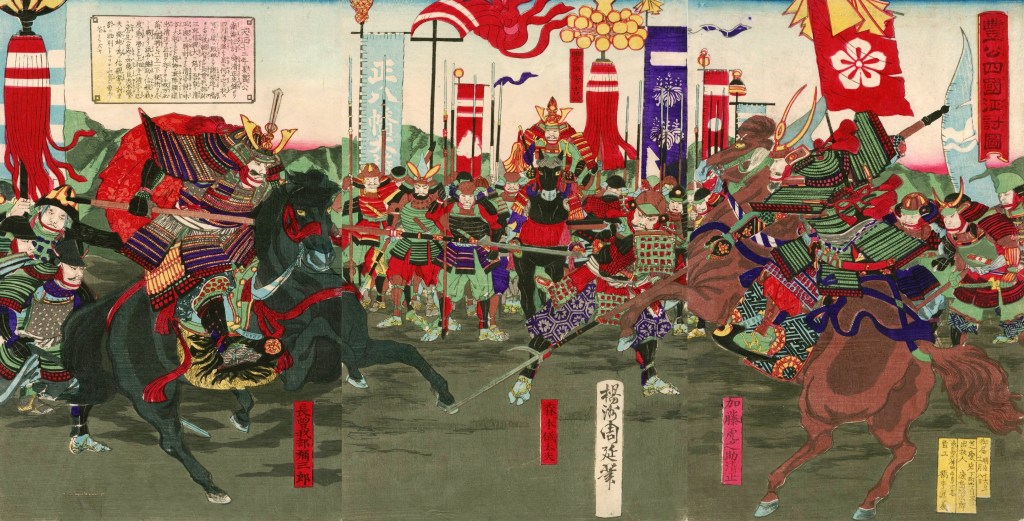
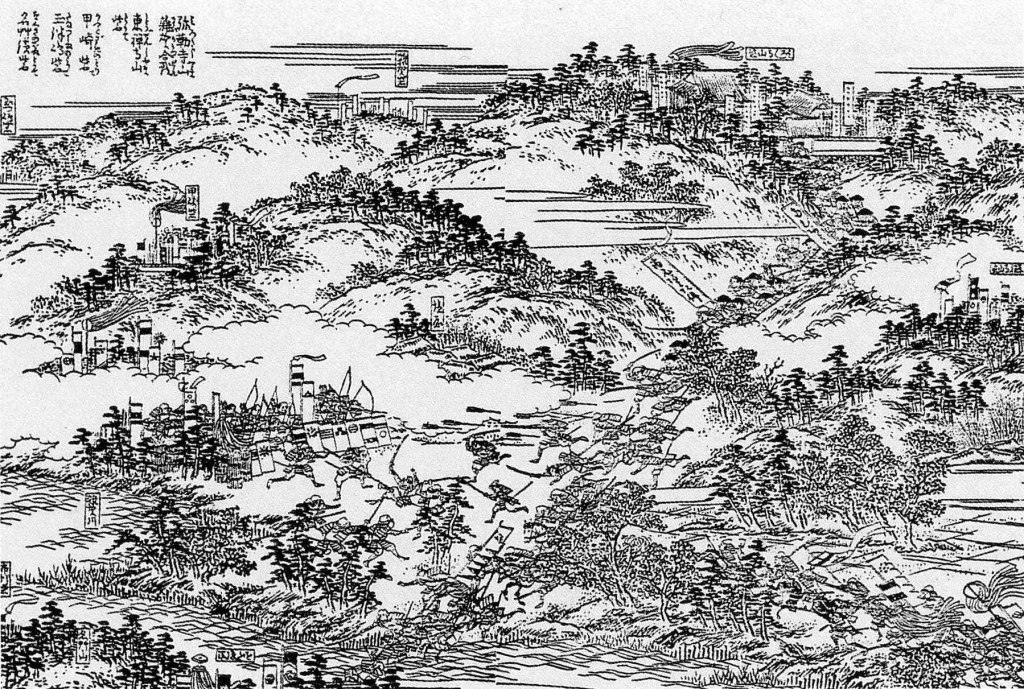
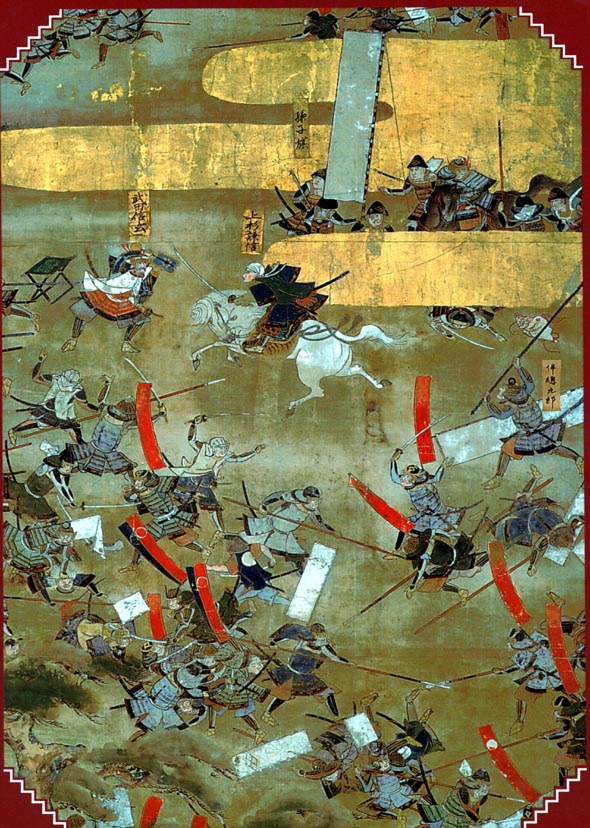
    A later depiction of the Battle of Azukizaka. Ieyasu is the figure on the white horse on the right.

    While it’s impossible to know for sure, Ieyasu did much to boost his own reputation in putting down the rebellion. At the Battle of Azukizaka (sometimes called the Battle of Batogahara) in January 1564, Ieyasu led his forces in crushing the rebels, despite ferocious fighting. The story goes that Ieyasu charged the enemy fearlessly, and came under heavy gunfire, with several rounds penetrating his armour, but leaving him uninjured, inspiring his men, and leading some rebels to switch sides.

    In the aftermath, Ieyasu banned the Jodo Shinshu sect of Buddhism in Mikawa, only to lift the ban in 1567, just a few years later, lending credence to the argument that the fighting had never been about religious issues but about political control of the province.
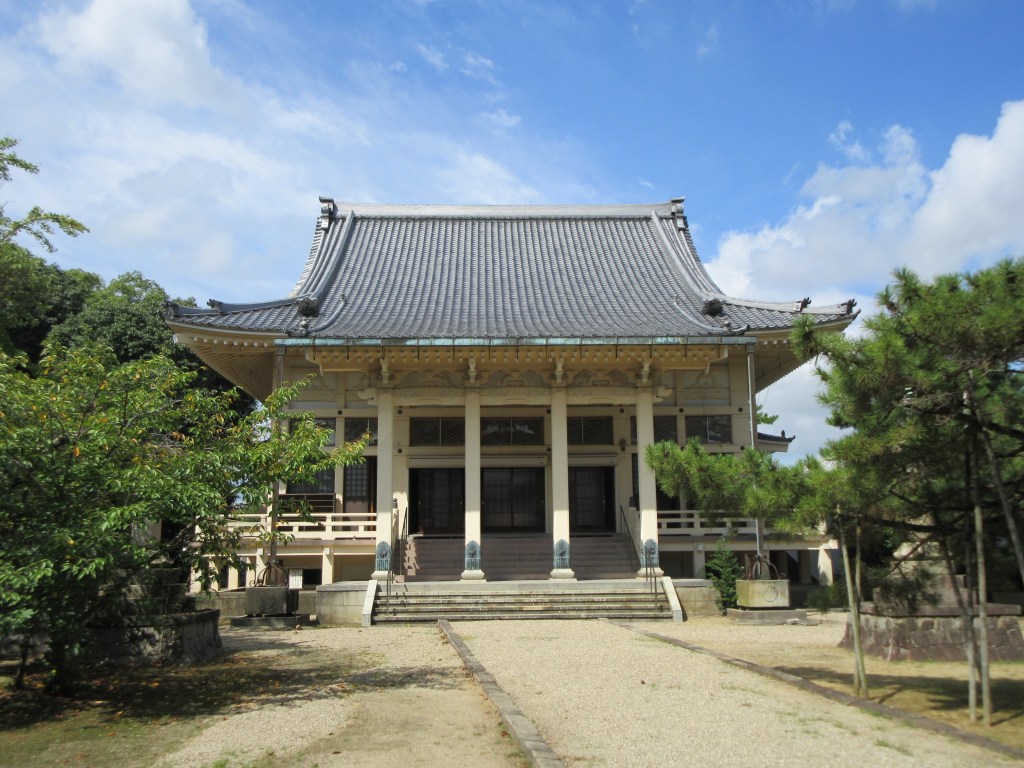
    The Honshuji Temple, one of the focal points of the rebellion, as it appears today.

    Before 1566, Ieyasu’s family name was Matsudaira, but around this time, he petitioned the Emperor to change it to Tokugawa. The exact reasons for this are related to the complex (and often impenetrable) genealogies of the Minamoto and Fujiwara Clans, from whom Ieyasu claimed descent. You may remember that Minamoto and Fujiwara were the names of two of Japan’s most ancient and illustrious families, and it was a big deal to claim descent from them.

    This would become much more important later, as only a member of the Minamoto could become Shogun (technically), but that was still decades in the future. At the time, the name change was probably more closely associated with prestige and a desire to assert independence from the Imagawa, with a new name symbolising a new era for the clan.

    Takeda Shingen.

    In 1567, Ieyasu further strengthened his alliance with Nobunaga by marrying his eldest son to Nobunaga’s daughter. However, they were both just nine years old at the time, so the marriage was a political rather than conjugal union. The next year, Ieyasu dispatched forces to support Nobunaga’s march on Kyoto, and in December, he made an alliance with Takeda Shingen and launched a joint invasion of Imagawa territory.

    The attack was a success, but the relationship between Ieyasu and Shingen fell apart almost immediately. According to Tokugawa accounts, it had been agreed that Ieyasu would take Totomi Province, and Shingen would take Suruga. However, it wasn’t long before Takeda forces were also crossing into Totomi, in direct violation of the agreement (which may never have existed to begin with).
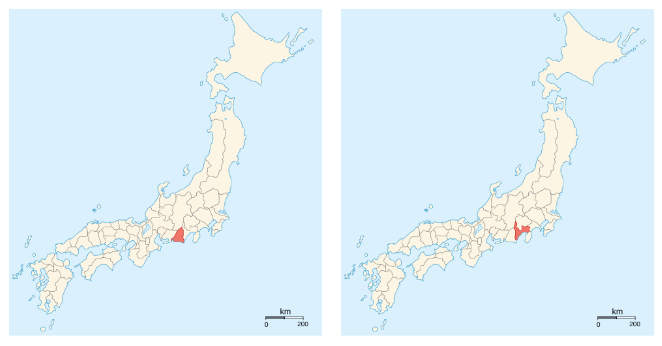
    Suruga and Totomi Provinces.
    By Ash_Crow – Own work, based on Image:Provinces of Japan.svg, CC BY 2.5, https://commons.wikimedia.org/w/index.php?curid=1691864

    Ieyasu then sought the support of the Hojo Clan, and their Lord, Ujiyasu, who had his own ambitions for the former Imagawa territory. Together, they successfully pushed the Takeda forces back, and in 1570, Ieyasu moved his base from Okazaki Castle in Mikawa Province to Hikuma, which he promptly renamed Hamamatsu, in Totomi. Later that year, he would further prove his value as an ally of Oda Nobunaga by supporting his campaign against the Azai-Asakura Alliance, fighting in the rearguard in the defeat at Kanegasaki, and then providing important reinforcements at the victorious Battle of Anegawa in July.

    In 1571, the alliance would be sorely tested, as the last Ashikaga Shogun, Yoshiaki, sought to rally forces in opposition to Oda Nobunaga, with the ultimate goal of restoring his family’s position. The Anti-Nobunaga coalition (which was, importantly, not necessarily pro-Ashikaga) included the forces of the Azai-Asakura Alliance, the powerful temple of Ishiyama Honganji, and Takeda Shingen, among others.
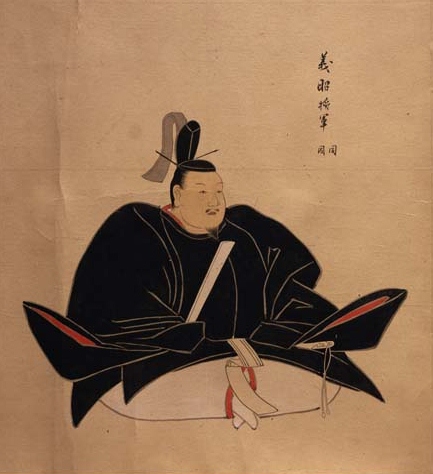
    Ashikaga Yoshiaki

    In the aftermath of the defeat of the Imagawa, Hojo Ujiyasu, who had favoured an alliance with Ieyasu against the Takeda, died and was replaced by his son, Ujimasa, who reversed his clan’s diplomatic position and reestablished the alliance with Shingen. At this point, Yoshikai, seeking to take advantage of the pressure he was now under, sought to gain Ieyasu’s support, offering him the position of Kanrei or deputy Shogun in exchange.

    Ieyasu refused this offer and chose to retain his alliance with Nobunaga; in response, Takeda Shingen launched an invasion of the Mikawa and Totomi Provinces in September 1572. Leading 20,000 troops, Shingen crossed the Aokuzure Pass, and with the help of several defections amongst Ieyasu’s retainers, swiftly gained control of northern Totomi.
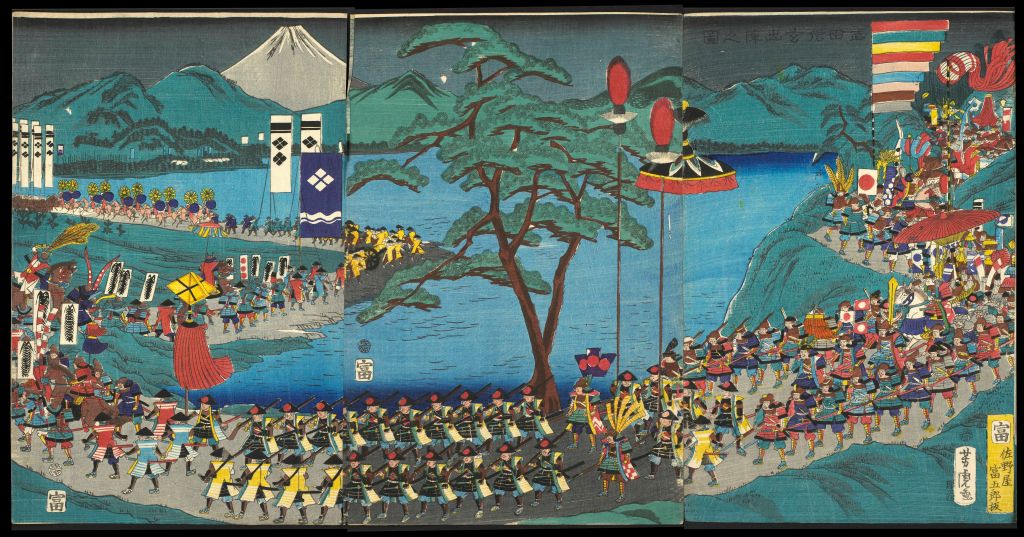
    A later depiction of the Takeda Army advancing into Totomi Province.

    Meanwhile, a separate force invaded Nobunaga’s territory in Mino, meaning that when Ieyasu called for aid, none was readily available. Ieyasu was forced into an impossible situation; his forces were heavily outnumbered by the advancing Takeda, and a pitched battle would almost certainly end in defeat. On the other hand, if he retreated or even stayed on the defensive, he faced the prospect of losing support from his retainers, some of whom had already proved they were willing to switch sides.

    The Takeda headed towards the strategically important Futamata Castle, and Ieyasu had no choice but to try to head them off. The advance guards of both armies clashed at the Battle of Hitokotozaka, and the Tokugawa were soundly beaten, causing them to retreat to the relative safety of Hamamatsu, and giving the Takeda a clear path to lay siege to Futamata, which fell shortly afterwards.
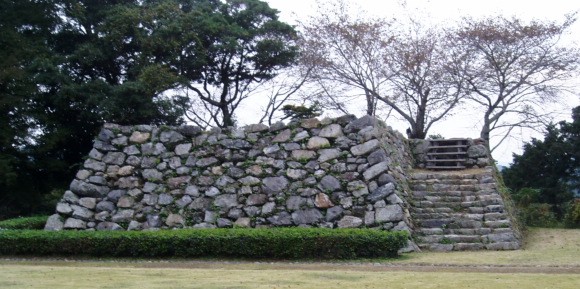
    The remains of Futamata Castle.
    CC 表示-継承 3.0, https://commons.wikimedia.org/w/index.php?curid=427661

    In the aftermath of this disaster, still more Tokugawa retainers switched sides and joined the Takeda, and it was assumed that Shingen, whose army, strengthened by defections and reinforcements, now stood at around 30,000 men, would march on Hamamatsu. Instead, the Takeda forces bypassed it entirely. It has been suggested that this was a ploy to lure Ieyasu out of the powerful fortress, giving Shingen the opportunity to destroy him in the open.

    If that was the plan, it worked, and despite urging from his retainers to remain in Hamamatsu, Ieyasu was emboldened by some long-awaited reinforcements from Nobunaga and decided to march out and intercept the Takeda. The result was the disastrous Battle of Mikatagahara, in which the Tokugawa were decisively defeated, with Ieyasu himself only being saved by the bravery of his retainers, who fought a rearguard action so ferocious that Ieyasu was allowed to escape, and the Takeda were convinced to call off the pursuit.
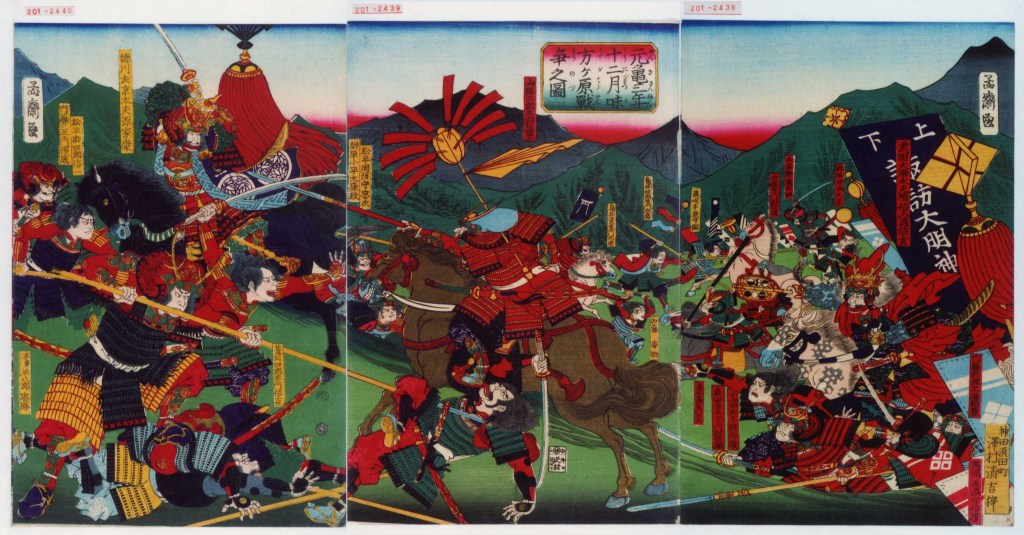
    A later depiction of the Battle of Mikatagahara

    The winter of 1572 saw the Takeda forces camping deep inside Tokugawa territory, whilst Ieyasu himself was holed up in Hamamatsu, his army scattered, and his prospects looking very bleak.
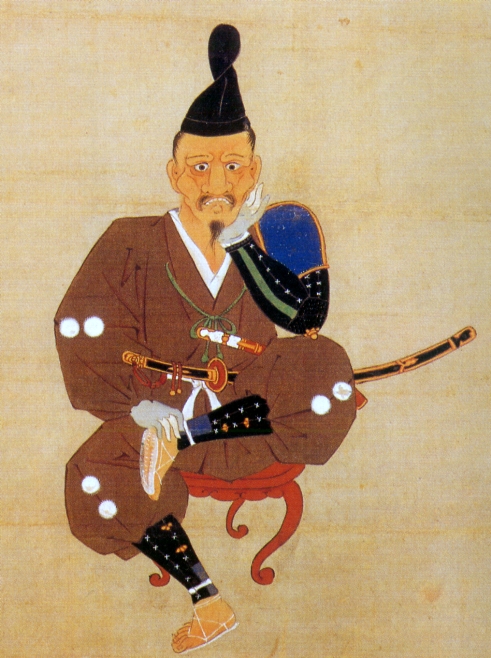
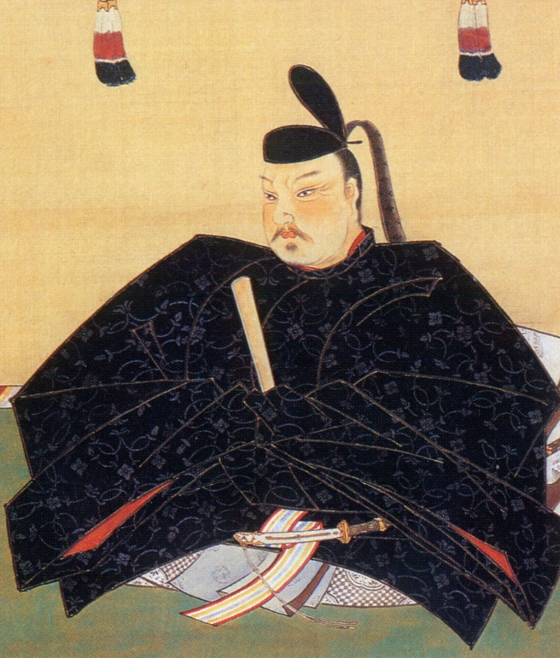
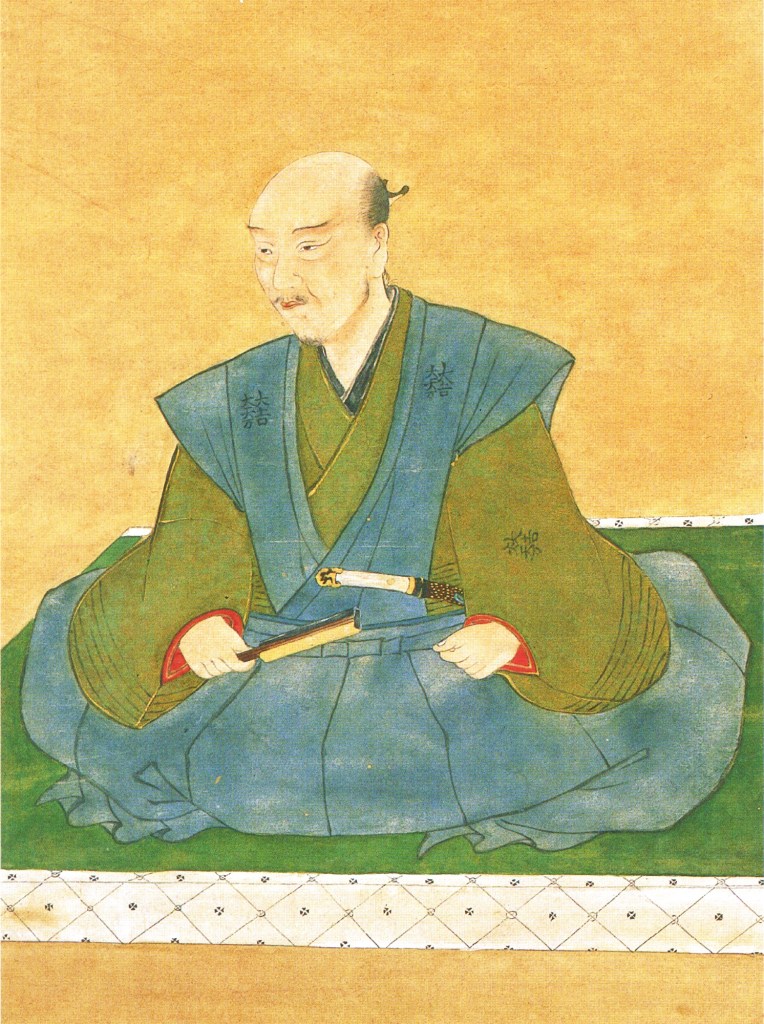
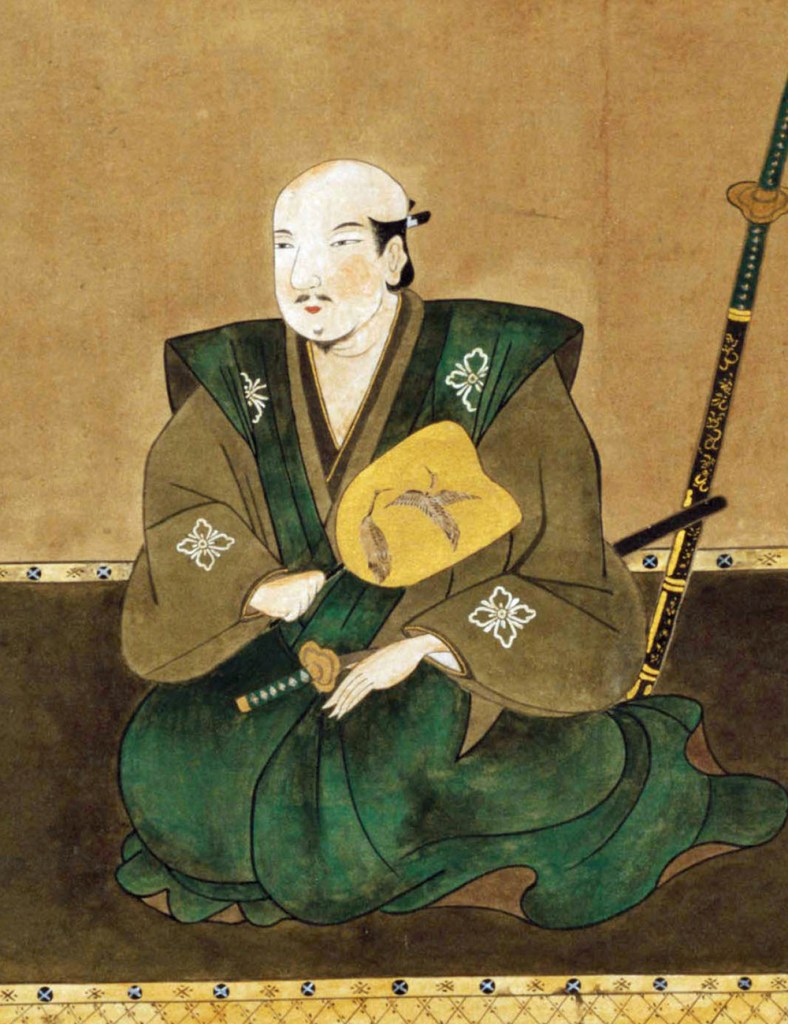
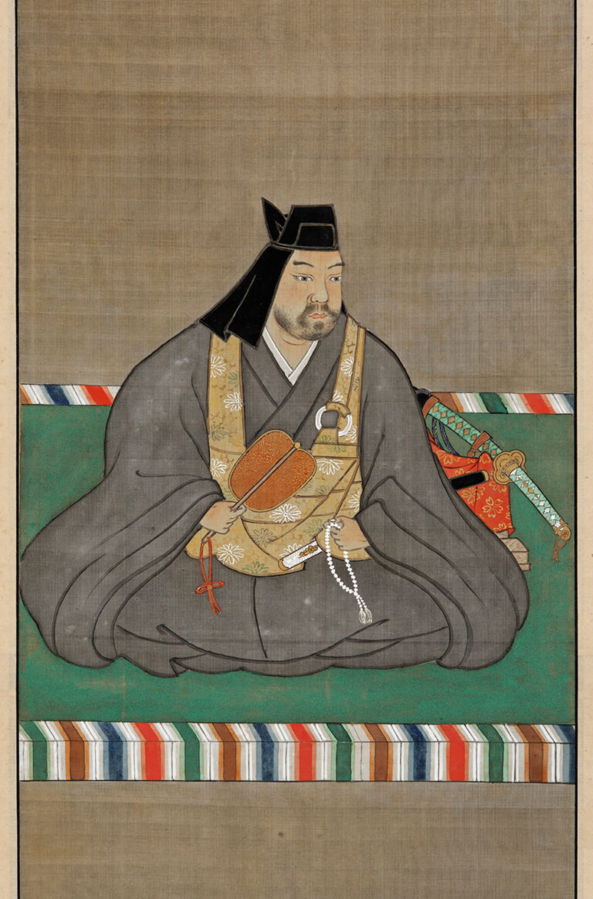
    A painting of Ieyasu supposedly made after the defeat at Mikatagahara. Traditional history suggests that Ieyasu commissioned the painting as a reminder of the defeat and a warning against future arrogance; however, this account doesn’t appear in any sources before the 20th century and is now generally believed to be apocryphal.

    Sources
    https://ja.wikipedia.org/wiki/%E5%BE%B3%E5%B7%9D%E5%AE%B6%E5%BA%B7
    https://ja.wikipedia.org/wiki/%E4%B8%89%E6%96%B9%E3%83%B6%E5%8E%9F%E3%81%AE%E6%88%A6%E3%81%84
    https://ja.wikipedia.org/wiki/%E4%BA%8C%E4%BF%A3%E5%9F%8E%E3%81%AE%E6%88%A6%E3%81%84
    https://ja.wikipedia.org/wiki/%E4%B8%80%E8%A8%80%E5%9D%82%E3%81%AE%E6%88%A6%E3%81%84
    https://ja.wikipedia.org/wiki/%E8%A5%BF%E4%B8%8A%E4%BD%9C%E6%88%A6
    https://ja.wikipedia.org/wiki/%E9%9D%92%E5%B4%A9%E5%B3%A0
    https://ja.wikipedia.org/wiki/%E9%87%91%E3%83%B6%E5%B4%8E%E3%81%AE%E6%88%A6%E3%81%84
    https://ja.wikipedia.org/wiki/%E5%A7%89%E5%B7%9D%E3%81%AE%E6%88%A6%E3%81%84
    https://ja.wikipedia.org/wiki/%E6%8E%9B%E5%B7%9D%E5%9F%8E
    https://ja.wikipedia.org/wiki/%E6%B5%9C%E6%9D%BE%E5%9F%8E
    https://news.yahoo.co.jp/expert/articles/c8236e8b4e534230da1d01117685da63b98d761a
    https://ja.wikipedia.org/wiki/%E5%B0%8F%E8%B1%86%E5%9D%82%E3%81%AE%E6%88%A6%E3%81%84_(1564%E5%B9%B4)
    https://ja.wikipedia.org/wiki/%E4%B8%89%E6%B2%B3%E4%B8%80%E5%90%91%E4%B8%80%E6%8F%86
    https://ja.wikipedia.org/wiki/%E5%B2%A1%E5%B4%8E%E5%9F%8E
    https://ja.wikipedia.org/wiki/%E6%9C%AC%E5%AE%97%E5%AF%BA
  • The Second Unifier – Toyotomi Hideyoshi. Part Six.

    The Second Unifier – Toyotomi Hideyoshi. Part Six.

    The mon of the Toyotomi Clan.

    By the late 1580s, Hideyoshi was at the very pinnacle of political and military power in Japan. Jesuit records from the time name him “tyrant” and suggest that he has achieved more power over the realm than any warlord before him.

    After the successful conclusion of the Kyushu Campaign, Hideyoshi ordered a new palace built in Kyoto. Called Jurakudai (or Jurakutei in some sources), Toyotomi moved his political base there from Osaka Castle in early 1588, inviting the Emperor Go-Yozei for a feast in April 1588 and obliging powerful Daimyo (such as Tokugawa Ieyasu) to travel there and pay homage to him.

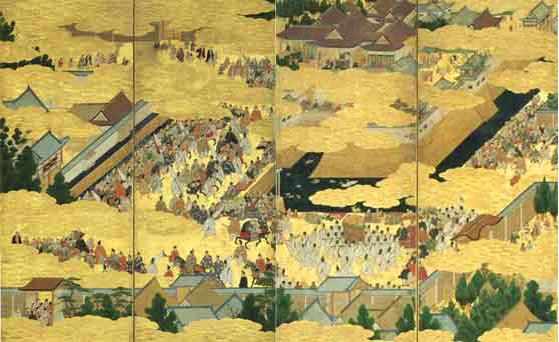
    An image of the Emperor visiting Jurakudai.

    Having secured personal political power, Hideyoshi then turned his attention to pacifying the realm at large. Through his military campaigns, he had subdued most of the powerful Daimyo in the realm, but there remained the issue of establishing peace at the local level as well.

    The Sengoku Jidai exists in the popular imagination as more than a century of conflict, featuring epic clashes between armies of Samurai loyal unto death, and iconic lords like Takeda Shingen, Oda Nobunaga, and Uesugi Kenshin, who were locked in a titanic struggle for ultimate control of the realm.

    Uesugi Kenshin and Takeda Shingen engaged in a duel that probably never happened but remains an enduring, if inaccurate, image of the Sengoku-era battlefield.

    Whilst there is certainly truth to this image, much like any period of civil war, Japanese society at large had become incredibly violent during the 16th century. At the local level, the decentralised nature of Daimyo rule led to the emergence of Jizamurai, literally “Local Samurai”. These men often started out as armed peasants, usually levied into the armies of some local lord, and sent home again when the campaign ended.

    Throughout the 16th century, these Jizamurai gradually achieved military and political influence over their local communities, often being allowed to collect tax revenue on behalf of their lord in exchange for military service, similar to a Knightly Manor in medieval Europe.

    This situation worked fine whilst the realm was fractured into dozens of minor domains, but as consolidation followed conquest in the latter half of the 16th century, tensions between “Samurai” and “Jizamurai” became more of an issue. When a lord was defeated, he was usually killed or deprived of his land, meaning that the Jizamurai would often find themselves serving a new lord to whom they had no personal loyalty, leading to frequent conflicts.

    Ashigaru on campaign. By the late 16th century, the distinction between Warrior and Peasant was often unclear to the point of being non-existent.

    On a societal level, the distinction between Jizamurai and peasants was often academic. Though technically of a higher social status, a Jizamurai usually lived in the village, amongst the peasantry, who would themselves often have access to weaponry and a far greater loyalty to their local Jizamurai than to some powerful Daimyo whom they never saw.

    This led to frequent Peasant Uprisings throughout the Sengoku Period, most famously the Ikko-Ikki, who were motivated by religious fervour but were largely made up of peasants and Jizamurai. It wasn’t just political violence; feuds between villages were common and often escalated into violence, as rival communities would quickly resort to the sword to settle disputes over territory, waterways, and other local matters.

    In 1587, Hideyoshi passed a law forbidding the use of force to resolve such disputes. Though the exact wording of the law has been lost, by looking at the wording of laws from the later Edo Period, which often referred to ‘precedents’ (i.e., earlier laws), we can infer what Hideyoshi’s decrees may have looked like.

    If any villagers or other people in a village engage in a dispute over mountains or waters, using bows, spears, or guns to fight amongst themselves, that entire village shall be punished. – From a decree by Shogun Tokugawa Hidetada -1610

    Scholars debate exactly what Hideyoshi intended with this law, with some suggesting that he meant to disarm and pacify the peasants, whilst others say it was more to do with establishing who had weapons, and who had the right to weapons, part of an ongoing centralisation campaign in which a clearer line was to be drawn between Warrior and Peasant.

    In 1589, Hideyoshi celebrated the birth of a son, Tsurumatsu, whom he swiftly named as his heir, securing his dynasty for the foreseeable future. The following year, after a series of political slights, he launched a decisive campaign against the Hojo, lords of the Kanto, crushing them in the Odawara Campaign.

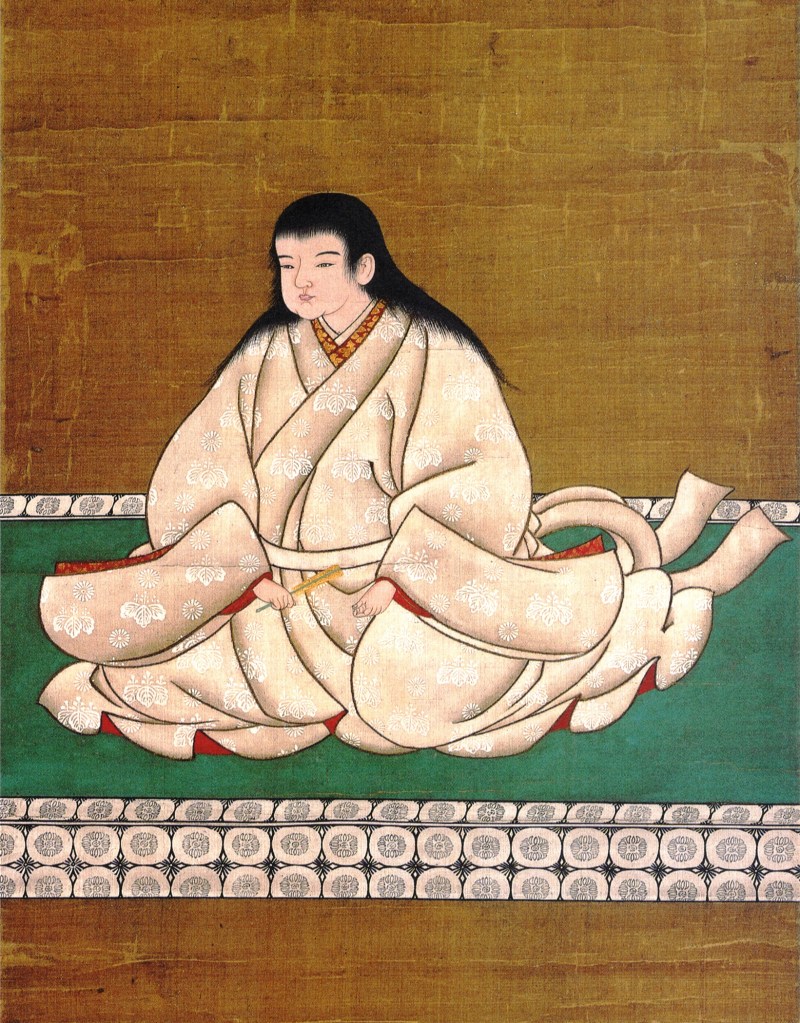
    A later, heavily stylised depiction of Hideyoshi’s son, Tsurumatsu.
    Also in 1590, he crushed the defiant clans of Northern Japan in a swift campaign, and it is at this point that the “Sengoku Jidai” is said to have come to an end. For the first time in more than a century, the country was under the control of one man, and the realm would never again fracture as it once had. Despite this, one decision made by Hideyoshi in the aftermath of the Odawara Campaign had already sown the seeds of his clan’s ultimate downfall.

    With the destruction of the Hojo, Hideyoshi offered the five provinces of the Kanto to Tokugawa Ieyasu, in exchange for the three he had originally ruled. At the time, this move was seen as political savvy. It positioned the potentially rebellious Ieyasu farther from Kyoto, and though the five Kanto provinces were nominally richer than the three Ieyasu had given up, they had recently been conquered and were potentially volatile, meaning the move weakened Ieyasu in the short term.

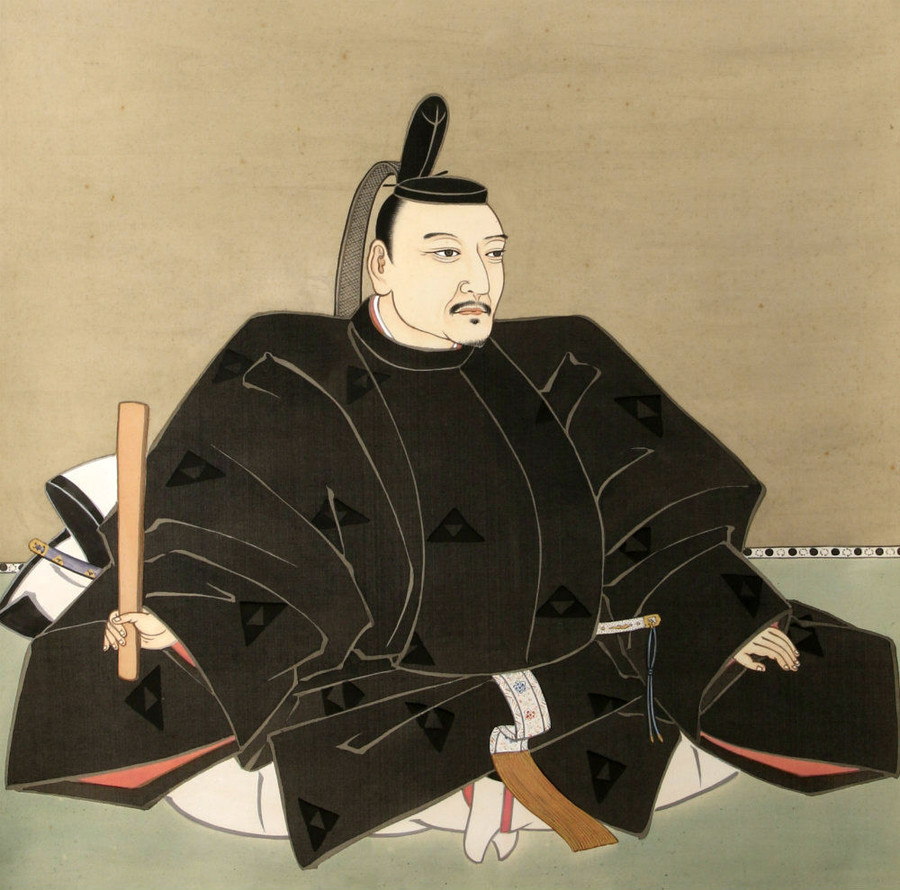
    Tokugawa Ieyasu.

    Hideyoshi, however, had not considered Ieyasu’s political and economic acumen. His base in the Kanto would eventually serve as a springboard for his own rise to power, demonstrated perhaps most clearly by the fact that Japan’s modern capital, Tokyo, is on the same site as Ieyasu’s was, more than 430 years after he moved there, but we’re getting ahead of ourselves.

    The threat from Ieyasu was not Hideyoshi’s only concern, however. In 1591, his brother, Hidenaga, who had proven to be an extremely competent commander and political ally, died in February, followed by his son and heir, the two-year-old Tsurumatsu, in September of the same year.

    Toyotomi Hidenaga

    Following these deep personal and political blows, Hideyoshi adopted his nephew, Hidetsugu, and then retired, handing control of the clan over to him. As was common at the time, Hideyoshi retained true political power; however, becoming known as the Taiko, a title of respect for former regents.

    Also in 1591, with Japan secured, Hideyoshi announced his intention to invade China, launching a brutal invasion of Korea to use it as a base for his main objective. We’ll give the Korean Wars their own post, but for now, we can say that the invasions both highlighted Hideyoshi’s power and brought about political divisions that would ultimately destroy his legacy.


    Sources
    https://ja.wikipedia.org/wiki/%E8%B1%8A%E8%87%A3%E7%A7%80%E5%90%89
    https://ja.wikipedia.org/wiki/%E5%A4%AA%E9%96%A4
    https://ja.wikipedia.org/wiki/%E8%B1%8A%E8%87%A3%E7%A7%80%E9%95%B7
    https://ja.wikipedia.org/wiki/%E6%B7%80%E6%AE%BF
    https://ja.wikipedia.org/wiki/%E8%B1%8A%E8%87%A3%E9%B6%B4%E6%9D%BE
    https://ja.wikipedia.org/wiki/%E5%BE%8C%E9%99%BD%E6%88%90%E5%A4%A9%E7%9A%87
    https://ja.wikipedia.org/wiki/%E5%88%80%E7%8B%A9
    https://ja.wikipedia.org/wiki/%E5%85%B5%E8%BE%B2%E5%88%86%E9%9B%A2
    https://ja.wikipedia.org/wiki/%E5%96%A7%E5%98%A9%E5%81%9C%E6%AD%A2%E4%BB%A4
    https://ja.wikipedia.org/wiki/%E6%B5%B7%E8%B3%8A%E5%81%9C%E6%AD%A2%E4%BB%A4
    https://ja.wikipedia.org/wiki/%E8%81%9A%E6%A5%BD%E7%AC%AC%E8%A1%8C%E5%B9%B8
    https://ja.wikipedia.org/wiki/%E8%81%9A%E6%A5%BD%E7%AC%AC
    https://ja.wikipedia.org/wiki/%E5%9C%B0%E4%BE%8D

  • The Second Unifier – Toyotomi Hideyoshi. Part Four.

    The Second Unifier – Toyotomi Hideyoshi. Part Four.

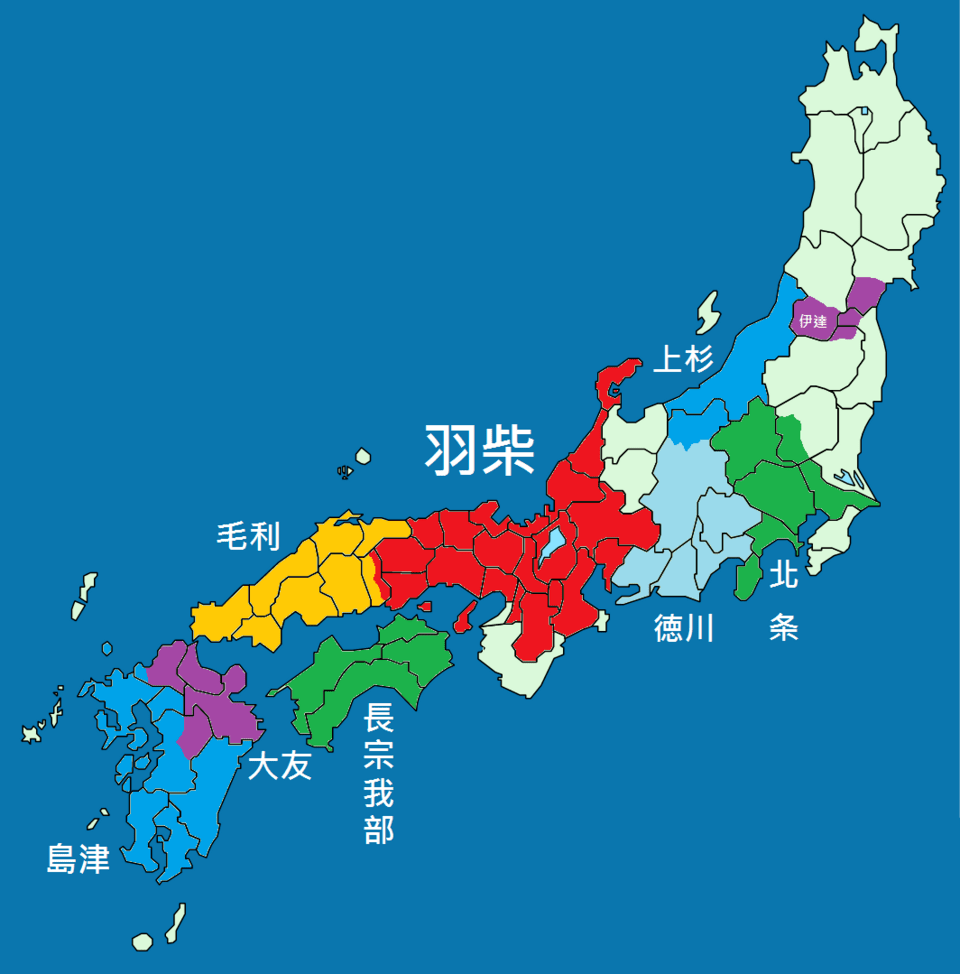
    Despite an ultimately unsuccessful campaign against Tokugawa Ieyasu, by late 1584, Hideyoshi was the most powerful man in the realm. Having secured his position as Oda Nobunaga’s successor, he dominated central Japan and could call on economic and martial resources that dwarfed those of his rivals.

    The strategic situation in late 1584, Hideyoshi controlled the territory in red.
    By Alvin Lee – Own work, CC BY-SA 4.0, https://commons.wikimedia.org/w/index.php?curid=39198357

    Despite this, he was not yet unchallenged. To the west, the Mori remained undefeated, to the east, was Tokugawa Ieyasu, and further away, the Hojo, who had remained untouched by Nobunaga’s conquests, and to the south, in Kii Province, the locals coalesced around fiercely independent religious and social movements that resisted any attempts to impose central rule.

    Meanwhile, Hideyoshi solidified his political power, being elevated to the Third Rank of the nobility in November 1584 and to the Second Rank in March 1585. Around this time, some sources suggest that the Imperial Court even went so far as to offer him the title of Shogun, only for Hideyoshi to refuse, though the exact nature of the offer, if it existed at all, is unclear.

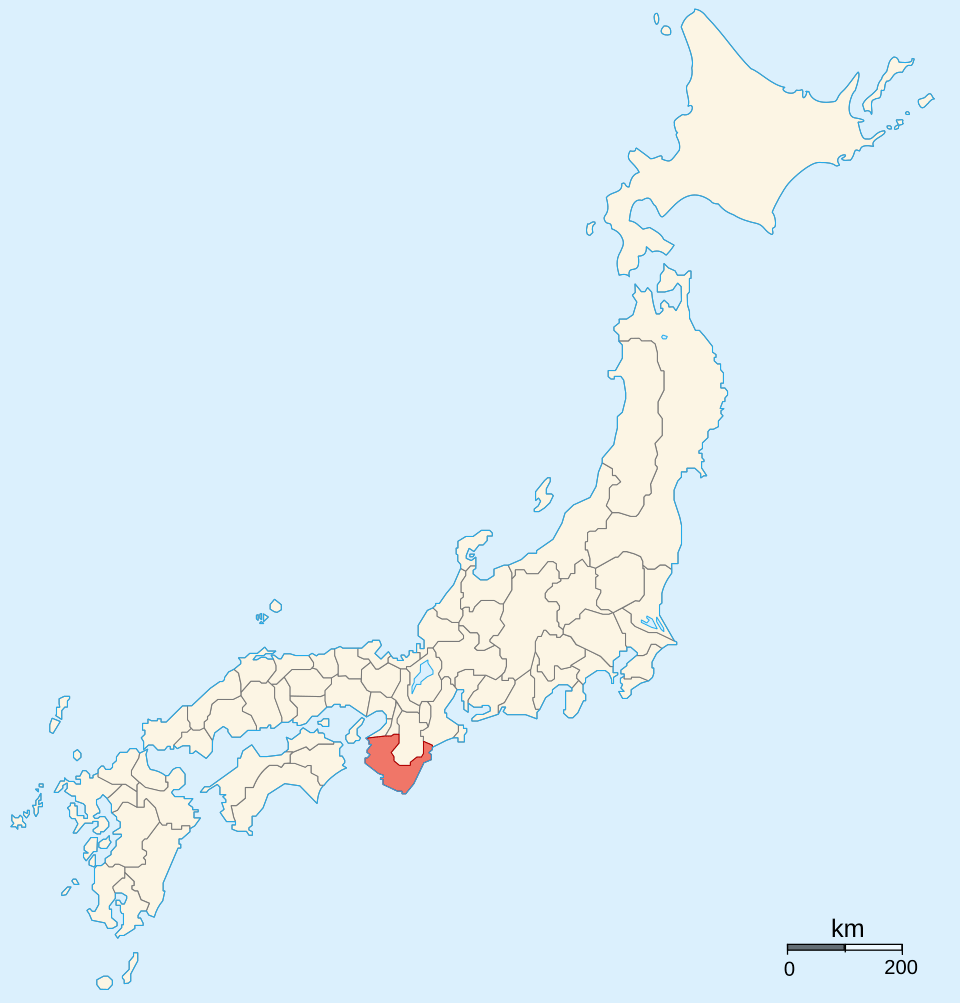
    Kii Province.
    By Ash_Crow – Own work, based on Image:Provinces of Japan.svg, CC BY 2.5, https://commons.wikimedia.org/w/index.php?curid=1683109

    With his position secured, Hideyoshi turned his attention to Kii Province. We’ve spoken about the power of certain religious institutions before, and nowhere was this more apparent than in Kii (sometimes called Kishu). Luis Frois, a well-known Portuguese writer at the time, referred to the area as under the control of five “Great Republics”, which weren’t democracies in the way we’d recognise today, but were strongly independent polities with extensive territories, economic might, and military strength.

    In 1570, Nobunaga began what would prove to be a long campaign against the power of the Ikko-Ikki, based at Honganji Temple. The warrior monks of Kii Province were a key ally of the Ikko-Ikki, and in 1576, Nobunaga dispatched an army against them, aiming to reduce their ability to support his enemies elsewhere.

    A semi-contemporary depiction of Nobunaga’s attempts to subdue Kii Province.

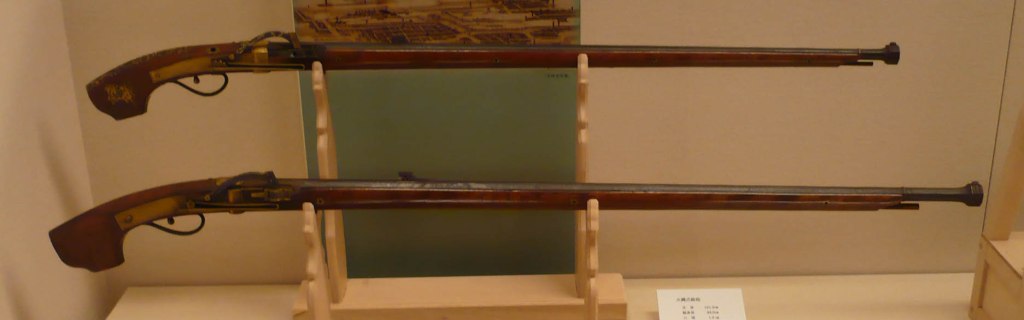
    Despite being defeated on the battlefield, the warriors of Kii engaged in guerrilla warfare, led most famously by the Saika-shu, an organisation made up of local samurai and mercenaries, which was well known for its heavy (and skilful) use of firearms. Nobunaga eventually signed a peace treaty and withdrew, allowing his enemies to claim that they had actually defeated him.

    Nobunaga’s death in 1582 put an end to any further campaigning, and for a time, at least, Kii Province was left alone, though no one believed the peace would last. In early spring 1586, Hideyoshi, at the head of an army of some 100,000 men, invaded with the intention of crushing the independent ‘Republics’ for good.

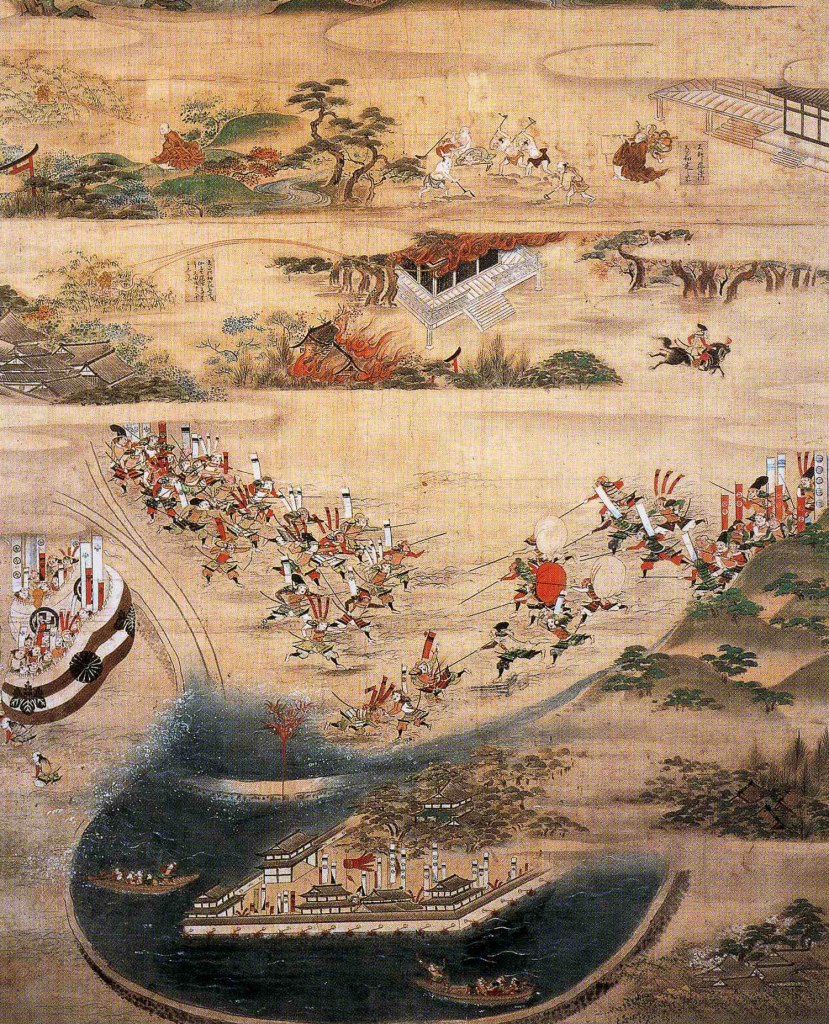
    A depiction of Hideyoshi’s attack on Kii Province.

    The campaign was a true demonstration of Hideyoshi’s new power. Though the Saika-shu and others fought bravely, they were swiftly overwhelmed. Some scholars speculate that the Saika and their allies underestimated Hideyoshi. In the earlier Sengoku Period, it had often been enough to inflict heavy casualties in an initial battle, which would force the attackers to either negotiate or back off.

    These tactics had worked against Nobunaga, who had ultimately been unable to secure decisive control over Kii, for fear of tying down too many men. Hideyoshi had no such hesitation, and even though his losses were heavy, he kept pushing on, and the Saika, who were often hugely outnumbered, were swept aside.

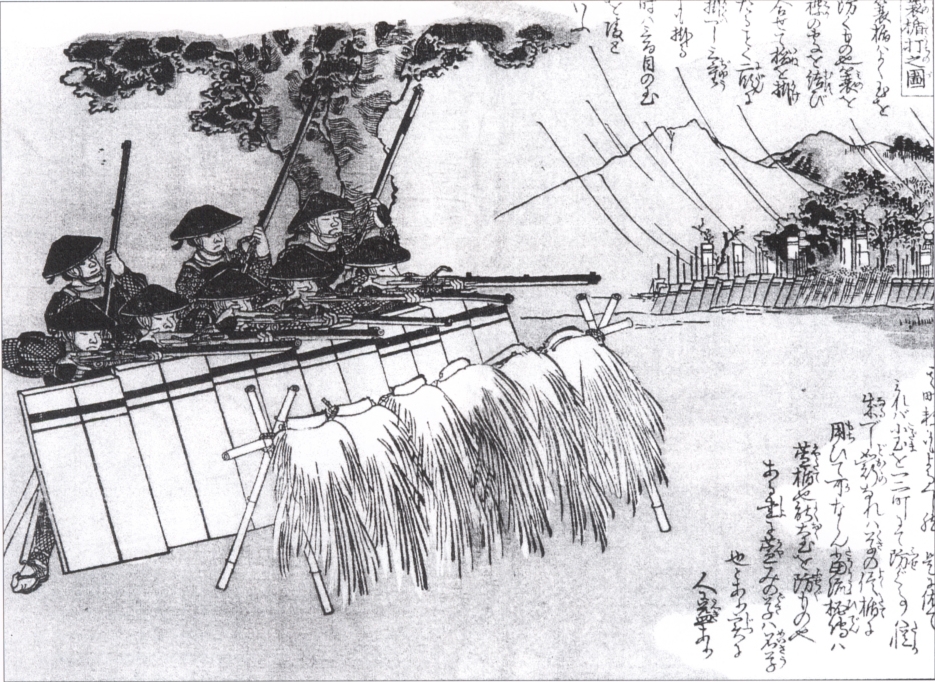
    Firearms of the type used effectively, but ultimately unsuccessfully by the Saika-shu.

    Hideyoshi was able to secure control of Kii in the short term, but his hold over it was always fragile, and there would be several more outbreaks of rebellion in the coming years. In fact, it wouldn’t be until 1614, long after Hideyoshi had passed away, that Kii could be truly said to have been pacified.

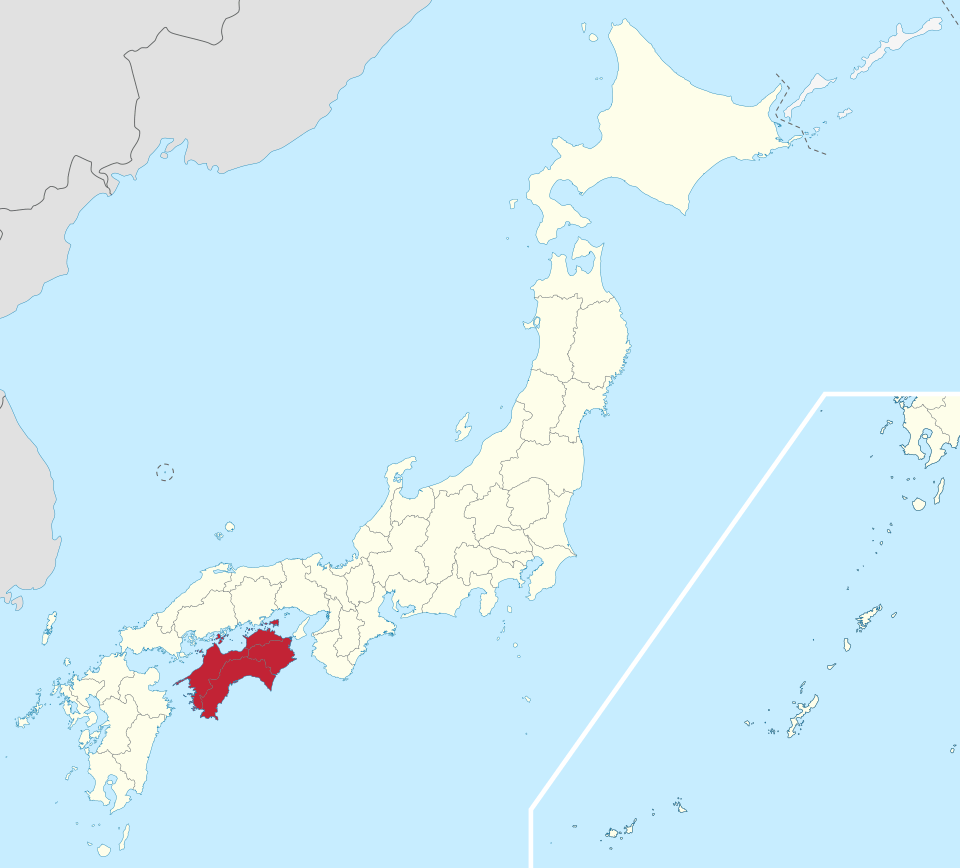
    After this, Hideyoshi turned his attention to Shikoku and the powerful Chosokabe Clan. Once allies of Nobunaga, the Chosokabe had fallen foul of his ambitions and had been under threat of invasion at the time of his death at Honnoji.

    Shikoku.
    By TUBS – This vector image includes elements that have been taken or adapted from this file:, CC BY-SA 3.0, https://commons.wikimedia.org/w/index.php?curid=16385942

    An army under Nobunaga’s third son, Nobutaka, had been gathered at Sumiyoshi (in modern Osaka) with the purpose of attacking Shikoku; in fact, they had been meant to set out on the same day that Nobunaga was killed, and news of his death demoralised the army, some of which simply went home.

    In the aftermath of Nobunaga’s death, the Chosokabe had consolidated control of all of Shikoku and lent support to opponents of Hideyoshi, notably Shibata Katsuie, Tokugawa Ieyasu, and the Saika-shu of Kii Province. None of these enemies had been able to overcome Hideyoshi, however, and it was probably no surprise when he turned his vengeful eye on the Chosokabe themselves.

    Chosokabe Motochika, Lord of the Chosokabe at the time of Hideyoshi’s invasion.

    There were some attempts at negotiation, but Hideyoshi’s demands that the Chosokabe give up three of the four provinces of Shikoku were unacceptable. The strategic situation for the Chosokabe was made worse when the Mori, one-time antagonists of Hideyoshi, instead made a permanent peace with him. Some sources suggest that it was at this point that the Mori submitted to Hideyoshi outright.

    With the support of the Mori and their powerful navy, Hideyoshi launched a three-pronged attack on Shikoku, which the Chosokabe were hard-pressed to oppose. Outnumbered some 3 to 1, the Chosokabe fought bravely, but the campaign was over quickly. From June to August 1585, there was a series of battles and sieges that invariably resulted in Chosokabe defeat.

    A 19th-century depiction of the Invasion of Shikoku.

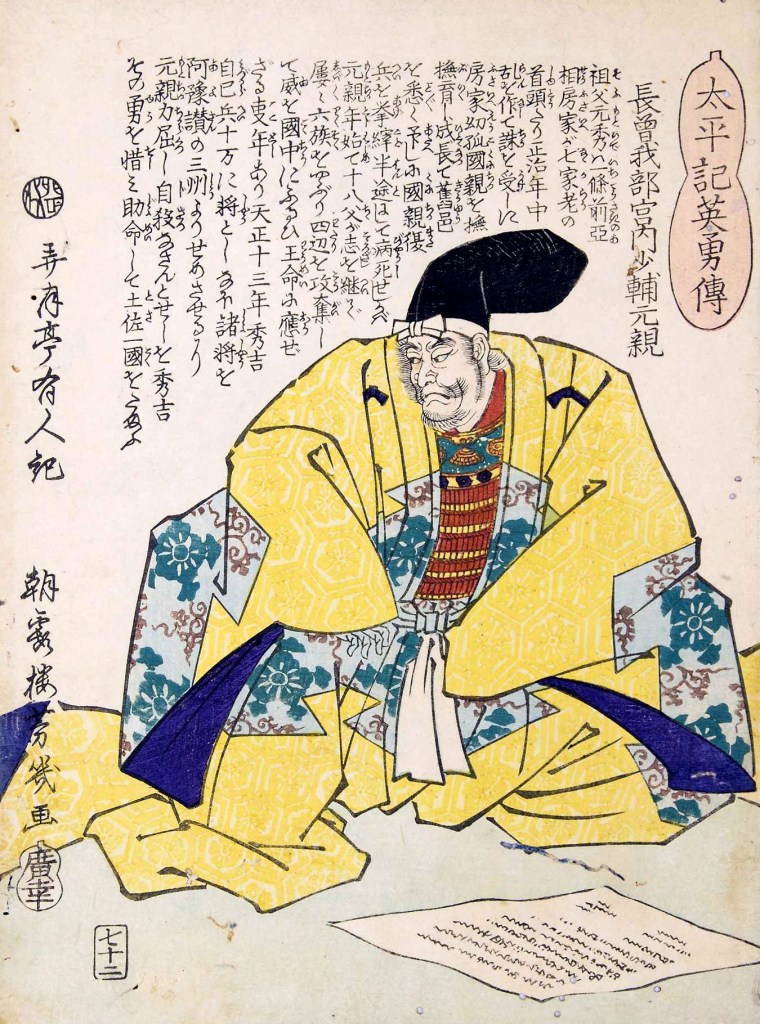
    Eventually, despite claiming he would rather fight to the end, Chosokabe Motochika surrendered at the urging of his senior vassals. As punishment for his defiance (or reward for his surrender), Hideyoshi confiscated three of the four Shikoku Provinces, leaving the Chosokabe with their home province of Tosa and an obligation to provide Hideyoshi with up to 3,000 troops for any future campaign and hostages to ensure the peace.

    During the Shikoku Campaign, which was led by his brother, Hideyoshi was appointed Kampaku by the Imperial Court. This was a result of a political crisis that had been ongoing since before Nobunaga’s death in 1582. At the time, the Imperial Court had (allegedly) invited Nobunaga to become Shogun, or Kampaku (Regent). Both contemporary and modern scholars disagree on Nobunaga’s response to this offer, but his death in June of that year ultimately rendered it moot.

    Emperor Go-Yozei, who was the sovereign during this time.

    What followed was a drawn-out political squabble between rival factions at court over who would ultimately take the position of Regent. We’ve spent a lot of time looking at how the Imperial Court was a decorative but ultimately impotent organisation by this point, and any title the Emperor might bestow would be largely symbolic without any external political power to back it up.

    Into this silk-clad quagmire stepped Hideyoshi. Traditionally, the position of Regent had rotated amongst five prestigious warrior families, of which Hideyoshi was not a member. To overcome this issue (which was one of tradition, rather than law), he was formally adopted as the son of Konoe Sakahisa (who was less than a year older than him) in July 1585, being named Kampaku shortly afterwards.

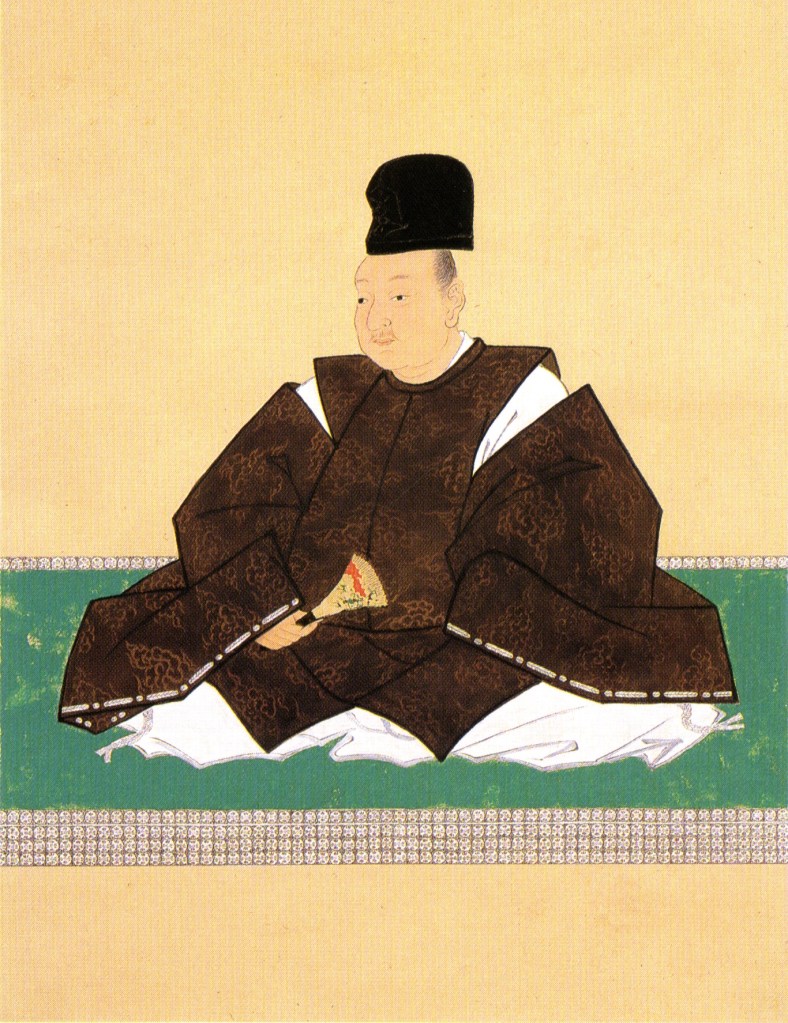
    Konoe Sakahisa, who formally adopted Hideyoshi.
    Leehiroki258 – 投稿者自身による著作物, CC 表示-継承 4.0, https://commons.wikimedia.org/w/index.php?curid=162775880による

    There was supposedly an agreement in which the childless Hideyoshi would take the position as a temporary solution to the crisis, before handing it over to the Konoe family’s chosen heir at a later date. Hideyoshi had other ideas, however. In 1586, he petitioned the Emperor for a new family name, which the Emperor duly bestowed. From then on, Hideyoshi would be known as Toyotomi Hideyoshi, the name by which he is best remembered in English sources.

    Hideyoshi would then adopt the Emperor’s younger brother, Prince Hachijo, as his son and eventual successor. This was a clear breach of the agreement with the Konoe, but since Hideyoshi was the most powerful man in the realm, and the proposed heir was a member of the Imperial Family, there was nothing anyone could do about it.

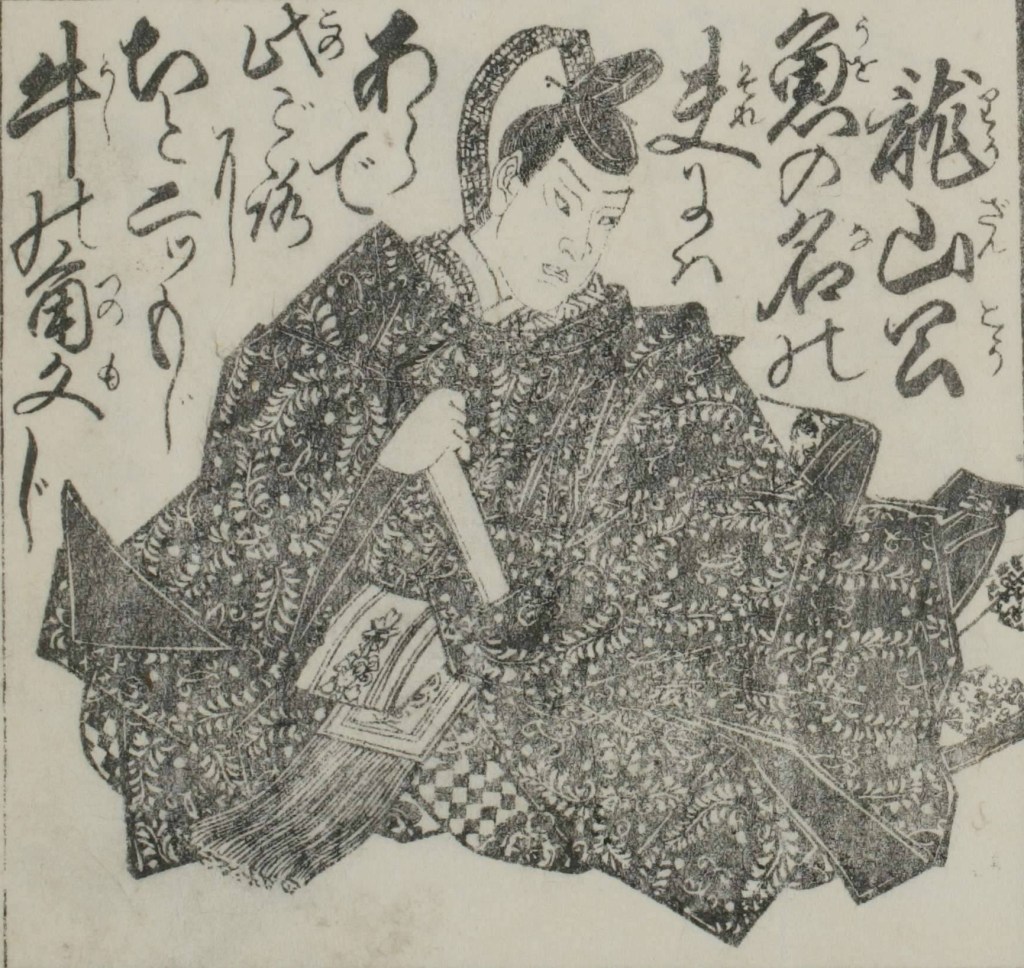
    Prince Hachijo

    Hideyoshi went further, seeking to replace the powerless Imperial aristocracy with a new “Samurai Nobility”. For centuries, the ‘Nobles’ had held all the prestige, but practically none of the actual power, which was in the hands of the Samurai after long years of civil war.

    Hideyoshi sought to address this by bestowing titles on some of the other powerful Daimyo, including Tokugawa Ieyasu and Ishida Mitsunari, appointments that would have long-term political repercussions.

    Ishida Mitsunari, we haven’t talked about him much, but he’s going to become very important later.

    Another attempt was made to force obedience from Ieyasu when Hideyoshi demanded that he hand over hostages to ensure ongoing peace. Ieyasu refused, and Hideyoshi began planning a large-scale military campaign to finally bring Ieyasu to heel. The massive Tensho Earthquake in January 1586 caused severe damage to Hideyoshi’s capital at Osaka and several other castles and staging areas, bringing an end to the plans, and causing Hideyoshi to adopt a more conciliatory policy towards Ieyasu.

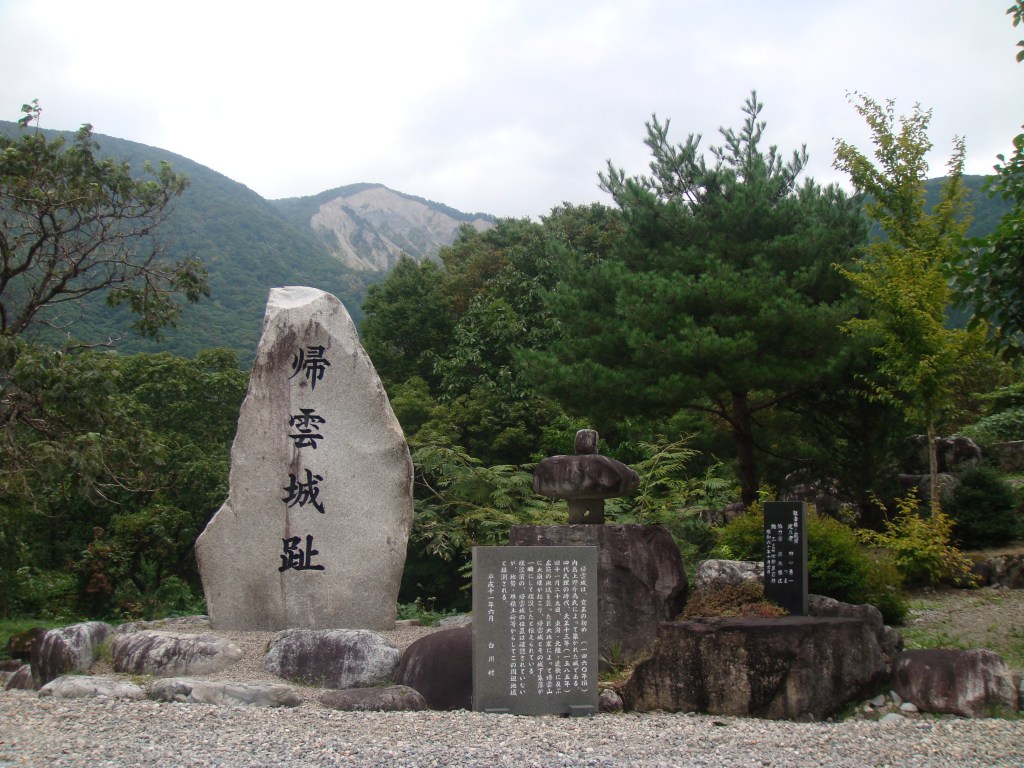
    A monument at the site of Kaerikumo Castle, which was destroyed in a landslide during the 1586 earthquake. The evidence of the landslide can be seen on the hill in the background.

    Later that year, Ieyasu would marry Hideyoshi’s younger sister, Princess Asahi, and he would later travel to Kyoto and swear allegiance to Hideyoshi as Regent. Despite this nominal submission, Hideyoshi had failed to subdue Ieyasu, whose military power remained intact.

    Sources
    https://ja.wikipedia.org/wiki/%E8%B1%8A%E8%87%A3%E7%A7%80%E5%90%89
    https://ja.wikipedia.org/wiki/%E6%9C%9D%E6%97%A5%E5%A7%AB
    https://ja.wikipedia.org/wiki/%E9%96%A2%E7%99%BD%E7%9B%B8%E8%AB%96
    https://ja.wikipedia.org/wiki/%E5%85%AB%E6%9D%A1%E5%AE%AE%E6%99%BA%E4%BB%81%E8%A6%AA%E7%8E%8B
    https://ja.wikipedia.org/wiki/%E8%BF%91%E8%A1%9B%E5%89%8D%E4%B9%85
    https://ja.wikipedia.org/wiki/%E5%9B%9B%E5%9B%BD%E6%94%BB%E3%82%81
    https://ja.wikipedia.org/wiki/%E4%B8%B8%E5%B1%B1%E5%9F%8E%E3%81%AE%E6%88%A6%E3%81%84
    https://ja.wikipedia.org/wiki/%E5%9B%9B%E5%9B%BD%E5%9B%BD%E5%88%86
    https://ja.wikipedia.org/wiki/%E5%9B%9B%E5%9B%BD%E5%B9%B3%E5%AE%9A
    https://ja.wikipedia.org/wiki/%E7%B4%80%E5%B7%9E%E5%BE%81%E4%BC%90
    https://ja.wikipedia.org/wiki/%E9%9B%91%E8%B3%80%E8%A1%86
    https://ja.wikipedia.org/wiki/%E6%A0%B9%E6%9D%A5%E8%A1%86
    https://en.wikipedia.org/wiki/Kii_Province
    https://en.wikipedia.org/wiki/1586_Tensh%C5%8D_earthquake
    https://en.wikipedia.org/wiki/Kaerikumo_Castle

  • The First Unifier – Oda Nobunaga. Part Three.

    The First Unifier – Oda Nobunaga. Part Three.

    By 1573, Oda Nobunaga was arguably the strongest warlord of his day, controlling a large territory that dominated central Japan. He had taken control of Kyoto and brought about the end of the Ashikaga Shogunate (though he would never take the title for himself), and with the death of Takeda Shingen, his most dangerous rival had been removed.

    Nobunaga’s position is red. Dominant, but not yet unchallenged.
    By Alvin Lee – Own work, CC BY-SA 4.0, https://commons.wikimedia.org/w/index.php?curid=39200929

    You probably know by now that even a strong position was never completely unchallenged during the Sengoku Jidai, and Nobunaga still had enemies to deal with. In the summer of 1573, he launched a campaign against the Azai-Asakura alliance, whom he had defeated at the Battle of Anegawa in 1570 and now meant to finish off.

    Nobunaga’s forces laid siege to the formidable Odani Castle. When Azai-Asakura forces marched to relieve it, they were ambushed and forced to retreat to Ichijodani Castle with Nobunaga in hot pursuit. The Azai-Asakura were then decisively defeated at the Battle of Tonezaka and tried to retreat again; however, a series of defeats, betrayals, and suicides put an end to the alliance and then to the clans themselves.

    A modern reconstruction of the castle down around Ichijodani.
    663highland – 投稿者自身による著作物, CC 表示 2.5, https://commons.wikimedia.org/w/index.php?curid=12059706による

    A side note to these events is the end of the marriage between Nobunaga’s sister, Oichi, and Azai Nagamasa, lord of the Azai Clan. When Nagamasa betrayed Nobunaga, Oichi remained faithful and was by his side as Odani Castle came under siege. Some sources say that Oichi gave birth to her third daughter during the siege (though others disagree). There is also debate over how she escaped, with some saying she was aided by a loyal retainer, and others stating that Nobunaga and Nagamasa agreed to let Oichi and her daughters go, a tale often romanticised as demonstrating the love both men had for her.

    Romantic stories aside, with the end of the Azai-Asakura threat, Nobunaga turned his attention to the peasant rebellion in Ise Province (the so-called Nagashima Ikko-Ikki), which had resulted in the death of his younger brother, Nobuoki. The campaign was successful at first, with several outlying forts being taken, but an attempt to secure the rebels’ main fortress at Nagashima failed, and Nobunaga was obliged to fall back after an ambush threatened to cut him off.

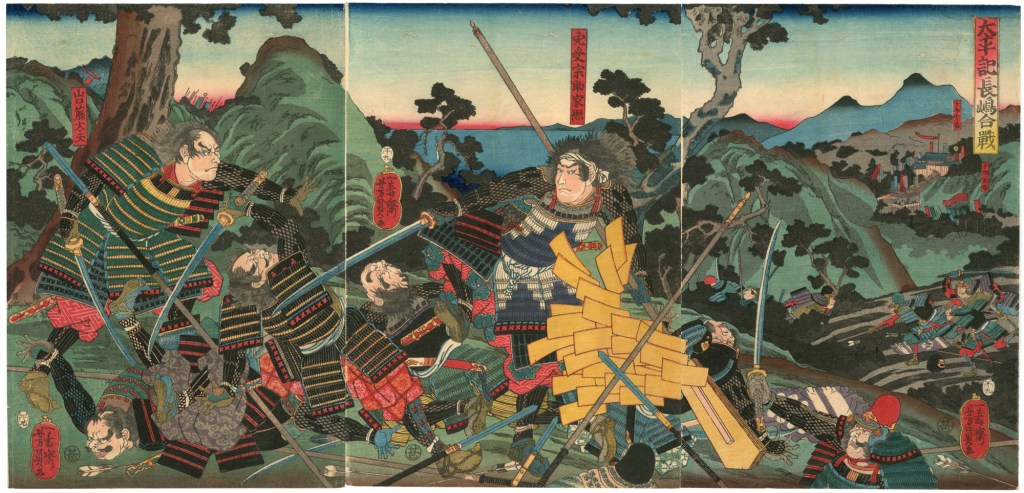
    A 19th-century depiction of the fighting in Nagashima.

    The year would end on a more positive note for him, however, as Ashikaga Yoshiaki, who was still claiming the title of Shogun, was forced to flee Wakae Castle (in modern Osaka) and retreat to Kii Province. In December, Nobunaga’s forces captured the important and wealthy Tamonyama Castle (modern Nara), further securing his territory in central Japan.

    1574 would bring new problems, starting with another peasant rebellion (the Echizen Ikko-Ikki) in territory that Nobunaga had only recently taken from the Azai-Asakura. Shortly after that, a renewed attack by the Takeda, now led by Shingen’s son, Katsuyori, invaded Mino Province. Nobunaga marched to meet them, but the border castles fell before he could arrive, and so he withdrew, avoiding a decisive clash with the Takeda for now.

    Takeda Katsuyori

    With crises in all directions, Nobunaga was stretched to his limit, but it was in moments like this where he showed his brilliance and his brutality. The Ikko-Ikki fortress at Nagashima had been a thorn in his side for years, and he set out to remove it in the summer of 1574, surrounding the fortress from land and sea and starving the defenders into surrender by September.

    It is said that some attempted to flee by boat, but Nobunaga stopped them with a volley of gunfire. Suitably provoked, the Ikko-Ikki launched a counterattack that ultimately failed, but killed Nobunaga’s half-brother. In response, Nobunaga had the remaining 20,000 defenders, including women and children, locked up inside the castle, which he then ordered burned.

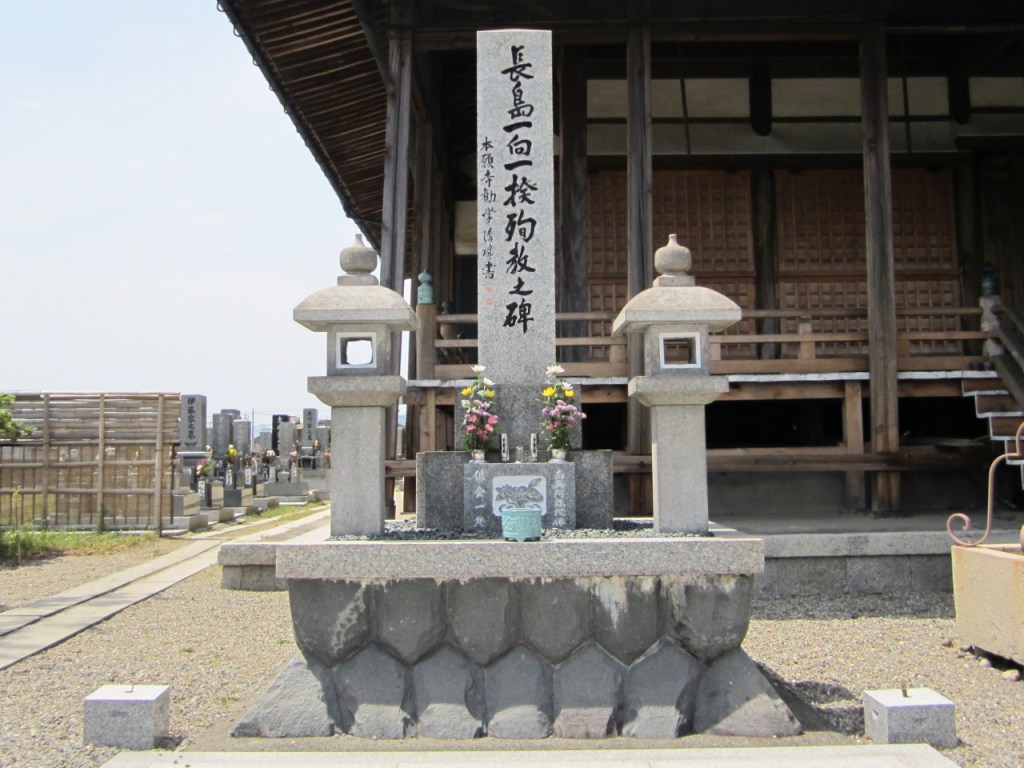
    A memorial to those who were killed during the fall of Nagashima.
    立花左近 – 投稿者自身による著作物, CC 表示-継承 3.0, https://commons.wikimedia.org/w/index.php?curid=20094400による

    With Nagashima subdued, Nobunaga turned his attention to the Takeda, who had launched a series of relatively small-scale invasions throughout 1574, and by April 1575, were besieging the Tokugawa-controlled fortress at Nagashino. What followed was one of the most heavily mythologised battles of the era, and even today, many of the details are open to debate, but what is not in doubt is that the Battle of Nagashino inflicted a mortal wound on the Takeda. They never again posed a serious strategic threat to Nobunaga’s ambitions.

    One of his other long-term enemies was the Temple of Hongan-ji, the spiritual centre of the widespread Ikko-Ikki movement. The movement had been severely weakened by the loss of Nagashima, and in late Summer 1575, Nobunaga crushed the Echizen Ikko-Ikki, further weakening Hongan-ji’s power. This turn of events allowed Nobunaga to establish a short-lived peace in the territory he controlled.

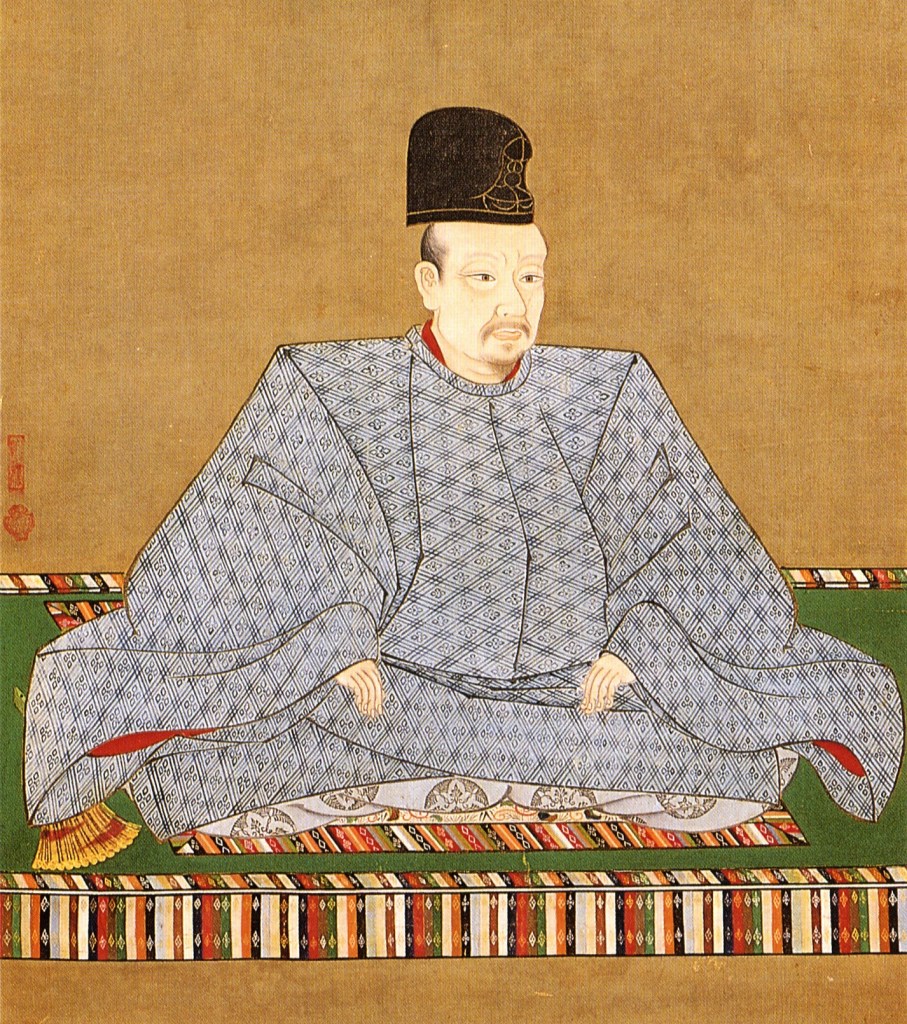
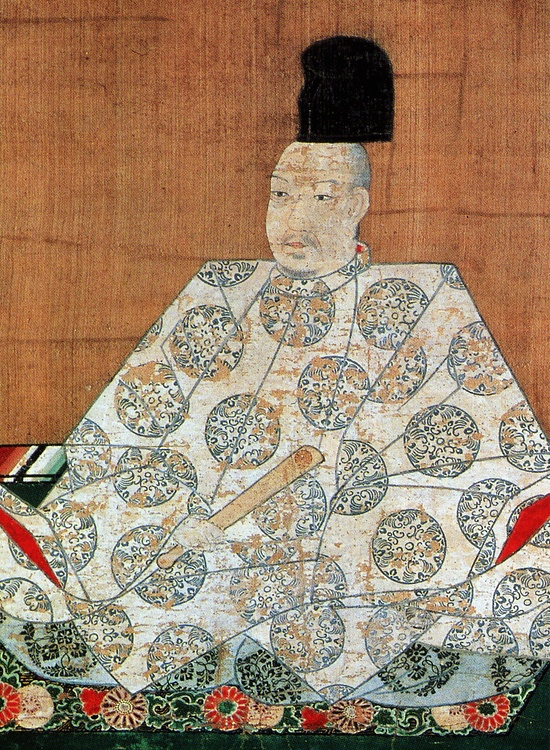
    Emperor Ogimachi (r 1557-1586) was Emperor for most of Nobunaga’s rise to power.

    In November 1575, Nobunaga was appointed Dainagon, and Ukone no Taisho, Chief Councillor, and General of the Right, respectively, positions in the Imperial court which established his position, and right to rule the country (in the Emperor’s name, of course) Around this time Nobunaga also began distributing territory and other titles to his followers on behalf of the Emperor, and it is from this point that historians generally agree that Nobunaga gave up the pretence of supporting the Ashikaga, and began eyeing the position for himself. In light of this, he officially recognised his son, Nobutada, as his heir and gave orders for the construction of a new fortress at Azuchi.

    It couldn’t last, however, and in Spring 1576 Ishiyama Hongan-ji was in arms against him again, supported by a loose coalition of powerful clans, and at least nominally acting on behalf of the exiled Shogun, Yoshiaki. Initial attempts by Oda forces to subdue Hongan-ji failed, but when Nobunaga himself arrived, he won a decisive victory at the Battle of Tennoji, and subsequently laid siege to the vast Ishiyama temple complex.

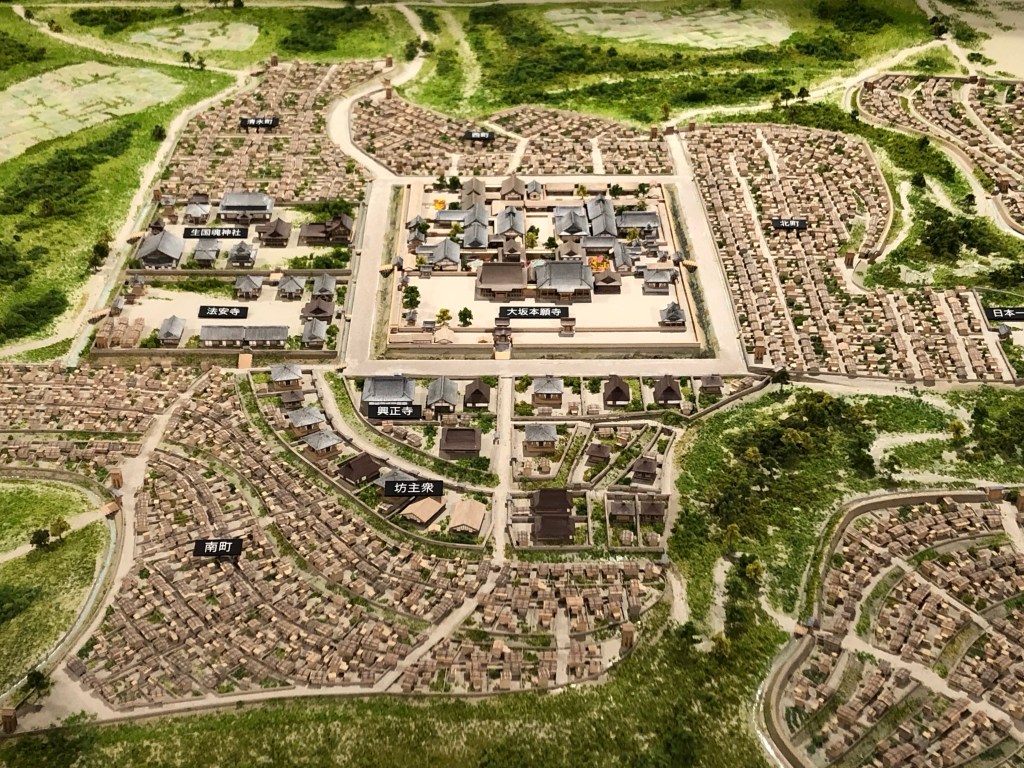
    This modern recreation shows that the Ishiyama Hongan-ji complex was more akin to a fortified town than a temple.

    Nobunaga might have hoped to repeat his success at Nagashima, but those hopes were to be dashed when a fleet from the Mori Clan destroyed the Oda blockade at the Battle of Kizugawaguchi in August 1576, ensuring that, for the time being, supplies would continue to flow into Ishiyama, and the siege would drag on.

    Meanwhile, in 1577, Nobunaga led an army into Kii Province and forced the surrender of the Saika Clan before withdrawing, only to then have to face a rebellion from the Matsunaga Clan in Ise Province, which was put down in characteristically brutal fashion, with the castle burned, and its occupants forced to commit Seppuku.

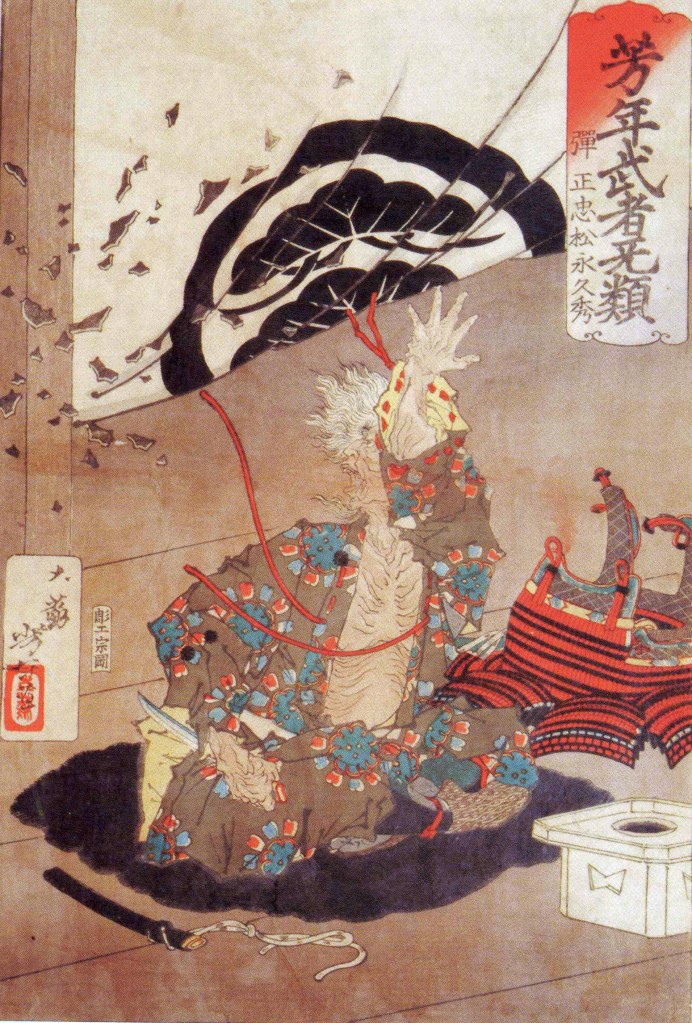
    This image depicts Matsunaga Hisahide at the moment of his death. The story goes that Nobunaga offered to spare him in exchange for a rare tea kettle. In response, Hisahide is supposed to have smashed the kettle to pieces before killing himself.

    From 1578 to 1580, Nobunaga was forced to contend with the powerful Mori Clan and their allies for control of Harima Province. Meanwhile, his vassal, Akechi Mitsuhide, successfully subdued the provinces of Tamba and Tango. In late 1580, Nobunaga forced the surrender of Arioka and Miki Castles, bringing the whole of Harima under his control.

    Meanwhile, the Second Battle of Kizugawaguchi in December 1578 reversed the strategic situation in the seas around Ishiyama (Osaka Bay), when the rebuilt Oda navy inflicted a decisive defeat on the Mori fleet, finally cutting Ishiyama off completely. The siege would last until 1580, however, and it would eventually take an Imperial Order to convince the leadership to surrender, in exchange for being allowed to leave.

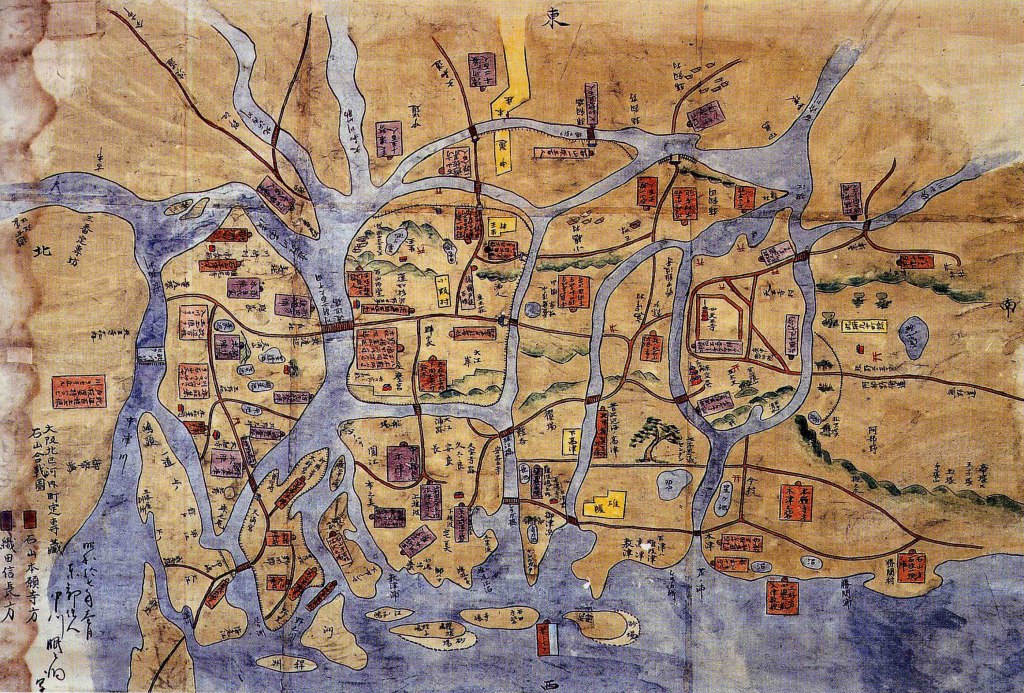
    A semi-contemporary image of Ishiyama Hongan-ji during the siege.

    War was never far away, but as 1581 dawned, Nobunaga was stronger than any Daimyo had ever been, and it was seriously possible that if anyone were to bring an end to the Sengoku Jidai and reunite the country, it would be him. However, he still had a few more rivals to overcome first.

    The Battle of Nagashino had been a death blow to the Takeda, but as late as 1582, they were still clinging on, and now Nobunaga made the decision to end them once and for all. Gathering a force of some 100,000 and supported by his ally Tokugawa Ieyasu, Nobunaga invaded Takeda territory in early 1582. The campaign was almost too easy, as Takeda resistance crumbled almost immediately, forts often surrendered without a fight, or after only a token display of defiance, and many former Takeda retainers simply switched sides, or else ran away from the advancing Oda.

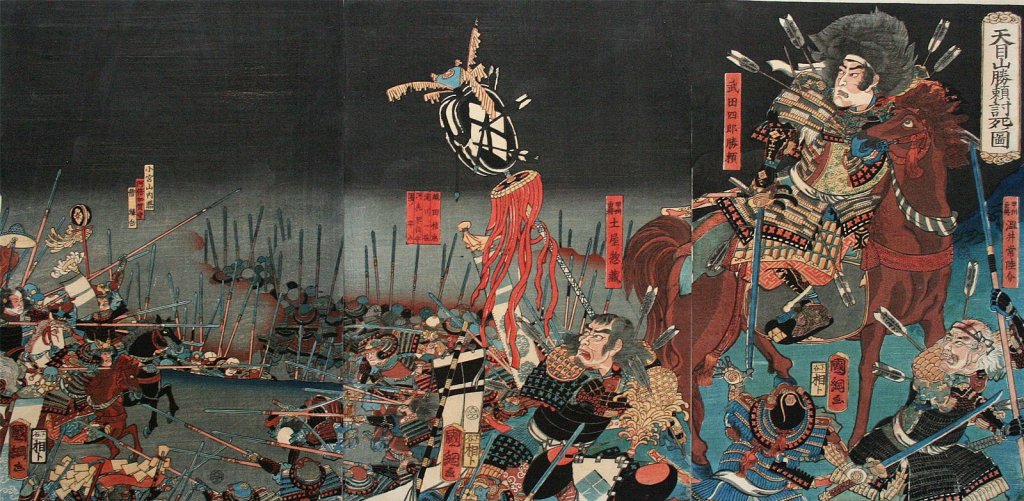
    A heavily stylised (and much later) depiction of the end of Takeda Katsuyori, whose death would signal the end of his clan.

    The Takeda eventually stood their ground at the formidable Takato Castle, but, despite its reputation, it was taken quickly, and what remained of the Takeda began to melt away. Eventually, Takeda Katsuyori and his son Nobukatsu were trapped at Tano (modern Tsuru, Yamanashi Prefecture) and forced to commit Seppuku, bringing an end to the Takeda line and any hope of resistance to Nobunaga.

    With the Takeda gone, Nobunaga took some time to reorganise the newly conquered territories, and then headed home through the lands of his ally Tokugawa Ieyasu, who laid on entertainments, refreshments, and accommodation, all purpose-built for Nobunaga’s visit.

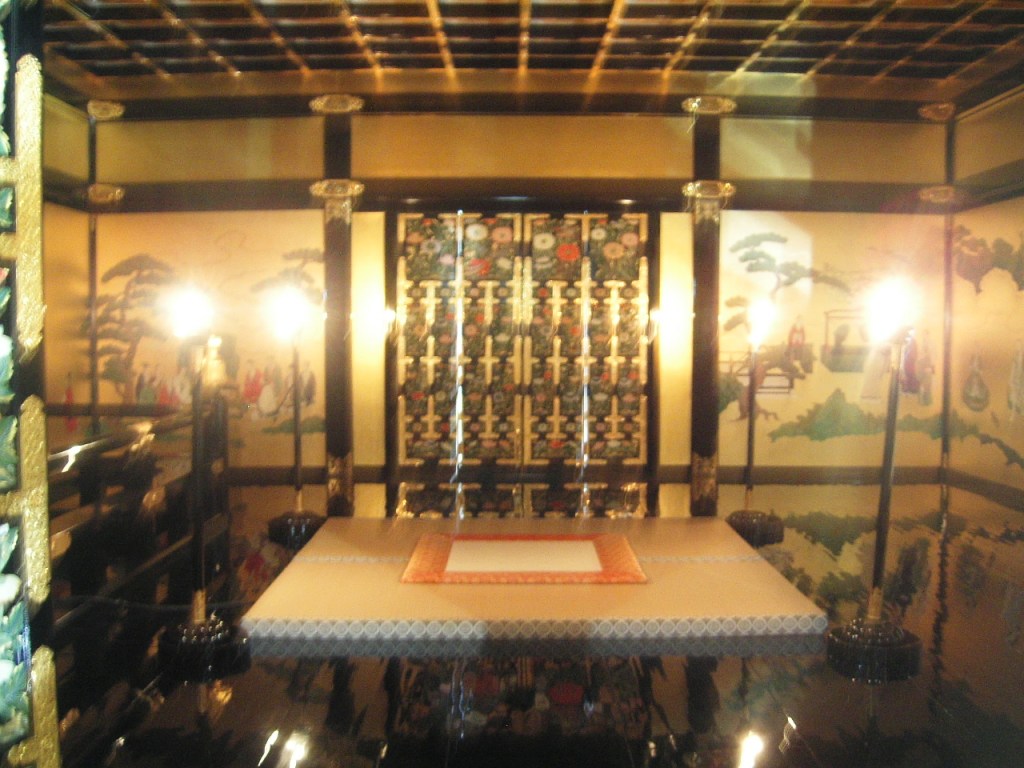
    A reconstruction of Nobunaga’s ‘throne’ at Azuchi.
    日本語版ウィキペディアのMaakunさん – 原版の投稿者自身による著作物, CC 表示-継承 3.0, https://commons.wikimedia.org/w/index.php?curid=115518317による

    By Spring, Nobunaga was back at his base at Azuchi, from where he made plans to invite the Emperor for a formal visit, and rumours began that the court was about to appoint him Shogun, or else some other senior position. The exact nature of this appointment and Nobunaga’s receptiveness to it are unclear, as the sources don’t agree on whether anything was offered at all, let alone what Nobunaga said about it. The Imperial visit was supposedly arranged for the following year, but again, the sources are scant.

    During this brief period of peace, Nobunaga is supposed to have announced his plans to conquer Shikoku from the Chosokabe. One of his retainers, Akechi Mitsuhide, was apparently unhappy about this, as he had previously acted as an intermediary between Nobunaga and the Chosokabe. Mitsuhide was further agrieved when Nobunaga ordered him to provide entertainment for the visiting Tokugawa Ieyasu. The story goes that Nobunaga accused Mitsuhide of doing a poor job (rightly or not) and launched into a public dressing-down of Mitsuhide that ended (according to some sources) with a literal kick in the backside.

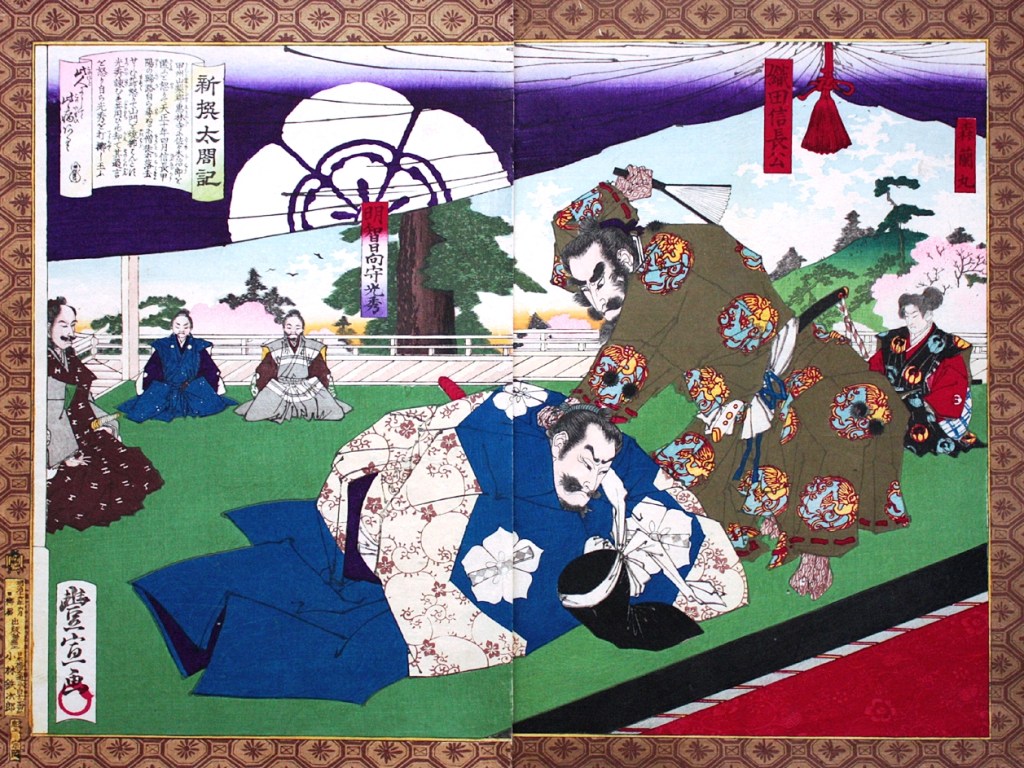
    A 19th-century imagining of Nobunaga publicly chastising Mitsuhide.

    Given the importance of public image in Japan, it is easy to see why Mitsuhide might have felt a genuine grievance over this treatment. There is also a story that Mitsuhide’s mother had once served as a hostage for a truce that Nobunaga had gone on to break, resulting in the poor woman’s death. Whilst some of these stories are poorly sourced at best, what is known is that by the summer of 1582, Akechi Mitsuhide had had enough.

    Sources
    https://ja.wikipedia.org/wiki/%E7%B9%94%E7%94%B0%E4%BF%A1%E9%95%B7
    https://en.wikipedia.org/wiki/Tsuru,_Yamanashi
    https://ja.wikipedia.org/wiki/%E9%AB%98%E9%81%A0%E5%9F%8E
    https://ja.wikipedia.org/wiki/%E7%94%B2%E5%B7%9E%E5%BE%81%E4%BC%90
    https://ja.wikipedia.org/wiki/%E4%B8%89%E6%9C%A8%E5%90%88%E6%88%A6
    https://ja.wikipedia.org/wiki/%E4%BF%A1%E8%B2%B4%E5%B1%B1%E5%9F%8E
    https://ja.wikipedia.org/wiki/%E7%B4%80%E5%B7%9E%E5%BE%81%E4%BC%90
    https://ja.wikipedia.org/wiki/%E5%A4%A9%E7%8E%8B%E5%AF%BA%E3%81%AE%E6%88%A6%E3%81%84_(1576%E5%B9%B4)
    https://ja.wikipedia.org/wiki/%E7%9F%B3%E5%B1%B1%E5%90%88%E6%88%A6
    https://ja.wikipedia.org/wiki/%E7%AC%AC%E4%B8%80%E6%AC%A1%E6%9C%A8%E6%B4%A5%E5%B7%9D%E5%8F%A3%E3%81%AE%E6%88%A6%E3%81%84
    https://ja.wikipedia.org/wiki/%E7%AC%AC%E4%BA%8C%E6%AC%A1%E6%9C%A8%E6%B4%A5%E5%B7%9D%E5%8F%A3%E3%81%AE%E6%88%A6%E3%81%84
    https://ja.wikipedia.org/wiki/%E9%95%B7%E5%B3%B6%E4%B8%80%E5%90%91%E4%B8%80%E6%8F%86

  • Lords of the East, Part 3

    Lords of the East, Part 3

    First post of 2026, so Happy New Year and thanks for sticking with me!

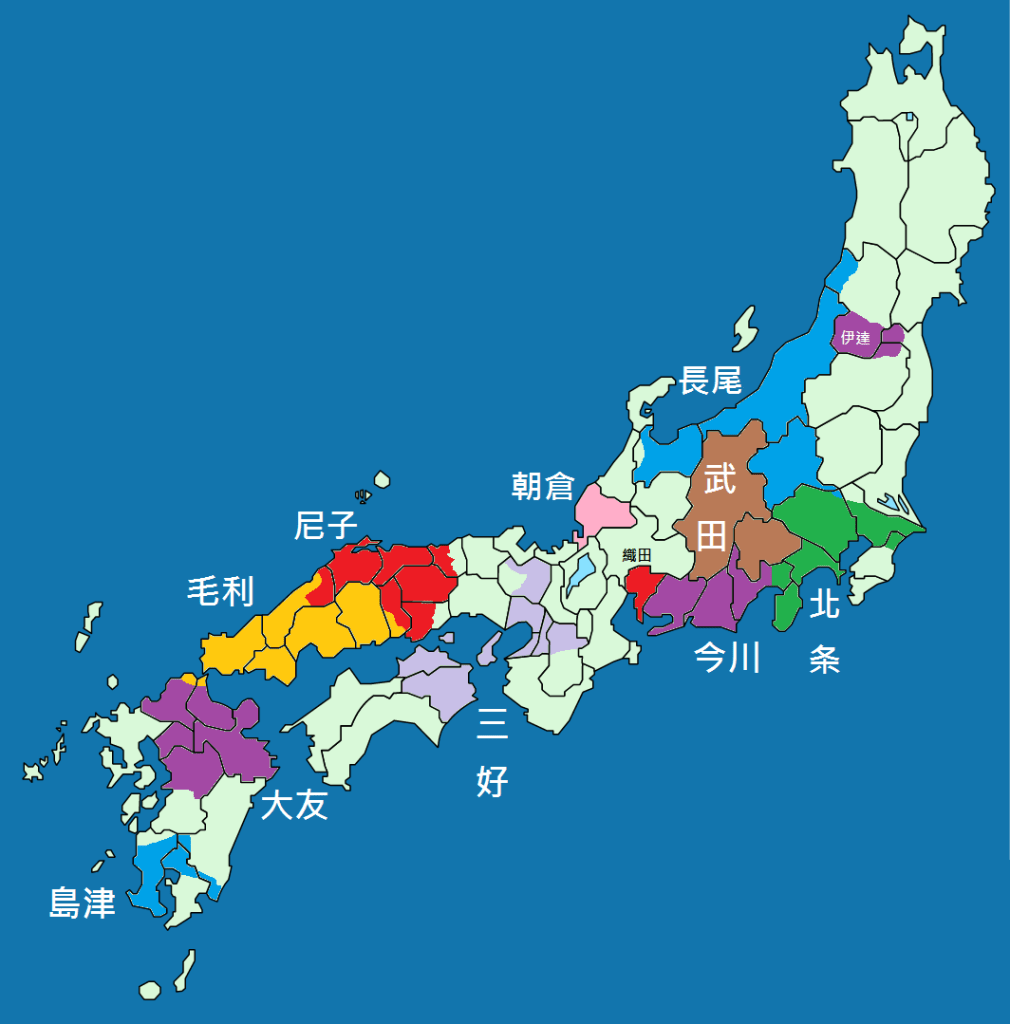
    The situation in 1560. The Hojo are in Green.
    By Alvin Lee – Own work, CC BY-SA 4.0, https://commons.wikimedia.org/w/index.php?curid=39200926

    By 1560, the Hojo were masters of much of the Kanto. A series of successful military campaigns over the previous decades had given them control over much of the area that now comprises modern-day Tokyo, Yokohama, and Chiba. Unlike today, when these areas are among the world’s most densely populated megacities, in the 16th century they were largely agricultural, with a few castle towns surrounded by vast expanses of farmland.

    It is also true that economic productivity, such as it was, was measured in rice production, with land being valued according to predicted rice output, though not necessarily actual output. In short, despite being a period of incredible violence, Japanese society relied almost entirely on rice production to function. Famine was a constant problem, and in 1560, the Hojo, despite controlling vast tracts of land, were experiencing just how bad a failed harvest could be.

    The so-called Eiroku Famine (named after the era) left the Hojo with no food or money, and military operations largely ground to a halt. It was a real blow then, when Uesugi Kenshin, at the head of an army of 8000 men, crossed the mountains in the North of the Kanto and invaded Hojo territory. Though the Uesugi army was relatively small, the Kanto region had been ruled by them for decades prior to the Hojo conquests, and when Kenshin appeared, dozens of local clans switched sides and flocked to the Uesugi banner.

    Uesugi Kenshin.

    Kenshin swept all before him; the Hojo lost castles in Kozuke, Shimosa, and Musashi, and by early 1561, the Uesugi had taken Kamakura. Then, at the head of an army that was reported to be 100,000 strong, Kenshin laid siege to Odawara, the Hojo capital. At this point, the Hojo were in real trouble, but fate was on their side. Ironically, the same famine that had left them seriously weakened now proved to be their saviour. An army of that size needs supplies, and there were few enough to be had in the Kanto, so it wasn’t long before the Uesugi began to melt away.

    The fortress of Odawara was one of the strongest in the realm, and with his army already shrinking, Kenshin faced a difficult choice. A long siege might fatally weaken his army, and even a successful assault could prove hugely costly. Then news arrived that his old enemy, Takeda Shingen, had invaded his home province, at the same time as stirring up a rebellion amongst the Ikko-Ikki, forcing Kenshin to return home post-haste.

    The Hojo had been saved by a combination of good luck and excellent timing on the part of Takeda Shingen, and despite their weakened state, Ujiyasu wasted no time in taking advantage of the reprieve. No sooner had Kenshin returned north than Hojo forces began the process of reconquering their lost territory. Most of the smaller clans that had joined the Uesugi now switched their loyalties back to the Hojo. This was a fairly common practice at the time; there were dozens, if not hundreds, of minor clans all over Japan who could never muster the strength to assert themselves against the power of a Daimyo, so their loyalty often proved to be a fickle thing, prioritising flexibility and survival rather than unquestioned loyalty.

    Takeda Shingen

    Not all the clans welcome the return of the Hojo, however, and Ujiyasu was obliged to dispatch armies to retake several castles in northern Musashi, and he won a decisive victory at the Battle of Mt Ikuno in November 1561, reestablishing the line of control along the mountains in the northern Kanto. Over the next two years, two sides form: a Hojo-Takeda Alliance on one side and a Uesugi-Satomi alliance on the other.

    The Hojo would generally have the better of the fighting in the Kanto, but would prove to be unable to advance further north, whilst the Uesugi would be a constant problem, but would struggle to make advances into the Kanto proper. By 1564, the conflict had largely become a stalemate, so Ujiyasu turned his attention to the East and the Satomi, whom he believed to be a weak link in the alliance.

    Though it might have been true that the Satomi were weaker than the Uesugi, they were no soft touch. When the Hojo crossed the Edogawa River on the way to invading Satomi territory, they were ambushed at the second Battle of Konodai and driven back with heavy losses. You may remember in the last post that the lord of the Satomi, Yoshiaki, had avoided the first Battle of Konodai by correctly identifying the weak position of his allies, retreating with his army intact.

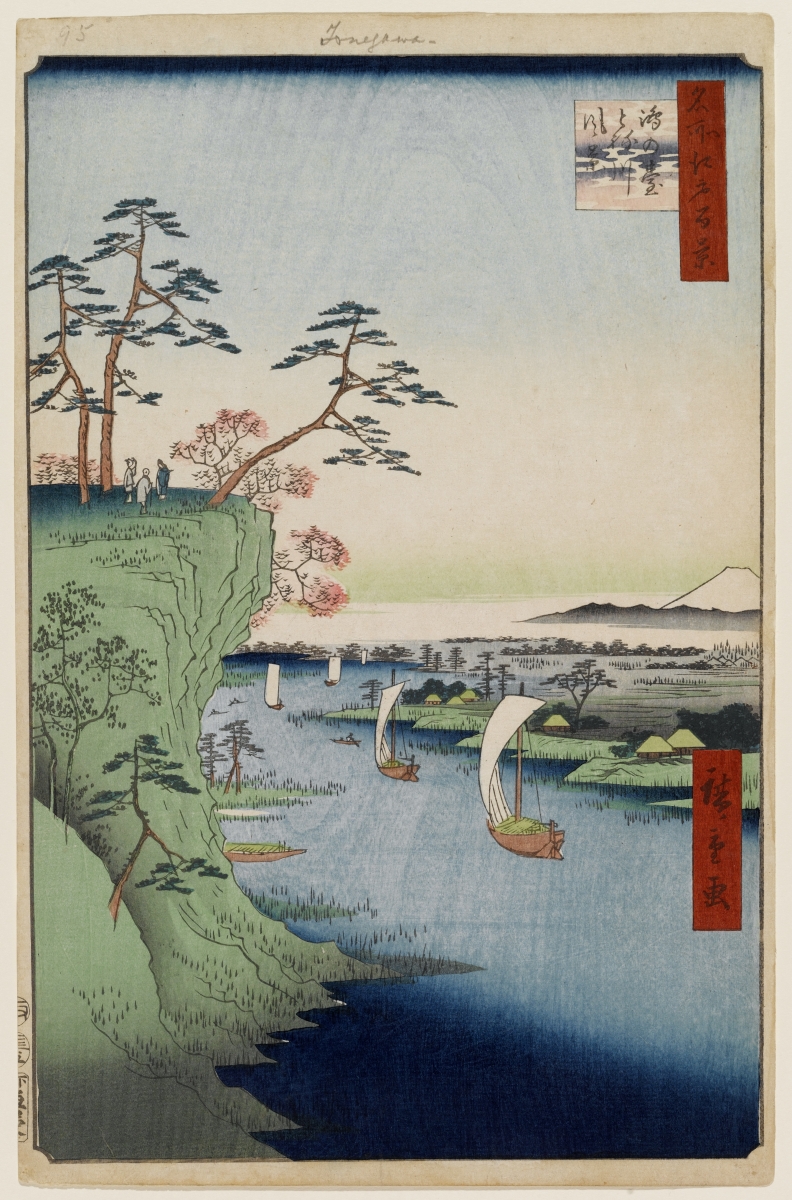
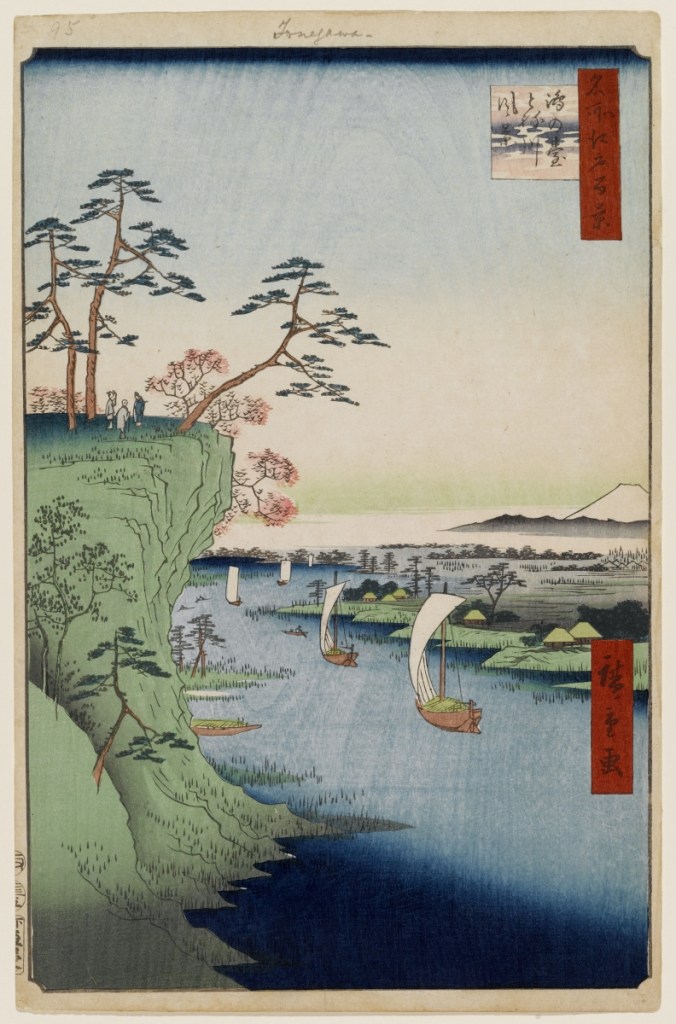
    A later depiction of the area around Konodai.

    At the second battle, however, the command fell to Yoshiaki’s son, Yoshihiro, and he decided to celebrate his victory by distributing wine to his men. A party is a common way to celebrate any success, and the Satomi had successfully driven the Hojo back. The problem was that ‘driven back’ does not mean ‘defeated’; the Hojo regrouped and advanced again in the early hours of the following day.

    The Satomi army, now thoroughly inebriated, was no match for them, and Hojo forces forced the Satomi into a chaotic retreat that didn’t end until the Hojo banner was once again flying over most of Kasuza Province. Shortly after this campaign, Ujiyasu, who had already technically retired as lord of the Hojo in 1559, announced that he had fought his last campaign.

    After this, Ujiyasu seems to have largely limited himself to administration, leaving the business of war to his sons, though he would continue to play an important role in his clan’s future. In 1560, the Imagawa, one part of the triple Takeda-Hojo-Imagawa alliance, had been seriously weakened by the defeat at the Battle of Okehazama in 1560. By 1568, they were on their last legs, and Takeda Shingen, despite being a nominal ally, invaded the Imagawa’s home province of Suruga, aiming to take it for himself.

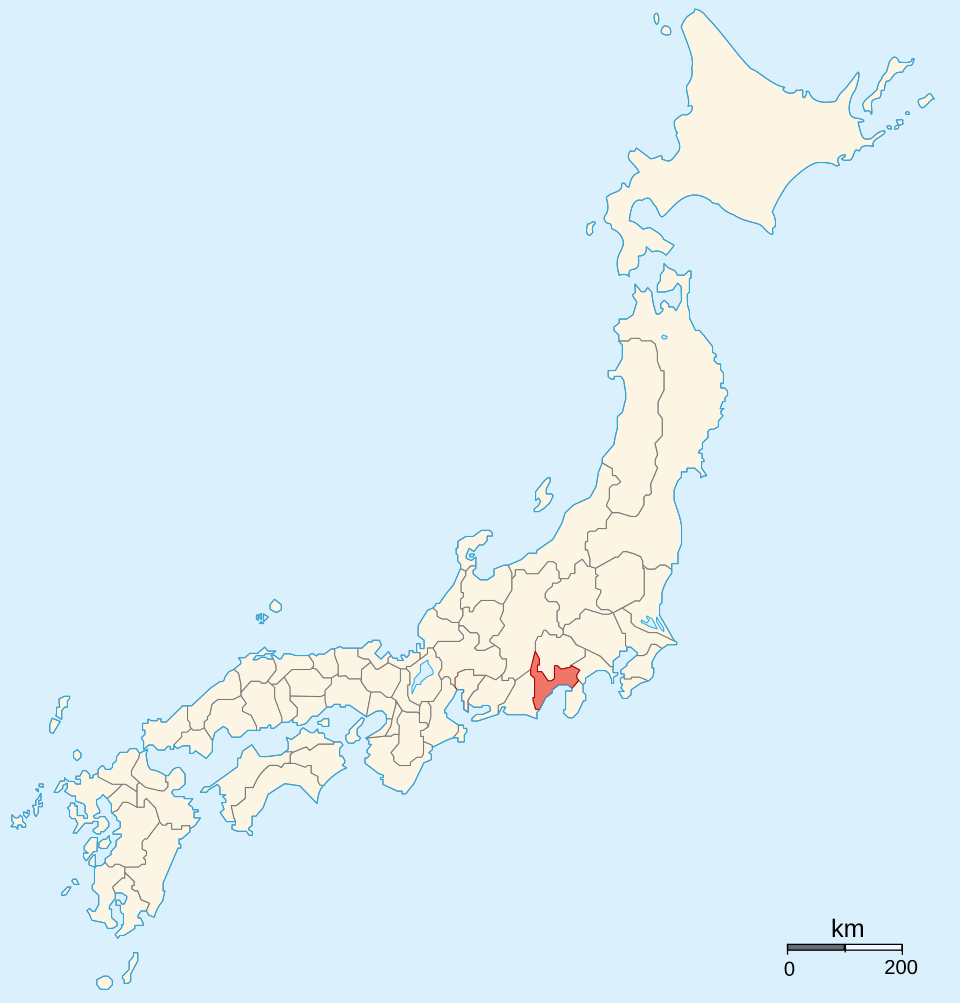
    Suruga Province
    By Ash_Crow – Own work, based on Image: Provinces of Japan.svg, CC BY 2.5, https://commons.wikimedia.org/w/index.php?curid=1691794

    The Hojo, seeking to support the Imagawa and prevent encirclement by a now hostile Takeda, dispatched an army under Hojo Ujimasa to relieve Suruga. At the same time, Ujiyasu engaged in diplomacy with the Tokugawa Clan, who had lands on the other side of Imagawa territory, and had poor relations with the Takeda. A joint attack by the Hojo and Tokugawa convinced Shingen that holding Suruga was impossible in the short term, and he retreated, with the Hojo moving in and taking large parts of eastern Suruga for themselves.

    Despite this success, the Hojo once again found themselves surrounded on three sides by hostile powers: the Takeda to the West, the Uesugi to the North, and the Satomi to the East. Ujiyasu correctly recognised that if he moved to deal with one threat, the other two would take advantage, and the Hojo did not have the strength for a three-front war. Therefore, he decided to make a formal peace with the Uesugi.

    This was unpopular on both sides because the Uesugi had been enemies of the Hojo more or less from the start, and that kind of bad blood isn’t easily forgotten. However, both sides had bigger problems, namely, Takeda Shingen. Though a ceasefire was agreed upon and the border between the two sides set, the consequences for the Uesugi were that many former allies in the Kanto, like the Satomi, felt betrayed and switched to supporting Takeda Shingen.

    This might not have been such a serious problem for the Hojo, because they were going to have fight the Satomi anyway, but in early 1569, the strategic situation shifted again, when the Takeda and Uesugi made a peace between themselves, meaning that Shingen could now focus his entire strength on the Hojo, whilst also relying on support from the Satomi, and other Kanto clans.

    An image depicting the legendary rivalry between Uesugi Kenshin and Takeda Shingen. Despite this, a peace between the two allowed Shingen to focus on the Hojo.

    Later that year, Shingen invaded Musashi Province and advanced south towards Odawara, the capital of the Hojo. Though they were able to lay siege to the mighty fortress, the chances of taking it were slim. The castle was one of the strongest in the realm, and Ujiyasu had made sure it was as well-defended as possible. Shingen likely understood that taking the castle would have been enormously costly, and he had better uses for his army, so he contented himself with burning the town around Odawara and retreating.

    Ujiyasu ordered his son, Ujimasa, to pursue the retreating Takeda, hoping to trap them before they could return to Kai Province. The plan failed, however, as the Takeda moved faster than expected and the ambush was discovered. At the ensuing Battle of Mimasu Pass, the Takeda successfully fended off the Hojo and returned to Kai.

    Some scholars believe that the whole attempt at Odawara had been an elaborate show of force, meant to impress Shingen’s new allies in the Kanto, or that it was a strategic move to keep the Hojo off balance whilst Takeda forces reinvaded Suruga. Either way, there doesn’t seem to have been much enthusiasm amongst either the Hojo or Takeda to continue the war, and some sources suggest that, shortly before his death, Ujiyasu told his son, Ujimasa, that he should return to a state of peace with the Takeda and make war on their traditional enemy, the Uesugi.

    Hojo Ujimasa

    Ujiyasu himself is supposed to have suffered a stroke in the summer of 1570. Sources from the time speak of him slurring his words or being unable to speak at all, and although he rallied briefly around the New Year in 1571, he would begin to decline again shortly afterwards. There are no official documents bearing his seal after May, and he would eventually pass away in October that year.

    Sources
    https://ja.wikipedia.org/wiki/%E5%8C%97%E6%9D%A1%E6%B0%8F%E6%94%BF
    https://ja.wikipedia.org/wiki/%E5%8C%97%E6%9D%A1%E6%B0%8F%E5%BA%B7
    https://ja.wikipedia.org/wiki/%E5%9B%BD%E5%BA%9C%E5%8F%B0%E5%90%88%E6%88%A6#%E7%AC%AC%E4%BA%8C%E6%AC%A1%E5%9B%BD%E5%BA%9C%E5%8F%B0%E5%90%88%E6%88%A6%EF%BC%88%E6%B0%B8%E7%A6%846%E5%B9%B4%E3%83%BB%E6%B0%B8%E7%A6%847%E5%B9%B4/1563%E5%B9%B4%E3%83%BB1564%E5%B9%B4%EF%BC%89
    https://ja.wikipedia.org/wiki/%E6%AD%A6%E7%94%B0%E4%BF%A1%E7%8E%84
    https://ja.wikipedia.org/wiki/%E4%BB%8A%E5%B7%9D%E7%BE%A9%E5%85%83
    https://ja.wikipedia.org/wiki/%E4%B8%89%E5%A2%97%E5%B3%A0%E3%81%AE%E6%88%A6%E3%81%84
    https://ja.wikipedia.org/wiki/%E5%A4%A7%E5%AE%AE%E5%9F%8E_(%E9%A7%BF%E6%B2%B3%E5%9B%BD)
    https://ja.wikipedia.org/wiki/%E5%B0%8F%E7%94%B0%E5%8E%9F%E5%9F%8E
    https://ja.wikipedia.org/wiki/%E4%B8%8A%E6%9D%89%E8%AC%99%E4%BF%A1
    https://ja.wikipedia.org/wiki/%E9%87%8C%E8%A6%8B%E7%BE%A9%E5%A0%AF
    https://ja.wikipedia.org/wiki/%E6%B1%9F%E6%88%B8%E5%B7%9D
    https://en.wikipedia.org/wiki/Suruga_Province