Tag: Iyo province

  • (No longer) Lords of the Four Provinces

    (No longer) Lords of the Four Provinces

    Last time, we looked at how the Chosokabe rose from barely holding a single castle to becoming effective masters of the whole of Shikoku. In 1582, it had looked like they were about to be invaded and (probably) conquered by Oda Nobunaga, but his sudden death at the Honnoji Incident in June 1582 granted the Chosokabe a brief reprieve.

    The mon of the Chosokabe Clan.
    百楽兎 – 投稿者自身による著作物, CC 表示-継承 3.0, https://commons.wikimedia.org/w/index.php?curid=9987939による

    Between 1582 and 1585, they completed their conquest of Shikoku, although exactly how much control they really exerted is still debated by historians, with some suggesting that Shikoku was conquered and pacified, but others making the case that Chosokabe control outside of Tosa Province was tenuous.

    Regardless of the nature of Chosokabe’s control of Shikoku, it would prove to be brief. In the spring of 1585, Hashiba Hideyoshi, fresh from defeating the last of his rivals to the mantle of Nobunaga’s successor, turned his attention to Shikoku. Hideyoshi ordered the Chosokabe to hand over Iyo and Sanuki Provinces, effectively ceding the northern half of Shikoku to him.
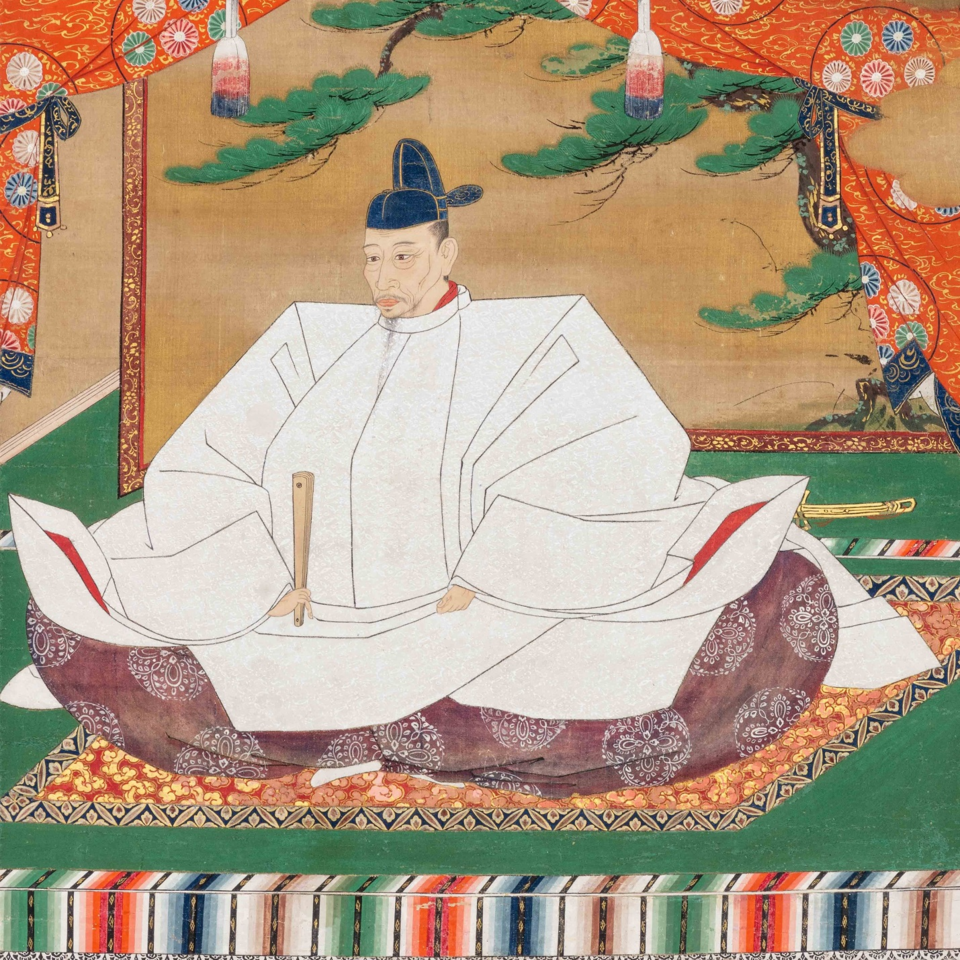
    Toyotomi Hideyoshi, who would eventually become master of Japan.

    The Lord of the Chosokabe, Motochika, tried to negotiate, offering just Iyo Province. Hideyoshi was not a man to be bargained with, however, and in response to what he saw as Chosokabe’s defiance, he dispatched an army of some 100,000 men under the overall command of his brother, Hidenaga.

    Shikoku was attacked from three sides: Sanuki and Awa by Hidenaga’s army, and Iyo by the Mori who had recently submitted to Hideyoshi and were keen for a chance to prove their loyalty. Attacked on multiple fronts and facing overwhelming numbers, the Chosokabe did not resist for long. At the end of July, after already having lost Awa Province, Motochika surrendered.

    The terms were harsh, but not as bad as they might have been. Hideyoshi allowed the Chosokabe to keep control of Tosa Province, but the other three were divided amongst Hideyoshi’s vassals. In 1586, the Chosokabe would join Hideyoshi’s invasion of Kyushu, and though the campaign itself would be successful, Motochika’s heir, Nobuchika, was killed in battle.

    Overcome with grief, Motochika is supposed to have tried to kill himself, only being dissuaded at the last minute by his vassals. Not long after this, he relocated the base of the clan to what is now Kochi Castle, and in 1588, he named his fourth son, Morichika, as the new heir.
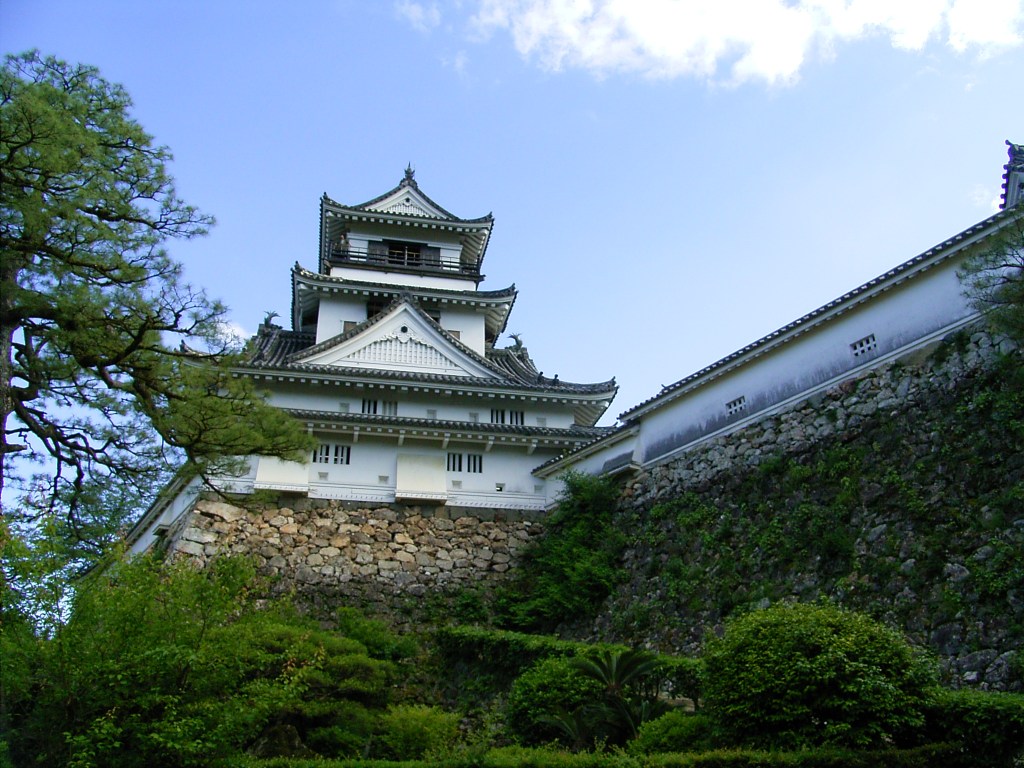
    Kochi Castle as it appears today.
    By Taisyo – photo taken by Taisyo, CC BY-SA 3.0, https://commons.wikimedia.org/w/index.php?curid=2157936

    In 1590, the Chosokabe again went to war in the service of Hideyoshi, this time dispatching naval forces to attack the Hojo Castle at Shimoda with 10,000 men. The garrison of 500 held out for nearly two months, but it was eventually taken, and with it, the Chosokabe contribution to the wider Odawara Campaign came to an end.

    In 1591, Motochika moved his base from Kochi Castle to a position at Urado (still within the modern city of Kochi). Some sources say this was because of the unfavourable location of the first castle (it was prone to flooding), whilst others suggest it was a strategic move, with Urado serving as the main base of the Chosokabe Navy, which took part in Hideyoshi’s long and ultimately unsuccessful invasions of Korea from 1592-1598.

    In 1596, the San Felipe Incident occurred when a Spanish Galleon (the San Felipe, hence the name) was shipwrecked off the coast of Tosa and brought into the harbour at Urado. We’ll focus on this incident specifically in a later post, but the short version is that Motochika confiscated the remaining cargo of the Galleon, and when officials from Hideyoshi arrived in Kochi to take possession of the goods, the captain of the Galleon heavily implied that the presence of Christians in Japan was the precursor to a Spanish Invasion, explaining that that was how the Spanish had managed to conquer such a large part of the globe.

    Hideyoshi had initially issued orders expelling Christian priests from Japan in 1586, but it had been unenforced before now. When news of the supposed Spanish invasion reached him, Hideyoshi was horrified, and in 1597, he had 26 Christians (including one passenger from the San Felipe) marched from Kyoto to Nagasaki (the centre of Christianity in Japan) and had all 26 crucified on a hill overlooking the city.
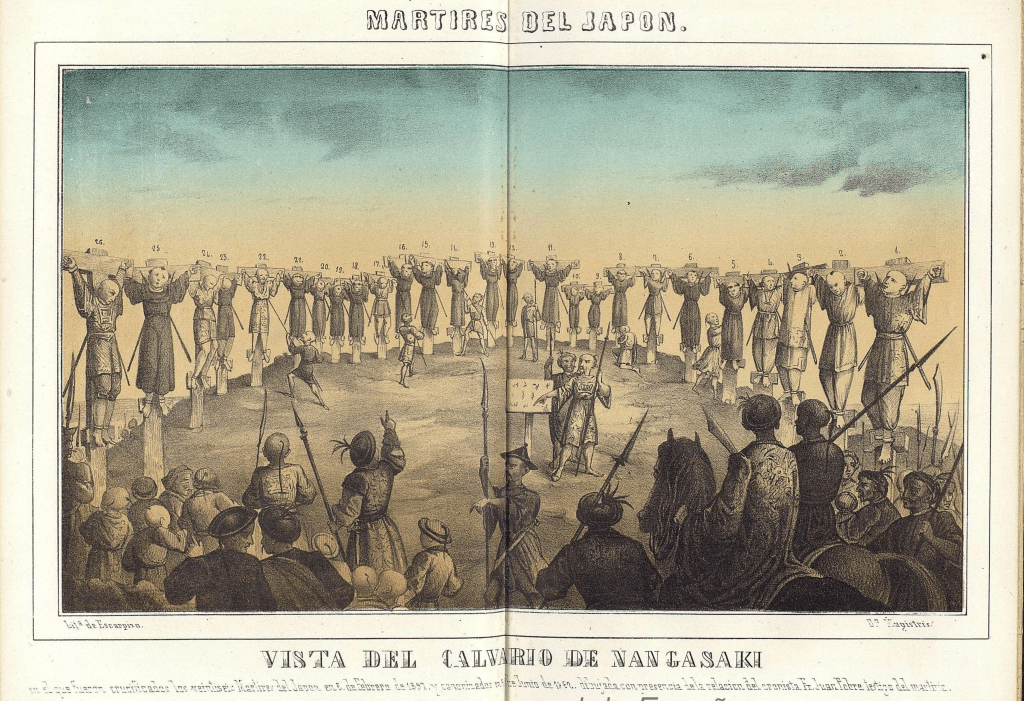
    A 19th Century depiction of the executions. The Japanese are wrongly portrayed with Chinese clothing and weapons.

    Motochika’s role in the persecution that followed is not clear, though Christianity had never been particularly strong on Shikoku, as the Chosokabe were largely opposed to foreigners in Japan, so it’s not hard to imagine he would have had no qualms about expelling them from his territory, even if he was not actively involved in the wider campaign.

    Hideyoshi’s death in 1598 would threaten the fragile peace he had forged, as his son and heir was just a boy, and a council of five regents was appointed to rule in his stead. Though Motochika was not a member of the council, he was still a man of influence, and in 1599, he was in Kyoto for an audience with Toyotomi Hideyori (Hideyoshi’s son) when he fell seriously ill.

    When it became clear that he wasn’t going to get better, he made his will, leaving control of the Chosokabe to his son Morichika, before he passed away in May that year. Morichika’s accession was far from smooth; he was unpopular amongst some of the Chosokabe’s retainers (apparently due to his arrogance and short temper), and the Toyotomi, de facto masters of Japan, didn’t recognise him as the new head of the clan.
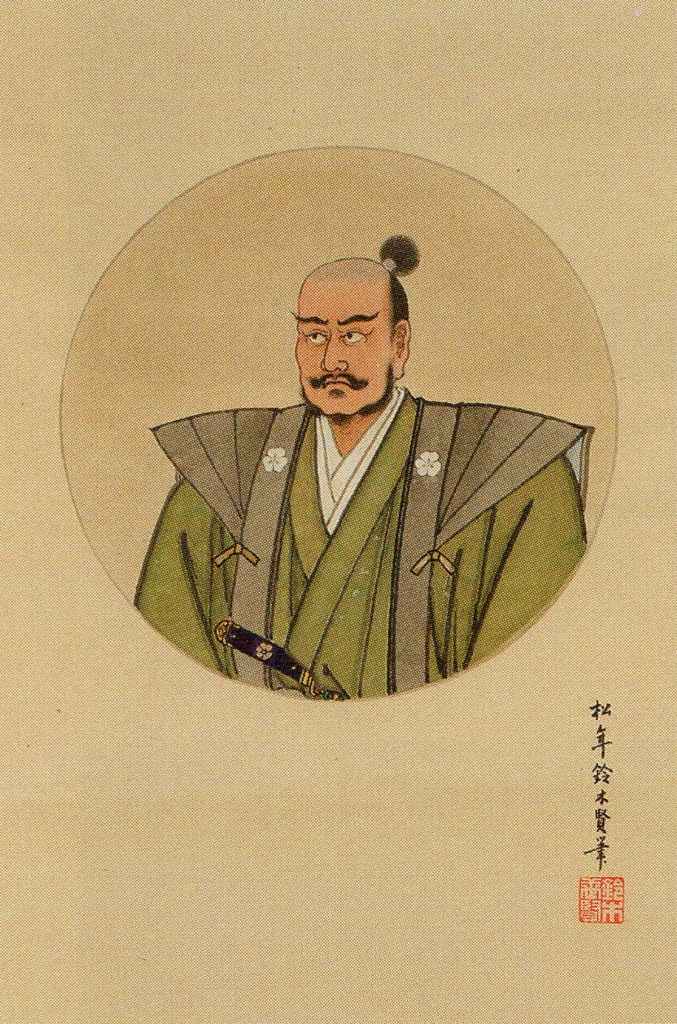
    An early 20th century depiction of Chosokabe Morichika.

    Morichika would try to make good on his appointment by joining the Western Army (the pro-Toyotomi side) at the Battle of Sekigahara in 1600. This would prove to be an unwise choice in the end, as the Western Army was defeated by the Eastern Army under Tokugawa Ieyasu. Although the Chosokabe had not actually been involved in the final battle, they had chosen a side and would not escape the consequences.

    Morichika was punished by having Tosa taken from him. Though there would be some protest, the decision proved to be final, and the Chosokabe’s time as feudal lords was over. Motochika would campaign to have his territory restored until around 1605. In 1610, he supposedly became a monk, and although his movements around this time are unclear, by 1612, he was under direct surveillance from the new Tokugawa Shogunate.

    The new Shogun was right to suspect him, as, during the Osaka Campaign in 1615, he sided with the Toyotomi, hoping to secure the restoration of Chosokabe lands in Tosa. In the event, the Tokugawa would be victorious in that campaign, snuffing out the last of the Toyotomi Clan, and securing their rule.
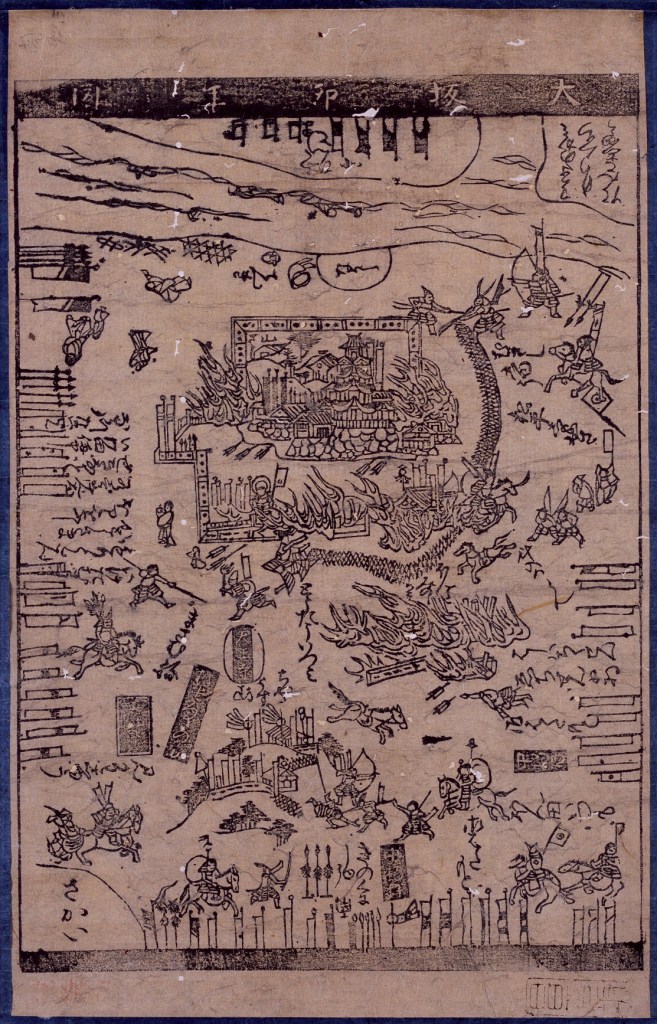
    A contemporary kawaraban, a kind of early newspaper, depicting the fall of Osaka Castle.

    Morichika is reported to have fought bravely, leading an attack on the Tokugawa’s main camp that was ultimately unsuccessful, but which managed to inflict serious casualties on the Tokugawa army before being forced to withdraw. With Osaka Castle eventually falling to the Tokugawa, Morichika initially fled, but he was discovered and then humiliated by being paraded around Kyoto before being beheaded.

    Morichika’s death brought an end to the Chosokabe. Some sources state he had as many as five sons, all of whom died premature and violent deaths. Some other sources, however, suggest that he had just two children, a girl and a boy, one who married a local retainer, and the other who was whisked away after the Siege of Osaka and raised elsewhere. Unfortunately, in both cases, reliable sources are hard to come by, and the truth appears to be that the Chosokabe died with Morichika.

    The Chosokabe name would be revived in later years by descendants of Motochika’s brother, Chikafusa, who had been adopted into the Shima Clan years earlier and thus survived the end of the Chosokabe. The family survived in this form until March 2025, when the last head of the family, Chosokabe Tomochika, passed away childless, aged 82.

    「今は個人の時代。家を背負う時代ではありません。逆にこれからの世代が、自分の思いで新しい歴史を作っていくのも立派なことじゃないかと思いますね」

    “We are now in the age of the individual. It is no longer the age to shoulder the burden of a family. On the contrary, I think it is admirable for future generations to create a new history based on their own ideas.” – Chosokabe Tomochika

    Sources
    https://ja.wikipedia.org/wiki/%E9%95%B7%E5%AE%97%E6%88%91%E9%83%A8%E7%9B%9B%E8%A6%AA
    https://ja.wikipedia.org/wiki/%E5%85%AD%E6%9D%A1%E6%B2%B3%E5%8E%9F
    https://ja.wikipedia.org/wiki/%E9%95%B7%E5%AE%97%E6%88%91%E9%83%A8%E5%85%83%E8%A6%AA
    https://en.wikipedia.org/wiki/Ch%C5%8Dsokabe_Morichika
    https://ja.wikipedia.org/wiki/%E3%82%B5%E3%83%B3%EF%BC%9D%E3%83%95%E3%82%A7%E3%83%AA%E3%83%9A%E5%8F%B7%E4%BA%8B%E4%BB%B6
    https://ja.wikipedia.org/wiki/%E4%B8%8B%E7%94%B0%E5%9F%8E_(%E4%BC%8A%E8%B1%86%E5%9B%BD)
    https://en.wikipedia.org/wiki/San_Felipe_incident_(1596)
    https://ja.wikipedia.org/wiki/%E9%95%B7%E5%AE%97%E6%88%91%E9%83%A8%E6%B0%8F
    https://ja.wikipedia.org/wiki/%E9%95%B7%E5%AE%97%E6%88%91%E9%83%A8%E5%8F%8B%E8%A6%AA
    https://croissant-online.jp/life/54209/
  • Heian V – Taira, Minamoto, & Tachibana.

    Last time, we talked at length about the Fujiwara family. We looked at how they rose to power and came to dominate the Imperial Court through a combination of violence, intrigue, and incestuous marriages.

    The Minamoto were far from the only noble family, however. Although there were literally dozens of families, cadet branches and noble upstarts, by the beginning of the Heian Era, there were four main houses: the Fujiwara, Taira, Minamoto, and Tachibana families.

    We’ve already talked at length about the Fujiwara and their origins, but what about the other three? First, a bit of background: Emperors generally had more than one consort, though there was technically only supposed to be one “Empress” This was routinely flouted during the Heian Period, especially by the Fujiwara, and besides official wives, the Emperor would take other noble women as concubines.

    In the days before family planning, this meant that any Emperor could have far more children than he knew what to do with. This would frequently lead to instability at court, as rival factions would form around different heirs, but what about the sons who were born to lower ranked women, or otherwise lacked legitimacy and support?

    Well, that’s where the Taira, Minamoto, and Tachibana come in. Technically, these three families didn’t start out as families at all; instead, the names were bestowed on these “extra” Imperial princes, who were excluded from the throne and would then go off and start houses of their own as part of the nobility.

    The Tachibana were the first (708), followed by the Minamoto (814) and the Taira (825), but things get complicated almost immediately. The problem is that one Emperor might bestow the name Minamoto on his grandson, only for another Emperor a generation later to do the same thing, creating two families that share a name.

    Whilst this isn’t uncommon in the modern world (How many Smiths do you know?), it does make it tricky to keep track of who is who when writing up a history blog. For the purposes of keeping things concise, I will be referring to all branches of each clan by the same name unless it’s important to make a distinction.

    It’s honestly not that bad with the Tachibana, as there were only two main branches. Even the Taira only had four, but the Minamoto had twenty-one, and that’s where it gets silly. It’s even worse when you realise that most, if not all, the later Samurai houses claim descent from at least one of the four major Heian Families, but we’ll get to that later.

    Tachibana

    We’ll start, as they say, at the beginning. Though the Fujiwara would emerge in 668, fifty years before the Tachibana, the latter family are the first of these Imperial “offshoots.” (The Fujiwara were pre-eminent but were not founded by the son of an Emperor).

    The Tachibana initially came into being in 708, when court Lady Agatainukai no Michiyo was given the honorary name “Tachibana” by Empress Genmei. The clan’s name was officially changed to Tachibana in 736, when Michiyo’s sons, Katsuragi and Sai, formally adopted the name; both men were direct descendants of Emperor Bidatsu through their father, Prince Minu.

    Initially, the Tachibana seemed to be on course to be one of the main players in Heian Court politics. Though Sai died early, his brother, Katsuragi (who changed his name to Tachibana no Moroe), would rise to high office in the Imperial Government, securing the family’s influence in the short term.

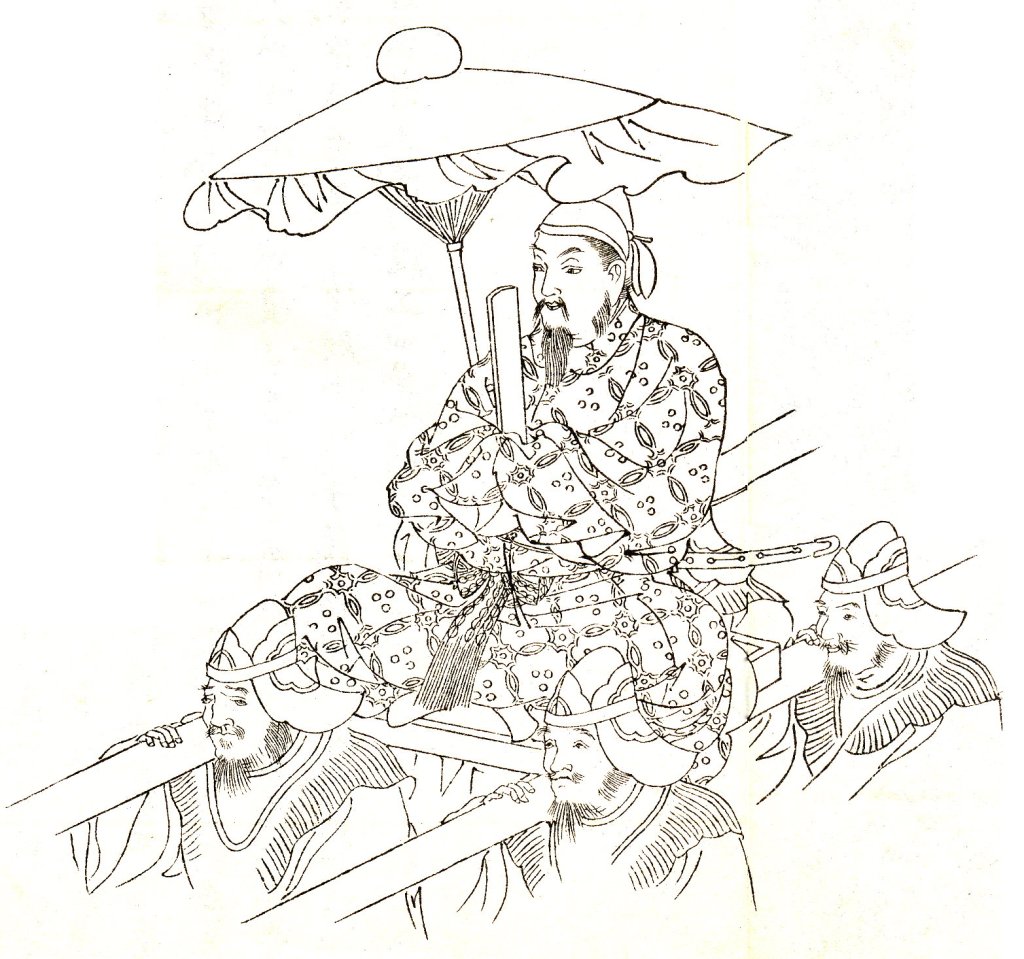
    Tachibana no Moroe, under whom the Tachibana’s star rose considerably.

    Unfortunately, as is so often the case, the son did not prove the equal of the father. Moroe was succeeded by his son, Tachibana no Naramaro. Though Naramaro was granted high office at first when Emperor Shomu retired and was succeeded by his daughter, Empress Koken, Tachibana’s influence was suddenly under threat.

    Koken is another character who deserves an entire post of her own, but the short version is that she favoured and was supported by the Fujiwara under Fujiwara no Nakamoro. Taking advantage of this, Nakamoro acquired lands, wealth, and titles that increased his wealth and power still further.

    Nakamoro’s rise was not without opposition; however, even amongst his own family, jealous cousins and siblings plotted against him, but it was the Tachibana who had the most to lose by his rise and the most to gain from his potential fall.

    In 755, in response to some drunken slander, Tachibana no Naramoro was forced to retire by Fujiwara no Nakamoro and his supporters at court. When Naramoro’s father, Tachibana no Moroe, died in 757, Naramoro, now in control of the Tachibana Clan, made his move.

    Allying themselves with Nakamoro’s disaffected sibling, Fujiwara no Toyonari, the Tachibana planned to raise troops, storm the capital, and overthrow the Fujiwara and their puppet Emperor, replacing them with Tachibana dominance, and putting a more sympathetic Imperial Prince on the throne.

    Unfortunately for the Tachibana, the conspiracy was uncovered, and the conspirators were arrested. Those of Fujiwara blood were sentenced to exile in Kyushu, but Tachibana no Naramoro was sentenced to death. Despite pleas for clemency, they were executed sometime in 757, although the official records of how Naramoro died have been lost.

    The power of the Tachibana at court would never recover, though they would continue to hold positions in the government. The rise of the Fujiwara proved to be inexorable, and the Tachibana were soon eclipsed. The last ‘hurrah’ of the family appears to have been their role in a rebellion in 939 in support of a different Fujiwara.

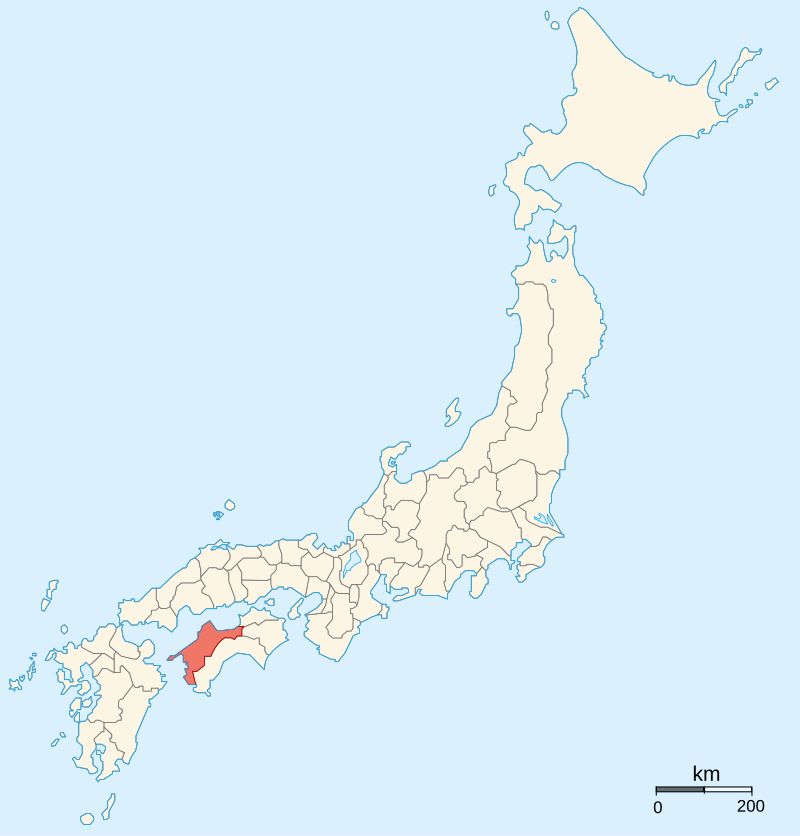
    The rebellion was crushed, and those involved were severely punished, but one member of the family, Tachibana no Toyasu, remained loyal to the Emperor and even took part in the execution of the rebel leader. As a reward, he received lands and titles in Iyo Province, where a branch of the family would survive a while longer, but the days of Tachibana influence at court were over.

    Iyo Province, where the Iyo-Tachibana family were granted lands and titles.
    By Ash_Crow – Own work, based on Image:Provinces of Japan.svg, CC BY 2.5, https://commons.wikimedia.org/w/index.php?curid=1682518

    A final note: there was a Samurai clan called Tachibana based near modern Fukuoka; however, the name is a coincidence, and the later Tachibana were no relation to the Heian Period family.
    Incidentally, this Tachibana family are still there, and they run a ryokan (traditional Japanese inn) based in their ancestor’s former residence.

    Taira

    Much like their contemporaries, the Taira began with grandsons and great-grandsons of several Emperors, and despite the shared name, there were actually four branches of the Taira family that came into being during the 9th Century, and these branches would often split as well. However, for our purposes, it is the line of Taira no Takamochi, founded in 889, that proved to be the most enduring.

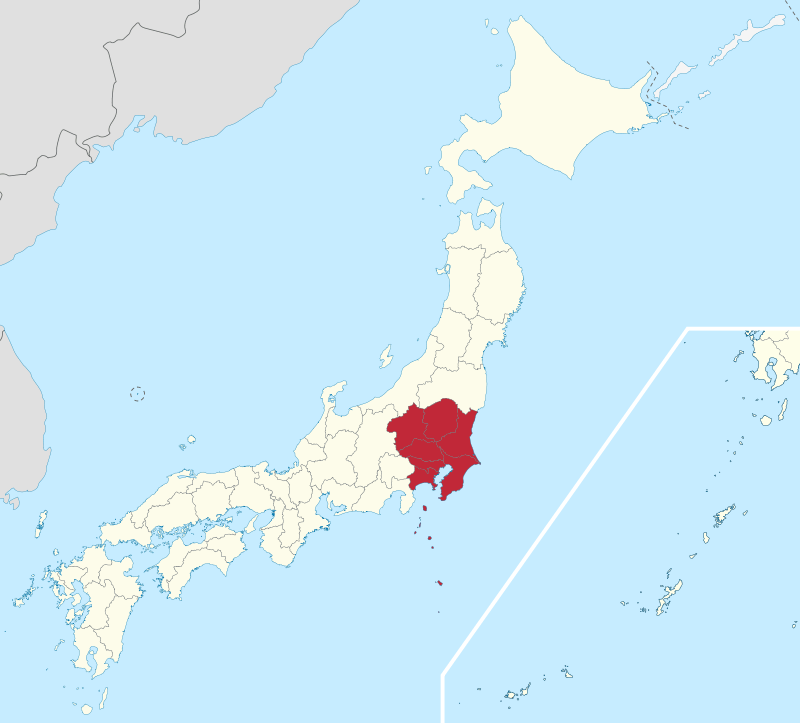
    Unlike the Fujiwara and Tachibana, the Taira’s centre of power was not the court at Heian-Kyo but the provinces, specifically the area of the Kanto plain, which includes the area in and around modern Tokyo, far from the Imperial Capital.

    The Kanto Region, centre of Taira strength, and a long way from the Imperial Court.
    By TUBS – This vector image includes elements that have been taken or adapted from this file:, CC BY-SA 3.0, https://commons.wikimedia.org/w/index.php?curid=16385930

    This distance meant that Taira influence at court was initially weak, but it worked both ways. Whilst the Taira might have been unable to exert much influence on the throne, the throne was equally unable to exert influence on the Taira.

    Consequently, as Imperial control waned in the provinces, the Taira were one of the main beneficiaries, gaining control of vast swathes of farmland and the wealth and power that went along with it. They would also begin to gather large groups of armed men to their service, and by the 10th Century, they were the dominant power in the East.

    The Taira would put this wealth and power to good use, engaging in local feuds without landholders and growing their already considerable resources through the application of force; though some of their opponents would appeal to the Emperor, there was little the Imperial Court could actually do about it, and as long as the Taira focused their efforts on their neighbours, the Court seemed content to turn a blind eye.

    Enter Taira no Masakado. Masakado’s life has been the subject of a lot of dramatisation over the years, so it’s not always possible to figure out exactly who he was or what he did. However, he appears to have gone to Heian-kyo in his late teens, hoping to gain an official position.

    He was out of luck on this score and returned home. There, if the stories are to be believed, he got into a dispute with his uncle over a woman, who may have been his daughter (Masakado’s cousin) or maybe not; again, the sources don’t agree. Another source says that there was a woman, but she was instead the daughter of Minamoto no Mamoru, a powerful local rival to the Taira.

    Still, more sources don’t mention a woman at all, stating that the conflict began as a result of a land dispute, with Masakado’s supposed inheritance being taken by another member of the family.

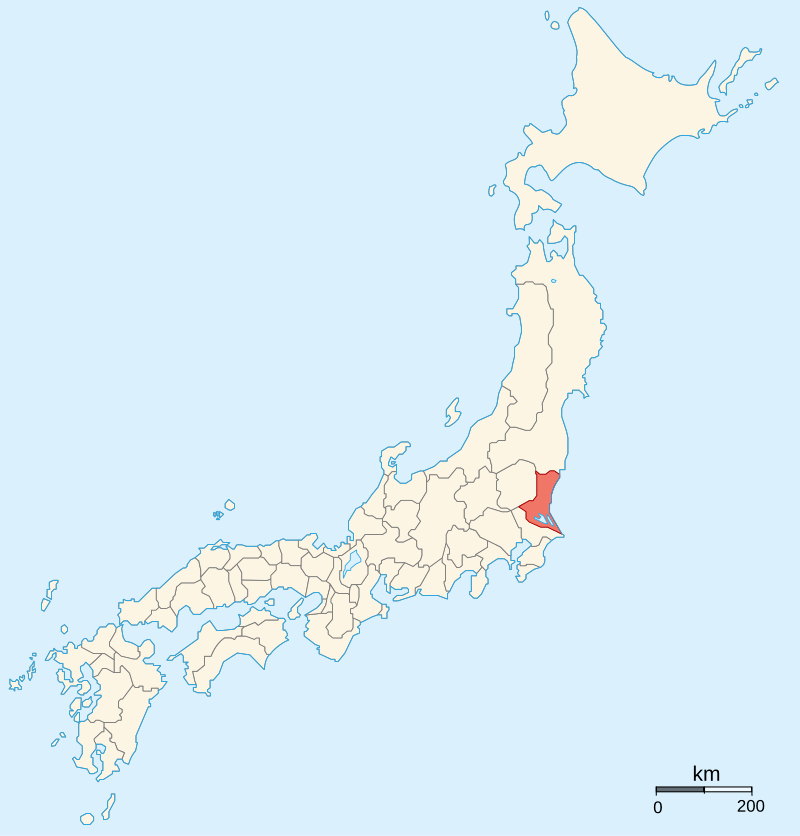
    While the background reasons are likely to never be known for certain, in early 935, Masakado was ambushed somewhere in Hitachi Province, modern Ibaraki Prefecture, by the sons of Minamoto no Mamoru. Masakado survived the attack, fighting off and killing his attackers, and responded by going on a rampage throughout Hitachi Province, burning the homes of his enemies, including the Uncle who he was in dispute with (either about land or his cousin.)

    Hitachi Province, where Masakado’s rebellion began.
    By Ash_Crow – Own work, based on Image:Provinces of Japan.svg, CC BY 2.5, https://commons.wikimedia.org/w/index.php?curid=1682357

    The situation spiralled out of control from there, and there was a series of battles in which Masakado generally prevailed. His enemies called in support from nearby provinces, and though they outnumbered Masakado considerably, he won a series of victories and drove his foes back to their residences.

    At this point, Masakado seems to have been worried about official consequences (because the bloodshed so far was fine, I guess.) At this point, Masakado limited himself to lodging a formal complaint, and when he was summoned to the Imperial Court to explain himself, it was declared to have been a local matter, and all involved were pardoned.

    A later illustration depicting Masakado in battle.

    Now, you might think that official censure would be enough to put the matter to rest, but you’d be wrong. It turns out that if you let powerful local landowners build up their own private armies, they tend to be less keen on obeying central authority.

    Almost as soon as Masakado returned to his province, the fighting resumed. Those who Masakado had defeated now sought revenge and attacked him. This time, it seems Masakado was defeated, and several of his holdings were burned.

    Exactly what led up to the events that followed isn’t clear, but by the end of 939, Masakado had gotten into further disputes with local officials, and he went as far as attacking the provincial headquarters, burning it to the ground, and looting the official storehouses.

    Now, the Imperial Court was pretty ineffectual by this point, but this was a direct attack on their authority, and even the decadent Heian Court couldn’t ignore that. The problem was, what to do about it? There was no Imperial Army, so the court had to rely on the very same local landowners that Masakado had been feuding with in the first place.

    Masakado was declared to be in rebellion, and a coalition army led by Fujiwara no Hidesato, Minamoto no Tsunemoto, and Taira no Sadamori (Masakado’s cousin) crushed the rebels in 59 days.

    Despite dealing with the rebellion relatively easily, the outcome was actually highly problematic for the Court. Although the Rebels had been beaten, it had been local leaders who had done the actual fighting, and even though Masakado had been a Taira, it had been Taira who had played a major role in his defeat.

    It would be some years before the full consequences of this would be felt, but the Taira would remain in place in the East, now with the added assurances that their military strength was not only secure but necessary.

    Minamoto

    So, we move on to the third part of our story today. The Minamoto are last, but most certainly not least, when it comes to discussing the major powers of the Heian Court.

    Like the other great families, the Minamoto got their start when sons and grandsons of Emperors were granted their own houses as a way to compensate them for never being able to sit on the throne. Whilst the Fujiwara, Taira, and Tachibana would spread across the Japan, the Minamoto were the proverbial weeds.

    No fewer than 21 separate branches of the family were created, and although a few would die out within a generation or two, others became central to the history of Japan, with one, the Seiwa Branch, proving to be truly significant indeed.

    Given the sheer number of branches of the Minamoto Family, it isn’t possible to write a history of them that would be concise enough to be readable. Given that I don’t expect you to sit there and read for the next three or four months, we’re going to condense a lot of this information, as a lot of overlaps with events we’ve already discussed, and, as you’ll see, the Minamoto will become extremely important in the latter days of the Heian Period.

    Generally, the Minamoto were a family that is closely identified with the decline of Imperial authority in the provinces. Whereas the Fujiwara and Tachibana concerned themselves with court politics, the Minamoto, like the Taira, focused on building their powerbase away from the capital.

    In many ways, the Minamoto best represents the growing shift in the power dynamic. Although the Fujiwara were largely unchallenged at court during this period, they would be forced to call on the Minamoto to use their military resources to deal with problems in the provinces. Indeed, during Masakado’s rebellion that we mentioned earlier, it was Minamoto forces that played a large role in his defeat.

    Later, it was the Minamoto brothers, Yorinobu and Yorimitsu, who were in the service of the Fujiwara, acting as their enforcers in the provinces. Yorinobu’s son, Yoriyoshi, would lead ‘Imperial’ forces against the rebel Abe Clan in northern Japan during the so-called “Nine Years War”, so named despite lasting Eleven Years.

    Such was the prowess of the Yorinobu’s grandson, Yoshiie, that he was nicknamed “Son of the God of War”, and the martial reputation of the Minamoto was secured.

    By the 11th Century, Japan was divided between rival warlords whose power no longer derived from the Imperial court. They would settle their own matters, often with steel, and the 11th Century would see the nadir and eventual end of the Heian Court’s dominance.

    Sources

    https://en.wikipedia.org/wiki/Minamoto_clan
    https://en.wikipedia.org/wiki/Minamoto_no_Yorinobu
    https://en.wikipedia.org/wiki/Minamoto_no_Yorimitsu
    https://en.wikipedia.org/wiki/Minamoto_no_Yoriyoshi
    https://en.wikipedia.org/wiki/Minamoto_no_Yoshiie
    https://en.wikipedia.org/wiki/Former_Nine_Years%27_War