Tag: japan

  • Kamakura V – The More things change…

    As we’ve already seen, by the mid-13th century, the Kamakura Shogunate was ruled in all but name by the powerful Hojo Clan, who ruled as shikken or regents for the Shoguns, who were nothing more than puppets.

    In Kyoto, the Emperor, whilst technically being the overlord of everyone as a son of heaven, was also just a figurehead, whose position and finances relied entirely on the goodwill of the Hojo. Successive Emperors accepted this situation with varying degrees of good grace, concluding that comfortable irrelevance was better than uncomfortable exile.

    Hojo power, however, became a double-edged sword; as their power grew, so did their arrogance. They began to rely on an increasingly small pool of retainers to fill powerful positions, and this led to disillusionment amongst other Samurai houses, who saw their path to wealth and influence blocked by entrenched Hojo interests.

    This situation worsened in the aftermath of the Mongol Invasions. Despite successfully defending the country, the cost of mounting the defence had been ruinous to Hojo finances, and the expected rewards of land and titles were not forthcoming (the Samurai didn’t fight for honour, you see.)

    This brewing resentment took time to reach a boiling point, but as the 14th century went on, anger towards the government in Kamakura continued to grow, and the Hojo, in what they believed to be an unassailable position, were practically blind to it.

    In 1318, Emperor Go-Daigo took the throne. His choice of name was significant, as it had been Emperor Daigo (the Go prefix means ‘later’) who had successfully opposed the power of the Fujiwara during the Heian Period, and Go-Daigo intended to emulate his namesake, and overthrow the Shogunate and restore independent Imperial Rule.

    Go-Daigo’s plans were first uncovered during the so-called Shochu Incident in 1324, where comrades of the Emperor were arrested after being accused of plotting against the Shogun. In response, the Emperor sent a letter to the Shogun, ‘ordering’ them to find the real culprits. It is generally believed that the Shogunate were well aware of Go-Daigo’s involvement, but, wanting to avoid a direct conflict with the Court, they played along, and several conspirators were exiled, whilst the Emperor himself remained officially blameless.

    Go-Daigo, though, didn’t learn his lesson, and tried again in 1331; he gathered supporters and retainers, evidently planning to launch a coup against the Shogunate. Once again, his plans were discovered, and the Shogunate dispatched forces to Kyoto to put the planned uprising down. Go-Daigo fled, but was captured shortly afterwards and exiled to the remote Oki Islands (off the coast of modern Shimane Prefecture).

    The Hojo replaced Go-Daigo with Emperor Kogon, but partisans of Go-Daigo, including his son, Prince Morinaga (sometimes called Moriyoshi) and legendary Samurai, Kusunoki Masashige, continued to oppose the Shogun, until 1333, when Go-Daigo escaped from exile.

    Landing in Hoki Province, Go-Daigo made his base at Mt Senjo and gathered a new “Imperial” Army. In April, Go-Daigo won the Battle of Mt Senjo, gaining him support of many powerful warlords in Western Japan, allowing him to march on Kyoto and take the city in June, re-establishing himself as Emperor.
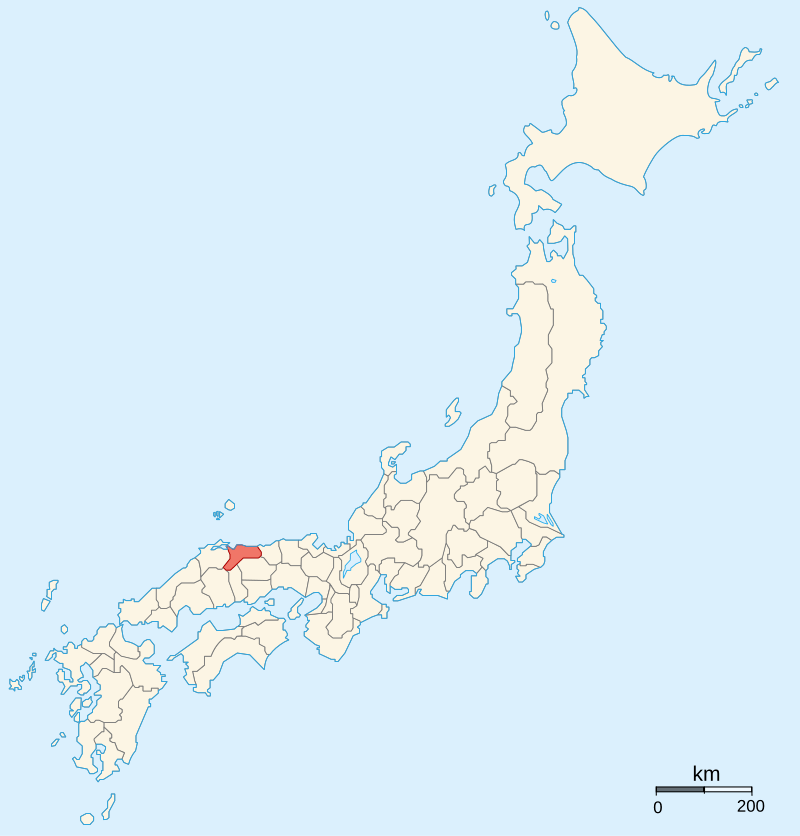
    Hoki Province, where Go-Daigo landed after escaping from exile.
    By Ash_Crow – Own work, based on Image:Provinces of Japan.svg, CC BY 2.5, https://commons.wikimedia.org/w/index.php?curid=1682393

    The Hojo dispatched Ashikaga Takauji, one of their foremost generals, with orders to crush Go-Daigo and reassert Shogunate power. Takauji marched, but for reasons that are still unclear, he switched sides, turned his army around, and launched an attack on Kamakura. One possible reason for Takauji’s defection is that the Ashikaga Clan were descendants of the Minamoto, the family that had established the Shogunate, and he hoped to be named Shogun himself, but his real reasons will probably never be known for sure.

    Deprived of their main army, the Hojo suffered a series of defeats, culminating with the Siege of Kamakura in July 1333, where the Hojo were surrounded, and would eventually commit mass suicide in a cave behind the Tosho-ji Temple in Kamakura, bringing their power and their family to an end.
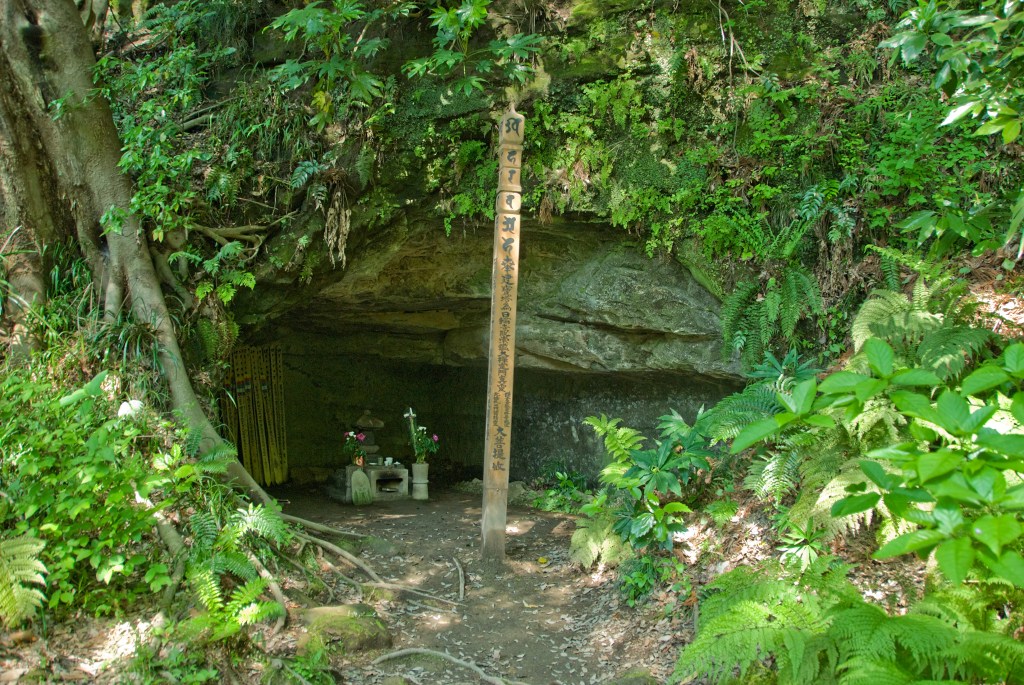
    The alleged site of the cave where the Hojo Clan committed mass suicide.

    In the aftermath of Go-Daigo’s victory, he almost seemed to go out of his way to piss away the goodwill he had accumulated in the years leading up to the so-called “Kenmu Restoration”. The problems stemmed from the fact that those who had supported the overthrow of the Shogunate had done so for a variety of reasons, ranging from genuine loyalty to the Emperor to an ambition to replace the Hojo as regents.

    Commoners hoped for land reform, and though there is little evidence of specific goals, it has been speculated that they were hoping for something akin to land redistribution, ending the peasant’s reliance on powerful, and often fickle, landlords.

    The Samurai who had fought for the Emperor sought rewards in land and titles, hoping to replace the governors and administrators put in place by the Shogunate.

    Finally, Imperial Courtiers hope for a true return to Imperial Rule, where the whole nation was under their control, and they could get back to the good old days of poetry, fancy clothes, and absentee landlordism.

    In the end, all three factions were to be disappointed. Go-Daigo, like the proverbial dog chasing a car, didn’t know what to do with power once he’d got it, beyond a vague notion that he should be in charge.

    In the first place, the commoners were never likely to get land reform; the Emperor had relied on the land-owning Samurai to do the fighting for them, and they were (unsurprisingly) likely to get on board with sharing the land that they had come to view as rightfully theirs.

    So what about the land taken from the Hojo and their allies? Well, that might have gone to the Samurai who had fought for the Imperial cause, but instead, Go-Daigo either took it for himself, or else gifted it to courtiers and cronies, alienating the Samurai who had expected a reward for their efforts.

    Finally, we have the Emperor and his courtiers. For whatever reason, they seemed to believe that they could just rule without the Samurai, despite all evidence telling them otherwise. Positions in regional governance, which had been the domain of Samurai for nearly 300 years at this point, went instead to courtiers.

    Quite what he had thought was going to happen isn’t clear, but within two years, the Emperor had managed to alienate just about everyone, so it should come as no surprise that his position soon became extremely precarious.
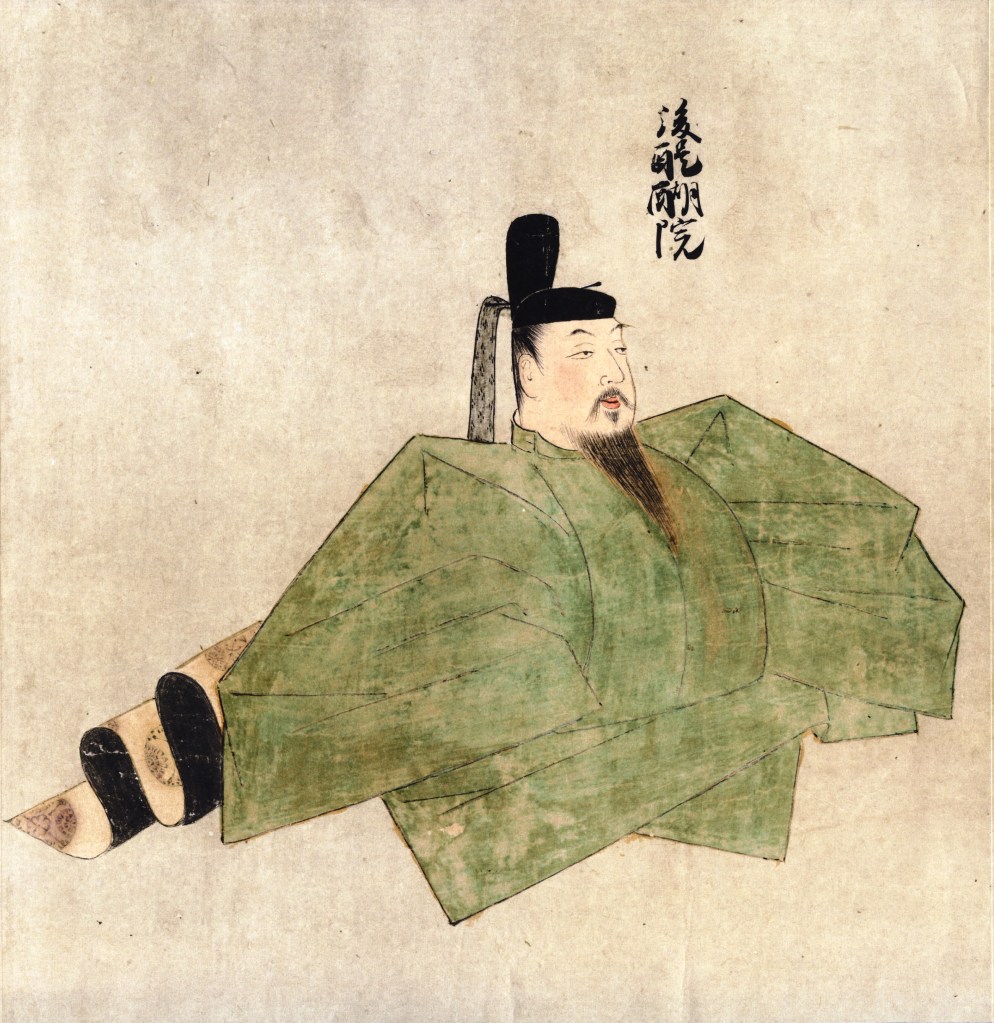
    Emperor Go-Daigo, who really didn’t know what he was doing.

    Ashikaga Takauji, the man whose defection had proved essential to the ultimate Imperial victory, now emerged as the leader of the Samurai opposition to the Emperor. The problem started when Takauji began appointing governors to Provinces himself, ignoring Imperial instructions.

    This was exactly how the first Shogunate had gotten started, and it wasn’t long before the Imperial court rightly guessed what Takauji was up to. In response, the Emperor named his son, Morinaga, Shogun, a move which further antagonised the already restless Samurai, as the title of Shogun, even before it became a powerful political position, had always been awarded to a member of the military class.

    Takauji doesn’t seem to have considered himself a turncoat in this case; the Ashikaga were descendants of the Minamoto, after all, so he portrayed himself as the redeemer of their power and, by extension, the power of the warrior class, earning himself the respect and loyalty of the disaffected Samurai.

    Prince Morinaga continued to be the leader of the opposition to Takauji, and so Takauji had him arrested on some flimsy pretext and transported to Kamakura. The situation there was tense, with Hojo loyalists launching sporadic, often poorly organised revolts, until the summer of 1335 when the son of the last Hojo regent, Tokiyuki, successfully took control of the city.

    In fleeing the city, Takauji’s brother, Tadayoshi, had Prince Morinaga beheaded, leaving Kamakura to the Hojo rebels. Upon hearing the news of the city’s fall, Takauji asked the Emperor to bestow the title of Shogun on him, to give me the authority to crush the rebellion and restore order. The Emperor refused, guessing correctly what Takauji was up to.

    Takauji raised an army and took Kamakura back anyway, and when he was ‘invited’ to Kyoto to explain himself, he refused. At this point, civil war was inevitable, and both sides ordered all Samurai in the realm to join their side.

    Again, it’s not clear exactly what Go-Daigo thought was going to happen, after all, he’d spent five years pissing off just about everyone, so it should have come as no surprise when the vast majority of warriors, and peasants too, for that matter, joined Takauji.

    Takauji’s forces quickly secured Kyoto in February 1336, only to be driven out in a counter-attack a short while after. Regrouping in the west, he advanced again, defeating the Emperor’s forces at Minatogawa and securing final control of the capital in July.
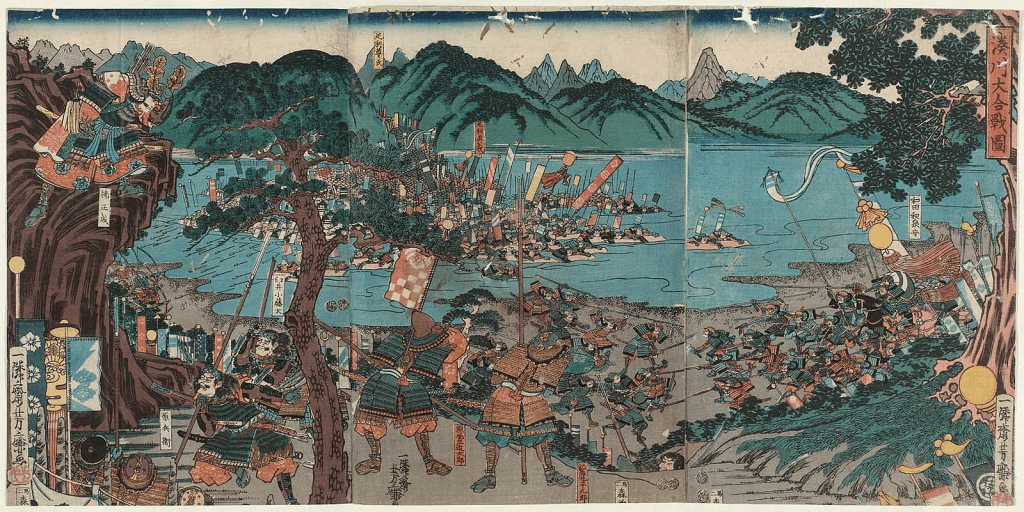
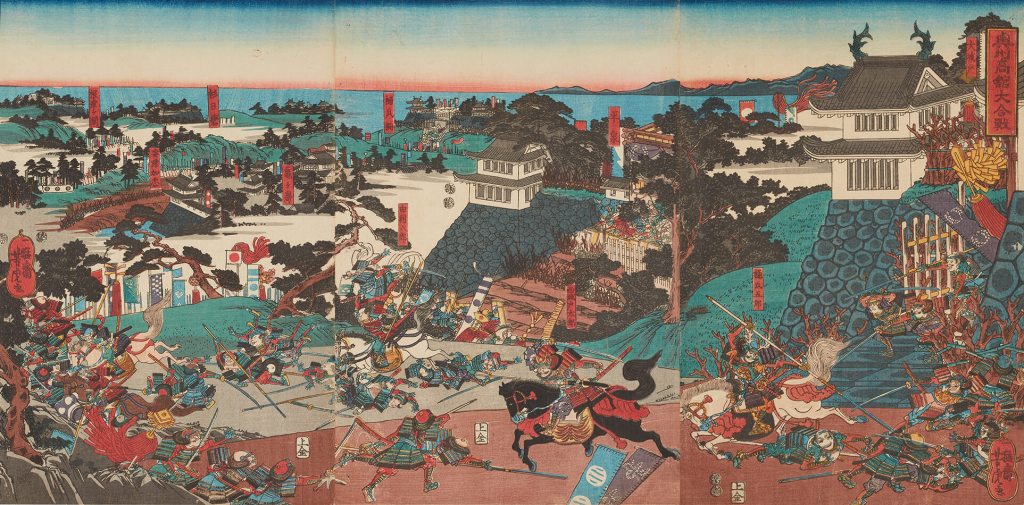
    The Battle of Minatogawa, where Ashikaga Takauji overcome the forces of Emperor Go-Daigo.

    Not long after, Takauji had the new Emperor, Komyo, declare him Shogun, giving birth to the Ashikaga, or Muromachi Shogunate. Go-Daigo was down, but not out, however, and he would return to plague the new government, but more about that next time.

    Sources
    https://ja.wikipedia.org/wiki/%E5%BB%BA%E6%AD%A6%E3%81%AE%E6%96%B0%E6%94%BF
    https://ja.wikipedia.org/wiki/%E8%AD%B7%E8%89%AF%E8%A6%AA%E7%8E%8B
    https://ja.wikipedia.org/wiki/%E6%A5%A0%E6%9C%A8%E6%AD%A3%E6%88%90
    https://en.wikipedia.org/wiki/Kusunoki_Masashige
    https://en.wikipedia.org/wiki/Prince_Moriyoshi
    https://ja.wikipedia.org/wiki/%E6%AD%A3%E4%B8%AD%E3%81%AE%E5%A4%89
    https://en.wikipedia.org/wiki/Genk%C5%8D_War
    https://en.wikipedia.org/wiki/Kenmu_Restoration
  • Kamakura IV – You can’t invade Japan…

    “…unless you’re the Mongols…” – John Green, Crash Course World History

    By the 1260s, the Mongol Empire was the most powerful state the world had ever seen. Throughout the 13th century, united under their leader, Genghis Khan and his heirs, the Mongols had conquered everything from China to Poland, sweeping aside any who opposed them, and spreading Mongol law and customs across Asia and into Eastern Europe.

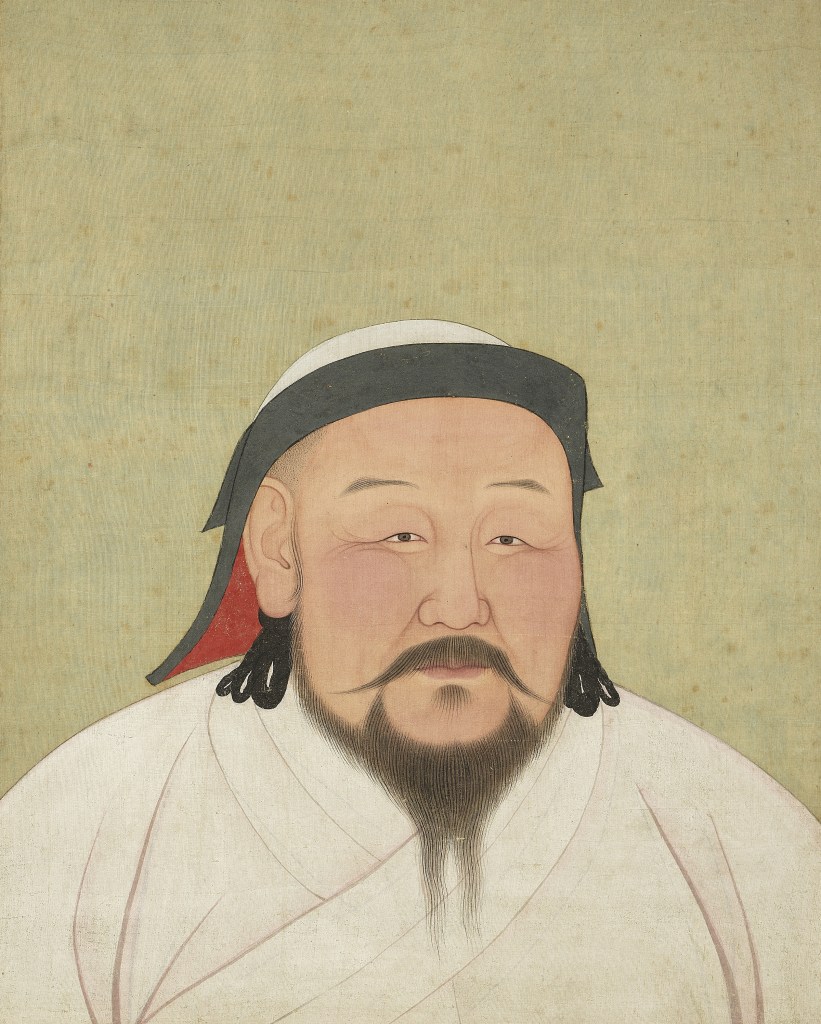
    In 1260, Kublai was elected as Great Khan. The grandson of Genghis, he had established the base at Khanbaliq, in modern Beijing, would go on to declare himself Emperor of China in 1271 (establishing the Yuan Dynasty), and took part in the subjugation of Korea, which had only finally submitted (and even then, as only a vassal) in 1259.

    Kublai Khan, Great Khan, Emperor of China, and would-be conqueror of Japan.

    Though China would not be completely subjugated until 1279, the Mongol position in Asia was strong enough that Kublai could turn his eyes elsewhere in search of new conquests. Japan presented a unique challenge; though Mongol armies were dominant on land, they had relatively little power at sea, and Japan, as an island nation, presented an opportunity to enhance Mongol prestige, but came with considerable risk.

    At first, Kublai tried to get the Japanese to submit without a fight. In 1266, he sent an embassy with a letter inviting the Japanese to send tribute. The embassy was turned away without even delivering its letter. Kublai, apparently not believing that a Mongol embassy would be treated so disrespectfully, sent another mission which met with similar stonewalling.

    In 1269, Kublai sent a third mission, this time to the island of Tsushima, demanding to know why there had been no response to his earlier letters. At this point, the Imperial court in Kyoto got nervous and suggested that it might be better to deal with the Mongols diplomatically. However, the Hojo Regents in Kamakura rejected this approach; a letter was apparently drafted, but evidently never sent.

    The Mongol Cometh.

    Several more attempts at diplomacy were made, but all came to nothing. The Shogunate seems to have taken the threat of invasion seriously as early as 1268, though, and began preparing defences. In China, the first serious preparations weren’t made until 1274, when Kublai and the Mongols(more correctly, the Yuan Dynasty at this point) began the mobilisation of troops, ships and supplies.

    The first invasion force made landfall on the island of Tsushima in November 1274, but it’s not entirely clear how big the opposing forces were. As is common with these things, the numbers vary wildly, with Chinese sources saying the Japanese have over 100,000 warriors, whilst the Japanese claim to have been outnumbered 10 to 1, both of which are clearly exaggerations.

    Most scholars put the total Mongol forces at around 30,000 (including sailors), but what is certain is that they quickly conquered Tsushima and nearby Iki Island, using them as a base for stage two of their plan. Mongol forces (around 6000) landed at Hakata Bay, in modern Fukuoka, on November 19th.

    Here we see the mismatch in fighting styles between the Mongols and Japanese. The Japanese tried to fight in their own way, with individuals announcing themselves and seeking challengers from the opposing side until one side overcame the other. The Mongols, however, fought as units, not individuals, and they made use of early gunpowder weapons, like primitive hand grenades, which terrified the Japanese and their horses and disrupted their tactics.

    “According to our manner of fighting, we must first call out by name someone from the enemy ranks, and then attack in single combat. But they (the Mongols) took no notice at all of such conventions; they rushed forward all together in a mass, grappling with any individuals they could catch and killing them.” – Hachiman Gudokan

    The Japanese fought bravely, but were outmatched by Mongolian tactics and gunpowder weapons.

    The fighting was brief and badly organised, and though the Mongols were able to drive the Japanese back and even burn Hakata, they made no further progress. Overnight, apparently fearing a Japanese counterattack, the Mongols retreated to their ships, and by the next morning, they were gone.

    Japanese sources say that unfavourable winds blew the Mongol fleet back out to sea, whilst Chinese sources make reference to a storm that scattered the fleet either in Hakata Bay or when it was on its way back to Korea.

    Either way, the first Mongol invasion was over. There are no reliable accounts of Japanese losses, though they appear to have been heavy, especially on Tsushima, where the Mongols killed and burned everything before them. As for the Mongols, they may have lost up to half their forces, though again, the sources aren’t entirely clear.

    Scholars disagree about whether this first ‘invasion’ was an actual attempt to conquer territory in Japan, or was instead a reconnaissance in force, designed to test the fighting abilities of the Japanese before a major effort was launched.

    The Empire Strikes Back

    The Japanese at the time certainly believed that the Mongols would be back, and as soon as the last invader disappeared, preparations were made for their return. Potential landing sites in Kyushu were fortified with castles, and stakes were driven into river beds, and at Hakata, a 2-meter wall, the Genko Borui, was built to prevent a second sacking of the city.

    For his part, Kublai made another attempt at diplomacy and dispatched another embassy, which had orders to refuse to leave until an answer was received. They certainly got an answer when the regent of the day, Hojo Tokimune, had them beheaded. Their graves can still be seen at Joryu-ji Temple in Fujisawa.

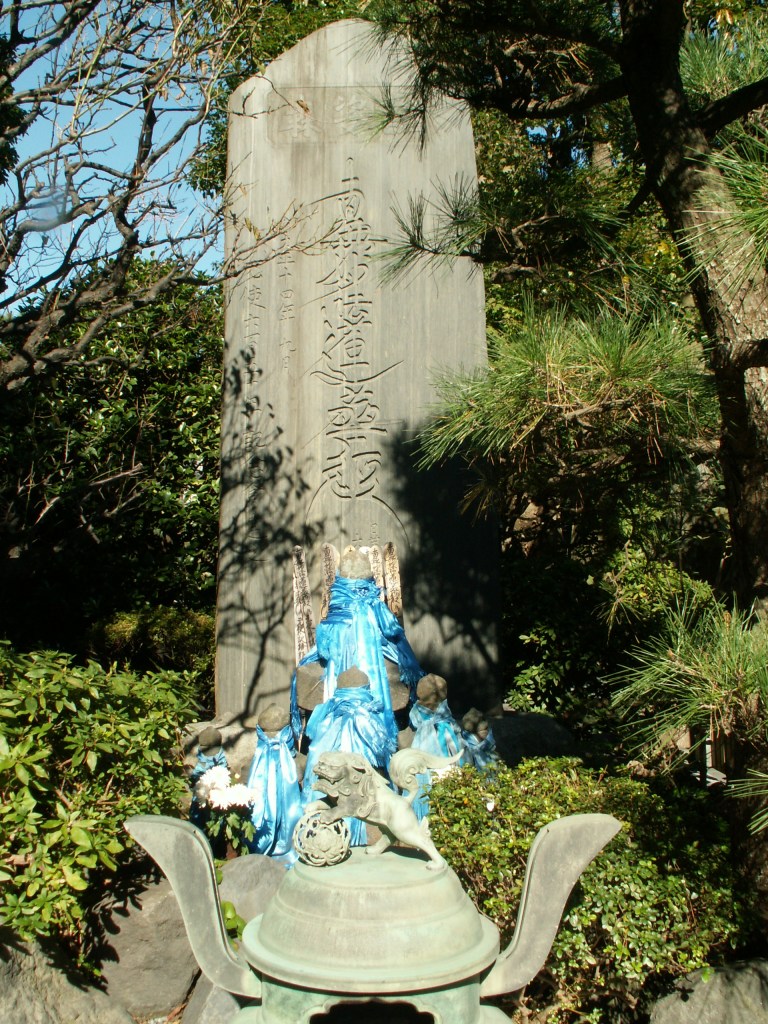
    The stele marking the graves of the envoys, in Fujisawa.
    By kamakura – Self-photographed, CC BY-SA 3.0, https://commons.wikimedia.org/w/index.php?curid=3082856

    Another embassy was sent in July 1279 and met the same fate, this time at Hakata, and in 1280, Kublai gathered his men, and together they made plans for a second invasion of Japan.

    By this time, China had been fully conquered, and using his newly acquired resources, Kublai was able to amass more than 1500 ships, and 100,000 men, with a further 40,000 in Korea. These numbers are probably exaggerated, but it does go some way towards showing how large the invasion was when compared to the first.

    The Mongol forces were divided into two: the Eastern and the Southern Army. The Eastern Army landed on Tsushima again in June, and once again, the island and nearby Iki Island were quickly conquered. The Eastern Army was supposed to wait for the Southern Army, but its commanders instead attacked Kyushu directly, landing at Hakata and nearby Nagato Province (in modern Yamaguchi Prefecture).

    The attack in Nagato was a failure, and the one at Hakata ran into the wall that had been built for that purpose. The Japanese had learned their lesson; they no longer sought out individual battles with the Mongols, instead remaining behind their defences and driving the invaders back with their bows (the preferred weapon of the Samurai at the time).

    The Mongols landed, but couldn’t overcome determined Japanese defenders, who had learned their lesson.

    Though driven back, the Mongols busied themselves with occupying the abundant islands around northern Kyushu, turning some of them into bases from which they raided the mainland. The Japanese lacked the naval strength to face the Mongol fleet directly, and instead launched night attacks on Mongol ships, inflicting minor damage and proving to be a nuisance rather than a serious strategic threat.

    The situation got worse for the Japanese when the Mongol Southern Fleet finally arrived, and the combined fleets based themselves at Takashima Island, where they made plans to renew the attack on Kyushu.

    At the same time, an army of some 60,000, dispatched by the Shogun to oppose the invasion, was making its way towards Kyushu, but before it reached Chofu, where it intended to cross from Honshu (Japan’s main island) to Kyushu, the weather had intervened.

    And they were scattered.

    In mid-August, the weather took a sudden turn, experienced sailors amongst the Mongol Fleet recognised the signs sought cover in Imari Bay, but it was already too late. On August 15th, a typhoon smashed into the Mongol Fleet, devastating it; those ships not sunk outright were stranded ashore where the Japanese made short work of their crews.

    The few Mongol ships that managed to survive the storm limped back across the sea to Korea, with some Chinese sources claiming that the losses may have been as high as 90%. The Mongol Invasion of Japan had failed, and though there were discussions about mounting a third attempt, they came to nothing, and Japan would remain free of foreign occupation until 1945.

    Despite having seen off the invasion, the Shogunate and the Hojo Regents were in no position to celebrate. Traditionally, warriors, victorious in war, were granted land taken from their defeated enemies, or at least could expect a share of the loot.

    The problem was that there was no land, and precious little loot to be shared out, and this led to growing resentment amongst the men who had actually done the fighting and dying and the popularity and prestige of the Shogunate was badly shaken.

    Another consequence of the failed invasion was a sharp rise in Japanese amongst the Wako, pirates who were a serious problem for coastal Chinese communities for decades afterwards, so much so, that Wako raids were cited as one of the reasons for an eventual Chinese ban on trade with Japan, though that would come long after the Mongol Yuan Dynasty had fallen.

    In Japan, too, the unsuccessful invasion led to some significant changes. Firstly, the belief that Japan was a land with divine protection became widespread, with the Kamikaze (literally, Divine Wind) being cited as the source of the Typhoon that had smashed the Mongol Fleet.

    Military technology was changed too; prior to the invasion, the Samurai had favoured the bow or spear as their primary weapon. When forced to fight up close with the Mongols, their swords were found to be too easily bent or broken, and this led to innovations in sword manufacturing that produced shorter, lighter, but stronger blades, giving birth to the iconic swords we know today.

    The Hojo and their puppet Shoguns would continue to rule Japan for decades after the threat of invasion had passed, but their rule was shaky, and the 14th century would see them face their final challenge, one of their own.

    Sources
    https://ja.wikipedia.org/wiki/%E5%85%83%E5%AF%87
    https://en.wikipedia.org/wiki/Mongol_invasions_of_Japan
    https://en.wikipedia.org/wiki/Kublai_Khan

    Not that many this week, eh?

  • Kamakura I – A Good Start

    According to historians, the Kamakura Period (named for the eponymous city in modern Kanagawa Prefecture) began in 1185. You probably know by now that history is never that neat. For starters, Minamoto no Yoritomo, the ‘first’ Shogun of this period, wasn’t actually granted the title until 1192.

    Despite some unclear dates, the reality is that Imperial power had been in decline for centuries. The rising warrior class (Samurai) had had effective control of the provinces for years, and one clan, the Taira, would rise to take effective control of the government, though their leader, Taira no Kiyomori, would not take the title of Shogun and nominally ruled through the Emperor.

    Taira control came to an end at the Battle of Dan-no-Ura in 1185, and they were replaced by the Minamoto. We’ve already discussed them, but in summary, the Minamoto, much like the Taira, were a sprawling extended family whose wealth and power did not come from Imperial prestige or titles, but control of the land and the armed men who protected it.

    After Dan-no-Ura and the end of the Genpei War, the Minamoto were in control, but here’s where history takes a turn. Previously, clans like the Soga, Fujiwara, and Taira had taken control of the capital, and they exerted influence on the court through political appointments, marriages, and the occasional use of force. The clans would sometimes become powerful enough to reduce Imperial rule to a mere concept, but the illusion of Imperial power was always formally maintained.

    The Minamoto were different. Firstly, they didn’t base themselves in the capital, even after their victory over the Taira. The Minamoto base, and centre of their power, was at Kamakura, and that is where they remained. After 1185, Yoritomo would pay lip service to the Emperor, but he began appointing his own provincial administrators, cutting the court out of the process entirely.

    In 1189, Yoritomo undertook an invasion of the northern provinces of Dewa and Mutsu. These provinces were ruled by the remnants of the Northern Fujiwara clan and had been largely independent since the outbreak of the Genpei War in 1180. It was also an area that harboured Minamoto rivals to Yoritomo.

    Before the outbreak of what would become known as the Oshu War, Yoritomo sought the permission of the Imperial Court to lead the army against the ‘rebels’. This was a formality, but technically the Emperor still had the right to select the General of ‘his’ army.

    However, Yoritomo didn’t wait for permission to be granted. Instead, he summoned warriors from across Japan, and they answered the call from as far away as Satsuma Province in southern Kyushu (in modern-day Kagoshima Prefecture). Throughout the summer, the Imperial Court made a lot of noise, trying to dissuade warriors from joining Yoritomo, but it did no good. If Japan had been waiting for a sign that power had definitively shifted, then this was it.

    The Oshu War in 1189 put an end to even the pretence of Imperial authority over the warrior class.

    The Oshu War lasted around 40 days, and Yoritomo achieved a complete victory. The Court, apparently trying to save face, offered its formal congratulations and a retroactive ‘permission’ for the war. Though the formalities had been observed, no one was fooled; Yoritomo was the boss now.

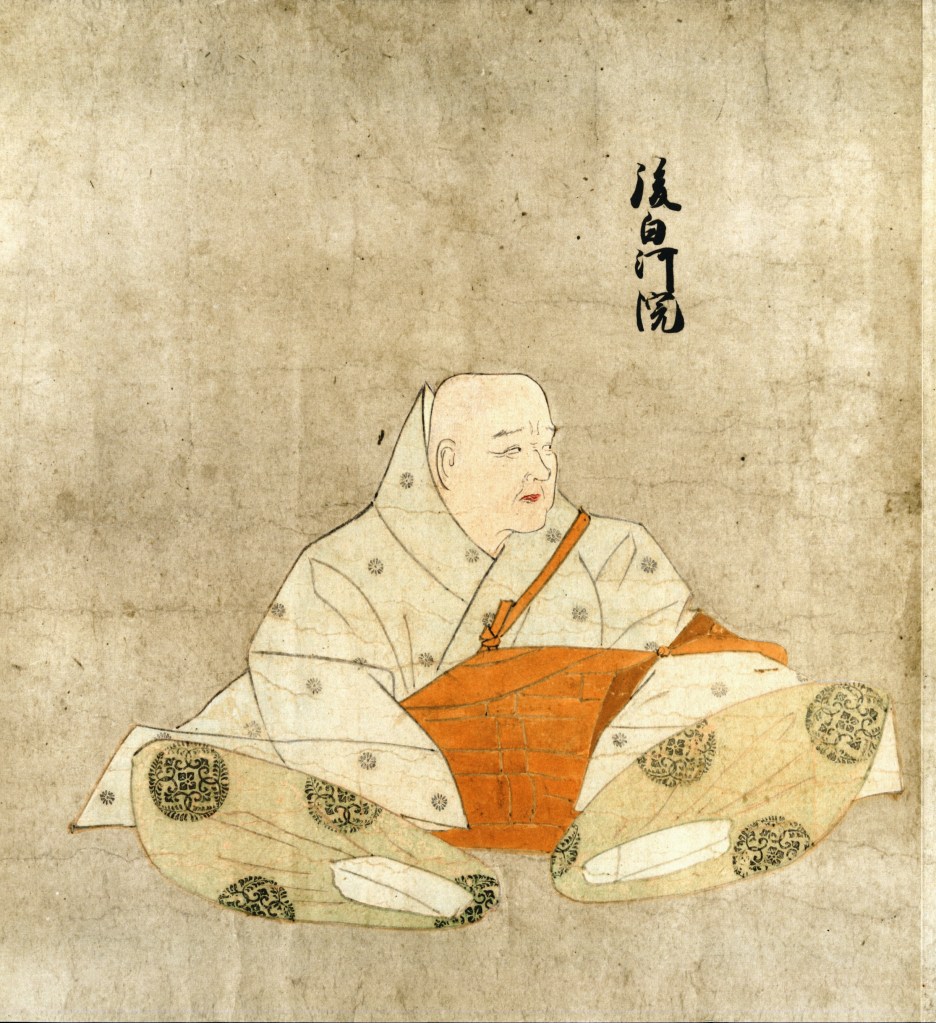
    Yoritomo’s main rival at court was the Emperor Go-Shirakawa, who had abdicated in 1158 and ruled as an insei or cloistered Emperor, influencing events at court for years. Though the two men would cooperate occasionally, especially against the Taira, it wasn’t long before the relationship broke down. Luckily for Yoritomo, and unluckily for Imperial power, Go-Shirakawa died in 1192, and the last real opposition to Minamoto dominance died with him.

    It is debated as to whether or not Go-Shirakawa actually sought to prevent Yoritomo from taking the title of Shogun, but the timing is certainly interesting. Go-Shirakawa died in April 1192, and Yoritomo was raised to Shogun in July, giving some credence to the idea that the only obstacle had been the Emperor.

    The title of Shogun, more appropriately, Seii taishōgun, is literally translated as Commander-in-Chief of the Expeditionary Force Against the Barbarians (which is a bit of a mouthful, I agree), and had always been a temporary title before. In the Yamato Period and early Heian, the Emperor would issue a ceremonial sword to a General before sending him against the Empire’s enemies (usually the Emishi Tribes in what is now northern Japan).

    The title seems to have fallen out of use in the 10th century as the Emishi had ceased to be a threat, and there was no longer any need for a Supreme Commander. Yoritomo’s assumption of the title reflected the new reality. His was not a government that was based on divine origins, or the glitz and glamour of Imperial ceremony. He had taken power through military strength, and he would rule Japan in the same way.

    Though Yoritomo was obviously a capable commander and administrator, he also took advantage of powerful alliances in and around his home provinces. His marriage to Hojo Masako (an important figure in her own right) brought him the support of the powerful Hojo Clan, who would go on to play an important role in the Kamakura Government.

    The strength (and, ironically, the eventually fatal weakness) of the Kamakura government was its decentralisation. Japan had been divided into provinces during the Taika Reforms over 500 years earlier, with each province being further divided into districts.

    The system had relied on officials appointed by the Imperial Court to run it, and when Yoritomo took over, he replaced Imperial Officials with Gokenin. This new system was pretty much the same as the one it had replaced, with officials appointed by the Shogun to oversee lands that they didn’t own.

    The home of a Gokenin from later in the period.

    The power of the Shogun came from the exclusive right to appoint these officials, but over time, they become de-facto hereditary, meaning that later Kamakura-based Shoguns would face exactly the same problem as the Emperors had, nominal vassals who were in reality heavily militarised, semi-independent principalities, who were not interested in obeying the government.

    The Great Hunt

    All that was in the future, and Yoritomo was focused on establishing the power of his regime in the short term. In the summer of 1193, Yoritomo called all his retainers to a great hunt in Suruga Province, not far from his capital. The so-called ‘Fuji no Makigari” (Hunt near Mt Fuji) was apparently attended by upwards of 700,000. Though that does seem implausibly high (and probably is), it does go some way to showing how high-profile an event this was. There were also a few incidents that highlight the complexities of power, both within the family and outside it.

    Firstly, when Yoritomo’s son and heir, Yoriie, killed his first deer, Yoritomo stopped the hunt to call for a celebration. Now, I don’t know if you’ve ever tried to shoot anything with a bow, let alone a deer, but it’s not easy, and Yoriie was only 12, so good for him, right?

    Well, it turns out, not so much, when Yoritomo sent a message to his wife, and the boy’s mother, Hojo Masako, inviting her to the celebration, she sent a message back stating that the son of a Shogun being able to shoot a deer was no reason to celebrate.

    Hojo Masako, the original Tiger Mum.

    Another incident, which wasn’t political exactly, but still a bit weird, was when Kudo Kagemitsu, a famous archer, shot at a deer and missed three times. He would claim to be baffled, and that the deer must have been the one that the Gods of the mountains rode. Which I’m sure it was. It’s a convenient excuse anyway. Kagemitsu would apparently get sick and collapse that very evening, and Yoritomo even considered calling off the hunt, but he didn’t, and they carried on for another week, so there’s that.

    The third incident is certainly the most serious, and has a name that probably explains itself: The Revenge of the Soga Brothers.

    These Soga aren’t the same as the Soga who had first dominated the Imperial Court in the Yamato Period; instead, they were a clan based in Sagami Province (most of modern-day Kanagawa) near Odawara. The target of the Soga’s vengeance was Kudo Suketsune, who had accidentally killed their father in a dispute over land, or a woman, or something. It’s complicated, but Samurai love a vendetta, and even though Suketsune’s death had been an accident, the Soga Bros, Sukenari and Tokimune, swore revenge.

    Now, the exact details of the attack are recorded in the Soga Monogatari, which is of unknown authorship, and tends to sensationalise quite a lot of what happened, and the Azuma Kagami, which is heavily biased towards the Kamakura government. Both sources share some similarities and some differences, but the basic outline is that the brothers attacked and killed Suketsune either at an inn or in a mansion, where he was attended by one or possibly two prostitutes.

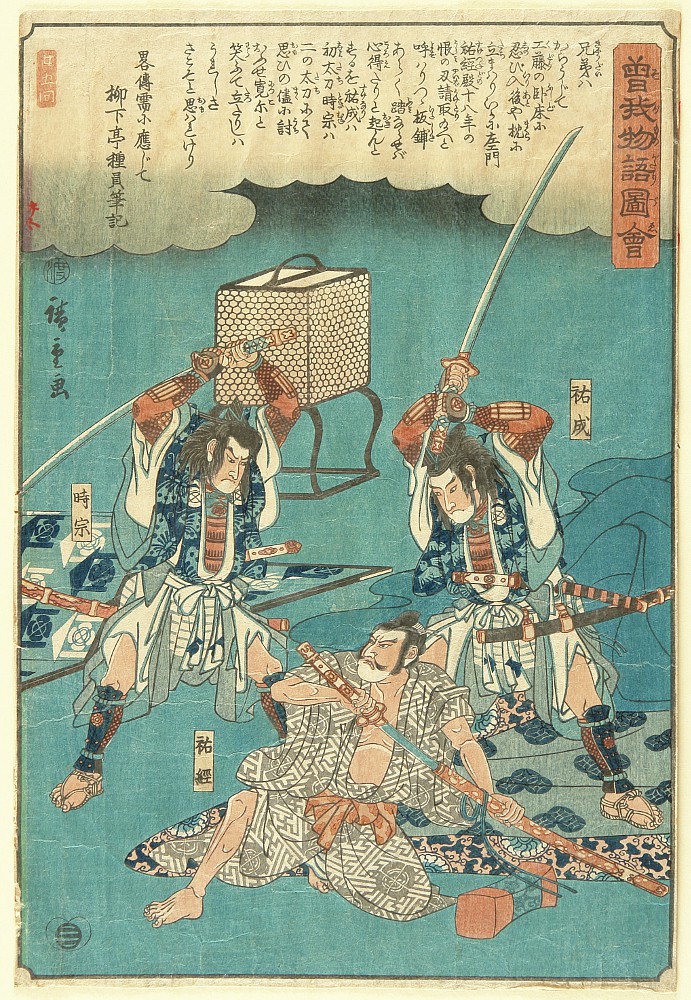
    The Soga Brothers take their revenge.

    The sources agree that the brothers killed Suketsune with their swords, but the Soga Monogatari says they also killed one of the prostitutes, or maybe just cut her legs off, which I guess was fine?

    Both sources agree that the brothers attacked and killed many warriors, with the Azuma Kagami suggesting that this was part of an attack on the Shogun, whilst the Monogatari says it was all about killing as many enemies as possible, to make their mark on history.

    Both sources also agree that Sukenari, the elder brother, was cut down in the melee, but Tokimune was captured, and subject to interrogation, before being put to death.

    This story was romanticised as heck later on, especially during the Edo Period, and why not? After all, what’s more inspiring than a story about a pair of brothers who avenge their murdered father before going on to slaughter a bunch of people who had nothing to do with it?

    Whether or not the Soga Brothers actually attempted to kill the Shogun, this episode highlights the often chaotic and bloody reality of a government run by warriors.

    Yoritomo would become a monk, and then almost immediately die in February 1199, leaving his son Yoriie as the second Shogun. Yoriie would immediately come under the influence of his grandfather, Hojo Tokimasa, and mother, the aforementioned Hojo Masako. Pretty soon, the same problems that had plagued the Imperial Court began affecting the Shogun’s court too, but more on that next time.

    Sources
    https://en.wikipedia.org/wiki/Kamakura_shogunate
    https://en.wikipedia.org/wiki/Battle_of_%C5%8Csh%C5%AB
    https://en.wikipedia.org/wiki/Minamoto_no_Yoritomo
    https://ja.wikipedia.org/wiki/%E6%BA%90%E9%A0%BC%E6%9C%9D
    https://en.wikipedia.org/wiki/Shogun
    https://en.wikipedia.org/wiki/Emperor_Go-Shirakawa
    https://en.wikipedia.org/wiki/H%C5%8Dj%C5%8D_Masako
    https://en.wikipedia.org/wiki/Gokenin
    https://en.wikipedia.org/wiki/Fuji_no_Makigari
    https://en.wikipedia.org/wiki/Revenge_of_the_Soga_Brothers
    https://en.wikipedia.org/wiki/Azuma_Kagami
    https://en.wikipedia.org/wiki/Soga_Monogatari

  • The Genpei War

    Oh yes, here we go, a good old-fashioned war post! All those posts about economic and social decline are finally paying off! Let’s get into it!

    So, as we’ve discussed, by the mid-12th Century, the Imperial Court was in a bad way. Over the centuries, the throne had been dominated by one powerful clan after another, who would marry into the Imperial family again and again in order to maintain that domination, at the cost of turning their gene pool into more of a muddy puddle. Luckily, Heian Era Japan didn’t have a concept of genetics, so I’m sure it was fine.

    The first of these families had been the Soga, who had been overthrown by the Fujiwara in the Isshi Incident in 645. The Fujiwara had had more or less complete control until the Emperors started abdicating to become insei, that is, cloistered Emperors, or an Emperor with all the power of the throne and none of the restraints that the Fujiwara had taken advantage of.

    With the Fujiwara weakened, their enemies started circling. The Hogen Rebellion in 1156 marked the end of Fujiwara power, as the rival Taira and Minamoto families teamed up to take them down. In a betrayal that will surprise no one, the Taira then shafted the Minamoto in the post-rebellion settlement, taking most of the power and the influence over the Emperor for themselves.

    The Minamoto were understandably a bit put out by that, so they launched a rebellion of their own in 1160. The so-called Heiji Rebellion failed, and the Minamoto were effectively wiped out, their leadership either killed or banished to the provinces.

    For the next 20 years, the Taira ruled as the Fujiwara had, but the problem with a violent takeover is that once one group does it, everyone wants to have a go. The Taira, like the Fujiwara before them, became overly enamoured with court life and neglected the provinces.

    This was unfortunate because, as I mentioned earlier, it was the provinces to which the Minamoto had been banished, and they weren’t in a forgiving mood when it came to the Taira.

    The Heiji Rebellion in 1160 marked the triumph of the Taira over their Minamoto rivals, at least temporarily.

    The leader of the Taira at this point was Kiyomori. He had led the Taira forces that had overthrown the Fujiwara and then seen off the Minamoto, and he was probably feeling pretty pleased with himself. Using his influence (and presumably the implicit threat of force), he rose through the ranks at court, eventually becoming Daijo-Daijin, which was basically the head of the government and second only to the Emperor (in theory).

    Now, there had obviously been Daijo-Daijin before Kiyomori, but he was significant because he was the first from the buke or warrior families to rise to that rank. Previously, the formal ranks of the Imperial Bureaucracy had been held by members or allies of the Fujiwara, and Kiyomori was an outsider who was seen as having used martial strength to gain his position, which was true, to be fair.

    In 1171, Kiyomori cemented his power at court by having his daughter, Tokuko, marry Emperor Takakura. Now, none of this was particularly new; the Fujiwara had been doing it for centuries, after all, but Kiyomori was different; he was a thug.

    The Fujiwara, for all their faults, had always played the game properly. They knew the rules, understood court etiquette, wrote beautiful poems, all that stuff. Kiyomori wasn’t like that. He’d taken power through military strength, and that was how he intended to keep hold of it. He wasn’t afraid to throw his weight around, and it was a risky business to oppose him.

    In 1177, in response to an alleged coup (the Shishigatani incident), Kiyomori ordered the arrest of dozens of conspirators. That these conspirators were all people who had reason to be offended by Kiyomori was convenient, and some sources speculate that the plot never existed at all, as it appears to have relied entirely on the testimony of a single monk, who Kiyomori had tortured and then beheaded.

    Regardless of whether it was real or not, Kiyomori had reinforced his power. Those who had ‘opposed’ him were dead or exiled, and he filled the vacant posts with family members and allies, further cementing his power and the fury of the opposition against him.

    In 1178, Tokuko gave birth to a son, Antoku, and Kiyomori decided it’d be a good time to remind everyone at court who was really in charge. The so-called Political Crisis of the Third Year of the Jisho Era (which is a bit easier to say in Japanese, I assure you) was basically a military coup d’etat. Kiyomori brought thousands of his warriors from the provinces to the capital and took over.

    There was no longer any pretence, Kiyomori was dictator in all but name, and shortly after the coup, he had Emperor Takakura abdicate in favour of the two-year-old Antoku, who obviously couldn’t rule himself, at which point Kiyomori kindly stepped in as regent.

    You remember what I said about violent takeovers? Well, Kiyomori was about to learn that lesson. The Taira had driven out the Minamoto, but they hadn’t destroyed them, and for twenty years, Kiyomori had ruled in such a way that he alienated just about everyone.

    In 1180, Prince Mochihito, who had been in line for the throne before Kiyomori raised the infant Antoku in his place, raised his banner in rebellion, calling for the opponents of the Taira to gather an army and march on the capital. Unfortunately, for Mochihito, his plan was discovered, and he was forced to flee, eventually arriving at the temple of Mii-Dera in Nara.

    What follows is largely recorded in The Heike Monogatari, which is a pretty epic read, but is largely a fictionalised account of the war, presenting an idealised version of events, in which heroic warriors do heroic things against impossible (and often implausible) odds.

    What we do know is that Mochihito, outnumbered and overwhelmed, was defeated at the Battle of Uji, just outside modern Kyoto, where he was either killed or executed shortly afterwards. Despite his unsuccessful attempts at raising an army, Mochihito’s call to arms did serve to galvanise the opposition to the Taira.

    Prince Mochihito, whose failed rebellion and death at the Battle of Uji served to inspire the opposition to Taira rule.
    ColBase: 国立博物館所蔵品統合検索システム (Integrated Collections Database of the National Museums, Japan), CC 表示 4.0, https://commons.wikimedia.org/w/index.php?curid=92525963による

    It is at this point that Minamoto no Yoritomo enters the stage, he definitely deserves a post of his own, but the short version is that he was 13 in 1160, and the Taira, perhaps feeling pity over his youth, hadn’t executed him, banishing him to the provinces instead.

    Yoritomo, however, had a long memory, and he had spent the last twenty years gaining strength, first over his own clan, and then the surrounding area. His base was the city of Kamakura, in modern-day Kanagawa Prefecture, and it was a relatively long way from the capital.

    When news of Uji reached him, Yoritomo set off looking for a fight. He called for help from the surrounding clans, and although there seems to have been some support, very few actually showed up to fight. In September 1180, Yoritomo had managed to gather just 300 men, and he was attacked by a force ten times that size at the Battle of Ishibashiyama.

    Despite this defeat, Yoritomo was able to escape by sea to Awa Province (in modern Chiba Prefecture), from where he would continue the fight. Meanwhile, the Taira, under Kiyomori, sought to take revenge against the monks who had hidden Prince Mochihito, and attacked and burned the city of Nara.

    Meanwhile, Yoritomo’s uncle was defeated at the Battle of Sunomatagawa in June 1181. The story goes that the Minamoto tried to sneak across a river at night in order to attack the Taira on the other bank. Apparently, their plan failed because Taira sentries were able to distinguish friend from foe by checking who was wet, or not. That seems like remarkable awareness for a battle in the dark, but regardless, the Minamoto failed to surprise the Taira and were defeated.

    Later that year, Yoritomo’s cousin (and sometimes rival) Yoshinaka raised an army in the north and defeated the Taira army sent to stop him, after which, fighting died down for a while.

    Taira no Kiyomori had died earlier in 1181 (the story goes that his fever was so hot anyone who tried to tend him would be burned), and not long after, a famine broke out that would spread across the nation. You can’t fight if you can’t eat, and so what followed was a two-year lull in the fighting, which I imagine wasn’t much comfort to the starving peasants.

    The fighting would resume in 1183, and the Taira would have some initial success, but at the Battle of Kurikara Pass in June of that year, the Taira were decisively defeated, and the momentum shifted to the Minamoto. It was Yoshinaka (Yoritomo’s cousin) and Yukiie (Yoritomo’s Uncle, but not Yoshinaka’s father, I know, it’s confusing) who actually led the Minamoto to the capital.

    As Kiyomori was dead, it fell to his son Munemori to lead the defence of the city. He did this by taking young Emperor Antoku and fleeing west, as you do. It was at this point that the cloistered Emperor, Go-Shirakawa (yeah, he’s still alive at this point!) threw in his lot with Yoshinaka and the Minamoto, calling on them to pursue and destroy the Taira.

    Unfortunately, Yoshinaka had different plans. Fancying himself the rightful leader of the Minamoto, he engaged in a plot against his cousin, Yoritomo, who was by now marching from the East towards the capital. It seems he was initially joined by Yukiie, who then got cold feet and let details of the plot slip.

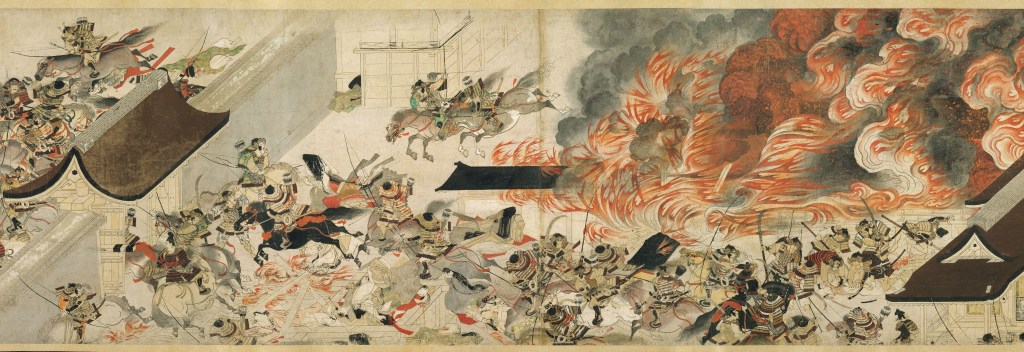
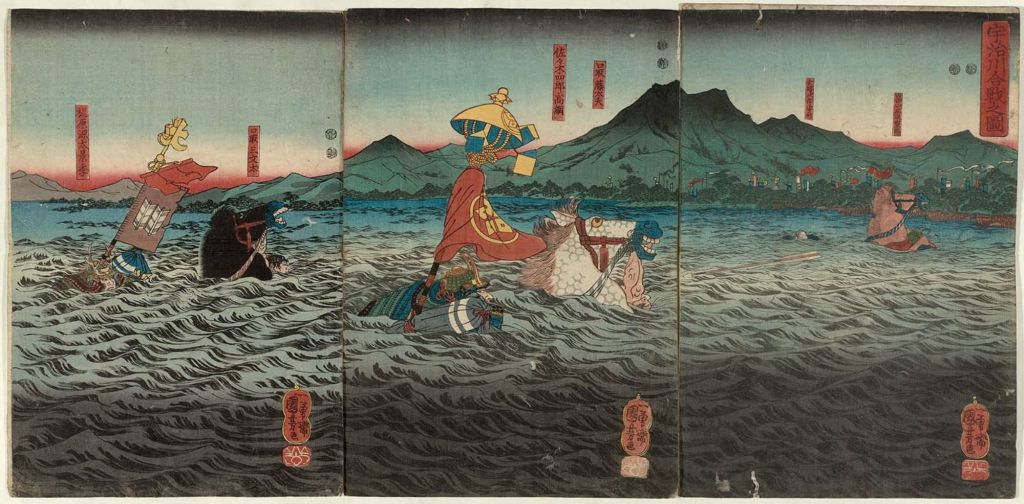
    Yoshinaka himself became aware that the plot had been discovered and moved first, setting fire to several parts of the capital and taking Go-Shirakawa hostage. It was at this point that Yoritomo’s brothers, Yoshitsune and Noriyori, arrived with a considerable force. They drove Yoshinaka out of the capital, and then killed him at the Second Battle of Uji , bringing an end to the Minamoto Clan’s feuding (for now.)

    A scene from the Second Battle of Uji. The bridge had been pulled up, hence the need to swim.

    After this, the momentum was decisively on the side of the Minamoto. They pursued the Taira, who had originally set up camp at Dazaifu, in Kyushu, and fortifying their positions around the Inland Sea, which were the lands the Taira had originally held.

    The Minamoto went on the offensive and defeated the Taira at the Battle of Ichi-no-Tani, near modern-day Kobe, followed up by another victory at Kojima. These successes allowed the Minamoto to drive the Taira out of their strongholds along the coast of the Inland Sea.

    The Taira, in possession of what was apparently the only navy in Japan at the time, and certainly the strongest, retreated to Shikoku, knowing that the Minamoto couldn’t follow. The Minamoto weren’t going to just let the Taira get away, however, and although it took time, they built up their naval strength before launching an attack at Yashima, in modern-day Takamatsu, that took the Taira fortress there, which had also been used as a makeshift palace for Emperor Antoku.

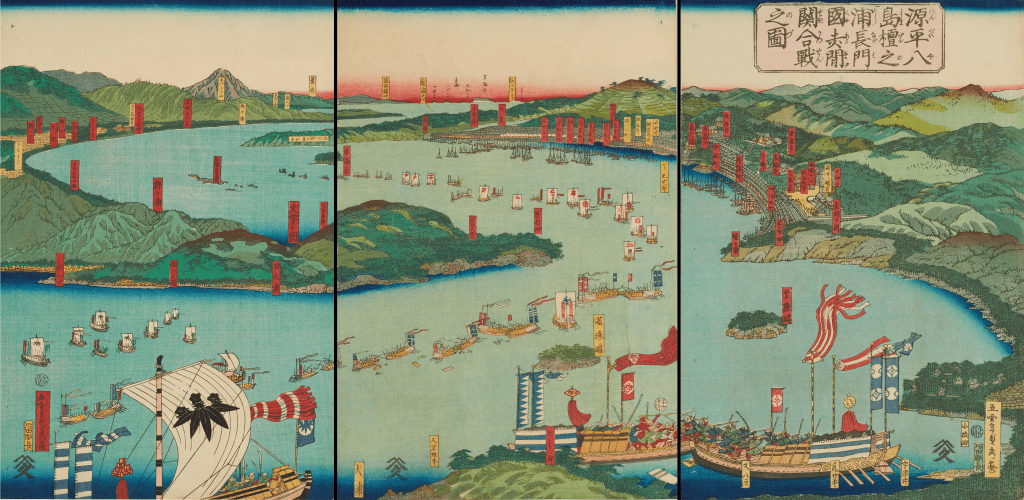
    Driven out of yet another stronghold, the Taira took to their ships and fled. The Minamoto would catch up to them at Dan-no-Ura, in the Straits of Shimonoseki. If you believe the Heike Monogatari (which you shouldn’t), then the Minamoto had 3000 ships to the Taira’s 1000. According to the Azuma Kagami, which is a biased by slightly more believable source, the forces were actually around 800 to 500, which are still considerable forces, but a bit more plausible.

    Despite being outnumbered, the Taira had home advantage and knew the tides and currents better than their foes. They also had the Emperor with them, which they assumed would give their side more legitimacy and encourage their men to fight harder.

    It was a good idea in theory, but it didn’t work. Though the tides were initially in the Taira’s favour, they turned, as tides do, and one of the Taira’s commanders turned as well, as men often do. Surrounded and attacked from all sides, the Taira began committing suicide en masse. One of those who died was six-year-old Antoku. The story goes that his grandmother, Taira no Kiyomori’s widow, took the boy in her arms and jumped with him into the sea. Neither was seen again.

    The Taira also tried to get rid of the Imperial Regalia, tossing them overboard. However, they apparently only managed to dump the mythical Kusanagi Sword and the Yasakani Jewel. The Yata no Kagami, a sacred bronze mirror, was apparently saved when the woman who tried to throw it overboard was killed when she accidentally looked at it.

    All three items were apparently recovered, either on the day of the battle or later, by divers. They are supposedly housed at the Ise Shrine in Mie Prefecture. The fact that no one has been allowed to see the artefacts since Dan-no-Ura is apparently just a coincidence.

    A later illustration of the Battle of Dan-no-Ura, which brought an end to Taira control of Japan.

    The result of Dan-no-Ura was the end of the Taira as a serious political force. Later that year, the Emperor Go-Shirakawa gave Minamoto no Yoritomo the right to collect taxes and appoint officials, effectively handing control of the state over to him.

    Though it would be some years before Yoritomo would take the formal title, the Genpei War marks the time at which control of Japan shifted from courtiers and Emperors to warriors under a supreme military commander who took a title that had first been used in the earliest days of Imperial rule in Japan, Sei-i Tai Shōgun.

    Cue dramatic music

    Sources
    https://en.wikipedia.org/wiki/Battle_of_Dan-no-ura
    https://en.wikipedia.org/wiki/Battle_of_Uji_(1184)
    https://en.wikipedia.org/wiki/Azuma_Kagami
    https://ja.wikipedia.org/wiki/%E5%B1%8B%E5%B3%B6%E3%81%AE%E6%88%A6%E3%81%84
    https://en.wikipedia.org/wiki/Battle_of_Yashima
    https://ja.wikipedia.org/wiki/%E4%B8%80%E3%83%8E%E8%B0%B7%E3%81%AE%E6%88%A6%E3%81%84
    https://ja.wikipedia.org/wiki/%E8%97%A4%E6%88%B8%E3%81%AE%E6%88%A6%E3%81%84
    https://ja.wikipedia.org/wiki/%E6%BA%90%E8%A1%8C%E5%AE%B6
    https://ja.wikipedia.org/wiki/%E5%80%B6%E5%88%A9%E4%BC%BD%E7%BE%85%E5%B3%A0%E3%81%AE%E6%88%A6%E3%81%84
    https://en.wikipedia.org/wiki/Battle_of_Kurikara_Pass
    https://en.wikipedia.org/wiki/Minamoto_no_Yukiie
    https://en.wikipedia.org/wiki/Minamoto_no_Yoshinaka
    https://en.wikipedia.org/wiki/Battle_of_Sunomata-gawa
    https://en.wikipedia.org/wiki/Battle_of_Ishibashiyama
    https://ja.wikipedia.org/wiki/%E4%BB%A5%E4%BB%81%E7%8E%8B
    https://en.wikipedia.org/wiki/Prince_Mochihito
    https://en.wikipedia.org/wiki/Emperor_Takakura
    https://en.wikipedia.org/wiki/Emperor_Antoku
    https://en.wikipedia.org/wiki/Taira_no_Kiyomori
    https://en.wikipedia.org/wiki/The_Tale_of_the_Heike
    https://en.wikipedia.org/wiki/Battle_of_Uji_(1180)
    https://ja.wikipedia.org/wiki/%E6%B2%BB%E6%89%BF%E3%83%BB%E5%AF%BF%E6%B0%B8%E3%81%AE%E4%B9%B1
    https://ja.wikipedia.org/wiki/%E6%B2%BB%E6%89%BF%E4%B8%89%E5%B9%B4%E3%81%AE%E6%94%BF%E5%A4%89
    https://en.wikipedia.org/wiki/Shishigatani_incident
    https://ja.wikipedia.org/wiki/%E9%B9%BF%E3%82%B1%E8%B0%B7%E3%81%AE%E9%99%B0%E8%AC%80
    https://en.wikipedia.org/wiki/Genpei_War
    https://en.wikipedia.org/wiki/Minamoto_no_Yoritomo

  • Heian VI – This is how it ends.

    The Heian Period is said to have ended in 1185, but, as you surely know by now, historical periods are rarely that neat. The actual end was really just a full stop at the end of a long period of decline.

    We’ve already discussed in detail how the Imperial Court lost control of the country’s economic and military affairs, and how that led to an erosion of political control. By the 11th Century, the writing was on the wall, but no one at the Heian Court was reading it (they had a lot of poems to keep them busy, after all).

    As we’ve talked about before, the dominant family in the latter half of this period was the Fujiwara. They grew so powerful that they could effectively choose the Emperor at will, and even in the provinces, there was no real alternative to Fujiwara power. That changed with Emperor Go-Sanjo, who came to the throne in 1068. He was the first Emperor not born to a Fujiwara mother for a century or more, and that was a problem.

    Emperor Go-Sanjo. The fact that his mother was not Fujiwara changed things considerably.

    Since he had no Fujiwara mother, he didn’t feel beholden to the wider Fujiwara family, and their influence was immediately under threat. Go-Sanjo was a pretty savvy guy; he realised that one of the main reasons why families like the Fujiwara were able to assert such dominance was that the Emperor was bound to myriad traditions and conventions that actually limited how much governing he could do.

    Go-Sanjo hit on a solution to this. He created the In-No-Cho, which basically means “Office of the Cloistered Emperor.” From then on, an Emperor could abdicate, but instead of simply moving aside for the next Fujiwara puppet, he (or she) would become an Insei, a cloistered Emperor, who could wield all the actual power of the throne, without being tied down to all the stuff that got in the way. (Some say it was Go-Sanjo’s son, Shirakawa who was the first Cloistered Emperor, which might be true, but the system is the same.)

    This system essentially meant that the Fujiwara were cut out of all major decisions. Though they kept their rank and titles at court, their dominance had relied on a compliant, or at least, impotent Emperor; now that that was no longer the case, the Fujiwara began to flounder, and the sharks closed in.

    No longer unchallenged, the Fujiwara did what all declining powers do: they turned on each other. Rival factions coalesced around the “Northern” and “Southern” Fujiwara (named because of the location of their houses in the capital in relation to the Imperial palace).

    The reassertion of Imperial authority and the decline of the Fujiwara didn’t solve any of Japan’s ongoing problems; in fact, in many ways, the Fujiwara left a power vacuum that other ambitious families tried to fill. There were soon clashes between rival factions, some of whom supported one Emperor or another, or were simply acting in their own interests, and Imperial power became increasingly illusory.

    By the mid-12th Century, even the illusion was fading, as the newly powerful warrior families (Buke) increasingly took up arms to solve their disputes, ignoring, and sometimes outright attacking Imperial power in ‘their’ lands.

    All this came to a head in 1155. It gets a bit complicated, but basically, two Emperors, Toba and his son and heir, Sutoku, both retired to become Insei, intending to be the power behind the throne during the reign of Konoe, who was also Toba’s son, and Sutoku’s half-brother.

    Konoe was only three when he took the throne (inasmuch as a three-year-old can take a throne), and for a while, things seemed fine. Unfortunately, as often happened, Konoe died young without having fathered an heir. At this point, Toba and Sutoku supported rival candidates. Toba wanted another son, Go-Shirakawa, whilst Sutoku wanted his son Shigehito to be next in line.

    Long story short, Toba got his way, and Go-Shirakawa became Emperor in August 1155. Now, it may come as no surprise that Sutoku wasn’t happy about this, and when Toba died less than a year later, battle lines were drawn.

    Emperor Go-Shirakawa ‘s disputed succession would lead to the Hogen Rebellion.

    Hogen & Heiji

    Now, the simple version of this is that it was a family dispute over who would get to rule. In truth, it was a lot more complicated than that. Whilst both factions supported rival claimants, there were also outstanding issues of influence at court. The Fujiwara wanted back in, whilst other families like the Minamoto and Taira wanted to keep them out and increase their own influence.

    Things get more complicated from here on in, I’m afraid. I mentioned in previous posts that when we talk about great “families”, we’re not actually talking about single families at all, but diverse groups who happen to share a name and some kind of Imperial ancestor.

    As this conflict escalated, these complex divisions came to the fore. Both sides called on the provincial warlords to support them, and by July 1156, both had armies containing Minamoto, Taira, and Fujiwara leaders. Some of these families were actually families too, with Fujiwara no Tadazane fighting for Go-Shirakawa, whilst his brother, Yorinaga, fought for Sutoku. This was also true with the Minamoto and Taira, with fathers fighting against sons, and uncles against nephews, until it becomes such a confusing mess that I swear it’s making me cross-eyed.

    Throughout July, both sides gathered their forces in and around the capital. Then, on July 29th, a night attack led by Taira no Kiyomori and Minamoto no Yoshitomo (on Go-Shirakawa’s side) attacked Sutoku’s forces. At first, the attacks were unsuccessful, but then someone suggested setting fire to the surrounded residences, and when this was done, Sutoku’s men lost heart and fled, leaving the capital in Go-Shirakawa’s hands.

    The immediate outcome of the Hogen Rebellion was the establishment of Go-Shirakawa’s influence (he would abdicate in 1158, and remain Insei until his death in 1192, effectively influencing five succeeding Emperors.) In the longer term, it signalled the end of Fujiwara power at court. They had sided with Sutoku in the hope that he would do away with the Cloistered Emperor system and restore the Fujiwara to power.

    Instead, Sutoku was defeated and banished, with those of his supporters who had survived the battle executed not long after. For the Minamoto and Taira (those branches that had supported Go-Shirakawa anyway), the victory led to increased influence at court, which brought a whole new set of problems.

    The main issue was that the Taira and Minamoto were allies of convenience. They had joined forces in support of Go-Shirakawa, but now that the immediate threat had passed, they quickly fell into squabbling about who would dominate the court next.

    When Go-Shirakawa abdicated in 1158, he was succeeded by his son, Nijo. As we’ve already discussed, real power remained with Go-Shirakawa as Insei, and he favoured the Taira, much to the chagrin of the Minamoto.

    This was further compounded when the Taira and Go-Shirakawa had the head of the Minamoto, Tameyoshi, executed as punishment for siding with Emperor Sutoku. Though Tameyoshi’s son, Yoshitomo, had remained loyal to Go-Shirakawa, his pleas for clemency fell on deaf ears.

    This would set the tone for the immediate post-rebellion situation. The Taira rose to a position of dominance whilst the Minamoto were left in the shade. Now, you might hope that the Minamoto had learned the lesson of the past and tried to find some way to make peace with the new status quo.

    But, of course, they didn’t. In 1160, the Minamoto, under their leader, Yoshitomo, allied themselves with what was left of the Fujiwara, and when the head of the Taira family, Kiyomori, left with his retinue on a pilgrimage, they abducted Go-Shirakawa, and had a member of the Fujiwara family declared Imperial Chancellor, this began the so-called Heiji Rebellion.

    Things unravelled pretty quickly after that. Despite having abducted the Emperor, the Minamoto don’t seem to have had much of a plan about what to do next. Taira no Kiyomori quickly got word of the attempted coup and made haste back to the capital.

    There were some attempts at negotiating, but it was a ruse; the Emperor was freed, and the Taira attacked. Initially, the Minamoto held their ground and drove the Taira forces back, but this was ruse number two; the Minamoto were drawn out of their defences and cut to pieces.

    The Taira Court

    In the aftermath, the newly established Taira dominance at court was confirmed. The leadership of the Minamoto, Yoshitomo, and his sons Tomonaga and Yoshihira, didn’t survive the battle, effective ending the threat. The Taira seized Minamoto lands, before banishing those who remained from the capital.

    One of those, thirteen-year-old Minamoto no Yoritomo, would come back to haunt the Taira and the Imperial court, but more on him later.

    With their rivals crushed, the Taira set about enjoying the fruits of their victory. Taira no Kiyomori became the pre-eminent man in the realm, filling the government with his relatives, and exerting control over the Imperial Throne, before doing what the Fujiwara had done before him, and marrying his daughter to the Emperor, and, when the Emperor in question died young, taking his place as regent for his infant grandson, who happened to be Emperor Antoku.

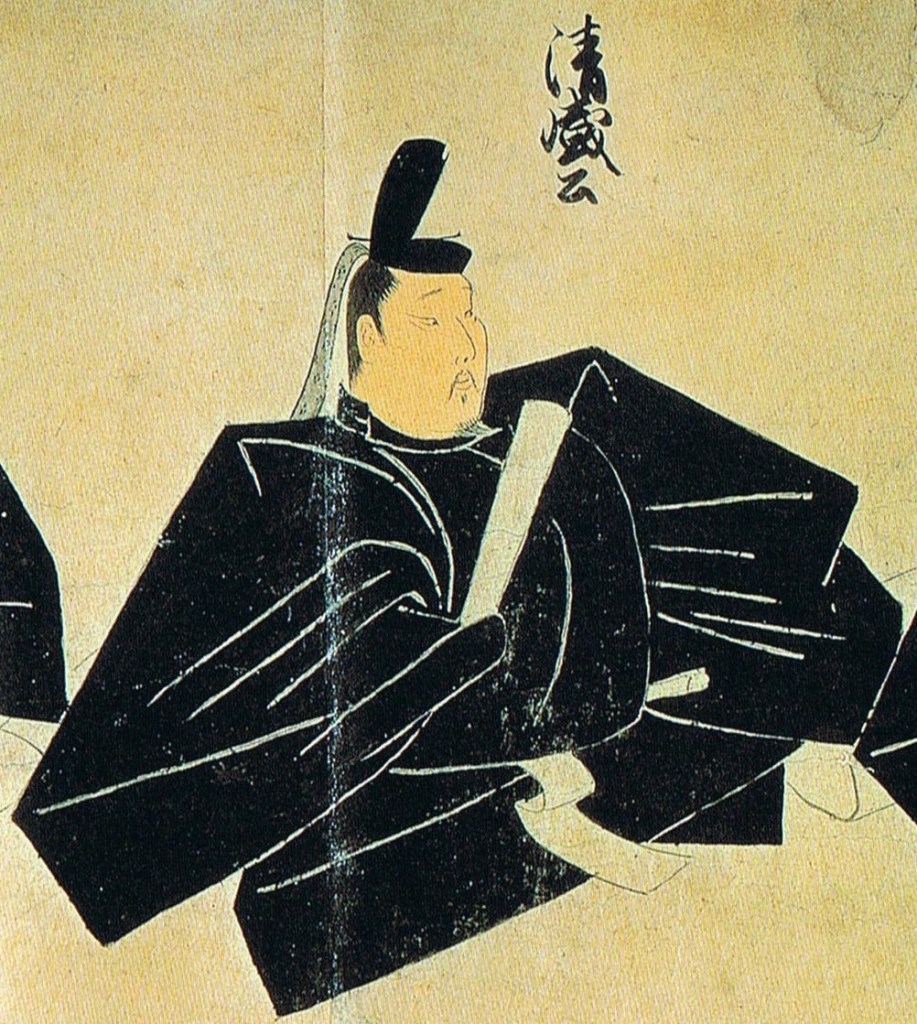
    Taira no Kiyomori. He became enamored with courtly life, and did nothing to stop the decline of Imperial power in the provinces.

    For twenty years, the Taira had it more or less their own way, but like the Fujiwara before them, they lost sight of what was going on in the provinces. Kiyomori did nothing to reverse the decline of Imperial power outside of the capital. Because of this, they were unable to stop the Minamoto from recovering their strength.

    Their leader, Minamoto no Yoritomo, was the son of the man who had opposed the Taira in the Heiji Rebellion in 1160. The Taira had let him live, and Yoritomo was going to make them pay for their mistake. Establishing himself at Kamakura, in Eastern Japan, and allying with the locally powerful Hojo Clan, Yoritomo set about getting revenge on the Taira.

    He would get his chance in 1180, in what became known as the Genpei War, but that really deserves its own post, so that’s what I’m going to do.

    Sources
    https://en.wikipedia.org/wiki/Heiji_rebellion
    https://en.wikipedia.org/wiki/Heian_period
    https://en.wikipedia.org/wiki/Taira_no_Kiyomori
    https://en.wikipedia.org/wiki/H%C5%8Dgen_rebellion
    https://en.wikipedia.org/wiki/Emperor_Toba
    https://en.wikipedia.org/wiki/Emperor_Sutoku
    https://en.wikipedia.org/wiki/Emperor_Go-Shirakawa
    https://en.wikipedia.org/wiki/Emperor_Nij%C5%8D
    https://en.wikipedia.org/wiki/Minamoto_no_Yoshitomo

  • The Jomon Period – Japan before it was Japan.

    In the beginning…

    In the beginning, there was an egg, thus answering that age old question at least.

    Actually, it wasn’t really an egg, but chaos in the shape of an egg, and all was silent. Then, things began to happen, and three layers were formed. At the top was light, then came Takamagahara, the High Plane of Heaven, and beneath that was the ‘huge, dark mass’ of Earth.

    Next, when the land was young, resembling floating oil and drift like a jellyfish, there sprouted forth something like reed shoots. From these came into existence the deity UMASI-ASI-KABI-PIKODI-NO-KAMI; next, AME-NO-TOKO-TATI-NO-KAMI. These two deities also came into existence as single deities, and their forms were not visible.

    Kojiki, translated by DONALD L. PHILIPPI

    What followed were the Kamiyonanayo, the Seven Generations of Gods. There are a lot of stories about what these guys got up to, which we’ll cover in a different article, but for our purposes, the most important are the last two, Izanagi and Izanami. Now, just so we’re clear, Izanagi and Izanami were husband and wife and brother and sister, but I’m told that kind of thing is cool when it comes to the Gods, apparently.

    Fun fact: Their names literally mean “Male who invites” and “Female who invites” so there’s that…

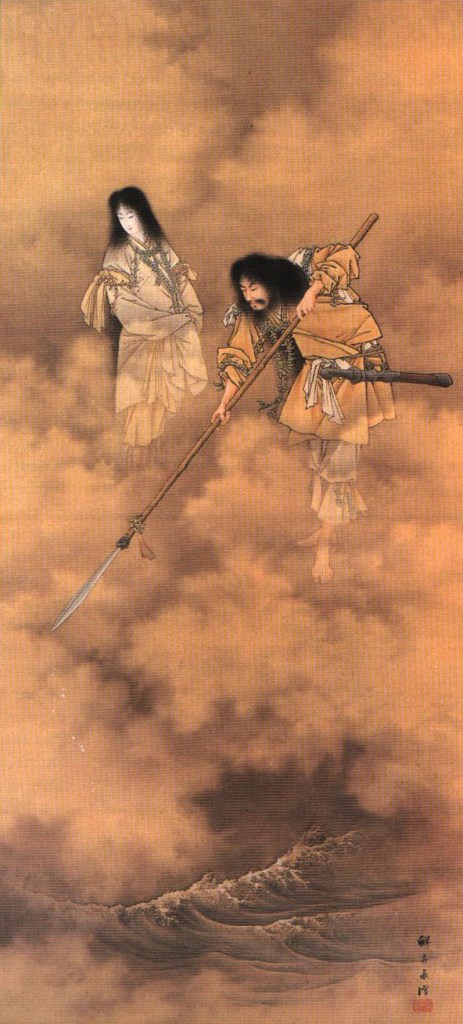
    Anyway, at that time, the earth, ‘huge and dark’ as it was, looked like floating oil and “drifted like a jellyfish”, so Izanagi was given Tenkei, the Heavenly Spear. He used it to stir up the primordial soup, and when he drew the spear out, a drop of water fell back, and created the island of Onogoroshima, the first of the Japanese Isles.

    Izanagi and Izanami stirring the primordial soup.

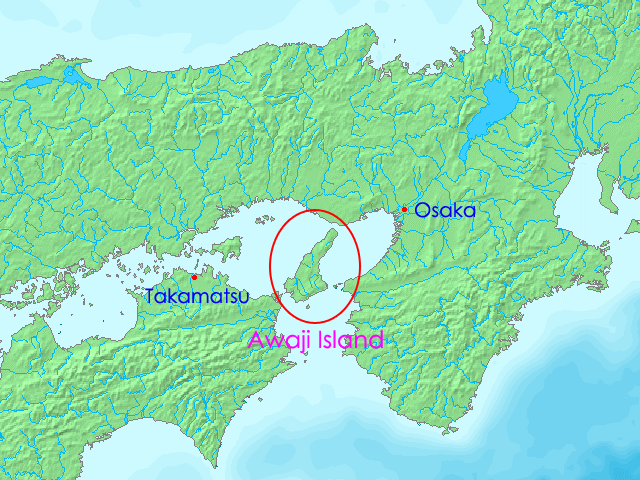
    Just in case you were wondering, no, you can’t visit Onogoroshima. Scholars aren’t sure which of the current Japanese islands represents the mythical “first island”, but it’s generally thought to be one of the small islands that surround Awaji-shima, if it exists at all.

    Awaji Island. Could it, or one of the smaller island around it, have been the first?

    There are plenty of other stories about Izanagi and Izanami, like how, upon erecting a holy pillar, they realised they needed to procreate (stop laughing), but all you need to know for now is that Izanagi and his sister-wife are considered to be the progenitors of the Japanese pantheon, and through their daughter Amaterasu (the Sun Goddess), the Japanese Imperial Family.

    Mythology aside, archaeologists generally agree that the first people arrived on what is now the Japanese Archipelago sometime around 36,000 BC, when Japan was still attached to mainland Asia by a land bridge.

    There are few remains of these people, largely because the soil in Japan is highly acidic, but also because it is probable that they lived in coastal areas which are now under water. The only artefacts that have remained are stone tools, and Japan has some of the oldest on record, with some possibly dating to as early as 30,000 BC, a full 20,000 years before appearing in other places.

    There are, however, some big question marks over the actual age of human habitation in Japan, and that is because of…

    The Japanese Paleolithic Hoax

    The short version of this story is that, during the 1970s and 80s, an amateur archaeologist by the name of Shinichi Fujimura began finding artefacts at sites in Miyagi Prefecture, which he claimed to be dated to the Palaeolithic Period. Fujimura quickly earned a reputation as one of Japan’s most prolific archaeologists, and despite concerns raised by some academics, he rose to become Deputy Director of the Tohoku Palaeolithic Institute. His research seemed to suggest that human habitation of Japan stretched back as far as 600,000 years, and several of his sites were listed as being of national importance.

    The problem, as you’ve probably already guessed, was that he made it up. In late 2000, the Mainichi Shimbun newspaper broke the story that Fujimura had been planting artefacts. He would take items from other sites, bury them secretly, and then “discover” them later. After a thorough review of his work, the Japanese Archaeological Agency reported that almost all Fujimura’s work had been based on faked finds, setting back Palaeolithic research in Japan by decades, and forcing the academic community to reassess everything they thought they knew about the period.

    So what do we know?

    Of the Palaeolithic Japanese? Not much, honestly. Japan’s acidic soil and the high level of coastal erosion over the last 30,000 years has meant that human remains are few and far between, and even real artefacts are limited to stone tools. In short, we know that people were here, but who they were, and how they lived, is open to conjecture.

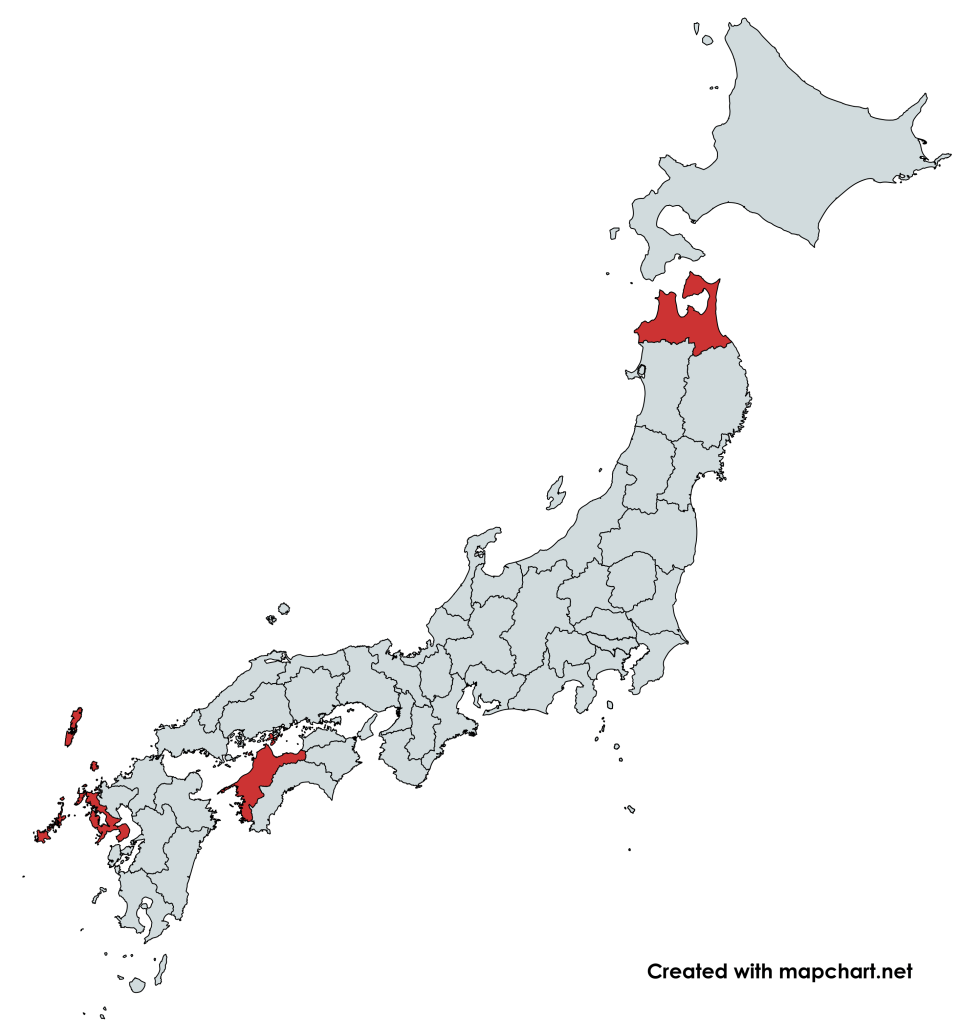
    After about 14,000 BC, however, the record becomes a lot clearer. Fragments of pottery, uncovered in 1998 in Aomori Prefecture, have been dated as early as 14,500 BC, and the distinctive “Cord Marked” (Jomon, in Japanese) style has also been found in Ehime and Nagasaki Prefectures, suggesting that the Jomon people represent the first ‘Japanese’ civilisation.

    The locations of Nagasaki, Ehime, and Aomori Prefectures, highlighting just how widespread the Jomon culture was.

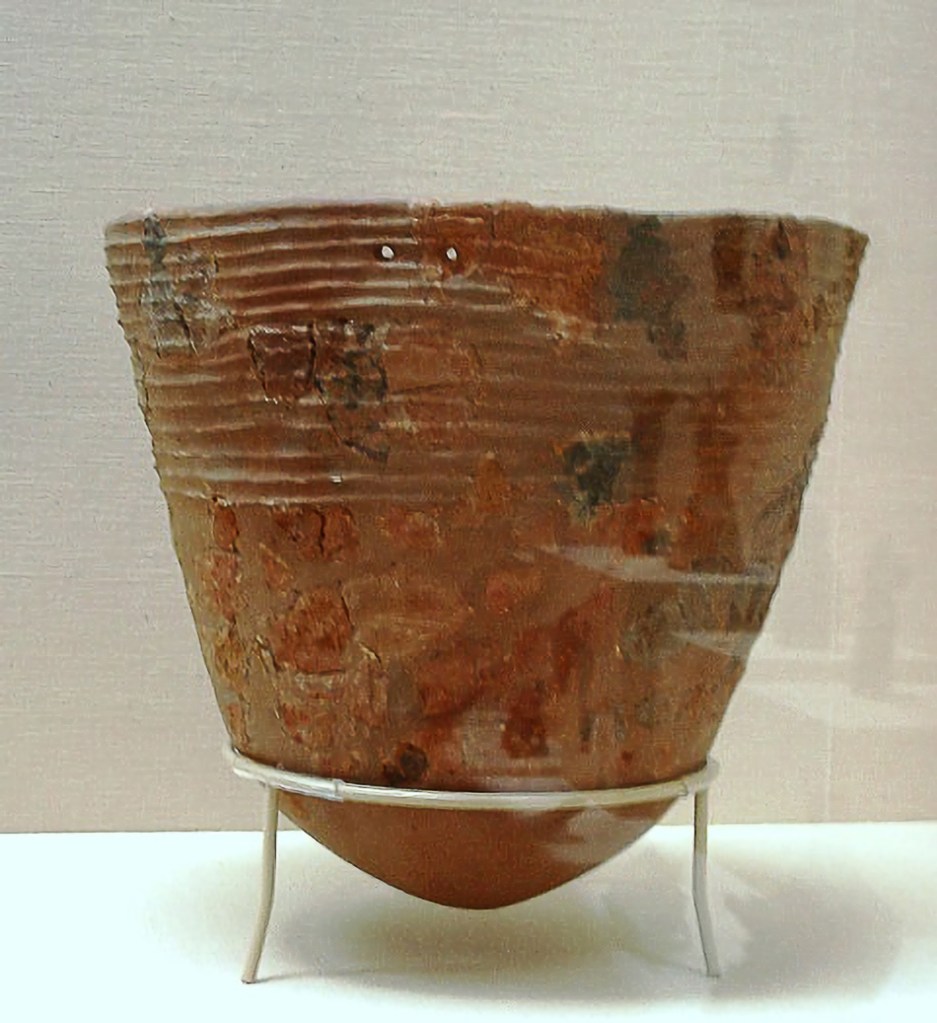
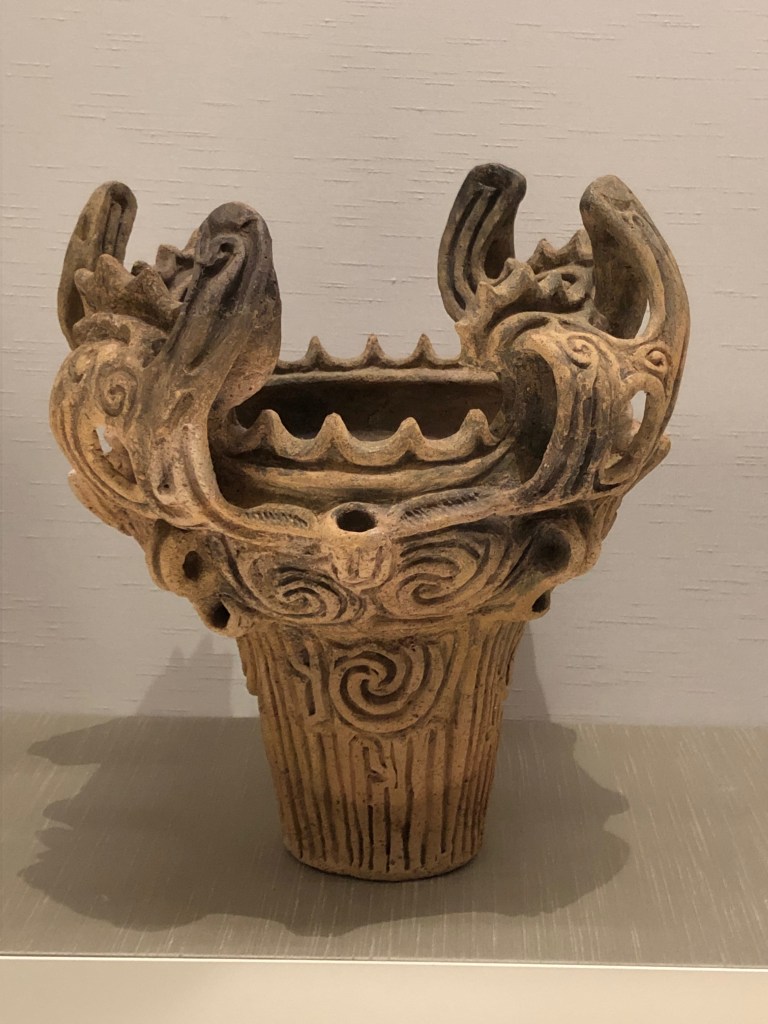
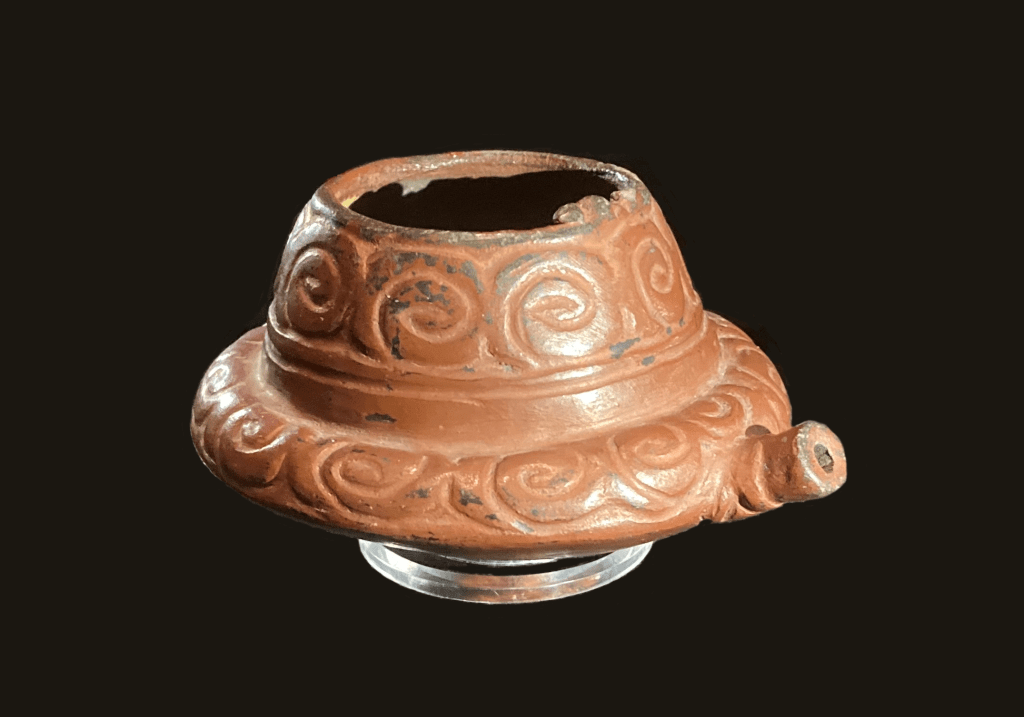
    So why is pottery important? Well, the short answer is, pots mean settlement. Why? Because pots break easily. The larger and fancier the pot, the greater the chances that its maker was planning to stay in one place for a while. Early Jomon pottery (around 14,000 BC) is decorated, but still fairly rudimentary, but by 3000 BC, they’re creating works that are almost absurdly flamboyant.

    Early Jomon Pottery, nice decoration, but nothing that’d you’d regret smashing on the kitchen floor.
    Jomon “Flame Style” Pottery from around 3000 BC. The challenge here being to take a sip without lacerating your face.
    By Netherzone – Own work, CC BY-SA 4.0, https://commons.wikimedia.org/w/index.php?curid=158990309

    The first Jomon people, with their basic pots, were mostly hunter-gatherers, and Japan in 14,000 BC was a pretty sweet place to be a hunter-gatherer. The end of the Ice Age brought on a figurative explosion of life, with widespread forests bringing forth more nuts than you could shake a stick at which, incidentally, is how you harvest them.

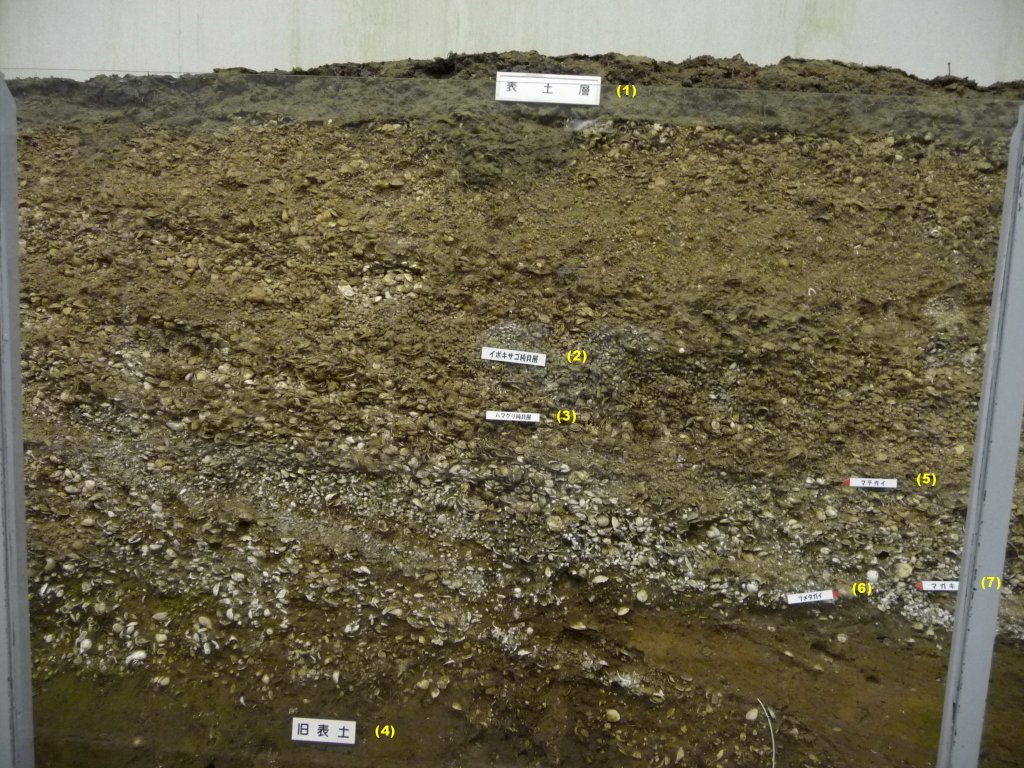
    This abundant plant life also meant abundant animal life, and deer, boar, and smaller creatures formed a large part of the Jomon diet, along with fish, and huge amounts of shellfish in the coastal regions.

    The Kasori Shellmound. Despite taking around 1000 years to form, it gives you an idea of how key shellfish were to the Jomon diet.
    By Namazu-tron – Self shot and numbers with parenthesis added, CC BY-SA 3.0, https://commons.wikimedia.org/w/index.php?curid=6685921

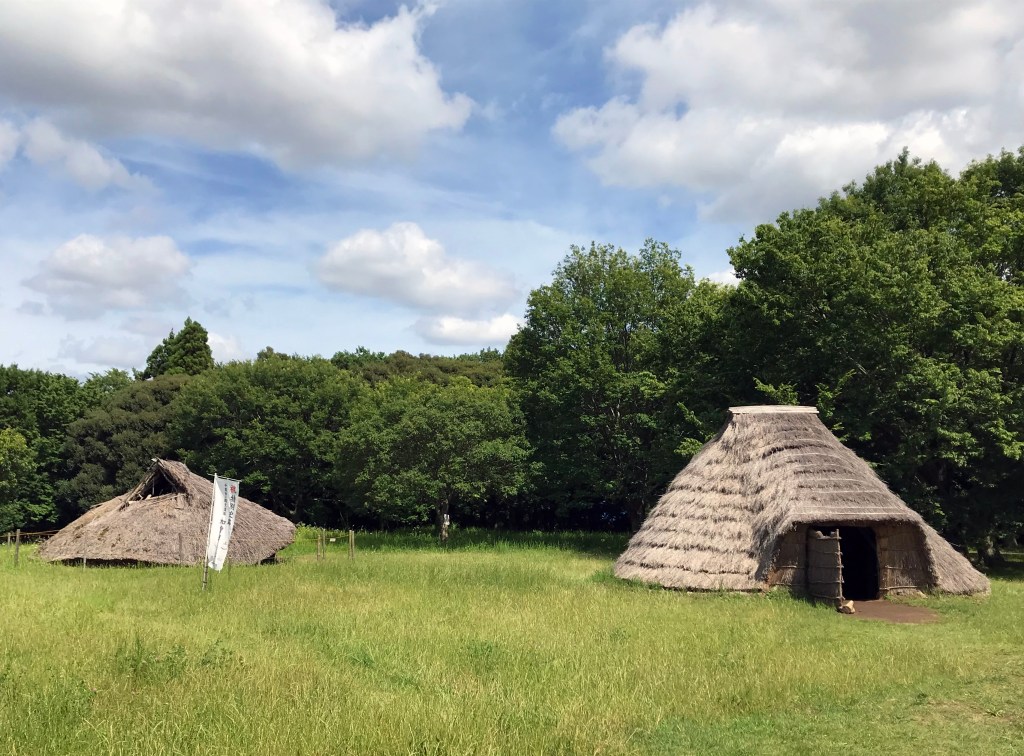
    Early Jomon people lived in rudimentary Pit Dwellings (literally holes in the ground with a roof), which are not thought to have been permanent or even particularly long-lasting structures. Instead, they suggest that these people were seasonally settled, most likely taking to their villages in the cooler months, before setting out to hunt and gather in more agreeable weather.

    Reconstructed pit dwellings at Kasori.
    By Xser21 – Own work, CC BY-SA 4.0, https://commons.wikimedia.org/w/index.php?curid=78835425

    Settlements developed slowly over time, but gradually became more sophisticated. Around 5000 BC, the first cemeteries appear, but the people themselves seem to have continued to rely on pits as temporary housing, as well for storage of food and other items. This is further evidence that the earlier Jomon people were only semi-sedentary, returning to their buried food supplies periodically, and hopefully not opening the wrong pits!

    By around 3000 BC, however, the Jomon appear to have settled down more permanently. Research at the Sannai-Maruyama Site in Aomori has uncovered examples of raised storehouses replacing pits during this period. Homes, too, appear to have become more complex, with large, wooden longhouses appearing, suggesting not only more settled people but a significant population increase as well. Large-scale building of this type requires considerable manpower, after all.

    A reconstructed storehouse at Sannai-Maruyama. Anyone who has ever built a shed can tell you that this kind of work requires more than one pair of hands.
    By I, Perezoso, CC BY-SA 3.0, https://commons.wikimedia.org/w/index.php?curid=2509930

    Big Eyes, Big Hips

    An increase in settlement also led to an increase in material culture. It’s easy to imagine early peoples limiting themselves to bashing out stone axes and antler arrowheads, but we already know that the Jomon people created pottery that was remarkably complex.

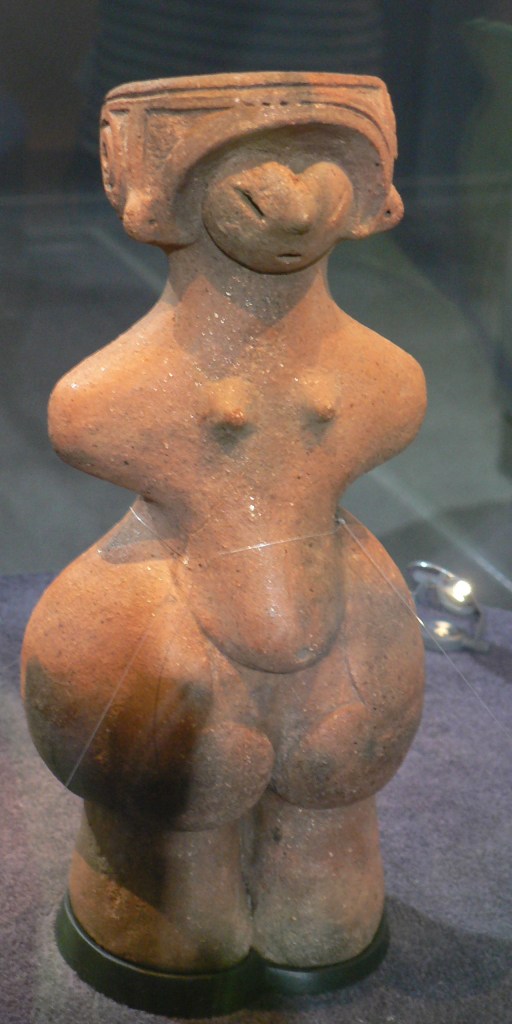
    Other art styles emerged during the later Jomon era as well. Clay figurines called Dogu begin to appear, mostly depicting human (typically female) figures, with exaggerated features, which scholars suggest means they represent some kind of Divine Figure, or are possibly associated with magic and healing.

    Due to the passage of time, many dogu are in poor shape, often missing pieces or smashed to shards. Some, however, remain in relatively good condition, and there is evidence of some having limbs deliberately cut off, giving rise to the belief that these figurines might have been used to “take” illness or injury, which was then removed from the figurine in an attempt to heal its human counterpart. (I don’t know if that worked, but I’m guessing, probably not.)

    The stylised female attributes, (typically consisting of big eyes, small waists, and large hips/buttocks) lead to the conclusion that many of these figurines were related either directly to fertility or to the worship of some kind of mother goddess, which aligns with the interpretations of similar items found around the world.

    The Jomon Venus, an unusually well-preserved example discovered in 1986, is typical of the accentuated female form found in many dogu.
    By Takuma-sa – File:Dogū of Jōmon Venus.JPG, CC BY-SA 3.0, https://commons.wikimedia.org/w/index.php?curid=30994656

    Somewhere between 15 and 18,000 individual Dogu have been found across Japan, from Hokkaido to Kyushu (although not Okinawa), with the richest deposits coming from the north and eastern parts of Japan. It is apparently rarer to find examples of Dogu in other parts of the country, which isn’t surprising, given the population concentrations that current archaeological evidence points to.

    Eastern Japan, the area currently most associated with Jomon Culture.

    Where were they from?

    People move. Sometimes one by one (like a wide-eyed 20-something moving to the other side of the world) and sometimes in groups. In the modern world, we tend to associate large movements of people with refugees, people fleeing war, famine, plague, or natural disasters, but when it comes to talking about the world of 20,000 years ago, things are much murkier.

    So, the question is posed, “Where did the Jomon People come from?” The answer will surprise you!

    Not really, they came from Asia.

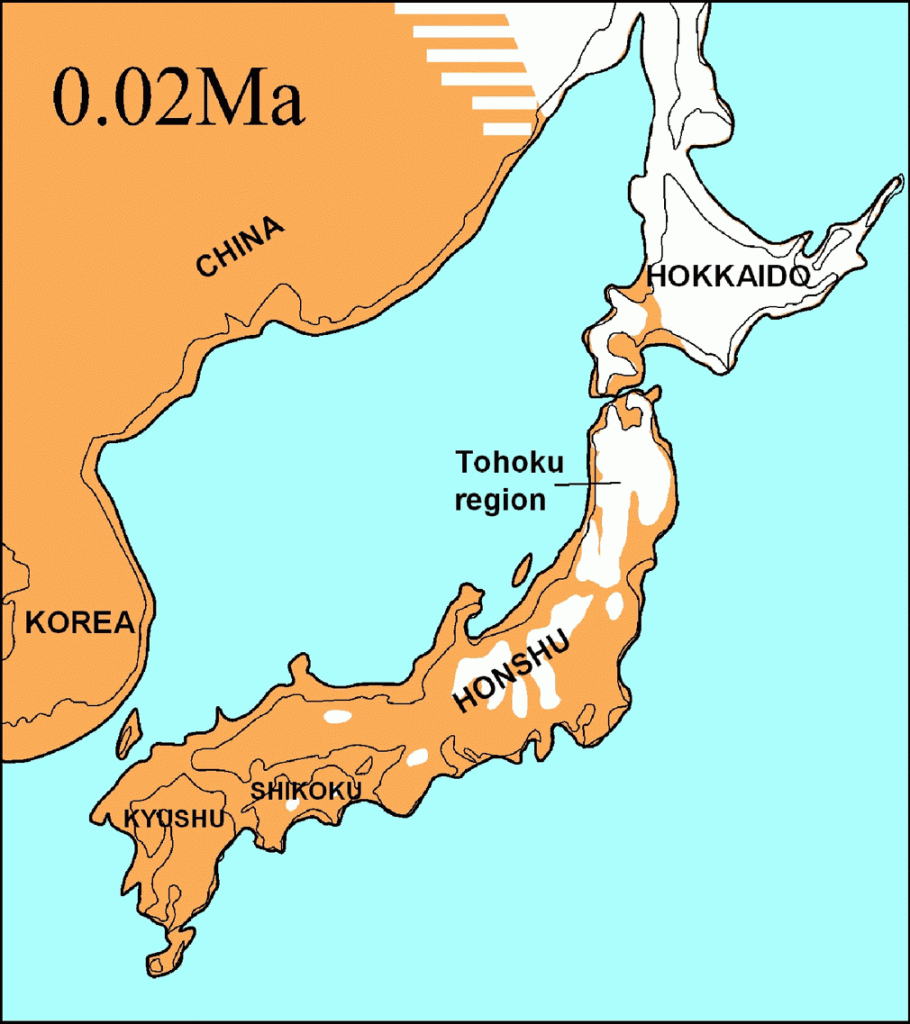
    Japan around 20,000 BC, showing the landbridge to Asia.
    Davison A, Chiba S, Barton NH, Clarke B. (2005) “Speciation and Gene Flow between Snails of Opposite Chirality” (in English). PLoS Biology 3 (9, e282). doi:10.1371/journal.pbio.0030282 [1]

    Japan is now, of course, an archipelago made up of over 14,000 islands of various sizes, shapes, and habitability. But before the end of the last Ice Age, it was attached to Asia, and at the time of the Last Glacial Maximum (which is the scientific way of saying “just before the ice melted”), the landbridge stretched from Hokkaido into modern Russia.

    Paleoarchaeologists (experts in old bones, for experts in new bones, you need the Police) have been able to study the remains of Jomon people and have suggested that, instead of a single, homogeneous migration, the Jomon people represent a pretty diverse group of origins.

    Now, genetics are a tricky thing, but people in the know (otherwise known as scientists) hypothesise that the ancestors of the Jomon People had their origins in South-East Asia, before joining a general migration of people following a coastal route that is now in Eastern China and Korea, before finally arriving in Japan.

    Although we’re reasonably certain of when the Jomon People arrived in Japan, the question of how isn’t as clear. There are basically two theories, which needn’t be mutually exclusive.

    The first theory is that the Jomon arrived via boat, travelling from the coast of what is now China, up the Okinawan Island chain, and arriving in Kyushu and Southern Honshu. The second theory is that their ancestors continued up the coast into what is now the Russian Far East, before travelling south across the remains of the land bridge into Hokkaido and Northern Honshu.

    Given that the majority of sites excavated so far have been in the northern parts of the country, the land bridge theory would appear to be the most plausible. Indeed, the 17 sites collectively known by UNESCO as the Jōmon Prehistoric Sites in Northern Japan are all located in the north (as the name suggests).

    However, even the sites already discovered have produced relatively scant remains, and it’s perfectly possible that more Jomon settlements existed in southern and western Japan, sites that are either lost due to natural changes or buried deep beneath Japan’s bustling modern cities, and some, that are just waiting to be discovered.

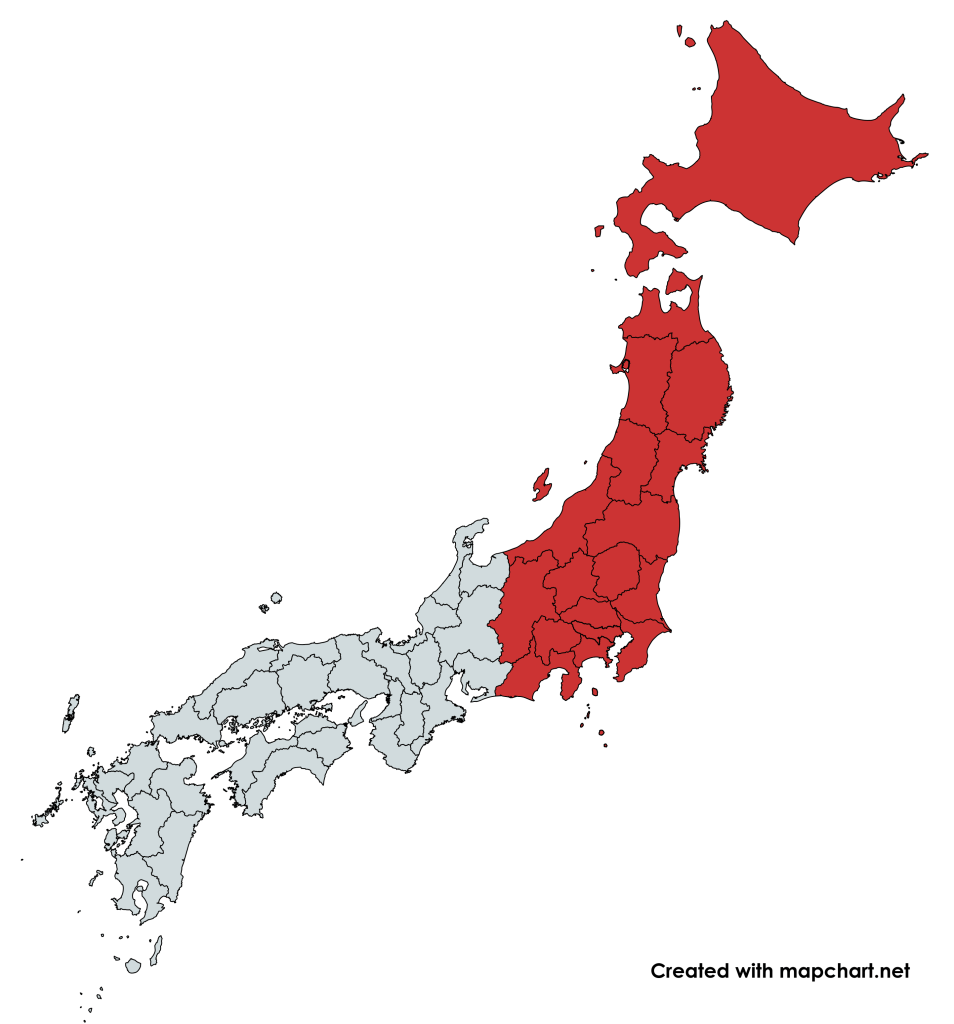
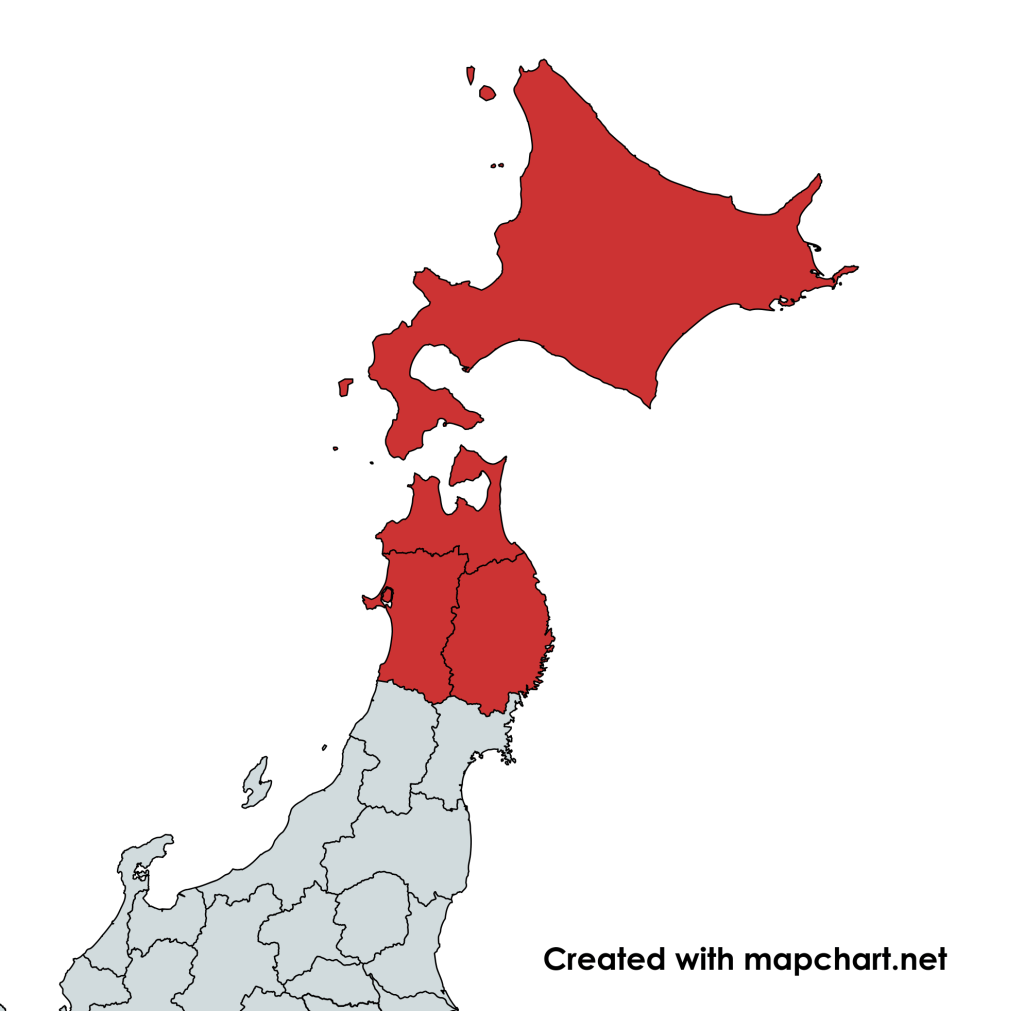
    Hokkaido, Aomori, Iwate, and Akita, the fourth northernmost prefectures of Japan, and the apparent centre of Jomon culture.

    The Jomon Today

    We know that the Jomon were eventually supplanted by the incoming Yayoi People (who we will talk about in a later post), but what became of the Jomon themselves? Well, like with so many other ancient peoples, their exact fate is open to debate.

    A common suggestion is that, when faced with the incoming Yayoi, the Jomon either migrated or were driven to the northern regions of Japan, where they gradually became the Emishi (another people we’ll discuss later), and the Ainu.

    Now, the exact origins of both these peoples are murky, and there is even debate over whether they were different tribes of the same people, or distinct groups that share distant but common ancestry. It is also possible that the Emishi were a cultural “missing link” between the Jomon and the modern Ainu, but we can save that particular rabbit hole for later.

    The historic homelands of the Ainu, with the pink area a suggested maximum range, based on toponymic (place names) and historical records.
    By Kwamikagami – This image has been extracted from another file, CC BY-SA 3.0, https://commons.wikimedia.org/w/index.php?curid=13262173

    While it will probably never be known for certain how the Jomon became the Emishi, or indeed the Ainu, DNA studies suggest that modern Ainu populations share up to 70% of their DNA with the Jomon, supporting the idea that they are indeed the modern descendants of these ancient people.

    We’ll cover the details of the Ainu in another post, but they represent the most concentrated examples of Jomon DNA in modern Japan, so if there can really be said to be modern Jomon, it’s them.

    What about the modern ‘Japanese’, though? Well, that’s a bit harder to nail down. Firstly, the Jomon themselves don’t seem to have been a single ethnic group, but rather a mixture of different groups arriving at different times.

    There’s also the so-called “admixture paradox”, which is a noticeable imbalance in the amount of paternal (30%) and maternal (15%) DNA, which suggests some fairly obvious patterns in the inter-mingling between Jomon and later Yayoi. As with all things to do with ethnicity and race, there’s a lot of interpretation, and while Jomon DNA has definitely been passed down to modern Japan in one way or another, Jomon Culture has disappeared entirely.

    Or has it?

    Nope.

    Allow me to elaborate. Firstly, the Jomon people themselves had no written language (scholars even disagree over whether the Jomon languages relate to modern Japanese at all) so everything we know, or think we know about them comes from archaeological records.

    Now, archaeology isn’t always an exact science, and particularly when it comes to very ancient sources, there’s a lot of guesswork involved. However, we do know that the Jomon peoples had some sort of religious belief system. They buried their dead in specific ways, and the existence of Dogu suggests some kind of worship, although the specifics aren’t clear.

    Some scholars suggest the origins of the Shinto belief can be found in the Jomon period, as Shintoism is based heavily on traditions of shamanism and reverence for the natural world, it isn’t hard to imagine that having sprouted from an ancient belief in some kind of mother goddess, like the Jomon Venus (I do love a call back).

    There are other, more tangible examples of how Jomon culture influenced modern Japan as well. Archery first appeared during the Jomon era, and although bows and arrows are hardly unique to Japan, the significance that the bow would have for the later development of Samurai culture could conceivably be said to have started with the Jomon.

    Too tenuous for you? Ok, how about Lacquerware? Yeah, that made you pay attention, didn’t it? Lacquerware is something quintessentially Japanese, and it has its origins with the Jomon peoples.

    Tsugaru-nuri. Lacquerware from modern Aomori Prefecture.
    By Kaburamata – Own work, CC BY-SA 4.0, https://commons.wikimedia.org/w/index.php?curid=41576897

    We know this because surviving examples of it have been found at the Kakinoshima Archaeological Site in Hokkaido. Lacquerware has been found there that has been dated to over 9000 years old, making it the oldest examples of the craft in the world.

    Red Lacquerware like this was found at Kakinoshima in Hokkaido, representing the oldest examples of the craft.
    By Mccunicano – Own work, CC BY-SA 4.0, https://commons.wikimedia.org/w/index.php?curid=97142451

    End of an era.

    As with most historical periods, the Jomon Period didn’t just “end”. The year is usually given as being around 300 BC, but this is more for modern convenience than anything. After around 1500 BC, the climate began to shift again, cooling down significantly, and putting serious pressure on societies that relied on seasonal hunting and gathering. As the climate got cooler and wetter, the food supply got smaller, the population started to contract sharply, and settlements began to shrink, or be abandoned entirely.

    During this period (around 900 BC), increasing contacts with, and migration from, what is now Korea, led to a gradual, but dramatic shift in culture. These newcomers brought new agricultural techniques like wet rice farming, which does better in damper climates, as well as the first examples of metalwork found in Japan.

    Although the incoming people (called Yayoi) and the Jomon lived side by side for a long time, eventually, the Jomon were either driven out or absorbed by the new culture, with the last vestiges appearing to survive in Hokkaido until around the 7th Century.

    That, as they say, is that. Next time, we’ll take an in-depth look at the people who replaced the Jomon, the Yayoi.

    Sources:

  • The Beginning

    心のままに生きることが一番の幸せ

    To live according to your heart is the greatest happiness

    So we begin, as they say, at the beginning.

    What is my name? What is my quest? What is the air-speed velocity of an unladen swallow?

    I can convincingly answer at least two of these questions, and as for the third, I can promise you, dear reader, that that will be the last Python quote.

    What is my name?

    My name is Chris Perry, and for as long as I can remember, I have been fascinated by Japan. People have different paths when it comes to developing affection for the land of the rising sun, some follow popular culture, anime, manga, and the like. For others, it is Martial Arts, Karate, Judo, and Kendo being popular across the world and all have their origins here.

    For me, however, it was the history. I will admit from the off that my passion for history has always bordered on the obsessive. I consume historical facts as though my life depends on it, and from the moment I learned to read, I have absorbed information from sources as wide-ranging as the Horrible History series (the books, that is, the TV show, excellent though it is, came along later) to obscure Wikipedia articles about battles fought in places long-forgotten.

    Like many boys, I developed an early and somewhat morbid fascination with World War 2. Growing up in Britain, with grandparents who were young people themselves during those years, I was surrounded by stories of the Battle of Britain, Dunkirk, El-Alamein, and D-day, and the vague but absolute certainty that the British were the good guys and the Germans were dastardly blackguards, who got what they deserved.

    So it begins…

    It was Britain’s other enemy, however, that really drew my interest. For a child growing up in the mid-90s, when having a PC at home, let alone the internet, was considered cutting-edge, Japan might as well have been on Saturn for all I knew about it and an understanding of Japanese history and culture? Forget about it.

    So, you can imagine the fascination that came when I first learned about Kamikaze. How was it, I wondered, that men could be so fanatically devoted to their cause that they would willingly fly their planes into American warships? The answer, I found, was Bushido.

    There will be time enough to discuss the ins and outs of the Japanese warrior code, but in those far-off days, it was the Samurai that captured my imagination. Of course, at that age, I quickly developed a rather stereotypical image of them: stoic, invincible warriors, utterly fearless, and possessing swords that were halfway to being magical. Years of reading have long since done away with those ideas, but I’d be lying if I said the appeal and mystique of the Samurai has ever really left me.

    I read anything I could get my hands on, and by the time my teens arrived, I considered myself the ‘expert’ on all things Samurai. I was, of course, woefully mistaken, but one of the beauties of being a teenager is the opportunity to be confidently wrong, and I was no different.

    Then came Shogun: Total War. A video game, yes, but one set in the period that I loved best; I was hooked, to say the least. I played it religiously, and although a video game is a poor substitute for historical research, it exposed me to the characters, events, and geography of medieval Japan in a way that nothing else had.

    Musashi, Hizen, Mutsu, and dozens of others were words that meant nothing to me, but Nagasaki, Tokyo, and Fukushima? These names I could understand, and so, slowly, I learned to trace the historical events to their modern locations, and my fascination only grew.

    First Steps

    My first trip to Japan came in April 2006, and alongside my father, I was finally able to see these mystical places in person. We went to Tokyo, of course, and Hiroshima, but we also visited Nikko, a small town nestled in the mountains of Tochigi Prefecture, home to the Edo-Mura outdoor museum, a place where the Edo period (1603-1868) is brought to life.

    Like so many others, I left Japan with a reverence for the place that went far beyond what I had expected, and as soon as I could, I returned, this time alone, revisiting many of the places I had been to previously, and uncovering a few new ones as well. (On this trip, I decided to walk through the infamous Kabukicho neighbourhood in Tokyo and discovered I wasn’t as brave as I’d thought.)

    When I went to university, I made it my mission to learn the language as best I could (a mission that is still ongoing nearly 20 years later), but in 2010, I was fortunate enough to get a place as a foreign exchange student at Daito Bunka University in Saitama, and I arrived in Japan for the third time.

    Anyone who has ever been an international student can tell you that it is a unique experience, and I enjoyed it. However, my time was cut short by the events of March 2011, when a major earthquake and tsunami struck Fukushima. Although Saitama was far from danger (though not violent shaking), my home university erred on the side of caution and brought us all home.

    There are rarely straight roads anywhere in life, and this setback was a blow but one I recovered from. Upon graduating in the summer of 2012, I made it my mission to return to Japan for the fourth (and, as it turned out, final) time.

    There and Back Again…

    On August 31st, 2012, I returned to Japan, securing work at an International preschool in Western Tokyo. By the time I moved on in 2015, I had met the woman who would become my wife; we married in 2016 and welcomed our first child in 2017, followed by our second in 2020.

    And so we come to, as the great poet Homer (Simpson) once called it, “the lousy, stinking now”, and to the answer to the second question, “What is my quest?”

    The answer to that is two-fold; first, I want to share with you all my obsession love of Japanese history; can I claim to know everything? No. Can I claim to research everything I write carefully? Eh…a bit. Look, full disclosure: I’m not a professional historian. I’m an amateur at best, but a more enthusiastic amateur you’ll never meet, so I can at least promise that I’ll never intentionally mislead for personal, political, or professional gain. If I make a mistake, I’ll do my best to correct it.

    As to the second part? Well, that’s a bit trickier, you see, in the post-covid world, with tourism skyrocketing in Japan again, I’ve noticed a worrying trend on places like Tik-Tok, Instagram, and other Social Media sights in which earnest young people will tell you “Ten things you must never do in Japan,” only for them to then list things I see Japanese doing all the time. It is my humble intention to help you discover what Japan is, what it isn’t, and how you can experience Japan in a way that will leave your wonder intact while keeping the locals reasonably happy.

    So, we begin. Good Luck, Everyone.