I have a confession, this ended up being quite the rabbit hole. When researching the early stages of the Sengoku Jidai, it’s almost impossible to narrow down who the “major” clans were, without also having read up on the clans who would go on to play the biggest role in the century to come.
I originally thought this’d be a one or two post sideshow, but it quickly became apparent that the sheer volume of information and my inability to focus meant that it risked spiralling out of control.
With that in mind, and with a desire to actually get back on track with the history, the last six clans are not going to get quite the same level of detail, but I can assure you, we will definitely be revisiting clan deep dives in the future.
Kyushu
The Shimazu

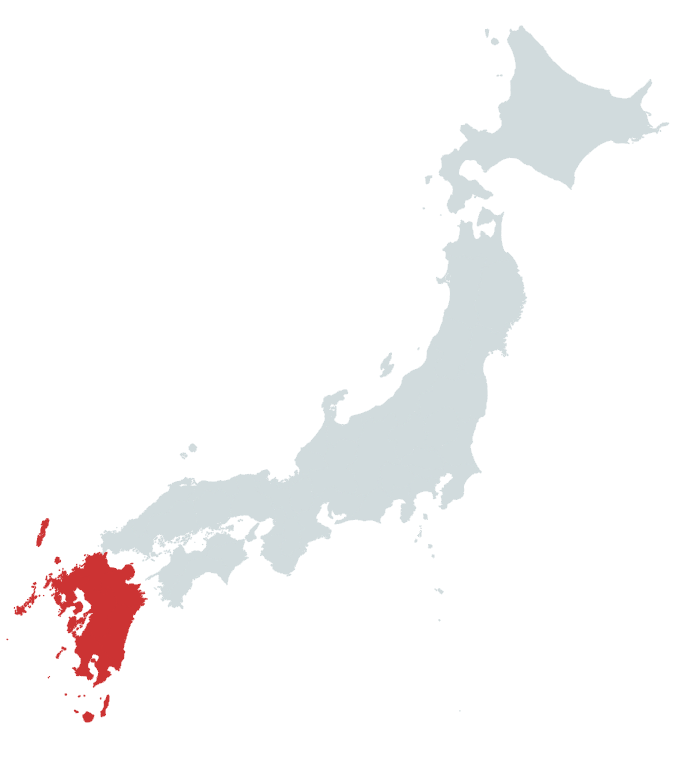
The Shimazu would prove to be one of the most enduring and influential clans in Japanese history. Originating in Satsuma Province in modern Kagoshima Prefecture, they would eventually rise to become masters of the whole of Kyushu, before running into the rise of Toyotomi Hideyoshi.
The Shimazu would also find themselves on the wrong side during the closing stages of the Sengoku Jidai, but their position in Satsuma was so far removed from the capital at Edo (modern Tokyo) that the new government had little influence.
Satsuma Domain would be one of the few that were allowed to continue international trade (through their dominance of Okinawa), and this relatively outward-looking approach meant that they would first fight, and then ally with the British during the mid-19th Century.

Interesting side note: The Shimazu Clan’s mon, which appears to show a cross, led some scholars to speculate that they were a clan with Christian origins, and one wild theory suggesting that the Shimazu’s real origins lay with one of the Lost Tribes of Israel (this is the Japanese-Jewish origin theory, and it’s pretty racist, in a clumsy, Victorian kind of way.)
The Otomo
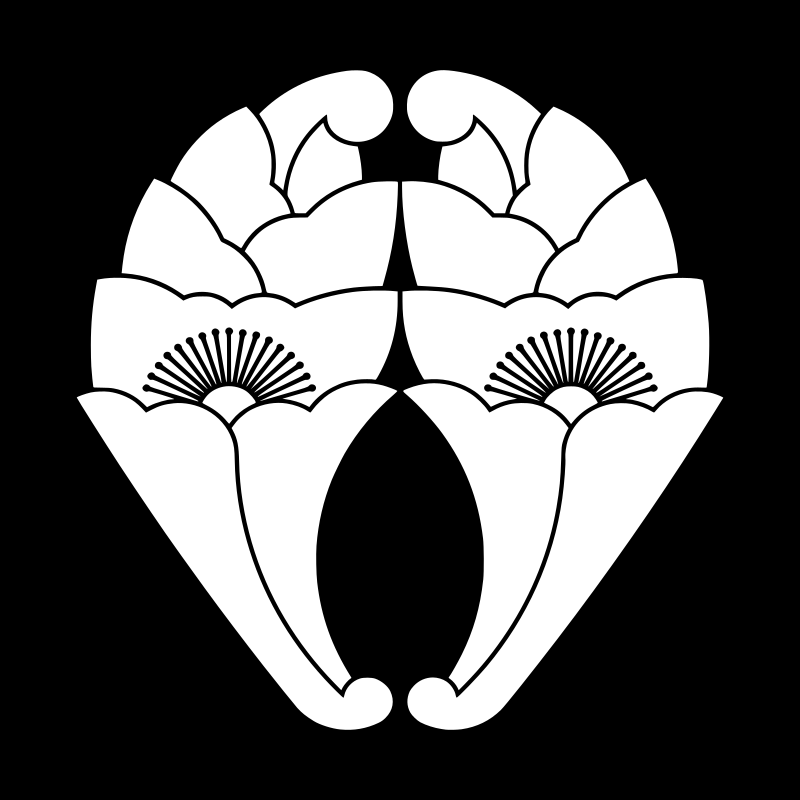
By Mukai – Own work, CC BY-SA 3.0, https://commons.wikimedia.org/w/index.php?curid=6752905
The Otomo Clan ruled lands in North-Eastern Kyushu (modern Oita and Fukuoka Prefectures) and would become one of the major beneficiaries of Portuguese Trade in Japan during the 16th Century, with many of the clan’s more powerful members even converting to Christianity, some say our of genuine faith, whilst others suggest it was more to do with keeping the Catholic Portuguese on side.
These lucrative trade links didn’t do much to protect them from their powerful neighbours. With the Shimazu to the south, and the Mori across the sea to the East, the Otomo were hemmed in by powerful rivals, and they were ultimately obliged to seek alliance with the Mori.
This proved to be the wrong course, as the Mori would be punished for picking the wrong side at the end of the Sengoku Period, and they and their allies saw their lands reduced. The Otomo wouldn’t have to suffer for long, however, as the main line of the clan would die out in 1619.
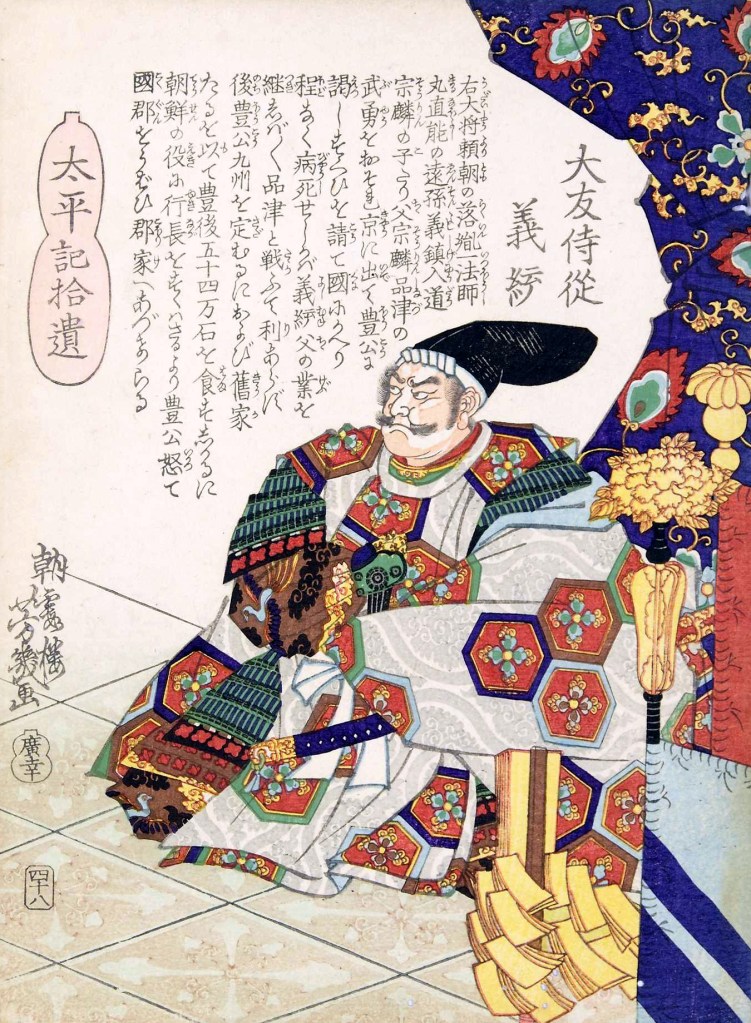
The Otomo name would endure, however, as a cousin was allowed to adopt the name shortly afterwards, and during the Meiji Restoration, this branch of the Otomo was raised to the peerage, and would go on to play a role in the new Meiji government.
Northern Japan
The Nanbu
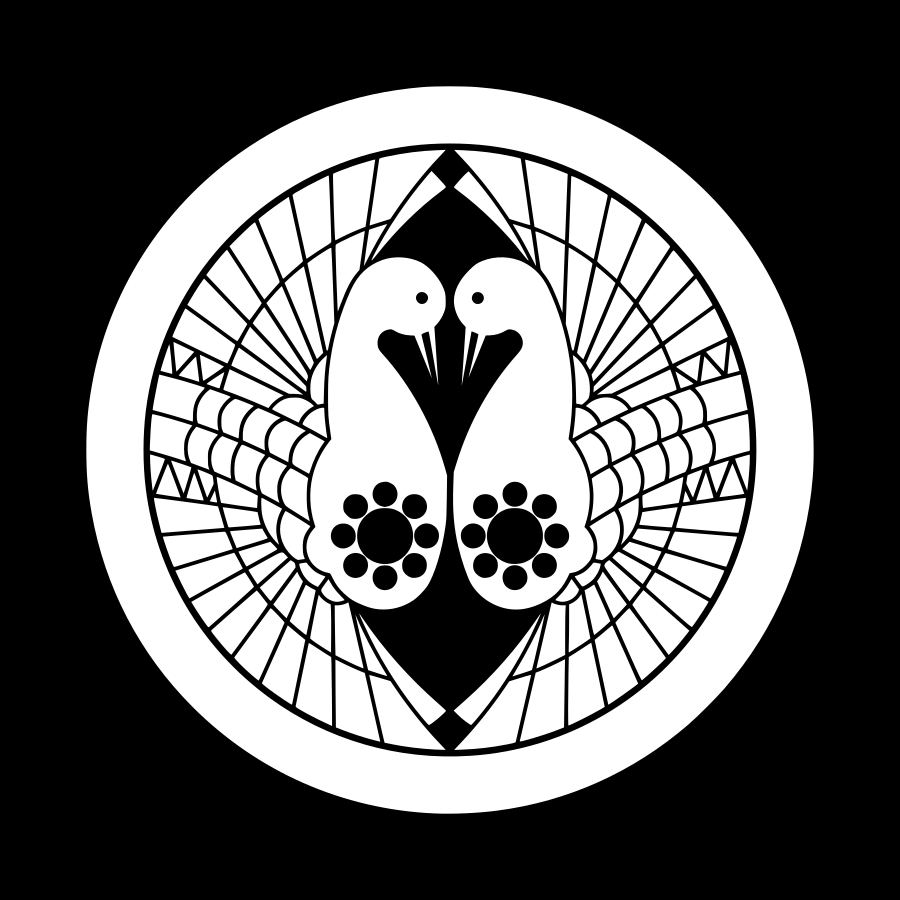
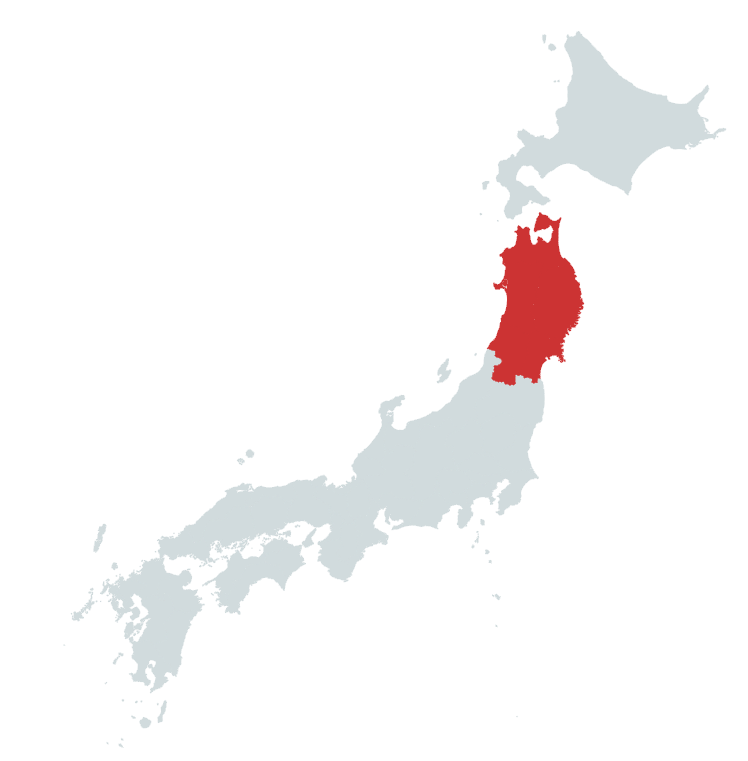
By Mukai – Own work, CC BY-SA 3.0, https://commons.wikimedia.org/w/index.php?curid=8313849
Much like the Shimazu in the south, the Nanbu would prove to be one of the most enduring Clans during this period. They would rule most of what is the modern Tohoku region for close to 700 years, and by the dawn of the Sengoku Period, they were firmly entrenched in their home region, which became one of the most famous areas for the breeding of war horses, in face, the “Nanbu” Breed was one of the best regarded breeds during that era, although they would become extinct around 1940.
Unlike the Shimazu, however, the Nanbu would choose the winning side at the end of the Sengoku era, and would serve as one of the leading clans in the North during the following Edo Period.
Their illustrious position would come to an end in the 1860s, however, as their loyalty to the Shogun led them to oppose the forces of the Meiji Restoration. The Imperial forces would win the Boshin War, and the Nanbu Clan suffered a sharp decrease in property.
During the period of reconciliation after the restoration, the Nanbu would be ennobled, and the family would go on to play a significant role in the Meiji Period and beyond, remaining prominent in the Tohoku Region into the modern day.
The Date

The Date (pronounced Da-Tay) were the other long-lasting clan in the north. They benefited from a position that was far enough away to make attacking them a relatively unattractive prospect. The Date were not idle, however; they were the dominant clan in the region for a reason, with strength and resources comparable to many of the clans further south.
The Date’s lands were reduced by Toyotomi Hideyoshi, but their support for Tokugawa Ieyasu meant that the clan would eventually become one of Japan’s wealthiest, controlling the Sendai Domain.
The clan would not survive the Edo Period unscathed, however. In the 1660s, the lord of the clan was arrested in the capital for drunkenness, and his rivals within the wider Date Clan took advantage, seeking his removal. This led to nearly 10 years of conflict within the Date Clan, eventually leading to a bloody showdown in 1671, which has been the subject of considerable mythologising in Japanese popular culture ever since (they love a bloody story).
The clan would endure, however, and although, like the Nanbu, they were much reduced due to their opposition to the Meiji Restoration, the head of the clan would join the ranks of the new Imperial aristocracy.
Sources
https://en.wikipedia.org/wiki/Shimazu_clan
https://en.wikipedia.org/wiki/Japanese-Jewish_common_ancestry_theory
https://en.wikipedia.org/wiki/Satsuma_Province
https://ja.wikipedia.org/wiki/%E5%B3%B6%E6%B4%A5%E6%B0%8F
https://ja.wikipedia.org/wiki/%E5%A4%A7%E5%8F%8B%E6%B0%8F
https://en.wikipedia.org/wiki/%C5%8Ctomo_clan
https://en.wikipedia.org/wiki/Nanbu_clan
https://en.wikipedia.org/wiki/Date_clan
https://en.wikipedia.org/wiki/Date_S%C5%8Dd%C5%8D
 Chris Perry, Author