Tag: Japanese civil wars

  • Kings in the North

    Kings in the North

    Just a quick note: Date is pronounced “Da-Tay”.

    The mon of the Date Clan.

    Like many of the great clans of the Sengoku period, the Date’s exact origins are subject to a fair amount of mythologising. The family originally claimed to be descended from the prestigious Fujiwara Clan, but that doesn’t have very much supporting evidence, and most modern scholars agree that the clan’s origins were far more humble.

    That isn’t to say they didn’t earn their place, however. The first attested ancestor of the Clan was Date Tomomune, who was rewarded for services in battle with the manor of Date in modern Fukushima Prefecture. Tomomune himself is a bit of a murky figure (as they all seem to be), and there are still unanswered questions about his origins and even his identity, but for the sake of simplicity, we’ll agree with the Date’s own genealogy and start the story of the clan with him.

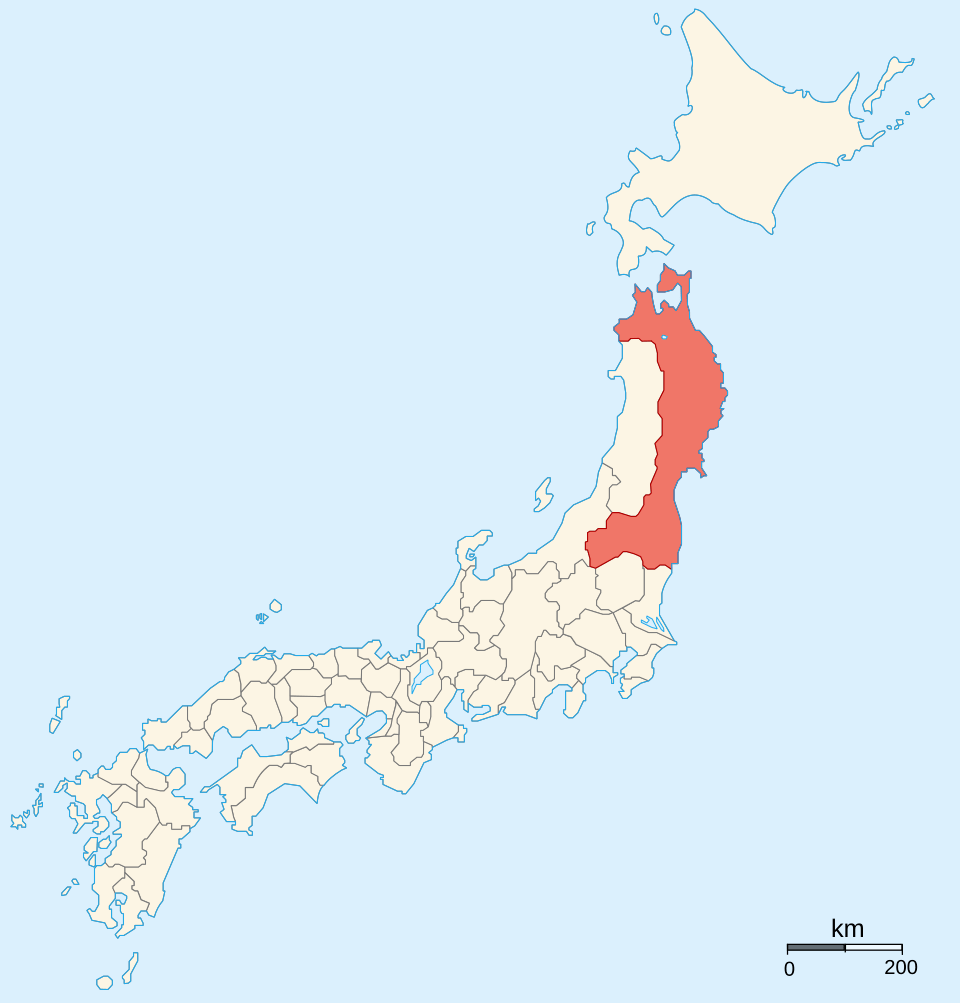
    Similar to many other clans in the period, the Date were not tied down to a single geographic location, and branches of the clan would pop up all over Japan as their fortunes rose and fell. For our purposes, it is the Date clan of Mutsu Province that we’ll be focusing on.

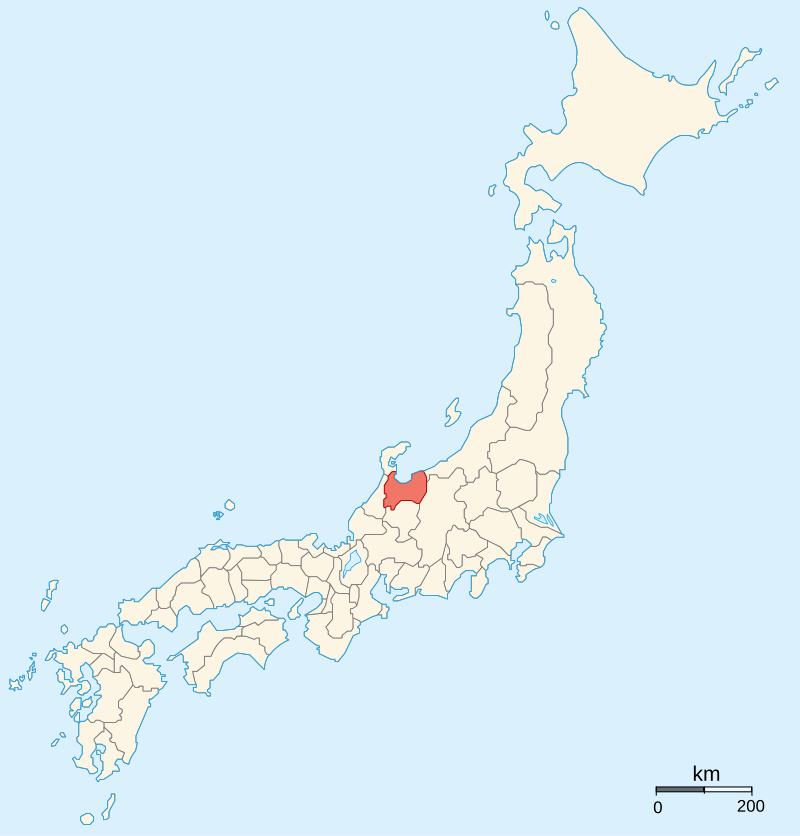
    Mutsu Province.
    By Ash_Crow – Own work, based on Image: Provinces of Japan.svg, CC BY 2.5, https://commons.wikimedia.org/w/index.php?curid=1690724

    The Date largely supported the Kamakura Shogunate, founded by Minamoto no Yoritomo, and in the 13th century, the Lord of the Date is said to have been living in Kamakura (the political capital). However, when the Shogunate was overthrown, the Date threw in their lot with the Emperor and would continue to support the Imperial throne even after the establishment of the Ashikaga Shogunate in 1336.

    This support would backfire, however, as the Date, in support of the Southern Court, were defeated by forces of the Northern Court, loyal to the new Ashikaga Shoguns, and ultimately obliged to switch sides. Beginning in the 1380s, the Date would set about restoring their strength by attacking rival clans in their home region. As was common at the time, these local conflicts were framed as part of the larger Northern-Southern Conflict (the Nanboku-cho Period), but were, in reality, private wars that the central authorities were powerless to direct.

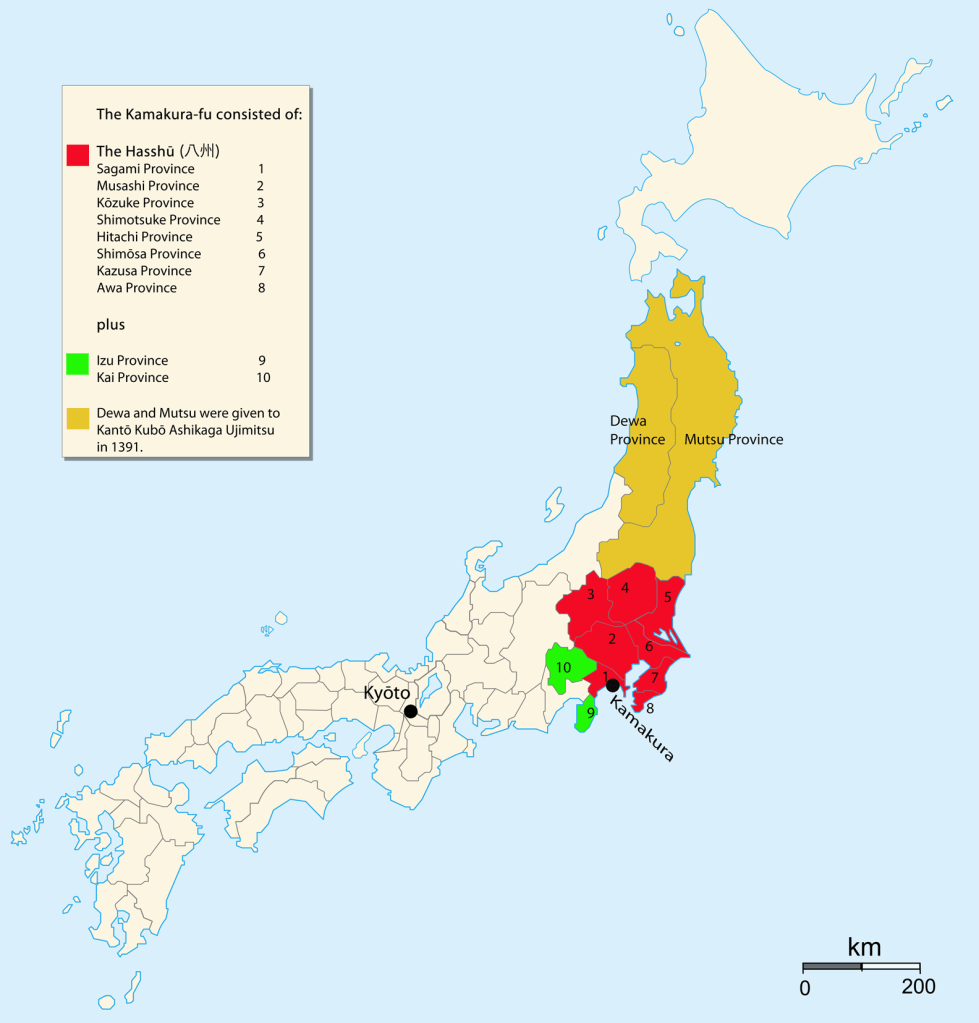
    Later, when the power of the Ashikaga Shoguns was beginning to fracture, the Date would use the conflict between the government in Kyoto and the Kamakura kubo to further enhance their own power. Though nominally under the jurisdiction of Kamakura, the Date would appeal directly to Kyoto to serve as their vassals. The Shogunate agreed, and when open conflict between Kyoto and Kamakura broke out in the 1480s, the Date were in a prime position to take advantage.

    The territories under the nominal jurisdiction of the Kamakura Kubo.

    An example of how strong the Date had become can be found in records from 1483, in which the Lord of the Date dispatched gifts to the court in Kyoto, including 23 swords, 95 horses, 380 ryo of gold dust, and 57,000 coins. This was an extraordinary fortune at the time, and seems to have led to the acceptance by the court of the Date’s position of the strongest (or at least richest) clan in the North.

    Despite their wealth and power, the Date were not the most prestigious clan in the region. That honour went to the Osaki, who were faithful to the Shogunate in Kyoto and were long established. As was common during the later 15th century, however, the Osaki had a prestigious name, but their actual power was crumbling. Though nominally their subordinates, the Date would intervene in a power struggle within the Osaki Clan in 1488, bringing an end to the conflict, but effectively reducing the Osaki to vassal status in the process.

    Another rival to the Date was the Mogami Clan from neighbouring Dewa Province. The clans would clash repeatedly, but in 1514, Date Tanemune would inflict a decisive defeat on the Mogami at Hasedo Castle. Shortly after this, he would marry his sister to the defeated Lord of the Mogami, effectively binding the two clans together. This would prove unpopular with the remaining Mogami vassals, and when their Lord died in 1520, and the Date attempted to take direct control, they rebelled.

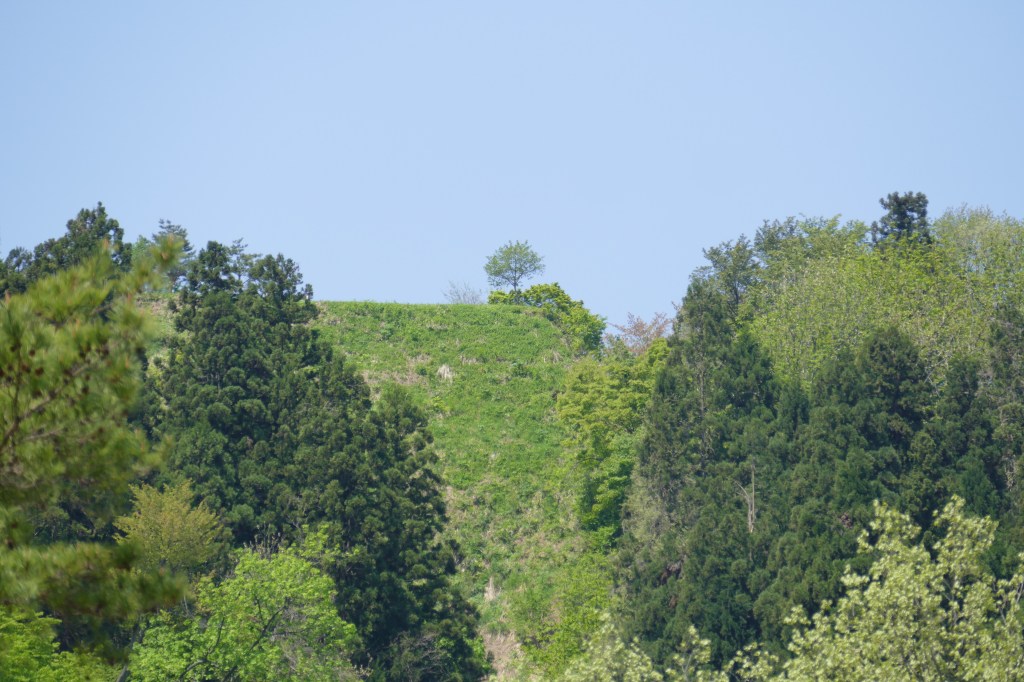
    The site of Hasedo Castle as it appears today.
    Koda6029 – 投稿者自身による著作物, CC 表示-継承 4.0, https://commons.wikimedia.org/w/index.php?curid=124663430による

    In defeating the rebellion, Tanemune was able to establish Date control over most of eastern Dewa Province, further expanding his clan’s power and prestige. In recognition of this, in 1522, the Shogunate appointed Tanemune shugo (governor) of Mutsu Province (the Date’s home province, remember). Tanemune was not satisfied, however, as he had apparently sought the title of tandai.

    The exact distinction between shugo and tandai is a little unclear, as the titles often overlapped, but essentially, a shugo was the governor of a single province, whereas a tandai was the Shogun’s representative over a wider area. Although the power and prestige of the Shogunate were at a low ebb by this point, the fact remained that tandai was a more prestigious title, and the Shogunate’s refusal to bestow it on Tanemune was seen as a proverbial slap to the face.

    Tanemune responded to this but charting his own course, although the snub is probably just a convenient excuse for what he was going to do anyway; by the early 16th century, Shogunate power was really more of a concept, and the Date were one of many powerful clans who realised that they could largely do as they pleased.

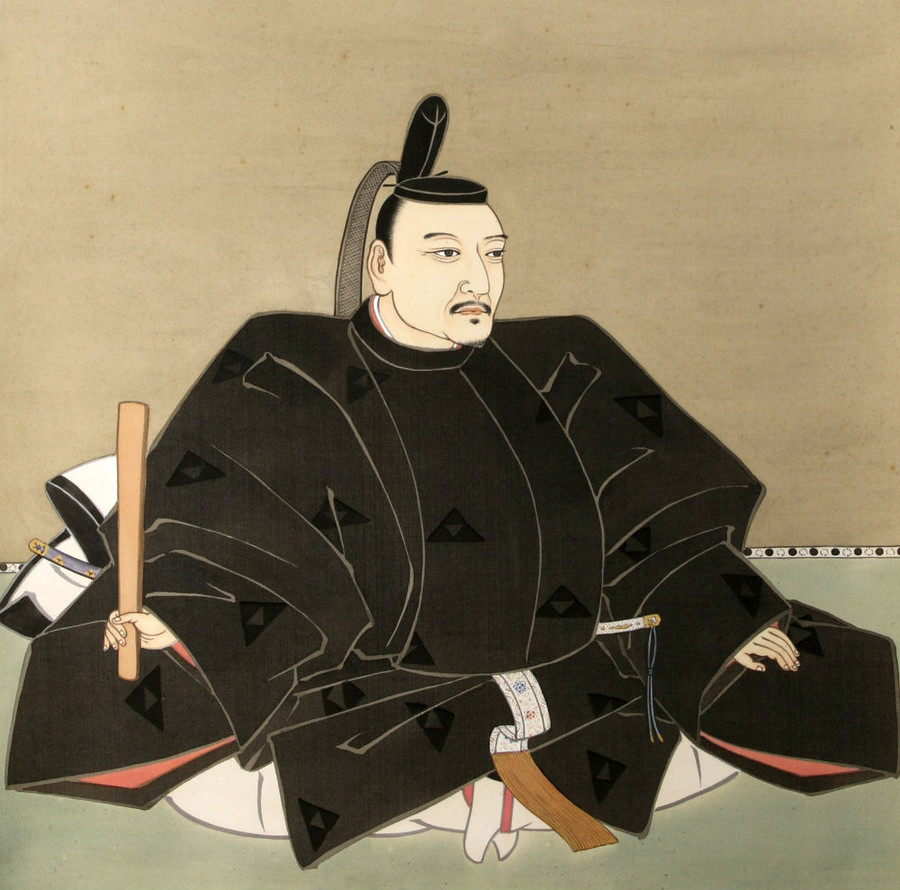
    Date Tanemune.

    Over the next 20 years, Tanemune would work to consolidate his clan’s control over the North, further absorbing the Osaki and Mogami clans, as well as extending physical control over most of Mutsu and Dewa Provinces. Despite his successes, all was not well within the clan; Tanemune was in conflict with his eldest son, Harumune. The exact nature of the conflict is complicated, but it got so bad that in June 1542, Harumune ambushed his father whilst the latter was out hunting, imprisoning him in a nearby castle from which Tanemune swiftly escaped (or was rescued, depending on the source)

    What followed was a six-year conflict which saw the Date severely weakened, and several of their recently conquered vassals breaking free, including the Osaki and the Mogami. Eventually, the mediation of the Shogun brought about an official peace, but in reality, the feud didn’t end, and although Harumune would take his place as the de facto head of the clan, Tanemune, despite becoming a monk, remained an enormously influential figure.

    Harumune’s reign would be occupied with reestablishing Date power. The situation was far from ideal, however, and he was eventually forced to confirm many of the concessions that had been granted to vassals by both sides, signing away territory and privileges in exchange for obedience.

    Date Harumune

    One upside for Harumune was the fact that he had no fewer than eleven children, six sons and five daughters, who would be useful pawns in returning former vassals to the fold. All of his daughters were married either to powerful clans, securing alliances, or to senior vassals, ensuring their loyalty, and by the 1560s, the Date’s position was once again strong.

    In 1565, Harumune retired and handed control to his son, Terumune, although, as was common, he retained all the actual power. A year later, the Ashina Clan attacked the Nikaido, who were allied with the Date through the marriage of one of Harumune’s daughters. The Date intervened but were defeated, and when the Nikaido surrendered shortly afterwards, peace between the Date and Ashina was secured through another marriage, this time between the Lord of the Ashina’s eldest son and Harumune’s fourth daughter.

    Harumune apparently opposed this marriage, and in response, Terumune entered into a secret agreement with the Ashina, in which they would agree to support him in the event of an outbreak of conflict between father and son. The feud between father and son would only be resolved in 1570, when Terumune removed several retainers who had facilitated Harumune’s rule from ‘behind the curtain’. With this, the relationship seems to have improved, as Harumune was now effectively powerless anyway.

    Like most of his contemporaries, Terumune’s reign would be dominated by war, but we’ll talk about that next time.

    Sources
    https://en.wikipedia.org/wiki/Mutsu_Province
    https://ja.wikipedia.org/wiki/%E4%BC%8A%E9%81%94%E6%B0%8F
    https://ja.wikipedia.org/wiki/%E6%9C%80%E4%B8%8A%E6%B0%8F
    https://ja.wikipedia.org/wiki/%E4%BC%8A%E9%81%94%E7%A8%99%E5%AE%97
    https://ja.wikipedia.org/wiki/%E4%BC%8A%E9%81%94%E6%88%90%E5%AE%97
    https://ja.wikipedia.org/wiki/%E5%A4%A7%E5%B4%8E%E6%B0%8F
    https://ja.wikipedia.org/wiki/%E4%BC%8A%E9%81%94%E5%B0%9A%E5%AE%97
    https://ja.wikipedia.org/wiki/%E4%BC%8A%E9%81%94%E5%AE%97%E9%81%A0
    https://ja.wikipedia.org/wiki/%E4%BC%8A%E9%81%94%E9%83%A1
    https://ja.wikipedia.org/wiki/%E5%B8%B8%E9%99%B8%E5%85%A5%E9%81%93%E5%BF%B5%E8%A5%BF
    https://ja.wikipedia.org/wiki/%E4%BC%8A%E9%81%94%E6%9C%9D%E5%AE%97
    https://en.wikipedia.org/wiki/Dewa_Province
    https://ja.wikipedia.org/wiki/%E4%BC%8A%E9%81%94%E6%99%B4%E5%AE%97
    https://ja.wikipedia.org/wiki/%E4%BC%8A%E9%81%94%E8%BC%9D%E5%AE%97

  • The Dragon of Echigo

    The Dragon of Echigo

    Much like Takeda Shingen, Kenshin’s real name wasn’t Kenshin, but Kagetora, with Kenshin being a religious name given in later life. However, as this is the name he is best known by, we will be referring to him as it throughout.

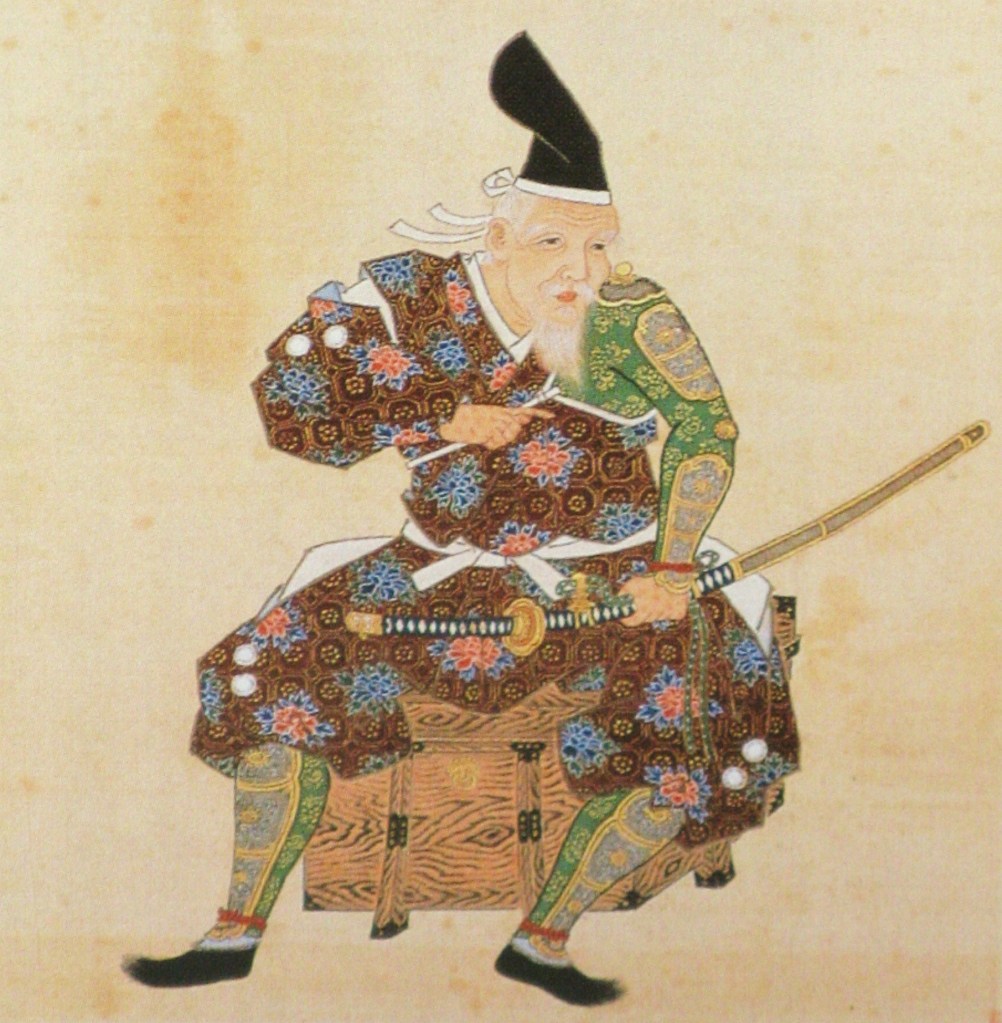
    Uesugi Kenshin, the Dragon of Echigo and the topic of this post.

    If you live your life in such a way that you earn the nickname ‘Dragon of something’ and have followers who think of you as an avatar of the God of War, then I’d say you’ve done pretty well for yourself. By this standard, our subject for today, Uesugi Kenshin, is a historical figure worthy of a closer look.

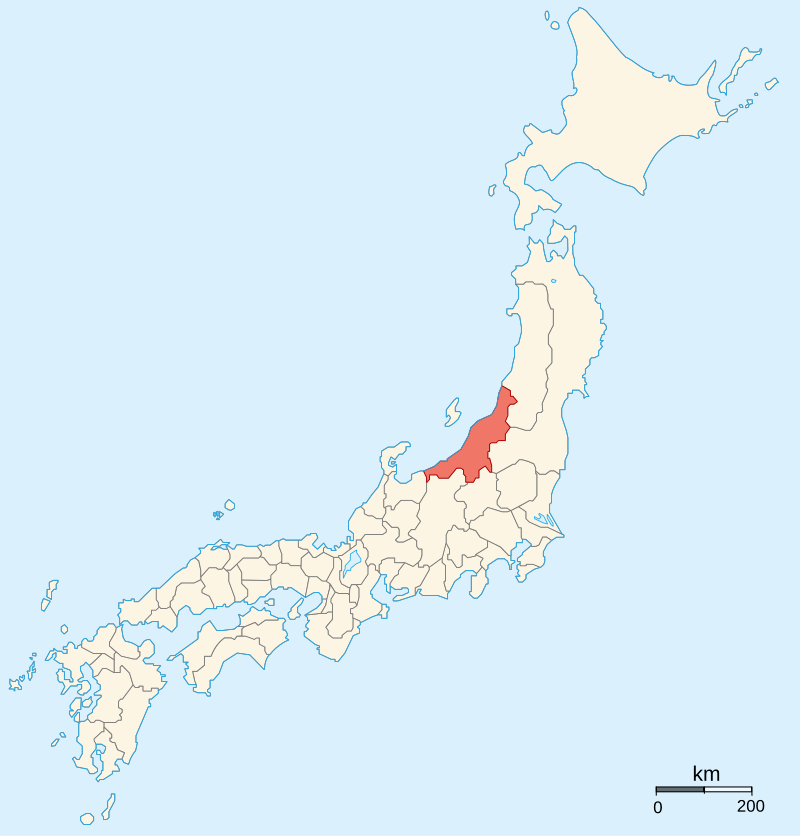
    Confusingly enough, Uesugi Kenshin wasn’t actually a member of the Uesugi family to begin with. He was a scion of the Nagao family, a strong clan who were vassals of the Yamanouchi branch of the Uesugi Clan, based in Echigo Province, in what is now Niigata Prefecture.

    Echigo Province.
    By Ash_Crow – Own work, based on Image:Provinces of Japan.svg, CC BY 2.5, https://commons.wikimedia.org/w/index.php?curid=1655309

    Born in 1530, it is quite likely that Kenshin’s mother was a concubine, and what’s more, the boy himself was the second son. He was never intended to inherit control of the Nagao Clan, and he entered the temple at Risenji at age 11, apparently set on a life as a monk.

    He doesn’t seem to have stayed at Risenji for long, however, as when his father died in 1542, just a year later, he was at the funeral with armour and sword at his side, and shortly after that, he was at Tochio Castle when a rebellion against Kenshin’s brother (the new Lord Nagao) broke out. Despite being just 14, Kenshin is supposed to have led the defence of the castle and won his first victory.

    At the time, though the Uesugi were nominally the lords of the region, the Nagao served as deputy (and de facto) governors in their place. After the death of Kenshin’s father, it was his elder brother, Harukage, who inherited this position. The brothers don’t seem to have gotten along very well, however, and in the late 1540s, a movement emerged within the Nagao clan that sought to replace Harukage with Kenshin as head of the clan.

    The remains of Tochio Castle, site of Kenshin’s first victory.
    nubobo – 栃尾城本丸跡, CC 表示 2.0, https://commons.wikimedia.org/w/index.php?curid=59682349による

    Exactly why the clan was so against Harukage isn’t clear, but their efforts were ultimately successful. In 1548, under mediation from Uesugi Sadazane (their nominal overlord), Harukage agreed to adopt Kenshin, then retire as head of the clan, clearing the way for Kenshin to become head of the Nagao Clan aged just 18 or 19 (depending on the source).

    In 1550, Sadazane died without an heir, leaving Echigo Province without a lord. At this point, Shogun Ashikaga Yoshiteru instructed Kenshin to take the position of shugo of the province, effectively making him the new lord. Shogunate recognition was not quite the prestigious thing it had once been, however, and not long after this, supporters of Kenshin’s brother rose up in rebellion against him.

    Kenshin quickly bottled up the rebels at Sakado Castle, when the castle fell, the leader of the rebels was spared because he was Kenshin’s brother-in-law, and following this, Kenshin, still aged just 22 had established effectively control over the whole of Echigo Province.

    Looking back for a moment, five years earlier, the Uesugi Clan (or more accurately, the Ogigayatsu branch of the clan) had been defeated at the Battle of Kawagoe by the new rising star of the Kanto, the Hojo Clan. The Ogigayatsu-Uesugi were wiped out after this battle, leaving only the Yamanouchi Branch of the clan. In 1552, Uesugi Norimasa, who was, on paper, the Kanto Kanrei (Shogun’s deputy) was finally driven out of the Kanto entirely and sought refuge with Kenshin.

    A later depiction of Kawagoe Castle.

    Unsurprisingly, harbouring their enemies didn’t do much for the relationship between Kenshin and the Hojo, and Kenshin would send an army to oppose the Hojo’s invasion of Kozuke Province (modern Gunma Prefecture), capturing Numata Castle, and forcing the Hojo to retreat.

    A year later, Kenshin would face a new enemy, as Takeda Shingen’s long-running invasion of Shinano eventually obliged some of the clans there to flee and seek refuge with Kenshin in Echigo. Much like the Hojo, the Takeda didn’t take kindly to someone giving refuge to their enemies, and one of Japanese history’s most famous rivalries was born.

    In August 1553, an army led by Kenshin himself advanced against the Takeda in Shinan, defeating Shingen himself at the Battle of Fuse on August 30th, then again at Yuwata on September 1st. After this, Shingen adopted a strategy of avoiding direct battle with Kenshin, and the conflict settled into a stalemate that was later called the First Battle of Kawanakajima.

    A modern view of Kawanakajima.
    日本語版ウィキペディアのBlogliderさん – 原版の投稿者自身による著作物 (Original text: Photo by Bloglider.), CC 表示-継承 3.0, https://commons.wikimedia.org/w/index.php?curid=12400636による

    In 1554-55, Kenshin was obliged to face a rebellion launched by treacherous vassals in league with Shingen. Putting down the rebellion quickly, Kenshin again marched into Shinano in April 1555 to face the advancing Takeda forces, again led by Shingen.

    At the Second Battle of Kawanakajima, the two sides faced each other in another stalemate, which dragged on for five months, before mediation from the Imagawa Clan led to both sides withdrawing after little actual fighting.

    In the following year, Kenshin apparently announced he would retire and become a monk, however, another outbreak of Takeda-backed rebellion forced him to change his plans, and after a period of peace, in 1557, Shingen again advanced against Kenshin’s allies in Shinano, forcing him to intervene and leading to the Third Battle of Kawanakajima, which, much like the previous two, swiftly settled into stalemate.

    A year later, Kenshin dispatched an army in an ultimately unsuccessful invasion of Kozuke Province and then in 1559 he was ‘invited’ for a meeting with the Shogun, Ashikaga Yoshiteru. Some sources say that Kenshin was granted the title of Kanto Kanrei at this time, the position traditionally held by the Uesugi Clan. He also apparently donated funds towards the maintenance and repair of the Imperial Palace.

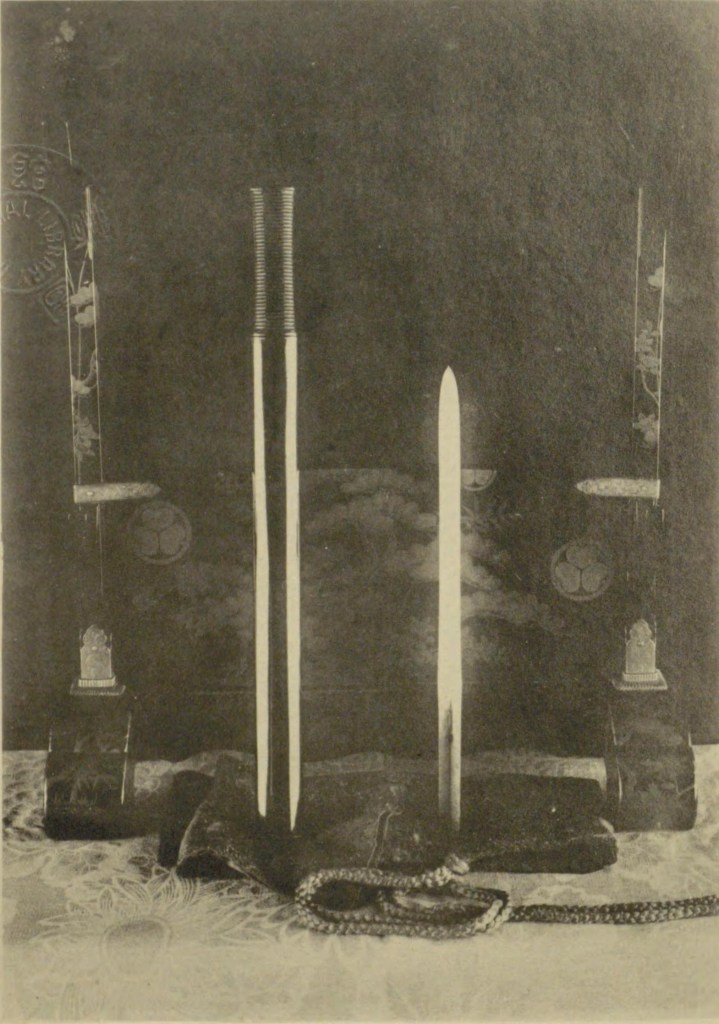
    Swords supposedly gifted to Kenshin by the Emperor, photographed in 1928.

    It seems that Kenshin enjoyed good relations with the Shogunate, but the already well-established decline of the Shogun’s power is highlighted again when he asked Kenshin, Shingen, and the Hojo to make peace in order to combine their forces against the Shogun’s enemies. All three parties refused.

    In March 1560, the Imagawa Clan’s devastating defeat at Okehazama opened the way for Kenshin to intervene directly in the Kanto again, as the Imagawa had been allied to his enemies, the Hojo, and their defeat left the Hojo vulnerable. Later that year, Kenshin launched another large-scale invasion of Kozuke Province, driving the Hojo back and capturing several important castles before celebrating New Year at Maebashi Castle, the gateway to the Kanto Plain.

    In March 1561, Kenshin was formally adopted by the Yamanouchi-Uesugi Clan (the only remaining branch) and changed his surname to match. Though he would be known as Uesugi Kagetora from this point, we will continue to call him Kenshin to keep things simple.

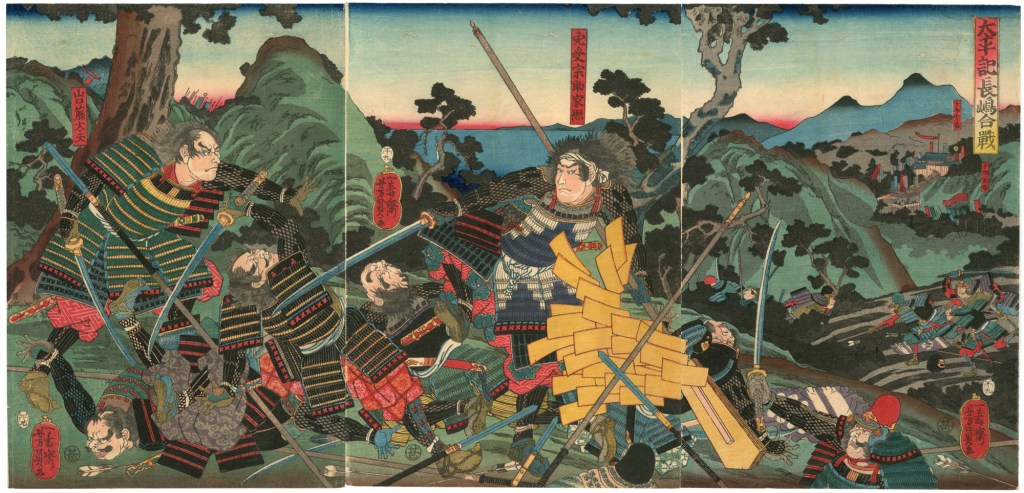
    In August of that year, Kenshin led another large army into Shinano, and engaged the Takeda at the Fourth Battle of Kawanakajima. Unlike the previous three, this battle was not an extended stalemate, but a bloody one. Both sides suffered heavy casualties, with sources ranging from around 20% losses, to as high as 60 or 70%, and when the battle was over, the Takeda held the field, but made no attempt to intervene as the Uesugi withdrew, leading some to suggest the battle was a bloody draw.

    A legendary depiction of the Fourth Battle of Kawanakajima, depicting the (possibly apocryphal) moment that Uesugi Kenshin and Takeda Shingen met on the field.

    The Takeda and Hojo clans, recognising the Uesugi as their common enemy, renewed their combined efforts and launched a joint counter-attack in Musashi Province in late 1561. At first, Uesugi forces were successful against the alliance, even getting as far as besieging Odawara Castle, the Hojo’s main stronghold, before being forced to withdraw after allied counter-attacks in other parts of the Kanto.

    The strategic situation in the Kanto would ebb and flow over the following years, as Uesugi, Takeda, and Hojo armies advanced and retreated, and the local lords would switch sides depending on whoever appeared to be in the ascendancy.

    All three factions would be occupied with fighting each other, but also engaged in other battles and proxy wars with allies and supporters of each other’s enemies. For Kenshin, this meant being obliged to dispatch forces into neighbouring Etchu Province in 1568, to deal with Ikko Ikki forces nominally allied with Shingen.

    Etchu Province.

    Seeking to take advantage of this distraction, Takeda forces attacked in Shinano and were ultimately defeated, but a rebellion in Echigo (Kenshin’s home province) meant he was unable to take advantage of this victory in the short term.

    Later that year, the strategic situation would shift in Kenshin’s favour, however, as the long-term decline in Takeda-Imagawa relations finally led to open conflict between two of his main rivals. The Imagawa would request aid from both the Uesugi and the Hojo, and while Kenshin would refuse, the Hojo dispatched forces to oppose the Takeda, bringing an end to the alliance that had done so much to oppose Kenshin.

    However, years of expensive (and bloody) campaigns in the Kanto had left the Uesugi exhausted, and in 1569, Kenshin reluctantly agreed to a peace deal with the Hojo, which saw the Uesugi withdraw from Musashi Province (modern day Tokyo and Saitama) and the Hojo withdrew from Kozuke.

    With his borders with the Hojo (relatively) secure, Kenshin was able to focus on campaigning against the Takeda again. In 1570 and 1571, he would engage the Takeda and their allies in Etchu and Shinano Provinces, generally having the better of the fighting, but the situation would shift again in 1572 when the lord of the Hojo, Ujiyasu, passed away, and was replaced by Ujimasa, who made peace with the Takeda, turning on the Uesugi. At the same time, the Etchu Ikko Ikki launched a fresh attack, instigated by Takeda Shingen.

    Hojo Ujimasa, who reversed his father’s diplomatic policy.

    The Ikko Ikki would initially be successful against Kenshin, but by mid-1573, the momentum had shifted back in his favour, and several key fortresses within Etchu were taken. Also in that year, Kenshin’s long-time rival, Takeda Shingen, passed away, an event that apparently caused Kenshin to weep openly, but also significantly weakened the Takeda.

    Over the following two years, Kenshin was forced to split his focus between his ongoing campaign in Etchu and the situation in the Kanto. By the end of 1574, the Hojo had effectively ended any Uesugi presence in the region, and although Kenshin would launch counterattacks, the writing was on the wall for Uesugi power in the Kanto.

    In 1576, Kenshin would receive a request for aid from the Shogun, seeking support against Oda Nobunaga, who now dominated central Japan and had forced the Shogun into exile. In order to get to Kyoto, Kenshin was obliged to focus all his resources on securing Etchu and Noto Provinces. This campaign would drag on throughout 1576 and 1577, delayed by intervention from the Hojo and internal rebellion, but by November 1577, Kenshin had secured control of the provinces and was poised to strike at Kyoto itself.

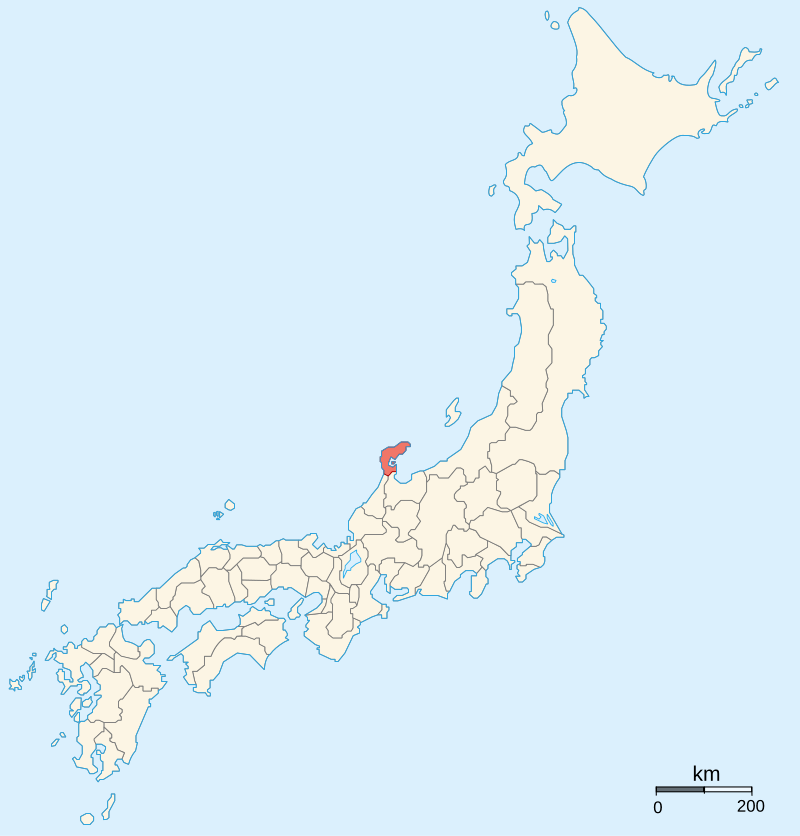
    Noto Province.
    By Ash_Crow – Own work, based on Image:Provinces of Japan.svg, CC BY 2.5, https://commons.wikimedia.org/w/index.php?curid=1690738

    Mustering a large army, Kenshin would march out to meet a force led by Nobunaga’s generals, Shibata Katsuie and Hashiba Hideyoshi (better remembered to history as Toyotomi Hideyoshi), who were not fond of each other. A dispute led to Hideyoshi withdrawing his forces early, and when the two sides clashed at the Battle of the Tedori River on November 3rd, Kenshin would emerge victorious.

    The exact course of the battle, and even the size of the forces involved, is not clear from contemporary sources, but Kenshin would withdraw temporarily, issuing instructions for a renewed campaign to begin in the spring. The battle at the Tedori River had opened a strategic opportunity for Kenshin, and it has been speculated that he might have been able to complete his march on Kyoto.

    Much like his rival, Shingen, however, Kenshin would never make the march. In early March, Kenshin would collapse (allegedly whilst in the toilet) and fall into a coma from which he would never wake up; he died on March 13th, aged 49.

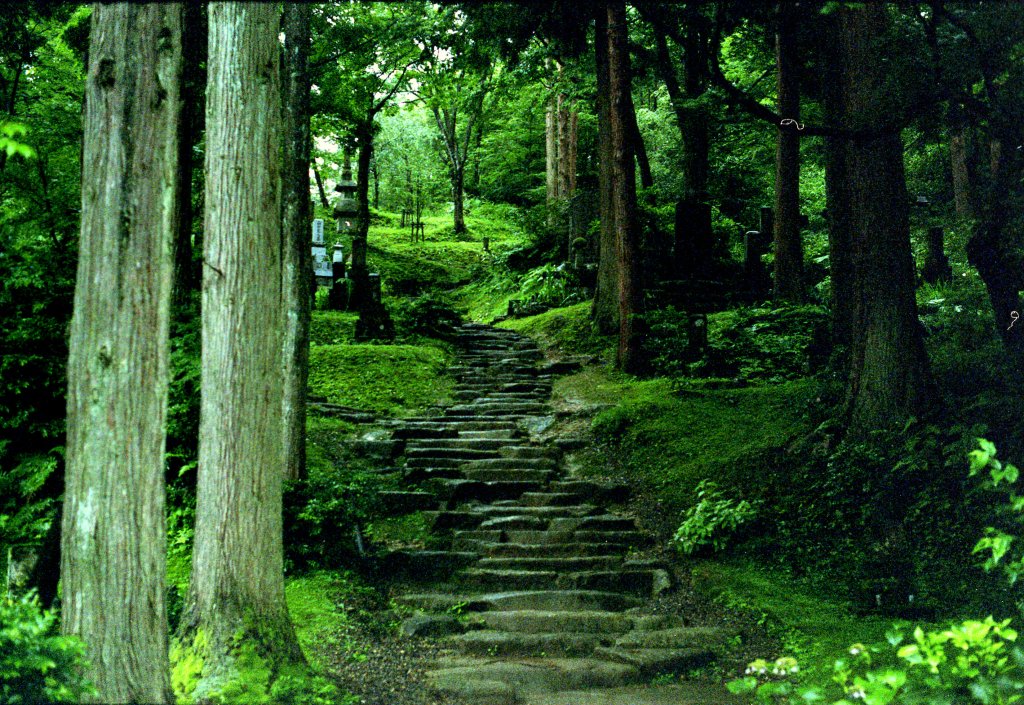
    The site of Kenshin’s grave at Risenji, where he studied as a boy.
    By shikabane taro, CC BY 3.0, https://commons.wikimedia.org/w/index.php?curid=54071606

    Much like the Takeda after the death of Shingen, the Uesugi would be seriously weakened by Kenshin’s death. Though they had been a threat to Nobunaga, Kenshin’s death, and the ongoing effects of years of more or less constant conflict, rendered them powerless to stop the rise of Nobunaga, and after his death in 1582, the Uesugi would make their peace with his successors.

    Decisions made at the end of the Sengoku Jidai would see the clan’s star fall even further, though that is a story for another time.

    Sources
    https://ja.wikipedia.org/wiki/%E4%B8%8A%E6%9D%89%E8%AC%99%E4%BF%A1
    https://ja.wikipedia.org/wiki/%E6%89%8B%E5%8F%96%E5%B7%9D%E3%81%AE%E6%88%A6%E3%81%84
    https://en.wikipedia.org/wiki/Battle_of_Tedorigawa
    https://ja.wikipedia.org/wiki/%E5%B7%9D%E4%B8%AD%E5%B3%B6
    https://ja.wikipedia.org/wiki/%E5%89%8D%E6%A9%8B%E5%9F%8E
    https://ja.wikipedia.org/wiki/%E6%B2%BC%E7%94%B0%E5%9F%8E
    https://en.wikipedia.org/wiki/Battles_of_Kawanakajima

  • The Hosokawa Rebellion

    The Hosokawa Rebellion

    As we’ve looked at previously, internal clan conflict wasn’t uncommon during the 15th century; in fact, it had gotten to the point that violent succession struggles were almost a fact of life. One exception to this rule had been the Hosokawa Clan.

    In the mid-15th Century, the Hosokawa were just one of several powerful clans that dominated the area around Kyoto, the centre of political power in the realm. While other clans had risen and fallen throughout the Century, the Hosokawa went from strength to strength, in large part because they managed to maintain a stable succession, leading to one of their number, Hosokawa Masatomo, being strong enough to launch the Meio Coup in 1493, giving him effectively complete control of the government and what was left of its prestige.

    Hosokawa Masatomo, who arguably led his clan to the height of its power, and laid the groundwork for its downfall.

    The relative stability of the Hosokawa Clan came to an end with Masatomo, however. He had succeeded his father largely because he had been the only viable candidate and had earned the support of his clan’s vassals after his father’s death. Masatomo apparently didn’t learn from this, however. Firstly, his spiritual beliefs meant that he swore off contact with women, which rather limited his opportunities to father an heir.

    This was no problem, though; adoption was(and continues to be) a widely accepted custom amongst the rich and powerful in Japan, and all Masatomo had to do was select a candidate who could earn the support of the wider Hosokawa Clan, and their position would be (relatively) secure.

    It must have come as quite a shock then, when Masatomo adopted not one, but three sons. To be fair, he didn’t adopt them all at once, and most contemporary sources speculate that his intentions were to split the Hosokawa lands between his new heirs, but you won’t be surprised to learn that it didn’t work out that way.

    No sooner was the ink dry on the adoption documents than rival factions began to form around the three potential heirs. Masatomo didn’t help matters by clearly favouring one son, Sumitomo, over the other two, but the whole situation would have been precarious even under the best of circumstances, and the Hosokawa certainly didn’t enjoy those.

    Hosokawa Sumitomo, Masatomo’s apparently preferred heir.

    We’ve looked at the wide-ranging political problems the Shogunate faced during the latter half of the 15th century, and when Masatomo seized control of the government, he also inherited those problems. It’s hard to see how even the most focused, capable, and diplomatic leader might have reversed the situation the Shogunate found itself in, and unfortunately for the Hosokawa, Masatomo was an eccentric iconoclast, prone to doing things like attempting to fly, deriding long-standing ceremonies, and generally making political enemies wherever he went.

    It is a strange quirk of human history, though, that factions who seem to have hostile (and often violent) intentions towards each other will exist in a kind of tense equilibrium as long as there is someone, or something, that they can focus their ire on. In the early 16th century, that someone was Masatomo.

    None of the three factions was strong enough to openly oppose him, because if they had, they’d have been attacked and wiped out by the other two, who would need little encouragement to remove a rival, even if that meant supporting Masatomo in the short term.

    It is also true that, eventually, the dam always breaks, and when it comes to court politics, that usually means blood. In June 1507, supporters of one of Masatomo’s adopted sons (Sumiyuki) assassinated him in his bathhouse. The next day, they attempted to do the same thing to another son, Sumitomo, but he managed to escape with the help of his allies in the Miyoshi Clan.

    Just a moment ago, I mentioned that one faction couldn’t make a move without antagonising the other three, and that’s exactly what happened. Sumiyuki’s supporters had tried to remove Sumitomo and failed. Now, Sumitomo fled Kyoto and sought the aid of the third brother, Takakuni, who was only too happy to oblige.

    The stylised end of Hosokawa Sumiyuki.
    Musuketeer.3 – 投稿者自身による著作物, CC 表示-継承 3.0, https://commons.wikimedia.org/w/index.php?curid=24893374による

    The combined forces of Takakuni and Sumitomo were indeed too much for Sumiyuki, and by August, he had been defeated and forced to commit suicide. The question then was who would actually succeed Masatomo. Both Takakuni and Sumitomo could arguably claim to have avenged their adopted father’s death, and both had significant support from the remaining Hosokawa retainers.

    As we mentioned last time, it is at this point that the previously deposed Shogun, Yoshitane, returned to the scene. Given that Masatomo had overthrown him in a coup and installed a puppet, it wasn’t difficult to convince Shogunate loyalists to side with Yoshitane. Suddenly, becoming heir to the Hosokawa Clan wasn’t quite the prize it had been. Though Sumitomo was in the stronger position, he now faced a resurgent Yoshitane, and his brother, Takakuni, saw the way the wind was blowing and threw in his lot with the returning Shogun as well.

    Just as Sumiyuki had been unable to oppose the combined forces of his brothers, Sumitomo did not have the strength to challenge the Shogun and Takakuni. Sumitomo also lost considerable support due to the actions of his supporters in the Miyoshi Clan, who had become overbearing in the short period after their victory.

    So, in April 1508, when Yoshitane and Takakuni marched on Kyoto, Sumitomo and the Miyoshi had little choice but to flee with their puppet Shogun, Yoshizumi. Shortly after this, Yoshitane was reinstated as Shogun, and Takakuni was named the new head of the Hosokawa Clan.

    The once and future Shogun, Yoshitane, picked the right moment to return to the political scene.

    In June the following year, Sumitomo and the Miyoshi attempted to retake the city but were defeated and driven back; however, a counterattack led by Yoshitane was similarly defeated. The back-and-forth nature of the conflict continued until the Battle of Ashiyagawara (sometimes called the Siege of Takao Castle), in the summer of 1511, after which Sumitomo’s victorious forces were able to briefly reoccupy Kyoto.

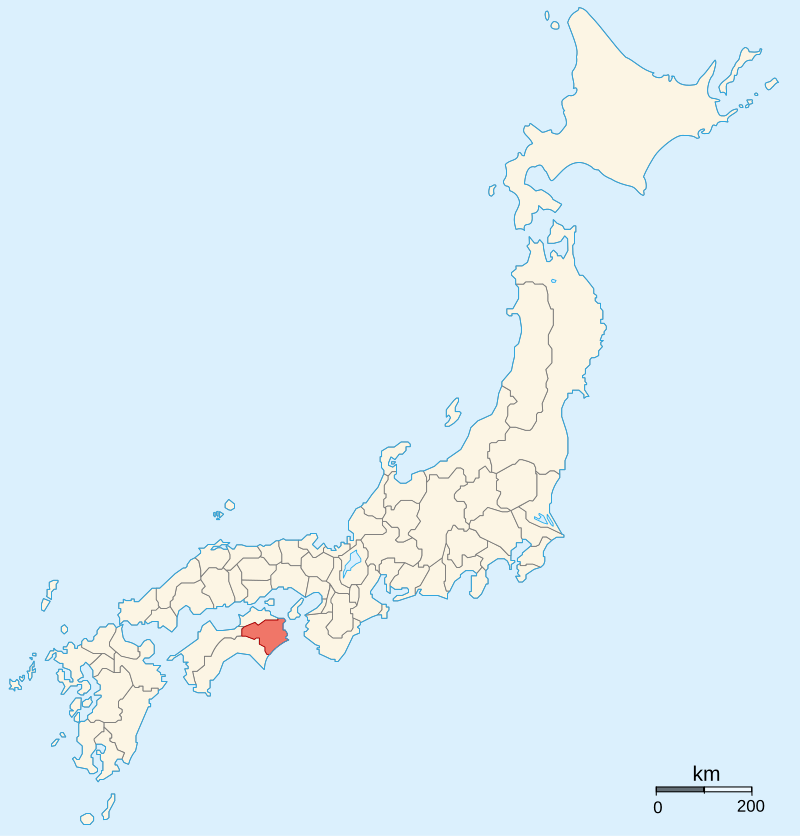
    ‘Briefly’ is the operative word here, because in September of the same year, Takakuni and Yoshitane’s forces counterattacked, retook Kyoto, and drove Sumitomo and the Miyoshi back to their strongholds in Awa Province, across the Inland Sea on Shikoku.

    Awa Province.
    By Ash_Crow – Own work, based on Image:Provinces of Japan.svg, CC BY 2.5, https://commons.wikimedia.org/w/index.php?curid=1652119

    Around this time, Yoshizumi died of illness, and Sumitomo suffered a serious loss of support. Many of his allies had supported Yoshizumi as Shogun, and Sumitomo as his champion, but now Yoshizumi was gone, Yoshitane, who was now firmly entrenched in Kyoto, was the only remaining claimant to the title, and many Shogunate loyalists deserted to him, weakening Sumitomo and strengthening Takakuni.

    Ashikaga Yoshizumi, whose death proved that a puppet shogun is better than no Shogun at all.

    This stalemate did not mean peace, however, and constant, low-level fighting would continue throughout the region and the wider realm; what would later be called the Sengoku Jidai was already well underway, even if the area immediately around Kyoto was relatively quiet.

    In 1517, the stalemate was broken when Miyoshi forces in support of Sumitomo invaded Awaji and used it as a springboard to threaten the mainland. Around this time, the Ouchi Clan, who had supported Takakuni and Yoshitane for the better part of 10 years, left the capital to deal with unrest in their home provinces, caused by the apparent resurgence of Sumitomo and the Miyoshi’s faction.

    The departure of the Ouchi was a major blow to Takakuni, and over the next two years, he saw his position gradually chipped away, as forces defected to Sumitomo or simply abandoned the fight to deal with their own affairs. Finally, in early 1520, Shogun Yoshitane himself switched sides, throwing his support behind Sumitomo and forcing Takakuni to flee Kyoto.

    Ouchi Yoshioki, the head of the Ouchi Clan, whose decision to leave Kyoto seriously weakened Takakuni.

    Takakuni fled to Omi Province, but he wasn’t ready to roll over just yet. Gathering a force of his allies, he counter-attacked in May 1520 and retook the capital. This time, his victory was decisive; he forced the leader of the Miyoshi Clan to commit suicide and even managed to drive Sumitomo back into exile on Shikoku, where he died of illness shortly afterwards.

    The following year, Takakuni exiled the fickle Yoshitane and installed Ashikaga Yoshiharu, the son of Yoshizumi, as Shogun, though he was just as much a puppet ruler as his father had been. Takakuni was appointed kanrei (deputy) for the new Shogun’s enthronement ceremony, but would resign the position immediately afterwards, proving to be the last man to hold the position, according to historical records.

    It wouldn’t be until October 1524 that the last embers of Miyoshi resistance were stamped out on Shikoku, but even then, Takakuni was far from secure in his position. In 1526, he faced serious opposition from within his own clan and was defeated when he tried to march against them. In 1527, this combined force actually managed to drive Takakuni out of Kyoto, and an attempted counterattack was defeated at the Battle of Katsuragawa in March that year.

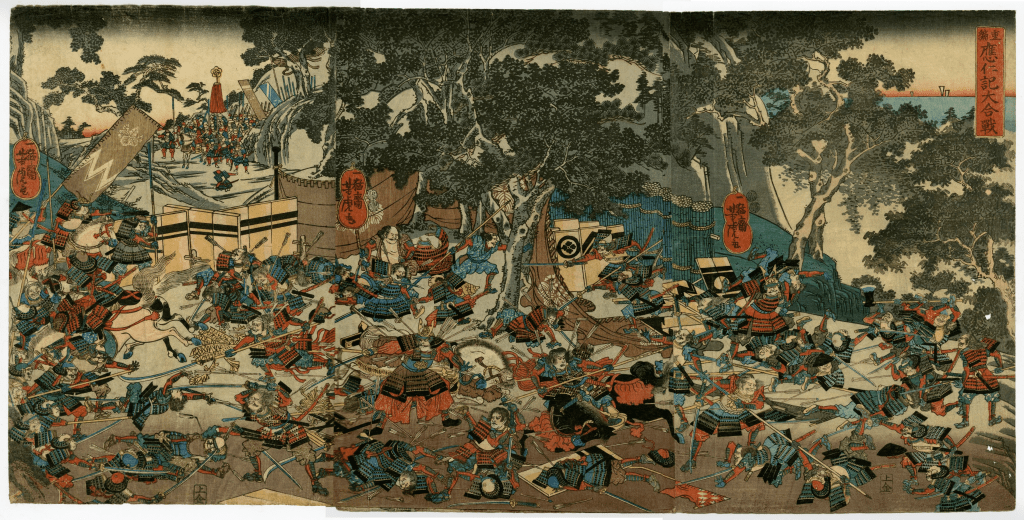
    Takakuni, ever tenacious, refused to give up, despite being defeated in 1528 and again in 1530. Things finally came to a head for him in 1531, at the Battle of Tennoji, which is often called the Daimotsu Kuzure, which can be translated as “The Fall of the Big Shots” (lit. big names fall, or collapse).

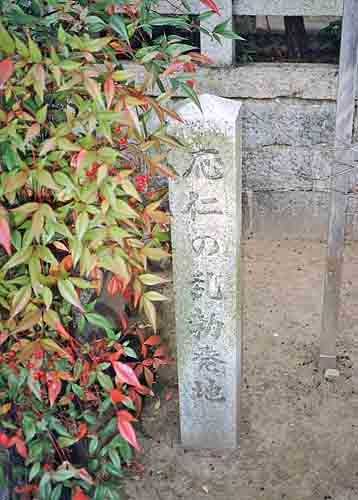
    The Battlefield Memorial of the Fall of the Big Shots.

    Takakuni was defeated. He survived the battle but was captured shortly afterwards, supposedly whilst hiding in an indigo storage barrel at a dye shop, after which he was obliged to commit suicide. Several of his main supporters (the eponymous “Big Names”) suffered similar fates, and Takakuni’s faction disintegrated.

    Takakuni’s body was likely still warm (and probably blue, given his hiding place) when the forces that had opposed him turned on each other. Members of the Hosokawa, Hatakeyama, and Miyoshi Clans all began fighting, and any hope of retaining a stable government in Kyoto was lost.

    Sources
    https://ja.wikipedia.org/wiki/%E6%B0%B8%E6%AD%A3%E3%81%AE%E9%8C%AF%E4%B9%B1
    https://ja.wikipedia.org/wiki/%E5%A4%A7%E7%89%A9%E5%B4%A9%E3%82%8C
    https://ja.wikipedia.org/wiki/%E6%A1%82%E5%B7%9D%E5%8E%9F%E3%81%AE%E6%88%A6%E3%81%84
    https://ja.wikipedia.org/wiki/%E8%B6%B3%E5%88%A9%E7%BE%A9%E6%99%B4
    https://ja.wikipedia.org/wiki/%E7%AD%89%E6%8C%81%E9%99%A2%E3%81%AE%E6%88%A6%E3%81%84
    https://ja.wikipedia.org/wiki/%E8%8A%A6%E5%B1%8B%E6%B2%B3%E5%8E%9F%E3%81%AE%E5%90%88%E6%88%A6
    https://ja.wikipedia.org/wiki/%E8%88%B9%E5%B2%A1%E5%B1%B1%E5%90%88%E6%88%A6
    https://ja.wikipedia.org/wiki/%E4%B8%8B%E7%94%B0%E4%B8%AD%E5%9F%8E
    https://ja.wikipedia.org/wiki/%E8%B6%B3%E5%88%A9%E7%BE%A9%E6%BE%84
    https://ja.wikipedia.org/wiki/%E5%A4%A7%E5%86%85%E7%BE%A9%E8%88%88

  • The Eisho Disturbance

    The Eisho Disturbance

    Last time, we looked at the Meio Coup that saw the Shogun’s kanrei (deputy), Hosokawa Masatomo, take over the government and install a puppet Shogun with himself in effective control. At the end of that post, we also looked at how, despite the coup’s success, Masatomo’s grip on power was far from secure.

    Hosokawa Masatomo, the most powerful man in the realm following the Meio Coup.

    As soon as the dust settled, Masatomo found himself surrounded by problems. Some had been long-standing, violence between powerful clans in the provinces had been a problem for decades, and Shogunate authority outside of Kyoto was tenuous at best.

    Within Kyoto, too, there were enduring rivalries between different factions, sometimes within the same family, all revolving, as it always had, over who would control the throne, or the man (it was always a man) sitting on it. In many ways, Masatomo’s coup can be seen as a continuation of political instability that went back centuries. As long as there had been an Imperial Throne (nearly a thousand years at this point), there had been powerful families vying to control it. That situation hadn’t really changed when the centre of power became the Shogun instead of the Emperor.

    Some of the problems were of Masatomo’s own making, though. He was, but most contemporary accounts describe him as an authoritarian and quite eccentric character. It is easy for us to imagine the Shogun as some all-powerful ruler, but the reality was that there was a considerable amount of power sharing in the capital. This was no democracy, but it was also expected that the powerful clans surrounding the throne would be consulted about government matters and have their seat at the table when it came to running things.

    There had been several examples of powerful families coming to dominate the government, and again, Masatomo was just continuing that trend, but like the families who came before him, centralising all power in one man attracted a lot of hostility from the other clans who now found themselves frozen out.

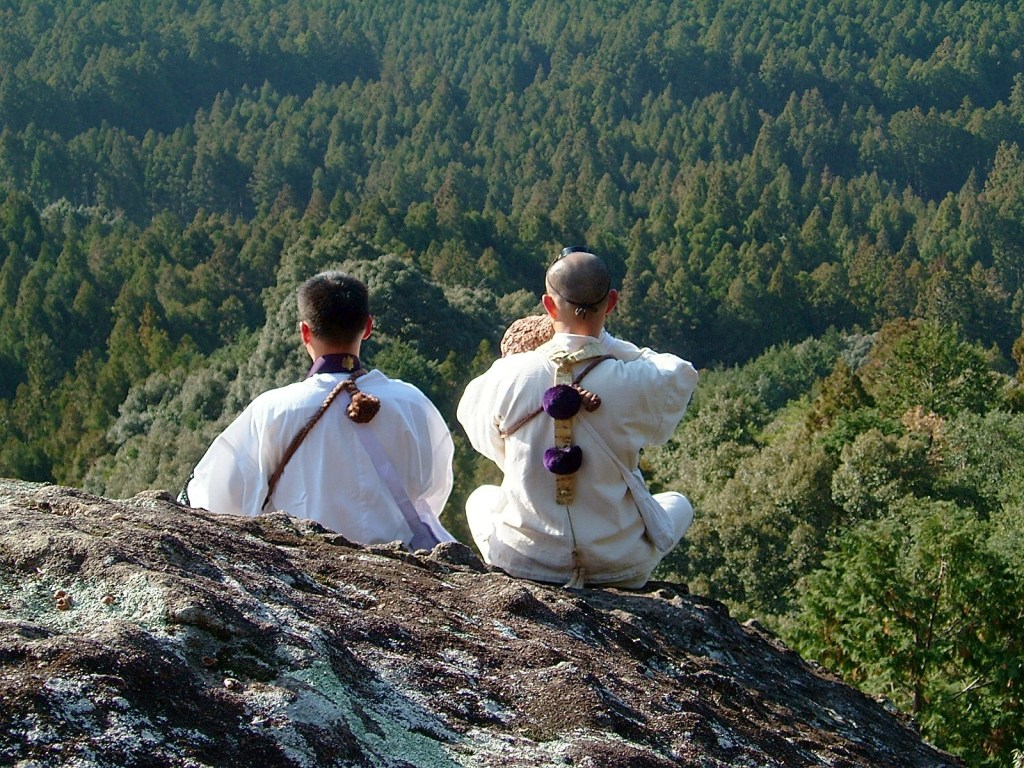
    The other problem with Masatomo was that he was something of an eccentric iconoclast. A follower of the ascetic Shugendo sect of Buddhism, he lived an austere life, swearing off certain foods, all alcohol and the company of women, though some contemporary sources suggest his aversion to sex wasn’t limited to his male companions, and he was apparently a practitioner of shudo, a kind of ritualised homosexuality that was common amongst Samurai.

    Modern day practitioners of Shugendo, of which Masatomo was a keen adherent.
    By 唐山健志郎 (Kenshiro Karayama) – 唐山健志郎 (Kenshiro Karayama), CC BY-SA 3.0, https://commons.wikimedia.org/w/index.php?curid=2259089

    Masatomo is supposed to have believed that his religious fervour would allow him to engage in magical feats, such as being able to fly or speak mystical languages. He had more practical eccentricities as well; he would go on long journeys, sometimes alone, and without telling his retainers, meaning that government would effectively come to a halt until he could be found.

    Religious and sexual habits aside, Masatomo also opposed much of the pomp and ceremony surrounding the institutions of government. It is said that he disliked the formal clothing required at certain ceremonies, and the official enthronement of the new Shogun was delayed simply because Masatomo refused to wear the eboshi hat required by tradition.

    A 17th Century depiction of an official wearing the eboshi hat that Masatomo despised.

    Masatomo also had a shockingly (for the time) rational approach to the Imperial Court as well. He is supposed to have opposed the enthronement ceremony of Emperor Go-Kashiwabara on the grounds that, since the Emperor no longer had any real power, there was no point in a grand ceremony. This was technically true, but flew in the face of long-established tradition.

    So a combination of Shogunate weakness, Political problems, and personality issues meant that Masatomo’s position was never strong, and he wouldn’t help matters with some of the decisions he made. Given Masatomo’s apparent aversion to women, he wasn’t able to produce an heir (obviously). This problem wasn’t an uncommon one at the time, and adoption was usually the preferred solution.

    Masatomo, never one to do anything the easy way, adopted three sons, Sumimoto, Sumiyuki, and Takakuni. You may remember, in the period leading up to and including the Onin War, one of the key factors in the instability that gripped the realm was the frequency of internal conflict over clan succession. One of the reasons the Hosokawa Clan had been able to take such a strong position was that they had largely been able to avoid these struggles, with Masatomo succeeding his father relatively smoothly.

    Some contemporary sources suggest that Masatomo’s ultimate plan was to divide the Hosokawa lands between two of these sons, while the third would inherit the position of kanrei and thus real political power. Initially, it seems that Masatomo favoured Sumimoto to succeed him as kanrei, but the fact that all three ‘sons’ came from three different families meant that the succession was now the subject of growing factional rivalries.

    Hosokawa Sumitomo, Masatomo’s choice as heir.

    This situation was precarious, but held together by the sheer force of Masatomo’s will. With power centralised in his hands, he could exert enormous control over what remained of the Shogunate government and its nominal loyalists. This way of doing things required him to be alive, however, which he no longer was after June 23rd, 1507, when he was assassinated.

    The assassins were apparently partisans of Sumiyuki, favouring him as kanrei over Sumitomo, who they also attacked at the same time as his father, though Sumitomo was able to escape with the help of his supporters, led by members of the Miyoshi Clan (a name that will become important later).

    The fact that Sumitomo survived was a problem for Sumiyuki, especially after he fled to Takakuni, the third brother, who agreed to support him and march against Sumiyuki. There was a series of blood battles between the rival factions until Sumitomo’s supporters, led by Miyoshi Yukinaga, took his final refuge at Yushoken, forcing Sumiyuki to commit suicide.

    An image depicting Sumiyaki at the moment of his death.
    Musuketeer.3 – 投稿者自身による著作物, CC 表示-継承 3.0, https://commons.wikimedia.org/w/index.php?curid=24893374による

    It turns out that your enemy’s enemy isn’t always your friend, though, and it wasn’t long before Takakuni and Sumitomo were at each other’s throats. The problem stemmed from Sumitomo’s supporters amongst the Miyoshi Clan, whose strength and growing overbearingness earned them many jealous rivals. Then, in late 1507, former Shogun Yoshitane (who had fled after the Meio Coup) returned to the scene.

    Yoshitane, after fleeing into exile, had been supported by the Ouchi Clan based in modern-day Yamaguchi Prefecture, and now they raised their banners in support of his march on Kyoto. Although not strong enough to take the city at first, shortly after the new year, Takakuni became the focal point for anti-Miyoshi feeling and chose to throw in his lot with the old Shogun.

    This combined force attacked Kyoto and took the city in early April, forcing Sumitomo and Shogun Yoshizumi to flee. Takakuni was recognised as the new head of the Hosokawa Clan, and Yoshitane was reinstated as Shogun, beginning his second reign.

    Sumitomo and Yoshizumi were down but not out, however, and what followed was more than 20 years of strife that is collectively called the Hosokawa Civil War, or Hosokawa Rebellion. This conflict had all the hallmarks of the internal violence that had wracked multiple clans throughout this period, but wrought on a massive scale, involving not just the Hosokawa but their vassals, retainers, and the Shogunate itself.

    Sources
    https://ja.wikipedia.org/wiki/%E6%B0%B8%E6%AD%A3%E3%81%AE%E9%8C%AF%E4%B9%B1
    https://ja.wikipedia.org/wiki/%E7%B4%B0%E5%B7%9D%E9%AB%98%E5%9B%BD
    https://ja.wikipedia.org/wiki/%E4%B8%89%E5%A5%BD%E4%B9%8B%E9%95%B7
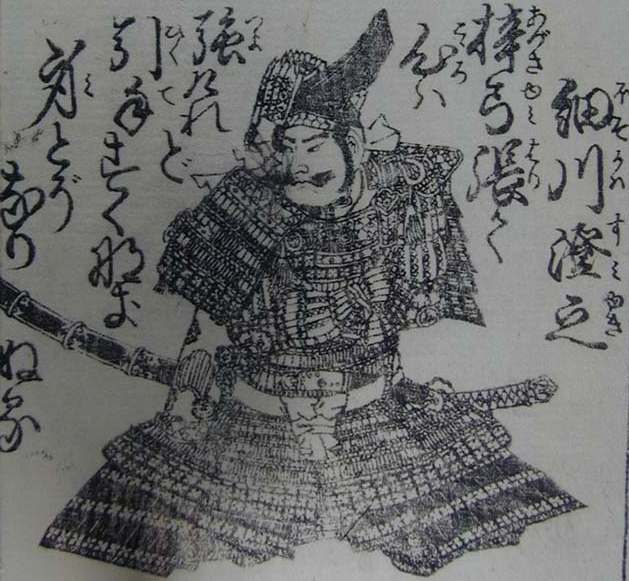
    https://ja.wikipedia.org/wiki/%E7%B4%B0%E5%B7%9D%E6%BE%84%E4%B9%8B
    https://ja.wikipedia.org/wiki/%E7%B4%B0%E5%B7%9D%E6%94%BF%E5%85%83

  • The Meio Coup

    The Meio Coup

    As we’ve discussed previously, by the 1490s, the Ashikaga Shogun was a shadow of its former self. The Onin War had effectively ended even the pretence of Shogunate power, and in the provinces, what would later be called the Sengoku Jidai was already underway.

    The Onin War ultimately broke the Shogun’s power.

    There’s a post on the Onin War if you want details, but very briefly, the war was fought over who would succeed Ashikaga Yoshimasa as Shogun, his son (Yoshihisa), or his brother (Yoshimi). When the war ended in 1477, it was his son who became Shogun.

    Yoshihisa was apparently a bit of a lush, and contemporary sources paint him as a young man who was too fond of wine and women. In fact, when he died suddenly in 1489, aged just 25, it was widely blamed on his hedonistic lifestyle (not a bad way to go, mind you).

    Despite his proclivities, Yoshihisa died without a male heir, and it was at this point that the son of the defeated brother, Ashikaga Yoshitane, became Shogun. This might seem like a strange choice, and it certainly wasn’t unopposed, but he apparently had the support of Hino Tomiko, Yoshihisa’s mother, who was widely regarded as one of the most influential women in Japanese history.

    Quite why Tomiko chose to support Yoshitane isn’t documented, but given her reputation for political intrigue, she probably had some long game in mind. Yoshitane wouldn’t actually become Shogun until July 1490, and even when he took the throne, his position was weak.

    Ashikaga Yoshitane was a surprising and ultimately controversial choice for Shogun.

    There were myriad problems in and around the Shogun’s government, but the fundamental issue seems to have been that Yoshitane was the son of the man who had been defeated in the Onin War just 13 years earlier. The men who had won that war were still in government, and they weren’t fans of the idea of having to serve someone who was probably going to be out for revenge.

    When Tomiko announced her support for Yoshitane, several high-ranking members of the government resigned their positions rather than serve under him. Initially, this might not have been a problem. Yoshitane was a young man (just 23) who enjoyed the support of one of the realm’s most powerful figures, Hino Tomiko, and the advice and guidance of his father, Yoshimi, who might have been Shogun himself, if things had gone differently.

    Yoshitane was also aided by his kanrei (deputy), Hosokawa Masamoto, an experienced (if slightly eccentric) politician. As seems to be inevitable with the Ashikaga, though, this initial optimism didn’t last. Ashikaga Yoshimi died in January 1491, just months into the new Shogun’s reign, and it seems that his relationship with Hino Tomiko soured too. Some sources (admittedly biased against Tomiko) suggest this was because Yoshitane turned out to be not as compliant as Tomiko had intended, but whatever the reason, Yoshitane was obliged to find a new way to shore up his power.

    To do this, he turned to the time-honoured tradition of his forebears and went to war. The region around Kyoto had been devastated by the Onin War, and recovery had been unequal at best. There were numerous uprisings from angry peasants and religious movements throughout the decades of ‘peace’, and Yoshitane saw an opportunity to flex his muscles and put these troublemakers in their place.

    The first blow was struck against the Rokkaku Clan. Like his predecessors, Yoshitane had few military resources of his own to call on, so he summoned several powerful lords to do the fighting for him. They agreed eagerly, but one figure who opposed the campaign was Hosokawa Masatomo. Quite why the kanrei was against the campaign isn’t clear, but this led to a schism between the Shogun and his most powerful official.

    Hosokawa Masamoto, the Shogun’s Deputy and most powerful official.

    In response, Yoshitane began relying on other lords to do his bidding, attempting to cut Masatomo out of the picture. In 1493, he launched another campaign, this time seeking to bring an end to the division in the once powerful Hatakeyama Clan. This time, Masatomo’s opposition is easier to understand. The Hatakeyama and Hosokawa Clans were historic rivals, and the ‘civil war’ in the Hatakeyama Clan had been to the Hosokawa’s benefit. If the Shogun succeeded in ending the fighting, then the Hatakeyama might regain their strength, and Masatomo couldn’t have that.

    When the Shogun issued orders for an army to be gathered in January 1493, Masatomo went to work. He contacted the faction within the Hatakeyama that the Shogun intended to attack and made arrangements with them to earn their support for what came next. Throughout early spring that year, Masatomo gathered others who were unhappy with Yoshitane. Some were partisans of the armies that had opposed Yoshitane’s father; others were disgruntled with the political situation, like Hino Tomiko, who now sided against the man she had supported just a few years earlier.

    Others were almost certainly just opportunists, but by April, Masatomo was ready to move. He waited for the Shogun’s army to attack the Hatakeyama in Kawachi Province (in modern Osaka), and when Kyoto was vulnerable, he launched his coup.

    It all went relatively smoothly for Masatomo. His forces took the city without much trouble, and Hino Tomiko issued an order commanding that Masatomo take control to restore order, giving his actions the veneer of legality. Masatomo then announced he would depose Yoshitane and replace him with Ashikaga Yoshizumi, who had been adopted by Hino Tomoki and Shogun Yoshimasa.

    Ashikaga Yoshizumi, installed as Shogun after the Meio Coup.
    Geneast – 投稿者自身による著作物, CC 表示-継承 3.0, https://commons.wikimedia.org/w/index.php?curid=21645552による

    When the news reached the army in Kawachi, it disintegrated almost immediately, with many vassals supporting the new Shogun and effectively legitimising Masatomo’s coup. Yoshitane could still call on around 8000 loyalists to fight for his cause, but the situation was dire.

    As well as Yoshitane’s (much reduced) loyalists, the Emperor himself was apparently against the coup. You may remember that the Shogun was technically a servant of the Imperial Court, and although it had been centuries since the Emperor had actually had the power to decide who would be Shogun, the idea that someone else could overthrow him was an affront to what remained of Imperial prestige.

    The Emperor was so angry that he even threatened to abdicate, but the impotence of his position was highlighted when Imperial officials pointed out that a) even if he abdicated, the coup would not be reversed, and b) the Imperial Court couldn’t afford the ceremony, and might have to resort to borrowing money for it from the very Shogunate they sought to protest.

    So the Imperial Court prevaricated by engaging in some religious ceremonies that the Emperor was required to attend, and would therefore be unavailable to condone or condemn the coup. This led to a strange stalemate, where the Imperial Court could do nothing to change the course of events, but the Shogunate (controlled by Masatomo) could not compel the court to obey, denying the coup the full support of Japan’s ‘legal’ sovereign.

    Emperor Go-Tsuchimikado was on the throne during the coup and was pretty annoyed about it.

    Political difficulties aside, the reality was that Masatomo was now in control, and to demonstrate this, he ordered an army to be dispatched to Kawachi Province to deal with what was left of the old Shogun’s loyalists. Chronicles at the time suggest the force was as large as 40,000, and, faced with such odds, Yoshitane and his supporters retreated to and fortified a nearby temple, where they hoped to hold out.

    The situation got worse for Yoshitane, however, as a relief force sent by his supporters met Masatomo’s army near Sakai (modern Osaka), where they were defeated, effectively ending any chance Yoshitane had of reversing the coup.

    Not long afterwards, Masatomo’s forces attacked the temple and quickly overwhelmed its defences. Several of Yoshitane’s prominent supporters committed suicide, but Yoshitane himself was captured and taken back to Kyoto and held at the Ryoanji Temple.

    A modern scene of Ryoanji Temple, where Yoshitane was held. Picturesque as prisons go.
    663highland – 投稿者自身による著作物, CC 表示-継承 4.0, https://commons.wikimedia.org/w/index.php?curid=159351811による

    In the aftermath of this battle, Masatomo had several of his more powerful opponents killed or exiled, and consolidated power in the capital and by the Autumn of 1493, his position was practically unassailable.

    Quite why Masatomo decided to get rid of Yoshitane has been debated from the start. The man himself claimed it was due to the Shogun’s military campaigns putting an unsustainable burden on the more powerful lords, and while there’s probably some truth to that claim, it also seems likely that the relationship between Masatomo and the Shogun had broken down, and Masatomo decided to strike while he was in a position of strength.

    That being said, Masatomo wouldn’t have succeeded if he’d acted alone. The fact that he had the support of Hino Tomiko and that most of Yoshitane’s supporters abandoned him almost immediately suggests that the dissatisfaction with his rule ran deep. It has also been suggested that Tomiko herself was the instigator of the coup, as she had come to regret her earlier decision to support Yoshitane.

    Although the Meio Coup left Masatomo as the dominant political figure in Kyoto, in the long term, it did nothing to reverse the catastrophic decline of Shogunate power. Although the supreme military power, Masatomo, did not have control of the bureaucracy, which remained with Hino Tomiko and her supporters.

    Additionally, the swift collapse of the Shogun’s ‘loyalists’ demonstrated how fragile that system really was, and after the coup, instead of relying on several powerful clans, the Shogunate was forced to rely on one, the Hosokawa and by extension, Masatomo.

    Masatomo certainly didn’t have it all his own way, then, and the situation only got worse when Yoshitane (who had been left alive) escaped captivity in Kyoto and fled to Etchu Province, from where he issued calls for his supporters to deal with Masatomo.

    Masatomo would dispatch an army to deal with Yoshitane, but it was defeated, and not long after that, several powerful clans declared their support for the deposed Shogun, though in reality, they offered little practical support in the short term.

    Internally too, opposition to Masatomo grew as Yoshizumi, who had been a boy when Masatomo installed him as Shogun, grew into a man (as they do) and began trying to assert control of what was supposed to be ‘his’ government, so, despite the success of his coup, Masatomo found himself with problems on all sides, and the power of the Shogun declined further still.

    Sources
    https://ja.wikipedia.org/wiki/%E6%97%A5%E9%87%8E%E5%AF%8C%E5%AD%90
    https://ja.wikipedia.org/wiki/%E6%98%8E%E5%BF%9C%E3%81%AE%E6%94%BF%E5%A4%89
    https://ja.wikipedia.org/wiki/%E8%B6%B3%E5%88%A9%E7%BE%A9%E5%B0%9A
    https://ja.wikipedia.org/wiki/%E8%B6%B3%E5%88%A9%E7%BE%A9%E8%A6%96
    https://ja.wikipedia.org/wiki/%E7%B4%B0%E5%B7%9D%E6%94%BF%E5%85%83
    https://ja.wikipedia.org/wiki/%E8%B6%B3%E5%88%A9%E7%BE%A9%E6%BE%84
    https://ja.wikipedia.org/wiki/%E5%A0%BA
    https://ja.wikipedia.org/wiki/%E9%BE%8D%E5%AE%89%E5%AF%BA
    https://ja.wikipedia.org/wiki/%E5%BE%8C%E5%9C%9F%E5%BE%A1%E9%96%80%E5%A4%A9%E7%9A%87

  • The Kyotoku Rebellion

    The Kyotoku Rebellion

    Historians disagree on when the Sengoku Jidai actually began, with the Onin War being a common origin point. The other possibility is our subject today, the Kyotoku Rebellion.

    You may remember that the Kanto, the area in and around modern Tokyo, was not directly ruled from Kyoto. Instead, a member of the Ashikaga Family (from a different branch to the Shogun’s line) served as the Kamakura Kubo, a governor who effectively ruled independently from Kamakura, the capital of the previous Shogunate.

    The kubo didn’t rule alone, however, he was nominally supported by the Kanto Kanrei, the Shogun’s direct deputy in the region, a position that was supposedly subject to direct appointment by the Shogun, but had in reality become a hereditary title of the Uesugi Clan.

    Both positions were supposed to be loyal to the Shogun in Kyoto, but within a few years, that had become a legal fiction. The Kubo was formed in 1349, and for a while, records show them deferring to the central government in most things, especially the all-important appointments of provincial governors (shugo).

    We’ve covered the details of the individual flashpoints in earlier posts, but to recap very briefly, in 1416, 1438, and 1440, there was a series of escalating conflicts that pitted the kubo against the Shogun. After 1440, the Shogun, at this point Ashikaga Yoshinori, sought to take control of the Kanto directly, and the Uesugi were happy to oblige. The position of kubo was abolished, and the Uesugi ruled with an iron fist, certain of the Shogun’s support.

    Ashikaga Yoshinori, who supported the Uesugi in the Kanto.

    This support largely relied on the Shogun being alive, however, and when Yoshinori was assassinated in 1441, the situation in the Kanto grew tense very quickly. In response, the Shogunate government acquiesced to a petition from several Kanto lords, requesting a new kubo.

    This was granted, and Ashikaga Shigeuji was appointed in 1449. This, however, did not please the Uesugi, especially after Shigeuji began to distance himself from working with them, favouring the clans that had supported his father, Mochiuji.

    In April 1450, things came to a head when supporters of the Uesugi attacked the kubo at his residence in Kamakura. Caught by surprise, the kubo was forced to flee to nearby Enoshima, where he regrouped and defeated the Uesugi forces when they pursued him.

    Although the head of the Uesugi (and kanrei), Noritada, had not been directly involved in the attack, he took responsibility and was confined to house arrest. It was at this point that a new problem arose. As I mentioned, prior to 1440, the kubo had operated largely independently of the Shogun, but after the position was restored, the central government intend to keep Kamakura on a much shorter leash.

    Part of this leash shortening involved the insistence that any formal request to the Shogun required the signature of both the kubo and the kanrei. The problem now was that Noritada was under house arrest, and in an uncooperative mood, effectively leaving Shigeuji with no way to (legally) govern.

    Shigeuji was eventually forced to release Noritada, but the conflict between the two would only get worse. On the one hand, Noritada was head of the powerful Uesugi Clan, and kanrei, appointed by the Shogun, and his goal was to preserve the power and dignity of his family and their position in the Kanto.

    Shigeuji, on the other hand, appears to have had more personal reasons. Although there’s no doubt his position as kubo required a certain ruthlessness, sources from the time suggest that Shigeuji blamed the Uesugi for the death of his father, and he was consumed by a desire for revenge.

    A 19th century depiction of Shigeuji.

    So it came to pass, in December 1455, Shigeuji issued orders summoning Noritada to his residence. There’s a fair amount of speculation as to why Noritada would agree to go, given that it appeared to be an obvious trap, but go he did, and shortly after he arrived, he was cut down by men loyal to Shigeuji.

    This assassination was accompanied by similar acts across the Kanto, as Shigeuji’s supporters moved to cut the head off the proverbial snake. The Uesugi Clan was vast, however, like most major clans, it had branches all over the country, and Noritada’s brother and heir had actually been in Kyoto when he was assassinated, meaning that his succession as kanrei, at least on paper, went off with minimal interference.

    The other branches of the Uesugi Clan were enraged by Noritada’s death, and it wasn’t long before the new kanrei was able to gather an army and establish himself at Hirai Castle in Kozuke Province (modern Gunma Prefecture). When they marched against Kamakura, however, they were defeated at the Battle of Bubaigawara in modern-day Fuchu.

    The Uesugi were forced to retreat and ended up under siege at Oguri Castle, in modern-day Ibaraki Prefecture, and a long way from Kamakura. This proved to be a problem for Shigeuji, for although he was able to take Oguri Castle, forces sent by the Shogunate (who were none too pleased about Shigeuji’s actions) took Kamakura from behind (stop laughing), cutting the Kamakura Kubo off from Kamakura. From then on, Shigeuji would base himself at Koga Castle and became known as the Koga Kubo. We’ll just keep calling him kubo, though.

    The modern day remains of Koga Castle.

    The war between the Kanto’s two most powerful figures naturally led to utter chaos. Although both the kanrei and kubo could command the loyalty of thousands of warriors, the reality was that, with central power non-existent, rival clans took to settling their own affairs, usually at swordpoint.

    With neither side able to establish control, the Shogun dispatched his brother, Ashikaga Masatomo, to the Kanto in December 1457, officially to be the new Kamakura Kubo. This didn’t work as planned, however, Masatomo only had the power his brother would allow him, and the Kanto lords knew it.

    It got so bad that Masatomo couldn’t even take up residence in Kamakura and ended up at Horikoshi, in modern-day Shizuoka Prefecture. This situation led to him being called the Horikoshi Kubo, another would-be master of the Kanto who wasn’t even strong enough to demand his original title.

    Things got even worse when the Shogun attempted to launch a punitive expedition against Shigeuji. Even before the forces were properly gathered, the leader of the army, a member of the Shiba Clan, was expelled from his post after dispatching troops from the expedition to his own province (far to the north of the Kanto) to deal with private battles there.
    With the debacle of the expeditionary force, any hope for a decisive end to the war was lost, and the two sides got bogged down in back-and-forth skirmishes, sieges, and other militaristic shenanigans, with the (very loose) border being the Tone River, in the central Kanto.

    A later depiction of a canal entering the Tone River

    This would go on for ages, one side would gain the advantage, only to lose it again later and then suffer counter-attacks that would be themselves defeated. In 1466, the kanrei was killed in battle, and Shigeuji’s forces were briefly in the ascendance, but the Uesugi would recover, and in 1468, they would launch several successful counterattacks, and later, in 1471, they would even capture Shigeuji’s base at Koga.

    You might think that Shigeuji would be on the ropes, but no, he struck back, recaptured Koga, and the war dragged on, and on, and on. Just as the Onin War destroyed central authority in and around Kyoto, the Kyotoku War, which had now raged for 16 years, did the same in the Kanto.

    Then, in 1478, after 21 years of war, the Uesugi, suffering a major internal rebellion, were compelled to seek peace with Shigeuji, and the kubo, facing problems of his own, agreed. This ended the main phase of the war between the major powers, but did not bring peace to the Kanto, as both the Uesugi and Shigeuji turned to dealing with internal matters, putting down rebellions and forcing obedience from their erstwhile vassals, which is rarely a peaceful process.

    A final peace would be agreed in 1483 (yes, five years after the initial proposals), and Shigeuji was allowed to continue as kubo; however, he was forced to hand over Izu Province to Masatomo, who continued as Horikoshi Kubo.

    I’m sure, if you think about it for a moment, having two kubo in the Kanto region was never going to last, and it didn’t. Shigeuji had the authority and military power, but Masatomo had the legitimacy of Shogunate support; it was not a recipe for stable and secure government.

    While the fighting had been going on in the Kanto, the Onin War had started and ended (1467-77), and Shogunate authority was effectively at an end. This meant that actual support for Masatomo was minimal, and historians suggest that the only reason Shigeuji and the Uesugi agreed to peace was due to exhaustion after nearly 30 years of war.

    Despite the agreement, peace would not last in the Kanto. By the end of the 15th century, as with the region around Kyoto, the Kanto had fractured into rival territories controlled by numerous warlords. The Uesugi were initially in the strongest position, but by the time Shigeuji died in 1496, that was changing, and new powers were rising in the Kanto, but that’s a story for another time.

    Sources
    https://ja.wikipedia.org/wiki/%E4%BA%AB%E5%BE%B3%E3%81%AE%E4%B9%B1
    https://ja.wikipedia.org/wiki/%E6%B0%B8%E4%BA%AB%E3%81%AE%E4%B9%B1
    https://ja.wikipedia.org/wiki/%E4%B8%8A%E6%9D%89%E7%A6%85%E7%A7%80%E3%81%AE%E4%B9%B1
    https://ja.wikipedia.org/wiki/%E8%A6%B3%E5%BF%9C%E3%81%AE%E6%93%BE%E4%B9%B1
    https://ja.wikipedia.org/wiki/%E9%8E%8C%E5%80%89%E5%BA%9C
    https://ja.wikipedia.org/wiki/%E8%B6%B3%E5%88%A9%E5%9F%BA%E6%B0%8F
    https://ja.wikipedia.org/wiki/%E4%B8%8A%E6%9D%89%E6%86%B2%E5%BF%A0
    https://ja.wikipedia.org/wiki/%E5%B9%B3%E4%BA%95%E5%9F%8E
    https://ja.wikipedia.org/wiki/%E4%B8%8A%E6%9D%89%E6%88%BF%E9%A1%95
    https://ja.wikipedia.org/wiki/%E5%88%86%E5%80%8D%E6%B2%B3%E5%8E%9F%E3%81%AE%E6%88%A6%E3%81%84_(%E5%AE%A4%E7%94%BA%E6%99%82%E4%BB%A3)
    https://ja.wikipedia.org/wiki/%E5%B0%8F%E6%A0%97%E5%9F%8E
    https://ja.wikipedia.org/wiki/%E5%8F%A4%E6%B2%B3%E5%9F%8E

  • The Onin War

    The Onin War

    As we discussed last time, Japan in the 1460s was a chaotic place. Rival clans engaged in bloody feuds with each other, and it wasn’t uncommon for members of the same families to take up arms against each other in disputes over who was really in charge, taking sibling rivalry to a whole new level.

    By this time, endemic warfare was just a part of life in Japan.

    In the centre of this chaos was a Shogun who was so weak he might as well not have existed, and when the violence inevitably reached Kyoto, there was little he could do to stop it.

    The exact origins of the Onin War are disputed, but the main rivals were the Yamana and Hosokawa Clans, arguably the two most powerful clans of their day, with both playing key roles in the government and having control of vast swathes of land, and the wealth, manpower, and allegiances that went along with it.

    Throughout the 1450s and 60s, the Yamana and Hosokawa Clans had been engaged in something of a ‘Cold War’ in which they supported rival factions in numerous proxy wars around Japan, most importantly, the ongoing civil war within the Hatakeyama Clan.

    In January 1467, Yamana supported Hatakeyama forces attacked those of the Hosokawa at the Battle of Goryo Shrine (sometimes just called the Battle of Goryo). Though the battle resulted in a Yamana victory, the intervention of the Shogun brought an end to the immediate hostilities, and both Yamana and Hosokawa partisans remained in the capital.

    The marker at Kamigoryo Shrine in Kyoto, showing the spot where the Onin War broke out.

    It has been speculated that both side were willing to let the Shogun mediate because neither of them was ready for all out war, because through early Spring, forces gathered in and around Kyoto, until May of that year, when it is said in some (probably exaggerated) sources that there were more than 270,000 warriors present, with the Hosokawa having a significant advantage in numbers (160,000-110,000).

    Though the Yamana had secured an advantage after Goryo and controlled the Shogun, the Hosokawa did not sit idly by. Their leaders issued orders and summons of their own, and set about raiding Yamana/Shogunate supply lines, and literally burning bridges.

    Due to the location of their relative bases in Kyoto, the Hosokawa and their allies became known as the Eastern Army, and the Yamana and theirs were called the Western Army, and it is by these names that we’ll refer to them going forward.

    Tensions finally boiled over in late May 1467, when forces of the Eastern Army launched a dawn attack against the Western forces around the Shogun’s palace, driving them away, occupying the palace, and bringing the Shogun under their control.

    A scene from later in the war, depicting just how chaotic the battlefield could be.

    Shortly after this victory, Ashikaga Yoshimi (the Shogun’s brother, and still heir) was declared commander in chief, and the Shogun himself handed over an official banner to the Eastern Army, proclaiming them to be the official army of the Shogun, effectively branding the Western army rebels.

    Despite their setback, the Western forces regrouped and attacked Kyoto in August, driving Yoshimi and his supporters out of the city and establishing control for themselves. It is at this point that the Western Army stopped deferring to any Shogunate officials and instead began issuing orders signed by a ‘junta’ of their most senior generals.

    Further attempts by the Western army to press their advantage failed, and several battles throughout September and October ended in bloody stalemate. In December, the Emperor issued a decree stripping all Western generals of their formal Imperial titles in an attempt to further delegitimise their cause; however, it had no practical effect, and as 1467 came to an end, the Western Army was in control of Kyoto, but the war was a stalemate.

    Throughout early 1468, there were sporadic outbursts of fighting in and around Kyoto, leaving large areas of the city in ruins, with the two sides gaining and losing ground in return, until the capital they had been so eagerly fighting over was no longer a prize worth having.

    In the summer of that year, Yoshimi, who had been in hiding away from Kyoto, was persuaded to return to the capital by his brother, the Shogun. This reconciliation was short-lived, however, as it was becoming clear that the Shogun now supported his (still infant) son, Yoshihisa, as heir. The key leaders of the Eastern Army, too, were behind Yoshihisa, and so Yoshimi fled to Mt Hiei, where, in November, messengers arrived from the Western Army, declaring him to be the ‘new Shogun’. From then on, Western Forces began issuing formal declarations from the ‘Shogun’, Yoshimi, although in reality, the generals remained in control, and Yoshimi was effectively isolated on Mt Hiei.

    By early 1469, the conflict had spread to Kyushu and the Kanto as well, where nominally Western and Eastern forces would fight it out in localised episodes of the wider conflict. In reality, however, the complete breakdown in central authority meant that these forces had no loyalty to anyone but themselves, and this fighting is often considered to be the start of the Sengoku Jidai or “Age of the Country at War.”

    As 1469 dragged on, the main forces around Kyoto were exhausted. The capital was a ruin, and the Shogunate’s power, already tenuous, had ceased to exist entirely. There had been many reasons for the outbreak of war, but the main one had been control of the Shogunate; now that there was no real Shogunate to control, neither side had much motivation to continue fighting.

    Rival forces loot Kyoto as the city burns around them. By the end of the Onin War, Kyoto was a ruin.
    Docsubster – 投稿者自身による著作物, CC 表示-継承 4.0, https://commons.wikimedia.org/w/index.php?curid=63970510による

    As Machiavelli said, though “Wars begin when you will, but they do not end when you please,” and the Eastern and Western forces were now discovering how true that was. Although superficially a conflict over the Shogunate, by 1470, factions on both sides had begun working for themselves. There were numerous internal conflicts, feuds, and defections, and by 1471, there were several clans that had switched sides, and some that had done so more than once.

    In 1472, there was a serious effort to make peace, with the leaders of the Yamana and Hosokawa clans (the originators of the feud) agreeing, in principle, to return to the antebellum situation. These terms were unpopular with other factions, however, many of whom had gained significant territories as a result of the war. The head of the Yamana Clan even went so far as to attempt suicide, in a move that historians have suggested shows the extent of his desire to find a settlement, but it did no good, and the fighting dragged on.

    Yamana Sozen, head of the Yamana Clan, whose attempted suicide is supposed to have shown how sincere he was about forging peace.
    By Mt0616 – Own work, CC BY-SA 4.0, https://commons.wikimedia.org/w/index.php?curid=99587678

    At the Shogunate court, a priest commented:

    “The affairs of the nation were being handled, the maids were planning (all the politics of the nation were being planned by Tomiko, a woman), the Shogun (Yoshimasa) was drinking sake, and the feudal lords were wearing dog hats (a reference to a kind of hat worn during mounted archery displays) . It was as if the world was at peace.”

    This quote gives us the impression of a court completely out of touch with the wider world, and indeed, other sources state that Yoshimasa’s drinking was no mere social tipple; he would drink to excess, and it was said that the Emperor got into the habit of joining him, further eroding the respect and prestige of whatever government remained.

    In March and May 1473, first the Yamana, then the Hosokawa Clan heads died, and a new generation took their place. Also in that year, Shogun Yoshimasa retired as Shogun, handing the title over to his nine-year-old son, Yoshihisa, whilst keeping the actual power for himself.

    Peace was finally agreed between the two main protagonists in April 1473, but the war didn’t come to an immediate end; defections and skirmishing continued, and it wasn’t until 1477 that the Western Army was formally disbanded. In November of that year, the Shogunate held a formal celebration, announcing the restoration of peace.

    Despite eleven years of Civil War, very little had actually been achieved. Yoshimasa had remained Shogun and handed the title to his son, Yoshihisa. The rival claimant, Yoshimi, had fled into exile but was formally pardoned in 1478, along with most of those who had supported him.

    Early in the war, the Eastern forces had been granted a banner from the Shogunate, effectively declaring themselves the legitimate party, whilst their Western enemies were branded rebels. In the wake of their victory, then, you might have expected the Eastern leadership to seek ‘justice’ (or more likely, revenge) against the Westerners.

    So why didn’t it happen?

    The answer is fairly simple: the Eastern Army, now just the Shogunate, was too weak. Eleven years of Civil War had resulted in nothing but fatally weakening both sides, and even though they were victorious, no one amongst the Shogun’s supporters had the strength to mete out any kind of justice.

    Ashikaga Yoshihisa, nominally Shogun at this point, but far too weak to actually exercise his power.

    This weakness is best seen in the fact that, despite a formal peace agreement, the fighting didn’t end. Kyoto was a blackened ruin, and the formerly great clans were exhausted, but in the provinces, the war went on, and on, and on.

    Though it would not be called the Sengoku Jidai until much later, the Onin War brought about a period of anarchy that would last for more than 120 years, and the Ashikaga Shoguns would never hold any real authority outside of Kyoto, despite some brief resurgences in the late 15th century.

    It wasn’t just the Shogunate that was weakened; however, many of the shugo, regional lords, had committed considerable resources to the fighting, expending blood and treasure in pursuit of their goals, only to find themselves with little to show for it. In the 1480s, the system of shugo-in, the policy of requiring the lords to remain in Kyoto, formally broke down, and the shugo returned to their provinces, where some were able to restore their wealth and power, but many others became the first victims of gekokujo, (lit. lower rules/overthrows high) in which deputies of nominally lower rank were able to overthrow their masters, a phenomenon that would become common in the century ahead.

    Kyoto itself was also left as a practical ruin by the end of the fighting. The expense of restoring the city and the fact that the Shogun and his wife (Tomiko) were seen as embezzling huge sums of money led to outbreaks of rebellion in the 1480s and only served to further erode what little remained of the Shogun’s authority and prestige.

    The Onin War also foreshadowed several developments of the Sengoku Jidai, especially the end of the reliance on Samurai-only armies. The Samurai as a class had once monopolised war, but they were too few to man the much larger armies required in the 15th Century and later. This led to the rise of the Ashigaru, or Foot Soldiers. Originally peasant levies, the Ashigaru would evolve into something that could be recognised as professional soldiery, and they would play a key role in the wars to come, with one of their number, a man who would eventually be known as Toyotomi Hideyoshi, rising to a position of supreme power a century later.

    Sources
    https://ja.wikipedia.org/wiki/%E5%BF%9C%E4%BB%81%E3%81%AE%E4%B9%B1
    https://ja.wikipedia.org/wiki/%E8%B6%B3%E5%88%A9%E7%BE%A9%E5%B0%9A
    https://ja.wikipedia.org/wiki/%E8%B6%B3%E5%88%A9%E7%BE%A9%E8%A6%96
    https://en.wikipedia.org/wiki/Ashikaga_Yoshimasa
    https://ja.wikipedia.org/wiki/%E8%B6%B3%E5%88%A9%E7%BE%A9%E6%94%BF

  • Road to Disaster

    Road to Disaster

    By the mid-15th Century, Japan was in trouble. That might not come as a surprise for anyone who has read any of my previous posts (or even cast a curious eye over Japanese history to this point), but even by the admittedly tumultuous standards of Shogunate rule, things were bad.

    We’ve focused a lot on the Ashikaga Shogunate and its ongoing efforts to stamp permanent authority on the country, but if we zoom out for a moment, the chaos is evident in microcosm almost everywhere we look.

    There are multiple, long-term reasons for this, but here are several immediate causes: First, the Shogun’s policy of insisting that shugo (provincial lords) permanently reside in Kyoto. Whilst this kept the highest rank of the nobility under close supervision, it also meant that governance of the provinces was left in the hands of deputies, and over the years, these deputies began to operate more or less independently, and not always (if ever) in the interests of their nominal lords in Kyoto, leading to centralisation on paper, but fragmentation in reality.

    Secondly, the nature of Samurai families meant that there was no clear rule of succession. Whilst a lord could be succeeded by his eldest son, in reality, when a lord died, it wasn’t uncommon for any of his relatives who could muster support to stake a claim, leading to frequent outbreaks of serious violence that sometimes lasted for years, and led to even more fragments forming.

    Thirdly, the Ashikaga Shoguns themselves were weak. Since the beginning of their Shogunate, they had relied almost entirely on the support and goodwill of powerful clans. The reasons for this are fairly straightforward. In Japan, as in most feudal societies, power was derived from wealth and manpower, and those were derived from the control of land.

    The Ashikaga, despite being the pre-eminent family, controlled very little land of their own, and therefore had relatively few independent resources that they could call on, meaning that, when it came to everything from collecting taxes to raising armies, they relied heavily on the powerful clans around Kyoto.

    This system was always unstable, but it kind of worked when there was a strong-willed, capable Shogun at the head of things. But what happened when the seat of power was occupied by a weakling, or worse, a child?

    In 1441, that question was foremost in the minds of Japan’s leaders. In June of that year, the Shogun, Ashikaga Yoshinori, was assassinated. Yoshinori has arguably become a paranoid despot by this point, but he was undeniably a leader strong enough to hold the whole system together.

    Ashikaga Yoshinori, arguably a tyrant, but strong enough to keep the whole thing together.

    The impact of his sudden death was compounded by the fact that he had no adult heirs. Now, as I mentioned earlier, the idea that a lord would be succeeded by his eldest wasn’t enshrined in law, but the heir, generally, was expected to at least be grown up. What remained of the Shogunate was now facing not only rebellion but a succession crisis as well.

    The crisis was faced by the Kanrei, or Shogun’s Deputy, Hosokawa Mochiyuki. You might remember hearing the Hosokawa name before. They were a powerful family, and although their fortunes waxed and waned, they had remained central to the Shogun’s government.
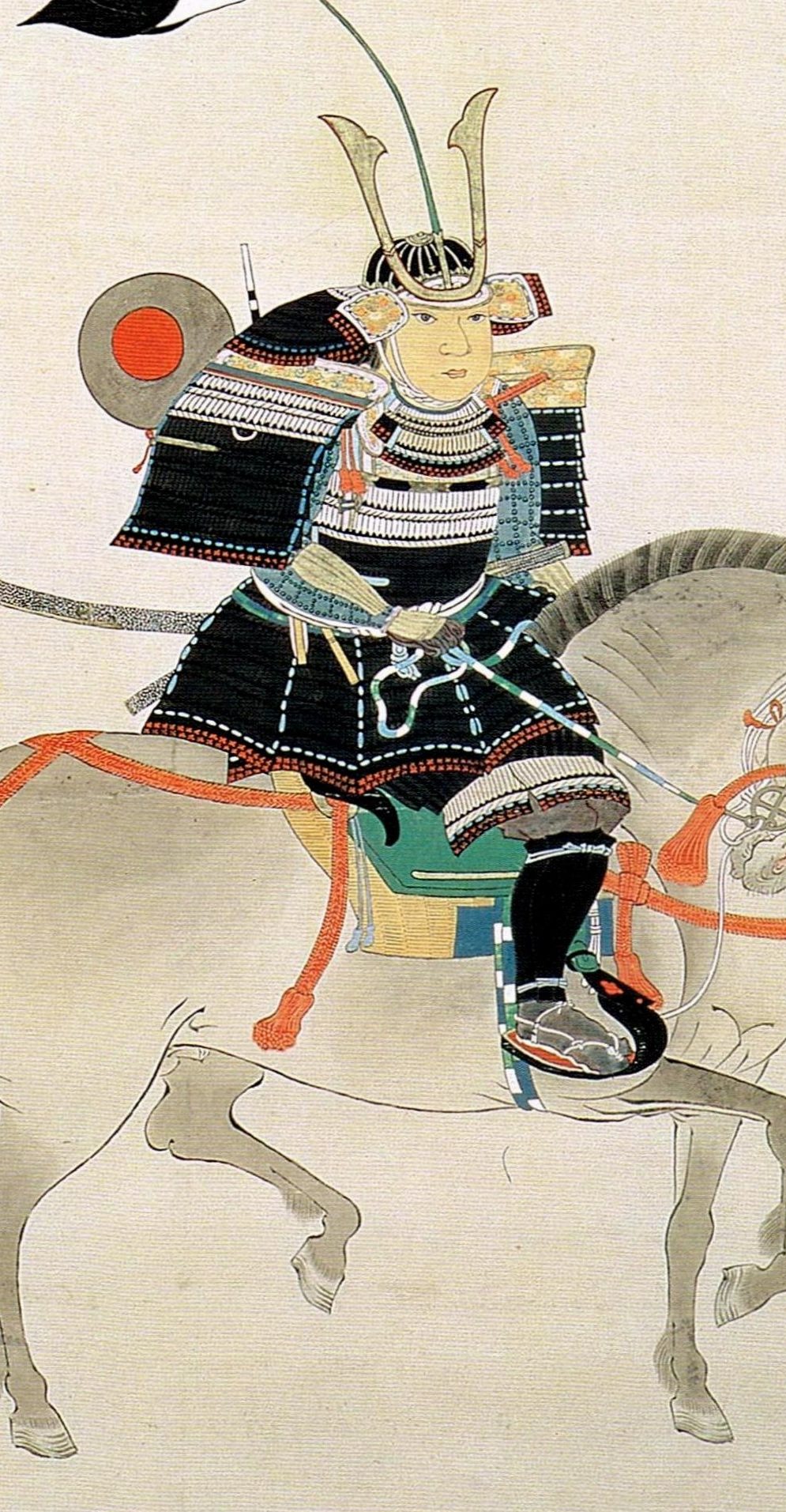
    Mochiyuki put Yoshikatsu, the previous Shogun’s son, on the throne, and for a short while, at least, the initial crisis passed. Emphasis on the short , however, within a year, first Mochiyuki, and then Yoshikatsu (at just nine years old) were dead.

    Hosokawa Mochiyuki, the man who held the centre after Yoshinori’s death, but then, like so many great men, died himself not long after.

    Mochiyuki was replaced as kanrei by Hatakeyama Mochikuni, a member of the Hatakeyama Clan (hence the name). The Hatakeyama had been particularly harmed by the tyrannical rule of Ashikaga Yoshinori, and Mochiyuki sought to use his position to undo some of that harm. His intention was to restore certain lands and titles that had been taken from himself and his relatives, which I suppose he thought would serve to redress the balance of power.

    In this, however, he was opposed by the Hosokawa Clan, who had actually done quite well under Shogun Yoshinori and saw no reason to upset the new status quo. What followed was something of a ‘Cold War’ situation in which the Hosokawa and Hatakeyama would seek influence and advantage by engaging in politicking and proxy wars.

    The most visible example of this is how they involved themselves in family disputes. As I mentioned, succession was not a clear-cut thing, and when violent disputes inevitably broke out, the Hosokawa and Hatakeyama would swoop in to offer support for either side.

    From 1455 to 1460, the Hatakeyama themselves fell into civil war over who would be the next leader of the clan. The Shogun threw his support behind his favoured candidate, but it did little good.

    A strong Shogun might have been able to reassert control, but Yoshimasa was not that, and Shogunate support, which might have once been a decisive factor in deciding these disputes, instead became an irrelevance.

    Ashikaga Yoshimasa, another weak Shogun.

    One of the more serious outbreaks was in the Kanto (again), and when the Shogun ordered the Shiba Clan to dispatch an army to put it down, the Shiba instead collapsed into chaotic infighting over who would be the next head of the clan. The Shogun attempted to impose a new clan head, but this just made things worse. The Shiba were now too embroiled in their own fighting to be much use, and the rebellion in the Kanto went on unopposed.

    By late 1464, then, Japan was in serious crisis. This sense of anxiety was only worsened by the fact that, at age 29 (middle-aged by the standards of the day), Yoshimasa had no children who could serve as his heir (he had two daughters, but no one thought a woman could be Shogun). In November of that year, he solved this problem by calling his brother, Yoshimi, who was a monk, back to secular life and named him his heir.

    With Yoshimi safely back in Kyoto, the question of succession was resolved for now, and the Shogunate could focus on bringing the rest of the country back under control, or so they probably thought.

    In November 1465, just a year later, and to the surprise of many (though hopefully not Yoshimasa), a son and heir, Yoshihisa, was born. I’ve made this point already, but a son didn’t necessarily inherit from his father, and Yoshihisa didn’t automatically become the heir.

    This is where Yoshihisa’s mother, Hino Tomiko, enters the scene. She had actually been Yoshimasa’s wife for a decade at that point, and had given birth to a son in 1459, although the child had only lived for a day. Two daughters followed in 1462 and 1463, and then in 1465, Yoshihisa arrived.

    Like many historical women, Tomiko has been the victim of some seriously unflattering portrayals in contemporary sources, and what followed is possibly an example of that. The Oninki, a source for the origins of what was to come, say that Tomiko was a manipulative woman who saw in her son an opportunity to take power. She secured the support of the Yamana Clan and sought to promote her son as heir, whilst she would take control as regent until he came of age (which was expected to be a long time).

    Her alliance with the Yamana and her attempts to promote her son as heir over the Shogun’s brother were, for centuries, believed to have been the spark that led to the so-called Onin War.

    The problem with this is that the Oninki is literally the only source that places the blame for the war on Tomiko and her scheming. That’s not to say that she didn’t play a part, and the factions that formed in the late 1460s were certainly motivated at least nominally by support for one candidate or another, but Tomiko herself seems to have become a genuinely unpopular figure by the late 15th century (fairly or not) and so the Oninki which is usually believed to have been authored around the late 15th or early 16th centuries may have just been playing on what was, by then, a popular trope.

    Outside of Kyoto, the situation continued to deteriorate. In July 1466, the Shogun attempted to intervene in the Shiba clan’s succession crisis. This time, however, he encountered serious pushback, with several powerful shugo, including the Hosokawa, refusing orders to intervene, and some even stating they would fight for the Shiba against the Shogun.

    In September of that year, rumours abounded that Yoshimi (still officially the heir at this point) was going to be assassinated. Exactly how complicit the Shogun was is unclear, but Yoshimi was sufficiently scared for his life to flee to the protection of the Hosokawa.

    Ashikaga Yoshimi, the Shogun’s appointed heir.
    Musuketeer.3 – 投稿者自身による著作物, CC 表示-継承 3.0, https://commons.wikimedia.org/w/index.php?curid=24843648による

    At this point, the Hosokawa and the Yamana cooperated to protect Yoshimi and oppose the Shogun. Facing the combined might of these two clans, the Shogun had little choice but to back down. The allies went further when they demanded that the lords who were closest to the Shogun (and were publicly blamed for his decisions) be removed. Several previously powerful supporters of the Shogun were either forced to commit suicide or sent into exile, seriously weakening the ability of the Shogun to run the government, and effectively leaving him in the hands of the Hosokawa-Yamana alliance.

    This alliance of convenience quickly became inconvenient, however. It goes back to the Hatakeyama Clan’s internal dispute that I mentioned earlier. The Hosokawa and Yamana supported rival factions, and when this dispute spilt over into Kyoto, a proverbial line in the sand was drawn.

    The actual combatants were made up of various members of different clans, and it gets very messy, so for ease of use, we’ll just talk about the Hosokawa and Yamana factions, but just know that’s not strictly how it went. For example, there were Hatakeyama, Shiba, and numerous other clans on both sides, which gives you some idea of how chaotic it got.

    At New Year 1467, the Shogun, breaking with tradition, visited the Yamana faction for the celebrations, which was about as clear a statement of support as you can imagine short of openly declaring himself. In response, Hosokawa forces surrounded the Shogun’s palace and attempted to intimidate him into issuing orders against the Yamana faction.

    This attempt failed, however, and the Shogun then issued orders that private feuds should not be settled in Kyoto. The Hosokawa faction seems to have followed these orders, but the Yamana and their supporters did not. As a result, the Hosokawa faction’s allies were forced to retreat to the Kamigoryo Shrine, on the outskirts of Kyoto.

    There, on the evening of January 18th, 1467, they were attacked by allies of the Yamana faction and defeated. At the time, the Shogun intervened swiftly, and there was hope that what became called the Battle of Kamigoryo Shrine would be the end of it.

    Neither side was going to let it lie, however, and throughout early spring, both sides gathered more forces in and around Kyoto, and by May, they were on a collision course.

    Sources
    https://ja.wikipedia.org/wiki/%E5%BF%9C%E4%BB%81%E3%81%AE%E4%B9%B1
    https://ja.wikipedia.org/wiki/%E4%B8%8A%E5%BE%A1%E9%9C%8A%E7%A5%9E%E7%A4%BE
    https://ja.wikipedia.org/wiki/%E5%BE%A1%E9%9C%8A%E5%90%88%E6%88%A6
    https://ja.wikipedia.org/wiki/%E8%B6%B3%E5%88%A9%E7%BE%A9%E8%A6%96
    https://ja.wikipedia.org/wiki/%E7%B4%B0%E5%B7%9D%E6%8C%81%E4%B9%8B
    https://ja.wikipedia.org/wiki/%E7%95%A0%E5%B1%B1%E6%8C%81%E5%9B%BD
    https://en.wikipedia.org/wiki/%C5%8Cnin_War
    https://ja.wikipedia.org/wiki/%E6%97%A5%E9%87%8E%E5%AF%8C%E5%AD%90
    https://en.wikipedia.org/wiki/Hino_Tomiko
    https://ja.wikipedia.org/wiki/%E5%BF%9C%E4%BB%81%E8%A8%98
    https://en.wikipedia.org/wiki/Ashikaga_Yoshimasa
    https://en.wikipedia.org/wiki/Ashikaga_Yoshihisa
    https://ja.wikipedia.org/wiki/%E8%B6%B3%E5%88%A9%E7%BE%A9%E6%94%BF#%E6%96%87%E6%AD%A3%E3%81%AE%E6%94%BF%E5%A4%89

  • Shaky Foundations

    Shaky Foundations

    In 1336, Ashikaga Takauji overthrew Emperor Go-Daigo, bringing an end to the brief Kenmu Restoration, which had seen Go-Daigo and his supporters take power from the Kamakura Shogunate and their Hojo regents.

    Go-Daigo’s self-serving policies, which sought to restore the power of the Emperor and the Court at the expense of landholding Samurai, had proved to many of the warrior class that Imperial rule wasn’t in their interest, and Takauji had had no problem rallying his supporters against the Emperor.

    Ashikaga Takauji, serial turncoat and founder of the Ashikaga Shogunate.

    However, it would be wrong to suggest that all the warrior class supported Takauji, there were plenty who remained loyal to Go-Daigo and the idea of ruling without a Shogun, and even after he was defeated, Go-Daigo was able to set himself up with a rival ‘Southern’ Court, opposing the ‘Northern’ Court which relied on the Shogun, thus beginning the Nanbokucho, or “Northern and Southern Court” Period.

    There were political problems at home, too. Though Takauji had proven himself an effective warrior, he wasn’t much for politics, and so his brother, Tadayoshi, became responsible for day-to-day administration, and dealing with matters of justice, whilst Takauji dealt with military matters, including the appointment of Shugo, the military governors in the provinces.

    It will surprise no one to know that this dual system didn’t lead to stable government, but initially, the presence of Emperor Go-Daigo at the Souther Court in Yoshino served as something the new Shogunate could rally against. A series of battles in 1338 and 1339 generally ended in favour of the Shogunate, and when Go-Daigo died in 1339, the initial phase of the conflict came to an end. However, the peace would be fragile and frequently broken, especially further from Kyoto.

    Ko Moronao

    The dual nature of the new government led to immediate power struggles, with rival factions siding with or against each other, and external opponents, mostly at the Southern Court, seeking to take advantage of the division. One figure that emerged early on was Ko Moronao, whom Takauji appointed Shitsuji or deputy in 1336.

    Moronao was a talented warrior, but unlike Takauji, he proved to be a savvy politician as well and emerged as one of the most iconoclastic members of the new regime. He saw no need for an Emperor and favoured the rule of the Samurai without reference to either the Northern or Southern court.

    Ko Moronao, general, iconoclast, and main political player.

    In traditional Japanese historiography, Moronao is portrayed as uniquely violent and cruel, even by the standards of the time. Although not without controversy (he infamously ordered the burning of a famous shrine in which his enemy had taken refuge), Moronao’s main crime seems to have been his vociferous opposition to the Imperial Court, and it wouldn’t be until the post-1945 period that his reputation would begin to recover.

    Moronao quickly found himself at odds with Tadayoshi, who was seen as conservative and increasingly courtly, and every time Tadayoshi made a decision with which Samurai disagreed, Moronao’s popularity would only grow, but it shouldn’t be understood that Moronao’s position was due entirely to his opposition to Tadayoshi.

    Moronao was arguably the Ashikaga’s most effective commander, leading Shogunate forces to victory against the Southern Court and others throughout the chaotic period of the late 1330s and into the 1340s. Arguably, his most consequential victory came in 1348 at the Battle of Shijonawate. Here, Southern Court forces, under the leadership of the famed Kusunoki Clan, who had been advancing north since August of the previous year, were met and decisively defeated by the army of the Shogunate/Northern Court, led by Moronao.

    The Southern forces were so completely defeated that Moronao was able to advance as far as their capital at Yoshino, capturing it temporarily before withdrawing. The Kusunoki Clan, with their famed loyalty to the ‘true’ Emperor, were badly mauled, and with that, a serious military threat to the Shogun and the Northern Court was ended.

    The Kusunoki Clan meet their fate at the Battle of Shijonawate.

    The Bigger they are…

    Just as Moronao’s power seemed to be at its peak, his enemies at court moved against him. In 1349, in response to his alleged ‘misdeeds’, Moronao was stripped of his position as Shitsuji by Takauji, who was apparently pressured into doing it by Tadayoshi and his allies, the Uesugi Clan (I know, it’s another new name).

    Tadayoshi, not satisfied with having Moronao removed from office, apparently tried to have him assassinated, and when they failed, he even tried to enlist retired Emperor Kogon (of the Northern Court), asking him to issue an official order for Moronao’s death.

    Whether the Emperor refused, or there was simply no one to enforce the order, isn’t clear, but Moronao wasn’t about to hang around and let them try again. In August 1349, he and his brother marched on Kyoto at the head of an army. There was apparently relatively little fighting as Tadayoshi, taken by surprise, fled to his residence, where he was quickly surrounded and put under siege.

    The crisis was eventually resolved by negotiation. Tadayoshi would leave Kyoto and become a monk, and his closest allies, those who had conspired against Moronao, were sent into exile. Though nominally a victory for Moronao, the position of Takauji remained controversial. He had facilitated negotiations, but his actual role in the events is unclear, with some speculating that he was actually working towards the removal of his brother.

    Whatever the truth of it, the peace would not last long. Forces loyal to Tadayoshi had been gathering in the Chugoku region, but when Takauji gave the order for them to disperse, their leaders fled to Kyushu, far from Kyoto, and rebuilt their support. In late 1350, seeing the threat posed by the growing opposition, Takauji made the decision to personally march out and defeat them.

    The Chugoku Region, where Takauji’s enemies gathered.
    By TUBS – This vector image includes elements that have been taken or adapted from this file:, CC BY-SA 3.0, https://commons.wikimedia.org/w/index.php?curid=16385915

    However, with his brother distracted, Tadayoshi took his chance and fled Kyoto, arriving in nearby Kawachi Province (near modern Osaka), before raising an army with the stated goal of overthrowing Moronao and his supporters.

    Meanwhile, in the Kanto (around modern Tokyo), the Uesugi (remember them?) rose up as well, defeating forces that had remained loyal to Takauji and Moronao, handing effective control of Kamakura and the surrounding area to Tadayoshi.

    In response to all this, Takauji turned his army around and had the Emperor of the Northern Court declare Tadayoshi and his supporters to be enemies of the throne. When he heard this, Tadayoshi made the shocking decision to openly declare for the Southern Court, which had, up until then, been the Shogunate’s most implacable foes.

    Shogun Showdown

    Takauji tried to return to Kyoto but was defeated by the combined Tadayoshi/Southern Court forces at Komyo-ji, and then again at Uchidehama shortly afterwards. These defeats convinced Takauji to seek peace with his brother, and the matter was settled by further negotiation.

    In public, Takauji insisted that Moronao being allowed to become a monk was a prerequisite for peace, but allegedly, he secretly agreed with Tadayoshi that Moronao could be removed permanently. Peace was formally agreed on February 20th, and on February 26th, Moronao and his family were ambushed by forces loyal to the Uesugi (them again), and killed.

    With Moronao removed, the official reasons for the conflict between Takauji and Tadayoshi were removed, but it will probably not shock you to learn that the peace didn’t hold. The fact that Tadayoshi had sided with the Southern Court was not forgotten, and his attempts at reconciliation fell on deaf ears. He compounded this issue by continuing one of his most unpopular policies, refusing to reward Samurai who fought bravely with land confiscated from their defeated enemies.

    Takauji, for his part, sought to weaken his brother’s support by actively prosecuting his followers whilst overlooking the crimes of his own. This obviously bred considerable resentment amongst Tadayoshi’s base, but it had the side-effect of increasing support for Takauji; after all, he might reward you with land for supporting him, whilst opposing him carried the risk of prosecution.

    In the Spring of 1351, one of Tadayoshi’s most capable generals was assassinated by unknown assailants. Later, one of his commanders was attacked but was able to flee. Then, in the summer, Takauji ordered forces to move against his brother’s allies in Omi and Harima Provinces, seeking to attack from two sides.

    Alerted to the danger, Tadayoshi was able to flee Kyoto and made it to Kamakura. Although driven from the capital, he still controlled vast areas of the nation and could command the loyalty of thousands of warriors. Takauji, seeking any support he could, made an agreement with the Southern Court, effectively handing the entire Northern Court over to them in the so-called (and short-lived) Shohei Unification.

    With support in Kyoto secured, Takauji set off for Kamakura, defeating his brother’s forces in a series of battles throughout late 1351 and into 1352, eventually forcing him back to Kamakura, where he had little choice but to surrender.

    As punishment for his rebellion, Tadayoshi was confined to a temple in Kamakura, where he conveniently died only a few weeks later, allegedly by poison, but also possibly by a sudden illness.

    The main hall (Hondo) at Jomyo-ji Temple in Kamakura.

    Tadayoshi’s death brought an end to the political crisis in the short term, but it wasn’t to last. The reconciliation of the Imperial Court was already fraying at the edges, and it wouldn’t be long before conflict between Emperor and Shogun broke out again, but more on that next time.

    Sources
    https://ja.wikipedia.org/wiki/%E8%A6%B3%E5%BF%9C%E3%81%AE%E6%93%BE%E4%B9%B1#%E8%96%A9%E5%9F%B5%E5%B3%A0%E3%81%AE%E6%88%A6%E3%81%84
    https://en.wikipedia.org/wiki/Ashikaga_Tadayoshi
    https://ja.wikipedia.org/wiki/%E6%89%93%E5%87%BA%E6%B5%9C%E3%81%AE%E6%88%A6%E3%81%84
    https://ja.wikipedia.org/wiki/%E5%85%89%E6%98%8E%E5%AF%BA%E5%90%88%E6%88%A6
    https://ja.wikipedia.org/wiki/%E8%A6%B3%E5%BF%9C%E3%81%AE%E6%93%BE%E4%B9%B1
    https://ja.wikipedia.org/wiki/%E9%AB%98%E5%B8%AB%E7%9B%B4
    https://ja.wikipedia.org/wiki/%E9%87%91%E3%83%B6%E5%B4%8E%E3%81%AE%E6%88%A6%E3%81%84_(%E5%8D%97%E5%8C%97%E6%9C%9D%E6%99%82%E4%BB%A3)
    https://en.wikipedia.org/wiki/Sieges_of_Kuromaru
    https://en.wikipedia.org/wiki/Siege_of_Kanegasaki_(1337)
    https://en.wikipedia.org/wiki/Battle_of_Shij%C5%8Dnawate
    https://en.wikipedia.org/wiki/K%C5%8D_no_Moronao
    https://en.wikipedia.org/wiki/Kann%C5%8D_disturbance
    https://en.wikipedia.org/wiki/Ashikaga_Takauji
    https://en.wikipedia.org/wiki/Kenmu_Restoration
    https://en.wikipedia.org/wiki/Nanboku-ch%C5%8D_period
    https://en.wikipedia.org/wiki/Ashikaga_shogunate

  • The Genpei War

    Oh yes, here we go, a good old-fashioned war post! All those posts about economic and social decline are finally paying off! Let’s get into it!

    So, as we’ve discussed, by the mid-12th Century, the Imperial Court was in a bad way. Over the centuries, the throne had been dominated by one powerful clan after another, who would marry into the Imperial family again and again in order to maintain that domination, at the cost of turning their gene pool into more of a muddy puddle. Luckily, Heian Era Japan didn’t have a concept of genetics, so I’m sure it was fine.

    The first of these families had been the Soga, who had been overthrown by the Fujiwara in the Isshi Incident in 645. The Fujiwara had had more or less complete control until the Emperors started abdicating to become insei, that is, cloistered Emperors, or an Emperor with all the power of the throne and none of the restraints that the Fujiwara had taken advantage of.

    With the Fujiwara weakened, their enemies started circling. The Hogen Rebellion in 1156 marked the end of Fujiwara power, as the rival Taira and Minamoto families teamed up to take them down. In a betrayal that will surprise no one, the Taira then shafted the Minamoto in the post-rebellion settlement, taking most of the power and the influence over the Emperor for themselves.

    The Minamoto were understandably a bit put out by that, so they launched a rebellion of their own in 1160. The so-called Heiji Rebellion failed, and the Minamoto were effectively wiped out, their leadership either killed or banished to the provinces.

    For the next 20 years, the Taira ruled as the Fujiwara had, but the problem with a violent takeover is that once one group does it, everyone wants to have a go. The Taira, like the Fujiwara before them, became overly enamoured with court life and neglected the provinces.

    This was unfortunate because, as I mentioned earlier, it was the provinces to which the Minamoto had been banished, and they weren’t in a forgiving mood when it came to the Taira.

    The Heiji Rebellion in 1160 marked the triumph of the Taira over their Minamoto rivals, at least temporarily.

    The leader of the Taira at this point was Kiyomori. He had led the Taira forces that had overthrown the Fujiwara and then seen off the Minamoto, and he was probably feeling pretty pleased with himself. Using his influence (and presumably the implicit threat of force), he rose through the ranks at court, eventually becoming Daijo-Daijin, which was basically the head of the government and second only to the Emperor (in theory).

    Now, there had obviously been Daijo-Daijin before Kiyomori, but he was significant because he was the first from the buke or warrior families to rise to that rank. Previously, the formal ranks of the Imperial Bureaucracy had been held by members or allies of the Fujiwara, and Kiyomori was an outsider who was seen as having used martial strength to gain his position, which was true, to be fair.

    In 1171, Kiyomori cemented his power at court by having his daughter, Tokuko, marry Emperor Takakura. Now, none of this was particularly new; the Fujiwara had been doing it for centuries, after all, but Kiyomori was different; he was a thug.

    The Fujiwara, for all their faults, had always played the game properly. They knew the rules, understood court etiquette, wrote beautiful poems, all that stuff. Kiyomori wasn’t like that. He’d taken power through military strength, and that was how he intended to keep hold of it. He wasn’t afraid to throw his weight around, and it was a risky business to oppose him.

    In 1177, in response to an alleged coup (the Shishigatani incident), Kiyomori ordered the arrest of dozens of conspirators. That these conspirators were all people who had reason to be offended by Kiyomori was convenient, and some sources speculate that the plot never existed at all, as it appears to have relied entirely on the testimony of a single monk, who Kiyomori had tortured and then beheaded.

    Regardless of whether it was real or not, Kiyomori had reinforced his power. Those who had ‘opposed’ him were dead or exiled, and he filled the vacant posts with family members and allies, further cementing his power and the fury of the opposition against him.

    In 1178, Tokuko gave birth to a son, Antoku, and Kiyomori decided it’d be a good time to remind everyone at court who was really in charge. The so-called Political Crisis of the Third Year of the Jisho Era (which is a bit easier to say in Japanese, I assure you) was basically a military coup d’etat. Kiyomori brought thousands of his warriors from the provinces to the capital and took over.

    There was no longer any pretence, Kiyomori was dictator in all but name, and shortly after the coup, he had Emperor Takakura abdicate in favour of the two-year-old Antoku, who obviously couldn’t rule himself, at which point Kiyomori kindly stepped in as regent.

    You remember what I said about violent takeovers? Well, Kiyomori was about to learn that lesson. The Taira had driven out the Minamoto, but they hadn’t destroyed them, and for twenty years, Kiyomori had ruled in such a way that he alienated just about everyone.

    In 1180, Prince Mochihito, who had been in line for the throne before Kiyomori raised the infant Antoku in his place, raised his banner in rebellion, calling for the opponents of the Taira to gather an army and march on the capital. Unfortunately, for Mochihito, his plan was discovered, and he was forced to flee, eventually arriving at the temple of Mii-Dera in Nara.

    What follows is largely recorded in The Heike Monogatari, which is a pretty epic read, but is largely a fictionalised account of the war, presenting an idealised version of events, in which heroic warriors do heroic things against impossible (and often implausible) odds.

    What we do know is that Mochihito, outnumbered and overwhelmed, was defeated at the Battle of Uji, just outside modern Kyoto, where he was either killed or executed shortly afterwards. Despite his unsuccessful attempts at raising an army, Mochihito’s call to arms did serve to galvanise the opposition to the Taira.

    Prince Mochihito, whose failed rebellion and death at the Battle of Uji served to inspire the opposition to Taira rule.
    ColBase: 国立博物館所蔵品統合検索システム (Integrated Collections Database of the National Museums, Japan), CC 表示 4.0, https://commons.wikimedia.org/w/index.php?curid=92525963による

    It is at this point that Minamoto no Yoritomo enters the stage, he definitely deserves a post of his own, but the short version is that he was 13 in 1160, and the Taira, perhaps feeling pity over his youth, hadn’t executed him, banishing him to the provinces instead.

    Yoritomo, however, had a long memory, and he had spent the last twenty years gaining strength, first over his own clan, and then the surrounding area. His base was the city of Kamakura, in modern-day Kanagawa Prefecture, and it was a relatively long way from the capital.

    When news of Uji reached him, Yoritomo set off looking for a fight. He called for help from the surrounding clans, and although there seems to have been some support, very few actually showed up to fight. In September 1180, Yoritomo had managed to gather just 300 men, and he was attacked by a force ten times that size at the Battle of Ishibashiyama.

    Despite this defeat, Yoritomo was able to escape by sea to Awa Province (in modern Chiba Prefecture), from where he would continue the fight. Meanwhile, the Taira, under Kiyomori, sought to take revenge against the monks who had hidden Prince Mochihito, and attacked and burned the city of Nara.

    Meanwhile, Yoritomo’s uncle was defeated at the Battle of Sunomatagawa in June 1181. The story goes that the Minamoto tried to sneak across a river at night in order to attack the Taira on the other bank. Apparently, their plan failed because Taira sentries were able to distinguish friend from foe by checking who was wet, or not. That seems like remarkable awareness for a battle in the dark, but regardless, the Minamoto failed to surprise the Taira and were defeated.

    Later that year, Yoritomo’s cousin (and sometimes rival) Yoshinaka raised an army in the north and defeated the Taira army sent to stop him, after which, fighting died down for a while.

    Taira no Kiyomori had died earlier in 1181 (the story goes that his fever was so hot anyone who tried to tend him would be burned), and not long after, a famine broke out that would spread across the nation. You can’t fight if you can’t eat, and so what followed was a two-year lull in the fighting, which I imagine wasn’t much comfort to the starving peasants.

    The fighting would resume in 1183, and the Taira would have some initial success, but at the Battle of Kurikara Pass in June of that year, the Taira were decisively defeated, and the momentum shifted to the Minamoto. It was Yoshinaka (Yoritomo’s cousin) and Yukiie (Yoritomo’s Uncle, but not Yoshinaka’s father, I know, it’s confusing) who actually led the Minamoto to the capital.

    As Kiyomori was dead, it fell to his son Munemori to lead the defence of the city. He did this by taking young Emperor Antoku and fleeing west, as you do. It was at this point that the cloistered Emperor, Go-Shirakawa (yeah, he’s still alive at this point!) threw in his lot with Yoshinaka and the Minamoto, calling on them to pursue and destroy the Taira.

    Unfortunately, Yoshinaka had different plans. Fancying himself the rightful leader of the Minamoto, he engaged in a plot against his cousin, Yoritomo, who was by now marching from the East towards the capital. It seems he was initially joined by Yukiie, who then got cold feet and let details of the plot slip.

    Yoshinaka himself became aware that the plot had been discovered and moved first, setting fire to several parts of the capital and taking Go-Shirakawa hostage. It was at this point that Yoritomo’s brothers, Yoshitsune and Noriyori, arrived with a considerable force. They drove Yoshinaka out of the capital, and then killed him at the Second Battle of Uji , bringing an end to the Minamoto Clan’s feuding (for now.)

    A scene from the Second Battle of Uji. The bridge had been pulled up, hence the need to swim.

    After this, the momentum was decisively on the side of the Minamoto. They pursued the Taira, who had originally set up camp at Dazaifu, in Kyushu, and fortifying their positions around the Inland Sea, which were the lands the Taira had originally held.

    The Minamoto went on the offensive and defeated the Taira at the Battle of Ichi-no-Tani, near modern-day Kobe, followed up by another victory at Kojima. These successes allowed the Minamoto to drive the Taira out of their strongholds along the coast of the Inland Sea.

    The Taira, in possession of what was apparently the only navy in Japan at the time, and certainly the strongest, retreated to Shikoku, knowing that the Minamoto couldn’t follow. The Minamoto weren’t going to just let the Taira get away, however, and although it took time, they built up their naval strength before launching an attack at Yashima, in modern-day Takamatsu, that took the Taira fortress there, which had also been used as a makeshift palace for Emperor Antoku.

    Driven out of yet another stronghold, the Taira took to their ships and fled. The Minamoto would catch up to them at Dan-no-Ura, in the Straits of Shimonoseki. If you believe the Heike Monogatari (which you shouldn’t), then the Minamoto had 3000 ships to the Taira’s 1000. According to the Azuma Kagami, which is a biased by slightly more believable source, the forces were actually around 800 to 500, which are still considerable forces, but a bit more plausible.

    Despite being outnumbered, the Taira had home advantage and knew the tides and currents better than their foes. They also had the Emperor with them, which they assumed would give their side more legitimacy and encourage their men to fight harder.

    It was a good idea in theory, but it didn’t work. Though the tides were initially in the Taira’s favour, they turned, as tides do, and one of the Taira’s commanders turned as well, as men often do. Surrounded and attacked from all sides, the Taira began committing suicide en masse. One of those who died was six-year-old Antoku. The story goes that his grandmother, Taira no Kiyomori’s widow, took the boy in her arms and jumped with him into the sea. Neither was seen again.

    The Taira also tried to get rid of the Imperial Regalia, tossing them overboard. However, they apparently only managed to dump the mythical Kusanagi Sword and the Yasakani Jewel. The Yata no Kagami, a sacred bronze mirror, was apparently saved when the woman who tried to throw it overboard was killed when she accidentally looked at it.

    All three items were apparently recovered, either on the day of the battle or later, by divers. They are supposedly housed at the Ise Shrine in Mie Prefecture. The fact that no one has been allowed to see the artefacts since Dan-no-Ura is apparently just a coincidence.

    A later illustration of the Battle of Dan-no-Ura, which brought an end to Taira control of Japan.

    The result of Dan-no-Ura was the end of the Taira as a serious political force. Later that year, the Emperor Go-Shirakawa gave Minamoto no Yoritomo the right to collect taxes and appoint officials, effectively handing control of the state over to him.

    Though it would be some years before Yoritomo would take the formal title, the Genpei War marks the time at which control of Japan shifted from courtiers and Emperors to warriors under a supreme military commander who took a title that had first been used in the earliest days of Imperial rule in Japan, Sei-i Tai Shōgun.

    Cue dramatic music

    Sources
    https://en.wikipedia.org/wiki/Battle_of_Dan-no-ura
    https://en.wikipedia.org/wiki/Battle_of_Uji_(1184)
    https://en.wikipedia.org/wiki/Azuma_Kagami
    https://ja.wikipedia.org/wiki/%E5%B1%8B%E5%B3%B6%E3%81%AE%E6%88%A6%E3%81%84
    https://en.wikipedia.org/wiki/Battle_of_Yashima
    https://ja.wikipedia.org/wiki/%E4%B8%80%E3%83%8E%E8%B0%B7%E3%81%AE%E6%88%A6%E3%81%84
    https://ja.wikipedia.org/wiki/%E8%97%A4%E6%88%B8%E3%81%AE%E6%88%A6%E3%81%84
    https://ja.wikipedia.org/wiki/%E6%BA%90%E8%A1%8C%E5%AE%B6
    https://ja.wikipedia.org/wiki/%E5%80%B6%E5%88%A9%E4%BC%BD%E7%BE%85%E5%B3%A0%E3%81%AE%E6%88%A6%E3%81%84
    https://en.wikipedia.org/wiki/Battle_of_Kurikara_Pass
    https://en.wikipedia.org/wiki/Minamoto_no_Yukiie
    https://en.wikipedia.org/wiki/Minamoto_no_Yoshinaka
    https://en.wikipedia.org/wiki/Battle_of_Sunomata-gawa
    https://en.wikipedia.org/wiki/Battle_of_Ishibashiyama
    https://ja.wikipedia.org/wiki/%E4%BB%A5%E4%BB%81%E7%8E%8B
    https://en.wikipedia.org/wiki/Prince_Mochihito
    https://en.wikipedia.org/wiki/Emperor_Takakura
    https://en.wikipedia.org/wiki/Emperor_Antoku
    https://en.wikipedia.org/wiki/Taira_no_Kiyomori
    https://en.wikipedia.org/wiki/The_Tale_of_the_Heike
    https://en.wikipedia.org/wiki/Battle_of_Uji_(1180)
    https://ja.wikipedia.org/wiki/%E6%B2%BB%E6%89%BF%E3%83%BB%E5%AF%BF%E6%B0%B8%E3%81%AE%E4%B9%B1
    https://ja.wikipedia.org/wiki/%E6%B2%BB%E6%89%BF%E4%B8%89%E5%B9%B4%E3%81%AE%E6%94%BF%E5%A4%89
    https://en.wikipedia.org/wiki/Shishigatani_incident
    https://ja.wikipedia.org/wiki/%E9%B9%BF%E3%82%B1%E8%B0%B7%E3%81%AE%E9%99%B0%E8%AC%80
    https://en.wikipedia.org/wiki/Genpei_War
    https://en.wikipedia.org/wiki/Minamoto_no_Yoritomo