Tag: Japanese civil wars

  • Shaky Foundations

    Shaky Foundations

    In 1336, Ashikaga Takauji overthrew Emperor Go-Daigo, bringing an end to the brief Kenmu Restoration, which had seen Go-Daigo and his supporters take power from the Kamakura Shogunate and their Hojo regents.

    Go-Daigo’s self-serving policies, which sought to restore the power of the Emperor and the Court at the expense of landholding Samurai, had proved to many of the warrior class that Imperial rule wasn’t in their interest, and Takauji had had no problem rallying his supporters against the Emperor.
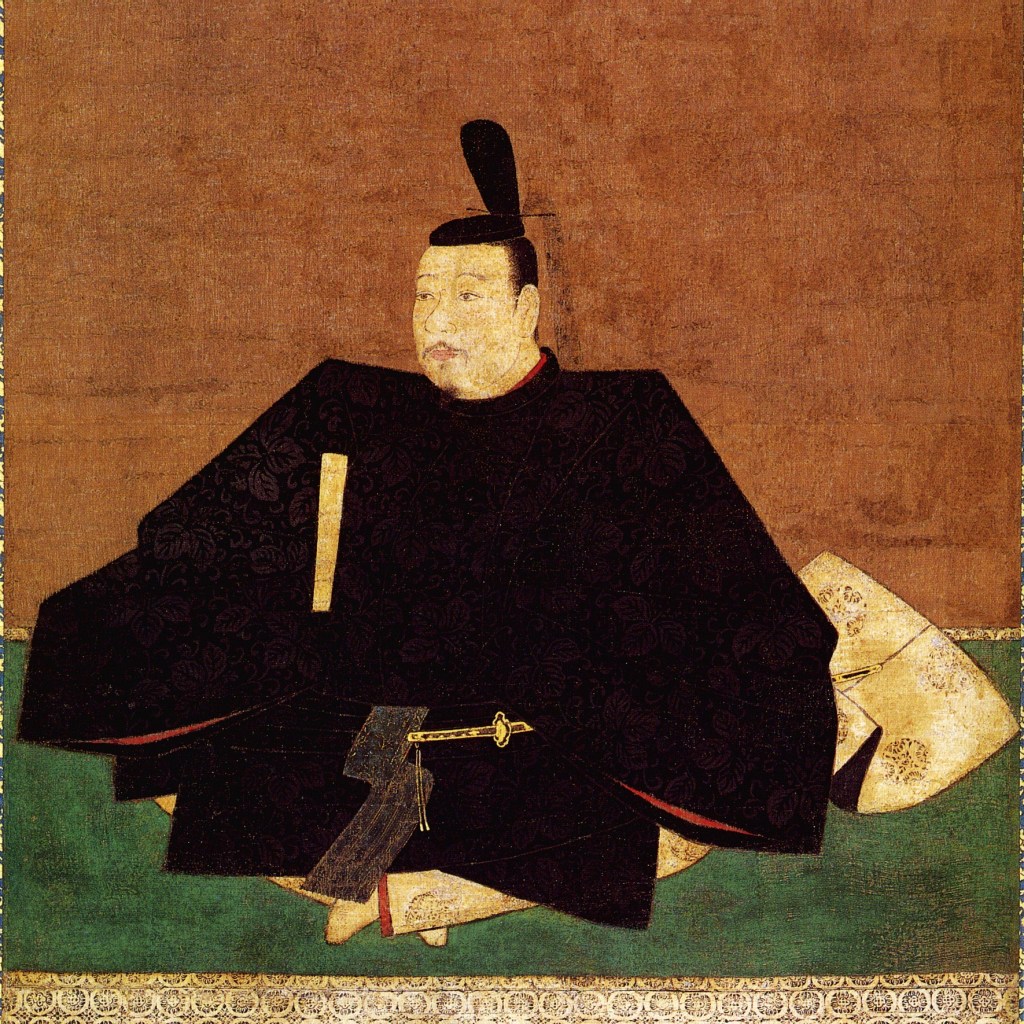
    Ashikaga Takauji, serial turncoat and founder of the Ashikaga Shogunate.

    However, it would be wrong to suggest that all the warrior class supported Takauji, there were plenty who remained loyal to Go-Daigo and the idea of ruling without a Shogun, and even after he was defeated, Go-Daigo was able to set himself up with a rival ‘Southern’ Court, opposing the ‘Northern’ Court which relied on the Shogun, thus beginning the Nanbokucho, or “Northern and Southern Court” Period.

    There were political problems at home, too. Though Takauji had proven himself an effective warrior, he wasn’t much for politics, and so his brother, Tadayoshi, became responsible for day-to-day administration, and dealing with matters of justice, whilst Takauji dealt with military matters, including the appointment of Shugo, the military governors in the provinces.

    It will surprise no one to know that this dual system didn’t lead to stable government, but initially, the presence of Emperor Go-Daigo at the Souther Court in Yoshino served as something the new Shogunate could rally against. A series of battles in 1338 and 1339 generally ended in favour of the Shogunate, and when Go-Daigo died in 1339, the initial phase of the conflict came to an end. However, the peace would be fragile and frequently broken, especially further from Kyoto.

    Ko Moronao

    The dual nature of the new government led to immediate power struggles, with rival factions siding with or against each other, and external opponents, mostly at the Southern Court, seeking to take advantage of the division. One figure that emerged early on was Ko Moronao, whom Takauji appointed Shitsuji or deputy in 1336.

    Moronao was a talented warrior, but unlike Takauji, he proved to be a savvy politician as well and emerged as one of the most iconoclastic members of the new regime. He saw no need for an Emperor and favoured the rule of the Samurai without reference to either the Northern or Southern court.
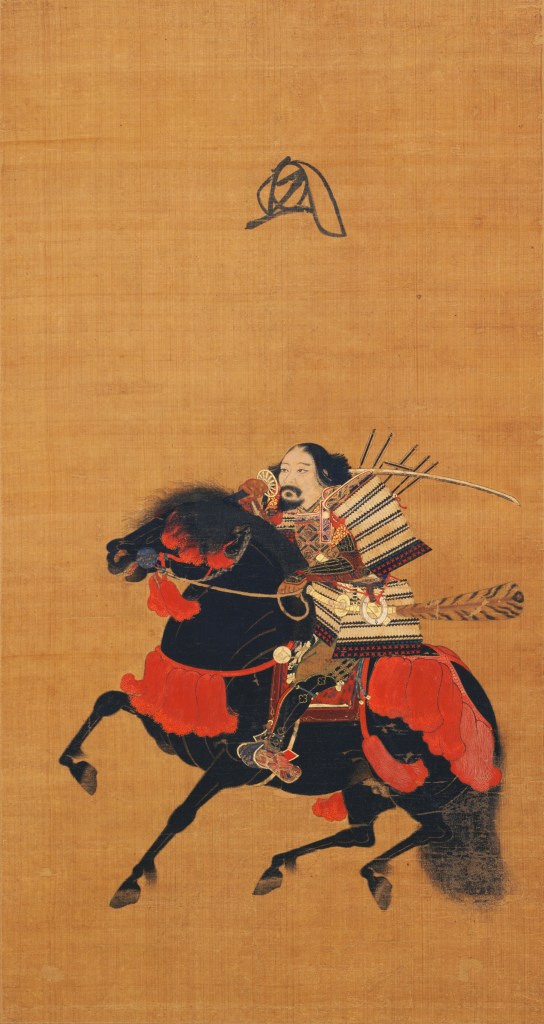
    Ko Moronao, general, iconoclast, and main political player.

    In traditional Japanese historiography, Moronao is portrayed as uniquely violent and cruel, even by the standards of the time. Although not without controversy (he infamously ordered the burning of a famous shrine in which his enemy had taken refuge), Moronao’s main crime seems to have been his vociferous opposition to the Imperial Court, and it wouldn’t be until the post-1945 period that his reputation would begin to recover.

    Moronao quickly found himself at odds with Tadayoshi, who was seen as conservative and increasingly courtly, and every time Tadayoshi made a decision with which Samurai disagreed, Moronao’s popularity would only grow, but it shouldn’t be understood that Moronao’s position was due entirely to his opposition to Tadayoshi.

    Moronao was arguably the Ashikaga’s most effective commander, leading Shogunate forces to victory against the Southern Court and others throughout the chaotic period of the late 1330s and into the 1340s. Arguably, his most consequential victory came in 1348 at the Battle of Shijonawate. Here, Southern Court forces, under the leadership of the famed Kusunoki Clan, who had been advancing north since August of the previous year, were met and decisively defeated by the army of the Shogunate/Northern Court, led by Moronao.

    The Southern forces were so completely defeated that Moronao was able to advance as far as their capital at Yoshino, capturing it temporarily before withdrawing. The Kusunoki Clan, with their famed loyalty to the ‘true’ Emperor, were badly mauled, and with that, a serious military threat to the Shogun and the Northern Court was ended.
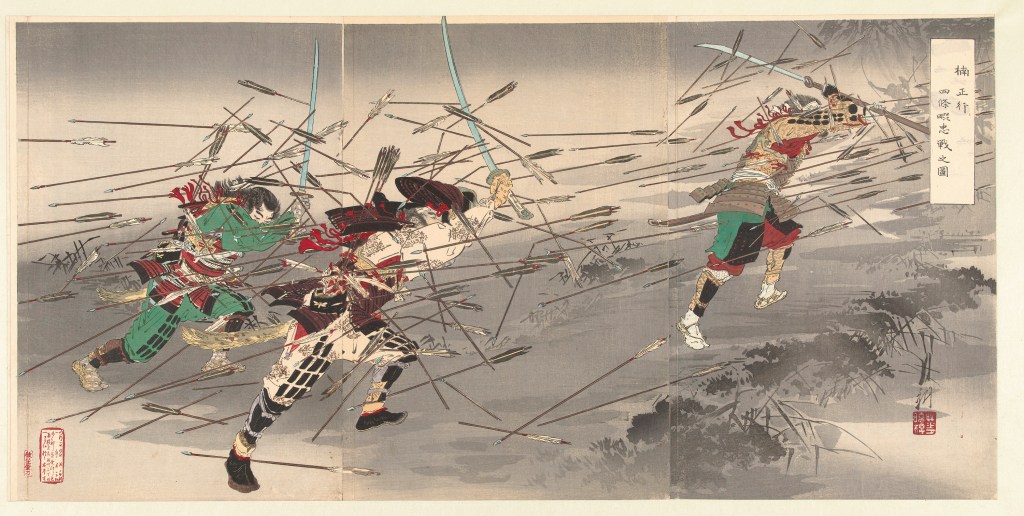
    The Kusunoki Clan meet their fate at the Battle of Shijonawate.

    The Bigger they are…

    Just as Moronao’s power seemed to be at its peak, his enemies at court moved against him. In 1349, in response to his alleged ‘misdeeds’, Moronao was stripped of his position as Shitsuji by Takauji, who was apparently pressured into doing it by Tadayoshi and his allies, the Uesugi Clan (I know, it’s another new name).

    Tadayoshi, not satisfied with having Moronao removed from office, apparently tried to have him assassinated, and when they failed, he even tried to enlist retired Emperor Kogon (of the Northern Court), asking him to issue an official order for Moronao’s death.

    Whether the Emperor refused, or there was simply no one to enforce the order, isn’t clear, but Moronao wasn’t about to hang around and let them try again. In August 1349, he and his brother marched on Kyoto at the head of an army. There was apparently relatively little fighting as Tadayoshi, taken by surprise, fled to his residence, where he was quickly surrounded and put under siege.

    The crisis was eventually resolved by negotiation. Tadayoshi would leave Kyoto and become a monk, and his closest allies, those who had conspired against Moronao, were sent into exile. Though nominally a victory for Moronao, the position of Takauji remained controversial. He had facilitated negotiations, but his actual role in the events is unclear, with some speculating that he was actually working towards the removal of his brother.

    Whatever the truth of it, the peace would not last long. Forces loyal to Tadayoshi had been gathering in the Chugoku region, but when Takauji gave the order for them to disperse, their leaders fled to Kyushu, far from Kyoto, and rebuilt their support. In late 1350, seeing the threat posed by the growing opposition, Takauji made the decision to personally march out and defeat them.

    The Chugoku Region, where Takauji’s enemies gathered.
    By TUBS – This vector image includes elements that have been taken or adapted from this file:, CC BY-SA 3.0, https://commons.wikimedia.org/w/index.php?curid=16385915

    However, with his brother distracted, Tadayoshi took his chance and fled Kyoto, arriving in nearby Kawachi Province (near modern Osaka), before raising an army with the stated goal of overthrowing Moronao and his supporters.

    Meanwhile, in the Kanto (around modern Tokyo), the Uesugi (remember them?) rose up as well, defeating forces that had remained loyal to Takauji and Moronao, handing effective control of Kamakura and the surrounding area to Tadayoshi.

    In response to all this, Takauji turned his army around and had the Emperor of the Northern Court declare Tadayoshi and his supporters to be enemies of the throne. When he heard this, Tadayoshi made the shocking decision to openly declare for the Southern Court, which had, up until then, been the Shogunate’s most implacable foes.

    Shogun Showdown

    Takauji tried to return to Kyoto but was defeated by the combined Tadayoshi/Southern Court forces at Komyo-ji, and then again at Uchidehama shortly afterwards. These defeats convinced Takauji to seek peace with his brother, and the matter was settled by further negotiation.

    In public, Takauji insisted that Moronao being allowed to become a monk was a prerequisite for peace, but allegedly, he secretly agreed with Tadayoshi that Moronao could be removed permanently. Peace was formally agreed on February 20th, and on February 26th, Moronao and his family were ambushed by forces loyal to the Uesugi (them again), and killed.

    With Moronao removed, the official reasons for the conflict between Takauji and Tadayoshi were removed, but it will probably not shock you to learn that the peace didn’t hold. The fact that Tadayoshi had sided with the Southern Court was not forgotten, and his attempts at reconciliation fell on deaf ears. He compounded this issue by continuing one of his most unpopular policies, refusing to reward Samurai who fought bravely with land confiscated from their defeated enemies.

    Takauji, for his part, sought to weaken his brother’s support by actively prosecuting his followers whilst overlooking the crimes of his own. This obviously bred considerable resentment amongst Tadayoshi’s base, but it had the side-effect of increasing support for Takauji; after all, he might reward you with land for supporting him, whilst opposing him carried the risk of prosecution.

    In the Spring of 1351, one of Tadayoshi’s most capable generals was assassinated by unknown assailants. Later, one of his commanders was attacked but was able to flee. Then, in the summer, Takauji ordered forces to move against his brother’s allies in Omi and Harima Provinces, seeking to attack from two sides.

    Alerted to the danger, Tadayoshi was able to flee Kyoto and made it to Kamakura. Although driven from the capital, he still controlled vast areas of the nation and could command the loyalty of thousands of warriors. Takauji, seeking any support he could, made an agreement with the Southern Court, effectively handing the entire Northern Court over to them in the so-called (and short-lived) Shohei Unification.

    With support in Kyoto secured, Takauji set off for Kamakura, defeating his brother’s forces in a series of battles throughout late 1351 and into 1352, eventually forcing him back to Kamakura, where he had little choice but to surrender.

    As punishment for his rebellion, Tadayoshi was confined to a temple in Kamakura, where he conveniently died only a few weeks later, allegedly by poison, but also possibly by a sudden illness.

    The main hall (Hondo) at Jomyo-ji Temple in Kamakura.

    Tadayoshi’s death brought an end to the political crisis in the short term, but it wasn’t to last. The reconciliation of the Imperial Court was already fraying at the edges, and it wouldn’t be long before conflict between Emperor and Shogun broke out again, but more on that next time.

    Sources
    https://ja.wikipedia.org/wiki/%E8%A6%B3%E5%BF%9C%E3%81%AE%E6%93%BE%E4%B9%B1#%E8%96%A9%E5%9F%B5%E5%B3%A0%E3%81%AE%E6%88%A6%E3%81%84
    https://en.wikipedia.org/wiki/Ashikaga_Tadayoshi
    https://ja.wikipedia.org/wiki/%E6%89%93%E5%87%BA%E6%B5%9C%E3%81%AE%E6%88%A6%E3%81%84
    https://ja.wikipedia.org/wiki/%E5%85%89%E6%98%8E%E5%AF%BA%E5%90%88%E6%88%A6
    https://ja.wikipedia.org/wiki/%E8%A6%B3%E5%BF%9C%E3%81%AE%E6%93%BE%E4%B9%B1
    https://ja.wikipedia.org/wiki/%E9%AB%98%E5%B8%AB%E7%9B%B4
    https://ja.wikipedia.org/wiki/%E9%87%91%E3%83%B6%E5%B4%8E%E3%81%AE%E6%88%A6%E3%81%84_(%E5%8D%97%E5%8C%97%E6%9C%9D%E6%99%82%E4%BB%A3)
    https://en.wikipedia.org/wiki/Sieges_of_Kuromaru
    https://en.wikipedia.org/wiki/Siege_of_Kanegasaki_(1337)
    https://en.wikipedia.org/wiki/Battle_of_Shij%C5%8Dnawate
    https://en.wikipedia.org/wiki/K%C5%8D_no_Moronao
    https://en.wikipedia.org/wiki/Kann%C5%8D_disturbance
    https://en.wikipedia.org/wiki/Ashikaga_Takauji
    https://en.wikipedia.org/wiki/Kenmu_Restoration
    https://en.wikipedia.org/wiki/Nanboku-ch%C5%8D_period
    https://en.wikipedia.org/wiki/Ashikaga_shogunate
  • The Genpei War

    Oh yes, here we go, a good old-fashioned war post! All those posts about economic and social decline are finally paying off! Let’s get into it!

    So, as we’ve discussed, by the mid-12th Century, the Imperial Court was in a bad way. Over the centuries, the throne had been dominated by one powerful clan after another, who would marry into the Imperial family again and again in order to maintain that domination, at the cost of turning their gene pool into more of a muddy puddle. Luckily, Heian Era Japan didn’t have a concept of genetics, so I’m sure it was fine.

    The first of these families had been the Soga, who had been overthrown by the Fujiwara in the Isshi Incident in 645. The Fujiwara had had more or less complete control until the Emperors started abdicating to become insei, that is, cloistered Emperors, or an Emperor with all the power of the throne and none of the restraints that the Fujiwara had taken advantage of.

    With the Fujiwara weakened, their enemies started circling. The Hogen Rebellion in 1156 marked the end of Fujiwara power, as the rival Taira and Minamoto families teamed up to take them down. In a betrayal that will surprise no one, the Taira then shafted the Minamoto in the post-rebellion settlement, taking most of the power and the influence over the Emperor for themselves.

    The Minamoto were understandably a bit put out by that, so they launched a rebellion of their own in 1160. The so-called Heiji Rebellion failed, and the Minamoto were effectively wiped out, their leadership either killed or banished to the provinces.

    For the next 20 years, the Taira ruled as the Fujiwara had, but the problem with a violent takeover is that once one group does it, everyone wants to have a go. The Taira, like the Fujiwara before them, became overly enamoured with court life and neglected the provinces.

    This was unfortunate because, as I mentioned earlier, it was the provinces to which the Minamoto had been banished, and they weren’t in a forgiving mood when it came to the Taira.

    The Heiji Rebellion in 1160 marked the triumph of the Taira over their Minamoto rivals, at least temporarily.

    The leader of the Taira at this point was Kiyomori. He had led the Taira forces that had overthrown the Fujiwara and then seen off the Minamoto, and he was probably feeling pretty pleased with himself. Using his influence (and presumably the implicit threat of force), he rose through the ranks at court, eventually becoming Daijo-Daijin, which was basically the head of the government and second only to the Emperor (in theory).

    Now, there had obviously been Daijo-Daijin before Kiyomori, but he was significant because he was the first from the buke or warrior families to rise to that rank. Previously, the formal ranks of the Imperial Bureaucracy had been held by members or allies of the Fujiwara, and Kiyomori was an outsider who was seen as having used martial strength to gain his position, which was true, to be fair.

    In 1171, Kiyomori cemented his power at court by having his daughter, Tokuko, marry Emperor Takakura. Now, none of this was particularly new; the Fujiwara had been doing it for centuries, after all, but Kiyomori was different; he was a thug.

    The Fujiwara, for all their faults, had always played the game properly. They knew the rules, understood court etiquette, wrote beautiful poems, all that stuff. Kiyomori wasn’t like that. He’d taken power through military strength, and that was how he intended to keep hold of it. He wasn’t afraid to throw his weight around, and it was a risky business to oppose him.

    In 1177, in response to an alleged coup (the Shishigatani incident), Kiyomori ordered the arrest of dozens of conspirators. That these conspirators were all people who had reason to be offended by Kiyomori was convenient, and some sources speculate that the plot never existed at all, as it appears to have relied entirely on the testimony of a single monk, who Kiyomori had tortured and then beheaded.

    Regardless of whether it was real or not, Kiyomori had reinforced his power. Those who had ‘opposed’ him were dead or exiled, and he filled the vacant posts with family members and allies, further cementing his power and the fury of the opposition against him.

    In 1178, Tokuko gave birth to a son, Antoku, and Kiyomori decided it’d be a good time to remind everyone at court who was really in charge. The so-called Political Crisis of the Third Year of the Jisho Era (which is a bit easier to say in Japanese, I assure you) was basically a military coup d’etat. Kiyomori brought thousands of his warriors from the provinces to the capital and took over.

    There was no longer any pretence, Kiyomori was dictator in all but name, and shortly after the coup, he had Emperor Takakura abdicate in favour of the two-year-old Antoku, who obviously couldn’t rule himself, at which point Kiyomori kindly stepped in as regent.

    You remember what I said about violent takeovers? Well, Kiyomori was about to learn that lesson. The Taira had driven out the Minamoto, but they hadn’t destroyed them, and for twenty years, Kiyomori had ruled in such a way that he alienated just about everyone.

    In 1180, Prince Mochihito, who had been in line for the throne before Kiyomori raised the infant Antoku in his place, raised his banner in rebellion, calling for the opponents of the Taira to gather an army and march on the capital. Unfortunately, for Mochihito, his plan was discovered, and he was forced to flee, eventually arriving at the temple of Mii-Dera in Nara.

    What follows is largely recorded in The Heike Monogatari, which is a pretty epic read, but is largely a fictionalised account of the war, presenting an idealised version of events, in which heroic warriors do heroic things against impossible (and often implausible) odds.

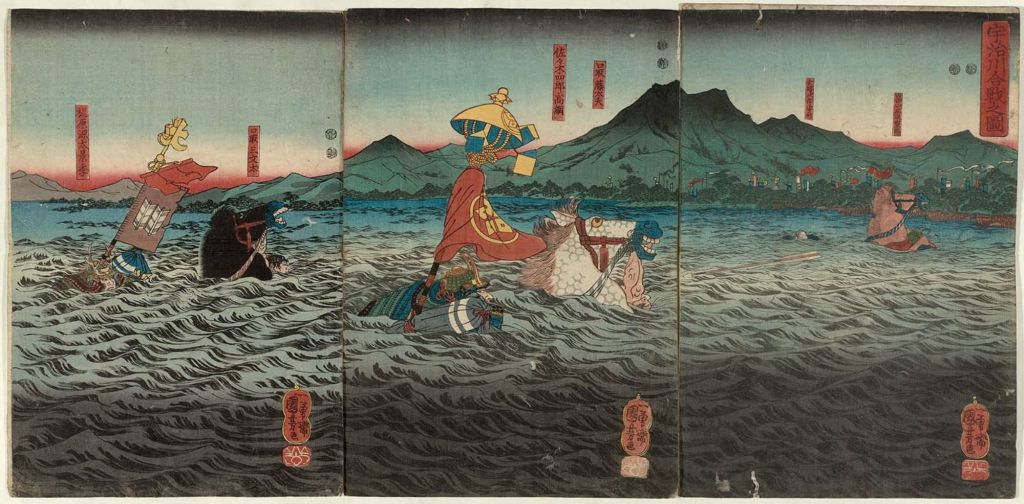
    What we do know is that Mochihito, outnumbered and overwhelmed, was defeated at the Battle of Uji, just outside modern Kyoto, where he was either killed or executed shortly afterwards. Despite his unsuccessful attempts at raising an army, Mochihito’s call to arms did serve to galvanise the opposition to the Taira.

    Prince Mochihito, whose failed rebellion and death at the Battle of Uji served to inspire the opposition to Taira rule.
    ColBase: 国立博物館所蔵品統合検索システム (Integrated Collections Database of the National Museums, Japan), CC 表示 4.0, https://commons.wikimedia.org/w/index.php?curid=92525963による

    It is at this point that Minamoto no Yoritomo enters the stage, he definitely deserves a post of his own, but the short version is that he was 13 in 1160, and the Taira, perhaps feeling pity over his youth, hadn’t executed him, banishing him to the provinces instead.

    Yoritomo, however, had a long memory, and he had spent the last twenty years gaining strength, first over his own clan, and then the surrounding area. His base was the city of Kamakura, in modern-day Kanagawa Prefecture, and it was a relatively long way from the capital.

    When news of Uji reached him, Yoritomo set off looking for a fight. He called for help from the surrounding clans, and although there seems to have been some support, very few actually showed up to fight. In September 1180, Yoritomo had managed to gather just 300 men, and he was attacked by a force ten times that size at the Battle of Ishibashiyama.

    Despite this defeat, Yoritomo was able to escape by sea to Awa Province (in modern Chiba Prefecture), from where he would continue the fight. Meanwhile, the Taira, under Kiyomori, sought to take revenge against the monks who had hidden Prince Mochihito, and attacked and burned the city of Nara.

    Meanwhile, Yoritomo’s uncle was defeated at the Battle of Sunomatagawa in June 1181. The story goes that the Minamoto tried to sneak across a river at night in order to attack the Taira on the other bank. Apparently, their plan failed because Taira sentries were able to distinguish friend from foe by checking who was wet, or not. That seems like remarkable awareness for a battle in the dark, but regardless, the Minamoto failed to surprise the Taira and were defeated.

    Later that year, Yoritomo’s cousin (and sometimes rival) Yoshinaka raised an army in the north and defeated the Taira army sent to stop him, after which, fighting died down for a while.

    Taira no Kiyomori had died earlier in 1181 (the story goes that his fever was so hot anyone who tried to tend him would be burned), and not long after, a famine broke out that would spread across the nation. You can’t fight if you can’t eat, and so what followed was a two-year lull in the fighting, which I imagine wasn’t much comfort to the starving peasants.

    The fighting would resume in 1183, and the Taira would have some initial success, but at the Battle of Kurikara Pass in June of that year, the Taira were decisively defeated, and the momentum shifted to the Minamoto. It was Yoshinaka (Yoritomo’s cousin) and Yukiie (Yoritomo’s Uncle, but not Yoshinaka’s father, I know, it’s confusing) who actually led the Minamoto to the capital.

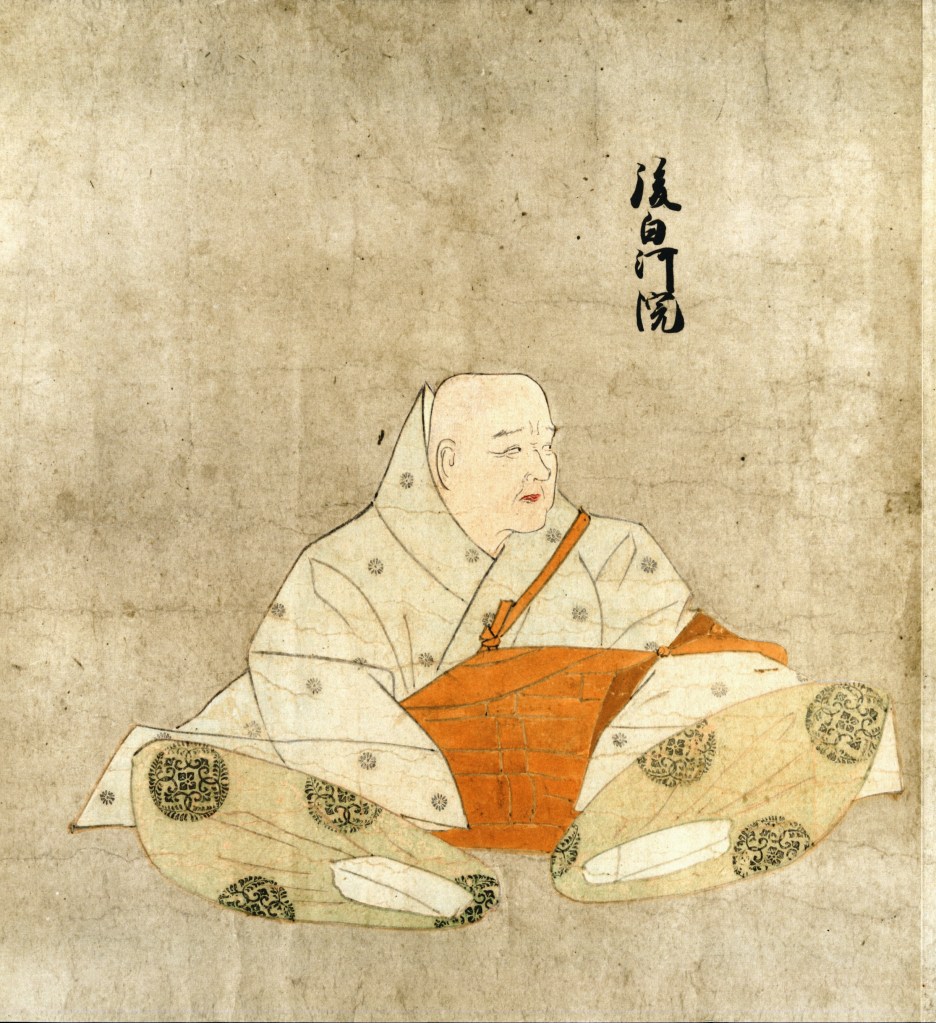
    As Kiyomori was dead, it fell to his son Munemori to lead the defence of the city. He did this by taking young Emperor Antoku and fleeing west, as you do. It was at this point that the cloistered Emperor, Go-Shirakawa (yeah, he’s still alive at this point!) threw in his lot with Yoshinaka and the Minamoto, calling on them to pursue and destroy the Taira.

    Unfortunately, Yoshinaka had different plans. Fancying himself the rightful leader of the Minamoto, he engaged in a plot against his cousin, Yoritomo, who was by now marching from the East towards the capital. It seems he was initially joined by Yukiie, who then got cold feet and let details of the plot slip.

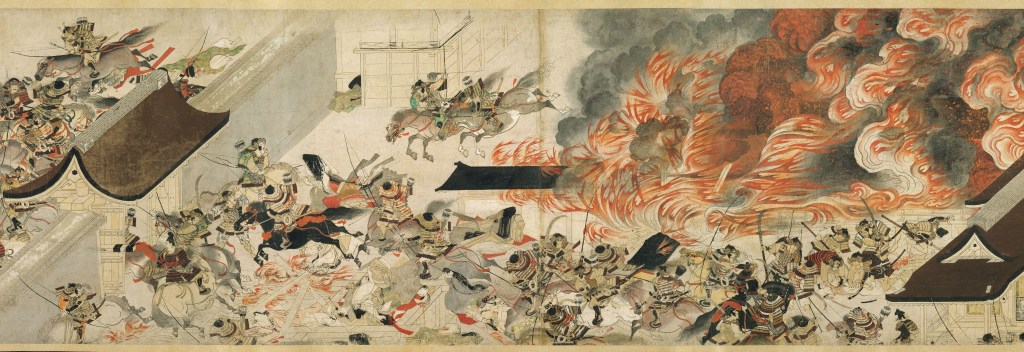
    Yoshinaka himself became aware that the plot had been discovered and moved first, setting fire to several parts of the capital and taking Go-Shirakawa hostage. It was at this point that Yoritomo’s brothers, Yoshitsune and Noriyori, arrived with a considerable force. They drove Yoshinaka out of the capital, and then killed him at the Second Battle of Uji , bringing an end to the Minamoto Clan’s feuding (for now.)

    A scene from the Second Battle of Uji. The bridge had been pulled up, hence the need to swim.

    After this, the momentum was decisively on the side of the Minamoto. They pursued the Taira, who had originally set up camp at Dazaifu, in Kyushu, and fortifying their positions around the Inland Sea, which were the lands the Taira had originally held.

    The Minamoto went on the offensive and defeated the Taira at the Battle of Ichi-no-Tani, near modern-day Kobe, followed up by another victory at Kojima. These successes allowed the Minamoto to drive the Taira out of their strongholds along the coast of the Inland Sea.

    The Taira, in possession of what was apparently the only navy in Japan at the time, and certainly the strongest, retreated to Shikoku, knowing that the Minamoto couldn’t follow. The Minamoto weren’t going to just let the Taira get away, however, and although it took time, they built up their naval strength before launching an attack at Yashima, in modern-day Takamatsu, that took the Taira fortress there, which had also been used as a makeshift palace for Emperor Antoku.

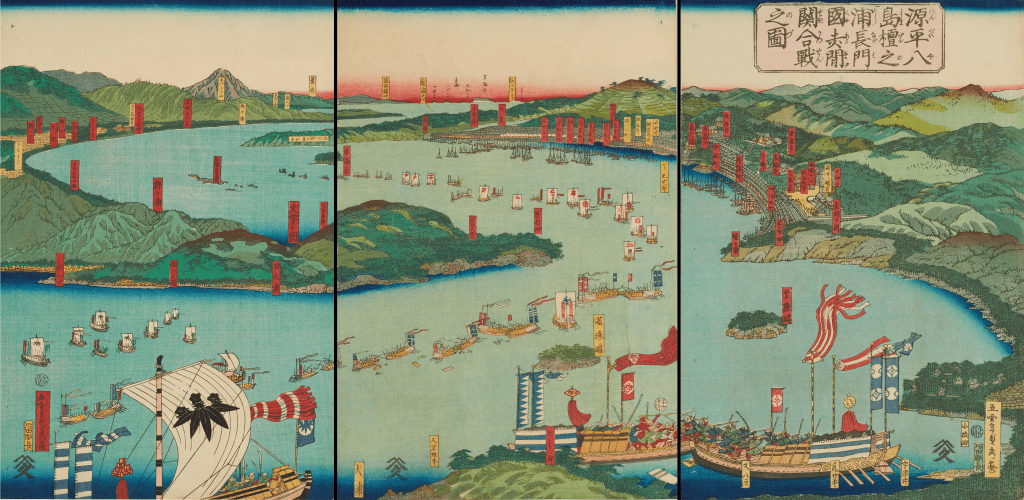
    Driven out of yet another stronghold, the Taira took to their ships and fled. The Minamoto would catch up to them at Dan-no-Ura, in the Straits of Shimonoseki. If you believe the Heike Monogatari (which you shouldn’t), then the Minamoto had 3000 ships to the Taira’s 1000. According to the Azuma Kagami, which is a biased by slightly more believable source, the forces were actually around 800 to 500, which are still considerable forces, but a bit more plausible.

    Despite being outnumbered, the Taira had home advantage and knew the tides and currents better than their foes. They also had the Emperor with them, which they assumed would give their side more legitimacy and encourage their men to fight harder.

    It was a good idea in theory, but it didn’t work. Though the tides were initially in the Taira’s favour, they turned, as tides do, and one of the Taira’s commanders turned as well, as men often do. Surrounded and attacked from all sides, the Taira began committing suicide en masse. One of those who died was six-year-old Antoku. The story goes that his grandmother, Taira no Kiyomori’s widow, took the boy in her arms and jumped with him into the sea. Neither was seen again.

    The Taira also tried to get rid of the Imperial Regalia, tossing them overboard. However, they apparently only managed to dump the mythical Kusanagi Sword and the Yasakani Jewel. The Yata no Kagami, a sacred bronze mirror, was apparently saved when the woman who tried to throw it overboard was killed when she accidentally looked at it.

    All three items were apparently recovered, either on the day of the battle or later, by divers. They are supposedly housed at the Ise Shrine in Mie Prefecture. The fact that no one has been allowed to see the artefacts since Dan-no-Ura is apparently just a coincidence.

    A later illustration of the Battle of Dan-no-Ura, which brought an end to Taira control of Japan.

    The result of Dan-no-Ura was the end of the Taira as a serious political force. Later that year, the Emperor Go-Shirakawa gave Minamoto no Yoritomo the right to collect taxes and appoint officials, effectively handing control of the state over to him.

    Though it would be some years before Yoritomo would take the formal title, the Genpei War marks the time at which control of Japan shifted from courtiers and Emperors to warriors under a supreme military commander who took a title that had first been used in the earliest days of Imperial rule in Japan, Sei-i Tai Shōgun.

    Cue dramatic music

    Sources
    https://en.wikipedia.org/wiki/Battle_of_Dan-no-ura
    https://en.wikipedia.org/wiki/Battle_of_Uji_(1184)
    https://en.wikipedia.org/wiki/Azuma_Kagami
    https://ja.wikipedia.org/wiki/%E5%B1%8B%E5%B3%B6%E3%81%AE%E6%88%A6%E3%81%84
    https://en.wikipedia.org/wiki/Battle_of_Yashima
    https://ja.wikipedia.org/wiki/%E4%B8%80%E3%83%8E%E8%B0%B7%E3%81%AE%E6%88%A6%E3%81%84
    https://ja.wikipedia.org/wiki/%E8%97%A4%E6%88%B8%E3%81%AE%E6%88%A6%E3%81%84
    https://ja.wikipedia.org/wiki/%E6%BA%90%E8%A1%8C%E5%AE%B6
    https://ja.wikipedia.org/wiki/%E5%80%B6%E5%88%A9%E4%BC%BD%E7%BE%85%E5%B3%A0%E3%81%AE%E6%88%A6%E3%81%84
    https://en.wikipedia.org/wiki/Battle_of_Kurikara_Pass
    https://en.wikipedia.org/wiki/Minamoto_no_Yukiie
    https://en.wikipedia.org/wiki/Minamoto_no_Yoshinaka
    https://en.wikipedia.org/wiki/Battle_of_Sunomata-gawa
    https://en.wikipedia.org/wiki/Battle_of_Ishibashiyama
    https://ja.wikipedia.org/wiki/%E4%BB%A5%E4%BB%81%E7%8E%8B
    https://en.wikipedia.org/wiki/Prince_Mochihito
    https://en.wikipedia.org/wiki/Emperor_Takakura
    https://en.wikipedia.org/wiki/Emperor_Antoku
    https://en.wikipedia.org/wiki/Taira_no_Kiyomori
    https://en.wikipedia.org/wiki/The_Tale_of_the_Heike
    https://en.wikipedia.org/wiki/Battle_of_Uji_(1180)
    https://ja.wikipedia.org/wiki/%E6%B2%BB%E6%89%BF%E3%83%BB%E5%AF%BF%E6%B0%B8%E3%81%AE%E4%B9%B1
    https://ja.wikipedia.org/wiki/%E6%B2%BB%E6%89%BF%E4%B8%89%E5%B9%B4%E3%81%AE%E6%94%BF%E5%A4%89
    https://en.wikipedia.org/wiki/Shishigatani_incident
    https://ja.wikipedia.org/wiki/%E9%B9%BF%E3%82%B1%E8%B0%B7%E3%81%AE%E9%99%B0%E8%AC%80
    https://en.wikipedia.org/wiki/Genpei_War
    https://en.wikipedia.org/wiki/Minamoto_no_Yoritomo

  • Heian VI – This is how it ends.

    The Heian Period is said to have ended in 1185, but, as you surely know by now, historical periods are rarely that neat. The actual end was really just a full stop at the end of a long period of decline.

    We’ve already discussed in detail how the Imperial Court lost control of the country’s economic and military affairs, and how that led to an erosion of political control. By the 11th Century, the writing was on the wall, but no one at the Heian Court was reading it (they had a lot of poems to keep them busy, after all).

    As we’ve talked about before, the dominant family in the latter half of this period was the Fujiwara. They grew so powerful that they could effectively choose the Emperor at will, and even in the provinces, there was no real alternative to Fujiwara power. That changed with Emperor Go-Sanjo, who came to the throne in 1068. He was the first Emperor not born to a Fujiwara mother for a century or more, and that was a problem.

    Emperor Go-Sanjo. The fact that his mother was not Fujiwara changed things considerably.

    Since he had no Fujiwara mother, he didn’t feel beholden to the wider Fujiwara family, and their influence was immediately under threat. Go-Sanjo was a pretty savvy guy; he realised that one of the main reasons why families like the Fujiwara were able to assert such dominance was that the Emperor was bound to myriad traditions and conventions that actually limited how much governing he could do.

    Go-Sanjo hit on a solution to this. He created the In-No-Cho, which basically means “Office of the Cloistered Emperor.” From then on, an Emperor could abdicate, but instead of simply moving aside for the next Fujiwara puppet, he (or she) would become an Insei, a cloistered Emperor, who could wield all the actual power of the throne, without being tied down to all the stuff that got in the way. (Some say it was Go-Sanjo’s son, Shirakawa who was the first Cloistered Emperor, which might be true, but the system is the same.)

    This system essentially meant that the Fujiwara were cut out of all major decisions. Though they kept their rank and titles at court, their dominance had relied on a compliant, or at least, impotent Emperor; now that that was no longer the case, the Fujiwara began to flounder, and the sharks closed in.

    No longer unchallenged, the Fujiwara did what all declining powers do: they turned on each other. Rival factions coalesced around the “Northern” and “Southern” Fujiwara (named because of the location of their houses in the capital in relation to the Imperial palace).

    The reassertion of Imperial authority and the decline of the Fujiwara didn’t solve any of Japan’s ongoing problems; in fact, in many ways, the Fujiwara left a power vacuum that other ambitious families tried to fill. There were soon clashes between rival factions, some of whom supported one Emperor or another, or were simply acting in their own interests, and Imperial power became increasingly illusory.

    By the mid-12th Century, even the illusion was fading, as the newly powerful warrior families (Buke) increasingly took up arms to solve their disputes, ignoring, and sometimes outright attacking Imperial power in ‘their’ lands.

    All this came to a head in 1155. It gets a bit complicated, but basically, two Emperors, Toba and his son and heir, Sutoku, both retired to become Insei, intending to be the power behind the throne during the reign of Konoe, who was also Toba’s son, and Sutoku’s half-brother.

    Konoe was only three when he took the throne (inasmuch as a three-year-old can take a throne), and for a while, things seemed fine. Unfortunately, as often happened, Konoe died young without having fathered an heir. At this point, Toba and Sutoku supported rival candidates. Toba wanted another son, Go-Shirakawa, whilst Sutoku wanted his son Shigehito to be next in line.

    Long story short, Toba got his way, and Go-Shirakawa became Emperor in August 1155. Now, it may come as no surprise that Sutoku wasn’t happy about this, and when Toba died less than a year later, battle lines were drawn.

    Emperor Go-Shirakawa ‘s disputed succession would lead to the Hogen Rebellion.

    Hogen & Heiji

    Now, the simple version of this is that it was a family dispute over who would get to rule. In truth, it was a lot more complicated than that. Whilst both factions supported rival claimants, there were also outstanding issues of influence at court. The Fujiwara wanted back in, whilst other families like the Minamoto and Taira wanted to keep them out and increase their own influence.

    Things get more complicated from here on in, I’m afraid. I mentioned in previous posts that when we talk about great “families”, we’re not actually talking about single families at all, but diverse groups who happen to share a name and some kind of Imperial ancestor.

    As this conflict escalated, these complex divisions came to the fore. Both sides called on the provincial warlords to support them, and by July 1156, both had armies containing Minamoto, Taira, and Fujiwara leaders. Some of these families were actually families too, with Fujiwara no Tadazane fighting for Go-Shirakawa, whilst his brother, Yorinaga, fought for Sutoku. This was also true with the Minamoto and Taira, with fathers fighting against sons, and uncles against nephews, until it becomes such a confusing mess that I swear it’s making me cross-eyed.

    Throughout July, both sides gathered their forces in and around the capital. Then, on July 29th, a night attack led by Taira no Kiyomori and Minamoto no Yoshitomo (on Go-Shirakawa’s side) attacked Sutoku’s forces. At first, the attacks were unsuccessful, but then someone suggested setting fire to the surrounded residences, and when this was done, Sutoku’s men lost heart and fled, leaving the capital in Go-Shirakawa’s hands.

    The immediate outcome of the Hogen Rebellion was the establishment of Go-Shirakawa’s influence (he would abdicate in 1158, and remain Insei until his death in 1192, effectively influencing five succeeding Emperors.) In the longer term, it signalled the end of Fujiwara power at court. They had sided with Sutoku in the hope that he would do away with the Cloistered Emperor system and restore the Fujiwara to power.

    Instead, Sutoku was defeated and banished, with those of his supporters who had survived the battle executed not long after. For the Minamoto and Taira (those branches that had supported Go-Shirakawa anyway), the victory led to increased influence at court, which brought a whole new set of problems.

    The main issue was that the Taira and Minamoto were allies of convenience. They had joined forces in support of Go-Shirakawa, but now that the immediate threat had passed, they quickly fell into squabbling about who would dominate the court next.

    When Go-Shirakawa abdicated in 1158, he was succeeded by his son, Nijo. As we’ve already discussed, real power remained with Go-Shirakawa as Insei, and he favoured the Taira, much to the chagrin of the Minamoto.

    This was further compounded when the Taira and Go-Shirakawa had the head of the Minamoto, Tameyoshi, executed as punishment for siding with Emperor Sutoku. Though Tameyoshi’s son, Yoshitomo, had remained loyal to Go-Shirakawa, his pleas for clemency fell on deaf ears.

    This would set the tone for the immediate post-rebellion situation. The Taira rose to a position of dominance whilst the Minamoto were left in the shade. Now, you might hope that the Minamoto had learned the lesson of the past and tried to find some way to make peace with the new status quo.

    But, of course, they didn’t. In 1160, the Minamoto, under their leader, Yoshitomo, allied themselves with what was left of the Fujiwara, and when the head of the Taira family, Kiyomori, left with his retinue on a pilgrimage, they abducted Go-Shirakawa, and had a member of the Fujiwara family declared Imperial Chancellor, this began the so-called Heiji Rebellion.

    Things unravelled pretty quickly after that. Despite having abducted the Emperor, the Minamoto don’t seem to have had much of a plan about what to do next. Taira no Kiyomori quickly got word of the attempted coup and made haste back to the capital.

    There were some attempts at negotiating, but it was a ruse; the Emperor was freed, and the Taira attacked. Initially, the Minamoto held their ground and drove the Taira forces back, but this was ruse number two; the Minamoto were drawn out of their defences and cut to pieces.

    The Taira Court

    In the aftermath, the newly established Taira dominance at court was confirmed. The leadership of the Minamoto, Yoshitomo, and his sons Tomonaga and Yoshihira, didn’t survive the battle, effective ending the threat. The Taira seized Minamoto lands, before banishing those who remained from the capital.

    One of those, thirteen-year-old Minamoto no Yoritomo, would come back to haunt the Taira and the Imperial court, but more on him later.

    With their rivals crushed, the Taira set about enjoying the fruits of their victory. Taira no Kiyomori became the pre-eminent man in the realm, filling the government with his relatives, and exerting control over the Imperial Throne, before doing what the Fujiwara had done before him, and marrying his daughter to the Emperor, and, when the Emperor in question died young, taking his place as regent for his infant grandson, who happened to be Emperor Antoku.

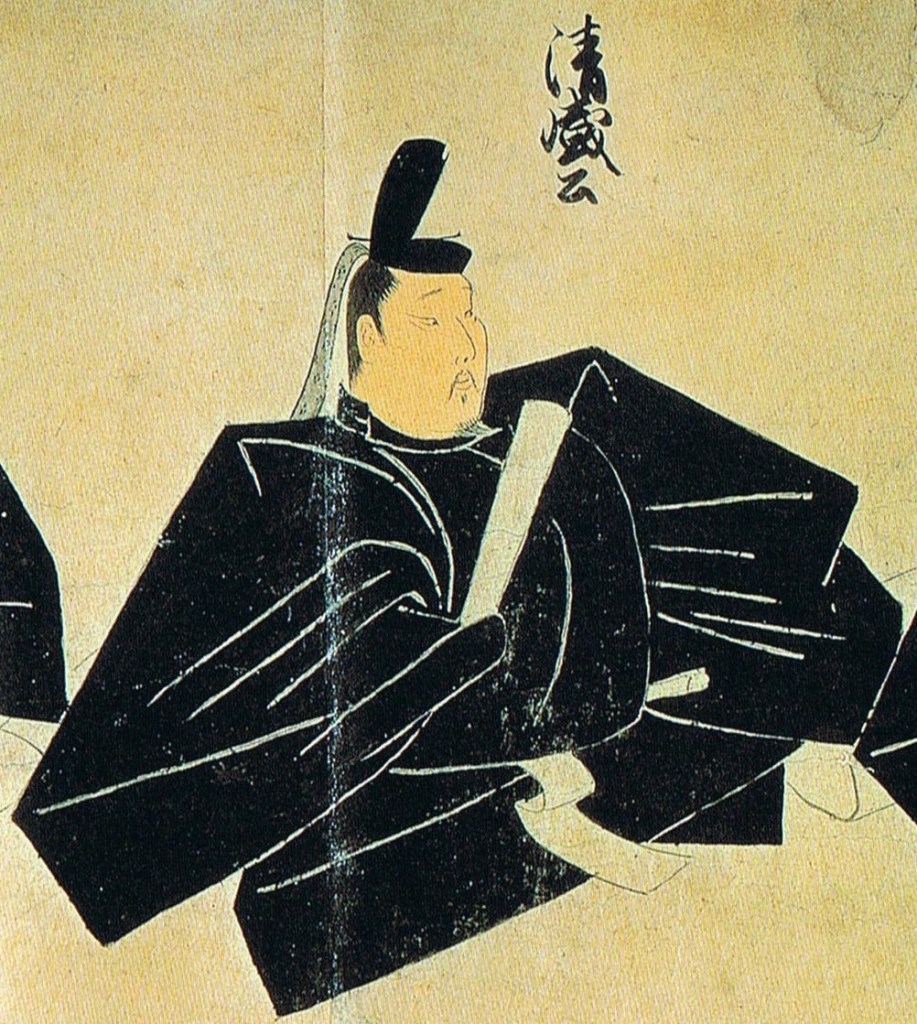
    Taira no Kiyomori. He became enamored with courtly life, and did nothing to stop the decline of Imperial power in the provinces.

    For twenty years, the Taira had it more or less their own way, but like the Fujiwara before them, they lost sight of what was going on in the provinces. Kiyomori did nothing to reverse the decline of Imperial power outside of the capital. Because of this, they were unable to stop the Minamoto from recovering their strength.

    Their leader, Minamoto no Yoritomo, was the son of the man who had opposed the Taira in the Heiji Rebellion in 1160. The Taira had let him live, and Yoritomo was going to make them pay for their mistake. Establishing himself at Kamakura, in Eastern Japan, and allying with the locally powerful Hojo Clan, Yoritomo set about getting revenge on the Taira.

    He would get his chance in 1180, in what became known as the Genpei War, but that really deserves its own post, so that’s what I’m going to do.

    Sources
    https://en.wikipedia.org/wiki/Heiji_rebellion
    https://en.wikipedia.org/wiki/Heian_period
    https://en.wikipedia.org/wiki/Taira_no_Kiyomori
    https://en.wikipedia.org/wiki/H%C5%8Dgen_rebellion
    https://en.wikipedia.org/wiki/Emperor_Toba
    https://en.wikipedia.org/wiki/Emperor_Sutoku
    https://en.wikipedia.org/wiki/Emperor_Go-Shirakawa
    https://en.wikipedia.org/wiki/Emperor_Nij%C5%8D
    https://en.wikipedia.org/wiki/Minamoto_no_Yoshitomo