Tag: Japanese History

  • The Battles of Kawanakajima

    The Battles of Kawanakajima

    Having looked closely at the lives and careers of Takeda Shingen and Uesugi Kenshin, it is impossible not to notice the frequent mention of a place called Kawanakajima, and the series of battles that took place there from 1553 to 1564.

    The battles at Kawanakajima were not the only confrontations between the Takeda and Uesugi clans, nor were they the largest or most significant battles in the Sengoku period, but they have been the subject of extensive study, writing, and mythologising, as they seem to symbolise the famous rivalry between Shingen and Kenshin, and so they’re worth a closer look.

    Kawanakajima

    Kawanakajima as it appears today.
    By Bloglider at Japanese Wikipedia – Own work by the original uploader (Original text: Photo by Bloglider.), CC BY-SA 3.0, https://commons.wikimedia.org/w/index.php?curid=12400636

    The area called Kawanakajima is located in the northern part of Nagano Prefecture, and is the area surrounding where the Chikuma and Sai rivers meet. Now within the modern city of Nagano, in the 16th century the area was in Shinano Province and had long served as a key transportation route from north to south, and as such had frequently been a battleground.

    There had been many small, but long-established clans in the area, but by the early 1500s, it was largely under the control of the Murakami Clan, who would come into frequent conflict with the Takeda, from neighbouring Kai Province, who were beginning to expand into Shinano around this time.

    Starting in 1542, Takeda Shingen began a concerted effort to bring the province under his control, but he faced resistance of varying degrees of severity during his campaign, and it was the Murakami who proved the sternest test. At the Battle of Uedahara in 1548, the Murakami inflicted a serious defeat on the Takeda, and although Shingen would recover, he suffered a further defeat at the Siege of Toishi Castle in 1550.

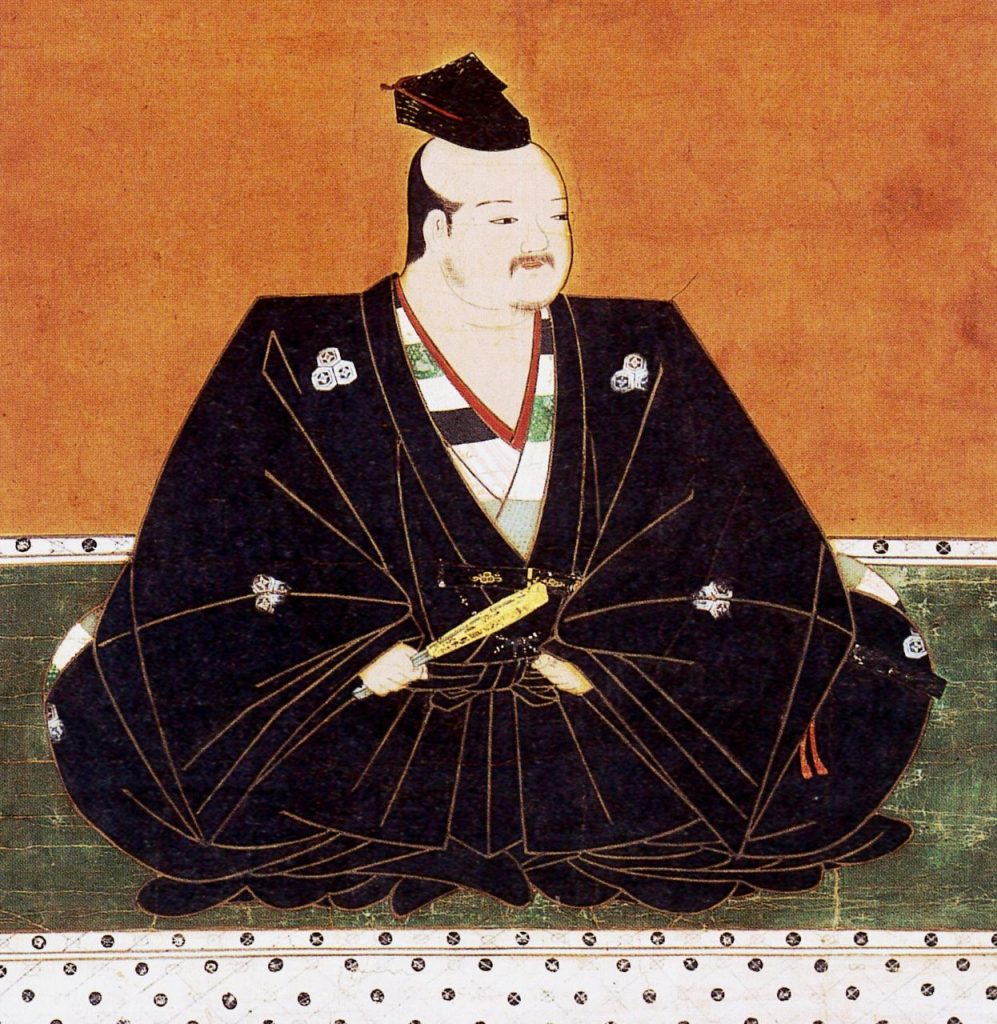
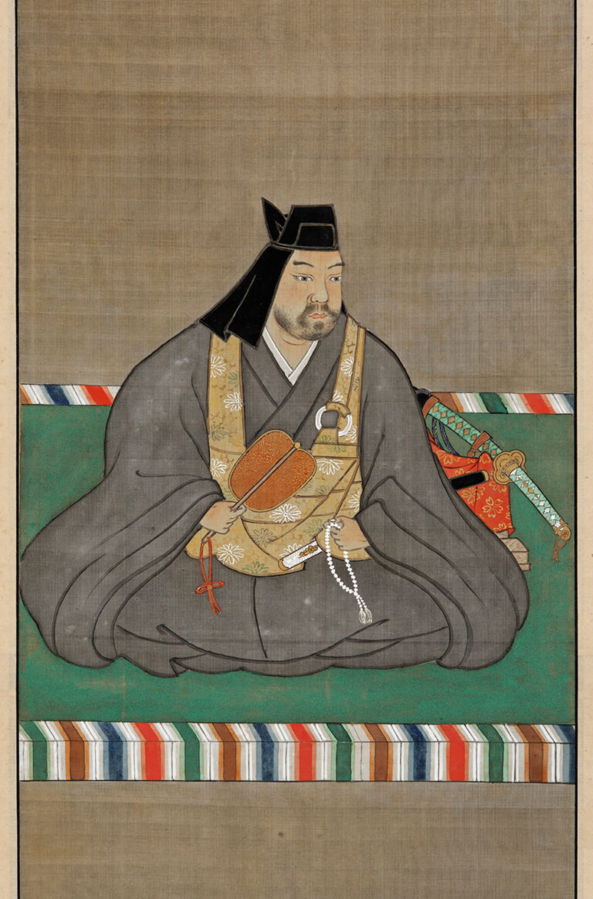
    Takeda Harunobu, better remembered as Takeda Shingen.

    Shingen had what we might call “Bouncebackability”, and in 1551, Toishi Castle fell, leaving the Takeda in control of most of Shinano, with the exception of the area including, and to the north of, Kawanakajima. The clans in this area had previously allied with the Murakami, but with their defeat, they went looking for new friends.

    They found them in the Nagao Clan of Echigo, and their lord, Kagetora, better known to history as Uesugi Kenshin, who advanced into northern Shinano to support these local clans and to oppose the Takeda.

    The First Battle

    In April 1553, Shingen resumed his advance against the remaining clans in northern Shinano, meeting only sporadic resistance and forcing the weakened Murakami to ask for intervention from Kenshin. He responded, and a combined force of around 5000 men counterattacked and defeated the Takeda at the Battle of Yahata in May.

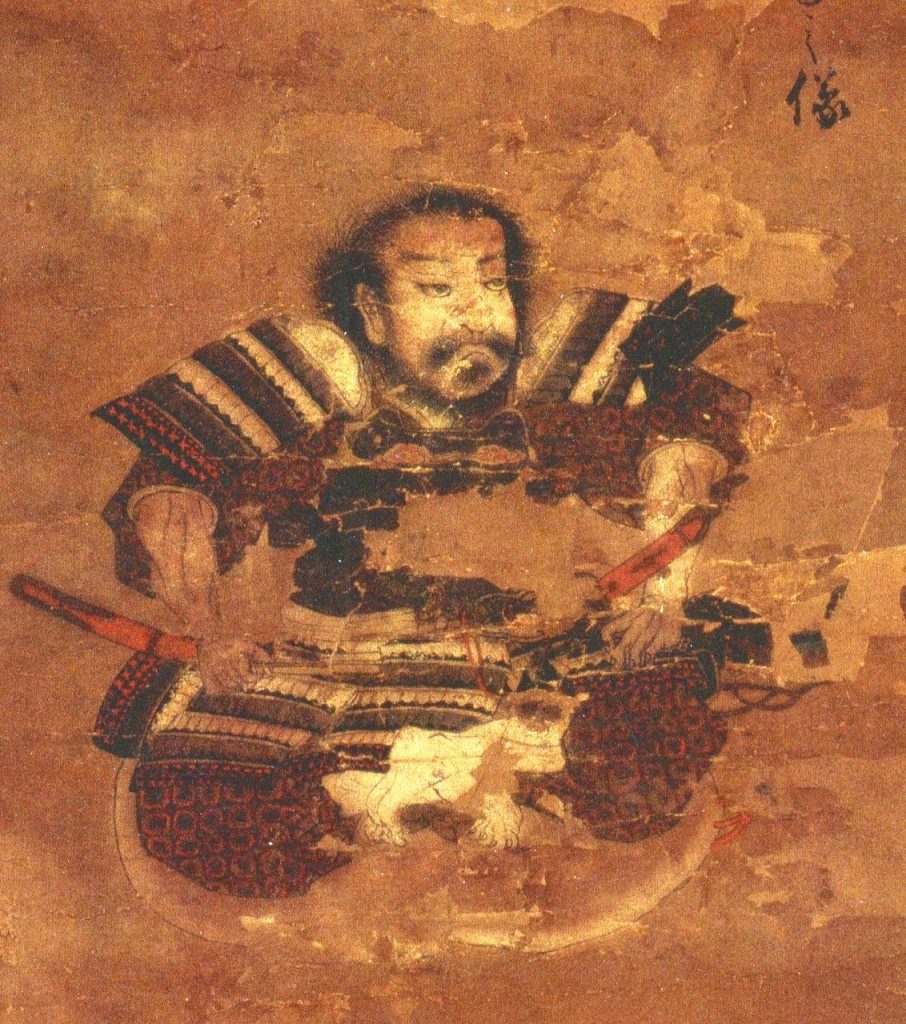
    Nagao Kagetora, better known as Uesugi Kenshin.

    This success would be short-lived, however, as Shingen would resume his advance that summer, forcing the Murakami back again, until September, when Kenshin himself led a force into Shinano, engaging and defeating the Takeda at the Battle of Fuse, before laying siege to several castles in quick succession. Shingen would seek to outmanoeuvre Kenshin and cut off his retreat, but Kenshin responded with a strategic retreat to a place called Hachimanbara.

    Unable to cut off Kenshin’s retreat, Shingen instead retreated to Shioda Castle, entrenching himself there and avoiding direct battle. With neither side apparently up for the fight, both armies gradually disengaged, with Kenshin returning home at the end of September, and Shingen following suit a few weeks later.

    The First Battle of Kawanakajima was more of an extended series of engagements than a pitched battle, and both sides achieved some strategic goals. Kenshin was able to stop the Takeda advance into northern Shinano, whereas Shingen was able to consolidate his control in the central and eastern parts of the province, free from outside intervention.

    The Second Battle

    Through the remainder of 1553 and into 1554, Takeda Shingen continued to expand and consolidate his control of the areas of Shinano south of Kawanakajima. He has also formed an alliance with the Hojo and Imagawa Clans, securing his southern borders and gaining an ally (in the Hojo) against Kenshin’s ambitions in the wider region.

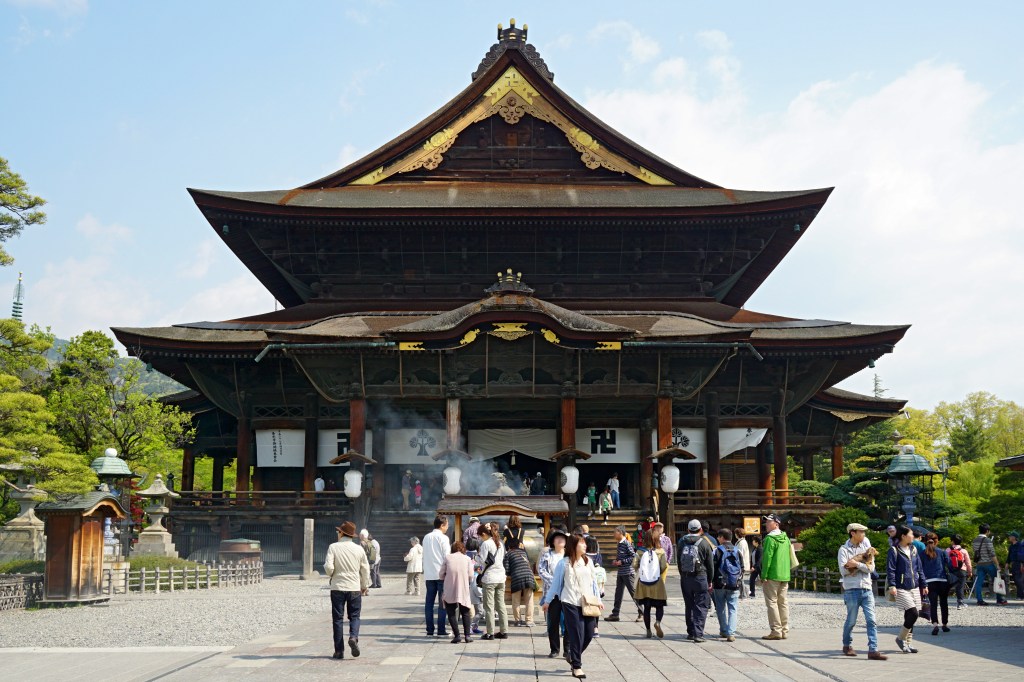
    Shingen also sought to keep Kenshin off balance by supporting local rivals and instigating rebellions amongst his vassals. Though Kenshin was often able to swiftly put down these uprisings, in 1555, a previously loyal vassal, Kurita Eiju, who was based near the Zenkoji Temple, defected to the Takeda side. This was significant because Eiju controlled the southern half of the Nagano Basin, of which Kawanakajima was a central part.

    Zenkoji Temple as it appears today.
    By 663highland, CC BY 2.5, https://commons.wikimedia.org/w/index.php?curid=48785737

    Shingen marched north to support his new ally, whilst Kenshin was obliged to dispatch an army to retake the lost territory. Eiju, alongside 3000 Takeda allies, holed up at Asahiyama Castle (in modern Nagano City), a strategically important location that controlled crossings of the Sai River.

    Kenshin could have manoeuvred around the strong point, but this would have left an enemy garrison at his rear, so instead, he entrenched his forces at Katsurayama (also in modern Nagano) and constructed a castle there, effectively bottling up the garrison at Asahiyama and neutralising the threat.

    Shingen was not idle during all this construction; however, he dispatched an army in support of Kurita Eiju, and it arrived in early July, facing Kenshin’s forces across the Sai River. The only serious engagement of the Second ‘Battle’ was on July 19th, when Kenshin sent forces across the river and engaged in sporadic fighting against the Takeda. Whether this was a serious attempt to force a crossing or just a kind of skirmish isn’t clear, but Kenshin’s forces swiftly withdrew, and both sides spent the next 200 days glaring at each other across the river.

    Eventually, events away from Kawanakajima would force a resolution. Shingen was a long way from his home base in Kai and was beginning to struggle to feed his army, whereas Kenshin was facing issues on his western borders from increasing activity from the local Ikko-Ikki, as well as dissatisfaction from his vassals over the months of inactivity.

    The Ikko-Ikki proved to be difficult to deal with for many lords. Uesugi Kenshin was no different.

    Eventually, both sides agreed to mediation, led by the Imagawa Clan, and a peace was agreed in October. The terms set the border between the rivals as the Sai River, as well as calling for the destruction of Asahiyama Castle, and the complete withdrawal of both armies from the area.

    In the immediate aftermath, Kenshin would turn to deal with the Ikko-Ikki, and Shingen would subdue the remaining independent lords in southern Shinano, but neither side was done with Kawanakajima.

    The Third Battle

    In 1556, Kenshin, apparently suffering from what we might now call ‘burnout’, announced his intention to renounce his lordship and become a monk. His retainers, horrified at the prospect, did everything they could to persuade him to change his mind. They were ultimately successful, and a good thing too, because through the interim period, Shingen had again begun putting pressure on local lords to switch sides, or face conquest.

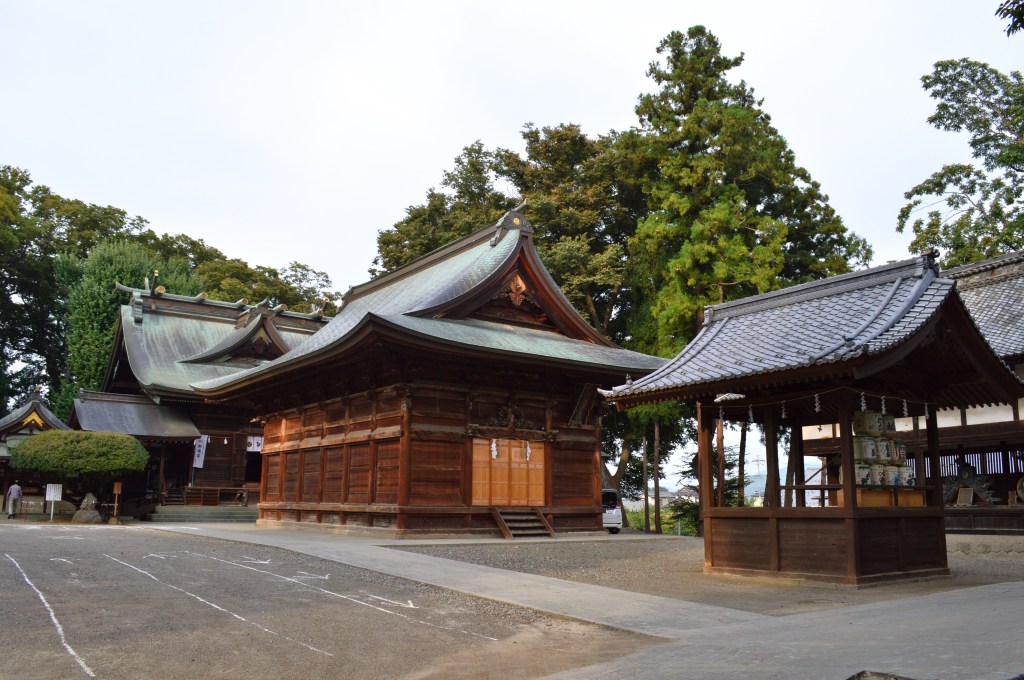
    During the New Year festivities in January 1557, Kenshin, who had by now given up on his idea of becoming a monk (and the restful lifestyle that would have provided him), offered prayers at the Hachimangu Shrine (in Chikuma, Nagano) for the defeat of Takeda Shingen.

    Hachiman Shrine as it appears today. It’s now called Takemizuwake Shrine.

    Shingen, apparently put out by these attempts at divine intervention, advanced again, taking Katsurayama Castle (the site of the second ‘battle’) in mid-February, then advanced north, defeating the Takanashi Clan, who were allies of Kenshin. Kenshin’s response was delayed by winter snows, but he eventually came south, capturing several Takeda castles and even rebuilding Asahiyama.

    Shingen would continue to evade Kenshin’s advance, and both sides continued to dance around each other until an indecisive clash at Uenohara in late August, after which, Kenshin, who had advanced far from his supply bases in Echigo, withdrew. At this point, the Shogun, Ashikaga Yoshiteru, intervened, sending a letter requesting that both sides make peace, apparently in the hope that they would then send forces to aid the Shogunate.

    Neither side did, but a truce was agreed upon, which did not last long, as both Kenshin and Shingen would dispatch armies to duke it out in Northern Shinano. Kenshin arguably got the better of it, as the remaining clans in the area, previously just allies, were forced to become effectively his vassals.

    The Fourth Battle

    In 1559, Kenshin went to Kyoto to ask that the Shogun grant him the position of Kanto Kanrei, which had long been held by the Uesugi clan. Though the power of the Shogun and the prestige of any positions he might bestow were long since diminished, Kenshin was able to combine his appointment as Kanrei with his considerable martial talents to gather a large army and attack the Hojo in the Kanto region.

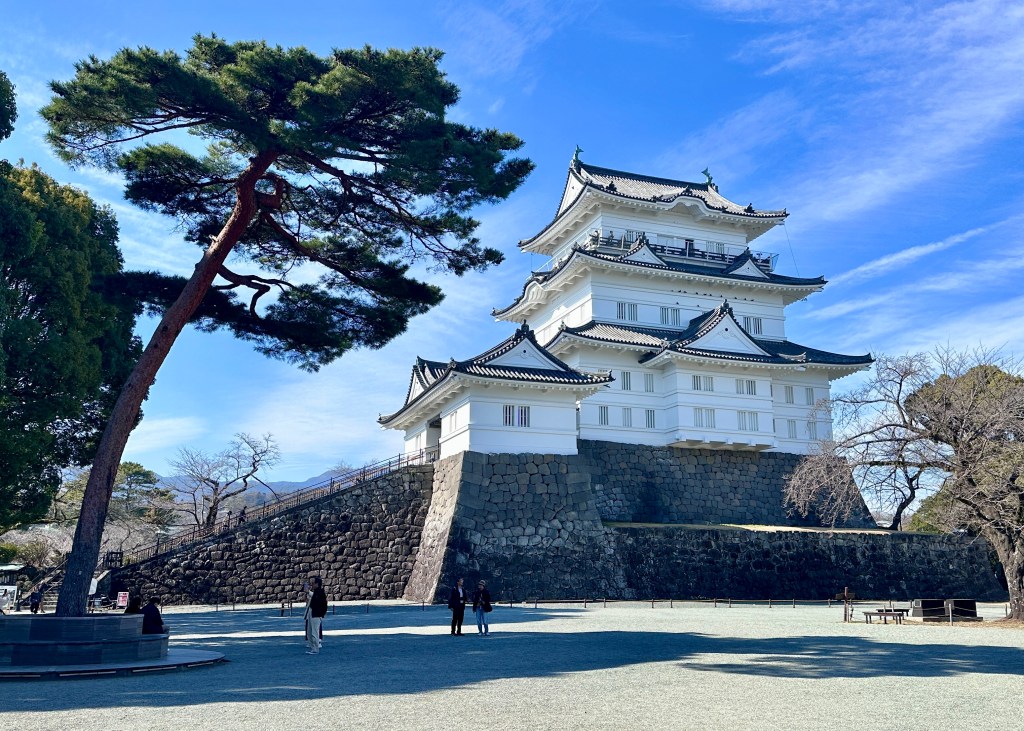
    In 1560, he was apparently able to gather an army of 100,000 men (though this is probably exaggerated) and advance deep into Hojo territory, even besieging their capital at Odawara in March 1561, though he was unable to take the formidable fortress. In response, the Hojo called for help from their ally, Takeda Shingen, who responded by invading Northern Shinano once again.

    The modern reconstruction of Odawara Castle.
    By Akonnchiroll – Own work, CC BY 4.0, https://commons.wikimedia.org/w/index.php?curid=145493350

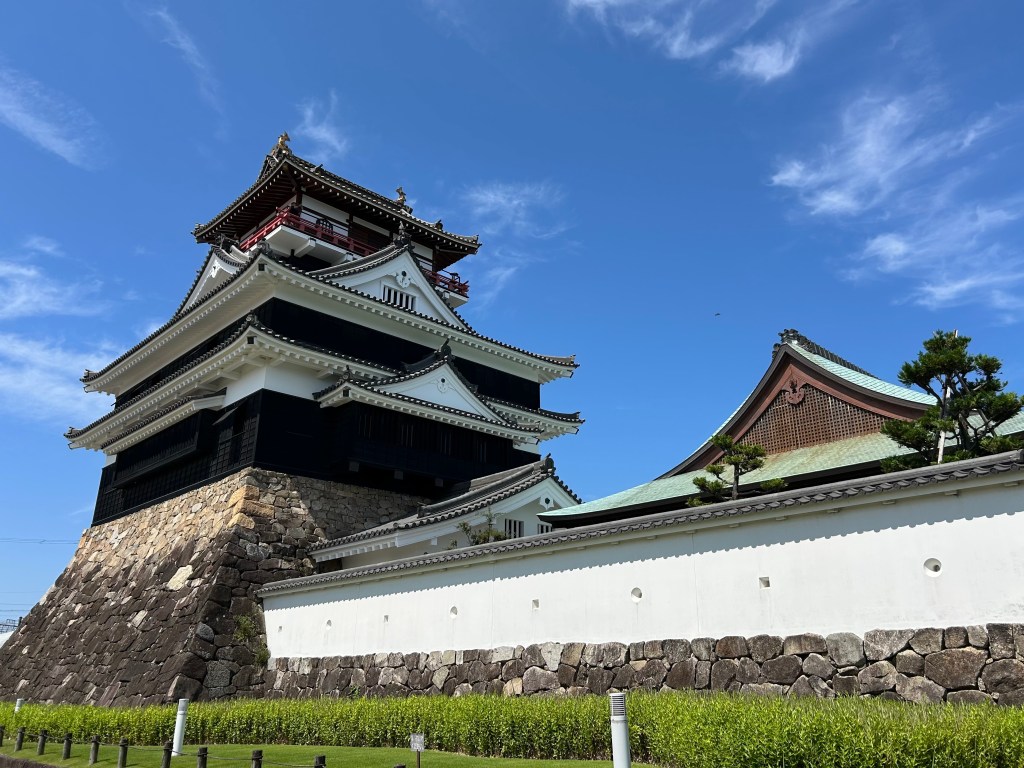
    When news of Shingen’s attack reached Kenshin’s army, many of his supporters returned home, and he was obliged to lift the siege of Odawara and turn to face the Takeda. Beginning in August, the Takeda and Uesugi forces would again seek to gain advantage, advancing and retreating in turn, largely centred on Kaizu Castle, newly constructed at Shingen’s command.

    This would continue until late October, when the Takeda devised a strategy to launch a surprise attack against the Uesugi, with a second force positioned nearby to ambush and (hopefully) destroy the Uesugi as they attempted to regroup. Kenshin, however, was made aware of the Takeda’s movements, and, taking advantage of a moonless night, he had his army change position, moving them closer to the main Takeda force.

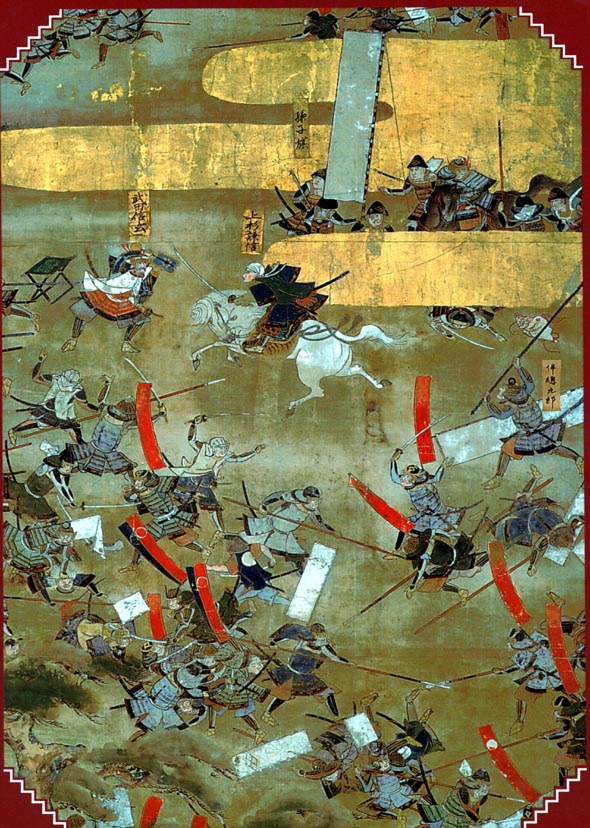
    Just after dawn on October 28th, a thick fog covered the ground around Kawanakajima, obscuring both armies. When the fog cleared, however, the Takeda were confronted with the sight of the entire Uesugi army positioned in front of them. Almost as soon as visibility allowed, Kenshin ordered a furious attack that smashed into the Takeda force and forced them onto the back foot.

    The Uesugi made it as far as the Takeda’s main camp, and it is here that one of the most famous tales of the Sengoku period takes place. In the heat of the battle, a warrior wearing a white robe (or towel) around his head charged directly at Takeda Shingen. This warrior slashed three times at Shingen, who was able to parry the blows with his war fan (made of iron, not the usual paper, luckily), before Takeda’s soldiers came to the rescue and forced the white-clad warrior to retreat.

    The moment that Uesugi Kenshin and Takeda Shingen are said to have met on the battlefield.

    It was later revealed that this warrior was Uesugi Kenshin himself, and the duel became a legendary scene, symbolising the violence of the age, and the particular rivalry between Shingen and Kenshin. Unfortunately, we’re not sure that the duel actually took place. Takeda sources describe it as I’ve written here, whereas the Uesugi say the duel did take place, but that it was either a different attacker, or that it took place, not in the Takeda camp, but nearer the river, where the fighting was fiercest.

    Whether the famous duel actually happened or not, the battle itself was a bloody affair. The Uesugi attack was ferocious and drove the Takeda back to their camp, but failed to break them. At the same time, Takeda reinforcements rushing towards the battlefield were held up by a Uesugi rearguard.

    The Uesugi army (right) advance against the Takeda (left)

    If the battle had been brought to a conclusion that morning, then it’s likely the Uesugi would have won; however, the Takeda reinforcements arrived at around noon, and, fearing encirclement, Kenshin ordered a retreat. Shingen pursued him until around mid-afternoon, but then called it off, bringing an end to the bloodiest of the Battles of Kawanakajima.

    Exact death tolls are always tricky, as are the size of the opposing armies, but total numbers of combatants are estimated to have been around 20,000 for the Takeda and 13,000 for the Uesugi. When the fighting was over, the Takeda had suffered 4000 casualties, to the Uesugi’s 3000, and since they remained in control of the field, the battle was arguably a Takeda victory.

    The Fourth Battle of Kawanakajima was by far the bloodiest.

    That being said, the Uesugi would also claim victory, as they had foiled Takeda’s attempts to trap them, stopped their advance, and, despite a bloody day, their army remained more or less intact. Strategically, the battle was probably a draw, as it ultimately didn’t change much on the ground, neither side was able to secure new territory in the aftermath, and apart from the casualties (who would no doubt be comforted to know they’d died for nothing), both sides remained relatively strong.

    The Fifth Battle

    The Fifth and Final Battle of Kawanakajima occurred in 1564. In the interim period, Kenshin had continued to send forces into the Kanto, and Shingen had continued to try to expand his control of Shinano and other surrounding provinces.

    In Hida Province, a proxy war between a faction backed by the Uesugi and one by the Takeda swiftly drew both clans into direct confrontation once again. Shingen dispatched troops, and Kenshin moved to intercept them. The Takeda would get as far as the southern end of the Nagano Basin, but there would be no serious fighting. The Uesugi were content to limit themselves to blocking Shingen, and Shingen seemed to be content to allow himself to be blocked.

    Both sides eventually withdrew after nearly two months of little more than dirty looks, and this would prove to be the last confrontation between the clans at Kawanakajima.

    Aftermath

    The conflict between the Takeda and Uesugi Clans did not end after the Fifth Battle (such as it was), but both sides had more pressing concerns elsewhere. Kenshin was keen to focus on Etchu Province, the source of frequent Ikko-Ikki attacks, whilst Shingen’s attention was drawn south, and then eventually towards Kyoto as the political situation shifted dramatically.

    When Shingen died in 1573, Kenshin is supposed to have wept openly at the loss of his great rival, but the fortunes of both clans would continue to decline. The Takeda would be heavily defeated at the Battle of Nagashino in 1575, and their power would be permanently diminished. Then, in 1578, Kenshin died, and the Uesugi Clan was wracked by a civil war to determine who would succeed him.

    The Takeda would eventually be destroyed by Oda Nobunaga in 1582, whereas the Uesugi would survive the Sengoku Period and the centuries to come. In fact, as I mentioned in their brief profile, direct descendants of this famous clan still live in Japan to this day.

    Ultimately, the Battles of Kawanakajima became the stuff of myth and legend in the decades following the actual events. This was largely due to the actions of Tokugawa Ieyasu and his descendants, who made concerted efforts to elevate the actions of Takeda Shingen to almost semi-divine status.

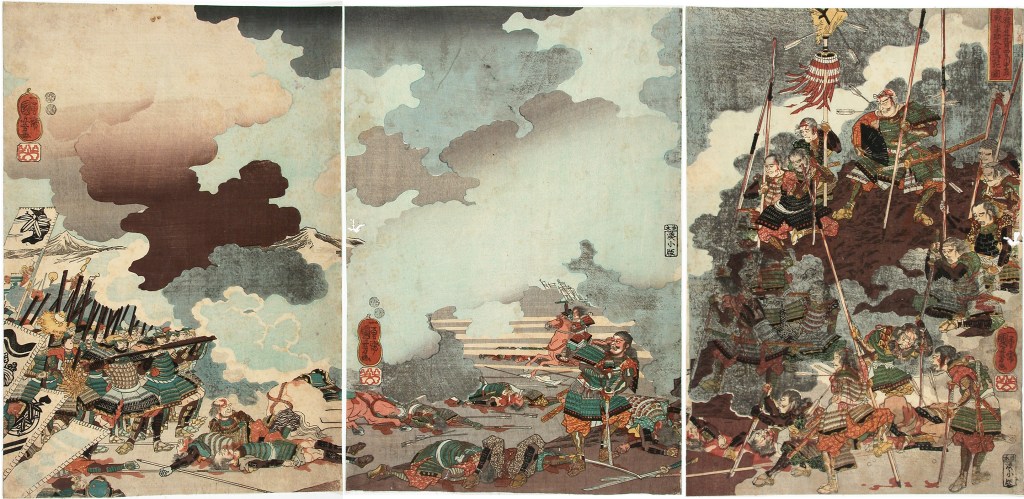
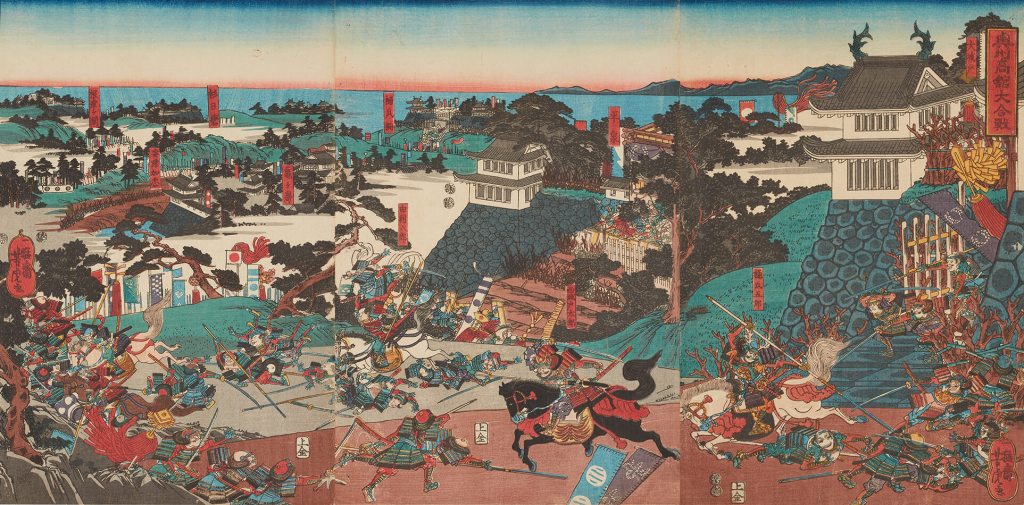
    A 19th Century artistic representation of the Battle of Kawanakajima.

    The reality is that the battles were locally important, but ultimately proved to be fringe events in the course of the enormous bloodshed elsewhere in Japan during this period, as we shall soon see.

    Sources
    https://ja.wikipedia.org/wiki/%E4%BF%A1%E6%BF%83%E6%9D%91%E4%B8%8A%E6%B0%8F
    https://en.wikipedia.org/wiki/Battles_of_Kawanakajima
    https://ja.wikipedia.org/wiki/%E5%B7%9D%E4%B8%AD%E5%B3%B6%E3%81%AE%E6%88%A6%E3%81%84
    https://ja.wikipedia.org/wiki/%E6%97%AD%E5%B1%B1%E5%9F%8E
    https://ja.wikipedia.org/wiki/%E6%AD%A6%E6%B0%B4%E5%88%A5%E7%A5%9E%E7%A4%BE
    https://ja.wikipedia.org/wiki/%E9%AB%98%E6%A2%A8%E6%B0%8F%E9%A4%A8
    https://en.wikipedia.org/wiki/Uesugi_Kenshin
    https://en.wikipedia.org/wiki/Takeda_Shingen

  • The Dragon of Echigo

    The Dragon of Echigo

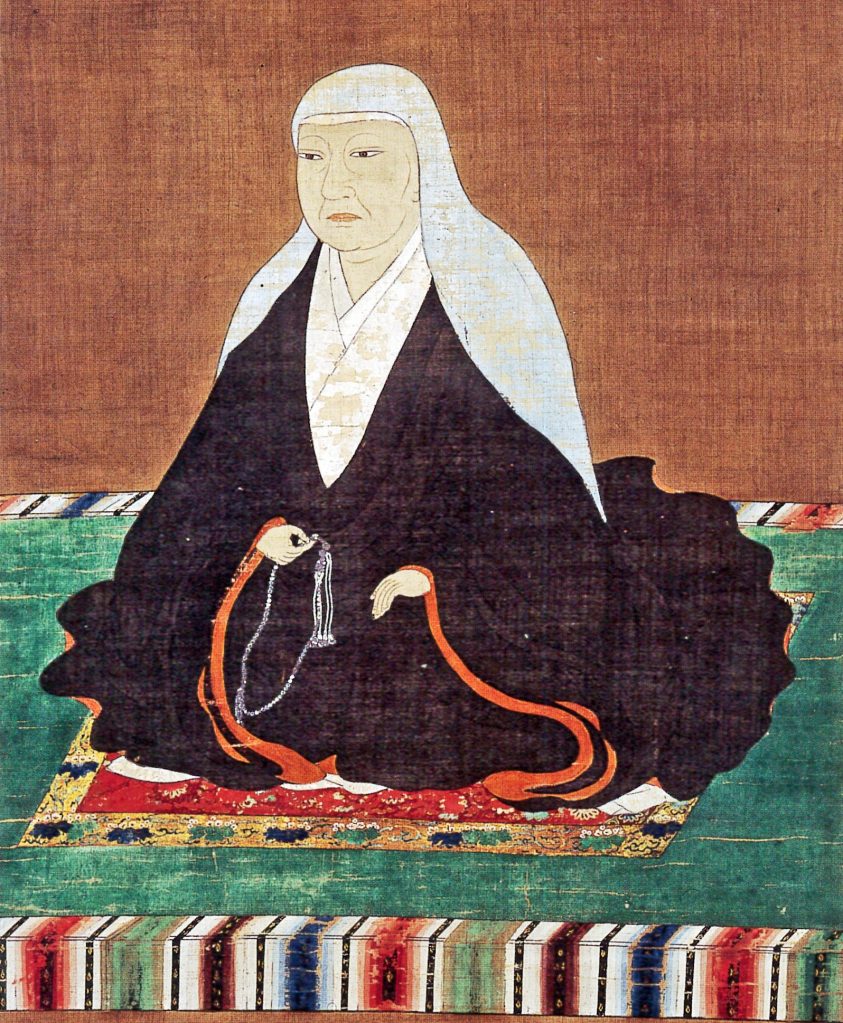
    Much like Takeda Shingen, Kenshin’s real name wasn’t Kenshin, but Kagetora, with Kenshin being a religious name given in later life. However, as this is the name he is best known by, we will be referring to him as it throughout.

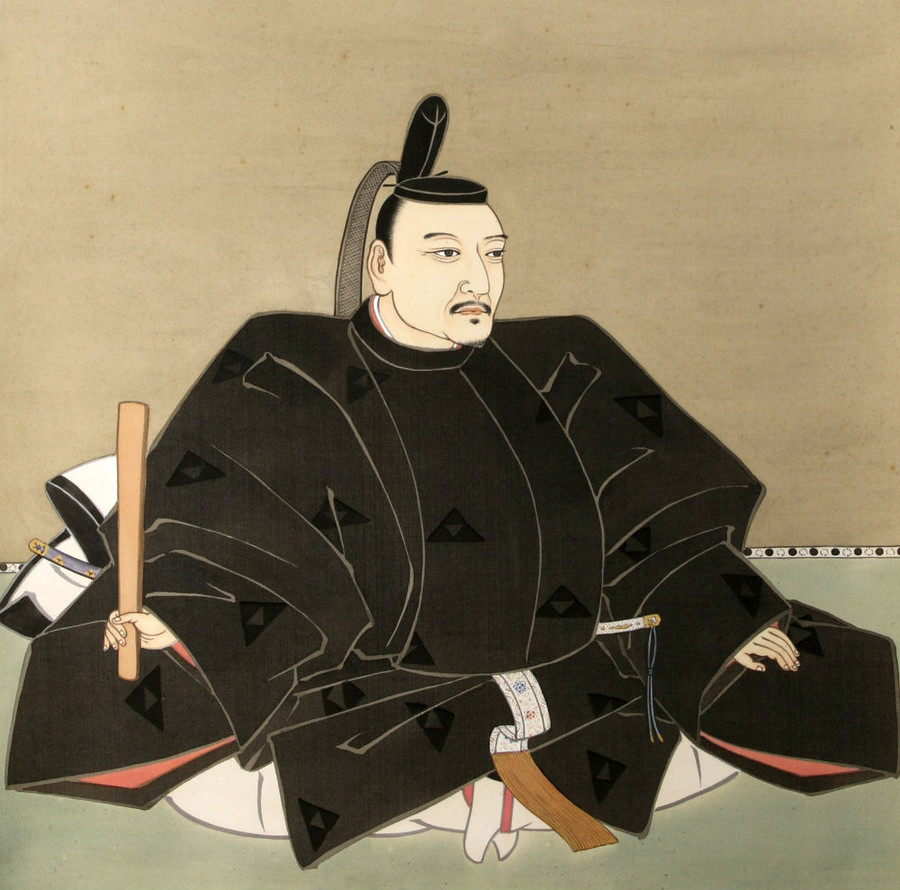
    Uesugi Kenshin, the Dragon of Echigo and the topic of this post.

    If you live your life in such a way that you earn the nickname ‘Dragon of something’ and have followers who think of you as an avatar of the God of War, then I’d say you’ve done pretty well for yourself. By this standard, our subject for today, Uesugi Kenshin, is a historical figure worthy of a closer look.

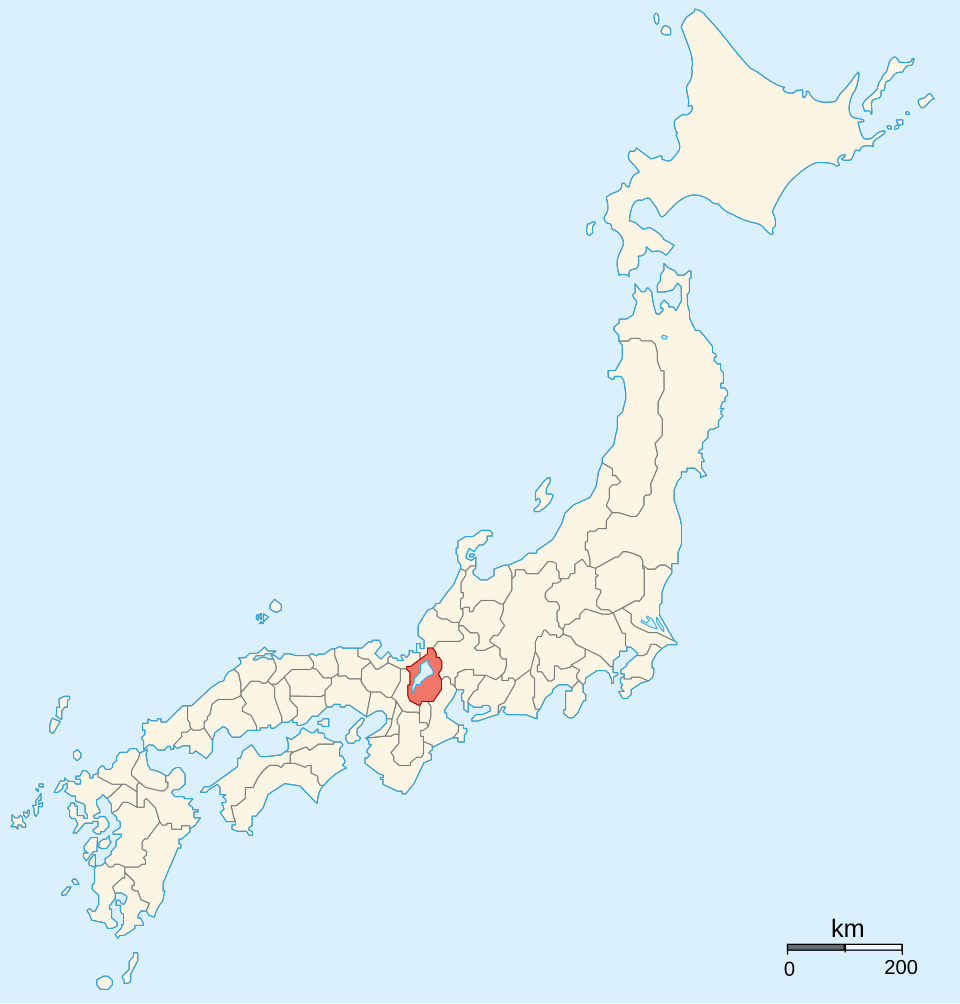
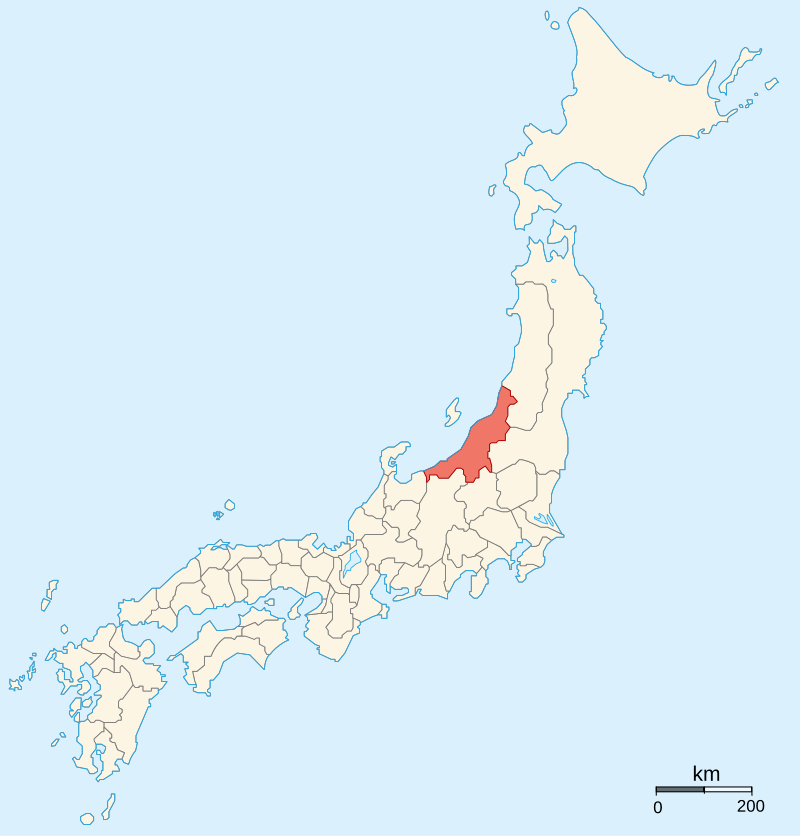
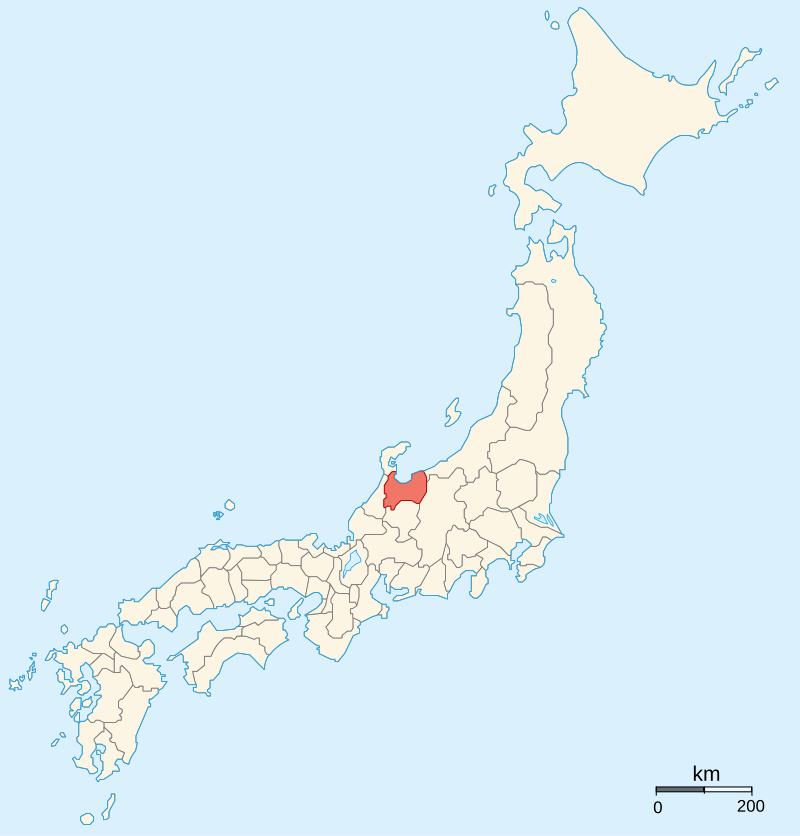
    Confusingly enough, Uesugi Kenshin wasn’t actually a member of the Uesugi family to begin with. He was a scion of the Nagao family, a strong clan who were vassals of the Yamanouchi branch of the Uesugi Clan, based in Echigo Province, in what is now Niigata Prefecture.

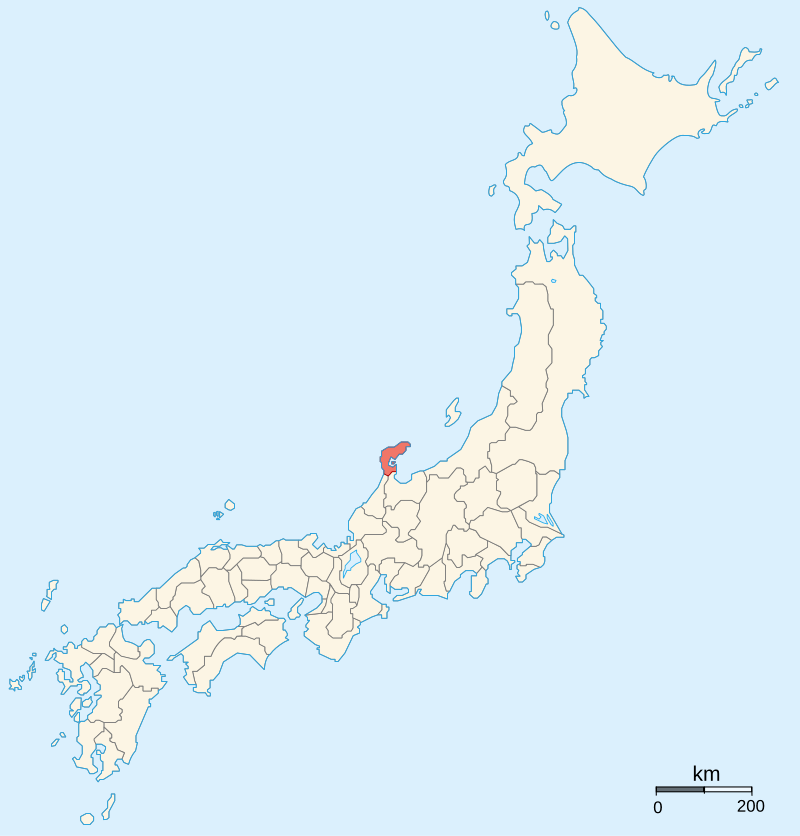
    Echigo Province.
    By Ash_Crow – Own work, based on Image:Provinces of Japan.svg, CC BY 2.5, https://commons.wikimedia.org/w/index.php?curid=1655309

    Born in 1530, it is quite likely that Kenshin’s mother was a concubine, and what’s more, the boy himself was the second son. He was never intended to inherit control of the Nagao Clan, and he entered the temple at Risenji at age 11, apparently set on a life as a monk.

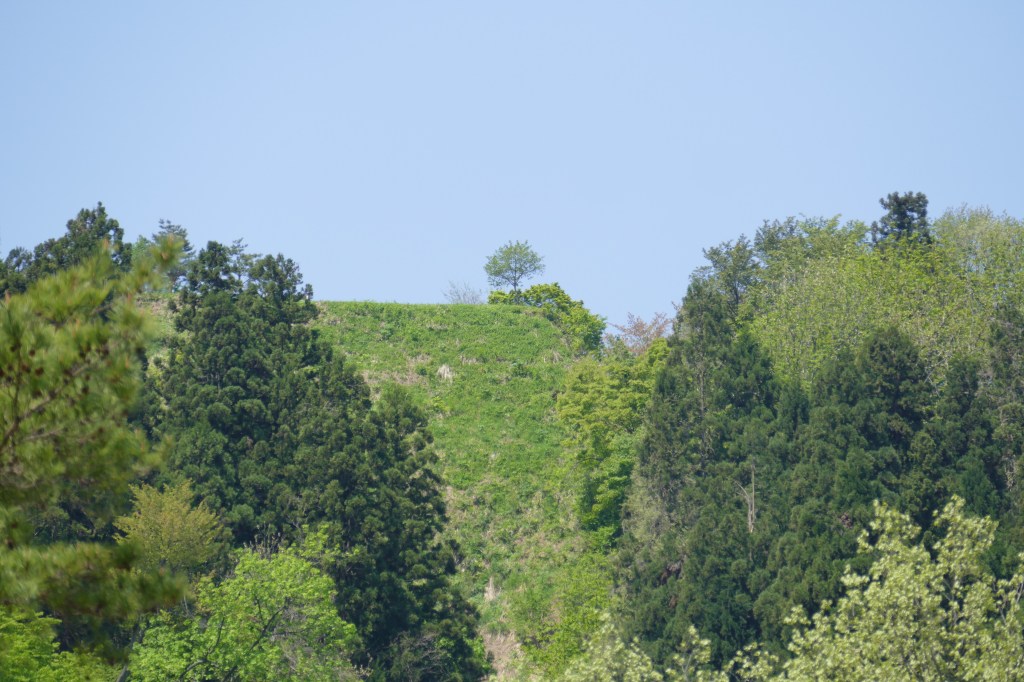
    He doesn’t seem to have stayed at Risenji for long, however, as when his father died in 1542, just a year later, he was at the funeral with armour and sword at his side, and shortly after that, he was at Tochio Castle when a rebellion against Kenshin’s brother (the new Lord Nagao) broke out. Despite being just 14, Kenshin is supposed to have led the defence of the castle and won his first victory.

    At the time, though the Uesugi were nominally the lords of the region, the Nagao served as deputy (and de facto) governors in their place. After the death of Kenshin’s father, it was his elder brother, Harukage, who inherited this position. The brothers don’t seem to have gotten along very well, however, and in the late 1540s, a movement emerged within the Nagao clan that sought to replace Harukage with Kenshin as head of the clan.

    The remains of Tochio Castle, site of Kenshin’s first victory.
    nubobo – 栃尾城本丸跡, CC 表示 2.0, https://commons.wikimedia.org/w/index.php?curid=59682349による

    Exactly why the clan was so against Harukage isn’t clear, but their efforts were ultimately successful. In 1548, under mediation from Uesugi Sadazane (their nominal overlord), Harukage agreed to adopt Kenshin, then retire as head of the clan, clearing the way for Kenshin to become head of the Nagao Clan aged just 18 or 19 (depending on the source).

    In 1550, Sadazane died without an heir, leaving Echigo Province without a lord. At this point, Shogun Ashikaga Yoshiteru instructed Kenshin to take the position of shugo of the province, effectively making him the new lord. Shogunate recognition was not quite the prestigious thing it had once been, however, and not long after this, supporters of Kenshin’s brother rose up in rebellion against him.

    Kenshin quickly bottled up the rebels at Sakado Castle, when the castle fell, the leader of the rebels was spared because he was Kenshin’s brother-in-law, and following this, Kenshin, still aged just 22 had established effectively control over the whole of Echigo Province.

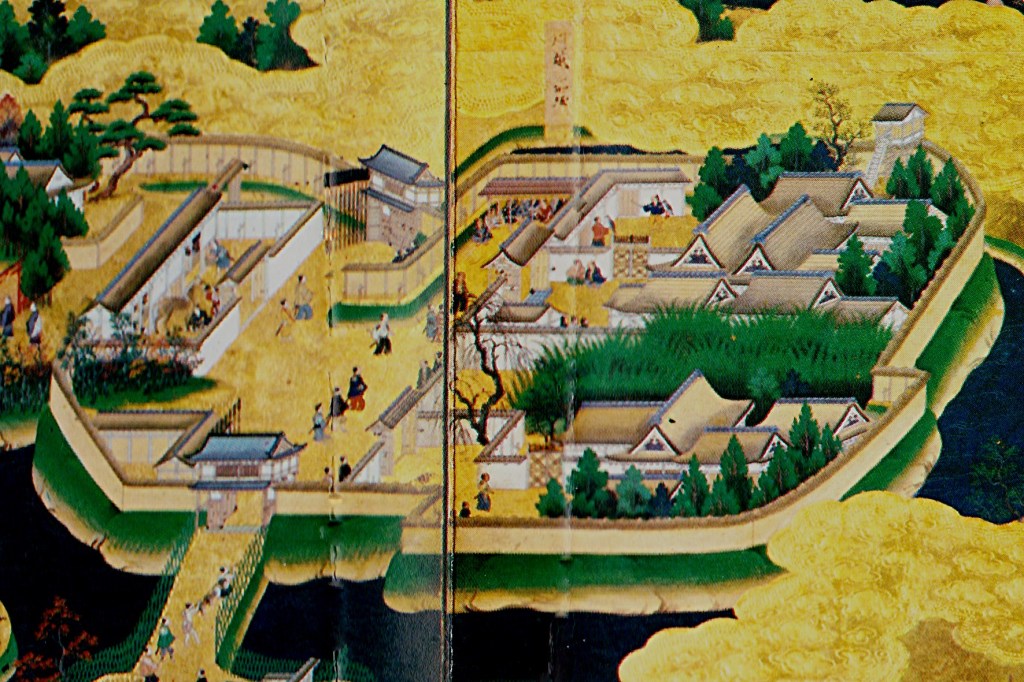
    Looking back for a moment, five years earlier, the Uesugi Clan (or more accurately, the Ogigayatsu branch of the clan) had been defeated at the Battle of Kawagoe by the new rising star of the Kanto, the Hojo Clan. The Ogigayatsu-Uesugi were wiped out after this battle, leaving only the Yamanouchi Branch of the clan. In 1552, Uesugi Norimasa, who was, on paper, the Kanto Kanrei (Shogun’s deputy) was finally driven out of the Kanto entirely and sought refuge with Kenshin.

    A later depiction of Kawagoe Castle.

    Unsurprisingly, harbouring their enemies didn’t do much for the relationship between Kenshin and the Hojo, and Kenshin would send an army to oppose the Hojo’s invasion of Kozuke Province (modern Gunma Prefecture), capturing Numata Castle, and forcing the Hojo to retreat.

    A year later, Kenshin would face a new enemy, as Takeda Shingen’s long-running invasion of Shinano eventually obliged some of the clans there to flee and seek refuge with Kenshin in Echigo. Much like the Hojo, the Takeda didn’t take kindly to someone giving refuge to their enemies, and one of Japanese history’s most famous rivalries was born.

    In August 1553, an army led by Kenshin himself advanced against the Takeda in Shinan, defeating Shingen himself at the Battle of Fuse on August 30th, then again at Yuwata on September 1st. After this, Shingen adopted a strategy of avoiding direct battle with Kenshin, and the conflict settled into a stalemate that was later called the First Battle of Kawanakajima.

    A modern view of Kawanakajima.
    日本語版ウィキペディアのBlogliderさん – 原版の投稿者自身による著作物 (Original text: Photo by Bloglider.), CC 表示-継承 3.0, https://commons.wikimedia.org/w/index.php?curid=12400636による

    In 1554-55, Kenshin was obliged to face a rebellion launched by treacherous vassals in league with Shingen. Putting down the rebellion quickly, Kenshin again marched into Shinano in April 1555 to face the advancing Takeda forces, again led by Shingen.

    At the Second Battle of Kawanakajima, the two sides faced each other in another stalemate, which dragged on for five months, before mediation from the Imagawa Clan led to both sides withdrawing after little actual fighting.

    In the following year, Kenshin apparently announced he would retire and become a monk, however, another outbreak of Takeda-backed rebellion forced him to change his plans, and after a period of peace, in 1557, Shingen again advanced against Kenshin’s allies in Shinano, forcing him to intervene and leading to the Third Battle of Kawanakajima, which, much like the previous two, swiftly settled into stalemate.

    A year later, Kenshin dispatched an army in an ultimately unsuccessful invasion of Kozuke Province and then in 1559 he was ‘invited’ for a meeting with the Shogun, Ashikaga Yoshiteru. Some sources say that Kenshin was granted the title of Kanto Kanrei at this time, the position traditionally held by the Uesugi Clan. He also apparently donated funds towards the maintenance and repair of the Imperial Palace.

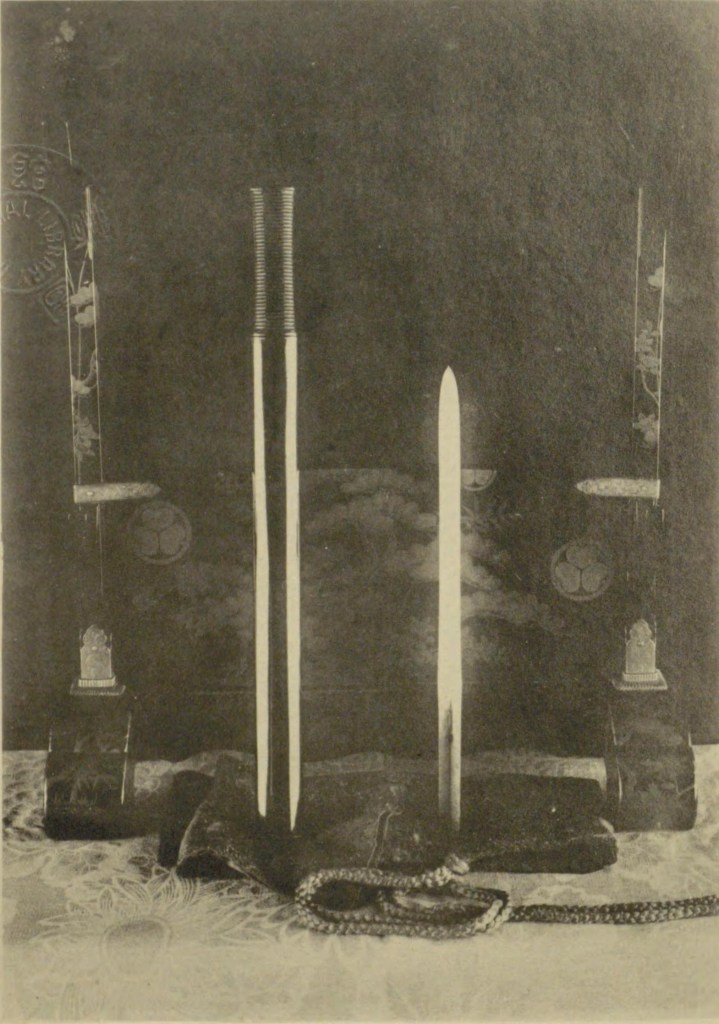
    Swords supposedly gifted to Kenshin by the Emperor, photographed in 1928.

    It seems that Kenshin enjoyed good relations with the Shogunate, but the already well-established decline of the Shogun’s power is highlighted again when he asked Kenshin, Shingen, and the Hojo to make peace in order to combine their forces against the Shogun’s enemies. All three parties refused.

    In March 1560, the Imagawa Clan’s devastating defeat at Okehazama opened the way for Kenshin to intervene directly in the Kanto again, as the Imagawa had been allied to his enemies, the Hojo, and their defeat left the Hojo vulnerable. Later that year, Kenshin launched another large-scale invasion of Kozuke Province, driving the Hojo back and capturing several important castles before celebrating New Year at Maebashi Castle, the gateway to the Kanto Plain.

    In March 1561, Kenshin was formally adopted by the Yamanouchi-Uesugi Clan (the only remaining branch) and changed his surname to match. Though he would be known as Uesugi Kagetora from this point, we will continue to call him Kenshin to keep things simple.

    In August of that year, Kenshin led another large army into Shinano, and engaged the Takeda at the Fourth Battle of Kawanakajima. Unlike the previous three, this battle was not an extended stalemate, but a bloody one. Both sides suffered heavy casualties, with sources ranging from around 20% losses, to as high as 60 or 70%, and when the battle was over, the Takeda held the field, but made no attempt to intervene as the Uesugi withdrew, leading some to suggest the battle was a bloody draw.

    A legendary depiction of the Fourth Battle of Kawanakajima, depicting the (possibly apocryphal) moment that Uesugi Kenshin and Takeda Shingen met on the field.

    The Takeda and Hojo clans, recognising the Uesugi as their common enemy, renewed their combined efforts and launched a joint counter-attack in Musashi Province in late 1561. At first, Uesugi forces were successful against the alliance, even getting as far as besieging Odawara Castle, the Hojo’s main stronghold, before being forced to withdraw after allied counter-attacks in other parts of the Kanto.

    The strategic situation in the Kanto would ebb and flow over the following years, as Uesugi, Takeda, and Hojo armies advanced and retreated, and the local lords would switch sides depending on whoever appeared to be in the ascendancy.

    All three factions would be occupied with fighting each other, but also engaged in other battles and proxy wars with allies and supporters of each other’s enemies. For Kenshin, this meant being obliged to dispatch forces into neighbouring Etchu Province in 1568, to deal with Ikko Ikki forces nominally allied with Shingen.

    Etchu Province.

    Seeking to take advantage of this distraction, Takeda forces attacked in Shinano and were ultimately defeated, but a rebellion in Echigo (Kenshin’s home province) meant he was unable to take advantage of this victory in the short term.

    Later that year, the strategic situation would shift in Kenshin’s favour, however, as the long-term decline in Takeda-Imagawa relations finally led to open conflict between two of his main rivals. The Imagawa would request aid from both the Uesugi and the Hojo, and while Kenshin would refuse, the Hojo dispatched forces to oppose the Takeda, bringing an end to the alliance that had done so much to oppose Kenshin.

    However, years of expensive (and bloody) campaigns in the Kanto had left the Uesugi exhausted, and in 1569, Kenshin reluctantly agreed to a peace deal with the Hojo, which saw the Uesugi withdraw from Musashi Province (modern day Tokyo and Saitama) and the Hojo withdrew from Kozuke.

    With his borders with the Hojo (relatively) secure, Kenshin was able to focus on campaigning against the Takeda again. In 1570 and 1571, he would engage the Takeda and their allies in Etchu and Shinano Provinces, generally having the better of the fighting, but the situation would shift again in 1572 when the lord of the Hojo, Ujiyasu, passed away, and was replaced by Ujimasa, who made peace with the Takeda, turning on the Uesugi. At the same time, the Etchu Ikko Ikki launched a fresh attack, instigated by Takeda Shingen.

    Hojo Ujimasa, who reversed his father’s diplomatic policy.

    The Ikko Ikki would initially be successful against Kenshin, but by mid-1573, the momentum had shifted back in his favour, and several key fortresses within Etchu were taken. Also in that year, Kenshin’s long-time rival, Takeda Shingen, passed away, an event that apparently caused Kenshin to weep openly, but also significantly weakened the Takeda.

    Over the following two years, Kenshin was forced to split his focus between his ongoing campaign in Etchu and the situation in the Kanto. By the end of 1574, the Hojo had effectively ended any Uesugi presence in the region, and although Kenshin would launch counterattacks, the writing was on the wall for Uesugi power in the Kanto.

    In 1576, Kenshin would receive a request for aid from the Shogun, seeking support against Oda Nobunaga, who now dominated central Japan and had forced the Shogun into exile. In order to get to Kyoto, Kenshin was obliged to focus all his resources on securing Etchu and Noto Provinces. This campaign would drag on throughout 1576 and 1577, delayed by intervention from the Hojo and internal rebellion, but by November 1577, Kenshin had secured control of the provinces and was poised to strike at Kyoto itself.

    Noto Province.
    By Ash_Crow – Own work, based on Image:Provinces of Japan.svg, CC BY 2.5, https://commons.wikimedia.org/w/index.php?curid=1690738

    Mustering a large army, Kenshin would march out to meet a force led by Nobunaga’s generals, Shibata Katsuie and Hashiba Hideyoshi (better remembered to history as Toyotomi Hideyoshi), who were not fond of each other. A dispute led to Hideyoshi withdrawing his forces early, and when the two sides clashed at the Battle of the Tedori River on November 3rd, Kenshin would emerge victorious.

    The exact course of the battle, and even the size of the forces involved, is not clear from contemporary sources, but Kenshin would withdraw temporarily, issuing instructions for a renewed campaign to begin in the spring. The battle at the Tedori River had opened a strategic opportunity for Kenshin, and it has been speculated that he might have been able to complete his march on Kyoto.

    Much like his rival, Shingen, however, Kenshin would never make the march. In early March, Kenshin would collapse (allegedly whilst in the toilet) and fall into a coma from which he would never wake up; he died on March 13th, aged 49.

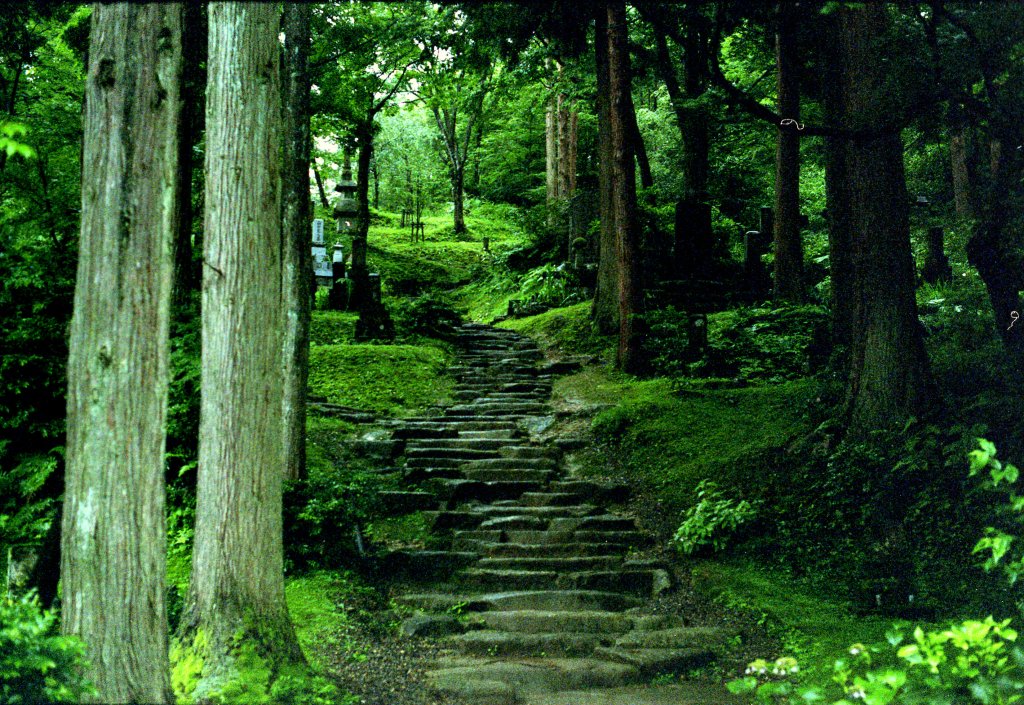
    The site of Kenshin’s grave at Risenji, where he studied as a boy.
    By shikabane taro, CC BY 3.0, https://commons.wikimedia.org/w/index.php?curid=54071606

    Much like the Takeda after the death of Shingen, the Uesugi would be seriously weakened by Kenshin’s death. Though they had been a threat to Nobunaga, Kenshin’s death, and the ongoing effects of years of more or less constant conflict, rendered them powerless to stop the rise of Nobunaga, and after his death in 1582, the Uesugi would make their peace with his successors.

    Decisions made at the end of the Sengoku Jidai would see the clan’s star fall even further, though that is a story for another time.

    Sources
    https://ja.wikipedia.org/wiki/%E4%B8%8A%E6%9D%89%E8%AC%99%E4%BF%A1
    https://ja.wikipedia.org/wiki/%E6%89%8B%E5%8F%96%E5%B7%9D%E3%81%AE%E6%88%A6%E3%81%84
    https://en.wikipedia.org/wiki/Battle_of_Tedorigawa
    https://ja.wikipedia.org/wiki/%E5%B7%9D%E4%B8%AD%E5%B3%B6
    https://ja.wikipedia.org/wiki/%E5%89%8D%E6%A9%8B%E5%9F%8E
    https://ja.wikipedia.org/wiki/%E6%B2%BC%E7%94%B0%E5%9F%8E
    https://en.wikipedia.org/wiki/Battles_of_Kawanakajima

  • Kamakura IV – You can’t invade Japan…

    “…unless you’re the Mongols…” – John Green, Crash Course World History

    By the 1260s, the Mongol Empire was the most powerful state the world had ever seen. Throughout the 13th century, united under their leader, Genghis Khan and his heirs, the Mongols had conquered everything from China to Poland, sweeping aside any who opposed them, and spreading Mongol law and customs across Asia and into Eastern Europe.

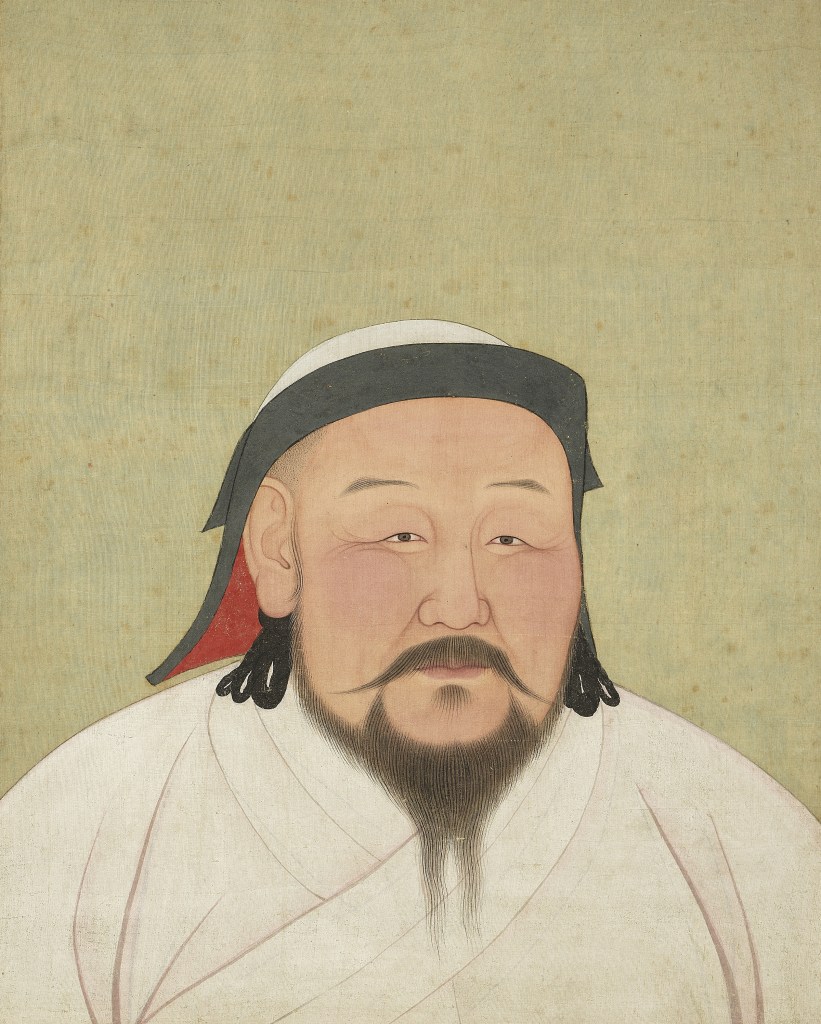
    In 1260, Kublai was elected as Great Khan. The grandson of Genghis, he had established the base at Khanbaliq, in modern Beijing, would go on to declare himself Emperor of China in 1271 (establishing the Yuan Dynasty), and took part in the subjugation of Korea, which had only finally submitted (and even then, as only a vassal) in 1259.

    Kublai Khan, Great Khan, Emperor of China, and would-be conqueror of Japan.

    Though China would not be completely subjugated until 1279, the Mongol position in Asia was strong enough that Kublai could turn his eyes elsewhere in search of new conquests. Japan presented a unique challenge; though Mongol armies were dominant on land, they had relatively little power at sea, and Japan, as an island nation, presented an opportunity to enhance Mongol prestige, but came with considerable risk.

    At first, Kublai tried to get the Japanese to submit without a fight. In 1266, he sent an embassy with a letter inviting the Japanese to send tribute. The embassy was turned away without even delivering its letter. Kublai, apparently not believing that a Mongol embassy would be treated so disrespectfully, sent another mission which met with similar stonewalling.

    In 1269, Kublai sent a third mission, this time to the island of Tsushima, demanding to know why there had been no response to his earlier letters. At this point, the Imperial court in Kyoto got nervous and suggested that it might be better to deal with the Mongols diplomatically. However, the Hojo Regents in Kamakura rejected this approach; a letter was apparently drafted, but evidently never sent.

    The Mongol Cometh.

    Several more attempts at diplomacy were made, but all came to nothing. The Shogunate seems to have taken the threat of invasion seriously as early as 1268, though, and began preparing defences. In China, the first serious preparations weren’t made until 1274, when Kublai and the Mongols(more correctly, the Yuan Dynasty at this point) began the mobilisation of troops, ships and supplies.

    The first invasion force made landfall on the island of Tsushima in November 1274, but it’s not entirely clear how big the opposing forces were. As is common with these things, the numbers vary wildly, with Chinese sources saying the Japanese have over 100,000 warriors, whilst the Japanese claim to have been outnumbered 10 to 1, both of which are clearly exaggerations.

    Most scholars put the total Mongol forces at around 30,000 (including sailors), but what is certain is that they quickly conquered Tsushima and nearby Iki Island, using them as a base for stage two of their plan. Mongol forces (around 6000) landed at Hakata Bay, in modern Fukuoka, on November 19th.

    Here we see the mismatch in fighting styles between the Mongols and Japanese. The Japanese tried to fight in their own way, with individuals announcing themselves and seeking challengers from the opposing side until one side overcame the other. The Mongols, however, fought as units, not individuals, and they made use of early gunpowder weapons, like primitive hand grenades, which terrified the Japanese and their horses and disrupted their tactics.

    “According to our manner of fighting, we must first call out by name someone from the enemy ranks, and then attack in single combat. But they (the Mongols) took no notice at all of such conventions; they rushed forward all together in a mass, grappling with any individuals they could catch and killing them.” – Hachiman Gudokan

    The Japanese fought bravely, but were outmatched by Mongolian tactics and gunpowder weapons.

    The fighting was brief and badly organised, and though the Mongols were able to drive the Japanese back and even burn Hakata, they made no further progress. Overnight, apparently fearing a Japanese counterattack, the Mongols retreated to their ships, and by the next morning, they were gone.

    Japanese sources say that unfavourable winds blew the Mongol fleet back out to sea, whilst Chinese sources make reference to a storm that scattered the fleet either in Hakata Bay or when it was on its way back to Korea.

    Either way, the first Mongol invasion was over. There are no reliable accounts of Japanese losses, though they appear to have been heavy, especially on Tsushima, where the Mongols killed and burned everything before them. As for the Mongols, they may have lost up to half their forces, though again, the sources aren’t entirely clear.

    Scholars disagree about whether this first ‘invasion’ was an actual attempt to conquer territory in Japan, or was instead a reconnaissance in force, designed to test the fighting abilities of the Japanese before a major effort was launched.

    The Empire Strikes Back

    The Japanese at the time certainly believed that the Mongols would be back, and as soon as the last invader disappeared, preparations were made for their return. Potential landing sites in Kyushu were fortified with castles, and stakes were driven into river beds, and at Hakata, a 2-meter wall, the Genko Borui, was built to prevent a second sacking of the city.

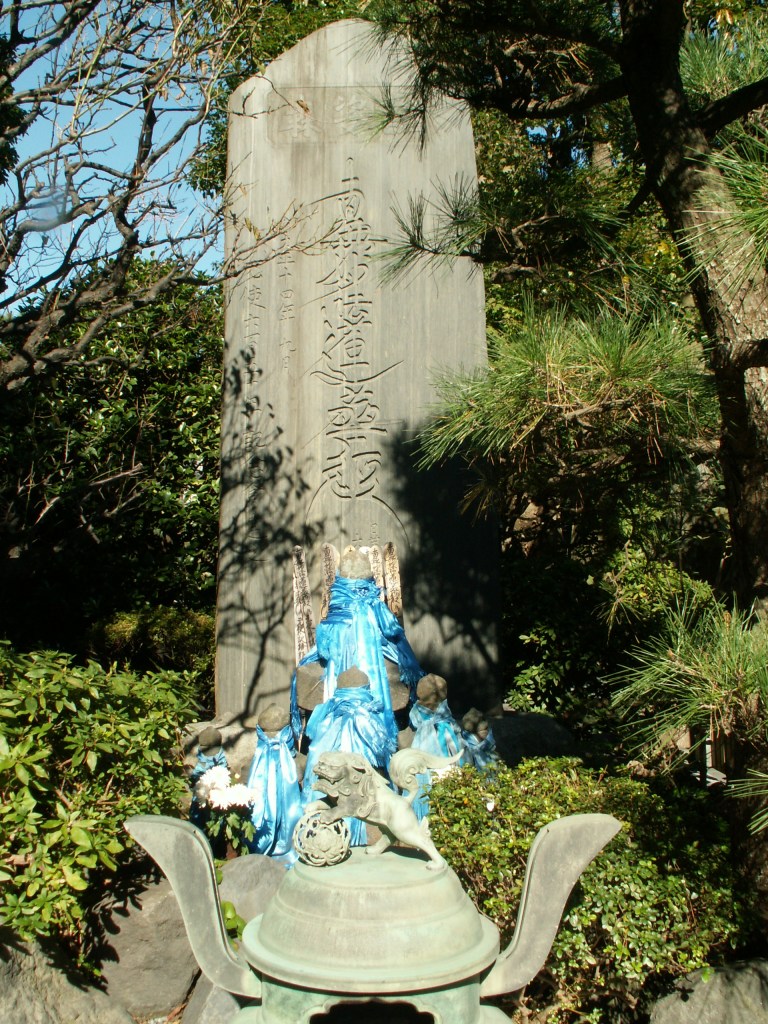
    For his part, Kublai made another attempt at diplomacy and dispatched another embassy, which had orders to refuse to leave until an answer was received. They certainly got an answer when the regent of the day, Hojo Tokimune, had them beheaded. Their graves can still be seen at Joryu-ji Temple in Fujisawa.

    The stele marking the graves of the envoys, in Fujisawa.
    By kamakura – Self-photographed, CC BY-SA 3.0, https://commons.wikimedia.org/w/index.php?curid=3082856

    Another embassy was sent in July 1279 and met the same fate, this time at Hakata, and in 1280, Kublai gathered his men, and together they made plans for a second invasion of Japan.

    By this time, China had been fully conquered, and using his newly acquired resources, Kublai was able to amass more than 1500 ships, and 100,000 men, with a further 40,000 in Korea. These numbers are probably exaggerated, but it does go some way towards showing how large the invasion was when compared to the first.

    The Mongol forces were divided into two: the Eastern and the Southern Army. The Eastern Army landed on Tsushima again in June, and once again, the island and nearby Iki Island were quickly conquered. The Eastern Army was supposed to wait for the Southern Army, but its commanders instead attacked Kyushu directly, landing at Hakata and nearby Nagato Province (in modern Yamaguchi Prefecture).

    The attack in Nagato was a failure, and the one at Hakata ran into the wall that had been built for that purpose. The Japanese had learned their lesson; they no longer sought out individual battles with the Mongols, instead remaining behind their defences and driving the invaders back with their bows (the preferred weapon of the Samurai at the time).

    The Mongols landed, but couldn’t overcome determined Japanese defenders, who had learned their lesson.

    Though driven back, the Mongols busied themselves with occupying the abundant islands around northern Kyushu, turning some of them into bases from which they raided the mainland. The Japanese lacked the naval strength to face the Mongol fleet directly, and instead launched night attacks on Mongol ships, inflicting minor damage and proving to be a nuisance rather than a serious strategic threat.

    The situation got worse for the Japanese when the Mongol Southern Fleet finally arrived, and the combined fleets based themselves at Takashima Island, where they made plans to renew the attack on Kyushu.

    At the same time, an army of some 60,000, dispatched by the Shogun to oppose the invasion, was making its way towards Kyushu, but before it reached Chofu, where it intended to cross from Honshu (Japan’s main island) to Kyushu, the weather had intervened.

    And they were scattered.

    In mid-August, the weather took a sudden turn, experienced sailors amongst the Mongol Fleet recognised the signs sought cover in Imari Bay, but it was already too late. On August 15th, a typhoon smashed into the Mongol Fleet, devastating it; those ships not sunk outright were stranded ashore where the Japanese made short work of their crews.

    The few Mongol ships that managed to survive the storm limped back across the sea to Korea, with some Chinese sources claiming that the losses may have been as high as 90%. The Mongol Invasion of Japan had failed, and though there were discussions about mounting a third attempt, they came to nothing, and Japan would remain free of foreign occupation until 1945.

    Despite having seen off the invasion, the Shogunate and the Hojo Regents were in no position to celebrate. Traditionally, warriors, victorious in war, were granted land taken from their defeated enemies, or at least could expect a share of the loot.

    The problem was that there was no land, and precious little loot to be shared out, and this led to growing resentment amongst the men who had actually done the fighting and dying and the popularity and prestige of the Shogunate was badly shaken.

    Another consequence of the failed invasion was a sharp rise in Japanese amongst the Wako, pirates who were a serious problem for coastal Chinese communities for decades afterwards, so much so, that Wako raids were cited as one of the reasons for an eventual Chinese ban on trade with Japan, though that would come long after the Mongol Yuan Dynasty had fallen.

    In Japan, too, the unsuccessful invasion led to some significant changes. Firstly, the belief that Japan was a land with divine protection became widespread, with the Kamikaze (literally, Divine Wind) being cited as the source of the Typhoon that had smashed the Mongol Fleet.

    Military technology was changed too; prior to the invasion, the Samurai had favoured the bow or spear as their primary weapon. When forced to fight up close with the Mongols, their swords were found to be too easily bent or broken, and this led to innovations in sword manufacturing that produced shorter, lighter, but stronger blades, giving birth to the iconic swords we know today.

    The Hojo and their puppet Shoguns would continue to rule Japan for decades after the threat of invasion had passed, but their rule was shaky, and the 14th century would see them face their final challenge, one of their own.

    Sources
    https://ja.wikipedia.org/wiki/%E5%85%83%E5%AF%87
    https://en.wikipedia.org/wiki/Mongol_invasions_of_Japan
    https://en.wikipedia.org/wiki/Kublai_Khan

    Not that many this week, eh?

  • Kamakura I – A Good Start

    According to historians, the Kamakura Period (named for the eponymous city in modern Kanagawa Prefecture) began in 1185. You probably know by now that history is never that neat. For starters, Minamoto no Yoritomo, the ‘first’ Shogun of this period, wasn’t actually granted the title until 1192.

    Despite some unclear dates, the reality is that Imperial power had been in decline for centuries. The rising warrior class (Samurai) had had effective control of the provinces for years, and one clan, the Taira, would rise to take effective control of the government, though their leader, Taira no Kiyomori, would not take the title of Shogun and nominally ruled through the Emperor.

    Taira control came to an end at the Battle of Dan-no-Ura in 1185, and they were replaced by the Minamoto. We’ve already discussed them, but in summary, the Minamoto, much like the Taira, were a sprawling extended family whose wealth and power did not come from Imperial prestige or titles, but control of the land and the armed men who protected it.

    After Dan-no-Ura and the end of the Genpei War, the Minamoto were in control, but here’s where history takes a turn. Previously, clans like the Soga, Fujiwara, and Taira had taken control of the capital, and they exerted influence on the court through political appointments, marriages, and the occasional use of force. The clans would sometimes become powerful enough to reduce Imperial rule to a mere concept, but the illusion of Imperial power was always formally maintained.

    The Minamoto were different. Firstly, they didn’t base themselves in the capital, even after their victory over the Taira. The Minamoto base, and centre of their power, was at Kamakura, and that is where they remained. After 1185, Yoritomo would pay lip service to the Emperor, but he began appointing his own provincial administrators, cutting the court out of the process entirely.

    In 1189, Yoritomo undertook an invasion of the northern provinces of Dewa and Mutsu. These provinces were ruled by the remnants of the Northern Fujiwara clan and had been largely independent since the outbreak of the Genpei War in 1180. It was also an area that harboured Minamoto rivals to Yoritomo.

    Before the outbreak of what would become known as the Oshu War, Yoritomo sought the permission of the Imperial Court to lead the army against the ‘rebels’. This was a formality, but technically the Emperor still had the right to select the General of ‘his’ army.

    However, Yoritomo didn’t wait for permission to be granted. Instead, he summoned warriors from across Japan, and they answered the call from as far away as Satsuma Province in southern Kyushu (in modern-day Kagoshima Prefecture). Throughout the summer, the Imperial Court made a lot of noise, trying to dissuade warriors from joining Yoritomo, but it did no good. If Japan had been waiting for a sign that power had definitively shifted, then this was it.

    The Oshu War in 1189 put an end to even the pretence of Imperial authority over the warrior class.

    The Oshu War lasted around 40 days, and Yoritomo achieved a complete victory. The Court, apparently trying to save face, offered its formal congratulations and a retroactive ‘permission’ for the war. Though the formalities had been observed, no one was fooled; Yoritomo was the boss now.

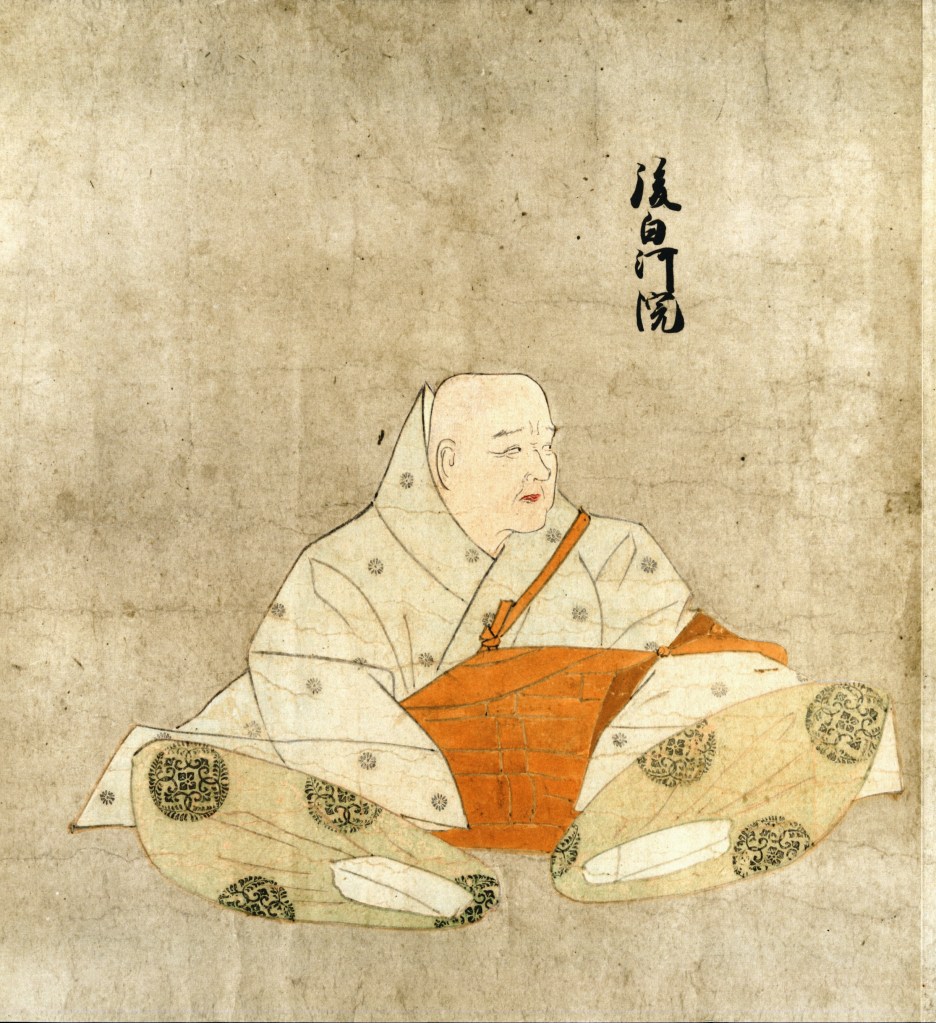
    Yoritomo’s main rival at court was the Emperor Go-Shirakawa, who had abdicated in 1158 and ruled as an insei or cloistered Emperor, influencing events at court for years. Though the two men would cooperate occasionally, especially against the Taira, it wasn’t long before the relationship broke down. Luckily for Yoritomo, and unluckily for Imperial power, Go-Shirakawa died in 1192, and the last real opposition to Minamoto dominance died with him.

    It is debated as to whether or not Go-Shirakawa actually sought to prevent Yoritomo from taking the title of Shogun, but the timing is certainly interesting. Go-Shirakawa died in April 1192, and Yoritomo was raised to Shogun in July, giving some credence to the idea that the only obstacle had been the Emperor.

    The title of Shogun, more appropriately, Seii taishōgun, is literally translated as Commander-in-Chief of the Expeditionary Force Against the Barbarians (which is a bit of a mouthful, I agree), and had always been a temporary title before. In the Yamato Period and early Heian, the Emperor would issue a ceremonial sword to a General before sending him against the Empire’s enemies (usually the Emishi Tribes in what is now northern Japan).

    The title seems to have fallen out of use in the 10th century as the Emishi had ceased to be a threat, and there was no longer any need for a Supreme Commander. Yoritomo’s assumption of the title reflected the new reality. His was not a government that was based on divine origins, or the glitz and glamour of Imperial ceremony. He had taken power through military strength, and he would rule Japan in the same way.

    Though Yoritomo was obviously a capable commander and administrator, he also took advantage of powerful alliances in and around his home provinces. His marriage to Hojo Masako (an important figure in her own right) brought him the support of the powerful Hojo Clan, who would go on to play an important role in the Kamakura Government.

    The strength (and, ironically, the eventually fatal weakness) of the Kamakura government was its decentralisation. Japan had been divided into provinces during the Taika Reforms over 500 years earlier, with each province being further divided into districts.

    The system had relied on officials appointed by the Imperial Court to run it, and when Yoritomo took over, he replaced Imperial Officials with Gokenin. This new system was pretty much the same as the one it had replaced, with officials appointed by the Shogun to oversee lands that they didn’t own.

    The home of a Gokenin from later in the period.

    The power of the Shogun came from the exclusive right to appoint these officials, but over time, they become de-facto hereditary, meaning that later Kamakura-based Shoguns would face exactly the same problem as the Emperors had, nominal vassals who were in reality heavily militarised, semi-independent principalities, who were not interested in obeying the government.

    The Great Hunt

    All that was in the future, and Yoritomo was focused on establishing the power of his regime in the short term. In the summer of 1193, Yoritomo called all his retainers to a great hunt in Suruga Province, not far from his capital. The so-called ‘Fuji no Makigari” (Hunt near Mt Fuji) was apparently attended by upwards of 700,000. Though that does seem implausibly high (and probably is), it does go some way to showing how high-profile an event this was. There were also a few incidents that highlight the complexities of power, both within the family and outside it.

    Firstly, when Yoritomo’s son and heir, Yoriie, killed his first deer, Yoritomo stopped the hunt to call for a celebration. Now, I don’t know if you’ve ever tried to shoot anything with a bow, let alone a deer, but it’s not easy, and Yoriie was only 12, so good for him, right?

    Well, it turns out, not so much, when Yoritomo sent a message to his wife, and the boy’s mother, Hojo Masako, inviting her to the celebration, she sent a message back stating that the son of a Shogun being able to shoot a deer was no reason to celebrate.

    Hojo Masako, the original Tiger Mum.

    Another incident, which wasn’t political exactly, but still a bit weird, was when Kudo Kagemitsu, a famous archer, shot at a deer and missed three times. He would claim to be baffled, and that the deer must have been the one that the Gods of the mountains rode. Which I’m sure it was. It’s a convenient excuse anyway. Kagemitsu would apparently get sick and collapse that very evening, and Yoritomo even considered calling off the hunt, but he didn’t, and they carried on for another week, so there’s that.

    The third incident is certainly the most serious, and has a name that probably explains itself: The Revenge of the Soga Brothers.

    These Soga aren’t the same as the Soga who had first dominated the Imperial Court in the Yamato Period; instead, they were a clan based in Sagami Province (most of modern-day Kanagawa) near Odawara. The target of the Soga’s vengeance was Kudo Suketsune, who had accidentally killed their father in a dispute over land, or a woman, or something. It’s complicated, but Samurai love a vendetta, and even though Suketsune’s death had been an accident, the Soga Bros, Sukenari and Tokimune, swore revenge.

    Now, the exact details of the attack are recorded in the Soga Monogatari, which is of unknown authorship, and tends to sensationalise quite a lot of what happened, and the Azuma Kagami, which is heavily biased towards the Kamakura government. Both sources share some similarities and some differences, but the basic outline is that the brothers attacked and killed Suketsune either at an inn or in a mansion, where he was attended by one or possibly two prostitutes.

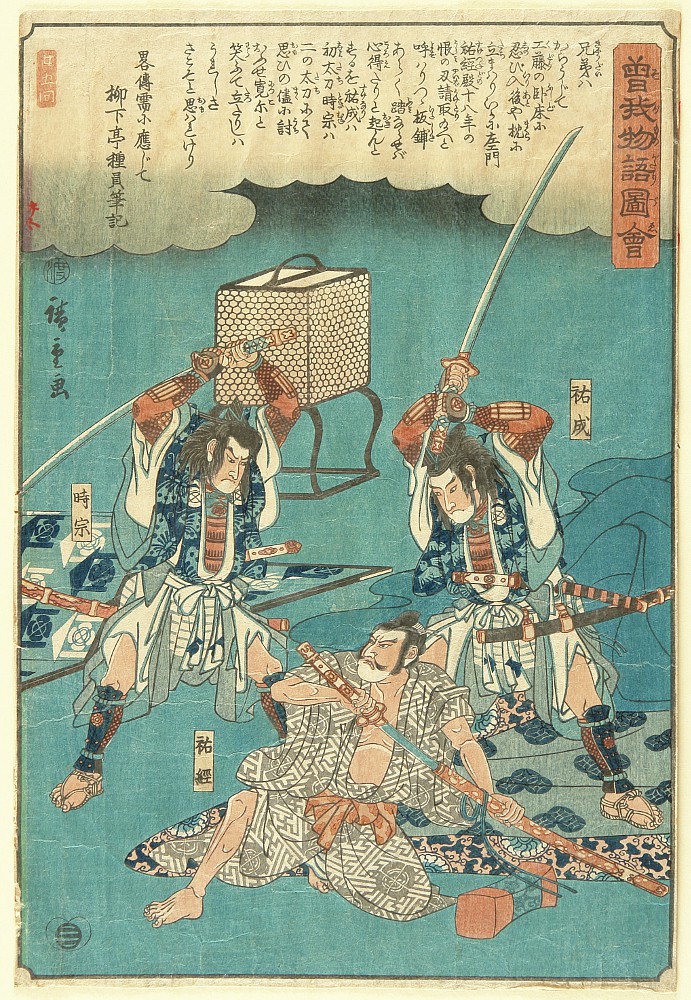
    The Soga Brothers take their revenge.

    The sources agree that the brothers killed Suketsune with their swords, but the Soga Monogatari says they also killed one of the prostitutes, or maybe just cut her legs off, which I guess was fine?

    Both sources agree that the brothers attacked and killed many warriors, with the Azuma Kagami suggesting that this was part of an attack on the Shogun, whilst the Monogatari says it was all about killing as many enemies as possible, to make their mark on history.

    Both sources also agree that Sukenari, the elder brother, was cut down in the melee, but Tokimune was captured, and subject to interrogation, before being put to death.

    This story was romanticised as heck later on, especially during the Edo Period, and why not? After all, what’s more inspiring than a story about a pair of brothers who avenge their murdered father before going on to slaughter a bunch of people who had nothing to do with it?

    Whether or not the Soga Brothers actually attempted to kill the Shogun, this episode highlights the often chaotic and bloody reality of a government run by warriors.

    Yoritomo would become a monk, and then almost immediately die in February 1199, leaving his son Yoriie as the second Shogun. Yoriie would immediately come under the influence of his grandfather, Hojo Tokimasa, and mother, the aforementioned Hojo Masako. Pretty soon, the same problems that had plagued the Imperial Court began affecting the Shogun’s court too, but more on that next time.

    Sources
    https://en.wikipedia.org/wiki/Kamakura_shogunate
    https://en.wikipedia.org/wiki/Battle_of_%C5%8Csh%C5%AB
    https://en.wikipedia.org/wiki/Minamoto_no_Yoritomo
    https://ja.wikipedia.org/wiki/%E6%BA%90%E9%A0%BC%E6%9C%9D
    https://en.wikipedia.org/wiki/Shogun
    https://en.wikipedia.org/wiki/Emperor_Go-Shirakawa
    https://en.wikipedia.org/wiki/H%C5%8Dj%C5%8D_Masako
    https://en.wikipedia.org/wiki/Gokenin
    https://en.wikipedia.org/wiki/Fuji_no_Makigari
    https://en.wikipedia.org/wiki/Revenge_of_the_Soga_Brothers
    https://en.wikipedia.org/wiki/Azuma_Kagami
    https://en.wikipedia.org/wiki/Soga_Monogatari

  • The Genpei War

    Oh yes, here we go, a good old-fashioned war post! All those posts about economic and social decline are finally paying off! Let’s get into it!

    So, as we’ve discussed, by the mid-12th Century, the Imperial Court was in a bad way. Over the centuries, the throne had been dominated by one powerful clan after another, who would marry into the Imperial family again and again in order to maintain that domination, at the cost of turning their gene pool into more of a muddy puddle. Luckily, Heian Era Japan didn’t have a concept of genetics, so I’m sure it was fine.

    The first of these families had been the Soga, who had been overthrown by the Fujiwara in the Isshi Incident in 645. The Fujiwara had had more or less complete control until the Emperors started abdicating to become insei, that is, cloistered Emperors, or an Emperor with all the power of the throne and none of the restraints that the Fujiwara had taken advantage of.

    With the Fujiwara weakened, their enemies started circling. The Hogen Rebellion in 1156 marked the end of Fujiwara power, as the rival Taira and Minamoto families teamed up to take them down. In a betrayal that will surprise no one, the Taira then shafted the Minamoto in the post-rebellion settlement, taking most of the power and the influence over the Emperor for themselves.

    The Minamoto were understandably a bit put out by that, so they launched a rebellion of their own in 1160. The so-called Heiji Rebellion failed, and the Minamoto were effectively wiped out, their leadership either killed or banished to the provinces.

    For the next 20 years, the Taira ruled as the Fujiwara had, but the problem with a violent takeover is that once one group does it, everyone wants to have a go. The Taira, like the Fujiwara before them, became overly enamoured with court life and neglected the provinces.

    This was unfortunate because, as I mentioned earlier, it was the provinces to which the Minamoto had been banished, and they weren’t in a forgiving mood when it came to the Taira.

    The Heiji Rebellion in 1160 marked the triumph of the Taira over their Minamoto rivals, at least temporarily.

    The leader of the Taira at this point was Kiyomori. He had led the Taira forces that had overthrown the Fujiwara and then seen off the Minamoto, and he was probably feeling pretty pleased with himself. Using his influence (and presumably the implicit threat of force), he rose through the ranks at court, eventually becoming Daijo-Daijin, which was basically the head of the government and second only to the Emperor (in theory).

    Now, there had obviously been Daijo-Daijin before Kiyomori, but he was significant because he was the first from the buke or warrior families to rise to that rank. Previously, the formal ranks of the Imperial Bureaucracy had been held by members or allies of the Fujiwara, and Kiyomori was an outsider who was seen as having used martial strength to gain his position, which was true, to be fair.

    In 1171, Kiyomori cemented his power at court by having his daughter, Tokuko, marry Emperor Takakura. Now, none of this was particularly new; the Fujiwara had been doing it for centuries, after all, but Kiyomori was different; he was a thug.

    The Fujiwara, for all their faults, had always played the game properly. They knew the rules, understood court etiquette, wrote beautiful poems, all that stuff. Kiyomori wasn’t like that. He’d taken power through military strength, and that was how he intended to keep hold of it. He wasn’t afraid to throw his weight around, and it was a risky business to oppose him.

    In 1177, in response to an alleged coup (the Shishigatani incident), Kiyomori ordered the arrest of dozens of conspirators. That these conspirators were all people who had reason to be offended by Kiyomori was convenient, and some sources speculate that the plot never existed at all, as it appears to have relied entirely on the testimony of a single monk, who Kiyomori had tortured and then beheaded.

    Regardless of whether it was real or not, Kiyomori had reinforced his power. Those who had ‘opposed’ him were dead or exiled, and he filled the vacant posts with family members and allies, further cementing his power and the fury of the opposition against him.

    In 1178, Tokuko gave birth to a son, Antoku, and Kiyomori decided it’d be a good time to remind everyone at court who was really in charge. The so-called Political Crisis of the Third Year of the Jisho Era (which is a bit easier to say in Japanese, I assure you) was basically a military coup d’etat. Kiyomori brought thousands of his warriors from the provinces to the capital and took over.

    There was no longer any pretence, Kiyomori was dictator in all but name, and shortly after the coup, he had Emperor Takakura abdicate in favour of the two-year-old Antoku, who obviously couldn’t rule himself, at which point Kiyomori kindly stepped in as regent.

    You remember what I said about violent takeovers? Well, Kiyomori was about to learn that lesson. The Taira had driven out the Minamoto, but they hadn’t destroyed them, and for twenty years, Kiyomori had ruled in such a way that he alienated just about everyone.

    In 1180, Prince Mochihito, who had been in line for the throne before Kiyomori raised the infant Antoku in his place, raised his banner in rebellion, calling for the opponents of the Taira to gather an army and march on the capital. Unfortunately, for Mochihito, his plan was discovered, and he was forced to flee, eventually arriving at the temple of Mii-Dera in Nara.

    What follows is largely recorded in The Heike Monogatari, which is a pretty epic read, but is largely a fictionalised account of the war, presenting an idealised version of events, in which heroic warriors do heroic things against impossible (and often implausible) odds.

    What we do know is that Mochihito, outnumbered and overwhelmed, was defeated at the Battle of Uji, just outside modern Kyoto, where he was either killed or executed shortly afterwards. Despite his unsuccessful attempts at raising an army, Mochihito’s call to arms did serve to galvanise the opposition to the Taira.

    Prince Mochihito, whose failed rebellion and death at the Battle of Uji served to inspire the opposition to Taira rule.
    ColBase: 国立博物館所蔵品統合検索システム (Integrated Collections Database of the National Museums, Japan), CC 表示 4.0, https://commons.wikimedia.org/w/index.php?curid=92525963による

    It is at this point that Minamoto no Yoritomo enters the stage, he definitely deserves a post of his own, but the short version is that he was 13 in 1160, and the Taira, perhaps feeling pity over his youth, hadn’t executed him, banishing him to the provinces instead.

    Yoritomo, however, had a long memory, and he had spent the last twenty years gaining strength, first over his own clan, and then the surrounding area. His base was the city of Kamakura, in modern-day Kanagawa Prefecture, and it was a relatively long way from the capital.

    When news of Uji reached him, Yoritomo set off looking for a fight. He called for help from the surrounding clans, and although there seems to have been some support, very few actually showed up to fight. In September 1180, Yoritomo had managed to gather just 300 men, and he was attacked by a force ten times that size at the Battle of Ishibashiyama.

    Despite this defeat, Yoritomo was able to escape by sea to Awa Province (in modern Chiba Prefecture), from where he would continue the fight. Meanwhile, the Taira, under Kiyomori, sought to take revenge against the monks who had hidden Prince Mochihito, and attacked and burned the city of Nara.

    Meanwhile, Yoritomo’s uncle was defeated at the Battle of Sunomatagawa in June 1181. The story goes that the Minamoto tried to sneak across a river at night in order to attack the Taira on the other bank. Apparently, their plan failed because Taira sentries were able to distinguish friend from foe by checking who was wet, or not. That seems like remarkable awareness for a battle in the dark, but regardless, the Minamoto failed to surprise the Taira and were defeated.

    Later that year, Yoritomo’s cousin (and sometimes rival) Yoshinaka raised an army in the north and defeated the Taira army sent to stop him, after which, fighting died down for a while.

    Taira no Kiyomori had died earlier in 1181 (the story goes that his fever was so hot anyone who tried to tend him would be burned), and not long after, a famine broke out that would spread across the nation. You can’t fight if you can’t eat, and so what followed was a two-year lull in the fighting, which I imagine wasn’t much comfort to the starving peasants.

    The fighting would resume in 1183, and the Taira would have some initial success, but at the Battle of Kurikara Pass in June of that year, the Taira were decisively defeated, and the momentum shifted to the Minamoto. It was Yoshinaka (Yoritomo’s cousin) and Yukiie (Yoritomo’s Uncle, but not Yoshinaka’s father, I know, it’s confusing) who actually led the Minamoto to the capital.

    As Kiyomori was dead, it fell to his son Munemori to lead the defence of the city. He did this by taking young Emperor Antoku and fleeing west, as you do. It was at this point that the cloistered Emperor, Go-Shirakawa (yeah, he’s still alive at this point!) threw in his lot with Yoshinaka and the Minamoto, calling on them to pursue and destroy the Taira.

    Unfortunately, Yoshinaka had different plans. Fancying himself the rightful leader of the Minamoto, he engaged in a plot against his cousin, Yoritomo, who was by now marching from the East towards the capital. It seems he was initially joined by Yukiie, who then got cold feet and let details of the plot slip.

    Yoshinaka himself became aware that the plot had been discovered and moved first, setting fire to several parts of the capital and taking Go-Shirakawa hostage. It was at this point that Yoritomo’s brothers, Yoshitsune and Noriyori, arrived with a considerable force. They drove Yoshinaka out of the capital, and then killed him at the Second Battle of Uji , bringing an end to the Minamoto Clan’s feuding (for now.)

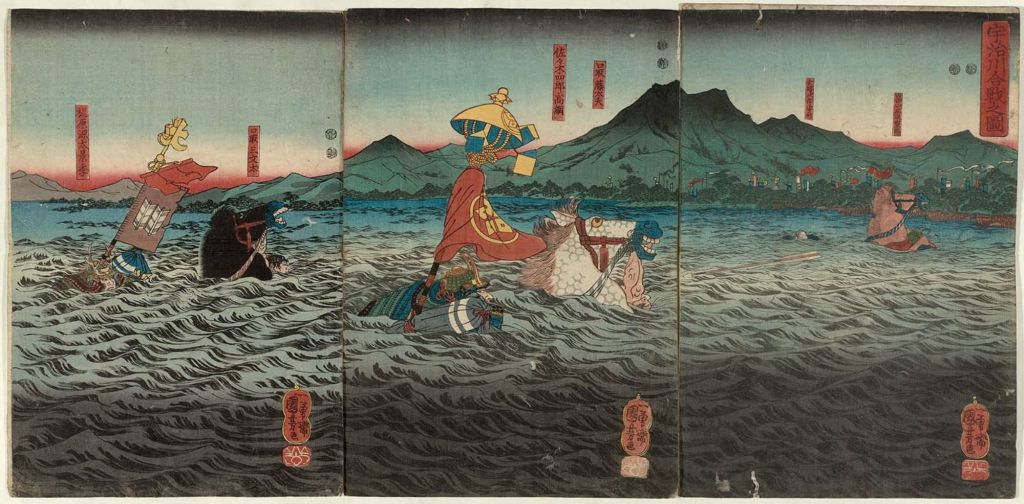
    A scene from the Second Battle of Uji. The bridge had been pulled up, hence the need to swim.

    After this, the momentum was decisively on the side of the Minamoto. They pursued the Taira, who had originally set up camp at Dazaifu, in Kyushu, and fortifying their positions around the Inland Sea, which were the lands the Taira had originally held.

    The Minamoto went on the offensive and defeated the Taira at the Battle of Ichi-no-Tani, near modern-day Kobe, followed up by another victory at Kojima. These successes allowed the Minamoto to drive the Taira out of their strongholds along the coast of the Inland Sea.

    The Taira, in possession of what was apparently the only navy in Japan at the time, and certainly the strongest, retreated to Shikoku, knowing that the Minamoto couldn’t follow. The Minamoto weren’t going to just let the Taira get away, however, and although it took time, they built up their naval strength before launching an attack at Yashima, in modern-day Takamatsu, that took the Taira fortress there, which had also been used as a makeshift palace for Emperor Antoku.

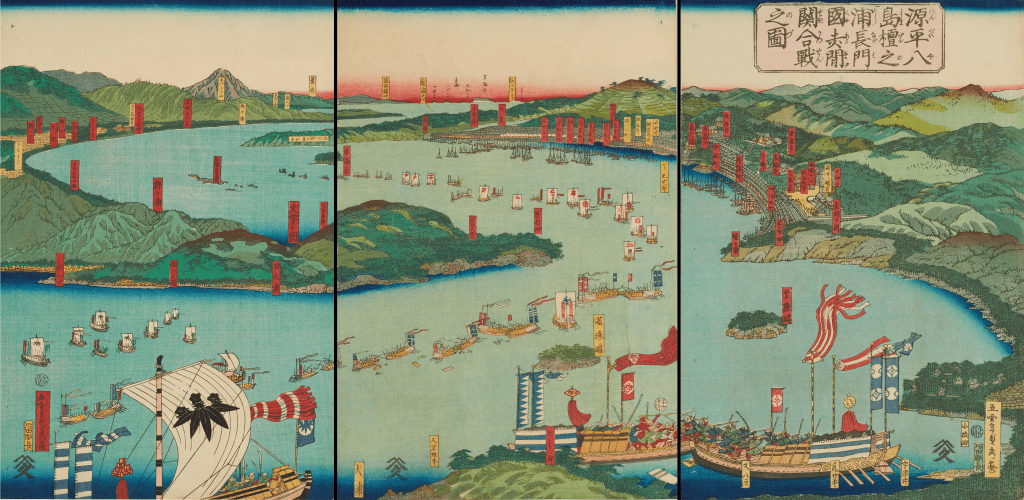
    Driven out of yet another stronghold, the Taira took to their ships and fled. The Minamoto would catch up to them at Dan-no-Ura, in the Straits of Shimonoseki. If you believe the Heike Monogatari (which you shouldn’t), then the Minamoto had 3000 ships to the Taira’s 1000. According to the Azuma Kagami, which is a biased by slightly more believable source, the forces were actually around 800 to 500, which are still considerable forces, but a bit more plausible.

    Despite being outnumbered, the Taira had home advantage and knew the tides and currents better than their foes. They also had the Emperor with them, which they assumed would give their side more legitimacy and encourage their men to fight harder.

    It was a good idea in theory, but it didn’t work. Though the tides were initially in the Taira’s favour, they turned, as tides do, and one of the Taira’s commanders turned as well, as men often do. Surrounded and attacked from all sides, the Taira began committing suicide en masse. One of those who died was six-year-old Antoku. The story goes that his grandmother, Taira no Kiyomori’s widow, took the boy in her arms and jumped with him into the sea. Neither was seen again.

    The Taira also tried to get rid of the Imperial Regalia, tossing them overboard. However, they apparently only managed to dump the mythical Kusanagi Sword and the Yasakani Jewel. The Yata no Kagami, a sacred bronze mirror, was apparently saved when the woman who tried to throw it overboard was killed when she accidentally looked at it.

    All three items were apparently recovered, either on the day of the battle or later, by divers. They are supposedly housed at the Ise Shrine in Mie Prefecture. The fact that no one has been allowed to see the artefacts since Dan-no-Ura is apparently just a coincidence.

    A later illustration of the Battle of Dan-no-Ura, which brought an end to Taira control of Japan.

    The result of Dan-no-Ura was the end of the Taira as a serious political force. Later that year, the Emperor Go-Shirakawa gave Minamoto no Yoritomo the right to collect taxes and appoint officials, effectively handing control of the state over to him.

    Though it would be some years before Yoritomo would take the formal title, the Genpei War marks the time at which control of Japan shifted from courtiers and Emperors to warriors under a supreme military commander who took a title that had first been used in the earliest days of Imperial rule in Japan, Sei-i Tai Shōgun.

    Cue dramatic music

    Sources
    https://en.wikipedia.org/wiki/Battle_of_Dan-no-ura
    https://en.wikipedia.org/wiki/Battle_of_Uji_(1184)
    https://en.wikipedia.org/wiki/Azuma_Kagami
    https://ja.wikipedia.org/wiki/%E5%B1%8B%E5%B3%B6%E3%81%AE%E6%88%A6%E3%81%84
    https://en.wikipedia.org/wiki/Battle_of_Yashima
    https://ja.wikipedia.org/wiki/%E4%B8%80%E3%83%8E%E8%B0%B7%E3%81%AE%E6%88%A6%E3%81%84
    https://ja.wikipedia.org/wiki/%E8%97%A4%E6%88%B8%E3%81%AE%E6%88%A6%E3%81%84
    https://ja.wikipedia.org/wiki/%E6%BA%90%E8%A1%8C%E5%AE%B6
    https://ja.wikipedia.org/wiki/%E5%80%B6%E5%88%A9%E4%BC%BD%E7%BE%85%E5%B3%A0%E3%81%AE%E6%88%A6%E3%81%84
    https://en.wikipedia.org/wiki/Battle_of_Kurikara_Pass
    https://en.wikipedia.org/wiki/Minamoto_no_Yukiie
    https://en.wikipedia.org/wiki/Minamoto_no_Yoshinaka
    https://en.wikipedia.org/wiki/Battle_of_Sunomata-gawa
    https://en.wikipedia.org/wiki/Battle_of_Ishibashiyama
    https://ja.wikipedia.org/wiki/%E4%BB%A5%E4%BB%81%E7%8E%8B
    https://en.wikipedia.org/wiki/Prince_Mochihito
    https://en.wikipedia.org/wiki/Emperor_Takakura
    https://en.wikipedia.org/wiki/Emperor_Antoku
    https://en.wikipedia.org/wiki/Taira_no_Kiyomori
    https://en.wikipedia.org/wiki/The_Tale_of_the_Heike
    https://en.wikipedia.org/wiki/Battle_of_Uji_(1180)
    https://ja.wikipedia.org/wiki/%E6%B2%BB%E6%89%BF%E3%83%BB%E5%AF%BF%E6%B0%B8%E3%81%AE%E4%B9%B1
    https://ja.wikipedia.org/wiki/%E6%B2%BB%E6%89%BF%E4%B8%89%E5%B9%B4%E3%81%AE%E6%94%BF%E5%A4%89
    https://en.wikipedia.org/wiki/Shishigatani_incident
    https://ja.wikipedia.org/wiki/%E9%B9%BF%E3%82%B1%E8%B0%B7%E3%81%AE%E9%99%B0%E8%AC%80
    https://en.wikipedia.org/wiki/Genpei_War
    https://en.wikipedia.org/wiki/Minamoto_no_Yoritomo

  • Heian VI – This is how it ends.

    The Heian Period is said to have ended in 1185, but, as you surely know by now, historical periods are rarely that neat. The actual end was really just a full stop at the end of a long period of decline.

    We’ve already discussed in detail how the Imperial Court lost control of the country’s economic and military affairs, and how that led to an erosion of political control. By the 11th Century, the writing was on the wall, but no one at the Heian Court was reading it (they had a lot of poems to keep them busy, after all).

    As we’ve talked about before, the dominant family in the latter half of this period was the Fujiwara. They grew so powerful that they could effectively choose the Emperor at will, and even in the provinces, there was no real alternative to Fujiwara power. That changed with Emperor Go-Sanjo, who came to the throne in 1068. He was the first Emperor not born to a Fujiwara mother for a century or more, and that was a problem.

    Emperor Go-Sanjo. The fact that his mother was not Fujiwara changed things considerably.

    Since he had no Fujiwara mother, he didn’t feel beholden to the wider Fujiwara family, and their influence was immediately under threat. Go-Sanjo was a pretty savvy guy; he realised that one of the main reasons why families like the Fujiwara were able to assert such dominance was that the Emperor was bound to myriad traditions and conventions that actually limited how much governing he could do.

    Go-Sanjo hit on a solution to this. He created the In-No-Cho, which basically means “Office of the Cloistered Emperor.” From then on, an Emperor could abdicate, but instead of simply moving aside for the next Fujiwara puppet, he (or she) would become an Insei, a cloistered Emperor, who could wield all the actual power of the throne, without being tied down to all the stuff that got in the way. (Some say it was Go-Sanjo’s son, Shirakawa who was the first Cloistered Emperor, which might be true, but the system is the same.)

    This system essentially meant that the Fujiwara were cut out of all major decisions. Though they kept their rank and titles at court, their dominance had relied on a compliant, or at least, impotent Emperor; now that that was no longer the case, the Fujiwara began to flounder, and the sharks closed in.

    No longer unchallenged, the Fujiwara did what all declining powers do: they turned on each other. Rival factions coalesced around the “Northern” and “Southern” Fujiwara (named because of the location of their houses in the capital in relation to the Imperial palace).

    The reassertion of Imperial authority and the decline of the Fujiwara didn’t solve any of Japan’s ongoing problems; in fact, in many ways, the Fujiwara left a power vacuum that other ambitious families tried to fill. There were soon clashes between rival factions, some of whom supported one Emperor or another, or were simply acting in their own interests, and Imperial power became increasingly illusory.

    By the mid-12th Century, even the illusion was fading, as the newly powerful warrior families (Buke) increasingly took up arms to solve their disputes, ignoring, and sometimes outright attacking Imperial power in ‘their’ lands.

    All this came to a head in 1155. It gets a bit complicated, but basically, two Emperors, Toba and his son and heir, Sutoku, both retired to become Insei, intending to be the power behind the throne during the reign of Konoe, who was also Toba’s son, and Sutoku’s half-brother.

    Konoe was only three when he took the throne (inasmuch as a three-year-old can take a throne), and for a while, things seemed fine. Unfortunately, as often happened, Konoe died young without having fathered an heir. At this point, Toba and Sutoku supported rival candidates. Toba wanted another son, Go-Shirakawa, whilst Sutoku wanted his son Shigehito to be next in line.

    Long story short, Toba got his way, and Go-Shirakawa became Emperor in August 1155. Now, it may come as no surprise that Sutoku wasn’t happy about this, and when Toba died less than a year later, battle lines were drawn.

    Emperor Go-Shirakawa ‘s disputed succession would lead to the Hogen Rebellion.

    Hogen & Heiji

    Now, the simple version of this is that it was a family dispute over who would get to rule. In truth, it was a lot more complicated than that. Whilst both factions supported rival claimants, there were also outstanding issues of influence at court. The Fujiwara wanted back in, whilst other families like the Minamoto and Taira wanted to keep them out and increase their own influence.

    Things get more complicated from here on in, I’m afraid. I mentioned in previous posts that when we talk about great “families”, we’re not actually talking about single families at all, but diverse groups who happen to share a name and some kind of Imperial ancestor.

    As this conflict escalated, these complex divisions came to the fore. Both sides called on the provincial warlords to support them, and by July 1156, both had armies containing Minamoto, Taira, and Fujiwara leaders. Some of these families were actually families too, with Fujiwara no Tadazane fighting for Go-Shirakawa, whilst his brother, Yorinaga, fought for Sutoku. This was also true with the Minamoto and Taira, with fathers fighting against sons, and uncles against nephews, until it becomes such a confusing mess that I swear it’s making me cross-eyed.

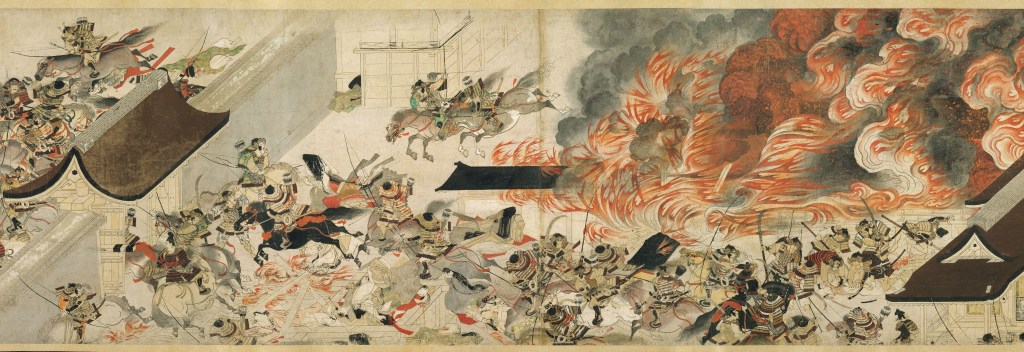
    Throughout July, both sides gathered their forces in and around the capital. Then, on July 29th, a night attack led by Taira no Kiyomori and Minamoto no Yoshitomo (on Go-Shirakawa’s side) attacked Sutoku’s forces. At first, the attacks were unsuccessful, but then someone suggested setting fire to the surrounded residences, and when this was done, Sutoku’s men lost heart and fled, leaving the capital in Go-Shirakawa’s hands.

    The immediate outcome of the Hogen Rebellion was the establishment of Go-Shirakawa’s influence (he would abdicate in 1158, and remain Insei until his death in 1192, effectively influencing five succeeding Emperors.) In the longer term, it signalled the end of Fujiwara power at court. They had sided with Sutoku in the hope that he would do away with the Cloistered Emperor system and restore the Fujiwara to power.

    Instead, Sutoku was defeated and banished, with those of his supporters who had survived the battle executed not long after. For the Minamoto and Taira (those branches that had supported Go-Shirakawa anyway), the victory led to increased influence at court, which brought a whole new set of problems.

    The main issue was that the Taira and Minamoto were allies of convenience. They had joined forces in support of Go-Shirakawa, but now that the immediate threat had passed, they quickly fell into squabbling about who would dominate the court next.

    When Go-Shirakawa abdicated in 1158, he was succeeded by his son, Nijo. As we’ve already discussed, real power remained with Go-Shirakawa as Insei, and he favoured the Taira, much to the chagrin of the Minamoto.

    This was further compounded when the Taira and Go-Shirakawa had the head of the Minamoto, Tameyoshi, executed as punishment for siding with Emperor Sutoku. Though Tameyoshi’s son, Yoshitomo, had remained loyal to Go-Shirakawa, his pleas for clemency fell on deaf ears.

    This would set the tone for the immediate post-rebellion situation. The Taira rose to a position of dominance whilst the Minamoto were left in the shade. Now, you might hope that the Minamoto had learned the lesson of the past and tried to find some way to make peace with the new status quo.

    But, of course, they didn’t. In 1160, the Minamoto, under their leader, Yoshitomo, allied themselves with what was left of the Fujiwara, and when the head of the Taira family, Kiyomori, left with his retinue on a pilgrimage, they abducted Go-Shirakawa, and had a member of the Fujiwara family declared Imperial Chancellor, this began the so-called Heiji Rebellion.

    Things unravelled pretty quickly after that. Despite having abducted the Emperor, the Minamoto don’t seem to have had much of a plan about what to do next. Taira no Kiyomori quickly got word of the attempted coup and made haste back to the capital.

    There were some attempts at negotiating, but it was a ruse; the Emperor was freed, and the Taira attacked. Initially, the Minamoto held their ground and drove the Taira forces back, but this was ruse number two; the Minamoto were drawn out of their defences and cut to pieces.

    The Taira Court

    In the aftermath, the newly established Taira dominance at court was confirmed. The leadership of the Minamoto, Yoshitomo, and his sons Tomonaga and Yoshihira, didn’t survive the battle, effective ending the threat. The Taira seized Minamoto lands, before banishing those who remained from the capital.

    One of those, thirteen-year-old Minamoto no Yoritomo, would come back to haunt the Taira and the Imperial court, but more on him later.

    With their rivals crushed, the Taira set about enjoying the fruits of their victory. Taira no Kiyomori became the pre-eminent man in the realm, filling the government with his relatives, and exerting control over the Imperial Throne, before doing what the Fujiwara had done before him, and marrying his daughter to the Emperor, and, when the Emperor in question died young, taking his place as regent for his infant grandson, who happened to be Emperor Antoku.

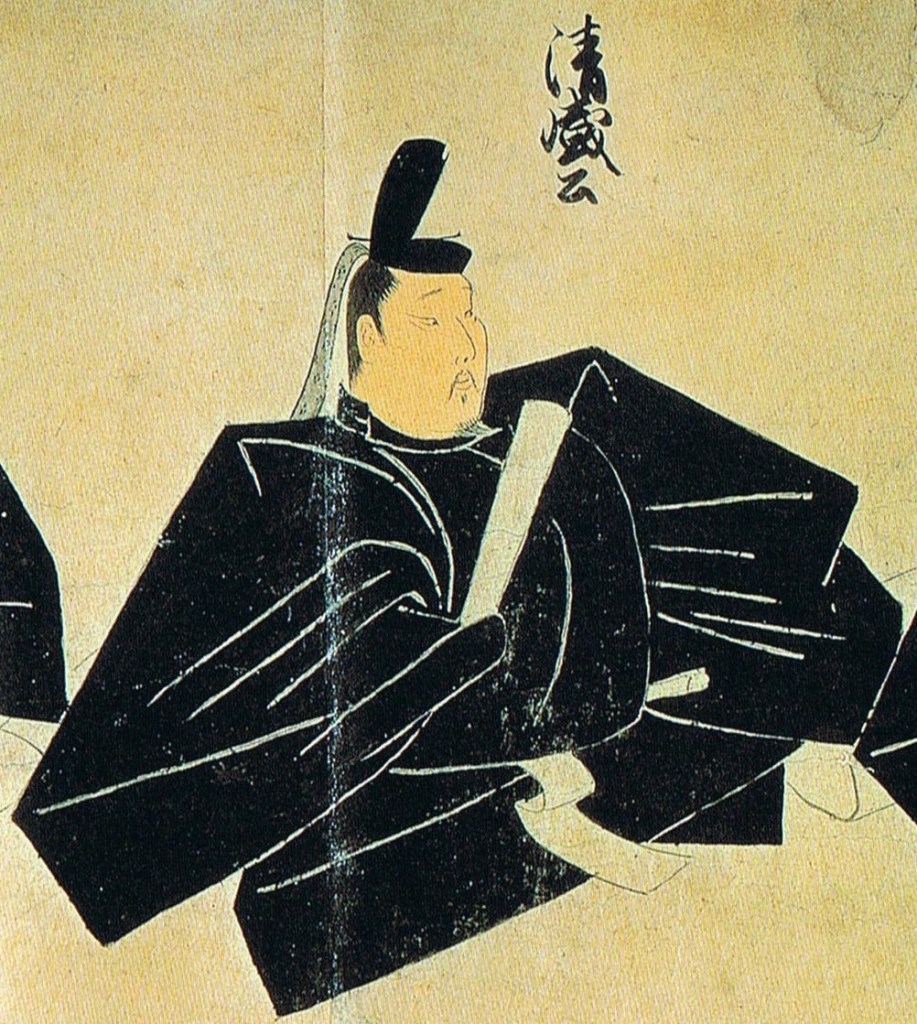
    Taira no Kiyomori. He became enamored with courtly life, and did nothing to stop the decline of Imperial power in the provinces.

    For twenty years, the Taira had it more or less their own way, but like the Fujiwara before them, they lost sight of what was going on in the provinces. Kiyomori did nothing to reverse the decline of Imperial power outside of the capital. Because of this, they were unable to stop the Minamoto from recovering their strength.

    Their leader, Minamoto no Yoritomo, was the son of the man who had opposed the Taira in the Heiji Rebellion in 1160. The Taira had let him live, and Yoritomo was going to make them pay for their mistake. Establishing himself at Kamakura, in Eastern Japan, and allying with the locally powerful Hojo Clan, Yoritomo set about getting revenge on the Taira.

    He would get his chance in 1180, in what became known as the Genpei War, but that really deserves its own post, so that’s what I’m going to do.

    Sources
    https://en.wikipedia.org/wiki/Heiji_rebellion
    https://en.wikipedia.org/wiki/Heian_period
    https://en.wikipedia.org/wiki/Taira_no_Kiyomori
    https://en.wikipedia.org/wiki/H%C5%8Dgen_rebellion
    https://en.wikipedia.org/wiki/Emperor_Toba
    https://en.wikipedia.org/wiki/Emperor_Sutoku
    https://en.wikipedia.org/wiki/Emperor_Go-Shirakawa
    https://en.wikipedia.org/wiki/Emperor_Nij%C5%8D
    https://en.wikipedia.org/wiki/Minamoto_no_Yoshitomo

  • Heian III – Life, Literature, and Ludicrous Eyebrows

    So, in our last two looks at Heian Japan, we discussed the decline of Imperial power in the provinces, as the regional nobility gained control of the military and then economic power, leaving the Imperial court effectively impotent.

    So, what was actually going on at court while the power was slipping away? Well, what usually happens when you have an isolated mini-community of hyper-privileged, completely out of touch, trust fund babies?

    While trust funds obviously didn’t exist in 9th-century Japan, generational wealth absolutely did. The nobility at court was mostly made up of the descendants of the original Yamato families, those who had been the first to come to power in the area around modern Nara.

    After the capital moved permanently to Heian-kyo, the noble families moved permanently, too. Some of these families had direct connections to the Imperial Family itself (real or fictional), which created a fairly insular community of people who busied themselves with court life at the expense of the rest of the nation.

    We’ve already discussed the consequences of that, so we’re not going to focus too much on military or economic decline today, but needless to say, by the mid to late Heian Period, the court was completely out of touch with what was going on in the provinces, which eventually led to disaster.

    Religion

    Buddhism arrived in Japan in the 7th Century, brought in by Chinese and Korean scholars. Like most things imported at that time, Buddhism was largely just a copy of how things were done in China. However, by the Heian Period, a distinct “Japanese” culture was beginning to develop that had an impact on religion too.

    Two influential sects emerged around this time, Tendai and Shingon. Though founded by monks who had visited China, both branches integrated aspects of traditional Japanese religion into their philosophy. By the mid-Heian period, these sects had become politically influential, particularly the Tendai Sect, based at Mt Hiei, just outside Heian-kyo. There, monks were trained for up to 12 years, with the most promising being retained by the order and others taking up positions in the government, blurring the lines between religious and political power.

    On a cultural level, Buddhism played a role not too dissimilar to that of the Catholic Church in Europe. Fantastic temples were constructed, and art, both in the form of painting and sculpture, flourished, sponsored by courtiers looking to curry favour with the increasingly powerful priesthood.

    The Great Lecture Hall at Enryaku-ji, the headquarters of the Tendai Sect. Though this building dates from the 17th Century, it gives some idea of the splendour that the Buddhist sects were capable of.By 663highland – Own work, CC BY 2.5, https://commons.wikimedia.org/w/index.php?curid=8450046

    The Imperial Family and the aristocracy became tightly linked to the Buddhist Sects, with members of noble families often becoming high-ranking members of religious orders, and in turn, Monks, Priests, and Abbots became influential within the government. It is perhaps unsurprising, then, with the two sides so closely linked, that the temples would often preach in support of the Emperor and the status quo.

    Over time, Buddhist Temples would become powerful political players in their own right, and their close association with the Imperial Court led to the image of Buddhism, or at least the organised Buddhist sects to be the religion of the aristocracy, whilst out in the provinces, more traditional Japanese beliefs held sway, further deepening the divide between the Emperor and his people.

    A Novel Idea

    Prior to the Heian Period, writing had been the preserve of noblemen and educated priests. The complex Chinese symbols (Kanji) took years to learn, and most people didn’t have access to education anyway. That began to change during this period. Firstly, the rise of wealthy, and more importantly, large temples, increased the number of people (men) with access to learning. Though still limited, these men would become a key part of the Imperial Bureaucracy.

    The real trailblazers of Heian Literature weren’t priests and nobles, however, but women. As anyone who has ever tried to learn Japanese can tell you, Kanji are awful. There’s about six million of them, and they all have different pronunciations depend on context, mood, or the position of the stars, or something. The point is, Kanji are hard to learn now, and they were hard to learn back then, too, more so given how few people even had access to a textbook, let alone DuoLingo.

    Fortunately, Kanji aren’t the only option when it comes to writing Japanese. Early on, Japanese scholars developed kana, a native script that made it easier to translate certain things into Japanese. As we’ve said, Kanji are hard enough to learn even with dedicated study, and given that women didn’t have dedicated study, the kana (divided into Hiragana and Katakana) were adopted instead.

    Like most places before the 20th century, literacy in Heian Japan was extremely limited. Whilst this obviously meant there wasn’t a wide audience for poems and stories and such, it did lead to a highly specialised type of ‘courtly’ writing. Poetry, in particular, was a mark of good breeding, as was the quality of your handwriting.

    This probably shouldn’t come as a surprise to us; after all, how often do we see politicians and celebrities mocked for their poor spelling and grammar? And don’t get me started on handwriting. Mine is ok now, in my mid-30s, but you’d have needed a scholar of ancient languages to decipher my writing when I was at school.

    I digress; poetry and handwriting were important, is the point.

    Poetry was probably the most common form of literature at the time. Poems would be written for all sorts of occasions, and it was said that a person’s poetry skills could make or break their reputation, which seems a bit extreme, but there you are.

    Poetry was not the only form of literature available to the Heian Court. Stories in a form we would recognise as novels also appeared at this time, perhaps most famously the Tale of Genji, written sometime in the early 11th Century and attributed to Murasaki Shikibu (not her real name), a lady-in-waiting at the court.

    She deserves a post of her own, but the short version is that she is generally accepted as the author of the story, although some scholars also suggest that the last ten chapters or so were written by someone else, possibly her daughter.

    A 17th-century depiction of Murasaki Shikibu writing the Tale of Genji. Though scholars agree she is the author, there is some debate about the last few chapters.

    Heian Period literature can be a bit impenetrable by today’s standards; courtly culture at the time placed grade emphasis on innuendo, allusion, and almost obtuse vagueness. A great example of this is the fact that the Tale of Genji rarely, if ever, refers to characters by name. Although scholars agree that most of the characters are probably based on real people, it would have been unthinkable for a writer at the time to do something as crass as using a person’s name, even in fiction.

    This, and a highly stylised form of writing, means that works like the Tale are often viewed by modern Japanese in the same way that a modern English-speaking person might see the works of Shakespeare, something that is fundamentally intelligible but is full of language that has long since fallen out of use, leaving us with metaphors that are open to interpretation, to say the least.

    12 Layers

    Fashion and Beauty were as central to the Heian Court as they are to the rich and famous today. Whilst at its core, fashion was about showing off wealth and status (as it is today), the Heian Court had some very unique ideas about what constituted beauty.

    First, the clothes. Now, I’m no one’s idea of fashionable, I dress practically and comfortably. This is probably true of most people and has been for as long as we’ve had clothes. High fashion, however, isn’t about being practical or even comfortable, apparently, and the Heian Court is a great example of this.

    Men and Women were expected to dress differently but with equal flamboyance and impracticality. For men, there were the Sokutai and Ikan, outfits made up of multiple layers that would vary depending on rank, season, and occupation. For example, military officials would dress differently to civilian ones, and versions with fewer layers and shorter sleeves would be worn during the summer months and visa versa.

    Formal wear of a Heian Period military official, photographed in 1990, at the Enthronement Ceremony of Emperor Akihito.
    首相官邸 – https://www.kantei.go.jp/jp/singi/gishikitou_iinkai/dai6/siryou1-1.pdf, CC 表示 4.0, https://commons.wikimedia.org/w/index.php?curid=80965200による

    Generally, Sokutai was the more formal wear, and Ikan was more of a “work” uniform for courtly officials, although the distinction is not always a clear one, as both sets of clothing were highly elaborate by today’s standards.

    Marquis Yoshimaro Yamashina, photographed in 1920, wearing the Ikan style of dress.

    Despite its flamboyance, Sokutai is still seen in Japan today. Whilst you’re not likely to catch the average Salaryman wearing it on the morning commute, the Imperial Family still wear it, although usually only at ceremonial functions, like Coronations and Royal Weddings.

    The current Emperor, Naruhito, wearing Sokutai at his enthronement ceremony in 2019.
    By 内閣府ホームページ, CC BY 4.0, https://commons.wikimedia.org/w/index.php?curid=89645372

    Sokutai and Ikan are heavy, impractical clothing options, but that’s kind of the point. Wearing a metric tonne of silk and ornaments is a great way to demonstrate that you’re a world apart from the peasantry who are, by the nature of their lives, required to wear cheaper, more practical and (I suspect) more comfortable clothing.

    It was worse for women (surprise, surprise). Whilst male clothing was cumbersome, there were certain practical considerations. Men at the court were generally expected to have some kind of job, which limited how impractical their clothing could be. Court Women, however, unburdened by the expectation of actually doing anything, were consequently expected to dress accordingly.

    Introducing the Junihitoe, or Twelve-Layer Robe. Yeah, the name isn’t a red herring; while it is true that there may not have been exactly Twelve Layers, the complexity of the Junihitoe was matched only by the need for appropriate colour coordination.

    Heian Court Ladies wearing Junihitoe in a later illustration.

    The sheer weight of a Junihitoe ensemble is reflective of attitudes towards women at the time. They weren’t expected to do very much except sit around, being attractive and writing poetry. If you think I’m over-generalising, consider that the full weight of all the robes together could be upwards of 20kgs (44lbs) at a time and place where most people averaged about 5ft tall (152.4cm) and rarely weighed in at heavier than 50 kgs (110lbs). Heian Court Ladies could find themselves wearing half their own body weight in silk and accessories. If you can still manage to look pretty under all that, then you’re a better man than me. Or a better Heian Court Lady, but you get the idea.
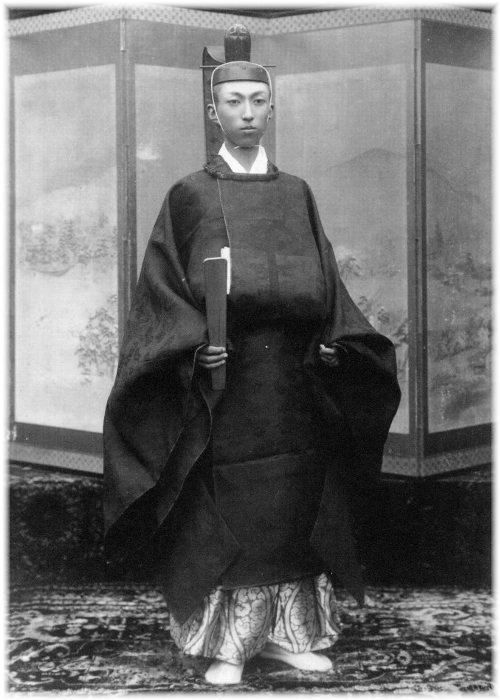
    If the weight of all that fanciness wasn’t bad enough, fashion dictated that the multiple layers be colour-coordinated according to the season or to other special events. These colours were meant to match the “spirit” of the season, leaning into the Heian Court’s love of symbolism, metaphor, and fancy nonsense.

    The layers were supposed to compliment each other, but given the nature of clothing at court, the layers themselves were generally only visible at the sleeves. This might raise the question, why go to all that trouble for multi-coloured sleeves? But when they were done with all that poetry and story writing, what else was there to do but coordinate your sleeves?

    It’s all in the eyebrows

    So, we’ve already established that Men and Women at the Heian Court were religious, literate, and dressed to impress, but what did they actually look like? More accurately, what did they aspire to look like?

    Even today, beauty standards are more about what people think they should look like rather than what they do, and in the era before photographs, most art presented a highly stylised idea of what people actually looked like. (Yes, we still do that with Photoshop, I know.)

    Much like the beauty of someone’s handwriting and the sheer weight of silk they could handle, someone’s beauty informed what kind of person they were. Basically, being pretty meant you were a good person, but what did being ‘pretty’ actually mean?

    As you can see in the images above, women grew their hair long and typically kept it loose, with dark, shiny hair being preferred. Men, on the other hand, wore their hair up and sported thin moustaches and beards.

    A later illustration of a Heian Period court official.

    Well, both genders seem to have made use of make-up, usually in the form of skin-whitening powders. This is something that’s come up pretty frequently throughout history: paler skin typically suggests that a person doesn’t spend much time outside. In the pre-modern era, a tan meant working outside, which meant you were a commoner, and if there was one thing the people at the Heian Court would not stand for, is was being thought of as common.

    In addition to whitening powders, women also painted their mouths to look red and small. They also practised a grooming technique called Hikimayu in which the eyebrows were shaved and then drawn way up the forehead, and it’s quite the look.

    An 1850 photograph of Mikako Tokugawa, wife of the last Shogun, showing Hikimayu in all its glory.

    If shaved eyebrows aren’t your thing, how about blackened teeth? Don’t worry, they’re not rotting. Actually, some people speculate that the teeth blackening (Ohaguro) actually contributed to healthy teeth by acting as a kind of sealant, so beauty aside, there’s that.

    The exact reasons for the start of Ohaguro aren’t clear, but one theory holds that, in combination with the whitening powder, painted mouths, and shaved eyebrows, blackened teeth contributed to a “mask-like” appearance that made it easier to hide emotion.

    Heian style fashion would remain in vogue at court for centuries (as seen by traditional dress at Imperial Family events), and this was partly due to the increasing and eventual near total isolation of the Imperial Court in the years that followed the Heian Period.

    We’ve discussed how the rot set in previously, but there is one family who might be more to blame than any other, the Fujiwara, who we’ll talk about next time.

    Sources
    https://en.wikipedia.org/wiki/J%C5%ABnihitoe
    https://ja.wikipedia.org/wiki/%E8%89%B2%E7%9B%AE
    https://ja.wikipedia.org/wiki/%E8%A5%B2%E3%81%AE%E8%89%B2%E7%9B%AE
    https://en.wikipedia.org/wiki/Hikimayu
    https://ja.wikipedia.org/wiki/%E8%A1%A3%E5%86%A0
    https://ja.wikipedia.org/wiki/%E5%AE%BF%E7%9B%B4
    https://en.wikipedia.org/wiki/Enryaku-ji
    https://en.wikipedia.org/wiki/Ohaguro

  • Heian Japan II – Mo’ Shoen, Mo’ Problems.

    Last time, we talked about how the Heian Period began in 794 when Emperor Kanmu moved the capital to Heian-Kyo, where it would remain for the next thousand years.

    We also looked at how the Heian court abdicated its military power to the regional nobility, who, facing a long-term war against the Emishi tribes of Northern and Eastern Japan, no longer put their faith in the large, pretty ineffective conscript armies of the Imperial court, instead establishing private armies of their own, adopting the horse archery tactics of their enemies. Although the days in which the warrior class would dominate the Emperor are still far in the future at this point, the origins of the Samurai can be found here.

    The problems didn’t end with the army, either. Although conscription had been brought in with the Taika reforms of the mid to late 7th century, by the end of the 8th century, the system had largely broken down. This was because it relied on another of the reform’s offspring, control of land.

    Like pretty much everything else in the Taika Reforms, land reform was modelled on the Chinese system. Officially, land was under the control of the state, and every free man was entitled to a certain amount, which would then be taxed. There was no national currency at the time, so taxation was usually a percentage of the harvest.

    A map of fields near Nara in the 8th Century.

    Now, in theory, this meant that everyone had land to support themselves and a regular tax income for the court. However, the system quickly ran into problems. Firstly, unlike the Chinese system, people in Japan couldn’t claim wasteland, even if they farmed it. Additionally, land couldn’t be inherited by someone’s heir. This had the double blow of meaning that there was little reason to expand or enhance holdings, which would have been fine if it had not been for population growth.

    It’s ironic, looking at Japan in 2025, that population growth turned out to be a problem, but there you are.

    As the population grew, so did the demand for food (obviously). The land system couldn’t keep up with demand, so the government eventually changed the law to allow anyone to claim wasteland as long as they farmed it.

    Now, you’d think that’d be problem solved, more land means more food. But no, and the reason is because of taxation.

    Now, as we said, taxation was based on percentages of the harvest, but there were a lot of exemptions. Land owned by temples and powerful noble families was exempt from taxation, which meant a concentration of wealth and resources in the hands of relatively few.

    This meant that when the government relaxed controls on claiming land, the ones who benefited weren’t the farmers but those with the manpower to claim land faster than anyone else. Consequently, the rich got richer, but none of that wealth made it into the Imperial coffers because, as we said, it was all tax-exempt.

    So, you now had a situation where a small portion of the population owned most of the wealth, and this further eroded the government’s ability to function. They’d already lost control of the military, and now they’d lost control of the food supply. That’s 2-0 to the nobility, in case any of you have been keeping score.

    Now, you might ask, if land couldn’t be inherited, then surely the government would regain control of it on the landowner’s death, right? Sorry, nope. Not only did the government change the rules on land reclamation, but also on inheritance. This meant that, after the Temples and Nobles had gobbled up all the good land, they were then able to keep it within their family, creating generational wealth and power.

    Wealth means Power.

    So, what about the peasants who owned their land but weren’t part of the nobility? They’d have a reason to want things to stay as they are and support the status quo, right? Well, no, not exactly.

    As we’ve mentioned, the estates (Shoen in Japanese) of the nobility and temples were tax-exempt. The peasants who owned their own land still had to pay a percentage of each harvest to the Emperor since he technically owned their land.

    Your average Heian-era farmer had probably never even been to Heian-kyo, let alone actually seen the Emperor, so when the tax collectors came, they were the very embodiment of the faceless bureaucracy.

    Now, this might not seem so strange to us, after all, we all pay tax, and how many of us ever meet our head of state? But the world was smaller back then; the rise of the local aristocracy, many of whom had positions of local authority, meant that, as far as the peasantry were concerned, the government wasn’t the Emperor, who might have been hundreds of miles away, but the local magistrate, who was often also the wealthiest landowner.

    This breakdown in authority benefited the nobility politically in the same way as it had economically and militarily, but there was another twist to come. With local political and military control already falling into their hands, the local aristocracy was able to exert considerable pressure on the nominally free peasants around them.

    The exact process isn’t well documented, but we do know that the peasants who controlled their own fields would often sign the ownership of that field over to a powerful local magnate, whether than be a Temple or a noble. In effect, this granted the field tax-exempt status, and instead of tax, the peasant would then pay “rent” to the new owner for the right to keep working the field.

    There are other examples of this happening in a more direct way, with local nobles demanding tribute from free peasants and then confiscating their fields if they couldn’t (or wouldn’t) pay.

    Now, as we’ve said previously, taxation was in the form of harvest or conscription, either into the army or as labour. This didn’t really change that much; harvests were still taxed, and peasants, instead of doing service to the Emperor, were now obliged to serve their local lord.

    It should be pointed out that, under the original system, peasants weren’t tied to the land. They held it in their own name, technically as direct “vassals” of the Emperor. (They weren’t legally vassals in the Feudal sense, mind you.)

    As the Heian period went on, and more and more land was taken by the nobility, the status of peasants also changed. Instead of holding their own land, they were often bound to those same fields, but now in the service of someone else. At first, it was economic necessity; as much as the fields may have been ‘free’, the peasantry still needed to eat, and if that meant working for the lord, then so be it.

    Later, though, economic necessity gave way to legal reality. Everyone was technically subject to the Emperor, but the situation on the ground increasingly disadvantaged the peasants. What had been an economic arrangement became effectively a feudal one as landowners began to deal with local legal matters themselves.

    A peasant (Shomin in Japanese) could now be kicked out of the Shoen (estate) if the Lord didn’t like him, and matters of justice, which had formerly been the reserve of Imperial officials, now became the domain of local lords as well. Where a peasant might have once had the right to petition the Emperor directly, now, the final arbiter of justice was his Lord, and you will probably not be surprised to find out that these Lords often interpreted the ‘law’ in ways that most benefited them.

    Imperial Irrelevance

    So what did the Emperor do about this?

    The answer is simply, nothing really. It’s not that they didn’t know it was happening, but there was precious little they could do. There was no effective means to impose Imperial will on the increasingly independent nobility, and they knew it.

    The Imperial Army, formerly conscripted from the fields, no longer existed, and, lacking any formal currency, the economy had begun to be based almost entirely on rice, which had also long since slipped from Imperial hands.

    There were legal attempts to turn things around. In 1040, a law was passed that officially banned any new lands from being granted tax-exempt status, but it was too little, too late.

    Not that the Imperial Court minded all that much; they kept themselves busy with books, paintings, and some of the most ridiculous eyebrows you’ve ever seen, but we’ll cover that next time.

    Sources

    https://en.wikipedia.org/wiki/Heian_period
    https://en.wikipedia.org/wiki/Sh%C5%8Den
    https://en.wikipedia.org/wiki/Ritsury%C5%8D