The Heian Period is said to have ended in 1185, but, as you surely know by now, historical periods are rarely that neat. The actual end was really just a full stop at the end of a long period of decline.
We’ve already discussed in detail how the Imperial Court lost control of the country’s economic and military affairs, and how that led to an erosion of political control. By the 11th Century, the writing was on the wall, but no one at the Heian Court was reading it (they had a lot of poems to keep them busy, after all).
As we’ve talked about before, the dominant family in the latter half of this period was the Fujiwara. They grew so powerful that they could effectively choose the Emperor at will, and even in the provinces, there was no real alternative to Fujiwara power. That changed with Emperor Go-Sanjo, who came to the throne in 1068. He was the first Emperor not born to a Fujiwara mother for a century or more, and that was a problem.

Since he had no Fujiwara mother, he didn’t feel beholden to the wider Fujiwara family, and their influence was immediately under threat. Go-Sanjo was a pretty savvy guy; he realised that one of the main reasons why families like the Fujiwara were able to assert such dominance was that the Emperor was bound to myriad traditions and conventions that actually limited how much governing he could do.
Go-Sanjo hit on a solution to this. He created the In-No-Cho, which basically means “Office of the Cloistered Emperor.” From then on, an Emperor could abdicate, but instead of simply moving aside for the next Fujiwara puppet, he (or she) would become an Insei, a cloistered Emperor, who could wield all the actual power of the throne, without being tied down to all the stuff that got in the way. (Some say it was Go-Sanjo’s son, Shirakawa who was the first Cloistered Emperor, which might be true, but the system is the same.)
This system essentially meant that the Fujiwara were cut out of all major decisions. Though they kept their rank and titles at court, their dominance had relied on a compliant, or at least, impotent Emperor; now that that was no longer the case, the Fujiwara began to flounder, and the sharks closed in.
No longer unchallenged, the Fujiwara did what all declining powers do: they turned on each other. Rival factions coalesced around the “Northern” and “Southern” Fujiwara (named because of the location of their houses in the capital in relation to the Imperial palace).
The reassertion of Imperial authority and the decline of the Fujiwara didn’t solve any of Japan’s ongoing problems; in fact, in many ways, the Fujiwara left a power vacuum that other ambitious families tried to fill. There were soon clashes between rival factions, some of whom supported one Emperor or another, or were simply acting in their own interests, and Imperial power became increasingly illusory.
By the mid-12th Century, even the illusion was fading, as the newly powerful warrior families (Buke) increasingly took up arms to solve their disputes, ignoring, and sometimes outright attacking Imperial power in ‘their’ lands.
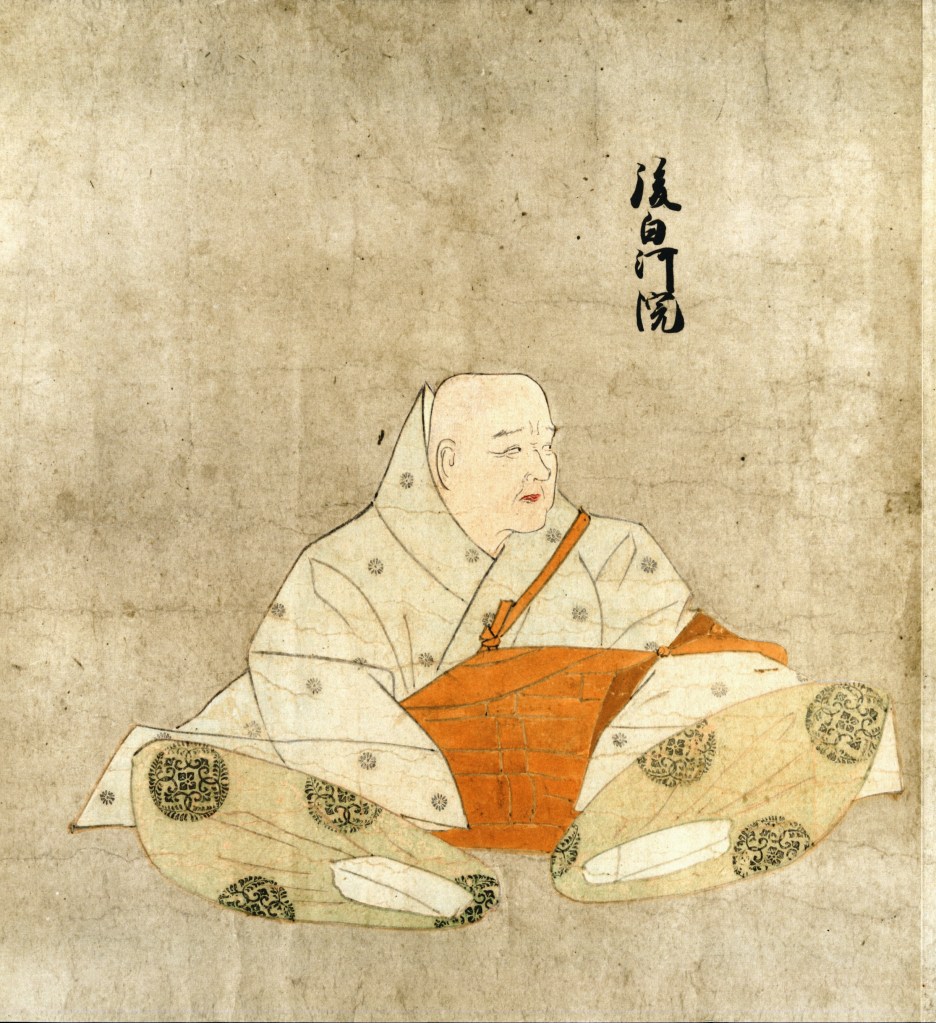
All this came to a head in 1155. It gets a bit complicated, but basically, two Emperors, Toba and his son and heir, Sutoku, both retired to become Insei, intending to be the power behind the throne during the reign of Konoe, who was also Toba’s son, and Sutoku’s half-brother.
Konoe was only three when he took the throne (inasmuch as a three-year-old can take a throne), and for a while, things seemed fine. Unfortunately, as often happened, Konoe died young without having fathered an heir. At this point, Toba and Sutoku supported rival candidates. Toba wanted another son, Go-Shirakawa, whilst Sutoku wanted his son Shigehito to be next in line.
Long story short, Toba got his way, and Go-Shirakawa became Emperor in August 1155. Now, it may come as no surprise that Sutoku wasn’t happy about this, and when Toba died less than a year later, battle lines were drawn.
Hogen & Heiji
Now, the simple version of this is that it was a family dispute over who would get to rule. In truth, it was a lot more complicated than that. Whilst both factions supported rival claimants, there were also outstanding issues of influence at court. The Fujiwara wanted back in, whilst other families like the Minamoto and Taira wanted to keep them out and increase their own influence.
Things get more complicated from here on in, I’m afraid. I mentioned in previous posts that when we talk about great “families”, we’re not actually talking about single families at all, but diverse groups who happen to share a name and some kind of Imperial ancestor.
As this conflict escalated, these complex divisions came to the fore. Both sides called on the provincial warlords to support them, and by July 1156, both had armies containing Minamoto, Taira, and Fujiwara leaders. Some of these families were actually families too, with Fujiwara no Tadazane fighting for Go-Shirakawa, whilst his brother, Yorinaga, fought for Sutoku. This was also true with the Minamoto and Taira, with fathers fighting against sons, and uncles against nephews, until it becomes such a confusing mess that I swear it’s making me cross-eyed.
Throughout July, both sides gathered their forces in and around the capital. Then, on July 29th, a night attack led by Taira no Kiyomori and Minamoto no Yoshitomo (on Go-Shirakawa’s side) attacked Sutoku’s forces. At first, the attacks were unsuccessful, but then someone suggested setting fire to the surrounded residences, and when this was done, Sutoku’s men lost heart and fled, leaving the capital in Go-Shirakawa’s hands.
The immediate outcome of the Hogen Rebellion was the establishment of Go-Shirakawa’s influence (he would abdicate in 1158, and remain Insei until his death in 1192, effectively influencing five succeeding Emperors.) In the longer term, it signalled the end of Fujiwara power at court. They had sided with Sutoku in the hope that he would do away with the Cloistered Emperor system and restore the Fujiwara to power.
Instead, Sutoku was defeated and banished, with those of his supporters who had survived the battle executed not long after. For the Minamoto and Taira (those branches that had supported Go-Shirakawa anyway), the victory led to increased influence at court, which brought a whole new set of problems.
The main issue was that the Taira and Minamoto were allies of convenience. They had joined forces in support of Go-Shirakawa, but now that the immediate threat had passed, they quickly fell into squabbling about who would dominate the court next.
When Go-Shirakawa abdicated in 1158, he was succeeded by his son, Nijo. As we’ve already discussed, real power remained with Go-Shirakawa as Insei, and he favoured the Taira, much to the chagrin of the Minamoto.
This was further compounded when the Taira and Go-Shirakawa had the head of the Minamoto, Tameyoshi, executed as punishment for siding with Emperor Sutoku. Though Tameyoshi’s son, Yoshitomo, had remained loyal to Go-Shirakawa, his pleas for clemency fell on deaf ears.
This would set the tone for the immediate post-rebellion situation. The Taira rose to a position of dominance whilst the Minamoto were left in the shade. Now, you might hope that the Minamoto had learned the lesson of the past and tried to find some way to make peace with the new status quo.
But, of course, they didn’t. In 1160, the Minamoto, under their leader, Yoshitomo, allied themselves with what was left of the Fujiwara, and when the head of the Taira family, Kiyomori, left with his retinue on a pilgrimage, they abducted Go-Shirakawa, and had a member of the Fujiwara family declared Imperial Chancellor, this began the so-called Heiji Rebellion.
Things unravelled pretty quickly after that. Despite having abducted the Emperor, the Minamoto don’t seem to have had much of a plan about what to do next. Taira no Kiyomori quickly got word of the attempted coup and made haste back to the capital.
There were some attempts at negotiating, but it was a ruse; the Emperor was freed, and the Taira attacked. Initially, the Minamoto held their ground and drove the Taira forces back, but this was ruse number two; the Minamoto were drawn out of their defences and cut to pieces.
The Taira Court
In the aftermath, the newly established Taira dominance at court was confirmed. The leadership of the Minamoto, Yoshitomo, and his sons Tomonaga and Yoshihira, didn’t survive the battle, effective ending the threat. The Taira seized Minamoto lands, before banishing those who remained from the capital.
One of those, thirteen-year-old Minamoto no Yoritomo, would come back to haunt the Taira and the Imperial court, but more on him later.
With their rivals crushed, the Taira set about enjoying the fruits of their victory. Taira no Kiyomori became the pre-eminent man in the realm, filling the government with his relatives, and exerting control over the Imperial Throne, before doing what the Fujiwara had done before him, and marrying his daughter to the Emperor, and, when the Emperor in question died young, taking his place as regent for his infant grandson, who happened to be Emperor Antoku.
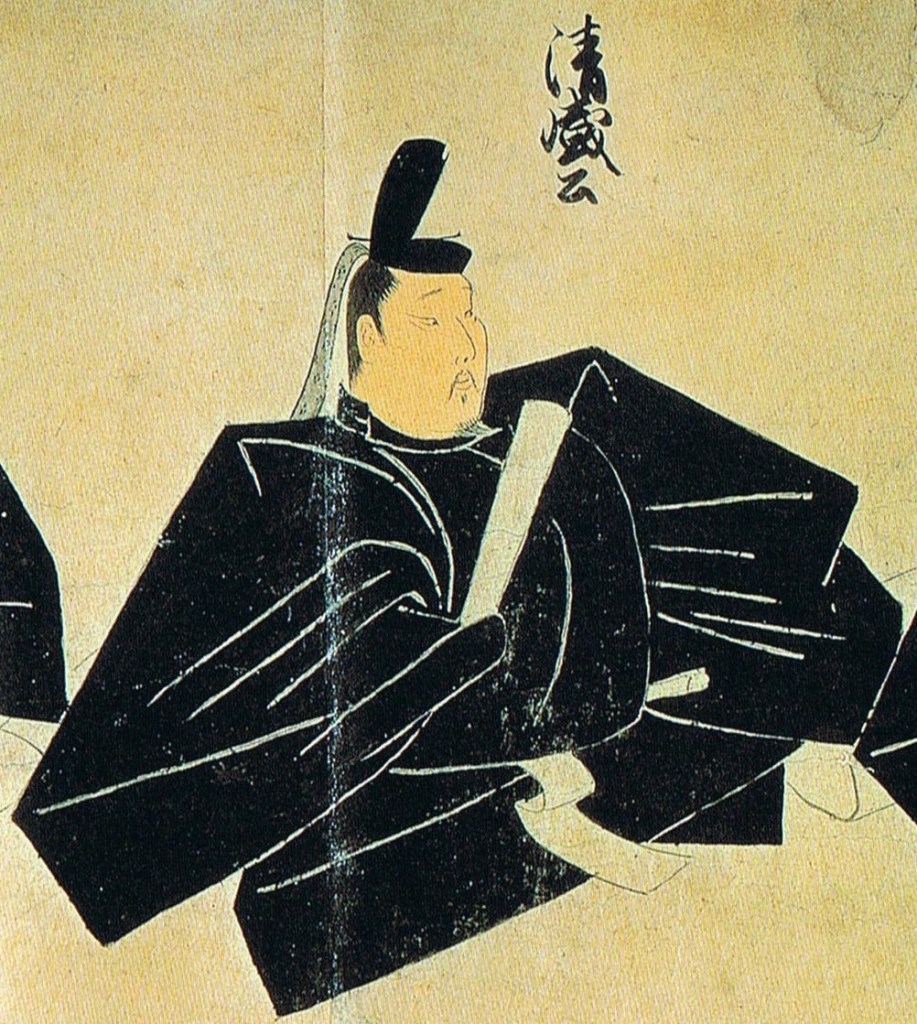
For twenty years, the Taira had it more or less their own way, but like the Fujiwara before them, they lost sight of what was going on in the provinces. Kiyomori did nothing to reverse the decline of Imperial power outside of the capital. Because of this, they were unable to stop the Minamoto from recovering their strength.
Their leader, Minamoto no Yoritomo, was the son of the man who had opposed the Taira in the Heiji Rebellion in 1160. The Taira had let him live, and Yoritomo was going to make them pay for their mistake. Establishing himself at Kamakura, in Eastern Japan, and allying with the locally powerful Hojo Clan, Yoritomo set about getting revenge on the Taira.
He would get his chance in 1180, in what became known as the Genpei War, but that really deserves its own post, so that’s what I’m going to do.
Sources
https://en.wikipedia.org/wiki/Heiji_rebellion
https://en.wikipedia.org/wiki/Heian_period
https://en.wikipedia.org/wiki/Taira_no_Kiyomori
https://en.wikipedia.org/wiki/H%C5%8Dgen_rebellion
https://en.wikipedia.org/wiki/Emperor_Toba
https://en.wikipedia.org/wiki/Emperor_Sutoku
https://en.wikipedia.org/wiki/Emperor_Go-Shirakawa
https://en.wikipedia.org/wiki/Emperor_Nij%C5%8D
https://en.wikipedia.org/wiki/Minamoto_no_Yoshitomo

 Chris Perry, Author