When Minamoto no Yoritomo died in 1199, he left an impressive legacy. From a boy of 12, exiled to a far-flung province after a failed rebellion, to effective master of Japan in less than forty years.
Unfortunately, as is so often the case, those who came after him would not live up to his example. As we mentioned briefly last time, one of the main pillars of Yoritomo’s support had been his marriage to Hojo Masako, and through her, the support of the powerful Hojo Clan.
The Hojo
First, it’s important to make the distinction between this clan and the later Hojo Clan, who would play an important role in the same area during the Sengoku Jidai. This later clan would take the name and symbol of the earlier clan, but they don’t seem to have been directly related.
The original Hojo Clan came from Izu Province, in what is now Shizuoka Prefecture. Their exact origins are open to speculation, with some sources suggesting they are descended from an offshoot of one of the Taira Clans, whereas others speculate that they are named after an area in the Tagata area of modern Shizuoka.

By Ash_Crow – Own work, based on Image:Provinces of Japan.svg, CC BY 2.5, https://commons.wikimedia.org/w/index.php?curid=1682541
Whatever their exact origins, the Hojo were one of the buke or warrior families that rose during the latter years of the Heian Period, but again, scholars aren’t clear on how powerful they actually were. The size of their territory seems to have been relatively small, suggesting only limited military strength. On the other hand, it is located close to important transport links, suggesting access to wealth that went beyond mere manpower, and their later dominance of the Kamakura government suggests they were no country bumpkins when it came to the business of administration.
Murky origins aside, we know that Hojo Masako married Yoritomo in around 1177, and initially, Masako’s dad, Tokimasa, was against it, for apparently political reasons, worrying that the Taira, who were in charge in Kyoto at this point, would have something to say about a Hojo marrying the leader of their enemy.
Apparently, the Taira didn’t have much to say about it, however, and Tokimasa would eventually come around to the new arrangement, proving to be one of Yoritomo’s most steadfast supporters.
Family Feud
I’m planning to write a post about Hojo Masako herself later, so I’ll skip over the details of her marriage to Yoritomo, but suffice it to say, she proved to be not only a faithful wife but a force to be reckoned with in her own right.
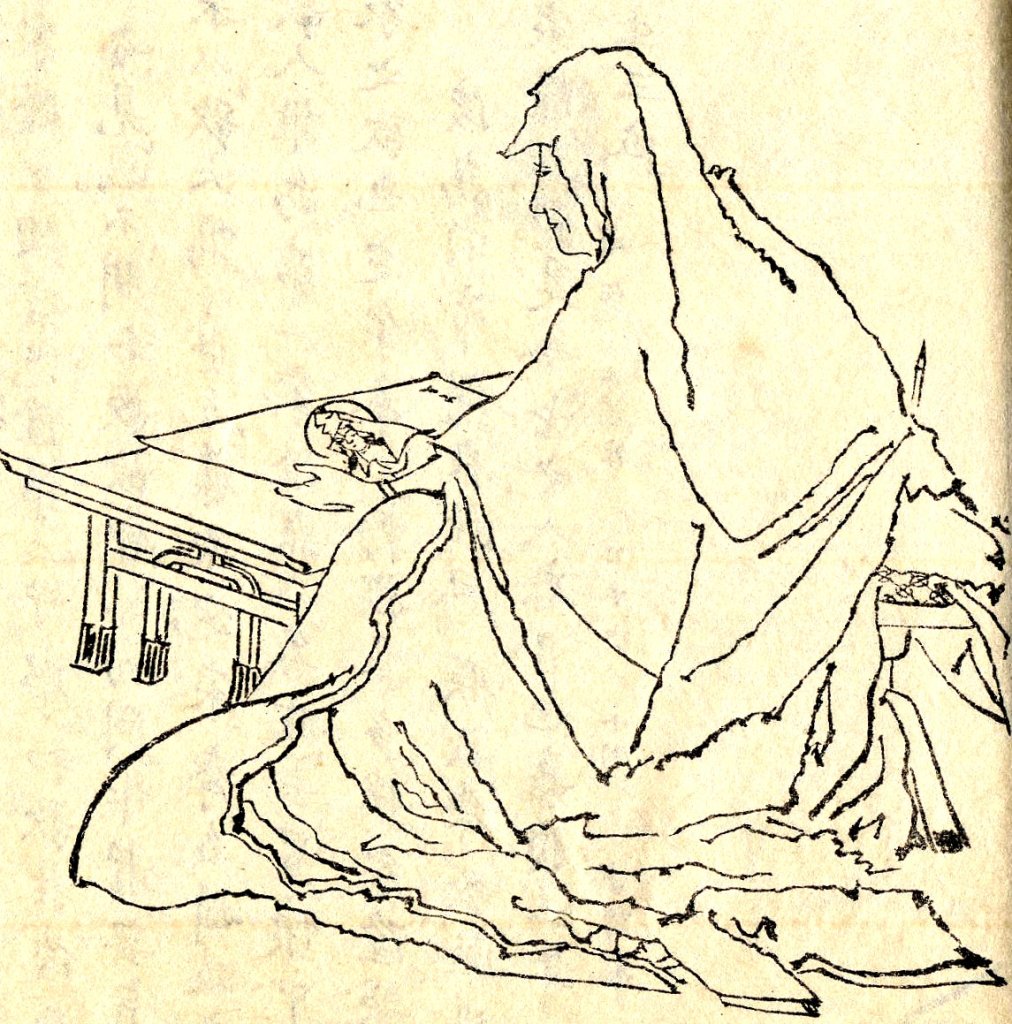
After Yoritomo died in 1199, Masako shaved her head and became a nun, though she would continue to reside in Kamakura, earning the nickname “Nun Shogun” for her political power. Yoritomo’s heir was Yoriie, and when he came to power, Masako’s father, Hojo Tokimasa, had himself appointed regent, or Shikken.
Yoriie wasn’t thrilled about this, as he favoured his wife’s family, the Hiki Clan, and almost as soon as he was formally proclaimed Shogun in 1202, he began to make moves to replace Tokimasa, his grandfather, with Hiki Yoshikazu, his father-in-law.
Obviously, Tokimasa and Masako weren’t just going to let that happen, and in 1203, when Masako got word that Yoriie and Yoshikazu were planning a sort of palace coup, she informed her father, and the Hojo moved first.
Hojo forces assassinated Yoshikazu, and then had the Hiki residence burned, killing most of the extended family. They even went as far as to kill Yoriie’s son and nominal heir, Ichiman, because it had been alleged that the Hiki planned to rule as his regents, in the same way the Hojo had for Yoriie.
Yoriie himself was exiled (then assassinated a year later), and his replacement as Shogun was his younger brother (another of Masako’s sons), Sanemoto, who was only 12 at the time. Little Sanemoto seems to have been closer to his mother than Yoriie had been, which suited Masako, but not Grandpa Tokimasa, who saw his influence over the Shogunate decline.
By 1205, Tokimasa was the most powerful man in Kamakura, but he wasn’t unopposed. Firstly, he was widely believed to have been behind the assassination of Yoriie, which upset Masako to say the least, and not long after that, Tokimasa went even further by ordering his sons (Yoshitoki and Tokifusa) to execute his son-in-law. They protested, but Tokimasa insisted, and the boys, who had apparently quite liked their brother-in-law, began openly siding with their sister, Masako, against Tokimasa.
Then, amidst rumours that Tokimasa planned to have the Shogun killed, and replaced with someone more pliable, Masako and her siblings went to him and told him that he’d better step down, or face open rebellion. Surprisingly, Tokimasa agreed and resigned as regent, shaving his head and becoming a monk, living out the rest of his days in relative peace before passing away in 1215, aged around 78.
The Nun Shogun
Sanemoto would be confirmed as Shogun in 1205. His uncle, Yoshitoki, became regent, and Masako maintained her position as the “Nun Shogun”, the power behind the throne. Masako and Yoshitoki oversaw a period of relative peace, dominating the weak-willed Sanetomo.
Sanetomo seems to have been a bit of a non-entity, which probably suited Masako and Yoshitoki but led to serious issues down the line. Sanemoto was a talented poet, but there is evidence that he may have been an alcoholic, and possibly homosexual as well, despite being married, it was remarked by contemporaries how he seemed to have little to no interest in women.
Now, being a permanently pickled friend of Dorothy might sound like a grand old time, but the problem with a hereditary system of government, even one in which you are a puppet, is that you need someone to inherit the government.
During this time, Masako went to the Imperial Court in Kyoto to see if a son of the Emperor might be available for adoption as Sanetomo’s heir. The Emperor, perhaps unsurprisingly, had little reason to do the Shogunate a favour and refused, leaving the succession in doubt.
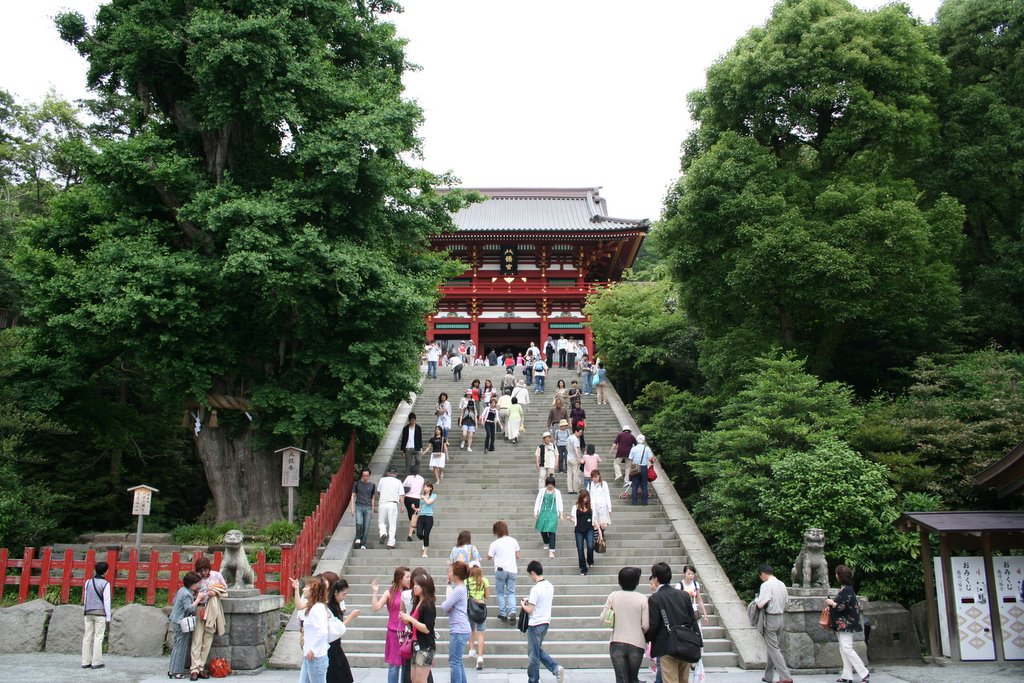
In 1219, Sanemoto was assassinated by his nephew, Kugyo, Yoriie’s second son, and arguably the man who would have been Shogun, had it not been for Hojo politicking. In a dramatic winter scene, Sanemoto was ambushed on the steps of a temple. As the snow fell heavily around them, Kugyo cut the Shogun down and fled the scene.
By No machine-readable author provided. Abrahami assumed (based on copyright claims). – No machine-readable source provided. Own work assumed (based on copyright claims)., CC BY-SA 2.5, https://commons.wikimedia.org/w/index.php?curid=863448
Kugyo himself would be tracked down and killed later, but his exact reason for the killing has been a matter of some speculation. He was the son of the murdered Shogun Yoriie, so it might have simply been a question of revenge. Another possible explanation is a plot involving Regent Yoshitoki, who was trying to get rid of the last legitimate heir to Yoritomo, thus cementing Hojo power.
Historians generally doubt the idea that Kugyo, who had no reason to support Hojo ambitions, was working with Yoshitoki, but regardless, Sanetomo’s death would prove highly fortuitous for the Hojo.
Whatever his failings, Sanetomo had been the last legitimate son of Minamoto no Yoritomo, and with his death, the line of Minamoto Shoguns ended. Masako and Yoshitoki then selected Kujo Yoritsune as the next Shogun. His claim was tenuous at best; his grandmother had been Yoritomo’s niece, and what was more, he was only a year old when Sanetomo was assassinated.
While Yoritsune came of age, the country was effectively ruled by Masako and Yoshitoki, and it was during this period that Masako would really earn the nickname “Nun Shogun”.
It is important to note that the prejudice against female rulers wasn’t as ingrained as you might imagine. Whilst European sources tend to portray women who rule in their own right as something unnatural, Japanese sources are generally positive about Masako and her reign. Of course, it does help that most of the sources we have were written by people who had reason not to antagonise the Hojo, but still, it is an interesting side note.
Hojo Masako would continue to be the effective ruler of Japan until her death in August 1225, but she and the Hojo would not rule unchallenged. In 1221, the Emperor Go-Toba decided he’d had enough of being a figurehead and tried to do something about it.
Sources
https://en.wikipedia.org/wiki/Minamoto_no_Sanetomo
https://en.wikipedia.org/wiki/Kuj%C5%8D_Yoritsune
https://ja.wikipedia.org/wiki/%E8%97%A4%E5%8E%9F%E9%A0%BC%E7%B5%8C
https://en.wikipedia.org/wiki/Kugy%C5%8D_(priest)
https://en.wikipedia.org/wiki/Kamakura_shogunate
https://en.wikipedia.org/wiki/H%C5%8Dj%C5%8D_Masako
https://en.wikipedia.org/wiki/Azuma_Kagami
https://en.wikipedia.org/wiki/Soga_Monogatari
https://en.wikipedia.org/wiki/H%C5%8Dj%C5%8D_clan
https://ja.wikipedia.org/wiki/%E5%8C%97%E6%9D%A1%E6%B0%8F
https://ja.wikipedia.org/wiki/%E5%8C%97%E6%9D%A1%E6%94%BF%E5%AD%90
https://en.wikipedia.org/wiki/Hiki_clan
https://en.wikipedia.org/wiki/Minamoto_no_Yoriie
https://en.wikipedia.org/wiki/Hiki_Yoshikazu
https://en.wikipedia.org/wiki/H%C5%8Dj%C5%8D_Tokimasa#Minamoto_no_Sanetomo
https://ja.wikipedia.org/wiki/%E5%8C%97%E6%9D%A1%E6%99%82%E6%94%BF
 Chris Perry, Author