Tag: Kiyosu Conference

  • The Second Unifier – Toyotomi Hideyoshi. Part Three.

    The Second Unifier – Toyotomi Hideyoshi. Part Three.

    Hideyoshi’s victory over Nobunaga’s killer, Akechi Mitsuhide, left him in a strong, but far from unchallenged position. Though Hideyoshi was arguably the strongest of Nobunaga’s remaining supporters, his power was not so great that he could overcome the others on the battlefield.

    Instead, a conference was called at Kiyosu Castle on July 16th, 1582. Historians still debate exactly what Nobunaga’s plans had been for his succession, given that his second son, and most obvious heir, Nobutada, had been amongst the dead at the Honnoji Incident. Two camps quickly emerged: Hideyoshi, supporting Nobutada’s son, Hidenobu, and Shibata Katsuie, who supported Nobunaga’s third surviving son, Nobutaka.
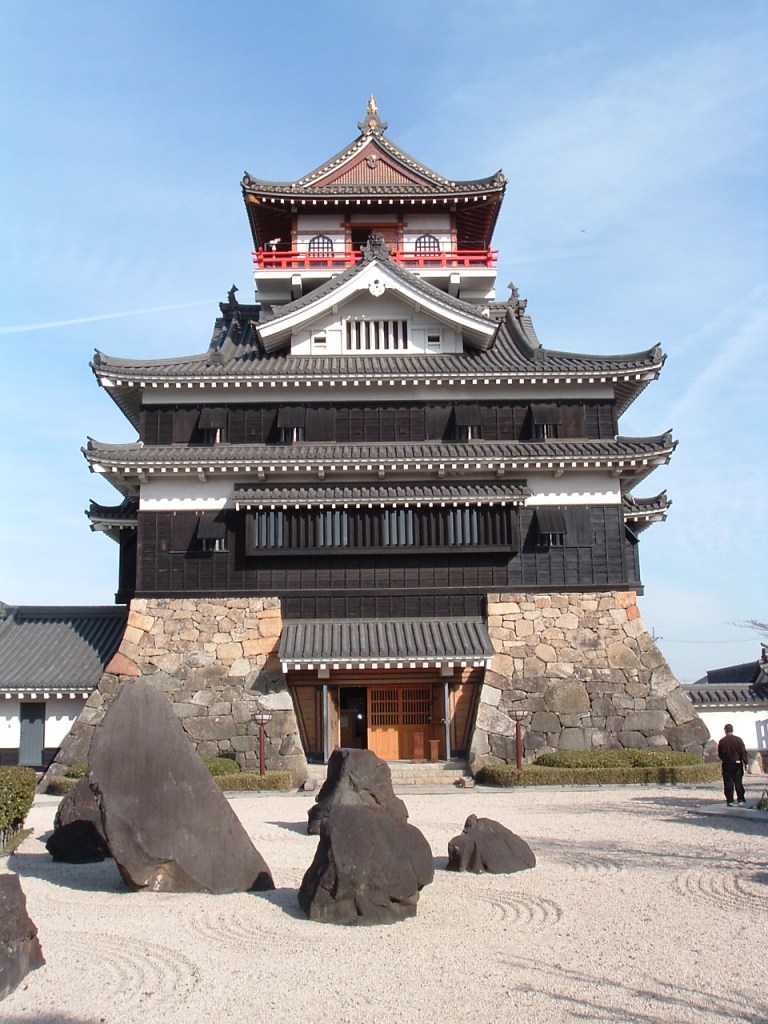
    The reconstructed Kiyosu Castle as it appears today.
    Oliver Mayer, CC 表示-継承 3.0, https://commons.wikimedia.org/w/index.php?curid=230610による

    The exact course of the meeting isn’t clear, but by the end of it, Hideyoshi’s faction was in the ascendancy, and Hidenobu, at just two years old, was declared Nobunaga’s heir, with Nobutaka officially acting as his guardian. There was an attempt to mollify Katsuie by having him marry Nobunaga’s sister, Oichi, a woman of impeccable rank, but the seeds of conflict had already been sown.

    In October 1582, Hideyoshi held Nobunaga’s formal funeral, and played a central, highly visible role in the ceremony, cementing his position as chief amongst Nobunaga’s retainers. Not long after this, Katsuie, supported by Nobutaka, issued letters of impeachment against Hideyoshi, who responded by demanding that Nobutaka, who had custody of the ‘heir’, Hidenobu, return him to Azuchi, as per the Kiyosu Agreement.
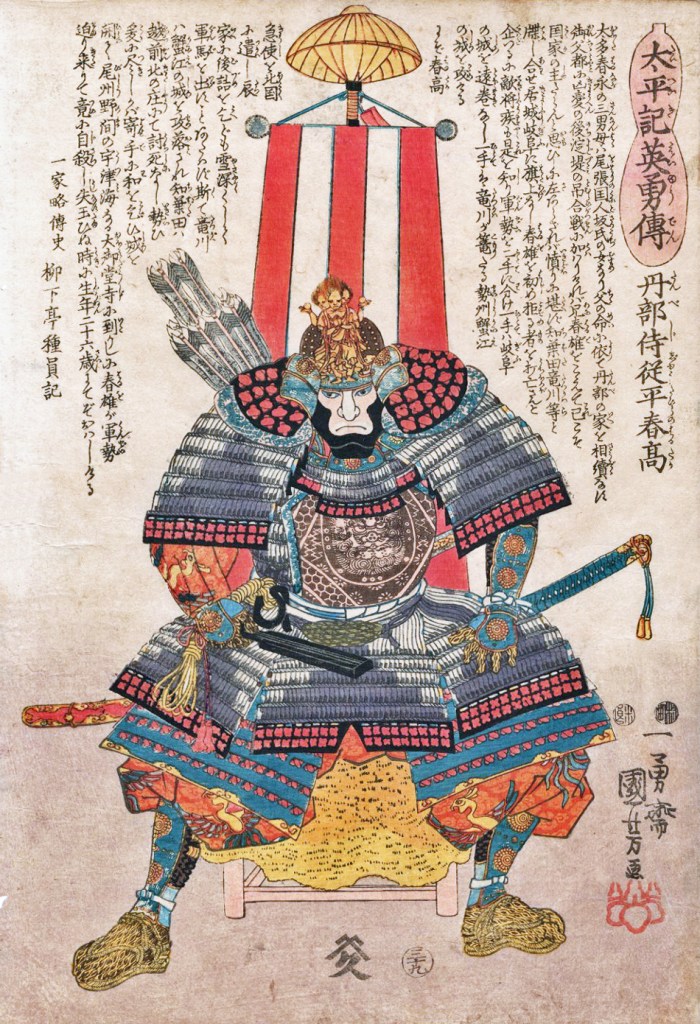
    Oda Nobutaka

    When Nobutaka refused, Hideyoshi used this as justification to renounce the agreement and raise an army against him. Katsuie, trapped in the north by snows and the ongoing war with the Uesugi, was unable to send help, and in a short, sharp campaign, Hideyoshi raised an army of some 50,000, forced Nobutaka to retreat, and eventually surrender, handing over Hidenobu and sending his mother and daughter as hostages to secure the peace.

    This victory did not end the war, however, and shortly after the New Year, Takigawa Kazumasu (also known as Sakon) launched successful attacks in Ise Province. Hideyoshi responded with counterattacks against Kuwana and Nagashima Castles, but the attacks failed, and he was forced to withdraw, despite an overall advantage in numbers, leaving northern Ise Province (temporarily) in the hands of his enemies.
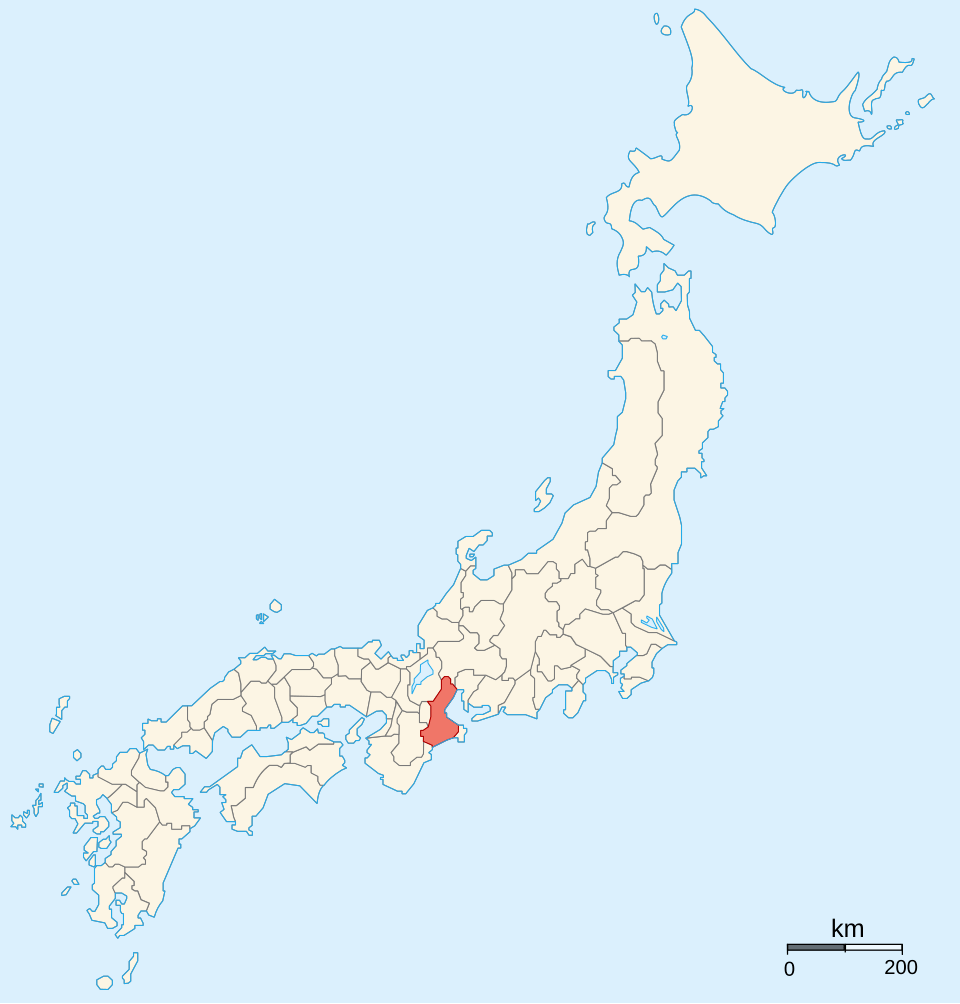
    Ise Province
    By Ash_Crow – Own work, based on Image:Provinces of Japan.svg, CC BY 2.5, https://commons.wikimedia.org/w/index.php?curid=1682471

    The situation got worse for Hideyoshi when Katsuie himself led an army of 30,000 into Omi Province, whilst Nobutaka raised another army at Gifu Castle. Katsuie also made contact with Mori Terumoto, hoping to secure his support in the battle to come. The Mori never outright refused, but instead adopted a ‘wait and see’ approach, as it was not immediately clear which side would win.

    Throughout spring and early summer, the two sides clashed in skirmishes in Ise, Mino, and Omi Provinces, and the momentum would swing back and forth for some time until a decisive engagement near the fortress at Shizugatake. Hideyoshi’s forces were aided by the timely arrival of reinforcements from across Lake Biwa, and the betrayal of Maeda Toshiie, one of Katsuie’s most important generals, who switched to Hideyoshi’s side, for reasons that are still debated.
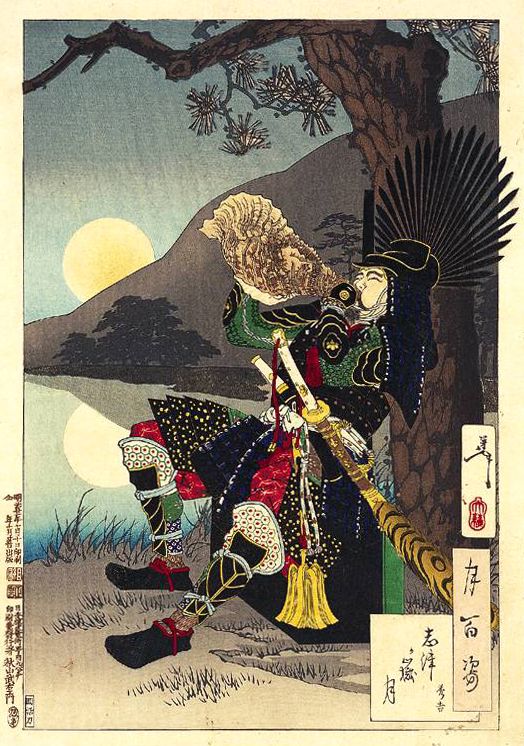
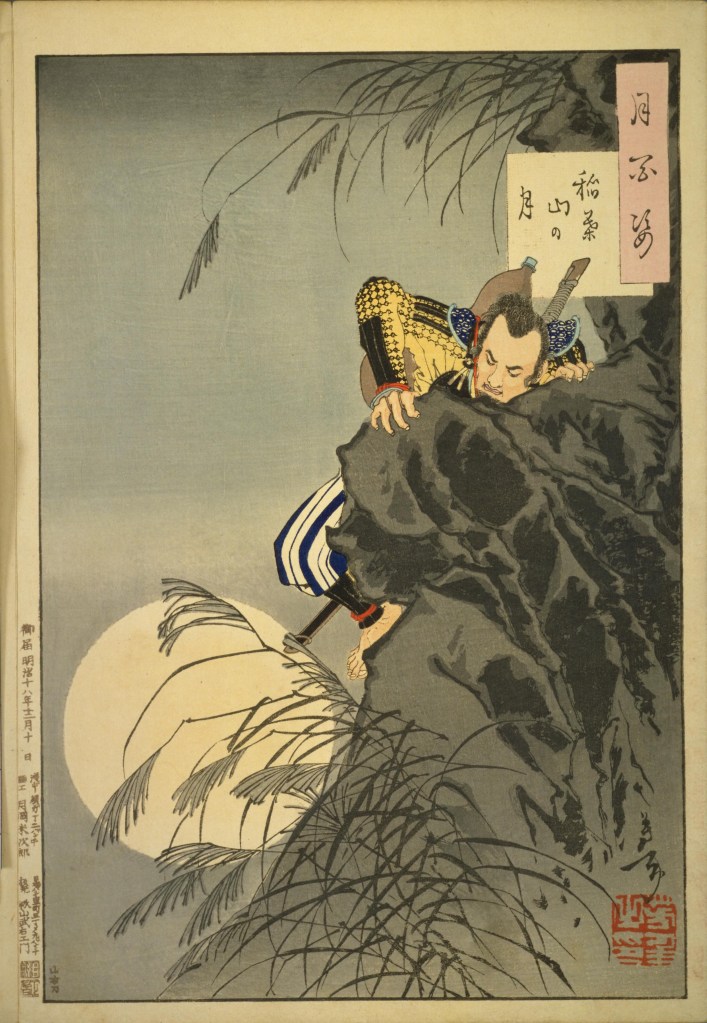
    A 19th-century depiction of Hideyoshi on the night before the Battle of Shizugatake.

    By all accounts, Katsuie and his army forced tenaciously, but with Toshiie’s betrayal, they were outflanked and outnumbered, and Katsuie was forced to retreat. He got as far as Kitanosho Castle, in modern Fukui, where Hideyoshi’s forces laid siege.

    The night before the final assault, Katsuie held a final banquet with his close family and retainers, whilst his wife, Oichi, made arrangements for her three daughters to be protected by Hideyoshi and avoid what was to come. Despite pleas to save herself, Oichi refused to leave her husband’s side.
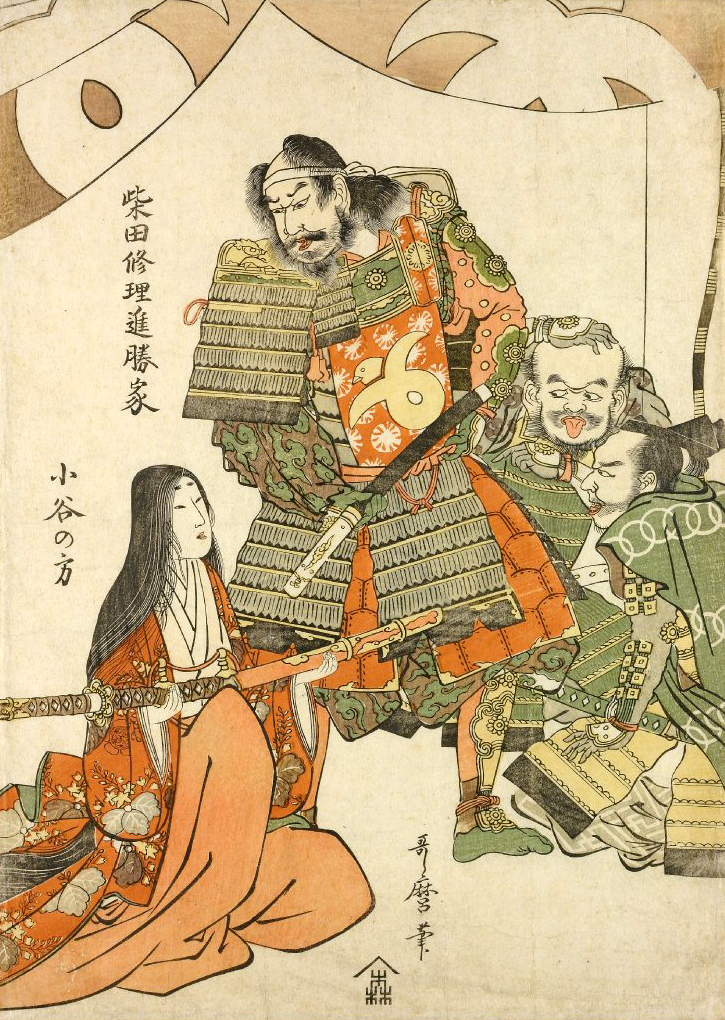
    A later depiction of Shibata Katsuie preparing for battle, with Oichi beside him.

    The attack started at dawn, and despite stiff resistance, by midday, the battle was clearly lost, and Katsuie retreated to the main castle, where he and 80 members of his family, including Oichi, killed themselves. Calling it ‘suicide’ is perhaps a bit generous, as the records suggest that a large number of the dead were children. When it was over, Katsuie’s forces ignited a store of gunpowder, blowing the tower apart and bringing a spectacular end to the Shibata Line.

    “Katsuie, a martial artist, fought seven times but was unable to defend himself. He climbed to the ninth floor, the highest level of the main tower, and addressed the entire group, loudly proclaiming, “Watch Shuri’s hara-kiri and learn from it.” The samurai, with their hearts in tears, wet their armor sleeves. As everyone fell silent, Katsuie stabbed his wife, children, and others to death, then committed seppuku with 80 others. It was the hour of the tiger (5:00 PM).”

    Hideyoshi’s letter to Kobayakawa Takakage dated May 15, 1583,

    Just a side note, the actual record of Katsuie’s suicide is pretty harrowing stuff, and it’s always difficult to read about the death of women and children who weren’t guilty of anything other than being related to the losers. This kind of thing was expected, though; even children weren’t generally shown mercy, and though there are notable examples (Oichi’s daughters, for instance), if a child was caught in a siege, they generally died in the same manner as their parents.

    With Katsuie crushed, Hideyoshi was able to extend his direct control over the northern provinces of Koto, Noto, and Echizen, and when Nobutaka committed seppuku, and Kazumasu surrendered, Hideyoshi had established himself as the most powerful man in the realm and while Hidenobu (still just an infant) remained as the nominal ‘heir’ there was no no doubt that Hideyoshi was in charge.
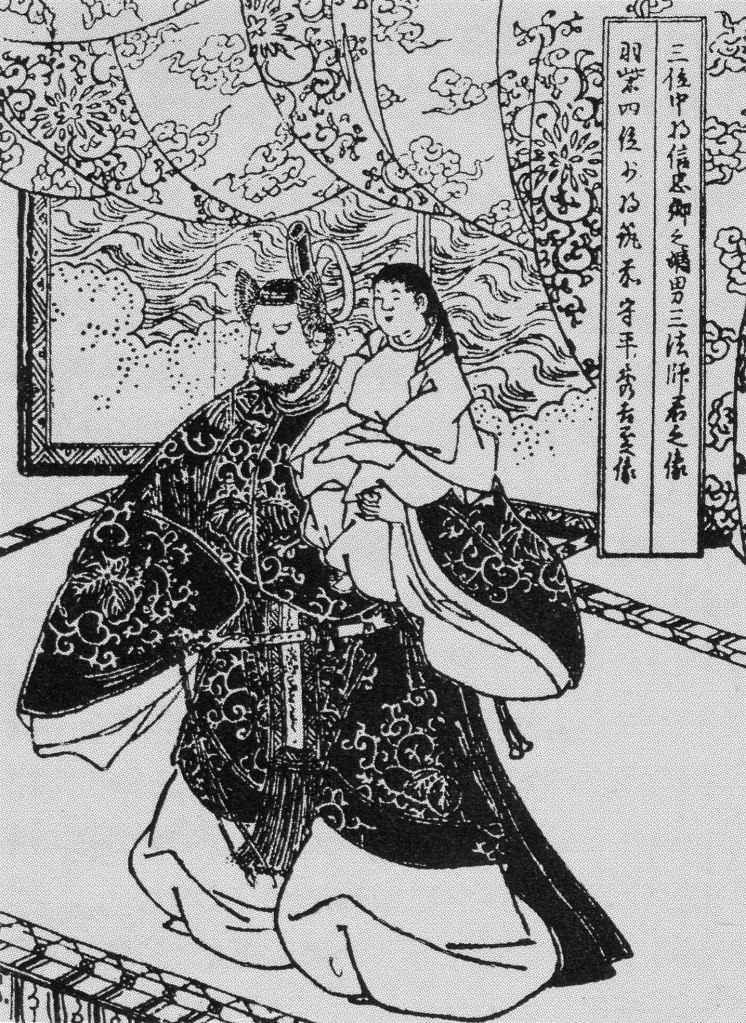
    An image of Hideyoshi carrying Hidenobu at the time of the Kiyosu Conference.

    In 1583, construction began on Osaka Castle, built on the former site of the Ishiyama Hongan-ji Temple complex. It would eventually become Hideyoshi’s base and was widely considered one of Japan’s finest castles. Meanwhile, in the Kanto, a marriage alliance between the Tokugawa and Hojo presented a clear threat to Hideyoshi’s power.

    In early 1584, Oda Nobukatsu, another son of Nobunaga, rebelled against Hideyoshi, quickly gaining the support of Tokugawa Ieyasu and Chosokabe Motochika, who raised armies of their own in opposition to Hideyoshi. Despite a huge advantage in manpower (some sources say 3-to-1), Hideyoshi struggled to achieve a decisive victory.

    Tokugawa Ieyasu

    Some initial success in Ise Province was followed by a defeat at the Battle of Haguro Castle, after which Hideyoshi, who had been waiting at Osaka Castle, took the field himself, meeting Ieyasu near Komaki (near the modern city of the same name). Again, despite a significant manpower imbalance, Ieyasu’s strong position meant that Hideyoshi was unable to force a decisive engagement, and both sides focused on reinforcing castles and constructing new earthworks in anticipation of the fight to come.

    The campaign that followed is often called the Battle of Komaki and Nagakute, after its two most decisive engagements, but there were actually a series of sieges, counterattacks, and skirmishes over the summer and early autumn of 1584. The fighting would result in a tactical victory for the Tokugawa, as they would arguably have the best of the fighting. On the other hand, the strategic situation favoured Hideyoshi, and he would ultimately be able to secure control over his new territory and the power that went along with it.
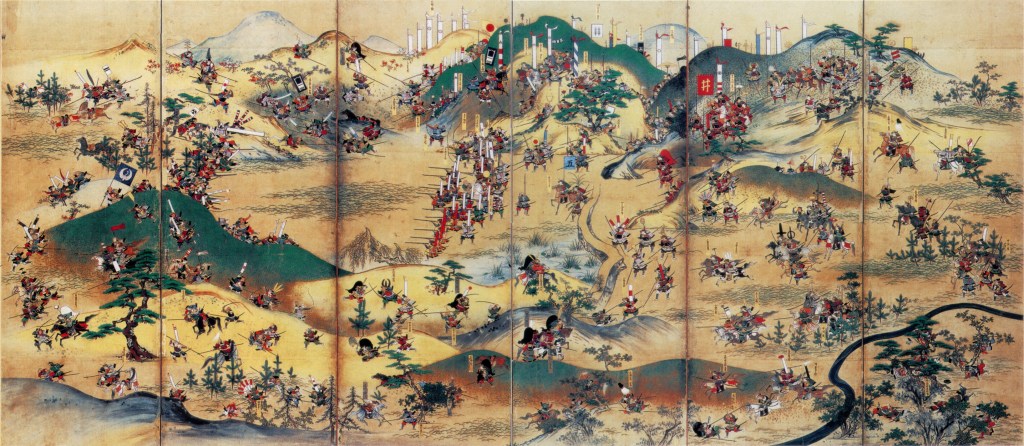
    An 18th-Century depiction of the Battle of Komaki and Nagakute.

    In the end, both sides had bigger problems. Ieyasu’s domains were under severe economic strain from the war, and a series of floods, combined with the burden of having a large number of peasants away at war, drained his treasury and threatened famine (this was before a serious earthquake in 1586 compounded his problems).

    For his part, Hideyoshi’s position was not as strong as it appeared. Though he had the advantage in men, he also had powerful enemies elsewhere, enemies that were arguably more pressing problems than Ieyasu, who had proven he could hold Hideyoshi off, but not that he could mount a serious attack of his own.
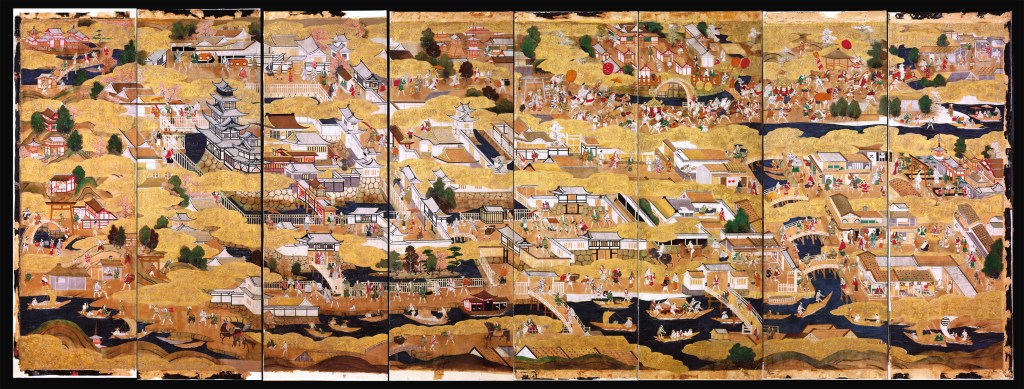
    Osaka as it appeared around 1650. The city would become Hideyoshi’s base, centred at the castle, which appears in the second screen from the left.

    Despite his inability to defeat Ieyasu, by the dawn of 1585, Hideyoshi was effectively the ruler of Japan, already on the verge of surpassing his nominal masters (the Oda), and about to launch the campaigns that would finally bring an end to the centuries of bloodshed.

    Sources
    https://ja.wikipedia.org/wiki/%E8%B1%8A%E8%87%A3%E7%A7%80%E5%90%89
    https://ja.wikipedia.org/wiki/%E5%B0%8F%E7%89%A7%E3%83%BB%E9%95%B7%E4%B9%85%E6%89%8B%E3%81%AE%E6%88%A6%E3%81%84
    https://ja.wikipedia.org/wiki/%E5%B2%A9%E5%B4%8E%E5%9F%8E%E3%81%AE%E6%88%A6%E3%81%84
    https://ja.wikipedia.org/wiki/%E5%B0%8F%E7%89%A7%E5%B1%B1
    https://ja.wikipedia.org/wiki/%E5%A4%A7%E5%9D%82%E5%9F%8E
    https://ja.wikipedia.org/wiki/%E8%B3%A4%E3%83%B6%E5%B2%B3%E3%81%AE%E6%88%A6%E3%81%84
    https://ja.wikipedia.org/wiki/%E5%8C%97%E3%83%8E%E5%BA%84%E5%9F%8E%E3%81%AE%E6%88%A6%E3%81%84
    https://ja.wikipedia.org/wiki/%E6%B5%85%E4%BA%95%E4%B8%89%E5%A7%89%E5%A6%B9
    https://en.wikipedia.org/wiki/Kitanosho_Castle
    https://ja.wikipedia.org/wiki/%E5%89%8D%E7%94%B0%E5%88%A9%E5%AE%B6#%E4%BA%BA%E7%89%A9%E3%83%BB%E9%80%B8%E8%A9%B1
    https://ja.wikipedia.org/wiki/%E6%A1%91%E5%90%8D%E5%9F%8E
    https://ja.wikipedia.org/wiki/%E6%B8%85%E6%B4%B2%E4%BC%9A%E8%AD%B0
    https://ja.wikipedia.org/wiki/%E5%A4%A7%E5%BE%B3%E5%AF%BA
    https://ja.wikipedia.org/wiki/%E7%B9%94%E7%94%B0%E4%BF%A1%E5%AD%9D
    https://ja.wikipedia.org/wiki/%E7%B9%94%E7%94%B0%E7%A7%80%E4%BF%A1
    https://ja.wikipedia.org/wiki/%E7%B9%94%E7%94%B0%E7%A7%80%E4%BF%A1
    https://ja.wikipedia.org/wiki/%E6%9F%B4%E7%94%B0%E5%8B%9D%E5%AE%B6
  • The Second Unifier – Toyotomi Hideyoshi. Part Two.

    The Second Unifier – Toyotomi Hideyoshi. Part Two.

    In 1577, a dispute between Toyotomi Hideyoshi and Shibata Katsuie led to Hideyoshi taking his army home, and leaving Katsuie to battle the mighty Uesugi Kenshin alone, a battle he lost. In the aftermath, Hideyoshi had every reason to fear the wrath of his master, Oda Nobunaga, and he was arguably lucky to keep his head, let alone his position.

    A 19th-century depiction of Hideyoshi in Nobunaga’s service.

    Nobunaga was well known for his ferocity, but he recognised capable subordinates. Hideyoshi had been reckless, but he had also earned a reputation as a good administrator and leader of men, and it wasn’t long before he was back in the Great Lord’s good books. In late 1577, he was dispatched west to contend with the powerful Mori Clan and by the end of the year, he was in control of Harima Province and advancing into neighbouring Tajima.

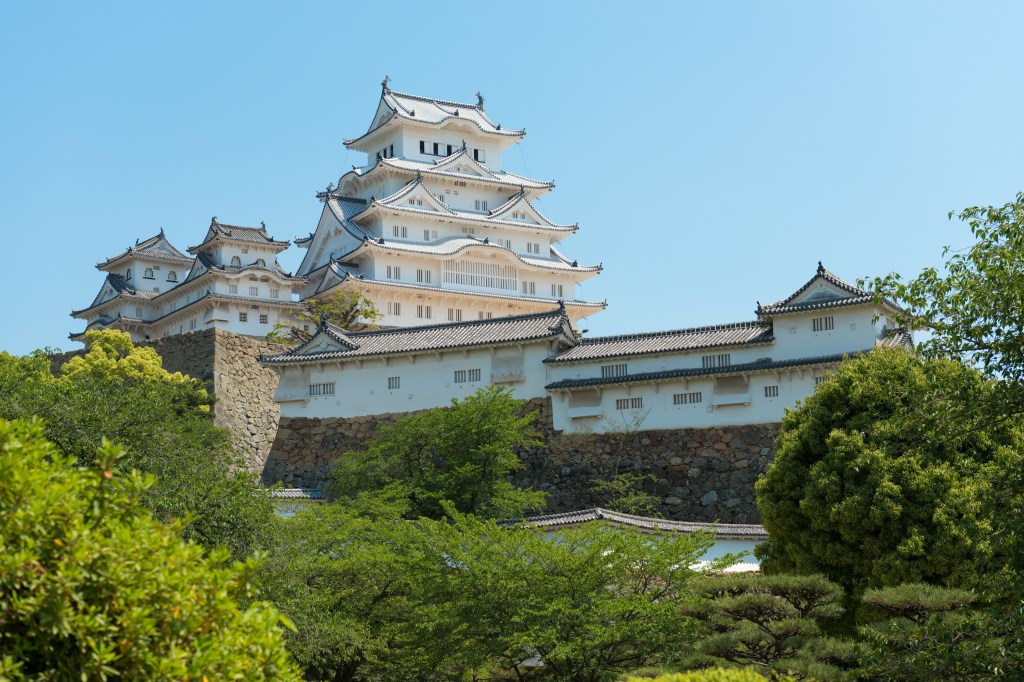
    During this period, Hideyoshi made the famous Himeji Castle his base and used it as a springboard for a series of successful campaigns against the Mori over the next few years. By late 1578, he had subjugated (either through conquest or submission) Bizen and Mimasaka Provinces, in addition to his earlier conquests, and he was poised to advance further when the Araki Clan, based at Arioka Castle, rebelled, obliging him to redeploy his forces to put them down.

    Himeji Castle as it appears today (after renovations in 2015)
    Niko Kitsakis – 投稿者自身による著作物, CC 表示-継承 4.0, https://commons.wikimedia.org/w/index.php?curid=40135622による

    Able to resume his advance in 1580, Hideyoshi secured Tajima Province, bringing the once-mighty Yamana Clan under his control and incorporating many of their former vassals and members of the clan itself into the new administration, a policy widely praised as the reason that Tajima was swiftly pacified.

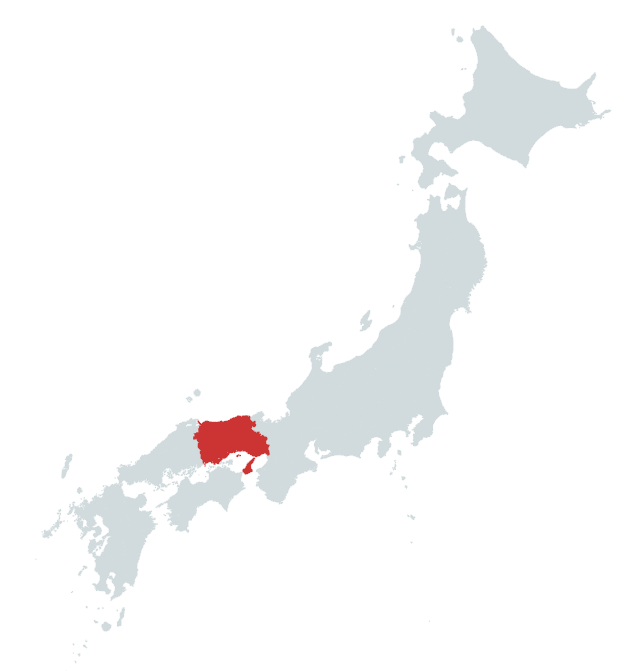
    By 1581, he had advanced into Bitchu Province and secured Awaji Island for his master, utilising slow but effective siege tactics, starving his enemies into submission, a time-consuming but strength-preserving strategy. One disadvantage, though, was that it meant you were easy to find should your enemy have sufficient strength elsewhere.

    The area that Hideyoshi either conquered or was fighting in during this period.

    In Spring 1582, Hideyoshi led an army of some 30,000 to besiege the mighty fortress at Takamatsu. Strategically vital for control of Bitchu Province, the castle was defended by 3,000 Mori warriors, who quickly called for aid. Mori Terumoto responded and began mustering an army that would eventually number over 50,000. Hideyoshi now faced a problem: already outnumbered, if he tried to take the formidable fortress by storm, he’d deplete his forces further. On the other hand, trying to starve the garrison, who knew help was on the way, would take too long and risk trapping his army between the walls of the fortress and the vengeful spears of the Mori.

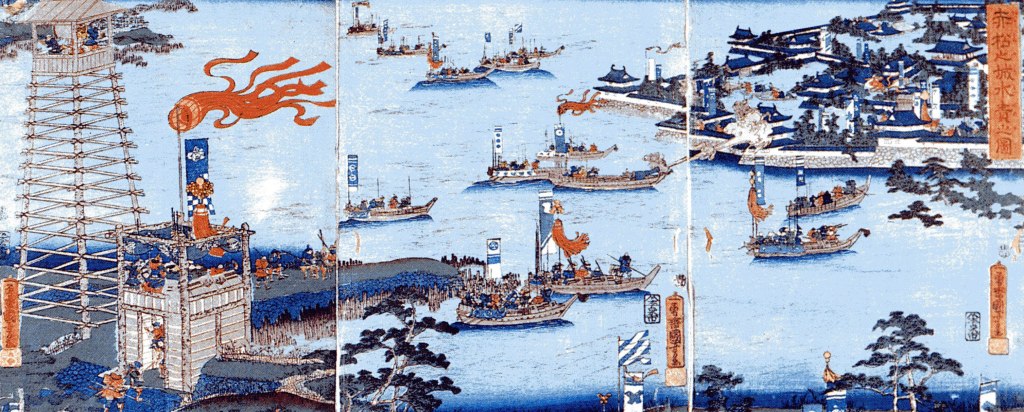
    Hideyoshi responded in a typically inventive fashion. Unable to take the castle by storm, he ordered a levee built and the nearby river dammed, diverting water into Takamatsu itself, flooding the castle to such an extent that the garrison’s food supplies were almost completely ruined and they were reduced to communicating by boat.

    A later depiction of the Siege of Takamatsu Castle. The tower to the left is Hideyoshi’s observation post, and you can see the castle itself flooded in the background.

    Despite this, the castle still held out, and when news arrived that Terumoto was on the march, Hideyoshi sent a message to Azuchi, requesting immediate reinforcement from Nobunaga. Sensing an opportunity to catch the powerful Mori clan in open battle, where they could be destroyed, Nobunaga quickly dispatched Akechi Mitsuhide to reinforce Hideyoshi, while he went to Kyoto to make arrangements for a larger force that would be sent to finish the job.

    As we already know, Mitsuhide never arrived; instead, he turned his forces around and attacked Nobunaga at his base at Honnoji, killing him and his heir. Hideyoshi was well placed to respond to this betrayal, and he swiftly concluded a peace treaty with the Mori (who were apparently initially unaware of Nobunaga’s death). Some have speculated that his rapid reaction is evidence of his involvement, or at least foreknowledge of the plot, though there’s nothing concrete to suggest that he was anything other than in the right place at the right time.

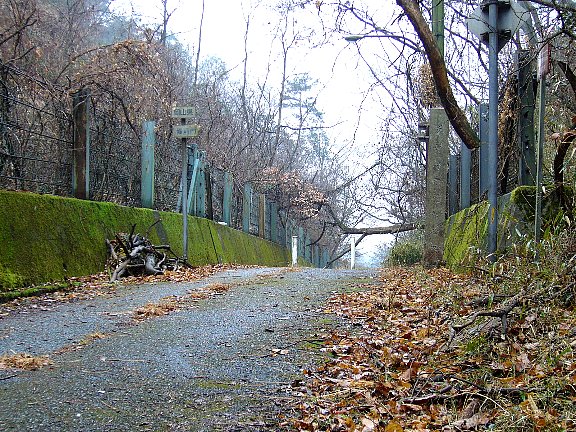
    Funasaka Pass as it appears today. This was one of the narrow routes that Hideyoshi’s army had to contend with during their remarkable march back towards Kyoto.
    Bakkai – 投稿者自身による著作物, CC 表示 3.0, https://commons.wikimedia.org/w/index.php?curid=92337495による

    More to the point, Hideyoshi was far from the only player on the board. Hideyoshi’s former rival, Shibata Katsuie, was to the north, with an army facing the Uesugi, while in the Kanto, Takigawa Kazumasu (sometimes called Sakon) had a large army intended to monitor the Hojo. Nobunaga’s son and heir had been killed during the Honno-ji Incident, but his third son, Nobukatsu, had gathered a force at Sakai (modern Osaka) to conquer Shikoku.

    Any one of these forces could have been the one to avenge Nobunaga’s death and put an abrupt end to Akechi Mitsuhide’s ambitions. Even Tokugawa Ieyasu was a potential avenger, making his famed escape from mortal danger with the (supposed) help of the famous Ninja of Iga. Ieyasu would return to his home in Mikawa and gather his forces, but events would move quickly, and though all parties moved against Mitsuhide, it was Hideyoshi who struck first.

    Tokugawa Ieyasu as he appeared in later life. He was close to Kyoto during the Honnoji Incident and was forced to make a dramatic escape back to Mikawa. Hideyoshi would prove to be faster, but Ieyasu’s time would come.

    In the days following the Honnoji Incident, Mitsuhide moved to consolidate his position. Unfortunately for him, he faced harsh military and political opposition. On the one hand, Nobunaga’s body had not been recovered from the flames, and rumours abounded that he was still alive. Even among those who may have believed Nobunaga was dead, Mitsuhide commanded little respect. He was a traitor, after all, and surrounded by enemies who wished to avenge Nobunaga and take power for themselves.

    Militarily, Mitsuhide was too weak to assert effective control over much territory. He had between 13,000 and 15,000 men, but was obliged to capture and garrison several important castles, whittling his already limited forces down still further. Then there was the speed at which Hideyoshi moved. Mitushide arguably did what he could, and with the limited communications and transportation available at the time, it’s hard to see how he could have moved faster, but Hideyoshi was faster still, and on July 2nd, 1582, just 12 days after Honnoji, the two sides clashed at the Battle of Yamazaki, to the south-east of Kyoto.

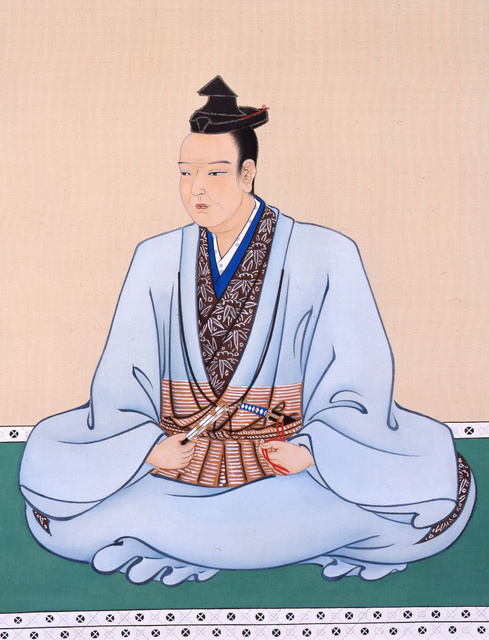
    Akechi Mitsuhide. Historians debate why he decided to betray Nobunaga, but within two weeks of the incident, he’d be dead.

    The numbers vary by source, but Hideyoshi is said to have had between 20 and 40,000 men, while Mitsuihides had 10 to 16,000. Despite the long odds, Mitsuhide’s army was well-positioned, and the ground around Yamazaki was boggy, limiting movement and reducing Hideyoshi’s advantage in numbers.

    Mitsuhide probably understood that a defensive victory against difficult odds would have greatly enhanced his prestige, and for most of the day, Hideyoshi’s army took heavy losses in vicious frontal assaults. Around 4pm, however, reinforcements arrived for Hideyoshi, outflanking Mitsuhide’s position, and causing his army to fall back. As the battle moved to higher and drier ground, Mitsuhide’s force was gradually surrounded and forced back.

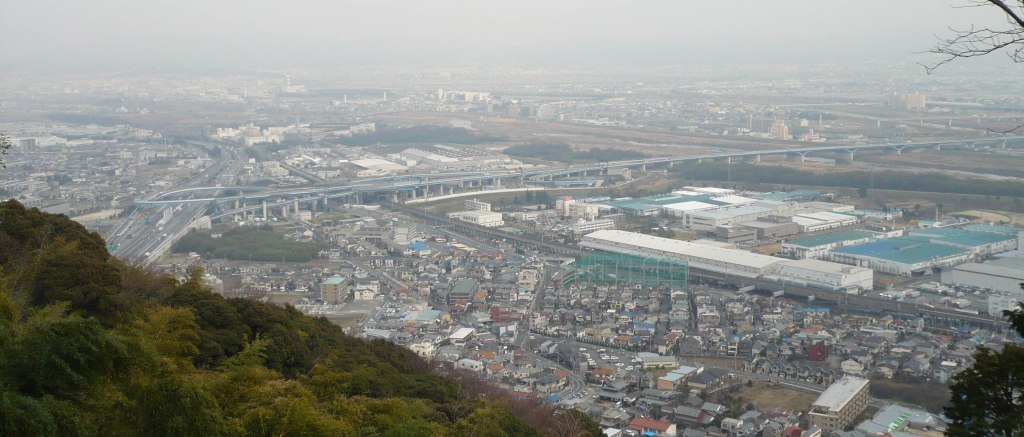
    The battlefield of Yamazaki as it appears today. Historians believe the heaviest fighting took place around the bypass that can be seen in the centre.

    Later sources suggest that the casualties were about the same (around 3,000 each), but under attack from three sides, the morale of Mitushide’s army broke first, and by sunset, their retreat became a rout. When the battle was over, it is said that Mitsuhide had just 700 men remaining. His exact fate isn’t clear; some say he was wounded and committed seppuku, while others suggest he was killed by vengeful peasants or bandits. Either way, his head was brought to Hideyoshi the day after the battle, and then displayed at Honnoji, a powerful statement confirming Hideyoshi as Nobunaga’s ‘avenger’ and giving an enormous boost to his credibility.

    Hideyoshi would spend a few weeks stamping out the last embers of Mitushide’s rebellion, but despite his military successes, he was not unchallenged as Nobunaga’s successor. The other players, who had all been poised to strike, still remained in the field, and each had their own ambition to rule, either directly or through one of Nobunaga’s other sons.

    This would result in the Kiyosu Conference, but we’ll cover that and its consequences next time.

    Sources
    https://ja.wikipedia.org/wiki/%E8%B1%8A%E8%87%A3%E7%A7%80%E5%90%89
    https://ja.wikipedia.org/wiki/%E5%B1%B1%E5%B4%8E%E3%81%AE%E6%88%A6%E3%81%84
    https://ja.wikipedia.org/wiki/%E6%9C%AC%E8%83%BD%E5%AF%BA%E3%81%AE%E5%A4%89
    https://ja.wikipedia.org/wiki/%E4%B8%AD%E5%9B%BD%E5%A4%A7%E8%BF%94%E3%81%97
    https://ja.wikipedia.org/wiki/%E5%B1%B1%E5%90%8D%E5%A0%AF%E7%86%99
    https://ja.wikipedia.org/wiki/%E4%B8%89%E6%9C%A8%E5%90%88%E6%88%A6
    https://ja.wikipedia.org/wiki/%E6%9C%89%E5%B2%A1%E5%9F%8E%E3%81%AE%E6%88%A6%E3%81%84
    https://ja.wikipedia.org/wiki/%E5%A7%AB%E8%B7%AF%E5%9F%8E
    https://ja.wikipedia.org/wiki/%E5%82%99%E4%B8%AD%E9%AB%98%E6%9D%BE%E5%9F%8E%E3%81%AE%E6%88%A6%E3%81%84
    https://ja.wikipedia.org/wiki/%E9%AB%98%E6%9D%BE%E5%9F%8E_(%E5%82%99%E4%B8%AD%E5%9B%BD)