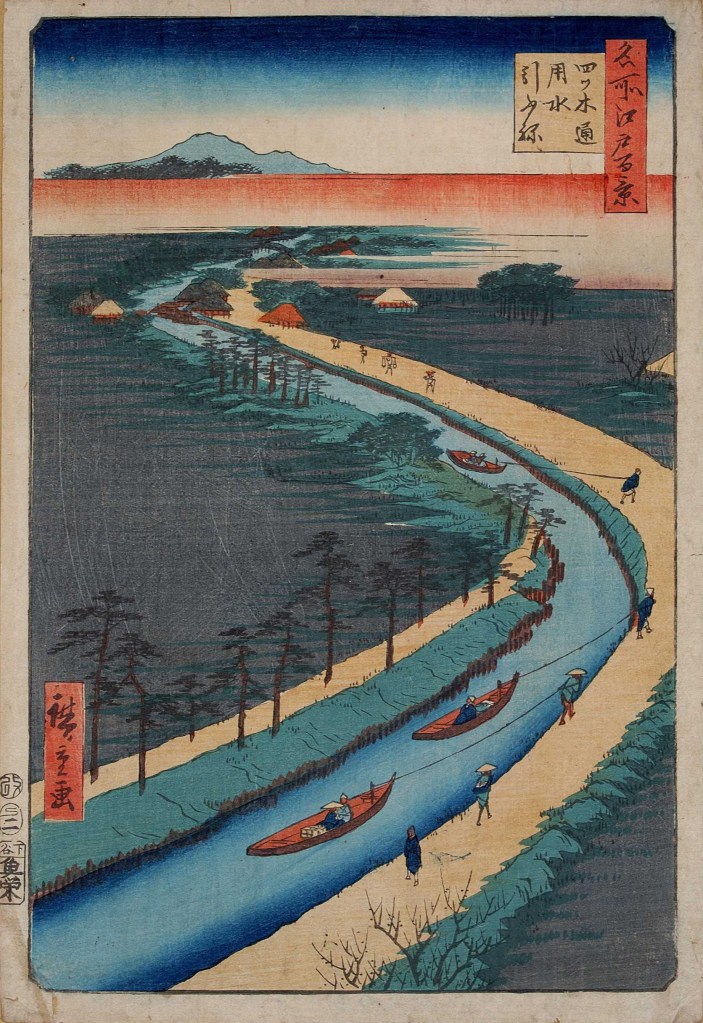
Tag: Koga Kubo

  • Lords of the East, Part 2

    Lords of the East, Part 2

    In 1537, Hojo Ujitsuna launched a successful invasion of Suruga Province, establishing the frontier at the Fuji River and ending the threat from the Imagawa-Takeda alliance, at least for now. Shortly after this news broke that (Ogigayatsu) Uesugi Tomoaki had died. Tomoaki had been an implacable foe of the Hojo, and his death severely weakened his clan, which was now led by the 12-year-old Tomosada.
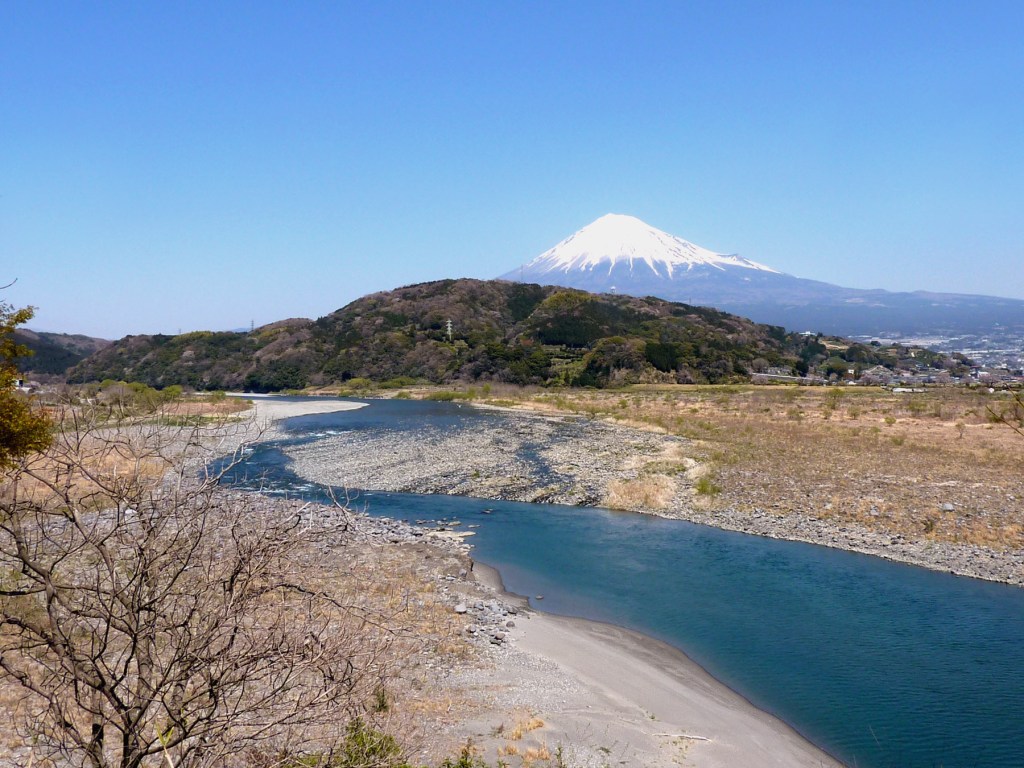
    The Fuji River as it appears today, in modern Shizuoka Prefecture.

    It wasn’t all good news, however. With the bulk of the Hojo forces focused in Suruga against the Imagawa, forces of the Satomi Clan moved to expel the Hojo from the Boso Peninsula (modern Chiba), quickly establishing control and forcing the remaining Hojo loyalists to flee. There was little Ujitsuna could do about that in the short term, but in the summer of 1537, he gathered 15,000 men at Edo Castle before dispatching his son, Ujiyasu, to take the Uesugi stronghold at Kawagoe.

    The castle was taken undamaged after a surprise attack, and when the Uesugi tried to recapture it on New Year’s Day 1538, they were defeated. With his northern flank secure, Ujitsuna launched a campaign to reestablish control over the Boso Peninsula. Though they were initially successful, the attack clashed with the plans of the Koga Kubo, Ashikaga Yoshiaki.

    You may remember from earlier posts that the position of Kubo was the Shogun’s deputy in a given area. In decades past, the centre of the Kubo‘s power had been Kamakura, but the catastrophic decline of Shogunate power meant that the Kubo was eventually obliged to leave Kamakura (which was now under Hojo control) and take up residence at Koga, in Shimosa Province (modern Ibaraki).
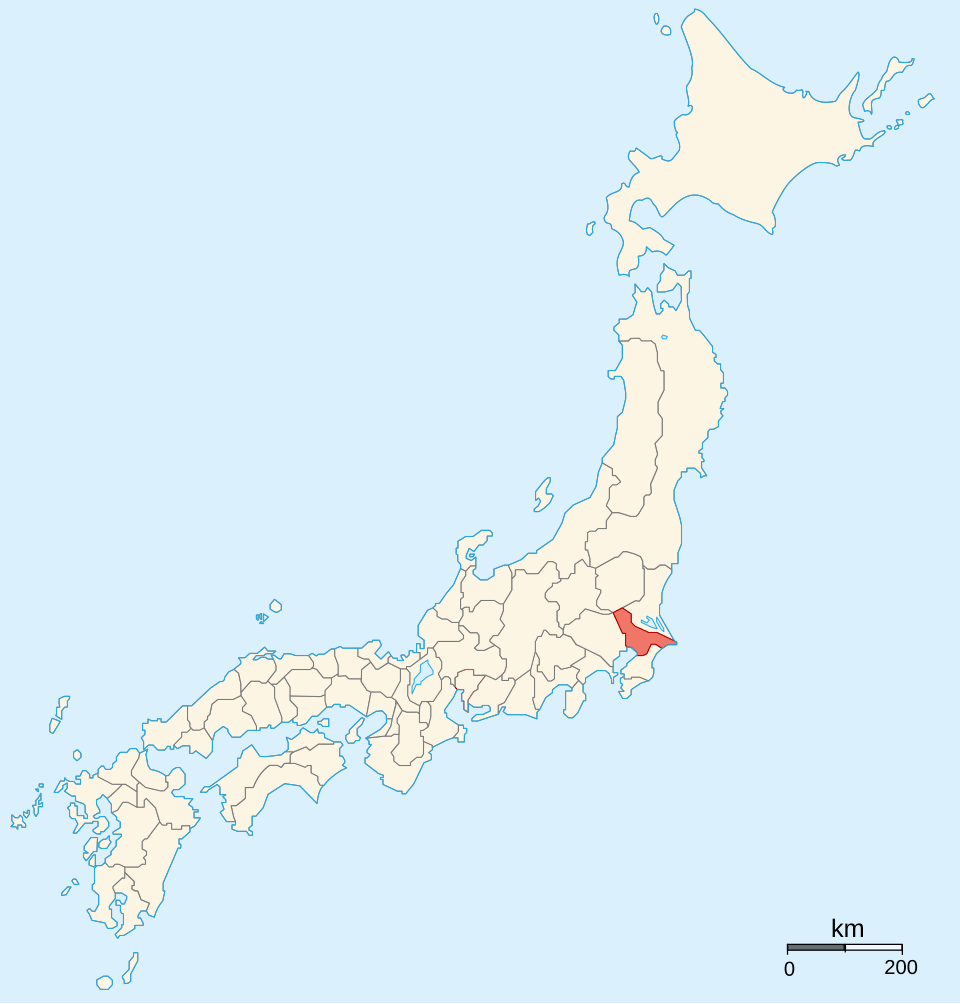
    Shimosa Province
    By Ash_Crow – Own work, based on Image: Provinces of Japan.svg, CC BY 2.5, https://commons.wikimedia.org/w/index.php?curid=1691764

    Yoshiaki had the long-term objective of reestablishing the Kubos’ preeminent position over the whole Kanto, and the Hojo stood in direct opposition to this. Both sides were about equal in strength, but while the Hojo were united behind Ujitsuna, Yoshiaki’s forces were united in opposition to the Hojo, but not necessarily in support of the Kubo.

    Though Yoshiaki’s forces agreed to challenge the Hojo at the Edogawa River, they couldn’t decide on a strategy. Yoshiaki’s allies suggested attacking the Hojo as they crossed the river, but sources say that Yoshiaki, proud of his illustrious Ashikaga name, refused such a strategy, deciding that he would march out in person and face the Hojo in the field, once the bulk of their forces were already across the river.

    Satomi Yoshitaka, once a supporter of the Hojo but now serving under Yoshiaki, recognised that the strategy robbed them of the advantage of the river and was reluctant to commit his forces to open battle with the Hojo, where victory was far from certain. Yoshitaka also recognised that if Yoshiaki were defeated, a large expanse of territory would become available; thus, he positioned his forces away from what he assumed would be the main battlefield, ready to retreat quickly if things looked to be going badly.
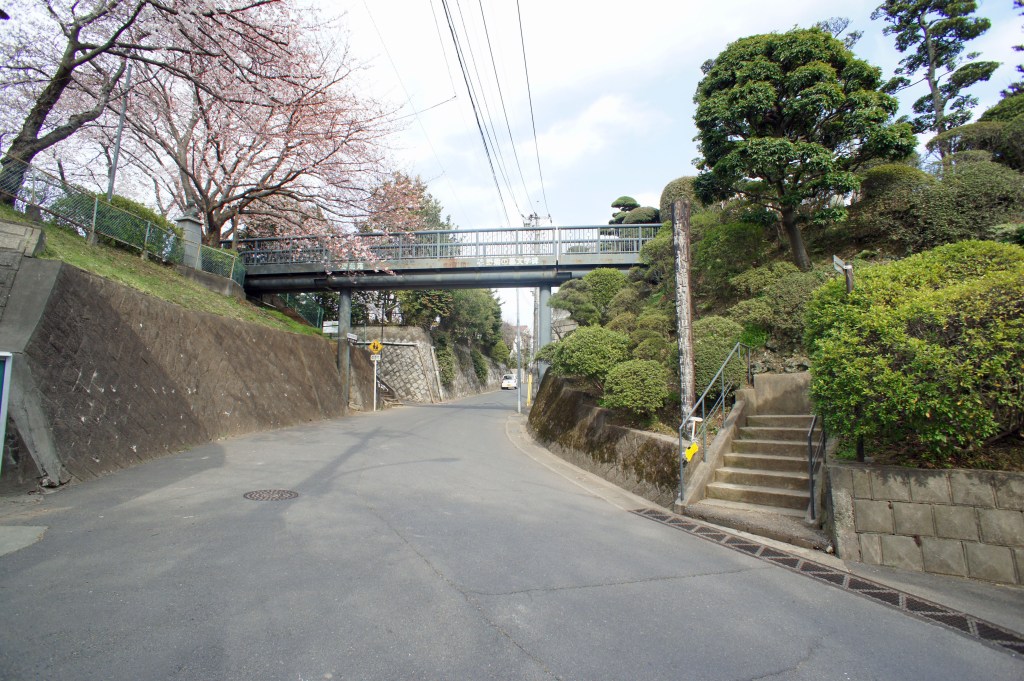
    Though heavily built up today, this hill was the site of some of the fiercest fighting at the Battle of Konodai.

    What became known as the Battle of Konodai began on the morning of November 8th, when the Hojo forces crossed the river. Initially, Yoshiaki’s forces had the advantage, but throughout the day, more Hojo forces arrived, and the tide of battle turned. When news came that Yoshiaki’s brother and son had been killed, he flew into a rage and charged the Hojo himself, only to be struck down by an arrow and killed. Seeing this, Satomi Yoshitaka withdrew his unengaged army, and shortly afterwards, the remaining forces began a retreat that swiftly turned into a rout.

    The Hojo used the momentum of victory to advance into Kazusa and Shimosa Provinces, whilst Yoshitaka, with his army still intact, would be able to take control of almost the entire Boso Peninsula, where he would continue to resist the Hojo, beginning a feud that would last decades.

    Although the exact date is unclear, after the victory at Konodai, Ujitsuna wouldn’t lead another campaign, and scholars agree that he retired as head of the clan sometime in 1539, when his son, Ujiyasu, completed the conquest of Shimosa and Kazusa Provinces. In late 1540, the reconstruction of Tsurugaoka Hachiman Shrine was completed, and Ujitsuna held a celebration there in which he was recognised as Kanto Kanrei, the Shogun’s official deputy in the Kanto, a title that reflected his preeminent position in the region.
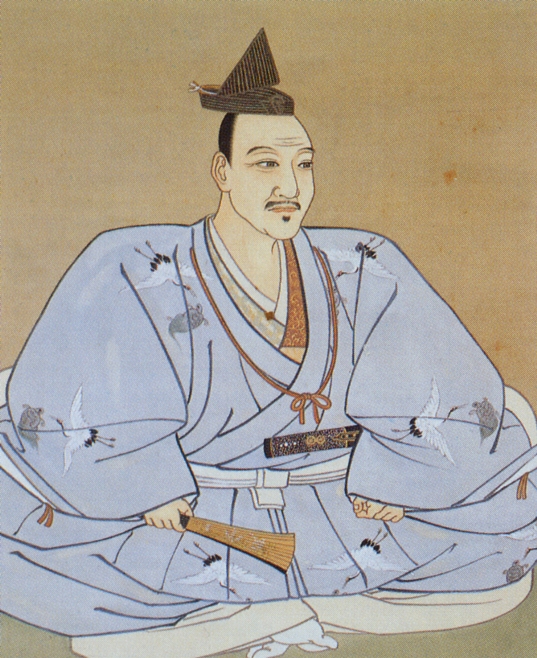
    Hojo Ujiyasu.

    Ujitsuna would eventually pass away in August 1541, and his son, Ujiyasu, lord now in fact as well as name, inherited a strong but dangerous position. Successful campaigns in the east had extended Hojo control to Shimosa province. To the north, the Ogigayatsu-Uesugi plotted revenge and the return of Kawagoe Castle, whilst to the east, the conflict with the Imagawa dragged on, despite a strong frontier on the Fuji River.

    A famine in 1540-41 precluded an immediate campaign, and in 1542 Ujiyasu ordered a land survey, which enabled him to adjust and reform taxation in his territory (which was largely based on rice production) and to ensure a strong economic base for what was to come next. In 1545, the Imagawa sent out peace feelers, but no agreement could be reached, and the Imagawa joined forces with the Uesugi, with both agreeing to attack the Hojo from east and west.

    Ujiyasu rushed forces to the east, but a combined Imagawa-Takeda army proved too strong, and Ujiyasu was eventually obliged to conclude a disadvantageous peace, which saw him cede all the territory the Hojo had controlled in Suruga back to the Imagawa. Though the new border would remain tense, the peace held, and all three sides would eventually conclude an alliance in 1554, though we’re getting ahead of ourselves.
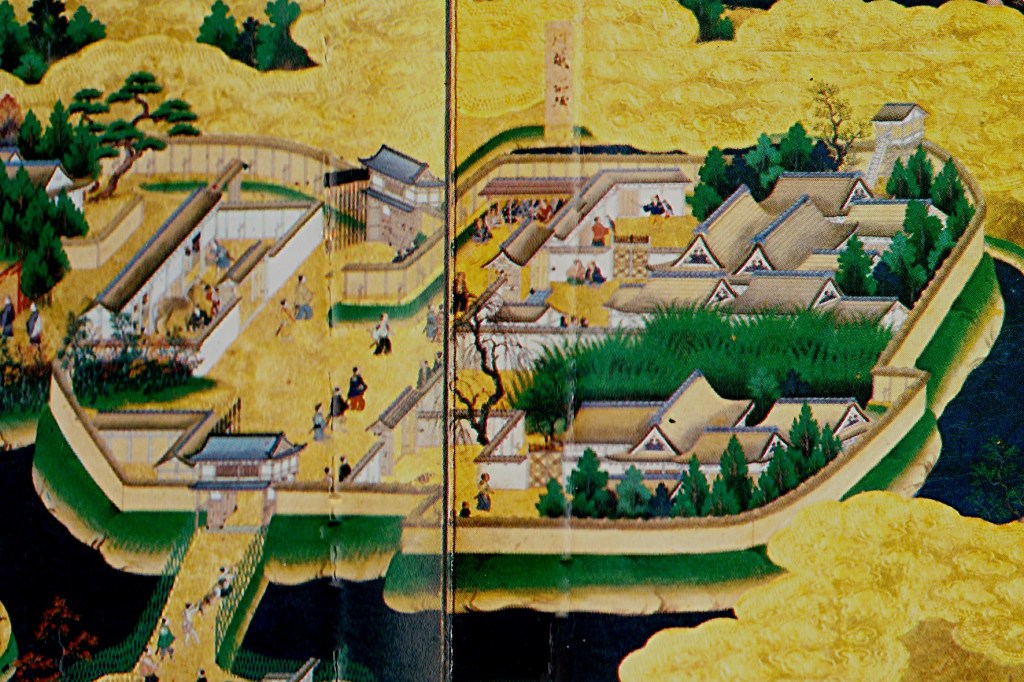
    A later image of Kawagoe Castle.

    Meanwhile, the Uesugi and their allies had massed a force of some 80,000 men around Kawagoe Castle, and with Ujiyasu busy in Surugu, the castle would endure a 6-month siege. Even after the Hojo had secured peace with the Imagawa, Ujiyasu could only muster 10,000 men, and what happened next is a matter of some debate.

    The most common telling is that Ujiyasu, in concert with the garrison inside the castle, organised a night attack on the Uesugi that caught them completely by surprise and routed them in a victory so complete that the Uesugi were destroyed as a serious force in the Kanto. The problem with this version of events is that the only sources describing the battle in that way come from the Edo Period, nearly 100 years after the events.

    Scholars debate the accuracy of those reports, and some suggest that the Battle of Kawagoe Castle happened in a very different way, or may never have happened at all, but what is certain is that the siege was lifted and either during the lifting, or shortly afterwards, the lord of the Uesugi, Tomosada, was killed, and the rest of the clan was forced north, leaving Musashi Province in Hojo hands.
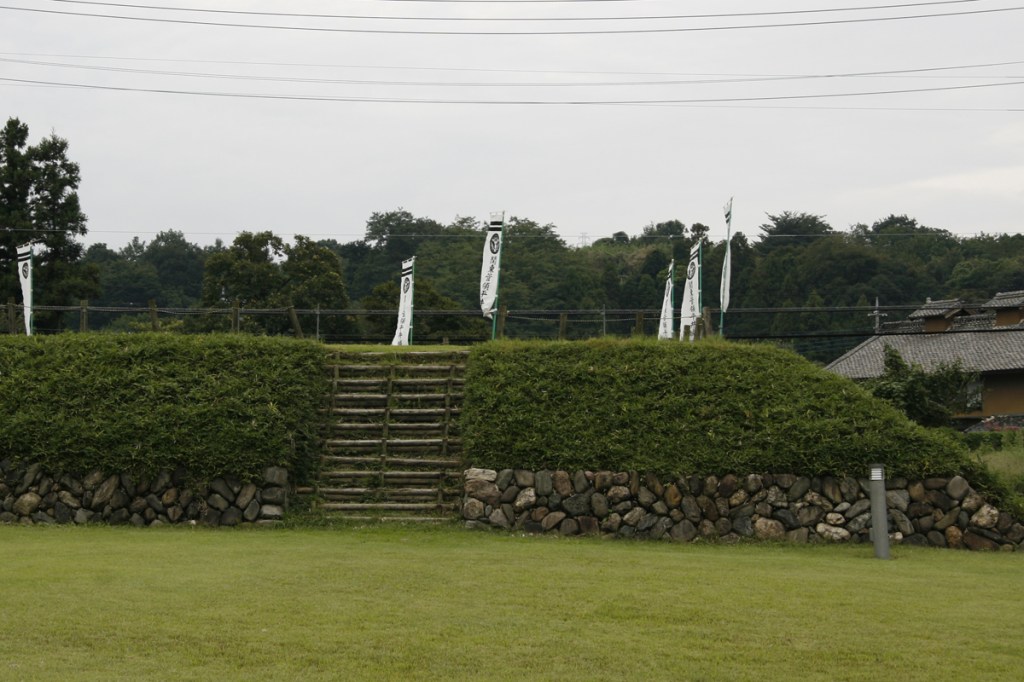
    The remains of Hirai Castle.

    The war against the Uesugi would continue, however. In 1550, an attack on Hirai Castle was repulsed, only for a second attempt the next year to succeed, driving Uesugi Norimasa further north, where he sought refuge with Nagao Kagetora (better known to history as Uesugi Kenshin). In the east, too, the Hojo would advance, marching into Hitachi and Shimotsuke Province, and continuing the war against the Satomi of Kazusa Province to their southeast, conquering Kanaya Castle in 1555 and establishing Hojo control over almost the whole of the western Boso Peninsula.

    These conquests in the east were possible because of the peace established on the Hojo’s western borders. Though there was no actual fighting, the border remained very tense until the establishment of a triple alliance between the Imagawa, Takeda, and Hojo. This alliance was established over the period 1551-1554, as a series of marriages was arranged among all three parties, culminating in 1554, when Ujiyasu’s eldest daughter married Imagawa Yoshimoto’s eldest son, whilst Ujiyasu’s heir, Ujimasa, married the daughter of Takeda Shingen.

    This alliance secured the Hojo’s western border, and in 1559, Ujiyasu retired as head of the clan, handing formal power to his son Ujimasa while retaining actual control himself. That same year, he focused his full attention on pushing the last of the Uesugi clan out of Kozuke Province and established a strong presence at Numata to check any further Uesugi attempts to invade the Kanto.
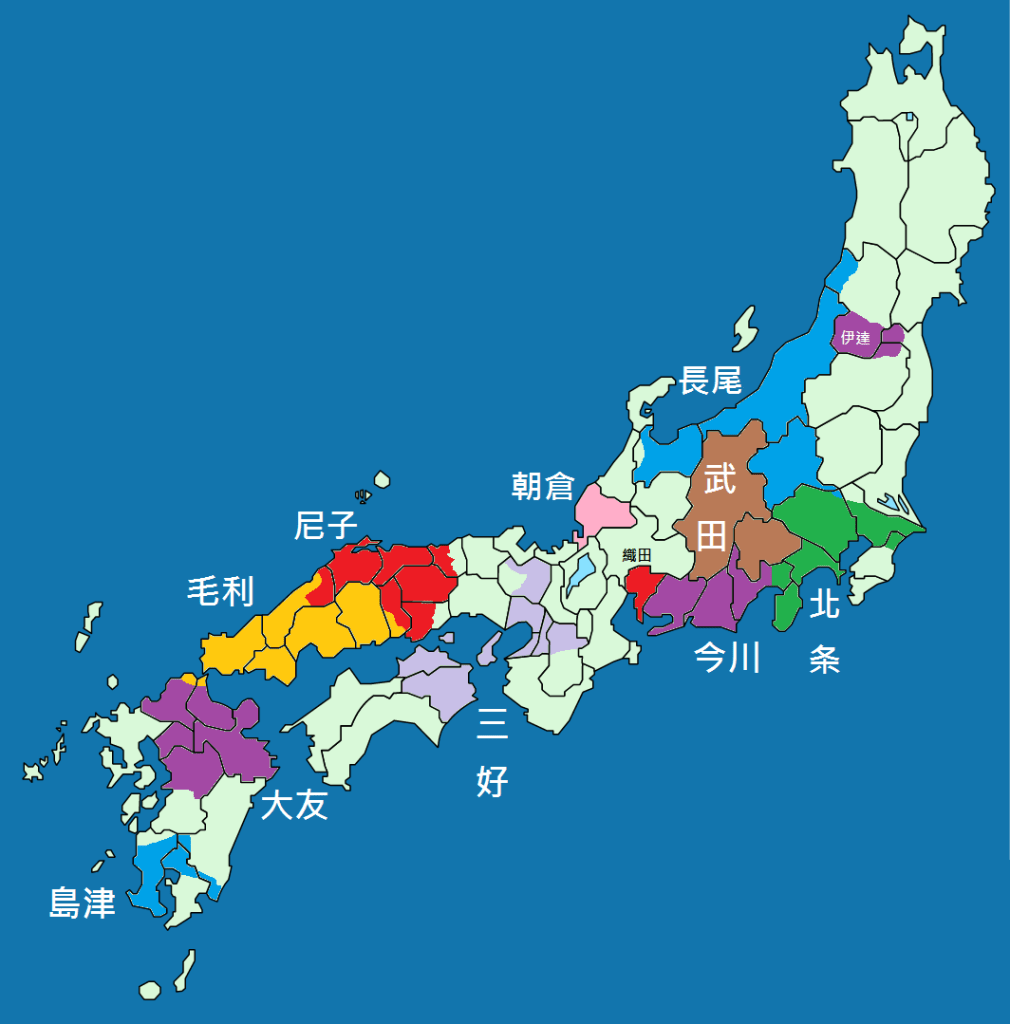
    The situation in 1560. The Hojo are in Green.
    By Alvin Lee – Own work, CC BY-SA 4.0, https://commons.wikimedia.org/w/index.php?curid=39200926

    In 1560, the Imagawa suffered a serious and surprising defeat at the hands of Oda Nobunaga at the Battle of Okehazama, leaving the clan weak and the Hojo’s western flank reliant on the goodwill of the Takeda. During the same year, another outbreak of famine ravaged Hojo territory, severely weakening their economic power and food supply.

    The timing couldn’t have been much worse, because soon, the Uesugi, now led by Kenshin, would return to the Kanto, and the Hojo would face another serious crisis.

    Sources
    https://ja.wikipedia.org/wiki/%E5%8C%97%E6%9D%A1%E6%B0%8F%E5%BA%B7
    https://en.wikipedia.org/wiki/Imagawa_Yoshimoto
    https://ja.wikipedia.org/wiki/%E5%9B%BD%E5%BA%9C%E5%8F%B0%E5%90%88%E6%88%A6
    https://ja.wikipedia.org/wiki/%E5%B7%9D%E8%B6%8A%E5%9F%8E
    https://ja.wikipedia.org/wiki/%E6%B2%B3%E8%B6%8A%E5%9F%8E%E3%81%AE%E6%88%A6%E3%81%84
    https://ja.wikipedia.org/wiki/%E4%B8%8A%E6%9D%89%E6%9C%9D%E5%AE%9A_(%E6%89%87%E8%B0%B7%E4%B8%8A%E6%9D%89%E5%AE%B6)
    https://ja.wikipedia.org/wiki/%E5%BE%8C%E5%8C%97%E6%9D%A1%E6%B0%8F
    https://ja.wikipedia.org/wiki/%E5%AF%8C%E5%A3%AB%E5%B7%9D
    https://ja.wikipedia.org/wiki/%E5%8F%A4%E6%B2%B3%E5%B8%82
    https://ja.wikipedia.org/wiki/%E5%B9%B3%E4%BA%95%E5%9F%8E
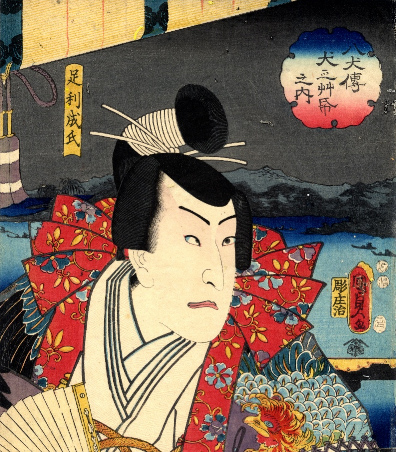
  • The Kyotoku Rebellion

    The Kyotoku Rebellion

    Historians disagree on when the Sengoku Jidai actually began, with the Onin War being a common origin point. The other possibility is our subject today, the Kyotoku Rebellion.

    You may remember that the Kanto, the area in and around modern Tokyo, was not directly ruled from Kyoto. Instead, a member of the Ashikaga Family (from a different branch to the Shogun’s line) served as the Kamakura Kubo, a governor who effectively ruled independently from Kamakura, the capital of the previous Shogunate.

    The kubo didn’t rule alone, however, he was nominally supported by the Kanto Kanrei, the Shogun’s direct deputy in the region, a position that was supposedly subject to direct appointment by the Shogun, but had in reality become a hereditary title of the Uesugi Clan.

    Both positions were supposed to be loyal to the Shogun in Kyoto, but within a few years, that had become a legal fiction. The Kubo was formed in 1349, and for a while, records show them deferring to the central government in most things, especially the all-important appointments of provincial governors (shugo).

    We’ve covered the details of the individual flashpoints in earlier posts, but to recap very briefly, in 1416, 1438, and 1440, there was a series of escalating conflicts that pitted the kubo against the Shogun. After 1440, the Shogun, at this point Ashikaga Yoshinori, sought to take control of the Kanto directly, and the Uesugi were happy to oblige. The position of kubo was abolished, and the Uesugi ruled with an iron fist, certain of the Shogun’s support.

    Ashikaga Yoshinori, who supported the Uesugi in the Kanto.

    This support largely relied on the Shogun being alive, however, and when Yoshinori was assassinated in 1441, the situation in the Kanto grew tense very quickly. In response, the Shogunate government acquiesced to a petition from several Kanto lords, requesting a new kubo.

    This was granted, and Ashikaga Shigeuji was appointed in 1449. This, however, did not please the Uesugi, especially after Shigeuji began to distance himself from working with them, favouring the clans that had supported his father, Mochiuji.

    In April 1450, things came to a head when supporters of the Uesugi attacked the kubo at his residence in Kamakura. Caught by surprise, the kubo was forced to flee to nearby Enoshima, where he regrouped and defeated the Uesugi forces when they pursued him.

    Although the head of the Uesugi (and kanrei), Noritada, had not been directly involved in the attack, he took responsibility and was confined to house arrest. It was at this point that a new problem arose. As I mentioned, prior to 1440, the kubo had operated largely independently of the Shogun, but after the position was restored, the central government intend to keep Kamakura on a much shorter leash.

    Part of this leash shortening involved the insistence that any formal request to the Shogun required the signature of both the kubo and the kanrei. The problem now was that Noritada was under house arrest, and in an uncooperative mood, effectively leaving Shigeuji with no way to (legally) govern.

    Shigeuji was eventually forced to release Noritada, but the conflict between the two would only get worse. On the one hand, Noritada was head of the powerful Uesugi Clan, and kanrei, appointed by the Shogun, and his goal was to preserve the power and dignity of his family and their position in the Kanto.

    Shigeuji, on the other hand, appears to have had more personal reasons. Although there’s no doubt his position as kubo required a certain ruthlessness, sources from the time suggest that Shigeuji blamed the Uesugi for the death of his father, and he was consumed by a desire for revenge.

    A 19th century depiction of Shigeuji.

    So it came to pass, in December 1455, Shigeuji issued orders summoning Noritada to his residence. There’s a fair amount of speculation as to why Noritada would agree to go, given that it appeared to be an obvious trap, but go he did, and shortly after he arrived, he was cut down by men loyal to Shigeuji.

    This assassination was accompanied by similar acts across the Kanto, as Shigeuji’s supporters moved to cut the head off the proverbial snake. The Uesugi Clan was vast, however, like most major clans, it had branches all over the country, and Noritada’s brother and heir had actually been in Kyoto when he was assassinated, meaning that his succession as kanrei, at least on paper, went off with minimal interference.

    The other branches of the Uesugi Clan were enraged by Noritada’s death, and it wasn’t long before the new kanrei was able to gather an army and establish himself at Hirai Castle in Kozuke Province (modern Gunma Prefecture). When they marched against Kamakura, however, they were defeated at the Battle of Bubaigawara in modern-day Fuchu.

    The Uesugi were forced to retreat and ended up under siege at Oguri Castle, in modern-day Ibaraki Prefecture, and a long way from Kamakura. This proved to be a problem for Shigeuji, for although he was able to take Oguri Castle, forces sent by the Shogunate (who were none too pleased about Shigeuji’s actions) took Kamakura from behind (stop laughing), cutting the Kamakura Kubo off from Kamakura. From then on, Shigeuji would base himself at Koga Castle and became known as the Koga Kubo. We’ll just keep calling him kubo, though.

    The modern day remains of Koga Castle.

    The war between the Kanto’s two most powerful figures naturally led to utter chaos. Although both the kanrei and kubo could command the loyalty of thousands of warriors, the reality was that, with central power non-existent, rival clans took to settling their own affairs, usually at swordpoint.

    With neither side able to establish control, the Shogun dispatched his brother, Ashikaga Masatomo, to the Kanto in December 1457, officially to be the new Kamakura Kubo. This didn’t work as planned, however, Masatomo only had the power his brother would allow him, and the Kanto lords knew it.

    It got so bad that Masatomo couldn’t even take up residence in Kamakura and ended up at Horikoshi, in modern-day Shizuoka Prefecture. This situation led to him being called the Horikoshi Kubo, another would-be master of the Kanto who wasn’t even strong enough to demand his original title.

    Things got even worse when the Shogun attempted to launch a punitive expedition against Shigeuji. Even before the forces were properly gathered, the leader of the army, a member of the Shiba Clan, was expelled from his post after dispatching troops from the expedition to his own province (far to the north of the Kanto) to deal with private battles there.

    With the debacle of the expeditionary force, any hope for a decisive end to the war was lost, and the two sides got bogged down in back-and-forth skirmishes, sieges, and other militaristic shenanigans, with the (very loose) border being the Tone River, in the central Kanto.

    A later depiction of a canal entering the Tone River

    This would go on for ages, one side would gain the advantage, only to lose it again later and then suffer counter-attacks that would be themselves defeated. In 1466, the kanrei was killed in battle, and Shigeuji’s forces were briefly in the ascendance, but the Uesugi would recover, and in 1468, they would launch several successful counterattacks, and later, in 1471, they would even capture Shigeuji’s base at Koga.

    You might think that Shigeuji would be on the ropes, but no, he struck back, recaptured Koga, and the war dragged on, and on, and on. Just as the Onin War destroyed central authority in and around Kyoto, the Kyotoku War, which had now raged for 16 years, did the same in the Kanto.

    Then, in 1478, after 21 years of war, the Uesugi, suffering a major internal rebellion, were compelled to seek peace with Shigeuji, and the kubo, facing problems of his own, agreed. This ended the main phase of the war between the major powers, but did not bring peace to the Kanto, as both the Uesugi and Shigeuji turned to dealing with internal matters, putting down rebellions and forcing obedience from their erstwhile vassals, which is rarely a peaceful process.

    A final peace would be agreed in 1483 (yes, five years after the initial proposals), and Shigeuji was allowed to continue as kubo; however, he was forced to hand over Izu Province to Masatomo, who continued as Horikoshi Kubo.

    I’m sure, if you think about it for a moment, having two kubo in the Kanto region was never going to last, and it didn’t. Shigeuji had the authority and military power, but Masatomo had the legitimacy of Shogunate support; it was not a recipe for stable and secure government.

    While the fighting had been going on in the Kanto, the Onin War had started and ended (1467-77), and Shogunate authority was effectively at an end. This meant that actual support for Masatomo was minimal, and historians suggest that the only reason Shigeuji and the Uesugi agreed to peace was due to exhaustion after nearly 30 years of war.

    Despite the agreement, peace would not last in the Kanto. By the end of the 15th century, as with the region around Kyoto, the Kanto had fractured into rival territories controlled by numerous warlords. The Uesugi were initially in the strongest position, but by the time Shigeuji died in 1496, that was changing, and new powers were rising in the Kanto, but that’s a story for another time.

    Sources
    https://ja.wikipedia.org/wiki/%E4%BA%AB%E5%BE%B3%E3%81%AE%E4%B9%B1
    https://ja.wikipedia.org/wiki/%E6%B0%B8%E4%BA%AB%E3%81%AE%E4%B9%B1
    https://ja.wikipedia.org/wiki/%E4%B8%8A%E6%9D%89%E7%A6%85%E7%A7%80%E3%81%AE%E4%B9%B1
    https://ja.wikipedia.org/wiki/%E8%A6%B3%E5%BF%9C%E3%81%AE%E6%93%BE%E4%B9%B1
    https://ja.wikipedia.org/wiki/%E9%8E%8C%E5%80%89%E5%BA%9C
    https://ja.wikipedia.org/wiki/%E8%B6%B3%E5%88%A9%E5%9F%BA%E6%B0%8F
    https://ja.wikipedia.org/wiki/%E4%B8%8A%E6%9D%89%E6%86%B2%E5%BF%A0
    https://ja.wikipedia.org/wiki/%E5%B9%B3%E4%BA%95%E5%9F%8E
    https://ja.wikipedia.org/wiki/%E4%B8%8A%E6%9D%89%E6%88%BF%E9%A1%95
    https://ja.wikipedia.org/wiki/%E5%88%86%E5%80%8D%E6%B2%B3%E5%8E%9F%E3%81%AE%E6%88%A6%E3%81%84_(%E5%AE%A4%E7%94%BA%E6%99%82%E4%BB%A3)
    https://ja.wikipedia.org/wiki/%E5%B0%8F%E6%A0%97%E5%9F%8E
    https://ja.wikipedia.org/wiki/%E5%8F%A4%E6%B2%B3%E5%9F%8E