Tag: Kyushu History

  • The Shimazu, Part 1

    The Shimazu, Part 1

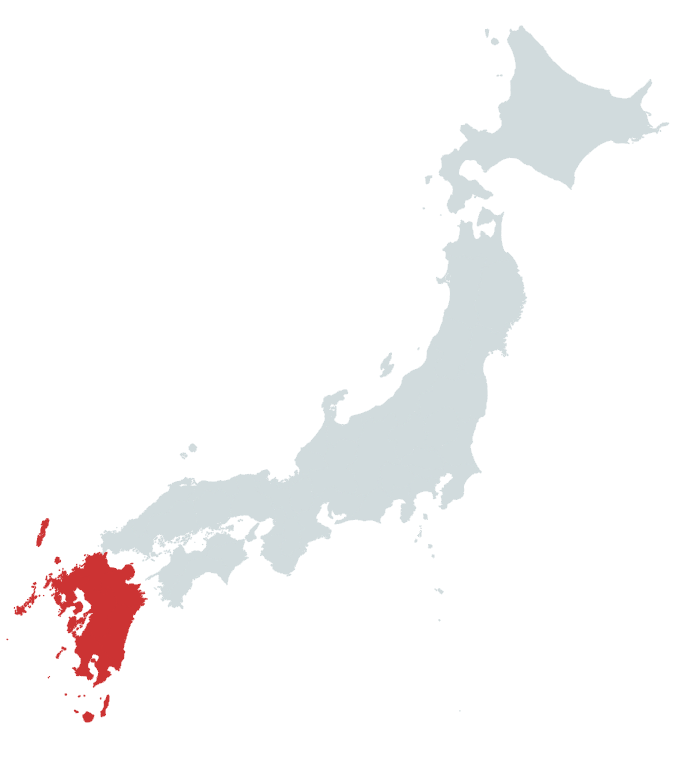
    Last time we looked at Shikoku, the so-called ‘four provinces’, well, how about an island of nine provinces? That’s right, Kyushu, the third largest of Japan’s main islands, is so called because in the pre-modern period it was home to nine whole provinces, which means, as names go, it’s not terribly creative, but what can you do?

    Kyushu.
    By TUBS – This vector image includes elements that have been taken or adapted from this file:, CC BY-SA 3.0, https://commons.wikimedia.org/w/index.php?curid=16385933

    In ancient times, Kyushu had been the centre of cultural, economic, and social development in Japan, as its close proximity to Korea, and by extension China, made it the logical landing site for innovations as widespread as rice farming and written language. The island would also be the focus of two ultimately unsuccessful Mongol invasions in the 13th Century, and the Shogunate administration there would continue to be important until the decline of central authority in the 15th Century left Kyushu, much like the rest of the realm, effectively independent.

    Into this power vacuum stepped several powerful clans, with the most prominent arguably being the Ouchi, Otomo, and Shimazu. Though the Ouchi and Otomo would play important roles of their own in the story of the Sengoku Period, it is the Shimazu that we will be focusing on.

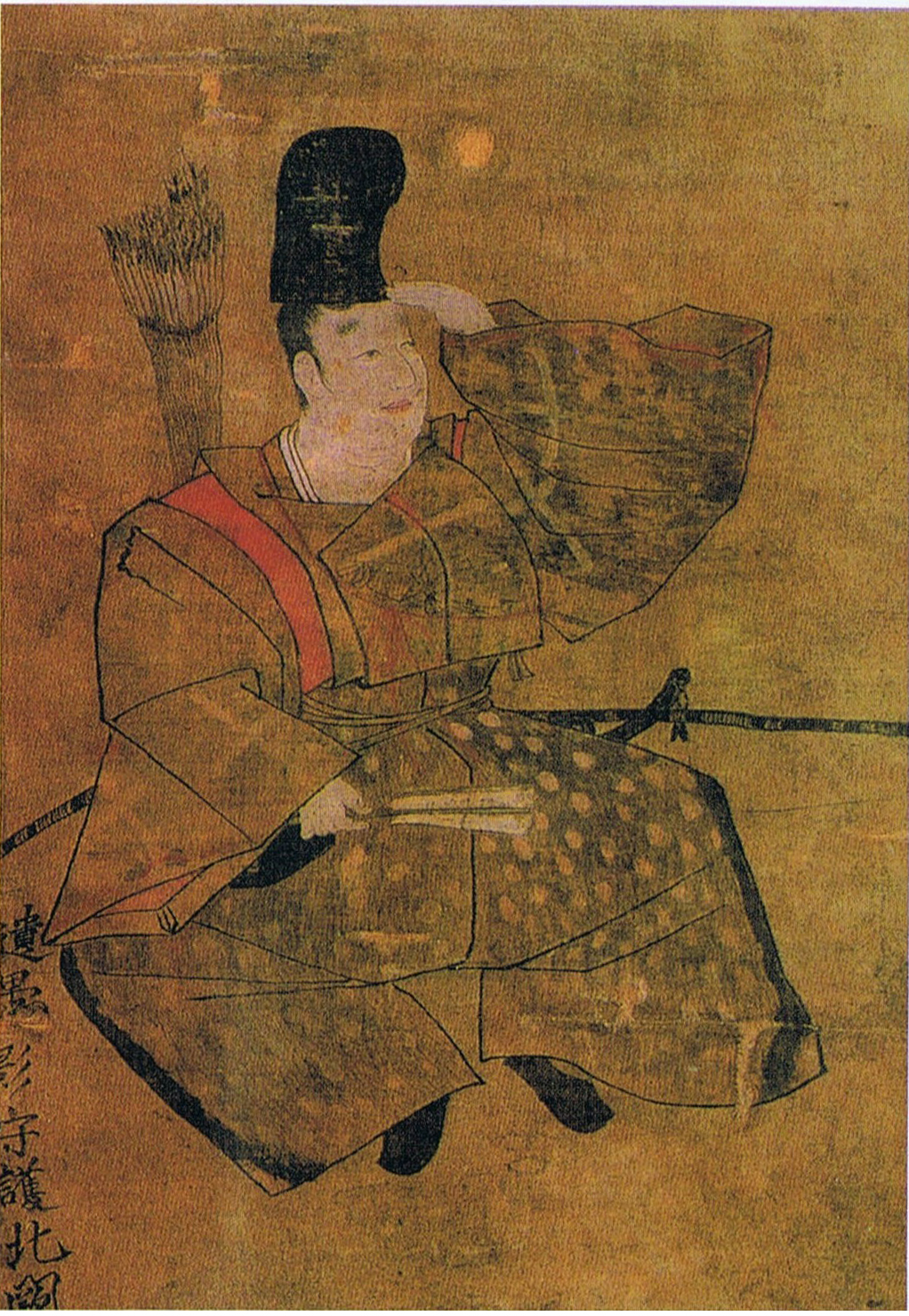
    The exact origins of the Shimazu name aren’t entirely clear, but the first figure to take the name was Tadahisa, who was made lord of the Shimazu Manor in southern Kyushu in 1185. Tadahisa himself is something of a mysterious figure, with various conflicting reports of his origins, parentage, and even his name, but what is clear is that the Shimazu were well established in southern Kyushu by the 13th century, and would use it as their base going forward.
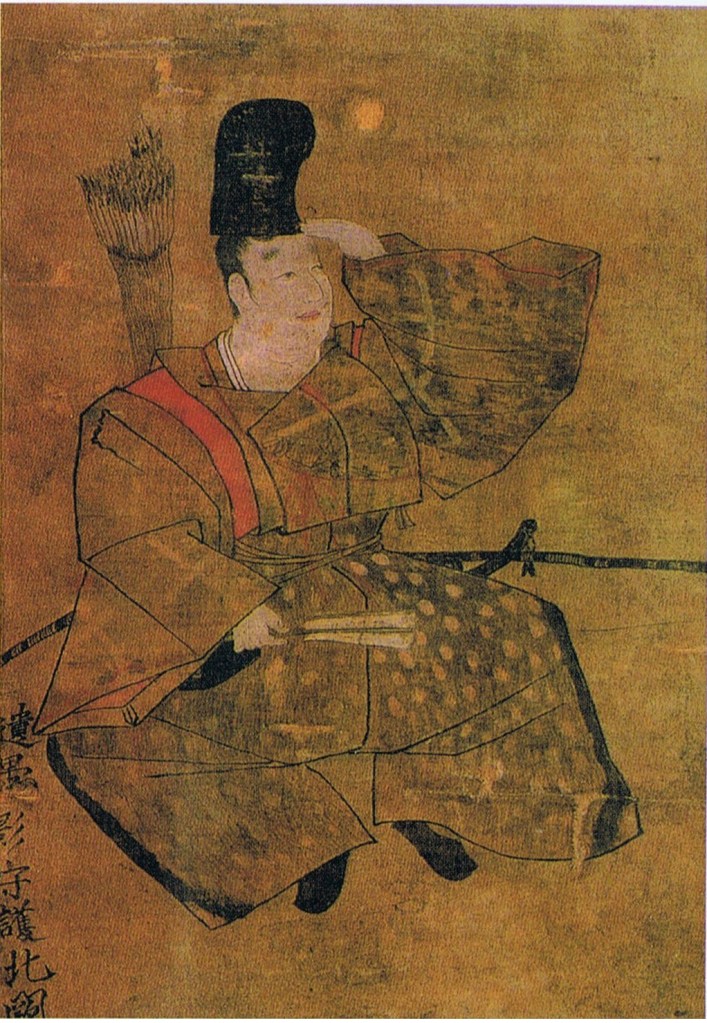
    Shimazu Tadahisa, the first “Lord” Shimazu.

    Tadahisa’s son, Tadatoki, seems to have been an accomplished military leader, as he was appointed the shugo (military governor) of Satsuma, Osumi, and Hyuga Provinces, all of southern Kyushu in effect. He was also granted numerous prestigious lands and titles around the realm, but it was his Kyushu holdings that would be the most important for his descendants.

    The Shimazu’s fortunes would ebb and flow over time, but the distance of their lands from the centre of power in Kyoto meant that they were often able to weather the storms of early Medieval Japan. They were not immune from the ever-present problem of internal conflict, however, and by the time of the Onin War in 1467, the Shimazu were weak, divided, and vulnerable.

    It would be Shimazu Tadayoshi (1492-1568) who would begin to turn the fortunes of the clan around. Originally from the Isaku Clan (a branch of the Shimazu), Tadayoshi had a difficult start to life. His father, Yoshihisa, was apparently murdered by a stable hand when Tadayoshi was just two, and his grandfather was killed in battle in 1500. Following this, Tadayoshi’s mother, Lady Baiso, agreed to marry the lord of another branch of the Shimazu, on the condition that Tadayoshi be adopted as heir to both branches. The lord in question was apparently so keen on Lady Baiso that he agreed.

    Shimazu Tadayoshi.

    Tadayoshi proved to be an enlightened and capable ruler, taking inspiration from Zen teachings and humanitarian principles. He was a popular leader, as he genuinely cared for the needs of his retainers and the welfare of his territory, but his son, Takahisa, would prove to be greater still. In 1526, following the deaths in quick succession of both his sons, the head of the main branch of the Shimazu Clan, Katsuhisa, turned to Tadayoshi (renowned for his learning and upright conduct) for a solution to the succession issue.

    Tadayoshi had Takahisa adopted by the Lord of the Shimazu. In November 1526, Katsuhisa handed over control of the Shimazu Clan to Takahisa and retired to a monastery. Tadayoshi became a monk himself shortly afterwards and would go on to play a significant role in aiding his son in reestablishing Shimazu power in southern Kyushu.
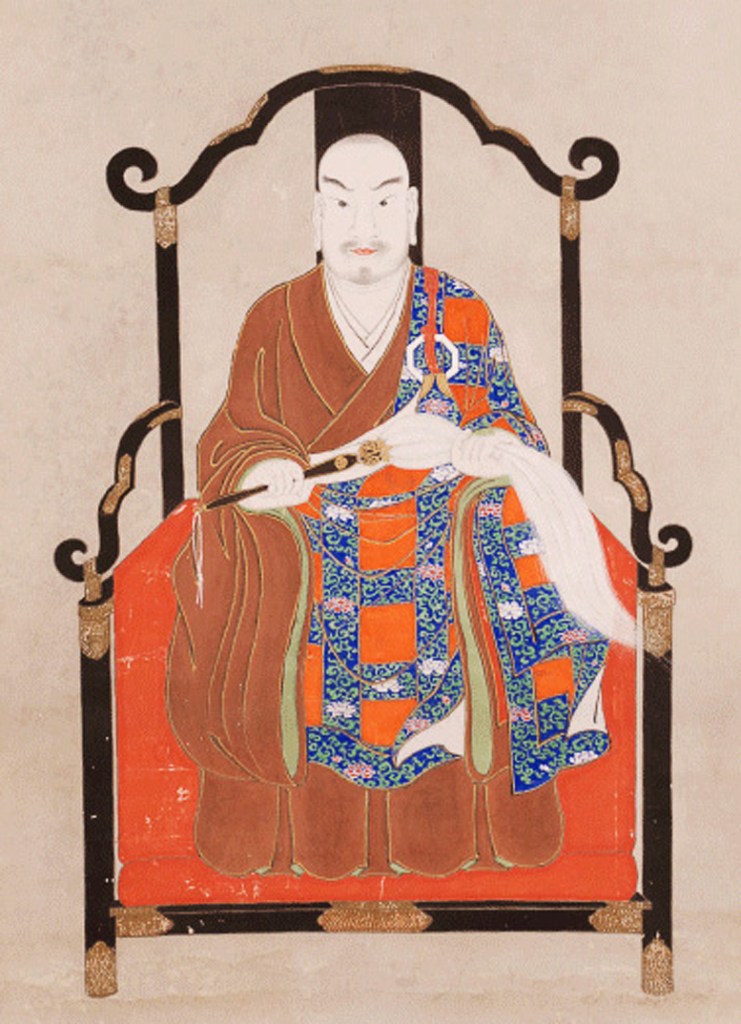
    Shimazu Takahisa.

    Things are never quite that simple, however, and Takahisa’s accession to the leadership of the Shimazu was opposed by several powerful retainers, some of whom also claimed the right to lead. Katsuhisa himself also seems to have expressed some regret about handing over power, and in June 1527, an army was raised which drove Takahisa out, and had Katsuhisa returned as the shugo.

    The fighting would go back and forth for a while after this, despite unsuccessful efforts to arrange a reconciliation in 1529. Katsuhisa proved to be an unpopular lord, however, apparently being more focused on ‘vulgar entertainment’ than the business of ruling. Though this did not automatically translate into support for Takahisa, the division amongst his enemies handed him the initiative.

    Starting in 1533, Takahisa would lead a series of counter-attacks which eventually saw him establish control over most of Satsuma Province, and in 1539, the decisive Battle of Murasakihara saw Takahisa drive out his primary rivals, though it wouldn’t be until 1552 that he was finally recognised as the shugo of Satsuma Province by the Shogunate, 26 years after he had first assumed the mantle.
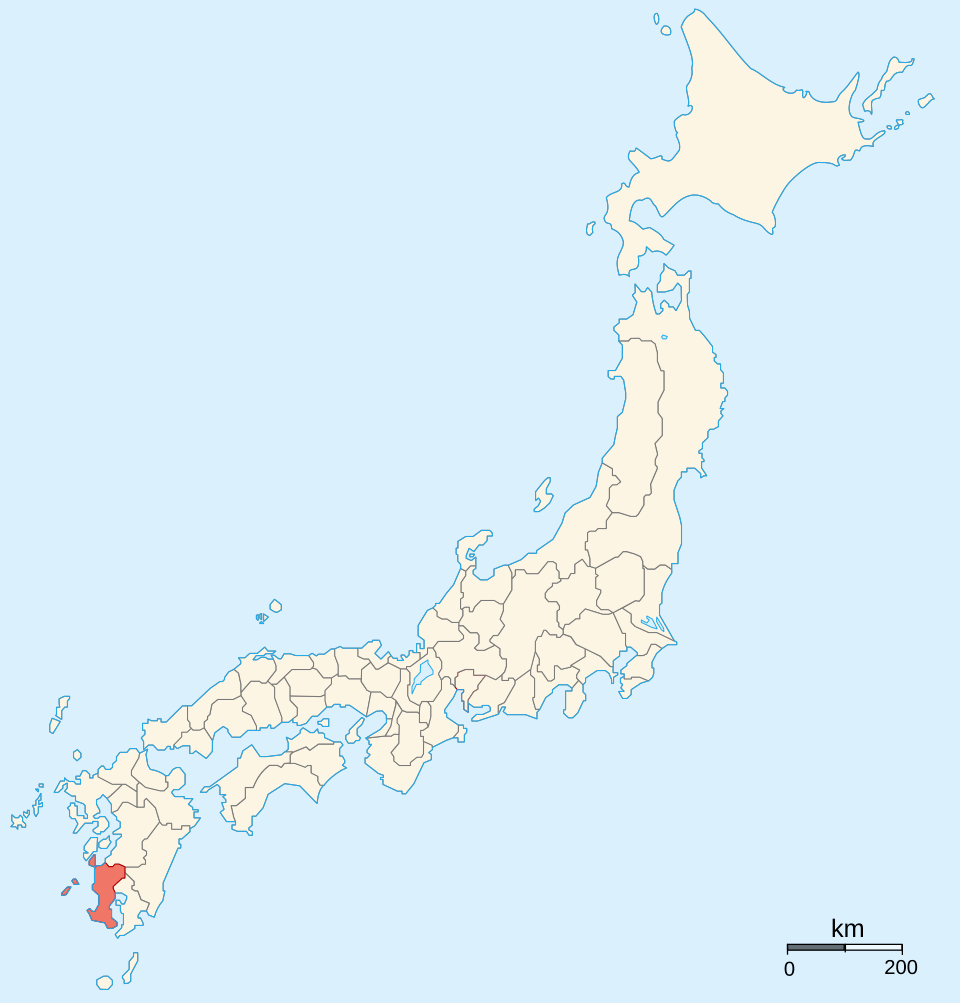
    Satsuma Province, home of the Shimazu Clan.
    By Ash_Crow – Own work, based on Image:Provinces of Japan.svg, CC BY 2.5, https://commons.wikimedia.org/w/index.php?curid=1691755

    Takahisa had long hoped to reestablish Shimazu control of the three provinces held by his ancestors, and he would lead campaigns into neighbouring Osumi province from 1554 to 1556, which would allow him to establish a foothold in the province from which further expansion could be launched.

    Though Takahisa would prove to be a successful warrior, he was also known for his outward-looking attitude towards foreigners. The Shimazu had long had trade with Ming China, largely through intermediaries in the Ryukyu Islands (modern Okinawa), and after Portuguese merchants arrived in Japan, Takahisa was one of the first lords to welcome them to his domains, and perhaps one of the first to employ firearms in battle.

    He would also go some way to establishing Christianity in Japan, as he welcomed Francis Xavier into his territory in 1549, though this would ultimately prove a short-lived association, due to backlash from conservative elements amongst the Buddhist and Shinto priesthoods.

    A later depiction of a Portuguese trading ship in Japanese waters.

    Takahisa would eventually retire to a monastery in 1556, handing control of the Shimazu over to his son, Yoshihisa, who also inherited his father’s ambitions to regain control of the three provinces of Satsuma, Osumi, and Hyuga. Yoshihisa had actually joined his father’s campaign in Osumi, making his ‘debut’ in 1554, and after inheriting the leadership from his father, he would continue the campaigns to fully pacify Satsuma and expand Shimazu holdings into the neighbouring provinces.

    Satsuma would come under his complete control in 1570. In 1572, a rival clan from Hyuga Province would invade Shimazu territory, only to be defeated in short order at the Battle of Kizakihara, with the Shimazu forces being led by Yoshihisa’s highly capable younger brother, Yoshihiro. It is said that the Shimazu, despite being outnumbered 10 to 1, launched an aggressive attack against the enemy, which saw several key leaders killed and over 500 enemy deaths (counted in heads taken after the battle).
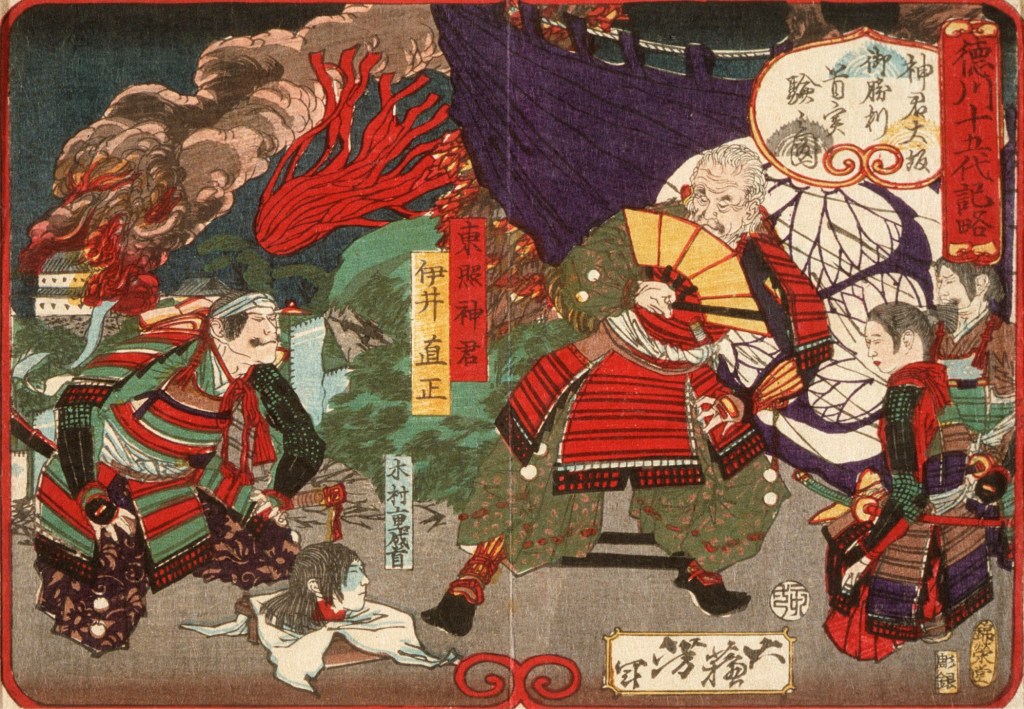
    A later depiction of a head viewing (kubi-jikken), a common practice among Samurai, in which the heads of defeated enemies would be presented to lords, or otherwise publicly displayed.

    This victory allowed Yoshihisa to focus on Osumi Province, which he was able to fully conquer by the end of 1573. Then in 1576, he captured the strategically important Takahara Castle, held by the powerful Ito Clan of Hyuga. The fall of Takahara led to a domino effect in which the remaining 48 castles of the Ito Clan were either conquered or defected to the Shimazu. Not long after, the head of the Ito Clan, Yoshisuke, fled Hyuga, and the long-dreamt-of reunification of the three provinces was achieved.

    Almost as soon as the dust had settled, however, the powerful Otomo Clan, who controlled several provinces in North-Eastern Kyushu, invaded, nominally in support of the exiled Yoshisuke, but more likely in an opportunistic attempt to expand their own territory. A huge army of some 43,000 men crossed into Hyuga Province in October 1578 and laid siege to Takashiro Castle. The Shimazu under Yoshihisa could muster only 20,000 men in response, but they took advantage of poor coordination amongst the Otomo, dealing with the invaders piecemeal.

    The campaign culminated in the Battle of Mimikawa (which was actually fought nearly 20 miles from the eponymous river), in which Yoshihisa employed a series of feigned retreats, breaking the Otomo Army (which still enjoyed a numerical advantage) down, and eventually winning a victory that was so comprehensive the Otomo effectively ceased to be serious rivals.

    The war wouldn’t end at Mimikawa, however, and in 1580, Oda Nobunaga began negotiations between the Otomo and Shimazu, hoping to bring an end to the war, since he wanted the Otomo to join his upcoming campaign against the Mori. The negotiations were apparently successful, as Yoshihisa even went so far as to recognise Nobunaga as his ‘lord’, and planned to join the attack on the Mori as well.
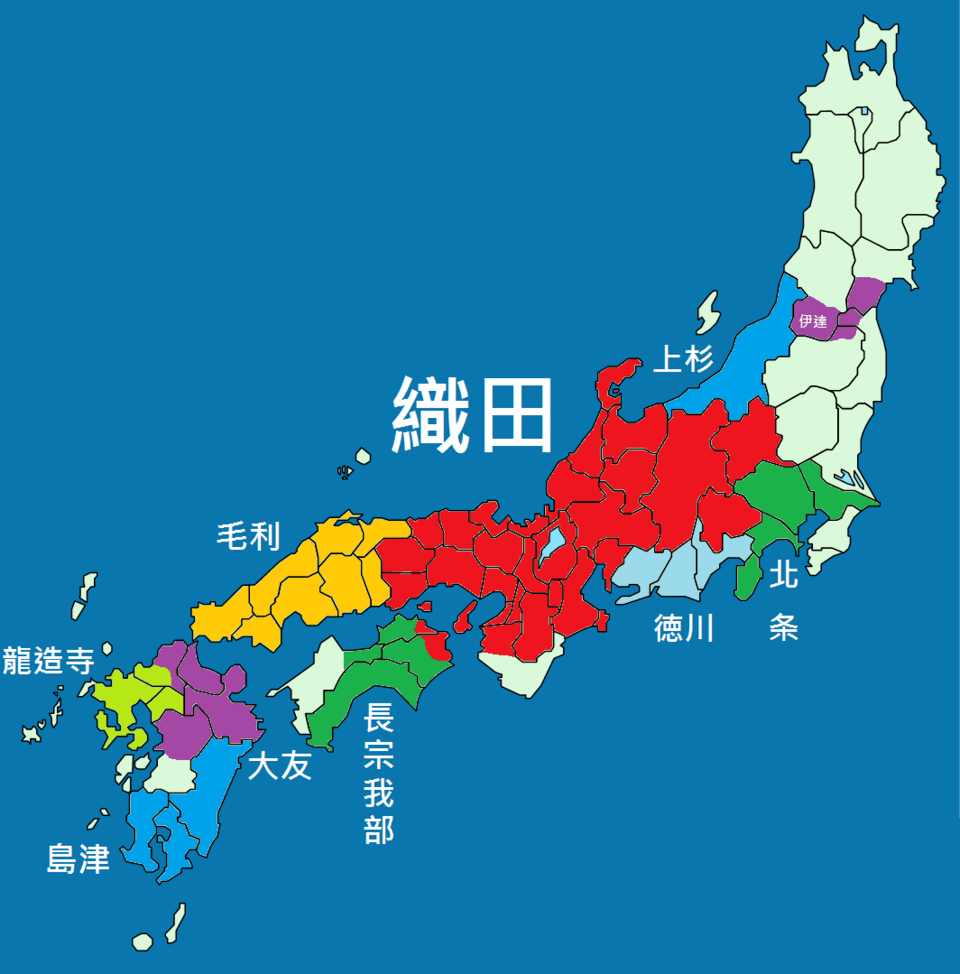
    The situation on the eve of Nobunaga’s death in 1582. The Shimazu lands are blue, in southern Kyushu.
    By Alvin Lee – Own work, CC BY-SA 4.0, https://commons.wikimedia.org/w/index.php?curid=39198356

    As we already know, Nobunaga’s death at the Honnoji incident in June 1582 put an end to those plans, but the weakened state of the Otomo and the fact that the peace deal no longer applied meant that the Shimazu were able to defeat or force the defection of several former Otomo retainers, increasing their own power and control over southern Kyushu.

    The campaign to unify the entire island would go on, but we’ll look at that next time.

    Sources
    https://ja.wikipedia.org/wiki/%E5%B3%B6%E6%B4%A5%E7%BE%A9%E4%B9%85
    https://ja.wikipedia.org/wiki/%E8%80%B3%E5%B7%9D%E3%81%AE%E6%88%A6%E3%81%84
    https://ja.wikipedia.org/wiki/%E5%A4%A7%E5%8F%8B%E6%B0%8F
    https://ja.wikipedia.org/wiki/%E5%B3%B6%E6%B4%A5%E7%BE%A9%E5%BC%98
    https://ja.wikipedia.org/wiki/%E5%B3%B6%E6%B4%A5%E8%B2%B4%E4%B9%85
    https://ja.wikipedia.org/wiki/%E5%B3%B6%E6%B4%A5%E5%BF%A0%E8%89%AF
    https://ja.wikipedia.org/wiki/%E6%A2%85%E7%AA%93%E5%A4%AB%E4%BA%BA
    https://ja.wikipedia.org/wiki/%E8%96%A9%E6%91%A9%E5%9B%BD
    https://en.wikipedia.org/wiki/Shimazu_Takahisa
    https://ja.wikipedia.org/wiki/%E5%B3%B6%E6%B4%A5%E5%BF%A0%E4%B9%85
    https://ja.wikipedia.org/wiki/%E5%B3%B6%E6%B4%A5%E6%B0%8F
    https://en.wikipedia.org/wiki/List_of_daimy%C5%8Ds_from_the_Sengoku_period

  • The Power in the Provinces – Honourable Mentions

    The Power in the Provinces – Honourable Mentions

    I have a confession, this ended up being quite the rabbit hole. When researching the early stages of the Sengoku Jidai, it’s almost impossible to narrow down who the “major” clans were, without also having read up on the clans who would go on to play the biggest role in the century to come.

    I originally thought this’d be a one or two post sideshow, but it quickly became apparent that the sheer volume of information and my inability to focus meant that it risked spiralling out of control.

    With that in mind, and with a desire to actually get back on track with the history, the last six clans are not going to get quite the same level of detail, but I can assure you, we will definitely be revisiting clan deep dives in the future.

    Kyushu

    Kyushu, the southernmost of Japan’s big four islands, and often a law unto itself.

    The Shimazu

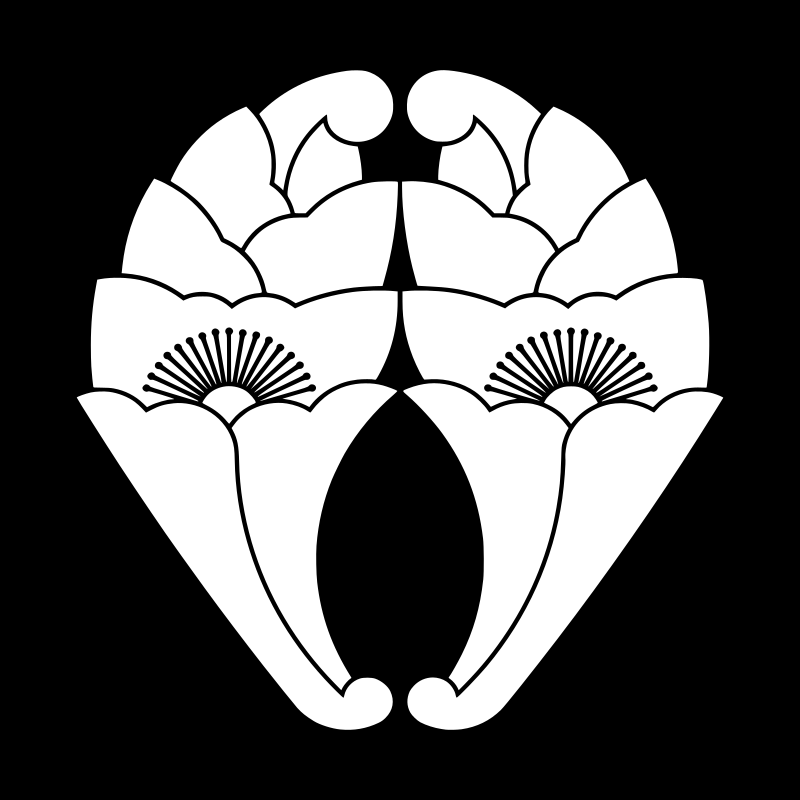
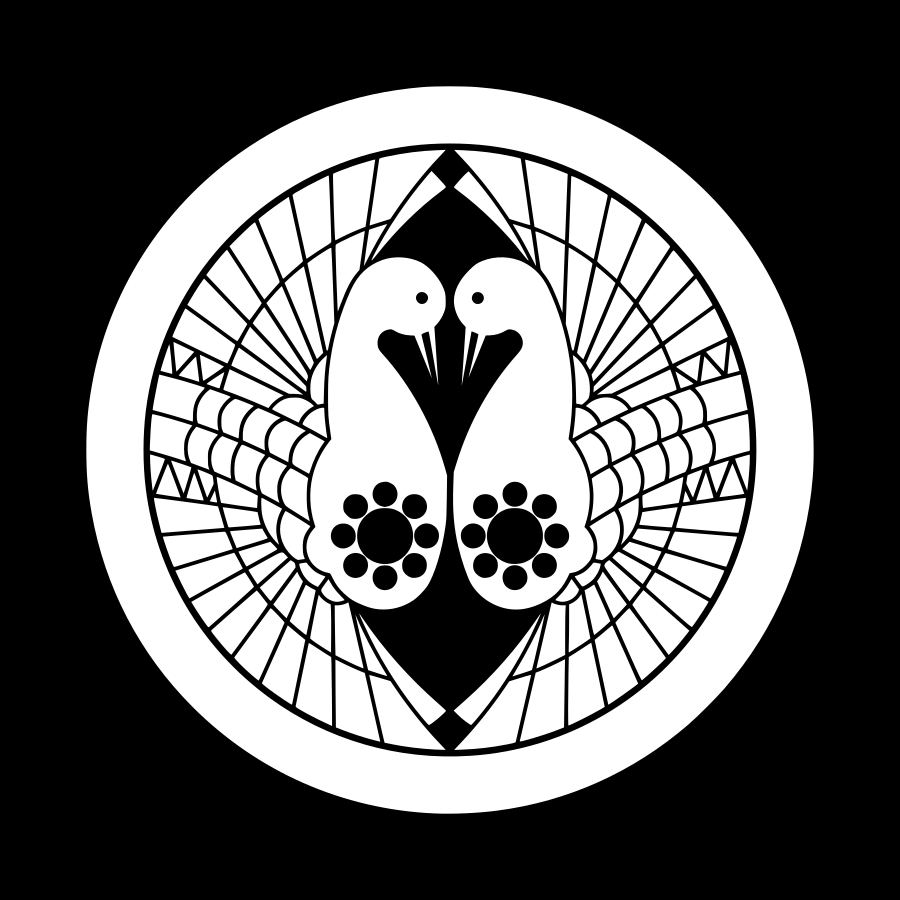
    The mon of the Shimazu Clan

    The Shimazu would prove to be one of the most enduring and influential clans in Japanese history. Originating in Satsuma Province in modern Kagoshima Prefecture, they would eventually rise to become masters of the whole of Kyushu, before running into the rise of Toyotomi Hideyoshi.

    The Shimazu would also find themselves on the wrong side during the closing stages of the Sengoku Jidai, but their position in Satsuma was so far removed from the capital at Edo (modern Tokyo) that the new government had little influence.

    Satsuma Domain would be one of the few that were allowed to continue international trade (through their dominance of Okinawa), and this relatively outward-looking approach meant that they would first fight, and then ally with the British during the mid-19th Century.

    A 19th Century photograph of Samurai of the Satsuma Domain

    Interesting side note: The Shimazu Clan’s mon, which appears to show a cross, led some scholars to speculate that they were a clan with Christian origins, and one wild theory suggesting that the Shimazu’s real origins lay with one of the Lost Tribes of Israel (this is the Japanese-Jewish origin theory, and it’s pretty racist, in a clumsy, Victorian kind of way.)

    The Otomo

    The mon of the Otomo Clan.
    By Mukai – Own work, CC BY-SA 3.0, https://commons.wikimedia.org/w/index.php?curid=6752905

    The Otomo Clan ruled lands in North-Eastern Kyushu (modern Oita and Fukuoka Prefectures) and would become one of the major beneficiaries of Portuguese Trade in Japan during the 16th Century, with many of the clan’s more powerful members even converting to Christianity, some say our of genuine faith, whilst others suggest it was more to do with keeping the Catholic Portuguese on side.

    These lucrative trade links didn’t do much to protect them from their powerful neighbours. With the Shimazu to the south, and the Mori across the sea to the East, the Otomo were hemmed in by powerful rivals, and they were ultimately obliged to seek alliance with the Mori.

    This proved to be the wrong course, as the Mori would be punished for picking the wrong side at the end of the Sengoku Period, and they and their allies saw their lands reduced. The Otomo wouldn’t have to suffer for long, however, as the main line of the clan would die out in 1619.

    Otomo Yoshimune, the last head of the Otomo to rule any serious territory. He would die in internal exile after 1600.

    The Otomo name would endure, however, as a cousin was allowed to adopt the name shortly afterwards, and during the Meiji Restoration, this branch of the Otomo was raised to the peerage, and would go on to play a role in the new Meiji government.

    Northern Japan

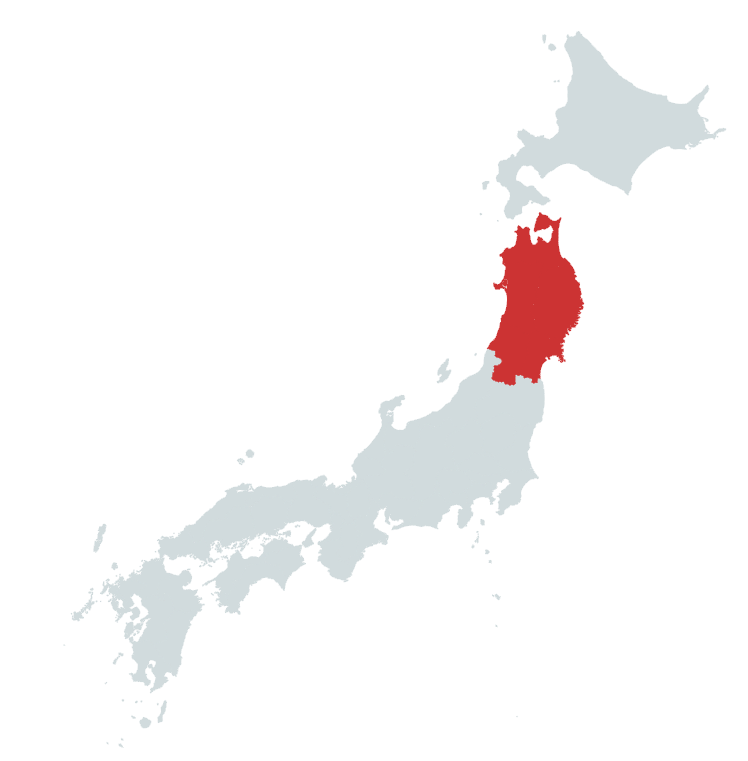
    Northern Japan during the 15th Century didn’t include Hokkaido, and was often viewed as the furthest fringes of civilisation.

    The Nanbu

    The mon of the Nanbu Clan
    By Mukai – Own work, CC BY-SA 3.0, https://commons.wikimedia.org/w/index.php?curid=8313849

    Much like the Shimazu in the south, the Nanbu would prove to be one of the most enduring Clans during this period. They would rule most of what is the modern Tohoku region for close to 700 years, and by the dawn of the Sengoku Period, they were firmly entrenched in their home region, which became one of the most famous areas for the breeding of war horses, in face, the “Nanbu” Breed was one of the best regarded breeds during that era, although they would become extinct around 1940.

    Unlike the Shimazu, however, the Nanbu would choose the winning side at the end of the Sengoku era, and would serve as one of the leading clans in the North during the following Edo Period.

    Their illustrious position would come to an end in the 1860s, however, as their loyalty to the Shogun led them to oppose the forces of the Meiji Restoration. The Imperial forces would win the Boshin War, and the Nanbu Clan suffered a sharp decrease in property.

    During the period of reconciliation after the restoration, the Nanbu would be ennobled, and the family would go on to play a significant role in the Meiji Period and beyond, remaining prominent in the Tohoku Region into the modern day.

    The Date

    The mon of the Date Clan

    The Date (pronounced Da-Tay) were the other long-lasting clan in the north. They benefited from a position that was far enough away to make attacking them a relatively unattractive prospect. The Date were not idle, however; they were the dominant clan in the region for a reason, with strength and resources comparable to many of the clans further south.

    The Date’s lands were reduced by Toyotomi Hideyoshi, but their support for Tokugawa Ieyasu meant that the clan would eventually become one of Japan’s wealthiest, controlling the Sendai Domain.

    The clan would not survive the Edo Period unscathed, however. In the 1660s, the lord of the clan was arrested in the capital for drunkenness, and his rivals within the wider Date Clan took advantage, seeking his removal. This led to nearly 10 years of conflict within the Date Clan, eventually leading to a bloody showdown in 1671, which has been the subject of considerable mythologising in Japanese popular culture ever since (they love a bloody story).

    The clan would endure, however, and although, like the Nanbu, they were much reduced due to their opposition to the Meiji Restoration, the head of the clan would join the ranks of the new Imperial aristocracy.

    Sources
    https://en.wikipedia.org/wiki/Shimazu_clan
    https://en.wikipedia.org/wiki/Japanese-Jewish_common_ancestry_theory
    https://en.wikipedia.org/wiki/Satsuma_Province
    https://ja.wikipedia.org/wiki/%E5%B3%B6%E6%B4%A5%E6%B0%8F
    https://ja.wikipedia.org/wiki/%E5%A4%A7%E5%8F%8B%E6%B0%8F
    https://en.wikipedia.org/wiki/%C5%8Ctomo_clan
    https://en.wikipedia.org/wiki/Nanbu_clan
    https://en.wikipedia.org/wiki/Date_clan
    https://en.wikipedia.org/wiki/Date_S%C5%8Dd%C5%8D


  • Yayoi: How Soggy Fields Changed Japan Forever.

    Last time, we talked about the Jomon People, Japan’s first inhabitants. Those folk existed primarily as Hunter-Gatherers, but around the year 900 BC, a new wave of culture crossed the Tsushima Strait from Korea. No, it’s not some prehistoric version of BTS (can you even imagine?), but settled villages, metalwork, and, most significantly, rice.

    Nowadays, we arguably take agriculture for granted; unless you live and work in the countryside, you may never think about it at all, but the ability to cultivate land and produce crops on it changed humanity. For the first time, our ancestors could produce more food than they needed, and if one man could produce enough food for himself and four or five others (mileage may vary), then those four or five others are no longer needed in the fields, which means they can spend their time doing other things, like art, music, war, and ruling over the farmers. (Ok, so it’s not all good.)

    Agricultural revolutions occurred pretty much everywhere at different times, but the Yayoi period is generally thought to have begun around 300 BC. Now, I have to point out that that is not an exact chronology, firstly, because these things never are, and secondly, because the exact transition between the Jomon and Yayoi periods is pretty murky in some places.

    For example, at the Itazuke Site in Fukuoka Prefecture, the earliest remains of rice paddies have been found in contexts that put them more in the Jomon period than the Yayoi, leading some scholars to suggest that the Yayoi period should actually be dated as starting as early as 800 BC, or perhaps even earlier. However, this remains controversial, and there’s never likely to be an exact timeline.

    The site at Itazuke represents possibly the earliest examples of rice farming yet found, although its exact context remains controversial.
    By Muyo – Own work, CC BY-SA 3.0, https://commons.wikimedia.org/w/index.php?curid=15136810

    While Itazuke probably represents a transitional site, it does raise some interesting questions. For example, was the appearance of irrigated rice paddies a case of technological spread, or was it brought over by waves of immigration? The answer, broadly, is a bit of both.

    The thing with ancient, pre-literate societies is that they weren’t generally big on keeping written records, and something as formal as a census was right out. Consequently, it’s pretty difficult to guess exactly how many people were living in Yayoi Japan; it’s also tricky to figure out where they came from.

    The first suggestion is that the Yayoi peoples represented a series of massive waves of migration over a 500 to 600-year period. Some estimates put the population of Japan at somewhere around 6 million by the end of the Yayoi Period in 300 AD. This represents a population increase of more than 4 million over that period, which some scholars suggest is impossible to explain as being a result of immigration alone.

    Now, this isn’t the sort of blog that’s going to go into where babies come from (there’s plenty enough of that sort of thing on the internet already), but a basic rule of thumb for any society is that food surplus = people surplus. If you have a reliable food source and aren’t running for your life from sabertooth tigers and the like, you’re more likely to have a baby, and what’s more, that baby is more likely to survive to adulthood.

    For archaeologists, the next step is trying to figure out who is having the babies. It’s the women, obviously, but the Yayoi people represent an interesting example of how populations change over time.

    Genetically speaking, you can divide the Yayoi into three broad groups: Early, Middle, and Late. So named because they came to Japan at different times (guess which is which!)

    All three groups share similar genetic traits, suggesting shared ancestry, but while human remains of early Yayoi people show a larger percentage of Jomon DNA, suggesting that immigrants and locals were pretty friendly, the later generation shows much less Jomon DNA, and much more from groups that inhabited Korea at the same time.

    Now, does that mean that the later waves of immigrants were pickier in their partners, or, does it mean that by the later Yayoi Period, anyone with large amounts of Jomon DNA had already moved away, or, to put it bluntly, been bred out of existence?

    The answer is unclear, but probably. We know that the Yayoi and Jomon populations were genetically distinct. We can also estimate that the population during the Jomon Period was around 75,000, whereas by the end of the Yayoi Period, it was 6 million. Outside of Hokkaido, then, it seems reasonable to state that Jomon people were simply swamped.

    Yayoi Culture

    Whilst the Jomon and Yayoi peoples were playing a long-term game of “Kiss, Marry, Avoid” (I know that’s not what it’s really called, but I’m trying to keep things PG), Yayoi culture and language were beginning to spread across the land. It should be pointed out, however, that the spread was not even, nor was it universal. Whilst Yayoi culture came to dominate in Kyushu, in Honshu, the adoption of rice farming and other Yayoi hallmarks was pretty inconsistent.

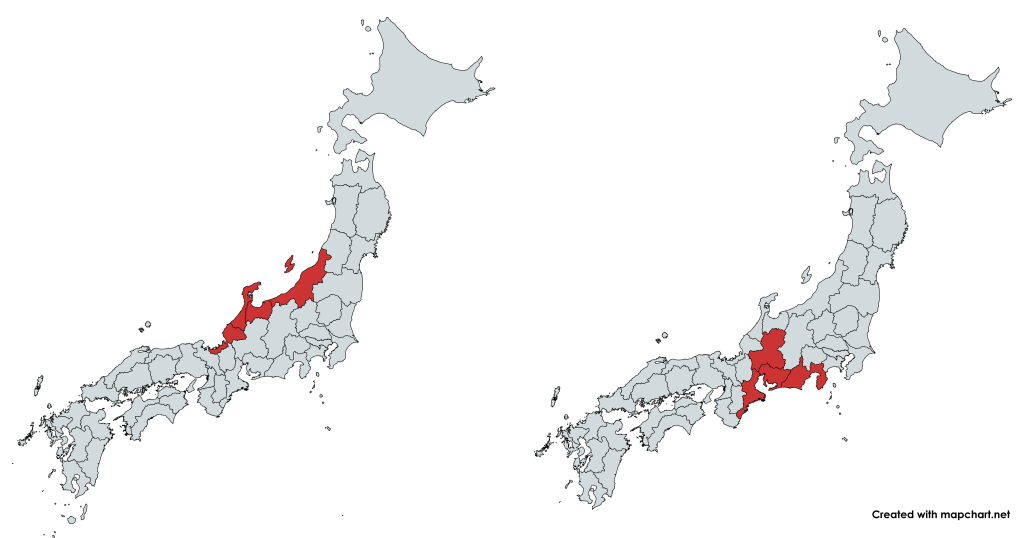
    For example, evidence of agriculture has been found in the Hokuriku region dating back to 380 to 300 BC. However, in the Tokai region, which is practically next door, the first evidence doesn’t appear until 220 BC in some areas, and as late as 50 BC in others.

    The Hokuriku Region (left) where evidence of agriculture dates back to 380 BC, and the Tokai region (left) where it didn’t appear until 330 years later.

    This inconsistent development isn’t as random as it may first appear. It is generally believed that the Yayoi peoples were a so-called “sea” people, meaning that they came across from Korea and Eastern China by boat (because how else are you going to do it?). It is then reasonable to assume that the transmission of Yayoi culture would follow coastal routes first, before spreading inland over the following decades.

    Rise of Yamatai

    One of the major problems we have with ancient civilisations (some of them, anyway) is that they didn’t write things down. Now, this is likely because they didn’t have a written language, but it’s still a pain. The Yayoi are one such example. What we know about them comes from the archaeological record, and although archaeologists are (usually) pretty good at what they do, without a clear written record, it can be challenging to figure out exactly how the Yayoi people saw themselves.

    Luckily for us, other people nearby did have writing, and they were kind enough to leave some records. The Chinese Han Dynasty kept copious amounts of records about their neighbours, and it is in these sources that we see the first mention of the Japanese islands.

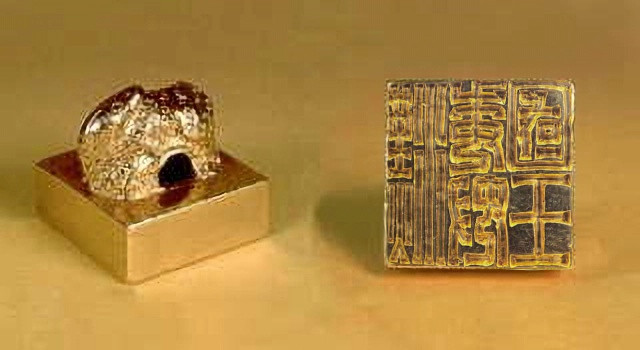
    In the Book of Later Han, in 57 AD, the Chinese Emperor Guangwu gave the Kingdom of Na a gold seal and some other fancy gifts in exchange for the King of Na recognising the Chinese as their overlords. For centuries, the seal, and indeed the Kingdom of Na, were considered to be semi-legendary, but then the seal itself was discovered by accident (by a farmer, apparently), confirming that the Chinese records were accurate and Na (Nakoku in Japanese) really existed.

    The golden seal of the Kingdom of Na. Found in a field in 1784, it confirmed the truth of the Chinese Records, and the existence of Nakoku.
    By Original uploader: User:金翅大鹏鸟 at zh.wikipedia – Transferred from zh.wikipedia to Commons by Shizhao using CommonsHelper., Public Domain, https://commons.wikimedia.org/w/index.php?curid=15840653

    There are sporadic records of other Kingdoms and Tribes existing around Japan (called ‘Wa’ by the Chinese), but their exact nature and even their locations are often a mystery. One state from that era that has had an enduring legacy is Yamatai (Yamataikoku in Japanese.)

    This state features prominently in contemporary Chinese records and was apparently ruled by Queen Himiko, or, in some cases, the “King of Wa,” suggesting that the Chinese believed Yamatai to be the rulers of the whole of Japan (as they understood it) or at least a Kingdom of preeminent power.

    We know very little about Yamatai itself, as the only documentary sources are Chinese records, and the archaeological record is unclear. We’re not even sure where Yamatai was located within Japan, with Northern Kyushu or the Kinai Region (near modern Kyoto, Osaka, and Nara) being proposed.

    The two proposed sites of Yamatai, Northern Kyushu (left, in purple) and Kinai (right, in green).
    By Flora fon Esth – Own work based on the image Provinces of Japan.svg (GFDL et CC-by-3.0), CC BY-SA 3.0, https://commons.wikimedia.org/w/index.php?curid=160605946

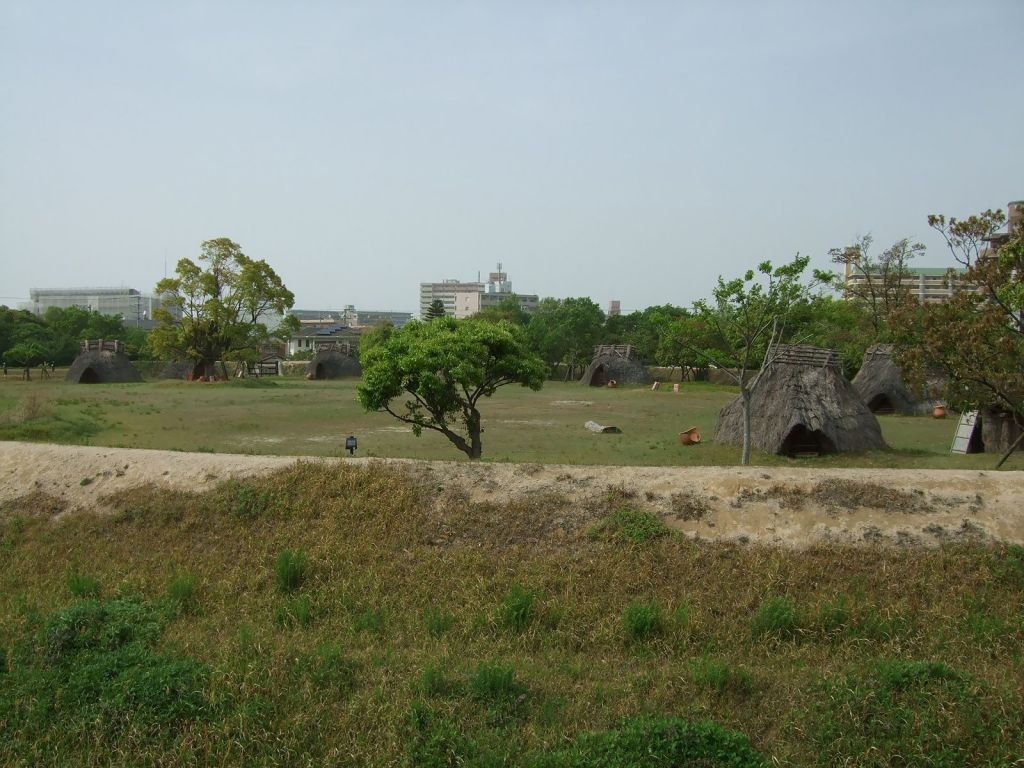
    The discovery of the Yoshinogari site in 1986 ignited the popular imagination, and Yamatai and Queen Himiko have been figures in popular culture ever since. Some have suggested that Yoshinogari is a good candidate for the supposed capital of Yamatai. However, this remains highly controversial, and most experts state that Yoshinogari is an important site, but there’s no evidence to support the assertion that it is the capital.

    The reconstructed village at Yoshinogari, and important site, but the capital of Yamatai? Most experts say not.
    By ja:User:Sanjo – Own work, Public Domain, https://commons.wikimedia.org/w/index.php?curid=4954364

    Queen Himiko is said to have died around 248 AD, after she was replaced, first by a King whose name is not recorded, and then by Toyo (Iyo in some records), about whom very little is known.

    When Himiko passed away, a great mound was raised, more than a hundred paces in diameter. Over a hundred male and female attendants followed her to the grave. Then a king was placed on the throne, but the people would not obey him. Assassination and murder followed; more than one thousand were thus slain. A relative of Himiko named Iyo [壹與], a girl of thirteen, was [then] made queen and order was restored. (Zhang) Zheng (張政) (an ambassador from Wei), issued a proclamation to the effect that Iyo was the ruler.

    Tsunoda, Ryusaku, tr (1951), Goodrich, Carrington C (ed.), Japan in the Chinese Dynastic Histories: Later Han Through Ming Dynasties, South Pasadena: PD and Ione Perkins, taken from Wikipedia.

    Ultimately, Yamatai would disappear from the records shortly after Iyo came to the throne, and, as with any records over such long periods of time, we should take the details with a grain of salt.

    That being said, thanks to Chinese records and the hard work of local archaeologists, we know that by the end of the Yayoi Period, kingdoms had begun to emerge across Japan. Like the preceding Jomon Period, the Yayoi Period can’t really be said to have ended, so much as it transitioned into something else.

    Some scholars suggest that Yamatai lent its name to the following Yamato Period, although the exact etymology isn’t clear (nothing ever is with this stuff.)

    Next time, we’ll take a look at the Yamato Period, Japan’s first Imperial State.

    Sources

    https://en.wikipedia.org/wiki/Yamatai https://en.wikipedia.org/wiki/Yoshinogari_site https://en.wikipedia.org/wiki/Nakoku https://en.wikipedia.org/wiki/Yayoi_period https://en.wikipedia.org/wiki/Yayoi_people https://www.cambridge.org/core/journals/antiquity/article/regional-variations-in-the-demographic-response-to-the-arrival-of-rice-farming-in-prehistoric-japan/7E6D28520A04B2F07DDD36908F291808 https://www.cambridge.org/core/journals/evolutionary-human-sciences/article/japan-considered-from-the-hypothesis-of-farmerlanguage-spread/BD91E69AEA3CCAEDC567519EF7F5AA97