Tag: Lady Yodo

  • Tokugawa Ieyasu and the Road to Osaka.

    Tokugawa Ieyasu and the Road to Osaka.

    By 1614, Ieyasu was unquestionably the master of Japan. Though he had formally resigned as Shogun in favour of his son, Hidetada, a decade earlier, the reins of power were firmly in his hands. Already in his 70s, practically ancient by the standards of the day, he was no doubt considering the sort of questions a man at the end of his life might contend with: “What happens after I am gone?”

    Hidetada was, by most accounts, a perfectly capable Shogun. He had earned a relatively good reputation on the battlefield, and most sources agree that he was hard-working and well-trained by his father. The problem for Ieyasu was that, despite everything, Tokugawa rule was not entirely unchallenged.

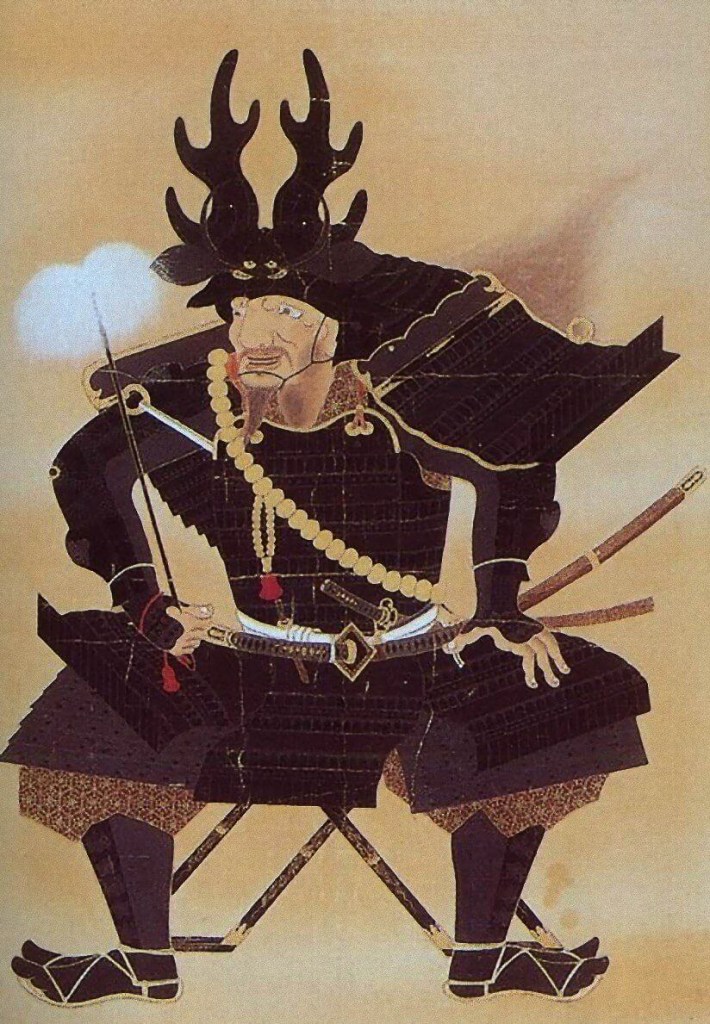
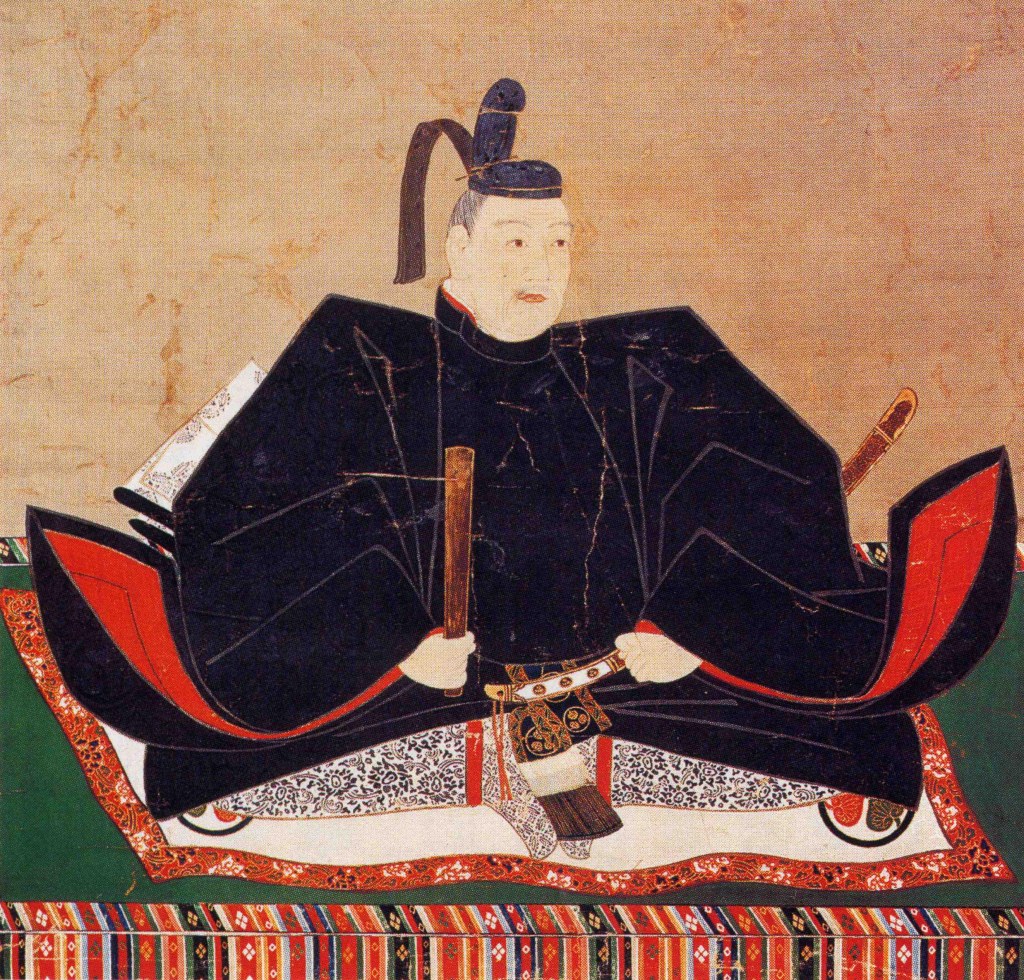
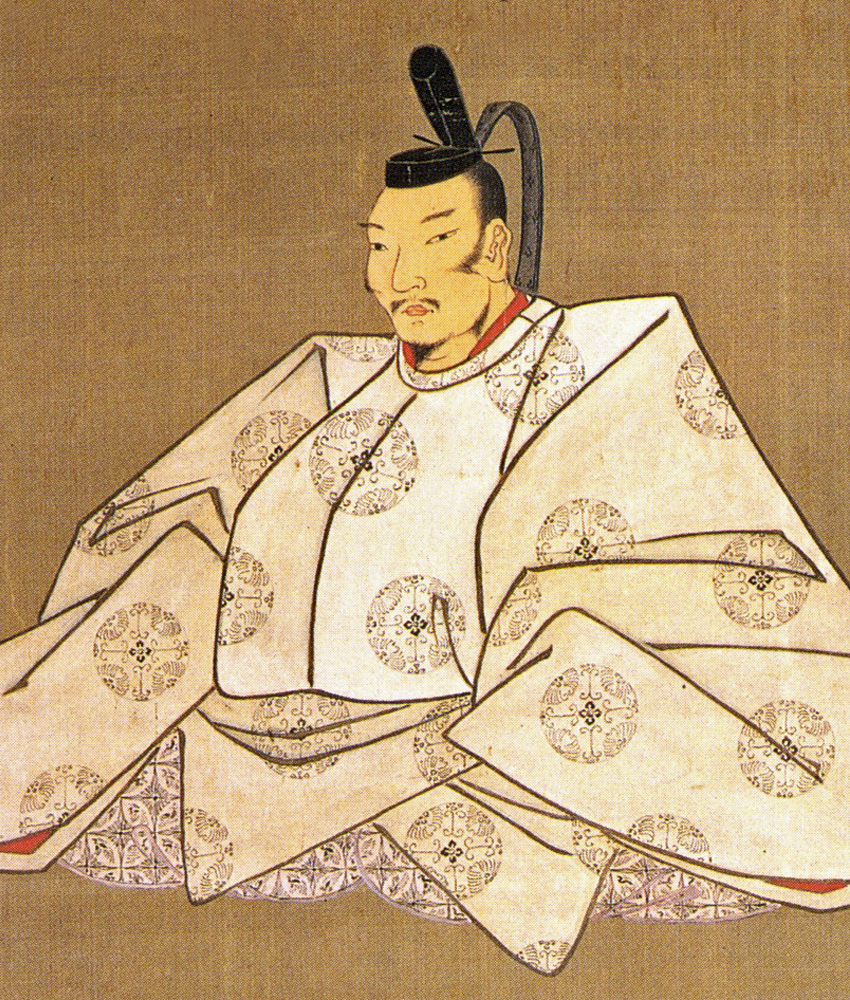
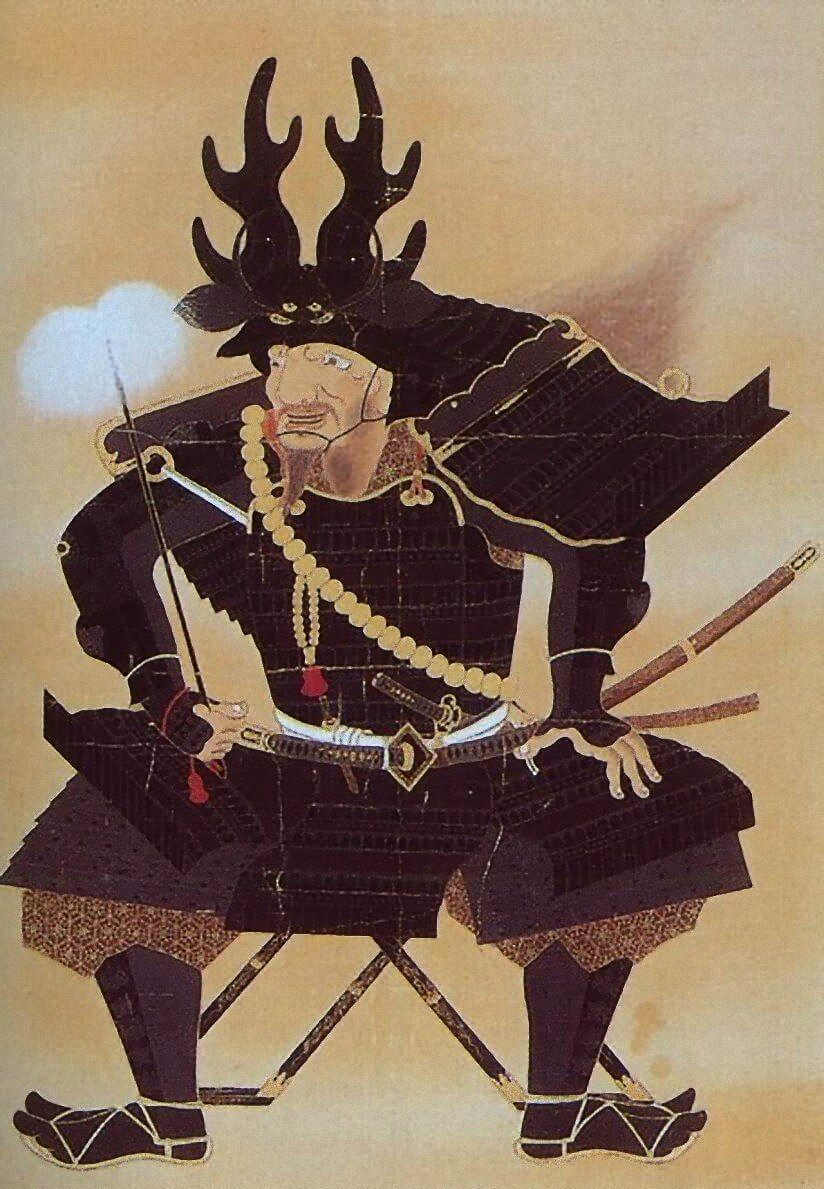
    Ieyasu as he appeared in later life. By 1614, he was the master of Japan, but despite all his power, his rule was not unchallenged.

    After the Battle of Sekigahara, Ieyasu had explicitly refused to take any action against Hideyoshi’s infant son, Hideyori. Instead, he had ensured that the Toyotomi Clan remained wealthy, and as long as Hideyori remained holed up in Osaka Castle, Ieyasu was content to leave him be.

    For his part, Hideyori initially seemed happy enough to remain where he was, spending large sums of money on restoring or rebuilding temples that had been damaged during the war, though his exact motivation for this has been questioned by scholars, with some suspecting he was seeking to gain divine support, and others suggesting that he was simply religious.
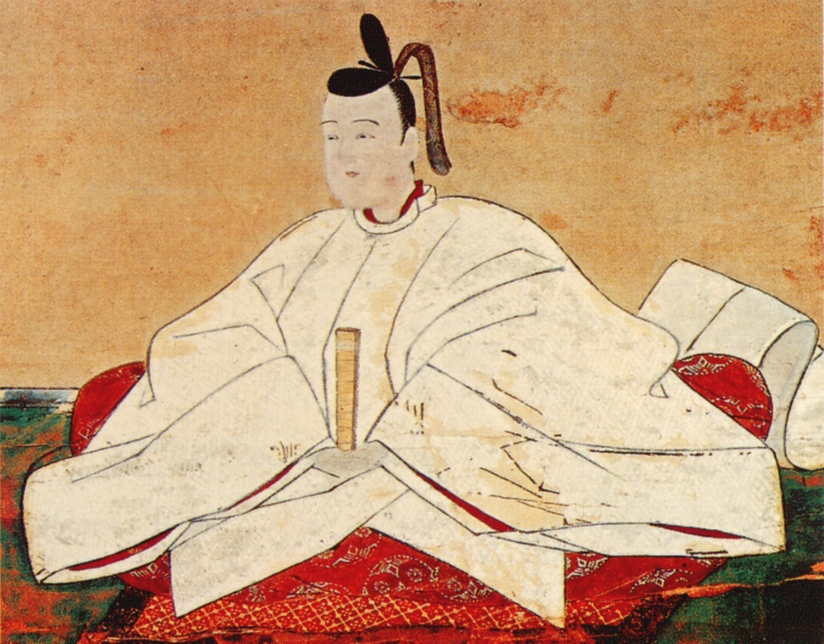
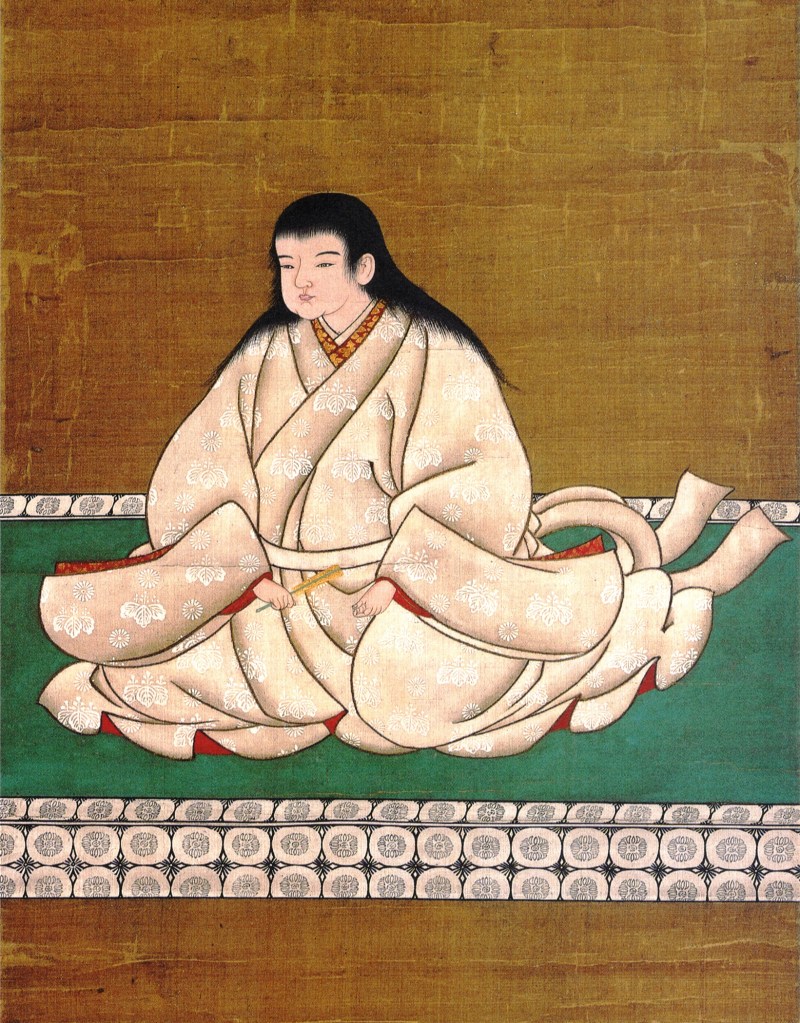
    Toyotomi Hideyori. Though he was his father’s heir, he seemed content to live a peaceful life.

    By late 1614, Hideyori was in his 20s and was beginning to attract attention as Hideyoshi’s rightful heir. One somewhat fanciful account tells us that by this time, Hideyori was nearly 2 metres tall and weighed over 160kg, and while no other sources corroborate his impressive size, he was beginning to become a focal point for Anti-Tokugawa elements in the realm.

    Ieyasu had plenty of reason to fear Hideyori’s challenge to his family’s rule; some scholars even suggest that Hideyori’s generosity towards various temples was actively encouraged by the Shogun as a way to drain Toyotomi resources that might otherwise have been spent on preparations for war. Whether this is true or not, it was increasingly clear that Ieyasu couldn’t simply let Hideyori be; all he needed was a pretext.
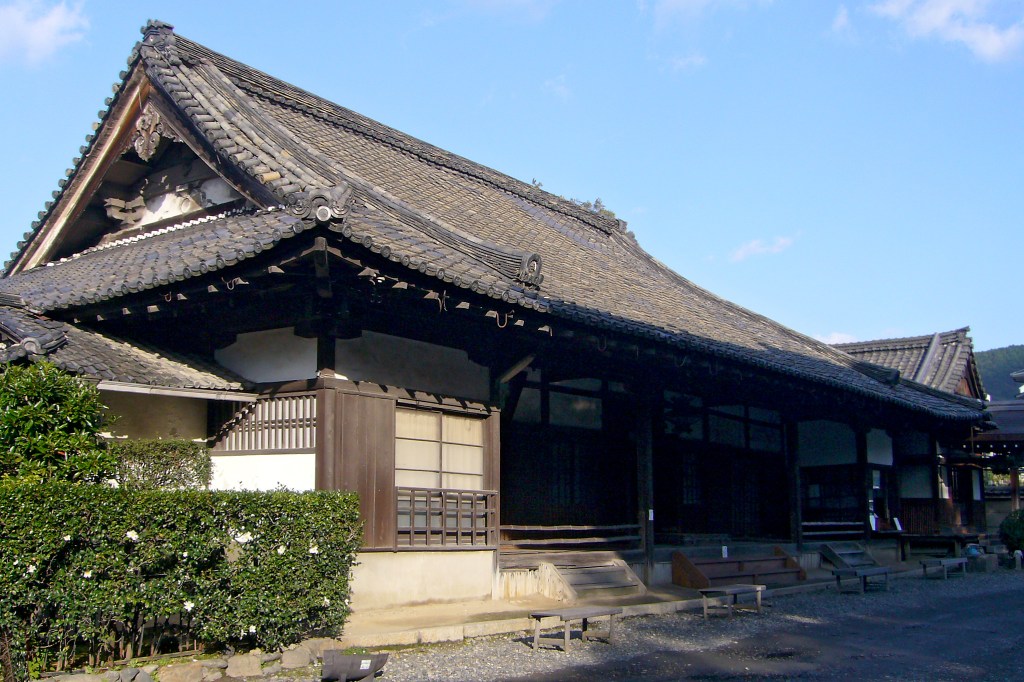
    The main hall of Hokoji as it appears today. Though it was relocated in the 19th Century, it is believed to have been originally built in the 17th.

    As part of his widespread temple-rebuilding projects, Hideyori commissioned a new bell for the Hokoji Temple near Kyoto. This was initially an uncontroversial act, but rumours soon spread that the bell had been inscribed with words that could be construed as prayers for the restoration of the Toyotomi and the downfall of the Tokugawa.

    The phrases themselves translate into English as “National peace and prosperity” and “Lord and subject enjoy abundant happiness“. From a modern perspective, neither of these seem particularly problematic, but the problem was that, in Japanese characters, the writing contained parts of Ieyasu’s name, split in two (ie, and yasu), which was construed as a form of cursing him, whilst the second phrase suggested that the “lord” in question was the Toyotomi.
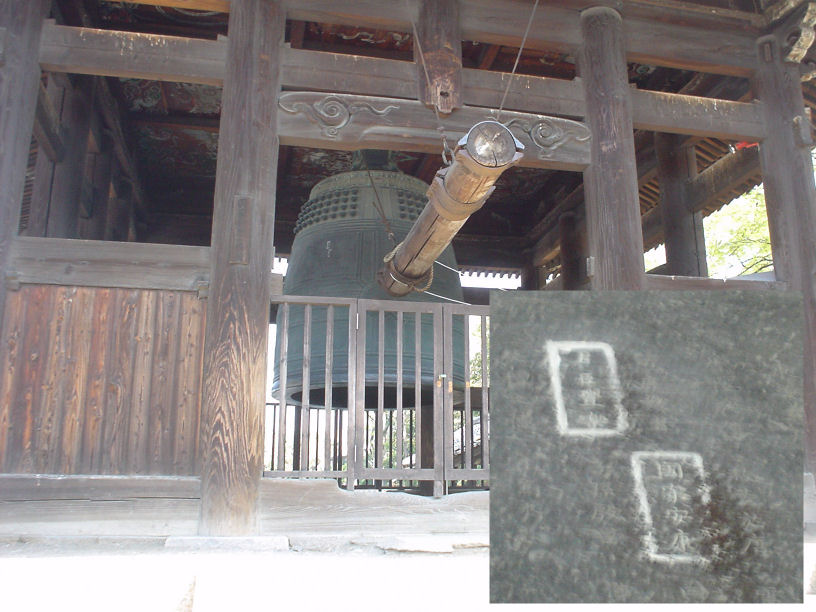
    The bell and the inscription that caused all the trouble.
    +- – 投稿者自身による著作物, CC 表示-継承 3.0, https://commons.wikimedia.org/w/index.php?curid=107332539による

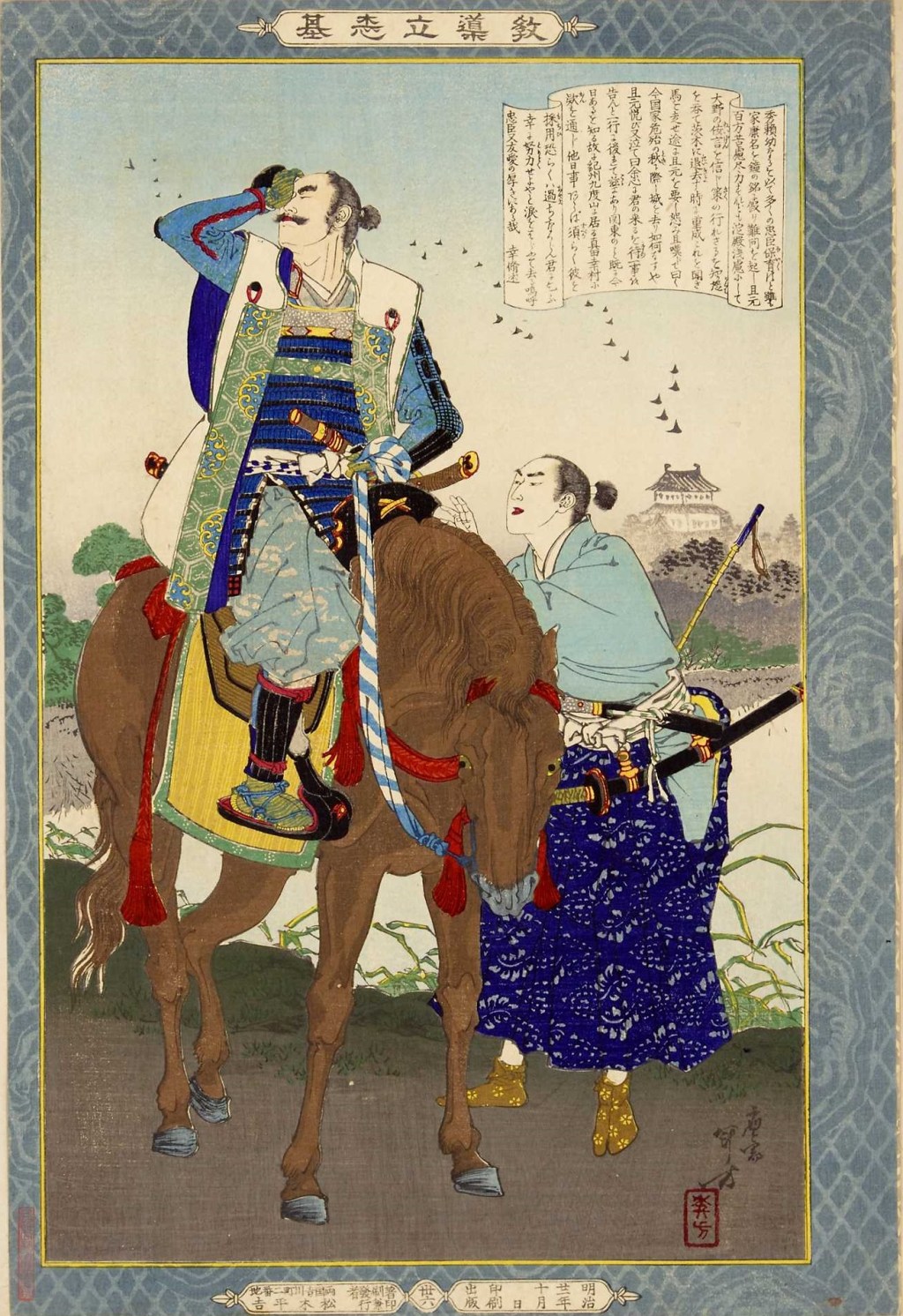
    This was an age of superstition, and signs and portents were taken seriously, but even so, this was as good a reason as any for Ieyasu to finally deal with the Toyotomi once and for all. He apparently wasn’t immediately set on a military option, as negotiations took place in late 1614 to try to defuse the tension. An emissary, Katagiri Katsumoto, was dispatched to explain the ‘true’ meaning of the bell, but he was unable to meet with Ieyasu or Hidetada directly, and instead returned to Osaka with three possible proposals.

    It’s important to note that none of these proposals appear in any Tokugawa documents from the time, and some scholars believe they were the invention of Katsumoto himself. They were as follows:
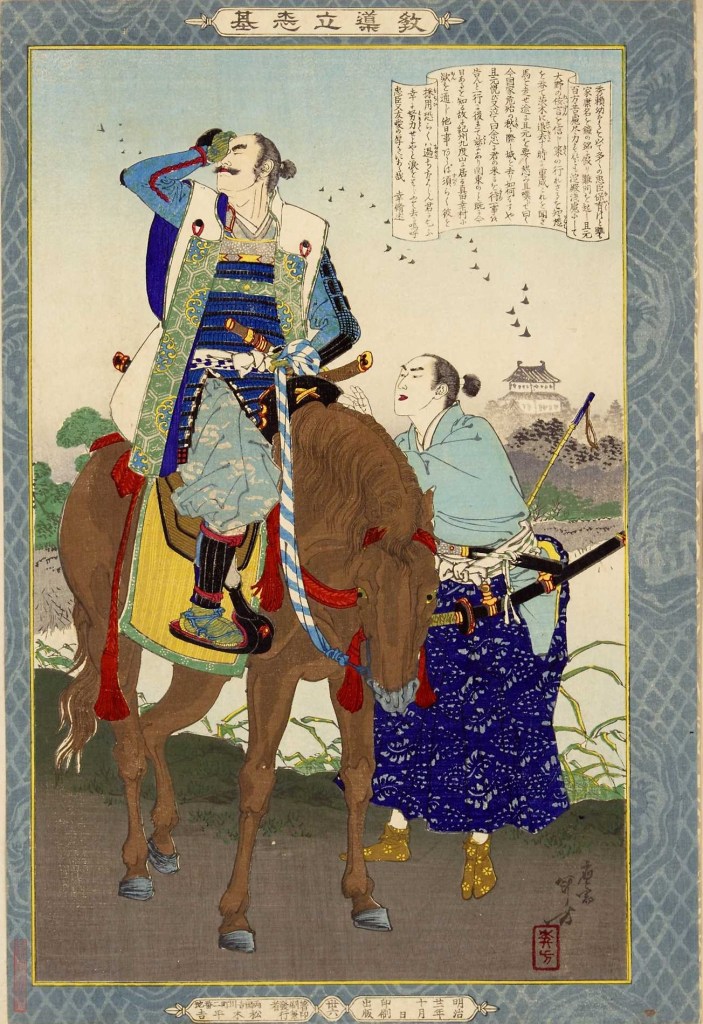
    A 19th-Century depiction of Katagiri Katsumoto departing on his mission to Ieyasu.

    1) Hideyori would reside alternately in Edo and Osaka, as part of the Sankinkotai policy, in which Daimyo were obliged to live one year in Edo, and one year in their home provinces. Hideyori had previously been exempt, and accepting Sanki-kotai would have essentially confirmed him as a vassal of the Shogun.

    2) Hideyori’s mother, Lady Yodo, would be sent to Edo as a hostage. She would likely have lived in comfort, but her life would have been forfeit if Hideyori ever stepped out of line.

    3) Hideyori agreed to give up the formidable Osaka Castle and accept an alternative domain elsewhere.
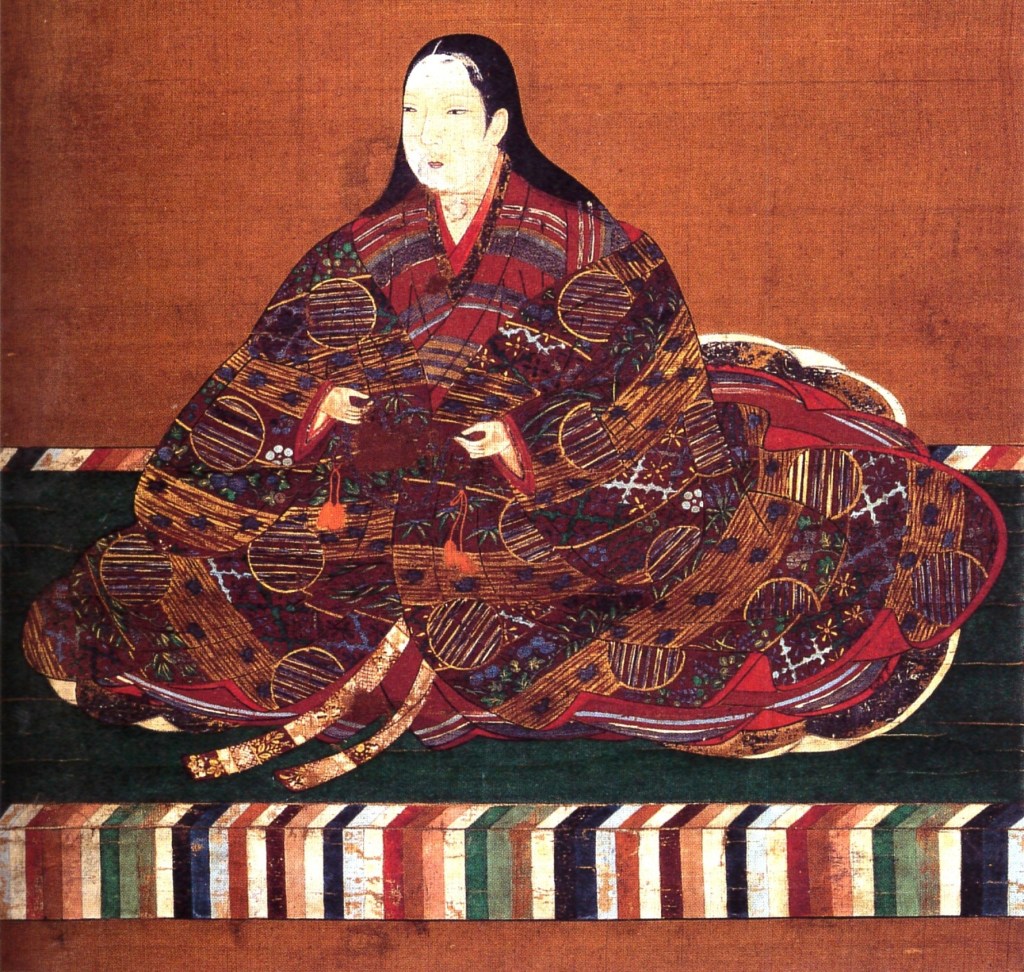
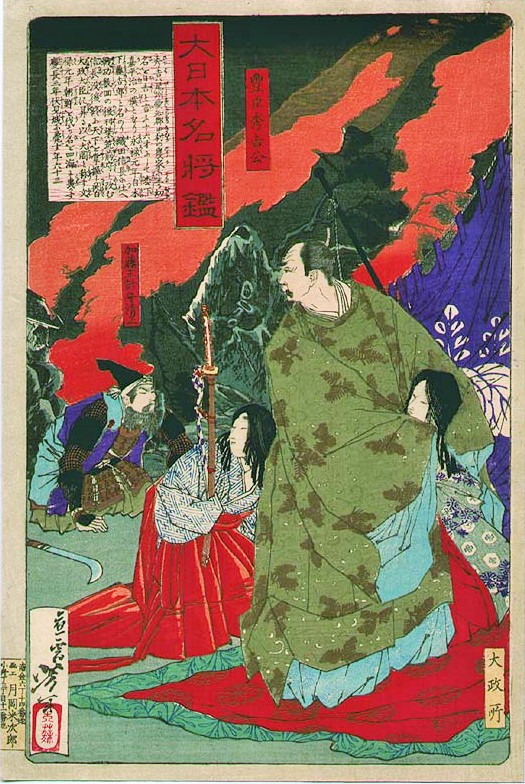
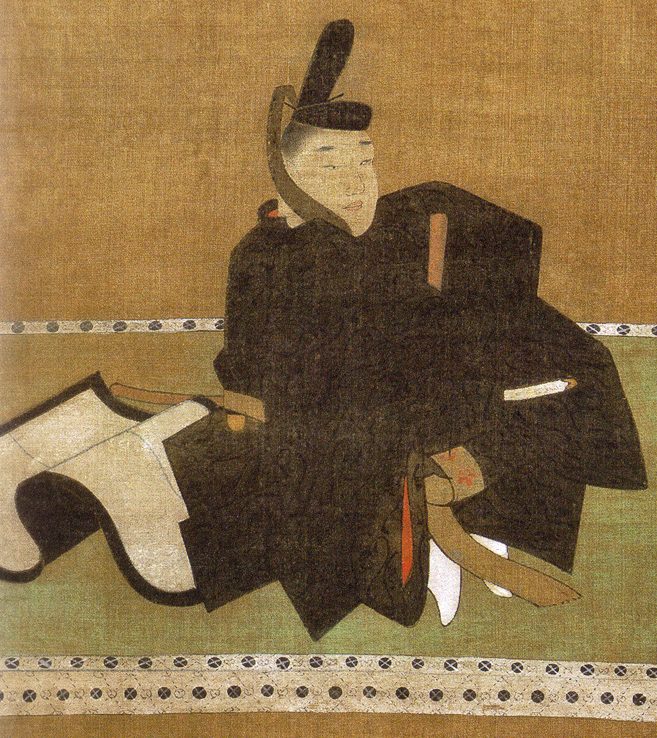
    Hideyori’s mother, Lady Yono (Yodo-Dono). It was suggested that she might be given as a hostage to guarantee peace, a suggestion that was sharply rejected by Hideyori.

    Whether these proposals truly came from the Shogunate or not, they were so offensive to the Toyotomi that Katsumoto came under suspicion of collusion with the Tokugawa. Although no contemporary evidence exists, other Toyotomi vassals believed the rumours and tried to have Katsumoto killed. The man himself escaped by fortifying his residence, and it took direct intervention from Hideyori to end the crisis, with Katsumoto agreeing to become a monk.

    Hideyori swiftly dispatched emissaries to Ieyasu, explaining that the fortification and massing of troops were in no way aimed at the Tokugawa, and that it had been an internal matter, now resolved. Ieyasu either genuinely or else conveniently chose not to believe this explanation, and gave orders for forces to be gathered to punish the Toyotomi.
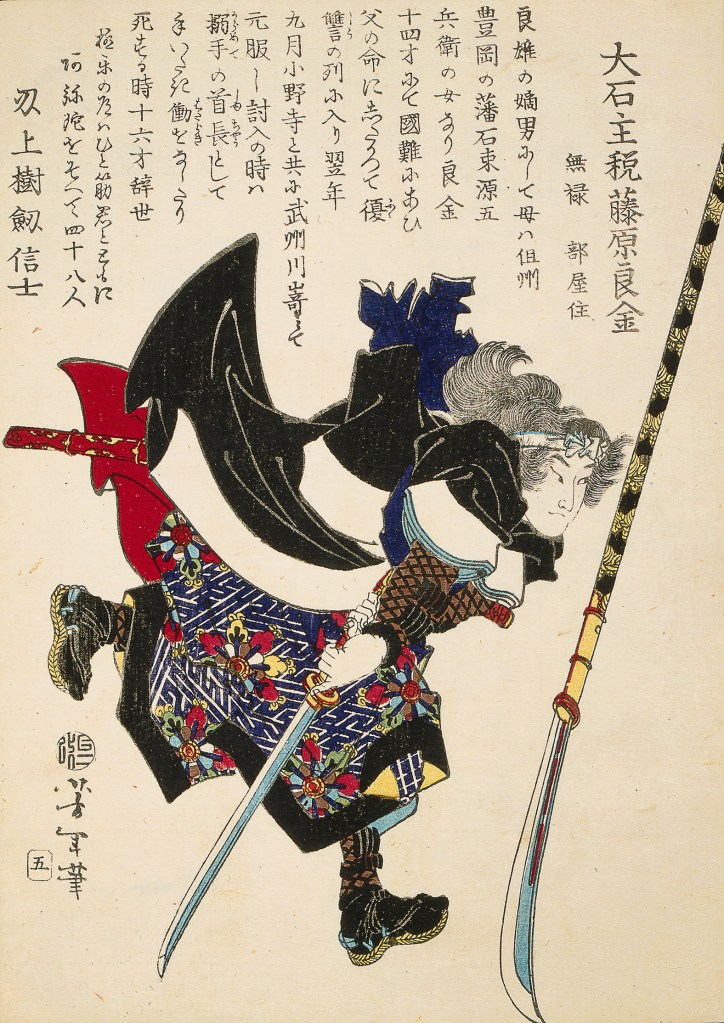
    A later depiction of a Ronin. Although often romanticised in later years, in the period immediately following Sekigahara, huge numbers of recently unemployed Samurai were a serious problem, but, as Hideyori would prove, a potentially useful source of manpower.

    In response, the Toyotomi issued a call to arms, gathering those loyal to the Toyotomi through old association or opposition to the Tokugawa. Very few Daimyo rushed to join up, but the vast wealth left behind at Osaka Castle by Hideyoshi was used to persuade thousands of Ronin (masterless Samurai) to come to Osaka and fight for the Toyotomi.

    Meanwhile, food, provisions, and weapons were either purchased or “acquired” from storehouses in and around Osaka, with or without the owners’ permission. In relatively short order, the Toyotomi had gathered some 100,000 men in Osaka.
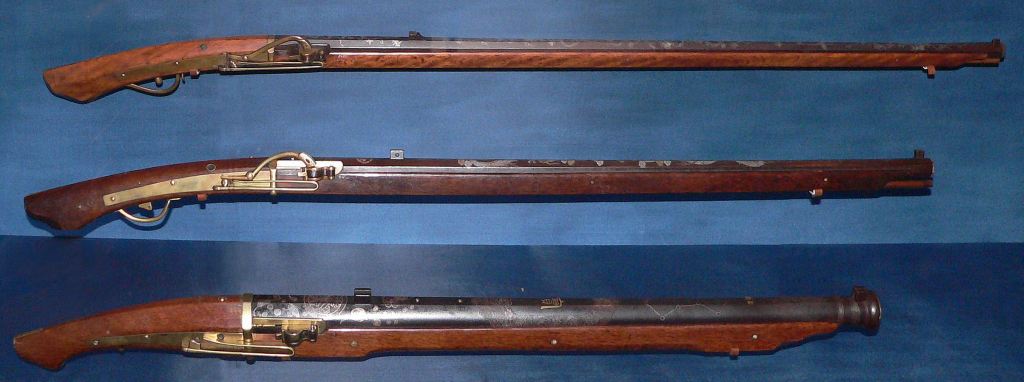
    Guns from the period. Although Samurai are most famously associated with their swords, by this time, guns were as common, if not more so.

    Some were motivated by a genuine desire to see the Toyotomi family restored to power, either out of loyalty or with the expectation of reward should they succeed. Others were there to take revenge on the Tokugawa, with many having become Ronin in the aftermath of Sekigahara, where dozens of lords had lost everything as punishment for opposing Ieyasu. Still others were naked opportunists, motivated to fight for cash rewards or to restore/earn a reputation, as their forefathers had done.

    In response, Ieyasu and Hidetada mustered a force which was, in some accounts, twice the size of the one now surrounding Hideyori, and these men suffered little, if any, confusion about their intentions, loyalty to the Shogun, and hostility to the Toyotomi. Such a massive force was almost impossible to gather in one place, and so detachments of various sizes made their way towards Osaka.
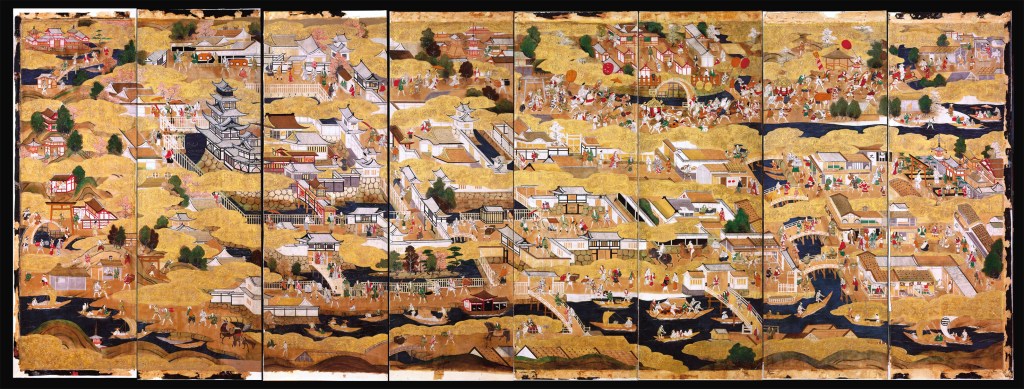
    A contemporary image of the area around Osaka, with the port of Sakai represented in the top right.

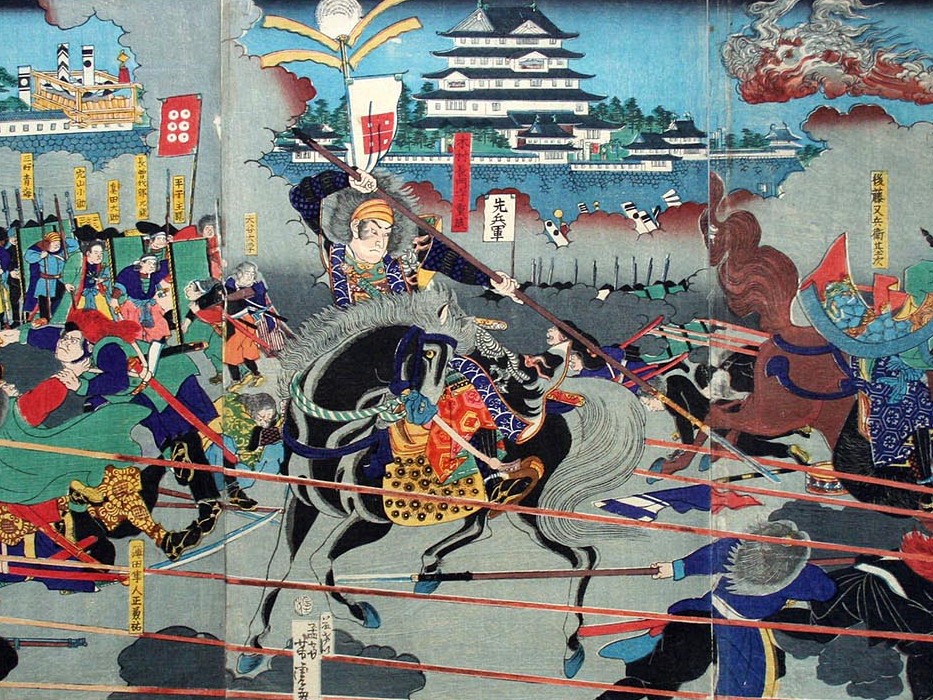
    The Toyotomi forces were not idle in the meantime, attacking and briefly taking the important port at Sakai (modern Osaka) before being forced to withdraw by a Tokugawa counter-attack. Understanding the disparity in forces, the Toyotomi then retreated to Osaka Castle, arguably the strongest fortress in the realm, and waited for the storm to break.


    Sources
    https://ja.wikipedia.org/wiki/%E5%A4%A7%E5%9D%82%E3%81%AE%E9%99%A3
    https://ja.wikipedia.org/wiki/%E5%A0%BA
    https://ja.wikipedia.org/wiki/%E5%BE%B3%E5%B7%9D%E5%AE%B6%E5%BA%B7
    https://ja.wikipedia.org/wiki/%E6%B5%AA%E4%BA%BA
    https://ja.wikipedia.org/wiki/%E6%96%B9%E5%BA%83%E5%AF%BA%E9%90%98%E9%8A%98%E4%BA%8B%E4%BB%B6
    https://ja.wikipedia.org/wiki/%E6%96%B9%E5%BA%83%E5%AF%BA
    https://ja.wikipedia.org/wiki/%E5%BE%B3%E5%B7%9D%E7%A7%80%E5%BF%A0
    https://ja.wikipedia.org/wiki/%E6%B7%80%E6%AE%BF
    https://ja.wikipedia.org/wiki/%E8%B1%8A%E8%87%A3%E7%A7%80%E9%A0%BC
  • From Sekigahara to the Shogunate.

    From Sekigahara to the Shogunate.

    In the aftermath of Sekigahara, Ieyasu set about rewarding his supporters and dealing with his opponents. The exact details of who got/lost what are complex (and not particularly interesting), but the main distinction, and the one that would prove to be the most significant, was the separation between Tozama and Fudai Daimyo.

    The exact criteria for what made a Daimyo Tozama or Fudai vary depending on context, but very basically, the Fudai Daimyo were those from families who had supported Ieyasu before his rise to power, either as direct vassals of the Tokugawa Clan, or allies during the Sekigahara Campaign. Meanwhile, the term Tozama originally meant Samurai who had a much looser tie to their lord, and in the context of the post-Sekigahara settlement, the Tozama Daimyo were those lords who had failed to support Ieyasu, or who had actively opposed him.

    Honda Tadakatsu, one of the most famous of the early Fudai Daimyo.

    In the centuries to come, the Fudai would provide many members of the new Tokugawa Government; indeed, it was often said that any candidate for a high-ranking position had to be from a Fudai family, which would prove true in all but one case. In exchange for their service, the Fudai were often stationed near the capital, Edo (modern Tokyo), where they could help protect the city.

    On the other hand, the Tozama were usually located much further away and were consequently excluded from government. It wasn’t all bad, however, as the extreme distances of their realms meant that the central government was often obliged to rule them with a light touch, and in later years, several Tozama would be able to accrue significant wealth and power.

    Matsumae Takahiro, the only Tozama Daimyo to ever hold high rank in the Tokugawa government, though it came at the very end of the Shogunate.

    One family over which a significant question mark remained was the Toyotomi. Ieyasu had gone to great pains not to give the impression that the Sekigahara Campaign had been aimed at the Toyotomi, but in the aftermath, no one seriously expected him to hand over the power he had won, especially given that the incumbent head of the clan, Hideyori, was just seven years old.

    In the short term, Ieyasu explicitly refused to punish either Hideyori or his mother, Lady Yono, and though Toyotomi lands were significantly reduced, and their most powerful supporters either seriously weakened or destroyed outright, the clan, still based at Osaka Castle, retained lands valued at some 650,000 Koku, ensuring their place in the upper echelons of Japanese society.

    Toyotomi Hideyori. Despite being Hideyoshi’s heir, he was just seven at the time of Sekigahara, and Ieyasu ensured he wouldn’t be punished for what others had done on his behalf, a decision he would later come to regret.

    Hideyoshi’s title of Kanpaku (regent) was not returned, however. Though it had been vacant since Hideyoshi’s death in 1595, Ieyasu ensured that the title would instead go to a member of the Kujo Family, who had been one of the “Five Regent Houses” prior to Hideyoshi’s usurping the title. In doing so, Ieyasu earned the approval of the Imperial government and demonstrated that awarding such illustrious (if powerless) titles now lay with him alone.

    Despite his now unassailable position, Ieyasu didn’t immediately take the title of Shogun; there were still territories to redistribute and a new political reality to consolidate. It wouldn’t be until early 1603 that Ieyasu was appointed Shogun, as well as being named Minister of the Right, Commander of the Imperial Guard, and Commander of the Ox-Drawn Carts, which may sound a touch silly, but in a time and place with very few wheeled vehicles, this was a big deal.

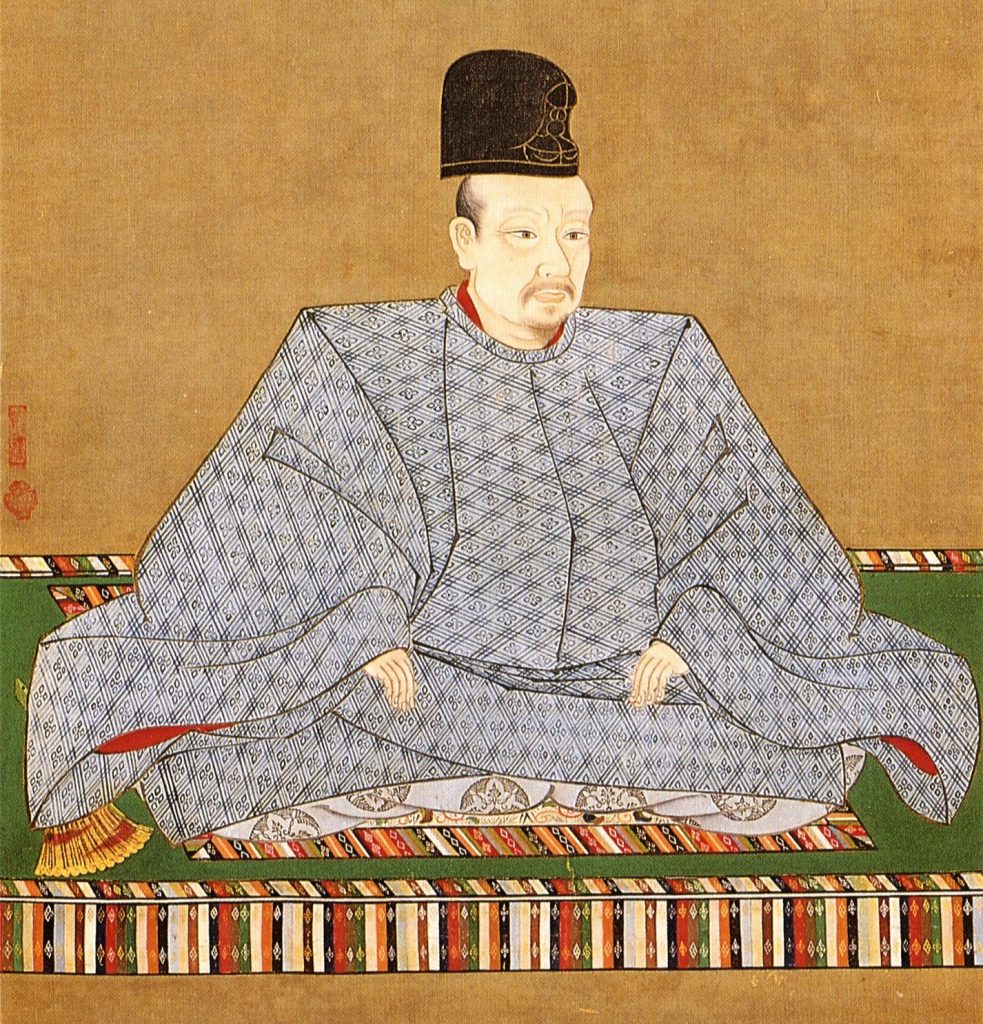
    Emperor Go-Yozei, who was on the throne at the time of Ieyasu’s rise to power, would ultimately be the one to appoint him Shogun.

    Strangely enough, Ieyasu would only be Shogun for a relatively short period. In 1605, he officially resigned the post and asked the court to declare his son, Hidetada, the new Shogun. As you probably already know, this ‘abdication’ was only a formality, as Ieyasu retained formal power whilst freeing himself from the often impractical burden of state ritual.

    The abdication had another purpose; it demonstrated to the realm that, from now on, the position of Shogun would be hereditary and belong to the Tokugawa Clan. Perhaps the greatest testament to Ieyasu’s new power was the fact that the handover of power was conducted almost without opposition, signalling that, at last, the years of chaos were finally over.

    Tokugawa Hidetada. When he succeeded his father as (nominal) Shogun in 1605, it was the first unchallenged transition of high authority that Japan had seen in decades.

    We’ll take a detailed look at the early years of the Tokugawa Shogunate in a dedicated post, but Ieyasu, now titled “Ogosho” (Retired Shogun), was extremely active in securing his family’s rule and stabilising the realm. Officially, one of Ieyasu’s responsibilities was foreign diplomacy, and during this period, he received envoys from Korea, re-establishing diplomatic relations cut off since Hideyoshi’s invasions, as well as representatives from Spain and the Netherlands, who sought increased trade with Japan.

    One figure who played a significant role in these endeavours was William Adams, the first Englishman in Japan, who will definitely get a post of his own, and helped support the efforts of his countrymen in establishing a permanent (though ultimately short-lived) ‘factory’ to facilitate trade between Japan and England.

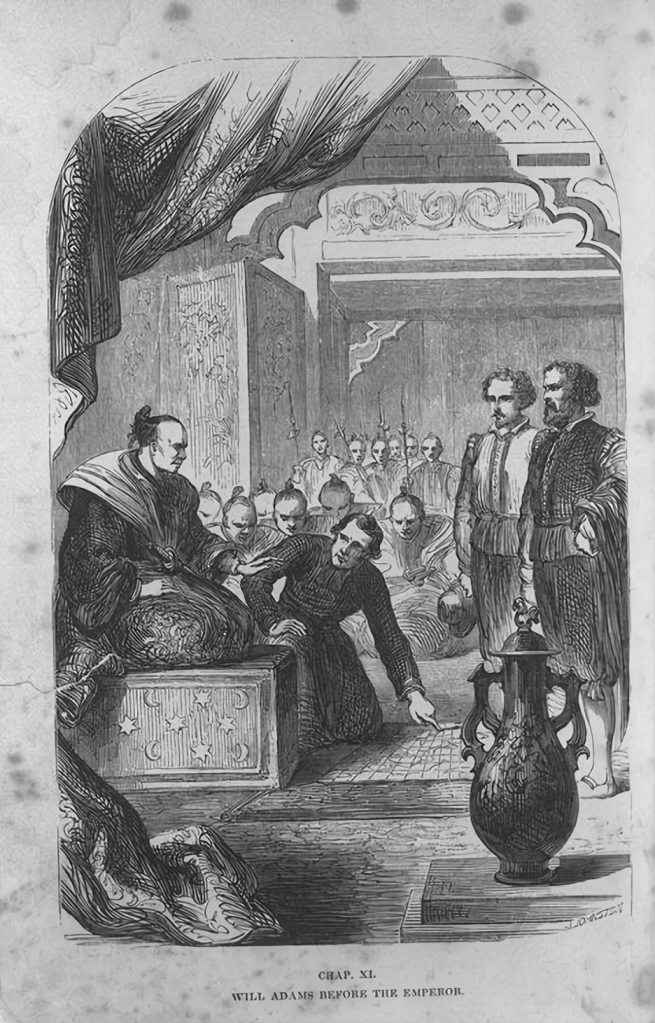
    A 19th-century depiction of William Adams meeting Ieyasu (who is mislabelled “Emperor”). Adams was an important figure, but he was just one of many foreigners who had audiences with Ieyasu during this period.

    With matters at home largely settled, and Japan establishing itself as a reliable trade partner in Asia, but late 1614, Ieyasu would have had good reason to consider his life a remarkable success; he had risen from a regional warlord on the brink of destruction to master of Japan, and established a dynasty that would last for some 250 years.

    All was not well, however. Hideyori, whom Ieyasu had chosen to spare in the aftermath of Sekigahara, had grown into a man, and as Hideyoshi’s heir, he began to attract support from those disaffected by the new Tokugawa regime. It would not take long for Ieyasu to find a convenient pretext to eliminate the Toyotomi once and for all.


    Sources
    https://ja.wikipedia.org/wiki/%E5%BE%B3%E5%B7%9D%E5%AE%B6%E5%BA%B7
    https://en.wikipedia.org/wiki/Toyotomi_Hideyori
    https://ja.wikipedia.org/wiki/%E5%BE%B3%E5%B7%9D%E7%A7%80%E5%BF%A0
    https://ja.wikipedia.org/wiki/%E9%96%A2%E3%83%B6%E5%8E%9F%E3%81%AE%E6%88%A6%E3%81%84
    https://ja.wikipedia.org/wiki/%E5%A4%A7%E5%BE%A1%E6%89%80_(%E6%B1%9F%E6%88%B8%E6%99%82%E4%BB%A3)
    https://ja.wikipedia.org/wiki/%E7%89%9B%E8%BB%8A%E5%AE%A3%E6%97%A8
    https://ja.wikipedia.org/wiki/%E9%9A%8F%E8%BA%AB
    https://ja.wikipedia.org/wiki/%E8%AD%9C%E4%BB%A3%E5%A4%A7%E5%90%8D
    https://en.wikipedia.org/wiki/Fudai_daimy%C5%8D
    https://ja.wikipedia.org/wiki/%E5%A4%96%E6%A7%98%E5%A4%A7%E5%90%8D
    https://en.wikipedia.org/wiki/Tozama_daimy%C5%8D
    https://ja.wikipedia.org/wiki/%E6%9D%BE%E5%89%8D%E5%B4%87%E5%BA%83
    https://ja.wikipedia.org/wiki/%E3%82%A6%E3%82%A3%E3%83%AA%E3%82%A2%E3%83%A0%E3%83%BB%E3%82%A2%E3%83%80%E3%83%A0%E3%82%B9
    https://ja.wikipedia.org/wiki/%E5%BE%8C%E9%99%BD%E6%88%90%E5%A4%A9%E7%9A%87

  • The Second Unifier – Toyotomi Hideyoshi. The Final Chapter.

    The Second Unifier – Toyotomi Hideyoshi. The Final Chapter.

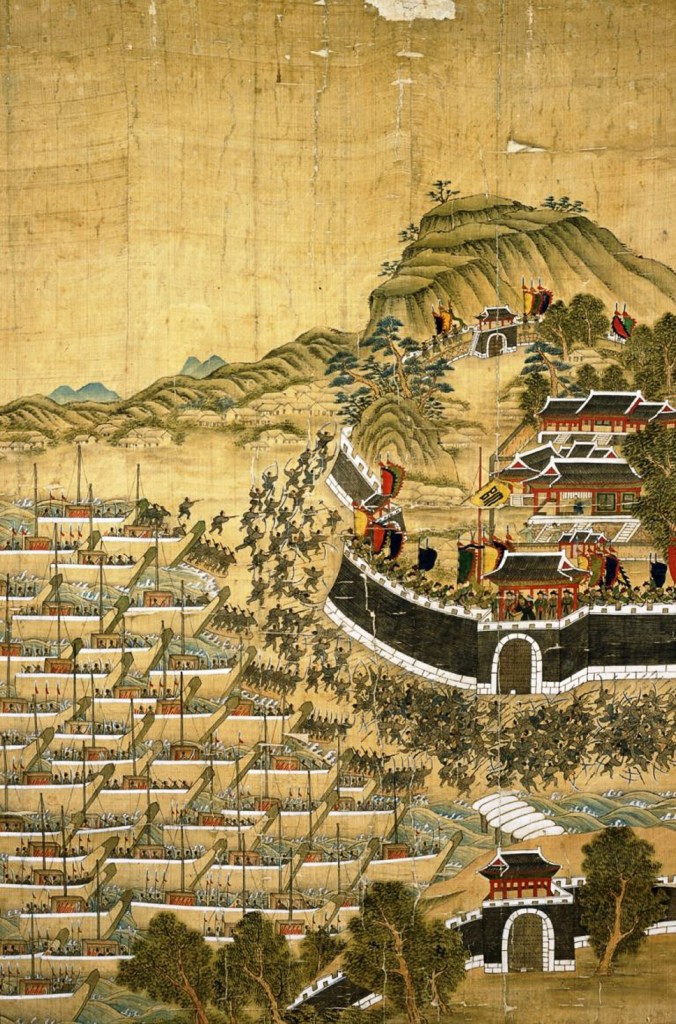
    In 1591, with dominance of Japan secured, Hideyoshi announced his intention to invade Ming China, via Korea, launching the first of two campaigns to subjugate the small kingdom. We’ll take a look at these invasions in more detail later, but in summary, the Japanese landed with a force of some 160,000 veteran warriors and achieved a series of quick successes against the Koreans.

    A contemporary Korean image of the Japanese attack on Busan.

    However, Chinese intervention turned back the invasion, and ultimately led to a stalemate that ended in a negotiated peace in 1593, that saw Japanese warriors remain in the fortresses they have built in the south of the peninsular, from which they would launch a second attempt in 1597, which would end when political changes at home saw the Japanese leave, with both sides declaring ‘victory’.

    Meanwhile, Hideyoshi, who had ordered the invasion but did not travel to Korea himself, was facing problems closer to home. In 1591, his brother, Hidenaga, who had been an important military and political supporter, died. This was followed in short order by Tsurumatsu, Hideyoshi’s two-year-old son and heir, throwing the succession into doubt.

    A stylised image of Tsurumatsu, who was only two when he died.

    In response, Hideyoshi adopted his nephew, Hidetsugu, as heir to the Toyotomi family, and (presumably) eventually to supreme power. This arrangement endured until 1593, when one of Hideyoshi’s concubines, Lady Yodo, gave birth to a second son, Hideyori, whose arrival was apparently widely celebrated.

    That is, widely celebrated by everyone but Hidetsugu, whose position was now under threat. In 1595, rumours began to spread that Hidetsugu was plotting rebellion, and a delegation, led by Ishida Mitsunari, was sent to his residence to investigate. He wrote a five-page letter declaring himself innocent of the accusations, which was promptly delivered to Hideyoshi.

    Toyotomi Hidetsugu

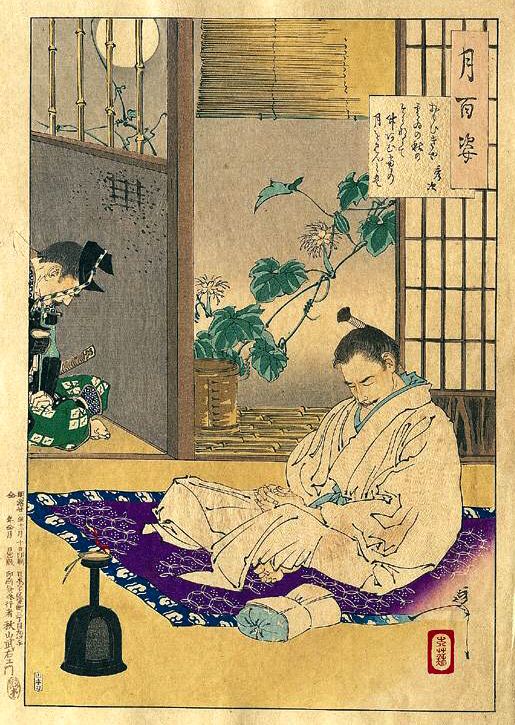
    Hideyoshi then summoned his nephew for an audience, but when Hidetsugu arrived at Fushimi Castle, as ordered, he was denied entry and instead told to shave his head and become a monk. Hidetsugu apparently complied, retiring to Mount Koya. However, even this was not enough, and on August 20th, 1595, an order arrived demanding Hidetsugu commit seppuku.

    Hidetsugu swiftly complied, but even this did not satisfy Hideyoshi, who went further and ordered the deaths of Hidetsugu’s entire family. In the end, 39 people, including children, wives, and concubines, were beheaded at Sanjo Kawara, in Kyoto, and dumped in a mass grave. Some sources say that the commoners who came to watch were so disgusted with the manner of the executions that they began hurling insults at the magistrates responsible, and in the aftermath, a memorial stone dedicated to “Hideyoshi’s Evil” was erected.

    A 19th-century depiction of Hidetsugu committing seppuku. Even his death did not spare his family from Hideyoshi’s wrath.

    Theories around why Hideyoshi ordered his nephew’s death, and why it was carried out with such thorough brutality, have swirled since the moment Hidetsugu’s head was struck off. A common view is that Hidetsugu really was planning to rebel, or at least Hideyoshi believed he was, and the purge that followed was simply ensuring no one survived to take revenge.

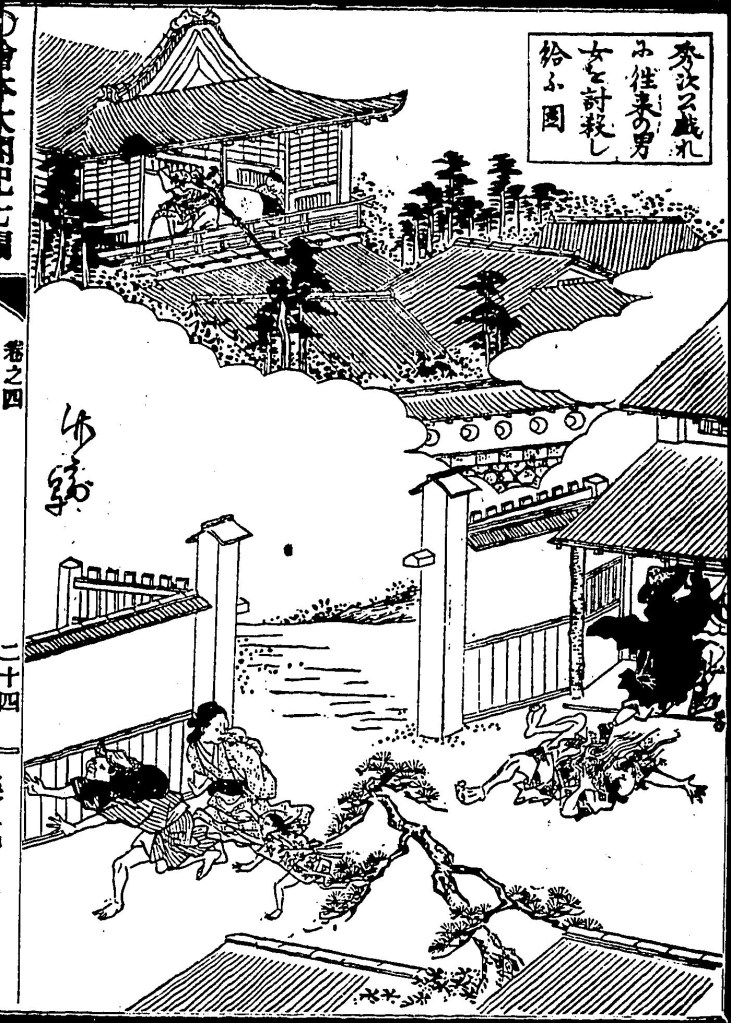
    Another theory is that Hidetsugu himself had earned a reputation as a violent lunatic, routinely hacking people down in the street, and even being known to take potshots at commoners with a musket, earning him the nickname the “Killing Regent”. Modern scholars are generally sceptical of this reputation, however, citing a lack of contemporary sources referring to what should have been a fairly well-known situation.

    A much later depiction of Hidetsugu (top left) taking potshots at passersby. Images like this served to discredit Hidetsugu’s memory, but sources from his lifetime make no mention of such behaviour, except in reporting rumours.

    An addition to this theory is that Ishida Mitsunari, and his associates, deliberate sought to slander Hidetsugu in the eyes of Hideyoshi, though again this is now widely seen as a latter invention, written by authors in the Edo Period, decades after the events, and writing at a time when there was active interest in painting both Hideyoshi, and Mitsunari in a bad light.

    All of this paints Hideyoshi in an increasingly tyrannical light, and subsequent events in his reign would not help matters. In 1596, the Keicho-Fushimi Earthquake struck the area around modern Osaka, leading to widespread damage and the deaths of more than a thousand people. Earthquakes are nothing out of the ordinary in Japan, but damage to several temples around Kyoto prompted an inspection by Hideyoshi himself.

    A 19th-century depiction of Hideyoshi during the Keicho-Fushimi Earthquake.

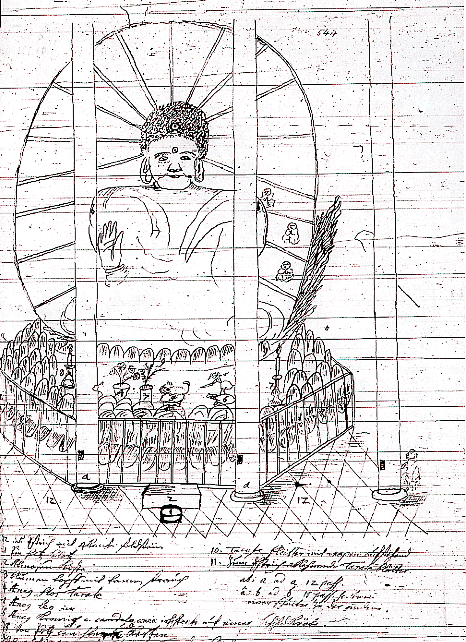
    At the Hokoji Temple, Hideyoshi had ordered the construction of a “Great Buddha”, which was said to be over 19m tall, making it one of the largest in history. However, in order to speed up construction, Hideyoshi is said to have ordered the construction changed from the traditional bronze to wood. When the earthquake struck, the Buddha was badly damaged as a result of its lighter construction.

    It is said that Hideyoshi, enraged at the damage caused to so expensive a monument, took a bow and shot an arrow into the Buddha’s forehead. Such an act of sacrilege was widely condemned, but scholars disagree over whether it actually happened, as the only sources (again) come from much later. The contemporary sources only say that Hideyoshi, upon inspecting the damage, ordered the Buddha and the hall containing it to be dismantled.

    A sketch by Dutch merchant Engelbert Kaempfer, showing the great Buddha as it appeared in 1691.

    On a side note, both structures would be reconstructed by Hideyoshi’s successor, Hideyori, and the re-consecration of the site would indirectly lead to the downfall and destruction of the Toyotomi Clan in 1615, but that’s a story for another time.

    As we’ve discussed previously, Hideyoshi had issued an order expelling Christian missionaries from Japan back in 1587, but it had generally gone unenforced. That changed in 1596, when the Spanish Galleon, San Felipe, wrecked off the coast of Shikoku. In the immediate aftermath, the local lord (who happened to be a Chosokabe) confiscated the ship’s cargo, and the Spanish complained to Hideyoshi.

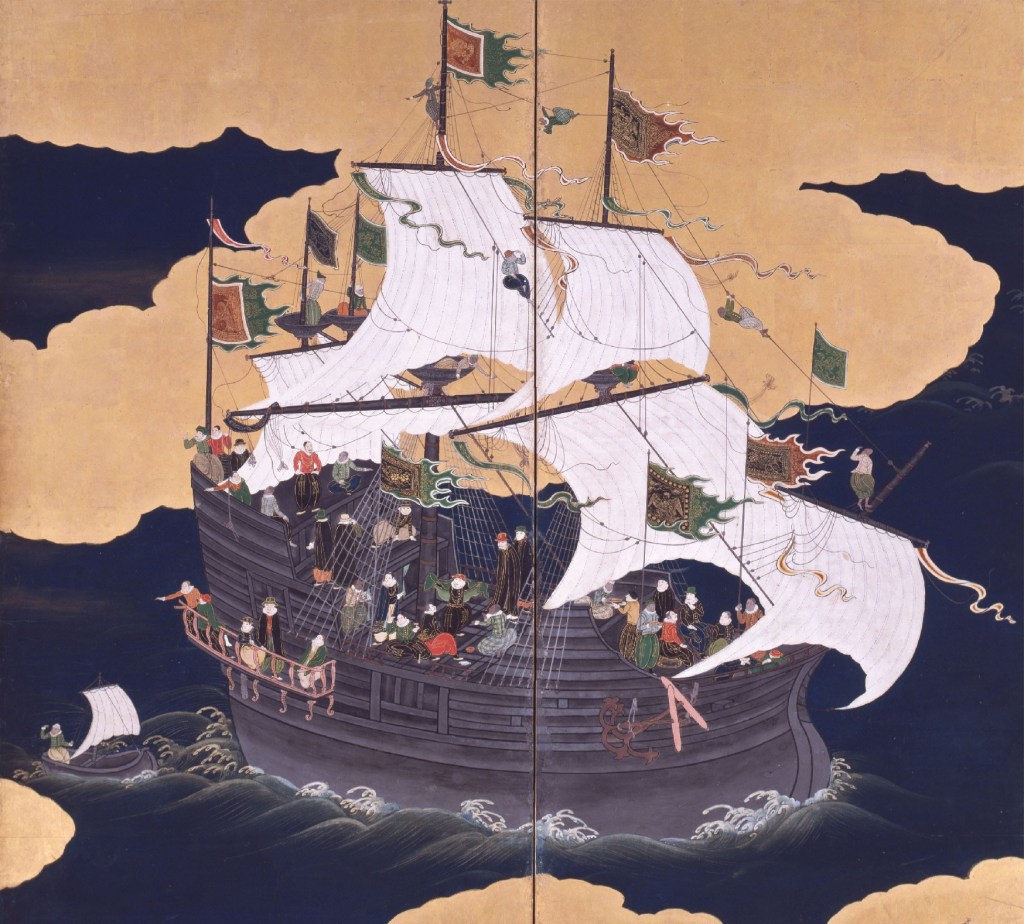
    A European Ship in Japanese waters around the late 16th Century.

    It seems that Hideyoshi himself didn’t much care about the confiscated Spanish treasure; however, one of the crew aboard the San Felipe, a man known as de Hollandia, proved to be a bit of a blowhard. He boasted to the local Japanese authorities that the Spanish Empire was vast, and he produced a map of the world to prove his point.

    The Japanese were shocked that the Spanish holdings were so extensive, and when they asked how Spain had come to acquire such territory, de Hollandia made the fateful mistake of claiming that missionaries had gone in first to convert the population, who then served as a vanguard for the Conquistadors who followed.

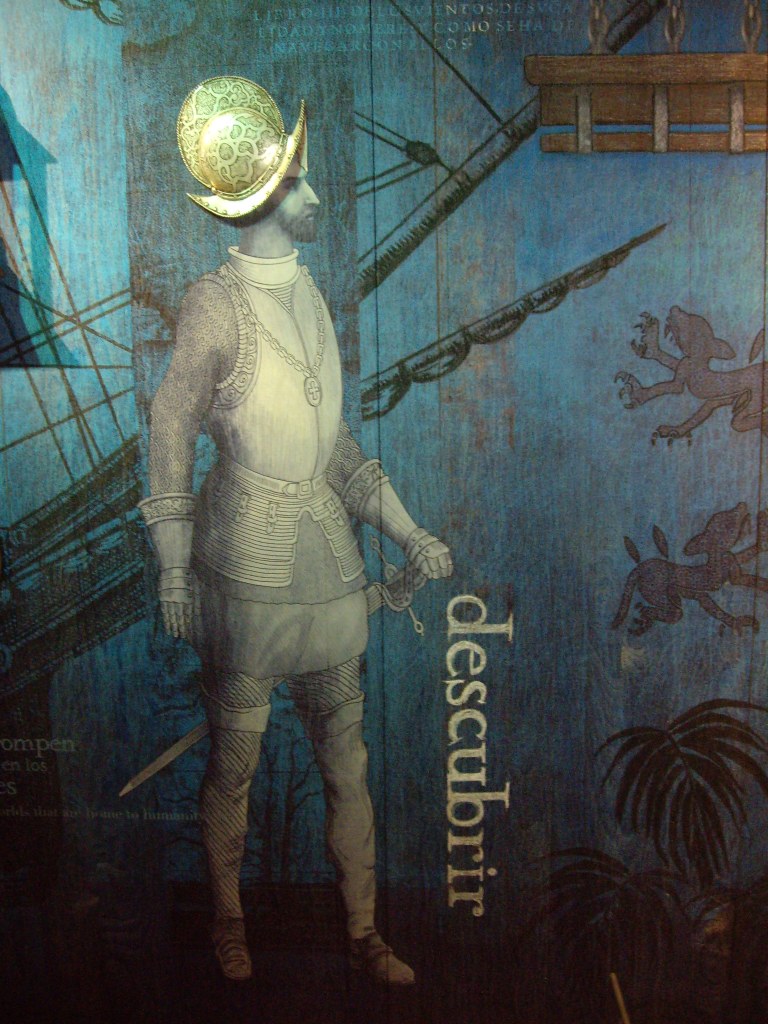
    The classic image of a Conquistador, this one in Seville, Spain. Though the Conquistadors were very successful in the Americas and the Philippines, they never set foot in Japan, though Hideyoshi had reason to fear they might.
    By CarlosVdeHabsburgo – Own work, CC BY-SA 3.0, https://commons.wikimedia.org/w/index.php?curid=24964604

    Hideyoshi may not have cared about treasure, but he was definitely paying attention now. He took the silver for himself and then ordered all Spanish Friars in Osaka arrested, along with several Japanese converts. In the end, 26 were taken to Nagasaki and publicly executed

    1596 also saw the restart of conflict in Korea, when negotiations with the Chinese broke down, and Hideyoshi ordered a second invasion, dispatching 140,000 men to reinforce the garrisons already in place. This time, instead of attempting to take the whole of Korea, Hideyoshi planned a more limited campaign, advancing into Gyeongsang Province and securing defensible positions there to serve as staging grounds for another round of conquest later.

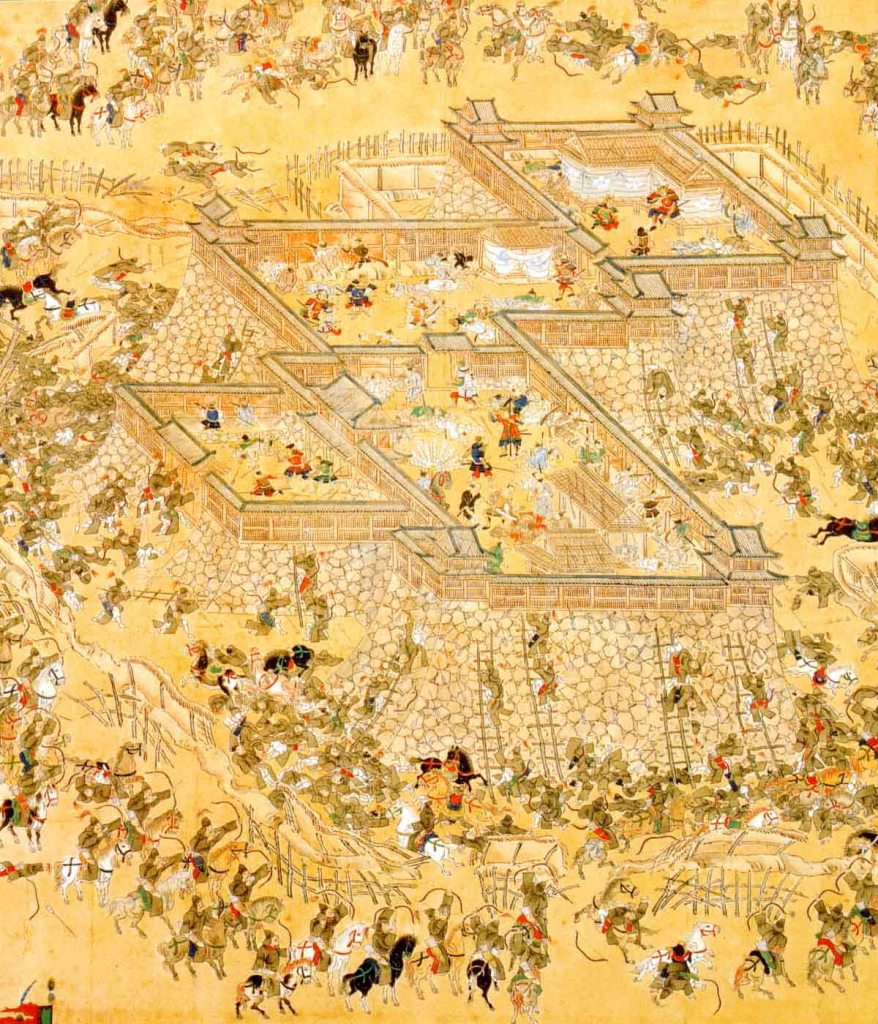
    An image depicting the fighting around Ulsan, site of some of the fiercest battles of the second invasion.

    By late 1597, however, Hideyoshi knew he was nearly done. His son and heir, Hideyori, was just a child, and he knew that his succession was far from guaranteed. In order to guarantee a peaceful transfer of power, he summoned five powerful Daimyo to Fushimi, making them swear to rule the realm as a Council of Regents (or Elders) until Hideyori came of age.

    The five regents were Ukita Hideie, Maeda Toshiie, Uesugi Kagekatsu, Mori Terumoto, and Tokugawa Ieyasu. Of the five, Ieyasu was far and away the most powerful, though he was not strong enough to oppose the other four directly, especially the venerable Maeda Toshiie and Mori Terumoto. This was presumably the point, however, as Hideyoshi wanted to create a council that was made up of men strong enough to rule, but not strong enough to rule alone.

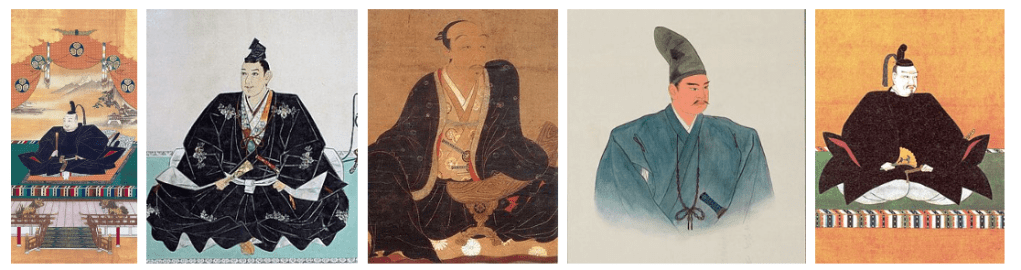
    The Council of Five Elders, from left to right: Tokugawa Ieyasu, Ukita Hideie, Maeda Toshiie, Uesugi Kagekatsu, and Mori Terumoto. Of the five, Ieyasu was the most powerful, and it became the task of the other four to rein him in.

    Hideyoshi passed away in August 1598, and the order he had done so much to create would not long outlive him. The council he had created fell apart within a year, following the death of Maeda Toshiie in 1599 and the political manoeuvring of Tokugawa Ieyasu, who won the decisive Battle of Sekigahara in 1600 and was declared Shogun in 1603.

    Though Hideyori would never rule in his own right, he would continue on as a living example of Hideyoshi’s legacy, but he would eventually fall foul of the rising power of the Tokugawa, and Hideyoshi’s line would come to an end in 1615, though, once again, we are getting ahead of ourselves.


    Sources
    https://ja.wikipedia.org/wiki/%E8%B1%8A%E8%87%A3%E7%A7%80%E5%90%89
    https://ja.wikipedia.org/wiki/%E3%82%B5%E3%83%B3%EF%BC%9D%E3%83%95%E3%82%A7%E3%83%AA%E3%83%9A%E5%8F%B7%E4%BA%8B%E4%BB%B6
    https://ja.wikipedia.org/wiki/%E6%85%B6%E9%95%B7%E4%BC%8F%E8%A6%8B%E5%9C%B0%E9%9C%87
    https://ja.wikipedia.org/wiki/%E6%96%B9%E5%BA%83%E5%AF%BA%E9%90%98%E9%8A%98%E4%BA%8B%E4%BB%B6
    https://ja.wikipedia.org/wiki/%E6%85%B6%E5%B0%9A%E9%81%93
    https://ja.wikipedia.org/wiki/%E6%96%B9%E5%BA%83%E5%AF%BA
    https://en.wikipedia.org/wiki/Yodo-dono
    https://ja.wikipedia.org/wiki/%E8%B1%8A%E8%87%A3%E7%A7%80%E6%AC%A1
    https://ja.wikipedia.org/wiki/%E6%96%87%E7%A6%84%E3%83%BB%E6%85%B6%E9%95%B7%E3%81%AE%E5%BD%B9