Tag: Medieval Japan

  • The Shimazu, Part 1

    The Shimazu, Part 1

    Last time we looked at Shikoku, the so-called ‘four provinces’, well, how about an island of nine provinces? That’s right, Kyushu, the third largest of Japan’s main islands, is so called because in the pre-modern period it was home to nine whole provinces, which means, as names go, it’s not terribly creative, but what can you do?

    Kyushu.
    By TUBS – This vector image includes elements that have been taken or adapted from this file:, CC BY-SA 3.0, https://commons.wikimedia.org/w/index.php?curid=16385933

    In ancient times, Kyushu had been the centre of cultural, economic, and social development in Japan, as its close proximity to Korea, and by extension China, made it the logical landing site for innovations as widespread as rice farming and written language. The island would also be the focus of two ultimately unsuccessful Mongol invasions in the 13th Century, and the Shogunate administration there would continue to be important until the decline of central authority in the 15th Century left Kyushu, much like the rest of the realm, effectively independent.

    Into this power vacuum stepped several powerful clans, with the most prominent arguably being the Ouchi, Otomo, and Shimazu. Though the Ouchi and Otomo would play important roles of their own in the story of the Sengoku Period, it is the Shimazu that we will be focusing on.

    The exact origins of the Shimazu name aren’t entirely clear, but the first figure to take the name was Tadahisa, who was made lord of the Shimazu Manor in southern Kyushu in 1185. Tadahisa himself is something of a mysterious figure, with various conflicting reports of his origins, parentage, and even his name, but what is clear is that the Shimazu were well established in southern Kyushu by the 13th century, and would use it as their base going forward.
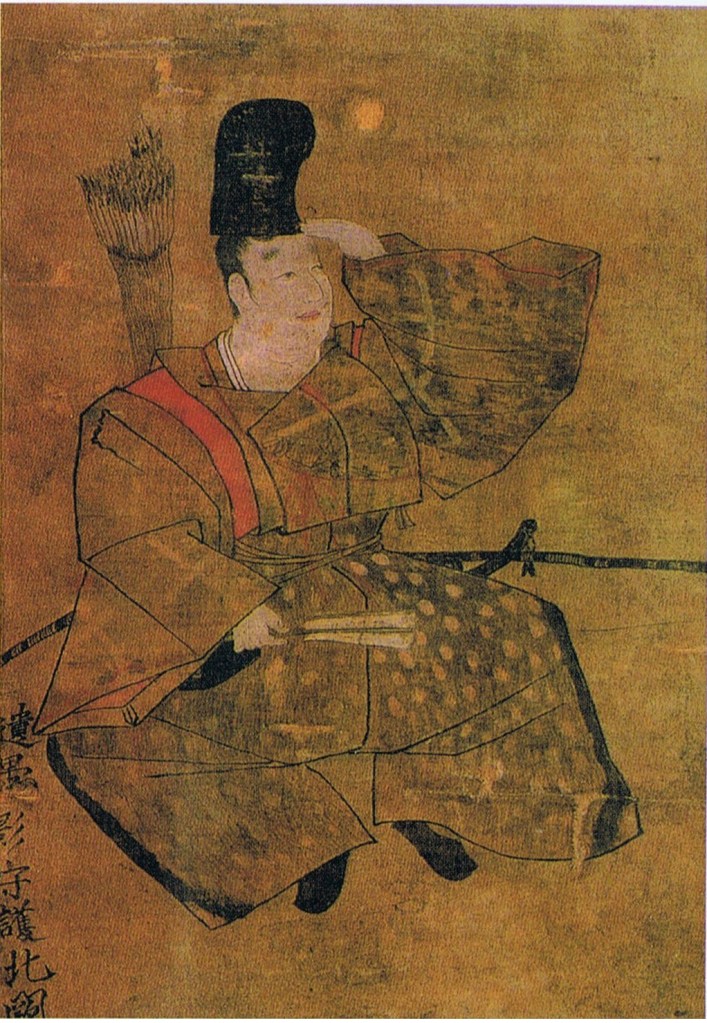
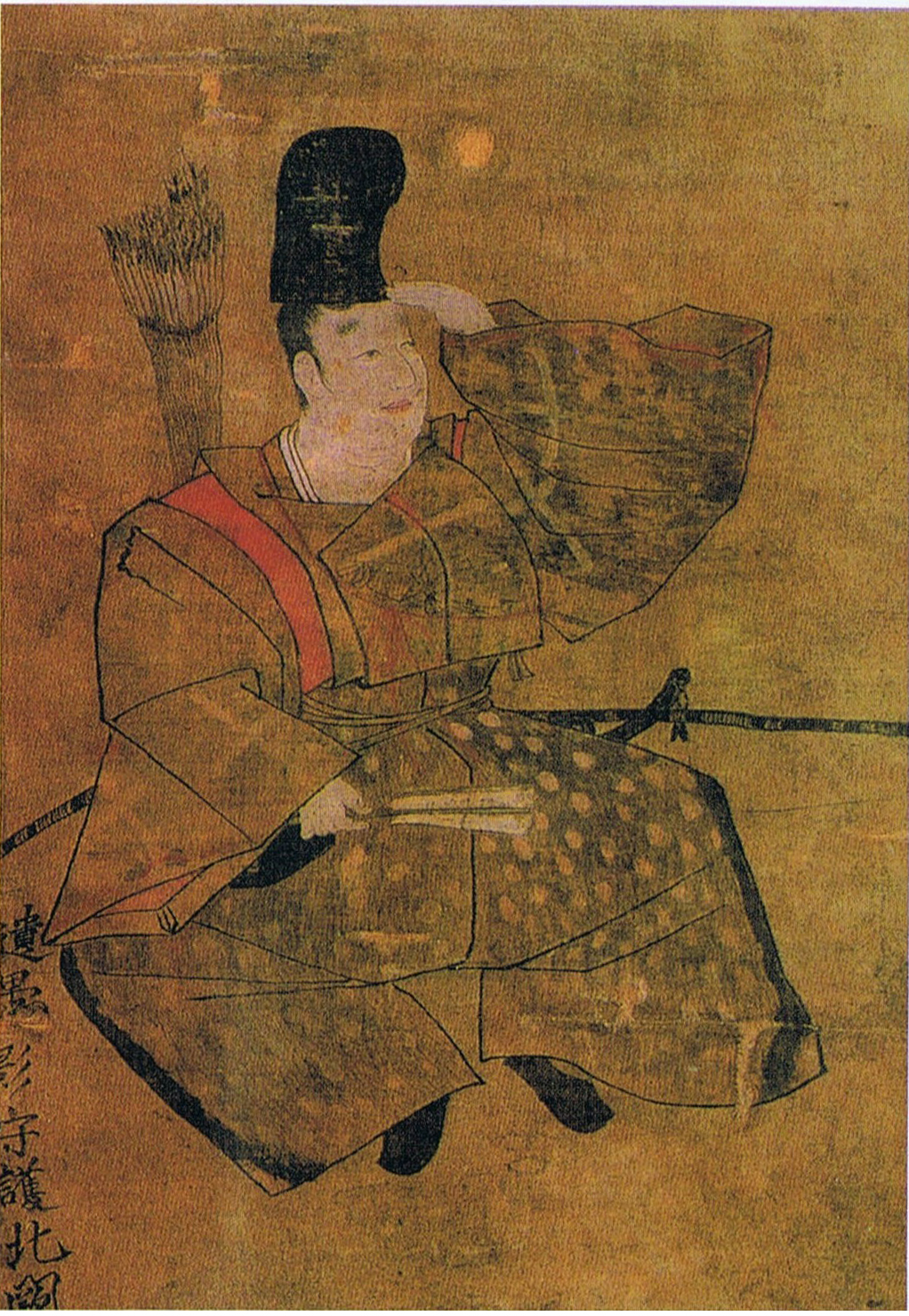
    Shimazu Tadahisa, the first “Lord” Shimazu.

    Tadahisa’s son, Tadatoki, seems to have been an accomplished military leader, as he was appointed the shugo (military governor) of Satsuma, Osumi, and Hyuga Provinces, all of southern Kyushu in effect. He was also granted numerous prestigious lands and titles around the realm, but it was his Kyushu holdings that would be the most important for his descendants.

    The Shimazu’s fortunes would ebb and flow over time, but the distance of their lands from the centre of power in Kyoto meant that they were often able to weather the storms of early Medieval Japan. They were not immune from the ever-present problem of internal conflict, however, and by the time of the Onin War in 1467, the Shimazu were weak, divided, and vulnerable.

    It would be Shimazu Tadayoshi (1492-1568) who would begin to turn the fortunes of the clan around. Originally from the Isaku Clan (a branch of the Shimazu), Tadayoshi had a difficult start to life. His father, Yoshihisa, was apparently murdered by a stable hand when Tadayoshi was just two, and his grandfather was killed in battle in 1500. Following this, Tadayoshi’s mother, Lady Baiso, agreed to marry the lord of another branch of the Shimazu, on the condition that Tadayoshi be adopted as heir to both branches. The lord in question was apparently so keen on Lady Baiso that he agreed.

    Shimazu Tadayoshi.

    Tadayoshi proved to be an enlightened and capable ruler, taking inspiration from Zen teachings and humanitarian principles. He was a popular leader, as he genuinely cared for the needs of his retainers and the welfare of his territory, but his son, Takahisa, would prove to be greater still. In 1526, following the deaths in quick succession of both his sons, the head of the main branch of the Shimazu Clan, Katsuhisa, turned to Tadayoshi (renowned for his learning and upright conduct) for a solution to the succession issue.

    Tadayoshi had Takahisa adopted by the Lord of the Shimazu. In November 1526, Katsuhisa handed over control of the Shimazu Clan to Takahisa and retired to a monastery. Tadayoshi became a monk himself shortly afterwards and would go on to play a significant role in aiding his son in reestablishing Shimazu power in southern Kyushu.
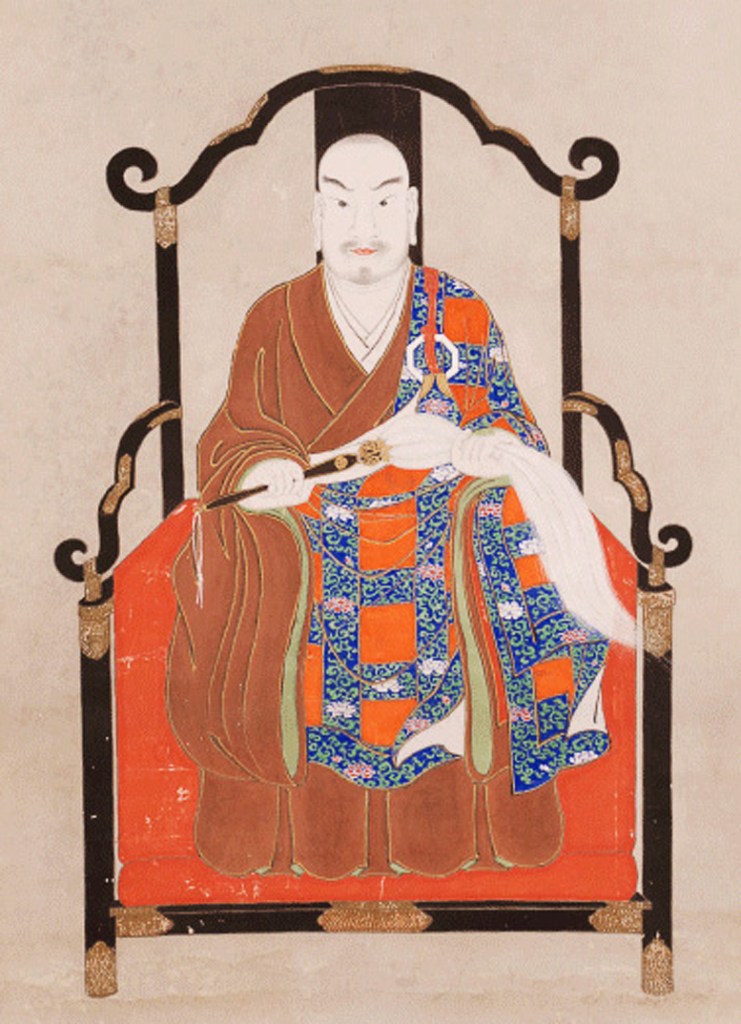
    Shimazu Takahisa.

    Things are never quite that simple, however, and Takahisa’s accession to the leadership of the Shimazu was opposed by several powerful retainers, some of whom also claimed the right to lead. Katsuhisa himself also seems to have expressed some regret about handing over power, and in June 1527, an army was raised which drove Takahisa out, and had Katsuhisa returned as the shugo.

    The fighting would go back and forth for a while after this, despite unsuccessful efforts to arrange a reconciliation in 1529. Katsuhisa proved to be an unpopular lord, however, apparently being more focused on ‘vulgar entertainment’ than the business of ruling. Though this did not automatically translate into support for Takahisa, the division amongst his enemies handed him the initiative.

    Starting in 1533, Takahisa would lead a series of counter-attacks which eventually saw him establish control over most of Satsuma Province, and in 1539, the decisive Battle of Murasakihara saw Takahisa drive out his primary rivals, though it wouldn’t be until 1552 that he was finally recognised as the shugo of Satsuma Province by the Shogunate, 26 years after he had first assumed the mantle.
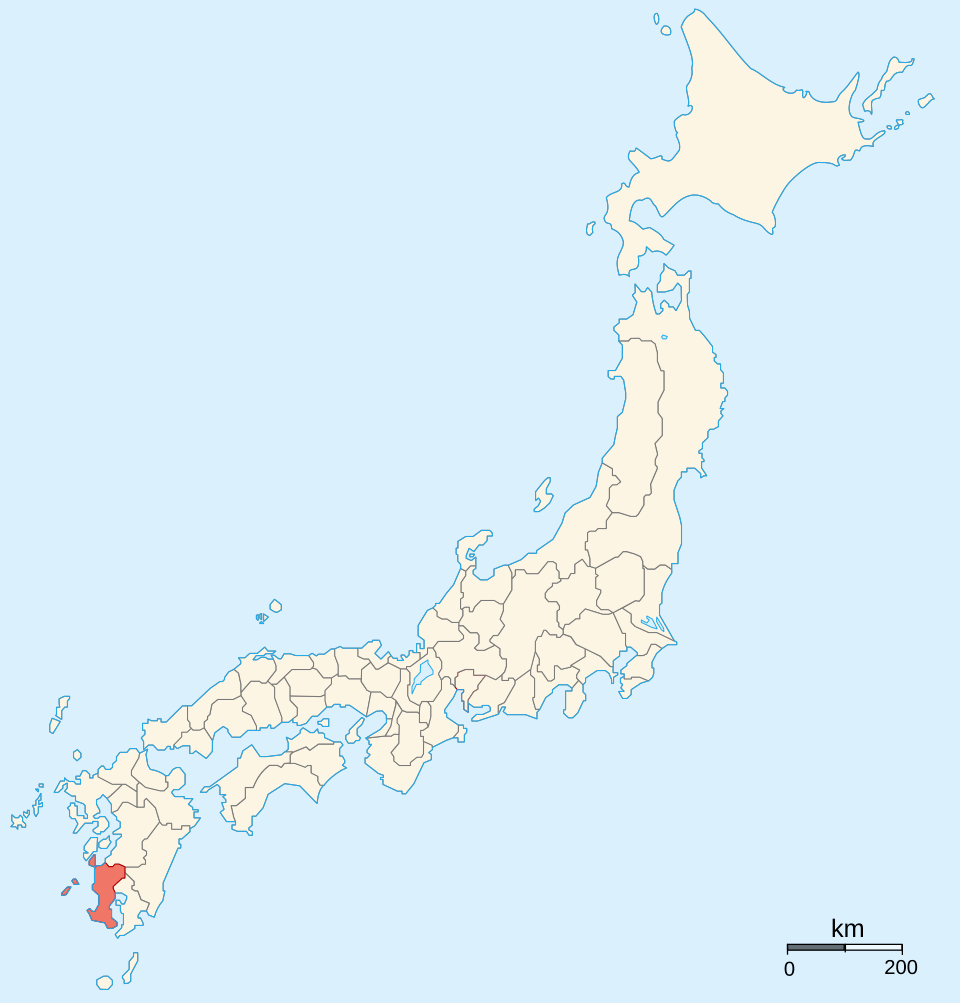
    Satsuma Province, home of the Shimazu Clan.
    By Ash_Crow – Own work, based on Image:Provinces of Japan.svg, CC BY 2.5, https://commons.wikimedia.org/w/index.php?curid=1691755

    Takahisa had long hoped to reestablish Shimazu control of the three provinces held by his ancestors, and he would lead campaigns into neighbouring Osumi province from 1554 to 1556, which would allow him to establish a foothold in the province from which further expansion could be launched.

    Though Takahisa would prove to be a successful warrior, he was also known for his outward-looking attitude towards foreigners. The Shimazu had long had trade with Ming China, largely through intermediaries in the Ryukyu Islands (modern Okinawa), and after Portuguese merchants arrived in Japan, Takahisa was one of the first lords to welcome them to his domains, and perhaps one of the first to employ firearms in battle.

    He would also go some way to establishing Christianity in Japan, as he welcomed Francis Xavier into his territory in 1549, though this would ultimately prove a short-lived association, due to backlash from conservative elements amongst the Buddhist and Shinto priesthoods.

    A later depiction of a Portuguese trading ship in Japanese waters.

    Takahisa would eventually retire to a monastery in 1556, handing control of the Shimazu over to his son, Yoshihisa, who also inherited his father’s ambitions to regain control of the three provinces of Satsuma, Osumi, and Hyuga. Yoshihisa had actually joined his father’s campaign in Osumi, making his ‘debut’ in 1554, and after inheriting the leadership from his father, he would continue the campaigns to fully pacify Satsuma and expand Shimazu holdings into the neighbouring provinces.

    Satsuma would come under his complete control in 1570. In 1572, a rival clan from Hyuga Province would invade Shimazu territory, only to be defeated in short order at the Battle of Kizakihara, with the Shimazu forces being led by Yoshihisa’s highly capable younger brother, Yoshihiro. It is said that the Shimazu, despite being outnumbered 10 to 1, launched an aggressive attack against the enemy, which saw several key leaders killed and over 500 enemy deaths (counted in heads taken after the battle).
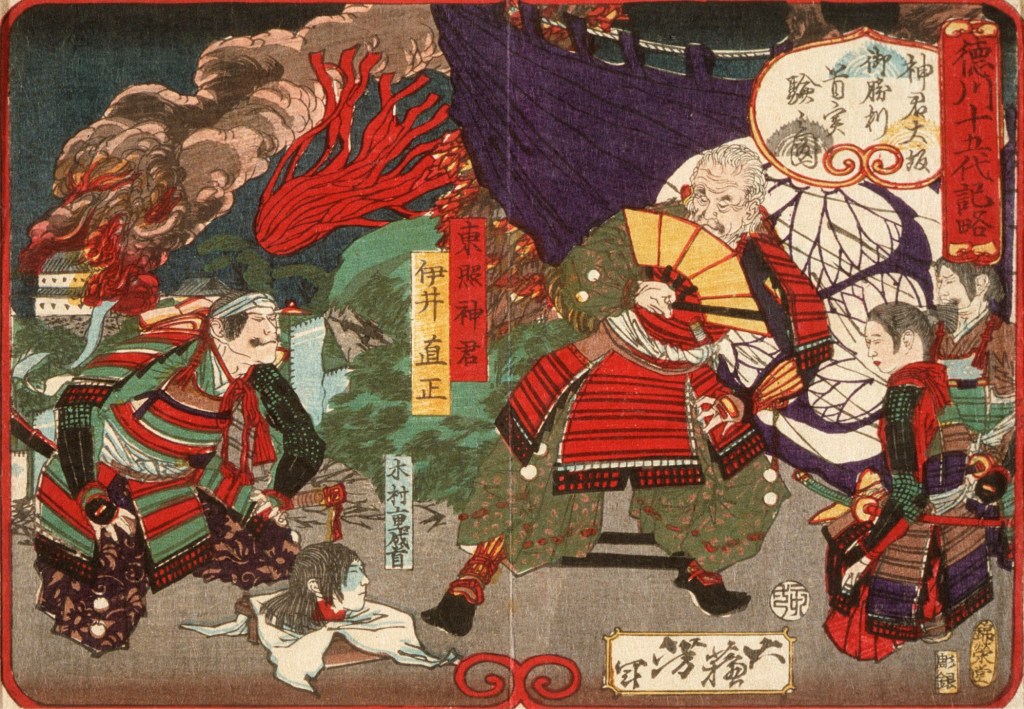
    A later depiction of a head viewing (kubi-jikken), a common practice among Samurai, in which the heads of defeated enemies would be presented to lords, or otherwise publicly displayed.

    This victory allowed Yoshihisa to focus on Osumi Province, which he was able to fully conquer by the end of 1573. Then in 1576, he captured the strategically important Takahara Castle, held by the powerful Ito Clan of Hyuga. The fall of Takahara led to a domino effect in which the remaining 48 castles of the Ito Clan were either conquered or defected to the Shimazu. Not long after, the head of the Ito Clan, Yoshisuke, fled Hyuga, and the long-dreamt-of reunification of the three provinces was achieved.

    Almost as soon as the dust had settled, however, the powerful Otomo Clan, who controlled several provinces in North-Eastern Kyushu, invaded, nominally in support of the exiled Yoshisuke, but more likely in an opportunistic attempt to expand their own territory. A huge army of some 43,000 men crossed into Hyuga Province in October 1578 and laid siege to Takashiro Castle. The Shimazu under Yoshihisa could muster only 20,000 men in response, but they took advantage of poor coordination amongst the Otomo, dealing with the invaders piecemeal.

    The campaign culminated in the Battle of Mimikawa (which was actually fought nearly 20 miles from the eponymous river), in which Yoshihisa employed a series of feigned retreats, breaking the Otomo Army (which still enjoyed a numerical advantage) down, and eventually winning a victory that was so comprehensive the Otomo effectively ceased to be serious rivals.

    The war wouldn’t end at Mimikawa, however, and in 1580, Oda Nobunaga began negotiations between the Otomo and Shimazu, hoping to bring an end to the war, since he wanted the Otomo to join his upcoming campaign against the Mori. The negotiations were apparently successful, as Yoshihisa even went so far as to recognise Nobunaga as his ‘lord’, and planned to join the attack on the Mori as well.
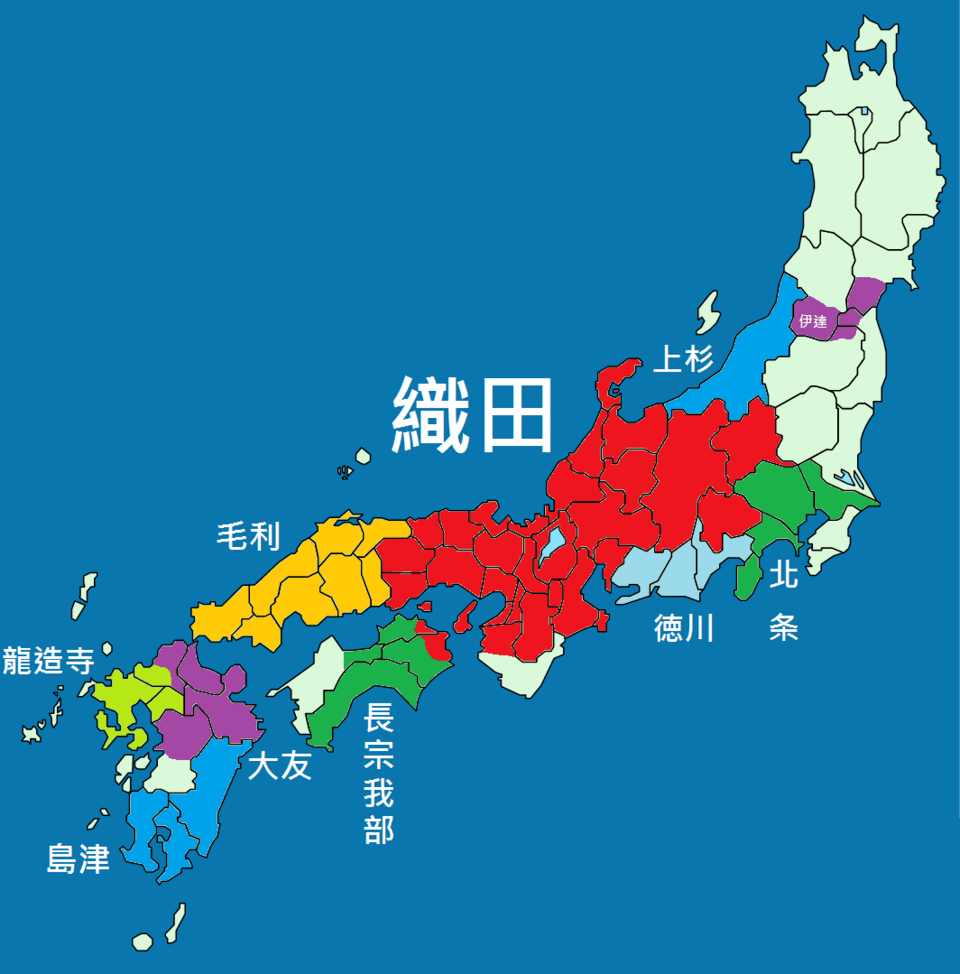
    The situation on the eve of Nobunaga’s death in 1582. The Shimazu lands are blue, in southern Kyushu.
    By Alvin Lee – Own work, CC BY-SA 4.0, https://commons.wikimedia.org/w/index.php?curid=39198356

    As we already know, Nobunaga’s death at the Honnoji incident in June 1582 put an end to those plans, but the weakened state of the Otomo and the fact that the peace deal no longer applied meant that the Shimazu were able to defeat or force the defection of several former Otomo retainers, increasing their own power and control over southern Kyushu.

    The campaign to unify the entire island would go on, but we’ll look at that next time.

    Sources
    https://ja.wikipedia.org/wiki/%E5%B3%B6%E6%B4%A5%E7%BE%A9%E4%B9%85
    https://ja.wikipedia.org/wiki/%E8%80%B3%E5%B7%9D%E3%81%AE%E6%88%A6%E3%81%84
    https://ja.wikipedia.org/wiki/%E5%A4%A7%E5%8F%8B%E6%B0%8F
    https://ja.wikipedia.org/wiki/%E5%B3%B6%E6%B4%A5%E7%BE%A9%E5%BC%98
    https://ja.wikipedia.org/wiki/%E5%B3%B6%E6%B4%A5%E8%B2%B4%E4%B9%85
    https://ja.wikipedia.org/wiki/%E5%B3%B6%E6%B4%A5%E5%BF%A0%E8%89%AF
    https://ja.wikipedia.org/wiki/%E6%A2%85%E7%AA%93%E5%A4%AB%E4%BA%BA
    https://ja.wikipedia.org/wiki/%E8%96%A9%E6%91%A9%E5%9B%BD
    https://en.wikipedia.org/wiki/Shimazu_Takahisa
    https://ja.wikipedia.org/wiki/%E5%B3%B6%E6%B4%A5%E5%BF%A0%E4%B9%85
    https://ja.wikipedia.org/wiki/%E5%B3%B6%E6%B4%A5%E6%B0%8F
    https://en.wikipedia.org/wiki/List_of_daimy%C5%8Ds_from_the_Sengoku_period
  • The Battles of Kawanakajima

    The Battles of Kawanakajima

    Having looked closely at the lives and careers of Takeda Shingen and Uesugi Kenshin, it is impossible not to notice the frequent mention of a place called Kawanakajima, and the series of battles that took place there from 1553 to 1564.

    The battles at Kawanakajima were not the only confrontations between the Takeda and Uesugi clans, nor were they the largest or most significant battles in the Sengoku period, but they have been the subject of extensive study, writing, and mythologising, as they seem to symbolise the famous rivalry between Shingen and Kenshin, and so they’re worth a closer look.

    Kawanakajima

    Kawanakajima as it appears today.
    By Bloglider at Japanese Wikipedia – Own work by the original uploader (Original text: Photo by Bloglider.), CC BY-SA 3.0, https://commons.wikimedia.org/w/index.php?curid=12400636

    The area called Kawanakajima is located in the northern part of Nagano Prefecture, and is the area surrounding where the Chikuma and Sai rivers meet. Now within the modern city of Nagano, in the 16th century the area was in Shinano Province and had long served as a key transportation route from north to south, and as such had frequently been a battleground.

    There had been many small, but long-established clans in the area, but by the early 1500s, it was largely under the control of the Murakami Clan, who would come into frequent conflict with the Takeda, from neighbouring Kai Province, who were beginning to expand into Shinano around this time.

    Starting in 1542, Takeda Shingen began a concerted effort to bring the province under his control, but he faced resistance of varying degrees of severity during his campaign, and it was the Murakami who proved the sternest test. At the Battle of Uedahara in 1548, the Murakami inflicted a serious defeat on the Takeda, and although Shingen would recover, he suffered a further defeat at the Siege of Toishi Castle in 1550.

    Takeda Harunobu, better remembered as Takeda Shingen.

    Shingen had what we might call “Bouncebackability”, and in 1551, Toishi Castle fell, leaving the Takeda in control of most of Shinano, with the exception of the area including, and to the north of, Kawanakajima. The clans in this area had previously allied with the Murakami, but with their defeat, they went looking for new friends.

    They found them in the Nagao Clan of Echigo, and their lord, Kagetora, better known to history as Uesugi Kenshin, who advanced into northern Shinano to support these local clans and to oppose the Takeda.

    The First Battle

    In April 1553, Shingen resumed his advance against the remaining clans in northern Shinano, meeting only sporadic resistance and forcing the weakened Murakami to ask for intervention from Kenshin. He responded, and a combined force of around 5000 men counterattacked and defeated the Takeda at the Battle of Yahata in May.

    Nagao Kagetora, better known as Uesugi Kenshin.

    This success would be short-lived, however, as Shingen would resume his advance that summer, forcing the Murakami back again, until September, when Kenshin himself led a force into Shinano, engaging and defeating the Takeda at the Battle of Fuse, before laying siege to several castles in quick succession. Shingen would seek to outmanoeuvre Kenshin and cut off his retreat, but Kenshin responded with a strategic retreat to a place called Hachimanbara.

    Unable to cut off Kenshin’s retreat, Shingen instead retreated to Shioda Castle, entrenching himself there and avoiding direct battle. With neither side apparently up for the fight, both armies gradually disengaged, with Kenshin returning home at the end of September, and Shingen following suit a few weeks later.

    The First Battle of Kawanakajima was more of an extended series of engagements than a pitched battle, and both sides achieved some strategic goals. Kenshin was able to stop the Takeda advance into northern Shinano, whereas Shingen was able to consolidate his control in the central and eastern parts of the province, free from outside intervention.

    The Second Battle

    Through the remainder of 1553 and into 1554, Takeda Shingen continued to expand and consolidate his control of the areas of Shinano south of Kawanakajima. He has also formed an alliance with the Hojo and Imagawa Clans, securing his southern borders and gaining an ally (in the Hojo) against Kenshin’s ambitions in the wider region.

    Shingen also sought to keep Kenshin off balance by supporting local rivals and instigating rebellions amongst his vassals. Though Kenshin was often able to swiftly put down these uprisings, in 1555, a previously loyal vassal, Kurita Eiju, who was based near the Zenkoji Temple, defected to the Takeda side. This was significant because Eiju controlled the southern half of the Nagano Basin, of which Kawanakajima was a central part.

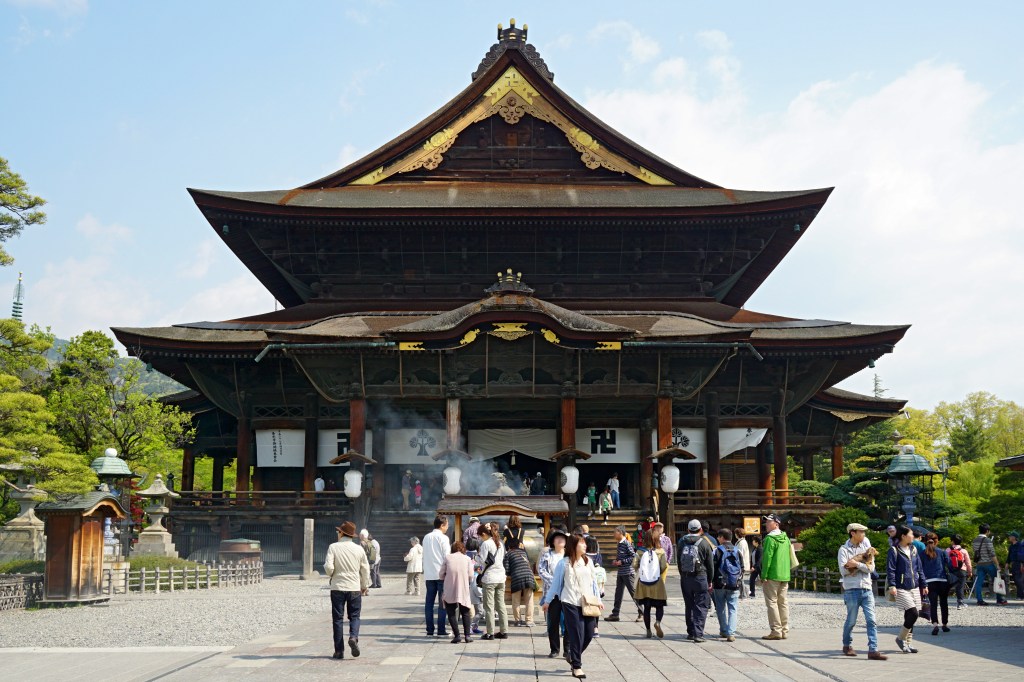
    Zenkoji Temple as it appears today.
    By 663highland, CC BY 2.5, https://commons.wikimedia.org/w/index.php?curid=48785737

    Shingen marched north to support his new ally, whilst Kenshin was obliged to dispatch an army to retake the lost territory. Eiju, alongside 3000 Takeda allies, holed up at Asahiyama Castle (in modern Nagano City), a strategically important location that controlled crossings of the Sai River.

    Kenshin could have manoeuvred around the strong point, but this would have left an enemy garrison at his rear, so instead, he entrenched his forces at Katsurayama (also in modern Nagano) and constructed a castle there, effectively bottling up the garrison at Asahiyama and neutralising the threat.

    Shingen was not idle during all this construction; however, he dispatched an army in support of Kurita Eiju, and it arrived in early July, facing Kenshin’s forces across the Sai River. The only serious engagement of the Second ‘Battle’ was on July 19th, when Kenshin sent forces across the river and engaged in sporadic fighting against the Takeda. Whether this was a serious attempt to force a crossing or just a kind of skirmish isn’t clear, but Kenshin’s forces swiftly withdrew, and both sides spent the next 200 days glaring at each other across the river.

    Eventually, events away from Kawanakajima would force a resolution. Shingen was a long way from his home base in Kai and was beginning to struggle to feed his army, whereas Kenshin was facing issues on his western borders from increasing activity from the local Ikko-Ikki, as well as dissatisfaction from his vassals over the months of inactivity.

    The Ikko-Ikki proved to be difficult to deal with for many lords. Uesugi Kenshin was no different.

    Eventually, both sides agreed to mediation, led by the Imagawa Clan, and a peace was agreed in October. The terms set the border between the rivals as the Sai River, as well as calling for the destruction of Asahiyama Castle, and the complete withdrawal of both armies from the area.

    In the immediate aftermath, Kenshin would turn to deal with the Ikko-Ikki, and Shingen would subdue the remaining independent lords in southern Shinano, but neither side was done with Kawanakajima.

    The Third Battle

    In 1556, Kenshin, apparently suffering from what we might now call ‘burnout’, announced his intention to renounce his lordship and become a monk. His retainers, horrified at the prospect, did everything they could to persuade him to change his mind. They were ultimately successful, and a good thing too, because through the interim period, Shingen had again begun putting pressure on local lords to switch sides, or face conquest.

    During the New Year festivities in January 1557, Kenshin, who had by now given up on his idea of becoming a monk (and the restful lifestyle that would have provided him), offered prayers at the Hachimangu Shrine (in Chikuma, Nagano) for the defeat of Takeda Shingen.

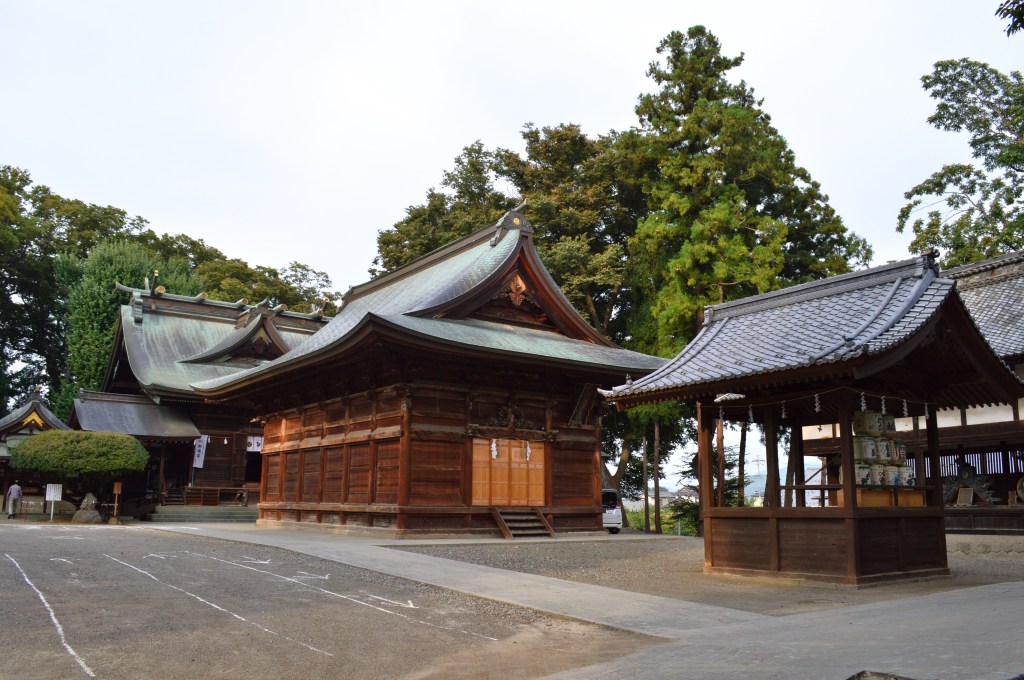
    Hachiman Shrine as it appears today. It’s now called Takemizuwake Shrine.

    Shingen, apparently put out by these attempts at divine intervention, advanced again, taking Katsurayama Castle (the site of the second ‘battle’) in mid-February, then advanced north, defeating the Takanashi Clan, who were allies of Kenshin. Kenshin’s response was delayed by winter snows, but he eventually came south, capturing several Takeda castles and even rebuilding Asahiyama.

    Shingen would continue to evade Kenshin’s advance, and both sides continued to dance around each other until an indecisive clash at Uenohara in late August, after which, Kenshin, who had advanced far from his supply bases in Echigo, withdrew. At this point, the Shogun, Ashikaga Yoshiteru, intervened, sending a letter requesting that both sides make peace, apparently in the hope that they would then send forces to aid the Shogunate.

    Neither side did, but a truce was agreed upon, which did not last long, as both Kenshin and Shingen would dispatch armies to duke it out in Northern Shinano. Kenshin arguably got the better of it, as the remaining clans in the area, previously just allies, were forced to become effectively his vassals.

    The Fourth Battle

    In 1559, Kenshin went to Kyoto to ask that the Shogun grant him the position of Kanto Kanrei, which had long been held by the Uesugi clan. Though the power of the Shogun and the prestige of any positions he might bestow were long since diminished, Kenshin was able to combine his appointment as Kanrei with his considerable martial talents to gather a large army and attack the Hojo in the Kanto region.

    In 1560, he was apparently able to gather an army of 100,000 men (though this is probably exaggerated) and advance deep into Hojo territory, even besieging their capital at Odawara in March 1561, though he was unable to take the formidable fortress. In response, the Hojo called for help from their ally, Takeda Shingen, who responded by invading Northern Shinano once again.

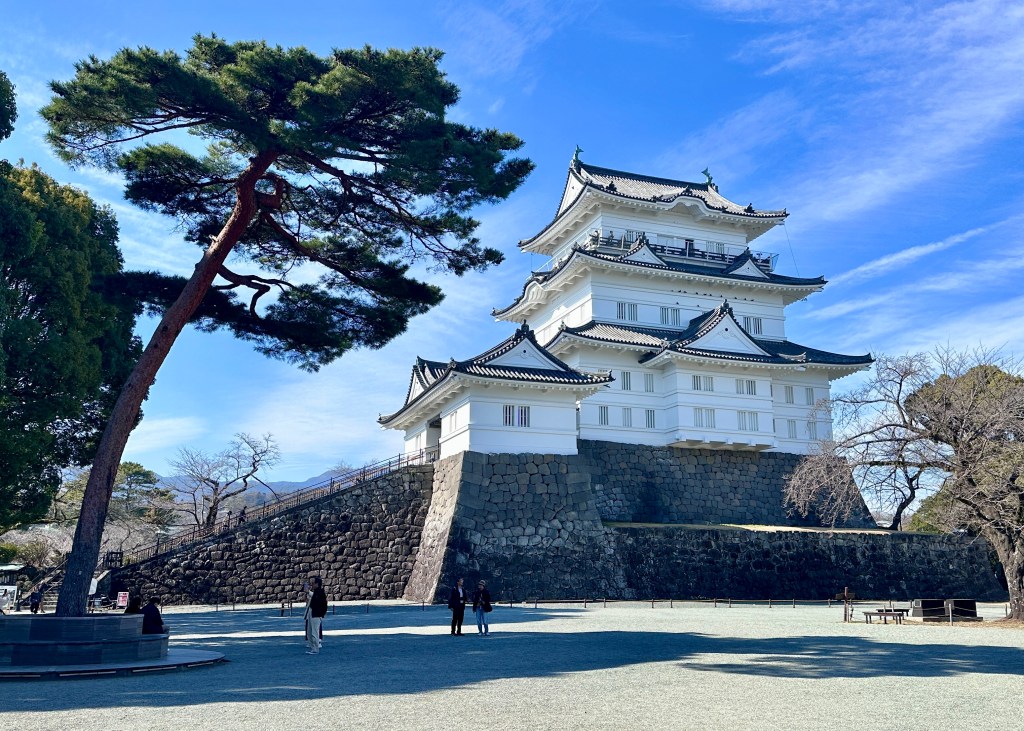
    The modern reconstruction of Odawara Castle.
    By Akonnchiroll – Own work, CC BY 4.0, https://commons.wikimedia.org/w/index.php?curid=145493350

    When news of Shingen’s attack reached Kenshin’s army, many of his supporters returned home, and he was obliged to lift the siege of Odawara and turn to face the Takeda. Beginning in August, the Takeda and Uesugi forces would again seek to gain advantage, advancing and retreating in turn, largely centred on Kaizu Castle, newly constructed at Shingen’s command.

    This would continue until late October, when the Takeda devised a strategy to launch a surprise attack against the Uesugi, with a second force positioned nearby to ambush and (hopefully) destroy the Uesugi as they attempted to regroup. Kenshin, however, was made aware of the Takeda’s movements, and, taking advantage of a moonless night, he had his army change position, moving them closer to the main Takeda force.

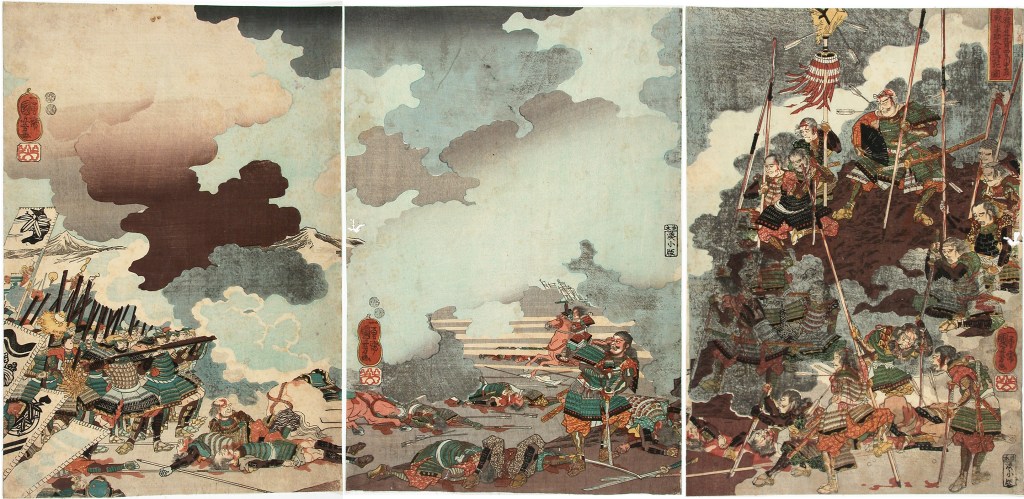
    Just after dawn on October 28th, a thick fog covered the ground around Kawanakajima, obscuring both armies. When the fog cleared, however, the Takeda were confronted with the sight of the entire Uesugi army positioned in front of them. Almost as soon as visibility allowed, Kenshin ordered a furious attack that smashed into the Takeda force and forced them onto the back foot.

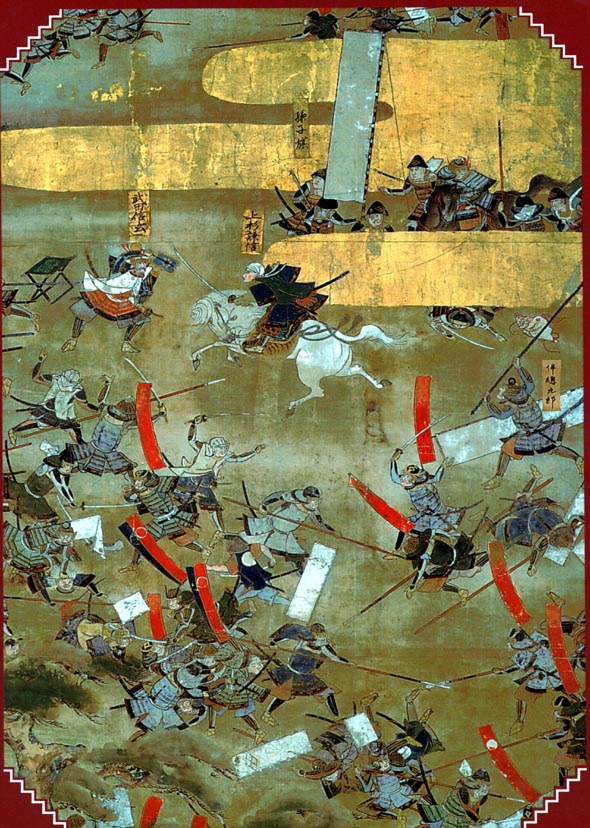
    The Uesugi made it as far as the Takeda’s main camp, and it is here that one of the most famous tales of the Sengoku period takes place. In the heat of the battle, a warrior wearing a white robe (or towel) around his head charged directly at Takeda Shingen. This warrior slashed three times at Shingen, who was able to parry the blows with his war fan (made of iron, not the usual paper, luckily), before Takeda’s soldiers came to the rescue and forced the white-clad warrior to retreat.
    The moment that Uesugi Kenshin and Takeda Shingen are said to have met on the battlefield.

    It was later revealed that this warrior was Uesugi Kenshin himself, and the duel became a legendary scene, symbolising the violence of the age, and the particular rivalry between Shingen and Kenshin. Unfortunately, we’re not sure that the duel actually took place. Takeda sources describe it as I’ve written here, whereas the Uesugi say the duel did take place, but that it was either a different attacker, or that it took place, not in the Takeda camp, but nearer the river, where the fighting was fiercest.

    Whether the famous duel actually happened or not, the battle itself was a bloody affair. The Uesugi attack was ferocious and drove the Takeda back to their camp, but failed to break them. At the same time, Takeda reinforcements rushing towards the battlefield were held up by a Uesugi rearguard.

    The Uesugi army (right) advance against the Takeda (left)

    If the battle had been brought to a conclusion that morning, then it’s likely the Uesugi would have won; however, the Takeda reinforcements arrived at around noon, and, fearing encirclement, Kenshin ordered a retreat. Shingen pursued him until around mid-afternoon, but then called it off, bringing an end to the bloodiest of the Battles of Kawanakajima.

    Exact death tolls are always tricky, as are the size of the opposing armies, but total numbers of combatants are estimated to have been around 20,000 for the Takeda and 13,000 for the Uesugi. When the fighting was over, the Takeda had suffered 4000 casualties, to the Uesugi’s 3000, and since they remained in control of the field, the battle was arguably a Takeda victory.

    The Fourth Battle of Kawanakajima was by far the bloodiest.

    That being said, the Uesugi would also claim victory, as they had foiled Takeda’s attempts to trap them, stopped their advance, and, despite a bloody day, their army remained more or less intact. Strategically, the battle was probably a draw, as it ultimately didn’t change much on the ground, neither side was able to secure new territory in the aftermath, and apart from the casualties (who would no doubt be comforted to know they’d died for nothing), both sides remained relatively strong.

    The Fifth Battle

    The Fifth and Final Battle of Kawanakajima occurred in 1564. In the interim period, Kenshin had continued to send forces into the Kanto, and Shingen had continued to try to expand his control of Shinano and other surrounding provinces.

    In Hida Province, a proxy war between a faction backed by the Uesugi and one by the Takeda swiftly drew both clans into direct confrontation once again. Shingen dispatched troops, and Kenshin moved to intercept them. The Takeda would get as far as the southern end of the Nagano Basin, but there would be no serious fighting. The Uesugi were content to limit themselves to blocking Shingen, and Shingen seemed to be content to allow himself to be blocked.

    Both sides eventually withdrew after nearly two months of little more than dirty looks, and this would prove to be the last confrontation between the clans at Kawanakajima.

    Aftermath

    The conflict between the Takeda and Uesugi Clans did not end after the Fifth Battle (such as it was), but both sides had more pressing concerns elsewhere. Kenshin was keen to focus on Etchu Province, the source of frequent Ikko-Ikki attacks, whilst Shingen’s attention was drawn south, and then eventually towards Kyoto as the political situation shifted dramatically.

    When Shingen died in 1573, Kenshin is supposed to have wept openly at the loss of his great rival, but the fortunes of both clans would continue to decline. The Takeda would be heavily defeated at the Battle of Nagashino in 1575, and their power would be permanently diminished. Then, in 1578, Kenshin died, and the Uesugi Clan was wracked by a civil war to determine who would succeed him.

    The Takeda would eventually be destroyed by Oda Nobunaga in 1582, whereas the Uesugi would survive the Sengoku Period and the centuries to come. In fact, as I mentioned in their brief profile, direct descendants of this famous clan still live in Japan to this day.

    Ultimately, the Battles of Kawanakajima became the stuff of myth and legend in the decades following the actual events. This was largely due to the actions of Tokugawa Ieyasu and his descendants, who made concerted efforts to elevate the actions of Takeda Shingen to almost semi-divine status.

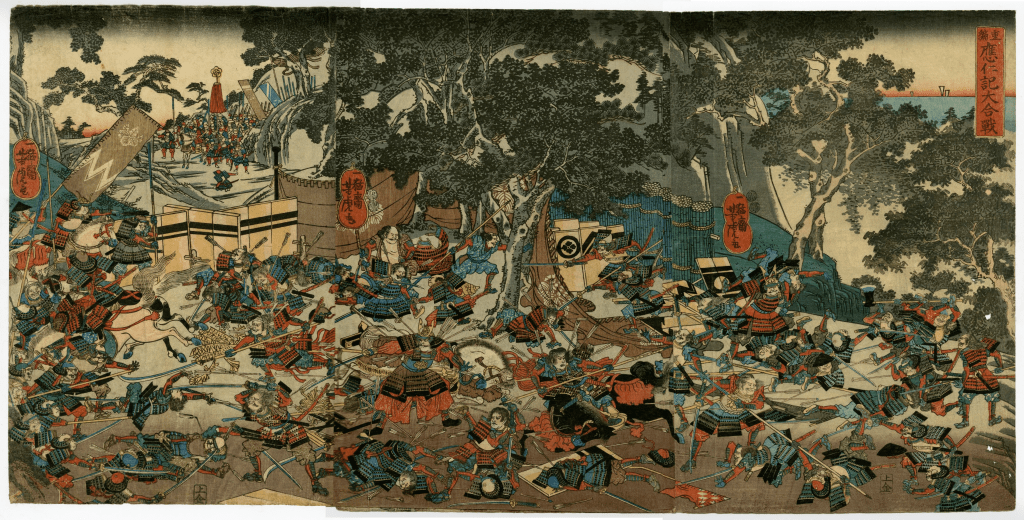
    A 19th Century artistic representation of the Battle of Kawanakajima.

    The reality is that the battles were locally important, but ultimately proved to be fringe events in the course of the enormous bloodshed elsewhere in Japan during this period, as we shall soon see.

    Sources
    https://ja.wikipedia.org/wiki/%E4%BF%A1%E6%BF%83%E6%9D%91%E4%B8%8A%E6%B0%8F
    https://en.wikipedia.org/wiki/Battles_of_Kawanakajima
    https://ja.wikipedia.org/wiki/%E5%B7%9D%E4%B8%AD%E5%B3%B6%E3%81%AE%E6%88%A6%E3%81%84
    https://ja.wikipedia.org/wiki/%E6%97%AD%E5%B1%B1%E5%9F%8E
    https://ja.wikipedia.org/wiki/%E6%AD%A6%E6%B0%B4%E5%88%A5%E7%A5%9E%E7%A4%BE
    https://ja.wikipedia.org/wiki/%E9%AB%98%E6%A2%A8%E6%B0%8F%E9%A4%A8
    https://en.wikipedia.org/wiki/Uesugi_Kenshin
    https://en.wikipedia.org/wiki/Takeda_Shingen

  • The Dragon of Echigo

    The Dragon of Echigo

    Much like Takeda Shingen, Kenshin’s real name wasn’t Kenshin, but Kagetora, with Kenshin being a religious name given in later life. However, as this is the name he is best known by, we will be referring to him as it throughout.

    Uesugi Kenshin, the Dragon of Echigo and the topic of this post.

    If you live your life in such a way that you earn the nickname ‘Dragon of something’ and have followers who think of you as an avatar of the God of War, then I’d say you’ve done pretty well for yourself. By this standard, our subject for today, Uesugi Kenshin, is a historical figure worthy of a closer look.

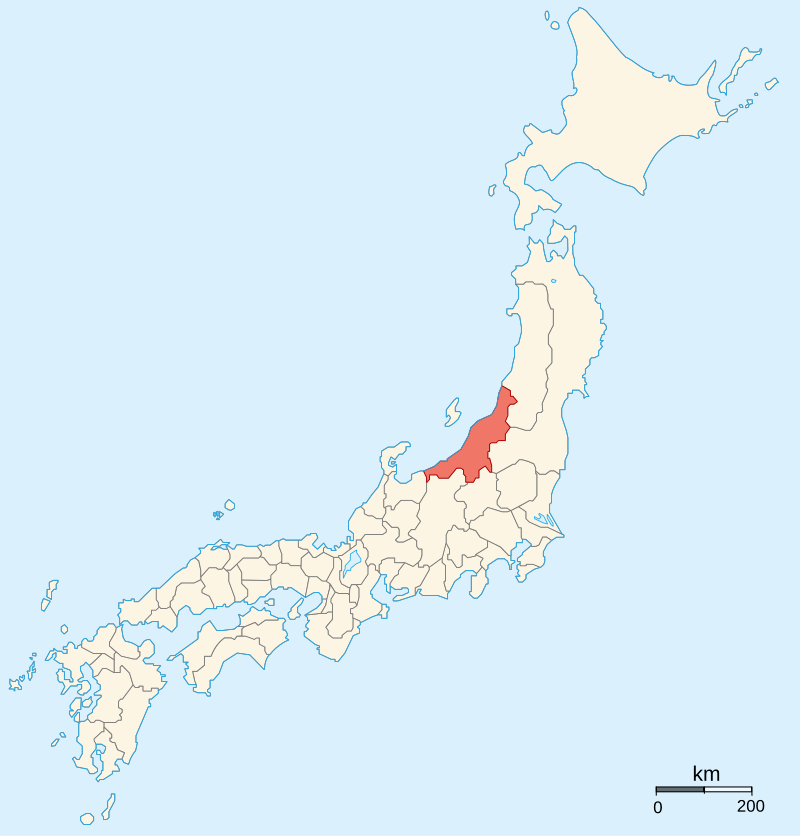
    Confusingly enough, Uesugi Kenshin wasn’t actually a member of the Uesugi family to begin with. He was a scion of the Nagao family, a strong clan who were vassals of the Yamanouchi branch of the Uesugi Clan, based in Echigo Province, in what is now Niigata Prefecture.

    Echigo Province.
    By Ash_Crow – Own work, based on Image:Provinces of Japan.svg, CC BY 2.5, https://commons.wikimedia.org/w/index.php?curid=1655309

    Born in 1530, it is quite likely that Kenshin’s mother was a concubine, and what’s more, the boy himself was the second son. He was never intended to inherit control of the Nagao Clan, and he entered the temple at Risenji at age 11, apparently set on a life as a monk.

    He doesn’t seem to have stayed at Risenji for long, however, as when his father died in 1542, just a year later, he was at the funeral with armour and sword at his side, and shortly after that, he was at Tochio Castle when a rebellion against Kenshin’s brother (the new Lord Nagao) broke out. Despite being just 14, Kenshin is supposed to have led the defence of the castle and won his first victory.

    At the time, though the Uesugi were nominally the lords of the region, the Nagao served as deputy (and de facto) governors in their place. After the death of Kenshin’s father, it was his elder brother, Harukage, who inherited this position. The brothers don’t seem to have gotten along very well, however, and in the late 1540s, a movement emerged within the Nagao clan that sought to replace Harukage with Kenshin as head of the clan.

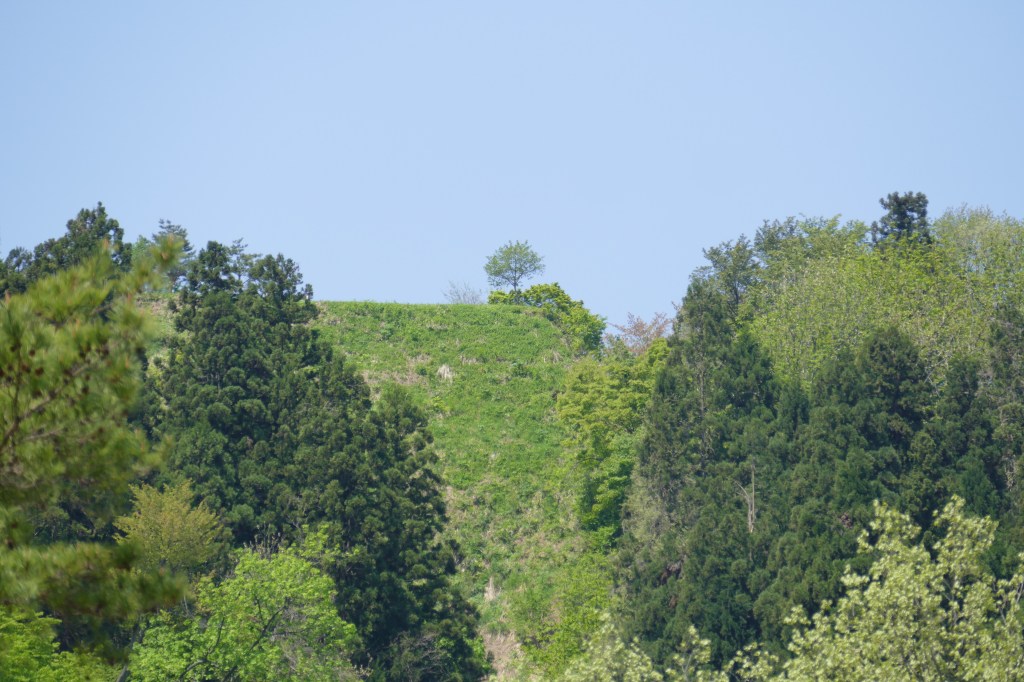
    The remains of Tochio Castle, site of Kenshin’s first victory.
    nubobo – 栃尾城本丸跡, CC 表示 2.0, https://commons.wikimedia.org/w/index.php?curid=59682349による

    Exactly why the clan was so against Harukage isn’t clear, but their efforts were ultimately successful. In 1548, under mediation from Uesugi Sadazane (their nominal overlord), Harukage agreed to adopt Kenshin, then retire as head of the clan, clearing the way for Kenshin to become head of the Nagao Clan aged just 18 or 19 (depending on the source).

    In 1550, Sadazane died without an heir, leaving Echigo Province without a lord. At this point, Shogun Ashikaga Yoshiteru instructed Kenshin to take the position of shugo of the province, effectively making him the new lord. Shogunate recognition was not quite the prestigious thing it had once been, however, and not long after this, supporters of Kenshin’s brother rose up in rebellion against him.

    Kenshin quickly bottled up the rebels at Sakado Castle, when the castle fell, the leader of the rebels was spared because he was Kenshin’s brother-in-law, and following this, Kenshin, still aged just 22 had established effectively control over the whole of Echigo Province.

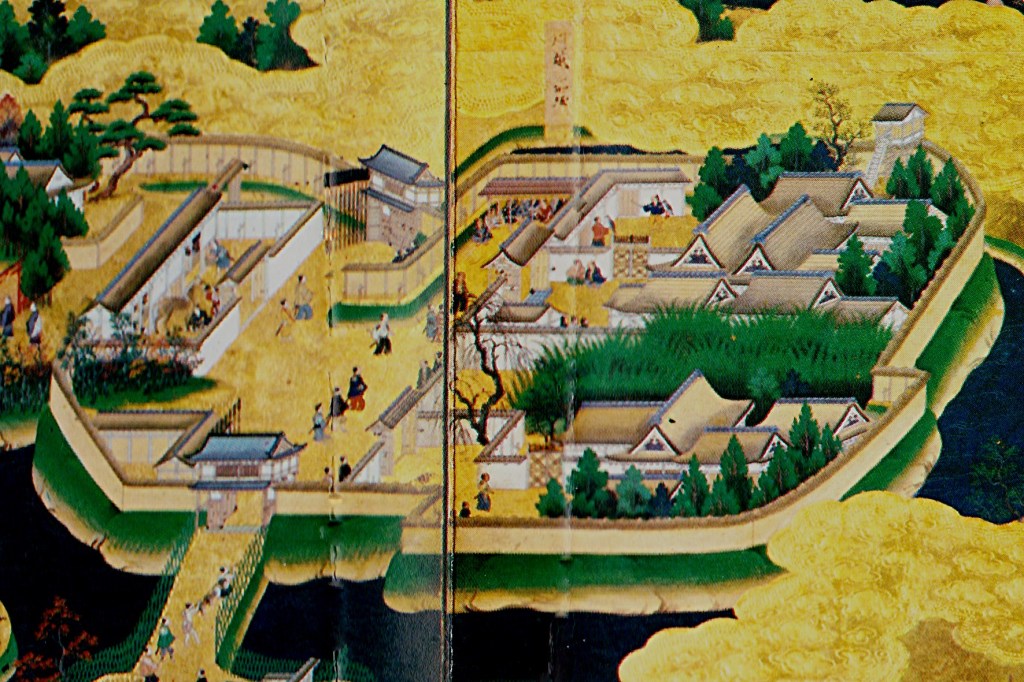
    Looking back for a moment, five years earlier, the Uesugi Clan (or more accurately, the Ogigayatsu branch of the clan) had been defeated at the Battle of Kawagoe by the new rising star of the Kanto, the Hojo Clan. The Ogigayatsu-Uesugi were wiped out after this battle, leaving only the Yamanouchi Branch of the clan. In 1552, Uesugi Norimasa, who was, on paper, the Kanto Kanrei (Shogun’s deputy) was finally driven out of the Kanto entirely and sought refuge with Kenshin.

    A later depiction of Kawagoe Castle.

    Unsurprisingly, harbouring their enemies didn’t do much for the relationship between Kenshin and the Hojo, and Kenshin would send an army to oppose the Hojo’s invasion of Kozuke Province (modern Gunma Prefecture), capturing Numata Castle, and forcing the Hojo to retreat.

    A year later, Kenshin would face a new enemy, as Takeda Shingen’s long-running invasion of Shinano eventually obliged some of the clans there to flee and seek refuge with Kenshin in Echigo. Much like the Hojo, the Takeda didn’t take kindly to someone giving refuge to their enemies, and one of Japanese history’s most famous rivalries was born.

    In August 1553, an army led by Kenshin himself advanced against the Takeda in Shinan, defeating Shingen himself at the Battle of Fuse on August 30th, then again at Yuwata on September 1st. After this, Shingen adopted a strategy of avoiding direct battle with Kenshin, and the conflict settled into a stalemate that was later called the First Battle of Kawanakajima.

    A modern view of Kawanakajima.
    日本語版ウィキペディアのBlogliderさん – 原版の投稿者自身による著作物 (Original text: Photo by Bloglider.), CC 表示-継承 3.0, https://commons.wikimedia.org/w/index.php?curid=12400636による

    In 1554-55, Kenshin was obliged to face a rebellion launched by treacherous vassals in league with Shingen. Putting down the rebellion quickly, Kenshin again marched into Shinano in April 1555 to face the advancing Takeda forces, again led by Shingen.

    At the Second Battle of Kawanakajima, the two sides faced each other in another stalemate, which dragged on for five months, before mediation from the Imagawa Clan led to both sides withdrawing after little actual fighting.

    In the following year, Kenshin apparently announced he would retire and become a monk, however, another outbreak of Takeda-backed rebellion forced him to change his plans, and after a period of peace, in 1557, Shingen again advanced against Kenshin’s allies in Shinano, forcing him to intervene and leading to the Third Battle of Kawanakajima, which, much like the previous two, swiftly settled into stalemate.

    A year later, Kenshin dispatched an army in an ultimately unsuccessful invasion of Kozuke Province and then in 1559 he was ‘invited’ for a meeting with the Shogun, Ashikaga Yoshiteru. Some sources say that Kenshin was granted the title of Kanto Kanrei at this time, the position traditionally held by the Uesugi Clan. He also apparently donated funds towards the maintenance and repair of the Imperial Palace.

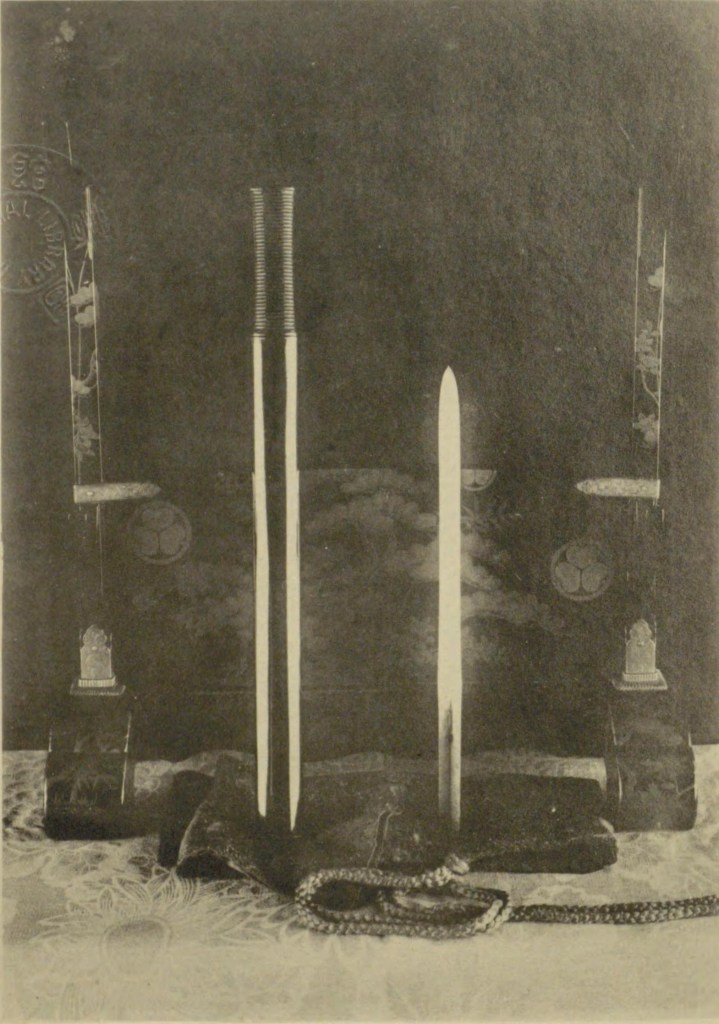
    Swords supposedly gifted to Kenshin by the Emperor, photographed in 1928.

    It seems that Kenshin enjoyed good relations with the Shogunate, but the already well-established decline of the Shogun’s power is highlighted again when he asked Kenshin, Shingen, and the Hojo to make peace in order to combine their forces against the Shogun’s enemies. All three parties refused.

    In March 1560, the Imagawa Clan’s devastating defeat at Okehazama opened the way for Kenshin to intervene directly in the Kanto again, as the Imagawa had been allied to his enemies, the Hojo, and their defeat left the Hojo vulnerable. Later that year, Kenshin launched another large-scale invasion of Kozuke Province, driving the Hojo back and capturing several important castles before celebrating New Year at Maebashi Castle, the gateway to the Kanto Plain.

    In March 1561, Kenshin was formally adopted by the Yamanouchi-Uesugi Clan (the only remaining branch) and changed his surname to match. Though he would be known as Uesugi Kagetora from this point, we will continue to call him Kenshin to keep things simple.

    In August of that year, Kenshin led another large army into Shinano, and engaged the Takeda at the Fourth Battle of Kawanakajima. Unlike the previous three, this battle was not an extended stalemate, but a bloody one. Both sides suffered heavy casualties, with sources ranging from around 20% losses, to as high as 60 or 70%, and when the battle was over, the Takeda held the field, but made no attempt to intervene as the Uesugi withdrew, leading some to suggest the battle was a bloody draw.

    A legendary depiction of the Fourth Battle of Kawanakajima, depicting the (possibly apocryphal) moment that Uesugi Kenshin and Takeda Shingen met on the field.

    The Takeda and Hojo clans, recognising the Uesugi as their common enemy, renewed their combined efforts and launched a joint counter-attack in Musashi Province in late 1561. At first, Uesugi forces were successful against the alliance, even getting as far as besieging Odawara Castle, the Hojo’s main stronghold, before being forced to withdraw after allied counter-attacks in other parts of the Kanto.

    The strategic situation in the Kanto would ebb and flow over the following years, as Uesugi, Takeda, and Hojo armies advanced and retreated, and the local lords would switch sides depending on whoever appeared to be in the ascendancy.

    All three factions would be occupied with fighting each other, but also engaged in other battles and proxy wars with allies and supporters of each other’s enemies. For Kenshin, this meant being obliged to dispatch forces into neighbouring Etchu Province in 1568, to deal with Ikko Ikki forces nominally allied with Shingen.

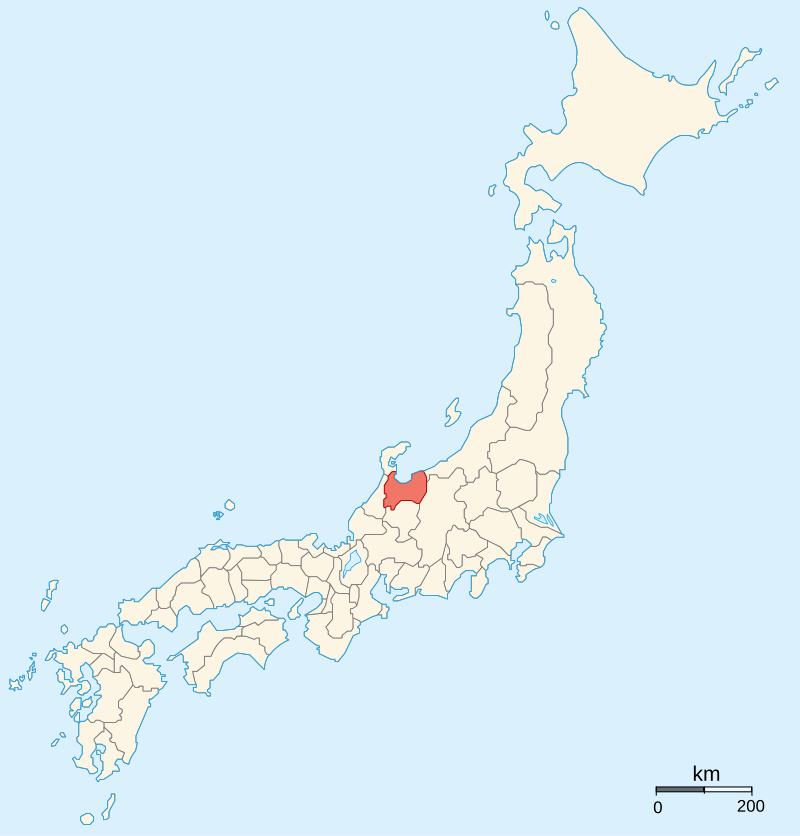
    Etchu Province.

    Seeking to take advantage of this distraction, Takeda forces attacked in Shinano and were ultimately defeated, but a rebellion in Echigo (Kenshin’s home province) meant he was unable to take advantage of this victory in the short term.

    Later that year, the strategic situation would shift in Kenshin’s favour, however, as the long-term decline in Takeda-Imagawa relations finally led to open conflict between two of his main rivals. The Imagawa would request aid from both the Uesugi and the Hojo, and while Kenshin would refuse, the Hojo dispatched forces to oppose the Takeda, bringing an end to the alliance that had done so much to oppose Kenshin.

    However, years of expensive (and bloody) campaigns in the Kanto had left the Uesugi exhausted, and in 1569, Kenshin reluctantly agreed to a peace deal with the Hojo, which saw the Uesugi withdraw from Musashi Province (modern day Tokyo and Saitama) and the Hojo withdrew from Kozuke.

    With his borders with the Hojo (relatively) secure, Kenshin was able to focus on campaigning against the Takeda again. In 1570 and 1571, he would engage the Takeda and their allies in Etchu and Shinano Provinces, generally having the better of the fighting, but the situation would shift again in 1572 when the lord of the Hojo, Ujiyasu, passed away, and was replaced by Ujimasa, who made peace with the Takeda, turning on the Uesugi. At the same time, the Etchu Ikko Ikki launched a fresh attack, instigated by Takeda Shingen.

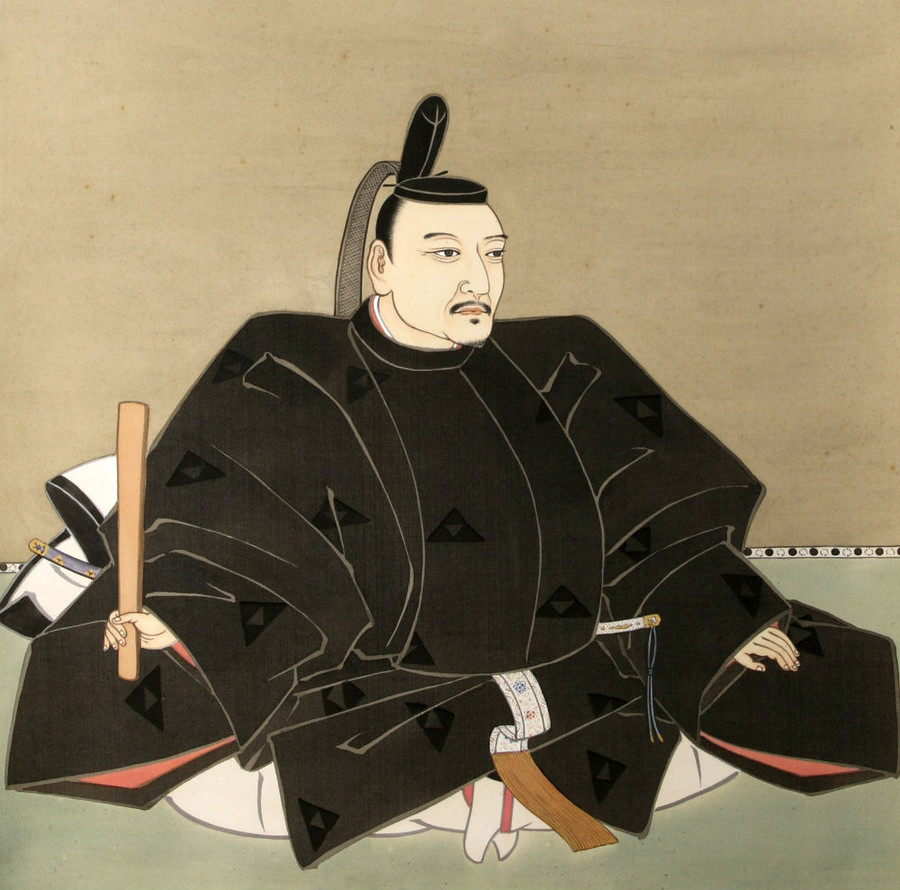
    Hojo Ujimasa, who reversed his father’s diplomatic policy.

    The Ikko Ikki would initially be successful against Kenshin, but by mid-1573, the momentum had shifted back in his favour, and several key fortresses within Etchu were taken. Also in that year, Kenshin’s long-time rival, Takeda Shingen, passed away, an event that apparently caused Kenshin to weep openly, but also significantly weakened the Takeda.

    Over the following two years, Kenshin was forced to split his focus between his ongoing campaign in Etchu and the situation in the Kanto. By the end of 1574, the Hojo had effectively ended any Uesugi presence in the region, and although Kenshin would launch counterattacks, the writing was on the wall for Uesugi power in the Kanto.

    In 1576, Kenshin would receive a request for aid from the Shogun, seeking support against Oda Nobunaga, who now dominated central Japan and had forced the Shogun into exile. In order to get to Kyoto, Kenshin was obliged to focus all his resources on securing Etchu and Noto Provinces. This campaign would drag on throughout 1576 and 1577, delayed by intervention from the Hojo and internal rebellion, but by November 1577, Kenshin had secured control of the provinces and was poised to strike at Kyoto itself.

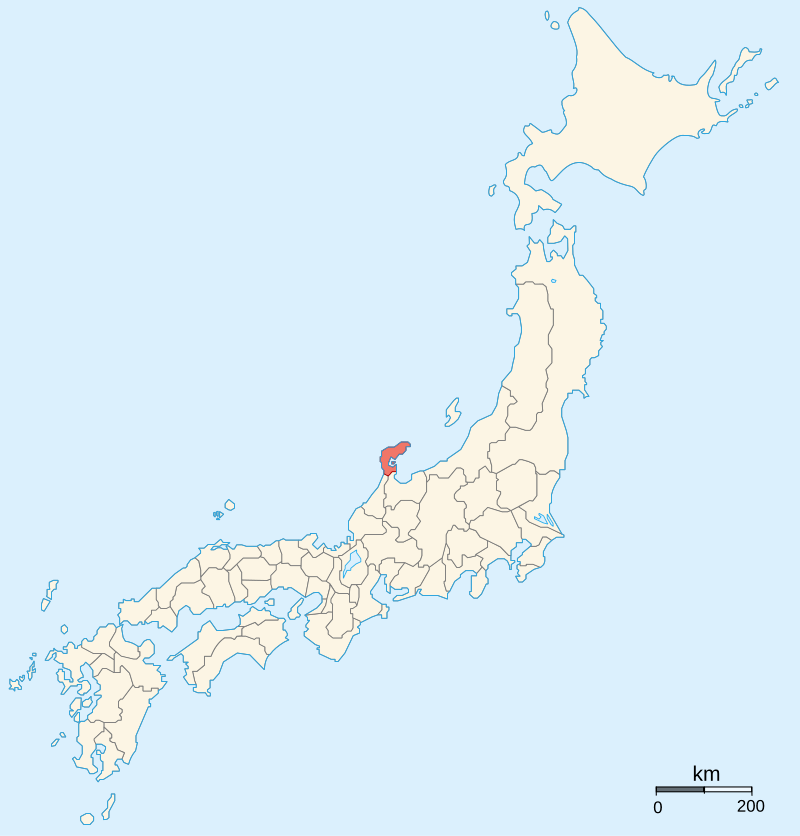
    Noto Province.
    By Ash_Crow – Own work, based on Image:Provinces of Japan.svg, CC BY 2.5, https://commons.wikimedia.org/w/index.php?curid=1690738

    Mustering a large army, Kenshin would march out to meet a force led by Nobunaga’s generals, Shibata Katsuie and Hashiba Hideyoshi (better remembered to history as Toyotomi Hideyoshi), who were not fond of each other. A dispute led to Hideyoshi withdrawing his forces early, and when the two sides clashed at the Battle of the Tedori River on November 3rd, Kenshin would emerge victorious.

    The exact course of the battle, and even the size of the forces involved, is not clear from contemporary sources, but Kenshin would withdraw temporarily, issuing instructions for a renewed campaign to begin in the spring. The battle at the Tedori River had opened a strategic opportunity for Kenshin, and it has been speculated that he might have been able to complete his march on Kyoto.

    Much like his rival, Shingen, however, Kenshin would never make the march. In early March, Kenshin would collapse (allegedly whilst in the toilet) and fall into a coma from which he would never wake up; he died on March 13th, aged 49.

    The site of Kenshin’s grave at Risenji, where he studied as a boy.
    By shikabane taro, CC BY 3.0, https://commons.wikimedia.org/w/index.php?curid=54071606

    Much like the Takeda after the death of Shingen, the Uesugi would be seriously weakened by Kenshin’s death. Though they had been a threat to Nobunaga, Kenshin’s death, and the ongoing effects of years of more or less constant conflict, rendered them powerless to stop the rise of Nobunaga, and after his death in 1582, the Uesugi would make their peace with his successors.

    Decisions made at the end of the Sengoku Jidai would see the clan’s star fall even further, though that is a story for another time.

    Sources
    https://ja.wikipedia.org/wiki/%E4%B8%8A%E6%9D%89%E8%AC%99%E4%BF%A1
    https://ja.wikipedia.org/wiki/%E6%89%8B%E5%8F%96%E5%B7%9D%E3%81%AE%E6%88%A6%E3%81%84
    https://en.wikipedia.org/wiki/Battle_of_Tedorigawa
    https://ja.wikipedia.org/wiki/%E5%B7%9D%E4%B8%AD%E5%B3%B6
    https://ja.wikipedia.org/wiki/%E5%89%8D%E6%A9%8B%E5%9F%8E
    https://ja.wikipedia.org/wiki/%E6%B2%BC%E7%94%B0%E5%9F%8E
    https://en.wikipedia.org/wiki/Battles_of_Kawanakajima

  • The Ikko-ikki

    The Ikko-ikki

    History often focuses on the rich and powerful doing rich and powerful things. Kings, Emperors, Shoguns, and Daimyo ride around on magnificent horses, hacking each other to bits with their swords, while hundreds of thousands of anonymous lower-class types charge into certain death for the honour and glory of whoever paid for the records to be written.

    Just look at all that honour and glory.

    While this particular version of history is suitably exciting and dramatic, it does tend to overlook those anonymous lower-class types. Sometimes, however, those same lower-class types take matters into their own hands, pick up whatever weapons are to hand, and do some hacking of their own.

    As Japan collapsed into the chaotic violence of the Sengoku Jidai, peasants, priests, and clergymen found themselves at the mercy of local Samurai lords who sought to exploit their labour, or burn their homes, and sometimes both. Many peasants found themselves (willingly or otherwise) in the service of one such lord or another, forming the Ashigaru who would eventually go on to form the backbone of most armies in the later Sengoku Period.

    Some, however, weren’t keen on dying for some rapacious shugo or in the service of a Shogun who was so far removed he might as well have been on the moon. These peasants formed what would become known as Ikko-shu, which is often translated as “Single Minded Schools”. Often inspired by religious teachings and based at fortified temples, the ikko-shu were quite diverse in their objectives, but were often motivated by local defence and what we might now think of as social justice.

    The religious component of the ikko-shu is debated even today. The progenitor of the movement was a monk called Rennyo, who became the abbot of the Honganji Temple, espousing the Jodo Shinshu sect. Rennyo was a charismatic guy, perhaps best highlighted by the fact he ended up with five wives and 27 children, three of whom were born when he was already in his 80s, which suggests he was more than a little compelling.

    Profound reproduction aside, Rennyo preached a doctrine that was incredibly radical for its time. It would take far too long to explore the complete details of his preaching, but for the purposes of this post, the key idea is that faith, not social class, defines a person’s worth.

    A contemporary portrait of Rennyo, which doesn’t do much to capture his apparent charisma.

    This was an explosive idea in a society that was as rigidly stratified as medieval Japan. Rennyo would go on to preach the ideas of spiritual equality, communal support, and collective morality, a powerful combination of ideas that found many willing followers amongst the peasantry, who were often victimised by a warrior and noble class who justified their oppression in spiritual and religious terms (the Emperor was a literal son of heaven, after all.)

    Rennyo himself was no revolutionary, even by the standards of the time. Though his ideas were radical, he preached order and obedience in accordance with the beliefs of Jodo Shinshu, emphasising the importance of peace and harmony, even at a time when the country was already tearing itself apart. His followers initially followed these teachings quite closely. The growing communities of ikko-shu were self-reliant, but largely peaceful.

    Unfortunately, peaceful intentions don’t necessarily result in peaceful outcomes. The autonomy of the ikko-shu inevitably attracted the ire of the powerful Daimyo, who would not tolerate any group of peasants defying their will. Peasant uprisings in and of themselves were nothing new; Japan, much like most medieval states, had a long history of often violent tension between ruler and ruled.

    What made the ikko-shu different was their belief that everyone, regardless of education or social class, had the potential for divine salvation. This upset just about everybody in the upper classes, and opposition to the ikko-shu became one of the few things that rival factions could agree on.

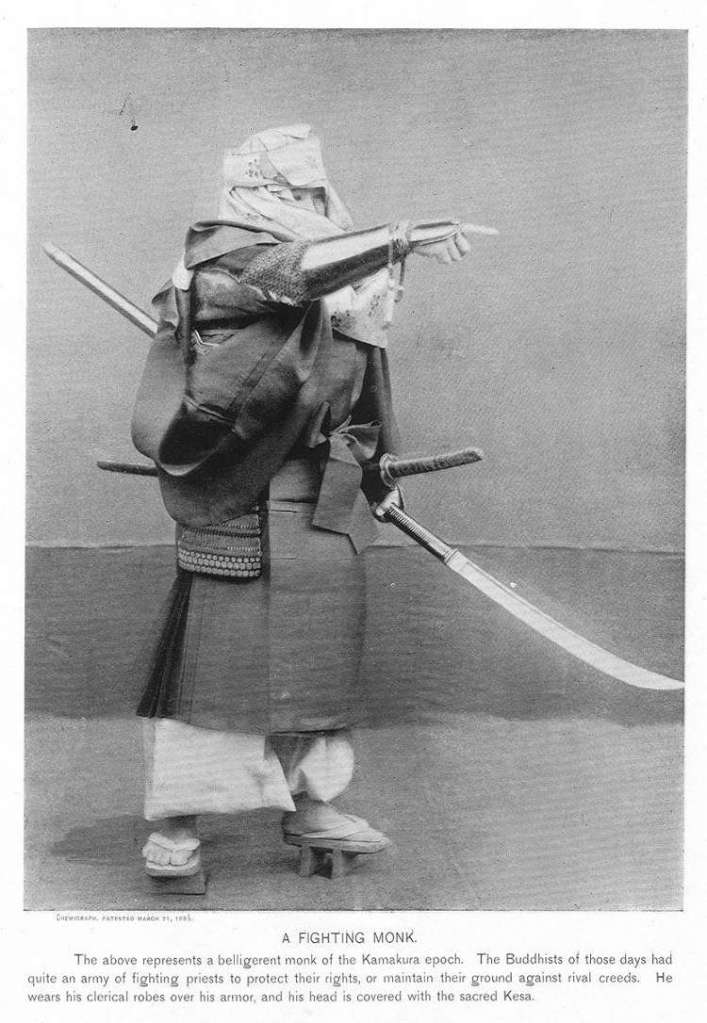
    One aspect of the early Sengoku Period, especially around Kyoto, was the presence of rival temples, which would often have cadres of warrior monks at their disposal. Honganji would become the target of the Enryakuji Temple in 1465, when the monks there declared that Rennyo and his followers were enemies of Buddhism.

    A later recreation of how warrior monks might have dressed.

    It might seem slightly strange to think of Buddhist monks being so militant, but it is important to remember that the temples of this period were political players in their own right; some would even go on to have power rivalling later Daimyo. In this context, then, it isn’t so unusual for one of them to have decided to destroy Honganji and remove the threat of the ikko-shu.
    The attack was largely successful, and Rennyo and his followers were forced to flee. This actually turned out to be good for them in the long term, as Rennyo was able to find supporters amongst the enemies of Enryakuji, leading to the establishment of several new temples loyal to Rennyo and his teachings.
    The profile of the ikko-shu would continue to rise, and they were often viewed as a potent counterweight to other Buddhist sects, which had already proved themselves willing and able to meddle in the ongoing political chaos. In 1474, the guardian of Kaga Province, Togashi Masachika, called on Rennyo to support him in a conflict within the wider Togashi clan. Rennyo agreed when he learned that a rival sect had taken the side of Masachika’s opponents.

    The intervention of the ikko-shu was decisive, and Masachika was able to overcome his foes. However, he began to sour on the support of Rennyo and his followers as he began to worry that their egalitarian message would spread amongst the peasants of Kaga Province.

    He was right to worry, although Rennyo himself departed the area shortly after the fighting, and would go on to establish several other temples, his followers remained in Kaga, and their teachings indeed proved popular with the locals, swelling their numbers and establishing several fortified temples in the province.

    The wider ikko-shu movement would continue to grow under Rennyo’s leadership, but we’re going to focus on Kaga Province in particular. As we’ve mentioned, although previously happy to make use of the military strength of the ikko-shu, Togashi Masachika grew increasingly alarmed about the spread of the movement.

    In 1475, he drove the ikko-shu out of Kaga, forcing them to seek refuge in neighbouring Etchu Province. Just like Masachika before him, the shugo (governor) of Etchu, Ishiguro Mitsuyoshi, was alarmed by the presence of the ikko-shu and sought to suppress them. However, when he launched an attack in 1481, he was defeated, and the ikko-shu, basing themselves at the Zuisenji Temple, took control of large parts of the province.

    Back in Kaga, events elsewhere in Japan led Masachika to impose increasingly burdensome taxes on the population, and in 1488, a similar revolt broke out amongst the peasantry, willingly aided by the ikko-shu crossing back from Etchu. Although the events in Etchu resulted in the first widely recognised independent action of the ikko-shu, the revolt in Kaga is typically considered to be the first example of Ikko-Ikki, that is, “Single Minded Uprising”, and a catch-all name that would eventually refer to the movement as a whole.

    Rennyo himself actually spoke out against the rebellion and attempted to persuade his followers not to support it, but the die had been cast, and although the initial uprising would not lead to complete Ikko control of Kaga by 1506, Kaga Province was being referred to as “ruled by peasants” in contemporary sources.

    Rennyo died in 1499, and with his passing, the Ikko-Ikki movement transitioned from simple self-defence to full participation in the Sengoku Period’s many wars. As early as 1494, there had been attempts to provoke similar uprisings in neighbouring provinces, with limited success; even when the uprisings had been triggered, they were often badly organised and swiftly put down.

    In 1506, the Kaga Ikko-Ikki decided on a more direct approach and invaded neighbouring Echizen Province, home of the Asakura Clan. Some sources estimate the Ikko Army had as many as 300,000 peasant warriors, and although this is certainly an exaggeration, it goes some way towards highlighting the anxiety shown towards the popularity and relative success of the movement.

    The invasion was stopped by the Asakura Clan, and the defeat of the Ikko-Ikki is supposed to have cost them 100,000 casualties (perhaps interpretable as a third of their army). Regardless of the actual numbers, the victory gave the Asakura the momentum to issue an edict banning the Ikko-shu ideology in their lands.

    Edicts alone didn’t do much to stop the popularity of the movement, though there was another serious uprising near Kyoto in 1531 (the Tenbun Disturbance) and a supporting uprising in Nara the next year.

    Other parts of Japan would also suffer serious outbreaks of Ikko-Ikki, most significantly in 1563-4, when a major uprising in Mikawa Province would sorely test Tokugawa Ieyasu (then using the clan name Matsudaira), who was able to achieve a military victory but would be forced to deal with the political fallout of the uprising for nearly 30 years after the event.

    A later illustration of the Mikawa Uprising.

    Probably the most famous of the Ikko-Ikki conflicts would be the one against Oda Nobunaga. Actually several conflicts the ongoing feud between Nobunaga and the Ikko-Ikki, would lead to some of the bloodiest episodes in an already bloody period.

    In 1568, Nobunaga arrived in Kyoto, nominally to support the last of the Ashikaga Shoguns but in reality to rule himself. In response, the Ikko-shu leaders at Ishiyama (in modern Osaka) issued a 1570 decree stating that Nobunaga was an enemy of the movement and should be opposed.

    Nobunaga was naturally taken aback by that and responded by laying siege to Ishiyama. He simultaneously launched attacks against other Ikko establishments, notably at Nagashima (near modern Nagoya) in a siege that lasted until 1574, and cost the lives of 20,000 or more Ikko-shu adherents.

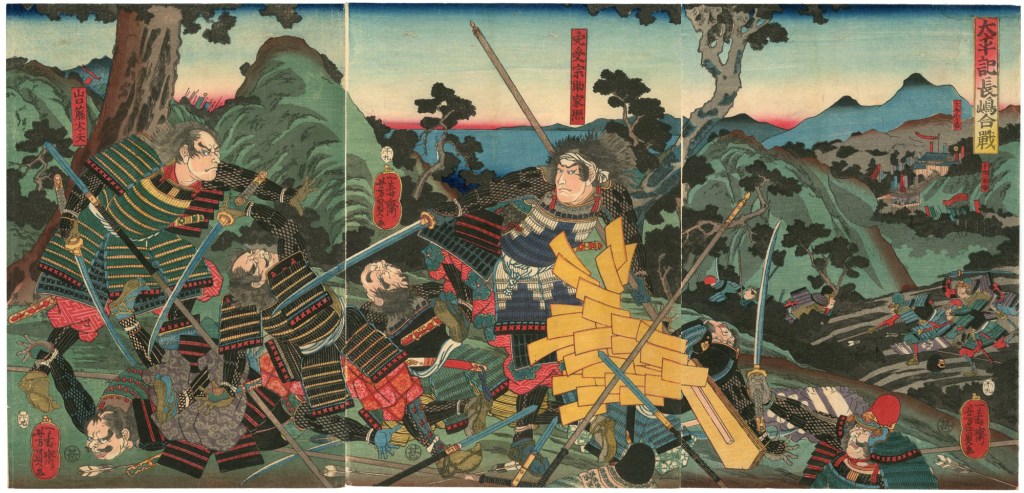
    Another later illustration, this time of the Battle at Nagashima

    He would continue his attacks on the movement throughout 1574 and beyond, advancing against them in Echizen as part of his conquest of that province, before finally reducing the great fortress temple at Ishiyama in 1580, after a ten-year siege (the longest in Japanese history), but a fire broke out shortly before peace could be finalised. Sources disagree on the origin of the blaze, but it destroyed Ishiyama and tore the spiritual heart out of the Ikko movement.

    Later, in one of his last campaigns, Nobunaga sent his subordinates to put down the Ikko-Ikki in Kaga, where it was finally crushed in March 1582, and the “Province ruled by peasants” was brought to an end after almost a century of independence.

    Though the political independence of the Ikko movement would not survive the end of the Sengoku Period, the religion itself endured, though not without difficulty. After Nobunaga’s suppression, the movement made a comeback under Toyotomi Hideyoshi, gaining lands and privileges in Kyoto.

    There would be a doctrinal and later physical split in the 17th Century, and an East Honganji and West Honganji (named after their relative locations in Kyoto) would emerge. In the modern period, changes in laws, customs, and further factional splits mean there are now dozens of sects of various sizes, all claiming to be descended from the original Jodo Shinshu, which is now the most widespread Buddhist Sect in Japan, with more than 22,000 temples associated with it in one form or another

    The Nishi-Honganji as it appears today.
    By 663highland, CC BY 2.5, https://commons.wikimedia.org/w/index.php?curid=56357164

    Sources
    https://en.wikipedia.org/wiki/Ikk%C5%8D-ikki
    https://en.wikipedia.org/wiki/Ikk%C5%8D-sh%C5%AB
    https://ja.wikipedia.org/wiki/%E4%B8%80%E5%90%91%E4%B8%80%E6%8F%86
    https://ja.wikipedia.org/wiki/%E9%95%B7%E5%B3%B6%E4%B8%80%E5%90%91%E4%B8%80%E6%8F%86
    https://ja.wikipedia.org/wiki/%E8%B6%8A%E5%89%8D%E4%B8%80%E5%90%91%E4%B8%80%E6%8F%86
    https://ja.wikipedia.org/wiki/%E7%9F%B3%E5%B1%B1%E5%90%88%E6%88%A6
    https://ja.wikipedia.org/wiki/%E4%B8%89%E6%B2%B3%E4%B8%80%E5%90%91%E4%B8%80%E6%8F%86
    https://ja.wikipedia.org/wiki/%E4%B9%9D%E9%A0%AD%E7%AB%9C%E5%B7%9D%E3%81%AE%E6%88%A6%E3%81%84
    https://ja.wikipedia.org/wiki/%E5%8A%A0%E8%B3%80%E4%B8%80%E5%90%91%E4%B8%80%E6%8F%86
    https://ja.wikipedia.org/wiki/%E8%B6%8A%E4%B8%AD%E4%B8%80%E5%90%91%E4%B8%80%E6%8F%86
    https://ja.wikipedia.org/wiki/%E7%9C%9F%E5%AE%97%E5%A4%A7%E8%B0%B7%E6%B4%BE%E4%BA%95%E6%B3%A2%E5%88%A5%E9%99%A2%E7%91%9E%E6%B3%89%E5%AF%BA
    https://ja.wikipedia.org/wiki/%E5%AF%8C%E6%A8%AB%E6%94%BF%E8%A6%AA
    https://ja.wikipedia.org/wiki/%E6%9C%AC%E9%A1%98%E5%AF%BA%E3%81%AE%E6%AD%B4%E5%8F%B2
    https://ja.wikipedia.org/wiki/%E4%B8%80%E5%90%91%E5%AE%97
    https://ja.wikipedia.org/wiki/%E4%B8%80%E6%8F%86
    https://ja.wikipedia.org/wiki/%E8%93%AE%E5%A6%82
    https://en.wikipedia.org/wiki/Hongan-ji

  • Kamakura V – The More things change…

    As we’ve already seen, by the mid-13th century, the Kamakura Shogunate was ruled in all but name by the powerful Hojo Clan, who ruled as shikken or regents for the Shoguns, who were nothing more than puppets.

    In Kyoto, the Emperor, whilst technically being the overlord of everyone as a son of heaven, was also just a figurehead, whose position and finances relied entirely on the goodwill of the Hojo. Successive Emperors accepted this situation with varying degrees of good grace, concluding that comfortable irrelevance was better than uncomfortable exile.

    Hojo power, however, became a double-edged sword; as their power grew, so did their arrogance. They began to rely on an increasingly small pool of retainers to fill powerful positions, and this led to disillusionment amongst other Samurai houses, who saw their path to wealth and influence blocked by entrenched Hojo interests.

    This situation worsened in the aftermath of the Mongol Invasions. Despite successfully defending the country, the cost of mounting the defence had been ruinous to Hojo finances, and the expected rewards of land and titles were not forthcoming (the Samurai didn’t fight for honour, you see.)

    This brewing resentment took time to reach a boiling point, but as the 14th century went on, anger towards the government in Kamakura continued to grow, and the Hojo, in what they believed to be an unassailable position, were practically blind to it.

    In 1318, Emperor Go-Daigo took the throne. His choice of name was significant, as it had been Emperor Daigo (the Go prefix means ‘later’) who had successfully opposed the power of the Fujiwara during the Heian Period, and Go-Daigo intended to emulate his namesake, and overthrow the Shogunate and restore independent Imperial Rule.

    Go-Daigo’s plans were first uncovered during the so-called Shochu Incident in 1324, where comrades of the Emperor were arrested after being accused of plotting against the Shogun. In response, the Emperor sent a letter to the Shogun, ‘ordering’ them to find the real culprits. It is generally believed that the Shogunate were well aware of Go-Daigo’s involvement, but, wanting to avoid a direct conflict with the Court, they played along, and several conspirators were exiled, whilst the Emperor himself remained officially blameless.

    Go-Daigo, though, didn’t learn his lesson, and tried again in 1331; he gathered supporters and retainers, evidently planning to launch a coup against the Shogunate. Once again, his plans were discovered, and the Shogunate dispatched forces to Kyoto to put the planned uprising down. Go-Daigo fled, but was captured shortly afterwards and exiled to the remote Oki Islands (off the coast of modern Shimane Prefecture).

    The Hojo replaced Go-Daigo with Emperor Kogon, but partisans of Go-Daigo, including his son, Prince Morinaga (sometimes called Moriyoshi) and legendary Samurai, Kusunoki Masashige, continued to oppose the Shogun, until 1333, when Go-Daigo escaped from exile.

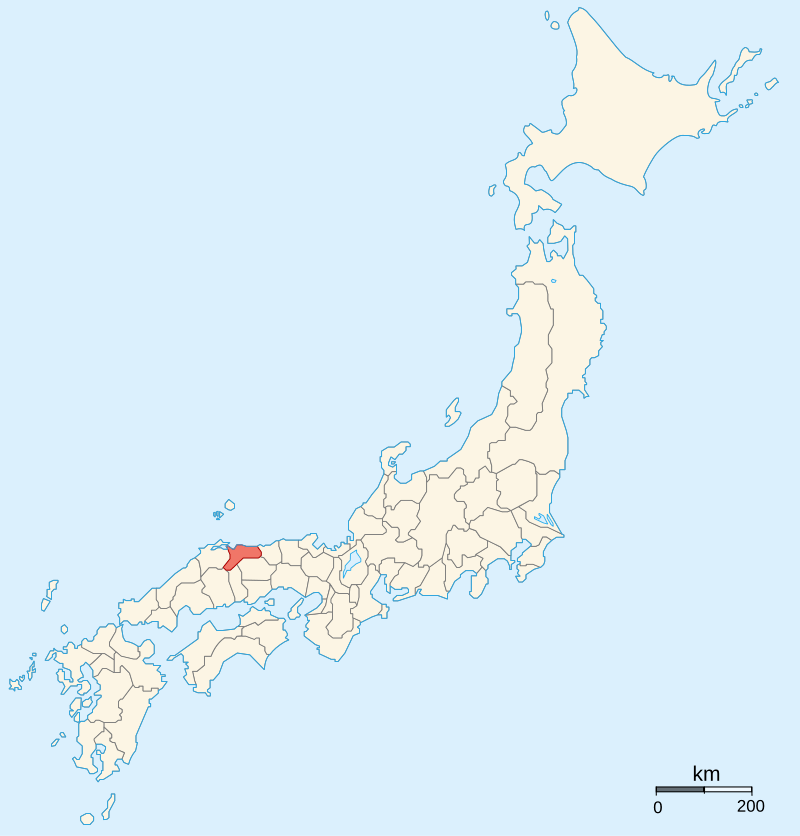
    Landing in Hoki Province, Go-Daigo made his base at Mt Senjo and gathered a new “Imperial” Army. In April, Go-Daigo won the Battle of Mt Senjo, gaining him support of many powerful warlords in Western Japan, allowing him to march on Kyoto and take the city in June, re-establishing himself as Emperor.

    Hoki Province, where Go-Daigo landed after escaping from exile.
    By Ash_Crow – Own work, based on Image:Provinces of Japan.svg, CC BY 2.5, https://commons.wikimedia.org/w/index.php?curid=1682393

    The Hojo dispatched Ashikaga Takauji, one of their foremost generals, with orders to crush Go-Daigo and reassert Shogunate power. Takauji marched, but for reasons that are still unclear, he switched sides, turned his army around, and launched an attack on Kamakura. One possible reason for Takauji’s defection is that the Ashikaga Clan were descendants of the Minamoto, the family that had established the Shogunate, and he hoped to be named Shogun himself, but his real reasons will probably never be known for sure.

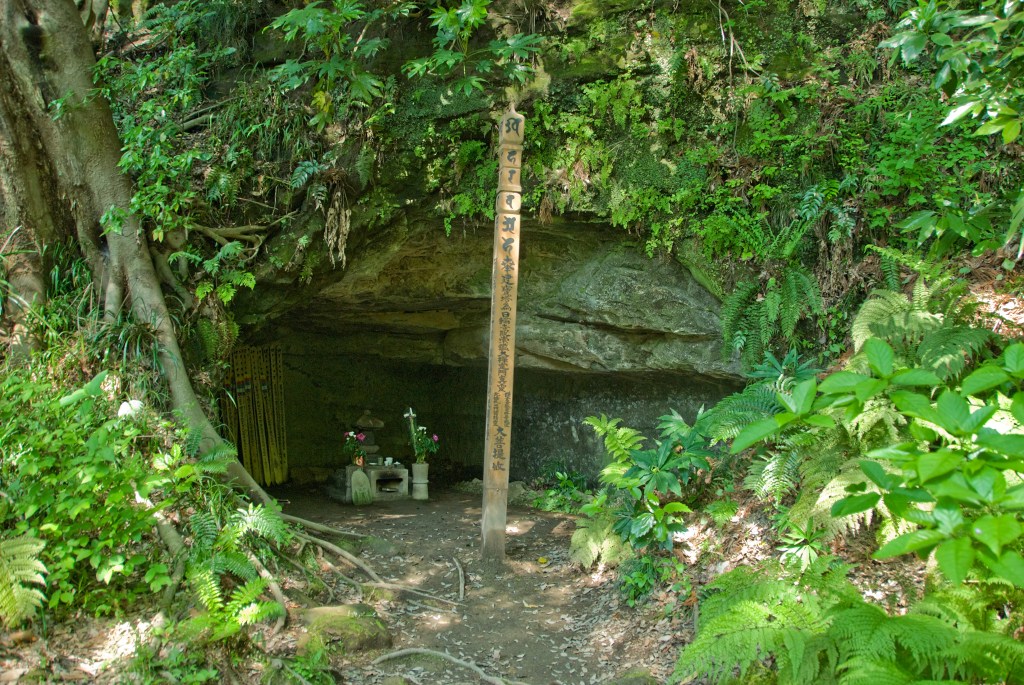
    Deprived of their main army, the Hojo suffered a series of defeats, culminating with the Siege of Kamakura in July 1333, where the Hojo were surrounded, and would eventually commit mass suicide in a cave behind the Tosho-ji Temple in Kamakura, bringing their power and their family to an end.

    The alleged site of the cave where the Hojo Clan committed mass suicide.

    In the aftermath of Go-Daigo’s victory, he almost seemed to go out of his way to piss away the goodwill he had accumulated in the years leading up to the so-called “Kenmu Restoration”. The problems stemmed from the fact that those who had supported the overthrow of the Shogunate had done so for a variety of reasons, ranging from genuine loyalty to the Emperor to an ambition to replace the Hojo as regents.

    Commoners hoped for land reform, and though there is little evidence of specific goals, it has been speculated that they were hoping for something akin to land redistribution, ending the peasant’s reliance on powerful, and often fickle, landlords.

    The Samurai who had fought for the Emperor sought rewards in land and titles, hoping to replace the governors and administrators put in place by the Shogunate.

    Finally, Imperial Courtiers hope for a true return to Imperial Rule, where the whole nation was under their control, and they could get back to the good old days of poetry, fancy clothes, and absentee landlordism.

    In the end, all three factions were to be disappointed. Go-Daigo, like the proverbial dog chasing a car, didn’t know what to do with power once he’d got it, beyond a vague notion that he should be in charge.

    In the first place, the commoners were never likely to get land reform; the Emperor had relied on the land-owning Samurai to do the fighting for them, and they were (unsurprisingly) likely to get on board with sharing the land that they had come to view as rightfully theirs.

    So what about the land taken from the Hojo and their allies? Well, that might have gone to the Samurai who had fought for the Imperial cause, but instead, Go-Daigo either took it for himself, or else gifted it to courtiers and cronies, alienating the Samurai who had expected a reward for their efforts.

    Finally, we have the Emperor and his courtiers. For whatever reason, they seemed to believe that they could just rule without the Samurai, despite all evidence telling them otherwise. Positions in regional governance, which had been the domain of Samurai for nearly 300 years at this point, went instead to courtiers.

    Quite what he had thought was going to happen isn’t clear, but within two years, the Emperor had managed to alienate just about everyone, so it should come as no surprise that his position soon became extremely precarious.

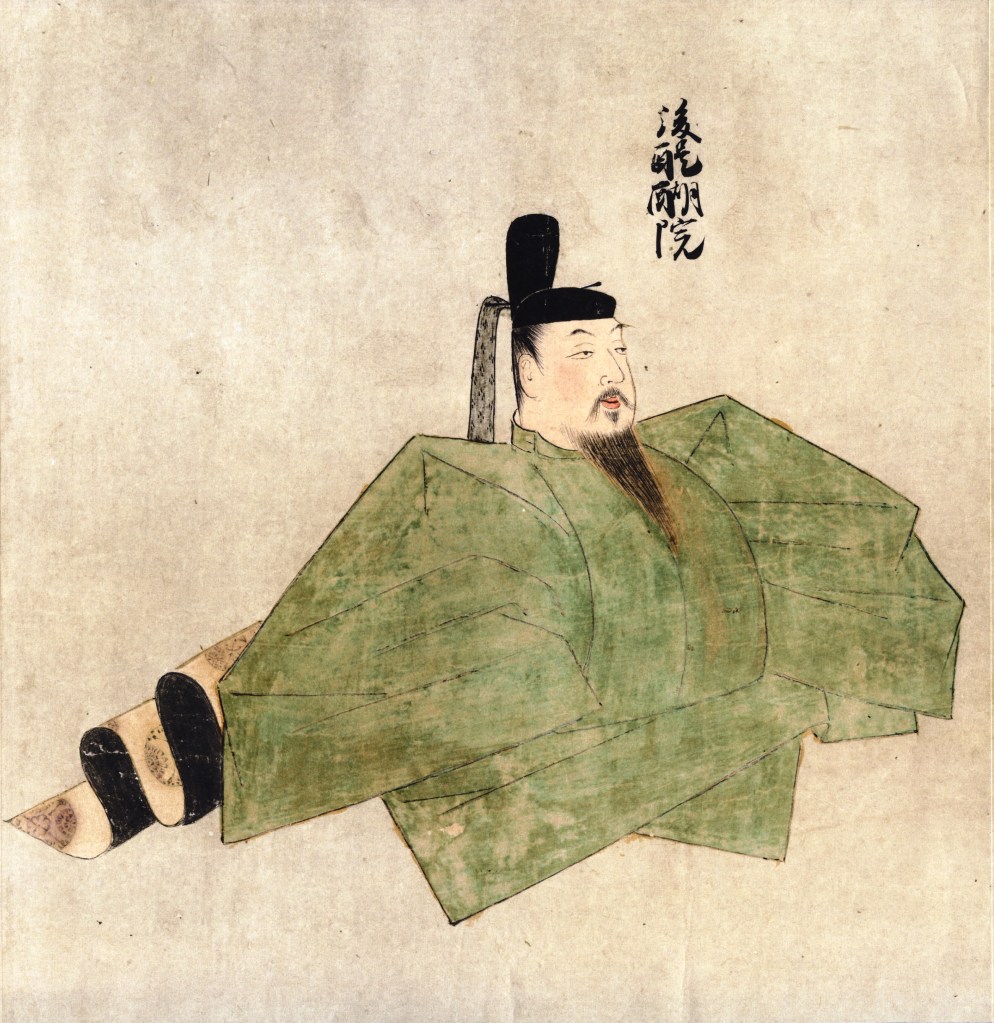
    Emperor Go-Daigo, who really didn’t know what he was doing.

    Ashikaga Takauji, the man whose defection had proved essential to the ultimate Imperial victory, now emerged as the leader of the Samurai opposition to the Emperor. The problem started when Takauji began appointing governors to Provinces himself, ignoring Imperial instructions.

    This was exactly how the first Shogunate had gotten started, and it wasn’t long before the Imperial court rightly guessed what Takauji was up to. In response, the Emperor named his son, Morinaga, Shogun, a move which further antagonised the already restless Samurai, as the title of Shogun, even before it became a powerful political position, had always been awarded to a member of the military class.

    Takauji doesn’t seem to have considered himself a turncoat in this case; the Ashikaga were descendants of the Minamoto, after all, so he portrayed himself as the redeemer of their power and, by extension, the power of the warrior class, earning himself the respect and loyalty of the disaffected Samurai.

    Prince Morinaga continued to be the leader of the opposition to Takauji, and so Takauji had him arrested on some flimsy pretext and transported to Kamakura. The situation there was tense, with Hojo loyalists launching sporadic, often poorly organised revolts, until the summer of 1335 when the son of the last Hojo regent, Tokiyuki, successfully took control of the city.

    In fleeing the city, Takauji’s brother, Tadayoshi, had Prince Morinaga beheaded, leaving Kamakura to the Hojo rebels. Upon hearing the news of the city’s fall, Takauji asked the Emperor to bestow the title of Shogun on him, to give me the authority to crush the rebellion and restore order. The Emperor refused, guessing correctly what Takauji was up to.

    Takauji raised an army and took Kamakura back anyway, and when he was ‘invited’ to Kyoto to explain himself, he refused. At this point, civil war was inevitable, and both sides ordered all Samurai in the realm to join their side.

    Again, it’s not clear exactly what Go-Daigo thought was going to happen, after all, he’d spent five years pissing off just about everyone, so it should have come as no surprise when the vast majority of warriors, and peasants too, for that matter, joined Takauji.

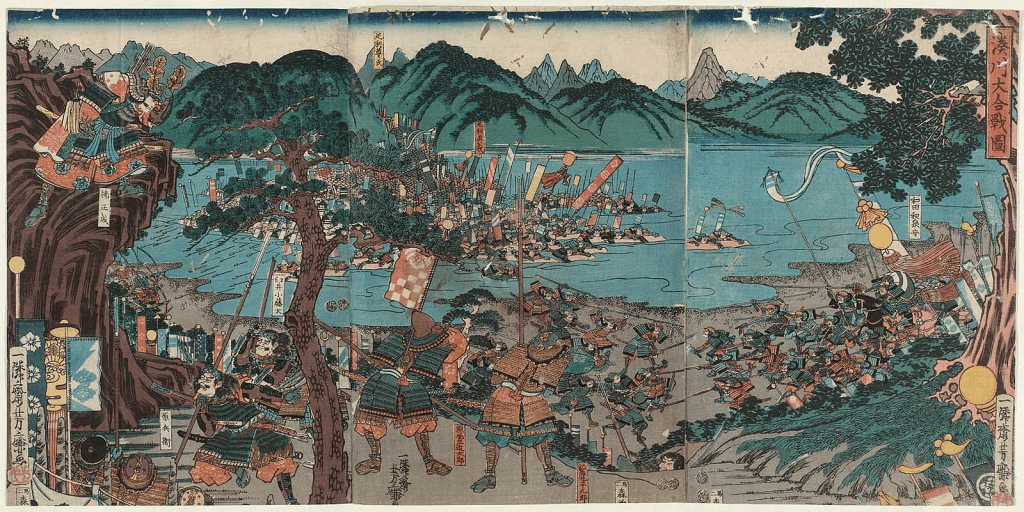
    Takauji’s forces quickly secured Kyoto in February 1336, only to be driven out in a counter-attack a short while after. Regrouping in the west, he advanced again, defeating the Emperor’s forces at Minatogawa and securing final control of the capital in July.

    The Battle of Minatogawa, where Ashikaga Takauji overcome the forces of Emperor Go-Daigo.

    Not long after, Takauji had the new Emperor, Komyo, declare him Shogun, giving birth to the Ashikaga, or Muromachi Shogunate. Go-Daigo was down, but not out, however, and he would return to plague the new government, but more about that next time.

    Sources
    https://ja.wikipedia.org/wiki/%E5%BB%BA%E6%AD%A6%E3%81%AE%E6%96%B0%E6%94%BF
    https://ja.wikipedia.org/wiki/%E8%AD%B7%E8%89%AF%E8%A6%AA%E7%8E%8B
    https://ja.wikipedia.org/wiki/%E6%A5%A0%E6%9C%A8%E6%AD%A3%E6%88%90
    https://en.wikipedia.org/wiki/Kusunoki_Masashige
    https://en.wikipedia.org/wiki/Prince_Moriyoshi
    https://ja.wikipedia.org/wiki/%E6%AD%A3%E4%B8%AD%E3%81%AE%E5%A4%89
    https://en.wikipedia.org/wiki/Genk%C5%8D_War
    https://en.wikipedia.org/wiki/Kenmu_Restoration

  • Kamakura IV – You can’t invade Japan…

    “…unless you’re the Mongols…” – John Green, Crash Course World History

    By the 1260s, the Mongol Empire was the most powerful state the world had ever seen. Throughout the 13th century, united under their leader, Genghis Khan and his heirs, the Mongols had conquered everything from China to Poland, sweeping aside any who opposed them, and spreading Mongol law and customs across Asia and into Eastern Europe.

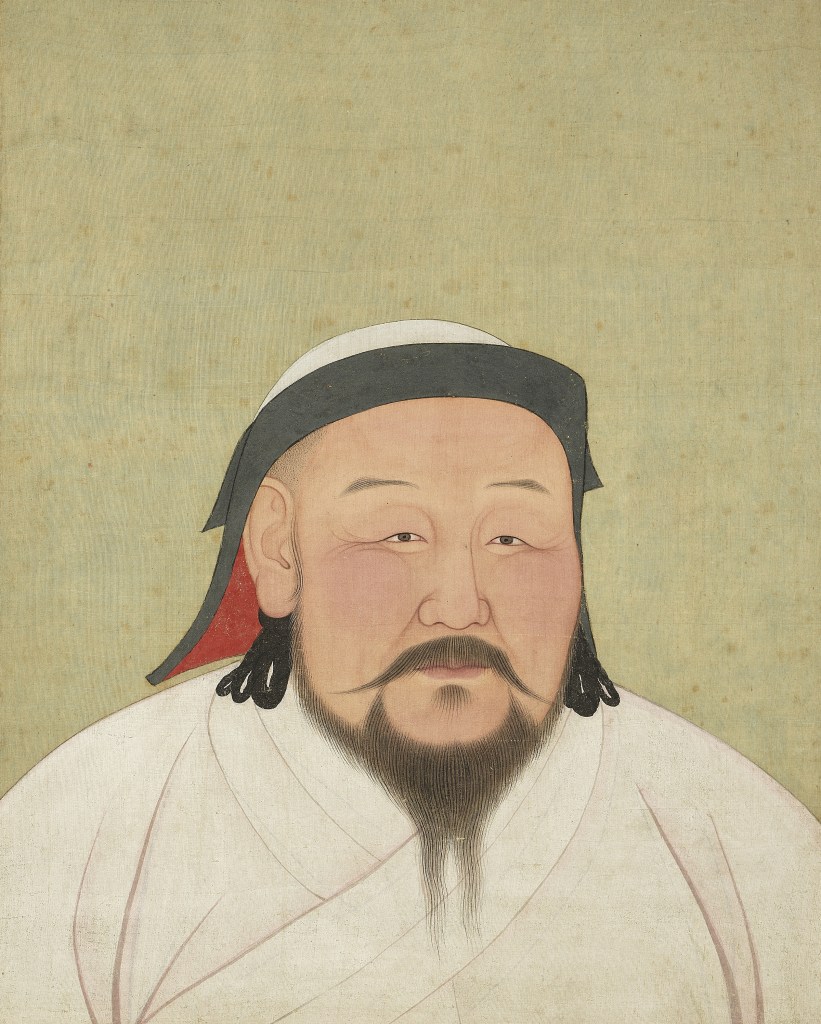
    In 1260, Kublai was elected as Great Khan. The grandson of Genghis, he had established the base at Khanbaliq, in modern Beijing, would go on to declare himself Emperor of China in 1271 (establishing the Yuan Dynasty), and took part in the subjugation of Korea, which had only finally submitted (and even then, as only a vassal) in 1259.

    Kublai Khan, Great Khan, Emperor of China, and would-be conqueror of Japan.

    Though China would not be completely subjugated until 1279, the Mongol position in Asia was strong enough that Kublai could turn his eyes elsewhere in search of new conquests. Japan presented a unique challenge; though Mongol armies were dominant on land, they had relatively little power at sea, and Japan, as an island nation, presented an opportunity to enhance Mongol prestige, but came with considerable risk.

    At first, Kublai tried to get the Japanese to submit without a fight. In 1266, he sent an embassy with a letter inviting the Japanese to send tribute. The embassy was turned away without even delivering its letter. Kublai, apparently not believing that a Mongol embassy would be treated so disrespectfully, sent another mission which met with similar stonewalling.

    In 1269, Kublai sent a third mission, this time to the island of Tsushima, demanding to know why there had been no response to his earlier letters. At this point, the Imperial court in Kyoto got nervous and suggested that it might be better to deal with the Mongols diplomatically. However, the Hojo Regents in Kamakura rejected this approach; a letter was apparently drafted, but evidently never sent.

    The Mongol Cometh.

    Several more attempts at diplomacy were made, but all came to nothing. The Shogunate seems to have taken the threat of invasion seriously as early as 1268, though, and began preparing defences. In China, the first serious preparations weren’t made until 1274, when Kublai and the Mongols(more correctly, the Yuan Dynasty at this point) began the mobilisation of troops, ships and supplies.

    The first invasion force made landfall on the island of Tsushima in November 1274, but it’s not entirely clear how big the opposing forces were. As is common with these things, the numbers vary wildly, with Chinese sources saying the Japanese have over 100,000 warriors, whilst the Japanese claim to have been outnumbered 10 to 1, both of which are clearly exaggerations.

    Most scholars put the total Mongol forces at around 30,000 (including sailors), but what is certain is that they quickly conquered Tsushima and nearby Iki Island, using them as a base for stage two of their plan. Mongol forces (around 6000) landed at Hakata Bay, in modern Fukuoka, on November 19th.

    Here we see the mismatch in fighting styles between the Mongols and Japanese. The Japanese tried to fight in their own way, with individuals announcing themselves and seeking challengers from the opposing side until one side overcame the other. The Mongols, however, fought as units, not individuals, and they made use of early gunpowder weapons, like primitive hand grenades, which terrified the Japanese and their horses and disrupted their tactics.

    “According to our manner of fighting, we must first call out by name someone from the enemy ranks, and then attack in single combat. But they (the Mongols) took no notice at all of such conventions; they rushed forward all together in a mass, grappling with any individuals they could catch and killing them.” – Hachiman Gudokan

    The Japanese fought bravely, but were outmatched by Mongolian tactics and gunpowder weapons.

    The fighting was brief and badly organised, and though the Mongols were able to drive the Japanese back and even burn Hakata, they made no further progress. Overnight, apparently fearing a Japanese counterattack, the Mongols retreated to their ships, and by the next morning, they were gone.

    Japanese sources say that unfavourable winds blew the Mongol fleet back out to sea, whilst Chinese sources make reference to a storm that scattered the fleet either in Hakata Bay or when it was on its way back to Korea.

    Either way, the first Mongol invasion was over. There are no reliable accounts of Japanese losses, though they appear to have been heavy, especially on Tsushima, where the Mongols killed and burned everything before them. As for the Mongols, they may have lost up to half their forces, though again, the sources aren’t entirely clear.

    Scholars disagree about whether this first ‘invasion’ was an actual attempt to conquer territory in Japan, or was instead a reconnaissance in force, designed to test the fighting abilities of the Japanese before a major effort was launched.

    The Empire Strikes Back

    The Japanese at the time certainly believed that the Mongols would be back, and as soon as the last invader disappeared, preparations were made for their return. Potential landing sites in Kyushu were fortified with castles, and stakes were driven into river beds, and at Hakata, a 2-meter wall, the Genko Borui, was built to prevent a second sacking of the city.

    For his part, Kublai made another attempt at diplomacy and dispatched another embassy, which had orders to refuse to leave until an answer was received. They certainly got an answer when the regent of the day, Hojo Tokimune, had them beheaded. Their graves can still be seen at Joryu-ji Temple in Fujisawa.

    The stele marking the graves of the envoys, in Fujisawa.
    By kamakura – Self-photographed, CC BY-SA 3.0, https://commons.wikimedia.org/w/index.php?curid=3082856

    Another embassy was sent in July 1279 and met the same fate, this time at Hakata, and in 1280, Kublai gathered his men, and together they made plans for a second invasion of Japan.

    By this time, China had been fully conquered, and using his newly acquired resources, Kublai was able to amass more than 1500 ships, and 100,000 men, with a further 40,000 in Korea. These numbers are probably exaggerated, but it does go some way towards showing how large the invasion was when compared to the first.

    The Mongol forces were divided into two: the Eastern and the Southern Army. The Eastern Army landed on Tsushima again in June, and once again, the island and nearby Iki Island were quickly conquered. The Eastern Army was supposed to wait for the Southern Army, but its commanders instead attacked Kyushu directly, landing at Hakata and nearby Nagato Province (in modern Yamaguchi Prefecture).

    The attack in Nagato was a failure, and the one at Hakata ran into the wall that had been built for that purpose. The Japanese had learned their lesson; they no longer sought out individual battles with the Mongols, instead remaining behind their defences and driving the invaders back with their bows (the preferred weapon of the Samurai at the time).

    The Mongols landed, but couldn’t overcome determined Japanese defenders, who had learned their lesson.

    Though driven back, the Mongols busied themselves with occupying the abundant islands around northern Kyushu, turning some of them into bases from which they raided the mainland. The Japanese lacked the naval strength to face the Mongol fleet directly, and instead launched night attacks on Mongol ships, inflicting minor damage and proving to be a nuisance rather than a serious strategic threat.

    The situation got worse for the Japanese when the Mongol Southern Fleet finally arrived, and the combined fleets based themselves at Takashima Island, where they made plans to renew the attack on Kyushu.

    At the same time, an army of some 60,000, dispatched by the Shogun to oppose the invasion, was making its way towards Kyushu, but before it reached Chofu, where it intended to cross from Honshu (Japan’s main island) to Kyushu, the weather had intervened.

    And they were scattered.

    In mid-August, the weather took a sudden turn, experienced sailors amongst the Mongol Fleet recognised the signs sought cover in Imari Bay, but it was already too late. On August 15th, a typhoon smashed into the Mongol Fleet, devastating it; those ships not sunk outright were stranded ashore where the Japanese made short work of their crews.

    The few Mongol ships that managed to survive the storm limped back across the sea to Korea, with some Chinese sources claiming that the losses may have been as high as 90%. The Mongol Invasion of Japan had failed, and though there were discussions about mounting a third attempt, they came to nothing, and Japan would remain free of foreign occupation until 1945.

    Despite having seen off the invasion, the Shogunate and the Hojo Regents were in no position to celebrate. Traditionally, warriors, victorious in war, were granted land taken from their defeated enemies, or at least could expect a share of the loot.

    The problem was that there was no land, and precious little loot to be shared out, and this led to growing resentment amongst the men who had actually done the fighting and dying and the popularity and prestige of the Shogunate was badly shaken.

    Another consequence of the failed invasion was a sharp rise in Japanese amongst the Wako, pirates who were a serious problem for coastal Chinese communities for decades afterwards, so much so, that Wako raids were cited as one of the reasons for an eventual Chinese ban on trade with Japan, though that would come long after the Mongol Yuan Dynasty had fallen.

    In Japan, too, the unsuccessful invasion led to some significant changes. Firstly, the belief that Japan was a land with divine protection became widespread, with the Kamikaze (literally, Divine Wind) being cited as the source of the Typhoon that had smashed the Mongol Fleet.

    Military technology was changed too; prior to the invasion, the Samurai had favoured the bow or spear as their primary weapon. When forced to fight up close with the Mongols, their swords were found to be too easily bent or broken, and this led to innovations in sword manufacturing that produced shorter, lighter, but stronger blades, giving birth to the iconic swords we know today.

    The Hojo and their puppet Shoguns would continue to rule Japan for decades after the threat of invasion had passed, but their rule was shaky, and the 14th century would see them face their final challenge, one of their own.

    Sources
    https://ja.wikipedia.org/wiki/%E5%85%83%E5%AF%87
    https://en.wikipedia.org/wiki/Mongol_invasions_of_Japan
    https://en.wikipedia.org/wiki/Kublai_Khan

    Not that many this week, eh?

  • Kamakura II – Rise of the Hojo

    When Minamoto no Yoritomo died in 1199, he left an impressive legacy. From a boy of 12, exiled to a far-flung province after a failed rebellion, to effective master of Japan in less than forty years.

    Unfortunately, as is so often the case, those who came after him would not live up to his example. As we mentioned briefly last time, one of the main pillars of Yoritomo’s support had been his marriage to Hojo Masako, and through her, the support of the powerful Hojo Clan.

    The Hojo

    First, it’s important to make the distinction between this clan and the later Hojo Clan, who would play an important role in the same area during the Sengoku Jidai. This later clan would take the name and symbol of the earlier clan, but they don’t seem to have been directly related.

    The original Hojo Clan came from Izu Province, in what is now Shizuoka Prefecture. Their exact origins are open to speculation, with some sources suggesting they are descended from an offshoot of one of the Taira Clans, whereas others speculate that they are named after an area in the Tagata area of modern Shizuoka.

    Izu Province, in modern-day Shizuoka, is the homeland of the original Hojo Clan.
    By Ash_Crow – Own work, based on Image:Provinces of Japan.svg, CC BY 2.5, https://commons.wikimedia.org/w/index.php?curid=1682541

    Whatever their exact origins, the Hojo were one of the buke or warrior families that rose during the latter years of the Heian Period, but again, scholars aren’t clear on how powerful they actually were. The size of their territory seems to have been relatively small, suggesting only limited military strength. On the other hand, it is located close to important transport links, suggesting access to wealth that went beyond mere manpower, and their later dominance of the Kamakura government suggests they were no country bumpkins when it came to the business of administration.

    Murky origins aside, we know that Hojo Masako married Yoritomo in around 1177, and initially, Masako’s dad, Tokimasa, was against it, for apparently political reasons, worrying that the Taira, who were in charge in Kyoto at this point, would have something to say about a Hojo marrying the leader of their enemy.

    Apparently, the Taira didn’t have much to say about it, however, and Tokimasa would eventually come around to the new arrangement, proving to be one of Yoritomo’s most steadfast supporters.

    Family Feud

    I’m planning to write a post about Hojo Masako herself later, so I’ll skip over the details of her marriage to Yoritomo, but suffice it to say, she proved to be not only a faithful wife but a force to be reckoned with in her own right.

    A later image of Hojo Masako as the “Nun Shogun”

    After Yoritomo died in 1199, Masako shaved her head and became a nun, though she would continue to reside in Kamakura, earning the nickname “Nun Shogun” for her political power. Yoritomo’s heir was Yoriie, and when he came to power, Masako’s father, Hojo Tokimasa, had himself appointed regent, or Shikken.

    Yoriie wasn’t thrilled about this, as he favoured his wife’s family, the Hiki Clan, and almost as soon as he was formally proclaimed Shogun in 1202, he began to make moves to replace Tokimasa, his grandfather, with Hiki Yoshikazu, his father-in-law.

    Obviously, Tokimasa and Masako weren’t just going to let that happen, and in 1203, when Masako got word that Yoriie and Yoshikazu were planning a sort of palace coup, she informed her father, and the Hojo moved first.

    Hojo forces assassinated Yoshikazu, and then had the Hiki residence burned, killing most of the extended family. They even went as far as to kill Yoriie’s son and nominal heir, Ichiman, because it had been alleged that the Hiki planned to rule as his regents, in the same way the Hojo had for Yoriie.

    Yoriie himself was exiled (then assassinated a year later), and his replacement as Shogun was his younger brother (another of Masako’s sons), Sanemoto, who was only 12 at the time. Little Sanemoto seems to have been closer to his mother than Yoriie had been, which suited Masako, but not Grandpa Tokimasa, who saw his influence over the Shogunate decline.

    By 1205, Tokimasa was the most powerful man in Kamakura, but he wasn’t unopposed. Firstly, he was widely believed to have been behind the assassination of Yoriie, which upset Masako to say the least, and not long after that, Tokimasa went even further by ordering his sons (Yoshitoki and Tokifusa) to execute his son-in-law. They protested, but Tokimasa insisted, and the boys, who had apparently quite liked their brother-in-law, began openly siding with their sister, Masako, against Tokimasa.

    Then, amidst rumours that Tokimasa planned to have the Shogun killed, and replaced with someone more pliable, Masako and her siblings went to him and told him that he’d better step down, or face open rebellion. Surprisingly, Tokimasa agreed and resigned as regent, shaving his head and becoming a monk, living out the rest of his days in relative peace before passing away in 1215, aged around 78.

    The Nun Shogun

    Sanemoto would be confirmed as Shogun in 1205. His uncle, Yoshitoki, became regent, and Masako maintained her position as the “Nun Shogun”, the power behind the throne. Masako and Yoshitoki oversaw a period of relative peace, dominating the weak-willed Sanetomo.

    Sanetomo seems to have been a bit of a non-entity, which probably suited Masako and Yoshitoki but led to serious issues down the line. Sanemoto was a talented poet, but there is evidence that he may have been an alcoholic, and possibly homosexual as well, despite being married, it was remarked by contemporaries how he seemed to have little to no interest in women.

    Now, being a permanently pickled friend of Dorothy might sound like a grand old time, but the problem with a hereditary system of government, even one in which you are a puppet, is that you need someone to inherit the government.

    During this time, Masako went to the Imperial Court in Kyoto to see if a son of the Emperor might be available for adoption as Sanetomo’s heir. The Emperor, perhaps unsurprisingly, had little reason to do the Shogunate a favour and refused, leaving the succession in doubt.

    In 1219, Sanemoto was assassinated by his nephew, Kugyo, Yoriie’s second son, and arguably the man who would have been Shogun, had it not been for Hojo politicking. In a dramatic winter scene, Sanemoto was ambushed on the steps of a temple. As the snow fell heavily around them, Kugyo cut the Shogun down and fled the scene.

    The stairs at the Tsurugaoka Hachiman-gu in Kamakura, where Sanetomo was assassinated. Some stories tell of Kugyo hiding behind the Ginkgo Tree on the left.
    By No machine-readable author provided. Abrahami assumed (based on copyright claims). – No machine-readable source provided. Own work assumed (based on copyright claims)., CC BY-SA 2.5, https://commons.wikimedia.org/w/index.php?curid=863448

    Kugyo himself would be tracked down and killed later, but his exact reason for the killing has been a matter of some speculation. He was the son of the murdered Shogun Yoriie, so it might have simply been a question of revenge. Another possible explanation is a plot involving Regent Yoshitoki, who was trying to get rid of the last legitimate heir to Yoritomo, thus cementing Hojo power.

    Historians generally doubt the idea that Kugyo, who had no reason to support Hojo ambitions, was working with Yoshitoki, but regardless, Sanetomo’s death would prove highly fortuitous for the Hojo.

    Whatever his failings, Sanetomo had been the last legitimate son of Minamoto no Yoritomo, and with his death, the line of Minamoto Shoguns ended. Masako and Yoshitoki then selected Kujo Yoritsune as the next Shogun. His claim was tenuous at best; his grandmother had been Yoritomo’s niece, and what was more, he was only a year old when Sanetomo was assassinated.

    While Yoritsune came of age, the country was effectively ruled by Masako and Yoshitoki, and it was during this period that Masako would really earn the nickname “Nun Shogun”.

    It is important to note that the prejudice against female rulers wasn’t as ingrained as you might imagine. Whilst European sources tend to portray women who rule in their own right as something unnatural, Japanese sources are generally positive about Masako and her reign. Of course, it does help that most of the sources we have were written by people who had reason not to antagonise the Hojo, but still, it is an interesting side note.

    Hojo Masako would continue to be the effective ruler of Japan until her death in August 1225, but she and the Hojo would not rule unchallenged. In 1221, the Emperor Go-Toba decided he’d had enough of being a figurehead and tried to do something about it.

    Sources
    https://en.wikipedia.org/wiki/Minamoto_no_Sanetomo
    https://en.wikipedia.org/wiki/Kuj%C5%8D_Yoritsune
    https://ja.wikipedia.org/wiki/%E8%97%A4%E5%8E%9F%E9%A0%BC%E7%B5%8C
    https://en.wikipedia.org/wiki/Kugy%C5%8D_(priest)
    https://en.wikipedia.org/wiki/Kamakura_shogunate
    https://en.wikipedia.org/wiki/H%C5%8Dj%C5%8D_Masako
    https://en.wikipedia.org/wiki/Azuma_Kagami
    https://en.wikipedia.org/wiki/Soga_Monogatari
    https://en.wikipedia.org/wiki/H%C5%8Dj%C5%8D_clan
    https://ja.wikipedia.org/wiki/%E5%8C%97%E6%9D%A1%E6%B0%8F
    https://ja.wikipedia.org/wiki/%E5%8C%97%E6%9D%A1%E6%94%BF%E5%AD%90
    https://en.wikipedia.org/wiki/Hiki_clan
    https://en.wikipedia.org/wiki/Minamoto_no_Yoriie
    https://en.wikipedia.org/wiki/Hiki_Yoshikazu
    https://en.wikipedia.org/wiki/H%C5%8Dj%C5%8D_Tokimasa#Minamoto_no_Sanetomo
    https://ja.wikipedia.org/wiki/%E5%8C%97%E6%9D%A1%E6%99%82%E6%94%BF