Tag: Meio Coup

  • Soun – Rise of the Hojo

    Soun – Rise of the Hojo

    The mon of the Hojo, and Later Hojo clans.

    Late 15th-century Japan was a chaotic place, but as we all know by now, chaos also presents opportunity. As central authority declined, local clans would move to fill the void. Some of these clans would fall almost as quickly as they had risen, others would continue to survive in one form or another throughout the Sengoku Period, and a select few would go on to be truly great.

    The focus of this post is one of them, the Hojo (hence the title). Right away, I want to be clear that this Hojo and the Hojo we looked at previously (the ones who were regents during the Mongol Invasions) were not related, despite the same name and mon. Sometimes, this second Hojo Clan is called the “Later” Hojo (Go-Hojo) in Japanese, but for our purposes, we’ll just call them the Hojo and hope you remember the distinction.

    Adding to our confusion, the founder of the clan, Hojo Soun, wasn’t actually called that. He was a member of the Ise Clan, and it was his son, the second “Lord” Hojo, who adopted the name and mon. Again, while it is technically more accurate to refer to this founder as Ise Souzui, we’ll call him Hojo Soun, because a) that’s the name he’s best remembered by, and b) it’ll get confusing if we keep changing his name.

    Hojo Soun, who wasn’t called Hojo Soun, during his lifetime.

    Side Note: Name changes were common in Japanese culture, with someone’s birth name rarely being the name they are recorded by historically. When you factor in nicknames, titles, honorifics, etc, you have individuals who may have gone by any number of names. Up until now (and continuing after this), I have always called historical characters by their most commonly used name, just in case you were wondering.

    The man who would become Hojo Soun is the subject of considerable mythologising. In the pre-modern period, it was widely assumed that he had been a poor samurai who had risen to a position of power by sheer force of will, pulling himself up by the proverbial bootstraps.

    20th-century scholarship has shed more light on his origins, however. He was a member of the Ise Clan, as we mentioned previously, and was born either in Kyoto or Ibara, in modern Okayama Prefecture. His family were not at the highest ranks, but they were administrators for the Shogun, meaning that they were often close to the centre of power and were certainly not the impoverished provincial family of later myth and legend.
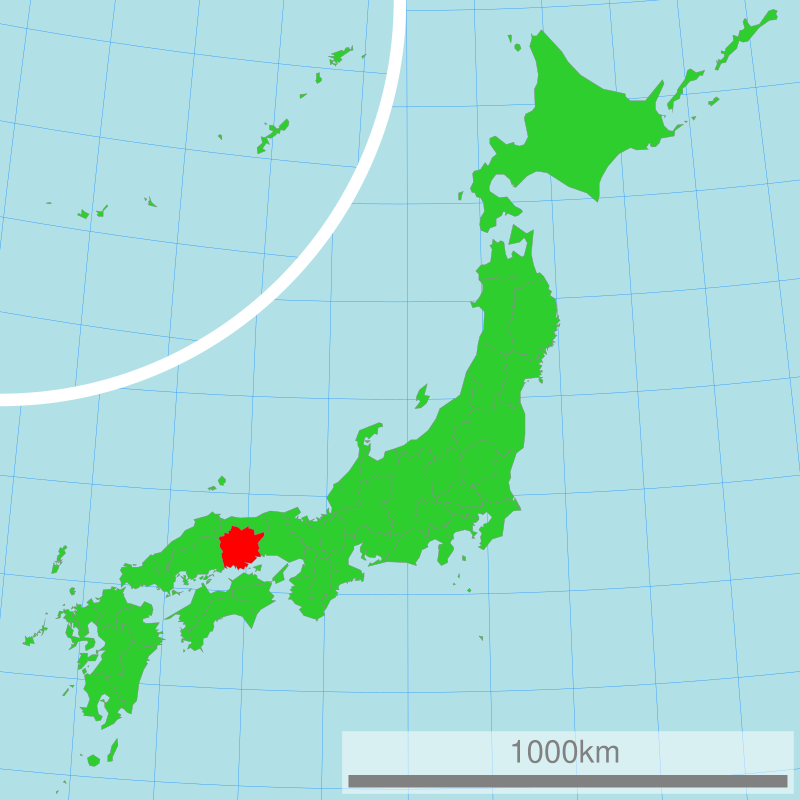
    Modern Okayama Prefecture, a possible birthplace of Soun.
    By Lincun – 国土交通省 国土数値情報(行政区域), CC BY-SA 3.0, https://commons.wikimedia.org/w/index.php?curid=3916728

    Soun’s exact origins are still a little unclear (we’re not even 100% sure what year he was born, though 1456 is considered most likely), but his rise to power came during the chaotic violence of the Onin War. As we looked at previously, one of the ancillary conflicts was in the Kanto, where Ashikaga Shigeuji and the Uesugi Clan clashed violently. Officially, Shigeuji was a rebel against the Shogunate, and the Uesugi were loyal servants, although in reality, neither side paid much attention to the capital.

    One of the other clans in the Kanto at this time was the Imagawa, who remained loyal to the interests of the Shogun. In 1476, the head of the Imagawa was killed in battle, and his heir was just a boy (Ujichika). Factions quickly formed within the clan seeking to assert rival claims to leadership.

    With the clan fracturing and external rivals seeking to take advantage, Soun, who was the brother of Lady Kitagawa, Ujichika’s mother, is said to have arrived at the Imagawa home in Suruga Province (in modern Shizuoka) to negotiate a peaceful settlement at the request of his sister. An agreement was reached in which the cousin of the previous leader (Norimitsu) would stand in as acting leader until the young boy came of age, whilst the rival factions were convinced (or compelled) to withdraw.

    It is debated exactly what role Soun played in this negotiation. It is noted that he was very young (perhaps 20 or 21) to be a negotiator, and his name doesn’t appear in any official government records. The withdrawal of rival forces is also suggested to have been a reaction to problems elsewhere (the Uesugi faced rebellion at home, for example) and not a result of Soun’s negotiating prowess. While peace was certainly achieved within the Imagawa Clan, it is entirely possible that Soun’s role in achieving it was minimal, or perhaps even a later fabrication.

    The first ‘official’ records of Soun come from the period of 1481-87, when he is recorded as a subordinate to the Shogun, presumably taking some role in the administrative affairs of the government. It is also speculated that Soun’s later departure for Suruga Province was motivated by legal troubles surrounding unpaid debts. Again, the exact nature of this problem isn’t clear, but there was certainly a legal case involving Soun and one of his creditors dated to this period, although the outcome is apparently lost.

    In 1487, the previous agreement that had led to peace within the Imagawa Clan broke down. Norimitsu, who had been chosen to stand as ‘regent’ during the minority of Imagawa Ujichika, refused to step down. Although Soun’s role in the initial negotiation is debated, he certainly returned to Suruga Province around this time to force a settlement, apparently with the approval (or possibly at the direct order) of the Shogun and at the request, once again, of his sister, Lady Kitagawa.

    Norimitsu had once been able to call on the support of external clans, but the political situation in the Kanto had changed in the decade since the original settlement, and that support no longer existed. Soun based himself at Ishiwaki Castle (in modern Yaizu, Shizuoka) and gathered supporters of Ujichika to his banner.
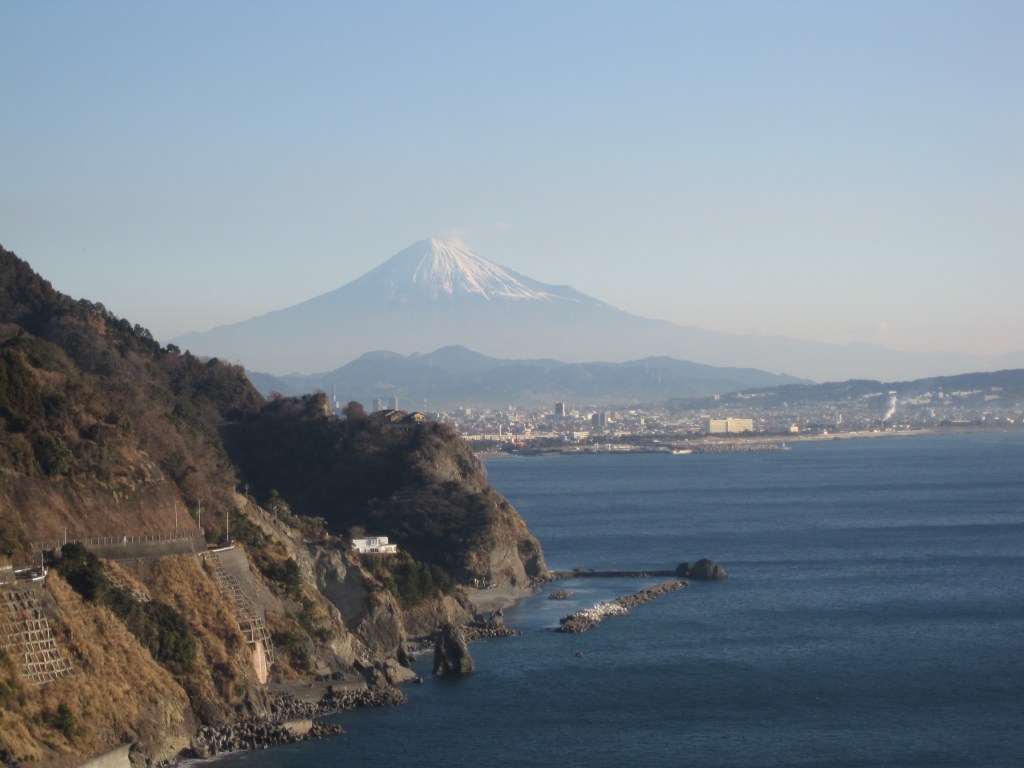
    A view of Mt Fuji from a spot near modern Yaizu.
    alonfloc, CC 表示 3.0, https://commons.wikimedia.org/w/index.php?curid=52973978による

    In late 1487, Soun led an attack on Norimitsu and his supporters, defeating them in a short, sharp campaign that ended with Norimitsu’s suicide and Ujichika’s confirmation as leader of the Imagawa Clan. Soun was rewarded for his actions, but the exact location of his new lands is disputed, with several possible locations including the aforementioned Ishiwaki Castle.

    Though the exact location of his base isn’t known for sure, Soun certainly remained in Suruga Province in the immediate aftermath of his success, acting as a protector for the young Ujichika. It is also suggested that during this period he acquired or was rewarded with estates in Izu Province, though again, that isn’t recorded with certainty.

    Soun’s actions following this are murky; he appears to have returned to the direct service of the Shogun in around 1491, though he seems to have remained physically in Suruga Province. In 1493, the Meio Coup changed Soun’s situation considerably, although again the exact circumstances are open to speculation.
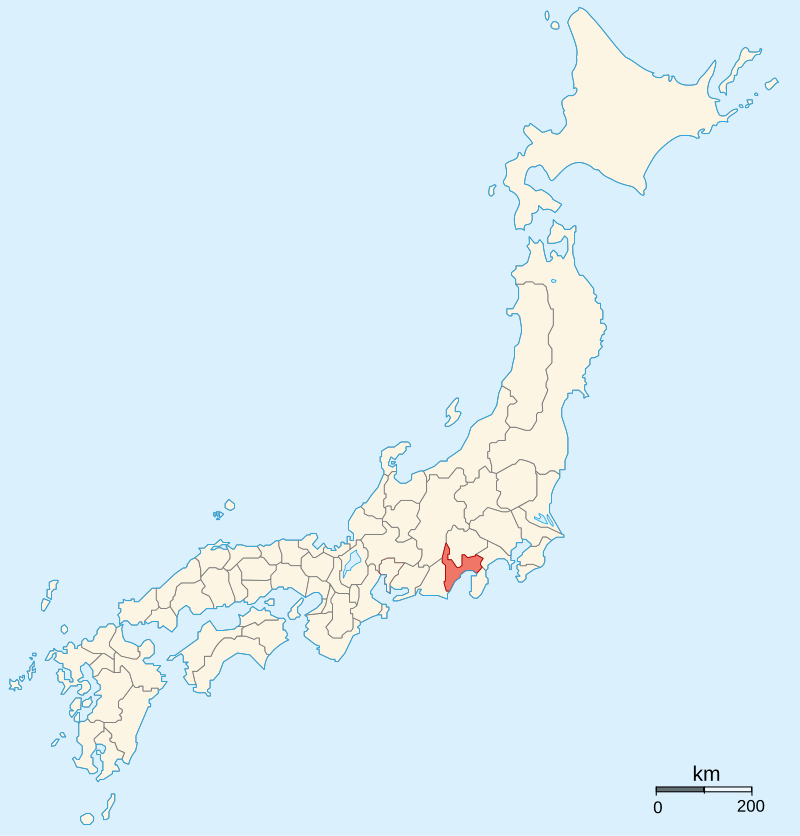
    Suruga Province, where Soun made a name for himself. Izu Province is the peninsula to the bottom right of Suruga, and Sagami is just above that.
    By Ash_Crow – Own work, based on Image:Provinces of Japan.svg, CC BY 2.5, https://commons.wikimedia.org/w/index.php?curid=1691794

    What is certain is that Soun would lead an attack into neighbouring Izu Province that would eventually see him take control of the entire province. Some sources suggest that Soun was acting on the orders of Hosokawa Masatomo, the instigator of the Meio Coup; others indicate that Soun was acting on his own initiative. The situation in the Kanto was already volatile, and the coup in Kyoto had only made things worse, giving Soun a chance to improve his fortunes.

    Soun’s actual conquest of Izu is subject to considerable mythologising, with some stories telling us that he spied on the province in person, posing as a pilgrim to the area’s many hot springs, whilst others say that he was welcomed as a liberator and kept his army under tight control, preventing any pillaging. Soun is also supposed to have secured the province in under 30 days, launching a surprise attack on the residence of the previous lord of Izu, and either killing him or forcing him to commit suicide.

    The reality seems to have been a protracted campaign, with Soun trying to capture the leader of the province in a rapid advance, but failing to do so, leading to a drawn-out war that would not be finally resolved until 1498, though the historical record does seem to suggest that Soun’s victory was more or less guaranteed after around 1495.

    Despite his conquest of Izu, Soun remained a nominal vassal of the Imagawa Clan and took an active part in their campaigns in the Kanto. He would campaign on their behalf in Kai Province, and in Sagami (modern-day Yamanashi and Kanagawa Prefectures), famously capturing Odawara Castle in late 1495. The legends tell us that Soun captured the mighty fortress through trickery, convincing the lord to go hunting and then taking the castle while he was away. Modern scholars suggest that a large earthquake that year undermined the fortifications of Odawara and made holding it untenable.
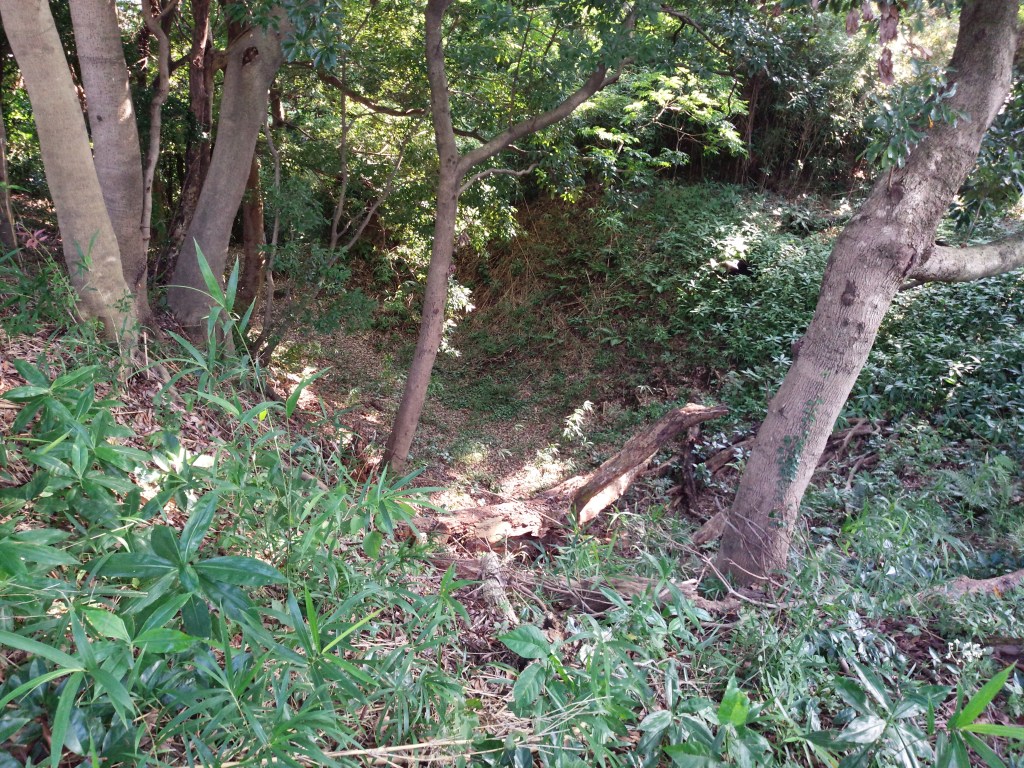
    The remains of the moat at Odawara. The castle that stands on the modern site is a 20th century reconstruction of the fortress as it appeared in 1590. The castle that Soun took in 1495 would have been an formidable, but considerably smaller structure.
    By 柴錬アワー – Own work, CC BY-SA 4.0, https://commons.wikimedia.org/w/index.php?curid=81578474

    In the short term, Soun would continue to support the Imagawa Clan, but as time went on, he began to take on an increasingly independent appearance, as his power grew, and the Imagawa found themselves distracted by events elsewhere. In 1507, the Eisho Disturbance (which led to the Hosokawa Rebellion we talked about previously) ended what little remained of Shogunate influence in the Kanto, and with the Imagawa distracted (or by some accounts, overstretched), Soun was able to extend his direct control of Sagami and Izu Provinces.

    Soun would clash with the Miura Clan of Sagami, who were in turn supported by the Ogigayatsu branch of the Uesugi Clan. Soun would advance on Edo Castle (on the site of the modern Imperial Palace in Tokyo) in early 1510, but a counterattack by the Miura and Ogigayatsu would drive him back as far as his base at Odawara.

    Soun would survive this crisis, and the destruction of the Miura Clan is said to have become the singular focus of his later life. Starting in the summer of 1512, Soun would make steady advances against the Miura, driving them out of Sagami Province, and defeating supporting attacks from the Ogigayatsu, until, by July 1516, the Miura had been bottled up in the eponymous Miura Peninsula (in modern Kanagawa Prefecture) before being destroyed with the capture of their final fortress at Misaki Castle.

    Soun would engage in several further campaigns, even crossing into modern Chiba, but in 1518, he handed control of the clan over to his son, Ujitsuna, before passing away in August the following year.
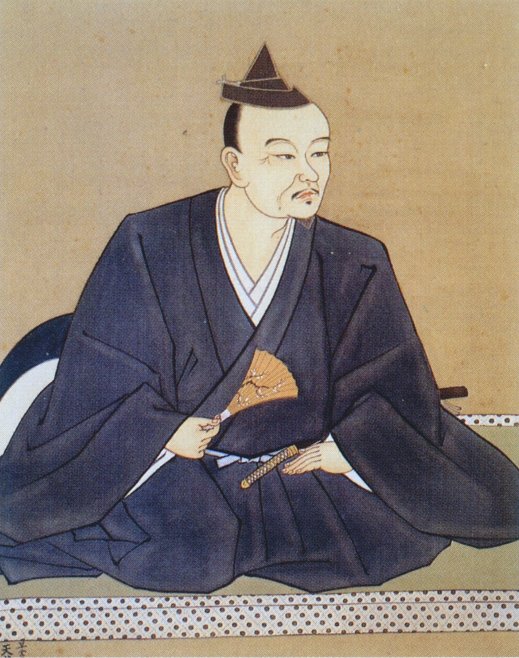
    Hojo Ujitsuna, who would adopt the name and symbol of the Hojo after his father’s death.

    Though Soun himself would never take the name Hojo, his actions secured the dominance of his clan in the Kanto region for most of the 16th Century. Though they would never be completely unchallenged, the clan would eventually rise to become masters of the area around modern Tokyo, until they eventually fell foul of Toyotomi Hideyoshi’s campaigns to unite the realm, with their mighty fortress at Odawara being taken, and the clan destroyed in 1590.

    In many ways, Soun is the archetype of what would become known as a “Sengoku Daimyo”, a kind of warlord who was not content with simply fighting with his neighbours, but worked to improve the lands he ruled. In 1506, Soun ordered a land survey in Sagami Province, the first of its kind in this new era, and he would introduce sweeping reforms to law and justice in his territories that would serve as inspiration for generations of Samurai that followed him, and in some cases, formed the basis for the legal system in place during the Edo Period, and even into more modern times.

    Sources
    https://ja.wikipedia.org/wiki/%E5%8C%97%E6%9D%A1%E6%97%A9%E9%9B%B2
    https://ja.wikipedia.org/wiki/%E5%BE%8C%E5%8C%97%E6%9D%A1%E6%B0%8F
    https://ja.wikipedia.org/wiki/%E4%B8%89%E6%B5%A6%E5%8D%8A%E5%B3%B6
    https://ja.wikipedia.org/wiki/%E7%AB%8B%E6%B2%B3%E5%8E%9F%E3%81%AE%E6%88%A6%E3%81%84

  • The Meio Coup

    The Meio Coup

    As we’ve discussed previously, by the 1490s, the Ashikaga Shogun was a shadow of its former self. The Onin War had effectively ended even the pretence of Shogunate power, and in the provinces, what would later be called the Sengoku Jidai was already underway.

    The Onin War ultimately broke the Shogun’s power.

    There’s a post on the Onin War if you want details, but very briefly, the war was fought over who would succeed Ashikaga Yoshimasa as Shogun, his son (Yoshihisa), or his brother (Yoshimi). When the war ended in 1477, it was his son who became Shogun.

    Yoshihisa was apparently a bit of a lush, and contemporary sources paint him as a young man who was too fond of wine and women. In fact, when he died suddenly in 1489, aged just 25, it was widely blamed on his hedonistic lifestyle (not a bad way to go, mind you).

    Despite his proclivities, Yoshihisa died without a male heir, and it was at this point that the son of the defeated brother, Ashikaga Yoshitane, became Shogun. This might seem like a strange choice, and it certainly wasn’t unopposed, but he apparently had the support of Hino Tomiko, Yoshihisa’s mother, who was widely regarded as one of the most influential women in Japanese history.

    Quite why Tomiko chose to support Yoshitane isn’t documented, but given her reputation for political intrigue, she probably had some long game in mind. Yoshitane wouldn’t actually become Shogun until July 1490, and even when he took the throne, his position was weak.

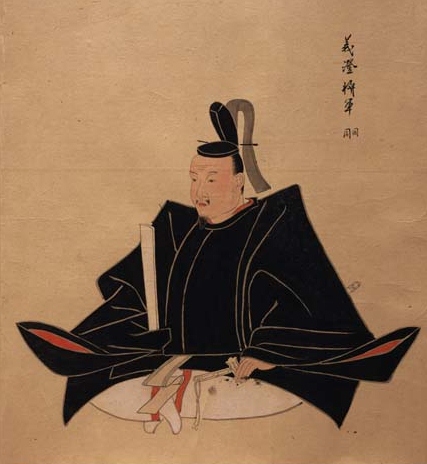
    Ashikaga Yoshitane was a surprising and ultimately controversial choice for Shogun.

    There were myriad problems in and around the Shogun’s government, but the fundamental issue seems to have been that Yoshitane was the son of the man who had been defeated in the Onin War just 13 years earlier. The men who had won that war were still in government, and they weren’t fans of the idea of having to serve someone who was probably going to be out for revenge.

    When Tomiko announced her support for Yoshitane, several high-ranking members of the government resigned their positions rather than serve under him. Initially, this might not have been a problem. Yoshitane was a young man (just 23) who enjoyed the support of one of the realm’s most powerful figures, Hino Tomiko, and the advice and guidance of his father, Yoshimi, who might have been Shogun himself, if things had gone differently.

    Yoshitane was also aided by his kanrei (deputy), Hosokawa Masamoto, an experienced (if slightly eccentric) politician. As seems to be inevitable with the Ashikaga, though, this initial optimism didn’t last. Ashikaga Yoshimi died in January 1491, just months into the new Shogun’s reign, and it seems that his relationship with Hino Tomiko soured too. Some sources (admittedly biased against Tomiko) suggest this was because Yoshitane turned out to be not as compliant as Tomiko had intended, but whatever the reason, Yoshitane was obliged to find a new way to shore up his power.

    To do this, he turned to the time-honoured tradition of his forebears and went to war. The region around Kyoto had been devastated by the Onin War, and recovery had been unequal at best. There were numerous uprisings from angry peasants and religious movements throughout the decades of ‘peace’, and Yoshitane saw an opportunity to flex his muscles and put these troublemakers in their place.

    The first blow was struck against the Rokkaku Clan. Like his predecessors, Yoshitane had few military resources of his own to call on, so he summoned several powerful lords to do the fighting for him. They agreed eagerly, but one figure who opposed the campaign was Hosokawa Masatomo. Quite why the kanrei was against the campaign isn’t clear, but this led to a schism between the Shogun and his most powerful official.

    Hosokawa Masamoto, the Shogun’s Deputy and most powerful official.

    In response, Yoshitane began relying on other lords to do his bidding, attempting to cut Masatomo out of the picture. In 1493, he launched another campaign, this time seeking to bring an end to the division in the once powerful Hatakeyama Clan. This time, Masatomo’s opposition is easier to understand. The Hatakeyama and Hosokawa Clans were historic rivals, and the ‘civil war’ in the Hatakeyama Clan had been to the Hosokawa’s benefit. If the Shogun succeeded in ending the fighting, then the Hatakeyama might regain their strength, and Masatomo couldn’t have that.

    When the Shogun issued orders for an army to be gathered in January 1493, Masatomo went to work. He contacted the faction within the Hatakeyama that the Shogun intended to attack and made arrangements with them to earn their support for what came next. Throughout early spring that year, Masatomo gathered others who were unhappy with Yoshitane. Some were partisans of the armies that had opposed Yoshitane’s father; others were disgruntled with the political situation, like Hino Tomiko, who now sided against the man she had supported just a few years earlier.

    Others were almost certainly just opportunists, but by April, Masatomo was ready to move. He waited for the Shogun’s army to attack the Hatakeyama in Kawachi Province (in modern Osaka), and when Kyoto was vulnerable, he launched his coup.

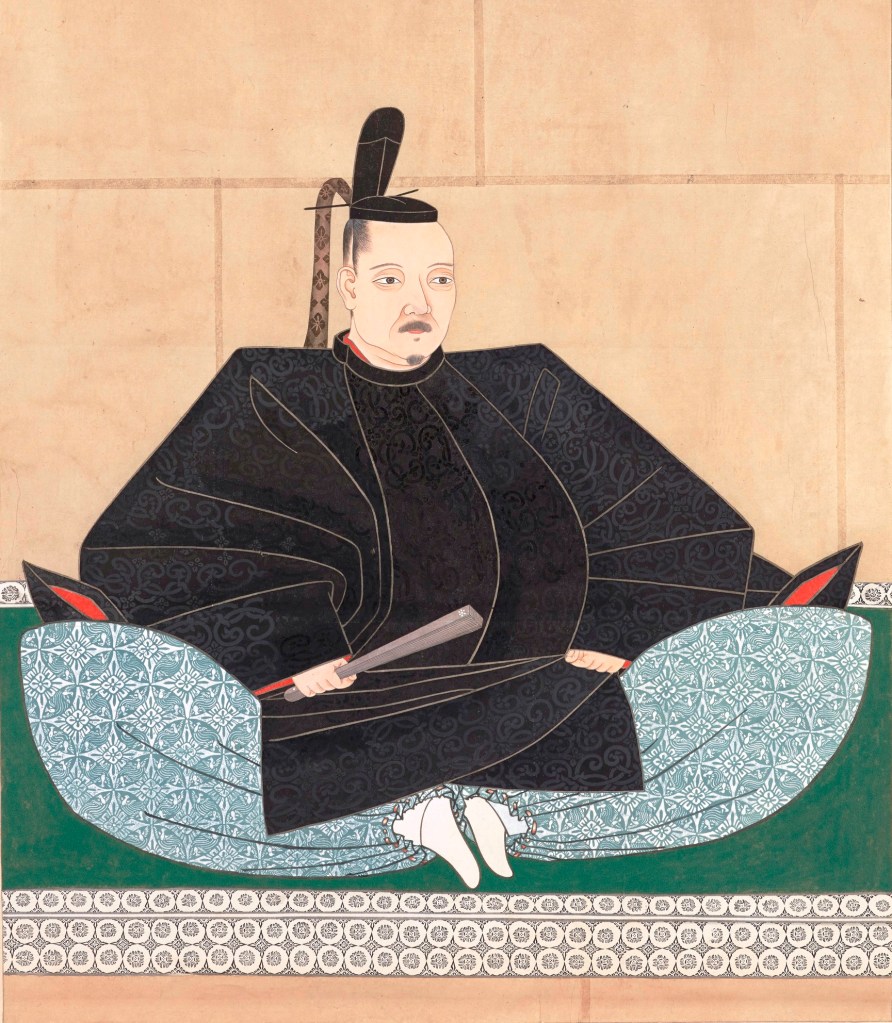
    It all went relatively smoothly for Masatomo. His forces took the city without much trouble, and Hino Tomiko issued an order commanding that Masatomo take control to restore order, giving his actions the veneer of legality. Masatomo then announced he would depose Yoshitane and replace him with Ashikaga Yoshizumi, who had been adopted by Hino Tomoki and Shogun Yoshimasa.

    Ashikaga Yoshizumi, installed as Shogun after the Meio Coup.
    Geneast – 投稿者自身による著作物, CC 表示-継承 3.0, https://commons.wikimedia.org/w/index.php?curid=21645552による

    When the news reached the army in Kawachi, it disintegrated almost immediately, with many vassals supporting the new Shogun and effectively legitimising Masatomo’s coup. Yoshitane could still call on around 8000 loyalists to fight for his cause, but the situation was dire.

    As well as Yoshitane’s (much reduced) loyalists, the Emperor himself was apparently against the coup. You may remember that the Shogun was technically a servant of the Imperial Court, and although it had been centuries since the Emperor had actually had the power to decide who would be Shogun, the idea that someone else could overthrow him was an affront to what remained of Imperial prestige.

    The Emperor was so angry that he even threatened to abdicate, but the impotence of his position was highlighted when Imperial officials pointed out that a) even if he abdicated, the coup would not be reversed, and b) the Imperial Court couldn’t afford the ceremony, and might have to resort to borrowing money for it from the very Shogunate they sought to protest.

    So the Imperial Court prevaricated by engaging in some religious ceremonies that the Emperor was required to attend, and would therefore be unavailable to condone or condemn the coup. This led to a strange stalemate, where the Imperial Court could do nothing to change the course of events, but the Shogunate (controlled by Masatomo) could not compel the court to obey, denying the coup the full support of Japan’s ‘legal’ sovereign.

    Emperor Go-Tsuchimikado was on the throne during the coup and was pretty annoyed about it.

    Political difficulties aside, the reality was that Masatomo was now in control, and to demonstrate this, he ordered an army to be dispatched to Kawachi Province to deal with what was left of the old Shogun’s loyalists. Chronicles at the time suggest the force was as large as 40,000, and, faced with such odds, Yoshitane and his supporters retreated to and fortified a nearby temple, where they hoped to hold out.

    The situation got worse for Yoshitane, however, as a relief force sent by his supporters met Masatomo’s army near Sakai (modern Osaka), where they were defeated, effectively ending any chance Yoshitane had of reversing the coup.

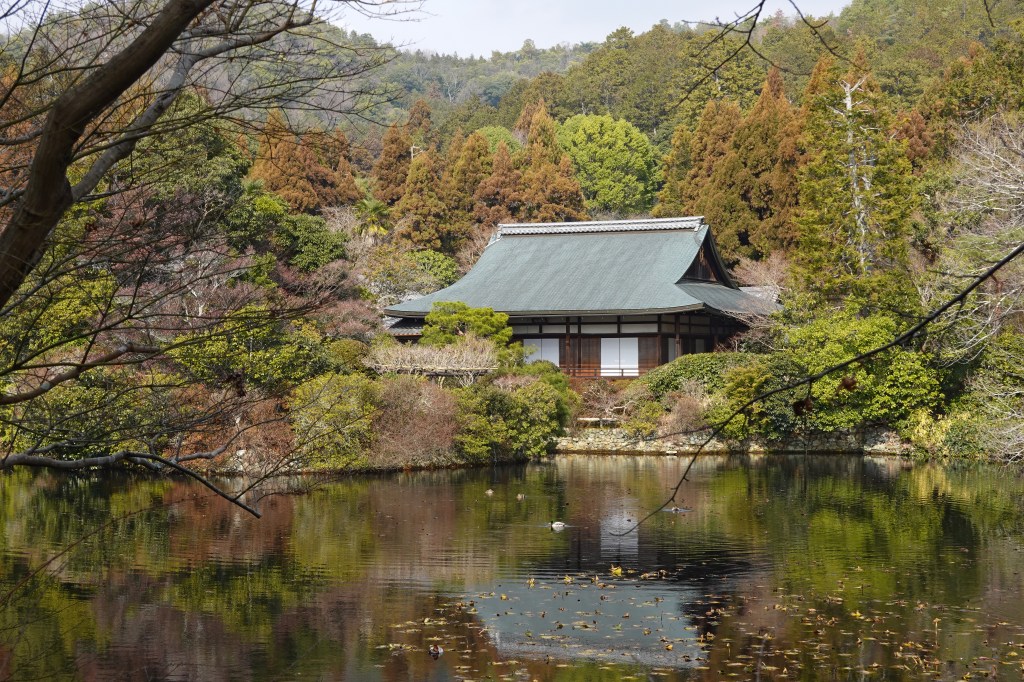
    Not long afterwards, Masatomo’s forces attacked the temple and quickly overwhelmed its defences. Several of Yoshitane’s prominent supporters committed suicide, but Yoshitane himself was captured and taken back to Kyoto and held at the Ryoanji Temple.

    A modern scene of Ryoanji Temple, where Yoshitane was held. Picturesque as prisons go.
    663highland – 投稿者自身による著作物, CC 表示-継承 4.0, https://commons.wikimedia.org/w/index.php?curid=159351811による

    In the aftermath of this battle, Masatomo had several of his more powerful opponents killed or exiled, and consolidated power in the capital and by the Autumn of 1493, his position was practically unassailable.

    Quite why Masatomo decided to get rid of Yoshitane has been debated from the start. The man himself claimed it was due to the Shogun’s military campaigns putting an unsustainable burden on the more powerful lords, and while there’s probably some truth to that claim, it also seems likely that the relationship between Masatomo and the Shogun had broken down, and Masatomo decided to strike while he was in a position of strength.

    That being said, Masatomo wouldn’t have succeeded if he’d acted alone. The fact that he had the support of Hino Tomiko and that most of Yoshitane’s supporters abandoned him almost immediately suggests that the dissatisfaction with his rule ran deep. It has also been suggested that Tomiko herself was the instigator of the coup, as she had come to regret her earlier decision to support Yoshitane.

    Although the Meio Coup left Masatomo as the dominant political figure in Kyoto, in the long term, it did nothing to reverse the catastrophic decline of Shogunate power. Although the supreme military power, Masatomo, did not have control of the bureaucracy, which remained with Hino Tomiko and her supporters.

    Additionally, the swift collapse of the Shogun’s ‘loyalists’ demonstrated how fragile that system really was, and after the coup, instead of relying on several powerful clans, the Shogunate was forced to rely on one, the Hosokawa and by extension, Masatomo.

    Masatomo certainly didn’t have it all his own way, then, and the situation only got worse when Yoshitane (who had been left alive) escaped captivity in Kyoto and fled to Etchu Province, from where he issued calls for his supporters to deal with Masatomo.

    Masatomo would dispatch an army to deal with Yoshitane, but it was defeated, and not long after that, several powerful clans declared their support for the deposed Shogun, though in reality, they offered little practical support in the short term.

    Internally too, opposition to Masatomo grew as Yoshizumi, who had been a boy when Masatomo installed him as Shogun, grew into a man (as they do) and began trying to assert control of what was supposed to be ‘his’ government, so, despite the success of his coup, Masatomo found himself with problems on all sides, and the power of the Shogun declined further still.

    Sources
    https://ja.wikipedia.org/wiki/%E6%97%A5%E9%87%8E%E5%AF%8C%E5%AD%90
    https://ja.wikipedia.org/wiki/%E6%98%8E%E5%BF%9C%E3%81%AE%E6%94%BF%E5%A4%89
    https://ja.wikipedia.org/wiki/%E8%B6%B3%E5%88%A9%E7%BE%A9%E5%B0%9A
    https://ja.wikipedia.org/wiki/%E8%B6%B3%E5%88%A9%E7%BE%A9%E8%A6%96
    https://ja.wikipedia.org/wiki/%E7%B4%B0%E5%B7%9D%E6%94%BF%E5%85%83
    https://ja.wikipedia.org/wiki/%E8%B6%B3%E5%88%A9%E7%BE%A9%E6%BE%84
    https://ja.wikipedia.org/wiki/%E5%A0%BA
    https://ja.wikipedia.org/wiki/%E9%BE%8D%E5%AE%89%E5%AF%BA
    https://ja.wikipedia.org/wiki/%E5%BE%8C%E5%9C%9F%E5%BE%A1%E9%96%80%E5%A4%A9%E7%9A%87