Tag: Northern and Southern Courts

  • Kings in the North

    Kings in the North

    Just a quick note: Date is pronounced “Da-Tay”.

    The mon of the Date Clan.

    Like many of the great clans of the Sengoku period, the Date’s exact origins are subject to a fair amount of mythologising. The family originally claimed to be descended from the prestigious Fujiwara Clan, but that doesn’t have very much supporting evidence, and most modern scholars agree that the clan’s origins were far more humble.

    That isn’t to say they didn’t earn their place, however. The first attested ancestor of the Clan was Date Tomomune, who was rewarded for services in battle with the manor of Date in modern Fukushima Prefecture. Tomomune himself is a bit of a murky figure (as they all seem to be), and there are still unanswered questions about his origins and even his identity, but for the sake of simplicity, we’ll agree with the Date’s own genealogy and start the story of the clan with him.

    Similar to many other clans in the period, the Date were not tied down to a single geographic location, and branches of the clan would pop up all over Japan as their fortunes rose and fell. For our purposes, it is the Date clan of Mutsu Province that we’ll be focusing on.
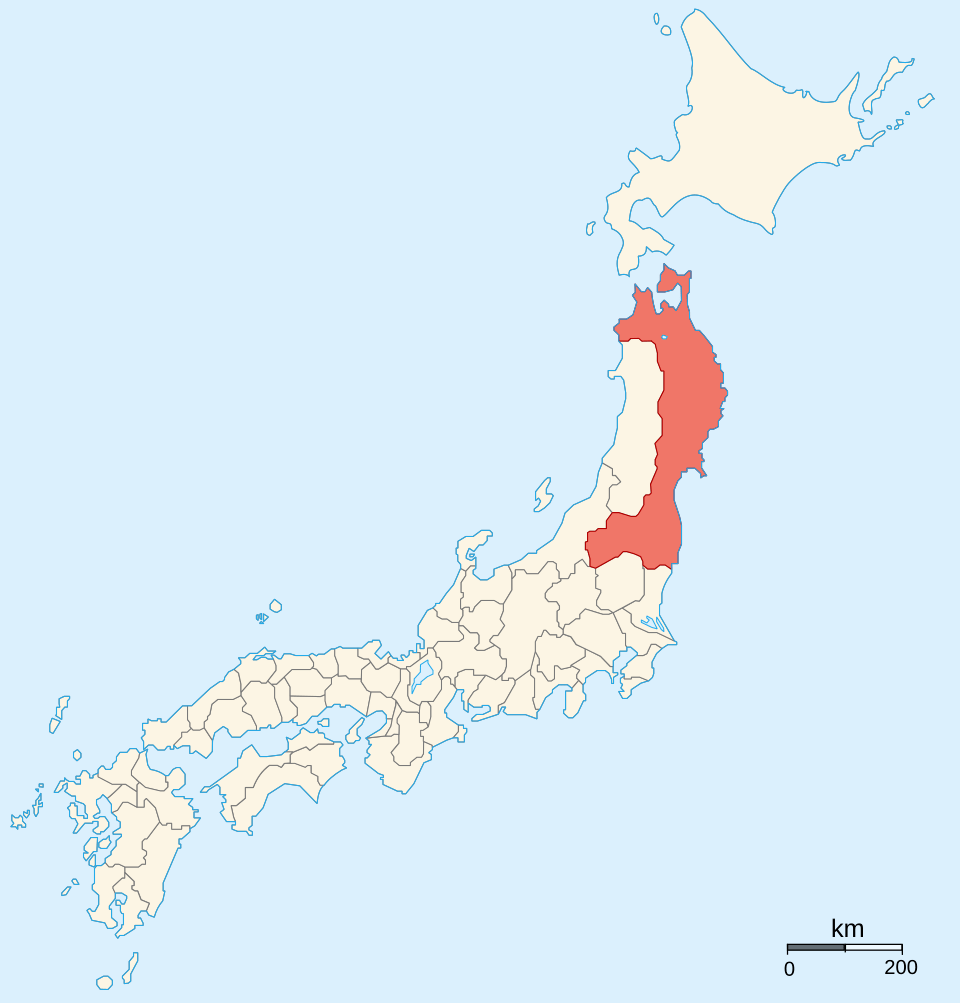
    Mutsu Province.
    By Ash_Crow – Own work, based on Image: Provinces of Japan.svg, CC BY 2.5, https://commons.wikimedia.org/w/index.php?curid=1690724

    The Date largely supported the Kamakura Shogunate, founded by Minamoto no Yoritomo, and in the 13th century, the Lord of the Date is said to have been living in Kamakura (the political capital). However, when the Shogunate was overthrown, the Date threw in their lot with the Emperor and would continue to support the Imperial throne even after the establishment of the Ashikaga Shogunate in 1336.

    This support would backfire, however, as the Date, in support of the Southern Court, were defeated by forces of the Northern Court, loyal to the new Ashikaga Shoguns, and ultimately obliged to switch sides. Beginning in the 1380s, the Date would set about restoring their strength by attacking rival clans in their home region. As was common at the time, these local conflicts were framed as part of the larger Northern-Southern Conflict (the Nanboku-cho Period), but were, in reality, private wars that the central authorities were powerless to direct.

    Later, when the power of the Ashikaga Shoguns was beginning to fracture, the Date would use the conflict between the government in Kyoto and the Kamakura kubo to further enhance their own power. Though nominally under the jurisdiction of Kamakura, the Date would appeal directly to Kyoto to serve as their vassals. The Shogunate agreed, and when open conflict between Kyoto and Kamakura broke out in the 1480s, the Date were in a prime position to take advantage.
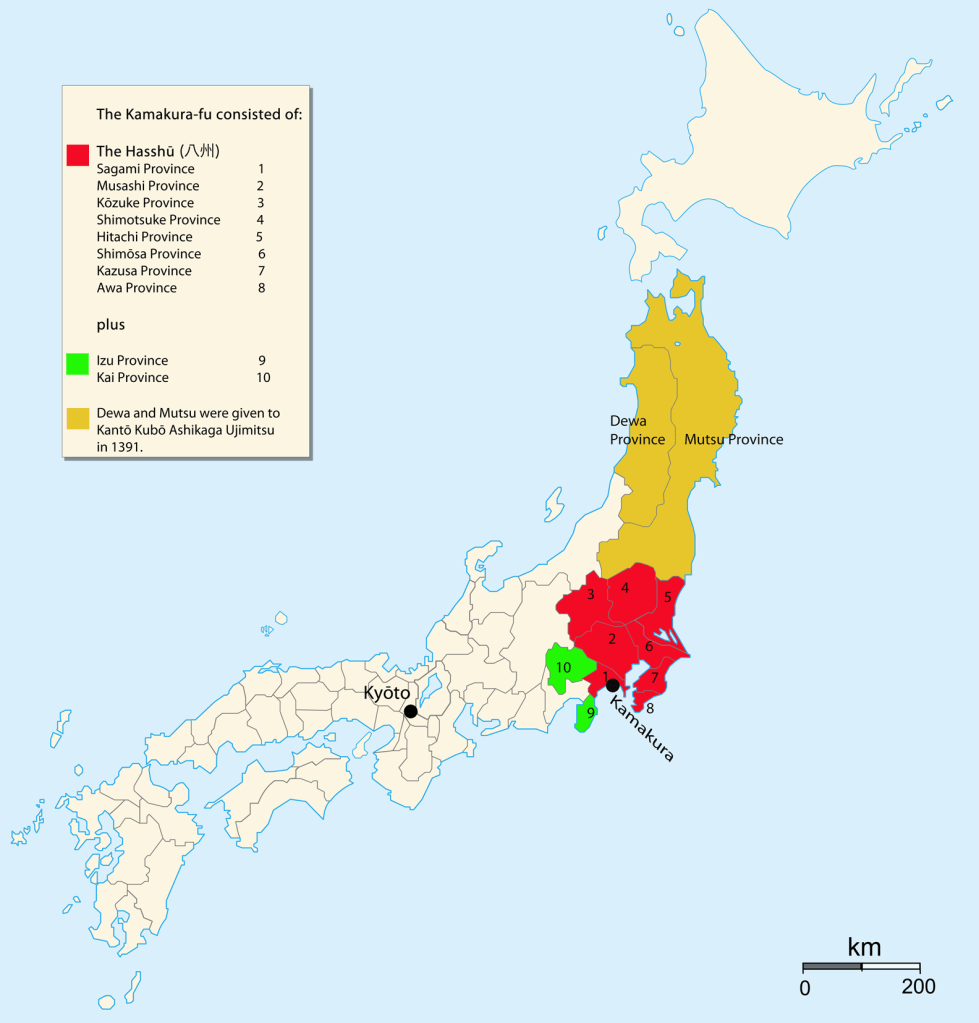
    The territories under the nominal jurisdiction of the Kamakura Kubo.

    An example of how strong the Date had become can be found in records from 1483, in which the Lord of the Date dispatched gifts to the court in Kyoto, including 23 swords, 95 horses, 380 ryo of gold dust, and 57,000 coins. This was an extraordinary fortune at the time, and seems to have led to the acceptance by the court of the Date’s position of the strongest (or at least richest) clan in the North.

    Despite their wealth and power, the Date were not the most prestigious clan in the region. That honour went to the Osaki, who were faithful to the Shogunate in Kyoto and were long established. As was common during the later 15th century, however, the Osaki had a prestigious name, but their actual power was crumbling. Though nominally their subordinates, the Date would intervene in a power struggle within the Osaki Clan in 1488, bringing an end to the conflict, but effectively reducing the Osaki to vassal status in the process.

    Another rival to the Date was the Mogami Clan from neighbouring Dewa Province. The clans would clash repeatedly, but in 1514, Date Tanemune would inflict a decisive defeat on the Mogami at Hasedo Castle. Shortly after this, he would marry his sister to the defeated Lord of the Mogami, effectively binding the two clans together. This would prove unpopular with the remaining Mogami vassals, and when their Lord died in 1520, and the Date attempted to take direct control, they rebelled.
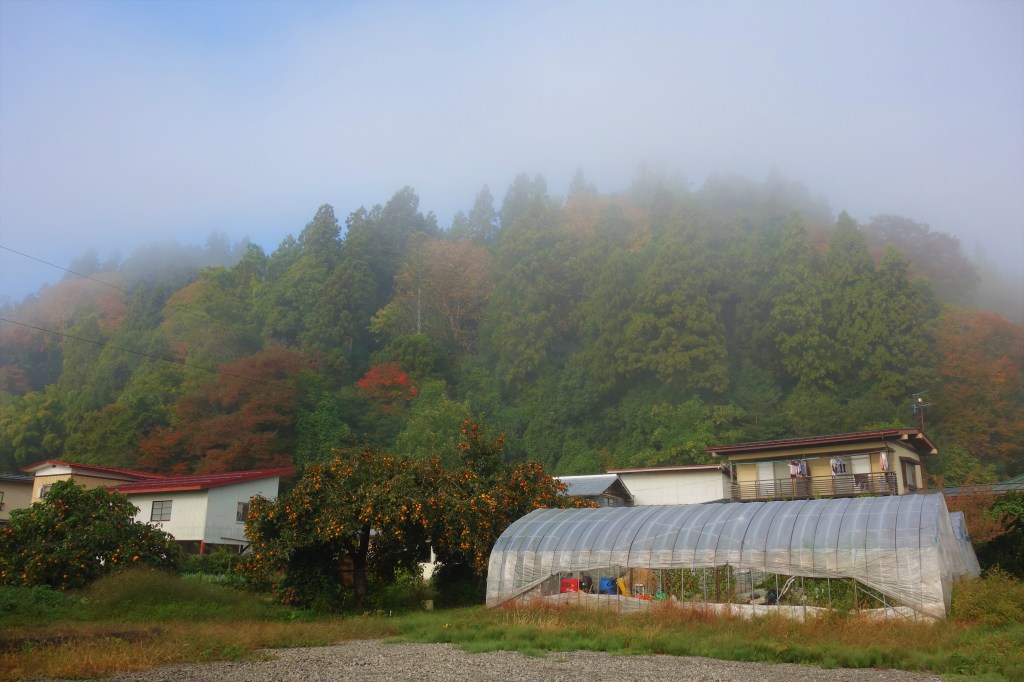
    The site of Hasedo Castle as it appears today.
    Koda6029 – 投稿者自身による著作物, CC 表示-継承 4.0, https://commons.wikimedia.org/w/index.php?curid=124663430による

    In defeating the rebellion, Tanemune was able to establish Date control over most of eastern Dewa Province, further expanding his clan’s power and prestige. In recognition of this, in 1522, the Shogunate appointed Tanemune shugo (governor) of Mutsu Province (the Date’s home province, remember). Tanemune was not satisfied, however, as he had apparently sought the title of tandai.

    The exact distinction between shugo and tandai is a little unclear, as the titles often overlapped, but essentially, a shugo was the governor of a single province, whereas a tandai was the Shogun’s representative over a wider area. Although the power and prestige of the Shogunate were at a low ebb by this point, the fact remained that tandai was a more prestigious title, and the Shogunate’s refusal to bestow it on Tanemune was seen as a proverbial slap to the face.

    Tanemune responded to this but charting his own course, although the snub is probably just a convenient excuse for what he was going to do anyway; by the early 16th century, Shogunate power was really more of a concept, and the Date were one of many powerful clans who realised that they could largely do as they pleased.
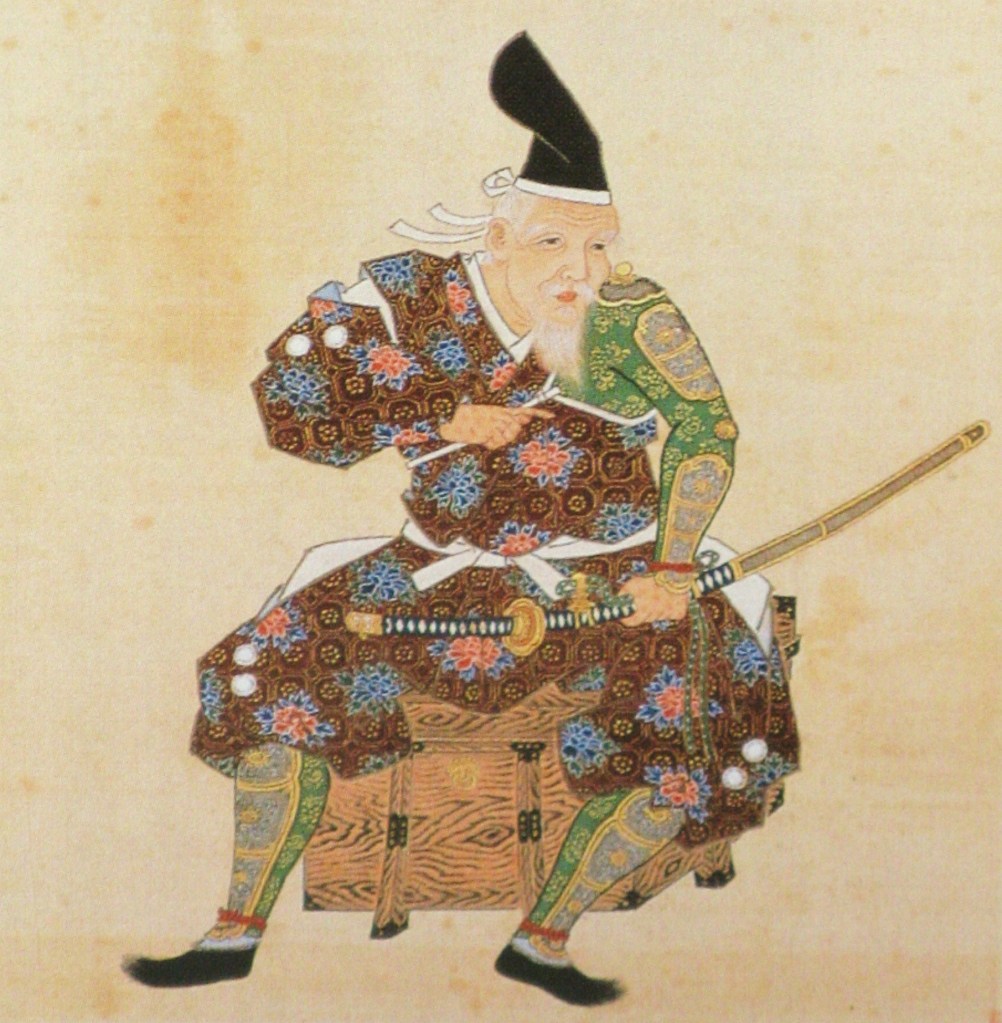
    Date Tanemune.

    Over the next 20 years, Tanemune would work to consolidate his clan’s control over the North, further absorbing the Osaki and Mogami clans, as well as extending physical control over most of Mutsu and Dewa Provinces. Despite his successes, all was not well within the clan; Tanemune was in conflict with his eldest son, Harumune. The exact nature of the conflict is complicated, but it got so bad that in June 1542, Harumune ambushed his father whilst the latter was out hunting, imprisoning him in a nearby castle from which Tanemune swiftly escaped (or was rescued, depending on the source)

    What followed was a six-year conflict which saw the Date severely weakened, and several of their recently conquered vassals breaking free, including the Osaki and the Mogami. Eventually, the mediation of the Shogun brought about an official peace, but in reality, the feud didn’t end, and although Harumune would take his place as the de facto head of the clan, Tanemune, despite becoming a monk, remained an enormously influential figure.

    Harumune’s reign would be occupied with reestablishing Date power. The situation was far from ideal, however, and he was eventually forced to confirm many of the concessions that had been granted to vassals by both sides, signing away territory and privileges in exchange for obedience.
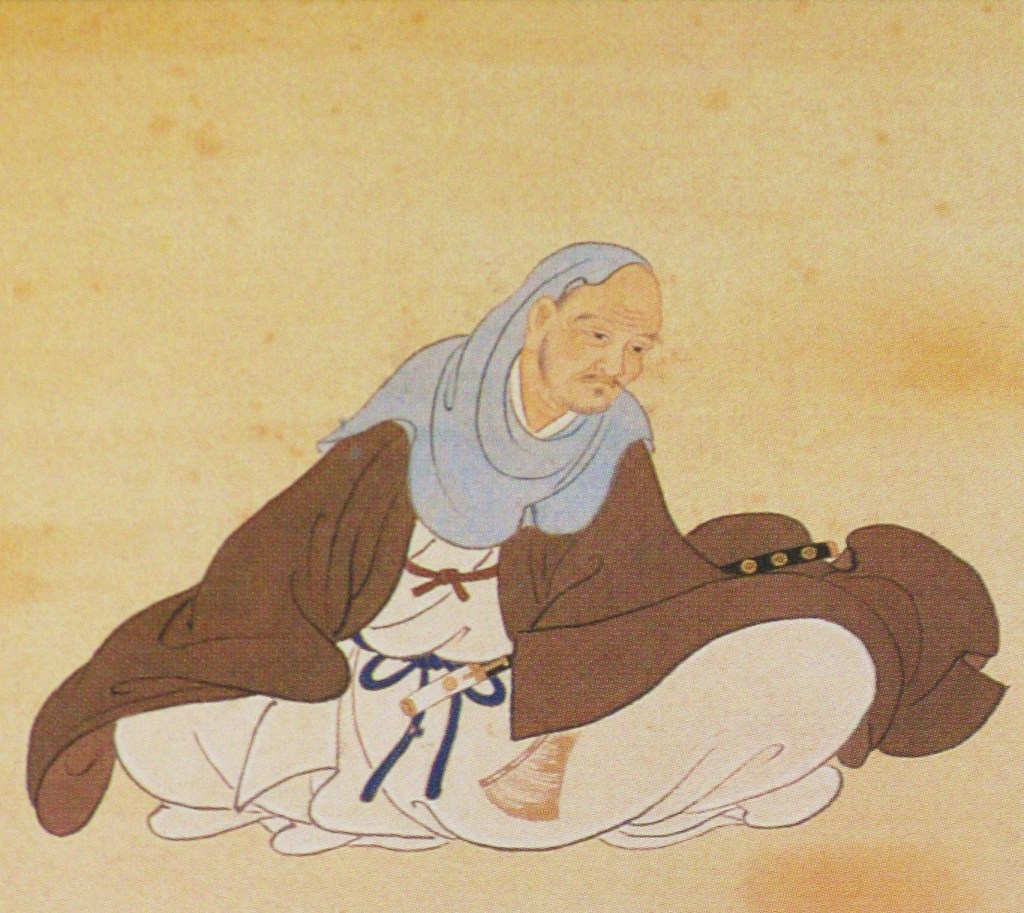
    Date Harumune

    One upside for Harumune was the fact that he had no fewer than eleven children, six sons and five daughters, who would be useful pawns in returning former vassals to the fold. All of his daughters were married either to powerful clans, securing alliances, or to senior vassals, ensuring their loyalty, and by the 1560s, the Date’s position was once again strong.

    In 1565, Harumune retired and handed control to his son, Terumune, although, as was common, he retained all the actual power. A year later, the Ashina Clan attacked the Nikaido, who were allied with the Date through the marriage of one of Harumune’s daughters. The Date intervened but were defeated, and when the Nikaido surrendered shortly afterwards, peace between the Date and Ashina was secured through another marriage, this time between the Lord of the Ashina’s eldest son and Harumune’s fourth daughter.

    Harumune apparently opposed this marriage, and in response, Terumune entered into a secret agreement with the Ashina, in which they would agree to support him in the event of an outbreak of conflict between father and son. The feud between father and son would only be resolved in 1570, when Terumune removed several retainers who had facilitated Harumune’s rule from ‘behind the curtain’. With this, the relationship seems to have improved, as Harumune was now effectively powerless anyway.

    Like most of his contemporaries, Terumune’s reign would be dominated by war, but we’ll talk about that next time.

    Sources
    https://en.wikipedia.org/wiki/Mutsu_Province
    https://ja.wikipedia.org/wiki/%E4%BC%8A%E9%81%94%E6%B0%8F
    https://ja.wikipedia.org/wiki/%E6%9C%80%E4%B8%8A%E6%B0%8F
    https://ja.wikipedia.org/wiki/%E4%BC%8A%E9%81%94%E7%A8%99%E5%AE%97
    https://ja.wikipedia.org/wiki/%E4%BC%8A%E9%81%94%E6%88%90%E5%AE%97
    https://ja.wikipedia.org/wiki/%E5%A4%A7%E5%B4%8E%E6%B0%8F
    https://ja.wikipedia.org/wiki/%E4%BC%8A%E9%81%94%E5%B0%9A%E5%AE%97
    https://ja.wikipedia.org/wiki/%E4%BC%8A%E9%81%94%E5%AE%97%E9%81%A0
    https://ja.wikipedia.org/wiki/%E4%BC%8A%E9%81%94%E9%83%A1
    https://ja.wikipedia.org/wiki/%E5%B8%B8%E9%99%B8%E5%85%A5%E9%81%93%E5%BF%B5%E8%A5%BF
    https://ja.wikipedia.org/wiki/%E4%BC%8A%E9%81%94%E6%9C%9D%E5%AE%97
    https://en.wikipedia.org/wiki/Dewa_Province
    https://ja.wikipedia.org/wiki/%E4%BC%8A%E9%81%94%E6%99%B4%E5%AE%97
    https://ja.wikipedia.org/wiki/%E4%BC%8A%E9%81%94%E8%BC%9D%E5%AE%97

  • The Peace of Meitoku

    The Peace of Meitoku

    The Nanbokucho Period is named the Northern and Southern Courts Period in English because that is what it was. The division of the rival Imperial Courts was reflected across Japan during this period. There were few, if any, periods of extended peace, and rival factions would swear allegiance to one court or another, and then use that as an excuse to attack their local rivals.

    In many cases, of course, these rival warlords didn’t even bother with the formality of declaring allegiances; they settled their disputes through force because they could. They had the men, and there was no central government strong enough to stop them.

    That began to change with the third Ashikaga Shogun, Yoshimitsu. As we talked about last time, he was no idle ruler, nor was he simply the first amongst equals when it came to the brutish thuggery of this early Samurai period. Yoshimitsu played rival clans off each other to increase the military power and prestige of the Shogunate, but he also ingratiated himself with Imperial loyalists by taking a position in the government of the Northern Court, so much so that it began to appear that the Emperor’s orders, and those of the Shogun were one and the same.

    Yoshimitsu wasn’t just a political animal, though; he understood the nature of the conflicts around Japan came from the largely independent nature of the Shugo (regional lords), in which even fairly loyal Clans were left to handle their own affairs. Yoshimitsu’s solution to this was an enforced residence policy.

    Basically, the Shugo lords were required to live in Kyoto (with the exception of those based in the Kanto and on Kyushu). Once there, they were forbidden from leaving the capital without the (rarely granted) permission of the Shogun. Leaving Kyoto without this permission was seen as an act of rebellion, and, having seen what had befallen the Yamana and Toki Clans, most Shugo fell in line.

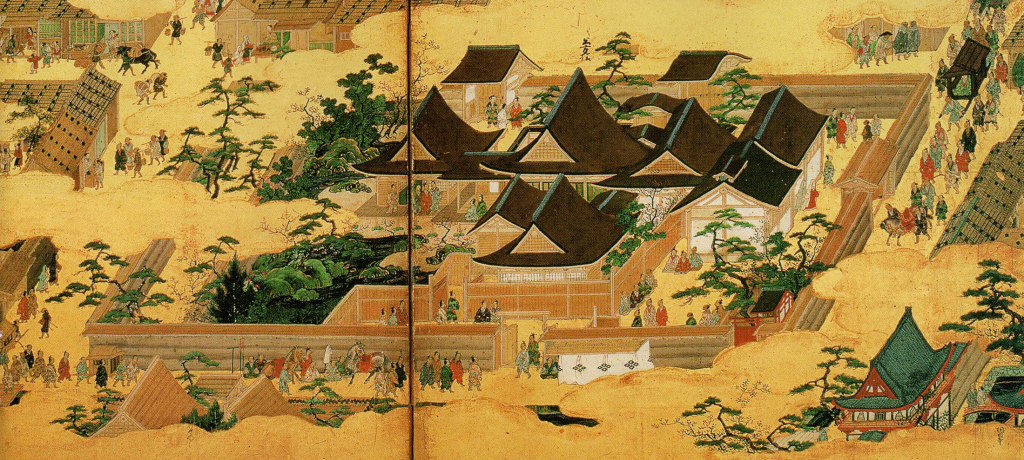
    The Flower Palace in Kyoto. Although the residence of the Shogun, it is an example of the new level of opulence that came to Kyoto with the enforced residence of the Shugo.

    In the short term, this went a long way to curbing their often violent independence, but long-term, it proved to be a disastrous policy. Whilst the first generation of lords to take residence in Kyoto left trusted relatives in charge, within a few decades, their descendants had become the real power in the provinces. Much like the Imperial Court in the 8th and 9th centuries, the Shugo grew to become out of touch with the nominally subordinate provincial officials, once again leading to a catastrophic decentralisation of power, and laying the foundations for what would eventually become the Sengoku Jidai, the Age of the Country at War.

    With this policy also came a shift in the economic and cultural centre of gravity in Japan. With the majority of the wealthiest Shugo now required to live permanently in Kyoto, the wealth that had previously been dispersed in the provinces now became centred on the capital.

    During previous eras, wealth had primarily been derived from land, but under Yoshimitsu, a new urban middle class formed from the moneylenders, traders, and other commercial agents that benefited directly from the sudden influx of wealthy, image-conscious nobles in their midst.

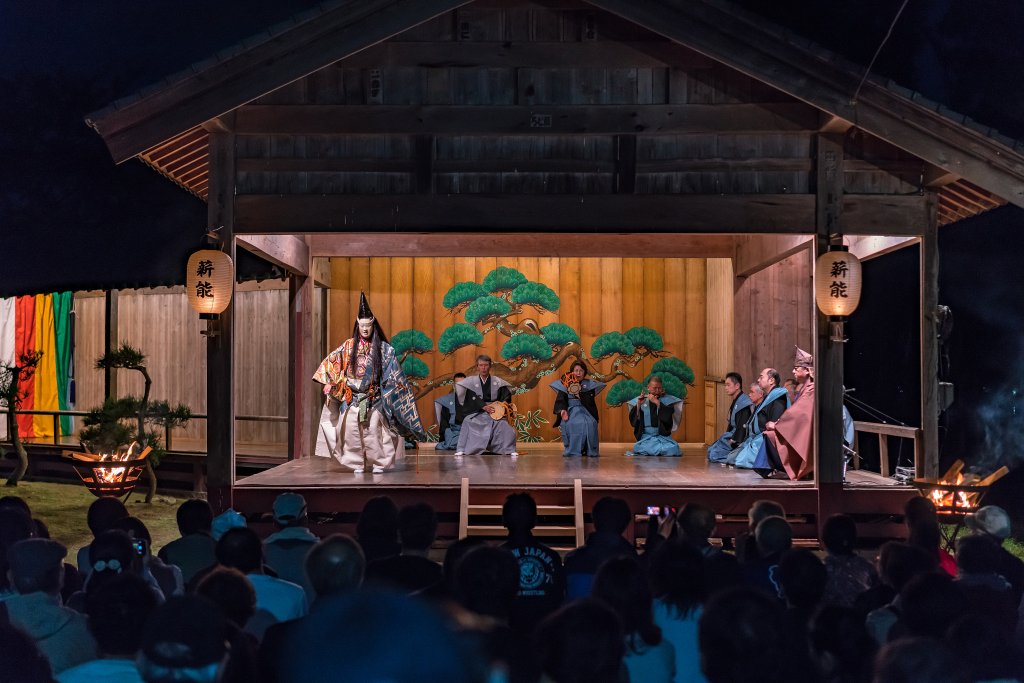
    Throughout the late 14th century, Kyoto flourished as a centre of wealth and culture, with some modern icons of Japanese culture, such as Renga Poetry and Noh Theatre, emerging during this time.

    A modern performance of Noh Theatre, which originated during this period in Kyoto.
    By Yoshiyuki Ito – Imported from 500px (archived version) by the Archive Team. (detail page), CC BY-SA 3.0, https://commons.wikimedia.org/w/index.php?curid=71346350

    It was, however, also a period where ‘traditional’ social norms were challenged. The Samurai, who had emerged primarily as a rural class, were a rough and ready sort, fond of extravagant living, flashy clothes, and frequent outbursts of violence.

    This lifestyle, often called Basara in contemporary sources, was at odds with the more formal, rigid, and genteel lifestyle of the ‘old’ families in and around Kyoto, who associated art and culture with the more traditional styles of the Imperial Court.

    Whilst the Shogun was relatively strong and capable (as Yoshimitsu was), these tensions could be managed, but the seeds of further trouble were already being sown, even as the Shogun appeared to be bringing an end to the chaos.

    The Meitoku Treaty

    Throughout the late 1380s and into the 1390s, Shogun Yoshimitsu either provoked or took advantage of chaos in several powerful clans, asserting his power and weakening any serious support for the Southern Court. In 1392, after having decisively broken the power of the Yamana Clan, he turned his attention to the Southern Court and its remaining allies.

    Northern Forces attacked Chihaya Castle in early 1392, and after it fell, the Southern Court was effectively defenceless. At this point, however, Yoshimitsu took on the role of peacemaker; instead of attacking the Southern Court, he opened negotiations.

    The Southern Court, for their part, seem to have seen the writing on the wall, and faced with a peaceful outcome or the prospect of annihilation, they chose peace. In November 1392, Emperor Go-Kameyama (Southern Court) travelled to Kyoto and handed over the three Imperial Treasures to Emperor Go-Komatsu (Northern Court).

    In exchange, it was agreed that, going forward, the line of the Northern Emperors and the Southern Emperors would alternate on the throne, with Go-Komatsu (Northern) being succeeded by a Southern Emperor, and so on.

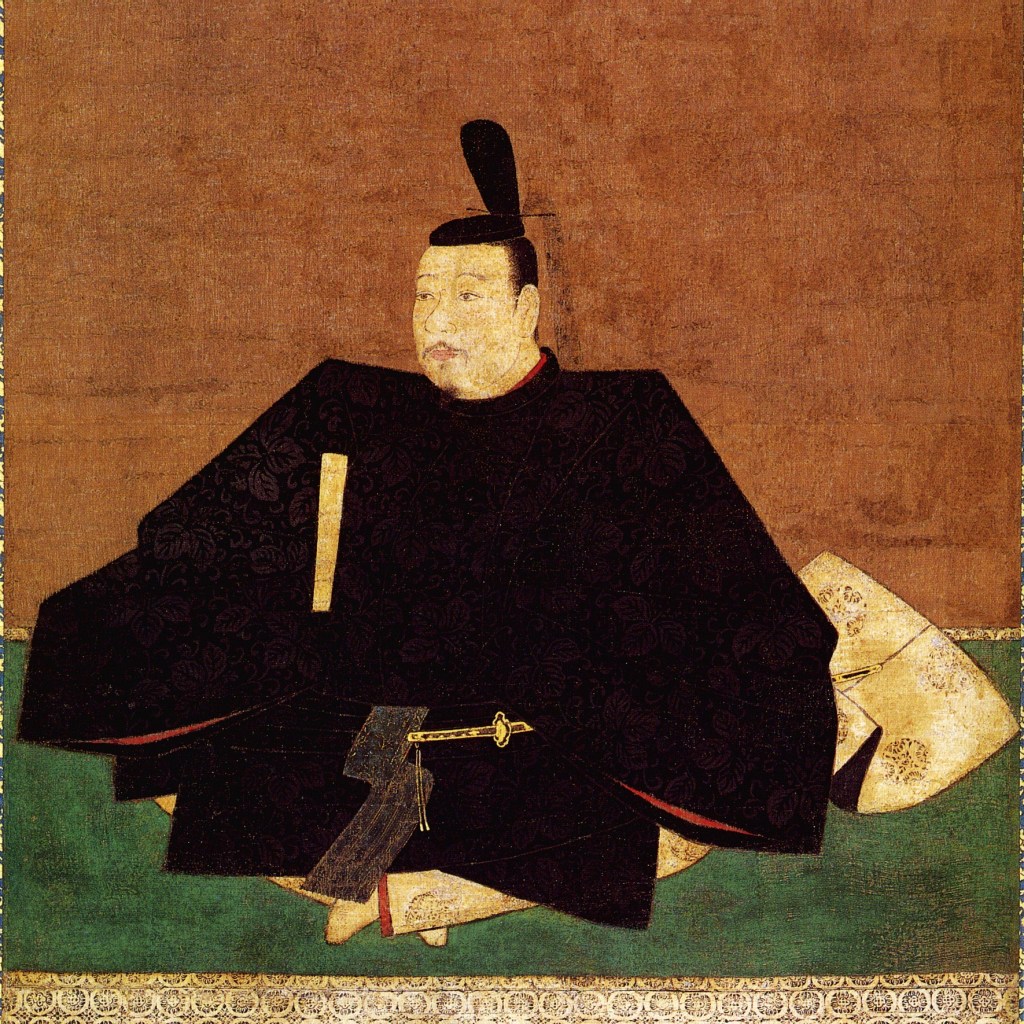
    Emperor Go-Komatsu, who wasn’t happy about the Meitoku Treaty, but also didn’t have much of a choice.

    As a side note, the Northern Court were apparently strongly opposed to the treaty, as they considered themselves the only legitimate line and didn’t wish to alternate with the ‘illegitimate’ Southern Line. It is perhaps a testament to just how powerful the Shogunate had become then, when the treaty was agreed to, with both sides evidently being mutually dissatisfied, but compelled to agree due to the overwhelming strength of the Shogun.

    So, peace came to Japan at last. A strong Shogun, a cowed Imperial Court, and a capital that had become a wealthy, bustling centre of commerce, art, and culture. All was right in the world, except, of course, it wasn’t.

    Yoshimitsu was an impressive leader, and through his personal drive, energy, and acumen, he ensured that everything went the Shogunate’s way. Bringing an end to the Nanbokucho Period was no mean feat, and we shouldn’t understate it, but unfortunately for Japan, Yoshimitsu, like most people, was mortal.

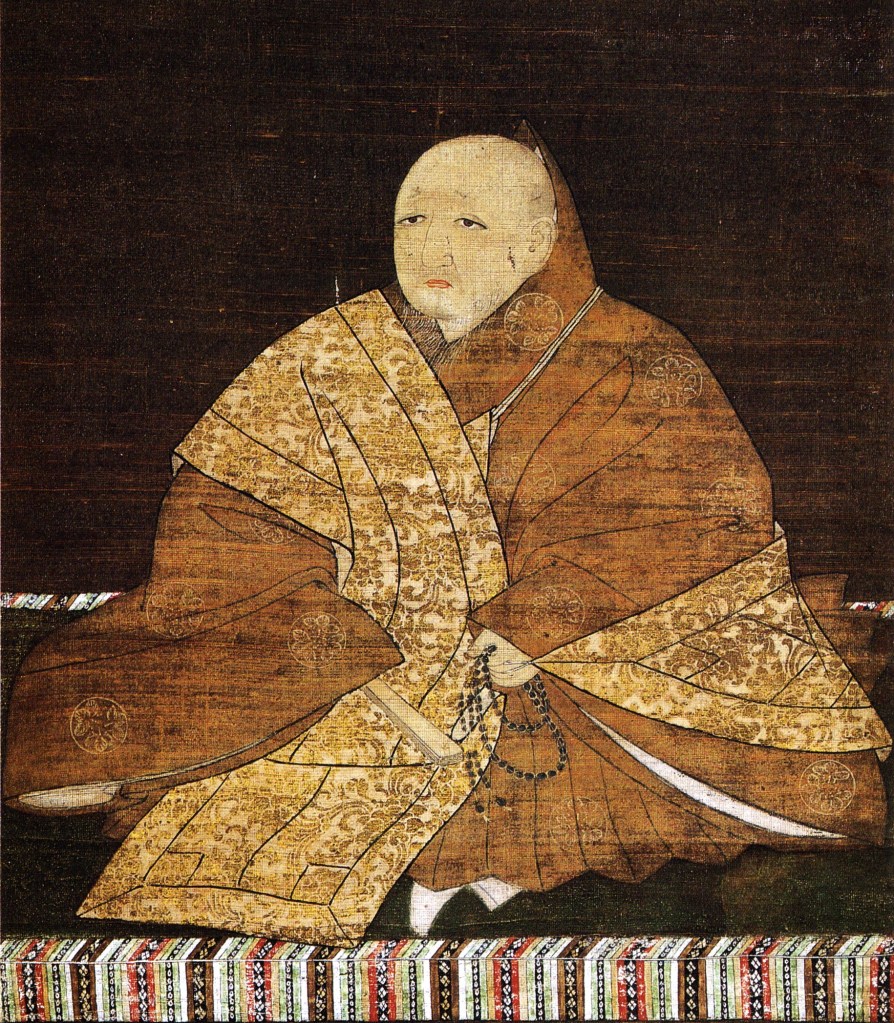
    Yoshimitsu would retired in 1394, but he kept hold of the real power.

    Though Yoshimitsu would formally retire as Shogun and become a monk in 1394, he continued to hold onto real power until his death in 1408, after which things began to unravel pretty quickly.

    Sources

    https://ja.wikipedia.org/wiki/%E6%98%8E%E5%BE%B3%E3%81%AE%E5%92%8C%E7%B4%84
    https://ja.wikipedia.org/wiki/%E4%B8%A1%E7%B5%B1%E8%BF%AD%E7%AB%8B#%E5%BE%8C%E6%97%A5%E8%AB%87
    https://ja.wikipedia.org/wiki/%E5%8D%83%E6%97%A9%E5%9F%8E
    https://ja.wikipedia.org/wiki/%E5%8D%97%E5%8C%97%E6%9C%9D%E6%99%82%E4%BB%A3_(%E6%97%A5%E6%9C%AC)
    https://ja.wikipedia.org/wiki/%E3%81%B0%E3%81%95%E3%82%89
    https://ja.wikipedia.org/wiki/%E9%80%A3%E6%AD%8C
    https://ja.wikipedia.org/wiki/%E8%83%BD%E6%A5%BD
    https://en.wikipedia.org/wiki/N%C5%8Dgaku
    https://en.wikipedia.org/wiki/Noh
    https://en.wikipedia.org/wiki/Ashikaga_Yoshimitsu

  • Shaky Foundations

    Shaky Foundations

    In 1336, Ashikaga Takauji overthrew Emperor Go-Daigo, bringing an end to the brief Kenmu Restoration, which had seen Go-Daigo and his supporters take power from the Kamakura Shogunate and their Hojo regents.

    Go-Daigo’s self-serving policies, which sought to restore the power of the Emperor and the Court at the expense of landholding Samurai, had proved to many of the warrior class that Imperial rule wasn’t in their interest, and Takauji had had no problem rallying his supporters against the Emperor.

    Ashikaga Takauji, serial turncoat and founder of the Ashikaga Shogunate.

    However, it would be wrong to suggest that all the warrior class supported Takauji, there were plenty who remained loyal to Go-Daigo and the idea of ruling without a Shogun, and even after he was defeated, Go-Daigo was able to set himself up with a rival ‘Southern’ Court, opposing the ‘Northern’ Court which relied on the Shogun, thus beginning the Nanbokucho, or “Northern and Southern Court” Period.

    There were political problems at home, too. Though Takauji had proven himself an effective warrior, he wasn’t much for politics, and so his brother, Tadayoshi, became responsible for day-to-day administration, and dealing with matters of justice, whilst Takauji dealt with military matters, including the appointment of Shugo, the military governors in the provinces.

    It will surprise no one to know that this dual system didn’t lead to stable government, but initially, the presence of Emperor Go-Daigo at the Souther Court in Yoshino served as something the new Shogunate could rally against. A series of battles in 1338 and 1339 generally ended in favour of the Shogunate, and when Go-Daigo died in 1339, the initial phase of the conflict came to an end. However, the peace would be fragile and frequently broken, especially further from Kyoto.

    Ko Moronao

    The dual nature of the new government led to immediate power struggles, with rival factions siding with or against each other, and external opponents, mostly at the Southern Court, seeking to take advantage of the division. One figure that emerged early on was Ko Moronao, whom Takauji appointed Shitsuji or deputy in 1336.

    Moronao was a talented warrior, but unlike Takauji, he proved to be a savvy politician as well and emerged as one of the most iconoclastic members of the new regime. He saw no need for an Emperor and favoured the rule of the Samurai without reference to either the Northern or Southern court.

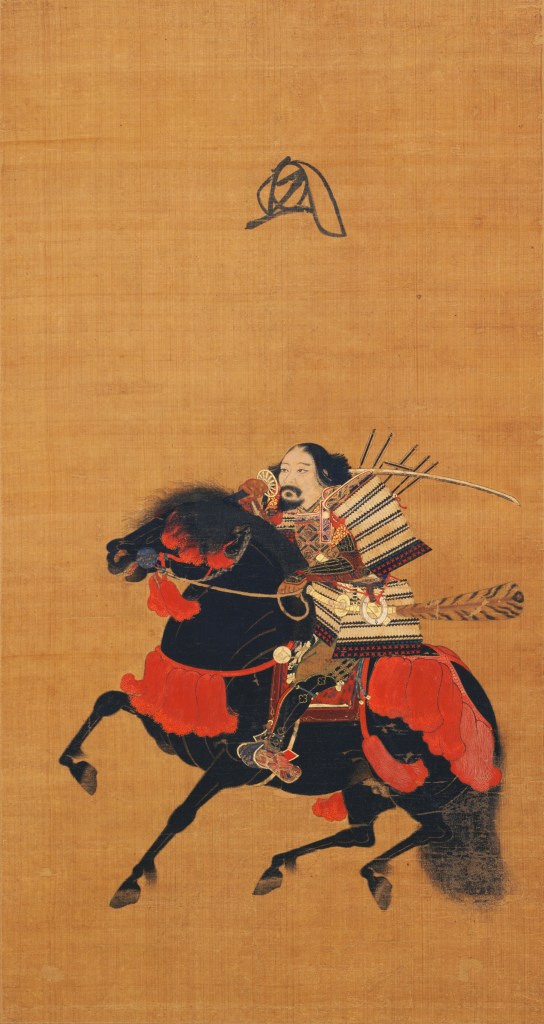
    Ko Moronao, general, iconoclast, and main political player.

    In traditional Japanese historiography, Moronao is portrayed as uniquely violent and cruel, even by the standards of the time. Although not without controversy (he infamously ordered the burning of a famous shrine in which his enemy had taken refuge), Moronao’s main crime seems to have been his vociferous opposition to the Imperial Court, and it wouldn’t be until the post-1945 period that his reputation would begin to recover.

    Moronao quickly found himself at odds with Tadayoshi, who was seen as conservative and increasingly courtly, and every time Tadayoshi made a decision with which Samurai disagreed, Moronao’s popularity would only grow, but it shouldn’t be understood that Moronao’s position was due entirely to his opposition to Tadayoshi.

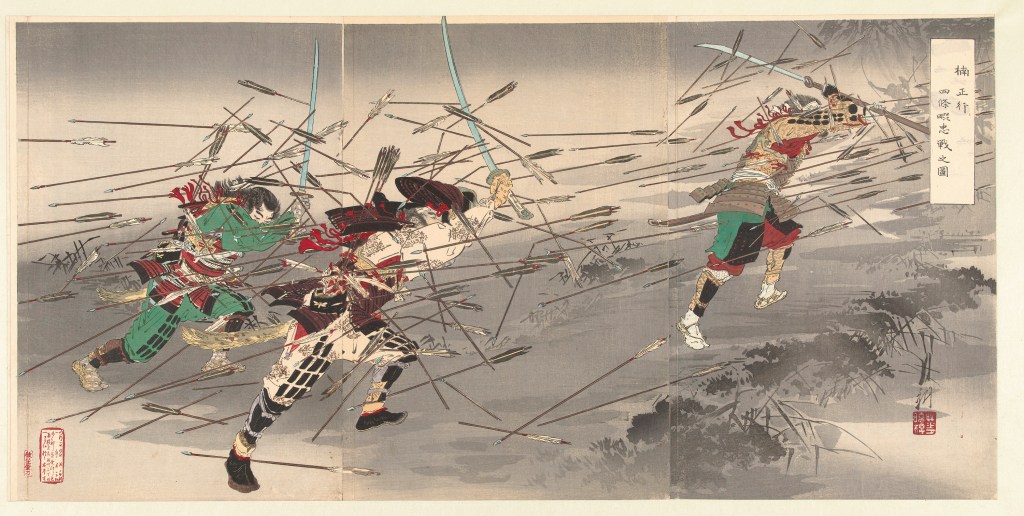
    Moronao was arguably the Ashikaga’s most effective commander, leading Shogunate forces to victory against the Southern Court and others throughout the chaotic period of the late 1330s and into the 1340s. Arguably, his most consequential victory came in 1348 at the Battle of Shijonawate. Here, Southern Court forces, under the leadership of the famed Kusunoki Clan, who had been advancing north since August of the previous year, were met and decisively defeated by the army of the Shogunate/Northern Court, led by Moronao.

    The Southern forces were so completely defeated that Moronao was able to advance as far as their capital at Yoshino, capturing it temporarily before withdrawing. The Kusunoki Clan, with their famed loyalty to the ‘true’ Emperor, were badly mauled, and with that, a serious military threat to the Shogun and the Northern Court was ended.

    The Kusunoki Clan meet their fate at the Battle of Shijonawate.

    The Bigger they are…

    Just as Moronao’s power seemed to be at its peak, his enemies at court moved against him. In 1349, in response to his alleged ‘misdeeds’, Moronao was stripped of his position as Shitsuji by Takauji, who was apparently pressured into doing it by Tadayoshi and his allies, the Uesugi Clan (I know, it’s another new name).

    Tadayoshi, not satisfied with having Moronao removed from office, apparently tried to have him assassinated, and when they failed, he even tried to enlist retired Emperor Kogon (of the Northern Court), asking him to issue an official order for Moronao’s death.

    Whether the Emperor refused, or there was simply no one to enforce the order, isn’t clear, but Moronao wasn’t about to hang around and let them try again. In August 1349, he and his brother marched on Kyoto at the head of an army. There was apparently relatively little fighting as Tadayoshi, taken by surprise, fled to his residence, where he was quickly surrounded and put under siege.

    The crisis was eventually resolved by negotiation. Tadayoshi would leave Kyoto and become a monk, and his closest allies, those who had conspired against Moronao, were sent into exile. Though nominally a victory for Moronao, the position of Takauji remained controversial. He had facilitated negotiations, but his actual role in the events is unclear, with some speculating that he was actually working towards the removal of his brother.

    Whatever the truth of it, the peace would not last long. Forces loyal to Tadayoshi had been gathering in the Chugoku region, but when Takauji gave the order for them to disperse, their leaders fled to Kyushu, far from Kyoto, and rebuilt their support. In late 1350, seeing the threat posed by the growing opposition, Takauji made the decision to personally march out and defeat them.

    The Chugoku Region, where Takauji’s enemies gathered.
    By TUBS – This vector image includes elements that have been taken or adapted from this file:, CC BY-SA 3.0, https://commons.wikimedia.org/w/index.php?curid=16385915

    However, with his brother distracted, Tadayoshi took his chance and fled Kyoto, arriving in nearby Kawachi Province (near modern Osaka), before raising an army with the stated goal of overthrowing Moronao and his supporters.

    Meanwhile, in the Kanto (around modern Tokyo), the Uesugi (remember them?) rose up as well, defeating forces that had remained loyal to Takauji and Moronao, handing effective control of Kamakura and the surrounding area to Tadayoshi.

    In response to all this, Takauji turned his army around and had the Emperor of the Northern Court declare Tadayoshi and his supporters to be enemies of the throne. When he heard this, Tadayoshi made the shocking decision to openly declare for the Southern Court, which had, up until then, been the Shogunate’s most implacable foes.

    Shogun Showdown

    Takauji tried to return to Kyoto but was defeated by the combined Tadayoshi/Southern Court forces at Komyo-ji, and then again at Uchidehama shortly afterwards. These defeats convinced Takauji to seek peace with his brother, and the matter was settled by further negotiation.

    In public, Takauji insisted that Moronao being allowed to become a monk was a prerequisite for peace, but allegedly, he secretly agreed with Tadayoshi that Moronao could be removed permanently. Peace was formally agreed on February 20th, and on February 26th, Moronao and his family were ambushed by forces loyal to the Uesugi (them again), and killed.

    With Moronao removed, the official reasons for the conflict between Takauji and Tadayoshi were removed, but it will probably not shock you to learn that the peace didn’t hold. The fact that Tadayoshi had sided with the Southern Court was not forgotten, and his attempts at reconciliation fell on deaf ears. He compounded this issue by continuing one of his most unpopular policies, refusing to reward Samurai who fought bravely with land confiscated from their defeated enemies.

    Takauji, for his part, sought to weaken his brother’s support by actively prosecuting his followers whilst overlooking the crimes of his own. This obviously bred considerable resentment amongst Tadayoshi’s base, but it had the side-effect of increasing support for Takauji; after all, he might reward you with land for supporting him, whilst opposing him carried the risk of prosecution.

    In the Spring of 1351, one of Tadayoshi’s most capable generals was assassinated by unknown assailants. Later, one of his commanders was attacked but was able to flee. Then, in the summer, Takauji ordered forces to move against his brother’s allies in Omi and Harima Provinces, seeking to attack from two sides.

    Alerted to the danger, Tadayoshi was able to flee Kyoto and made it to Kamakura. Although driven from the capital, he still controlled vast areas of the nation and could command the loyalty of thousands of warriors. Takauji, seeking any support he could, made an agreement with the Southern Court, effectively handing the entire Northern Court over to them in the so-called (and short-lived) Shohei Unification.

    With support in Kyoto secured, Takauji set off for Kamakura, defeating his brother’s forces in a series of battles throughout late 1351 and into 1352, eventually forcing him back to Kamakura, where he had little choice but to surrender.

    As punishment for his rebellion, Tadayoshi was confined to a temple in Kamakura, where he conveniently died only a few weeks later, allegedly by poison, but also possibly by a sudden illness.

    The main hall (Hondo) at Jomyo-ji Temple in Kamakura.

    Tadayoshi’s death brought an end to the political crisis in the short term, but it wasn’t to last. The reconciliation of the Imperial Court was already fraying at the edges, and it wouldn’t be long before conflict between Emperor and Shogun broke out again, but more on that next time.

    Sources
    https://ja.wikipedia.org/wiki/%E8%A6%B3%E5%BF%9C%E3%81%AE%E6%93%BE%E4%B9%B1#%E8%96%A9%E5%9F%B5%E5%B3%A0%E3%81%AE%E6%88%A6%E3%81%84
    https://en.wikipedia.org/wiki/Ashikaga_Tadayoshi
    https://ja.wikipedia.org/wiki/%E6%89%93%E5%87%BA%E6%B5%9C%E3%81%AE%E6%88%A6%E3%81%84
    https://ja.wikipedia.org/wiki/%E5%85%89%E6%98%8E%E5%AF%BA%E5%90%88%E6%88%A6
    https://ja.wikipedia.org/wiki/%E8%A6%B3%E5%BF%9C%E3%81%AE%E6%93%BE%E4%B9%B1
    https://ja.wikipedia.org/wiki/%E9%AB%98%E5%B8%AB%E7%9B%B4
    https://ja.wikipedia.org/wiki/%E9%87%91%E3%83%B6%E5%B4%8E%E3%81%AE%E6%88%A6%E3%81%84_(%E5%8D%97%E5%8C%97%E6%9C%9D%E6%99%82%E4%BB%A3)
    https://en.wikipedia.org/wiki/Sieges_of_Kuromaru
    https://en.wikipedia.org/wiki/Siege_of_Kanegasaki_(1337)
    https://en.wikipedia.org/wiki/Battle_of_Shij%C5%8Dnawate
    https://en.wikipedia.org/wiki/K%C5%8D_no_Moronao
    https://en.wikipedia.org/wiki/Kann%C5%8D_disturbance
    https://en.wikipedia.org/wiki/Ashikaga_Takauji
    https://en.wikipedia.org/wiki/Kenmu_Restoration
    https://en.wikipedia.org/wiki/Nanboku-ch%C5%8D_period
    https://en.wikipedia.org/wiki/Ashikaga_shogunate