Tag: Noto Province

  • The Second Unifier – Toyotomi Hideyoshi. Part Three.

    The Second Unifier – Toyotomi Hideyoshi. Part Three.

    Hideyoshi’s victory over Nobunaga’s killer, Akechi Mitsuhide, left him in a strong, but far from unchallenged position. Though Hideyoshi was arguably the strongest of Nobunaga’s remaining supporters, his power was not so great that he could overcome the others on the battlefield.

    Instead, a conference was called at Kiyosu Castle on July 16th, 1582. Historians still debate exactly what Nobunaga’s plans had been for his succession, given that his second son, and most obvious heir, Nobutada, had been amongst the dead at the Honnoji Incident. Two camps quickly emerged: Hideyoshi, supporting Nobutada’s son, Hidenobu, and Shibata Katsuie, who supported Nobunaga’s third surviving son, Nobutaka.
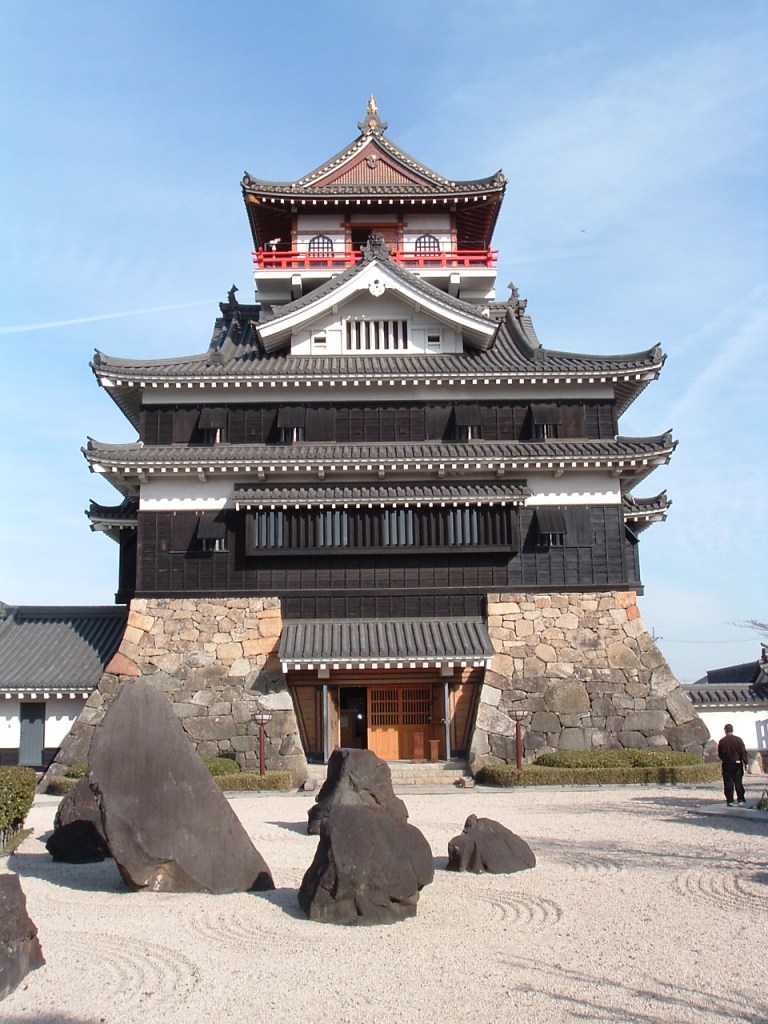
    The reconstructed Kiyosu Castle as it appears today.
    Oliver Mayer, CC 表示-継承 3.0, https://commons.wikimedia.org/w/index.php?curid=230610による

    The exact course of the meeting isn’t clear, but by the end of it, Hideyoshi’s faction was in the ascendancy, and Hidenobu, at just two years old, was declared Nobunaga’s heir, with Nobutaka officially acting as his guardian. There was an attempt to mollify Katsuie by having him marry Nobunaga’s sister, Oichi, a woman of impeccable rank, but the seeds of conflict had already been sown.

    In October 1582, Hideyoshi held Nobunaga’s formal funeral, and played a central, highly visible role in the ceremony, cementing his position as chief amongst Nobunaga’s retainers. Not long after this, Katsuie, supported by Nobutaka, issued letters of impeachment against Hideyoshi, who responded by demanding that Nobutaka, who had custody of the ‘heir’, Hidenobu, return him to Azuchi, as per the Kiyosu Agreement.
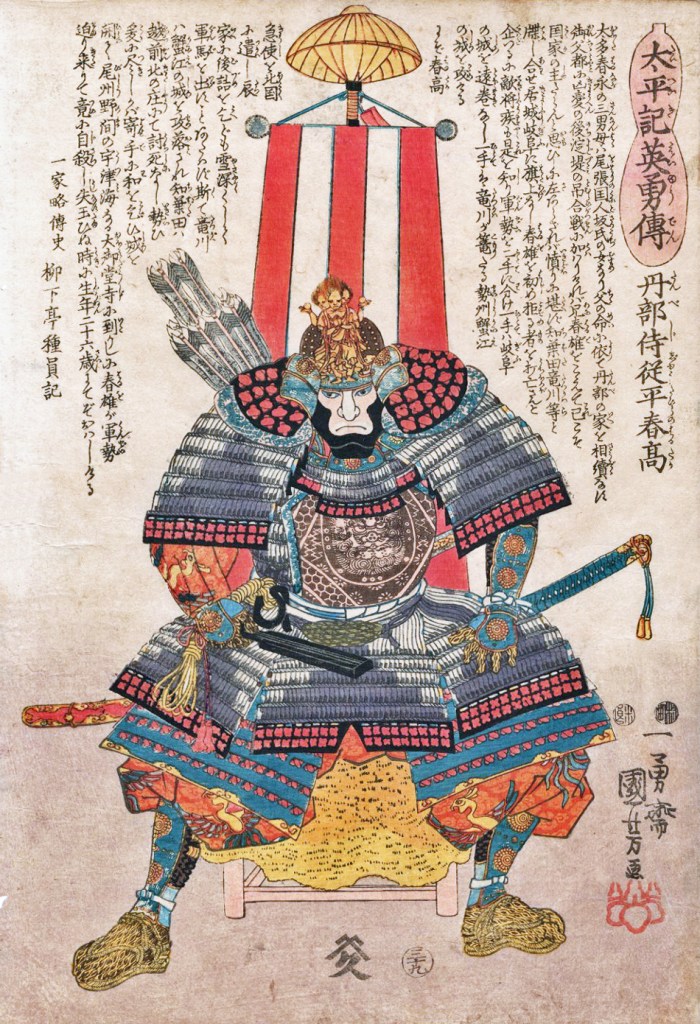
    Oda Nobutaka

    When Nobutaka refused, Hideyoshi used this as justification to renounce the agreement and raise an army against him. Katsuie, trapped in the north by snows and the ongoing war with the Uesugi, was unable to send help, and in a short, sharp campaign, Hideyoshi raised an army of some 50,000, forced Nobutaka to retreat, and eventually surrender, handing over Hidenobu and sending his mother and daughter as hostages to secure the peace.

    This victory did not end the war, however, and shortly after the New Year, Takigawa Kazumasu (also known as Sakon) launched successful attacks in Ise Province. Hideyoshi responded with counterattacks against Kuwana and Nagashima Castles, but the attacks failed, and he was forced to withdraw, despite an overall advantage in numbers, leaving northern Ise Province (temporarily) in the hands of his enemies.
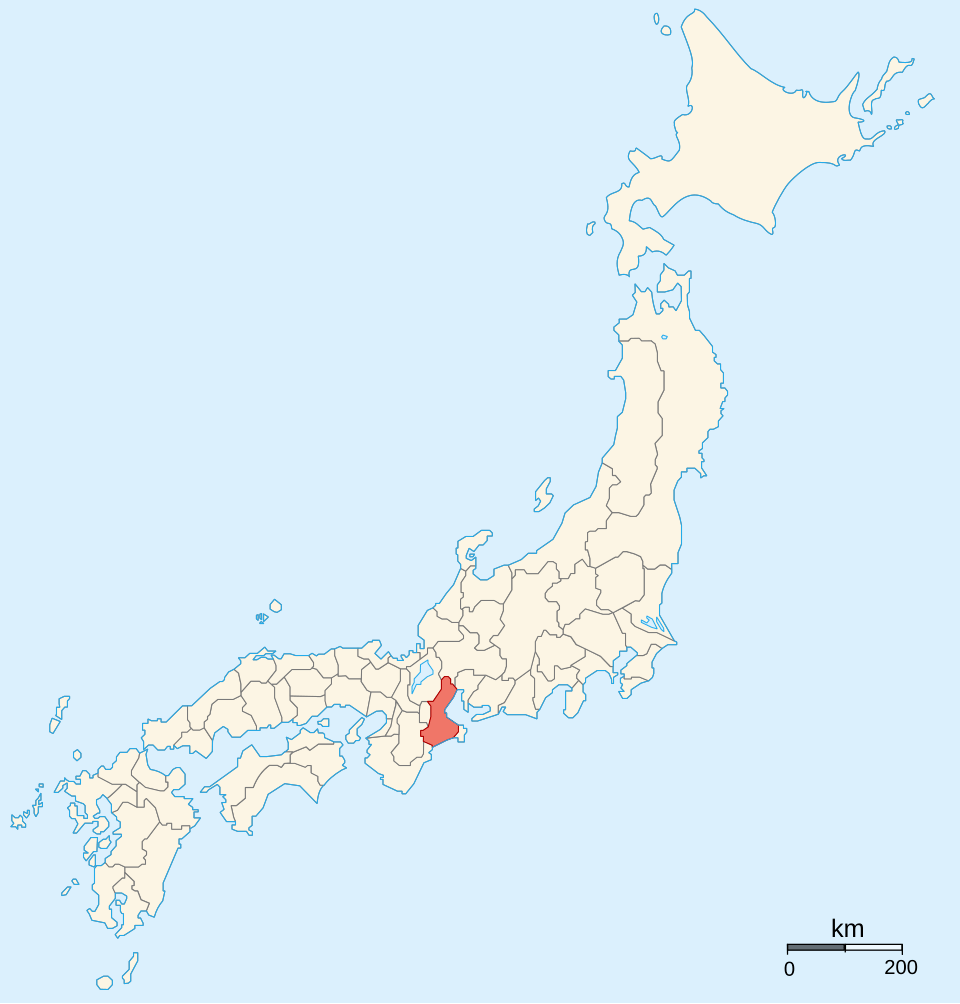
    Ise Province
    By Ash_Crow – Own work, based on Image:Provinces of Japan.svg, CC BY 2.5, https://commons.wikimedia.org/w/index.php?curid=1682471

    The situation got worse for Hideyoshi when Katsuie himself led an army of 30,000 into Omi Province, whilst Nobutaka raised another army at Gifu Castle. Katsuie also made contact with Mori Terumoto, hoping to secure his support in the battle to come. The Mori never outright refused, but instead adopted a ‘wait and see’ approach, as it was not immediately clear which side would win.

    Throughout spring and early summer, the two sides clashed in skirmishes in Ise, Mino, and Omi Provinces, and the momentum would swing back and forth for some time until a decisive engagement near the fortress at Shizugatake. Hideyoshi’s forces were aided by the timely arrival of reinforcements from across Lake Biwa, and the betrayal of Maeda Toshiie, one of Katsuie’s most important generals, who switched to Hideyoshi’s side, for reasons that are still debated.
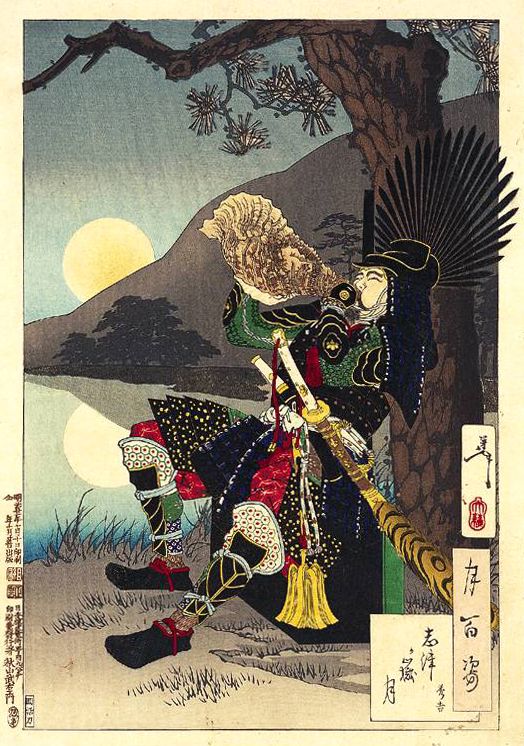
    A 19th-century depiction of Hideyoshi on the night before the Battle of Shizugatake.

    By all accounts, Katsuie and his army forced tenaciously, but with Toshiie’s betrayal, they were outflanked and outnumbered, and Katsuie was forced to retreat. He got as far as Kitanosho Castle, in modern Fukui, where Hideyoshi’s forces laid siege.

    The night before the final assault, Katsuie held a final banquet with his close family and retainers, whilst his wife, Oichi, made arrangements for her three daughters to be protected by Hideyoshi and avoid what was to come. Despite pleas to save herself, Oichi refused to leave her husband’s side.
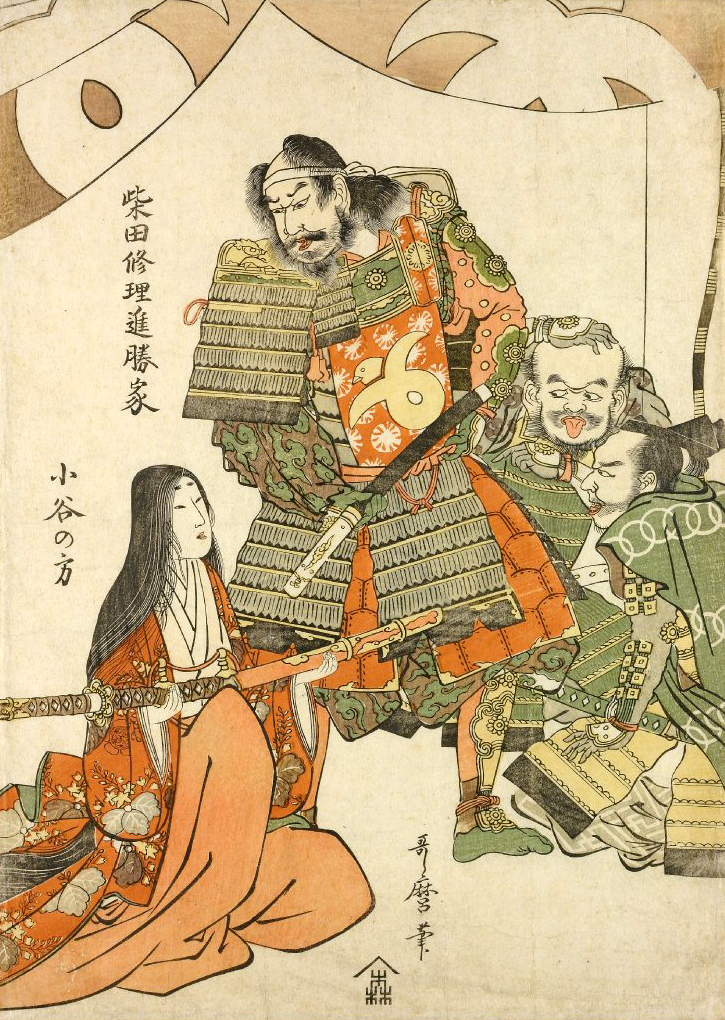
    A later depiction of Shibata Katsuie preparing for battle, with Oichi beside him.

    The attack started at dawn, and despite stiff resistance, by midday, the battle was clearly lost, and Katsuie retreated to the main castle, where he and 80 members of his family, including Oichi, killed themselves. Calling it ‘suicide’ is perhaps a bit generous, as the records suggest that a large number of the dead were children. When it was over, Katsuie’s forces ignited a store of gunpowder, blowing the tower apart and bringing a spectacular end to the Shibata Line.

    “Katsuie, a martial artist, fought seven times but was unable to defend himself. He climbed to the ninth floor, the highest level of the main tower, and addressed the entire group, loudly proclaiming, “Watch Shuri’s hara-kiri and learn from it.” The samurai, with their hearts in tears, wet their armor sleeves. As everyone fell silent, Katsuie stabbed his wife, children, and others to death, then committed seppuku with 80 others. It was the hour of the tiger (5:00 PM).”

    Hideyoshi’s letter to Kobayakawa Takakage dated May 15, 1583,

    Just a side note, the actual record of Katsuie’s suicide is pretty harrowing stuff, and it’s always difficult to read about the death of women and children who weren’t guilty of anything other than being related to the losers. This kind of thing was expected, though; even children weren’t generally shown mercy, and though there are notable examples (Oichi’s daughters, for instance), if a child was caught in a siege, they generally died in the same manner as their parents.

    With Katsuie crushed, Hideyoshi was able to extend his direct control over the northern provinces of Koto, Noto, and Echizen, and when Nobutaka committed seppuku, and Kazumasu surrendered, Hideyoshi had established himself as the most powerful man in the realm and while Hidenobu (still just an infant) remained as the nominal ‘heir’ there was no no doubt that Hideyoshi was in charge.
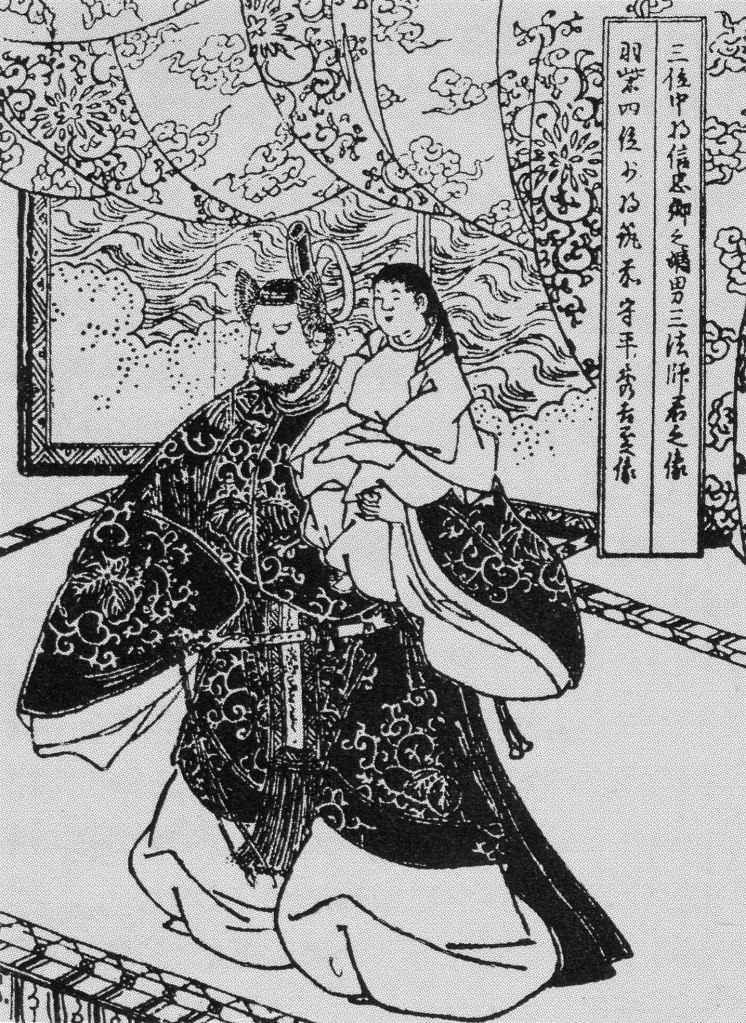
    An image of Hideyoshi carrying Hidenobu at the time of the Kiyosu Conference.

    In 1583, construction began on Osaka Castle, built on the former site of the Ishiyama Hongan-ji Temple complex. It would eventually become Hideyoshi’s base and was widely considered one of Japan’s finest castles. Meanwhile, in the Kanto, a marriage alliance between the Tokugawa and Hojo presented a clear threat to Hideyoshi’s power.

    In early 1584, Oda Nobukatsu, another son of Nobunaga, rebelled against Hideyoshi, quickly gaining the support of Tokugawa Ieyasu and Chosokabe Motochika, who raised armies of their own in opposition to Hideyoshi. Despite a huge advantage in manpower (some sources say 3-to-1), Hideyoshi struggled to achieve a decisive victory.

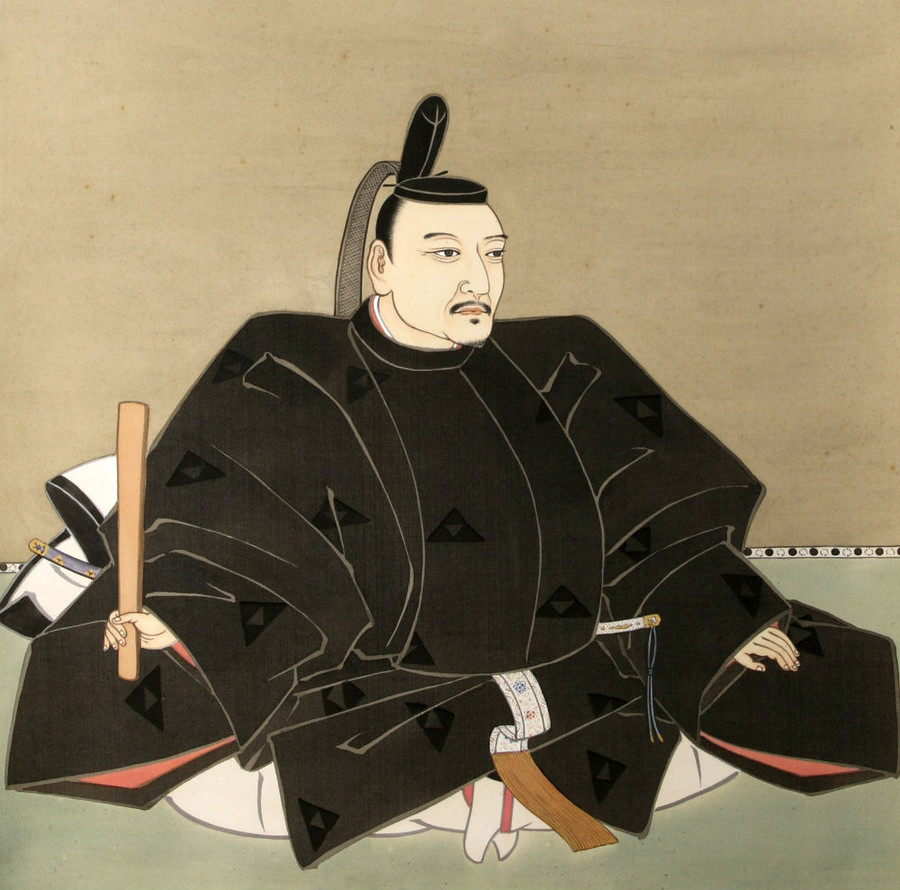
    Tokugawa Ieyasu

    Some initial success in Ise Province was followed by a defeat at the Battle of Haguro Castle, after which Hideyoshi, who had been waiting at Osaka Castle, took the field himself, meeting Ieyasu near Komaki (near the modern city of the same name). Again, despite a significant manpower imbalance, Ieyasu’s strong position meant that Hideyoshi was unable to force a decisive engagement, and both sides focused on reinforcing castles and constructing new earthworks in anticipation of the fight to come.

    The campaign that followed is often called the Battle of Komaki and Nagakute, after its two most decisive engagements, but there were actually a series of sieges, counterattacks, and skirmishes over the summer and early autumn of 1584. The fighting would result in a tactical victory for the Tokugawa, as they would arguably have the best of the fighting. On the other hand, the strategic situation favoured Hideyoshi, and he would ultimately be able to secure control over his new territory and the power that went along with it.
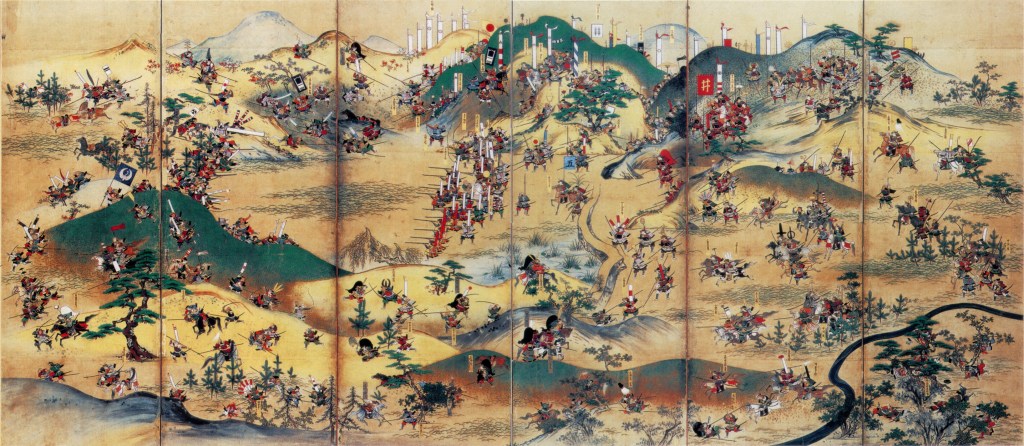
    An 18th-Century depiction of the Battle of Komaki and Nagakute.

    In the end, both sides had bigger problems. Ieyasu’s domains were under severe economic strain from the war, and a series of floods, combined with the burden of having a large number of peasants away at war, drained his treasury and threatened famine (this was before a serious earthquake in 1586 compounded his problems).

    For his part, Hideyoshi’s position was not as strong as it appeared. Though he had the advantage in men, he also had powerful enemies elsewhere, enemies that were arguably more pressing problems than Ieyasu, who had proven he could hold Hideyoshi off, but not that he could mount a serious attack of his own.
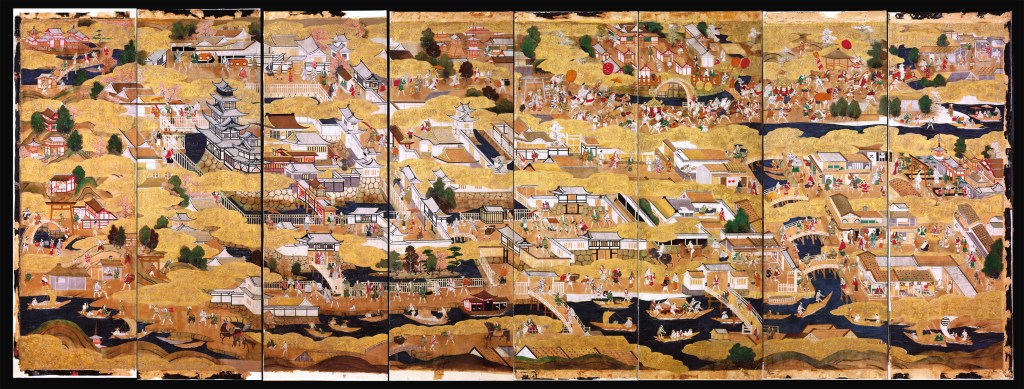
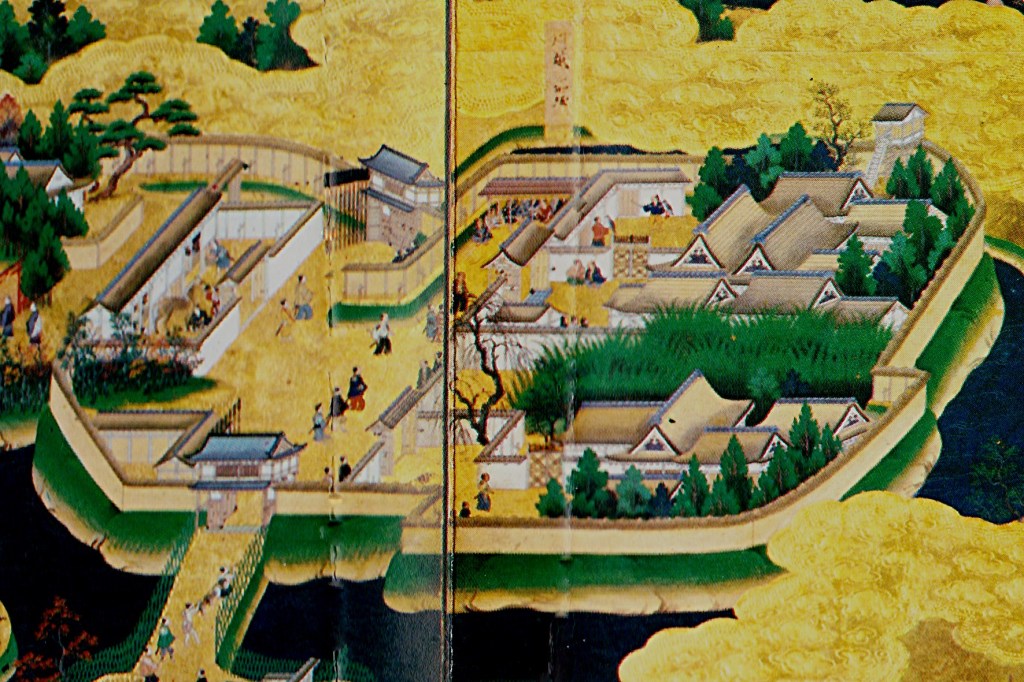
    Osaka as it appeared around 1650. The city would become Hideyoshi’s base, centred at the castle, which appears in the second screen from the left.

    Despite his inability to defeat Ieyasu, by the dawn of 1585, Hideyoshi was effectively the ruler of Japan, already on the verge of surpassing his nominal masters (the Oda), and about to launch the campaigns that would finally bring an end to the centuries of bloodshed.

    Sources
    https://ja.wikipedia.org/wiki/%E8%B1%8A%E8%87%A3%E7%A7%80%E5%90%89
    https://ja.wikipedia.org/wiki/%E5%B0%8F%E7%89%A7%E3%83%BB%E9%95%B7%E4%B9%85%E6%89%8B%E3%81%AE%E6%88%A6%E3%81%84
    https://ja.wikipedia.org/wiki/%E5%B2%A9%E5%B4%8E%E5%9F%8E%E3%81%AE%E6%88%A6%E3%81%84
    https://ja.wikipedia.org/wiki/%E5%B0%8F%E7%89%A7%E5%B1%B1
    https://ja.wikipedia.org/wiki/%E5%A4%A7%E5%9D%82%E5%9F%8E
    https://ja.wikipedia.org/wiki/%E8%B3%A4%E3%83%B6%E5%B2%B3%E3%81%AE%E6%88%A6%E3%81%84
    https://ja.wikipedia.org/wiki/%E5%8C%97%E3%83%8E%E5%BA%84%E5%9F%8E%E3%81%AE%E6%88%A6%E3%81%84
    https://ja.wikipedia.org/wiki/%E6%B5%85%E4%BA%95%E4%B8%89%E5%A7%89%E5%A6%B9
    https://en.wikipedia.org/wiki/Kitanosho_Castle
    https://ja.wikipedia.org/wiki/%E5%89%8D%E7%94%B0%E5%88%A9%E5%AE%B6#%E4%BA%BA%E7%89%A9%E3%83%BB%E9%80%B8%E8%A9%B1
    https://ja.wikipedia.org/wiki/%E6%A1%91%E5%90%8D%E5%9F%8E
    https://ja.wikipedia.org/wiki/%E6%B8%85%E6%B4%B2%E4%BC%9A%E8%AD%B0
    https://ja.wikipedia.org/wiki/%E5%A4%A7%E5%BE%B3%E5%AF%BA
    https://ja.wikipedia.org/wiki/%E7%B9%94%E7%94%B0%E4%BF%A1%E5%AD%9D
    https://ja.wikipedia.org/wiki/%E7%B9%94%E7%94%B0%E7%A7%80%E4%BF%A1
    https://ja.wikipedia.org/wiki/%E7%B9%94%E7%94%B0%E7%A7%80%E4%BF%A1
    https://ja.wikipedia.org/wiki/%E6%9F%B4%E7%94%B0%E5%8B%9D%E5%AE%B6

  • The Dragon of Echigo

    The Dragon of Echigo

    Much like Takeda Shingen, Kenshin’s real name wasn’t Kenshin, but Kagetora, with Kenshin being a religious name given in later life. However, as this is the name he is best known by, we will be referring to him as it throughout.

    Uesugi Kenshin, the Dragon of Echigo and the topic of this post.

    If you live your life in such a way that you earn the nickname ‘Dragon of something’ and have followers who think of you as an avatar of the God of War, then I’d say you’ve done pretty well for yourself. By this standard, our subject for today, Uesugi Kenshin, is a historical figure worthy of a closer look.

    Confusingly enough, Uesugi Kenshin wasn’t actually a member of the Uesugi family to begin with. He was a scion of the Nagao family, a strong clan who were vassals of the Yamanouchi branch of the Uesugi Clan, based in Echigo Province, in what is now Niigata Prefecture.

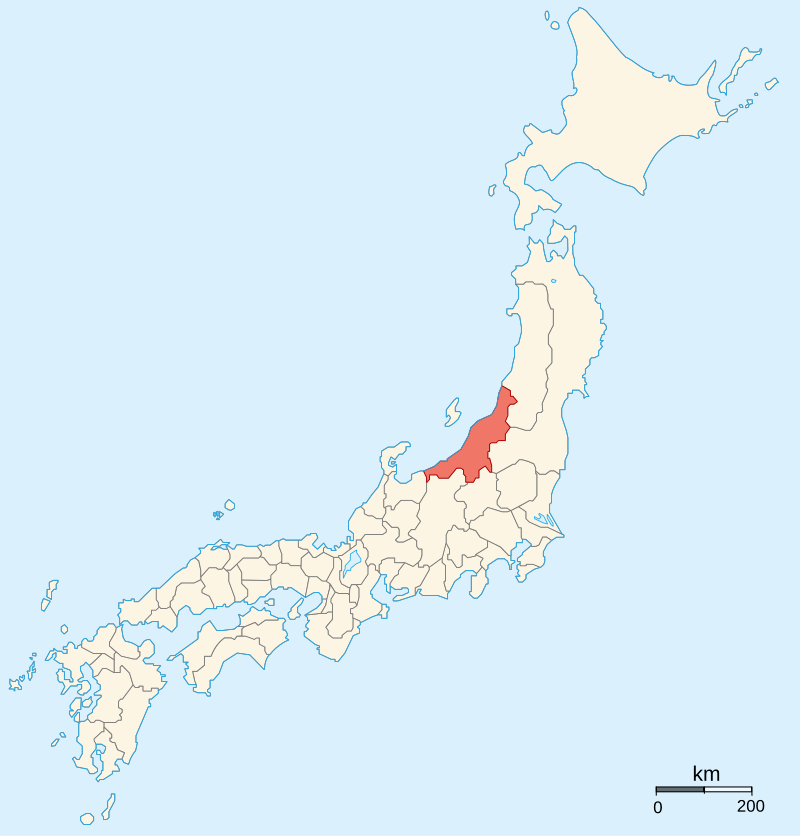
    Echigo Province.
    By Ash_Crow – Own work, based on Image:Provinces of Japan.svg, CC BY 2.5, https://commons.wikimedia.org/w/index.php?curid=1655309

    Born in 1530, it is quite likely that Kenshin’s mother was a concubine, and what’s more, the boy himself was the second son. He was never intended to inherit control of the Nagao Clan, and he entered the temple at Risenji at age 11, apparently set on a life as a monk.

    He doesn’t seem to have stayed at Risenji for long, however, as when his father died in 1542, just a year later, he was at the funeral with armour and sword at his side, and shortly after that, he was at Tochio Castle when a rebellion against Kenshin’s brother (the new Lord Nagao) broke out. Despite being just 14, Kenshin is supposed to have led the defence of the castle and won his first victory.

    At the time, though the Uesugi were nominally the lords of the region, the Nagao served as deputy (and de facto) governors in their place. After the death of Kenshin’s father, it was his elder brother, Harukage, who inherited this position. The brothers don’t seem to have gotten along very well, however, and in the late 1540s, a movement emerged within the Nagao clan that sought to replace Harukage with Kenshin as head of the clan.

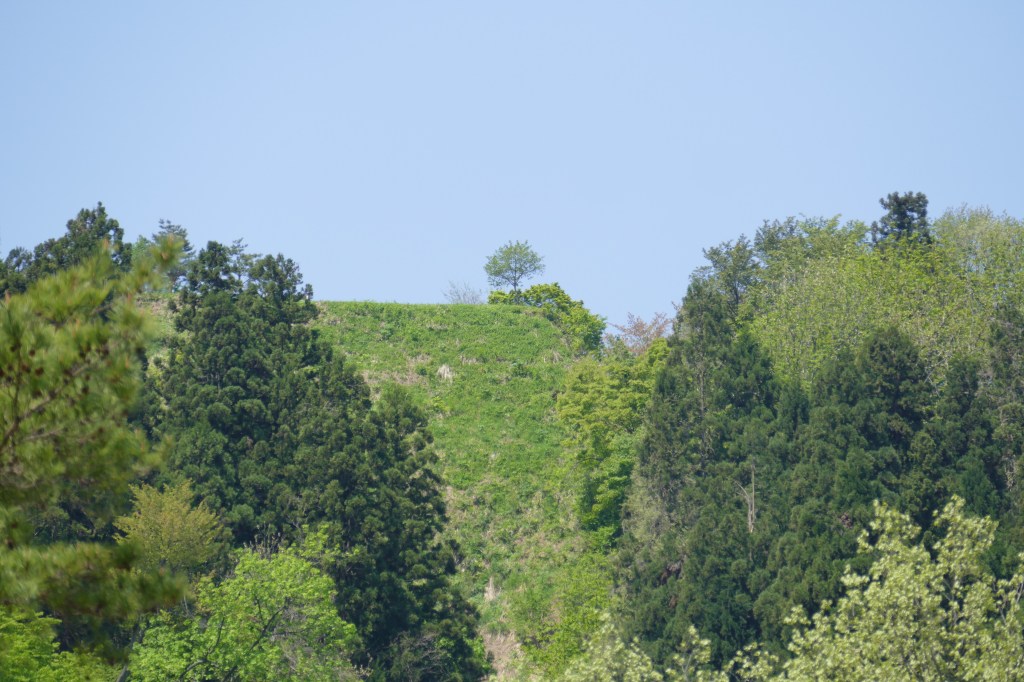
    The remains of Tochio Castle, site of Kenshin’s first victory.
    nubobo – 栃尾城本丸跡, CC 表示 2.0, https://commons.wikimedia.org/w/index.php?curid=59682349による

    Exactly why the clan was so against Harukage isn’t clear, but their efforts were ultimately successful. In 1548, under mediation from Uesugi Sadazane (their nominal overlord), Harukage agreed to adopt Kenshin, then retire as head of the clan, clearing the way for Kenshin to become head of the Nagao Clan aged just 18 or 19 (depending on the source).

    In 1550, Sadazane died without an heir, leaving Echigo Province without a lord. At this point, Shogun Ashikaga Yoshiteru instructed Kenshin to take the position of shugo of the province, effectively making him the new lord. Shogunate recognition was not quite the prestigious thing it had once been, however, and not long after this, supporters of Kenshin’s brother rose up in rebellion against him.

    Kenshin quickly bottled up the rebels at Sakado Castle, when the castle fell, the leader of the rebels was spared because he was Kenshin’s brother-in-law, and following this, Kenshin, still aged just 22 had established effectively control over the whole of Echigo Province.

    Looking back for a moment, five years earlier, the Uesugi Clan (or more accurately, the Ogigayatsu branch of the clan) had been defeated at the Battle of Kawagoe by the new rising star of the Kanto, the Hojo Clan. The Ogigayatsu-Uesugi were wiped out after this battle, leaving only the Yamanouchi Branch of the clan. In 1552, Uesugi Norimasa, who was, on paper, the Kanto Kanrei (Shogun’s deputy) was finally driven out of the Kanto entirely and sought refuge with Kenshin.

    A later depiction of Kawagoe Castle.

    Unsurprisingly, harbouring their enemies didn’t do much for the relationship between Kenshin and the Hojo, and Kenshin would send an army to oppose the Hojo’s invasion of Kozuke Province (modern Gunma Prefecture), capturing Numata Castle, and forcing the Hojo to retreat.

    A year later, Kenshin would face a new enemy, as Takeda Shingen’s long-running invasion of Shinano eventually obliged some of the clans there to flee and seek refuge with Kenshin in Echigo. Much like the Hojo, the Takeda didn’t take kindly to someone giving refuge to their enemies, and one of Japanese history’s most famous rivalries was born.

    In August 1553, an army led by Kenshin himself advanced against the Takeda in Shinan, defeating Shingen himself at the Battle of Fuse on August 30th, then again at Yuwata on September 1st. After this, Shingen adopted a strategy of avoiding direct battle with Kenshin, and the conflict settled into a stalemate that was later called the First Battle of Kawanakajima.

    A modern view of Kawanakajima.
    日本語版ウィキペディアのBlogliderさん – 原版の投稿者自身による著作物 (Original text: Photo by Bloglider.), CC 表示-継承 3.0, https://commons.wikimedia.org/w/index.php?curid=12400636による

    In 1554-55, Kenshin was obliged to face a rebellion launched by treacherous vassals in league with Shingen. Putting down the rebellion quickly, Kenshin again marched into Shinano in April 1555 to face the advancing Takeda forces, again led by Shingen.

    At the Second Battle of Kawanakajima, the two sides faced each other in another stalemate, which dragged on for five months, before mediation from the Imagawa Clan led to both sides withdrawing after little actual fighting.

    In the following year, Kenshin apparently announced he would retire and become a monk, however, another outbreak of Takeda-backed rebellion forced him to change his plans, and after a period of peace, in 1557, Shingen again advanced against Kenshin’s allies in Shinano, forcing him to intervene and leading to the Third Battle of Kawanakajima, which, much like the previous two, swiftly settled into stalemate.

    A year later, Kenshin dispatched an army in an ultimately unsuccessful invasion of Kozuke Province and then in 1559 he was ‘invited’ for a meeting with the Shogun, Ashikaga Yoshiteru. Some sources say that Kenshin was granted the title of Kanto Kanrei at this time, the position traditionally held by the Uesugi Clan. He also apparently donated funds towards the maintenance and repair of the Imperial Palace.

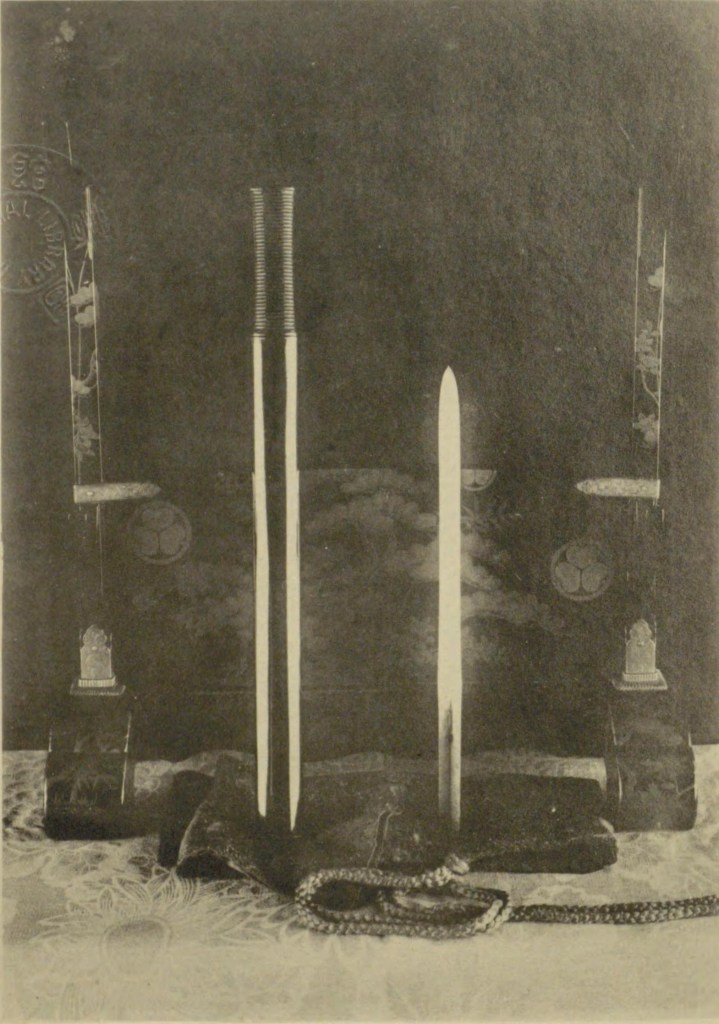
    Swords supposedly gifted to Kenshin by the Emperor, photographed in 1928.

    It seems that Kenshin enjoyed good relations with the Shogunate, but the already well-established decline of the Shogun’s power is highlighted again when he asked Kenshin, Shingen, and the Hojo to make peace in order to combine their forces against the Shogun’s enemies. All three parties refused.

    In March 1560, the Imagawa Clan’s devastating defeat at Okehazama opened the way for Kenshin to intervene directly in the Kanto again, as the Imagawa had been allied to his enemies, the Hojo, and their defeat left the Hojo vulnerable. Later that year, Kenshin launched another large-scale invasion of Kozuke Province, driving the Hojo back and capturing several important castles before celebrating New Year at Maebashi Castle, the gateway to the Kanto Plain.

    In March 1561, Kenshin was formally adopted by the Yamanouchi-Uesugi Clan (the only remaining branch) and changed his surname to match. Though he would be known as Uesugi Kagetora from this point, we will continue to call him Kenshin to keep things simple.

    In August of that year, Kenshin led another large army into Shinano, and engaged the Takeda at the Fourth Battle of Kawanakajima. Unlike the previous three, this battle was not an extended stalemate, but a bloody one. Both sides suffered heavy casualties, with sources ranging from around 20% losses, to as high as 60 or 70%, and when the battle was over, the Takeda held the field, but made no attempt to intervene as the Uesugi withdrew, leading some to suggest the battle was a bloody draw.

    A legendary depiction of the Fourth Battle of Kawanakajima, depicting the (possibly apocryphal) moment that Uesugi Kenshin and Takeda Shingen met on the field.

    The Takeda and Hojo clans, recognising the Uesugi as their common enemy, renewed their combined efforts and launched a joint counter-attack in Musashi Province in late 1561. At first, Uesugi forces were successful against the alliance, even getting as far as besieging Odawara Castle, the Hojo’s main stronghold, before being forced to withdraw after allied counter-attacks in other parts of the Kanto.

    The strategic situation in the Kanto would ebb and flow over the following years, as Uesugi, Takeda, and Hojo armies advanced and retreated, and the local lords would switch sides depending on whoever appeared to be in the ascendancy.

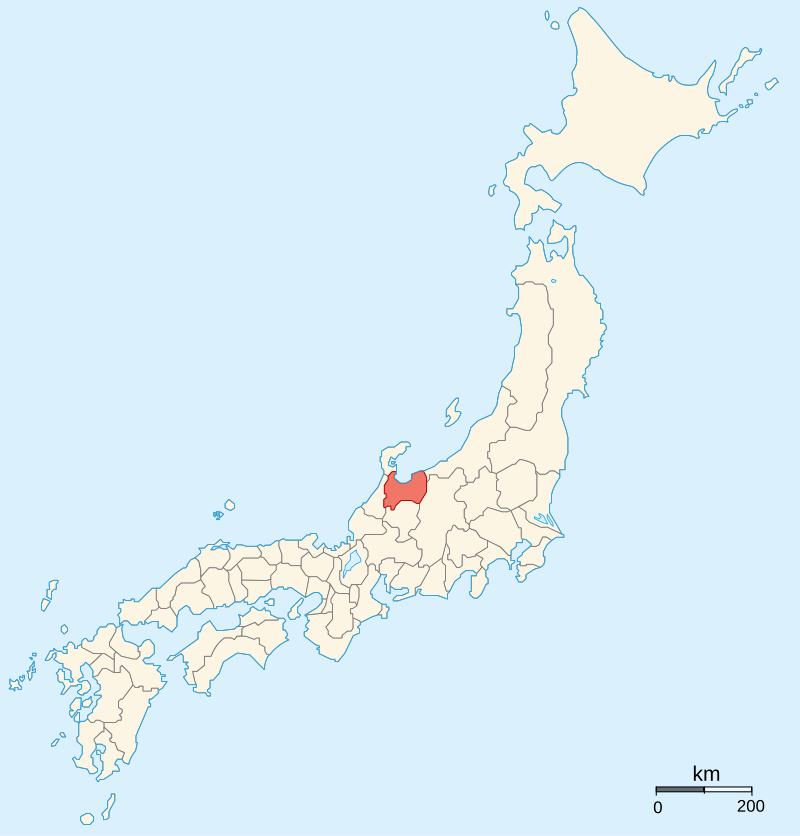
    All three factions would be occupied with fighting each other, but also engaged in other battles and proxy wars with allies and supporters of each other’s enemies. For Kenshin, this meant being obliged to dispatch forces into neighbouring Etchu Province in 1568, to deal with Ikko Ikki forces nominally allied with Shingen.

    Etchu Province.

    Seeking to take advantage of this distraction, Takeda forces attacked in Shinano and were ultimately defeated, but a rebellion in Echigo (Kenshin’s home province) meant he was unable to take advantage of this victory in the short term.

    Later that year, the strategic situation would shift in Kenshin’s favour, however, as the long-term decline in Takeda-Imagawa relations finally led to open conflict between two of his main rivals. The Imagawa would request aid from both the Uesugi and the Hojo, and while Kenshin would refuse, the Hojo dispatched forces to oppose the Takeda, bringing an end to the alliance that had done so much to oppose Kenshin.

    However, years of expensive (and bloody) campaigns in the Kanto had left the Uesugi exhausted, and in 1569, Kenshin reluctantly agreed to a peace deal with the Hojo, which saw the Uesugi withdraw from Musashi Province (modern day Tokyo and Saitama) and the Hojo withdrew from Kozuke.

    With his borders with the Hojo (relatively) secure, Kenshin was able to focus on campaigning against the Takeda again. In 1570 and 1571, he would engage the Takeda and their allies in Etchu and Shinano Provinces, generally having the better of the fighting, but the situation would shift again in 1572 when the lord of the Hojo, Ujiyasu, passed away, and was replaced by Ujimasa, who made peace with the Takeda, turning on the Uesugi. At the same time, the Etchu Ikko Ikki launched a fresh attack, instigated by Takeda Shingen.

    Hojo Ujimasa, who reversed his father’s diplomatic policy.

    The Ikko Ikki would initially be successful against Kenshin, but by mid-1573, the momentum had shifted back in his favour, and several key fortresses within Etchu were taken. Also in that year, Kenshin’s long-time rival, Takeda Shingen, passed away, an event that apparently caused Kenshin to weep openly, but also significantly weakened the Takeda.

    Over the following two years, Kenshin was forced to split his focus between his ongoing campaign in Etchu and the situation in the Kanto. By the end of 1574, the Hojo had effectively ended any Uesugi presence in the region, and although Kenshin would launch counterattacks, the writing was on the wall for Uesugi power in the Kanto.

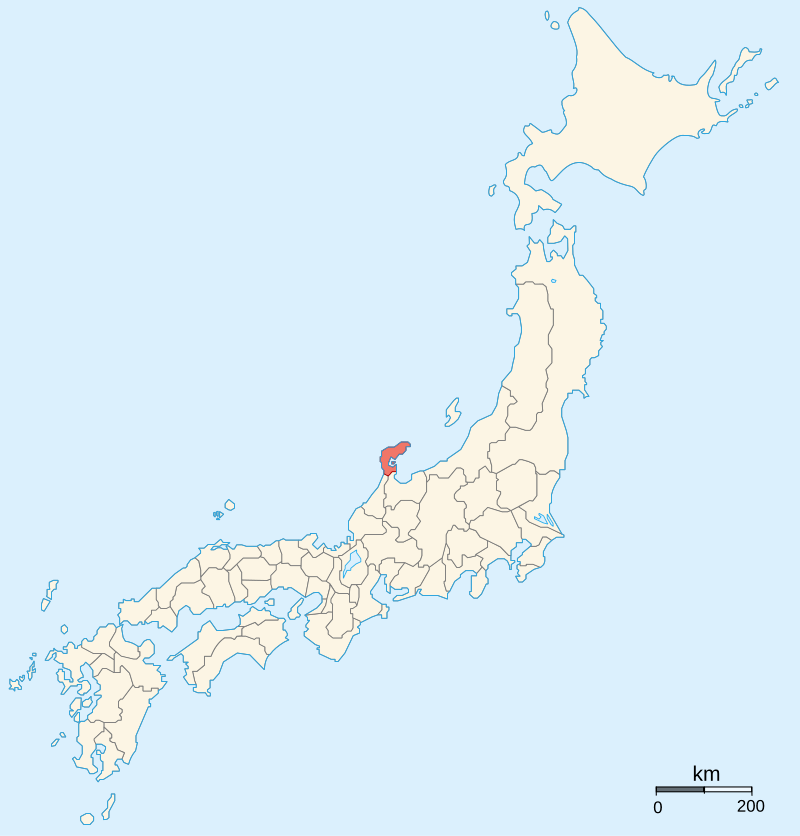
    In 1576, Kenshin would receive a request for aid from the Shogun, seeking support against Oda Nobunaga, who now dominated central Japan and had forced the Shogun into exile. In order to get to Kyoto, Kenshin was obliged to focus all his resources on securing Etchu and Noto Provinces. This campaign would drag on throughout 1576 and 1577, delayed by intervention from the Hojo and internal rebellion, but by November 1577, Kenshin had secured control of the provinces and was poised to strike at Kyoto itself.

    Noto Province.
    By Ash_Crow – Own work, based on Image:Provinces of Japan.svg, CC BY 2.5, https://commons.wikimedia.org/w/index.php?curid=1690738

    Mustering a large army, Kenshin would march out to meet a force led by Nobunaga’s generals, Shibata Katsuie and Hashiba Hideyoshi (better remembered to history as Toyotomi Hideyoshi), who were not fond of each other. A dispute led to Hideyoshi withdrawing his forces early, and when the two sides clashed at the Battle of the Tedori River on November 3rd, Kenshin would emerge victorious.

    The exact course of the battle, and even the size of the forces involved, is not clear from contemporary sources, but Kenshin would withdraw temporarily, issuing instructions for a renewed campaign to begin in the spring. The battle at the Tedori River had opened a strategic opportunity for Kenshin, and it has been speculated that he might have been able to complete his march on Kyoto.

    Much like his rival, Shingen, however, Kenshin would never make the march. In early March, Kenshin would collapse (allegedly whilst in the toilet) and fall into a coma from which he would never wake up; he died on March 13th, aged 49.

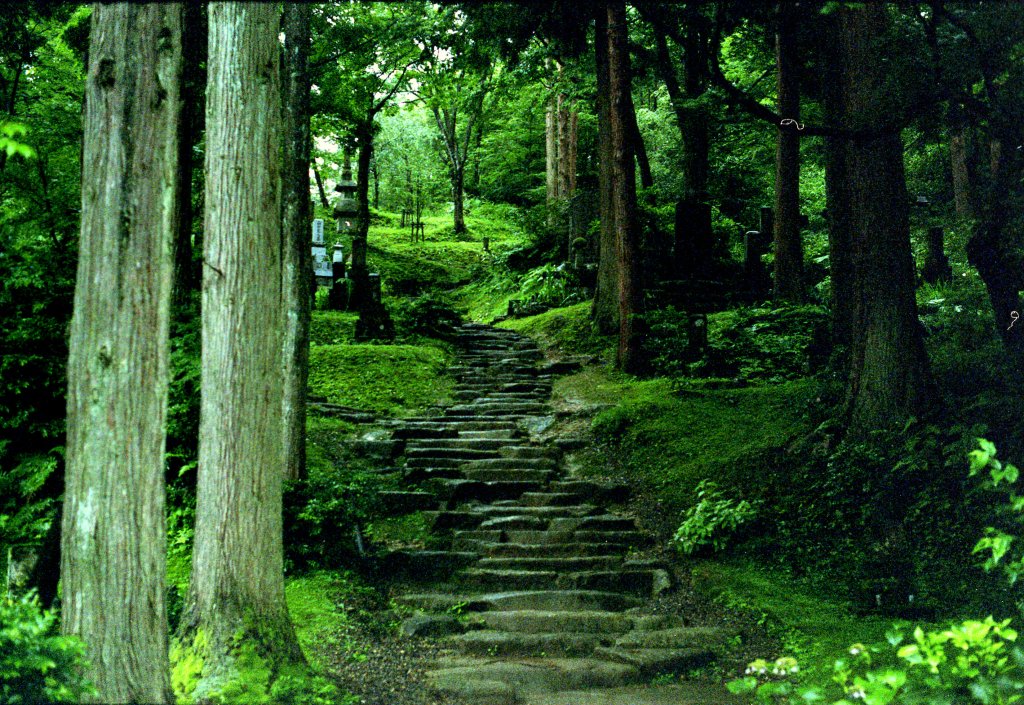
    The site of Kenshin’s grave at Risenji, where he studied as a boy.
    By shikabane taro, CC BY 3.0, https://commons.wikimedia.org/w/index.php?curid=54071606

    Much like the Takeda after the death of Shingen, the Uesugi would be seriously weakened by Kenshin’s death. Though they had been a threat to Nobunaga, Kenshin’s death, and the ongoing effects of years of more or less constant conflict, rendered them powerless to stop the rise of Nobunaga, and after his death in 1582, the Uesugi would make their peace with his successors.

    Decisions made at the end of the Sengoku Jidai would see the clan’s star fall even further, though that is a story for another time.

    Sources
    https://ja.wikipedia.org/wiki/%E4%B8%8A%E6%9D%89%E8%AC%99%E4%BF%A1
    https://ja.wikipedia.org/wiki/%E6%89%8B%E5%8F%96%E5%B7%9D%E3%81%AE%E6%88%A6%E3%81%84
    https://en.wikipedia.org/wiki/Battle_of_Tedorigawa
    https://ja.wikipedia.org/wiki/%E5%B7%9D%E4%B8%AD%E5%B3%B6
    https://ja.wikipedia.org/wiki/%E5%89%8D%E6%A9%8B%E5%9F%8E
    https://ja.wikipedia.org/wiki/%E6%B2%BC%E7%94%B0%E5%9F%8E
    https://en.wikipedia.org/wiki/Battles_of_Kawanakajima