By 1584, two years had passed since the Honnoji Incident and the death of Oda Nobunaga. His eldest son, Nobutada, had died alongside him at Honnoji, leaving several younger sons as potential successors. The problem was that none of these sons had much in the way of military resources with which to stake their claim, and they quickly formed alliances, or else became puppets of Nobunaga’s more powerful retainers, most notably Toyotomi Hideyoshi (still going by Hashiba at this time) and Shibata Katsuie.
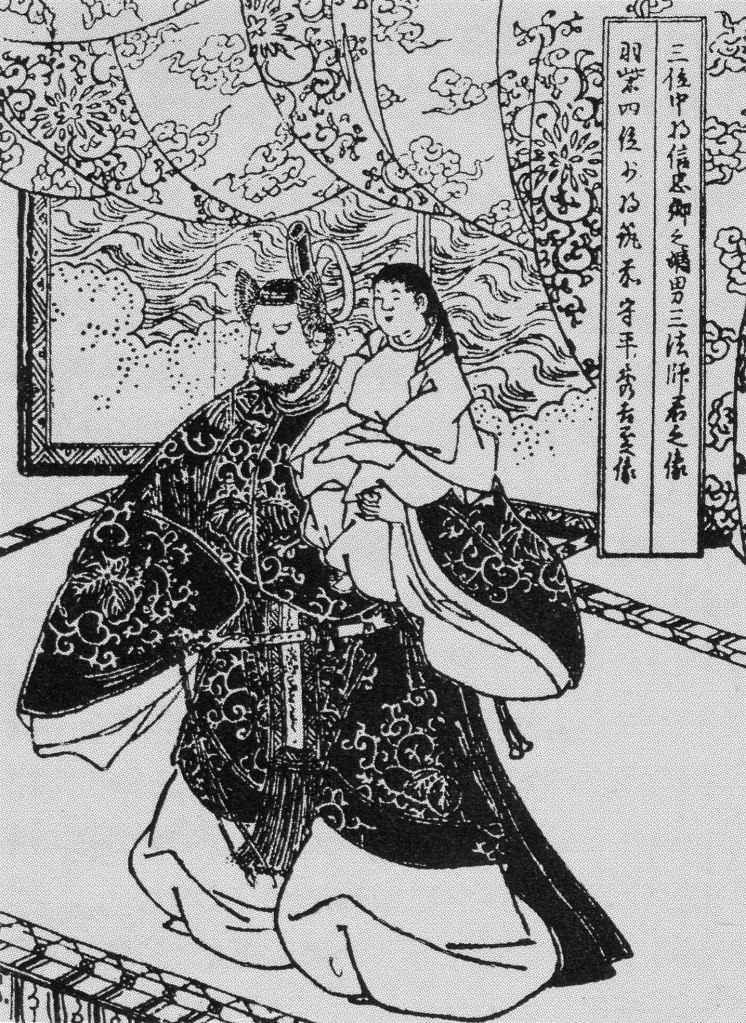
In the immediate aftermath of Honnoji, a conference was held at Kiyosu Castle to decide which son would inherit his father’s lands. In the event, Hideyoshi used his influence to ensure that Nobunaga’s grandson, the three-year-old Hidenobu (also called Sanboshi), would be named as the new head of the Oda Clan, whilst Nobunaga’s territories were divided up between his remaining sons and most powerful retainers.
It will come as no surprise that Nobunaga’s surviving adult sons were not thrilled about this, and it wasn’t long before rival camps were forming around one son or another. Initially, despite his earlier support of Sanboshi, Hideyoshi decided to back Nobunaga’s second son, Oda Nobuo, whilst Katsuie supported the third, Nobutaka.
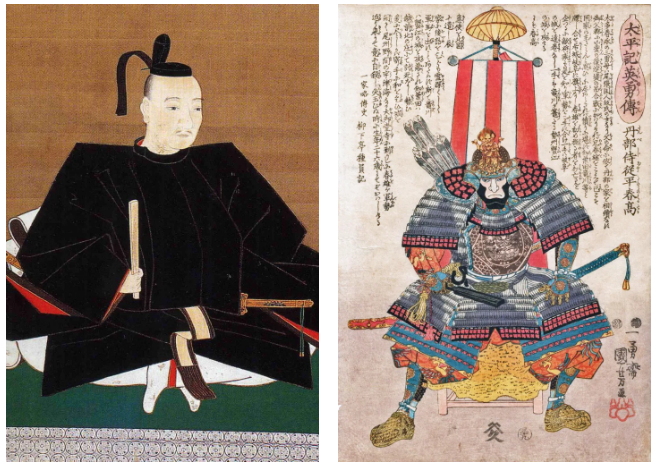
Despite nominally supporting one Oda heir or the other, in reality, the rivalry was between Hideyoshi and Katsuie, and tensions rose sharply until the Battle of Shizugatake in June 1583. There, Hideyoshi won a decisive victory, and shortly afterwards, Katsuie and Nobutaka committed suicide, removing a serious obstacle on Hideyoshi’s road to power.
Despite being on the ‘winning’ side, it wasn’t long before Oda Nobuo fell out with Hideyoshi, and in early 1584, he went looking for support. It’s at this point that Tokugawa Ieyasu reenters the story. Despite trying to stay on good terms with Hideyoshi, sending him congratulatory gifts after his victory at Shizugatake, for example, it was becoming obvious that Ieyasu was too powerful for Hideyoshi to simply leave alone.
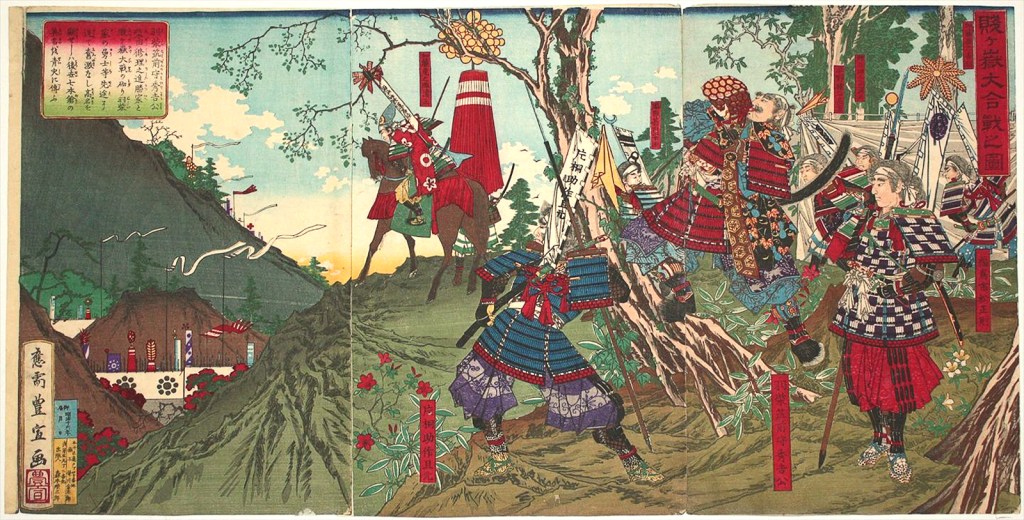
The flashpoint came in March 1584, when Nobuo had a retainer who had been colluding with Hideyoshi executed. Using this pretext, Hideyoshi raised an army and marched on Nobuo, who appealed to Ieyasu for help. Ieyasu obliged and dispatched forces into Nobuo’s home province of Owari.
What followed was what history records as the Battle of Komaki-Nagakute, which is misleading because it was actually a series of battles, only two of which took place anywhere near the eponymous locations. The momentum of the campaign swung back and forth throughout the spring and summer. Despite a considerable advantage in resources, Hideyoshi was unable to bring them to bear, resulting in a stalemate.
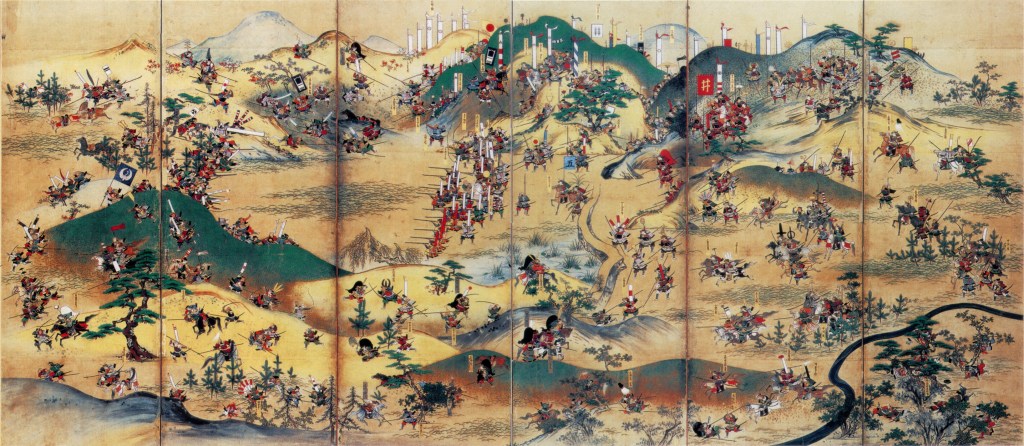
With success on the battlefield impossible, both sides sought diplomatic support from other clans, with Ieyasu reaching out to the Hojo and Chosokabe, whilst Hideyoshi gained the support of the Uesugi, Mori, and Satake. Even with these allies, the stalemate persisted, and the only option was to negotiate, and both sides sat down to talk in November.
Though he had not achieved a military victory, the negotiations favoured Hideyoshi; he forced Nobuo to submit and cede several territories, whilst those who had supported Ieyasu found themselves either isolated or also forced to submit to Hideyoshi. Ieyasu himself retained his territories and arranged for his son, Hideyasu, to be adopted by Hideyoshi, though only sources favourable to the Tokugawa call it an adoption; Hideyoshi’s partisans describe Hideyasu as a hostage.
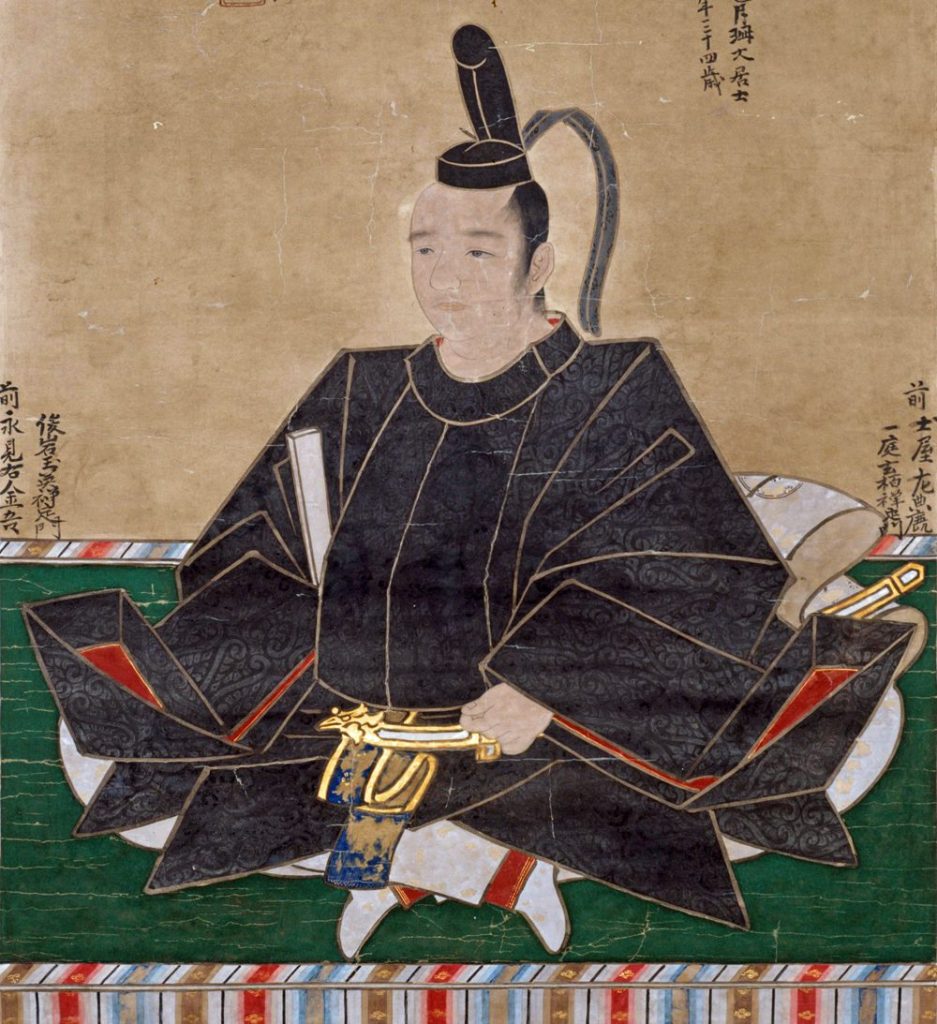
The fact that Ieyasu had been able to force a stalemate against heavy odds is a noteworthy military achievement in itself, but it is made all the more remarkable by the fact that, throughout 1583-85, his territories had been subject to extraordinary rainfalls, which had led to flooding and the consequent devastation to infrastructure and food supplies.
The Battle of Komaki-Nagakute could not be considered a ‘victory’ for either side, but Hideyoshi was clearly in the ascendancy, and Ieyasu’s resources had been strained to the brink by years of flood, famine, and war. Then, in 1586, the massive Tensho Earthquake struck, causing catastrophic damage across central Japan, striking both sides’ lands equally. Though his superior resources meant that Hideyoshi was probably better positioned to recover, he had bigger plans. Instead of attempting to crush Ieyasu a second time, he tried a different tack.
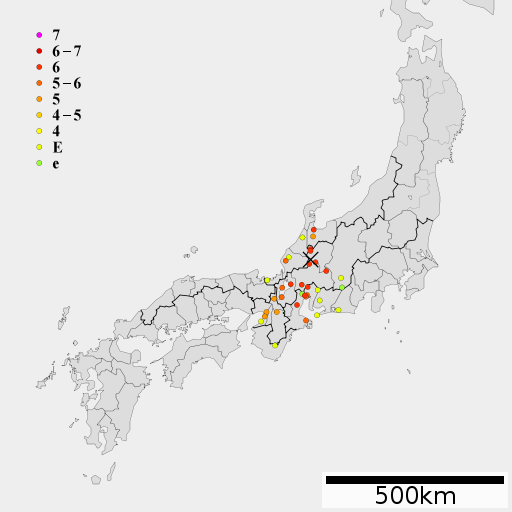
As6022014 – 宇佐美龍夫 『最新版 日本被害地震総覧 416‐2001』 , Lincun(2010)ファイル:地図 令制国 和泉国.svg, CC 表示-継承 3.0, https://commons.wikimedia.org/w/index.php?curid=18458686による
Using Oda Nobuo as an intermediary, Hideyoshi attempted to convince Ieyasu to submit. Initially refusing, Ieyasu was finally convinced by an offer of marriage to Hideyoshi’s younger sister, Lady Asahi. Some sources suggest that Hideyoshi forced his sister to divorce her husband so the marriage could take place, whilst others suggest she was already divorced, or else her husband was dead. Either way, given that Lady Asahi was already in her 40s by the time the marriage took place, it was clearly a match made for political rather than dynastic reasons.
A marriage like that may seem strange to our modern eyes, but it was generally seen as a politically savvy move, as it bound Ieyasu and Hideyoshi together as family. Shortly after the wedding, Ieyasu travelled to Osaka and formally submitted to Hideyoshi as his vassal and brother-in-law. Later Tokugawa sources suggest that on the night of his arrival in Osaka, Ieyasu was secretly visited by a nervous Hideyoshi, who was still unsure whether he truly meant to submit. The meeting is probably apocryphal, but Ieyasu certainly swore loyalty to Hideyoshi in an elaborate ceremony shortly afterwards.
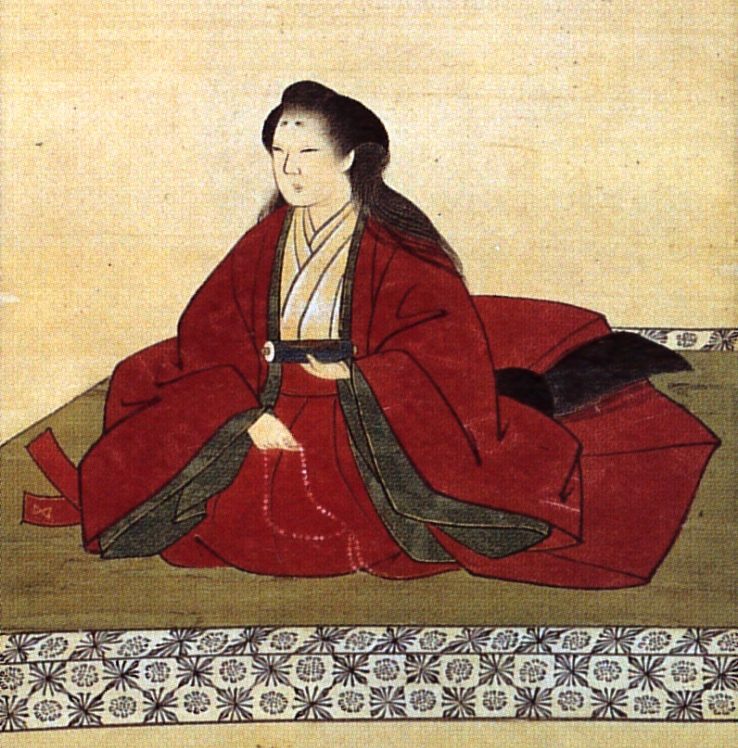
Later in 1586, Ieyasu moved his base to Sunpu, which was more central to his domains and better positioned to monitor peace in the Kanto region on Hideyoshi’s behalf. For the next few years, Ieyasu proved himself a loyal retainer. In 1590, when tensions between the Hojo and Hideyoshi began to rise, he attempted to act as a mediator, since he was father-in-law to Hojo Ujinao.
Ieyasu’s diplomatic efforts bore some fruit, with the Hojo sending Ujinao’s uncle, Ujinori, to Kyoto to negotiate with Hideyoshi. However, Ujinao himself refused to come, and Hideyoshi was determined to either force the Hojo to submit or be destroyed. Later scholars suggest that Ieyasu’s position with the Hojo might have been deliberately undermined by rumours that he stood to benefit from their defeat, as he had been promised the eight provinces of the Kanto in exchange for the five he currently controlled, in the event of the Hojo being removed.
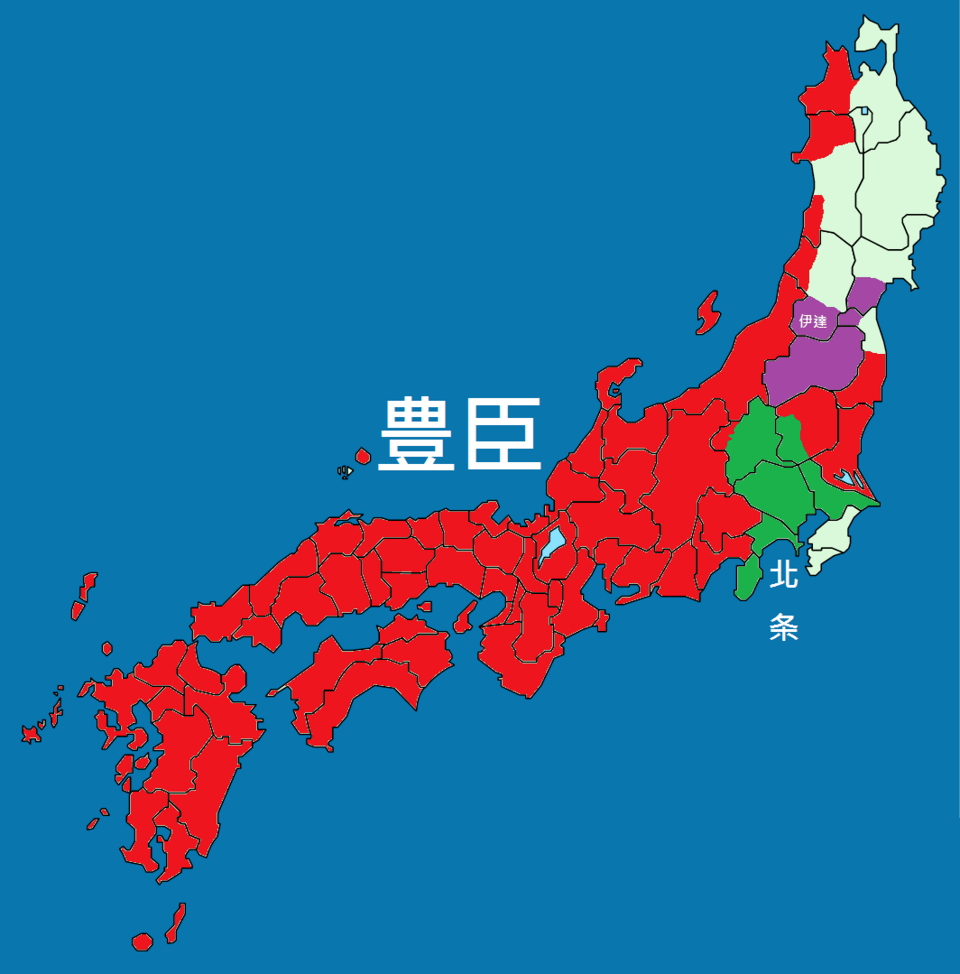
By Alvin Lee – Own work, CC BY-SA 4.0, https://commons.wikimedia.org/w/index.php?curid=39214209
Ieyasu denied the rumours, and their exact impact on negotiations is controversial, but Tokugawa forces served Hideyoshi in the vanguard of what became known as the Odawara Campaign that saw the Hojo decisively defeated, and Ieyasu received the eight Kanto provinces as the rumours had suggested he would.
Precisely why Hideyoshi offered these provinces to Ieyasu is still debated. It was certainly true that Ieyasu was in no position to refuse the offer, and taking possession of these new lands effectively doubled his income, at least on paper. On the other hand, the provinces had been Hojo territory for generations, and the local lords would prove difficult to control, not to mention the damage caused by the recent campaign.
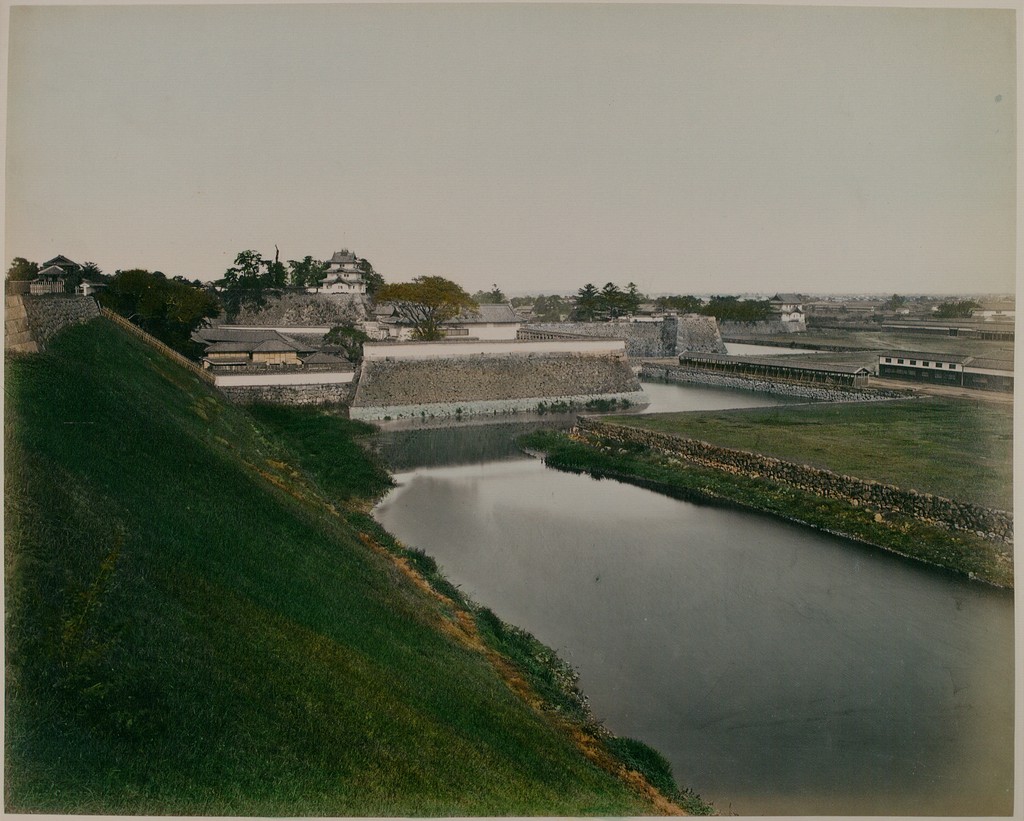
Some suggest that Hideyoshi genuinely believed in Ieyasu’s abilities to bring the region under control. Others conclude that his real intention was to separate Ieyasu from his power base in Mikawa. Either way, it would prove a fateful decision, perhaps best exemplified by the fact that Ieyasu’s chosen base, Edo Castle, is the site of the Imperial Palace in modern Tokyo.
Sources
https://ja.wikipedia.org/wiki/%E5%BE%B3%E5%B7%9D%E5%AE%B6%E5%BA%B7
https://ja.wikipedia.org/wiki/%E6%B1%9F%E6%88%B8%E5%9F%8E
https://ja.wikipedia.org/wiki/%E5%B0%8F%E7%89%A7%E3%83%BB%E9%95%B7%E4%B9%85%E6%89%8B%E3%81%AE%E6%88%A6%E3%81%84
https://ja.wikipedia.org/wiki/%E7%B9%94%E7%94%B0%E7%A7%80%E4%BF%A1
https://ja.wikipedia.org/wiki/%E7%B9%94%E7%94%B0%E4%BF%A1%E5%AD%9D
https://ja.wikipedia.org/wiki/%E7%B9%94%E7%94%B0%E4%BF%A1%E5%BF%A0
https://ja.wikipedia.org/wiki/%E7%B9%94%E7%94%B0%E4%BF%A1%E9%9B%84
https://ja.wikipedia.org/wiki/%E8%B3%A4%E3%83%B6%E5%B2%B3%E3%81%AE%E6%88%A6%E3%81%84
https://ja.wikipedia.org/wiki/%E7%B9%94%E7%94%B0%E4%BF%A1%E9%95%B7
https://ja.wikipedia.org/wiki/%E5%A4%A9%E6%AD%A3%E5%9C%B0%E9%9C%87
https://ja.wikipedia.org/wiki/%E8%B3%A4%E3%83%B6%E5%B2%B3%E3%81%AE%E6%88%A6%E3%81%84
https://ja.wikipedia.org/wiki/%E7%B5%90%E5%9F%8E%E7%A7%80%E5%BA%B7
https://ja.wikipedia.org/wiki/%E6%9C%9D%E6%97%A5%E5%A7%AB

