Tag: Odawara Campaign 1590

  • The Third Unifier – Tokugawa Ieyasu. Part Five.

    The Third Unifier – Tokugawa Ieyasu. Part Five.

    By 1584, two years had passed since the Honnoji Incident and the death of Oda Nobunaga. His eldest son, Nobutada, had died alongside him at Honnoji, leaving several younger sons as potential successors. The problem was that none of these sons had much in the way of military resources with which to stake their claim, and they quickly formed alliances, or else became puppets of Nobunaga’s more powerful retainers, most notably Toyotomi Hideyoshi (still going by Hashiba at this time) and Shibata Katsuie.
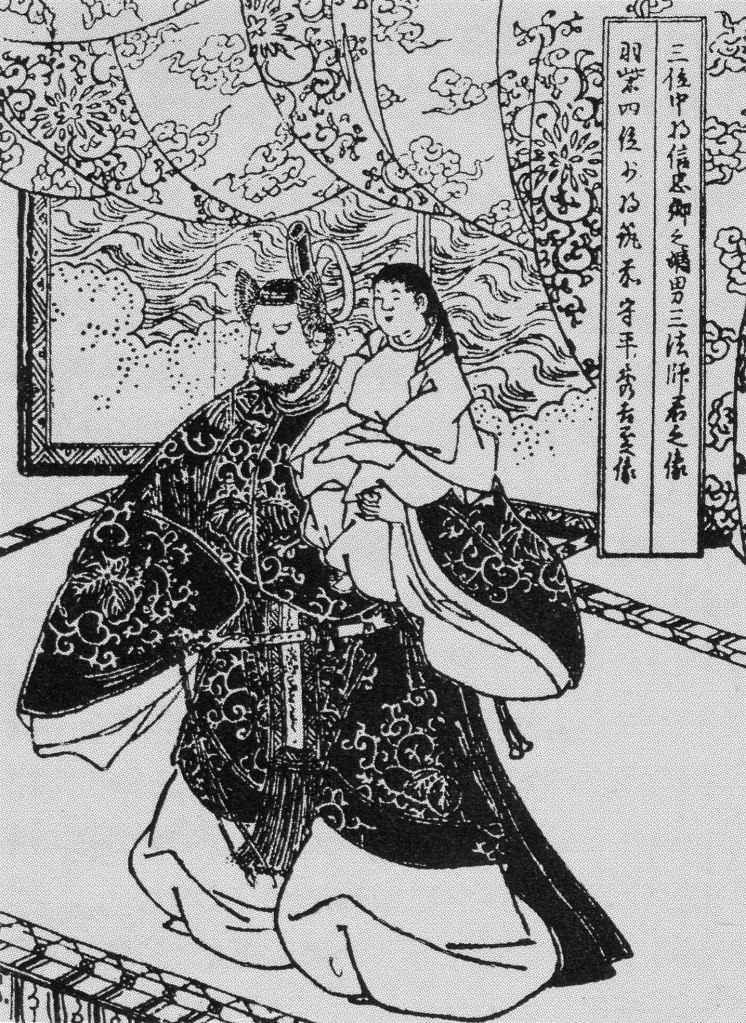
    Hideyoshi carries Sanboshi during the Kiyosu Conference.

    In the immediate aftermath of Honnoji, a conference was held at Kiyosu Castle to decide which son would inherit his father’s lands. In the event, Hideyoshi used his influence to ensure that Nobunaga’s grandson, the three-year-old Hidenobu (also called Sanboshi), would be named as the new head of the Oda Clan, whilst Nobunaga’s territories were divided up between his remaining sons and most powerful retainers.

    It will come as no surprise that Nobunaga’s surviving adult sons were not thrilled about this, and it wasn’t long before rival camps were forming around one son or another. Initially, despite his earlier support of Sanboshi, Hideyoshi decided to back Nobunaga’s second son, Oda Nobuo, whilst Katsuie supported the third, Nobutaka.
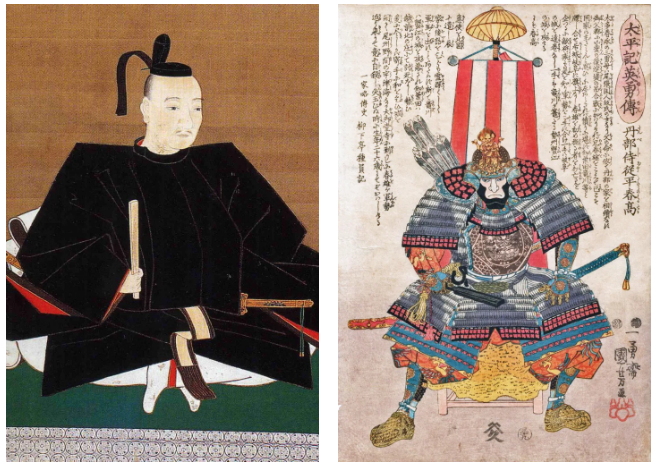
    Oda Nobuo (left) and Oda Nobutaka, brothers, but rivals for their father’s position.

    Despite nominally supporting one Oda heir or the other, in reality, the rivalry was between Hideyoshi and Katsuie, and tensions rose sharply until the Battle of Shizugatake in June 1583. There, Hideyoshi won a decisive victory, and shortly afterwards, Katsuie and Nobutaka committed suicide, removing a serious obstacle on Hideyoshi’s road to power.

    Despite being on the ‘winning’ side, it wasn’t long before Oda Nobuo fell out with Hideyoshi, and in early 1584, he went looking for support. It’s at this point that Tokugawa Ieyasu reenters the story. Despite trying to stay on good terms with Hideyoshi, sending him congratulatory gifts after his victory at Shizugatake, for example, it was becoming obvious that Ieyasu was too powerful for Hideyoshi to simply leave alone.
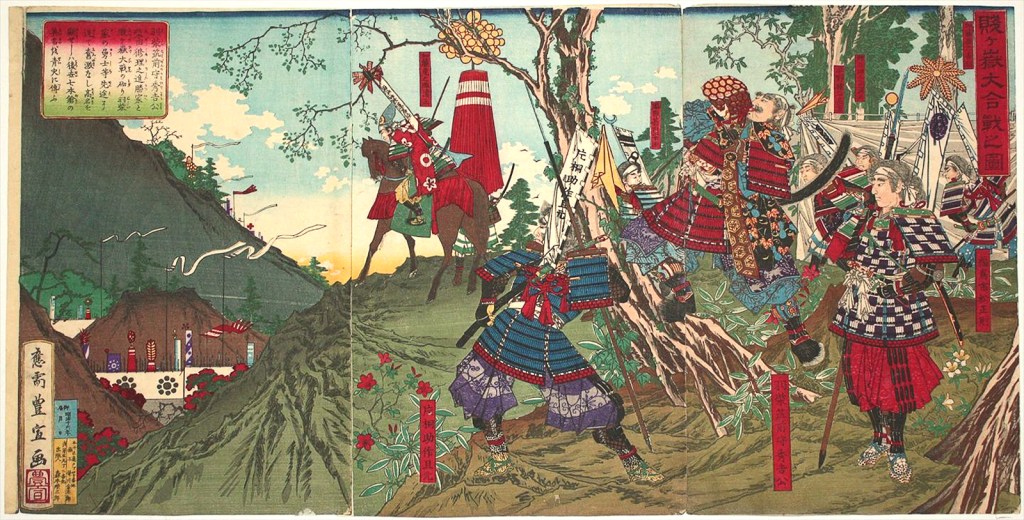
    A 19th-century depiction of the Battle of Shizugatake

    The flashpoint came in March 1584, when Nobuo had a retainer who had been colluding with Hideyoshi executed. Using this pretext, Hideyoshi raised an army and marched on Nobuo, who appealed to Ieyasu for help. Ieyasu obliged and dispatched forces into Nobuo’s home province of Owari.

    What followed was what history records as the Battle of Komaki-Nagakute, which is misleading because it was actually a series of battles, only two of which took place anywhere near the eponymous locations. The momentum of the campaign swung back and forth throughout the spring and summer. Despite a considerable advantage in resources, Hideyoshi was unable to bring them to bear, resulting in a stalemate.
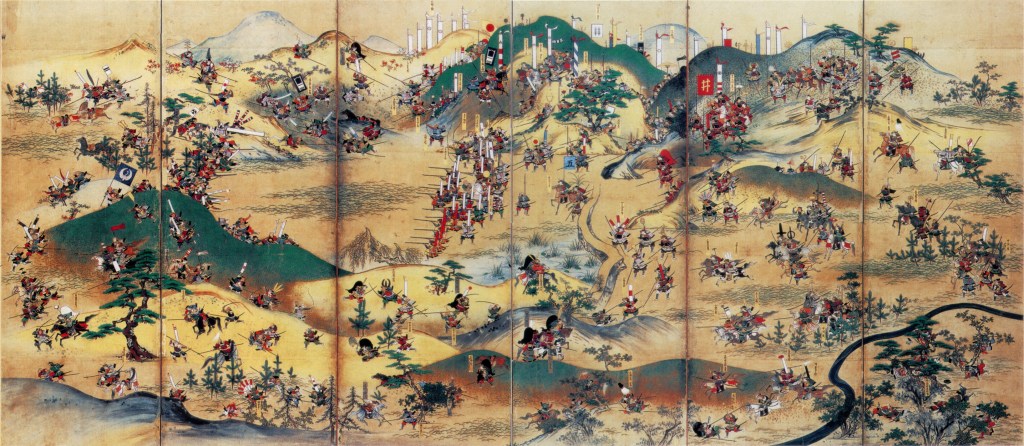
    An 18th-century depiction of the Battle of Komaki-Nagakute. Despite the name, it was actually a series of battles fought across central Japan.

    With success on the battlefield impossible, both sides sought diplomatic support from other clans, with Ieyasu reaching out to the Hojo and Chosokabe, whilst Hideyoshi gained the support of the Uesugi, Mori, and Satake. Even with these allies, the stalemate persisted, and the only option was to negotiate, and both sides sat down to talk in November.

    Though he had not achieved a military victory, the negotiations favoured Hideyoshi; he forced Nobuo to submit and cede several territories, whilst those who had supported Ieyasu found themselves either isolated or also forced to submit to Hideyoshi. Ieyasu himself retained his territories and arranged for his son, Hideyasu, to be adopted by Hideyoshi, though only sources favourable to the Tokugawa call it an adoption; Hideyoshi’s partisans describe Hideyasu as a hostage.
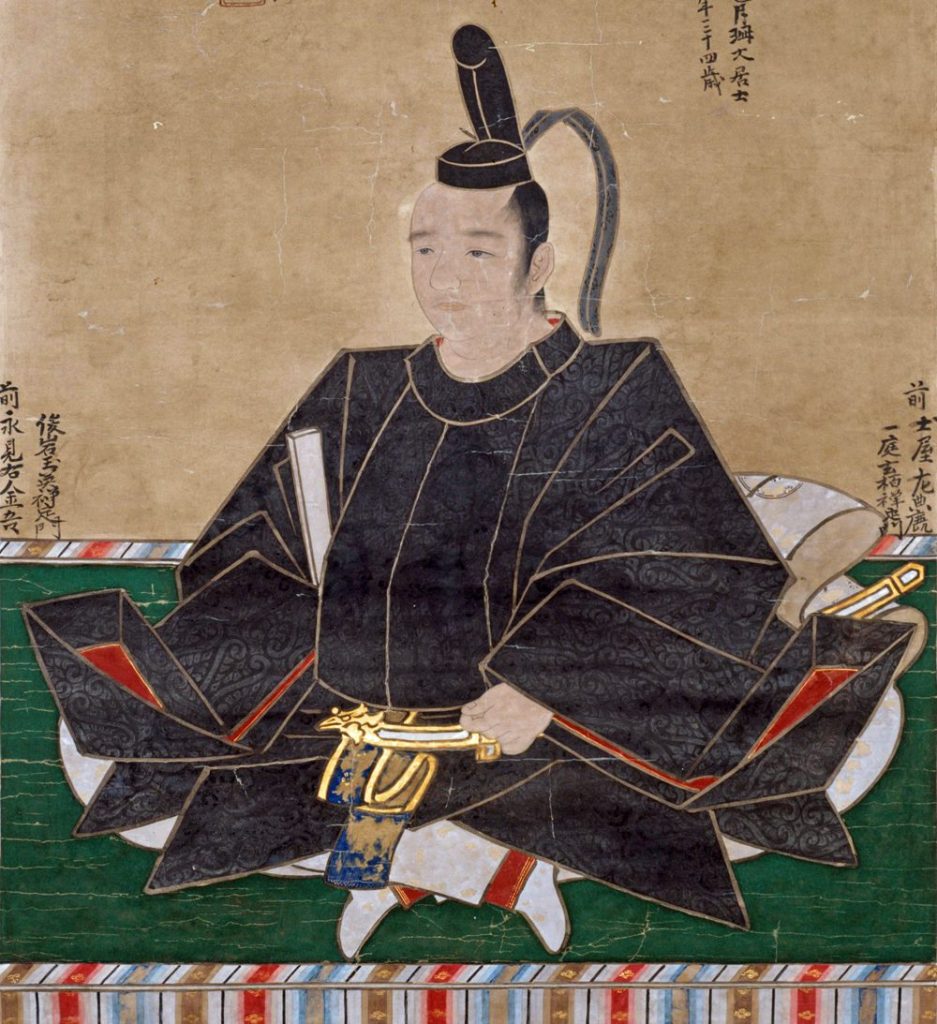
    Ieyasu’s son, Hideyasu. Whether he was an adopted son or a hostage depends on who you ask.

    The fact that Ieyasu had been able to force a stalemate against heavy odds is a noteworthy military achievement in itself, but it is made all the more remarkable by the fact that, throughout 1583-85, his territories had been subject to extraordinary rainfalls, which had led to flooding and the consequent devastation to infrastructure and food supplies.

    The Battle of Komaki-Nagakute could not be considered a ‘victory’ for either side, but Hideyoshi was clearly in the ascendancy, and Ieyasu’s resources had been strained to the brink by years of flood, famine, and war. Then, in 1586, the massive Tensho Earthquake struck, causing catastrophic damage across central Japan, striking both sides’ lands equally. Though his superior resources meant that Hideyoshi was probably better positioned to recover, he had bigger plans. Instead of attempting to crush Ieyasu a second time, he tried a different tack.
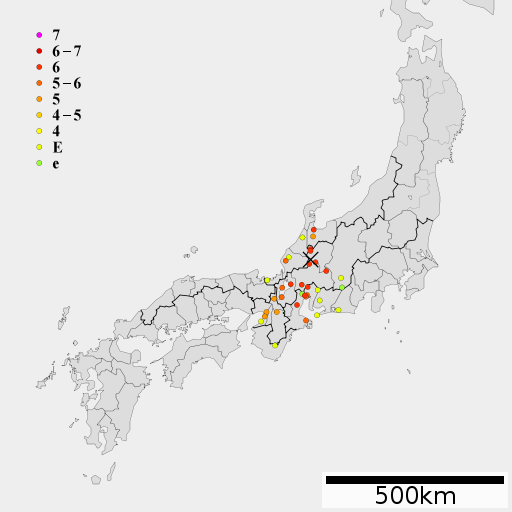
    The theorised intensity scale of the 1586 Tensho Earthquake.
    As6022014 – 宇佐美龍夫 『最新版 日本被害地震総覧 416‐2001』 , Lincun(2010)ファイル:地図 令制国 和泉国.svg, CC 表示-継承 3.0, https://commons.wikimedia.org/w/index.php?curid=18458686による

    Using Oda Nobuo as an intermediary, Hideyoshi attempted to convince Ieyasu to submit. Initially refusing, Ieyasu was finally convinced by an offer of marriage to Hideyoshi’s younger sister, Lady Asahi. Some sources suggest that Hideyoshi forced his sister to divorce her husband so the marriage could take place, whilst others suggest she was already divorced, or else her husband was dead. Either way, given that Lady Asahi was already in her 40s by the time the marriage took place, it was clearly a match made for political rather than dynastic reasons.

    A marriage like that may seem strange to our modern eyes, but it was generally seen as a politically savvy move, as it bound Ieyasu and Hideyoshi together as family. Shortly after the wedding, Ieyasu travelled to Osaka and formally submitted to Hideyoshi as his vassal and brother-in-law. Later Tokugawa sources suggest that on the night of his arrival in Osaka, Ieyasu was secretly visited by a nervous Hideyoshi, who was still unsure whether he truly meant to submit. The meeting is probably apocryphal, but Ieyasu certainly swore loyalty to Hideyoshi in an elaborate ceremony shortly afterwards.
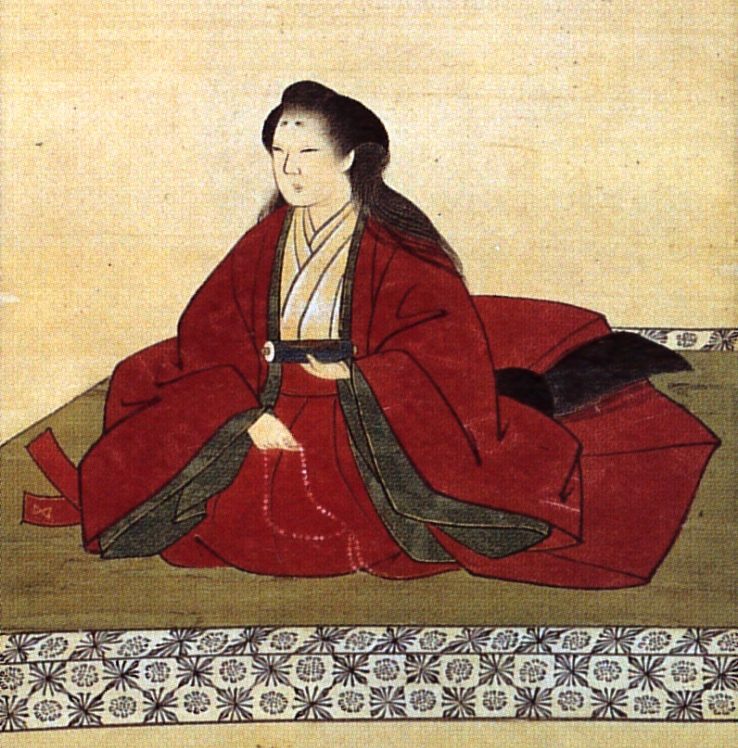
    Lady Asahi, whose marriage to Ieyasu bound him and her elder brother, Hideyoshi, together. The fact that she was around 44 years old when they married was no obstacle.

    Later in 1586, Ieyasu moved his base to Sunpu, which was more central to his domains and better positioned to monitor peace in the Kanto region on Hideyoshi’s behalf. For the next few years, Ieyasu proved himself a loyal retainer. In 1590, when tensions between the Hojo and Hideyoshi began to rise, he attempted to act as a mediator, since he was father-in-law to Hojo Ujinao.

    Ieyasu’s diplomatic efforts bore some fruit, with the Hojo sending Ujinao’s uncle, Ujinori, to Kyoto to negotiate with Hideyoshi. However, Ujinao himself refused to come, and Hideyoshi was determined to either force the Hojo to submit or be destroyed. Later scholars suggest that Ieyasu’s position with the Hojo might have been deliberately undermined by rumours that he stood to benefit from their defeat, as he had been promised the eight provinces of the Kanto in exchange for the five he currently controlled, in the event of the Hojo being removed.
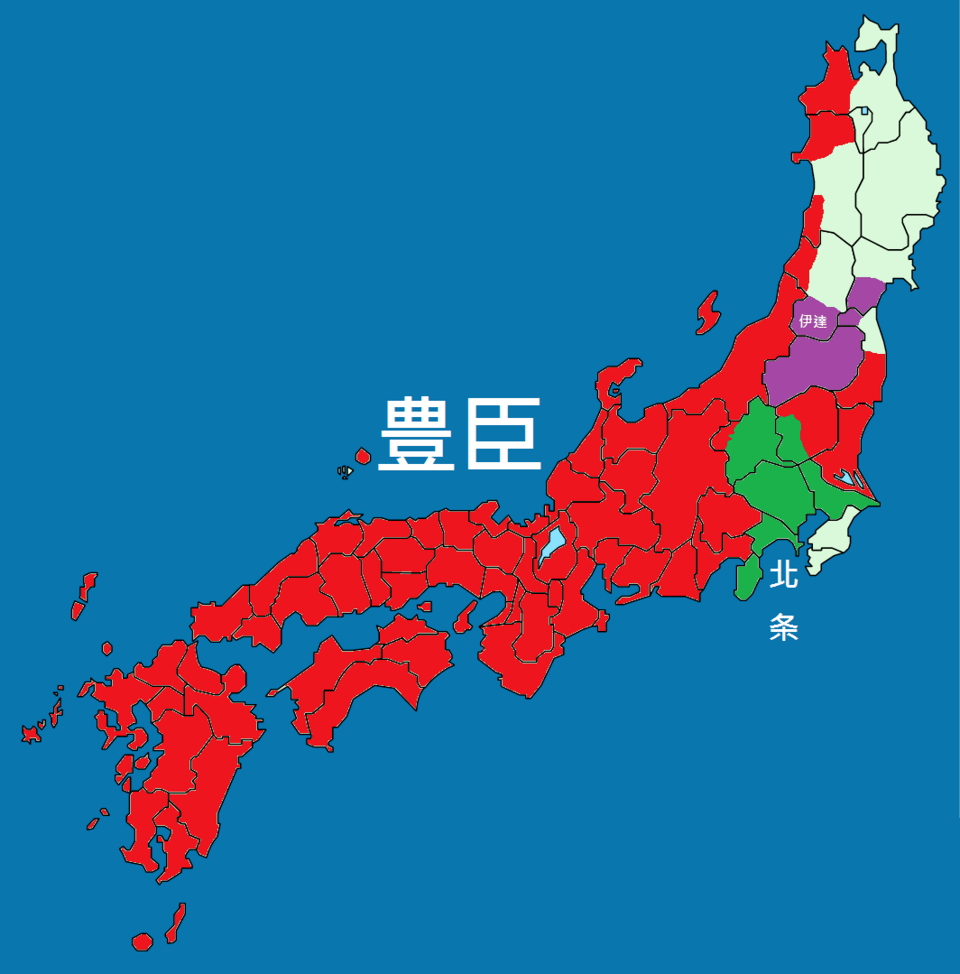
    The situation just before the Odawara Campaign. Ieyasu stood to gain control of the territory of the Hojo (green) in the event of their defeat, a fact that may have put a damper on previously good Tokugawa-Hojo relations.
    By Alvin Lee – Own work, CC BY-SA 4.0, https://commons.wikimedia.org/w/index.php?curid=39214209

    Ieyasu denied the rumours, and their exact impact on negotiations is controversial, but Tokugawa forces served Hideyoshi in the vanguard of what became known as the Odawara Campaign that saw the Hojo decisively defeated, and Ieyasu received the eight Kanto provinces as the rumours had suggested he would.

    Precisely why Hideyoshi offered these provinces to Ieyasu is still debated. It was certainly true that Ieyasu was in no position to refuse the offer, and taking possession of these new lands effectively doubled his income, at least on paper. On the other hand, the provinces had been Hojo territory for generations, and the local lords would prove difficult to control, not to mention the damage caused by the recent campaign.
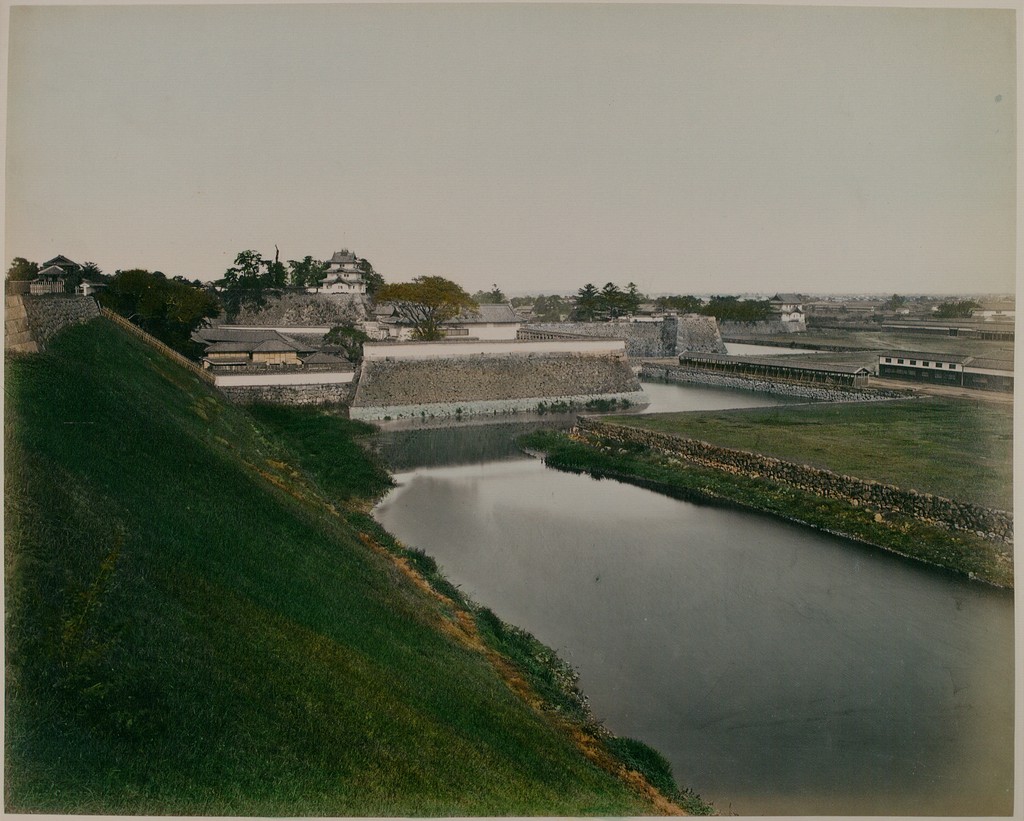
    Edo Castle as it appeared in the 19th Century. The site was underdeveloped when Ieyasu arrived in 1590, but it would eventually grow to become the centre of his dynasty’s power.

    Some suggest that Hideyoshi genuinely believed in Ieyasu’s abilities to bring the region under control. Others conclude that his real intention was to separate Ieyasu from his power base in Mikawa. Either way, it would prove a fateful decision, perhaps best exemplified by the fact that Ieyasu’s chosen base, Edo Castle, is the site of the Imperial Palace in modern Tokyo.


    Sources
    https://ja.wikipedia.org/wiki/%E5%BE%B3%E5%B7%9D%E5%AE%B6%E5%BA%B7
    https://ja.wikipedia.org/wiki/%E6%B1%9F%E6%88%B8%E5%9F%8E
    https://ja.wikipedia.org/wiki/%E5%B0%8F%E7%89%A7%E3%83%BB%E9%95%B7%E4%B9%85%E6%89%8B%E3%81%AE%E6%88%A6%E3%81%84
    https://ja.wikipedia.org/wiki/%E7%B9%94%E7%94%B0%E7%A7%80%E4%BF%A1
    https://ja.wikipedia.org/wiki/%E7%B9%94%E7%94%B0%E4%BF%A1%E5%AD%9D
    https://ja.wikipedia.org/wiki/%E7%B9%94%E7%94%B0%E4%BF%A1%E5%BF%A0
    https://ja.wikipedia.org/wiki/%E7%B9%94%E7%94%B0%E4%BF%A1%E9%9B%84
    https://ja.wikipedia.org/wiki/%E8%B3%A4%E3%83%B6%E5%B2%B3%E3%81%AE%E6%88%A6%E3%81%84
    https://ja.wikipedia.org/wiki/%E7%B9%94%E7%94%B0%E4%BF%A1%E9%95%B7
    https://ja.wikipedia.org/wiki/%E5%A4%A9%E6%AD%A3%E5%9C%B0%E9%9C%87
    https://ja.wikipedia.org/wiki/%E8%B3%A4%E3%83%B6%E5%B2%B3%E3%81%AE%E6%88%A6%E3%81%84
    https://ja.wikipedia.org/wiki/%E7%B5%90%E5%9F%8E%E7%A7%80%E5%BA%B7
    https://ja.wikipedia.org/wiki/%E6%9C%9D%E6%97%A5%E5%A7%AB

  • The Second Unifier – Toyotomi Hideyoshi. Part Six.

    The Second Unifier – Toyotomi Hideyoshi. Part Six.

    The mon of the Toyotomi Clan.

    By the late 1580s, Hideyoshi was at the very pinnacle of political and military power in Japan. Jesuit records from the time name him “tyrant” and suggest that he has achieved more power over the realm than any warlord before him.

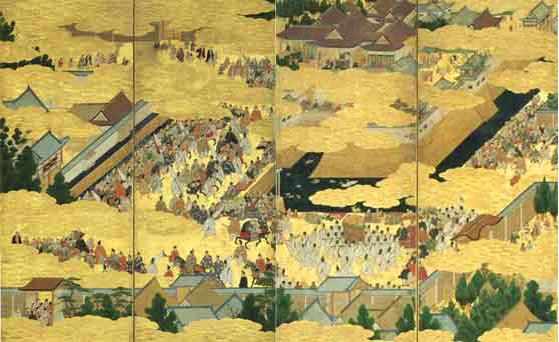
    After the successful conclusion of the Kyushu Campaign, Hideyoshi ordered a new palace built in Kyoto. Called Jurakudai (or Jurakutei in some sources), Toyotomi moved his political base there from Osaka Castle in early 1588, inviting the Emperor Go-Yozei for a feast in April 1588 and obliging powerful Daimyo (such as Tokugawa Ieyasu) to travel there and pay homage to him.

    An image of the Emperor visiting Jurakudai.

    Having secured personal political power, Hideyoshi then turned his attention to pacifying the realm at large. Through his military campaigns, he had subdued most of the powerful Daimyo in the realm, but there remained the issue of establishing peace at the local level as well.

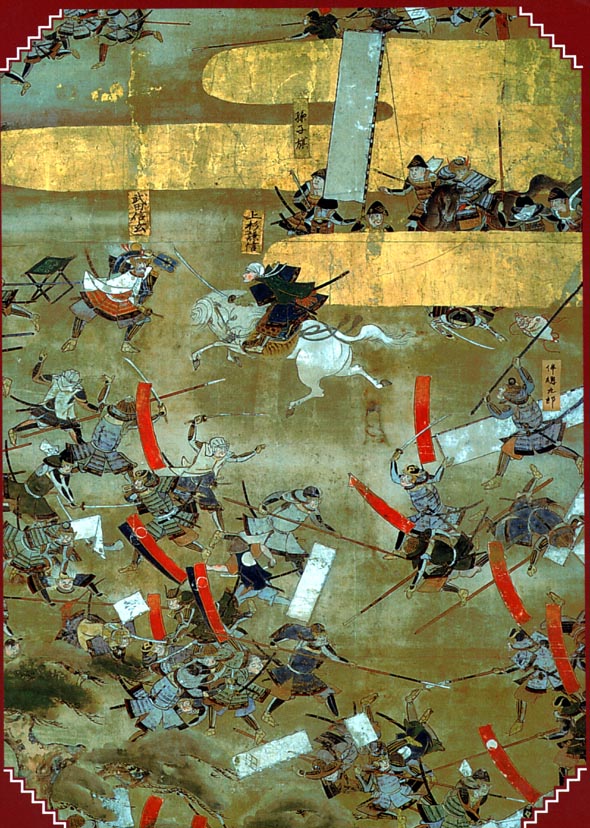
    The Sengoku Jidai exists in the popular imagination as more than a century of conflict, featuring epic clashes between armies of Samurai loyal unto death, and iconic lords like Takeda Shingen, Oda Nobunaga, and Uesugi Kenshin, who were locked in a titanic struggle for ultimate control of the realm.

    Uesugi Kenshin and Takeda Shingen engaged in a duel that probably never happened but remains an enduring, if inaccurate, image of the Sengoku-era battlefield.

    Whilst there is certainly truth to this image, much like any period of civil war, Japanese society at large had become incredibly violent during the 16th century. At the local level, the decentralised nature of Daimyo rule led to the emergence of Jizamurai, literally “Local Samurai”. These men often started out as armed peasants, usually levied into the armies of some local lord, and sent home again when the campaign ended.

    Throughout the 16th century, these Jizamurai gradually achieved military and political influence over their local communities, often being allowed to collect tax revenue on behalf of their lord in exchange for military service, similar to a Knightly Manor in medieval Europe.

    This situation worked fine whilst the realm was fractured into dozens of minor domains, but as consolidation followed conquest in the latter half of the 16th century, tensions between “Samurai” and “Jizamurai” became more of an issue. When a lord was defeated, he was usually killed or deprived of his land, meaning that the Jizamurai would often find themselves serving a new lord to whom they had no personal loyalty, leading to frequent conflicts.

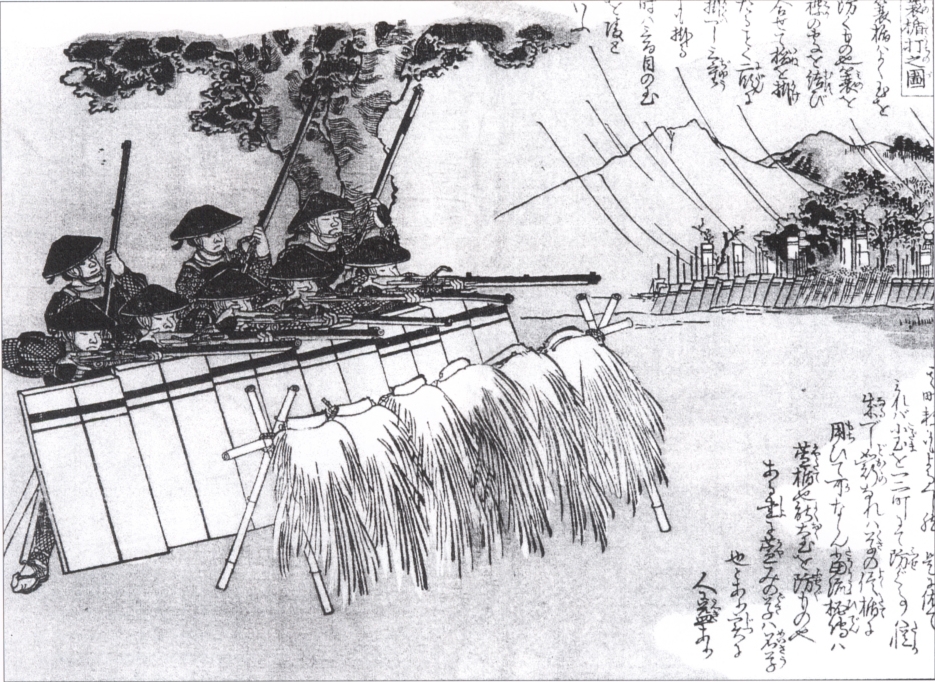
    Ashigaru on campaign. By the late 16th century, the distinction between Warrior and Peasant was often unclear to the point of being non-existent.

    On a societal level, the distinction between Jizamurai and peasants was often academic. Though technically of a higher social status, a Jizamurai usually lived in the village, amongst the peasantry, who would themselves often have access to weaponry and a far greater loyalty to their local Jizamurai than to some powerful Daimyo whom they never saw.

    This led to frequent Peasant Uprisings throughout the Sengoku Period, most famously the Ikko-Ikki, who were motivated by religious fervour but were largely made up of peasants and Jizamurai. It wasn’t just political violence; feuds between villages were common and often escalated into violence, as rival communities would quickly resort to the sword to settle disputes over territory, waterways, and other local matters.

    In 1587, Hideyoshi passed a law forbidding the use of force to resolve such disputes. Though the exact wording of the law has been lost, by looking at the wording of laws from the later Edo Period, which often referred to ‘precedents’ (i.e., earlier laws), we can infer what Hideyoshi’s decrees may have looked like.

    If any villagers or other people in a village engage in a dispute over mountains or waters, using bows, spears, or guns to fight amongst themselves, that entire village shall be punished. – From a decree by Shogun Tokugawa Hidetada -1610

    Scholars debate exactly what Hideyoshi intended with this law, with some suggesting that he meant to disarm and pacify the peasants, whilst others say it was more to do with establishing who had weapons, and who had the right to weapons, part of an ongoing centralisation campaign in which a clearer line was to be drawn between Warrior and Peasant.

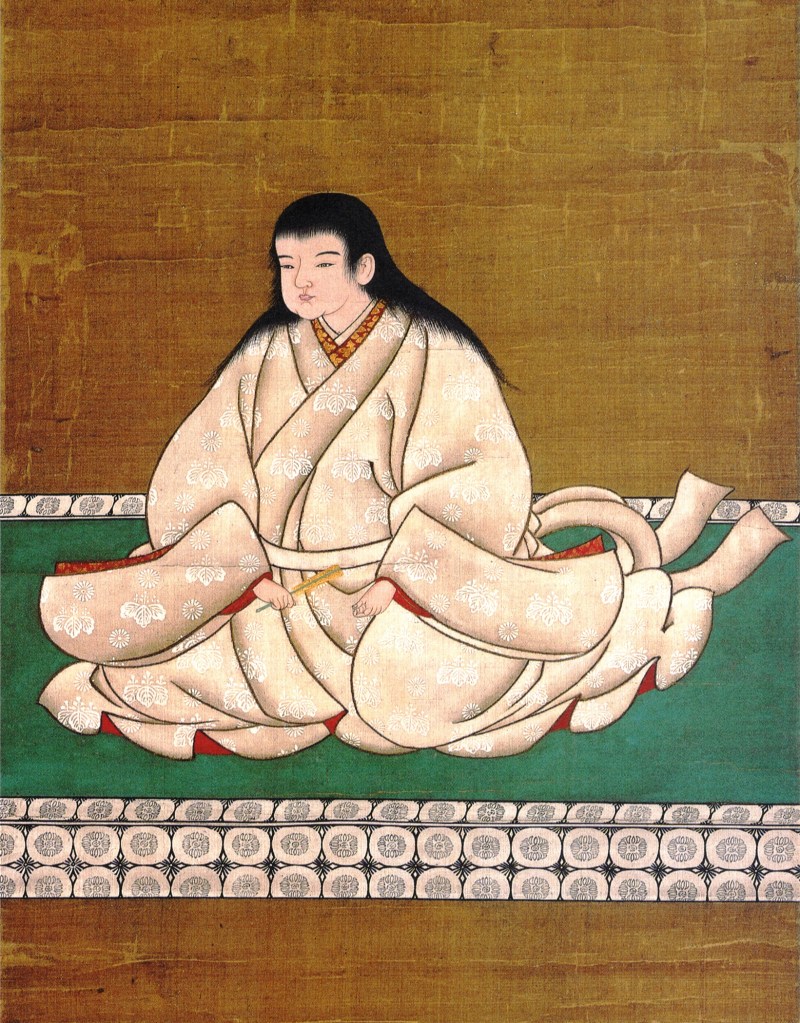
    In 1589, Hideyoshi celebrated the birth of a son, Tsurumatsu, whom he swiftly named as his heir, securing his dynasty for the foreseeable future. The following year, after a series of political slights, he launched a decisive campaign against the Hojo, lords of the Kanto, crushing them in the Odawara Campaign.

    A later, heavily stylised depiction of Hideyoshi’s son, Tsurumatsu.

    Also in 1590, he crushed the defiant clans of Northern Japan in a swift campaign, and it is at this point that the “Sengoku Jidai” is said to have come to an end. For the first time in more than a century, the country was under the control of one man, and the realm would never again fracture as it once had. Despite this, one decision made by Hideyoshi in the aftermath of the Odawara Campaign had already sown the seeds of his clan’s ultimate downfall.

    With the destruction of the Hojo, Hideyoshi offered the five provinces of the Kanto to Tokugawa Ieyasu, in exchange for the three he had originally ruled. At the time, this move was seen as political savvy. It positioned the potentially rebellious Ieyasu farther from Kyoto, and though the five Kanto provinces were nominally richer than the three Ieyasu had given up, they had recently been conquered and were potentially volatile, meaning the move weakened Ieyasu in the short term.

    Tokugawa Ieyasu.

    Hideyoshi, however, had not considered Ieyasu’s political and economic acumen. His base in the Kanto would eventually serve as a springboard for his own rise to power, demonstrated perhaps most clearly by the fact that Japan’s modern capital, Tokyo, is on the same site as Ieyasu’s was, more than 430 years after he moved there, but we’re getting ahead of ourselves.

    The threat from Ieyasu was not Hideyoshi’s only concern, however. In 1591, his brother, Hidenaga, who had proven to be an extremely competent commander and political ally, died in February, followed by his son and heir, the two-year-old Tsurumatsu, in September of the same year.

    Toyotomi Hidenaga

    Following these deep personal and political blows, Hideyoshi adopted his nephew, Hidetsugu, and then retired, handing control of the clan over to him. As was common at the time, Hideyoshi retained true political power; however, becoming known as the Taiko, a title of respect for former regents.

    Also in 1591, with Japan secured, Hideyoshi announced his intention to invade China, launching a brutal invasion of Korea to use it as a base for his main objective. We’ll give the Korean Wars their own post, but for now, we can say that the invasions both highlighted Hideyoshi’s power and brought about political divisions that would ultimately destroy his legacy.


    Sources
    https://ja.wikipedia.org/wiki/%E8%B1%8A%E8%87%A3%E7%A7%80%E5%90%89
    https://ja.wikipedia.org/wiki/%E5%A4%AA%E9%96%A4
    https://ja.wikipedia.org/wiki/%E8%B1%8A%E8%87%A3%E7%A7%80%E9%95%B7
    https://ja.wikipedia.org/wiki/%E6%B7%80%E6%AE%BF
    https://ja.wikipedia.org/wiki/%E8%B1%8A%E8%87%A3%E9%B6%B4%E6%9D%BE
    https://ja.wikipedia.org/wiki/%E5%BE%8C%E9%99%BD%E6%88%90%E5%A4%A9%E7%9A%87
    https://ja.wikipedia.org/wiki/%E5%88%80%E7%8B%A9
    https://ja.wikipedia.org/wiki/%E5%85%B5%E8%BE%B2%E5%88%86%E9%9B%A2
    https://ja.wikipedia.org/wiki/%E5%96%A7%E5%98%A9%E5%81%9C%E6%AD%A2%E4%BB%A4
    https://ja.wikipedia.org/wiki/%E6%B5%B7%E8%B3%8A%E5%81%9C%E6%AD%A2%E4%BB%A4
    https://ja.wikipedia.org/wiki/%E8%81%9A%E6%A5%BD%E7%AC%AC%E8%A1%8C%E5%B9%B8
    https://ja.wikipedia.org/wiki/%E8%81%9A%E6%A5%BD%E7%AC%AC
    https://ja.wikipedia.org/wiki/%E5%9C%B0%E4%BE%8D