Before his death in 1598, Toyotomi Hideyoshi had established a Council of Five Elders to rule Japan until his son, Hideyori, came of age. Of the five, the two most influential were Tokugawa Ieyasu and Maeda Toshiie, and almost before Hideyoshi’s body was cool, the two men set about trying to undermine and outmanoeuvre each other.
The ultimate victor would be Ieyasu, largely because Toshiie died in the Spring of 1599 and was replaced by his son, Toshinaga, who lacked his father’s political connections and ability. Later that year, a plot to assassinate Ieyasu was uncovered, and Toshinaga was implicated. Forced to flee to his home province of Kaga, he only avoided direct conflict with Ieyasu by sending his mother as a hostage.
The revelation of his plot allowed Ieyasu to neutralise the threat of Toshinaga in the short term, but it wouldn’t last. Hideyoshi’s death had had exactly the destabilising effect he had feared, and throughout 1598-1600, old rivalries, feuds, and ambitions resurfaced. Historians disagree on what exactly led to a fresh outbreak of conflict, but there are a few theories.
Some speculate that, without Hideyoshi’s strong hand, his attempts to centralise power in the realm were doomed to failure, as powerful local clans, who had been largely independent for decades (or more), saw little reason to kowtow to a government now headed by an infant. Others suggest that the invasion of Korea, whilst possibly intended to keep the Samurai busy, had actually stirred up old rivalries and forged a few new ones as the prideful warrior class competed for prestige amongst themselves at the expense of a cohesive campaign.
There are others who don’t necessarily disagree with either view, but argue that the unpopularity of Ishida Mitsunari was a key factor in the breakdown of relations between the men at the centre of the post-Hideyoshi political scene. He was not a powerful lord in his own right, and his reputation for military incompetence and political scheming weakened his ability to hold the administration of the realm together during Hideyori’s minority.
Though it could be argued that Mitsunari’s failings were overemphasised in later (pro-Tokugawa) sources, it is clear that Ieyasu himself had ambitions to increase his own power and perhaps to claim ultimate authority. He frequently violated Hideyoshi’s laws and even his will, doing things like forming marriage alliances with other powerful lords, and eventually residing at Osaka Castle, even though Hideyoshi’s testament had stipulated that he remain at nearby (and weaker) Fushimi Castle.

Ieyasu was the strongest individual member of the Council of Elders, but he lacked the strength to oppose the other four if they combined against him, so he set about ensuring that that wouldn’t happen. After dealing with Maeda Toshinaga in the aftermath of the alleged assassination plot, he intervened directly in a conflict between another elder, Ukita Hideie, and his vassals.
The result of the so-called “Ukita Incident” was that many of these vassals left Hideie’s service, seriously weakening his power and, conversely, his ability to oppose Ieyasu. Indeed, by early 1600, it was beginning to appear that Ieyasu might claim supreme power without resorting to violence. He had largely co-opted the former Hideyoshi administration, and even Mitsunari, who had previously opposed Ieyasu, seemed to be coming around.
In the Spring of 1600, Ieyasu felt strong enough to send envoys to another Elder, Uesugi Kagekatsu, to demand an explanation for the construction of an (illegal) castle in his domain, as well as for rumours of collusion between him and Maeda Toshinaga. Kagekatsu agreed to go to Kyoto, but asked that the trip be postponed until the Autumn, a request that was refused.
Scholars generally agree that Ieyasu had already decided on a military campaign against the Uesugi, and he had sent the demand, knowing full well that Kagekatsu would refuse, thus giving him the pretext he needed. There are also some sources that suggest that Kagekatsu himself was behind a plot to lure Ieyasu into the difficult terrain of Northern Japan, and there ambush and destroy him.
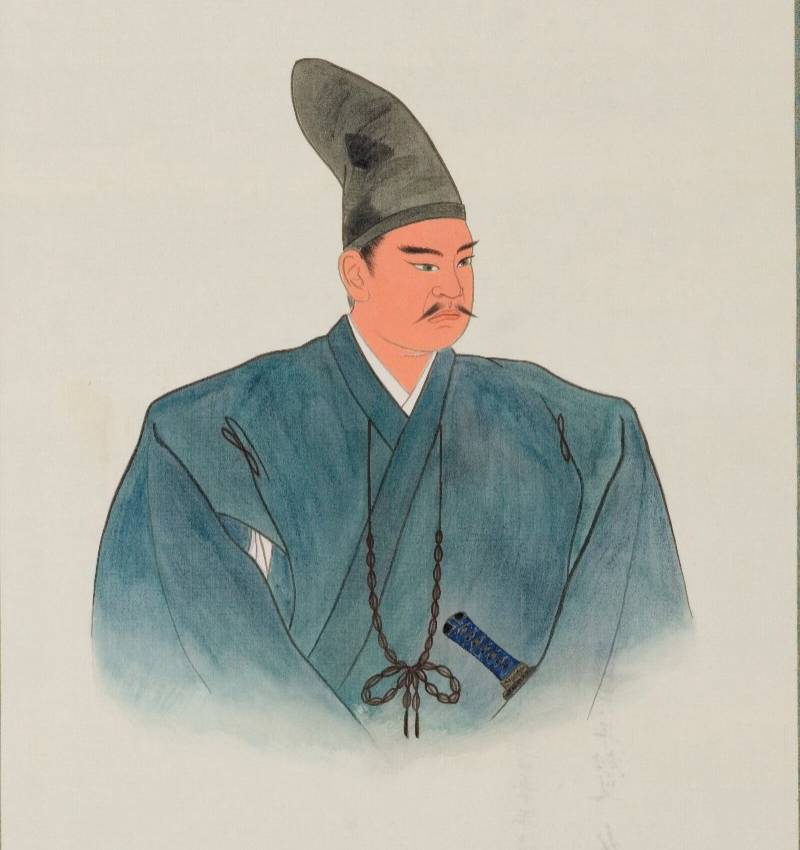
Regardless of who ultimately provoked the campaign, Ieyasu left Osaka in mid-June, heading first to his base at Edo, from where he issued orders to his vassals and supporters to prepare for an attack against the Uesugi. It is perhaps a testament to how ephemeral his power was that, no sooner had Ieyasu left Osaka than members of the government, including Ishida Mitsunari, rose up against him and sent a letter to Mori Terumoto inviting him to come to Osaka to “settle affairs.”
Shortly after this, copies of a letter denouncing Ieyasu as a traitor to Hideyori’s government were circulated, and Terumoto was nominated as Commander of what would eventually become known as the “Western Army”, the collective forces gathered in opposition to Ieyasu’s “Eastern Army”. The first blow would fall on Fushimi Castle, still held by Ieyasu’s vassals, when it came under attack in August 1600.
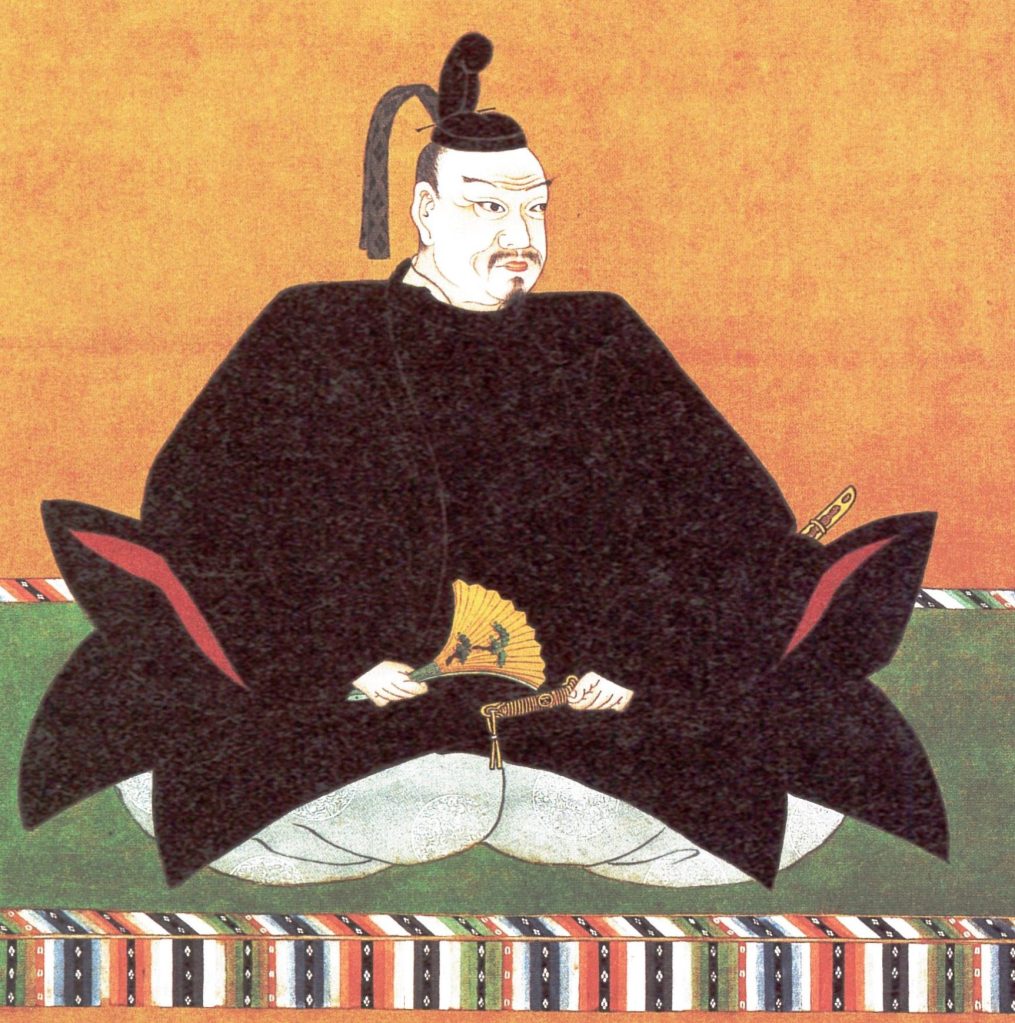
Though some sources suggest that the forces led by the Shimazu and Kobayakawa Clans actually intended to enter Fushimi to fight on Ieyasu’s behalf, they were refused by the garrison and thus ‘forced’ to attack the castle instead. However, the only contemporary source for this is the Shimazu’s own records, and it is generally dismissed as an attempt by the Shimazu to excuse their opposition to Ieyasu after the fact.
Fushimi was garrisoned by around 1800 men, and when the Western Army’s force of some 40,000 arrived, the result was a foregone conclusion. The garrison held out bravely, and there are many stories of heroism, but the odds were simply too great, and Fushimi fell after a siege of around two weeks, with most of the garrison being put to the sword.
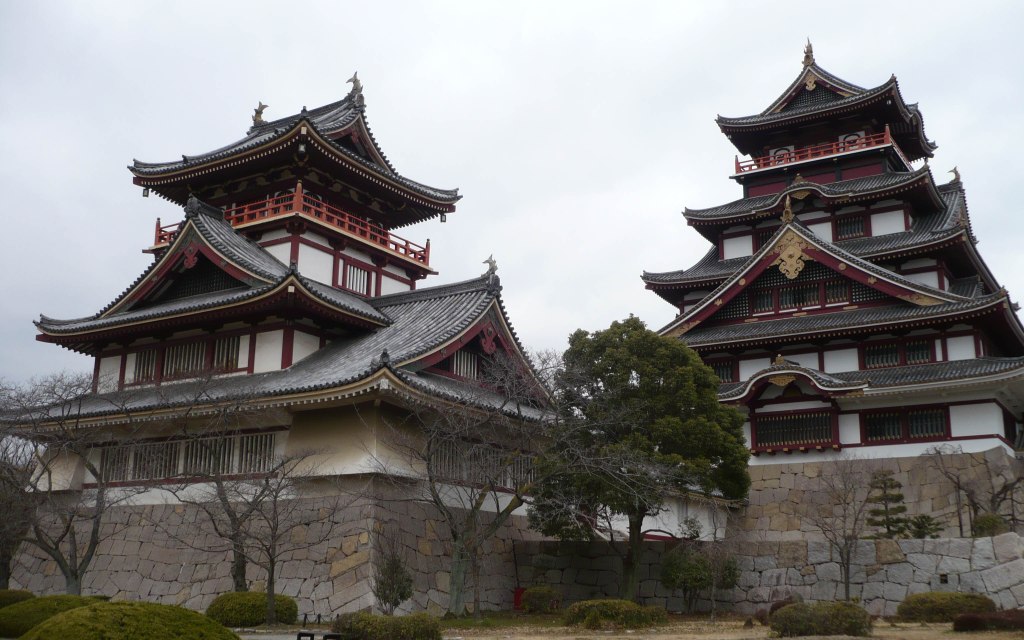
Despite the defeat, the sacrifice of the garrison at Fushimi would not be in vain; 40,000 troops had been tied down for nearly two weeks, and this gave Ieyasu time and relative strategic freedom to gather his allies and position his forces, and it was time that had been well spent. At the beginning of September 1600, Ieyasu departed his capital of Edo and marched towards the most important battle of his life, and one of the most decisive in Japanese history.
Sources
https://ja.wikipedia.org/wiki/%E5%BE%B3%E5%B7%9D%E5%AE%B6%E5%BA%B7
https://ja.wikipedia.org/wiki/%E9%96%A2%E3%83%B6%E5%8E%9F%E3%81%AE%E6%88%A6%E3%81%84
https://ja.wikipedia.org/wiki/%E4%BC%8F%E8%A6%8B%E5%9F%8E%E3%81%AE%E6%88%A6%E3%81%84
https://ja.wikipedia.org/wiki/%E5%A4%A7%E8%B0%B7%E5%90%89%E7%B6%99
https://ja.wikipedia.org/wiki/%E5%AE%87%E5%96%9C%E5%A4%9A%E9%A8%92%E5%8B%95
https://ja.wikipedia.org/wiki/%E4%BA%94%E5%A5%89%E8%A1%8C
https://ja.wikipedia.org/wiki/%E5%89%8D%E7%94%B0%E5%88%A9%E5%AE%B6
https://ja.wikipedia.org/wiki/%E5%89%8D%E7%94%B0%E5%88%A9%E9%95%B7
https://ja.wikipedia.org/wiki/%E4%BA%94%E5%A4%A7%E8%80%81

