Tag: Samurai government

  • Kamakura V – The More things change…

    As we’ve already seen, by the mid-13th century, the Kamakura Shogunate was ruled in all but name by the powerful Hojo Clan, who ruled as shikken or regents for the Shoguns, who were nothing more than puppets.

    In Kyoto, the Emperor, whilst technically being the overlord of everyone as a son of heaven, was also just a figurehead, whose position and finances relied entirely on the goodwill of the Hojo. Successive Emperors accepted this situation with varying degrees of good grace, concluding that comfortable irrelevance was better than uncomfortable exile.

    Hojo power, however, became a double-edged sword; as their power grew, so did their arrogance. They began to rely on an increasingly small pool of retainers to fill powerful positions, and this led to disillusionment amongst other Samurai houses, who saw their path to wealth and influence blocked by entrenched Hojo interests.

    This situation worsened in the aftermath of the Mongol Invasions. Despite successfully defending the country, the cost of mounting the defence had been ruinous to Hojo finances, and the expected rewards of land and titles were not forthcoming (the Samurai didn’t fight for honour, you see.)

    This brewing resentment took time to reach a boiling point, but as the 14th century went on, anger towards the government in Kamakura continued to grow, and the Hojo, in what they believed to be an unassailable position, were practically blind to it.

    In 1318, Emperor Go-Daigo took the throne. His choice of name was significant, as it had been Emperor Daigo (the Go prefix means ‘later’) who had successfully opposed the power of the Fujiwara during the Heian Period, and Go-Daigo intended to emulate his namesake, and overthrow the Shogunate and restore independent Imperial Rule.

    Go-Daigo’s plans were first uncovered during the so-called Shochu Incident in 1324, where comrades of the Emperor were arrested after being accused of plotting against the Shogun. In response, the Emperor sent a letter to the Shogun, ‘ordering’ them to find the real culprits. It is generally believed that the Shogunate were well aware of Go-Daigo’s involvement, but, wanting to avoid a direct conflict with the Court, they played along, and several conspirators were exiled, whilst the Emperor himself remained officially blameless.

    Go-Daigo, though, didn’t learn his lesson, and tried again in 1331; he gathered supporters and retainers, evidently planning to launch a coup against the Shogunate. Once again, his plans were discovered, and the Shogunate dispatched forces to Kyoto to put the planned uprising down. Go-Daigo fled, but was captured shortly afterwards and exiled to the remote Oki Islands (off the coast of modern Shimane Prefecture).

    The Hojo replaced Go-Daigo with Emperor Kogon, but partisans of Go-Daigo, including his son, Prince Morinaga (sometimes called Moriyoshi) and legendary Samurai, Kusunoki Masashige, continued to oppose the Shogun, until 1333, when Go-Daigo escaped from exile.

    Landing in Hoki Province, Go-Daigo made his base at Mt Senjo and gathered a new “Imperial” Army. In April, Go-Daigo won the Battle of Mt Senjo, gaining him support of many powerful warlords in Western Japan, allowing him to march on Kyoto and take the city in June, re-establishing himself as Emperor.
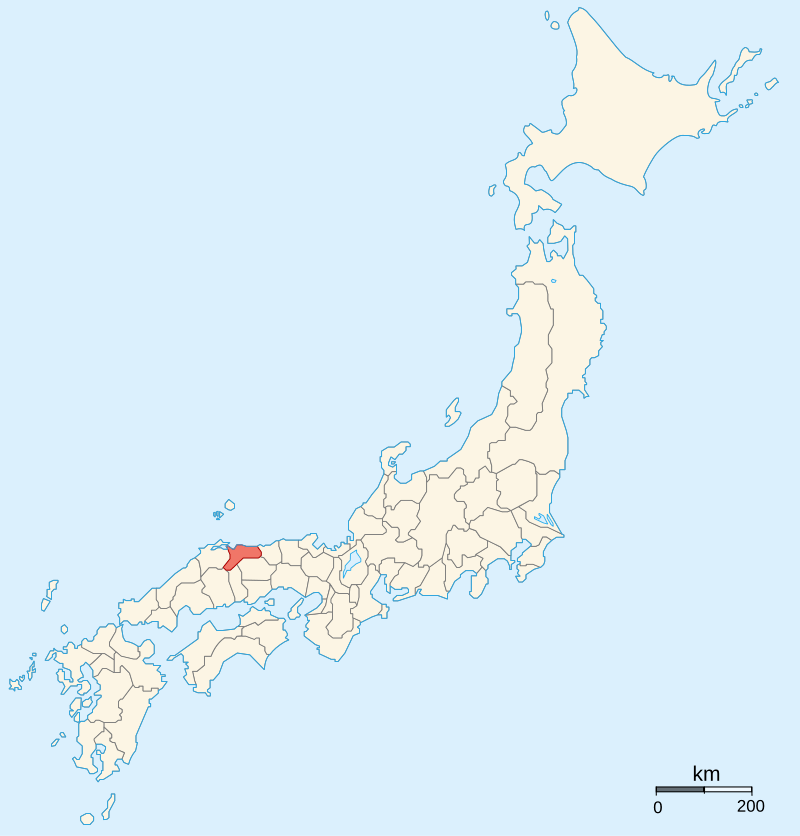
    Hoki Province, where Go-Daigo landed after escaping from exile.
    By Ash_Crow – Own work, based on Image:Provinces of Japan.svg, CC BY 2.5, https://commons.wikimedia.org/w/index.php?curid=1682393

    The Hojo dispatched Ashikaga Takauji, one of their foremost generals, with orders to crush Go-Daigo and reassert Shogunate power. Takauji marched, but for reasons that are still unclear, he switched sides, turned his army around, and launched an attack on Kamakura. One possible reason for Takauji’s defection is that the Ashikaga Clan were descendants of the Minamoto, the family that had established the Shogunate, and he hoped to be named Shogun himself, but his real reasons will probably never be known for sure.

    Deprived of their main army, the Hojo suffered a series of defeats, culminating with the Siege of Kamakura in July 1333, where the Hojo were surrounded, and would eventually commit mass suicide in a cave behind the Tosho-ji Temple in Kamakura, bringing their power and their family to an end.
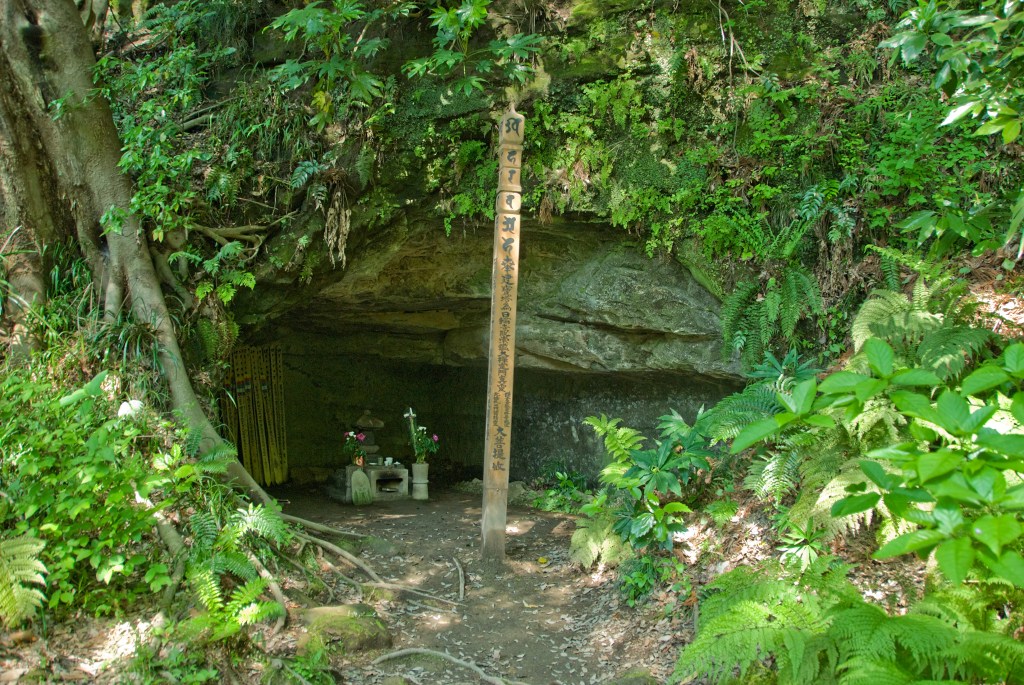
    The alleged site of the cave where the Hojo Clan committed mass suicide.

    In the aftermath of Go-Daigo’s victory, he almost seemed to go out of his way to piss away the goodwill he had accumulated in the years leading up to the so-called “Kenmu Restoration”. The problems stemmed from the fact that those who had supported the overthrow of the Shogunate had done so for a variety of reasons, ranging from genuine loyalty to the Emperor to an ambition to replace the Hojo as regents.

    Commoners hoped for land reform, and though there is little evidence of specific goals, it has been speculated that they were hoping for something akin to land redistribution, ending the peasant’s reliance on powerful, and often fickle, landlords.

    The Samurai who had fought for the Emperor sought rewards in land and titles, hoping to replace the governors and administrators put in place by the Shogunate.

    Finally, Imperial Courtiers hope for a true return to Imperial Rule, where the whole nation was under their control, and they could get back to the good old days of poetry, fancy clothes, and absentee landlordism.

    In the end, all three factions were to be disappointed. Go-Daigo, like the proverbial dog chasing a car, didn’t know what to do with power once he’d got it, beyond a vague notion that he should be in charge.

    In the first place, the commoners were never likely to get land reform; the Emperor had relied on the land-owning Samurai to do the fighting for them, and they were (unsurprisingly) likely to get on board with sharing the land that they had come to view as rightfully theirs.

    So what about the land taken from the Hojo and their allies? Well, that might have gone to the Samurai who had fought for the Imperial cause, but instead, Go-Daigo either took it for himself, or else gifted it to courtiers and cronies, alienating the Samurai who had expected a reward for their efforts.

    Finally, we have the Emperor and his courtiers. For whatever reason, they seemed to believe that they could just rule without the Samurai, despite all evidence telling them otherwise. Positions in regional governance, which had been the domain of Samurai for nearly 300 years at this point, went instead to courtiers.

    Quite what he had thought was going to happen isn’t clear, but within two years, the Emperor had managed to alienate just about everyone, so it should come as no surprise that his position soon became extremely precarious.
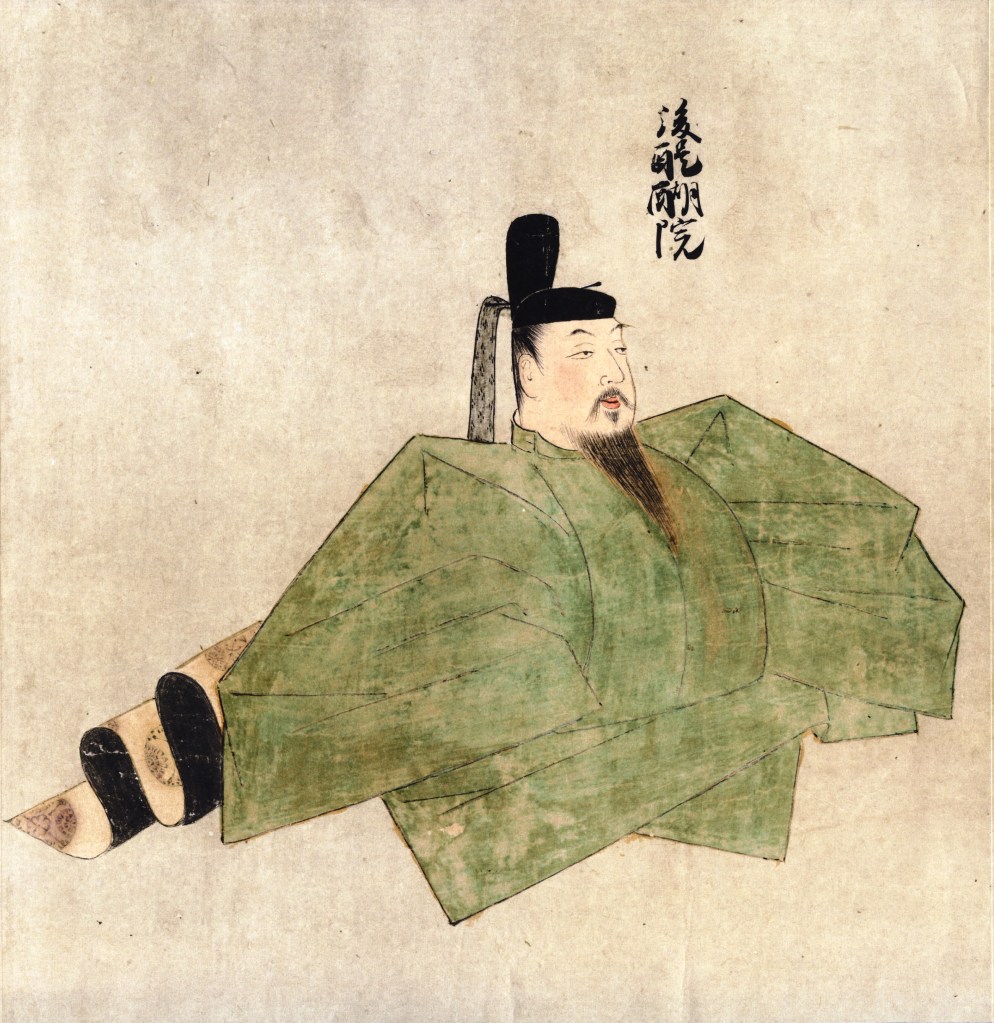
    Emperor Go-Daigo, who really didn’t know what he was doing.

    Ashikaga Takauji, the man whose defection had proved essential to the ultimate Imperial victory, now emerged as the leader of the Samurai opposition to the Emperor. The problem started when Takauji began appointing governors to Provinces himself, ignoring Imperial instructions.

    This was exactly how the first Shogunate had gotten started, and it wasn’t long before the Imperial court rightly guessed what Takauji was up to. In response, the Emperor named his son, Morinaga, Shogun, a move which further antagonised the already restless Samurai, as the title of Shogun, even before it became a powerful political position, had always been awarded to a member of the military class.

    Takauji doesn’t seem to have considered himself a turncoat in this case; the Ashikaga were descendants of the Minamoto, after all, so he portrayed himself as the redeemer of their power and, by extension, the power of the warrior class, earning himself the respect and loyalty of the disaffected Samurai.

    Prince Morinaga continued to be the leader of the opposition to Takauji, and so Takauji had him arrested on some flimsy pretext and transported to Kamakura. The situation there was tense, with Hojo loyalists launching sporadic, often poorly organised revolts, until the summer of 1335 when the son of the last Hojo regent, Tokiyuki, successfully took control of the city.

    In fleeing the city, Takauji’s brother, Tadayoshi, had Prince Morinaga beheaded, leaving Kamakura to the Hojo rebels. Upon hearing the news of the city’s fall, Takauji asked the Emperor to bestow the title of Shogun on him, to give me the authority to crush the rebellion and restore order. The Emperor refused, guessing correctly what Takauji was up to.

    Takauji raised an army and took Kamakura back anyway, and when he was ‘invited’ to Kyoto to explain himself, he refused. At this point, civil war was inevitable, and both sides ordered all Samurai in the realm to join their side.

    Again, it’s not clear exactly what Go-Daigo thought was going to happen, after all, he’d spent five years pissing off just about everyone, so it should have come as no surprise when the vast majority of warriors, and peasants too, for that matter, joined Takauji.

    Takauji’s forces quickly secured Kyoto in February 1336, only to be driven out in a counter-attack a short while after. Regrouping in the west, he advanced again, defeating the Emperor’s forces at Minatogawa and securing final control of the capital in July.
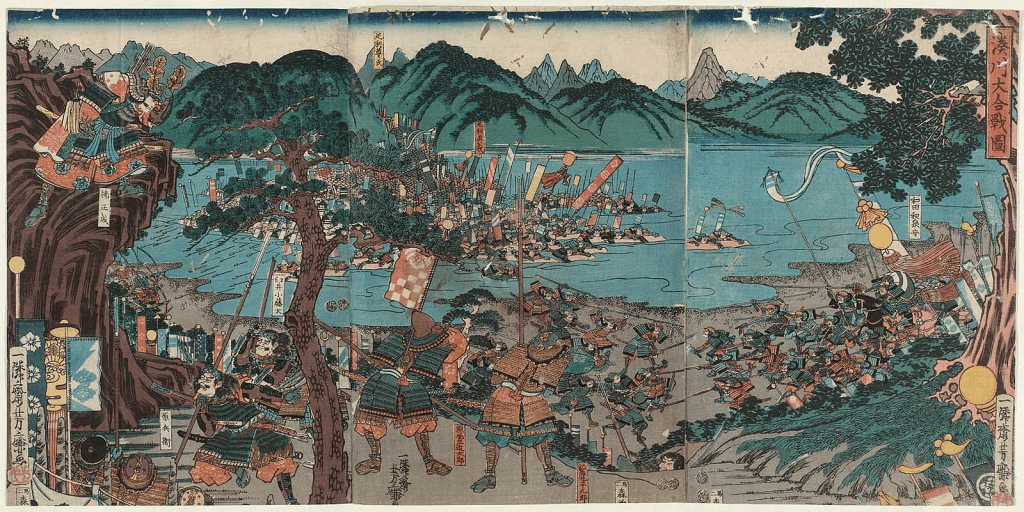
    The Battle of Minatogawa, where Ashikaga Takauji overcome the forces of Emperor Go-Daigo.

    Not long after, Takauji had the new Emperor, Komyo, declare him Shogun, giving birth to the Ashikaga, or Muromachi Shogunate. Go-Daigo was down, but not out, however, and he would return to plague the new government, but more about that next time.

    Sources
    https://ja.wikipedia.org/wiki/%E5%BB%BA%E6%AD%A6%E3%81%AE%E6%96%B0%E6%94%BF
    https://ja.wikipedia.org/wiki/%E8%AD%B7%E8%89%AF%E8%A6%AA%E7%8E%8B
    https://ja.wikipedia.org/wiki/%E6%A5%A0%E6%9C%A8%E6%AD%A3%E6%88%90
    https://en.wikipedia.org/wiki/Kusunoki_Masashige
    https://en.wikipedia.org/wiki/Prince_Moriyoshi
    https://ja.wikipedia.org/wiki/%E6%AD%A3%E4%B8%AD%E3%81%AE%E5%A4%89
    https://en.wikipedia.org/wiki/Genk%C5%8D_War
    https://en.wikipedia.org/wiki/Kenmu_Restoration

  • Kamakura III – The Jokyu War

    We’ve already talked about Imperial decline during the Heian Period. Over many centuries, central control eroded, until eventually the provinces proved to be ungovernable. Eventually, the power of the Imperial Court was usurped by Minamoto no Yoritomo, who established the Kamakura Shogunate in Kamakura, obviously.

    You may not be surprised to hear that the Emperor wasn’t best pleased with this turn of events. Although the actual power of the Emperor had been largely theoretical for decades, there had always been a veneer of ‘Imperial’ authority. The rise of the first Shogunate, however, did away with that.

    With supreme military power firmly in Yoritomo’s hands, there was little the Emperor could do to change the status quo. However, as we’ve discussed, Yoritomo’s heirs proved not to be the model of their father. By the dawn of the 13th Century, the Kamakura ‘Shogunate’ was in fact ruled by regents, or Shikken, from the Hojo Clan.

    In 1219, the regent was Hojo Yoshitoki, who shared power with his influential sister Hojo Masako, the so-called ‘Nun Shogun’. That year, Masako’s son, Sanemoto, the third Shogun, was assassinated, bringing an end to the line of Minamoto Shoguns (Yoritomo and his two sons). Although the Hojo were already in effective control, the end of the ‘legitimate’ line of Shoguns presented an apparent opportunity for their enemies to challenge them.

    Emperor Go-Toba

    In a period where Emperors were often well-decorated figureheads, Go-Toba stood out. He was highly educated, as most courtiers were, but he had also shown skill at martial arts, earning him respect and loyalty from warrior families in the west and north. Unfortunately for him, the Throne still drew its income from its land holdings, and when the Shogunate appointed officials to oversee those holdings, the money taken in taxes often didn’t find its way to the Emperor.

    Emperor Go-Toba, whose attempts to restore Imperial power would start the Jokyu War.

    After Sanemoto’s assassination in 1219, the Hojo approached Go-Toba about the possibility of one of the Emperor’s sons becoming the next Shogun. Go-Toba attempted to negotiate, seeking the removal of Shogunate officials from Imperial holdings.

    The Shogunate sent a force of 1000 men under Yoshitoki’s brother in an attempt to intimidate the Emperor. Go-Toba wasn’t easily scared, however, and negotiations broke down, although the Emperor would offer a concession; he would allow a member of the Imperial family to become Shogun, as long as it wasn’t a prince of the main royal line.

    The Hojo were satisfied with this, and Kujo Yoritsune, who was only a little over a year old, was chosen as the fourth Shogun. However, because Yoritsune was a baby, the position of the Hojo as regents was secure, and, for a time at least, peace endured.

    The elevation of a member of the Imperial house to the position of Shogun did nothing about the underlying issues, however, and in July 1219, just a few months after the previous negotiations, the military governor of the area around Kyoto, (who had been appointed by the Shogun) was attacked and killed by warriors acting on the Emperor’s orders.

    Some records say that the governor had been planning to launch a coup and make himself Shogun, with Go-Toba, made aware of the plot, acting to stop the plot before it came to fruition. Other sources, however, point out how unlikely it is for Go-Toba to have had a Shogunate official killed as a favour to the Shogun, and it is more likely that the governor either discovered, or was made aware of, the Emperor’s plans, and was removed accordingly.

    The unfortunate fellow apparently took his own life when his residence (which was within the grounds of the Imperial Palace) was surrounded and burned by Imperial loyalists, and whatever the reasons, this was a direct attack by forces representing the Emperor on those representing the Shogun. The Emperor then asked the Shogunate, Court Officials, and local temples and shrines to donate money to help rebuild the burned residence, and, perhaps unsurprisingly, most of them refused to pay up.

    During rebuilding work, rumours spread that Go-Toba was quietly gathering allies and raising an army. It was also alleged that he had asked shrines and temples around the capital to invoke the power of the gods on the Emperor’s behalf, which was quite the provocation, apparently.

    War Begins

    Then, in Spring 1221, Go-Toba gathered troops in the capital under the pretext of protecting religious sites and ceremonies. On May 15th, he dropped the pretext; however, when forces loyal to the Imperial Side attacked the offices of the Shogun in Kyoto, burning them and killing the officials, which, as declarations of war go, is pretty definitive.

    On the same day, Go-Toba issued a formal Imperial decree, ordering all the warriors of the nation to arrest Yoshitoki, who was declared an outlaw and enemy of the court. Within a few days, warriors from across western Japan had risen against the Shogun, and Go-Toba believed, rather flippantly, that the issuance of an Imperial decree would fatally undermine the Shogunate.

    This is one of those times that later writers absolutely love to dramatise. It’s all honour, loyalty, duty unto death, etc. but the reality is that, despite an Imperial Decree, and a counter-decree from Hojo Masako, the majority of the warriors across the nation (those who were directly tied to either side through blood or obligation) sided with whoever they thought would benefit them the most if they won.

    In those calculations, the Shogunate had the advantage; the Shogun had the right to distribute land, and most of the warrior families expected to be rewarded with the lands and titles of those who had sided with the Emperor and the court, who was generally believed to have been likely to favour himself and his courtiers, in the event of their victory.

    So, for all their vaunted ‘honour’, the Samurai would (and not for the last time) side with those they thought would give them the best deal, and by the time they marched, the armies loyal to the Shogun are said to have numbered nearly 200,000.

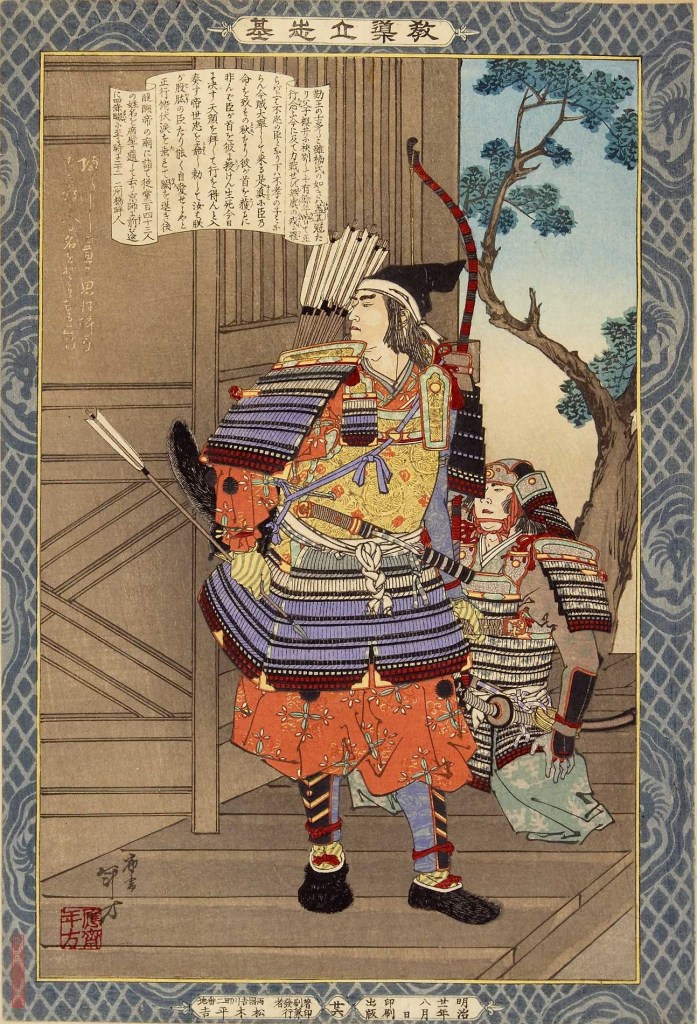
    A later illustration of a Samurai as they might have appeared during the Jokyu War.

    The Shogunate army was actually three separate forces, with 40,000 men heading by a northern route, another force of 50,000 heading through the mountains, and the third, largest force of 100,000, following the main Tokaido Road, with all three marching on Kyoto.

    The Imperial side seems to have been caught off guard by first the size, then the speed of the Shogunate forces. It appears that the Emperor had believed his decree would be enough to secure mass defections, and when the opposite occurred, the forces loyal to the throne were out of position and hugely outnumbered.

    Resistance was scattered and ineffective, with some sources suggesting that the main army took just 22 days to complete the march from Kamakura to Kyoto, which might be an exaggeration, but goes some way to highlighting how badly prepared the Imperial Army was.

    Though the court was able to gather warriors from Western Japan, the numbers were nowhere near what they had expected, and besides, the rapid advance of the Shogunate army meant that reinforcements wouldn’t have been able to reach the capital in time.

    In desperation, Go-Toba went to Mt Hiei, on the outskirts of Kyoto, and pleaded with the famed warrior monks for support. The monks, partly out of opposition to the Emperor, and partly due to their fear of the strength of the Shogun, refused to help, and Go-Toba was left with an army of around 18,000 to defend the capital.

    Outnumbered 5 to 1, Imperial forces took position near Uji, and on June 13th, another Battle of Uji (the third in 50 years) took place. Despite brave resistance, the Imperial side was overwhelmed, and on June 15th, Shogunate forces were in Kyoto. What followed was an orgy of violence, as the houses of Imperial officials and supporters were ransacked and burned, and the citizens suffered at the hands of the rampaging army.

    As Kyoto burned, Go-Toba sent a message to the Shogunate army, withdrawing the Imperial order to arrest Yoshitoki, and blaming the whole thing on his ministers and advisors. Abandoned by the Emperor, some of his supporters fought on in vain, but the final defeat was inevitable, and by July, serious fighting was over, with a few fugitives evading capture until October.

    In the aftermath, Go-Toba was exiled, and eventually replaced as Emperor by Go-Horikawa, and the estates of those who had been killed fighting for the Court, or proscribed afterwards, were distributed to the Shogun’s supporters. Direct control was established over Kyoto, and any semblance of independent military strength was ended; every warrior was now the direct vassal of the Emperor, or else.

    The Shogunate also took control of the purse strings for the court. Prior to the war, the Emperor had held land in his own right and drawn income from it, but now, those lands were ruled directly by the Shogun, and the government in Kamakura could now decide how much, if any, cash the Emperor would get.

    The end of the Jokyu War would mark the zenith of Shogunate, and therefore Hojo power, and for a time, they would rule more or less unchallenged, but some 60 years later, a new threat would emerge.

    Since the dawn of the 13th Century, a previously fractured and quarrelsome people had been united under a single ruler and gone on to conquer an empire the likes of which had never been seen. Though this great conqueror was long dead, his sons and grandsons had continued his work, and in 1260, a new ruler was enthroned, one who would go on to make himself master of China and Korea before seeking new conquests across the sea.

    In 1274, Kublai Khan, grandson of the Great Genghis, had ambitions to make himself master of the world, and he cast his eyes on Japan.

    The Mongols were coming.

    Sources
    https://ja.wikipedia.org/wiki/%E6%89%BF%E4%B9%85%E3%81%AE%E4%B9%B1
    https://en.wikipedia.org/wiki/Kamakura_shogunate
    https://en.wikipedia.org/wiki/Azuma_Kagami
    https://en.wikipedia.org/wiki/J%C5%8Dky%C5%AB_War
    https://en.wikipedia.org/wiki/Emperor_Go-Toba
    https://ja.wikipedia.org/wiki/%E5%BE%8C%E9%B3%A5%E7%BE%BD%E5%A4%A9%E7%9A%87