In 1336, Ashikaga Takauji overthrew Emperor Go-Daigo, bringing an end to the brief Kenmu Restoration, which had seen Go-Daigo and his supporters take power from the Kamakura Shogunate and their Hojo regents.
Go-Daigo’s self-serving policies, which sought to restore the power of the Emperor and the Court at the expense of landholding Samurai, had proved to many of the warrior class that Imperial rule wasn’t in their interest, and Takauji had had no problem rallying his supporters against the Emperor.
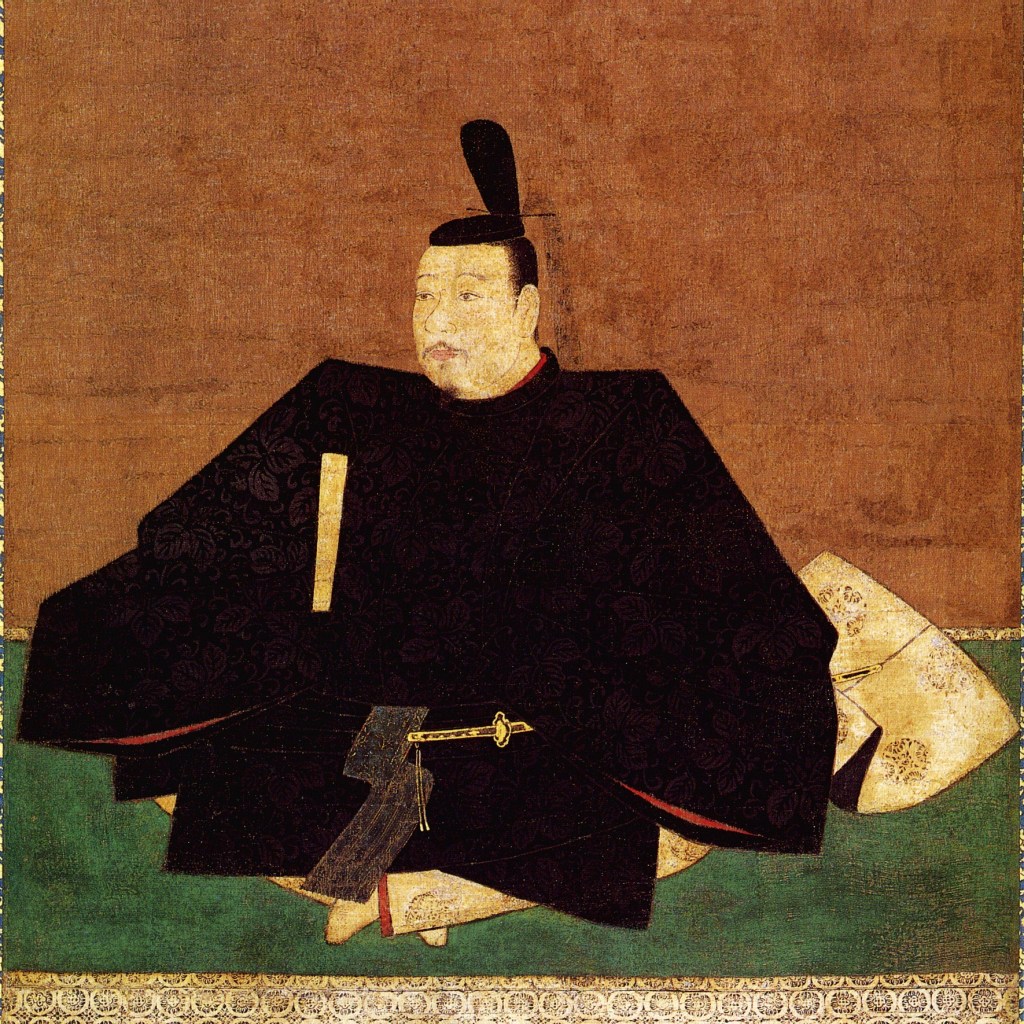
However, it would be wrong to suggest that all the warrior class supported Takauji, there were plenty who remained loyal to Go-Daigo and the idea of ruling without a Shogun, and even after he was defeated, Go-Daigo was able to set himself up with a rival ‘Southern’ Court, opposing the ‘Northern’ Court which relied on the Shogun, thus beginning the Nanbokucho, or “Northern and Southern Court” Period.
There were political problems at home, too. Though Takauji had proven himself an effective warrior, he wasn’t much for politics, and so his brother, Tadayoshi, became responsible for day-to-day administration, and dealing with matters of justice, whilst Takauji dealt with military matters, including the appointment of Shugo, the military governors in the provinces.
It will surprise no one to know that this dual system didn’t lead to stable government, but initially, the presence of Emperor Go-Daigo at the Souther Court in Yoshino served as something the new Shogunate could rally against. A series of battles in 1338 and 1339 generally ended in favour of the Shogunate, and when Go-Daigo died in 1339, the initial phase of the conflict came to an end. However, the peace would be fragile and frequently broken, especially further from Kyoto.
Ko Moronao
The dual nature of the new government led to immediate power struggles, with rival factions siding with or against each other, and external opponents, mostly at the Southern Court, seeking to take advantage of the division. One figure that emerged early on was Ko Moronao, whom Takauji appointed Shitsuji or deputy in 1336.
Moronao was a talented warrior, but unlike Takauji, he proved to be a savvy politician as well and emerged as one of the most iconoclastic members of the new regime. He saw no need for an Emperor and favoured the rule of the Samurai without reference to either the Northern or Southern court.
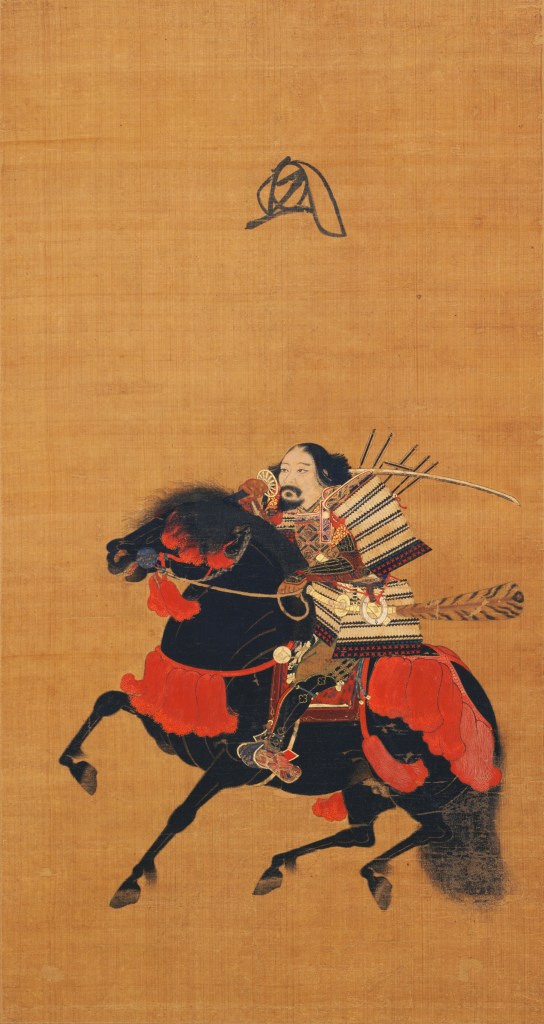
In traditional Japanese historiography, Moronao is portrayed as uniquely violent and cruel, even by the standards of the time. Although not without controversy (he infamously ordered the burning of a famous shrine in which his enemy had taken refuge), Moronao’s main crime seems to have been his vociferous opposition to the Imperial Court, and it wouldn’t be until the post-1945 period that his reputation would begin to recover.
Moronao quickly found himself at odds with Tadayoshi, who was seen as conservative and increasingly courtly, and every time Tadayoshi made a decision with which Samurai disagreed, Moronao’s popularity would only grow, but it shouldn’t be understood that Moronao’s position was due entirely to his opposition to Tadayoshi.
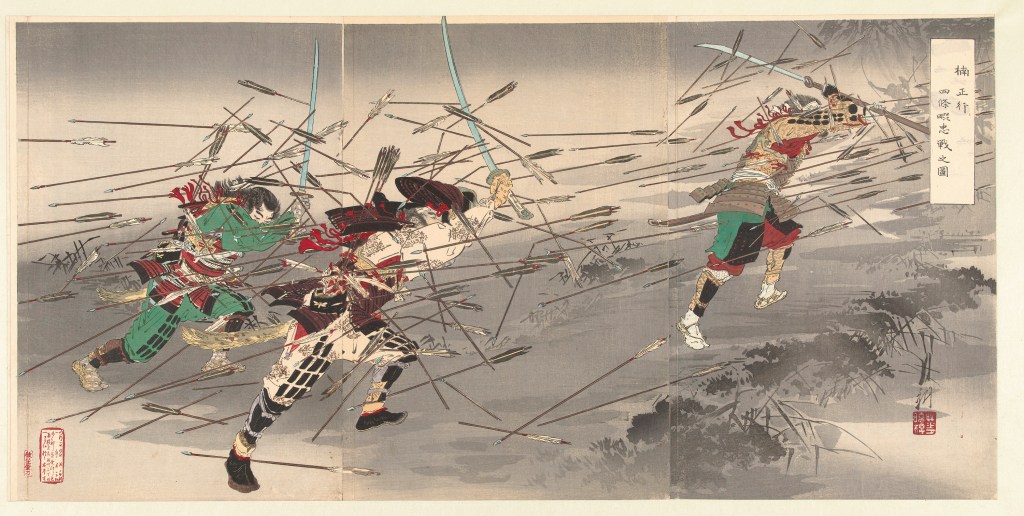
Moronao was arguably the Ashikaga’s most effective commander, leading Shogunate forces to victory against the Southern Court and others throughout the chaotic period of the late 1330s and into the 1340s. Arguably, his most consequential victory came in 1348 at the Battle of Shijonawate. Here, Southern Court forces, under the leadership of the famed Kusunoki Clan, who had been advancing north since August of the previous year, were met and decisively defeated by the army of the Shogunate/Northern Court, led by Moronao.
The Southern forces were so completely defeated that Moronao was able to advance as far as their capital at Yoshino, capturing it temporarily before withdrawing. The Kusunoki Clan, with their famed loyalty to the ‘true’ Emperor, were badly mauled, and with that, a serious military threat to the Shogun and the Northern Court was ended.
The Bigger they are…
Just as Moronao’s power seemed to be at its peak, his enemies at court moved against him. In 1349, in response to his alleged ‘misdeeds’, Moronao was stripped of his position as Shitsuji by Takauji, who was apparently pressured into doing it by Tadayoshi and his allies, the Uesugi Clan (I know, it’s another new name).
Tadayoshi, not satisfied with having Moronao removed from office, apparently tried to have him assassinated, and when they failed, he even tried to enlist retired Emperor Kogon (of the Northern Court), asking him to issue an official order for Moronao’s death.
Whether the Emperor refused, or there was simply no one to enforce the order, isn’t clear, but Moronao wasn’t about to hang around and let them try again. In August 1349, he and his brother marched on Kyoto at the head of an army. There was apparently relatively little fighting as Tadayoshi, taken by surprise, fled to his residence, where he was quickly surrounded and put under siege.
The crisis was eventually resolved by negotiation. Tadayoshi would leave Kyoto and become a monk, and his closest allies, those who had conspired against Moronao, were sent into exile. Though nominally a victory for Moronao, the position of Takauji remained controversial. He had facilitated negotiations, but his actual role in the events is unclear, with some speculating that he was actually working towards the removal of his brother.
Whatever the truth of it, the peace would not last long. Forces loyal to Tadayoshi had been gathering in the Chugoku region, but when Takauji gave the order for them to disperse, their leaders fled to Kyushu, far from Kyoto, and rebuilt their support. In late 1350, seeing the threat posed by the growing opposition, Takauji made the decision to personally march out and defeat them.

By TUBS – This vector image includes elements that have been taken or adapted from this file:, CC BY-SA 3.0, https://commons.wikimedia.org/w/index.php?curid=16385915
However, with his brother distracted, Tadayoshi took his chance and fled Kyoto, arriving in nearby Kawachi Province (near modern Osaka), before raising an army with the stated goal of overthrowing Moronao and his supporters.
Meanwhile, in the Kanto (around modern Tokyo), the Uesugi (remember them?) rose up as well, defeating forces that had remained loyal to Takauji and Moronao, handing effective control of Kamakura and the surrounding area to Tadayoshi.
In response to all this, Takauji turned his army around and had the Emperor of the Northern Court declare Tadayoshi and his supporters to be enemies of the throne. When he heard this, Tadayoshi made the shocking decision to openly declare for the Southern Court, which had, up until then, been the Shogunate’s most implacable foes.
Shogun Showdown
Takauji tried to return to Kyoto but was defeated by the combined Tadayoshi/Southern Court forces at Komyo-ji, and then again at Uchidehama shortly afterwards. These defeats convinced Takauji to seek peace with his brother, and the matter was settled by further negotiation.
In public, Takauji insisted that Moronao being allowed to become a monk was a prerequisite for peace, but allegedly, he secretly agreed with Tadayoshi that Moronao could be removed permanently. Peace was formally agreed on February 20th, and on February 26th, Moronao and his family were ambushed by forces loyal to the Uesugi (them again), and killed.
With Moronao removed, the official reasons for the conflict between Takauji and Tadayoshi were removed, but it will probably not shock you to learn that the peace didn’t hold. The fact that Tadayoshi had sided with the Southern Court was not forgotten, and his attempts at reconciliation fell on deaf ears. He compounded this issue by continuing one of his most unpopular policies, refusing to reward Samurai who fought bravely with land confiscated from their defeated enemies.
Takauji, for his part, sought to weaken his brother’s support by actively prosecuting his followers whilst overlooking the crimes of his own. This obviously bred considerable resentment amongst Tadayoshi’s base, but it had the side-effect of increasing support for Takauji; after all, he might reward you with land for supporting him, whilst opposing him carried the risk of prosecution.
In the Spring of 1351, one of Tadayoshi’s most capable generals was assassinated by unknown assailants. Later, one of his commanders was attacked but was able to flee. Then, in the summer, Takauji ordered forces to move against his brother’s allies in Omi and Harima Provinces, seeking to attack from two sides.
Alerted to the danger, Tadayoshi was able to flee Kyoto and made it to Kamakura. Although driven from the capital, he still controlled vast areas of the nation and could command the loyalty of thousands of warriors. Takauji, seeking any support he could, made an agreement with the Southern Court, effectively handing the entire Northern Court over to them in the so-called (and short-lived) Shohei Unification.
With support in Kyoto secured, Takauji set off for Kamakura, defeating his brother’s forces in a series of battles throughout late 1351 and into 1352, eventually forcing him back to Kamakura, where he had little choice but to surrender.
As punishment for his rebellion, Tadayoshi was confined to a temple in Kamakura, where he conveniently died only a few weeks later, allegedly by poison, but also possibly by a sudden illness.

Tadayoshi’s death brought an end to the political crisis in the short term, but it wasn’t to last. The reconciliation of the Imperial Court was already fraying at the edges, and it wouldn’t be long before conflict between Emperor and Shogun broke out again, but more on that next time.
Sources
https://ja.wikipedia.org/wiki/%E8%A6%B3%E5%BF%9C%E3%81%AE%E6%93%BE%E4%B9%B1#%E8%96%A9%E5%9F%B5%E5%B3%A0%E3%81%AE%E6%88%A6%E3%81%84
https://en.wikipedia.org/wiki/Ashikaga_Tadayoshi
https://ja.wikipedia.org/wiki/%E6%89%93%E5%87%BA%E6%B5%9C%E3%81%AE%E6%88%A6%E3%81%84
https://ja.wikipedia.org/wiki/%E5%85%89%E6%98%8E%E5%AF%BA%E5%90%88%E6%88%A6
https://ja.wikipedia.org/wiki/%E8%A6%B3%E5%BF%9C%E3%81%AE%E6%93%BE%E4%B9%B1
https://ja.wikipedia.org/wiki/%E9%AB%98%E5%B8%AB%E7%9B%B4
https://ja.wikipedia.org/wiki/%E9%87%91%E3%83%B6%E5%B4%8E%E3%81%AE%E6%88%A6%E3%81%84_(%E5%8D%97%E5%8C%97%E6%9C%9D%E6%99%82%E4%BB%A3)
https://en.wikipedia.org/wiki/Sieges_of_Kuromaru
https://en.wikipedia.org/wiki/Siege_of_Kanegasaki_(1337)
https://en.wikipedia.org/wiki/Battle_of_Shij%C5%8Dnawate
https://en.wikipedia.org/wiki/K%C5%8D_no_Moronao
https://en.wikipedia.org/wiki/Kann%C5%8D_disturbance
https://en.wikipedia.org/wiki/Ashikaga_Takauji
https://en.wikipedia.org/wiki/Kenmu_Restoration
https://en.wikipedia.org/wiki/Nanboku-ch%C5%8D_period
https://en.wikipedia.org/wiki/Ashikaga_shogunate
 Chris Perry, Author