Tag: Sengoku Period

  • The First Unifier – Oda Nobunaga. Part Two.

    The First Unifier – Oda Nobunaga. Part Two.

    In June 1565, the powerful Miyoshi Clan launched a coup against the Shogun, Ashikaga Yoshiteru. In the Eiroku Incident (named for the era), the Miyoshi successfully killed Yoshiteru, and his brother, Yoshiaki, a rival claimant to the throne, fled the capital, seeking support from regional warlords.

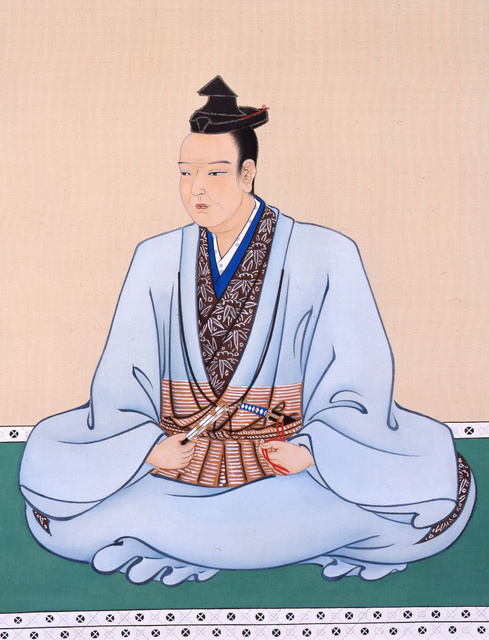
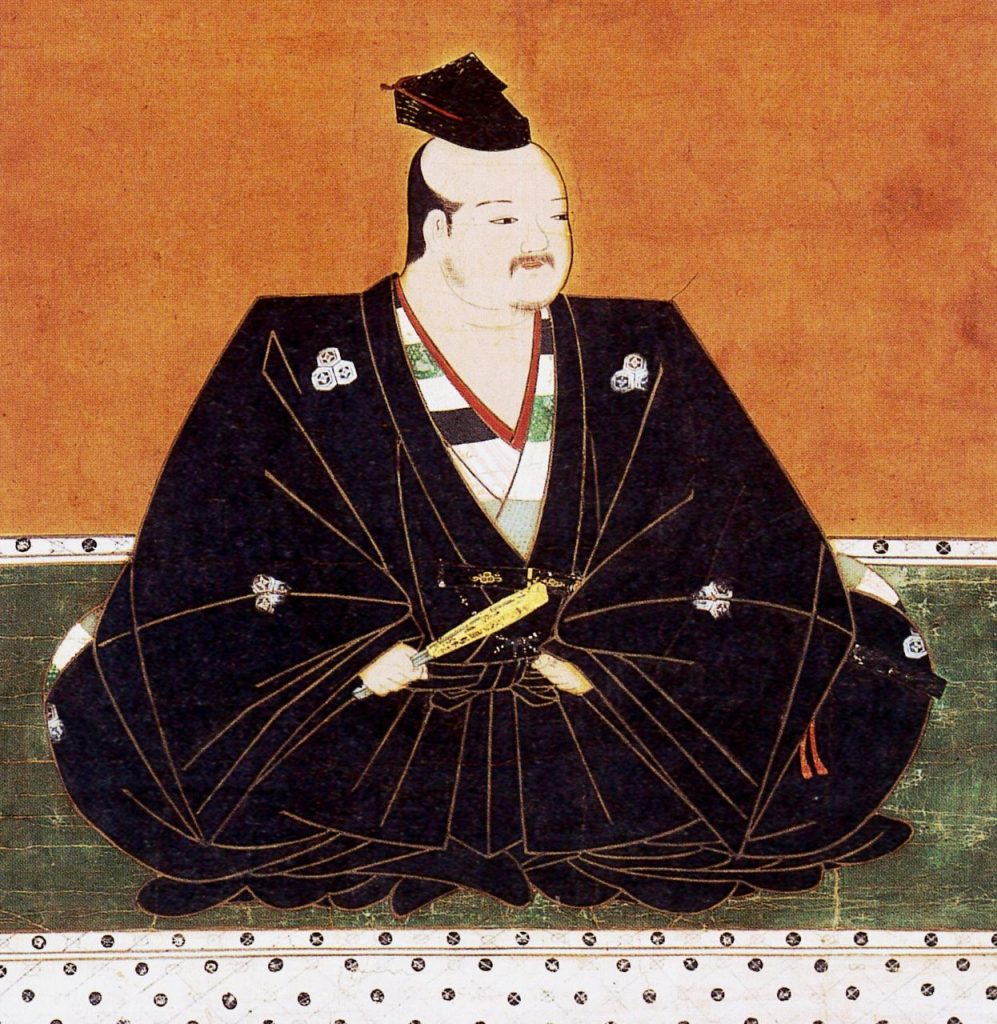
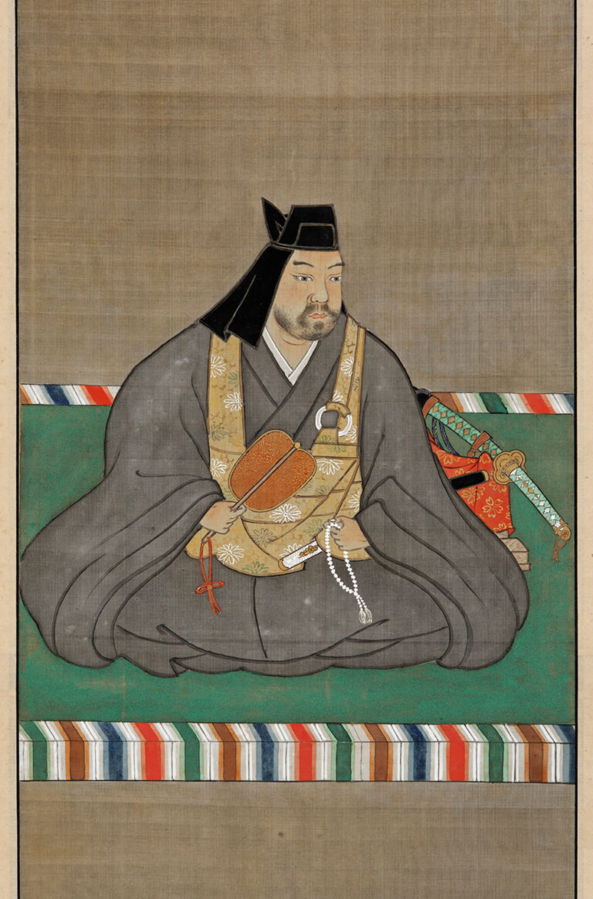
    Miyoshi Yoshitsugu, one of the main leaders in the Eiroku Incident.

    Nobunaga was initially enthusiastic about supporting Yoshiaki and the Shogunate more generally. Sources aren’t clear about Nobunaga’s ambitions at this point, with some arguing he genuinely wanted to restore the Ashikaga, whilst others portray it as cynical politicking, with Nobunaga intending to replace the Miyoshi’s puppet Shogun with his own.

    Regardless, in the short term, military defeat limited Nobunaga’s practical aid, and it wasn’t until September 1568 that he formally recognised Yoshiaki as Shogun and dispatched an army to Kyoto to secure his accession to the throne. There was some resistance, but Nobunaga’s forces would prove triumphant, and Ashikaga Yoshiaki was installed as the 15th (and final) Ashikaga Shogun. It seems that Yoshiaki wanted to install Nobunaga as kanrei, or deputy, but he refused. Moreover, at this point, the Kyoto political community seemed to have viewed Nobunaga as little more than Yoshiaki’s general, rather than a political force in his own right.

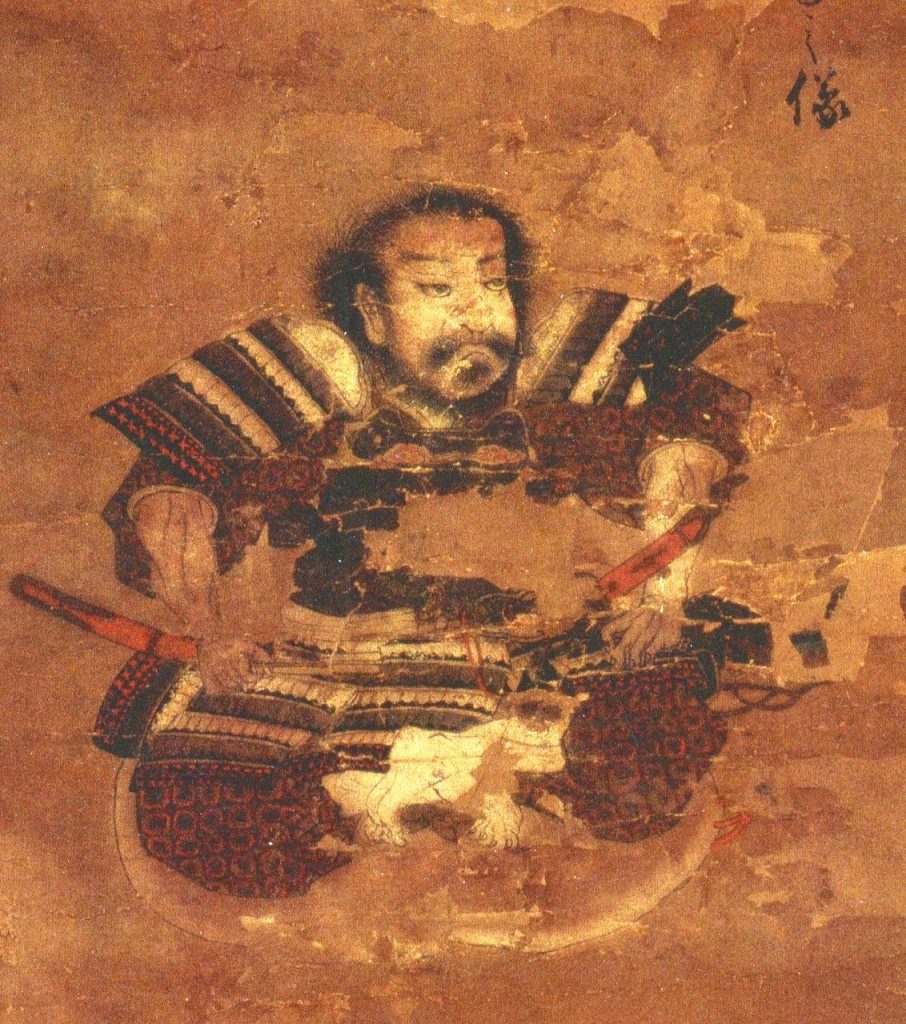
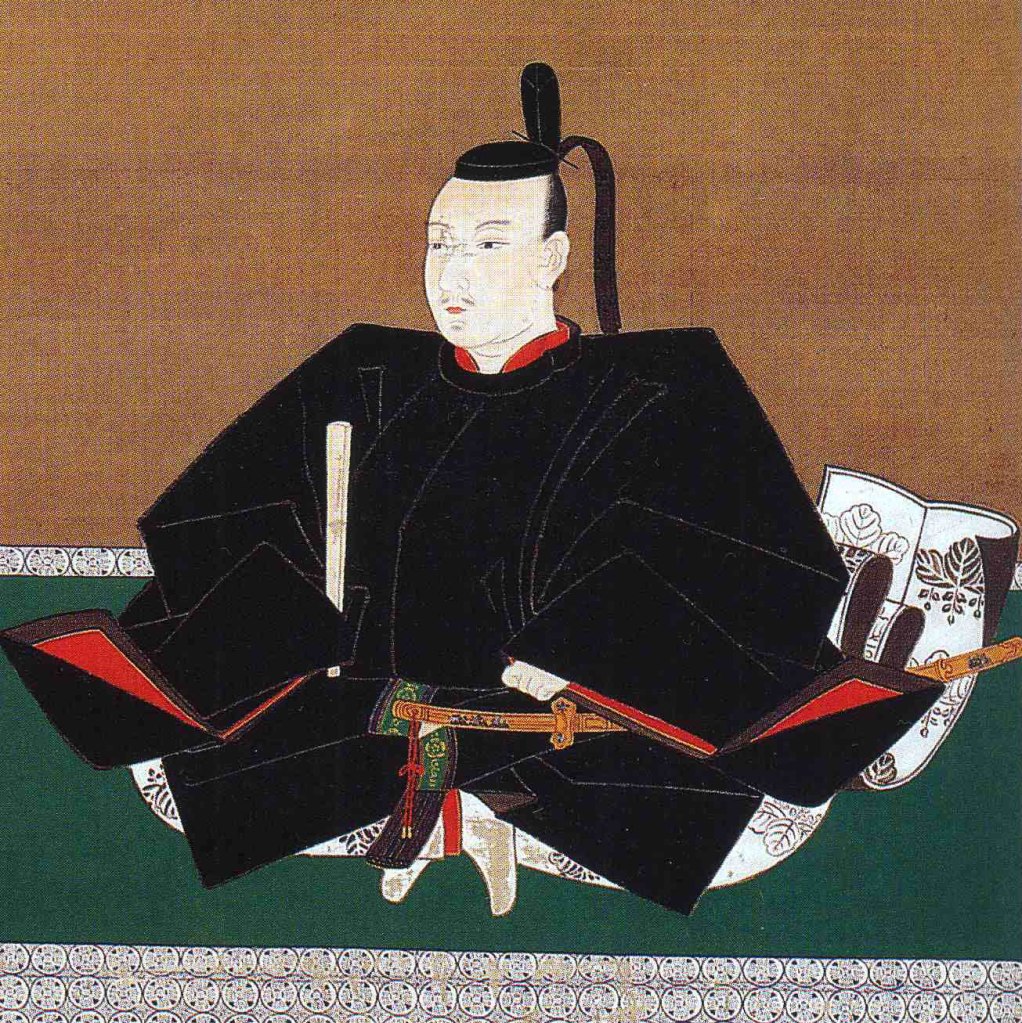
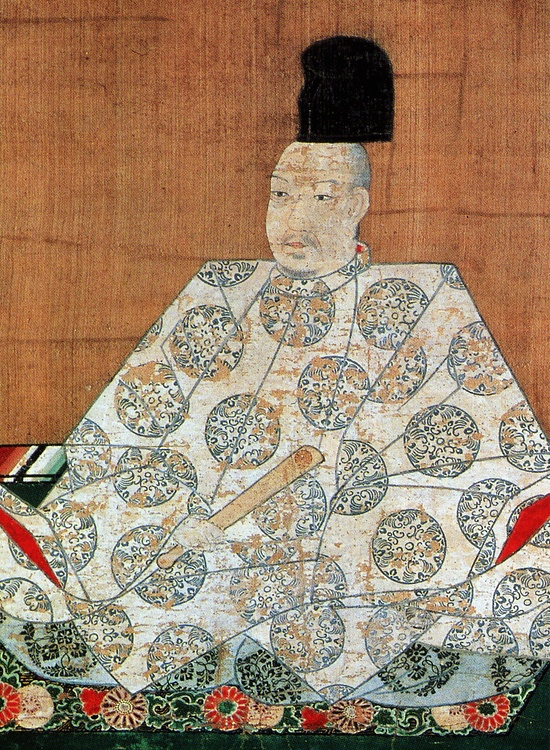
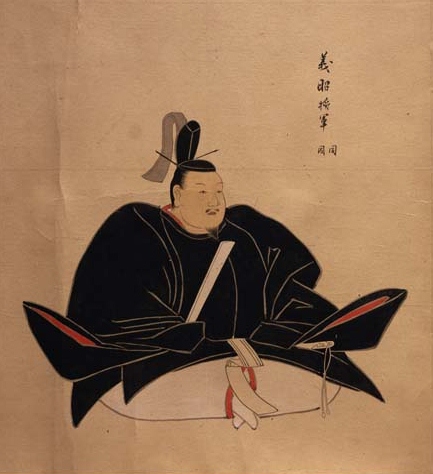
    Ashikaga Yoshiaki

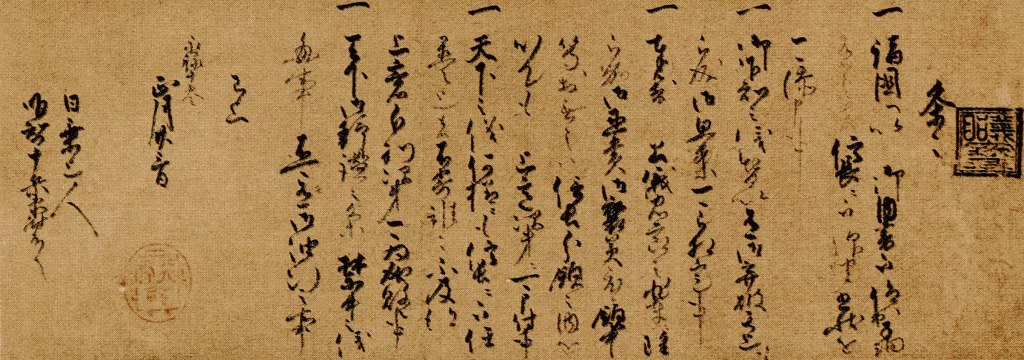
    In early 1569, Nobunaga once again proved his worth to the Shogunate by putting down an attempt by the Miyoshi Clan to restore their position in the capital. Shortly after that, Nobunaga issued the denchuonokite, or “Rules of the Palace”, which were a set of nine (with seven more added later) rules for the management of the Shogun’s court. For a long time, it was believed that these rules were the first clear example of Nobunaga imposing his will on the Shogunate, though later research suggests that Yoshiaki agreed to the rules, and it was only later that the relationship between the two men began to break down.

    Nobunaga seems to have intended to return to his own territories after the restoration, serving as a sort of enforcer for the Shogun. However, by this point, the Shogunate was at such a low ebb that he found himself obliged to become closely involved in the running of the government. It has been suggested that the issuing of the “Palace Rules” was part of wider efforts by Nobunaga to reinforce the Shogunate, whilst also reining in the tendency of the Shogun to use his remaining power arbitrarily, favouring his own supporters at the expense of powerful clans elsewhere, who, Nobunaga (rightly) worried, would then become enemies of the Shogun, and be extension, himself.

    Part of the original Palace Rules.

    It was not as though Nobunaga had any trouble finding enemies of his own. In the late 1560s, his forces invaded Ise Province, and in 1570, he led an army north to Wakasa Province to subjugate the Asakura Clan, who had defied him. The invasion went well, but when word reached Nobunaga that the Azai Clan, led by his brother-in-law, had betrayed him, he was forced to retreat.

    The reasons for this sudden betrayal have been much romanticised, with Azai Nagamasa sometimes portrayed as a principled opponent of Nobunaga’s tyranny, or else bound by a close alliance to the Asakura that trumped his loyalty to the Oda. Historians are still divided on the exact cause, but the betrayal was likely a combination of opportunism and genuine fear about Nobunaga’s intentions.

    Nobunaga’s army was defeated at the Battle of Kanegasaki, with Nobunaga himself forced to flee the field. It is said that he was only able to escape because of the rearguard action led by Kinoshita Tōkichirō, who would later be known as Toyotomi Hideyoshi, and who was rewarded with gold by Nobunaga upon his return to Kyoto.

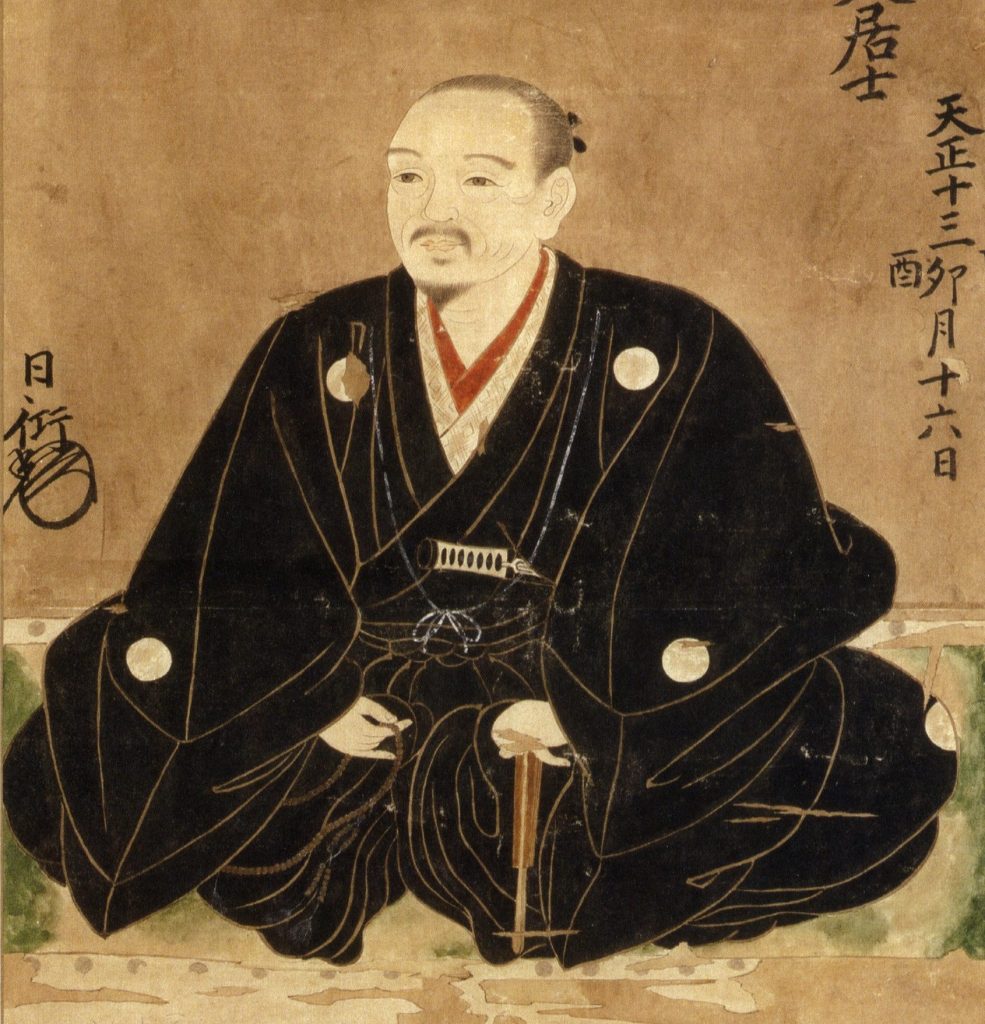
    A later depiction of Hideyoshi in Nobunaga’s service. He first appears in records from the early 1560s, and by the time of Kanegasaki, he had earned a reputation as one of Nobunaga’s most capable subordinates.

    Sources disagree on exactly how severe the defeat was; some state that Nobunaga returned to Kyoto with just ten men, whilst others put his army’s losses at fewer than 1300, out of a total of 30,000. Both numbers may be true, and it would certainly explain why Nobunaga himself seems to have remained calm in the wake of the defeat, inspecting the Imperial Palace the day after he returned to Kyoto.

    Whilst Nobunaga had certainly been forced to retreat, the case for his army remaining largely intact is made by the fact that just a few months after Kanegasaki, he, along with his ally, Tokugawa Ieyasu, led a force of up to 40,000 men in a campaign against the Azai-Asakura, culminating in the Battle of Anegawa, which Nobunaga won, though he was unable to finish either the Azai or Asakura off, despite inflicting heavy casualties on both.

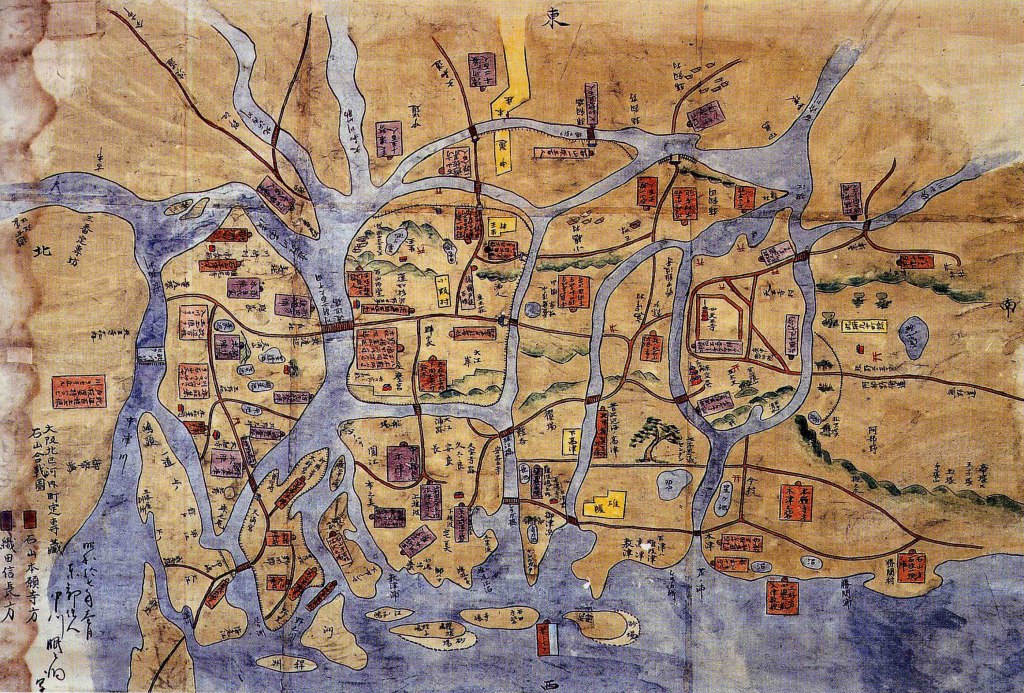
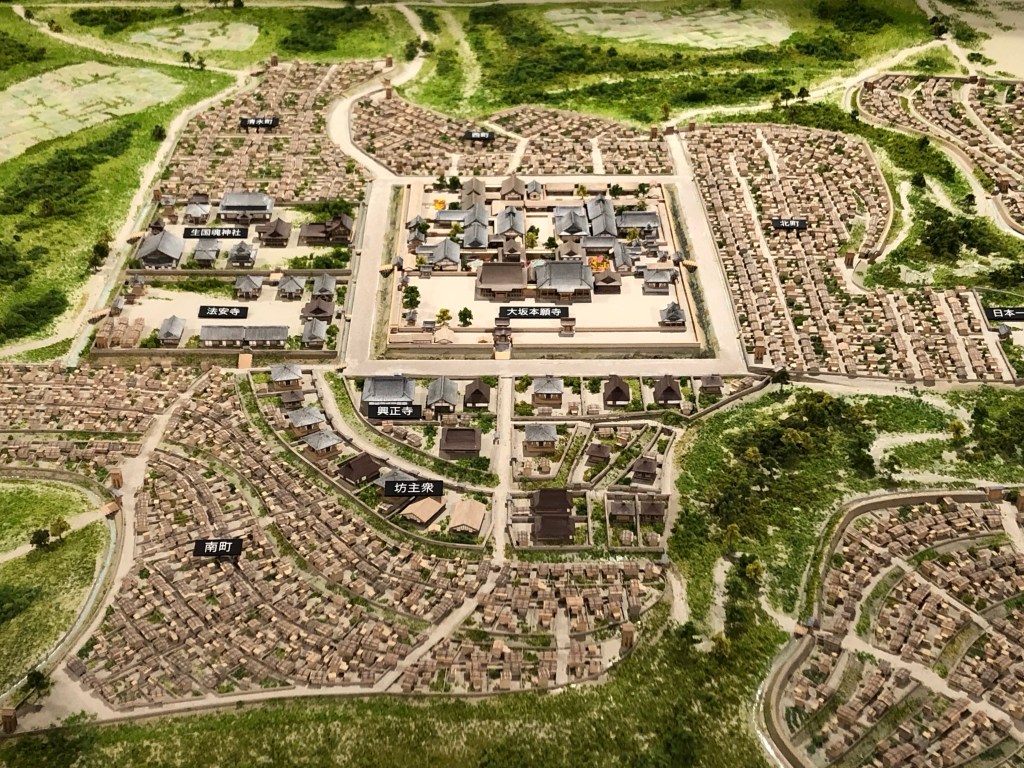
    Nobunaga was prevented from pressing his advantage by events elsewhere. In August, the Miyoshi raised an army in Settsu Province (modern Osaka). Around the same time, the Ishiyama Hongan-ji Temple (on the site of modern Osaka Castle), fearing Nobunaga’s expansionist ambitions, raised an army of its own.

    A model of Ishiyama Hongan-ji, showing it was far more than just a temple. Osaka Castle stands on the site today.
    By Takafuji – Own work, CC BY-SA 4.0, https://commons.wikimedia.org/w/index.php?curid=77306876

    All this was combined with the ongoing conflict with the Azai-Asakura alliance, and in September, supporters of Ishiyama Hongan-ji launched a rebellion in Ise Province in which Nobunaga’s younger brother, Nobuoki, was killed (or forced to commit seppuku) Faced with all this, Nobunaga chose to leverage his power at court, and in December, an Imperial decree was issued, ordering all sides to stop fighting, which they duly did, saving Nobunaga in the short-term.

    Peace in the Age of the Country at War was only ever a fleeting thing, however. In February 1571, Nobunaga led an army of some 50,000 against the forces of Ishiyama Hongan-ji, resulting in one of his most controversial acts, the burning of Mt Hiei.

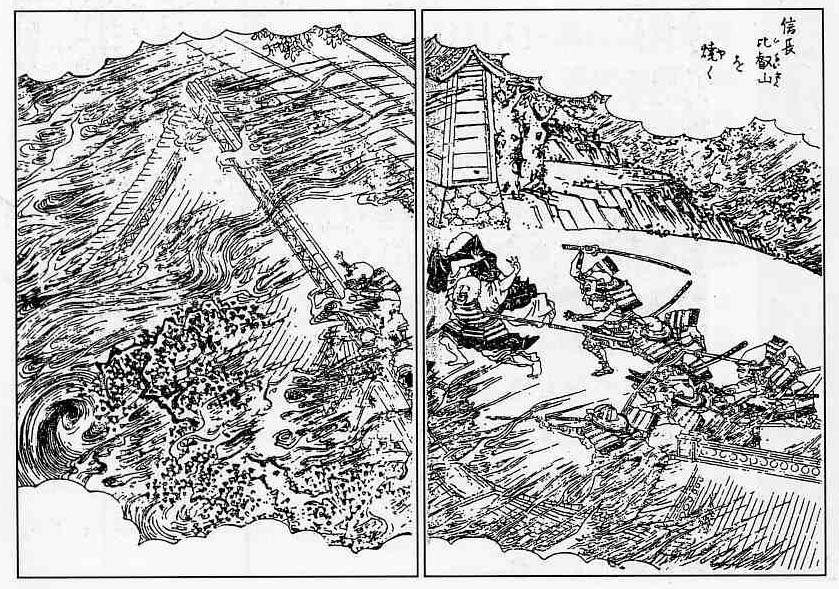
    A semi-contemporary image of the burning of Mt Hiei, showing Nobunaga’s forces cutting people down as they try to flee the flames.

    Mt Hiei is one of the most sacred sites in Japanese Buddhism, and in the late 16th Century, its monks were major political players in their own right, with influence at both the Imperial and Shogunate court, and an army of warrior monks to defend their interests. Nobunaga’s attack should be seen in this context, but it was also an incredibly shocking act, which outraged a Japanese political class that took its religion very seriously. One particularly outraged player was Takeda Shingen, who denounced Nobunaga and began a campaign against his ally, the Tokugawa.

    Whilst historians suggest that Shingen’s outrage over Mt Hiei was just a pretext, the invasion of the Tokugawa home province of Mikawa was a serious threat to Nobunaga’s position. Shingen was arguably the most formidable warlord of his time, and may well have proved more than a match for Nobunaga. He was certainly too much for Tokugawa Ieyasu, who was obliged to retreat and call on Nobunaga for help.

    Nobunaga dispatched a force of 3000 men to help, but they, along with the Tokugawa, were decisively defeated at the Battle of Mikatagahara in January 1573. Ieyasu himself barely managed to escape the disaster. In the aftermath, Nobunaga appeared vulnerable, so vulnerable that Ashikaga Yoshiaki, who had begun to chafe under Nobunaga’s regime, raised an army in opposition to him, presumably in the hope that Takeda Shingen was on his way.

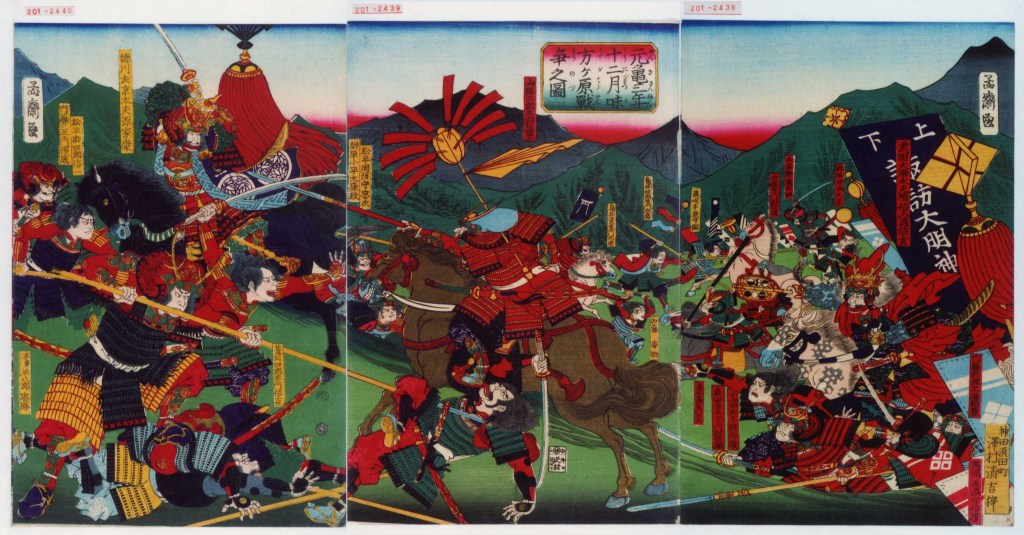
    A 19th-century depiction of the Battle of Mikatagahara. If Takeda Shingen had lived long enough to take advantage of the victory, the outcome of the Sengoku Jidai might have been very different.

    Unfortunately for Yoshiaki, Shingen was dead. Though the circumstances of his death are still murky, it ended a serious threat to Nobunaga, perhaps the most serious threat, and he was able to focus his forces on Kyoto, where he swiftly forced Yoshiaki to make peace and resume his position firmly under Nobunaga’s thumb.

    Yoshiaski refused to learn his lesson, however, and a second rebellion broke out not long after, with Shogunate loyalists barricading themselves inside Makishima Castle, which Nobunaga swiftly took, sending Yoshiaki into exile, and effectively bringing an end to the Ashikaga Shogunate, once and for all. Historians debate whether the Shogunate actually ended at this time, as Yoshiaki continued to use the title, and would spend the next few years roaming Japan seeking support to overthrow Nobunaga.

    What is true, though, is that the Ashikaga, long in decline, would never rule from Kyoto again. There had been strongmen before, of course, but they had always ruled through puppet Shoguns, and the institution had remained largely intact. Nobunaga did away with that; though he would never take the title of Shogun for himself, from 1573 until his death, Nobunaga sat at the top of a very precarious pile.

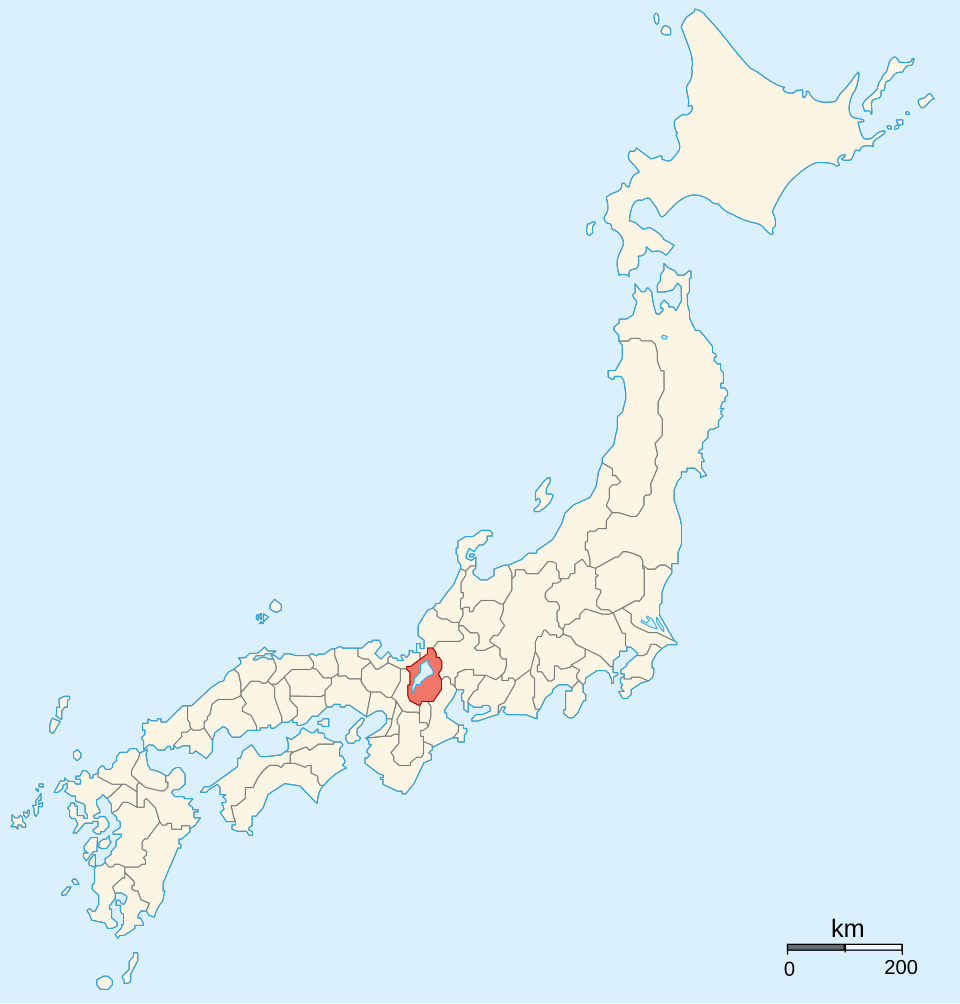
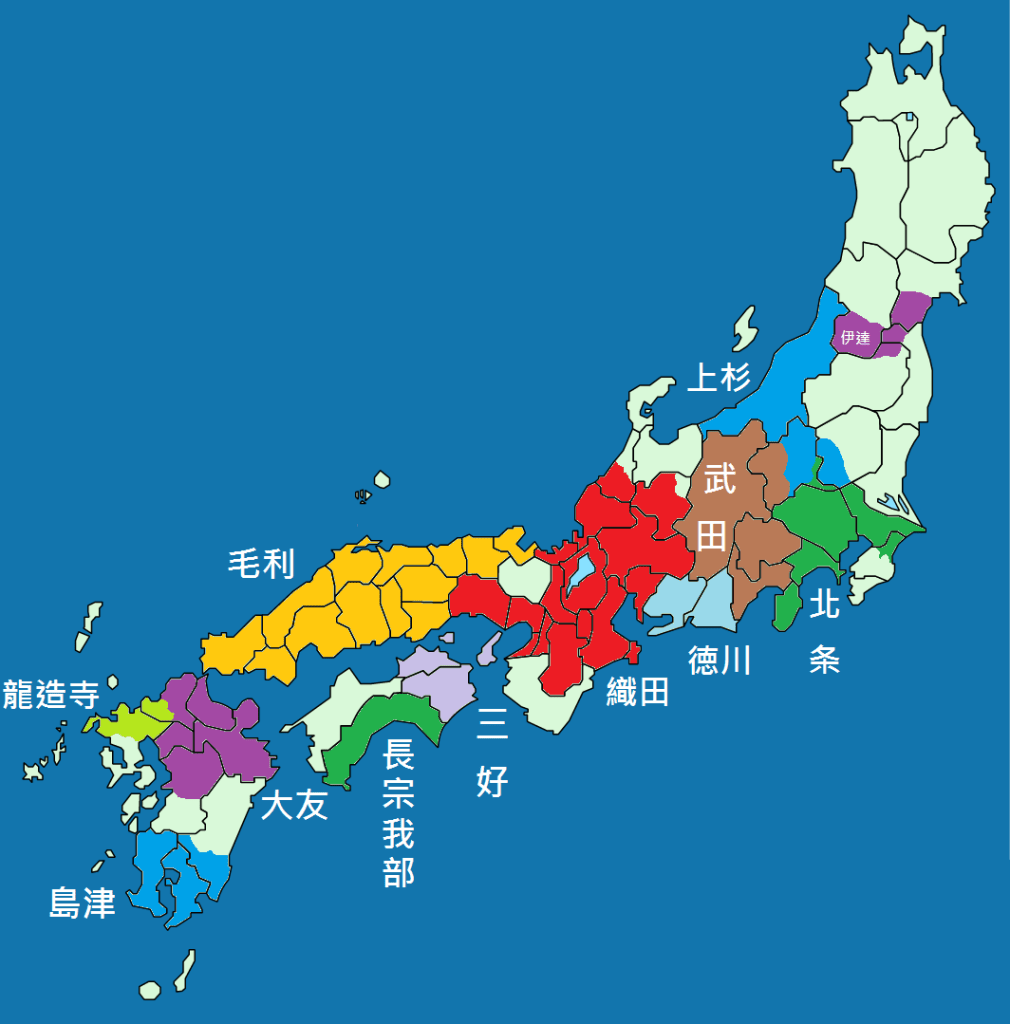
    Nobunaga’s territory is in red, in the centre, surrounded by enemies, or opportunities, depending on your perspective.
    By Alvin Lee – Own work, CC BY-SA 4.0, https://commons.wikimedia.org/w/index.php?curid=39200929

    Sources
    https://ja.wikipedia.org/wiki/%E7%B9%94%E7%94%B0%E4%BF%A1%E9%95%B7
    https://ja.wikipedia.org/wiki/%E4%B8%89%E6%96%B9%E3%83%B6%E5%8E%9F%E3%81%AE%E6%88%A6%E3%81%84
    https://ja.wikipedia.org/wiki/%E6%AF%94%E5%8F%A1%E5%B1%B1%E7%84%BC%E3%81%8D%E8%A8%8E%E3%81%A1_(1571%E5%B9%B4)
    https://ja.wikipedia.org/wiki/%E7%B9%94%E7%94%B0%E4%BF%A1%E8%88%88
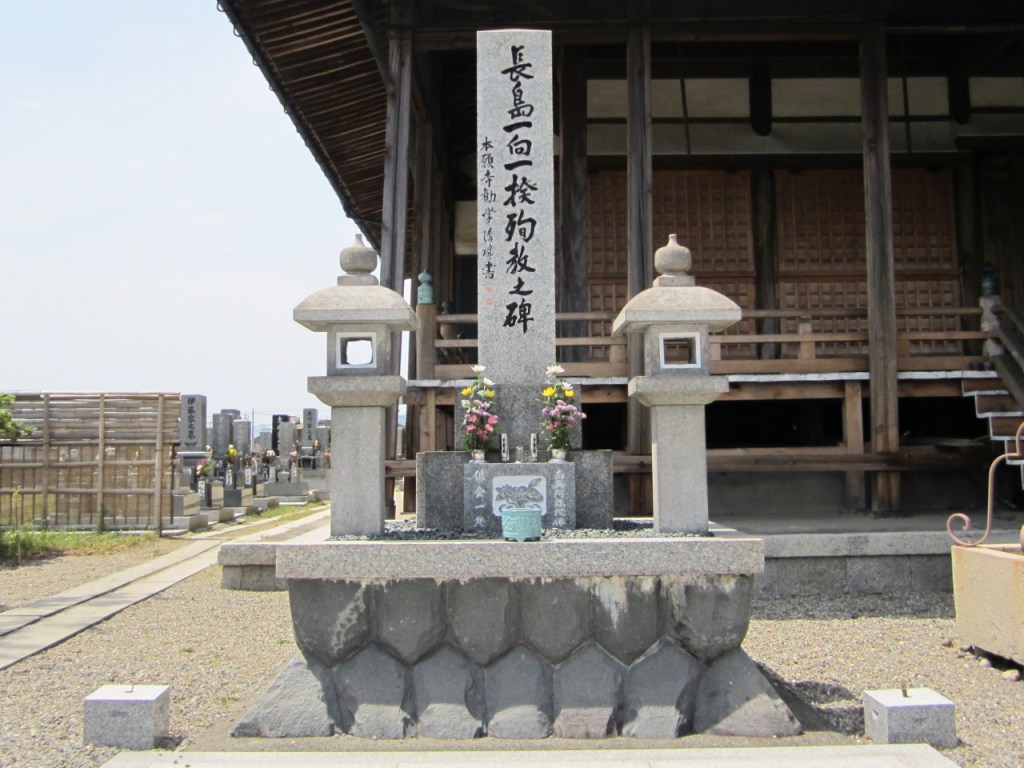
    https://ja.wikipedia.org/wiki/%E9%95%B7%E5%B3%B6%E4%B8%80%E5%90%91%E4%B8%80%E6%8F%86
    https://ja.wikipedia.org/wiki/%E5%BF%97%E8%B3%80%E3%81%AE%E9%99%A3
    https://ja.wikipedia.org/wiki/%E5%A7%89%E5%B7%9D%E3%81%AE%E6%88%A6%E3%81%84
    https://ja.wikipedia.org/wiki/%E9%87%91%E3%83%B6%E5%B4%8E%E3%81%AE%E6%88%A6%E3%81%84#%E6%88%A6%E5%BE%8C
    https://ja.wikipedia.org/wiki/%E8%B1%8A%E8%87%A3%E7%A7%80%E5%90%89
    https://ja.wikipedia.org/wiki/%E6%B5%85%E4%BA%95%E9%95%B7%E6%94%BF
    https://ja.wikipedia.org/wiki/%E6%AE%BF%E4%B8%AD%E5%BE%A1%E6%8E%9F
    https://ja.wikipedia.org/wiki/%E8%B6%B3%E5%88%A9%E7%BE%A9%E6%98%AD
    https://ja.wikipedia.org/wiki/%E6%9C%AC%E5%9C%80%E5%AF%BA%E3%81%AE%E5%A4%89
    https://ja.wikipedia.org/wiki/%E6%B0%B8%E7%A6%84%E3%81%AE%E5%A4%89
    https://ja.wikipedia.org/wiki/%E4%B8%89%E5%A5%BD%E7%BE%A9%E7%B6%99
    https://ja.wikipedia.org/wiki/%E8%B6%B3%E5%88%A9%E7%BE%A9%E6%A0%84
    https://ja.wikipedia.org/wiki/%E4%B8%89%E5%A5%BD%E4%B8%89%E4%BA%BA%E8%A1%86
    https://en.wikipedia.org/wiki/Ishiyama_Hongan-ji

  • The Odawara Campaign

    The Odawara Campaign

    Just a quick note from me: Due to real-life changes with workload, I’ve decided to reduce the number of blog posts to one per week. Going forward, the blog will be posted on Fridays.

    In 1589, the Hojo openly defied Toyotomi Hideyoshi’s peace orders, prompting the new regent to declare them in rebellion against the throne. (Side note, Hideyoshi, as the son of a peasant, couldn’t be declared Shogun, so he took the title of Kampaku, officially the chief advisor of the Emperor, but in reality, the political master of Japan.)

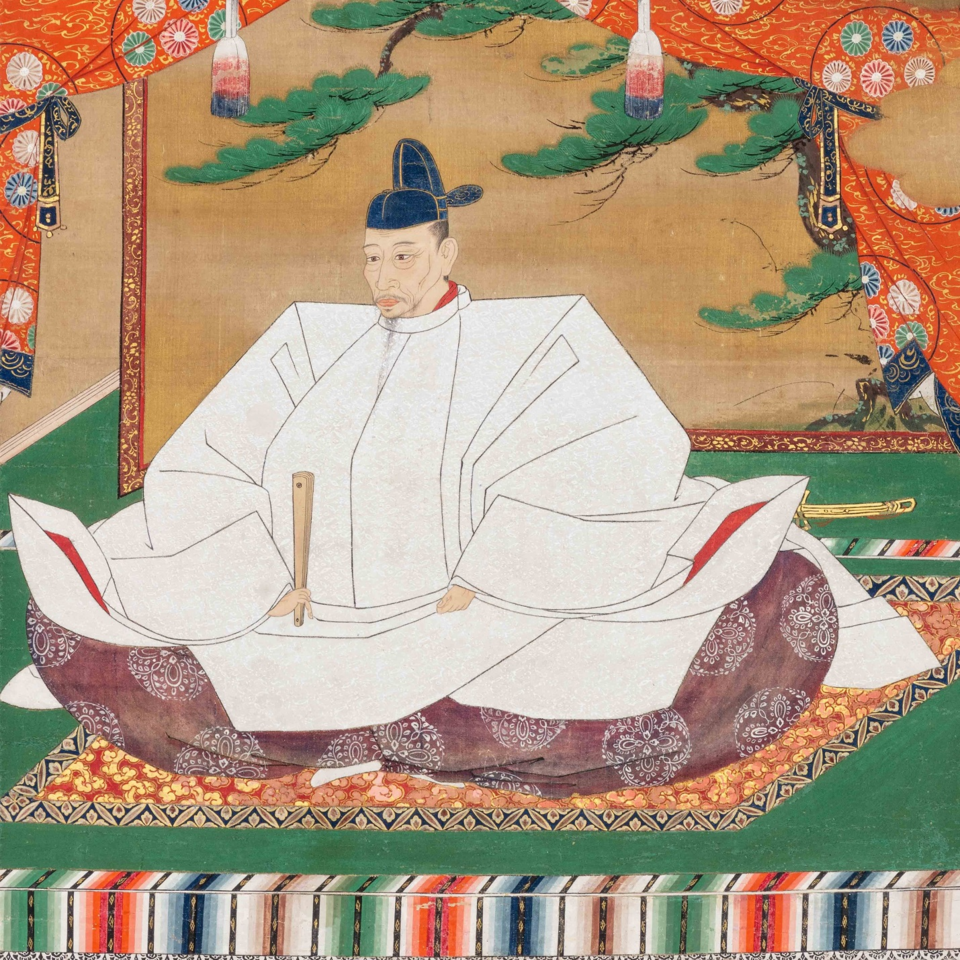
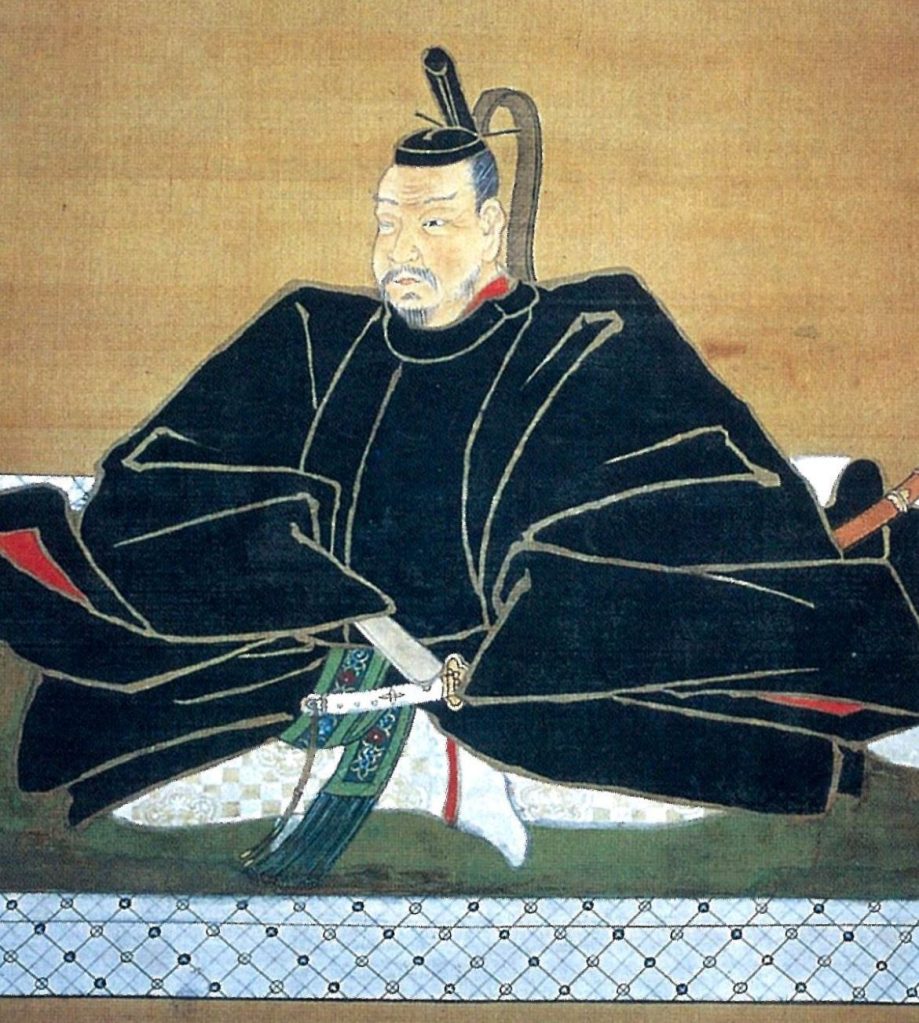
    Toyotomi Hideyoshi

    There were some final (and quite half-hearted) attempts at negotiation, but Hideyoshi’s position was clear: either the Hojo would submit, or they would be destroyed. The Hojo, an old, proud, and powerful clan, refused to bow, and by 1590, Hideyoshi had mustered an army of some 200,000 men to force the issue.

    Tokugawa Ieyasu, whose lands lay between the Hojo and Hideyoshi, initially sought to mediate, as his daughter was married to Hojo Ujinao, the nominal lord of the clan. These attempts failed, however, and Ieyasu threw in his lot with Hideyoshi, making preparations in his lands for the movement of thousands of troops advancing on the Kanto.

    The Kanto is surrounded by mountains and, at least in theory, very easy to defend, as there are only a limited number of passes through which a large body of troops can pass. The Hojo knew this and fortified as many of these passes as they could. Unfortunately, they were now being attacked on practically all sides. As well as the Tokugawa-Toyotomi force coming from the east, they also face an army sent along the Nakasendo road to attack Usui Pass in the north, and a force dispatched from the North-East would advance into Musashi Province and attack the castles there. Even the ocean to the south wasn’t open to the Hojo, as a naval force attacked Nagahama Castle in Izu.

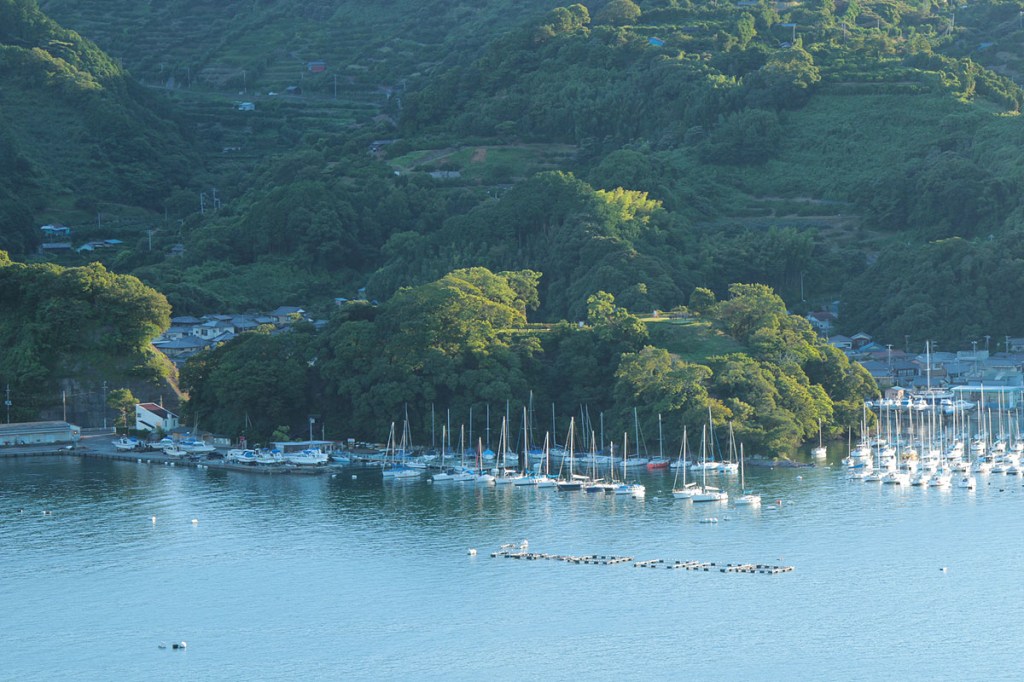
    The site of Nagahama Castle today.

    The main blow would come from the west, however, as Hideyoshi led his army in an attack on the apparently formidable fortress of Yamanaka. Before the outbreak of hostilities, the Hojo had dispatched a garrison of 4000 men to the castle and set about improving its fortifications. Unfortunately, this work was not completed by the time Hideyoshi’s army arrived, and, despite its reputation as the “gateway” to the Kanto, Yamanaka fell in a single morning, despite brave resistance from the overmatched garrison.

    Other castles in the area were taken or besieged, bottling up their garrisons and preventing them from supporting the main attack on Odawara, which itself came under siege in early May. Odawara itself was an enormous castle, and despite the size of Hideyoshi’s army, there was no serious attempt to take it by storm. Instead, the siege camp became something of a small town, with everything from prostitutes to theatrical troupes plying their trade amongst the besiegers, whilst the Hojo defenders were often obliged to sleep on the battlements in their armour, for fear of a sudden attack.

    With Odawara now firmly under siege, Hideyoshi was confident enough to dispatch forces to support the campaigns in other parts of Hojo territory, with many of the castles falling with surprising speed. This was largely due to the fact that the Hojo had mobilised the vast majority of their forces for the defence of Odawara itself, leaving most of the outlying castles only lightly defended. When faced with the overwhelming strength of the forces arrayed against them, most of these castles surrendered immediately, or else were taken after only brief resistance.

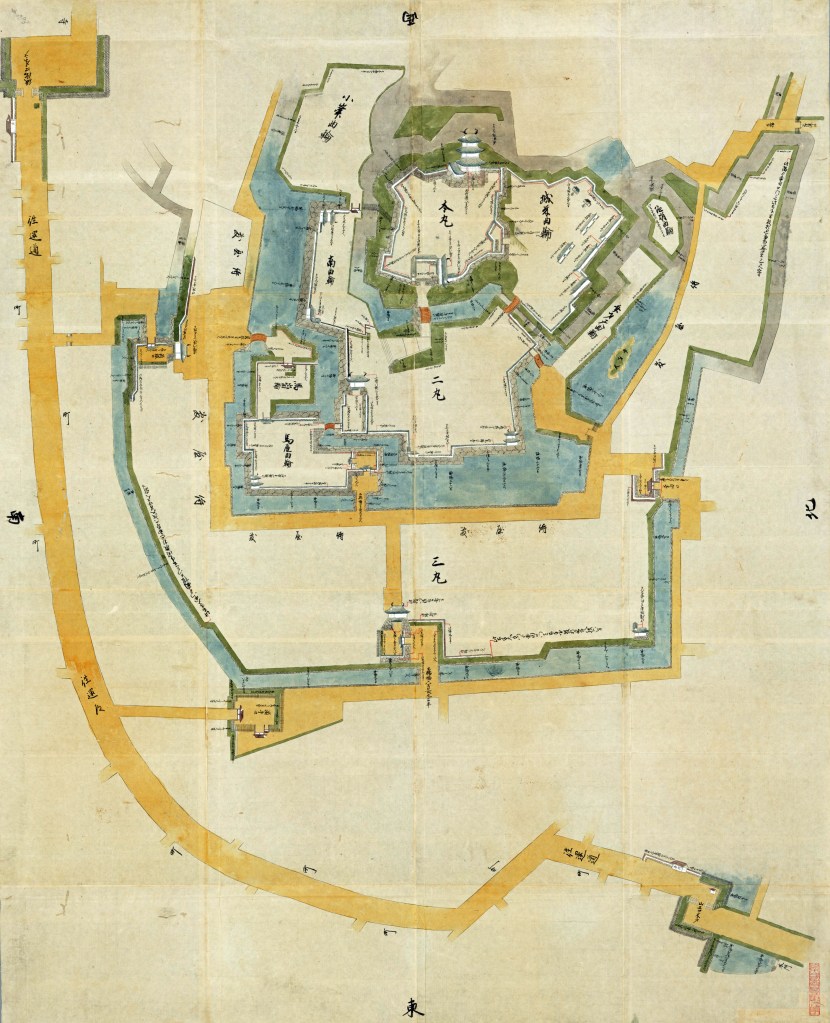
    The layout of Odawara Castle.

    There is some evidence that the speed at which many of these castles fell led Hideyoshi to criticise his generals in the region, suggesting that taking so many castles so easily could not be considered a military achievement.

    The ease of the advance wasn’t true everywhere, however. At Iwatsuki (in modern Saitama), a force of 20,000 was held up by the defenders for several days despite a numerical advantage of 10-1. When the castle fell, Hideyoshi ordered that all the fighting men be killed, and the women and children taken prisoner. Instead, the commanding general, Asano Nagamasa, had already agreed to spare the surviving warriors, the women and the children as part of the surrender agreement.

    Meanwhile, the Siege at Hachigata Castle (also in Saitama) concerned Hideyoshi enough that he sent a sternly worded letter to Nagamasa, ordering him to focus his efforts there. Nagamasa did so, and a combined army of some 35,000 men attacked Hachigata, forcing the garrison to surrender. Once again, arrangements were made to spare the garrison and non-combatants, though this time it doesn’t seem to have been in defiance of Hideyoshi’s orders.

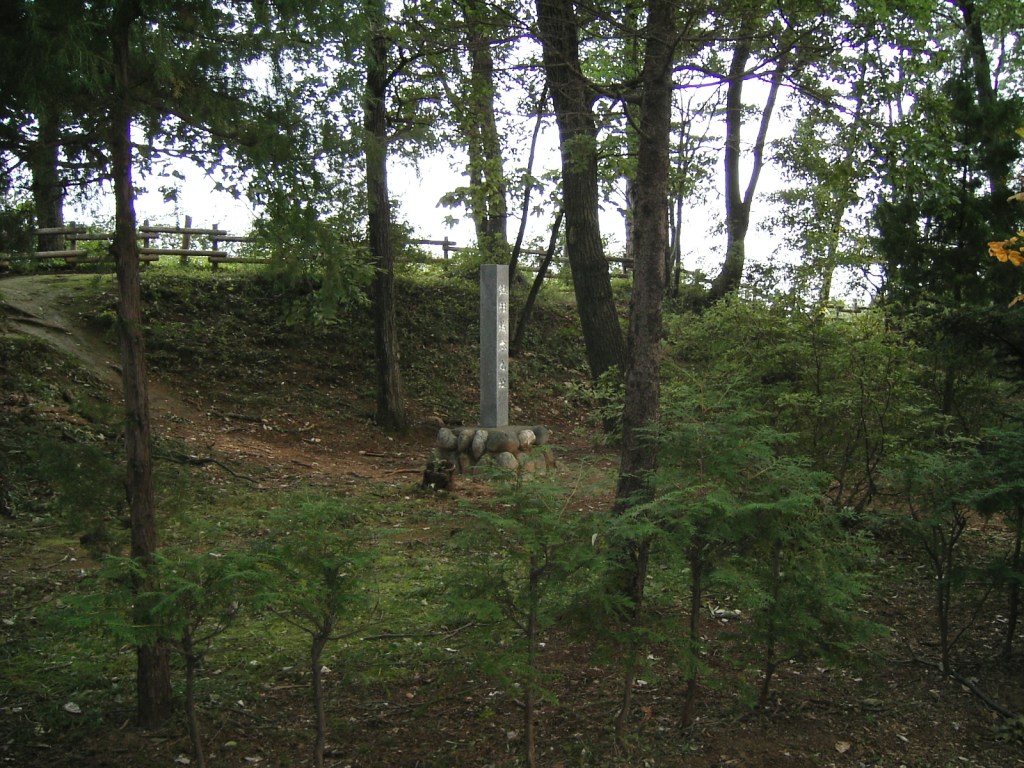
    The site of Hachigata Castle as they appear today.
    Taketarou – 投稿者自身による著作物, CC 表示-継承 3.0, https://commons.wikimedia.org/w/index.php?curid=1273726による

    While most castles were taken by force, negotiation, or a combination of the two, some held out, either through the skill of their defenders or, as was the case at Tatebayashi Castle, by apparently divine intervention. The castle was apparently founded with the help of a grateful fox, who rewarded the lord of the castle for rescuing its baby by marking out the foundations of the fortress in an area of swampy ground.

    This soggy position made the castle very difficult to approach, and when it came under siege, the attackers laid down logs across the swamp to create a roadway to the castle walls. With their pathway secure, the besiegers got a good night’s rest and prepared for a dawn attack. When the sun rose, they found that the roadway had disappeared completely, something put down to the fox spirit protecting the castle rather than the possibility that the logs had just sunk.

    Another famous, watery siege was that of Oshi Castle. Surrounded on two sides by rivers, Oshi was besieged by forces led by Ishida Mitsunari (who will become very important). Much ike Tatebayashi, Oshi’s watery position made it difficult to overcome. Mitsunari (apparently on written instructions from Hideyoshi) set about building an enormous levee surrounding the fort, forcing the water from the two rivers to inundate the castle and flood out its defenders.

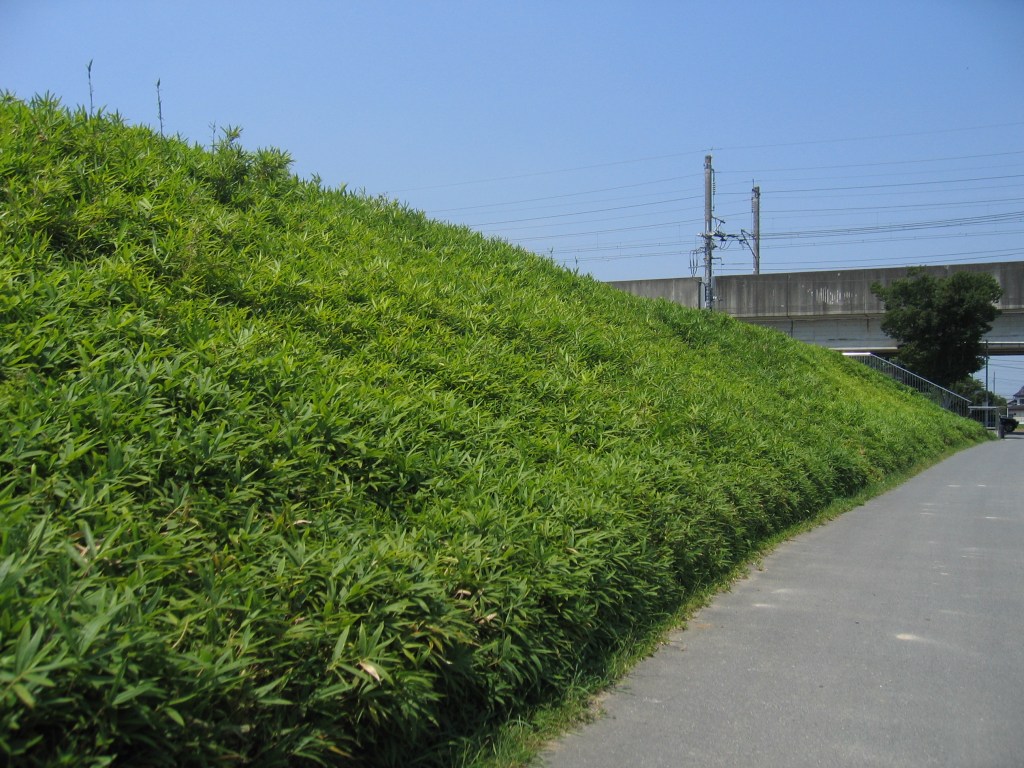
    The levee (Ishida Tsutsumi) as it appears today in modern Konosu, Saitama.
    京浜にけ – 投稿者自身による著作物, CC 表示-継承 3.0, https://commons.wikimedia.org/w/index.php?curid=100409931による

    To the besiegers’ surprise, the waters didn’t actually flood the castle; instead, they gave it the appearance of floating on the water, leading it to be referred to as the “Floating Castle” (this is the title of a manga and its later 2012 adaptation, both about the siege). Following several days of heavy rain, the levee broke (or was sabotaged in some sources), flooding the siege camp and killing up to 200 warriors.

    The failure of this approach would seriously damage Mitsunari’s military reputation (some sources point out that he was just following Hideyoshi’s instructions, but the damage was done), and the siege was eventually taken over by Asano Nagamasa. An all-out assault on the castle was impossible due to the effects of the flooding, which had turned the ground into an impassable quagmire, and Oshi has the distinction of being one of the few fortresses that held out until the end of the Odawara Campaign, before eventually surrendering nearly 2 weeks after the fall of Odawara.

    Odawara, as one of the most formidable castles in the realm, hadn’t come under direct attack, but the siege had been dragging on for weeks, and news from other parts of the Kanto was almost universally bad, sapping the already fragile morale of the defenders. Shortly after the siege began, the loyalty of the Date Clan was still in doubt, and the Hojo held out hope that they might receive aid from outside the Kanto. Date forces indeed entered the Kanto, but in support of Hideyoshi, ending any hope of relief.

    Date Masamune. His decision to support Hideyoshi ended any hope the Hojo had of outside support.

    Though no general assault was launched, there were a few small-scale skirmishes and sporadic gunfire, and by early summer, signs of a breakdown in morale were appearing on both sides, with an increase of desertion amongst the besiegers, and the ever-present possibility of defection from the Hojo, especially as news of the rapid fall of other castles arrived.

    Negotiations began early in the siege, largely facilitated by Tokugawa Ieyasu, Hojo Ujinao’s father-in-law. Rumours of a peace agreement spread almost immediately, and Ujinao’s grandmother and step-mother (Ujimasa’s second wife) both died mysteriously on the same day. Historians generally believe they committed suicide, either in protest of a peace deal or in prospect of one.

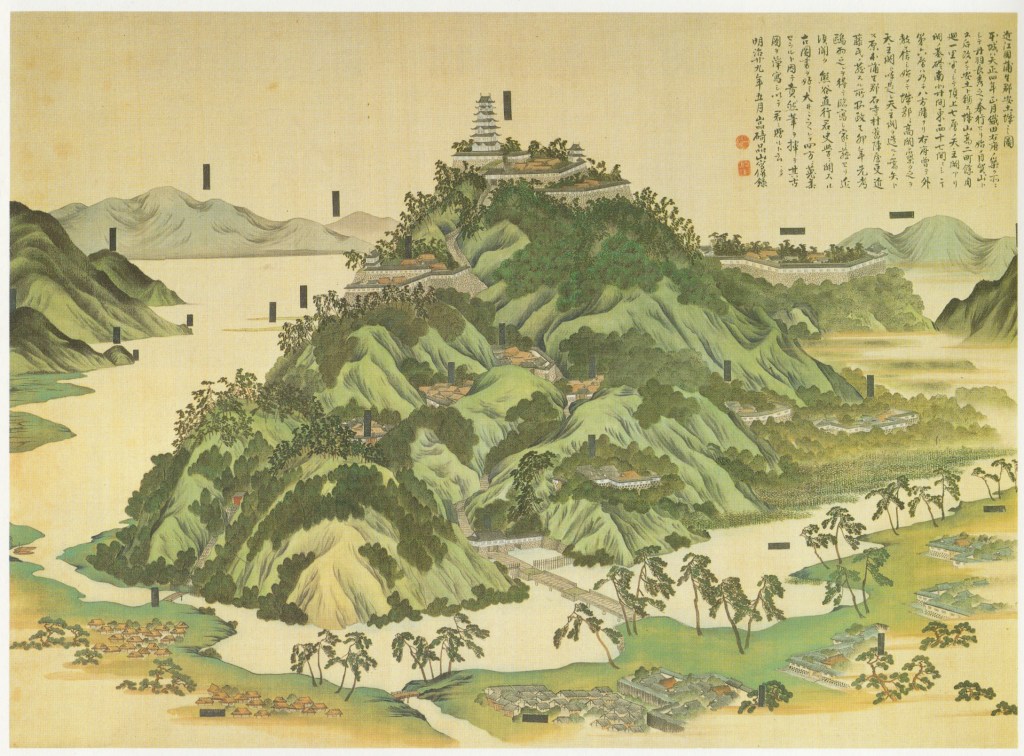
    News of the fall of other fortresses was followed by the public display of the heads of those killed, and then the wives and children of the survivors outside the castle walls, further depleting the defenders’ morale. Towards the end of the siege, the appearance of Ishigakiyama Castle, built in just a few months, on a mountain not far from Odawara, effectively ended what remained of the Hojo’s will to resist.

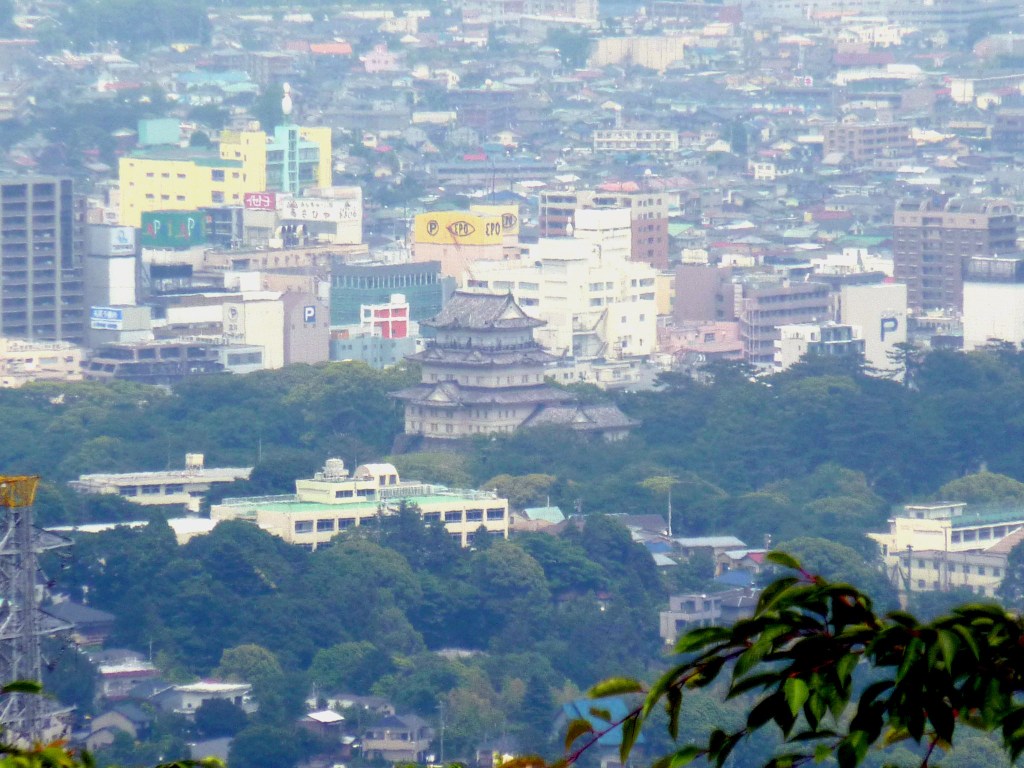
    Odawara Castle as seen from Ishigakiyama.

    A side note here, there is a popular legend that Ishigakiyama Castle was ‘built in one night’, which was clearly impossible, with later sources suggesting that rather than literally being built overnight, the castle was instead constructed behind a forest, which was itself cut down overnight, giving the impression that the castle had appeared from nowhere. Modern scholars doubt that either version is true, as Ishigakiyama is easily visible from Odawara, and though the castle was certainly built unusually quickly, it is now thought to have been constructed in full view of the Hojo, to highlight the impossibility of their situation.

    After this, the besiegers made a point of keeping up a light but continuous rain of gunfire on the castle, intending to grind down their morale, and when a final, furious night attack from the castle was repelled in August, the writing was on the wall, and a delegation from the Hojo was sent out to offer the seppuku of Hojo Ujinao and the surrender of the castle, in exchange for the lives of the remaining garrison.

    Hideyoshi accepted the surrender of the castle on the condition that all the remaining senior Hojo, Ujinao, his father Ujimasa, and uncle Ujiteru, commit seppuku, and that the provinces of Musashi, Sagami, and Izu (the Hojo heartlands) be given up. Further resistance was now impossible, and the Hojo agreed. Tokugawa Ieyasu successfully intervened for the life of his son-in-law, Ujinao, but he would fall sick (possibly with smallpox) and die by the end of the year.

    Hojo Ujinao.

    In the aftermath of the fall of Odawara, the Kanto would come under the control of Tokugawa Ieyasu, who had previously agreed to trade his three home provinces for the five of the Kanto, making his new base at Edo Castle, the site of the modern Imperial Palace in Tokyo. In the long-term, this would prove to be a genius move on Ieyasu’s part, but for now, the man who came out on top was Toyotomi Hideyoshi.

    With the Hojo defeated, there were no longer any serious rivals to his rule. For the first time in more than a century, the realm was united under a single, undisputed leader, who set about ensuring it would never again fall into chaos.

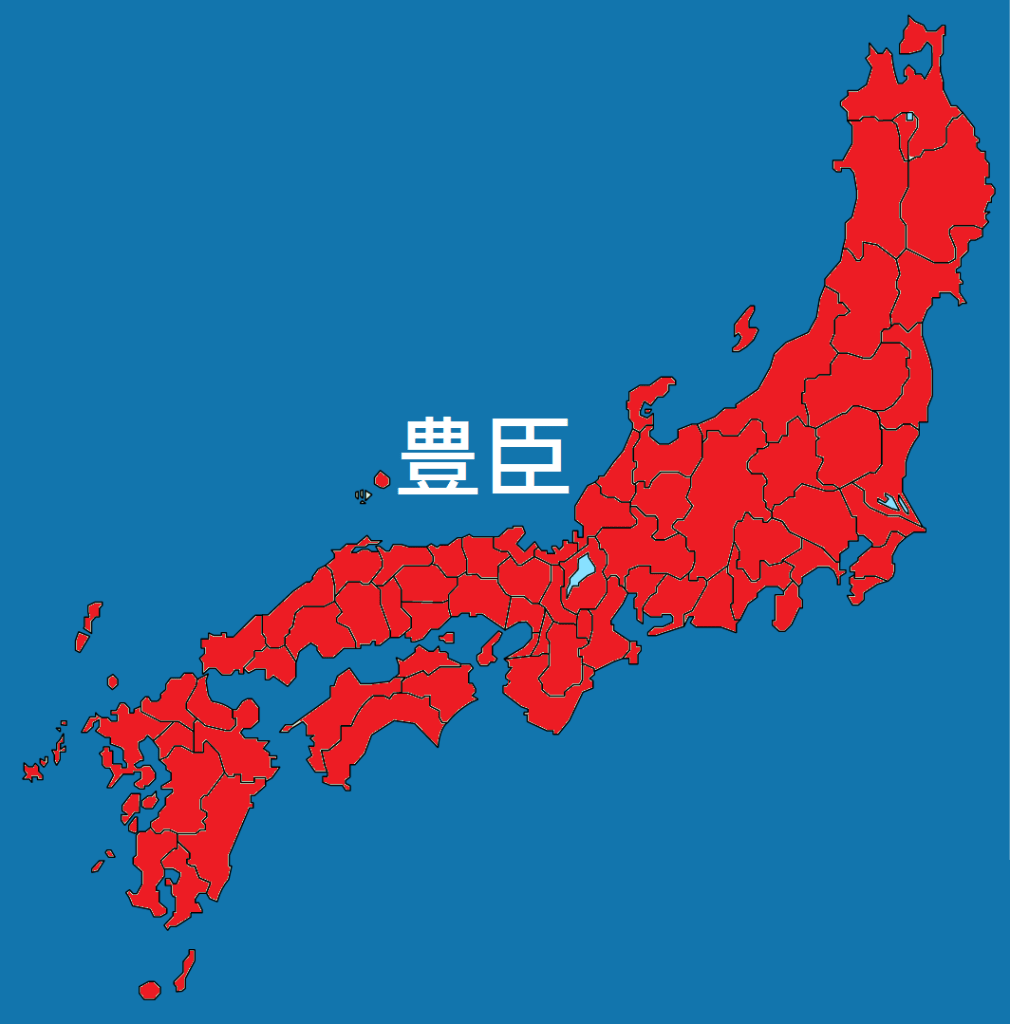
    The situation after the fall of Odawara. No more division, no more chaos, at least on paper.
    By Alvin Lee – Own work, CC BY-SA 4.0, https://commons.wikimedia.org/w/index.php?curid=39214210

    Hideyoshi’s conquest of Odawara marked the end of the second phase of Japan’s reunification. Next week, we’ll take a step back to look at another name we’ve mentioned a lot, Oda Nobunaga, the first of the great unifiers.

    Sources
    https://ja.wikipedia.org/wiki/%E6%83%A3%E7%84%A1%E4%BA%8B%E4%BB%A4
    https://ja.wikipedia.org/wiki/%E5%B1%B1%E4%B8%AD%E5%9F%8E
    https://ja.wikipedia.org/wiki/%E5%B0%8F%E7%94%B0%E5%8E%9F%E5%BE%81%E4%BC%90
    https://ja.wikipedia.org/wiki/%E7%9F%B3%E5%9E%A3%E5%B1%B1%E5%9F%8E
    https://ja.wikipedia.org/wiki/%E5%BF%8D%E5%9F%8E%E3%81%AE%E6%88%A6%E3%81%84
    https://ja.wikipedia.org/wiki/%E5%BF%8D%E5%9F%8E
    https://ja.wikipedia.org/wiki/%E7%9F%B3%E7%94%B0%E5%A0%A4
    https://ja.wikipedia.org/wiki/%E9%A4%A8%E6%9E%97%E5%9F%8E
    https://ja.wikipedia.org/wiki/%E5%B2%A9%E6%A7%BB%E5%9F%8E
    https://ja.wikipedia.org/wiki/%E6%B5%85%E9%87%8E%E9%95%B7%E6%94%BF
    https://ja.wikipedia.org/wiki/%E9%89%A2%E5%BD%A2%E5%9F%8E
    https://ja.wikipedia.org/wiki/%E9%9F%AE%E5%B1%B1%E5%9F%8E
    https://ja.wikipedia.org/wiki/%E9%95%B7%E6%B5%9C%E5%9F%8E_(%E4%BC%8A%E8%B1%86%E5%9B%BD)
    https://ja.wikipedia.org/wiki/%E6%9D%BE%E4%BA%95%E7%94%B0%E5%9F%8E
    https://en.wikipedia.org/wiki/Toyotomi_Hideyoshi
    https://en.wikipedia.org/wiki/Siege_of_Odawara_(1590)


  • Lords of the East, Part 4

    Lords of the East, Part 4

    Hojo Ujiyasu died in 1571, having lived a life in which he had seen the fortunes of his clan rise, fall, and then rise again. His son, Ujimasa, inherited a strong but still dangerous position. Almost as soon as his father had passed, Ujimasa sought to end the war with Takeda Shingen and reestablish an alliance against their mutual enemy, Uesugi Kenshin.

    Hojo Ujimasa

    Shingen, by now in control of Suruga and stronger than ever, agreed, and it didn’t take long for the Hojo and Uesugi to be at each other’s throats again. In 1574, Kenshin invaded the Kanto, but his attention was focused mostly on his conflict with the Takeda, closer to home, and this round of Uesugi-Hojo fighting ended after an indecisive battle at the Tone River.

    With Kenshin busy elsewhere, Ujimasa turned his attention back to the Hojo’s old enemy, the Satomi, invading Shimotsuke in 1576, and advancing deep into Kazusa the next year. The Hojo clearly had the military advantage, with a vastly superior army and much larger territory. Despite this, the terrain of Kazusa and Awa Province (in the south of modern Chiba) is difficult for military operations, and Hojo supply lines relied either on ships crossing Tokyo Bay, which was difficult even in good weather, or on taking the long way around through Musashi Province (modern Tokyo).

    The terrain of Kazusa and Awa as it appears today. Though the Hojo were stronger, the logistical reality made a long term campaign impossible.
    By certified, CC BY 3.0, https://commons.wikimedia.org/w/index.php?curid=55415779

    Neither of these options was particularly appealing, and what was more, the number of troops that the Hojo would have needed to commit to ending the war decisively would have left their other frontiers unacceptably vulnerable. So, in late 1577, a peace agreement (the Boso Ichiwa) was reached, establishing the border between the two factions and arranging a marriage to seal the deal.

    Although the marriage would end within a few years, with the death of Ujimasa’s daughter, the peace held (more or less). This is demonstrated by the fact that when civil war broke out among the Satomi following Yoshihiro’s death in 1578, the Hojo did not intervene, even though it would have been to their advantage to do so. The peace would eventually come to an end in 1590, but we’re getting ahead of ourselves.

    Uesugi Kenshin, one of the Hojo’s most dangerous foes, also died in 1578, and Uesugi, much like the Satomi, quickly fell into infighting over who would succeed him. This time, the Hojo made some attempts to intervene, as Uesugi Kagetora, one of the candidates, was Ujimasa’s younger brother, who had been adopted by Kenshin as part of the earlier peace deal. Ujimasa’s support for his one-time brother seems to have been quite limited, however, as Hojo forces contented themselves with securing control over Kozuke Province before withdrawing.

    Takeda Shingen had died in 1573, and with the Uesugi and Satomi tearing themselves apart over succession, by 1578, Ujimasa might have been forgiven for thinking that he’d ‘won’ in the Kanto. Unfortunately for him, Shingen’s death led to the disastrous Battle of Nagashino in 1575, in which the Takeda clan’s power was broken, leaving the western approaches to the Kanto open to a new, and far more dangerous, player.

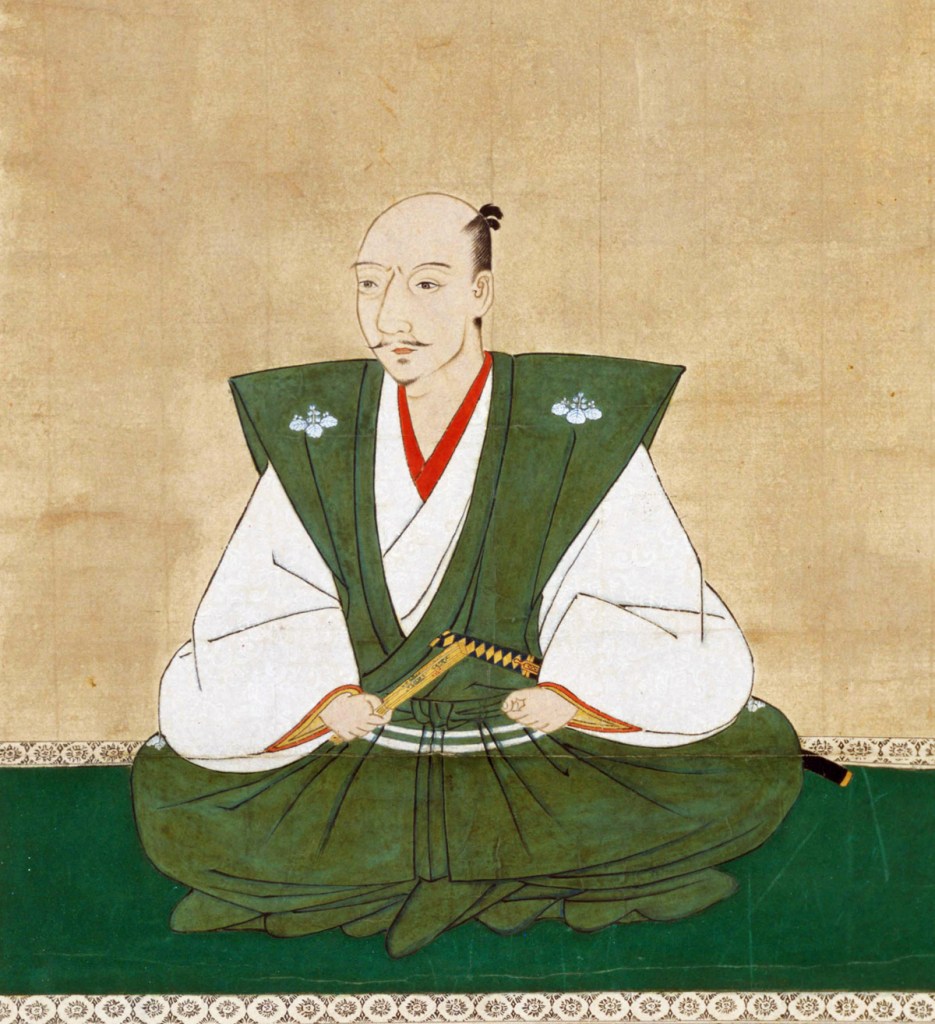
    Oda Nobunaga.

    Oda Nobunaga had risen from obscure origins in Owari Province (around modern Nagoya) to become the preeminent lord in the realm. Though his power was not yet completely unchallenged, by 1578, he was best placed to be the man who would unite the realm and end the Sengoku Jidai. With that in mind, Ujimasa reached out diplomatically, seeking to gain Nobunaga’s favour and perhaps arrange a marriage between the Oda and Hojo. Around this time, he also seems to have ‘retired’ and given control of the clan to his son, Ujinao, whilst in reality retaining actual power for himself.

    For his part, Nobunaga seems to have had little interest in a rapprochement with the Hojo, though his exact plans aren’t clear; it’s reasonable to assume that, much like the Takeda, Nobunaga viewed the Hojo as a rival to eventually be crushed. However, in the short term, he had more pressing concerns in the West, dealing with the powerful Mori Clan, and for now, the Hojo were left alone.

    With Nobunaga’s death in June 1582, everything changed. Taking advantage of the chaos, Ujimasa launched an attack against former Oda loyalists in the Kanto, securing control of the whole of Kozuke Province, and advancing into Kai, where he was met by another power seeking to take advantage of Nobunaga’s death, Tokugawa Ieyasu.

    Tokugawa Ieyasu

    The fighting didn’t go well for the Hojo, but neither side was committed to all-out war, so a peace was agreed upon, which saw Ujimasa’s son, Ujinao, marry Ieyasu’s daughter, Tokuhime. In 1583, following the death of the last Ashikaga Kanto kubo, Ujimasa took the title for himself, positioning the Hojo at the very top of the hierarchy in the Kanto.

    Not long after that, a successful campaign in support of allies in Shimotsuke Province brought the southern half of that province under his control, and Hojo territory reached its greatest extent. By some later estimates, the territory was valued at 2.4 Million Koku, and with control of several key rivers and coastal areas, the Hojo now dominated the political, military, and economic spheres within the Kanto.

    In 1587, the chaos that had followed Nobunaga’s death had come to an end, with Toyotomi Hideyoshi emerging as the ultimate winner. That year, he issued the Soubujirei or “General Peace Order” commanding that all Daimyo cease private wars, essentially bringing an end to the Sengoku Jidai, at least on paper.

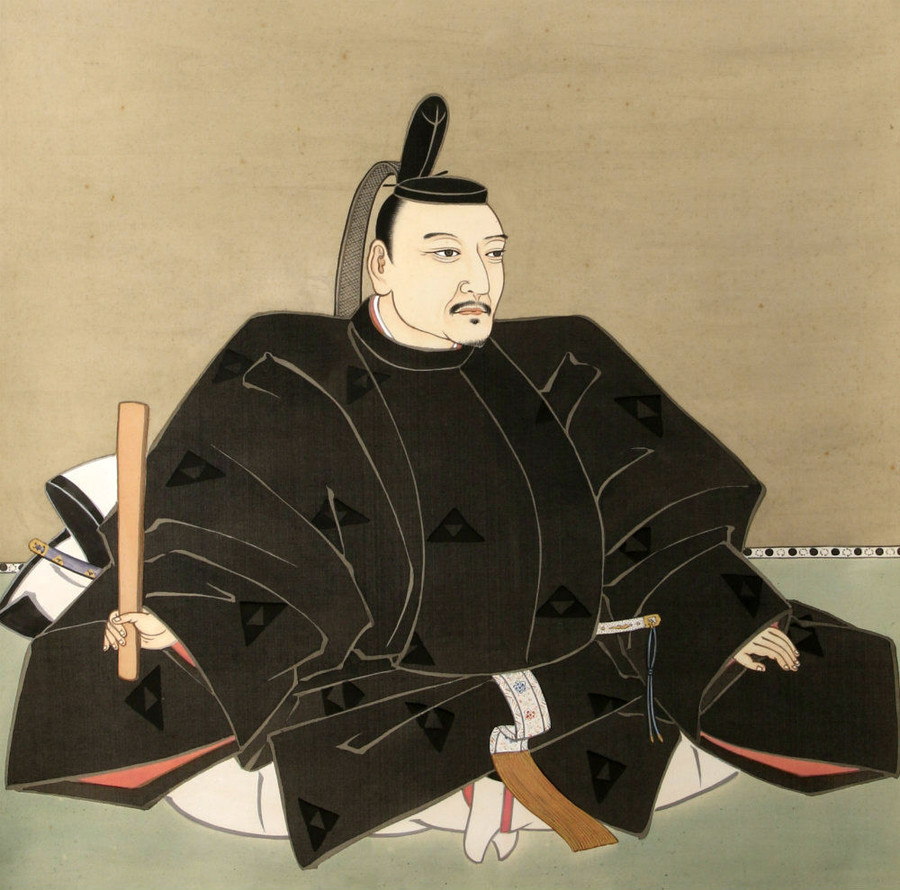
    Toyotomi Hideyoshi

    The Hojo agreed to abide by this order, but there was one outstanding issue. During the fighting in Kai Province in 1582, the Numata Domain, territory of the Sanada Clan, had defied Hojo attempts to conquer it. Though the fighting had largely come to an end, the border remained undefined, and so Hideyoshi dispatched vassals to settle the issue.

    Hideyoshi’s decision was that two-thirds of the territory would go to the Hojo, and the remaining third would remain in Sanada hands. To confirm the arrangement, the powerful Numata Castle was handed over to the Hojo and peace was apparently agreed. However, shortly after this, the new lord of Numata arranged for the defection of nearby Nagurumi Castle, on the Sanada side of the border.

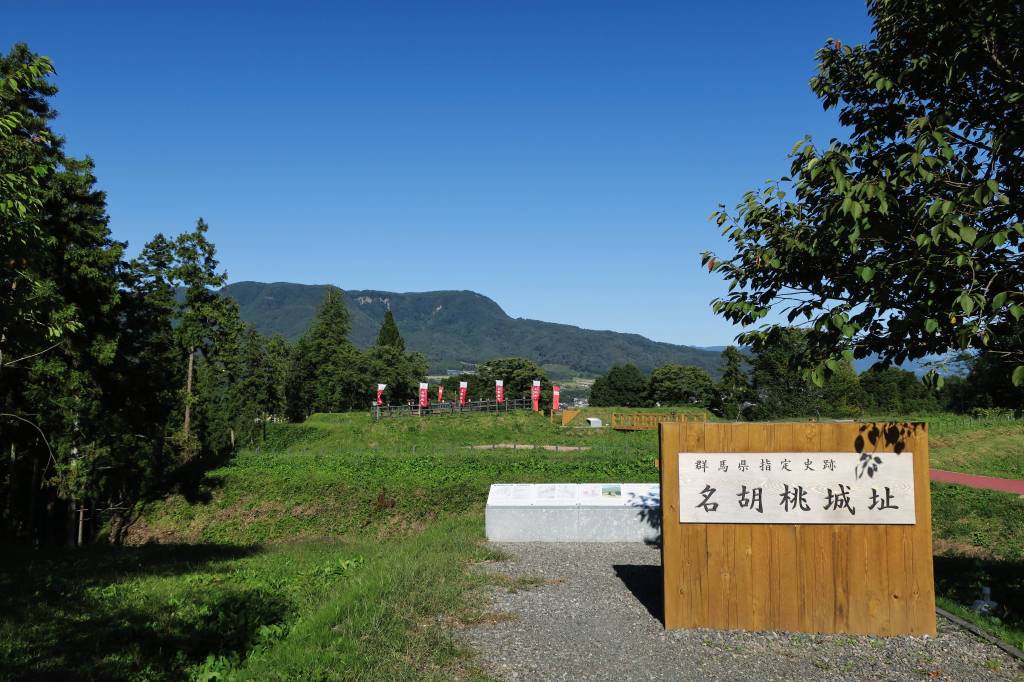
    The site of Nagurumi Castle today.
    photo: Qurren (トーク) Taken with Canon PowerShot G9 X – 投稿者自身による著作物, CC 表示-継承 3.0, https://commons.wikimedia.org/w/index.php?curid=63097035による

    The plot succeeded, and Nagurumi was handed over to Hojo forces without a fight. The problem was that this was a clear violation of the peace deal, and things only got worse when Ujinao denied any knowledge of the plot in a letter to Hideyoshi, attempting to present the capture of the castle as a fait accompli.
    Hideyoshi wasn’t about to accept that, and demanded that Ujimasa (retired, but still effective head of the clan) come to Kyoto to explain his clan’s actions.

    Ujimasa refused, and Hideyoshi took this as an act of open rebellion. In 1589, he ordered all lords to attack the Hojo as punishment for their defiance. Initial attacks from the Sanada clan were repelled by Hojo forces, but Hideyoshi was able to muster a force in excess of 200,000 men, and when the main attack began, it would be a fight to the death.

    The Odawara Campaign is deserving of a post of its own, I think, so we’ll leave it there for now.

    Sources
    https://ja.wikipedia.org/wiki/%E5%8C%97%E6%9D%A1%E6%B0%8F%E6%94%BF
    https://ja.wikipedia.org/wiki/%E8%B1%8A%E8%87%A3%E7%A7%80%E5%90%89
    https://ja.wikipedia.org/wiki/%E5%B0%8F%E7%94%B0%E5%8E%9F%E5%BE%81%E4%BC%90
    https://ja.wikipedia.org/wiki/%E5%90%8D%E8%83%A1%E6%A1%83%E5%9F%8E
    https://ja.wikipedia.org/wiki/%E6%83%A3%E7%84%A1%E4%BA%8B%E4%BB%A4
    https://ja.wikipedia.org/wiki/%E5%8C%97%E6%9D%A1%E6%B0%8F%E5%BA%B7

  • Lords of the East, Part 3

    Lords of the East, Part 3

    First post of 2026, so Happy New Year and thanks for sticking with me!

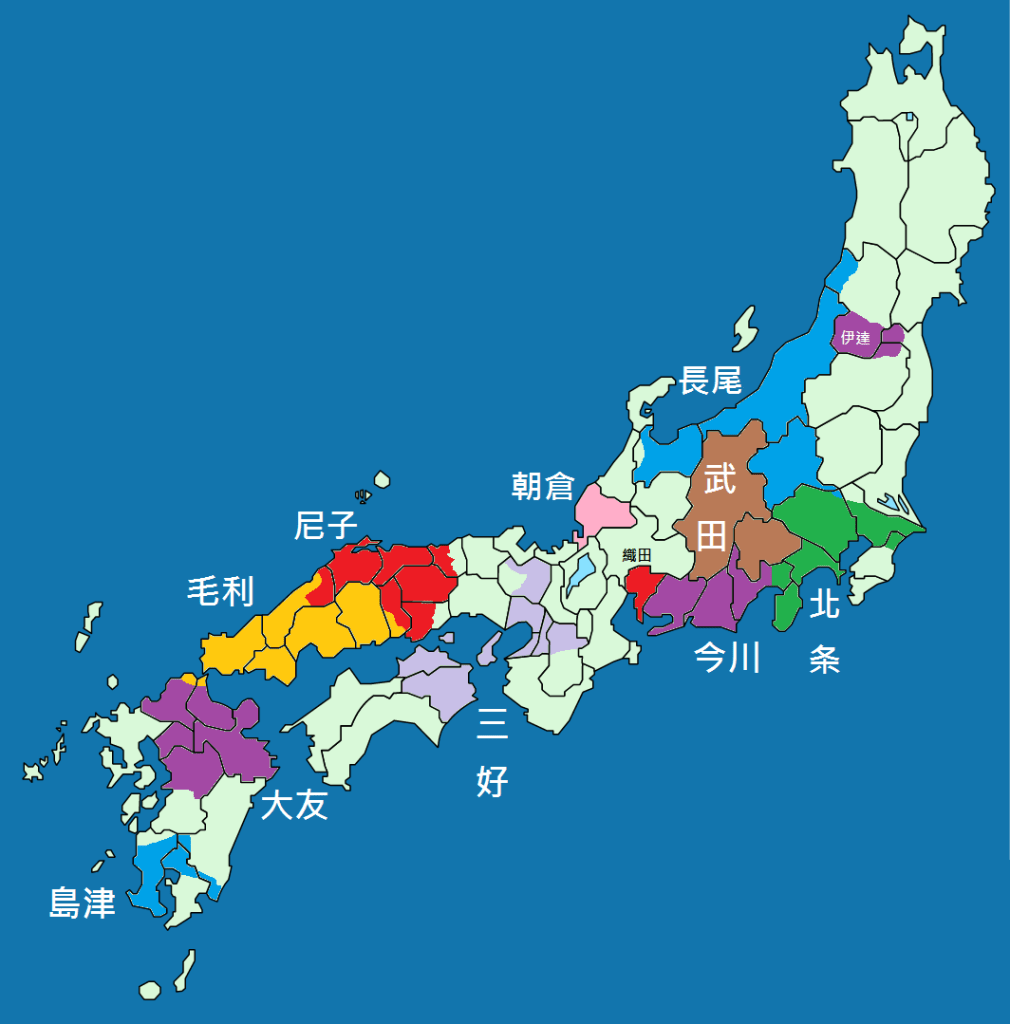
    The situation in 1560. The Hojo are in Green.
    By Alvin Lee – Own work, CC BY-SA 4.0, https://commons.wikimedia.org/w/index.php?curid=39200926

    By 1560, the Hojo were masters of much of the Kanto. A series of successful military campaigns over the previous decades had given them control over much of the area that now comprises modern-day Tokyo, Yokohama, and Chiba. Unlike today, when these areas are among the world’s most densely populated megacities, in the 16th century they were largely agricultural, with a few castle towns surrounded by vast expanses of farmland.

    It is also true that economic productivity, such as it was, was measured in rice production, with land being valued according to predicted rice output, though not necessarily actual output. In short, despite being a period of incredible violence, Japanese society relied almost entirely on rice production to function. Famine was a constant problem, and in 1560, the Hojo, despite controlling vast tracts of land, were experiencing just how bad a failed harvest could be.

    The so-called Eiroku Famine (named after the era) left the Hojo with no food or money, and military operations largely ground to a halt. It was a real blow then, when Uesugi Kenshin, at the head of an army of 8000 men, crossed the mountains in the North of the Kanto and invaded Hojo territory. Though the Uesugi army was relatively small, the Kanto region had been ruled by them for decades prior to the Hojo conquests, and when Kenshin appeared, dozens of local clans switched sides and flocked to the Uesugi banner.

    Uesugi Kenshin.

    Kenshin swept all before him; the Hojo lost castles in Kozuke, Shimosa, and Musashi, and by early 1561, the Uesugi had taken Kamakura. Then, at the head of an army that was reported to be 100,000 strong, Kenshin laid siege to Odawara, the Hojo capital. At this point, the Hojo were in real trouble, but fate was on their side. Ironically, the same famine that had left them seriously weakened now proved to be their saviour. An army of that size needs supplies, and there were few enough to be had in the Kanto, so it wasn’t long before the Uesugi began to melt away.

    The fortress of Odawara was one of the strongest in the realm, and with his army already shrinking, Kenshin faced a difficult choice. A long siege might fatally weaken his army, and even a successful assault could prove hugely costly. Then news arrived that his old enemy, Takeda Shingen, had invaded his home province, at the same time as stirring up a rebellion amongst the Ikko-Ikki, forcing Kenshin to return home post-haste.

    The Hojo had been saved by a combination of good luck and excellent timing on the part of Takeda Shingen, and despite their weakened state, Ujiyasu wasted no time in taking advantage of the reprieve. No sooner had Kenshin returned north than Hojo forces began the process of reconquering their lost territory. Most of the smaller clans that had joined the Uesugi now switched their loyalties back to the Hojo. This was a fairly common practice at the time; there were dozens, if not hundreds, of minor clans all over Japan who could never muster the strength to assert themselves against the power of a Daimyo, so their loyalty often proved to be a fickle thing, prioritising flexibility and survival rather than unquestioned loyalty.

    Takeda Shingen

    Not all the clans welcome the return of the Hojo, however, and Ujiyasu was obliged to dispatch armies to retake several castles in northern Musashi, and he won a decisive victory at the Battle of Mt Ikuno in November 1561, reestablishing the line of control along the mountains in the northern Kanto. Over the next two years, two sides form: a Hojo-Takeda Alliance on one side and a Uesugi-Satomi alliance on the other.

    The Hojo would generally have the better of the fighting in the Kanto, but would prove to be unable to advance further north, whilst the Uesugi would be a constant problem, but would struggle to make advances into the Kanto proper. By 1564, the conflict had largely become a stalemate, so Ujiyasu turned his attention to the East and the Satomi, whom he believed to be a weak link in the alliance.

    Though it might have been true that the Satomi were weaker than the Uesugi, they were no soft touch. When the Hojo crossed the Edogawa River on the way to invading Satomi territory, they were ambushed at the second Battle of Konodai and driven back with heavy losses. You may remember in the last post that the lord of the Satomi, Yoshiaki, had avoided the first Battle of Konodai by correctly identifying the weak position of his allies, retreating with his army intact.

    A later depiction of the area around Konodai.

    At the second battle, however, the command fell to Yoshiaki’s son, Yoshihiro, and he decided to celebrate his victory by distributing wine to his men. A party is a common way to celebrate any success, and the Satomi had successfully driven the Hojo back. The problem was that ‘driven back’ does not mean ‘defeated’; the Hojo regrouped and advanced again in the early hours of the following day.

    The Satomi army, now thoroughly inebriated, was no match for them, and Hojo forces forced the Satomi into a chaotic retreat that didn’t end until the Hojo banner was once again flying over most of Kasuza Province. Shortly after this campaign, Ujiyasu, who had already technically retired as lord of the Hojo in 1559, announced that he had fought his last campaign.

    After this, Ujiyasu seems to have largely limited himself to administration, leaving the business of war to his sons, though he would continue to play an important role in his clan’s future. In 1560, the Imagawa, one part of the triple Takeda-Hojo-Imagawa alliance, had been seriously weakened by the defeat at the Battle of Okehazama in 1560. By 1568, they were on their last legs, and Takeda Shingen, despite being a nominal ally, invaded the Imagawa’s home province of Suruga, aiming to take it for himself.

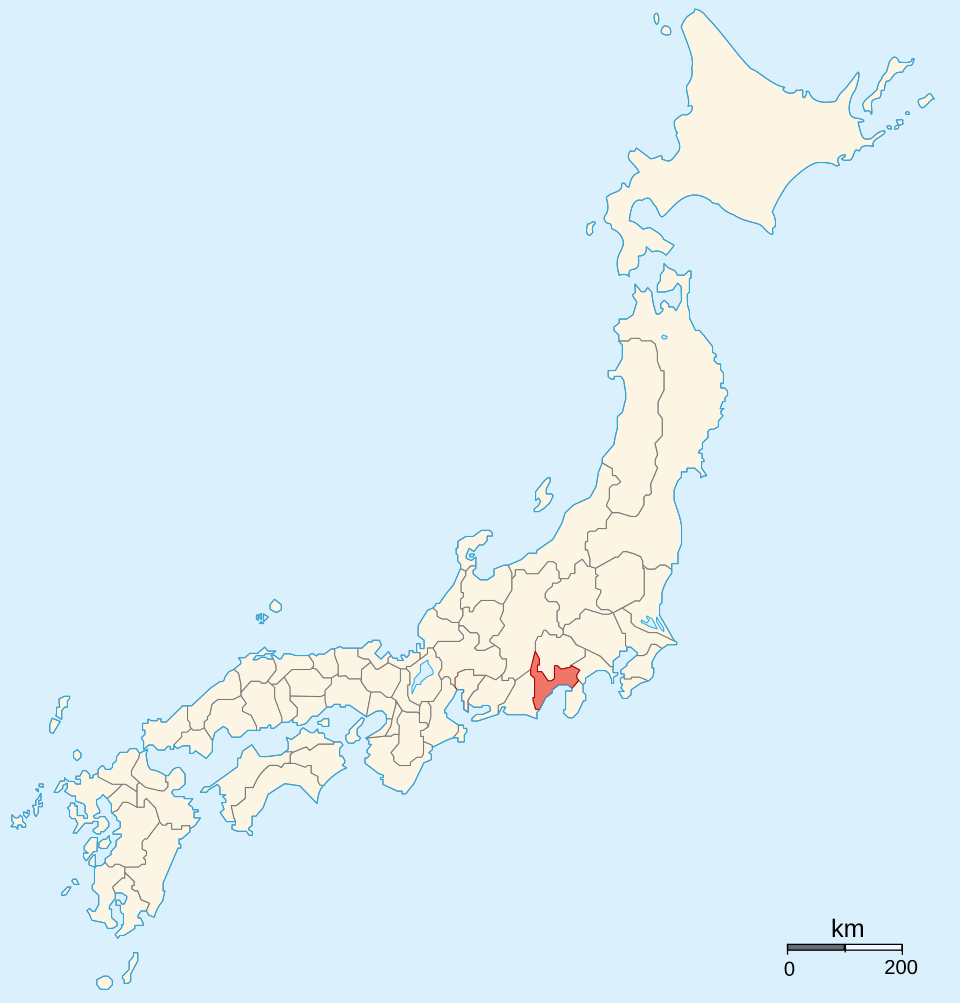
    Suruga Province
    By Ash_Crow – Own work, based on Image: Provinces of Japan.svg, CC BY 2.5, https://commons.wikimedia.org/w/index.php?curid=1691794

    The Hojo, seeking to support the Imagawa and prevent encirclement by a now hostile Takeda, dispatched an army under Hojo Ujimasa to relieve Suruga. At the same time, Ujiyasu engaged in diplomacy with the Tokugawa Clan, who had lands on the other side of Imagawa territory, and had poor relations with the Takeda. A joint attack by the Hojo and Tokugawa convinced Shingen that holding Suruga was impossible in the short term, and he retreated, with the Hojo moving in and taking large parts of eastern Suruga for themselves.

    Despite this success, the Hojo once again found themselves surrounded on three sides by hostile powers: the Takeda to the West, the Uesugi to the North, and the Satomi to the East. Ujiyasu correctly recognised that if he moved to deal with one threat, the other two would take advantage, and the Hojo did not have the strength for a three-front war. Therefore, he decided to make a formal peace with the Uesugi.

    This was unpopular on both sides because the Uesugi had been enemies of the Hojo more or less from the start, and that kind of bad blood isn’t easily forgotten. However, both sides had bigger problems, namely, Takeda Shingen. Though a ceasefire was agreed upon and the border between the two sides set, the consequences for the Uesugi were that many former allies in the Kanto, like the Satomi, felt betrayed and switched to supporting Takeda Shingen.

    This might not have been such a serious problem for the Hojo, because they were going to have fight the Satomi anyway, but in early 1569, the strategic situation shifted again, when the Takeda and Uesugi made a peace between themselves, meaning that Shingen could now focus his entire strength on the Hojo, whilst also relying on support from the Satomi, and other Kanto clans.

    An image depicting the legendary rivalry between Uesugi Kenshin and Takeda Shingen. Despite this, a peace between the two allowed Shingen to focus on the Hojo.

    Later that year, Shingen invaded Musashi Province and advanced south towards Odawara, the capital of the Hojo. Though they were able to lay siege to the mighty fortress, the chances of taking it were slim. The castle was one of the strongest in the realm, and Ujiyasu had made sure it was as well-defended as possible. Shingen likely understood that taking the castle would have been enormously costly, and he had better uses for his army, so he contented himself with burning the town around Odawara and retreating.

    Ujiyasu ordered his son, Ujimasa, to pursue the retreating Takeda, hoping to trap them before they could return to Kai Province. The plan failed, however, as the Takeda moved faster than expected and the ambush was discovered. At the ensuing Battle of Mimasu Pass, the Takeda successfully fended off the Hojo and returned to Kai.

    Some scholars believe that the whole attempt at Odawara had been an elaborate show of force, meant to impress Shingen’s new allies in the Kanto, or that it was a strategic move to keep the Hojo off balance whilst Takeda forces reinvaded Suruga. Either way, there doesn’t seem to have been much enthusiasm amongst either the Hojo or Takeda to continue the war, and some sources suggest that, shortly before his death, Ujiyasu told his son, Ujimasa, that he should return to a state of peace with the Takeda and make war on their traditional enemy, the Uesugi.

    Hojo Ujimasa

    Ujiyasu himself is supposed to have suffered a stroke in the summer of 1570. Sources from the time speak of him slurring his words or being unable to speak at all, and although he rallied briefly around the New Year in 1571, he would begin to decline again shortly afterwards. There are no official documents bearing his seal after May, and he would eventually pass away in October that year.

    Sources
    https://ja.wikipedia.org/wiki/%E5%8C%97%E6%9D%A1%E6%B0%8F%E6%94%BF
    https://ja.wikipedia.org/wiki/%E5%8C%97%E6%9D%A1%E6%B0%8F%E5%BA%B7
    https://ja.wikipedia.org/wiki/%E5%9B%BD%E5%BA%9C%E5%8F%B0%E5%90%88%E6%88%A6#%E7%AC%AC%E4%BA%8C%E6%AC%A1%E5%9B%BD%E5%BA%9C%E5%8F%B0%E5%90%88%E6%88%A6%EF%BC%88%E6%B0%B8%E7%A6%846%E5%B9%B4%E3%83%BB%E6%B0%B8%E7%A6%847%E5%B9%B4/1563%E5%B9%B4%E3%83%BB1564%E5%B9%B4%EF%BC%89
    https://ja.wikipedia.org/wiki/%E6%AD%A6%E7%94%B0%E4%BF%A1%E7%8E%84
    https://ja.wikipedia.org/wiki/%E4%BB%8A%E5%B7%9D%E7%BE%A9%E5%85%83
    https://ja.wikipedia.org/wiki/%E4%B8%89%E5%A2%97%E5%B3%A0%E3%81%AE%E6%88%A6%E3%81%84
    https://ja.wikipedia.org/wiki/%E5%A4%A7%E5%AE%AE%E5%9F%8E_(%E9%A7%BF%E6%B2%B3%E5%9B%BD)
    https://ja.wikipedia.org/wiki/%E5%B0%8F%E7%94%B0%E5%8E%9F%E5%9F%8E
    https://ja.wikipedia.org/wiki/%E4%B8%8A%E6%9D%89%E8%AC%99%E4%BF%A1
    https://ja.wikipedia.org/wiki/%E9%87%8C%E8%A6%8B%E7%BE%A9%E5%A0%AF
    https://ja.wikipedia.org/wiki/%E6%B1%9F%E6%88%B8%E5%B7%9D
    https://en.wikipedia.org/wiki/Suruga_Province

  • Lords of the East, Part 2

    Lords of the East, Part 2

    In 1537, Hojo Ujitsuna launched a successful invasion of Suruga Province, establishing the frontier at the Fuji River and ending the threat from the Imagawa-Takeda alliance, at least for now. Shortly after this news broke that (Ogigayatsu) Uesugi Tomoaki had died. Tomoaki had been an implacable foe of the Hojo, and his death severely weakened his clan, which was now led by the 12-year-old Tomosada.
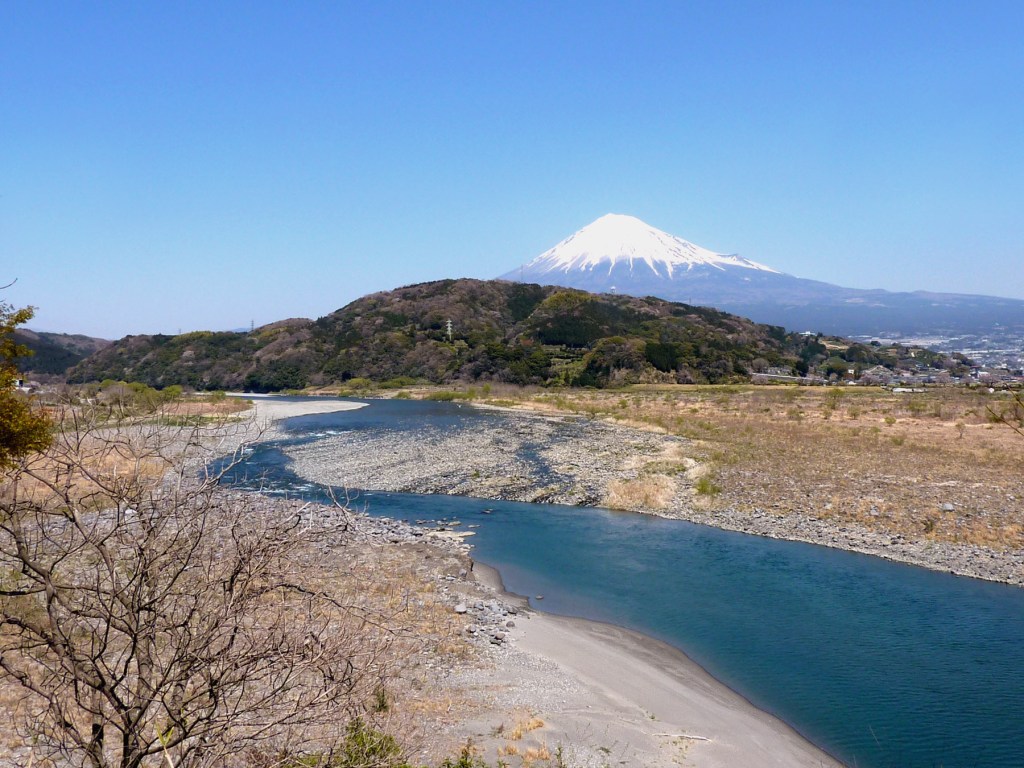
    The Fuji River as it appears today, in modern Shizuoka Prefecture.

    It wasn’t all good news, however. With the bulk of the Hojo forces focused in Suruga against the Imagawa, forces of the Satomi Clan moved to expel the Hojo from the Boso Peninsula (modern Chiba), quickly establishing control and forcing the remaining Hojo loyalists to flee. There was little Ujitsuna could do about that in the short term, but in the summer of 1537, he gathered 15,000 men at Edo Castle before dispatching his son, Ujiyasu, to take the Uesugi stronghold at Kawagoe.

    The castle was taken undamaged after a surprise attack, and when the Uesugi tried to recapture it on New Year’s Day 1538, they were defeated. With his northern flank secure, Ujitsuna launched a campaign to reestablish control over the Boso Peninsula. Though they were initially successful, the attack clashed with the plans of the Koga Kubo, Ashikaga Yoshiaki.

    You may remember from earlier posts that the position of Kubo was the Shogun’s deputy in a given area. In decades past, the centre of the Kubo‘s power had been Kamakura, but the catastrophic decline of Shogunate power meant that the Kubo was eventually obliged to leave Kamakura (which was now under Hojo control) and take up residence at Koga, in Shimosa Province (modern Ibaraki).

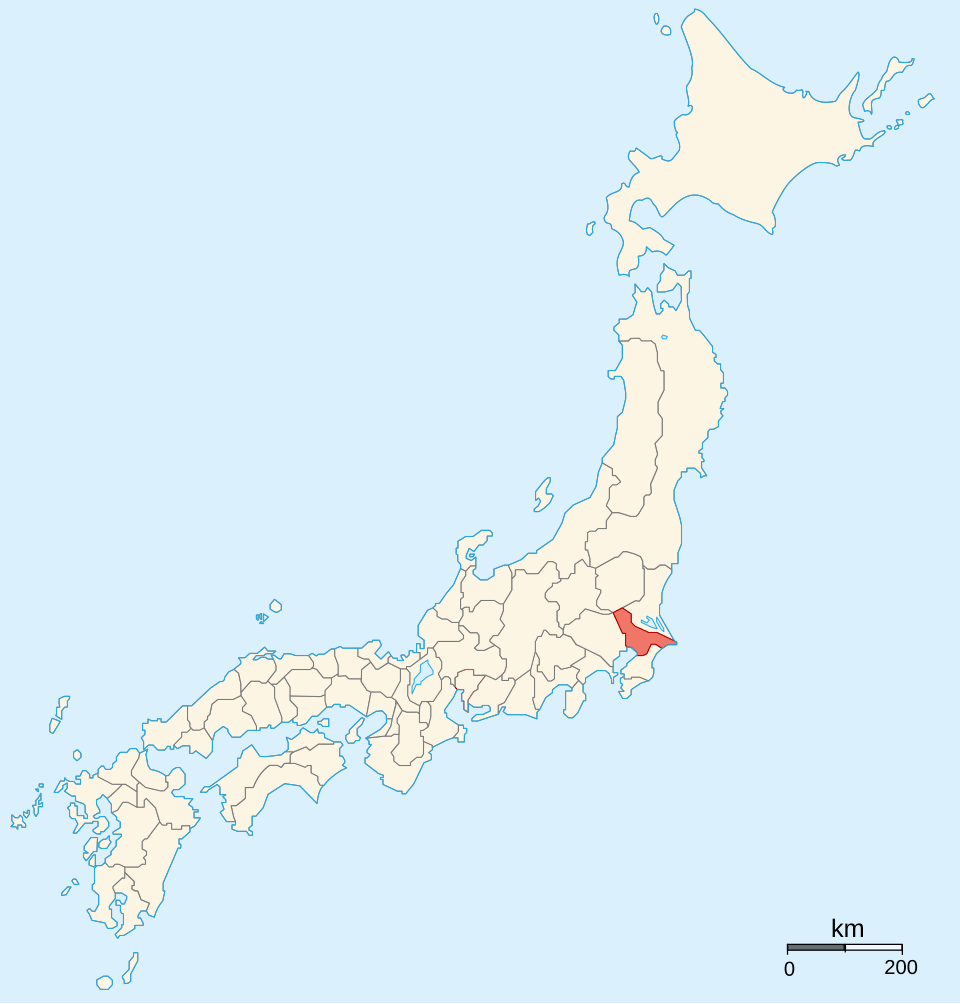
    Shimosa Province
    By Ash_Crow – Own work, based on Image: Provinces of Japan.svg, CC BY 2.5, https://commons.wikimedia.org/w/index.php?curid=1691764

    Yoshiaki had the long-term objective of reestablishing the Kubos’ preeminent position over the whole Kanto, and the Hojo stood in direct opposition to this. Both sides were about equal in strength, but while the Hojo were united behind Ujitsuna, Yoshiaki’s forces were united in opposition to the Hojo, but not necessarily in support of the Kubo.

    Though Yoshiaki’s forces agreed to challenge the Hojo at the Edogawa River, they couldn’t decide on a strategy. Yoshiaki’s allies suggested attacking the Hojo as they crossed the river, but sources say that Yoshiaki, proud of his illustrious Ashikaga name, refused such a strategy, deciding that he would march out in person and face the Hojo in the field, once the bulk of their forces were already across the river.

    Satomi Yoshitaka, once a supporter of the Hojo but now serving under Yoshiaki, recognised that the strategy robbed them of the advantage of the river and was reluctant to commit his forces to open battle with the Hojo, where victory was far from certain. Yoshitaka also recognised that if Yoshiaki were defeated, a large expanse of territory would become available; thus, he positioned his forces away from what he assumed would be the main battlefield, ready to retreat quickly if things looked to be going badly.

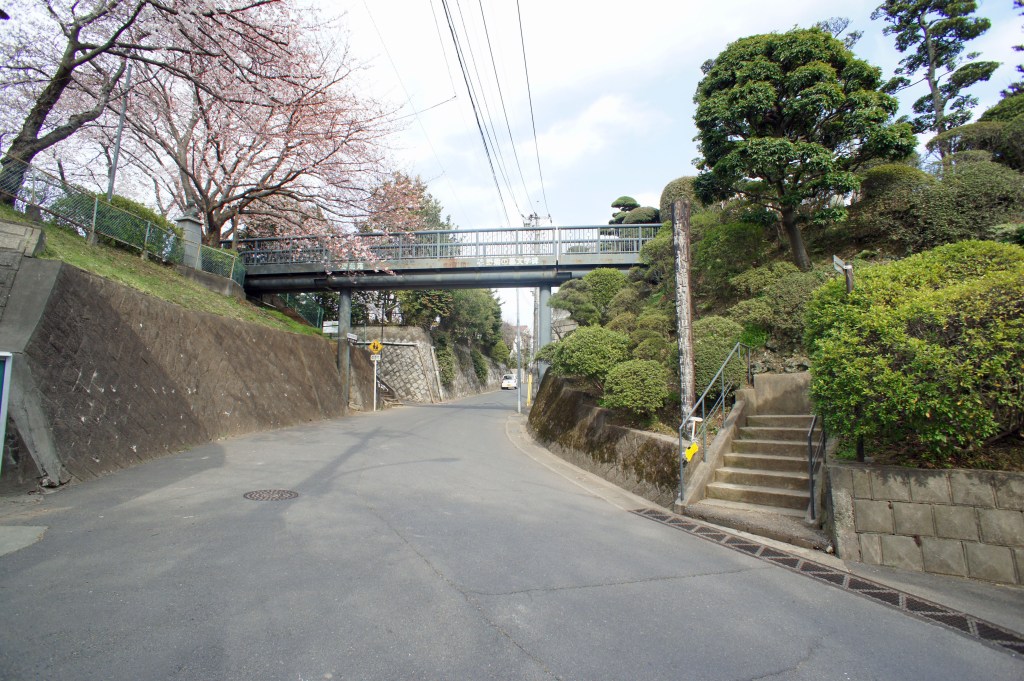
    Though heavily built up today, this hill was the site of some of the fiercest fighting at the Battle of Konodai.

    What became known as the Battle of Konodai began on the morning of November 8th, when the Hojo forces crossed the river. Initially, Yoshiaki’s forces had the advantage, but throughout the day, more Hojo forces arrived, and the tide of battle turned. When news came that Yoshiaki’s brother and son had been killed, he flew into a rage and charged the Hojo himself, only to be struck down by an arrow and killed. Seeing this, Satomi Yoshitaka withdrew his unengaged army, and shortly afterwards, the remaining forces began a retreat that swiftly turned into a rout.

    The Hojo used the momentum of victory to advance into Kazusa and Shimosa Provinces, whilst Yoshitaka, with his army still intact, would be able to take control of almost the entire Boso Peninsula, where he would continue to resist the Hojo, beginning a feud that would last decades.

    Although the exact date is unclear, after the victory at Konodai, Ujitsuna wouldn’t lead another campaign, and scholars agree that he retired as head of the clan sometime in 1539, when his son, Ujiyasu, completed the conquest of Shimosa and Kazusa Provinces. In late 1540, the reconstruction of Tsurugaoka Hachiman Shrine was completed, and Ujitsuna held a celebration there in which he was recognised as Kanto Kanrei, the Shogun’s official deputy in the Kanto, a title that reflected his preeminent position in the region.

    Hojo Ujiyasu.

    Ujitsuna would eventually pass away in August 1541, and his son, Ujiyasu, lord now in fact as well as name, inherited a strong but dangerous position. Successful campaigns in the east had extended Hojo control to Shimosa province. To the north, the Ogigayatsu-Uesugi plotted revenge and the return of Kawagoe Castle, whilst to the east, the conflict with the Imagawa dragged on, despite a strong frontier on the Fuji River.

    A famine in 1540-41 precluded an immediate campaign, and in 1542 Ujiyasu ordered a land survey, which enabled him to adjust and reform taxation in his territory (which was largely based on rice production) and to ensure a strong economic base for what was to come next. In 1545, the Imagawa sent out peace feelers, but no agreement could be reached, and the Imagawa joined forces with the Uesugi, with both agreeing to attack the Hojo from east and west.

    Ujiyasu rushed forces to the east, but a combined Imagawa-Takeda army proved too strong, and Ujiyasu was eventually obliged to conclude a disadvantageous peace, which saw him cede all the territory the Hojo had controlled in Suruga back to the Imagawa. Though the new border would remain tense, the peace held, and all three sides would eventually conclude an alliance in 1554, though we’re getting ahead of ourselves.

    A later image of Kawagoe Castle.

    Meanwhile, the Uesugi and their allies had massed a force of some 80,000 men around Kawagoe Castle, and with Ujiyasu busy in Surugu, the castle would endure a 6-month siege. Even after the Hojo had secured peace with the Imagawa, Ujiyasu could only muster 10,000 men, and what happened next is a matter of some debate.

    The most common telling is that Ujiyasu, in concert with the garrison inside the castle, organised a night attack on the Uesugi that caught them completely by surprise and routed them in a victory so complete that the Uesugi were destroyed as a serious force in the Kanto. The problem with this version of events is that the only sources describing the battle in that way come from the Edo Period, nearly 100 years after the events.

    Scholars debate the accuracy of those reports, and some suggest that the Battle of Kawagoe Castle happened in a very different way, or may never have happened at all, but what is certain is that the siege was lifted and either during the lifting, or shortly afterwards, the lord of the Uesugi, Tomosada, was killed, and the rest of the clan was forced north, leaving Musashi Province in Hojo hands.

    The remains of Hirai Castle.

    The war against the Uesugi would continue, however. In 1550, an attack on Hirai Castle was repulsed, only for a second attempt the next year to succeed, driving Uesugi Norimasa further north, where he sought refuge with Nagao Kagetora (better known to history as Uesugi Kenshin). In the east, too, the Hojo would advance, marching into Hitachi and Shimotsuke Province, and continuing the war against the Satomi of Kazusa Province to their southeast, conquering Kanaya Castle in 1555 and establishing Hojo control over almost the whole of the western Boso Peninsula.

    These conquests in the east were possible because of the peace established on the Hojo’s western borders. Though there was no actual fighting, the border remained very tense until the establishment of a triple alliance between the Imagawa, Takeda, and Hojo. This alliance was established over the period 1551-1554, as a series of marriages was arranged among all three parties, culminating in 1554, when Ujiyasu’s eldest daughter married Imagawa Yoshimoto’s eldest son, whilst Ujiyasu’s heir, Ujimasa, married the daughter of Takeda Shingen.

    This alliance secured the Hojo’s western border, and in 1559, Ujiyasu retired as head of the clan, handing formal power to his son Ujimasa while retaining actual control himself. That same year, he focused his full attention on pushing the last of the Uesugi clan out of Kozuke Province and established a strong presence at Numata to check any further Uesugi attempts to invade the Kanto.

    The situation in 1560. The Hojo are in Green.
    By Alvin Lee – Own work, CC BY-SA 4.0, https://commons.wikimedia.org/w/index.php?curid=39200926

    In 1560, the Imagawa suffered a serious and surprising defeat at the hands of Oda Nobunaga at the Battle of Okehazama, leaving the clan weak and the Hojo’s western flank reliant on the goodwill of the Takeda. During the same year, another outbreak of famine ravaged Hojo territory, severely weakening their economic power and food supply.

    The timing couldn’t have been much worse, because soon, the Uesugi, now led by Kenshin, would return to the Kanto, and the Hojo would face another serious crisis.

    Sources
    https://ja.wikipedia.org/wiki/%E5%8C%97%E6%9D%A1%E6%B0%8F%E5%BA%B7
    https://en.wikipedia.org/wiki/Imagawa_Yoshimoto
    https://ja.wikipedia.org/wiki/%E5%9B%BD%E5%BA%9C%E5%8F%B0%E5%90%88%E6%88%A6
    https://ja.wikipedia.org/wiki/%E5%B7%9D%E8%B6%8A%E5%9F%8E
    https://ja.wikipedia.org/wiki/%E6%B2%B3%E8%B6%8A%E5%9F%8E%E3%81%AE%E6%88%A6%E3%81%84
    https://ja.wikipedia.org/wiki/%E4%B8%8A%E6%9D%89%E6%9C%9D%E5%AE%9A_(%E6%89%87%E8%B0%B7%E4%B8%8A%E6%9D%89%E5%AE%B6)
    https://ja.wikipedia.org/wiki/%E5%BE%8C%E5%8C%97%E6%9D%A1%E6%B0%8F
    https://ja.wikipedia.org/wiki/%E5%AF%8C%E5%A3%AB%E5%B7%9D
    https://ja.wikipedia.org/wiki/%E5%8F%A4%E6%B2%B3%E5%B8%82
    https://ja.wikipedia.org/wiki/%E5%B9%B3%E4%BA%95%E5%9F%8E

  • Lords of the East, Part 1

    Lords of the East, Part 1

    This post is coming out on Christmas Day, so Merry Christmas (if that’s your thing).

    We’ve taken a look at the Hojo before, their origins, and their founder, Hojo Soun, featured in a post I wrote a while back, which can be found here:

    The mon of the Hojo Clan.
    Mukai – コンピュータが読み取れる情報は提供されていませんが、自分の作品だと推定されます(著作権の主張に基づく), CC 表示-継承 3.0, https://commons.wikimedia.org/w/index.php?curid=9416708による

    In brief, the Hojo, as they became known, were originally called the Ise, and their founder, Soun, invaded Izu Province in 1493 before conquering Odawara in neighbouring Sagami Province in 1495. It was Soun’s son, Ujitsuna, who adopted the name and mon of the Hojo Clan, who had been the de facto rulers of Japan during the late Kamakura Shogunate.

    Exactly why he chose to change the clan’s identity is a matter of some debate, with the most obvious reason being the prestige the name brought, which would help to convince the clans that were ‘native’ to the area that the Ise (now the Hojo), who had originated elsewhere, belonged.

    The Hojo based themselves permanently at Odawara from around 1516, and it is from there that Ujitsuna, the second lord (or first, if you’re feeling pedantic about names), would rule. After Soun passed the rule to him in 1518, Ujitsuna set about quite literally making his mark on Sagami Province. He was something of a prolific builder and established or rebuilt several famous shrines that still stand today.

    Sagami Province
    By Ash_Crow – Own work, based on Image: Provinces of Japan.svg, CC BY 2.5, https://commons.wikimedia.org/w/index.php?curid=1691750

    After 1521, Ujitsuna also began to call himself the shugo (governor) of Sagami Province. Officially, he was never bestowed with this title by the Shogun, but by this point, it hardly mattered; no one in Kyoto was in a position to stop him, and Ujitsuna ruled as governor, in fact if not technically by law.

    It’s also around this time that the Ise Clan became the Hojo Clan. Traditionally, this was seen as just an arbitrary name change, seeking to attach the somewhat lowborn Ise to an illustrious name. More recent evidence suggests that it might not have been so cynical a move, with some sources suggesting that Ujitsuna’s wife, Yojuin, was a descendant of the Yokoi Clan, who were in turn descendants of the original Hojo.

    This would still be a pretty tenuous link on its own. Still, shortly after the name change, the Imperial Court rewarded the Hojo with the title of “Saikyo no Daibu“, the same title the original Hojo were bestowed with. We’ve discussed previously how, by this point, Imperial titles were worthless on their own but still carried considerable prestige. This title put the Hojo on the same rank (in the eyes of the court, anyway) as the nearby Imagawa, Takeda, and Uesugi Clans, families with undisputed lineage.

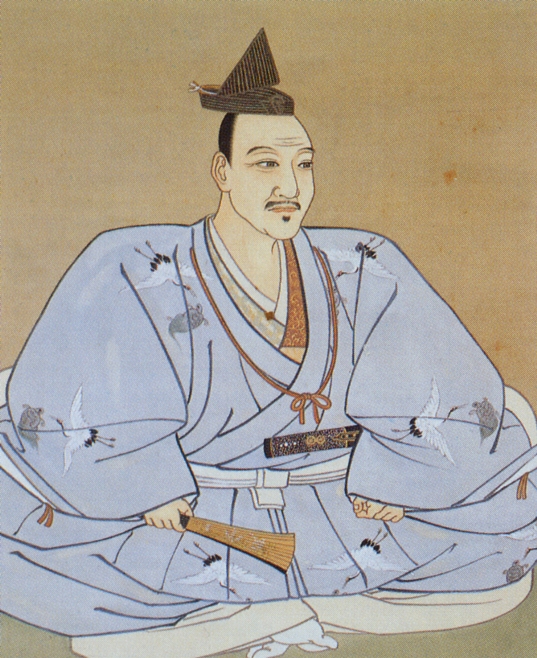
    Hojo Ujitsuna. It was his decision to rename his clan that led to the adoption of their famous name.

    All this suggests that the claim to the Hojo name might not have been all that spurious, but acceptance by the Imperial Court did not translate to being a member of the ‘club’, and certainly, in the case of the Uesugi (the Ogigayatsu Branch, at least), the Hojo were little more than upstarts.

    The Sengoku Period was a time when lineage no longer held the same meaning it once did. A clan with an impressive family tree could (and often did) find itself crushed by clans that, by comparison, had no real ancestry and might have once been subordinates. This phenomenon, called Gekokujo in Japanese (which means low overthrows high), was common across the realm in this period, and a clan like the newly dubbed Hojo would set about establishing its rule at the point of a sword.

    Ujitsuna was very much a man of his time, and by the mid 1520s, he had subdued all of Sagami Province (modern Kanagawa) and advanced into southern Musashi, the neighbouring province, close to the area of modern Tokyo. Faced with further advances by the Hojo and defection of lords in Western Musashi, the Ogigayatsu were forced to respond.

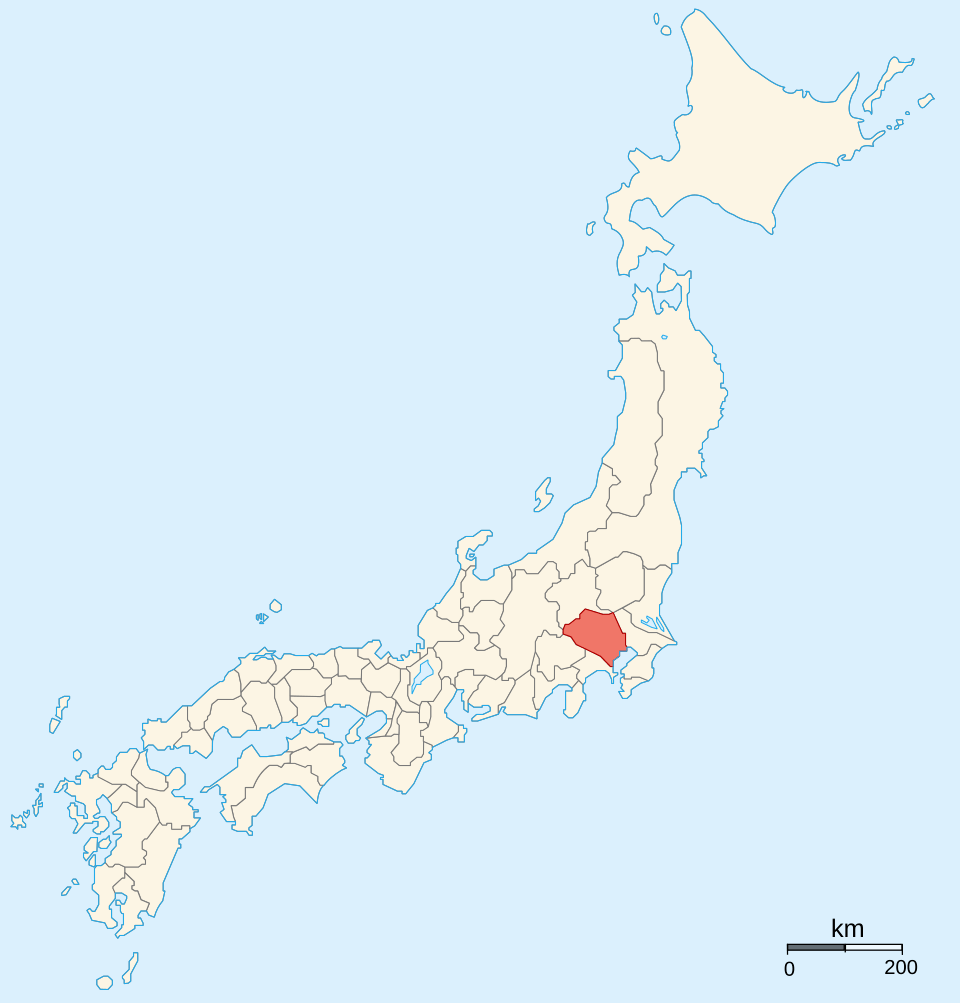
    Musashi Province.
    By Ash_Crow – Own work, based on Image: Provinces of Japan.svg, CC BY 2.5, https://commons.wikimedia.org/w/index.php?curid=1690716

    In February 1524, a Hojo force of some 10,000 clashed with the Ogigayatsu at the Battle of Takanawahara. The battle was a decisive victory for the Hojo, with the Ogigayatsu forces retreating to Edo Castle (on the site of the modern Imperial Palace), only for it to fall shortly afterwards, forcing the Ogigayatsu to withdraw further north to another stronghold at Kawagoe.

    Ujitsuna, flush with victory, ordered a rapid advance and made rapid progress before a counterattack led by Ogigayatsu ally, Takeda Shingen (remember him?), defeated the Hojo at Iwatsuki in mid 1524, obliging Ujitsuna to seek peace. He would break the peace in early 1525, and despite some early success, the Ogigayatsu, allied with the Takeda, and united with their cousins on the Yamauchi Uesugi, proved to be too much for the Hojo. In September 1525, the Hojo were defeated at the Battle of Shirakobara. Although Edo Castle would hold out, by mid-1526 the Hojo had been driven out of Musashi Province altogether, with Tamanawa Castle on the border of Sagami Province coming under attack in November that year.

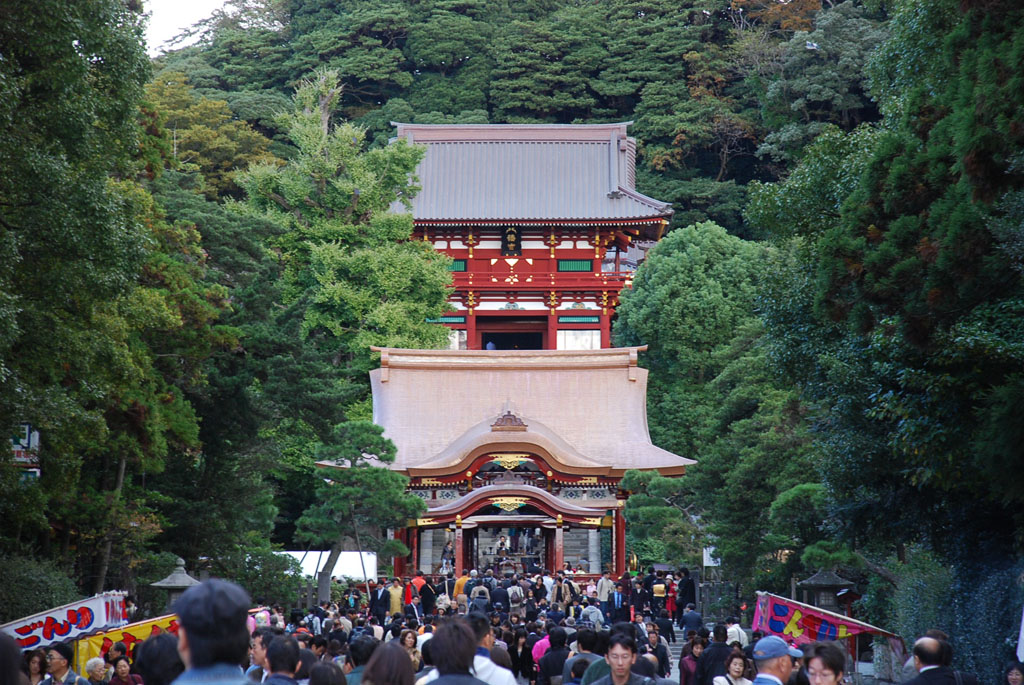
    The Hojo had their back to the wall, but the forces arrayed against them were a mishmash of different clans, with different goals. A lack of coordination meant that when the time came to attack Sagami in force, the attack was beaten back, with troops of the Satomi (allies of the Ogigayatsu) making it as far as Kamakura before being defeated. During their retreat, they burned the famous Tsurugaoka Hachimangu Shrine. This carried significant political consequences, and Ujitsuna was able to convince the Imperial Court and the Shogunate to censure his enemies.

    Tsurugaoka Hachiman Shrine as it appears today.
    ulysses_powers から Tsurugaoka Hachimangu in Yukinoshita, Kamakura, Kanagawa – Flickr, CC 表示-継承 2.0, https://commons.wikimedia.org/w/index.php?curid=3123909による

    This official reprimand created enormous political pressure, and by the end of 1527, Ujitsuna had been able to make peace. Though it is difficult to predict what the outcome might have been otherwise, it is important to remember that Hojo territory faced enemies in three directions, and it is not improbable that, had peace not been agreed, then they may have been overwhelmed.

    This reprieve was not wasted by Ujitsuna, either. In 1530, when Takeda forces once again marched against Sagami, the Hojo dispatched a force to meet them. Though the Hojo would prove victorious in this campaign, the Ogigayatsu sought to take advantage of Ujitsuna’s distraction and sent an army of their own, hoping to trap the Hojo army between them and the Takeda.

    Standing in their way was Ozawa Castle, controlled by Ujitsuna’s son and heir, Ujiyasu. Sources say that the Hojo were outnumbered as much as 5 to 1, but on the night of July 6th, 1530, Ujiyasu launched a surprise attack on their camp, winning a decisive victory and returning momentum in the war to the Hojo.

    The site of Ozawa Castle, in modern Kawasaki.
    多摩に暇人 – 投稿者が撮影, CC 表示 3.0, https://commons.wikimedia.org/w/index.php?curid=93672574による

    With this momentum, the Hojo were able to take advantage of the same division that had plagued their enemies a few years earlier. Ujitsuna identified the Satomi Clan (from modern Chiba) as a weak link and focused his attention on them, bribing several family members who were unhappy with the current leadership and seeking to incite a rebellion that the Hojo could exploit.

    The plot was discovered, however, and so the Hojo instead relied on good, old-fashioned, brute force, dispatching an army across what is now Tokyo Bay to Awa Province on the southern tip of the Boso Peninsula. Despite the plot’s failure and the execution of several conspirators, some members of the Satomi still rose up in support of the Hojo invasion. What followed was a series of victories as the Hojo-Satomi alliance took castle after castle, culminating in the Battle of Inukake in 1534, which saw the Hojo-Satomi defeat their rivals and replace the head of the Satomi Clan with a Hojo ally.

    Whilst the Hojo were victorious on their eastern flank, the western flank was secured by a long-term alliance with the Imagawa. You may remember that Hojo Soun had actually started out as a vassal of the Imagawa, and though the Hojo had since risen to a position of equality with their former masters, the relationship remained close.

    With the bulk of his forces busy against the Satomi, Ujitsuna requested his Imagawa ally, Ujiteru, invade Takeda territory to ensure they wouldn’t intervene. The Imagawa obliged and invaded Kai Province in July 1534; they were initially successful but soon became overextended and had to retreat to their home in Suruga. A Takeda counterattack was considered so dangerous that Ujitsuna withdrew forces from the West to face it. The Takeda, remembering their defeat at the hands of the Hojo a few years earlier, tried to lure Ujitsuna into an ambush in the narrow mountain passes of Kai, seeking revenge.

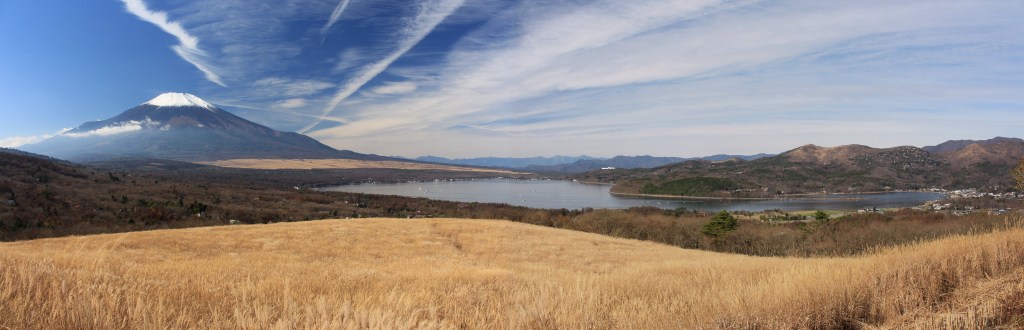
    Lake Yamanaka, site of the eponymous battle.
    Alpsdake – 投稿者自身による著作物, CC 表示-継承 4.0, https://commons.wikimedia.org/w/index.php?curid=45336367による

    Ujitsuna was apparently aware of the strategy, however, and dispatched a force to outflank the Takeda, turning the ambushers into the ambushed at the Battle of Yamanaka on September 19th, 1535. The defeat was so severe for the Takeda that the road into Kai province now lay open, and Ujitsuna apparently intended to crush the Takeda once and for all and take the whole of Kai Province for himself.

    This invasion was eventually called off as the Ogigayatsu proved to be a more pressing concern, and over the next few years, the geopolitical situation would shift considerably. In 1536, Imagawa Ujiteru died suddenly, aged just 21 or 22. He left no heirs, and so the clan quickly descended into civil war. At about the same time, famine and an epidemic broke out in Kai Province, severely weakening the Takeda.

    The Imagawa civil war was won by Yoshitomo, Ujiteru’s younger brother, but the devastation in Suruga left the clan severely weakened, and they sought peace with the Takeda, who, suffering their own calamities, quickly agreed, with Yoshitomo marrying Takeda Shingen’s daughter to establish a new alliance. Ujitsuna recognised that his alliance presented an intolerable risk to his western frontier and resolved to do something about it.

    A later depiction of Imagawa Yoshitomo.

    In early 1537, Ujitsuna led 10,000 men into Suruga Province, winning a series of crushing victories over the Imagawa and decisively bringing an end to decades of close relations. Fearing overextension, however, Ujitsuna limited his conquests to the territory east of the Fuji River, and a truce was declared shortly afterwards, which was convenient, as the death of the Ogigayatsu lord left the clan in disarray and presented a golden opportunity for further Hojo expansion, but we’ll talk about that next time.

    Sources
    https://ja.wikipedia.org/wiki/%E5%8C%97%E6%9D%A1%E6%B0%8F%E7%B6%B1
    https://ja.wikipedia.org/wiki/%E5%B1%B1%E4%B8%AD%E3%81%AE%E6%88%A6%E3%81%84
    https://ja.wikipedia.org/wiki/%E5%AF%8C%E5%A3%AB%E5%B7%9D
    https://en.wikipedia.org/wiki/Imagawa_Yoshimoto
    https://ja.wikipedia.org/wiki/%E7%8A%AC%E6%8E%9B%E3%81%AE%E6%88%A6%E3%81%84
    https://ja.wikipedia.org/wiki/%E5%B0%8F%E6%B2%A2%E5%9F%8E
    https://ja.wikipedia.org/wiki/%E5%B0%8F%E6%B2%A2%E5%8E%9F%E3%81%AE%E6%88%A6%E3%81%84
    https://ja.wikipedia.org/wiki/%E9%B6%B4%E5%B2%A1%E5%85%AB%E5%B9%A1%E5%AE%AE
    https://ja.wikipedia.org/wiki/%E7%99%BD%E5%AD%90%E5%8E%9F%E3%81%AE%E6%88%A6%E3%81%84

  • Kings in the North, Part 3

    Kings in the North, Part 3

    Last time, we looked at how Date Masamune defied an order from Toyotomi Hideyoshi to end his local wars. In 1590, the Date were summoned to take part in the upcoming campaign against the Hojo, based at Odawara, and Masamune knew better than to push his luck. Hideyoshi, however, had not forgotten his earlier defiance.

    Date Masamune

    When Masamune arrived at Odawara, he was stripped of all the territory he had taken in Aizu and confined to the 13 counties in Mutsu and Dewa Provinces that the Date had controlled before the peace order, obliging Masamune to leave the recently conquered Kurokawa Castle and return to his family’s seat at Yonezawa. In 1591, a rebellion broke out in Masamune’s home province, and after he put it down, letters were ‘found’ that implicated Masamune in instigating the violence.

    The rumours reached Hideyoshi in Kyoto, and he ordered Masamune to come in person to explain himself, which he promptly did, eventually being pardoned, but having his territory reduced still further. Despite the fact that Masamune then fought in Hideyoshi’s invasion of Korea, it wasn’t long before further rumours of treason surrounded him.

    In 1595, Hideyoshi’s nephew, Hidetsugu, was accused of treason, allegedly plotting either to overthrow his uncle or else usurp the regency after his death. Even at the time, the accusations were considered dubious, and the exact reasons are still murky today, but Hidetsugu was obliged to commit seppuku, and 39 members of his family and household were purged (read, murdered).

    Toyotomi Hidetsugu. The accusations of his treasonous conduct were considered dubious even at the time.

    The brutality of the crackdown and the somewhat flimsy evidence would eventually backfire for Hideyoshi, but for now, we can focus on how this purge would eventually involve Masamune. He and Hidetsugu had enjoyed a close relationship, and when accusations of treason were being thrown around, it didn’t take long for people to point that out.

    Masamune was summoned to explain himself once again. He had good reason to worry; his cousin had been Hidetsugu’s concubine (and had died in the purge), and it was widely thought that Hideyoshi believed that Masamune was guilty. In the end, a combination of Masamune’s eloquent denial and the intervention of several influential retainers led to his pardon. He was, however, obliged to sign a document, witnessed (and potentially enforced) by 19 powerful vassals, stating that if he were ever to commit treason, his position as head of his clan would be forfeit.

    Hideyoshi died in 1598, leaving his young son in the care of a council of five regents. Masamune was not on this council, but he quickly reached an understanding with Tokugawa Ieyasu, arguably the council’s most powerful member. In 1599, Masamune’s daughter married Ieyasu’s fifth son, something that was believed to be an example of Ieyasu securing illegal alliances, though modern scholars suggest that this is an example of a violation of the ‘spirit’ rather than the letter of the law.

    Tokugawa Ieyasu. He found a willing ally in Masamune.

    By 1600, it had become clear that the Council of Regents was not going to last, and a new conflict swiftly broke out. Ieyasu secured the support of Masamune by promising to restore all the lands he had lost in 1590. Date forces would not be present at the decisive Battle of Sekigahara, however, and despite some successes against Ieyasu’s enemies in the north, an attempt to retake the promised territories by force was ultimately unsuccessful.

    Despite this, Masamune still petitioned Ieyasu for the return of the territory, which Ieyasu refused to do, and in fact, Date lands were reduced further (though they would remain the fifth richest clan by koku (rice production)). In 1601, Masamune moved his headquarters to Sendai, establishing the Sendai Domain, which would continue to be the centre of the Date Clan for the next 250 years.

    Though distant from the capital and never entirely trusted, Masamune would play a significant role in Japan’s future. In 1613, he ordered the construction of a European-style galleon, the San Juan Bautista. Masamune was the only Daimyo to receive permission from the Tokugawa to send missions overseas to represent Japan. The so-called Keicho Embassy departed Japan in October 1613, travelling across the Pacific to New Spain (modern Mexico) and from there, across the Atlantic to Europe. The embassy would receive an audience with the King of Spain in January 1615, and then one with the Pope in October of the same year. The Embassy would not return to Japan until 1620, by which time Christianity had been outlawed by the Shogunate, meaning that the Ambassador and anyone involved had come under suspicion.

    A European portrait of Hasekura Tsunenaga, the ambassador in the Keicho Embassy. By the time he returned to Japan, Christianity had been outlawed, and his achievement as the first Japanese representative to Europe was largely forgotten.

    Meanwhile, Masamune at the Date had continued to support the new Shogunate, taking part in both Sieges of Osaka in 1614-15. However, once again, Masamune would find himself under attack by rumours of treason, this time after a supposed ‘friendly fire’ incident, in which Date troops fired on their allies. It’s not clear from surviving records if this incident actually happened, but in 1616, the rumour spread that Ieyasu planned to march against the Date.

    When the two men met in early 1616, Masamune was cleared of any suspicion, and after Ieyasu passed away in June of that year, any serious suggestion that the Date and Tokugawa would go to war seems to have died out (though later texts suggest that Masamune had a plan to fight the Shogunate, should it come down to it)

    With the age of constant civil war coming to an end, Masamune focused on developing his home territory. He ordered the construction of a canal that became the Teizan Canal (though it wouldn’t take its final form until the 19th century). He established a port at Ishinomaki, which was heavily damaged in a tsunami in 2011, and has since been largely rebuilt.

    The Teizan Canal as it appears today. Though largely remodelled in the 19th century, its origins lay with Masamune in the 1600s.

    He also developed agriculture in the Kitakami River basin, which remains a major rice producer to this day. In the Edo Period, the Sendai Domain was valued at around 620,000 koku, but produced in excess of 745,000 koku annually, indicating how effective Masamune’s investments had been, and how inefficient Japanese land valuation was in the pre-modern period.

    In his later years, Masamune would establish a warmer relationship with the Shogunate than he had known previously. When the third Shogun, Iemitsu, began to rule in his own right in 1632, he was said to have idolised Masamune, who by then was one of the last remaining Daimyo to have actually fought during the Sengoku period. The Shogun is said to have frequently asked Masamune for stories of the period, especially the battles he had fought, and what it had been like to serve Ieyasu and Hideyoshi (both of whom were legendary figures by that point)

    Masamune remained vigorous until late in life, but in 1634, he began to develop serious health problems, and his condition declined quickly before he eventually passed away in June 1636. His death was mourned in Edo, with the Shogun banning revelry, fishing, and even the playing of music for seven days afterwards.

    Zuihoden, in modern Sendai, the final resting place of Date Masamune.
    663highland 投稿者自身による著作物, CC 表示 2.5, https://commons.wikimedia.org/w/index.php?curid=2631054による

    Masamune’s reforms and investments had left the Date in a strong financial position, and the Clan would often be treated generally by the Shogunate, with the clan being one of the few ‘outside’ Daimyo (a clan that had not been a vassal of the Tokugawa before Sekigahara) who was granted a marriage into the Shogun’s family.

    Despite, or perhaps because of this, the third Lord, Tsunamune (Masamune’s grandson), proved to be something of a “rich kid” spending his days engaged in what is politely called “debauchery”. Although a certain amount of wine, women (or men), and song was expected of a Daimyo, Tsunamune was extreme to the point that his retainers tried to get rid of him. In August 1660, they petitioned the Shogunate directly, asking that Tsunamune be removed.

    The Shogunate agreed, replacing Tsunamune with his two-year-old son, Tsunamura. Given his young age, Tsunamura needed a regent, and what followed was a decade of violence as rival factions sought influence over the young Lord. Finally, in 1671, a meeting was called in the house of Sakai Tadakiyo, a roju (senior minister) in Edo.

    Date Tsunamune, whose debauchery led to his downfall, and nearly that of his clan.

    What was supposed to be a peaceful meeting to seek a solution to the ongoing violence in Sendai quickly turned into a bloody brawl, and by the end of it, swords had been drawn, and several men lay dead. Tsunamune, as a child, was not held responsible, but the families of those responsible for the bloodshed were executed in turn (in line with the law at the time).

    As the Edo Period went on, the Sendai Domain, much like many Samurai holdings, began to suffer economic hardship. The problem was that the value of the land was estimated based on rice production in the 17th century, and by the early 19th century, those numbers simply didn’t add up.

    Financial problems didn’t stop the Date from remaining loyal to the Tokugawa; during the Boshin War in 1868-69, the Sendai Domain was central to the Shogunate’s efforts to retain power. The Shogunate would ultimately lose the war, and the Date had their lands confiscated, though they were partially restored in the peace that followed. With the abolition of the domains, the Date joined the new aristocracy and continued to serve the new Meiji regime into the 20th century.

    Date Munemoto, the last lord (and first governor) of the Sendai Domain.

    The Date were not always on the right side of the law, however. One infamous member of the clan was Junnosuke, who was known for carrying a knife to school and, in 1909, was sentenced to 12 years in prison for shooting a fellow student during a brawl. His sentence was eventually suspended when his lawyer ‘proved’ it was self-defence. In 1916, he left Japan for Manchuria (not yet under Japanese rule at that point), where he joined the Manchurian Independence Movement.

    He had a varied career after this, serving in the Border Guards in Korea (then under Japanese control), but in 1923, he seems to have been operating as little more than a bandit in and around the Shandong Peninsula. In 1931, he became a naturalised Chinese citizen, but in 1937, he was at the head of some 4000 soldiers from Manchukuo and took part in the Japanese invasion of China; however, his unit was disbanded in 1939. After the war, he was caught by the Chinese, tried as a war criminal, and shot in 1948, bringing a violent career to a violent end.

    Date Junnosuke in the uniform of a Border Guard.

    In the interest of ending things on a lighter note, another descendant of the Date clan (a branch of it, anyway) is Date Mikio, one half of the famous comedy duo Sandwichman, who have won many awards and are arguably one of Japan’s most prolific duos, so that’s nice.

    The main branch of the Date Clan survives into the modern era as well, with the current head, Date Yasumune, serving as a curator of the Zuihoden Museum, burial place of Date Masamune, and a repository for numerous artefacts related to the clan.

    Sources
    https://ja.wikipedia.org/wiki/%E4%BC%8A%E9%81%94%E9%A8%92%E5%8B%95
    https://en.wikipedia.org/wiki/Date_S%C5%8Dd%C5%8D
    https://ja.wikipedia.org/wiki/%E6%96%B0%E7%99%BA%E7%94%B0%E9%87%8D%E5%AE%B6
    https://en.wikipedia.org/wiki/Date_Masamune
    https://en.wikipedia.org/wiki/Tokugawa_Ieyasu
    https://ja.wikipedia.org/wiki/%E4%BC%8A%E9%81%94%E7%B6%B1%E5%AE%97
    https://ja.wikipedia.org/wiki/%E4%BC%9A%E6%B4%A5
    https://ja.wikipedia.org/wiki/%E4%BA%8C%E6%9C%AC%E6%9D%BE%E5%9F%8E
    https://ja.wikipedia.org/wiki/%E8%8B%A5%E6%9D%BE%E5%9F%8E
    https://ja.wikipedia.org/wiki/%E6%91%BA%E4%B8%8A%E5%8E%9F%E3%81%AE%E6%88%A6%E3%81%84
    https://ja.wikipedia.org/wiki/%E8%B1%8A%E8%87%A3%E7%A7%80%E6%AC%A1
    https://ja.wikipedia.org/wiki/%E3%82%B5%E3%83%B3%E3%83%BB%E3%83%95%E3%82%A1%E3%83%B3%E3%83%BB%E3%83%90%E3%82%A6%E3%83%86%E3%82%A3%E3%82%B9%E3%82%BF%E5%8F%B7
    https://ja.wikipedia.org/wiki/%E4%BB%99%E5%8F%B0%E8%97%A9
    https://ja.wikipedia.org/wiki/%E6%85%B6%E9%95%B7%E9%81%A3%E6%AC%A7%E4%BD%BF%E7%AF%80
    https://ja.wikipedia.org/wiki/%E7%9F%B3%E5%B7%BB%E6%B8%AF
    https://ja.wikipedia.org/wiki/%E8%B2%9E%E5%B1%B1%E9%81%8B%E6%B2%B3
    https://ja.wikipedia.org/wiki/%E4%BC%8A%E9%81%94%E6%94%BF%E5%AE%97
    https://ja.wikipedia.org/wiki/%E4%BC%8A%E9%81%94%E6%B0%8F
    https://ja.wikipedia.org/wiki/%E4%BC%8A%E9%81%94%E9%A0%86%E4%B9%8B%E5%8A%A9
    https://ja.wikipedia.org/wiki/%E4%BC%8A%E9%81%94%E6%B3%B0%E5%AE%97
    https://ja.wikipedia.org/wiki/%E3%82%B5%E3%83%B3%E3%83%89%E3%82%A6%E3%82%A3%E3%83%83%E3%83%81%E3%83%9E%E3%83%B3_(%E3%81%8A%E7%AC%91%E3%81%84%E3%82%B3%E3%83%B3%E3%83%93)
    https://ja.wikipedia.org/wiki/%E4%BC%8A%E9%81%94%E5%AE%97%E5%9F%BA

  • Kings in the North, Part 2

    Kings in the North, Part 2

    This is the 50th post on this blog. Well done for getting this far.

    In 1565, Date Harumune retired and handed control of the clan over to his son Terumune. Despite this, Harumune held onto the real power, and it wasn’t until 1570, when Terumune accused several of his father’s supporters of treason and had them removed, that he gained actual power.

    Date Terumune

    Despite this, Terumune continued most of his father’s policies, especially in diplomacy. The alliance with the Ashina Clan was maintained, and Date diplomats reached out to the Hojo, Oda, and Shibata Clans, establishing friendly relations with several of Japan’s most powerful warlords. The Sengoku in Sengoku Jidai literally means ‘country at war’; however, alongside his diplomatic efforts, Terumune showed he wasn’t afraid to throw his weight around if an opportunity presented itself.

    In 1578, the death of Uesugi Kenshin presented just such an opportunity, and Terumune dispatched forces to intervene in the internal struggle that followed. The Date intervention was ultimately unsuccessful, largely due to the military skills of the Shibata Clan, vassals of the Uesugi, who fought off the Date in several engagements.

    Frustrated, Terumune withdrew, but the Shibata had apparently expected more generous rewards for their service, and in 1581, when it was clear that they would not beforthcoming, the Shibata rebelled. Terumune dispatched his army once again, this time in support of the Shibata, and the conflict within the Uesugi Clan would drag on for years.

    Shibata Shigeie, one of the Shibata brothers who gave the Date so much trouble.
    さどこhttp://blog.livedoor.jp/sadosado_4hi/archives/8412806.html, CC 表示-継承 4.0, https://commons.wikimedia.org/w/index.php?curid=99877267による

    Closer to home, the long war against the nearby Soma Clan continued into Terumune’s reign. The Soma were based in southern Mutsu Province (the area of modern Fukushima Prefecture) and had proven to be tenacious opponents of the Date, with neither side ever able to establish a permanent advantage over the other, despite decades of conflict.

    In the period of 1582-84, however, the Date finally managed to overcome the Soma. Although the latter clan was not completely subdued, the strategic situation compelled them to make peace in 1584, with the border between the two clans agreed upon by treaty.

    Also in 1584, the long-time allies of the Date, the Ashina Clan, fell prey to an internal power struggle, after their lord, Moritaka, was murdered by a retainer (the official reason is said to be ‘due to sodomy’, so make of that what you will). The new head of the clan was just a month old, and so the Ashina were effectively subordinate to the Date, despite nominally remaining independent.

    Shortly after this, Terumune retired, handing leadership over to his son, Masamune. Sources disagree on the exact reason for this, with some suggesting that Terumune planned to make his second son head of the Ashina, only to encounter serious opposition from within the Ashina and his own clan, who then forced him to abandon the idea and retire in disgrace. Other sources say that Terumune learned a lesson from the fate of the Ashina and decided to hand over the leadership of the Date to his son while he was still alive, rather than leave the succession to chance.

    Date Masamune

    Regardless of the reason, Masamune became head of the clan in 1585, and immediately set out to prove that he was not going to do things the same way as his father had. Whilst Terumune had intended to continue the war against the Uesugi, along with his Ashina and Mogami allies, Masamune made peace, without consulting either clan, leading to a sudden and serious decline in relations.

    Masamune would definitively end the alliance shortly afterwards when he invaded Ashina territory, which the Ashina, unsurprisingly, interpreted as a hostile act. The invasion would prove to be a back-and-forth affair, with the Ashina successfully repelling the Date’s first attacks only to be defeated by a second wave, led by Masamune himself.

    In late 1585, the Ashina asked for a truce, and a peace was mediated by Terumune and his uncle, Sanemoto. The negotiations would prove to be a ruse, however, as Ashina forces kidnapped Terumune at sword point and tried to escape back to their own territory. What happened next is a matter of debate; some sources state that Terumune, seeing that he couldn’t escape, ordered the pursuing Date forces (his own men) to open fire with their bows, killing the entire party, including Terumune.

    Another source suggests that the Ashina, trapped by the Date pursuit, killed Terumune themselves, and were then cut down. A third source (written later) states that Masamune himself was responsible for Terumune’s death, and may have orchestrated the whole thing to get rid of his father. Though the exact circumstances will never be known, Terumune’s death also signalled the end of serious attempts to end the local conflicts through negotiation.

    Shortly after his father’s somewhat controversial death, Masamune continued the war. In January 1586, he laid siege to Nihonmatsu Castle (in the city of the same name, in modern Fukushima). At this time, an army led by the Satake Clan, from Hitachi province (to the south), arrived to relieve the castle. The Date were defeated at the Battle of Hitotori Bridge, and Masamune himself was badly wounded before a rearguard action allowed him to escape.

    The restored Nihonmastu Castle.
    baku13 – 投稿者自身による著作物, CC BY-SA 2.1 jp, https://commons.wikimedia.org/w/index.php?curid=11354374による

    The defeat was evidently not serious, because only a few months later, after the Satake had withdrawn, Masamune tried again, once again besieging Nihonmatsu Castle, forcing its surrender in July. Not long after this, he negotiated a peace with the Satake with the intention of focusing his efforts on finishing off the Ashina. This peace was short-lived, even by the standards of the day, as a succession crisis within the Ashina Clan drew the attention of the Satake, who supported a rival candidate to Masamune’s preferred choice.

    Masamune interpreted this as the Satake intending to bring the Ashina under their control, which would have put the Date in an extremely vulnerable situation. In response, he declared his intention to wage a full-scale war against both the Ashina and Satake. In 1587, Toyotomi Hideyoshi, by now acting as regent, issued an order that all private wars should halt, an order that Masamune, for now at least, ignored.

    Masamune initially had reason to regret his continued belligerence. In 1588, his old enemies, the Mogami Clan, took advantage of Masamune being distracted elsewhere and invaded Date territory at the same time as the Ashina Clan attacked in the south. After defeats at the Battle of Osaki and then at Koriyama, Masamune was obliged to seek peace with both clans, stabilising the situation in the short term.

    In 1589, the peace with the Ashina Clan broke down once again, with Masamune invading the Aizu region (in the west of modern Fukushima). Masamune won a decisive victory at the Battle of Suriagehara in July 1589, causing the Ashina to flee their home castle at Kurokawa (modern Aizuwakamatsu) and seek help from the Satake. The Satake were obeying Hideyoshi’s peace order, however, and no help was forthcoming. Shortly after this, Masamune moved his base to Kurokawa Castle, and when a second order from Hideyoshi arrived, threatening direct intervention, Masamune took the opportunity to make peace.

    Fukushima Prefecture, where Aizu is located.

    A year later, Hideyoshi ordered the Date to join him in his attack on the Hojo Clan at the siege of Odawara. This put Masamune in a difficult spot, since the rule of his father, Terumune, the Date and Hojo had been nominal allies, and when Hideyoshi’s order arrived, it wasn’t immediately clear which side Masamune would join. Masamune eventually marched in support of Hideyoshi, but the regent wouldn’t forget Date disobedience of his peace order.

    Sources
    https://ja.wikipedia.org/wiki/%E4%BC%8A%E9%81%94%E6%94%BF%E5%AE%97
    https://ja.wikipedia.org/wiki/%E8%B1%8A%E8%87%A3%E7%A7%80%E6%AC%A1
    https://ja.wikipedia.org/wiki/%E6%91%BA%E4%B8%8A%E5%8E%9F%E3%81%AE%E6%88%A6%E3%81%84
    https://ja.wikipedia.org/wiki/%E8%8B%A5%E6%9D%BE%E5%9F%8E
    https://ja.wikipedia.org/wiki/%E4%BA%8C%E6%9C%AC%E6%9D%BE%E5%9F%8E
    https://ja.wikipedia.org/wiki/%E4%BD%90%E7%AB%B9%E6%B0%8F
    https://en.wikipedia.org/wiki/Hitachi_Province
    https://en.wikipedia.org/wiki/Aizu
    https://ja.wikipedia.org/wiki/%E4%BC%8A%E9%81%94%E6%B0%8F
    https://ja.wikipedia.org/wiki/%E4%BC%8A%E9%81%94%E8%BC%9D%E5%AE%97

  • Kings in the North

    Kings in the North

    Just a quick note: Date is pronounced “Da-Tay”.

    The mon of the Date Clan.

    Like many of the great clans of the Sengoku period, the Date’s exact origins are subject to a fair amount of mythologising. The family originally claimed to be descended from the prestigious Fujiwara Clan, but that doesn’t have very much supporting evidence, and most modern scholars agree that the clan’s origins were far more humble.

    That isn’t to say they didn’t earn their place, however. The first attested ancestor of the Clan was Date Tomomune, who was rewarded for services in battle with the manor of Date in modern Fukushima Prefecture. Tomomune himself is a bit of a murky figure (as they all seem to be), and there are still unanswered questions about his origins and even his identity, but for the sake of simplicity, we’ll agree with the Date’s own genealogy and start the story of the clan with him.

    Similar to many other clans in the period, the Date were not tied down to a single geographic location, and branches of the clan would pop up all over Japan as their fortunes rose and fell. For our purposes, it is the Date clan of Mutsu Province that we’ll be focusing on.

    Mutsu Province.
    By Ash_Crow – Own work, based on Image: Provinces of Japan.svg, CC BY 2.5, https://commons.wikimedia.org/w/index.php?curid=1690724

    The Date largely supported the Kamakura Shogunate, founded by Minamoto no Yoritomo, and in the 13th century, the Lord of the Date is said to have been living in Kamakura (the political capital). However, when the Shogunate was overthrown, the Date threw in their lot with the Emperor and would continue to support the Imperial throne even after the establishment of the Ashikaga Shogunate in 1336.

    This support would backfire, however, as the Date, in support of the Southern Court, were defeated by forces of the Northern Court, loyal to the new Ashikaga Shoguns, and ultimately obliged to switch sides. Beginning in the 1380s, the Date would set about restoring their strength by attacking rival clans in their home region. As was common at the time, these local conflicts were framed as part of the larger Northern-Southern Conflict (the Nanboku-cho Period), but were, in reality, private wars that the central authorities were powerless to direct.

    Later, when the power of the Ashikaga Shoguns was beginning to fracture, the Date would use the conflict between the government in Kyoto and the Kamakura kubo to further enhance their own power. Though nominally under the jurisdiction of Kamakura, the Date would appeal directly to Kyoto to serve as their vassals. The Shogunate agreed, and when open conflict between Kyoto and Kamakura broke out in the 1480s, the Date were in a prime position to take advantage.

    The territories under the nominal jurisdiction of the Kamakura Kubo.

    An example of how strong the Date had become can be found in records from 1483, in which the Lord of the Date dispatched gifts to the court in Kyoto, including 23 swords, 95 horses, 380 ryo of gold dust, and 57,000 coins. This was an extraordinary fortune at the time, and seems to have led to the acceptance by the court of the Date’s position of the strongest (or at least richest) clan in the North.

    Despite their wealth and power, the Date were not the most prestigious clan in the region. That honour went to the Osaki, who were faithful to the Shogunate in Kyoto and were long established. As was common during the later 15th century, however, the Osaki had a prestigious name, but their actual power was crumbling. Though nominally their subordinates, the Date would intervene in a power struggle within the Osaki Clan in 1488, bringing an end to the conflict, but effectively reducing the Osaki to vassal status in the process.

    Another rival to the Date was the Mogami Clan from neighbouring Dewa Province. The clans would clash repeatedly, but in 1514, Date Tanemune would inflict a decisive defeat on the Mogami at Hasedo Castle. Shortly after this, he would marry his sister to the defeated Lord of the Mogami, effectively binding the two clans together. This would prove unpopular with the remaining Mogami vassals, and when their Lord died in 1520, and the Date attempted to take direct control, they rebelled.

    The site of Hasedo Castle as it appears today.
    Koda6029 – 投稿者自身による著作物, CC 表示-継承 4.0, https://commons.wikimedia.org/w/index.php?curid=124663430による

    In defeating the rebellion, Tanemune was able to establish Date control over most of eastern Dewa Province, further expanding his clan’s power and prestige. In recognition of this, in 1522, the Shogunate appointed Tanemune shugo (governor) of Mutsu Province (the Date’s home province, remember). Tanemune was not satisfied, however, as he had apparently sought the title of tandai.

    The exact distinction between shugo and tandai is a little unclear, as the titles often overlapped, but essentially, a shugo was the governor of a single province, whereas a tandai was the Shogun’s representative over a wider area. Although the power and prestige of the Shogunate were at a low ebb by this point, the fact remained that tandai was a more prestigious title, and the Shogunate’s refusal to bestow it on Tanemune was seen as a proverbial slap to the face.

    Tanemune responded to this but charting his own course, although the snub is probably just a convenient excuse for what he was going to do anyway; by the early 16th century, Shogunate power was really more of a concept, and the Date were one of many powerful clans who realised that they could largely do as they pleased.

    Date Tanemune.

    Over the next 20 years, Tanemune would work to consolidate his clan’s control over the North, further absorbing the Osaki and Mogami clans, as well as extending physical control over most of Mutsu and Dewa Provinces. Despite his successes, all was not well within the clan; Tanemune was in conflict with his eldest son, Harumune. The exact nature of the conflict is complicated, but it got so bad that in June 1542, Harumune ambushed his father whilst the latter was out hunting, imprisoning him in a nearby castle from which Tanemune swiftly escaped (or was rescued, depending on the source)

    What followed was a six-year conflict which saw the Date severely weakened, and several of their recently conquered vassals breaking free, including the Osaki and the Mogami. Eventually, the mediation of the Shogun brought about an official peace, but in reality, the feud didn’t end, and although Harumune would take his place as the de facto head of the clan, Tanemune, despite becoming a monk, remained an enormously influential figure.

    Harumune’s reign would be occupied with reestablishing Date power. The situation was far from ideal, however, and he was eventually forced to confirm many of the concessions that had been granted to vassals by both sides, signing away territory and privileges in exchange for obedience.

    Date Harumune

    One upside for Harumune was the fact that he had no fewer than eleven children, six sons and five daughters, who would be useful pawns in returning former vassals to the fold. All of his daughters were married either to powerful clans, securing alliances, or to senior vassals, ensuring their loyalty, and by the 1560s, the Date’s position was once again strong.

    In 1565, Harumune retired and handed control to his son, Terumune, although, as was common, he retained all the actual power. A year later, the Ashina Clan attacked the Nikaido, who were allied with the Date through the marriage of one of Harumune’s daughters. The Date intervened but were defeated, and when the Nikaido surrendered shortly afterwards, peace between the Date and Ashina was secured through another marriage, this time between the Lord of the Ashina’s eldest son and Harumune’s fourth daughter.

    Harumune apparently opposed this marriage, and in response, Terumune entered into a secret agreement with the Ashina, in which they would agree to support him in the event of an outbreak of conflict between father and son. The feud between father and son would only be resolved in 1570, when Terumune removed several retainers who had facilitated Harumune’s rule from ‘behind the curtain’. With this, the relationship seems to have improved, as Harumune was now effectively powerless anyway.

    Like most of his contemporaries, Terumune’s reign would be dominated by war, but we’ll talk about that next time.

    Sources
    https://en.wikipedia.org/wiki/Mutsu_Province
    https://ja.wikipedia.org/wiki/%E4%BC%8A%E9%81%94%E6%B0%8F
    https://ja.wikipedia.org/wiki/%E6%9C%80%E4%B8%8A%E6%B0%8F
    https://ja.wikipedia.org/wiki/%E4%BC%8A%E9%81%94%E7%A8%99%E5%AE%97
    https://ja.wikipedia.org/wiki/%E4%BC%8A%E9%81%94%E6%88%90%E5%AE%97
    https://ja.wikipedia.org/wiki/%E5%A4%A7%E5%B4%8E%E6%B0%8F
    https://ja.wikipedia.org/wiki/%E4%BC%8A%E9%81%94%E5%B0%9A%E5%AE%97
    https://ja.wikipedia.org/wiki/%E4%BC%8A%E9%81%94%E5%AE%97%E9%81%A0
    https://ja.wikipedia.org/wiki/%E4%BC%8A%E9%81%94%E9%83%A1
    https://ja.wikipedia.org/wiki/%E5%B8%B8%E9%99%B8%E5%85%A5%E9%81%93%E5%BF%B5%E8%A5%BF
    https://ja.wikipedia.org/wiki/%E4%BC%8A%E9%81%94%E6%9C%9D%E5%AE%97
    https://en.wikipedia.org/wiki/Dewa_Province
    https://ja.wikipedia.org/wiki/%E4%BC%8A%E9%81%94%E6%99%B4%E5%AE%97
    https://ja.wikipedia.org/wiki/%E4%BC%8A%E9%81%94%E8%BC%9D%E5%AE%97

  • The Shimazu, Part 1

    The Shimazu, Part 1

    Last time we looked at Shikoku, the so-called ‘four provinces’, well, how about an island of nine provinces? That’s right, Kyushu, the third largest of Japan’s main islands, is so called because in the pre-modern period it was home to nine whole provinces, which means, as names go, it’s not terribly creative, but what can you do?

    Kyushu.
    By TUBS – This vector image includes elements that have been taken or adapted from this file:, CC BY-SA 3.0, https://commons.wikimedia.org/w/index.php?curid=16385933

    In ancient times, Kyushu had been the centre of cultural, economic, and social development in Japan, as its close proximity to Korea, and by extension China, made it the logical landing site for innovations as widespread as rice farming and written language. The island would also be the focus of two ultimately unsuccessful Mongol invasions in the 13th Century, and the Shogunate administration there would continue to be important until the decline of central authority in the 15th Century left Kyushu, much like the rest of the realm, effectively independent.

    Into this power vacuum stepped several powerful clans, with the most prominent arguably being the Ouchi, Otomo, and Shimazu. Though the Ouchi and Otomo would play important roles of their own in the story of the Sengoku Period, it is the Shimazu that we will be focusing on.

    The exact origins of the Shimazu name aren’t entirely clear, but the first figure to take the name was Tadahisa, who was made lord of the Shimazu Manor in southern Kyushu in 1185. Tadahisa himself is something of a mysterious figure, with various conflicting reports of his origins, parentage, and even his name, but what is clear is that the Shimazu were well established in southern Kyushu by the 13th century, and would use it as their base going forward.

    Shimazu Tadahisa, the first “Lord” Shimazu.

    Tadahisa’s son, Tadatoki, seems to have been an accomplished military leader, as he was appointed the shugo (military governor) of Satsuma, Osumi, and Hyuga Provinces, all of southern Kyushu in effect. He was also granted numerous prestigious lands and titles around the realm, but it was his Kyushu holdings that would be the most important for his descendants.

    The Shimazu’s fortunes would ebb and flow over time, but the distance of their lands from the centre of power in Kyoto meant that they were often able to weather the storms of early Medieval Japan. They were not immune from the ever-present problem of internal conflict, however, and by the time of the Onin War in 1467, the Shimazu were weak, divided, and vulnerable.

    It would be Shimazu Tadayoshi (1492-1568) who would begin to turn the fortunes of the clan around. Originally from the Isaku Clan (a branch of the Shimazu), Tadayoshi had a difficult start to life. His father, Yoshihisa, was apparently murdered by a stable hand when Tadayoshi was just two, and his grandfather was killed in battle in 1500. Following this, Tadayoshi’s mother, Lady Baiso, agreed to marry the lord of another branch of the Shimazu, on the condition that Tadayoshi be adopted as heir to both branches. The lord in question was apparently so keen on Lady Baiso that he agreed.

    Shimazu Tadayoshi.

    Tadayoshi proved to be an enlightened and capable ruler, taking inspiration from Zen teachings and humanitarian principles. He was a popular leader, as he genuinely cared for the needs of his retainers and the welfare of his territory, but his son, Takahisa, would prove to be greater still. In 1526, following the deaths in quick succession of both his sons, the head of the main branch of the Shimazu Clan, Katsuhisa, turned to Tadayoshi (renowned for his learning and upright conduct) for a solution to the succession issue.

    Tadayoshi had Takahisa adopted by the Lord of the Shimazu. In November 1526, Katsuhisa handed over control of the Shimazu Clan to Takahisa and retired to a monastery. Tadayoshi became a monk himself shortly afterwards and would go on to play a significant role in aiding his son in reestablishing Shimazu power in southern Kyushu.

    Shimazu Takahisa.

    Things are never quite that simple, however, and Takahisa’s accession to the leadership of the Shimazu was opposed by several powerful retainers, some of whom also claimed the right to lead. Katsuhisa himself also seems to have expressed some regret about handing over power, and in June 1527, an army was raised which drove Takahisa out, and had Katsuhisa returned as the shugo.

    The fighting would go back and forth for a while after this, despite unsuccessful efforts to arrange a reconciliation in 1529. Katsuhisa proved to be an unpopular lord, however, apparently being more focused on ‘vulgar entertainment’ than the business of ruling. Though this did not automatically translate into support for Takahisa, the division amongst his enemies handed him the initiative.

    Starting in 1533, Takahisa would lead a series of counter-attacks which eventually saw him establish control over most of Satsuma Province, and in 1539, the decisive Battle of Murasakihara saw Takahisa drive out his primary rivals, though it wouldn’t be until 1552 that he was finally recognised as the shugo of Satsuma Province by the Shogunate, 26 years after he had first assumed the mantle.

    Satsuma Province, home of the Shimazu Clan.
    By Ash_Crow – Own work, based on Image:Provinces of Japan.svg, CC BY 2.5, https://commons.wikimedia.org/w/index.php?curid=1691755

    Takahisa had long hoped to reestablish Shimazu control of the three provinces held by his ancestors, and he would lead campaigns into neighbouring Osumi province from 1554 to 1556, which would allow him to establish a foothold in the province from which further expansion could be launched.

    Though Takahisa would prove to be a successful warrior, he was also known for his outward-looking attitude towards foreigners. The Shimazu had long had trade with Ming China, largely through intermediaries in the Ryukyu Islands (modern Okinawa), and after Portuguese merchants arrived in Japan, Takahisa was one of the first lords to welcome them to his domains, and perhaps one of the first to employ firearms in battle.

    He would also go some way to establishing Christianity in Japan, as he welcomed Francis Xavier into his territory in 1549, though this would ultimately prove a short-lived association, due to backlash from conservative elements amongst the Buddhist and Shinto priesthoods.

    A later depiction of a Portuguese trading ship in Japanese waters.

    Takahisa would eventually retire to a monastery in 1556, handing control of the Shimazu over to his son, Yoshihisa, who also inherited his father’s ambitions to regain control of the three provinces of Satsuma, Osumi, and Hyuga. Yoshihisa had actually joined his father’s campaign in Osumi, making his ‘debut’ in 1554, and after inheriting the leadership from his father, he would continue the campaigns to fully pacify Satsuma and expand Shimazu holdings into the neighbouring provinces.

    Satsuma would come under his complete control in 1570. In 1572, a rival clan from Hyuga Province would invade Shimazu territory, only to be defeated in short order at the Battle of Kizakihara, with the Shimazu forces being led by Yoshihisa’s highly capable younger brother, Yoshihiro. It is said that the Shimazu, despite being outnumbered 10 to 1, launched an aggressive attack against the enemy, which saw several key leaders killed and over 500 enemy deaths (counted in heads taken after the battle).

    A later depiction of a head viewing (kubi-jikken), a common practice among Samurai, in which the heads of defeated enemies would be presented to lords, or otherwise publicly displayed.

    This victory allowed Yoshihisa to focus on Osumi Province, which he was able to fully conquer by the end of 1573. Then in 1576, he captured the strategically important Takahara Castle, held by the powerful Ito Clan of Hyuga. The fall of Takahara led to a domino effect in which the remaining 48 castles of the Ito Clan were either conquered or defected to the Shimazu. Not long after, the head of the Ito Clan, Yoshisuke, fled Hyuga, and the long-dreamt-of reunification of the three provinces was achieved.

    Almost as soon as the dust had settled, however, the powerful Otomo Clan, who controlled several provinces in North-Eastern Kyushu, invaded, nominally in support of the exiled Yoshisuke, but more likely in an opportunistic attempt to expand their own territory. A huge army of some 43,000 men crossed into Hyuga Province in October 1578 and laid siege to Takashiro Castle. The Shimazu under Yoshihisa could muster only 20,000 men in response, but they took advantage of poor coordination amongst the Otomo, dealing with the invaders piecemeal.

    The campaign culminated in the Battle of Mimikawa (which was actually fought nearly 20 miles from the eponymous river), in which Yoshihisa employed a series of feigned retreats, breaking the Otomo Army (which still enjoyed a numerical advantage) down, and eventually winning a victory that was so comprehensive the Otomo effectively ceased to be serious rivals.

    The war wouldn’t end at Mimikawa, however, and in 1580, Oda Nobunaga began negotiations between the Otomo and Shimazu, hoping to bring an end to the war, since he wanted the Otomo to join his upcoming campaign against the Mori. The negotiations were apparently successful, as Yoshihisa even went so far as to recognise Nobunaga as his ‘lord’, and planned to join the attack on the Mori as well.

    The situation on the eve of Nobunaga’s death in 1582. The Shimazu lands are blue, in southern Kyushu.
    By Alvin Lee – Own work, CC BY-SA 4.0, https://commons.wikimedia.org/w/index.php?curid=39198356

    As we already know, Nobunaga’s death at the Honnoji incident in June 1582 put an end to those plans, but the weakened state of the Otomo and the fact that the peace deal no longer applied meant that the Shimazu were able to defeat or force the defection of several former Otomo retainers, increasing their own power and control over southern Kyushu.

    The campaign to unify the entire island would go on, but we’ll look at that next time.

    Sources
    https://ja.wikipedia.org/wiki/%E5%B3%B6%E6%B4%A5%E7%BE%A9%E4%B9%85
    https://ja.wikipedia.org/wiki/%E8%80%B3%E5%B7%9D%E3%81%AE%E6%88%A6%E3%81%84
    https://ja.wikipedia.org/wiki/%E5%A4%A7%E5%8F%8B%E6%B0%8F
    https://ja.wikipedia.org/wiki/%E5%B3%B6%E6%B4%A5%E7%BE%A9%E5%BC%98
    https://ja.wikipedia.org/wiki/%E5%B3%B6%E6%B4%A5%E8%B2%B4%E4%B9%85
    https://ja.wikipedia.org/wiki/%E5%B3%B6%E6%B4%A5%E5%BF%A0%E8%89%AF
    https://ja.wikipedia.org/wiki/%E6%A2%85%E7%AA%93%E5%A4%AB%E4%BA%BA
    https://ja.wikipedia.org/wiki/%E8%96%A9%E6%91%A9%E5%9B%BD
    https://en.wikipedia.org/wiki/Shimazu_Takahisa
    https://ja.wikipedia.org/wiki/%E5%B3%B6%E6%B4%A5%E5%BF%A0%E4%B9%85
    https://ja.wikipedia.org/wiki/%E5%B3%B6%E6%B4%A5%E6%B0%8F
    https://en.wikipedia.org/wiki/List_of_daimy%C5%8Ds_from_the_Sengoku_period