Tag: Shiba Clan

  • The Onin War

    The Onin War

    As we discussed last time, Japan in the 1460s was a chaotic place. Rival clans engaged in bloody feuds with each other, and it wasn’t uncommon for members of the same families to take up arms against each other in disputes over who was really in charge, taking sibling rivalry to a whole new level.
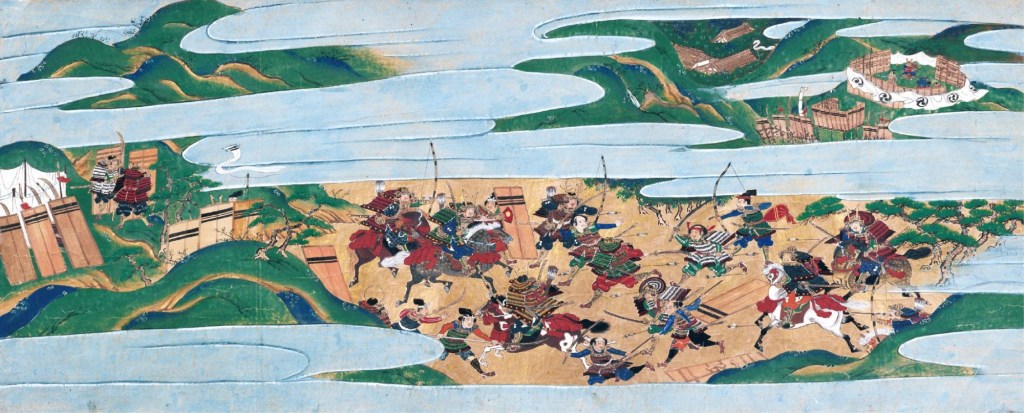
    By this time, endemic warfare was just a part of life in Japan.

    In the centre of this chaos was a Shogun who was so weak he might as well not have existed, and when the violence inevitably reached Kyoto, there was little he could do to stop it.

    The exact origins of the Onin War are disputed, but the main rivals were the Yamana and Hosokawa Clans, arguably the two most powerful clans of their day, with both playing key roles in the government and having control of vast swathes of land, and the wealth, manpower, and allegiances that went along with it.

    Throughout the 1450s and 60s, the Yamana and Hosokawa Clans had been engaged in something of a ‘Cold War’ in which they supported rival factions in numerous proxy wars around Japan, most importantly, the ongoing civil war within the Hatakeyama Clan.

    In January 1467, Yamana supported Hatakeyama forces attacked those of the Hosokawa at the Battle of Goryo Shrine (sometimes just called the Battle of Goryo). Though the battle resulted in a Yamana victory, the intervention of the Shogun brought an end to the immediate hostilities, and both Yamana and Hosokawa partisans remained in the capital.
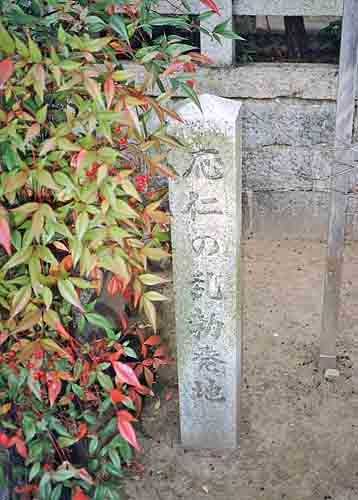
    The marker at Kamigoryo Shrine in Kyoto, showing the spot where the Onin War broke out.

    It has been speculated that both side were willing to let the Shogun mediate because neither of them was ready for all out war, because through early Spring, forces gathered in and around Kyoto, until May of that year, when it is said in some (probably exaggerated) sources that there were more than 270,000 warriors present, with the Hosokawa having a significant advantage in numbers (160,000-110,000).

    Though the Yamana had secured an advantage after Goryo and controlled the Shogun, the Hosokawa did not sit idly by. Their leaders issued orders and summons of their own, and set about raiding Yamana/Shogunate supply lines, and literally burning bridges.

    Due to the location of their relative bases in Kyoto, the Hosokawa and their allies became known as the Eastern Army, and the Yamana and theirs were called the Western Army, and it is by these names that we’ll refer to them going forward.

    Tensions finally boiled over in late May 1467, when forces of the Eastern Army launched a dawn attack against the Western forces around the Shogun’s palace, driving them away, occupying the palace, and bringing the Shogun under their control.
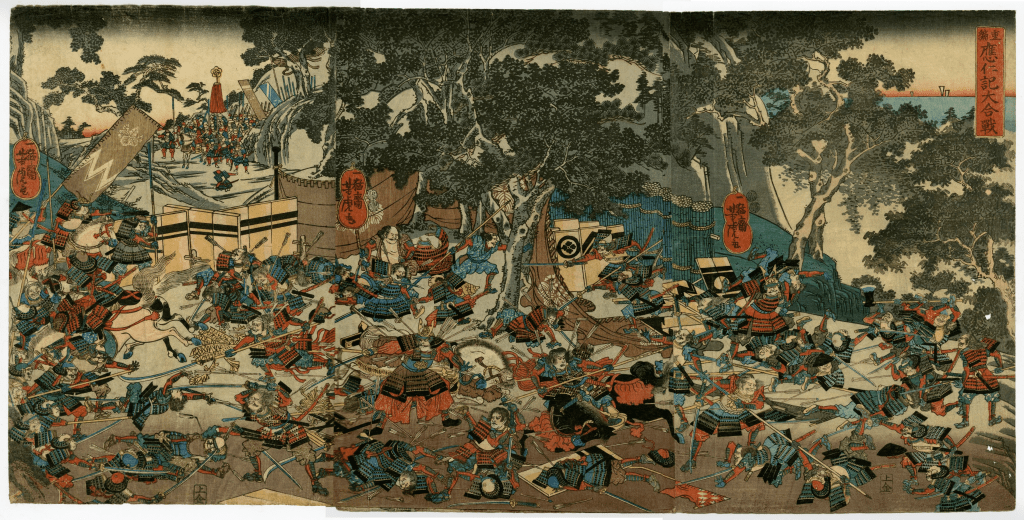
    A scene from later in the war, depicting just how chaotic the battlefield could be.

    Shortly after this victory, Ashikaga Yoshimi (the Shogun’s brother, and still heir) was declared commander in chief, and the Shogun himself handed over an official banner to the Eastern Army, proclaiming them to be the official army of the Shogun, effectively branding the Western army rebels.

    Despite their setback, the Western forces regrouped and attacked Kyoto in August, driving Yoshimi and his supporters out of the city and establishing control for themselves. It is at this point that the Western Army stopped deferring to any Shogunate officials and instead began issuing orders signed by a ‘junta’ of their most senior generals.

    Further attempts by the Western army to press their advantage failed, and several battles throughout September and October ended in bloody stalemate. In December, the Emperor issued a decree stripping all Western generals of their formal Imperial titles in an attempt to further delegitimise their cause; however, it had no practical effect, and as 1467 came to an end, the Western Army was in control of Kyoto, but the war was a stalemate.

    Throughout early 1468, there were sporadic outbursts of fighting in and around Kyoto, leaving large areas of the city in ruins, with the two sides gaining and losing ground in return, until the capital they had been so eagerly fighting over was no longer a prize worth having.

    In the summer of that year, Yoshimi, who had been in hiding away from Kyoto, was persuaded to return to the capital by his brother, the Shogun. This reconciliation was short-lived, however, as it was becoming clear that the Shogun now supported his (still infant) son, Yoshihisa, as heir. The key leaders of the Eastern Army, too, were behind Yoshihisa, and so Yoshimi fled to Mt Hiei, where, in November, messengers arrived from the Western Army, declaring him to be the ‘new Shogun’. From then on, Western Forces began issuing formal declarations from the ‘Shogun’, Yoshimi, although in reality, the generals remained in control, and Yoshimi was effectively isolated on Mt Hiei.

    By early 1469, the conflict had spread to Kyushu and the Kanto as well, where nominally Western and Eastern forces would fight it out in localised episodes of the wider conflict. In reality, however, the complete breakdown in central authority meant that these forces had no loyalty to anyone but themselves, and this fighting is often considered to be the start of the Sengoku Jidai or “Age of the Country at War.”

    As 1469 dragged on, the main forces around Kyoto were exhausted. The capital was a ruin, and the Shogunate’s power, already tenuous, had ceased to exist entirely. There had been many reasons for the outbreak of war, but the main one had been control of the Shogunate; now that there was no real Shogunate to control, neither side had much motivation to continue fighting.

    Rival forces loot Kyoto as the city burns around them. By the end of the Onin War, Kyoto was a ruin.
    Docsubster – 投稿者自身による著作物, CC 表示-継承 4.0, https://commons.wikimedia.org/w/index.php?curid=63970510による

    As Machiavelli said, though “Wars begin when you will, but they do not end when you please,” and the Eastern and Western forces were now discovering how true that was. Although superficially a conflict over the Shogunate, by 1470, factions on both sides had begun working for themselves. There were numerous internal conflicts, feuds, and defections, and by 1471, there were several clans that had switched sides, and some that had done so more than once.

    In 1472, there was a serious effort to make peace, with the leaders of the Yamana and Hosokawa clans (the originators of the feud) agreeing, in principle, to return to the antebellum situation. These terms were unpopular with other factions, however, many of whom had gained significant territories as a result of the war. The head of the Yamana Clan even went so far as to attempt suicide, in a move that historians have suggested shows the extent of his desire to find a settlement, but it did no good, and the fighting dragged on.

    Yamana Sozen, head of the Yamana Clan, whose attempted suicide is supposed to have shown how sincere he was about forging peace.
    By Mt0616 – Own work, CC BY-SA 4.0, https://commons.wikimedia.org/w/index.php?curid=99587678

    At the Shogunate court, a priest commented:

    “The affairs of the nation were being handled, the maids were planning (all the politics of the nation were being planned by Tomiko, a woman), the Shogun (Yoshimasa) was drinking sake, and the feudal lords were wearing dog hats (a reference to a kind of hat worn during mounted archery displays) . It was as if the world was at peace.”

    This quote gives us the impression of a court completely out of touch with the wider world, and indeed, other sources state that Yoshimasa’s drinking was no mere social tipple; he would drink to excess, and it was said that the Emperor got into the habit of joining him, further eroding the respect and prestige of whatever government remained.

    In March and May 1473, first the Yamana, then the Hosokawa Clan heads died, and a new generation took their place. Also in that year, Shogun Yoshimasa retired as Shogun, handing the title over to his nine-year-old son, Yoshihisa, whilst keeping the actual power for himself.

    Peace was finally agreed between the two main protagonists in April 1473, but the war didn’t come to an immediate end; defections and skirmishing continued, and it wasn’t until 1477 that the Western Army was formally disbanded. In November of that year, the Shogunate held a formal celebration, announcing the restoration of peace.

    Despite eleven years of Civil War, very little had actually been achieved. Yoshimasa had remained Shogun and handed the title to his son, Yoshihisa. The rival claimant, Yoshimi, had fled into exile but was formally pardoned in 1478, along with most of those who had supported him.

    Early in the war, the Eastern forces had been granted a banner from the Shogunate, effectively declaring themselves the legitimate party, whilst their Western enemies were branded rebels. In the wake of their victory, then, you might have expected the Eastern leadership to seek ‘justice’ (or more likely, revenge) against the Westerners.

    So why didn’t it happen?

    The answer is fairly simple: the Eastern Army, now just the Shogunate, was too weak. Eleven years of Civil War had resulted in nothing but fatally weakening both sides, and even though they were victorious, no one amongst the Shogun’s supporters had the strength to mete out any kind of justice.
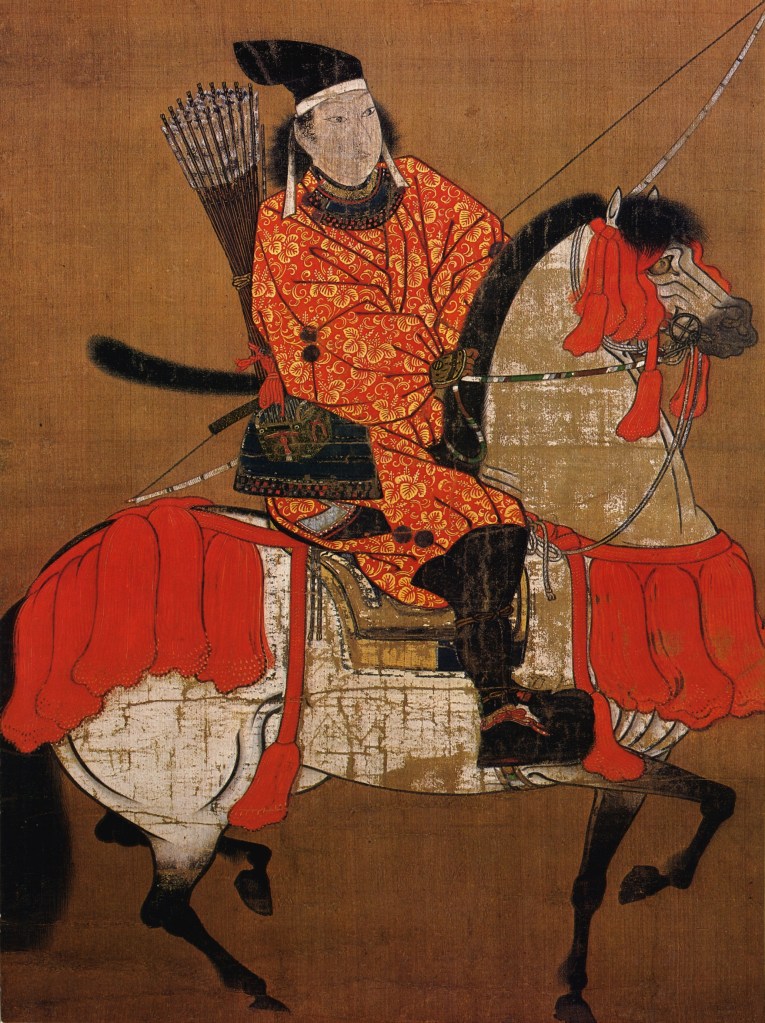
    Ashikaga Yoshihisa, nominally Shogun at this point, but far too weak to actually exercise his power.

    This weakness is best seen in the fact that, despite a formal peace agreement, the fighting didn’t end. Kyoto was a blackened ruin, and the formerly great clans were exhausted, but in the provinces, the war went on, and on, and on.

    Though it would not be called the Sengoku Jidai until much later, the Onin War brought about a period of anarchy that would last for more than 120 years, and the Ashikaga Shoguns would never hold any real authority outside of Kyoto, despite some brief resurgences in the late 15th century.

    It wasn’t just the Shogunate that was weakened; however, many of the shugo, regional lords, had committed considerable resources to the fighting, expending blood and treasure in pursuit of their goals, only to find themselves with little to show for it. In the 1480s, the system of shugo-in, the policy of requiring the lords to remain in Kyoto, formally broke down, and the shugo returned to their provinces, where some were able to restore their wealth and power, but many others became the first victims of gekokujo, (lit. lower rules/overthrows high) in which deputies of nominally lower rank were able to overthrow their masters, a phenomenon that would become common in the century ahead.

    Kyoto itself was also left as a practical ruin by the end of the fighting. The expense of restoring the city and the fact that the Shogun and his wife (Tomiko) were seen as embezzling huge sums of money led to outbreaks of rebellion in the 1480s and only served to further erode what little remained of the Shogun’s authority and prestige.

    The Onin War also foreshadowed several developments of the Sengoku Jidai, especially the end of the reliance on Samurai-only armies. The Samurai as a class had once monopolised war, but they were too few to man the much larger armies required in the 15th Century and later. This led to the rise of the Ashigaru, or Foot Soldiers. Originally peasant levies, the Ashigaru would evolve into something that could be recognised as professional soldiery, and they would play a key role in the wars to come, with one of their number, a man who would eventually be known as Toyotomi Hideyoshi, rising to a position of supreme power a century later.

    Sources
    https://ja.wikipedia.org/wiki/%E5%BF%9C%E4%BB%81%E3%81%AE%E4%B9%B1
    https://ja.wikipedia.org/wiki/%E8%B6%B3%E5%88%A9%E7%BE%A9%E5%B0%9A
    https://ja.wikipedia.org/wiki/%E8%B6%B3%E5%88%A9%E7%BE%A9%E8%A6%96
    https://en.wikipedia.org/wiki/Ashikaga_Yoshimasa
    https://ja.wikipedia.org/wiki/%E8%B6%B3%E5%88%A9%E7%BE%A9%E6%94%BF
  • Peace? I hate the word…

    Peace? I hate the word…

    By the end of the 14th Century, the Ashikaga Shogunate might have been forgiven for thinking it was in a strong position. Under Shogun Yoshimitsu, Kyushu had been pacified, the power of the mighty clans close to the capital had been curtailed, and in 1392, a reconciliation had been arranged between the Northern and Southern Imperial Courts, bringing an end to the Nanbokucho Period.

    In 1395, Yoshimitsu officially retired from the Shogunate to become a monk, and although he retained actual power, the succession of his son, Yoshimochi, was secure. Then, in 1399, the Ouchi Clan rose in rebellion in Kyushu, and in crushing them, the Ashikaga Shoguns no longer faced any serious opposition in the South or West of the realm.

    Around this time, Yoshimitsu sought recognition as “King of Japan” from the Ming Emperor of China, as he had long been an admirer of Chinese culture and politics. Initially, the Chinese refused to recognise him, because, as Shogun, Yoshimitsu was (technically) a servant of the Emperor, whom the Chinese were more inclined to recognise as King.

    When Yoshimitsu retired as Shogun, however, he retained all the power of his position, but was now free of his position as a subordinate of the Emperor. This, combined with a promise to suppress the often serious problem of piracy (wako) in the waters around Korea, persuaded the Chinese to formally recognise Yoshimitsu as “King” and restart trade between Japan and China, in exchange for regular Japanese tribute as ‘subordinates’ to the Ming.

    This trade was not as we might imagine it, where merchants buy and sell according to the laws of supply and demand. Instead, as the Chinese viewed themselves as the centre of the world, they viewed trade as being based on tribute to their Emperor, with gifts being bestowed in return.

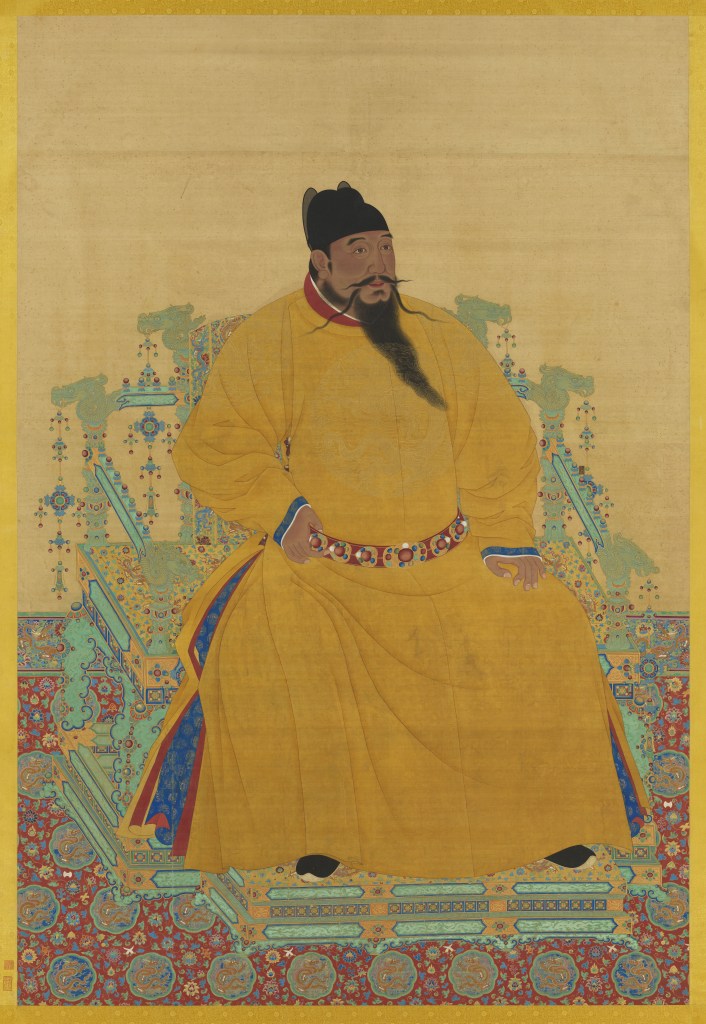
    The Yongle Emperor, who all were expected to bow to, especially if they wanted to trade with China.

    This worldview, combined with the Chinese desire to show off their wealth, meant that Japanese trade missions would often end up with such quantities of goods that they were able to secure enormous profits. One example comes from the merchant, Kusuba Sainin, who claimed that thread purchased for 250 mon in China could easily be sold for 5000 mon back in Japan.

    (The mon is a Japanese unit of currency that wasn’t very well formalised before the Edo Period, making modern purchasing power hard to figure out, but the fact that this represents around 2000% profit gives you an idea of how lucrative this trade could be.)

    These ships were only sent relatively infrequently; in fact, between 1404 and 1547, only 17 trade missions (made up of 84 ships in total) were sent, but the influx of Chinese material and cultural goods, and the Shogunate’s 10% levy on all goods arriving in Japan, meant that it was a major source of revenue and prestige.

    The trade was politically unpopular, however. The Chinese required tribute and acknowledgement of China’s supreme position in the world. Though Yoshimitsu likely viewed this as a diplomatic nicety rather than an actual submission, it didn’t sit right with the prideful Samurai or the Imperial Court, who held that their Emperor was a literal son of heaven, whereas the Chinese Emperor held a mandate that could be lost.

    While Yoshimitsu was alive and politically active, these concerns were largely kept private, but the discontent remained, and Yoshimitsu, it may surprise you to learn, wasn’t going to live forever.

    While he lived, however, Yoshimitsu invested this newfound wealth and power in what became known as Kitayama Culture. A unique blend of Imperial, Samurai, and Chinese aesthetics, it gave birth to many famous aspects of Japanese culture that are still recognisable, such as Noh Theatre and even Origami (which began as a much more formalised system than what we may be used to today).

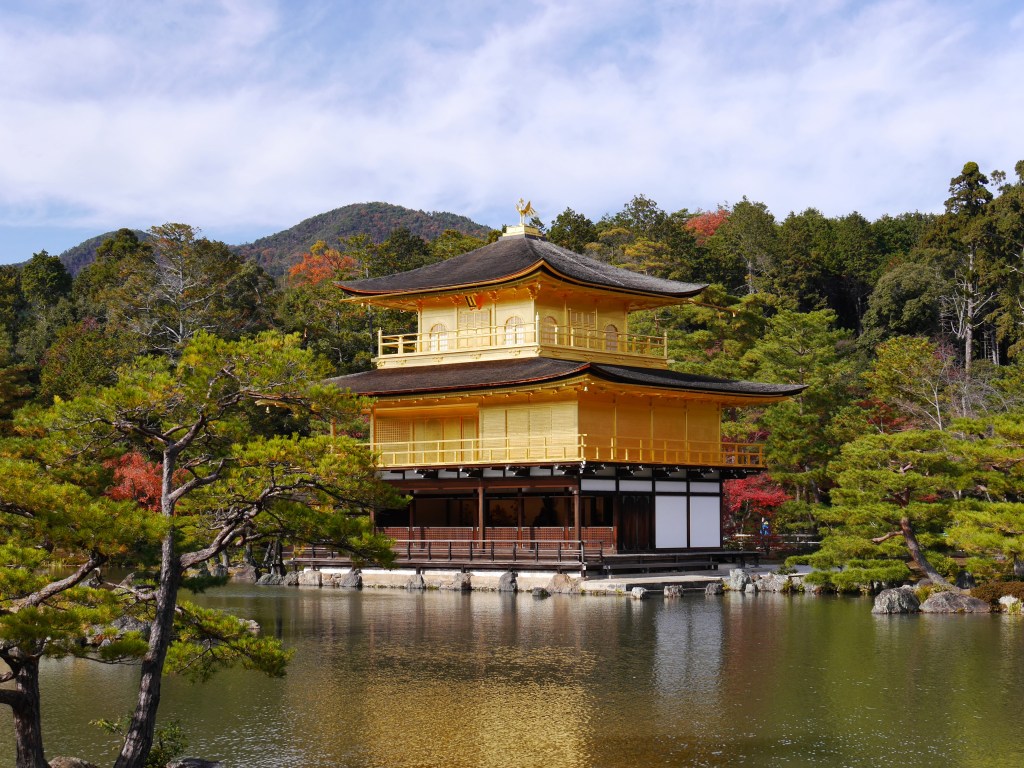
    Like many before and after him, Yoshimitsu also invested heavily in architecture, aiming to promote the glory and prestige of his family through buildings that were more spectacular than any that came before. Most famously, the Golden Pavilion Temple, Kinkaku-ji, a landmark so famous that the actual name for the temple, the pavilion, is in (Rokuon-ji), is often forgotten.

    The Golden Pavilion in Kyoto, so famous that its name is synonymous with Japanese temples the world over.
    By Jaycangel – Own work, CC BY-SA 3.0, https://commons.wikimedia.org/w/index.php?curid=33554210

    As we discussed last time, Yoshimitsu had an unusually close relationship with the Imperial Court, taking up several positions in the Imperial Government, and running things in such a way that it often became unclear exactly when Imperial orders weren’t simply Shogunate ones.

    This came to something of a logical conclusion in 1404 when Yoshimitsu began lobbying for the position of Retired Emperor. You may recall that, in the days before the Shoguns, Emperors would retire to become insei, or Cloistered Emperors, retaining all the actual power, whilst no longer being constrained by the often burdensome nature of an Emperor’s religious responsibilities.

    In the midst of this politicking, in April 1408, Yoshimitsu became ill, dying at the age of 51 in May of the same year. A few days after his passing, the Imperial Court offered to bestow the title of Retired Emperor on him posthumously; however, the new Shogun, Yoshimochi, declined. It has been speculated that this was agreed to previously, as a way to definitely end the Shogunate’s pretensions to the title.

    Either way, Yoshimitsu was dead, and things began to unravel quite quickly. Though Yoshimochi had been named Shogun in 1394, when his father had ‘retired’, his actual accession to the title didn’t go unchallenged. Some suggested that Yoshimitsu had actually preferred his younger son for the role, but had died before updating his will.

    Because of this, the Shogun’s Deputy (kanrei), Shiba Yoshimasa (of the once powerful, and now resurgent Shiba Clan), pushed to have Yoshimochi recognised as Shogun, and in the short term, a crisis was avoided.

    Shiba Yoshimasa had been a powerful figure in the Shogunate for decades, and he had a huge influence over the new Shogun. However, by the time Yoshimochi actually gained power, Yoshimasa was an old man, and in August 1409, he handed the position of Kanrei over to his grandson. The fact that he was a boy of 11 was apparently not a problem, given that Yoshimasa intended to keep real power anyway.

    Whether or not he meant to groom his grandson for the role is unclear, because less than a year later, Yoshimasa was dead and the power of the Shiba Clan at the centre of government was at an end.

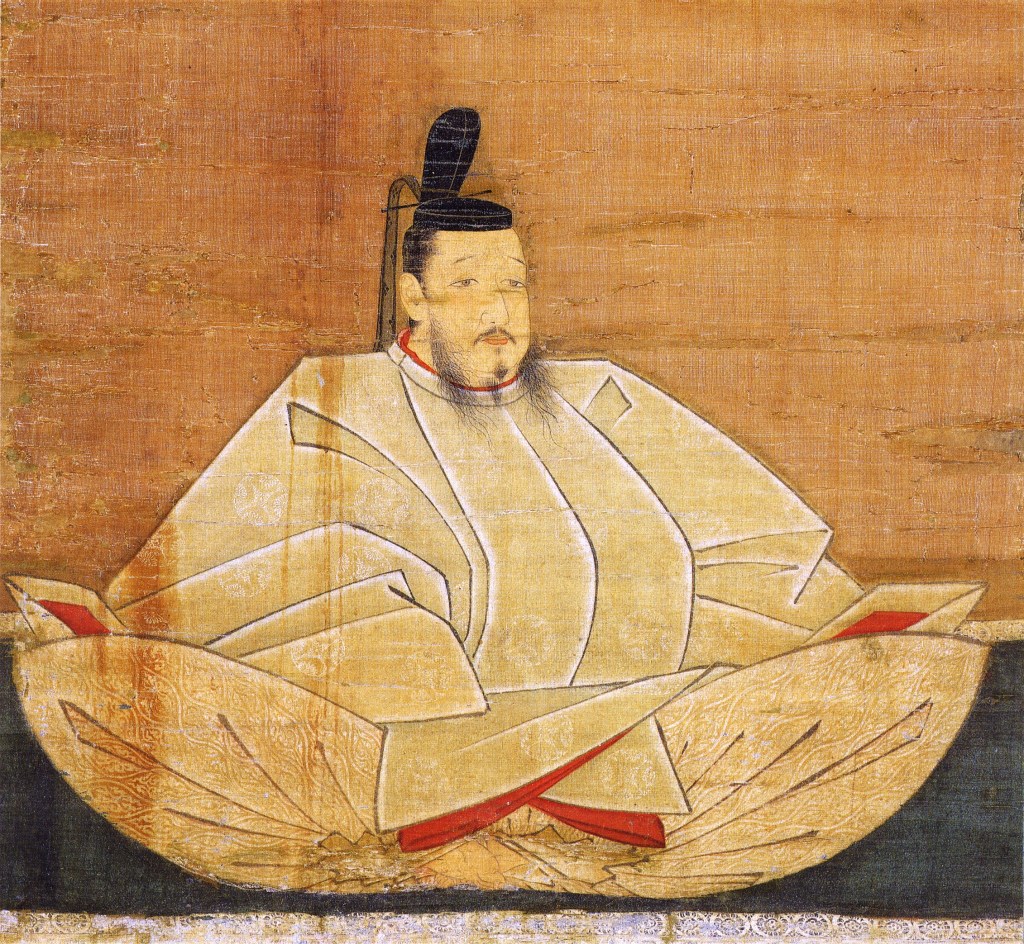
    Ashikaga Yoshimochi, the Fourth Shogun, and very much not his father’s son.

    Unfortunately for the Ashikaga, Yoshimochi turned out not to be his father’s son. No longer under Yoshimasa’s influence, he ended the Chinese trade in 1411 (it would be reinstated later), and in 1415, he faced a serious uprising from loyalists of the former Southern Court, showing that that particular problem had not been resolved.

    More seriously, in 1416, a major rebellion broke out in the Kanto Region, when the locally powerful Uesugi Clan rose up against the Kamakura Kubo, the semi-autonomous military governor in the region.

    Now, this is a bit complex, so pay attention. The Kamakura Kubo had, since the formation of the Ashikaga Shogunate, been in the hands of a branch of the Ashikaga Family, descended from one of the sons of the first Ashikaga Shogun, Takauji. Therefore, as with a lot of Japanese history it was possible to have Ashikaga on both sides of any conflict, going forwards I’ll make sure to be clear which branch of the family I’m talking about, but it’s a bit of headache.

    Confused genealogy aside, the Kubo was, much like their cousins in Kyoto, surrounded by Samurai Clans who were often stronger than the local government. In the Kanto, the most powerful family was the aforementioned Uesugi, and they’d been a real thorn in the side of the Kamakura Ashikaga from the start.

    The Uesugi had often held the title of Kanto Kanrei, which is basically the Shogun’s Deputy in the Kanto Region, in which Kamakura lies. Unsurprisingly, the Kamakura Ashikaga and the Uesugi spent most of their time butting heads, and in 1415, a particularly serious disagreement led to the Uesugi being stripped of the kanrei position.

    You can probably guess what happened next. The Uesugi refused to accept that, and one thing led to another until in late 1416, they rose in rebellion, taking Kamakura in October. Confused reports reached Kyoto later in the month, some of which suggested that the Kamakura Kubo, Mochiuji, was already dead.

    When it became clear that he was, in fact, alive, the Shogun dispatched an army made up of loyal clans to the Kanto to put the rebellion down. This they did, and the Uesugi forces were decisively defeated at the Battle of Seyahara in January 1417, after which their power was severely curtailed.

    In the aftermath, Shogun Yoshimochi accused his brother, Yoshitsugu (who had been that potential rival to the throne we mentioned earlier), of being complicit in, or even behind the rebellion. Yoshitsugu pleaded his innocence (as you do), but, fearing for his life, fled the capital and became a monk.

    Ashikaga Yoshitsugu, who was accused of plotting rebellion by his brother, and killed in 1418.

    That didn’t save him, and in 1418, he either committed suicide or was murdered on his brother’s orders. The man accused of his assassination was later denounced for apparently having an affair with one of the Shogun’s concubines and killed himself, which is just one of those salacious side stories that make studying history such a joy.

    The seeds of more trouble in the Kanto were sown when Mochiuji pursued a policy of revenge against those who had rebelled, despite the Shogun’s official desire for reconciliation. Direct conflict would be a while in coming, but the increasingly defiant Kanto Lords could not be ignored forever.

    Sources

    https://ja.wikipedia.org/wiki/%E8%B6%B3%E5%88%A9%E7%BE%A9%E5%97%A3
    https://ja.wikipedia.org/wiki/%E5%8C%97%E5%B1%B1%E6%96%87%E5%8C%96
    https://ja.wikipedia.org/wiki/%E6%97%A5%E6%98%8E%E8%B2%BF%E6%98%93
    https://ja.wikipedia.org/wiki/%E6%A5%A0%E8%91%89%E8%A5%BF%E5%BF%8D
    https://en.wikipedia.org/wiki/Kinkaku-ji
    https://ja.wikipedia.org/wiki/%E8%B6%B3%E5%88%A9%E7%BE%A9%E6%8C%81
    https://ja.wikipedia.org/wiki/%E4%B8%8A%E6%9D%89%E7%A6%85%E7%A7%80%E3%81%AE%E4%B9%B1
    https://ja.wikipedia.org/wiki/%E8%B6%B3%E5%88%A9%E6%8C%81%E6%B0%8F#%E5%AE%98%E6%AD%B4
    https://ja.wikipedia.org/wiki/%E6%96%AF%E6%B3%A2%E7%BE%A9%E5%B0%86#%E7%AE%A1%E9%A0%98%E5%B0%B1%E4%BB%BB%E3%81%A8%E5%A4%B1%E8%84%9A
    https://ja.wikipedia.org/wiki/%E9%81%A3%E6%98%8E%E8%88%B9

  • Centralisation.

    Centralisation.

    By the 1380s, the Northern and Southern Court Period (Nanbokucho Jidai in Japanese) had been dragging on for nearly 50 years. This was a period of frequent conflict, and the instability had only served to weaken the power of the central government in Kyoto.

    In 1368, Ashikaga Yoshimitsu became the third Ashikaga Shogun. As he was still a minor at the time, the government was initially in the hands of his Kanrei (Deputy) Hosokawa Yoriyuki, whom we talked about last time.

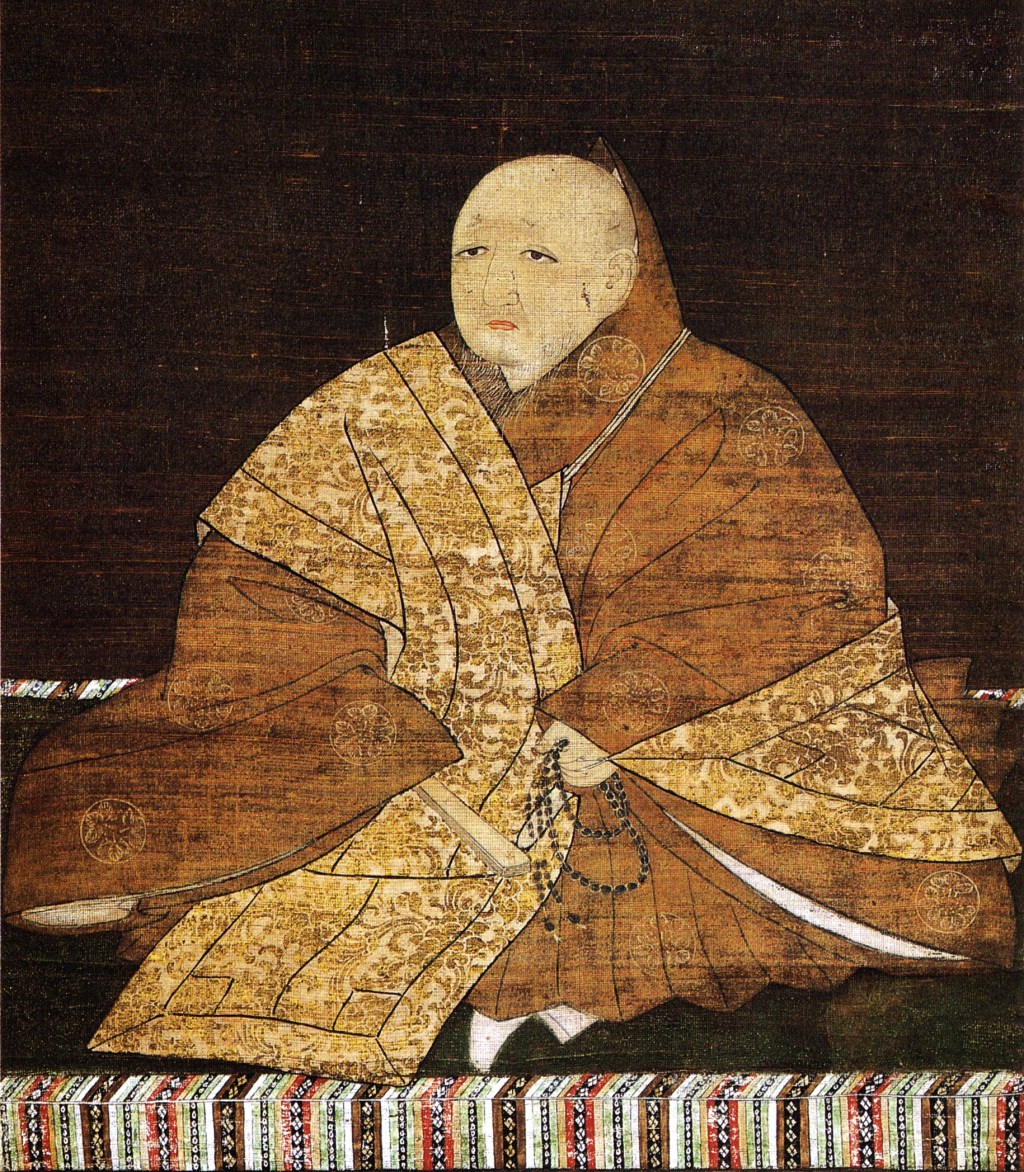
    Ashikaga Yoshimitsu, the third Ashikaga Shogun. This image is from after he became a monk in later life.

    In 1378, Yoshimitsu assumed power in his own right. He also moved the official Shogunate residence to the Hana-no-Gosho, or Flower Palace, in the Muromachi area of Kyoto. Because of this, the Ashikaga Shogunate is sometimes called the Muromachi Shogunate, though we’ll keep calling them Ashikaga for now, to avoid any more confusion.

    When Yoriyuki was forced to resign by his enemies during the Koryaku Coup, he was replaced by Shiba Yoshimasa, and the wider Shiba Clan saw their fortunes improve further still as Yoshimasa moved to fill several government positions with his family and retainers.

    If you imagine that the Koryaku Coup was a matter of the Shiba Clan replacing the Hosokawa, then you’d be wrong. In fact, after 1379 (the year of the coup), the power of the Shogunate increased considerably, with the centralisation of government put in place by Yoriyuki falling not into the hands of the Shiba, but the Shogun himself.

    Some historians have speculated that Yoshimitsu actually worked to engineer the conflict between the Hosokawa and Shiba Clans, playing both factions off each other in order to increase his own power. Whilst there are no clear records of any such plan, Yoshimitsu took advantage of the chaos to ensure that no one clan would be in a position to challenge him again.

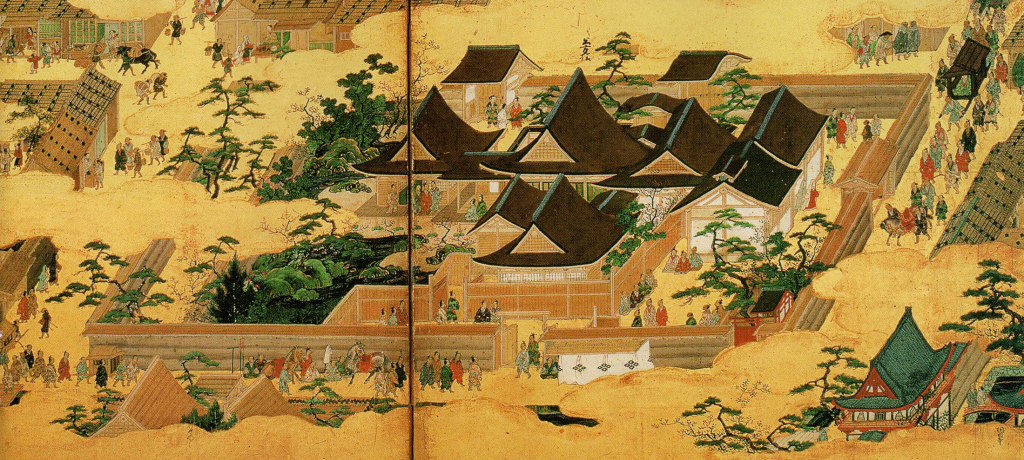
    The Flower Palace in Kyoto. Yoshimitsu paid close attention to the image of the Shogunate.

    Imperial Politics

    During the 1380s, Yoshimitsu worked to tighten the bonds between the Shogunate and the Imperial Northern Court, whilst ensuring that one was clearly superior to the other.

    The exact relationship between the Imperial and Shogunate government at this time is a bit complicated, but officially, the Shogun served as the Supreme Military commander nominally at the Emperor’s service.

    In reality, of course, the Shogun was a military dictator, ruling the nation in all but name, but formally the Emperor ruled, while the Shogun merely served. To get around this legal technicality, Shoguns were often granted formal rank in the Imperial hierarchy and would often take up positions in the ‘Imperial’ government, further cementing their legitimacy.

    We won’t go into the exact nature of the Imperial hierarchy, but in short, there were nine ranks, with the top three being divided further divided into Senior and Junior levels, whilst ranks four to nine (also called ‘initial rank’) were further divided into four levels (Upper Senior, Lower Senior, Upper Junior, and Lower Junior) for a total of thirty ranks.

    By the 14th Century, Imperial Rank no longer granted very much in the way of actual political power, but it was a mark of prestige, and continues to be so today, although the ranks were reorganised during the 19th Century Meiji Restoration.

    Yoshimitsu was not the first, or last, Shogun to take on Imperial Rank and title, but he did so at a time when the formalities of the Imperial Throne were more important than they would eventually become. By 1382, he had been granted Junior First Rank and took the position of Minister of the Left, effectively Prime Minister.

    In his position as Minister of the Left, he began using the Imperial bureaucracy to issue orders and instructions, effectively turning Shogunate orders into Imperial ones, increasing their weight considerably, and obliging many troublesome lords to fall in line. It was one thing to oppose the Shogun, but another entirely to go against the Son of Heaven.

    Controlling the Imperial Government relied on harnessing the reflected prestige of the Emperor’s Divine heritage, but being Shogun was, and remained, a primarily military position. Whilst Imperial decrees brought a lot of minor lords into line, there were still several powerful clans in Japan who would not bow to anything other than force.

    Yoshimitsu the Warrior

    Fortunately for the Shogunate, Yoshimitsu proved himself adept at playing this role too. You may remember that the Koryaku Coup in 1379 had been led by three clans, the Shiba, Toki, and Yamana; however, it is the Toki and Yamana Clans who are important for this next bit.

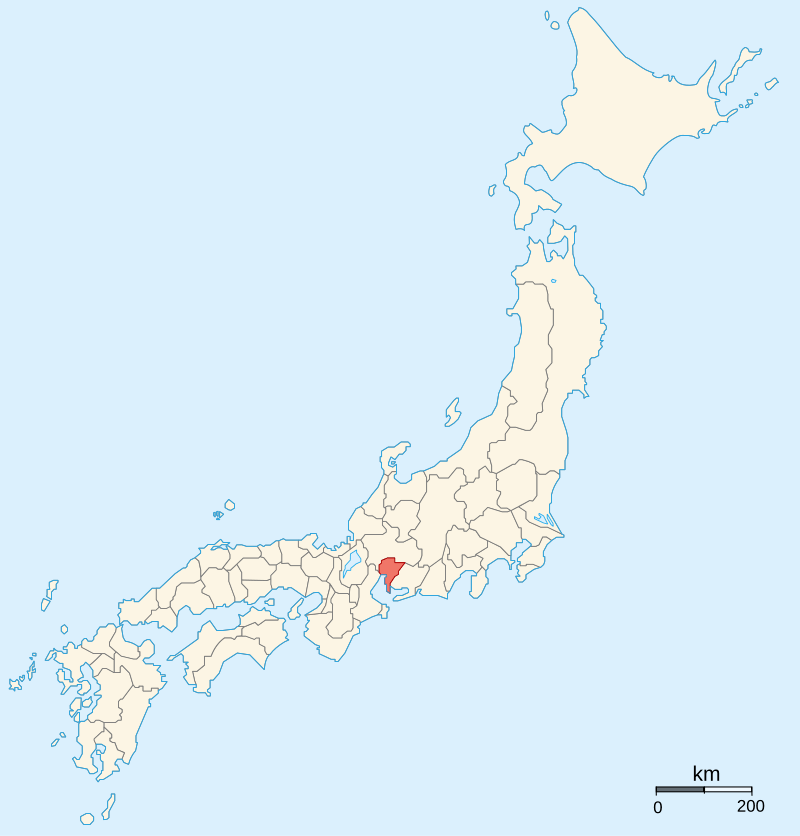
    By the late 1380s, the Toki Clan ruled three provinces, whilst the Yamana (through various family members) controlled eleven. These power blocs were far too strong for the Shogun to take on directly; however, in 1388, the head of the Toki Clan died. Instead of allowing the heir, Yasuyuki, to inherit all three provinces (Mino, Ise, and Owari), the Shogun declared he’d only get two (Mino and Ise), whilst the third (Owari) would go to his brother, Mitsutada.

    Owari Province, in modern day Nagoya.
    By Ash_Crow – Own work, based on Image:Provinces of Japan.svg, CC BY 2.5, https://commons.wikimedia.org/w/index.php?curid=1691740

    It should come as little surprise that Yasuyuki and Mitsutada, despite being brothers, didn’t get along, and it wasn’t long before Mitsutada, who by all accounts was an ambitious sort, began plotting against his brother. Although the details are a bit murky, forces loyal to Yasuyuki attacked Mitsutada and forced him to flee to safety in Kyoto.

    This act of near fratricide was exactly what the Shogun wanted. Mitsutada had been appointed as Shugo (military governor) of Owari Province, and Yasuyuki had committed an act of rebellion in throwing him out.

    Shogun Yoshimitsu declared Yasuyuki a traitor and ordered loyal forces (led by other members of the Toki Clan, which just highlights how complex family relations were amongst Samurai) to bring him to justice. Yasuyuki was defeated by this coalition, and in the aftermath, the Toki Clan were deprived of Ise Province, whilst the family was split into two branches, one ruling Owari, the other Mino.

    Yasuyuki would survive this episode and would actually return to favour under the Shogunate less than a year later during the Meitoku Rebellion (which we’ll talk about in a minute). Yasuyuki would regain control of Ise Province in 1391, whilst his treacherous brother, Mitsutada, would be deprived of Owari in the same year, apparently due to cowardice and mismanagement.

    This whole episode shows that Shogun Yoshimitsu understood the nature of power politics in this period. Rather than destroy the Toki Clan outright, he weakened just enough to remove them as a threat to the Shogunate, but not so much that they could no longer govern what remained of their territories effectively.

    After dealing with the Toki, Yoshimitsu turned his attention to the Yamana. As we discussed earlier, at this point, the Yamana Clan controlled eleven provinces in Eastern Japan. However, it should be noted that, much like the Toki, the Yamana Clan were not a single, united family. Instead, there were four brothers who were apparently united in name only.

    Good Policy, or Good Fortune?

    Yoshimitsu took advantage of this and pitted the brothers against each other. Some historians claim this was a deliberate policy of the Shogun, whilst others counter that strife within the Yamana family was nothing new, and Yoshimitsu simply grasped an opportunity.

    Throughout 1391, Yoshimitsu had strengthened his position, defeating the Yamana Clan and dismissing his Shiba Kanrei, replacing him with Hosokawa Yoritomo, son of Hosokawa Yoriyuki, who had been overthrown during the Koryaku Coup back in 1379.

    This is often cited as evidence that Yoshimitsu was moving against all three clans. He had engineered the downfall of the Toki, removed Shiba members of his government, and gone out of his way to take advantage of the Yamana’s division, whilst attempting to provoke them into doing something rash.

    In November 1391, one of the Yamana brothers, Mitsuyuki, seized Yokota Manor in Kyoto. The exact circumstances aren’t clear. It is certain that Mitsuyuki took control of the Manor, but it’s not clear if his doing so was actually illegal. The Manor had been an Imperial property, but had come into the hands of the Yamana Family some years earlier; therefore, it’s possible that Mitsuyuki believed he was simply claiming a property that belonged to his family.

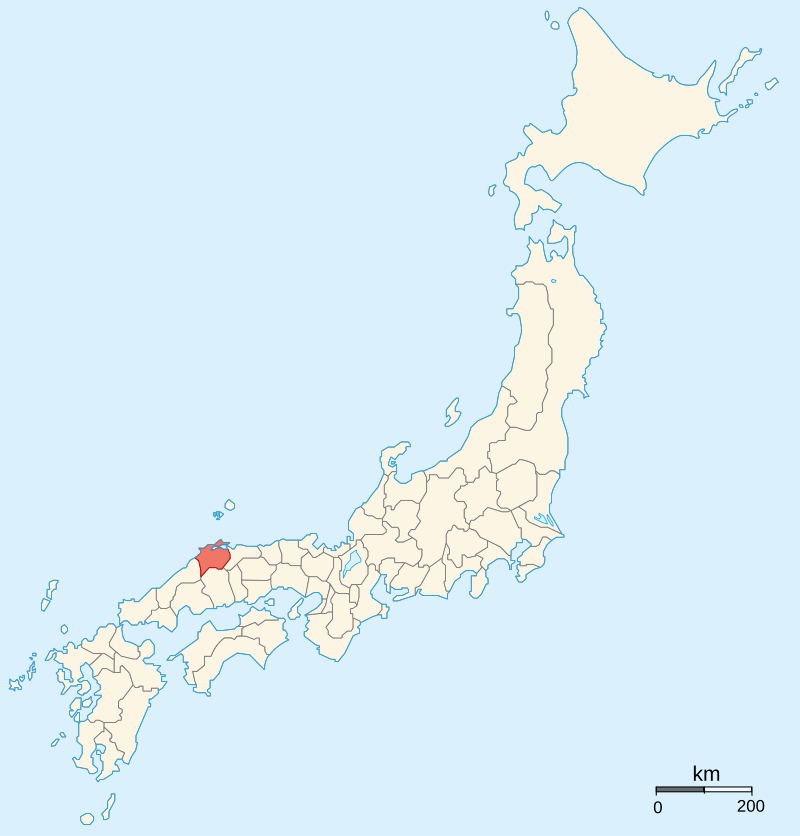
    The Shogun and Northern Imperial Court didn’t agree, however. They argued that the property was owned by the head of the Yamana Clan, not Mitsuyuki himself. It is possible that Mitsuyuki was genuinely mistaken, but he had violated the peace, and so the Shogunate confiscated his province (Izumo) as a result.

    Izumo Province.
    By Ash_Crow – Own work, based on Image:Provinces of Japan.svg, CC BY 2.5, https://commons.wikimedia.org/w/index.php?curid=1682749

    Now, if you’ve been paying any kind of attention so far (and I hope you have) then you’re probably aware that Samurai aren’t the type to take this sort of thing on the chin, and Mitsuyuki began agitating amongst his relatives, claiming that the Shogun was planning to do to the Yamana what he had done to the Toki, which, to be fair, was probably true.

    Having successfully raised an army, Mitsuyuki and the Yamana marched on Kyoto, where they were met by Shogunate forces led by Yoshimitsu himself. Outnumbered 2-1, the Yamana were defeated, their leaders were killed, captured, or put to flight, and the so-called ‘Meitoku Rebellion’ was brought to a swift conclusion.

    Mitsuyuki himself would escape, and there would be further uprisings of Yamana loyalists until his capture and execution in 1395, but for all intents and purposes, the Yamana were broken. In the direct aftermath of their rebellion, they were reduced from eleven provinces to just three, and although the Yamana Clan would survive, they could no longer challenge the Shogun.

    There would be a similar rebellion in 1399, when the next powerful clan, the Ouchi, would have to be dealt with, but their conflict with the Shogun ended much the same as the other two, with defeat, a reduction in land, but the overall survival of the clan.

    Ashikaga Yoshimitsu could arguably be considered the best of the Ashikaga Shoguns, but his most enduring legacy is not found on the battlefield, but in dynastic politics, which we’ll talk about next time.

    Sources

    https://en.wikipedia.org/wiki/Ashikaga_shogunate
    https://en.wikipedia.org/wiki/Ashikaga_Yoshimitsu
    https://ja.wikipedia.org/wiki/%E8%B6%B3%E5%88%A9%E7%BE%A9%E6%BA%80
    https://ja.wikipedia.org/wiki/%E6%98%8E%E5%BE%B3%E3%81%AE%E4%B9%B1
    https://ja.wikipedia.org/wiki/%E5%9C%9F%E5%B2%90%E6%B0%8F
    https://ja.wikipedia.org/wiki/%E5%9C%9F%E5%B2%90%E5%BA%B7%E8%A1%8C%E3%81%AE%E4%B9%B1
    https://ja.wikipedia.org/wiki/%E8%8A%B1%E3%81%AE%E5%BE%A1%E6%89%80
    https://en.wikipedia.org/wiki/Nanboku-ch%C5%8D_period