Tag: Shimazu Yoshihisa

  • The Shimazu, Part 2

    The Shimazu, Part 2

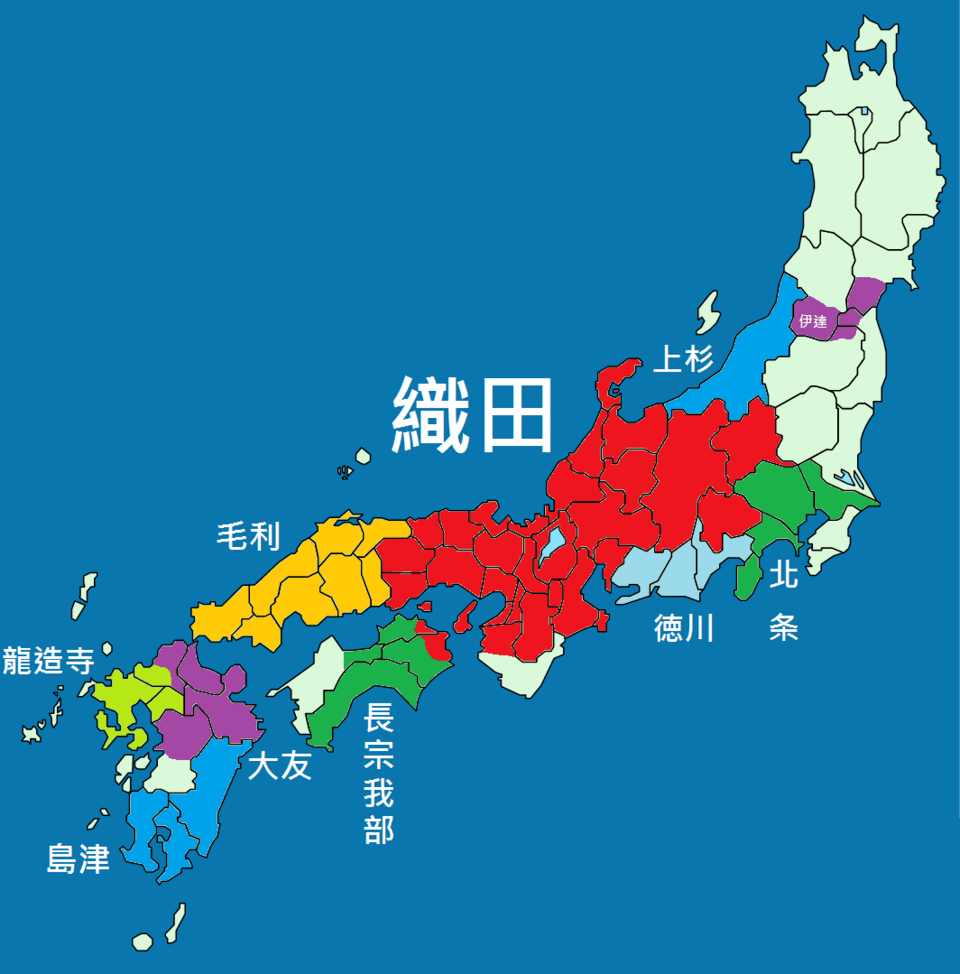
    By 1582, the Shimazu were once again masters of southern Kyushu and had recently defeated the rival Otomo Clan so comprehensively that they effectively ceased to be an obstacle to Shimazu dominance of the whole island. This ambition would be curbed by the intervention of Oda Nobunaga, who wanted to get the Otomo to join his attack on the Mori Clan.

    The situation in 1582. The Shimazu are in blue, and the Otomo in purple. The Mori are in yellow, and Oda Nobunaga is the big red blob in the middle.
    By Alvin Lee – Own work, CC BY-SA 4.0, https://commons.wikimedia.org/w/index.php?curid=39198356

    Nobunaga’s plans, along with his life, would be cut short in the Honnoji Incident in June 1582, and the Shimazu once again found themselves as the strongest clan on Kyushu. In the far north-west of the island, close to the modern city of Nagasaki, lay the base of the Ryuzoji Clan. For generations, the Ryuzoji had been a secondary clan in the region. However, under the leadership of Ryuzoji Takanobu, they had expanded their power to control the whole of Hizen Province (modern Nagasaki and Saga Prefectures), and although they had nominally been subordinates of the Otomo Clan, the aftermath of the Battle of Mimikawa in 1578 (which the Otomo lost) gave the Ryuzoji the opportunity to expand even further. (They are in the light-green on the map above).

    It was inevitable that the Shimazu and Ryuzoji would clash, and in 1584, a member of the Arima Clan wrote to Shimazu Yoshihisa, requesting his aid against the Ryuzoji. This was a convenient excuse to do what he probably would have done anyway, and Yoshihisa dispatched an army under his brother Iehisa. What followed was a lightning campaign in which the Shimazu, despite being outnumbered more than three-to-one, engaged and defeated the Ryuzoji at the decisive Battle of Okitanawate in May 1584.

    This proved to be yet another decisive victory for the Shimazu. Not only did they defeat the Ryuzoji army, Takanobu, but the lord of the clan was also killed, cutting the head off the proverbial snake. The Ryuzoji had expanded rapidly, and their control collapsed just as quickly. Clans who had been forced to submit quickly switched sides to the Shimazu, and any holdouts were destroyed in short order.

    In 1586, Yoshihisa turned his attention to the remnants of the Otomo Clan, invading Bungo Province and crushing the final remnants of what had once been Kyushu’s pre-eminent clan. Yoshihisa might have had time to reflect on the fleeting nature of power in that era, but he wouldn’t have had long. No sooner did the Shimazu deal the final blow to the Otomo than the last holdouts of that clan appealed to the new power in Japan for help, Toyotomi Hideyoshi.
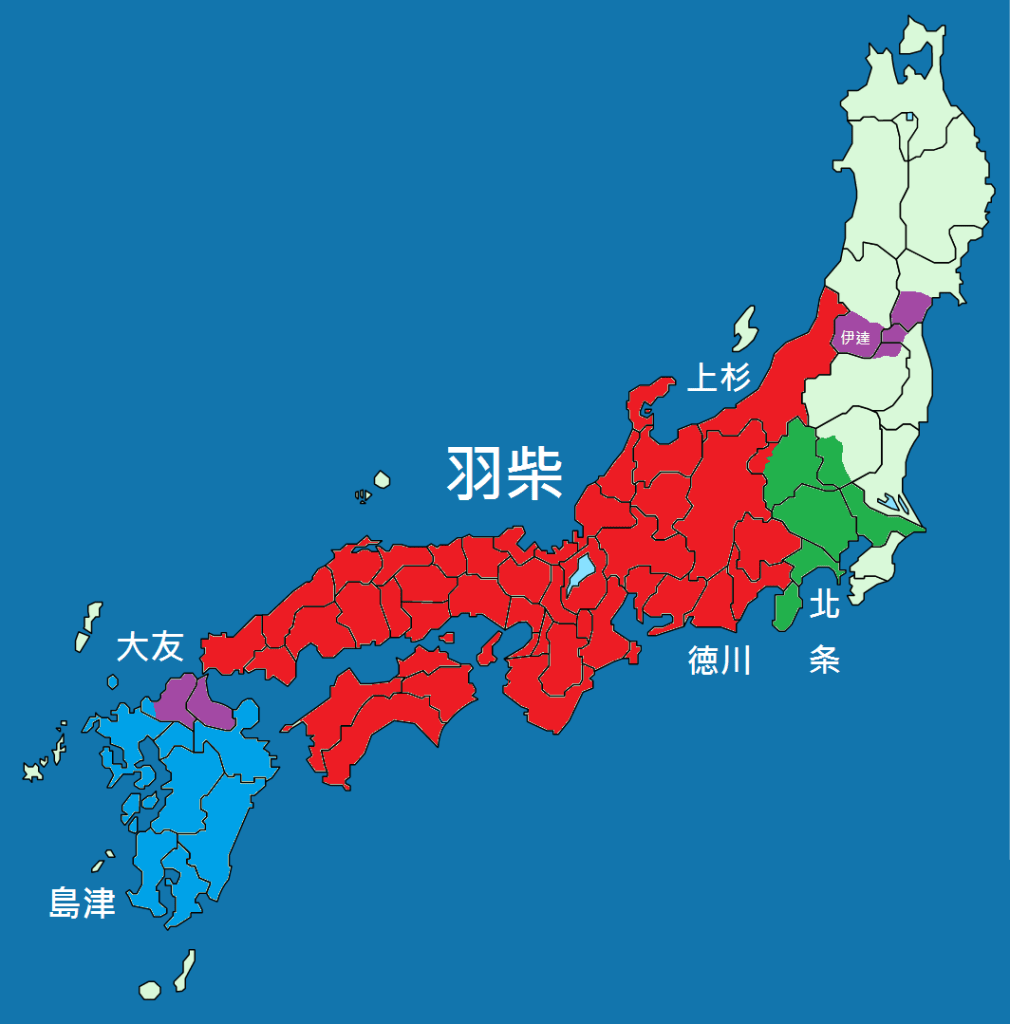
    The situation in 1586, after Toyotomi Hideyoshi secured power, and the Shimazu came so close to unifying Kyushu.
    By Alvin Lee – Own work, CC BY-SA 4.0, https://commons.wikimedia.org/w/index.php?curid=39214208

    The Shimazu were at the height of their power, and it is perhaps no surprise that, when Hideyoshi order them to cease their attacks on the Otomo, they refused. Yoshihisa went even further, when he suggested that the Shimazu, and old and storied clan, had no need to accept an ‘upstart’ like Hideyoshi as regent. Hideyoshi had been born a peasant, but he was the most powerful warlord in Japan by that point, and Yoshihisa would come to regret the disrespect.

    When it became clear that Hideyoshi meant to invade Kyushu, the Shimazu doubled their efforts to crush the Otomo and secure the whole island. They rightly guessed that any Otomo holdouts would be used by Hideyoshi’s forces as a base for any campaign. Though they would ultimately be unable to fully subjugate the Otomo, the Shimazu’s confidence seemed to have been well placed when, in early 1587, Chosokabe forces, under Hideyoshi’s orders, invaded Bungo province and were heavily defeated at the Battle of Hetsugigawa.

    Shimazu celebrations would be short-lived, however. Hideyoshi, reportedly enraged by the ease with which the Shimazu had apparently defeated the initial invasion, mustered a force of between 250,000 and 300,000 men (reports vary), possibly the largest army seen in Japan up to that time. Throughout the spring and summer of 1586, this huge force steamrolled the Shimazu. There were instances of brave resistance, but the writing was on the wall, and in June, the Shimazu sued for peace.
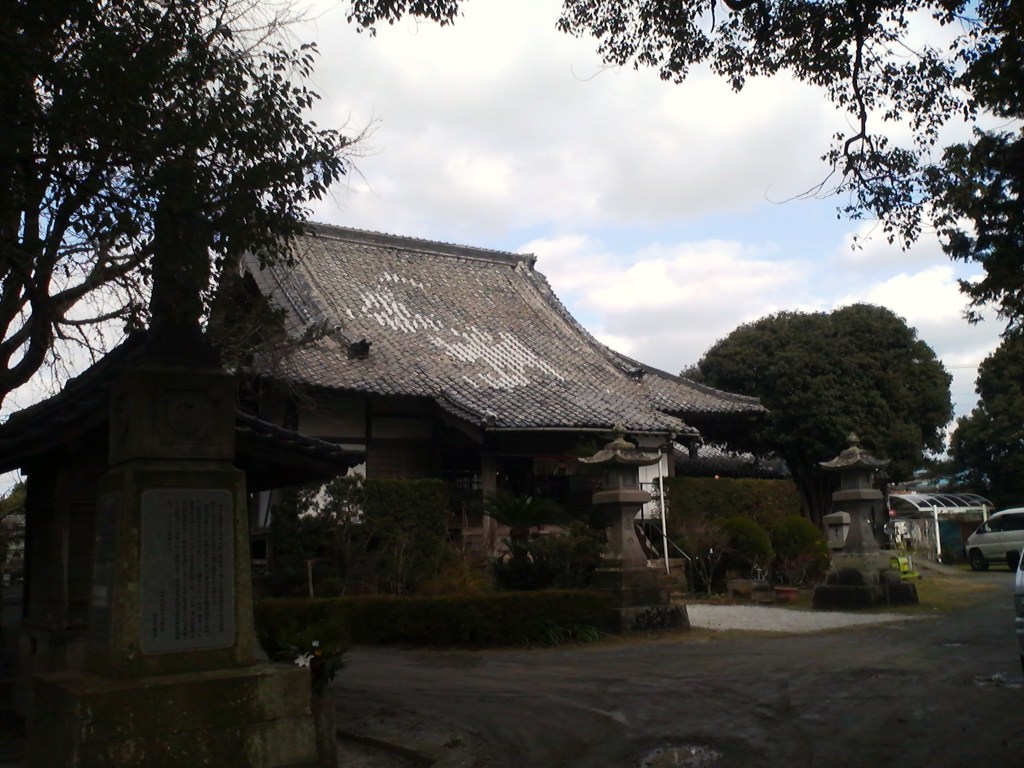
    Taiheiji Temple in modern Kagoshima, where Shimazu Yoshihisa met with Toyotomi Hideyoshi, and a peace was agreed.
    Sakoppi – 自ら撮影, CC 表示 3.0, https://commons.wikimedia.org/w/index.php?curid=12570199による

    The terms were harsh, but ultimately secured the survival of the clan. Hideyoshi demanded that the Shimazu give up control of almost the whole of Kyushu, essentially wiping out centuries of conquest and expansion. In return, the Shimazu were confirmed as lords of Satsuma province, and later, after further negotiations, Osumi as well.

    The Shimazu would prove to be somewhat unreliable vassals. When Hideyoshi invaded Korea in 1592, he ordered all feudal lords to commit troops. The Shimazu were apparently slow to comply with this order, leading Hideyoshi to suspect they were disloyal (which they probably were, having been only recently conquered)

    The Shimazu would eventually obey and dispatch troops to Korea, but it appears that Yoshihisa had been replaced as head of the clan in the eyes of Hideyoshi, as formal letters recognising Shimazu control of their provinces were written in the name of Shimazu Iehisa, Yoshihisa’s younger brother, though it appears that Yoshihisa retained the actual power.

    Shimazu Iehisa (sometimes called Yoshihiro), the nominal head of the Shimazu after Hideyoshi’s invasion of Kyushu.

    Hideyoshi’s death and the end of the war in Korea refocused the realm’s attention back home, as Hideyoshi’s son and heir was just a child. The Shimazu would not be members of the Council of Regents, but when the final rupture occurred in 1600, and war became inevitable, Shimazu Iehisa (nominal head of the clan) was in Kyoto and swore loyalty to the Western (or pro-Toyotomi) army.

    This move was apparently not supported by his older brother and the wider Shimazu clan, as when Iehisa requested reinforcements, he received none. This might have been a deliberate ploy by the Shimazu to play both sides, but it’s also possible that an outbreak of fighting in Kyushu caused the Shimazu to focus their efforts closer to home.

    The fighting was relatively small-scale and was nominally between supporters of the Toyotomi and Tokugawa Ieyasu (who had just won the decisive Battle of Sekigahara). In reality, this was probably an example of a breakdown in central authority being taken advantage of by local warlords. Unlike in previous eras, however, central control was swiftly reestablished. After his victory at Sekigahara, Ieyasu turned his attention to subduing the rest of the realm, Kyushu included.

    Tokugawa Ieyasu.

    A planned campaign against the Shimazu was cancelled in favour of negotiations that lasted nearly two years. Ieyasu suggested that Yoshihisa travel to Kyoto in person, but Yoshihisa always had an excuse not to go; he was ill, the roads were bad, the weather was awful, he hadn’t got enough money, etc. Finally, in 1602, Ieyasu, who apparently had no real appetite for a campaign in Kyushu, confirmed Shimazu control of Satsuma and Osumi Provinces after Yoshihisa’s brother, Iehisa, went to Kyoto in his place (some sources say Yoshihisa actually opposed this idea, only approving it after the fact, when his brother had already departed)

    The Shimazu would be largely left in peace in the decades that followed. In 1609, Iehisa, but now more or less dejure lord of the Shimazu, received permission from the Tokugawa to invade the Ryukyu Kingdom (modern Okinawa). This meant that the Shimazu became the only clan to control a foreign kingdom, and meant that, when Japan entered its period of isolation (Sakoku), the Shimazu were one of the few who still had access to the outside world.

    These contacts would grant the Shimazu an unusual level of economic strength in the Edo period, and this, combined with some strategic marriages into the Tokugawa, meant that the clan, despite (or perhaps because of) its distance from Edo (modern Tokyo), became one of the richest and most powerful of the era.
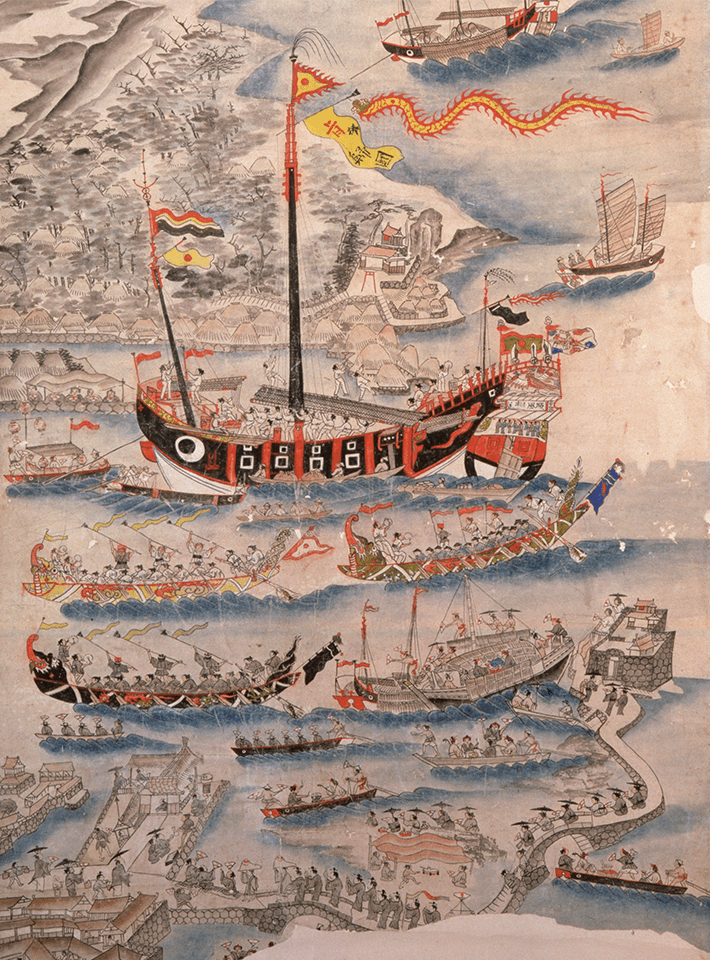
    A Ryukyu tributary mission to China. The relationship between Ryukyu and China allowed the Shimazu to maintain indirect trade links with mainland Asia.

    This proved to be important in the 19th century, when the irresistible tide of modernisation swept Japan after the first American, but later, other powers sought to take advantage of Japan’s weak position for their own ends. It would be the Shimazu (better known as Satsuma Domain by then) under their leader Nariakira, who were amongst the first to grasp the potential for Western-style industrialisation and warfare.

    Satsuma Domain would be at the vanguard of the Meiji Restoration, with its alliance with the Mori clan of the Choshu Domain proving to be the decisive factor in the brief, but bloody Boshin War that saw the Tokugawa overthrown and Imperial rule reestablished.

    The Shimazu themselves would endure the tumultuous years of the late 19th and 20th centuries, and the family survives today, with the 33rd head of the clan, Shimazu Tadahiro, serving as CEO of the Shimazu Corporation, which works to promote not only the cultural legacy of the Shimazu family, but also tourism and business development in and around Kagoshima, the traditional heart of the Satsuma Domain.

    Sources
    https://ja.wikipedia.org/wiki/%E5%B3%B6%E6%B4%A5%E7%BE%A9%E4%B9%85
    https://ja.wikipedia.org/wiki/%E5%B3%B6%E6%B4%A5%E7%BE%A9%E5%BC%98
    https://ja.wikipedia.org/wiki/%E5%B3%B6%E6%B4%A5%E6%B0%8F#
    https://ja.wikipedia.org/wiki/%E5%B3%B6%E6%B4%A5%E5%BF%A0%E8%A3%95
    https://ja.wikipedia.org/wiki/%E5%B3%B6%E6%B4%A5%E8%88%88%E6%A5%AD
    https://ja.wikipedia.org/wiki/%E5%B3%B6%E6%B4%A5%E6%96%89%E5%BD%AC
    https://ja.wikipedia.org/wiki/%E6%A0%B9%E7%99%BD%E5%9D%82%E3%81%AE%E6%88%A6%E3%81%84
    https://ja.wikipedia.org/wiki/%E4%B9%9D%E5%B7%9E%E5%B9%B3%E5%AE%9A
    https://ja.wikipedia.org/wiki/%E6%88%B8%E6%AC%A1%E5%B7%9D%E3%81%AE%E6%88%A6%E3%81%84
    https://ja.wikipedia.org/wiki/%E6%B2%96%E7%94%B0%E7%95%B7%E3%81%AE%E6%88%A6%E3%81%84
    https://ja.wikipedia.org/wiki/%E9%BE%8D%E9%80%A0%E5%AF%BA%E9%9A%86%E4%BF%A1
    https://en.wikipedia.org/wiki/List_of_daimy%C5%8Ds_from_the_Sengoku_period
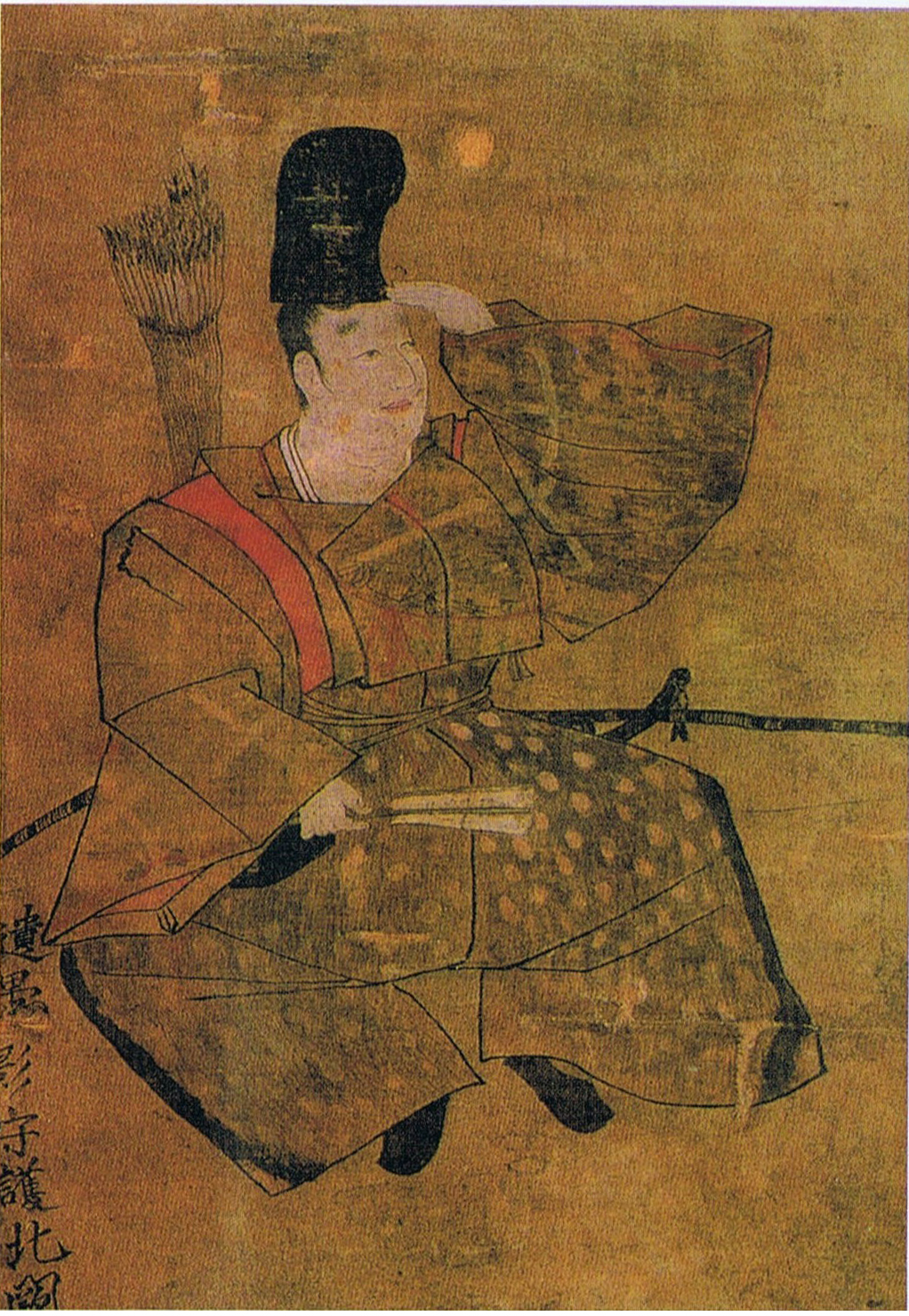
  • The Shimazu, Part 1

    The Shimazu, Part 1

    Last time we looked at Shikoku, the so-called ‘four provinces’, well, how about an island of nine provinces? That’s right, Kyushu, the third largest of Japan’s main islands, is so called because in the pre-modern period it was home to nine whole provinces, which means, as names go, it’s not terribly creative, but what can you do?

    Kyushu.
    By TUBS – This vector image includes elements that have been taken or adapted from this file:, CC BY-SA 3.0, https://commons.wikimedia.org/w/index.php?curid=16385933

    In ancient times, Kyushu had been the centre of cultural, economic, and social development in Japan, as its close proximity to Korea, and by extension China, made it the logical landing site for innovations as widespread as rice farming and written language. The island would also be the focus of two ultimately unsuccessful Mongol invasions in the 13th Century, and the Shogunate administration there would continue to be important until the decline of central authority in the 15th Century left Kyushu, much like the rest of the realm, effectively independent.

    Into this power vacuum stepped several powerful clans, with the most prominent arguably being the Ouchi, Otomo, and Shimazu. Though the Ouchi and Otomo would play important roles of their own in the story of the Sengoku Period, it is the Shimazu that we will be focusing on.

    The exact origins of the Shimazu name aren’t entirely clear, but the first figure to take the name was Tadahisa, who was made lord of the Shimazu Manor in southern Kyushu in 1185. Tadahisa himself is something of a mysterious figure, with various conflicting reports of his origins, parentage, and even his name, but what is clear is that the Shimazu were well established in southern Kyushu by the 13th century, and would use it as their base going forward.

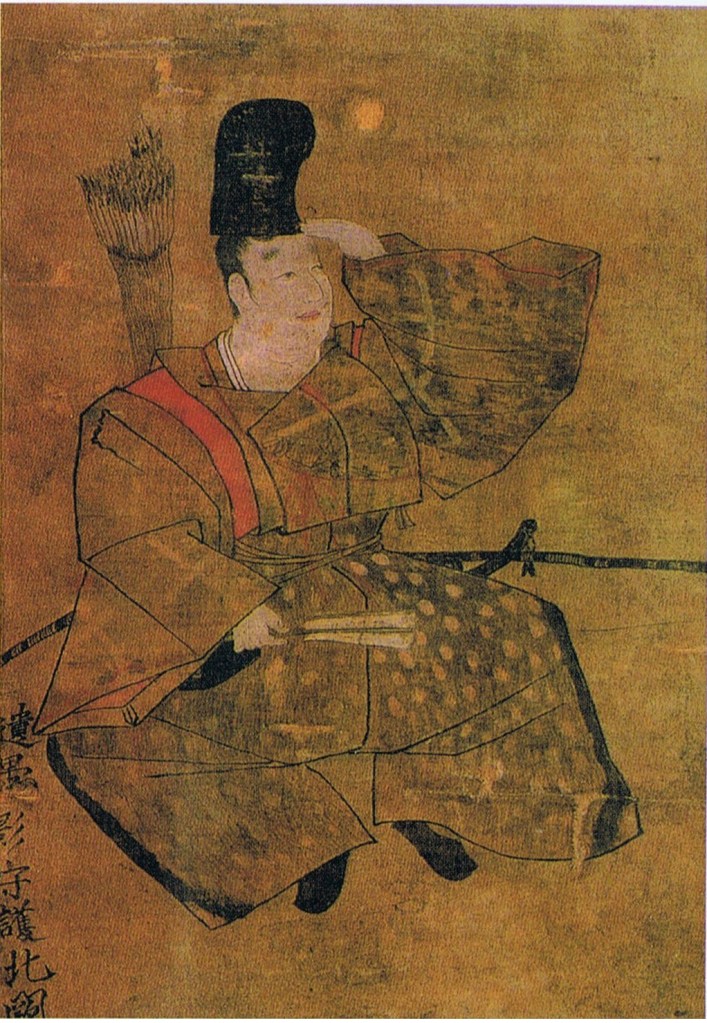
    Shimazu Tadahisa, the first “Lord” Shimazu.

    Tadahisa’s son, Tadatoki, seems to have been an accomplished military leader, as he was appointed the shugo (military governor) of Satsuma, Osumi, and Hyuga Provinces, all of southern Kyushu in effect. He was also granted numerous prestigious lands and titles around the realm, but it was his Kyushu holdings that would be the most important for his descendants.

    The Shimazu’s fortunes would ebb and flow over time, but the distance of their lands from the centre of power in Kyoto meant that they were often able to weather the storms of early Medieval Japan. They were not immune from the ever-present problem of internal conflict, however, and by the time of the Onin War in 1467, the Shimazu were weak, divided, and vulnerable.

    It would be Shimazu Tadayoshi (1492-1568) who would begin to turn the fortunes of the clan around. Originally from the Isaku Clan (a branch of the Shimazu), Tadayoshi had a difficult start to life. His father, Yoshihisa, was apparently murdered by a stable hand when Tadayoshi was just two, and his grandfather was killed in battle in 1500. Following this, Tadayoshi’s mother, Lady Baiso, agreed to marry the lord of another branch of the Shimazu, on the condition that Tadayoshi be adopted as heir to both branches. The lord in question was apparently so keen on Lady Baiso that he agreed.

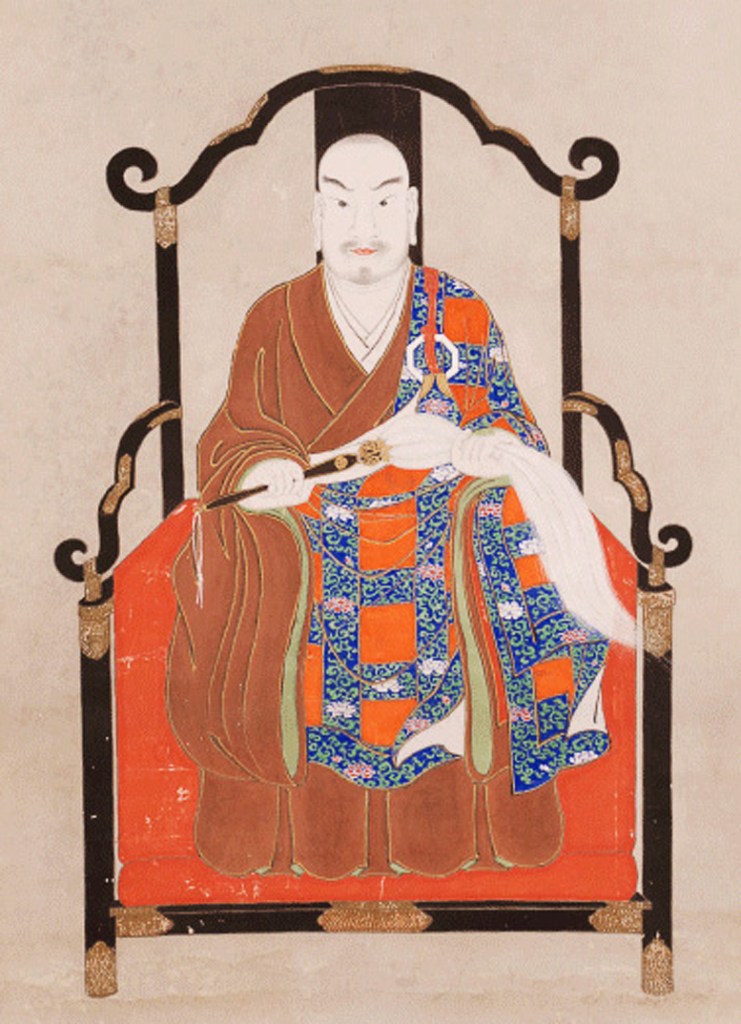
    Shimazu Tadayoshi.

    Tadayoshi proved to be an enlightened and capable ruler, taking inspiration from Zen teachings and humanitarian principles. He was a popular leader, as he genuinely cared for the needs of his retainers and the welfare of his territory, but his son, Takahisa, would prove to be greater still. In 1526, following the deaths in quick succession of both his sons, the head of the main branch of the Shimazu Clan, Katsuhisa, turned to Tadayoshi (renowned for his learning and upright conduct) for a solution to the succession issue.

    Tadayoshi had Takahisa adopted by the Lord of the Shimazu. In November 1526, Katsuhisa handed over control of the Shimazu Clan to Takahisa and retired to a monastery. Tadayoshi became a monk himself shortly afterwards and would go on to play a significant role in aiding his son in reestablishing Shimazu power in southern Kyushu.

    Shimazu Takahisa.

    Things are never quite that simple, however, and Takahisa’s accession to the leadership of the Shimazu was opposed by several powerful retainers, some of whom also claimed the right to lead. Katsuhisa himself also seems to have expressed some regret about handing over power, and in June 1527, an army was raised which drove Takahisa out, and had Katsuhisa returned as the shugo.

    The fighting would go back and forth for a while after this, despite unsuccessful efforts to arrange a reconciliation in 1529. Katsuhisa proved to be an unpopular lord, however, apparently being more focused on ‘vulgar entertainment’ than the business of ruling. Though this did not automatically translate into support for Takahisa, the division amongst his enemies handed him the initiative.

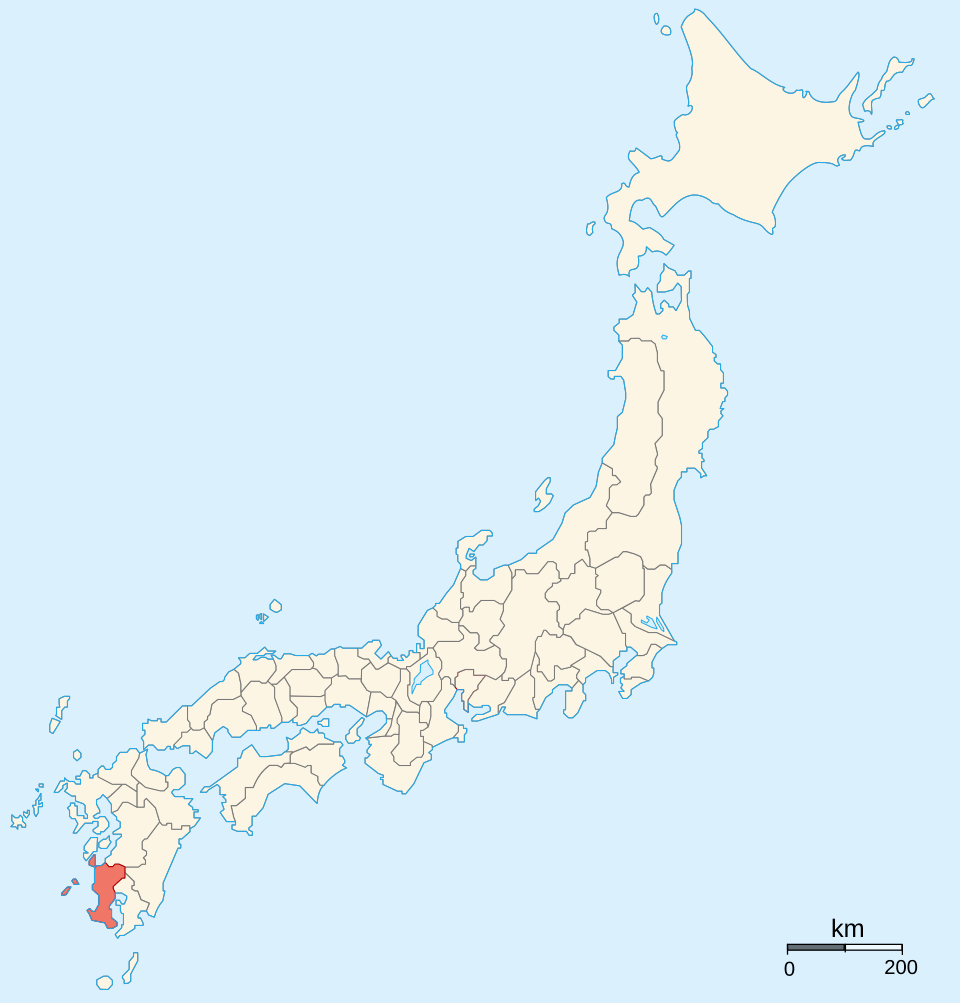
    Starting in 1533, Takahisa would lead a series of counter-attacks which eventually saw him establish control over most of Satsuma Province, and in 1539, the decisive Battle of Murasakihara saw Takahisa drive out his primary rivals, though it wouldn’t be until 1552 that he was finally recognised as the shugo of Satsuma Province by the Shogunate, 26 years after he had first assumed the mantle.

    Satsuma Province, home of the Shimazu Clan.
    By Ash_Crow – Own work, based on Image:Provinces of Japan.svg, CC BY 2.5, https://commons.wikimedia.org/w/index.php?curid=1691755

    Takahisa had long hoped to reestablish Shimazu control of the three provinces held by his ancestors, and he would lead campaigns into neighbouring Osumi province from 1554 to 1556, which would allow him to establish a foothold in the province from which further expansion could be launched.

    Though Takahisa would prove to be a successful warrior, he was also known for his outward-looking attitude towards foreigners. The Shimazu had long had trade with Ming China, largely through intermediaries in the Ryukyu Islands (modern Okinawa), and after Portuguese merchants arrived in Japan, Takahisa was one of the first lords to welcome them to his domains, and perhaps one of the first to employ firearms in battle.

    He would also go some way to establishing Christianity in Japan, as he welcomed Francis Xavier into his territory in 1549, though this would ultimately prove a short-lived association, due to backlash from conservative elements amongst the Buddhist and Shinto priesthoods.

    A later depiction of a Portuguese trading ship in Japanese waters.

    Takahisa would eventually retire to a monastery in 1556, handing control of the Shimazu over to his son, Yoshihisa, who also inherited his father’s ambitions to regain control of the three provinces of Satsuma, Osumi, and Hyuga. Yoshihisa had actually joined his father’s campaign in Osumi, making his ‘debut’ in 1554, and after inheriting the leadership from his father, he would continue the campaigns to fully pacify Satsuma and expand Shimazu holdings into the neighbouring provinces.

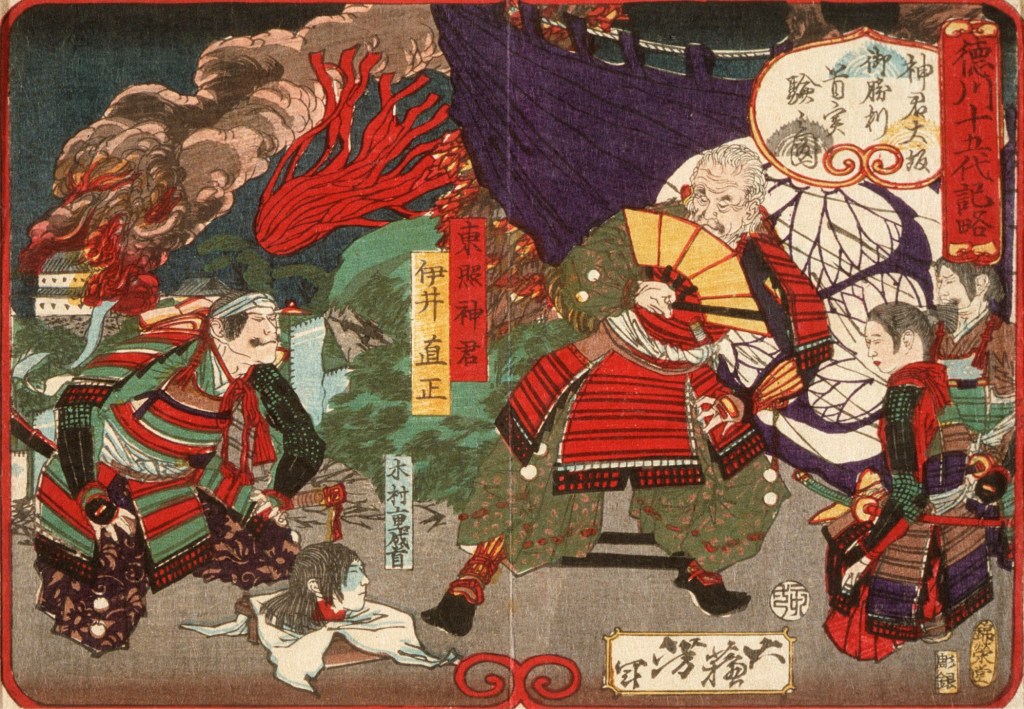
    Satsuma would come under his complete control in 1570. In 1572, a rival clan from Hyuga Province would invade Shimazu territory, only to be defeated in short order at the Battle of Kizakihara, with the Shimazu forces being led by Yoshihisa’s highly capable younger brother, Yoshihiro. It is said that the Shimazu, despite being outnumbered 10 to 1, launched an aggressive attack against the enemy, which saw several key leaders killed and over 500 enemy deaths (counted in heads taken after the battle).

    A later depiction of a head viewing (kubi-jikken), a common practice among Samurai, in which the heads of defeated enemies would be presented to lords, or otherwise publicly displayed.

    This victory allowed Yoshihisa to focus on Osumi Province, which he was able to fully conquer by the end of 1573. Then in 1576, he captured the strategically important Takahara Castle, held by the powerful Ito Clan of Hyuga. The fall of Takahara led to a domino effect in which the remaining 48 castles of the Ito Clan were either conquered or defected to the Shimazu. Not long after, the head of the Ito Clan, Yoshisuke, fled Hyuga, and the long-dreamt-of reunification of the three provinces was achieved.

    Almost as soon as the dust had settled, however, the powerful Otomo Clan, who controlled several provinces in North-Eastern Kyushu, invaded, nominally in support of the exiled Yoshisuke, but more likely in an opportunistic attempt to expand their own territory. A huge army of some 43,000 men crossed into Hyuga Province in October 1578 and laid siege to Takashiro Castle. The Shimazu under Yoshihisa could muster only 20,000 men in response, but they took advantage of poor coordination amongst the Otomo, dealing with the invaders piecemeal.

    The campaign culminated in the Battle of Mimikawa (which was actually fought nearly 20 miles from the eponymous river), in which Yoshihisa employed a series of feigned retreats, breaking the Otomo Army (which still enjoyed a numerical advantage) down, and eventually winning a victory that was so comprehensive the Otomo effectively ceased to be serious rivals.

    The war wouldn’t end at Mimikawa, however, and in 1580, Oda Nobunaga began negotiations between the Otomo and Shimazu, hoping to bring an end to the war, since he wanted the Otomo to join his upcoming campaign against the Mori. The negotiations were apparently successful, as Yoshihisa even went so far as to recognise Nobunaga as his ‘lord’, and planned to join the attack on the Mori as well.

    The situation on the eve of Nobunaga’s death in 1582. The Shimazu lands are blue, in southern Kyushu.
    By Alvin Lee – Own work, CC BY-SA 4.0, https://commons.wikimedia.org/w/index.php?curid=39198356

    As we already know, Nobunaga’s death at the Honnoji incident in June 1582 put an end to those plans, but the weakened state of the Otomo and the fact that the peace deal no longer applied meant that the Shimazu were able to defeat or force the defection of several former Otomo retainers, increasing their own power and control over southern Kyushu.

    The campaign to unify the entire island would go on, but we’ll look at that next time.

    Sources
    https://ja.wikipedia.org/wiki/%E5%B3%B6%E6%B4%A5%E7%BE%A9%E4%B9%85
    https://ja.wikipedia.org/wiki/%E8%80%B3%E5%B7%9D%E3%81%AE%E6%88%A6%E3%81%84
    https://ja.wikipedia.org/wiki/%E5%A4%A7%E5%8F%8B%E6%B0%8F
    https://ja.wikipedia.org/wiki/%E5%B3%B6%E6%B4%A5%E7%BE%A9%E5%BC%98
    https://ja.wikipedia.org/wiki/%E5%B3%B6%E6%B4%A5%E8%B2%B4%E4%B9%85
    https://ja.wikipedia.org/wiki/%E5%B3%B6%E6%B4%A5%E5%BF%A0%E8%89%AF
    https://ja.wikipedia.org/wiki/%E6%A2%85%E7%AA%93%E5%A4%AB%E4%BA%BA
    https://ja.wikipedia.org/wiki/%E8%96%A9%E6%91%A9%E5%9B%BD
    https://en.wikipedia.org/wiki/Shimazu_Takahisa
    https://ja.wikipedia.org/wiki/%E5%B3%B6%E6%B4%A5%E5%BF%A0%E4%B9%85
    https://ja.wikipedia.org/wiki/%E5%B3%B6%E6%B4%A5%E6%B0%8F
    https://en.wikipedia.org/wiki/List_of_daimy%C5%8Ds_from_the_Sengoku_period