Tag: Shogunate decline

  • The Meio Coup

    The Meio Coup

    As we’ve discussed previously, by the 1490s, the Ashikaga Shogun was a shadow of its former self. The Onin War had effectively ended even the pretence of Shogunate power, and in the provinces, what would later be called the Sengoku Jidai was already underway.
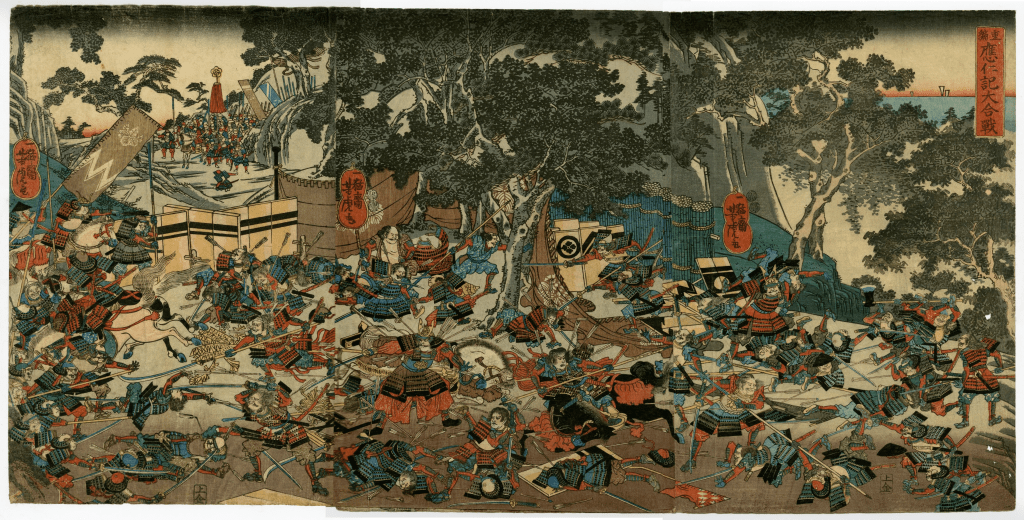
    The Onin War ultimately broke the Shogun’s power.

    There’s a post on the Onin War if you want details, but very briefly, the war was fought over who would succeed Ashikaga Yoshimasa as Shogun, his son (Yoshihisa), or his brother (Yoshimi). When the war ended in 1477, it was his son who became Shogun.

    Yoshihisa was apparently a bit of a lush, and contemporary sources paint him as a young man who was too fond of wine and women. In fact, when he died suddenly in 1489, aged just 25, it was widely blamed on his hedonistic lifestyle (not a bad way to go, mind you).

    Despite his proclivities, Yoshihisa died without a male heir, and it was at this point that the son of the defeated brother, Ashikaga Yoshitane, became Shogun. This might seem like a strange choice, and it certainly wasn’t unopposed, but he apparently had the support of Hino Tomiko, Yoshihisa’s mother, who was widely regarded as one of the most influential women in Japanese history.

    Quite why Tomiko chose to support Yoshitane isn’t documented, but given her reputation for political intrigue, she probably had some long game in mind. Yoshitane wouldn’t actually become Shogun until July 1490, and even when he took the throne, his position was weak.
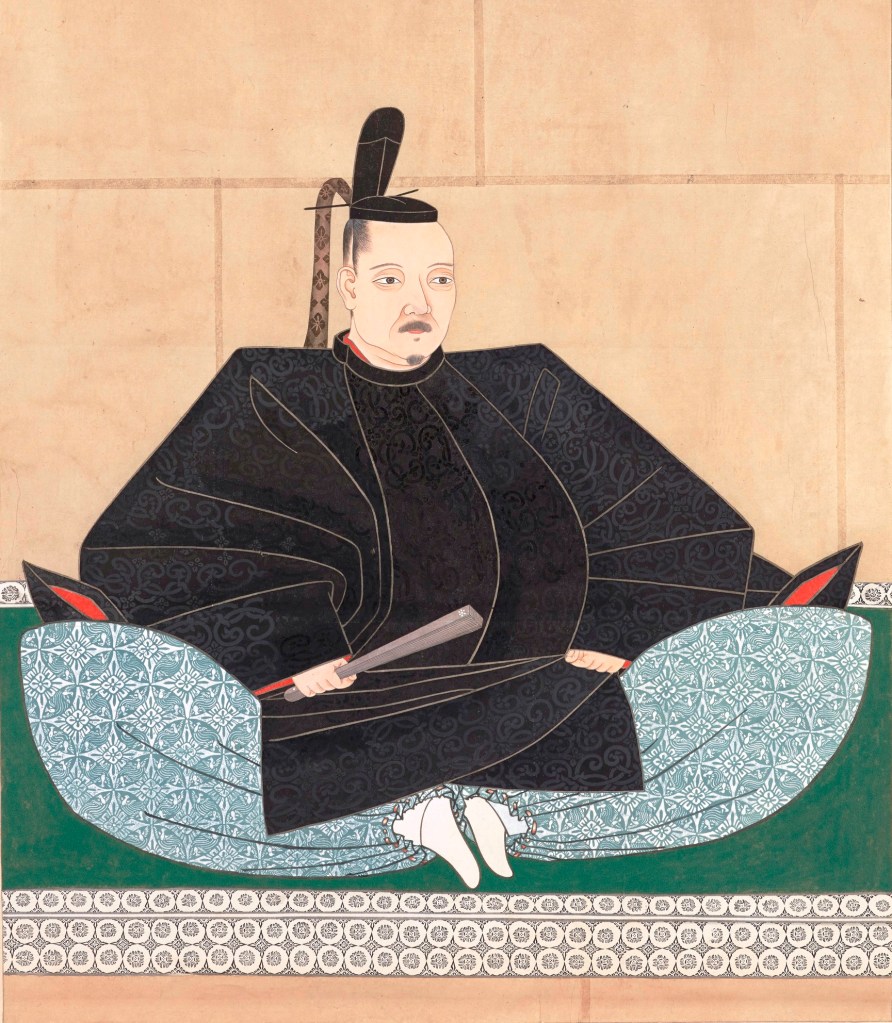
    Ashikaga Yoshitane was a surprising and ultimately controversial choice for Shogun.

    There were myriad problems in and around the Shogun’s government, but the fundamental issue seems to have been that Yoshitane was the son of the man who had been defeated in the Onin War just 13 years earlier. The men who had won that war were still in government, and they weren’t fans of the idea of having to serve someone who was probably going to be out for revenge.

    When Tomiko announced her support for Yoshitane, several high-ranking members of the government resigned their positions rather than serve under him. Initially, this might not have been a problem. Yoshitane was a young man (just 23) who enjoyed the support of one of the realm’s most powerful figures, Hino Tomiko, and the advice and guidance of his father, Yoshimi, who might have been Shogun himself, if things had gone differently.

    Yoshitane was also aided by his kanrei (deputy), Hosokawa Masamoto, an experienced (if slightly eccentric) politician. As seems to be inevitable with the Ashikaga, though, this initial optimism didn’t last. Ashikaga Yoshimi died in January 1491, just months into the new Shogun’s reign, and it seems that his relationship with Hino Tomiko soured too. Some sources (admittedly biased against Tomiko) suggest this was because Yoshitane turned out to be not as compliant as Tomiko had intended, but whatever the reason, Yoshitane was obliged to find a new way to shore up his power.

    To do this, he turned to the time-honoured tradition of his forebears and went to war. The region around Kyoto had been devastated by the Onin War, and recovery had been unequal at best. There were numerous uprisings from angry peasants and religious movements throughout the decades of ‘peace’, and Yoshitane saw an opportunity to flex his muscles and put these troublemakers in their place.

    The first blow was struck against the Rokkaku Clan. Like his predecessors, Yoshitane had few military resources of his own to call on, so he summoned several powerful lords to do the fighting for him. They agreed eagerly, but one figure who opposed the campaign was Hosokawa Masatomo. Quite why the kanrei was against the campaign isn’t clear, but this led to a schism between the Shogun and his most powerful official.

    Hosokawa Masamoto, the Shogun’s Deputy and most powerful official.

    In response, Yoshitane began relying on other lords to do his bidding, attempting to cut Masatomo out of the picture. In 1493, he launched another campaign, this time seeking to bring an end to the division in the once powerful Hatakeyama Clan. This time, Masatomo’s opposition is easier to understand. The Hatakeyama and Hosokawa Clans were historic rivals, and the ‘civil war’ in the Hatakeyama Clan had been to the Hosokawa’s benefit. If the Shogun succeeded in ending the fighting, then the Hatakeyama might regain their strength, and Masatomo couldn’t have that.

    When the Shogun issued orders for an army to be gathered in January 1493, Masatomo went to work. He contacted the faction within the Hatakeyama that the Shogun intended to attack and made arrangements with them to earn their support for what came next. Throughout early spring that year, Masatomo gathered others who were unhappy with Yoshitane. Some were partisans of the armies that had opposed Yoshitane’s father; others were disgruntled with the political situation, like Hino Tomiko, who now sided against the man she had supported just a few years earlier.

    Others were almost certainly just opportunists, but by April, Masatomo was ready to move. He waited for the Shogun’s army to attack the Hatakeyama in Kawachi Province (in modern Osaka), and when Kyoto was vulnerable, he launched his coup.

    It all went relatively smoothly for Masatomo. His forces took the city without much trouble, and Hino Tomiko issued an order commanding that Masatomo take control to restore order, giving his actions the veneer of legality. Masatomo then announced he would depose Yoshitane and replace him with Ashikaga Yoshizumi, who had been adopted by Hino Tomoki and Shogun Yoshimasa.
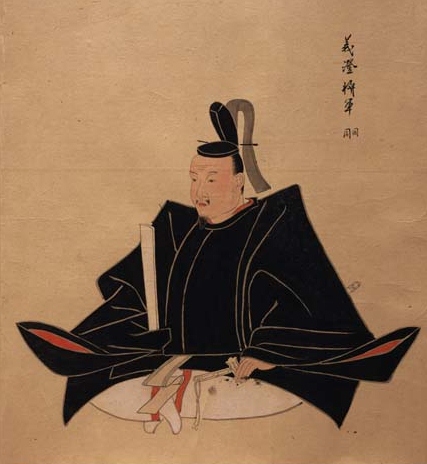
    Ashikaga Yoshizumi, installed as Shogun after the Meio Coup.
    Geneast – 投稿者自身による著作物, CC 表示-継承 3.0, https://commons.wikimedia.org/w/index.php?curid=21645552による

    When the news reached the army in Kawachi, it disintegrated almost immediately, with many vassals supporting the new Shogun and effectively legitimising Masatomo’s coup. Yoshitane could still call on around 8000 loyalists to fight for his cause, but the situation was dire.

    As well as Yoshitane’s (much reduced) loyalists, the Emperor himself was apparently against the coup. You may remember that the Shogun was technically a servant of the Imperial Court, and although it had been centuries since the Emperor had actually had the power to decide who would be Shogun, the idea that someone else could overthrow him was an affront to what remained of Imperial prestige.

    The Emperor was so angry that he even threatened to abdicate, but the impotence of his position was highlighted when Imperial officials pointed out that a) even if he abdicated, the coup would not be reversed, and b) the Imperial Court couldn’t afford the ceremony, and might have to resort to borrowing money for it from the very Shogunate they sought to protest.

    So the Imperial Court prevaricated by engaging in some religious ceremonies that the Emperor was required to attend, and would therefore be unavailable to condone or condemn the coup. This led to a strange stalemate, where the Imperial Court could do nothing to change the course of events, but the Shogunate (controlled by Masatomo) could not compel the court to obey, denying the coup the full support of Japan’s ‘legal’ sovereign.

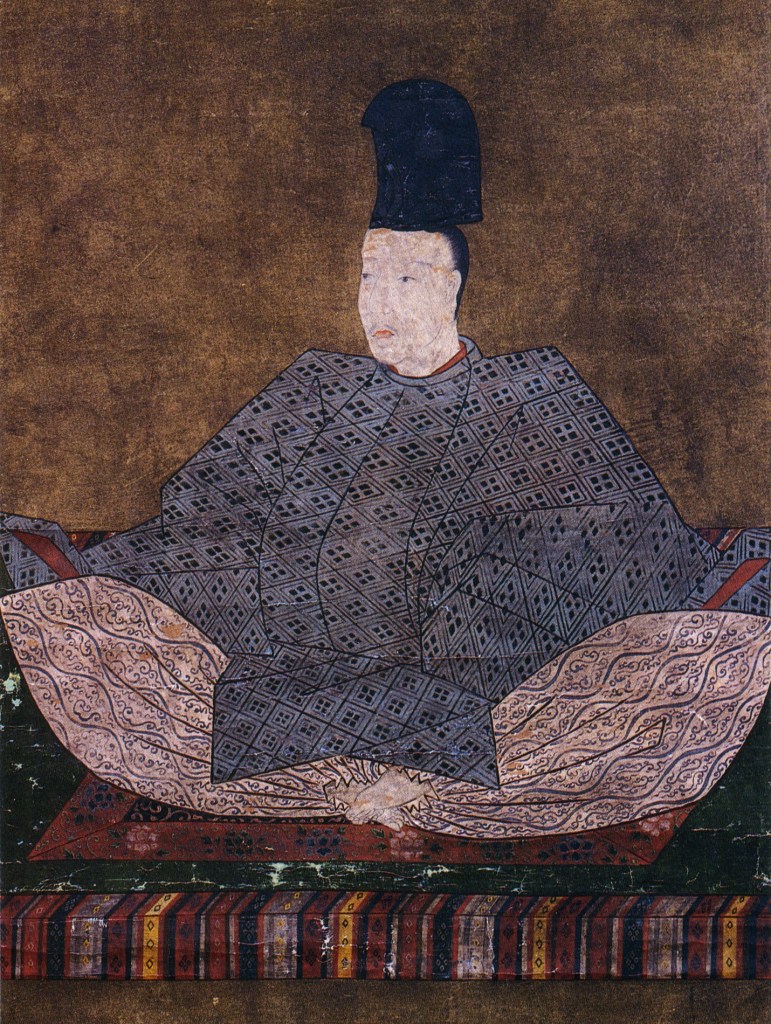
    Emperor Go-Tsuchimikado was on the throne during the coup and was pretty annoyed about it.

    Political difficulties aside, the reality was that Masatomo was now in control, and to demonstrate this, he ordered an army to be dispatched to Kawachi Province to deal with what was left of the old Shogun’s loyalists. Chronicles at the time suggest the force was as large as 40,000, and, faced with such odds, Yoshitane and his supporters retreated to and fortified a nearby temple, where they hoped to hold out.

    The situation got worse for Yoshitane, however, as a relief force sent by his supporters met Masatomo’s army near Sakai (modern Osaka), where they were defeated, effectively ending any chance Yoshitane had of reversing the coup.

    Not long afterwards, Masatomo’s forces attacked the temple and quickly overwhelmed its defences. Several of Yoshitane’s prominent supporters committed suicide, but Yoshitane himself was captured and taken back to Kyoto and held at the Ryoanji Temple.
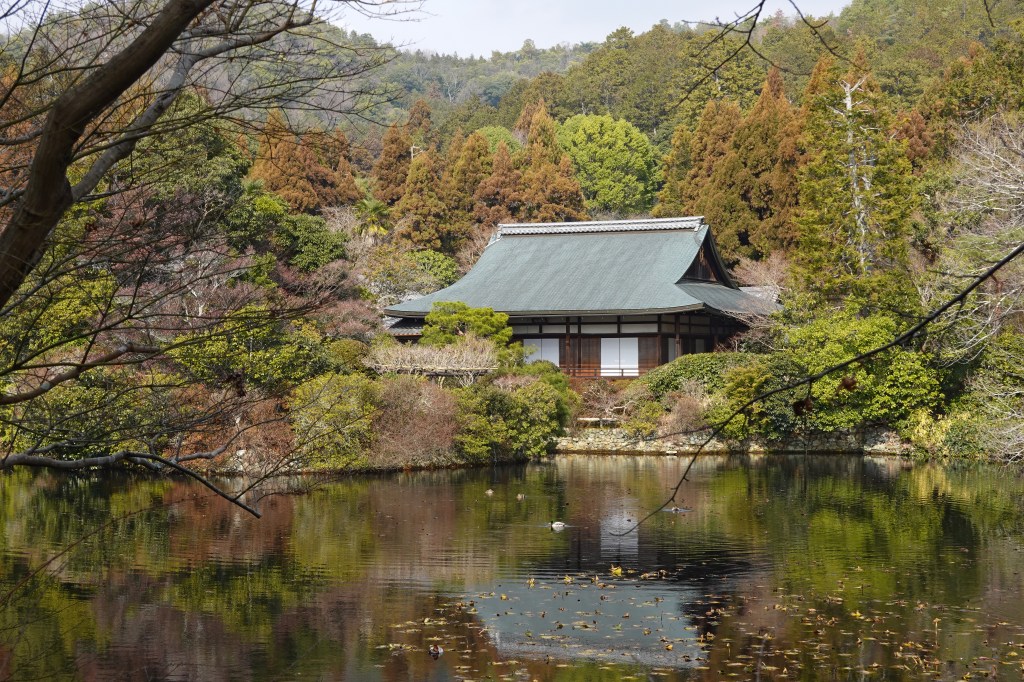
    A modern scene of Ryoanji Temple, where Yoshitane was held. Picturesque as prisons go.
    663highland – 投稿者自身による著作物, CC 表示-継承 4.0, https://commons.wikimedia.org/w/index.php?curid=159351811による

    In the aftermath of this battle, Masatomo had several of his more powerful opponents killed or exiled, and consolidated power in the capital and by the Autumn of 1493, his position was practically unassailable.

    Quite why Masatomo decided to get rid of Yoshitane has been debated from the start. The man himself claimed it was due to the Shogun’s military campaigns putting an unsustainable burden on the more powerful lords, and while there’s probably some truth to that claim, it also seems likely that the relationship between Masatomo and the Shogun had broken down, and Masatomo decided to strike while he was in a position of strength.

    That being said, Masatomo wouldn’t have succeeded if he’d acted alone. The fact that he had the support of Hino Tomiko and that most of Yoshitane’s supporters abandoned him almost immediately suggests that the dissatisfaction with his rule ran deep. It has also been suggested that Tomiko herself was the instigator of the coup, as she had come to regret her earlier decision to support Yoshitane.

    Although the Meio Coup left Masatomo as the dominant political figure in Kyoto, in the long term, it did nothing to reverse the catastrophic decline of Shogunate power. Although the supreme military power, Masatomo, did not have control of the bureaucracy, which remained with Hino Tomiko and her supporters.

    Additionally, the swift collapse of the Shogun’s ‘loyalists’ demonstrated how fragile that system really was, and after the coup, instead of relying on several powerful clans, the Shogunate was forced to rely on one, the Hosokawa and by extension, Masatomo.

    Masatomo certainly didn’t have it all his own way, then, and the situation only got worse when Yoshitane (who had been left alive) escaped captivity in Kyoto and fled to Etchu Province, from where he issued calls for his supporters to deal with Masatomo.

    Masatomo would dispatch an army to deal with Yoshitane, but it was defeated, and not long after that, several powerful clans declared their support for the deposed Shogun, though in reality, they offered little practical support in the short term.

    Internally too, opposition to Masatomo grew as Yoshizumi, who had been a boy when Masatomo installed him as Shogun, grew into a man (as they do) and began trying to assert control of what was supposed to be ‘his’ government, so, despite the success of his coup, Masatomo found himself with problems on all sides, and the power of the Shogun declined further still.

    Sources
    https://ja.wikipedia.org/wiki/%E6%97%A5%E9%87%8E%E5%AF%8C%E5%AD%90
    https://ja.wikipedia.org/wiki/%E6%98%8E%E5%BF%9C%E3%81%AE%E6%94%BF%E5%A4%89
    https://ja.wikipedia.org/wiki/%E8%B6%B3%E5%88%A9%E7%BE%A9%E5%B0%9A
    https://ja.wikipedia.org/wiki/%E8%B6%B3%E5%88%A9%E7%BE%A9%E8%A6%96
    https://ja.wikipedia.org/wiki/%E7%B4%B0%E5%B7%9D%E6%94%BF%E5%85%83
    https://ja.wikipedia.org/wiki/%E8%B6%B3%E5%88%A9%E7%BE%A9%E6%BE%84
    https://ja.wikipedia.org/wiki/%E5%A0%BA
    https://ja.wikipedia.org/wiki/%E9%BE%8D%E5%AE%89%E5%AF%BA
    https://ja.wikipedia.org/wiki/%E5%BE%8C%E5%9C%9F%E5%BE%A1%E9%96%80%E5%A4%A9%E7%9A%87
  • The Kyotoku Rebellion

    The Kyotoku Rebellion

    Historians disagree on when the Sengoku Jidai actually began, with the Onin War being a common origin point. The other possibility is our subject today, the Kyotoku Rebellion.

    You may remember that the Kanto, the area in and around modern Tokyo, was not directly ruled from Kyoto. Instead, a member of the Ashikaga Family (from a different branch to the Shogun’s line) served as the Kamakura Kubo, a governor who effectively ruled independently from Kamakura, the capital of the previous Shogunate.

    The kubo didn’t rule alone, however, he was nominally supported by the Kanto Kanrei, the Shogun’s direct deputy in the region, a position that was supposedly subject to direct appointment by the Shogun, but had in reality become a hereditary title of the Uesugi Clan.

    Both positions were supposed to be loyal to the Shogun in Kyoto, but within a few years, that had become a legal fiction. The Kubo was formed in 1349, and for a while, records show them deferring to the central government in most things, especially the all-important appointments of provincial governors (shugo).

    We’ve covered the details of the individual flashpoints in earlier posts, but to recap very briefly, in 1416, 1438, and 1440, there was a series of escalating conflicts that pitted the kubo against the Shogun. After 1440, the Shogun, at this point Ashikaga Yoshinori, sought to take control of the Kanto directly, and the Uesugi were happy to oblige. The position of kubo was abolished, and the Uesugi ruled with an iron fist, certain of the Shogun’s support.

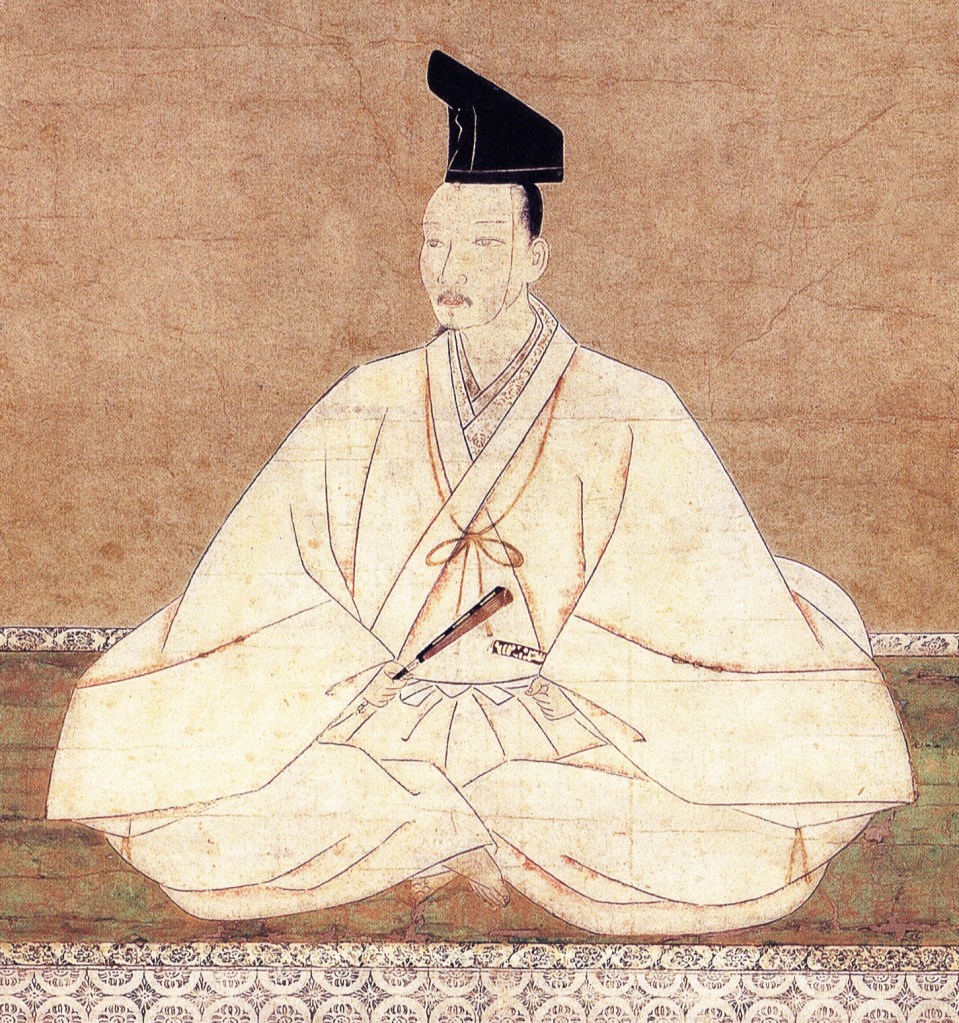
    Ashikaga Yoshinori, who supported the Uesugi in the Kanto.

    This support largely relied on the Shogun being alive, however, and when Yoshinori was assassinated in 1441, the situation in the Kanto grew tense very quickly. In response, the Shogunate government acquiesced to a petition from several Kanto lords, requesting a new kubo.

    This was granted, and Ashikaga Shigeuji was appointed in 1449. This, however, did not please the Uesugi, especially after Shigeuji began to distance himself from working with them, favouring the clans that had supported his father, Mochiuji.

    In April 1450, things came to a head when supporters of the Uesugi attacked the kubo at his residence in Kamakura. Caught by surprise, the kubo was forced to flee to nearby Enoshima, where he regrouped and defeated the Uesugi forces when they pursued him.

    Although the head of the Uesugi (and kanrei), Noritada, had not been directly involved in the attack, he took responsibility and was confined to house arrest. It was at this point that a new problem arose. As I mentioned, prior to 1440, the kubo had operated largely independently of the Shogun, but after the position was restored, the central government intend to keep Kamakura on a much shorter leash.

    Part of this leash shortening involved the insistence that any formal request to the Shogun required the signature of both the kubo and the kanrei. The problem now was that Noritada was under house arrest, and in an uncooperative mood, effectively leaving Shigeuji with no way to (legally) govern.

    Shigeuji was eventually forced to release Noritada, but the conflict between the two would only get worse. On the one hand, Noritada was head of the powerful Uesugi Clan, and kanrei, appointed by the Shogun, and his goal was to preserve the power and dignity of his family and their position in the Kanto.

    Shigeuji, on the other hand, appears to have had more personal reasons. Although there’s no doubt his position as kubo required a certain ruthlessness, sources from the time suggest that Shigeuji blamed the Uesugi for the death of his father, and he was consumed by a desire for revenge.

    A 19th century depiction of Shigeuji.

    So it came to pass, in December 1455, Shigeuji issued orders summoning Noritada to his residence. There’s a fair amount of speculation as to why Noritada would agree to go, given that it appeared to be an obvious trap, but go he did, and shortly after he arrived, he was cut down by men loyal to Shigeuji.

    This assassination was accompanied by similar acts across the Kanto, as Shigeuji’s supporters moved to cut the head off the proverbial snake. The Uesugi Clan was vast, however, like most major clans, it had branches all over the country, and Noritada’s brother and heir had actually been in Kyoto when he was assassinated, meaning that his succession as kanrei, at least on paper, went off with minimal interference.

    The other branches of the Uesugi Clan were enraged by Noritada’s death, and it wasn’t long before the new kanrei was able to gather an army and establish himself at Hirai Castle in Kozuke Province (modern Gunma Prefecture). When they marched against Kamakura, however, they were defeated at the Battle of Bubaigawara in modern-day Fuchu.

    The Uesugi were forced to retreat and ended up under siege at Oguri Castle, in modern-day Ibaraki Prefecture, and a long way from Kamakura. This proved to be a problem for Shigeuji, for although he was able to take Oguri Castle, forces sent by the Shogunate (who were none too pleased about Shigeuji’s actions) took Kamakura from behind (stop laughing), cutting the Kamakura Kubo off from Kamakura. From then on, Shigeuji would base himself at Koga Castle and became known as the Koga Kubo. We’ll just keep calling him kubo, though.

    The modern day remains of Koga Castle.

    The war between the Kanto’s two most powerful figures naturally led to utter chaos. Although both the kanrei and kubo could command the loyalty of thousands of warriors, the reality was that, with central power non-existent, rival clans took to settling their own affairs, usually at swordpoint.

    With neither side able to establish control, the Shogun dispatched his brother, Ashikaga Masatomo, to the Kanto in December 1457, officially to be the new Kamakura Kubo. This didn’t work as planned, however, Masatomo only had the power his brother would allow him, and the Kanto lords knew it.

    It got so bad that Masatomo couldn’t even take up residence in Kamakura and ended up at Horikoshi, in modern-day Shizuoka Prefecture. This situation led to him being called the Horikoshi Kubo, another would-be master of the Kanto who wasn’t even strong enough to demand his original title.

    Things got even worse when the Shogun attempted to launch a punitive expedition against Shigeuji. Even before the forces were properly gathered, the leader of the army, a member of the Shiba Clan, was expelled from his post after dispatching troops from the expedition to his own province (far to the north of the Kanto) to deal with private battles there.

    With the debacle of the expeditionary force, any hope for a decisive end to the war was lost, and the two sides got bogged down in back-and-forth skirmishes, sieges, and other militaristic shenanigans, with the (very loose) border being the Tone River, in the central Kanto.

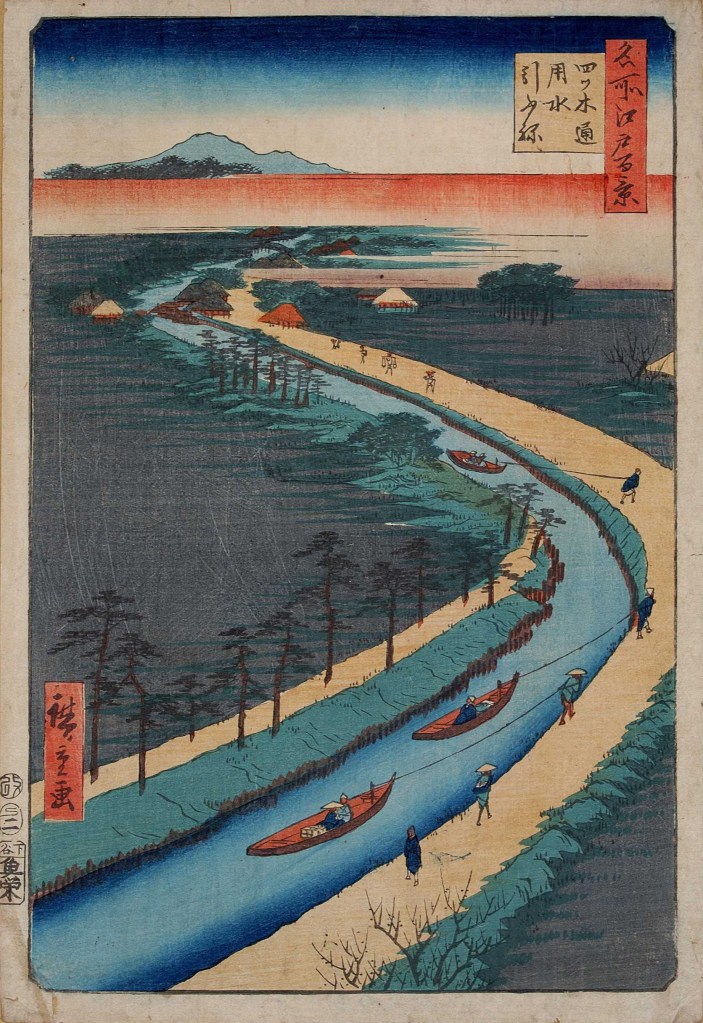
    A later depiction of a canal entering the Tone River

    This would go on for ages, one side would gain the advantage, only to lose it again later and then suffer counter-attacks that would be themselves defeated. In 1466, the kanrei was killed in battle, and Shigeuji’s forces were briefly in the ascendance, but the Uesugi would recover, and in 1468, they would launch several successful counterattacks, and later, in 1471, they would even capture Shigeuji’s base at Koga.

    You might think that Shigeuji would be on the ropes, but no, he struck back, recaptured Koga, and the war dragged on, and on, and on. Just as the Onin War destroyed central authority in and around Kyoto, the Kyotoku War, which had now raged for 16 years, did the same in the Kanto.

    Then, in 1478, after 21 years of war, the Uesugi, suffering a major internal rebellion, were compelled to seek peace with Shigeuji, and the kubo, facing problems of his own, agreed. This ended the main phase of the war between the major powers, but did not bring peace to the Kanto, as both the Uesugi and Shigeuji turned to dealing with internal matters, putting down rebellions and forcing obedience from their erstwhile vassals, which is rarely a peaceful process.

    A final peace would be agreed in 1483 (yes, five years after the initial proposals), and Shigeuji was allowed to continue as kubo; however, he was forced to hand over Izu Province to Masatomo, who continued as Horikoshi Kubo.

    I’m sure, if you think about it for a moment, having two kubo in the Kanto region was never going to last, and it didn’t. Shigeuji had the authority and military power, but Masatomo had the legitimacy of Shogunate support; it was not a recipe for stable and secure government.

    While the fighting had been going on in the Kanto, the Onin War had started and ended (1467-77), and Shogunate authority was effectively at an end. This meant that actual support for Masatomo was minimal, and historians suggest that the only reason Shigeuji and the Uesugi agreed to peace was due to exhaustion after nearly 30 years of war.

    Despite the agreement, peace would not last in the Kanto. By the end of the 15th century, as with the region around Kyoto, the Kanto had fractured into rival territories controlled by numerous warlords. The Uesugi were initially in the strongest position, but by the time Shigeuji died in 1496, that was changing, and new powers were rising in the Kanto, but that’s a story for another time.

    Sources
    https://ja.wikipedia.org/wiki/%E4%BA%AB%E5%BE%B3%E3%81%AE%E4%B9%B1
    https://ja.wikipedia.org/wiki/%E6%B0%B8%E4%BA%AB%E3%81%AE%E4%B9%B1
    https://ja.wikipedia.org/wiki/%E4%B8%8A%E6%9D%89%E7%A6%85%E7%A7%80%E3%81%AE%E4%B9%B1
    https://ja.wikipedia.org/wiki/%E8%A6%B3%E5%BF%9C%E3%81%AE%E6%93%BE%E4%B9%B1
    https://ja.wikipedia.org/wiki/%E9%8E%8C%E5%80%89%E5%BA%9C
    https://ja.wikipedia.org/wiki/%E8%B6%B3%E5%88%A9%E5%9F%BA%E6%B0%8F
    https://ja.wikipedia.org/wiki/%E4%B8%8A%E6%9D%89%E6%86%B2%E5%BF%A0
    https://ja.wikipedia.org/wiki/%E5%B9%B3%E4%BA%95%E5%9F%8E
    https://ja.wikipedia.org/wiki/%E4%B8%8A%E6%9D%89%E6%88%BF%E9%A1%95
    https://ja.wikipedia.org/wiki/%E5%88%86%E5%80%8D%E6%B2%B3%E5%8E%9F%E3%81%AE%E6%88%A6%E3%81%84_(%E5%AE%A4%E7%94%BA%E6%99%82%E4%BB%A3)
    https://ja.wikipedia.org/wiki/%E5%B0%8F%E6%A0%97%E5%9F%8E
    https://ja.wikipedia.org/wiki/%E5%8F%A4%E6%B2%B3%E5%9F%8E

  • The Onin War

    The Onin War

    As we discussed last time, Japan in the 1460s was a chaotic place. Rival clans engaged in bloody feuds with each other, and it wasn’t uncommon for members of the same families to take up arms against each other in disputes over who was really in charge, taking sibling rivalry to a whole new level.

    By this time, endemic warfare was just a part of life in Japan.

    In the centre of this chaos was a Shogun who was so weak he might as well not have existed, and when the violence inevitably reached Kyoto, there was little he could do to stop it.

    The exact origins of the Onin War are disputed, but the main rivals were the Yamana and Hosokawa Clans, arguably the two most powerful clans of their day, with both playing key roles in the government and having control of vast swathes of land, and the wealth, manpower, and allegiances that went along with it.

    Throughout the 1450s and 60s, the Yamana and Hosokawa Clans had been engaged in something of a ‘Cold War’ in which they supported rival factions in numerous proxy wars around Japan, most importantly, the ongoing civil war within the Hatakeyama Clan.

    In January 1467, Yamana supported Hatakeyama forces attacked those of the Hosokawa at the Battle of Goryo Shrine (sometimes just called the Battle of Goryo). Though the battle resulted in a Yamana victory, the intervention of the Shogun brought an end to the immediate hostilities, and both Yamana and Hosokawa partisans remained in the capital.

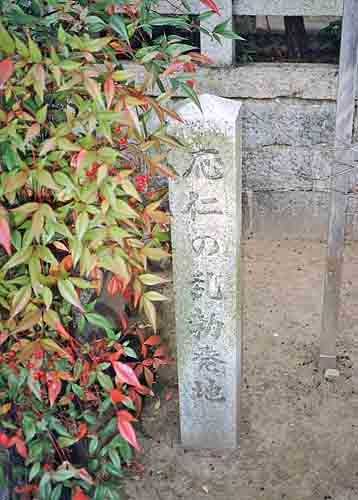
    The marker at Kamigoryo Shrine in Kyoto, showing the spot where the Onin War broke out.

    It has been speculated that both side were willing to let the Shogun mediate because neither of them was ready for all out war, because through early Spring, forces gathered in and around Kyoto, until May of that year, when it is said in some (probably exaggerated) sources that there were more than 270,000 warriors present, with the Hosokawa having a significant advantage in numbers (160,000-110,000).

    Though the Yamana had secured an advantage after Goryo and controlled the Shogun, the Hosokawa did not sit idly by. Their leaders issued orders and summons of their own, and set about raiding Yamana/Shogunate supply lines, and literally burning bridges.

    Due to the location of their relative bases in Kyoto, the Hosokawa and their allies became known as the Eastern Army, and the Yamana and theirs were called the Western Army, and it is by these names that we’ll refer to them going forward.

    Tensions finally boiled over in late May 1467, when forces of the Eastern Army launched a dawn attack against the Western forces around the Shogun’s palace, driving them away, occupying the palace, and bringing the Shogun under their control.

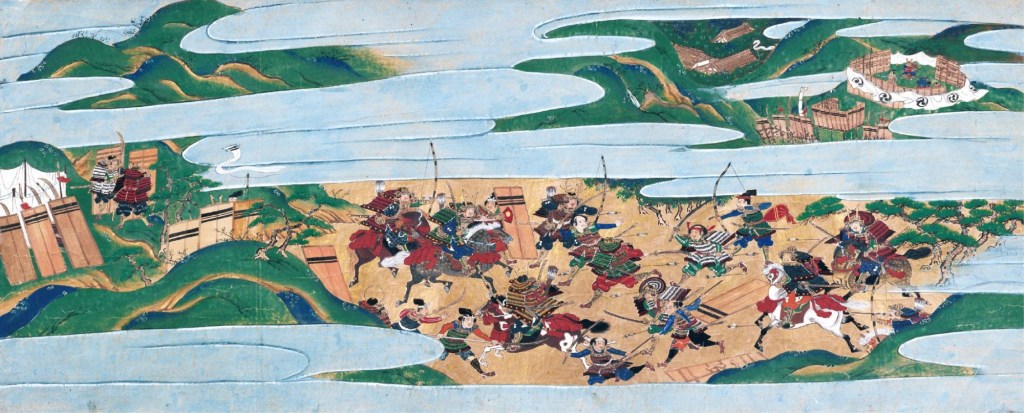
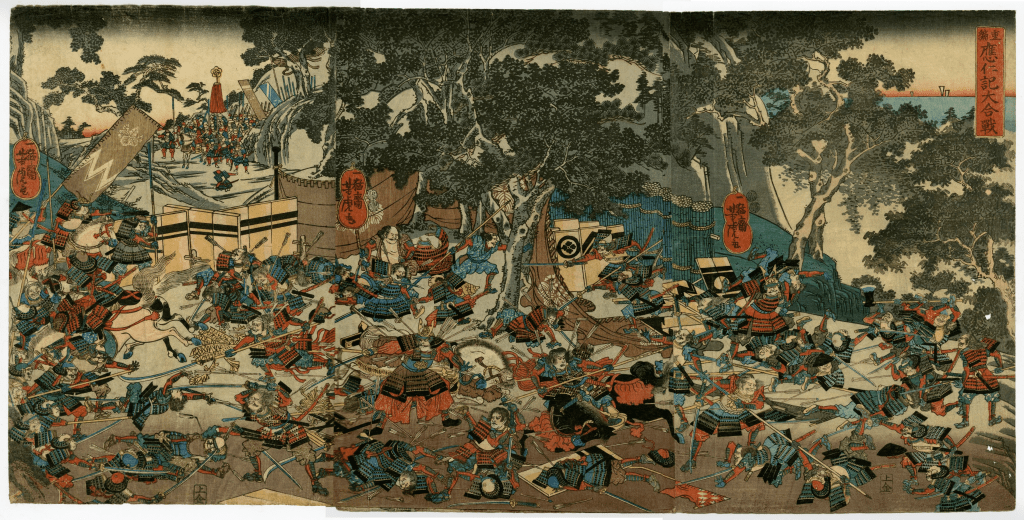
    A scene from later in the war, depicting just how chaotic the battlefield could be.

    Shortly after this victory, Ashikaga Yoshimi (the Shogun’s brother, and still heir) was declared commander in chief, and the Shogun himself handed over an official banner to the Eastern Army, proclaiming them to be the official army of the Shogun, effectively branding the Western army rebels.

    Despite their setback, the Western forces regrouped and attacked Kyoto in August, driving Yoshimi and his supporters out of the city and establishing control for themselves. It is at this point that the Western Army stopped deferring to any Shogunate officials and instead began issuing orders signed by a ‘junta’ of their most senior generals.

    Further attempts by the Western army to press their advantage failed, and several battles throughout September and October ended in bloody stalemate. In December, the Emperor issued a decree stripping all Western generals of their formal Imperial titles in an attempt to further delegitimise their cause; however, it had no practical effect, and as 1467 came to an end, the Western Army was in control of Kyoto, but the war was a stalemate.

    Throughout early 1468, there were sporadic outbursts of fighting in and around Kyoto, leaving large areas of the city in ruins, with the two sides gaining and losing ground in return, until the capital they had been so eagerly fighting over was no longer a prize worth having.

    In the summer of that year, Yoshimi, who had been in hiding away from Kyoto, was persuaded to return to the capital by his brother, the Shogun. This reconciliation was short-lived, however, as it was becoming clear that the Shogun now supported his (still infant) son, Yoshihisa, as heir. The key leaders of the Eastern Army, too, were behind Yoshihisa, and so Yoshimi fled to Mt Hiei, where, in November, messengers arrived from the Western Army, declaring him to be the ‘new Shogun’. From then on, Western Forces began issuing formal declarations from the ‘Shogun’, Yoshimi, although in reality, the generals remained in control, and Yoshimi was effectively isolated on Mt Hiei.

    By early 1469, the conflict had spread to Kyushu and the Kanto as well, where nominally Western and Eastern forces would fight it out in localised episodes of the wider conflict. In reality, however, the complete breakdown in central authority meant that these forces had no loyalty to anyone but themselves, and this fighting is often considered to be the start of the Sengoku Jidai or “Age of the Country at War.”

    As 1469 dragged on, the main forces around Kyoto were exhausted. The capital was a ruin, and the Shogunate’s power, already tenuous, had ceased to exist entirely. There had been many reasons for the outbreak of war, but the main one had been control of the Shogunate; now that there was no real Shogunate to control, neither side had much motivation to continue fighting.

    Rival forces loot Kyoto as the city burns around them. By the end of the Onin War, Kyoto was a ruin.
    Docsubster – 投稿者自身による著作物, CC 表示-継承 4.0, https://commons.wikimedia.org/w/index.php?curid=63970510による

    As Machiavelli said, though “Wars begin when you will, but they do not end when you please,” and the Eastern and Western forces were now discovering how true that was. Although superficially a conflict over the Shogunate, by 1470, factions on both sides had begun working for themselves. There were numerous internal conflicts, feuds, and defections, and by 1471, there were several clans that had switched sides, and some that had done so more than once.

    In 1472, there was a serious effort to make peace, with the leaders of the Yamana and Hosokawa clans (the originators of the feud) agreeing, in principle, to return to the antebellum situation. These terms were unpopular with other factions, however, many of whom had gained significant territories as a result of the war. The head of the Yamana Clan even went so far as to attempt suicide, in a move that historians have suggested shows the extent of his desire to find a settlement, but it did no good, and the fighting dragged on.

    Yamana Sozen, head of the Yamana Clan, whose attempted suicide is supposed to have shown how sincere he was about forging peace.
    By Mt0616 – Own work, CC BY-SA 4.0, https://commons.wikimedia.org/w/index.php?curid=99587678

    At the Shogunate court, a priest commented:

    “The affairs of the nation were being handled, the maids were planning (all the politics of the nation were being planned by Tomiko, a woman), the Shogun (Yoshimasa) was drinking sake, and the feudal lords were wearing dog hats (a reference to a kind of hat worn during mounted archery displays) . It was as if the world was at peace.”

    This quote gives us the impression of a court completely out of touch with the wider world, and indeed, other sources state that Yoshimasa’s drinking was no mere social tipple; he would drink to excess, and it was said that the Emperor got into the habit of joining him, further eroding the respect and prestige of whatever government remained.

    In March and May 1473, first the Yamana, then the Hosokawa Clan heads died, and a new generation took their place. Also in that year, Shogun Yoshimasa retired as Shogun, handing the title over to his nine-year-old son, Yoshihisa, whilst keeping the actual power for himself.

    Peace was finally agreed between the two main protagonists in April 1473, but the war didn’t come to an immediate end; defections and skirmishing continued, and it wasn’t until 1477 that the Western Army was formally disbanded. In November of that year, the Shogunate held a formal celebration, announcing the restoration of peace.

    Despite eleven years of Civil War, very little had actually been achieved. Yoshimasa had remained Shogun and handed the title to his son, Yoshihisa. The rival claimant, Yoshimi, had fled into exile but was formally pardoned in 1478, along with most of those who had supported him.

    Early in the war, the Eastern forces had been granted a banner from the Shogunate, effectively declaring themselves the legitimate party, whilst their Western enemies were branded rebels. In the wake of their victory, then, you might have expected the Eastern leadership to seek ‘justice’ (or more likely, revenge) against the Westerners.

    So why didn’t it happen?

    The answer is fairly simple: the Eastern Army, now just the Shogunate, was too weak. Eleven years of Civil War had resulted in nothing but fatally weakening both sides, and even though they were victorious, no one amongst the Shogun’s supporters had the strength to mete out any kind of justice.

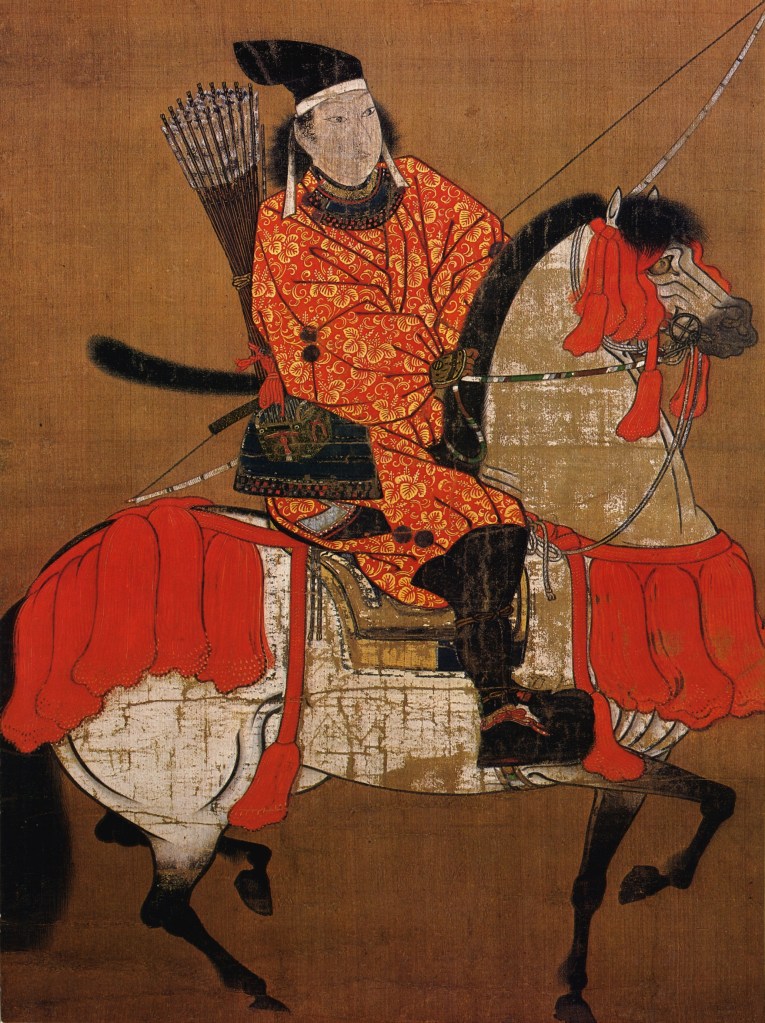
    Ashikaga Yoshihisa, nominally Shogun at this point, but far too weak to actually exercise his power.

    This weakness is best seen in the fact that, despite a formal peace agreement, the fighting didn’t end. Kyoto was a blackened ruin, and the formerly great clans were exhausted, but in the provinces, the war went on, and on, and on.

    Though it would not be called the Sengoku Jidai until much later, the Onin War brought about a period of anarchy that would last for more than 120 years, and the Ashikaga Shoguns would never hold any real authority outside of Kyoto, despite some brief resurgences in the late 15th century.

    It wasn’t just the Shogunate that was weakened; however, many of the shugo, regional lords, had committed considerable resources to the fighting, expending blood and treasure in pursuit of their goals, only to find themselves with little to show for it. In the 1480s, the system of shugo-in, the policy of requiring the lords to remain in Kyoto, formally broke down, and the shugo returned to their provinces, where some were able to restore their wealth and power, but many others became the first victims of gekokujo, (lit. lower rules/overthrows high) in which deputies of nominally lower rank were able to overthrow their masters, a phenomenon that would become common in the century ahead.

    Kyoto itself was also left as a practical ruin by the end of the fighting. The expense of restoring the city and the fact that the Shogun and his wife (Tomiko) were seen as embezzling huge sums of money led to outbreaks of rebellion in the 1480s and only served to further erode what little remained of the Shogun’s authority and prestige.

    The Onin War also foreshadowed several developments of the Sengoku Jidai, especially the end of the reliance on Samurai-only armies. The Samurai as a class had once monopolised war, but they were too few to man the much larger armies required in the 15th Century and later. This led to the rise of the Ashigaru, or Foot Soldiers. Originally peasant levies, the Ashigaru would evolve into something that could be recognised as professional soldiery, and they would play a key role in the wars to come, with one of their number, a man who would eventually be known as Toyotomi Hideyoshi, rising to a position of supreme power a century later.

    Sources
    https://ja.wikipedia.org/wiki/%E5%BF%9C%E4%BB%81%E3%81%AE%E4%B9%B1
    https://ja.wikipedia.org/wiki/%E8%B6%B3%E5%88%A9%E7%BE%A9%E5%B0%9A
    https://ja.wikipedia.org/wiki/%E8%B6%B3%E5%88%A9%E7%BE%A9%E8%A6%96
    https://en.wikipedia.org/wiki/Ashikaga_Yoshimasa
    https://ja.wikipedia.org/wiki/%E8%B6%B3%E5%88%A9%E7%BE%A9%E6%94%BF

  • Kanto, Won’to

    Kanto, Won’to

    As we discussed last time, the relationship between the central government in Kyoto and the Kamakura Kubo, the regional military governor, was often quite strained. The decentralised nature of political power in Japan meant that, whilst the Kubo was nominally subordinate to the Shogun, they often acted as semi-independent rulers.

    The power of the kubo was, in theory, checked by the Kanto Kanrei, the Shogun’s direct deputy in the Kanto Region, who had, for decades by this point, been a member of the Uesugi Clan.

    Like most Samurai families, the Uesugi weren’t a single family, but a loose affiliation of siblings, cousins, and other relatives that shared a name and some common ancestry, but little else, with different branches of the Clan cooperating and opposing each other as the situation demanded.

    The strongest branch of the family at this point, and the one holding the position of Kanrei, was the Yamanouchi Uesugi, so named because of their residence in an area of Kamakura called, you guessed it, Yamanouchi. This particular branch of the family actually took over the position from the branch which had risen in rebellion in 1416 and been defeated.

    The Kanrei in the 1430s was Uesugi Norizane. He found himself in a fairly unenviable position. Although the kanrei was officially the subordinate of the Kamakura Kubo, the Shogun in Kyoto had the final say over who would actually hold the position, meaning that, in practice, the kanrei often found himself beholden to the will of the Shogun over that of his direct superior.

    This was probably fine at a time when Kamakura and Kyoto were in agreement, but by now, this was definitely not the case. As we talked about briefly last time, the Kamakura Kubo, Ashikaga Mochiuji, often followed an independent path, and this defiance led to a serious breakdown in his relationship with the Shogun.

    In 1429, the accession of a new Emperor called for a change in the Era name. This was (and arguably still is) a big deal in Japanese culture; whenever a new Emperor ascends the throne, the Era name is changed. It can also be changed after significant or otherwise tragic events, as those in power seek to figuratively draw a line under the past.

    Emperor Go-Hanazono, whose accession brought about the Era name changed that provoked the showdown between Mochiuji and the Shogun.

    A change of era is often an administrative formality for most, but this time, Mochiuji, being the independent-minded fellow that he was, apparently refused to adopt the new era name. This might seem like a petty decision to us, but it was, in effect, Mochiuji announcing to the world that he didn’t recognise the new era, and by extension, the new Emperor.

    Things got worse following the death of Shogun Yoshimochi in 1431. Mochiuji had expected to be called upon to be the next Shogun, as Yoshimochi had died without heirs. When Ashikaga Yoshinori, a monk, was selected instead, Mochiuji was angry enough to consider marching on Kyoto.

    This is where Uesugi Norizane rejoins our story. He dissuaded his hot-headed master, and no force was sent. In addition, he arranged for formal apologies regarding the Era change and even went so far as to return lands that had been confiscated by Mochiuji to the Shogun.

    Norizane is also recorded as having sent expensive gifts to Kyoto in an attempt to smooth over the considerable animosity that had built up towards Mochiuji there. Norizane was evidently trying to steer a moderate course; he owed his position to the Shogun, but he was nominally subordinate to the Kubo. When these two masters were in opposition, Norizane found himself caught in the middle.

    In 1436, his position got even worse. That year, fighting broke out in Shinano Province between rival factions seeking control of the province. One side called on Mochiuji for help, and he was eager to go, but Norizane intervened, pointing out that Shinano was not one of the provinces that were under the authority of the Kamakura Kubo. Thus, no forces were sent.

    The warlord who had requested Mochiuji’s help was defeated, and in 1437, Mochiuji planned to raise an army and march into Shinano anyway, presumably to avenge his fallen comrade. This time, however, rumours spread that the army was actually to be sent against Norizane.

    Things quickly got out of control after that. Although there was some attempt to negotiate, Norizane fled the Kanto entirely, retreating to the Uesugi stronghold in Echigo Province. There was a brief reconciliation in 1438, but things broke down again quickly afterwards, with Norizane resigning as kanrei.

    This time, Norizane fled to Kozuke Province, and Mochiuji sent an army after him. In response, Norizane called for help from the Shogun, and Yoshinori, who had been waiting for an excuse to deal with the troublesome kubo, readily agreed.

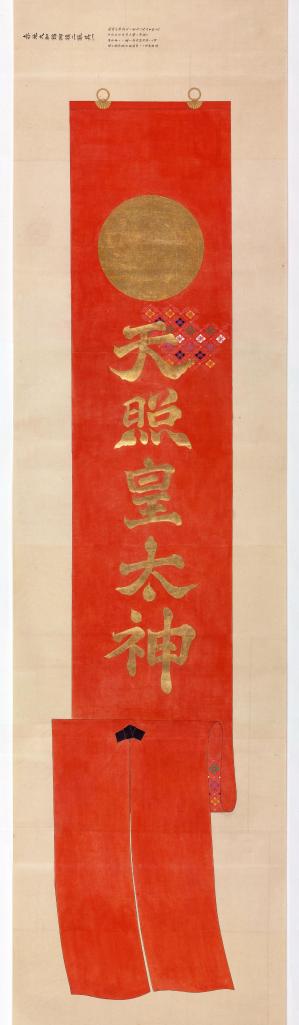
    A coalition of Kanto warlords loyal to the Shogun was assembled, and the Shogun used his influence at court to have an Imperial Banner issued to the army, effectively turning it into an Imperial army, and all those who opposed it into rebels against not only the Shogun but the Emperor himself.

    An example of an Imperial Banner (this one from the 19th Century)

    What impact this had on the morale of Mochiuji and his men isn’t clear, but throughout September and October 1438, their forces were repeatedly defeated, until eventually Mochiuji surrendered and attempted to become.

    Uesugi Norizane, continuing his policy of moderation, pleaded for Mochiuji’s life, and for his son to be allowed to take the position of Kubo. Shogun Yoshinori, however, was in no mood. Mochiuji had been a thorn in his side for decades, and he would not pass up the opportunity to deal with him.

    Mochiuji and his son were forced to commit suicide, and the position of Kamakura Kubo was temporarily abolished. That wouldn’t last long, though, and in 1440, Yoshinori attempted to have his own son appointed as the new kubo.

    Mochiuji (top) commiting suicide after his failed uprising.

    This didn’t sit well with former loyalists of Mochiuji, and a rebellion, led by the Yuki Clan, broke out in the same year, with the stated aim of restoring one of Mochiuji’s sons to their late father’s position.

    In April 1441, the rebellion was defeated, and Mochuji’s surviving children were brought to Kyoto. Yoshinori continued his plans to appoint his son as kubo, but then fate took a turn, as it so often does.

    In June 1441, Yoshinori was invited to a banquet at the residence of the Akamatsu Clan, officially to celebrate the Shogun’s recent victory. When he arrived, the gates were locked, and he was set upon by a band of armed men and cut down.

    The immediate motive of his killer appears to have been either revenge for the confiscation of family property earlier in his reign or the fear of being politically purged. Historians speculate that Yoshinori was becoming increasingly paranoid, with the Imperial Nobility and Samurai class becoming fearful of the possibility of being denounced and facing exile or execution.

    A phrase used by contemporaries to describe this period of Yoshinori’s reign is ‘万人恐怖’ Bannin Kyofu, or Universal Fear, which gives you a good idea of the mood.

    In the immediate aftermath of the killing, rumours of a wider conspiracy abounded, but it soon became clear that the Akamatsu Clan had acted alone; the government’s attention focused on who would be the next Shogun. The most appropriate choice was Yoshinori’s son, Yoshikatsu, but he was just a boy, and it wasn’t until November 1442, 18 months after his father’s death, that Yoshikatsu was elevated to Shogun, despite being just nine.

    With Yoshinori’s death and his replacement by a boy, the strong, often dictatorial power of the Shogun was significantly reduced. Yoshikatsu would rely on a council of powerful lords to handle the realm until he came of age, but that didn’t happen, as Yoshikatsu fell in and died in July 1443, only eight months into his reign. His sudden death led to the spread of several rumours, from a fall from a horse to assassination, but historians generally believe he died of illness, possibly dysentery.

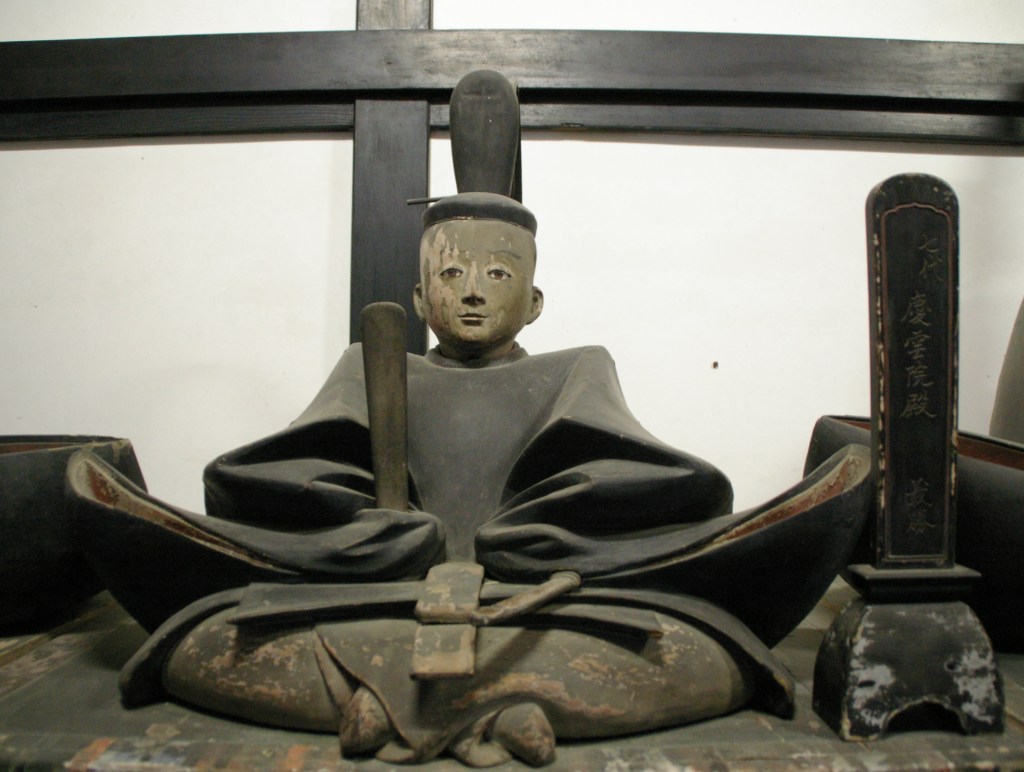
    A wooden statue of Ashikaga Yoshikatsu, whose reign, and life, were tragically short.
    CC 表示 3.0, https://commons.wikimedia.org/w/index.php?curid=9662197

    Yoshikatsu was replaced by his brother, Yoshimasa, who was even younger, and he wouldn’t be officially declared Shogun until 1449, by which time real power had shifted from the Shogunate to several powerful clans.

    Though no one knew it then, the Ashikaga Shogunate had begun what would prove to be a terminal decline.

    Sources
    https://ja.wikipedia.org/wiki/%E9%8E%8C%E5%80%89%E5%85%AC%E6%96%B9
    https://ja.wikipedia.org/wiki/%E8%B6%B3%E5%88%A9%E7%BE%A9%E6%95%99#
    https://ja.wikipedia.org/wiki/%E5%98%89%E5%90%89%E3%81%AE%E4%B9%B1
    https://ja.wikipedia.org/wiki/%E8%B6%B3%E5%88%A9%E7%BE%A9%E5%8B%9D
    https://ja.wikipedia.org/wiki/%E8%B6%B3%E5%88%A9%E7%BE%A9%E6%94%BF
    https://en.wikipedia.org/wiki/Ashikaga_Yoshimasa