In 1591, with dominance of Japan secured, Hideyoshi announced his intention to invade Ming China, via Korea, launching the first of two campaigns to subjugate the small kingdom. We’ll take a look at these invasions in more detail later, but in summary, the Japanese landed with a force of some 160,000 veteran warriors and achieved a series of quick successes against the Koreans.
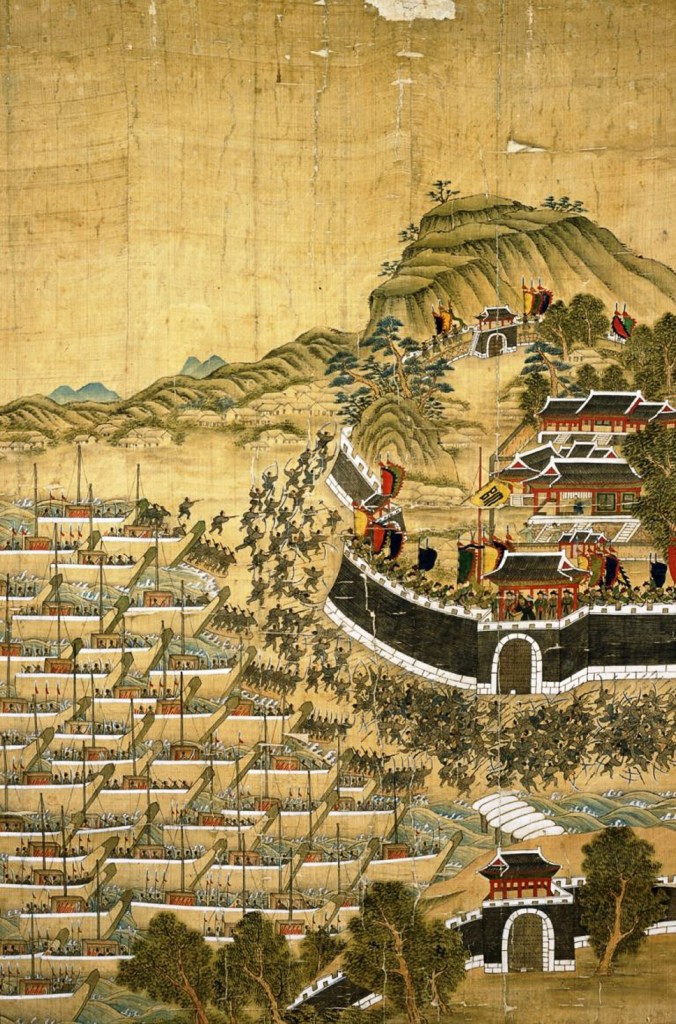
However, Chinese intervention turned back the invasion, and ultimately led to a stalemate that ended in a negotiated peace in 1593, that saw Japanese warriors remain in the fortresses they have built in the south of the peninsular, from which they would launch a second attempt in 1597, which would end when political changes at home saw the Japanese leave, with both sides declaring ‘victory’.
Meanwhile, Hideyoshi, who had ordered the invasion but did not travel to Korea himself, was facing problems closer to home. In 1591, his brother, Hidenaga, who had been an important military and political supporter, died. This was followed in short order by Tsurumatsu, Hideyoshi’s two-year-old son and heir, throwing the succession into doubt.
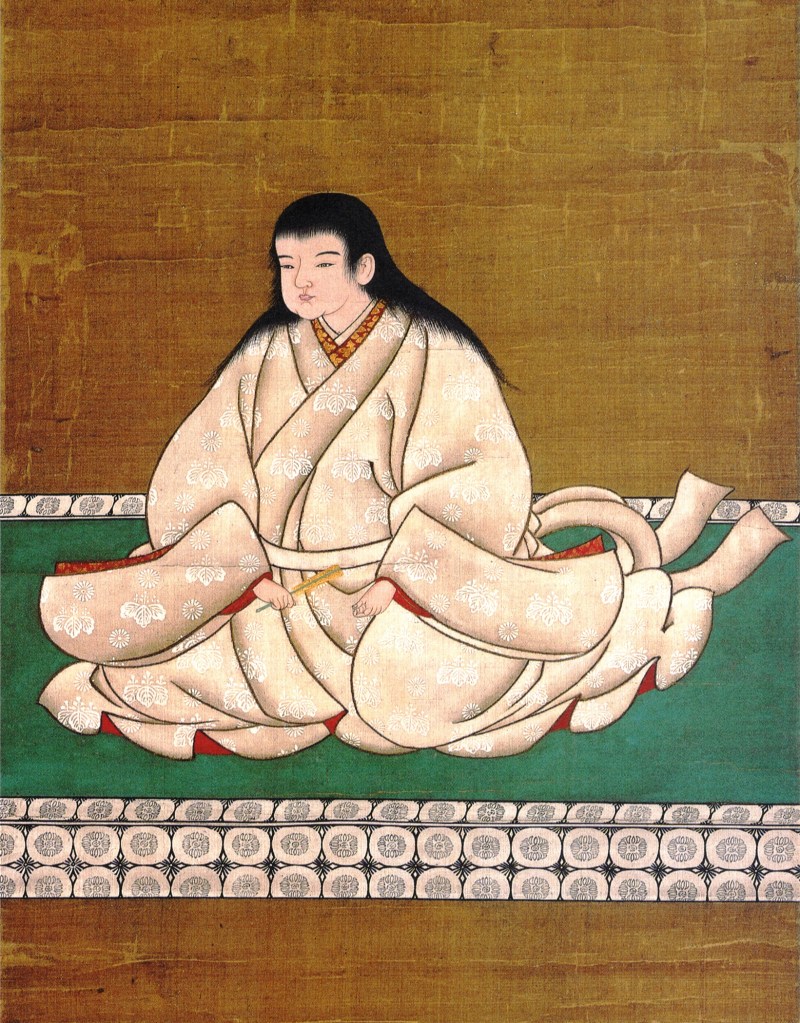
In response, Hideyoshi adopted his nephew, Hidetsugu, as heir to the Toyotomi family, and (presumably) eventually to supreme power. This arrangement endured until 1593, when one of Hideyoshi’s concubines, Lady Yodo, gave birth to a second son, Hideyori, whose arrival was apparently widely celebrated.
That is, widely celebrated by everyone but Hidetsugu, whose position was now under threat. In 1595, rumours began to spread that Hidetsugu was plotting rebellion, and a delegation, led by Ishida Mitsunari, was sent to his residence to investigate. He wrote a five-page letter declaring himself innocent of the accusations, which was promptly delivered to Hideyoshi.
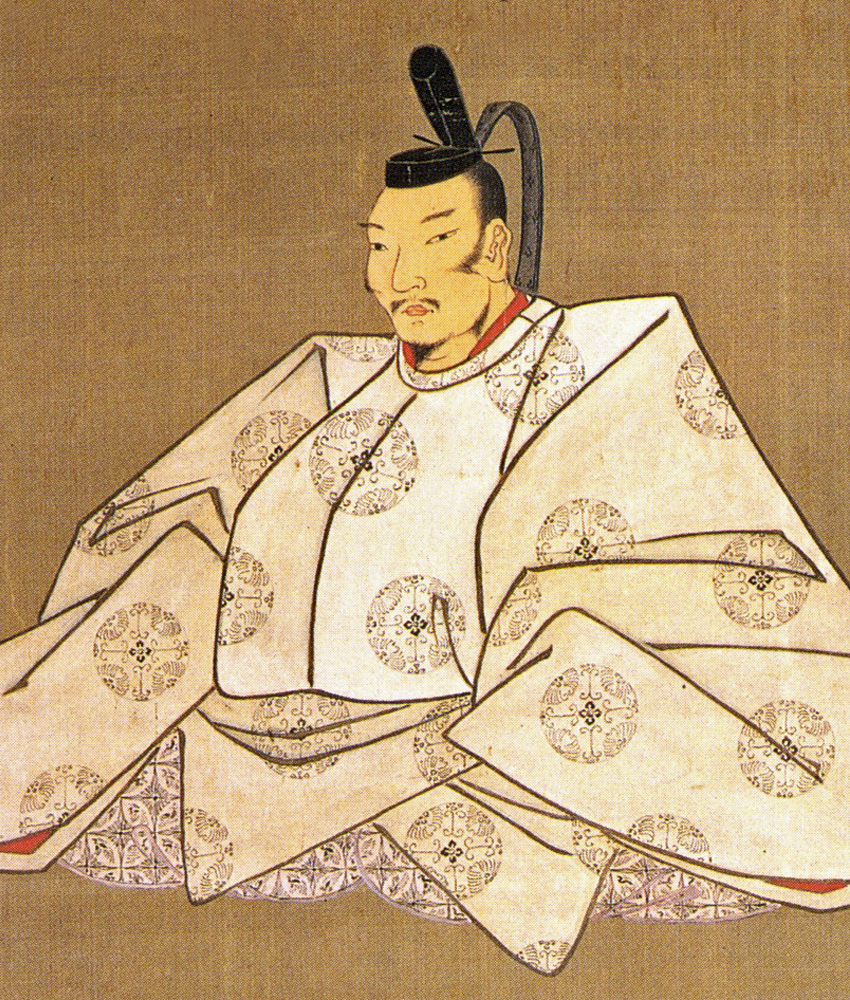
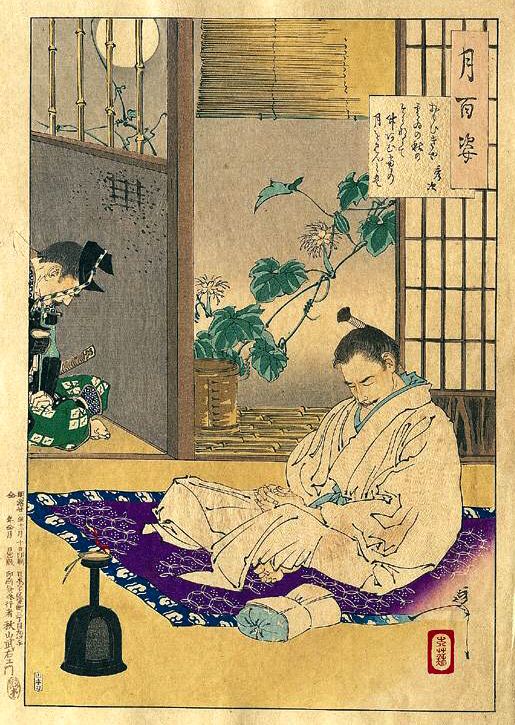
Hideyoshi then summoned his nephew for an audience, but when Hidetsugu arrived at Fushimi Castle, as ordered, he was denied entry and instead told to shave his head and become a monk. Hidetsugu apparently complied, retiring to Mount Koya. However, even this was apparently not enough, and on August 20th, 1595, an order arrived demanding Hidetsugu commit seppuku.
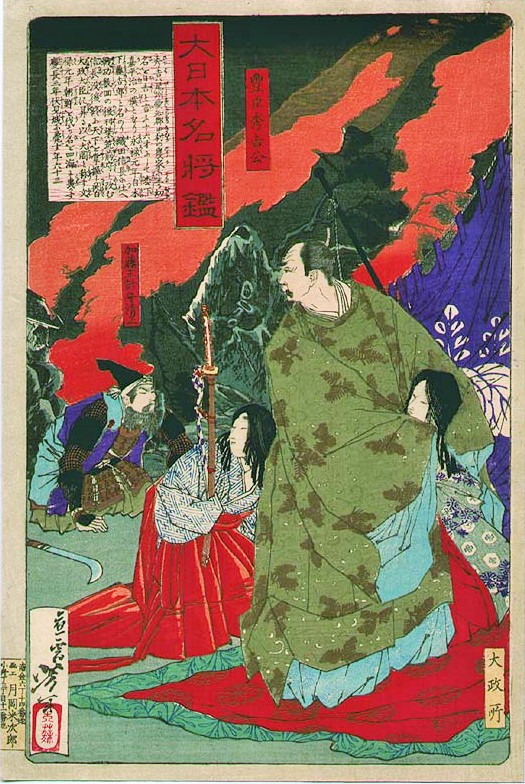
Hidetsugu swiftly complied, but even this did not satisfy Hideyoshi, who went further but order the deaths of Hidetsugu’s entire family. In the end, 39 people, including children, wives, and concubines, were beheaded at Sanjo Kawara, in Kyoto, and dumped in a mass grave. Some sources say that the commoners who came to watch were so disgusted with the manner of the executions that they began hurling insults at the magistrates responsible, and in the aftermath, a memorial stone dedicated to “Hideyoshi’s Evil” was erected.
Theories around why Hideyoshi ordered his nephew’s death, and why it was carried out with such thorough brutality, have swirled since the moment Hidetsugu’s head was struck off. A common view is that Hidetsugu really was planning to rebel, or at least Hideyoshi believed he was, and the purge that followed was simply ensuring no one survived to take revenge.
Another theory is that Hidetsugu himself had earned a reputation as a violent lunatic, routinely hacking people down in the street, and even being known to take potshots at commoners with a musket, earning him the nickname the “Killing Regent”. Modern scholars are generally sceptical of this reputation, however, citing a lack of contemporary sources referring to what should have been a fairly well-known situation.
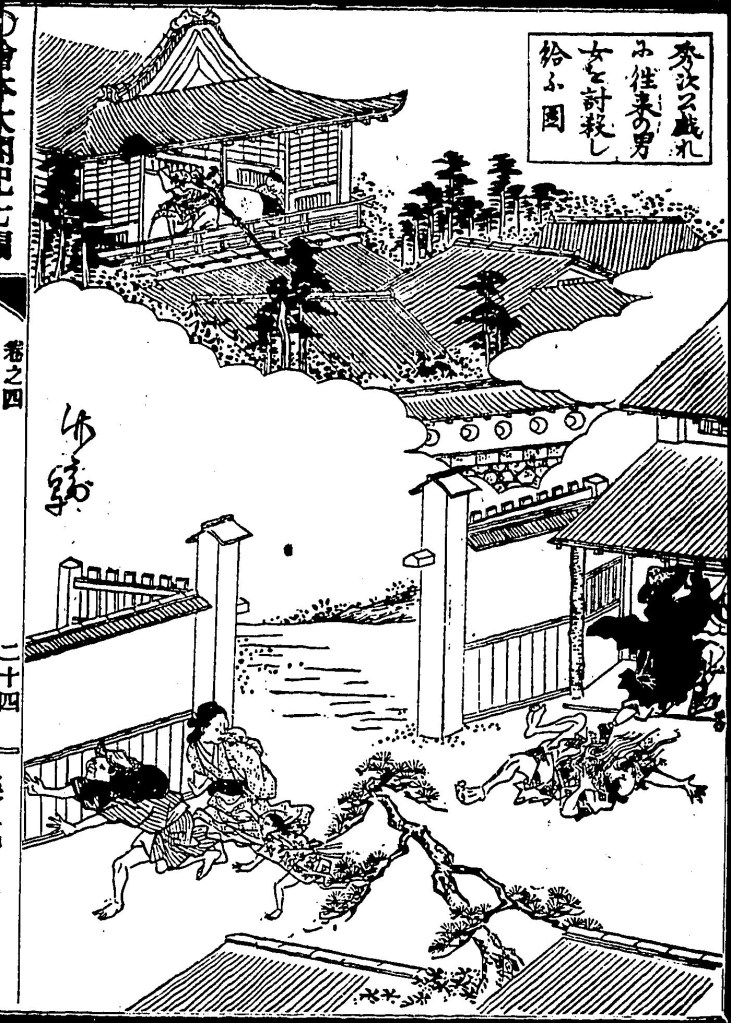
An addition to this theory is that Ishida Mitsunari, and his associates, deliberate sought to slander Hidetsugu in the eyes of Hideyoshi, though again this is now widely seen as a latter invention, written by authors in the Edo Period, decades after the events, and writing at a time when there was active interest in painting both Hideyoshi, and Mitsunari in a bad light.
All of this paints Hideyoshi in an increasingly tyrannical light, and subsequent events in his reign would not help matters. In 1596, the Keicho-Fushimi Earthquake struck the area around modern Osaka, leading to widespread damage and the deaths of more than a thousand people. Earthquakes are nothing out of the ordinary in Japan, but damage to several temples around Kyoto prompted an inspection by Hideyoshi himself.
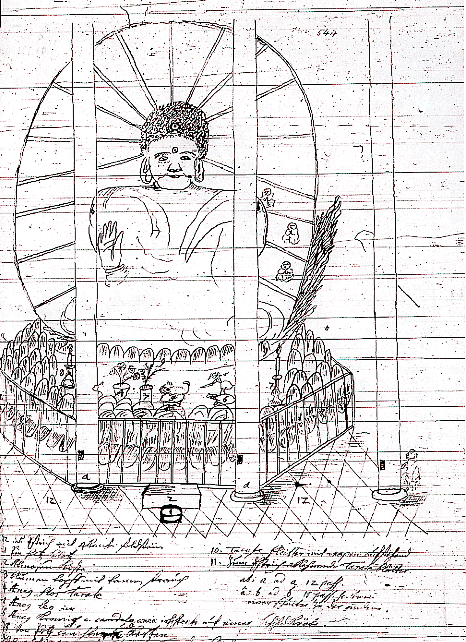
At the Hokoji Temple, Hideyoshi had ordered the construction of a “Great Buddha”, which was said to be over 19m tall, making it one of the largest in history. However, in order to speed up construction, Hideyoshi is said to have ordered the construction changed from the traditional bronze to wood. When the earthquake struck, the Buddha was badly damaged as a result of its lighter construction.
It is said that Hideyoshi, enraged at the damage caused to so expensive a monument, took a bow and shot an arrow into the Buddha’s forehead. Such an act of sacrilege was widely condemned, but scholars disagree over whether it actually happened, as the only sources (again) come from much later. The contemporary sources only say that Hideyoshi, upon inspecting the damage, ordered the Buddha and the hall containing it to be dismantled.
On a side note, both structures would be reconstructed by Hideyoshi’s successor, Hideyori, and the re-consecration of the site would indirectly lead to the downfall and destruction of the Toyotomi Clan in 1615, but that’s a story for another time.
As we’ve discussed previously, Hideyoshi had issued an order expelling Christian missionaries from Japan back in 1587, but it had generally gone unenforced. That changed in 1596, when the Spanish Galleon, San Felipe, wrecked off the coast of Shikoku. In the immediate aftermath, the local lord (who happened to be a Chosokabe) confiscated the ship’s cargo, and the Spanish complained to Hideyoshi.
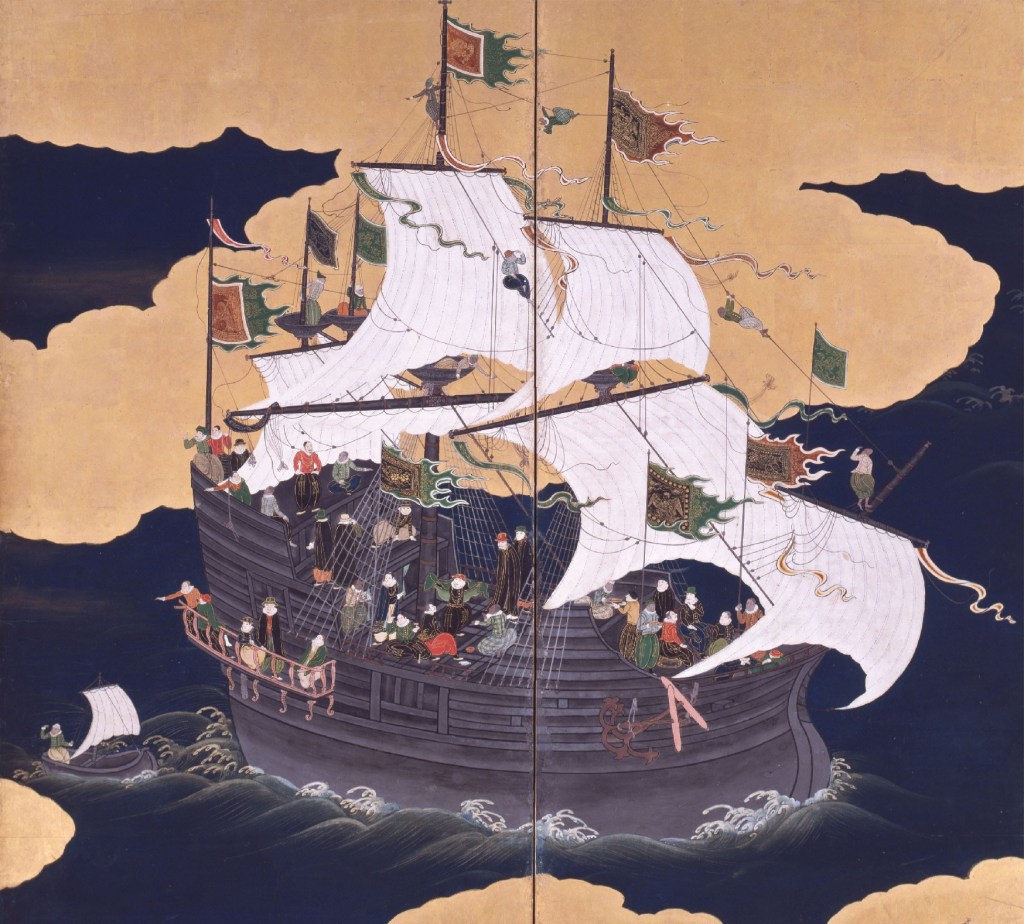
It seems that Hideyoshi himself didn’t much care about the confiscated Spanish treasure; however, one of the crew aboard the San Felipe, a man known as de Hollandia, proved to be a bit of a blowhard. He boasted to the local Japanese authorities that the Spanish Empire was vast, and he produced a map of the world to prove his point.
The Japanese were shocked that the Spanish holdings were so extensive, and when they asked how Spain had come to acquire such territory, de Hollandia made the fateful mistake of claiming that missionaries had gone in first to convert the population, who then served as a vanguard for the Conquistadors who followed.
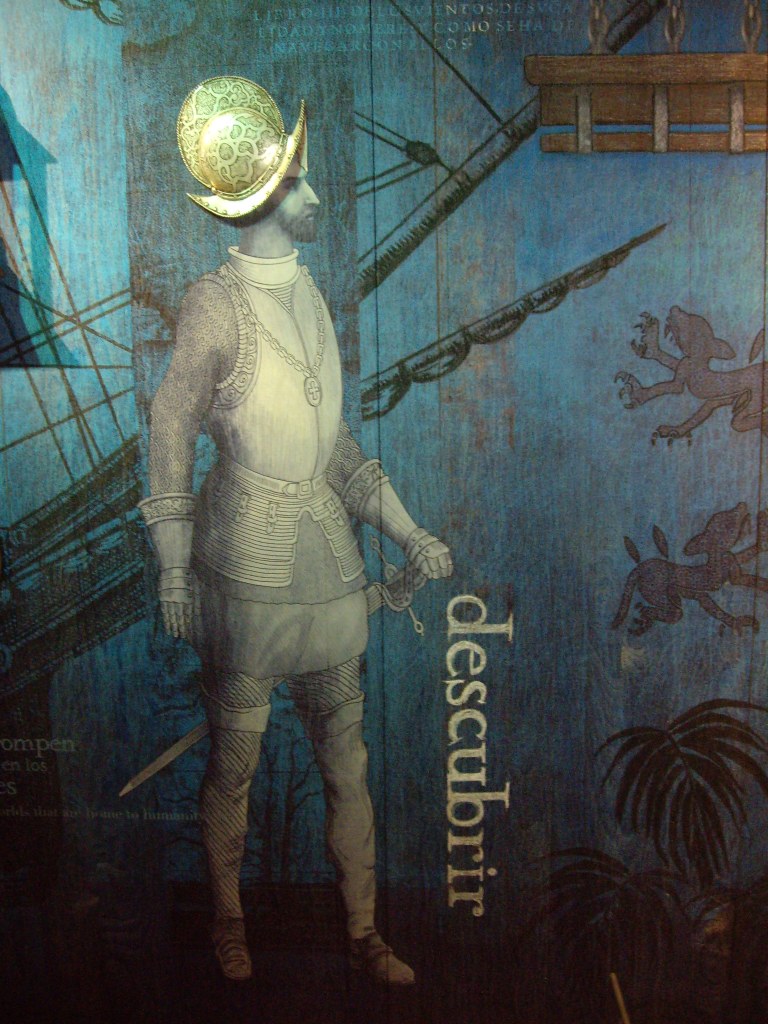
By CarlosVdeHabsburgo – Own work, CC BY-SA 3.0, https://commons.wikimedia.org/w/index.php?curid=24964604
Hideyoshi may not have cared about treasure, but he was definitely paying attention now. He took the silver for himself and then ordered all Spanish Friars in Osaka arrested, along with several Japanese converts. In the end, 26 were taken to Nagasaki and publicly executed
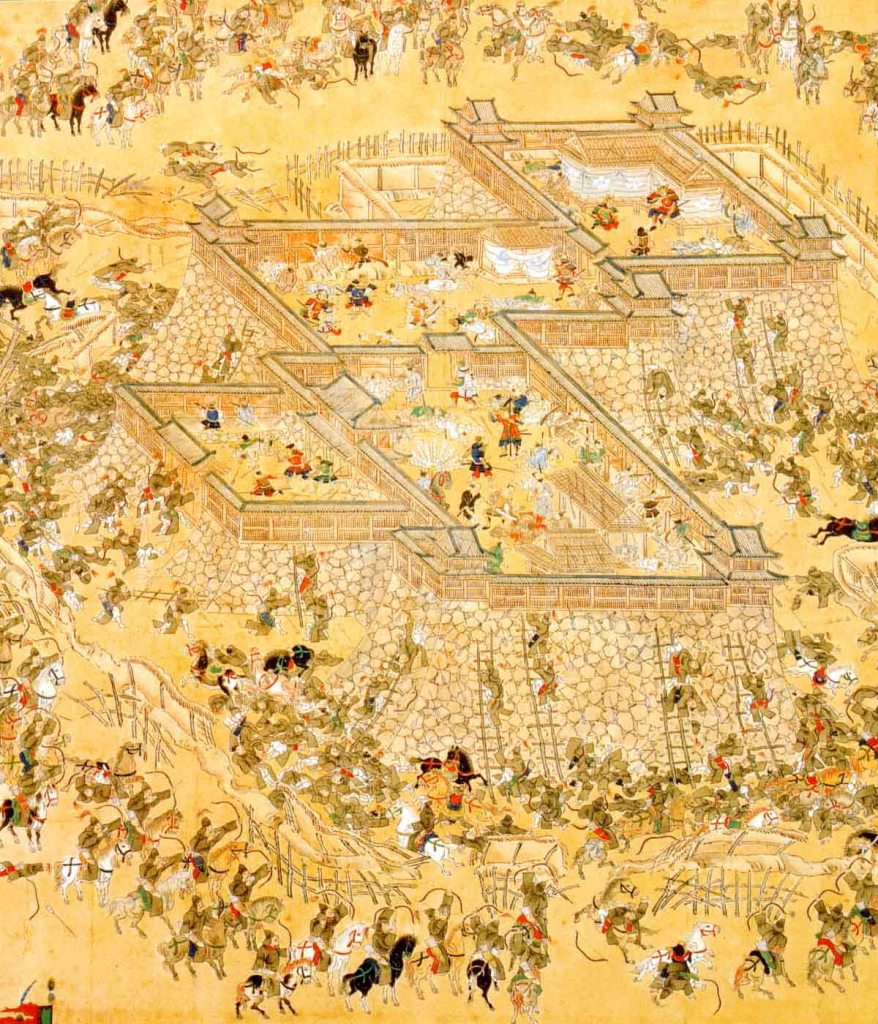
1596 also saw the restart of conflict in Korea, when negotiations with the Chinese broke down, and Hideyoshi ordered a second invasion, dispatching 140,000 men to reinforce the garrisons already in place. This time, instead of attempting to take the whole of Korea, Hideyoshi planned a more limited campaign, advancing into Gyeongsang Province and securing defensible positions there to serve as staging grounds for another round of conquest later.
By late 1597, however, Hideyoshi knew he was nearly done. His son and heir, Hideyori, was just a child, and he knew that his succession was far from guaranteed. In order to guarantee a peaceful transfer of power, he summoned five powerful Daimyo to Fushimi, making them swear to rule the realm as a Council of Regents (or Elders) until Hideyori came of age.
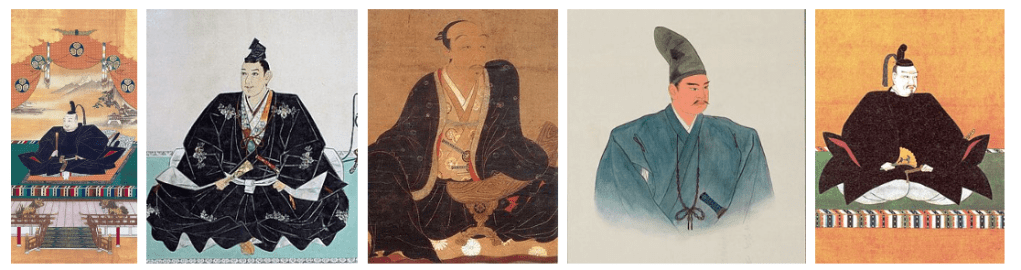
The five regents were Ukita Hideie, Maeda Toshiie, Uesugi Kagekatsu, Mori Terumoto, and Tokugawa Ieyasu. Of the five, Ieyasu was far and away the most powerful, though he was not strong enough to oppose the other four directly, especially the venerable Maeda Toshiie and Mori Terumoto. This was presumably the point, however, as Hideyoshi wanted to create a council that was made up of men strong enough to rule, but not strong enough to rule alone.
Hideyoshi passed away in August 1598, and the order he had done so much to create would not long outlive him. The council he had created fell apart within a year, following the death of Maeda Toshiie in 1599 and the political manoeuvring of Tokugawa Ieyasu, who won the decisive Battle of Sekigahara in 1600 and was declared Shogun in 1603.
Though Hideyori would never rule in his own right, he would continue on as a living example of Hideyoshi’s legacy, but he would eventually fall foul of the rising power of the Tokugawa, and Hideyoshi’s line would come to an end in 1615, though, once again, we are getting ahead of ourselves.
Sources
https://ja.wikipedia.org/wiki/%E8%B1%8A%E8%87%A3%E7%A7%80%E5%90%89
https://ja.wikipedia.org/wiki/%E3%82%B5%E3%83%B3%EF%BC%9D%E3%83%95%E3%82%A7%E3%83%AA%E3%83%9A%E5%8F%B7%E4%BA%8B%E4%BB%B6
https://ja.wikipedia.org/wiki/%E6%85%B6%E9%95%B7%E4%BC%8F%E8%A6%8B%E5%9C%B0%E9%9C%87
https://ja.wikipedia.org/wiki/%E6%96%B9%E5%BA%83%E5%AF%BA%E9%90%98%E9%8A%98%E4%BA%8B%E4%BB%B6
https://ja.wikipedia.org/wiki/%E6%85%B6%E5%B0%9A%E9%81%93
https://ja.wikipedia.org/wiki/%E6%96%B9%E5%BA%83%E5%AF%BA
https://en.wikipedia.org/wiki/Yodo-dono
https://ja.wikipedia.org/wiki/%E8%B1%8A%E8%87%A3%E7%A7%80%E6%AC%A1
https://ja.wikipedia.org/wiki/%E6%96%87%E7%A6%84%E3%83%BB%E6%85%B6%E9%95%B7%E3%81%AE%E5%BD%B9
 Chris Perry, Author