Tag: Tosa Province

  • The Second Unifier – Toyotomi Hideyoshi. Part Four.

    The Second Unifier – Toyotomi Hideyoshi. Part Four.

    Despite an ultimately unsuccessful campaign against Tokugawa Ieyasu, by late 1584, Hideyoshi was the most powerful man in the realm. Having secured his position as Oda Nobunaga’s successor, he dominated central Japan and could call on economic and martial resources that dwarfed those of his rivals.
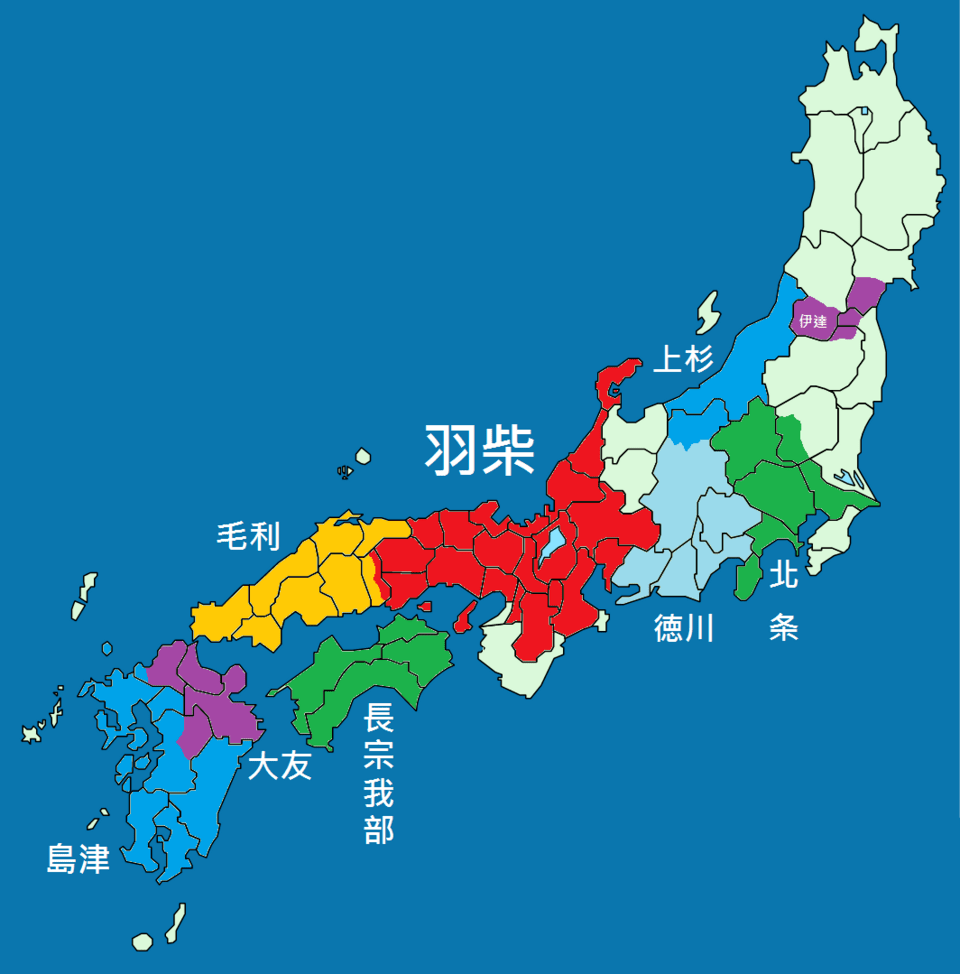
    The strategic situation in late 1584, Hideyoshi controlled the territory in red.
    By Alvin Lee – Own work, CC BY-SA 4.0, https://commons.wikimedia.org/w/index.php?curid=39198357

    Despite this, he was not yet unchallenged. To the west, the Mori remained undefeated, to the east, was Tokugawa Ieyasu, and further away, the Hojo, who had remained untouched by Nobunaga’s conquests, and to the south, in Kii Province, the locals coalesced around fiercely independent religious and social movements that resisted any attempts to impose central rule.

    Meanwhile, Hideyoshi solidified his political power, being elevated to the Third Rank of the nobility in November 1584 and to the Second Rank in March 1585. Around this time, some sources suggest that the Imperial Court even went so far as to offer him the title of Shogun, only for Hideyoshi to refuse, though the exact nature of the offer, if it existed at all, is unclear.
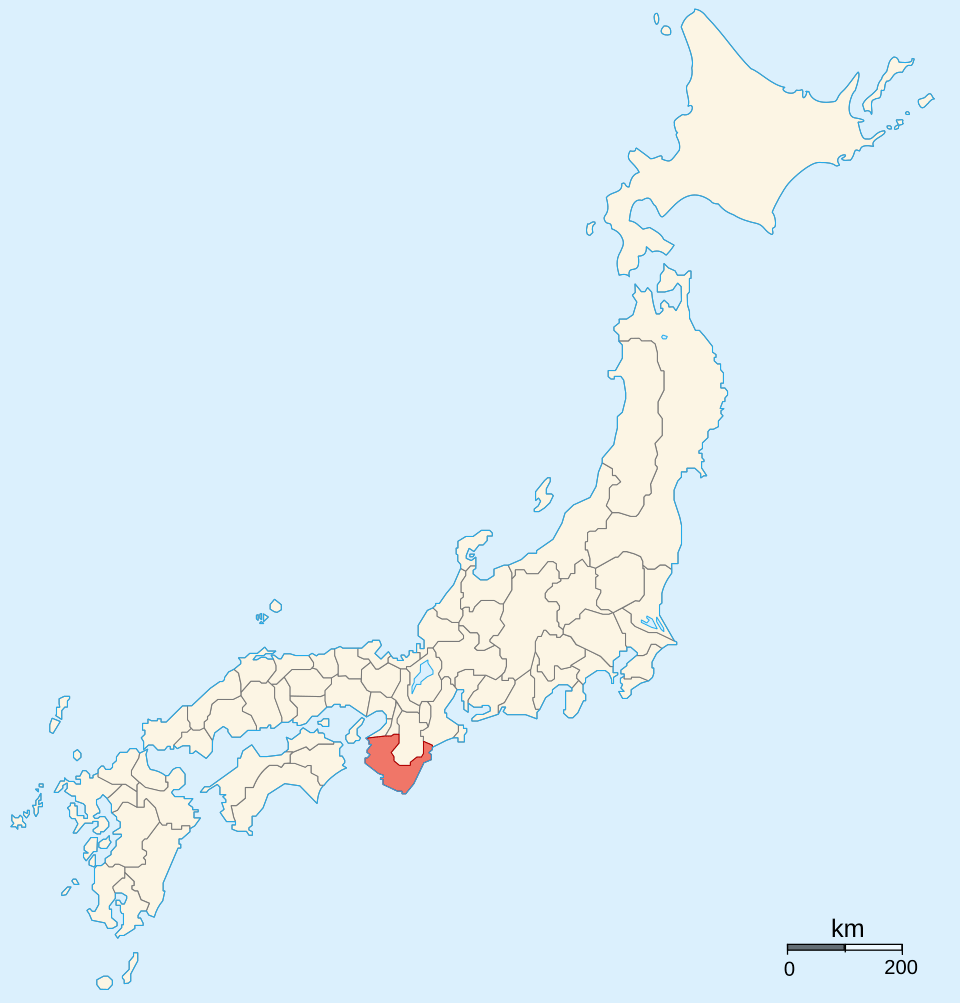
    Kii Province.
    By Ash_Crow – Own work, based on Image:Provinces of Japan.svg, CC BY 2.5, https://commons.wikimedia.org/w/index.php?curid=1683109

    With his position secured, Hideyoshi turned his attention to Kii Province. We’ve spoken about the power of certain religious institutions before, and nowhere was this more apparent than in Kii (sometimes called Kishu). Luis Frois, a well-known Portuguese writer at the time, referred to the area as under the control of five “Great Republics”, which weren’t democracies in the way we’d recognise today, but were strongly independent polities with extensive territories, economic might, and military strength.

    In 1570, Nobunaga began what would prove to be a long campaign against the power of the Ikko-Ikki, based at Honganji Temple. The warrior monks of Kii Province were a key ally of the Ikko-Ikki, and in 1576, Nobunaga dispatched an army against them, aiming to reduce their ability to support his enemies elsewhere.
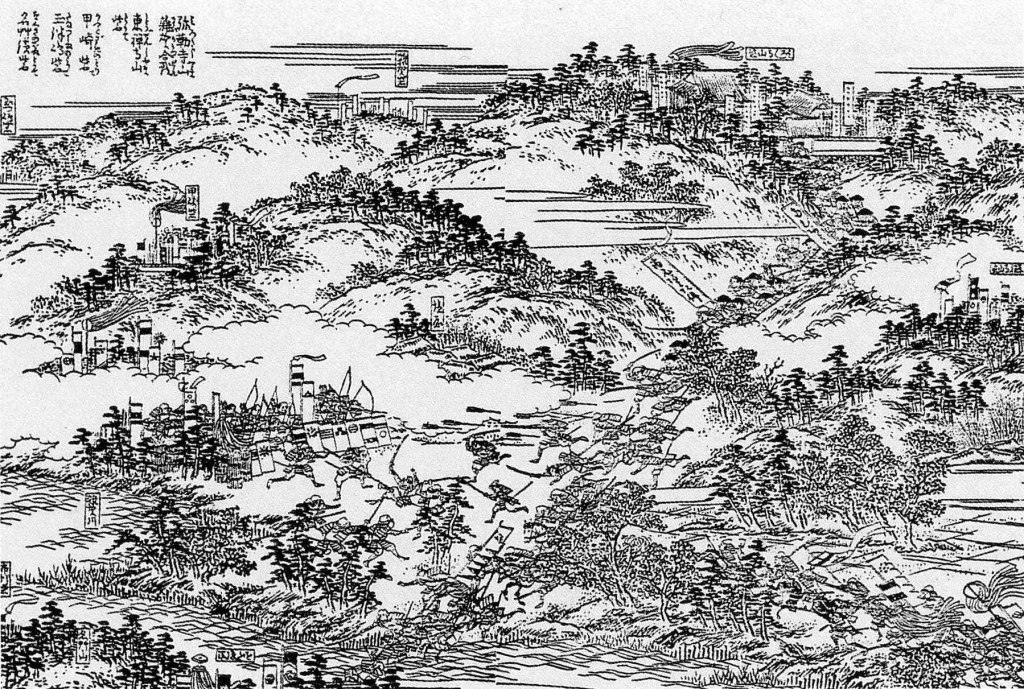
    A semi-contemporary depiction of Nobunaga’s attempts to subdue Kii Province.

    Despite being defeated on the battlefield, the warriors of Kii engaged in guerrilla warfare, led most famously by the Saika-shu, an organisation made up of local samurai and mercenaries, which was well known for its heavy (and skilful) use of firearms. Nobunaga eventually signed a peace treaty and withdrew, allowing his enemies to claim that they had actually defeated him.

    Nobunaga’s death in 1582 put an end to any further campaigning, and for a time, at least, Kii Province was left alone, though no one believed the peace would last. In early spring 1586, Hideyoshi, at the head of an army of some 100,000 men, invaded with the intention of crushing the independent ‘Republics’ for good.
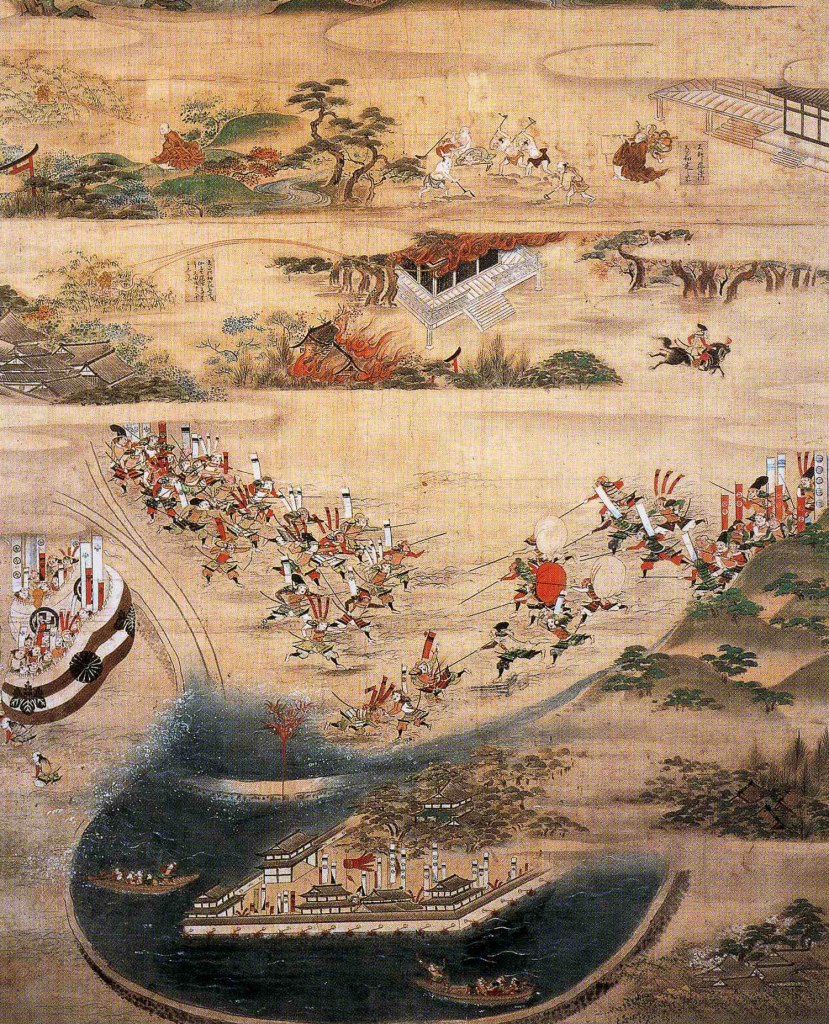
    A depiction of Hideyoshi’s attack on Kii Province.

    The campaign was a true demonstration of Hideyoshi’s new power. Though the Saika-shu and others fought bravely, they were swiftly overwhelmed. Some scholars speculate that the Saika and their allies underestimated Hideyoshi. In the earlier Sengoku Period, it had often been enough to inflict heavy casualties in an initial battle, which would force the attackers to either negotiate or back off.

    These tactics had worked against Nobunaga, who had ultimately been unable to secure decisive control over Kii, for fear of tying down too many men. Hideyoshi had no such hesitation, and even though his losses were heavy, he kept pushing on, and the Saika, who were often hugely outnumbered, were swept aside.
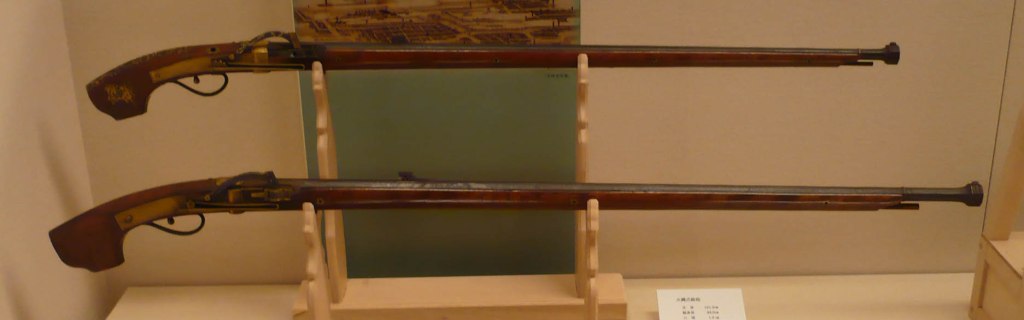
    Firearms of the type used effectively, but ultimately unsuccessfully by the Saika-shu.

    Hideyoshi was able to secure control of Kii in the short term, but his hold over it was always fragile, and there would be several more outbreaks of rebellion in the coming years. In fact, it wouldn’t be until 1614, long after Hideyoshi had passed away, that Kii could be truly said to have been pacified.

    After this, Hideyoshi turned his attention to Shikoku and the powerful Chosokabe Clan. Once allies of Nobunaga, the Chosokabe had fallen foul of his ambitions and had been under threat of invasion at the time of his death at Honnoji.
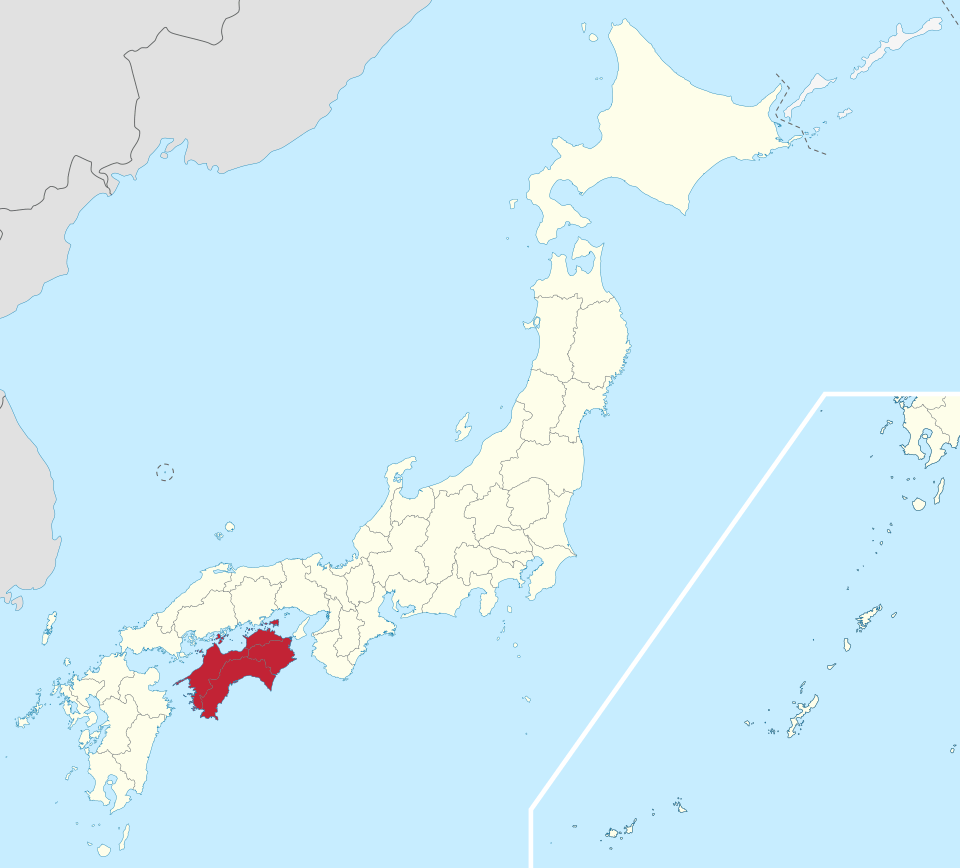
    Shikoku.
    By TUBS – This vector image includes elements that have been taken or adapted from this file:, CC BY-SA 3.0, https://commons.wikimedia.org/w/index.php?curid=16385942

    An army under Nobunaga’s third son, Nobutaka, had been gathered at Sumiyoshi (in modern Osaka) with the purpose of attacking Shikoku; in fact, they had been meant to set out on the same day that Nobunaga was killed, and news of his death demoralised the army, some of which simply went home.

    In the aftermath of Nobunaga’s death, the Chosokabe had consolidated control of all of Shikoku and lent support to opponents of Hideyoshi, notably Shibata Katsuie, Tokugawa Ieyasu, and the Saika-shu of Kii Province. None of these enemies had been able to overcome Hideyoshi, however, and it was probably no surprise when he turned his vengeful eye on the Chosokabe themselves.
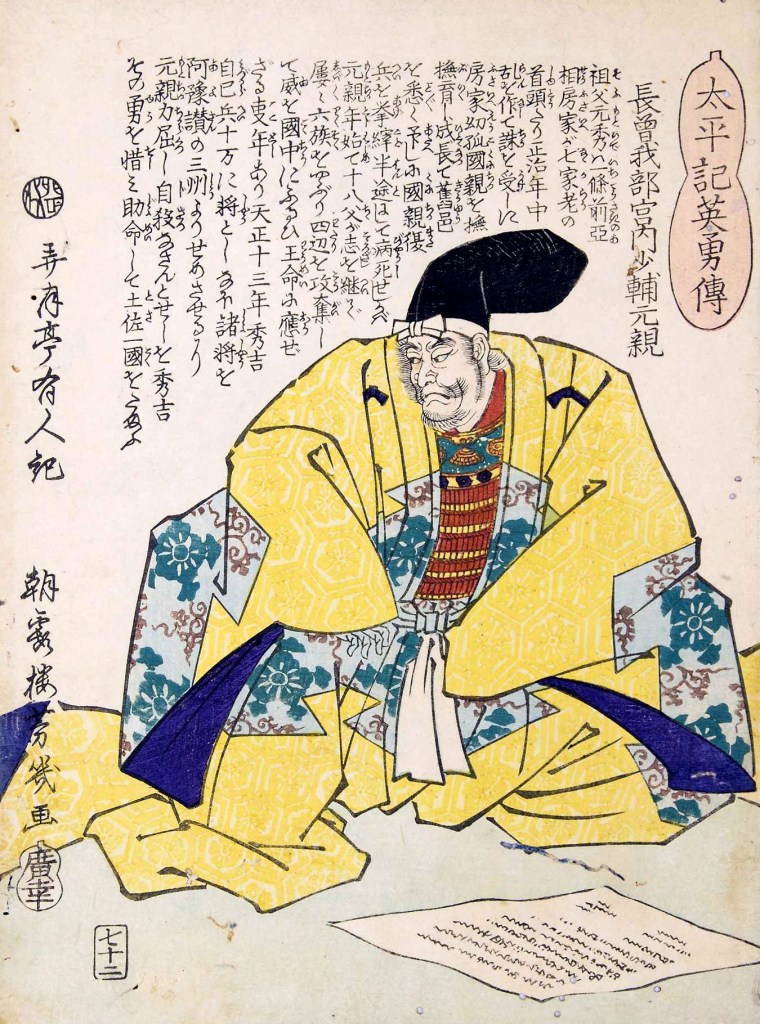
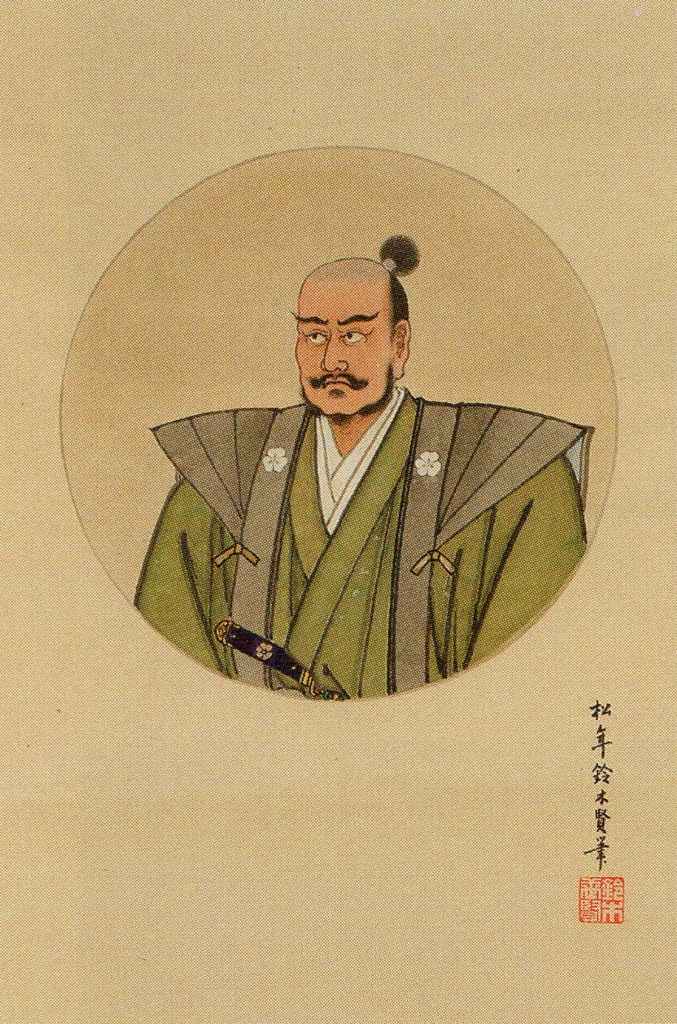
    Chosokabe Motochika, Lord of the Chosokabe at the time of Hideyoshi’s invasion.

    There were some attempts at negotiation, but Hideyoshi’s demands that the Chosokabe give up three of the four provinces of Shikoku were unacceptable. The strategic situation for the Chosokabe was made worse when the Mori, one-time antagonists of Hideyoshi, instead made a permanent peace with him. Some sources suggest that it was at this point that the Mori submitted to Hideyoshi outright.

    With the support of the Mori and their powerful navy, Hideyoshi launched a three-pronged attack on Shikoku, which the Chosokabe were hard-pressed to oppose. Outnumbered some 3 to 1, the Chosokabe fought bravely, but the campaign was over quickly. From June to August 1585, there was a series of battles and sieges that invariably resulted in Chosokabe defeat.
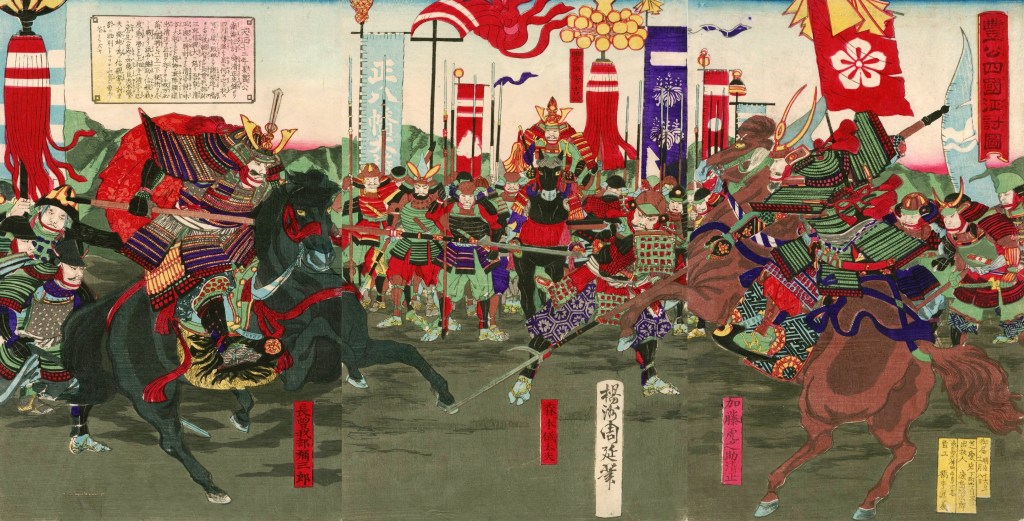
    A 19th-century depiction of the Invasion of Shikoku.

    Eventually, despite claiming he would rather fight to the end, Chosokabe Motochika surrendered at the urging of his senior vassals. As punishment for his defiance (or reward for his surrender), Hideyoshi confiscated three of the four Shikoku Provinces, leaving the Chosokabe with their home province of Tosa and an obligation to provide Hideyoshi with up to 3,000 troops for any future campaign and hostages to ensure the peace.

    During the Shikoku Campaign, which was led by his brother, Hideyoshi was appointed Kampaku by the Imperial Court. This was a result of a political crisis that had been ongoing since before Nobunaga’s death in 1582. At the time, the Imperial Court had (allegedly) invited Nobunaga to become Shogun, or Kampaku (Regent). Both contemporary and modern scholars disagree on Nobunaga’s response to this offer, but his death in June of that year ultimately rendered it moot.
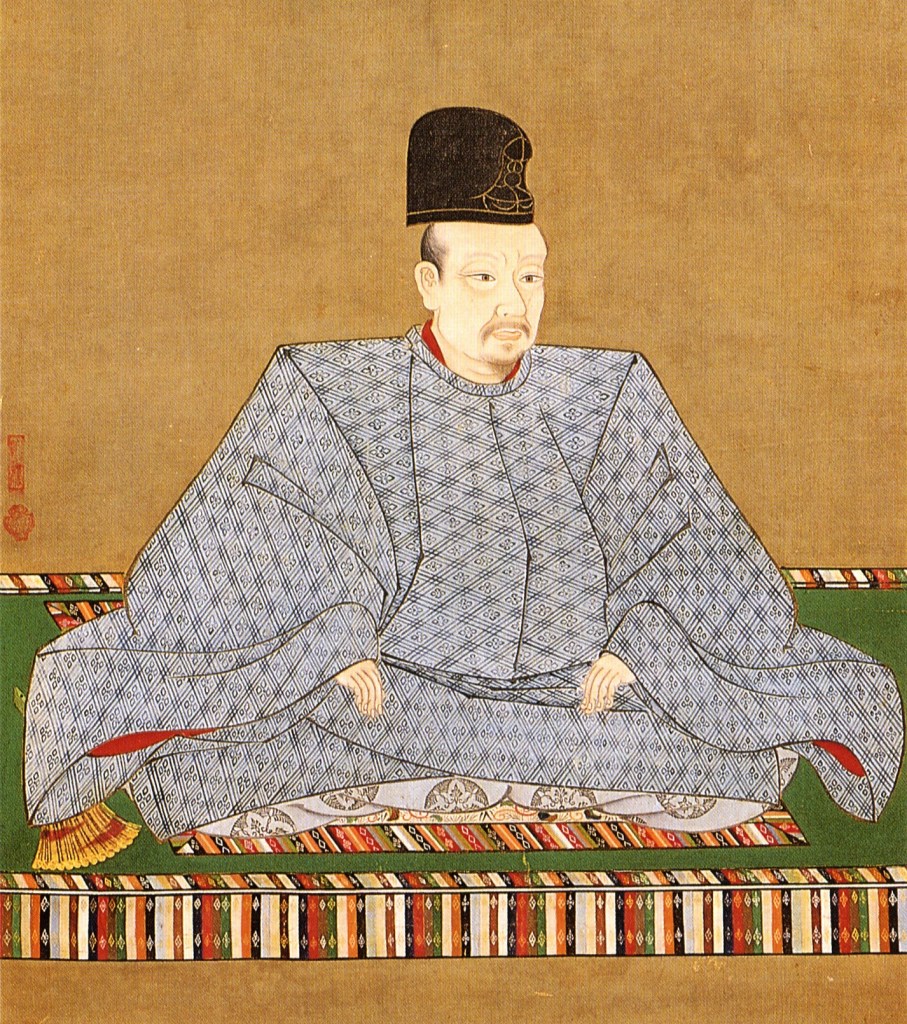
    Emperor Go-Yozei, who was the sovereign during this time.

    What followed was a drawn-out political squabble between rival factions at court over who would ultimately take the position of Regent. We’ve spent a lot of time looking at how the Imperial Court was a decorative but ultimately impotent organisation by this point, and any title the Emperor might bestow would be largely symbolic without any external political power to back it up.

    Into this silk-clad quagmire stepped Hideyoshi. Traditionally, the position of Regent had rotated amongst five prestigious warrior families, of which Hideyoshi was not a member. To overcome this issue (which was one of tradition, rather than law), he was formally adopted as the son of Konoe Sakahisa (who was less than a year older than him) in July 1585, being named Kampaku shortly afterwards.
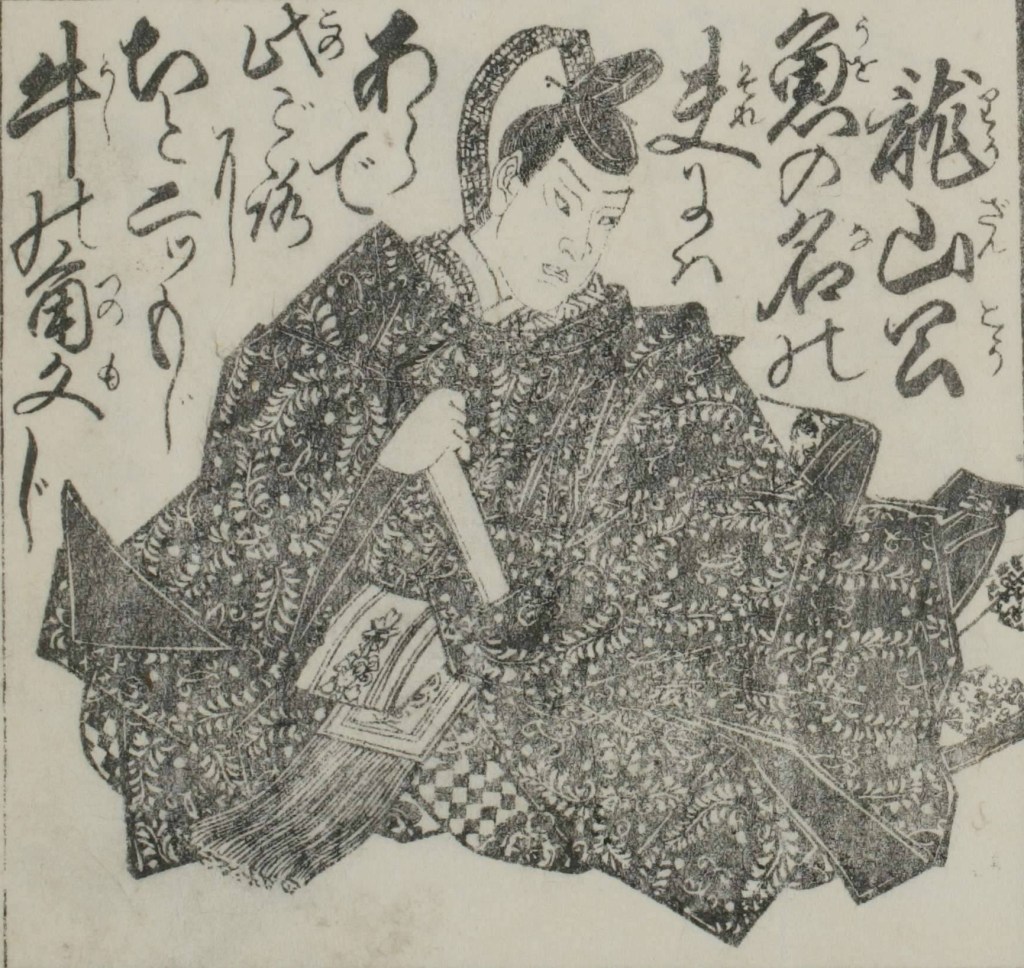
    Konoe Sakahisa, who formally adopted Hideyoshi.
    Leehiroki258 – 投稿者自身による著作物, CC 表示-継承 4.0, https://commons.wikimedia.org/w/index.php?curid=162775880による

    There was supposedly an agreement in which the childless Hideyoshi would take the position as a temporary solution to the crisis, before handing it over to the Konoe family’s chosen heir at a later date. Hideyoshi had other ideas, however. In 1586, he petitioned the Emperor for a new family name, which the Emperor duly bestowed. From then on, Hideyoshi would be known as Toyotomi Hideyoshi, the name by which he is best remembered in English sources.

    Hideyoshi would then adopt the Emperor’s younger brother, Prince Hachijo, as his son and eventual successor. This was a clear breach of the agreement with the Konoe, but since Hideyoshi was the most powerful man in the realm, and the proposed heir was a member of the Imperial Family, there was nothing anyone could do about it.
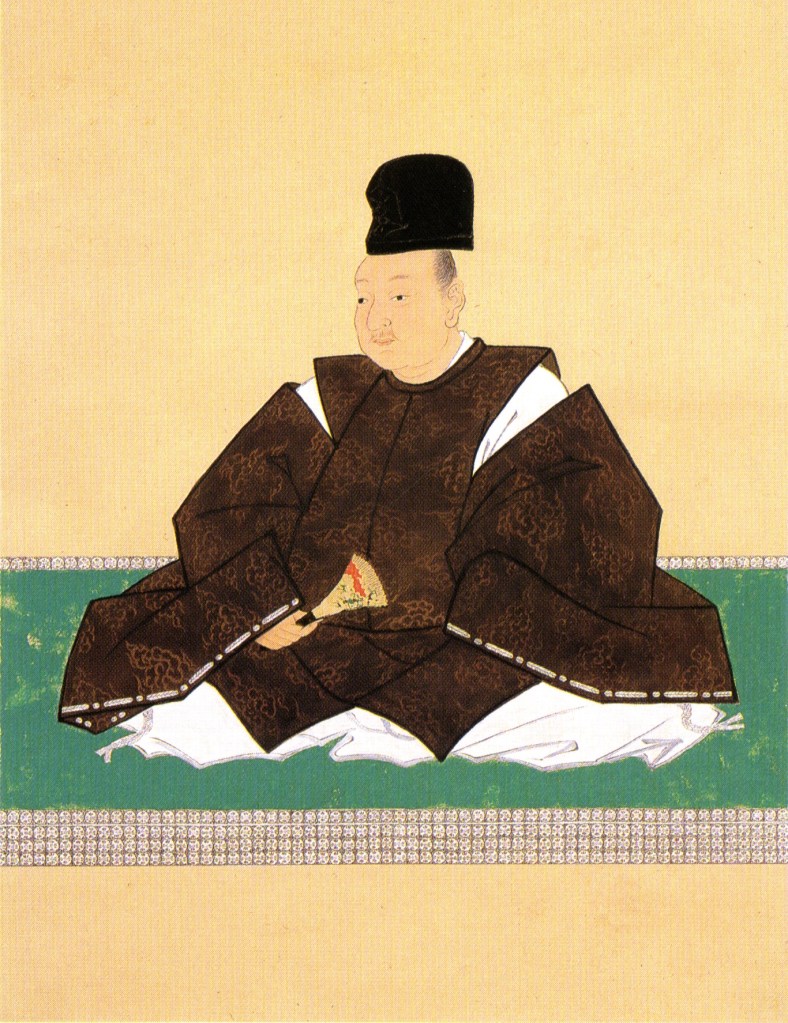
    Prince Hachijo

    Hideyoshi went further, seeking to replace the powerless Imperial aristocracy with a new “Samurai Nobility”. For centuries, the ‘Nobles’ had held all the prestige, but practically none of the actual power, which was in the hands of the Samurai after long years of civil war.

    Hideyoshi sought to address this by bestowing titles on some of the other powerful Daimyo, including Tokugawa Ieyasu and Ishida Mitsunari, appointments that would have long-term political repercussions.
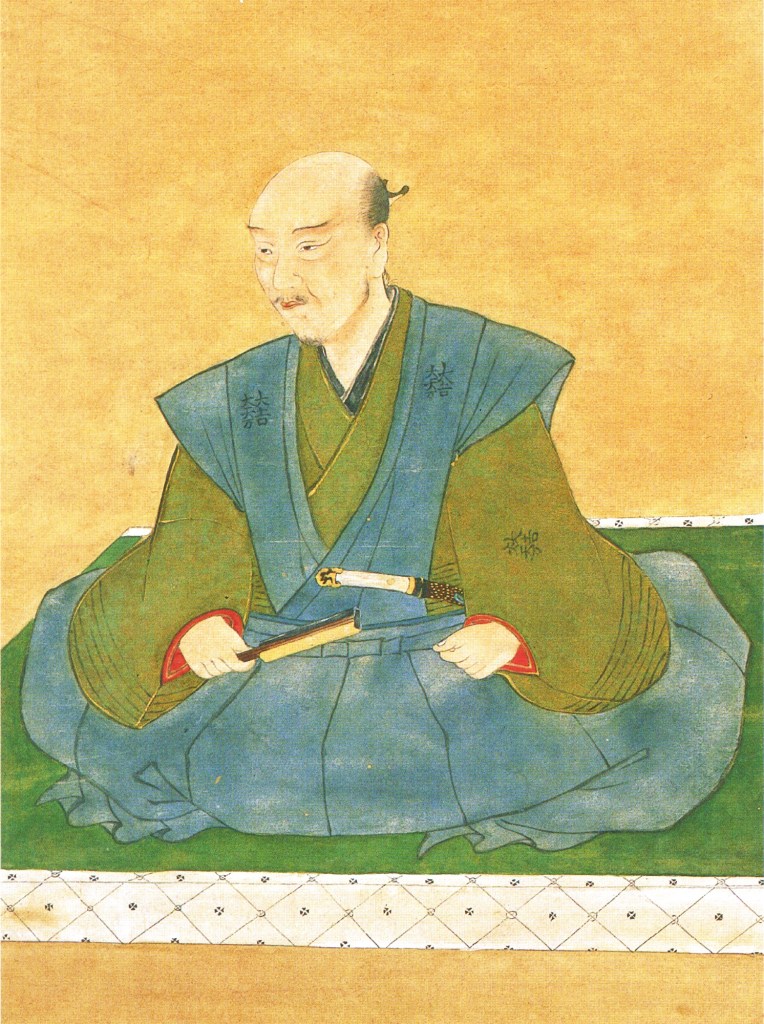
    Ishida Mitsunari, we haven’t talked about him much, but he’s going to become very important later.

    Another attempt was made to force obedience from Ieyasu when Hideyoshi demanded that he hand over hostages to ensure ongoing peace. Ieyasu refused, and Hideyoshi began planning a large-scale military campaign to finally bring Ieyasu to heel. The massive Tensho Earthquake in January 1586 caused severe damage to Hideyoshi’s capital at Osaka and several other castles and staging areas, bringing an end to the plans, and causing Hideyoshi to adopt a more conciliatory policy towards Ieyasu.
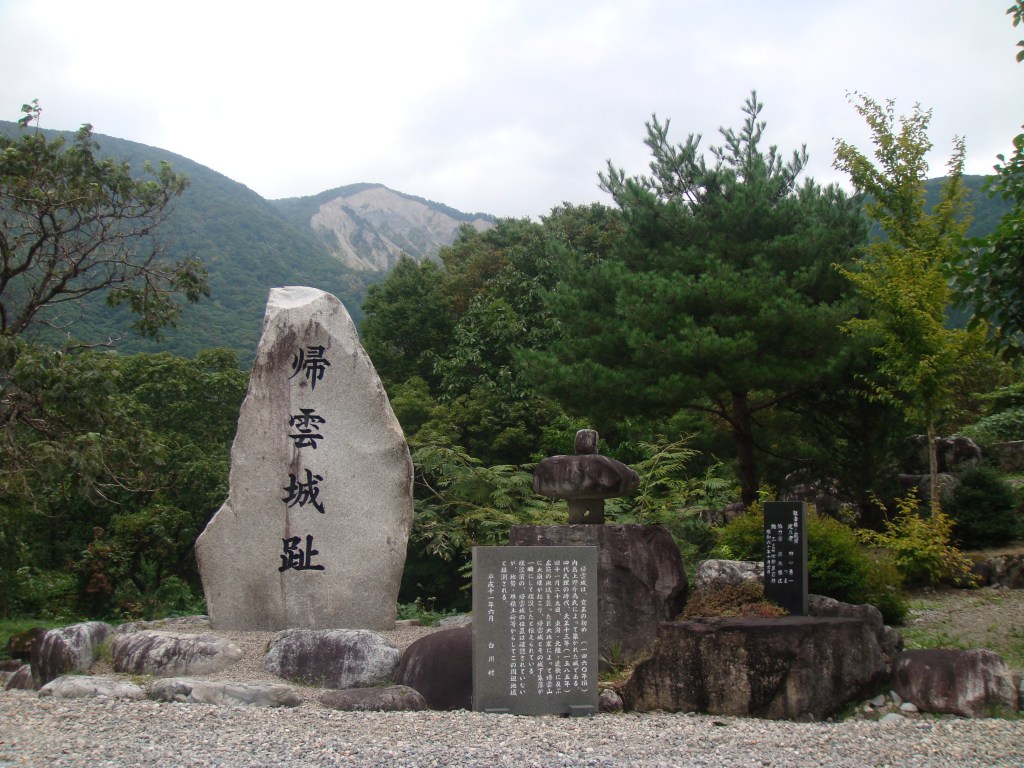
    A monument at the site of Kaerikumo Castle, which was destroyed in a landslide during the 1586 earthquake. The evidence of the landslide can be seen on the hill in the background.

    Later that year, Ieyasu would marry Hideyoshi’s younger sister, Princess Asahi, and he would later travel to Kyoto and swear allegiance to Hideyoshi as Regent. Despite this nominal submission, Hideyoshi had failed to subdue Ieyasu, whose military power remained intact.

    Sources
    https://ja.wikipedia.org/wiki/%E8%B1%8A%E8%87%A3%E7%A7%80%E5%90%89
    https://ja.wikipedia.org/wiki/%E6%9C%9D%E6%97%A5%E5%A7%AB
    https://ja.wikipedia.org/wiki/%E9%96%A2%E7%99%BD%E7%9B%B8%E8%AB%96
    https://ja.wikipedia.org/wiki/%E5%85%AB%E6%9D%A1%E5%AE%AE%E6%99%BA%E4%BB%81%E8%A6%AA%E7%8E%8B
    https://ja.wikipedia.org/wiki/%E8%BF%91%E8%A1%9B%E5%89%8D%E4%B9%85
    https://ja.wikipedia.org/wiki/%E5%9B%9B%E5%9B%BD%E6%94%BB%E3%82%81
    https://ja.wikipedia.org/wiki/%E4%B8%B8%E5%B1%B1%E5%9F%8E%E3%81%AE%E6%88%A6%E3%81%84
    https://ja.wikipedia.org/wiki/%E5%9B%9B%E5%9B%BD%E5%9B%BD%E5%88%86
    https://ja.wikipedia.org/wiki/%E5%9B%9B%E5%9B%BD%E5%B9%B3%E5%AE%9A
    https://ja.wikipedia.org/wiki/%E7%B4%80%E5%B7%9E%E5%BE%81%E4%BC%90
    https://ja.wikipedia.org/wiki/%E9%9B%91%E8%B3%80%E8%A1%86
    https://ja.wikipedia.org/wiki/%E6%A0%B9%E6%9D%A5%E8%A1%86
    https://en.wikipedia.org/wiki/Kii_Province
    https://en.wikipedia.org/wiki/1586_Tensh%C5%8D_earthquake
    https://en.wikipedia.org/wiki/Kaerikumo_Castle
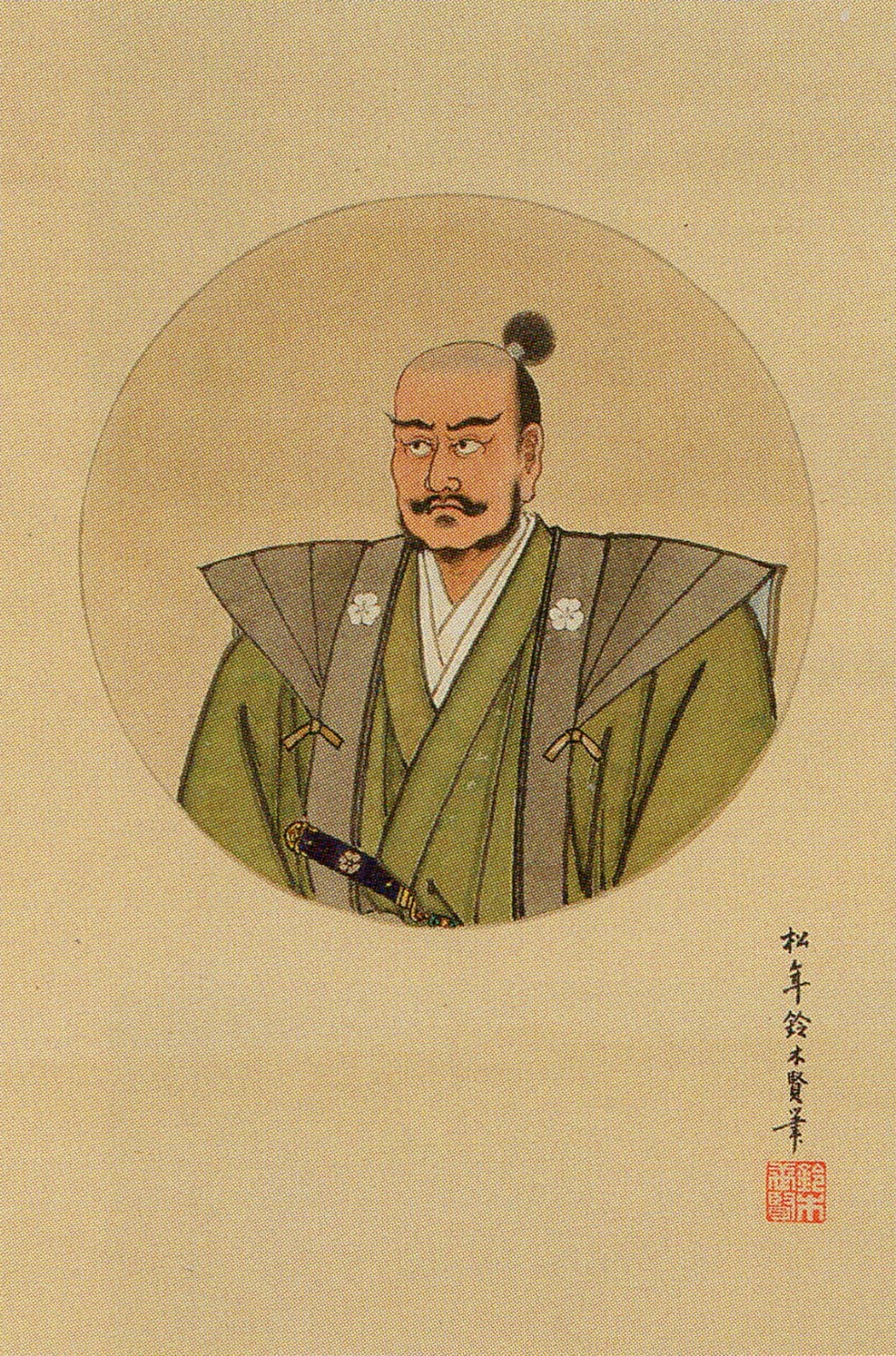
  • (No longer) Lords of the Four Provinces

    (No longer) Lords of the Four Provinces

    Last time, we looked at how the Chosokabe rose from barely holding a single castle to becoming effective masters of the whole of Shikoku. In 1582, it had looked like they were about to be invaded and (probably) conquered by Oda Nobunaga, but his sudden death at the Honnoji Incident in June 1582 granted the Chosokabe a brief reprieve.

    The mon of the Chosokabe Clan.
    百楽兎 – 投稿者自身による著作物, CC 表示-継承 3.0, https://commons.wikimedia.org/w/index.php?curid=9987939による

    Between 1582 and 1585, they completed their conquest of Shikoku, although exactly how much control they really exerted is still debated by historians, with some suggesting that Shikoku was conquered and pacified, but others making the case that Chosokabe control outside of Tosa Province was tenuous.

    Regardless of the nature of Chosokabe’s control of Shikoku, it would prove to be brief. In the spring of 1585, Hashiba Hideyoshi, fresh from defeating the last of his rivals to the mantle of Nobunaga’s successor, turned his attention to Shikoku. Hideyoshi ordered the Chosokabe to hand over Iyo and Sanuki Provinces, effectively ceding the northern half of Shikoku to him.

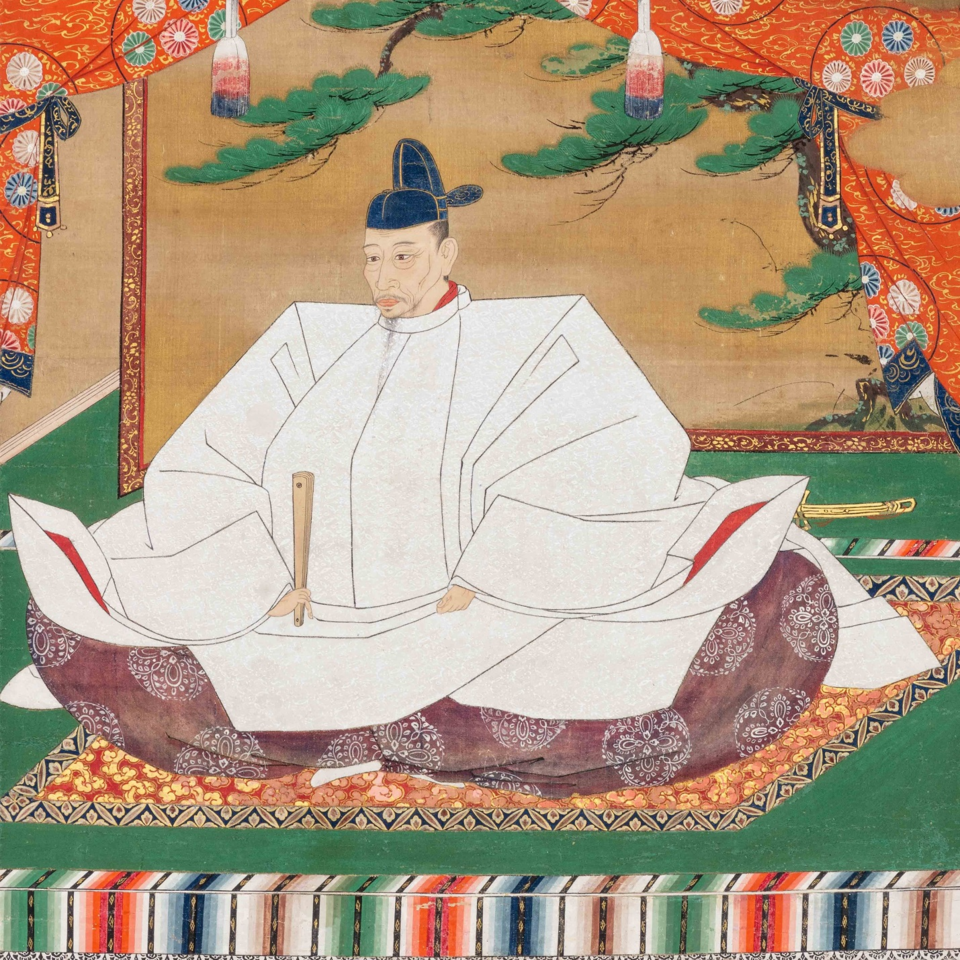
    Toyotomi Hideyoshi, who would eventually become master of Japan.

    The Lord of the Chosokabe, Motochika, tried to negotiate, offering just Iyo Province. Hideyoshi was not a man to be bargained with, however, and in response to what he saw as Chosokabe’s defiance, he dispatched an army of some 100,000 men under the overall command of his brother, Hidenaga.

    Shikoku was attacked from three sides: Sanuki and Awa by Hidenaga’s army, and Iyo by the Mori who had recently submitted to Hideyoshi and were keen for a chance to prove their loyalty. Attacked on multiple fronts and facing overwhelming numbers, the Chosokabe did not resist for long. At the end of July, after already having lost Awa Province, Motochika surrendered.

    The terms were harsh, but not as bad as they might have been. Hideyoshi allowed the Chosokabe to keep control of Tosa Province, but the other three were divided amongst Hideyoshi’s vassals. In 1586, the Chosokabe would join Hideyoshi’s invasion of Kyushu, and though the campaign itself would be successful, Motochika’s heir, Nobuchika, was killed in battle.

    Overcome with grief, Motochika is supposed to have tried to kill himself, only being dissuaded at the last minute by his vassals. Not long after this, he relocated the base of the clan to what is now Kochi Castle, and in 1588, he named his fourth son, Morichika, as the new heir.

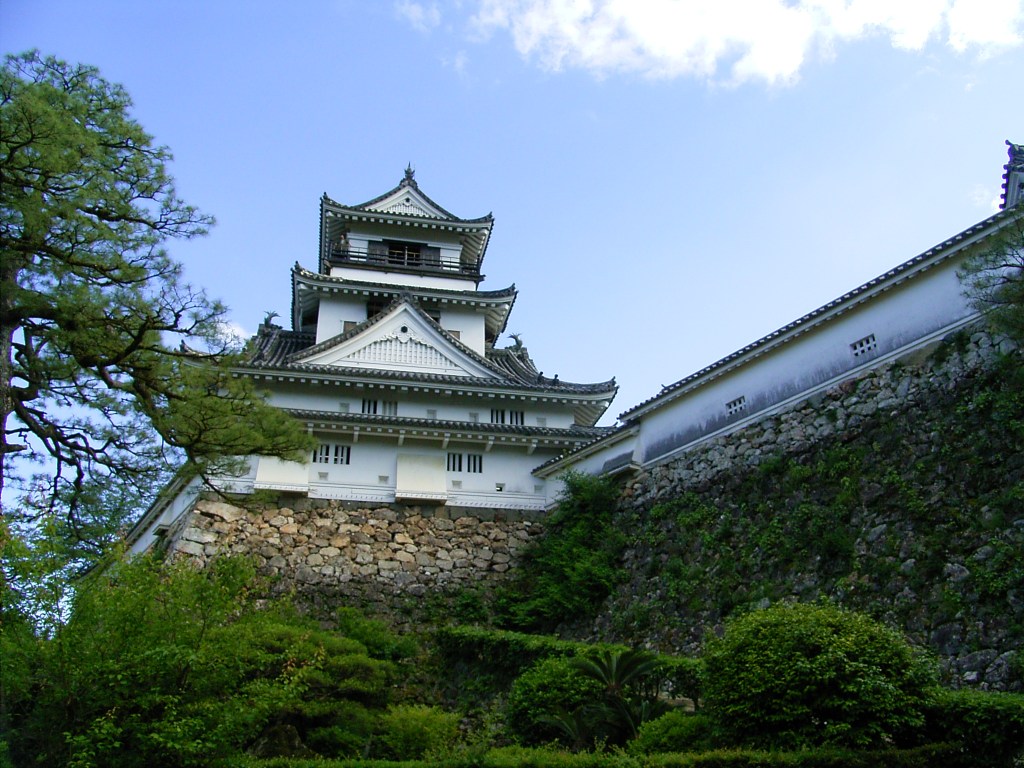
    Kochi Castle as it appears today.
    By Taisyo – photo taken by Taisyo, CC BY-SA 3.0, https://commons.wikimedia.org/w/index.php?curid=2157936

    In 1590, the Chosokabe again went to war in the service of Hideyoshi, this time dispatching naval forces to attack the Hojo Castle at Shimoda with 10,000 men. The garrison of 500 held out for nearly two months, but it was eventually taken, and with it, the Chosokabe contribution to the wider Odawara Campaign came to an end.

    In 1591, Motochika moved his base from Kochi Castle to a position at Urado (still within the modern city of Kochi). Some sources say this was because of the unfavourable location of the first castle (it was prone to flooding), whilst others suggest it was a strategic move, with Urado serving as the main base of the Chosokabe Navy, which took part in Hideyoshi’s long and ultimately unsuccessful invasions of Korea from 1592-1598.

    In 1596, the San Felipe Incident occurred when a Spanish Galleon (the San Felipe, hence the name) was shipwrecked off the coast of Tosa and brought into the harbour at Urado. We’ll focus on this incident specifically in a later post, but the short version is that Motochika confiscated the remaining cargo of the Galleon, and when officials from Hideyoshi arrived in Kochi to take possession of the goods, the captain of the Galleon heavily implied that the presence of Christians in Japan was the precursor to a Spanish Invasion, explaining that that was how the Spanish had managed to conquer such a large part of the globe.

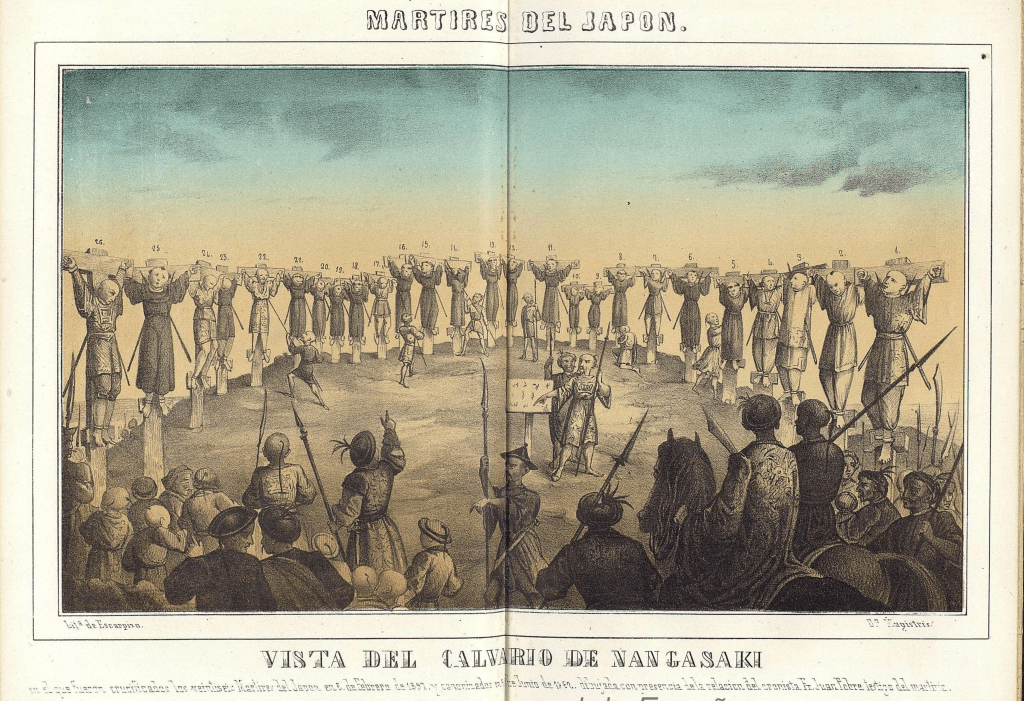
    Hideyoshi had initially issued orders expelling Christian priests from Japan in 1586, but it had been unenforced before now. When news of the supposed Spanish invasion reached him, Hideyoshi was horrified, and in 1597, he had 26 Christians (including one passenger from the San Felipe) marched from Kyoto to Nagasaki (the centre of Christianity in Japan) and had all 26 crucified on a hill overlooking the city.

    A 19th Century depiction of the executions. The Japanese are wrongly portrayed with Chinese clothing and weapons.

    Motochika’s role in the persecution that followed is not clear, though Christianity had never been particularly strong on Shikoku, as the Chosokabe were largely opposed to foreigners in Japan, so it’s not hard to imagine he would have had no qualms about expelling them from his territory, even if he was not actively involved in the wider campaign.

    Hideyoshi’s death in 1598 would threaten the fragile peace he had forged, as his son and heir was just a boy, and a council of five regents was appointed to rule in his stead. Though Motochika was not a member of the council, he was still a man of influence, and in 1599, he was in Kyoto for an audience with Toyotomi Hideyori (Hideyoshi’s son) when he fell seriously ill.

    When it became clear that he wasn’t going to get better, he made his will, leaving control of the Chosokabe to his son Morichika, before he passed away in May that year. Morichika’s accession was far from smooth; he was unpopular amongst some of the Chosokabe’s retainers (apparently due to his arrogance and short temper), and the Toyotomi, de facto masters of Japan, didn’t recognise him as the new head of the clan.

    An early 20th century depiction of Chosokabe Morichika.

    Morichika would try to make good on his appointment by joining the Western Army (the pro-Toyotomi side) at the Battle of Sekigahara in 1600. This would prove to be an unwise choice in the end, as the Western Army was defeated by the Eastern Army under Tokugawa Ieyasu. Although the Chosokabe had not actually been involved in the final battle, they had chosen a side and would not escape the consequences.

    Morichika was punished by having Tosa taken from him. Though there would be some protest, the decision proved to be final, and the Chosokabe’s time as feudal lords was over. Motochika would campaign to have his territory restored until around 1605. In 1610, he supposedly became a monk, and although his movements around this time are unclear, by 1612, he was under direct surveillance from the new Tokugawa Shogunate.

    The new Shogun was right to suspect him, as, during the Osaka Campaign in 1615, he sided with the Toyotomi, hoping to secure the restoration of Chosokabe lands in Tosa. In the event, the Tokugawa would be victorious in that campaign, snuffing out the last of the Toyotomi Clan, and securing their rule.

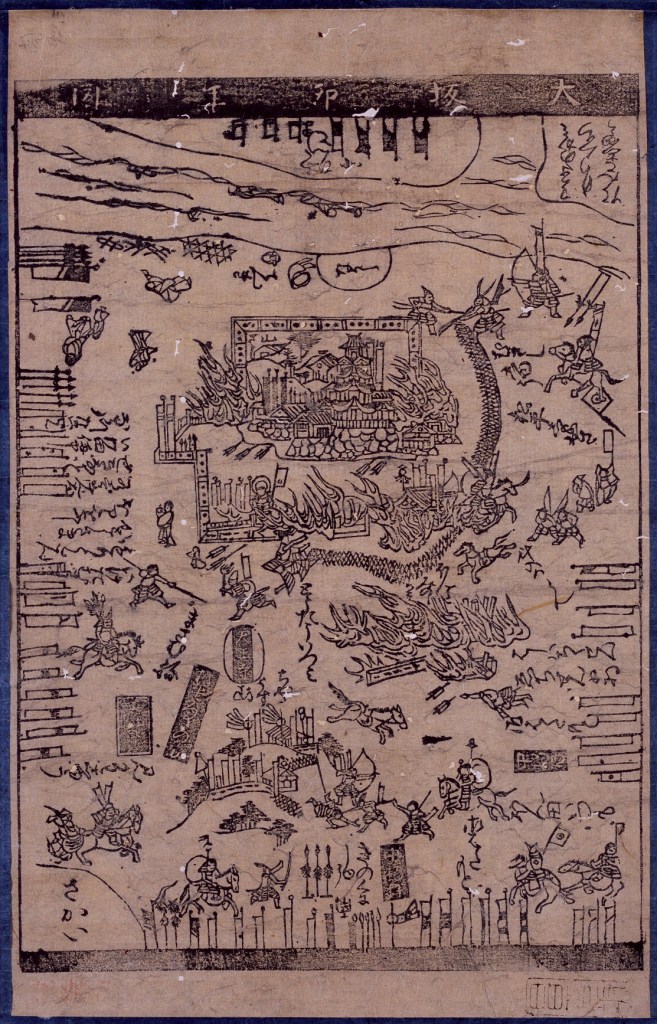
    A contemporary kawaraban, a kind of early newspaper, depicting the fall of Osaka Castle.

    Morichika is reported to have fought bravely, leading an attack on the Tokugawa’s main camp that was ultimately unsuccessful, but which managed to inflict serious casualties on the Tokugawa army before being forced to withdraw. With Osaka Castle eventually falling to the Tokugawa, Morichika initially fled, but he was discovered and then humiliated by being paraded around Kyoto before being beheaded.

    Morichika’s death brought an end to the Chosokabe. Some sources state he had as many as five sons, all of whom died premature and violent deaths. Some other sources, however, suggest that he had just two children, a girl and a boy, one who married a local retainer, and the other who was whisked away after the Siege of Osaka and raised elsewhere. Unfortunately, in both cases, reliable sources are hard to come by, and the truth appears to be that the Chosokabe died with Morichika.

    The Chosokabe name would be revived in later years by descendants of Motochika’s brother, Chikafusa, who had been adopted into the Shima Clan years earlier and thus survived the end of the Chosokabe. The family survived in this form until March 2025, when the last head of the family, Chosokabe Tomochika, passed away childless, aged 82.

    「今は個人の時代。家を背負う時代ではありません。逆にこれからの世代が、自分の思いで新しい歴史を作っていくのも立派なことじゃないかと思いますね」

    “We are now in the age of the individual. It is no longer the age to shoulder the burden of a family. On the contrary, I think it is admirable for future generations to create a new history based on their own ideas.” – Chosokabe Tomochika

    Sources
    https://ja.wikipedia.org/wiki/%E9%95%B7%E5%AE%97%E6%88%91%E9%83%A8%E7%9B%9B%E8%A6%AA
    https://ja.wikipedia.org/wiki/%E5%85%AD%E6%9D%A1%E6%B2%B3%E5%8E%9F
    https://ja.wikipedia.org/wiki/%E9%95%B7%E5%AE%97%E6%88%91%E9%83%A8%E5%85%83%E8%A6%AA
    https://en.wikipedia.org/wiki/Ch%C5%8Dsokabe_Morichika
    https://ja.wikipedia.org/wiki/%E3%82%B5%E3%83%B3%EF%BC%9D%E3%83%95%E3%82%A7%E3%83%AA%E3%83%9A%E5%8F%B7%E4%BA%8B%E4%BB%B6
    https://ja.wikipedia.org/wiki/%E4%B8%8B%E7%94%B0%E5%9F%8E_(%E4%BC%8A%E8%B1%86%E5%9B%BD)
    https://en.wikipedia.org/wiki/San_Felipe_incident_(1596)
    https://ja.wikipedia.org/wiki/%E9%95%B7%E5%AE%97%E6%88%91%E9%83%A8%E6%B0%8F
    https://ja.wikipedia.org/wiki/%E9%95%B7%E5%AE%97%E6%88%91%E9%83%A8%E5%8F%8B%E8%A6%AA
    https://croissant-online.jp/life/54209/