Tag: Yoshinogari Site

  • Yamato – So it Begins.

    The Wa dwell on mountainous islands southeast of Han [Korea] in the middle of the ocean, forming more than one hundred communities. From the time of the overthrow of Chaoxian [northern Korea] by Emperor Wu (BC 140–87), nearly thirty of these communities have held intercourse with the Han [dynasty] court by envoys or scribes. Each community has its king, whose office is hereditary. The King of Great Wa [Yamato] resides in the country of Yamadai.

    Goodrich, Carrington C, ed. (1951). Japan in the Chinese Dynastic Histories: Later Han Through Ming Dynasties. Translated by Tsunoda, Ryusaku. South Pasadena: PD and Ione Perkins. Taken from Wikipedia.

    At the back end of the Yayoi Period (c. 300 BC to 300 AD), the first petty kingdoms began to emerge. These communities initially started out based on agriculture and shared culture (cemeteries and other ritual sites, for example), but by the late Yayoi period, we begin to see evidence of defences being constructed.

    The reconstructed defences at Yoshinogari. Evidence of the changing situation in the Late Yayoi Period.
    By Flamebroil at the English-language Wikipedia, CC BY-SA 3.0, https://commons.wikimedia.org/w/index.php?curid=4443146

    Now, it may seem obvious, but you don’t need defences unless you think someone is going to attack you, and you can’t typically organise coordinated attacks against defended places without someone calling the shots.

    So now, the age-old question, which came first, the Kings or the Wars? Humans have never needed much of an excuse to start killing each other, and evidence for violent deaths reaches back to the Jomon period.

    Violence, however, is not the same thing as war. The marshalling of resources, and the building of defences require organisation, and organisation in those days meant monarchy.

    These days, we tend to associate Monarchs with pomp and ceremony but usually (at least in Europe) very little actual power. In the ancient world, however, you didn’t get to be King or Queen without power, and that power usually came from one of two places.

    Either you were the biggest and the strongest, and you simply killed anyone who got in your way, or you relied on more spiritual power, either magic or religion.

    Now, the late Yayoi people didn’t have writing, so we don’t know very much about how they saw themselves, but the Chinese sources suggest that monarchy and magic were tightly linked.

    When speaking of Himiko, the legendary Queen of Yamatai, the sources speak of a Queen who:

    occupied herself with magic and sorcery, bewitching the people. Though mature in age, she remained unmarried. She had a younger brother who assisted her in ruling the country. After she became the ruler, there were few who saw her. She had one thousand women as attendants, but only one man. He served her food and drink and acted as a medium of communication. She resided in a palace surrounded by towers and stockades, with armed guards in a state of constant vigilance.

    Goodrich, Carrington C, ed. (1951). Japan in the Chinese Dynastic Histories: Later Han Through Ming Dynasties. Translated by Tsunoda, Ryusaku. South Pasadena: PD and Ione Perkins. Taken from Wikipedia.

    If we ignore the trope of any woman in power obviously being a witch, this source tells us that Himiko was viewed as being a user of magic who remained aloof from her people, surrounded by towers, stockades, and armed guards. It is often difficult to separate fact from fiction when it comes to such ancient sources, but the mention of elaborate defences tallies with the archaeological evidence.

    Even if Himiko herself is mythical, the fact that Late Yayoi settlements were being defended by armed guards seems to support the idea that Japan was becoming a more centralised but also more violent place.

    Monumental Tombs

    Another example of centralisation is the emergence of monumental tombs called Kofun. Like the Pyramids of Egypt, Kofun started out as burial chambers of important, presumably royal figures, and they represent significant investments of time and resources.

    The Daisenryo Kofun in Sakai. The largest kofun, it is believed to be the burial place of the semi-legendary Emperor Nintoku, who is said to have died in 399 AD. By Copyright © National Land Image Information (Color Aerial Photographs), Ministry of Land, Infrastructure, Transport and Tourism, Attribution, https://commons.wikimedia.org/w/index.php?curid=120737378

    Kofun can be found across Japan (about 160,000 of them!) with the densest concentration being in modern day Hyogo Prefecture. While these tombs vary widely in their construction the basic idea remains the same, a tomb, grave goods (often looted, unfortunately) and a mound.

    Burial mounds aren’t unique to Japan, but it is a general rule that the more elaborate the grave, the more resources the one who built it has. Now, this sounds obvious: rich people are rich, but being able to marshall sufficient manpower at a time when communication relied entirely on word of mouth demonstrates just how wealthy these kingdoms were becoming.

    It is also important to note that they only started as tombs for important figures. By the later Yamato Period, there is evidence of (admittedly smaller) Kofun being built for relatively low status people, suggesting that wealth and resources had ceased to be the sole domain of monarchs.

    It was modern-day Nara Prefecture, however, where the most powerful and longest-lasting Kingdom got its start.
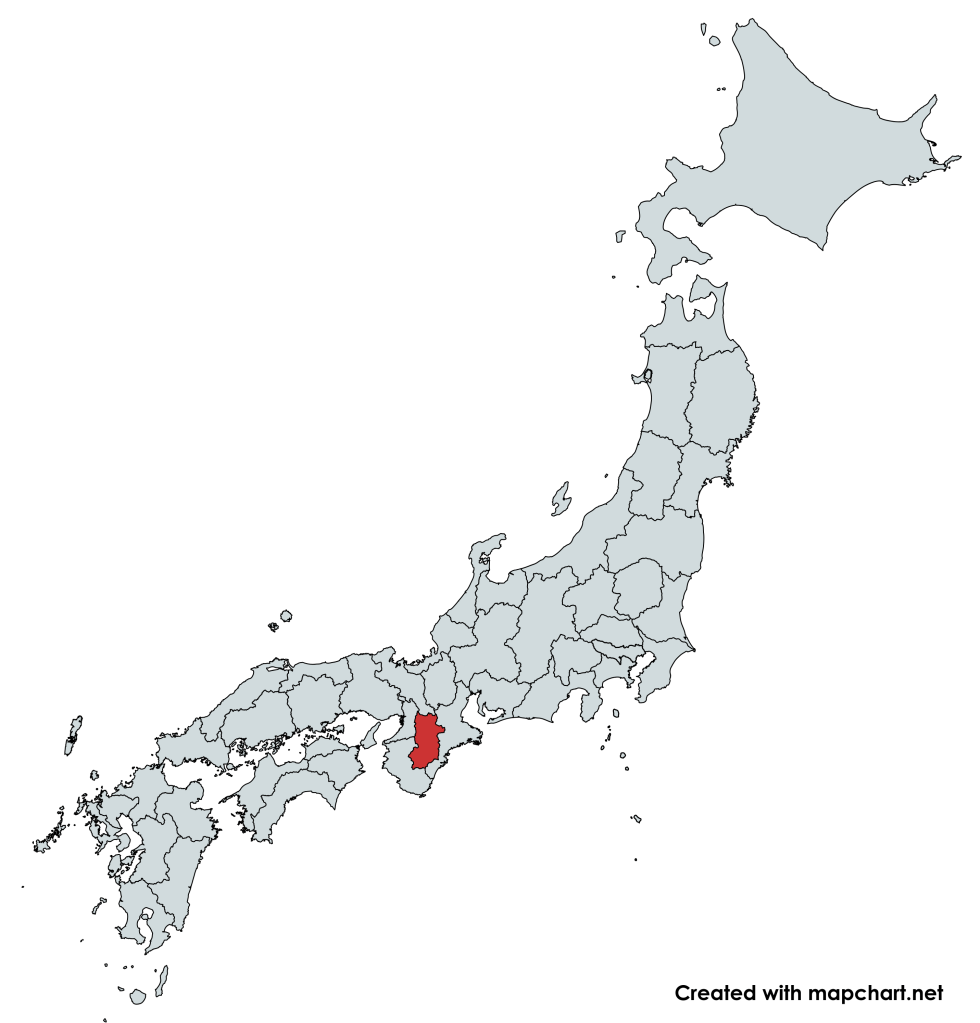
    Modern Nara Prefecture, centre of the Yamato Kingdom.

    Difficult beginnings

    The actual rise of the Yamato Kingdom is obscure (sorry, I know this keeps happening.) Since we rely almost entirely on Chinese sources to tell us what was going on in the earlier parts of this era, it is perhaps telling that they have relatively little to say about the origins of Yamato.

    Although we don’t know for certain, it is suggested by some that this period was one of violence as rival kingdoms sought to assert dominance over their neighbours. Whilst we may never know for sure, by the early 5th Century, the Yamato Kingdom had risen to dominate most of central Japan.

    Although the first power to dominate a significant part of Japan, the Yamato didn’t have it all their own way. On Kyushu, the Azumi and Hayato peoples were in control. The Azumi were apparently peerless seafarers and seem to have served as the first naval force of the Yamato. The Hayato, though also listed as loyal to the Yamato, were apparently a more tempestuous people, and there are records of several rebellions/wars between the Yamato and Hayato, with the Hayato eventually being subjugated and their population scattered throughout Japan.

    These people may have been related to or be the basis for the mythical Kumaso. Also, natives of Kyushu, the Kumaso, are supposed to have been implacable and dangerous foes of the Yamato, described as ‘bear-like’ (the word ‘Kuma’ means bear in Japanese) and monstrous. The story goes that the Kumaso were eventually defeated by the legendary Yamato Takeru, who killed their last leader by disguising himself as a woman at a feast, which is quite a way to go about it.
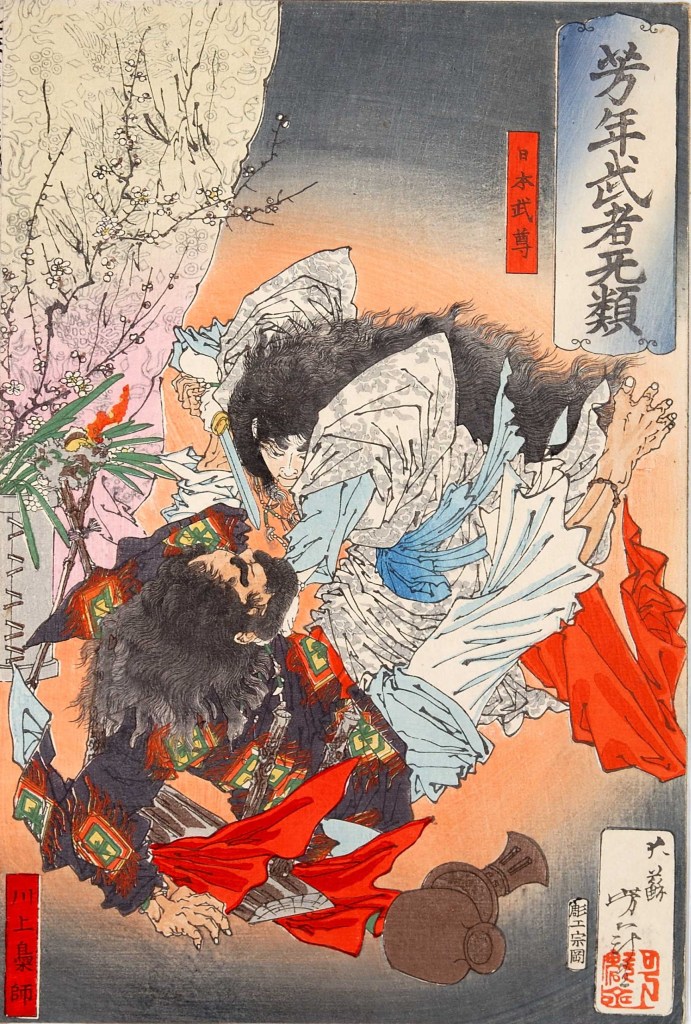
    Yamato Takeru ruins the last Kumaso leader’s dinner.

    Chinese Influence

    The Yamato State was heavily influenced by contemporary Chinese culture. This arrived in Japan through trade, cultural exchange, and waves of immigrants. For much of pre-modern history, China was viewed as the centre of the world, especially in Asia, and during these formative years, the Yamato people looked to China as the source of culture and learning.

    Japan maintained direct maritime links with the Chinese Song Dynasty (possibly facilitated by the aforementioned Azumi), but also had close ties to the Kingdoms of Korea. Some sources even go so far as to suggest that hundreds of the noble families of this period actually originated in Korea. In fact, it is speculated (somewhat controversially) that, if the genealogy of the Imperial Family can be believed, they are of Korean origin as well.

    How much we can believe ancient, often conflicting sources is a matter of debate, but we know for certain that Chinese and Korean culture was hugely influential in early Japan. Grave goods uncovered in Kofun show either direct Chinese and Korean origin or are heavily inspired by the same.

    We also know that the early Yamato Kingdom based itself politically on China. It is known that early Yamato rulers petitioned the Chinese Emperors for royal titles, and the Chinese seem to have been happy to oblige.

    In turn, the Yamato Kings bestowed titles of nobility on their subjects, including those in Kyushu, far from the centre of Yamato Power.

    These clans varied in power, but drew legitimacy from the King. Each clan seems to have been ruled by a patriarch, who was responsible for keeping the Clan in line, but also took on a religious role, making sure the Gods (or Kami) of their Clan were kept happy. This is the role of the King in miniature and shows how formalised Yamato society had become. The King was at the top, responsible for the well being of the nation, and he would intercede with the Gods on the Kingdoms behalf.

    Other Chinese innovations taken to by the Japanese were Buddhism (which I know is actually from India, but it arrived in Japan in its Chinese form) and, much to the lamentation of anyone who has ever tried to study Japanese, a written language, the origins of Kanji, Chinese written characters adapted to Japanese speech.

    We’re actually going to continue this look at the deeper impact of Chinese culture next time, as the introduction of new religious and political ideas led to the Taika Reforms, which really deserves its own post.

    Sources
    https://royalsocietypublishing.org/doi/10.1098/rsbl.2016.0028
    https://en.wikipedia.org/wiki/Himiko
    https://en.wikipedia.org/wiki/Yamato_period
    https://en.wikipedia.org/wiki/Azumi_people
    https://en.wikipedia.org/wiki/Yamato_Kingship
    https://en.wikipedia.org/wiki/Hayato_people
    https://en.wikipedia.org/wiki/Kumaso
    https://en.wikipedia.org/wiki/Five_kings_of_Wa
    https://en.wikipedia.org/wiki/Asuka_period
  • Yayoi: How Soggy Fields Changed Japan Forever.

    Last time, we talked about the Jomon People, Japan’s first inhabitants. Those folk existed primarily as Hunter-Gatherers, but around the year 900 BC, a new wave of culture crossed the Tsushima Strait from Korea. No, it’s not some prehistoric version of BTS (can you even imagine?), but settled villages, metalwork, and, most significantly, rice.

    Nowadays, we arguably take agriculture for granted; unless you live and work in the countryside, you may never think about it at all, but the ability to cultivate land and produce crops on it changed humanity. For the first time, our ancestors could produce more food than they needed, and if one man could produce enough food for himself and four or five others (mileage may vary), then those four or five others are no longer needed in the fields, which means they can spend their time doing other things, like art, music, war, and ruling over the farmers. (Ok, so it’s not all good.)

    Agricultural revolutions occurred pretty much everywhere at different times, but the Yayoi period is generally thought to have begun around 300 BC. Now, I have to point out that that is not an exact chronology, firstly, because these things never are, and secondly, because the exact transition between the Jomon and Yayoi periods is pretty murky in some places.

    For example, at the Itazuke Site in Fukuoka Prefecture, the earliest remains of rice paddies have been found in contexts that put them more in the Jomon period than the Yayoi, leading some scholars to suggest that the Yayoi period should actually be dated as starting as early as 800 BC, or perhaps even earlier. However, this remains controversial, and there’s never likely to be an exact timeline.

    The site at Itazuke represents possibly the earliest examples of rice farming yet found, although its exact context remains controversial.
    By Muyo – Own work, CC BY-SA 3.0, https://commons.wikimedia.org/w/index.php?curid=15136810

    While Itazuke probably represents a transitional site, it does raise some interesting questions. For example, was the appearance of irrigated rice paddies a case of technological spread, or was it brought over by waves of immigration? The answer, broadly, is a bit of both.

    The thing with ancient, pre-literate societies is that they weren’t generally big on keeping written records, and something as formal as a census was right out. Consequently, it’s pretty difficult to guess exactly how many people were living in Yayoi Japan; it’s also tricky to figure out where they came from.

    The first suggestion is that the Yayoi peoples represented a series of massive waves of migration over a 500 to 600-year period. Some estimates put the population of Japan at somewhere around 6 million by the end of the Yayoi Period in 300 AD. This represents a population increase of more than 4 million over that period, which some scholars suggest is impossible to explain as being a result of immigration alone.

    Now, this isn’t the sort of blog that’s going to go into where babies come from (there’s plenty enough of that sort of thing on the internet already), but a basic rule of thumb for any society is that food surplus = people surplus. If you have a reliable food source and aren’t running for your life from sabertooth tigers and the like, you’re more likely to have a baby, and what’s more, that baby is more likely to survive to adulthood.

    For archaeologists, the next step is trying to figure out who is having the babies. It’s the women, obviously, but the Yayoi people represent an interesting example of how populations change over time.

    Genetically speaking, you can divide the Yayoi into three broad groups: Early, Middle, and Late. So named because they came to Japan at different times (guess which is which!)

    All three groups share similar genetic traits, suggesting shared ancestry, but while human remains of early Yayoi people show a larger percentage of Jomon DNA, suggesting that immigrants and locals were pretty friendly, the later generation shows much less Jomon DNA, and much more from groups that inhabited Korea at the same time.

    Now, does that mean that the later waves of immigrants were pickier in their partners, or, does it mean that by the later Yayoi Period, anyone with large amounts of Jomon DNA had already moved away, or, to put it bluntly, been bred out of existence?

    The answer is unclear, but probably. We know that the Yayoi and Jomon populations were genetically distinct. We can also estimate that the population during the Jomon Period was around 75,000, whereas by the end of the Yayoi Period, it was 6 million. Outside of Hokkaido, then, it seems reasonable to state that Jomon people were simply swamped.

    Yayoi Culture

    Whilst the Jomon and Yayoi peoples were playing a long-term game of “Kiss, Marry, Avoid” (I know that’s not what it’s really called, but I’m trying to keep things PG), Yayoi culture and language were beginning to spread across the land. It should be pointed out, however, that the spread was not even, nor was it universal. Whilst Yayoi culture came to dominate in Kyushu, in Honshu, the adoption of rice farming and other Yayoi hallmarks was pretty inconsistent.

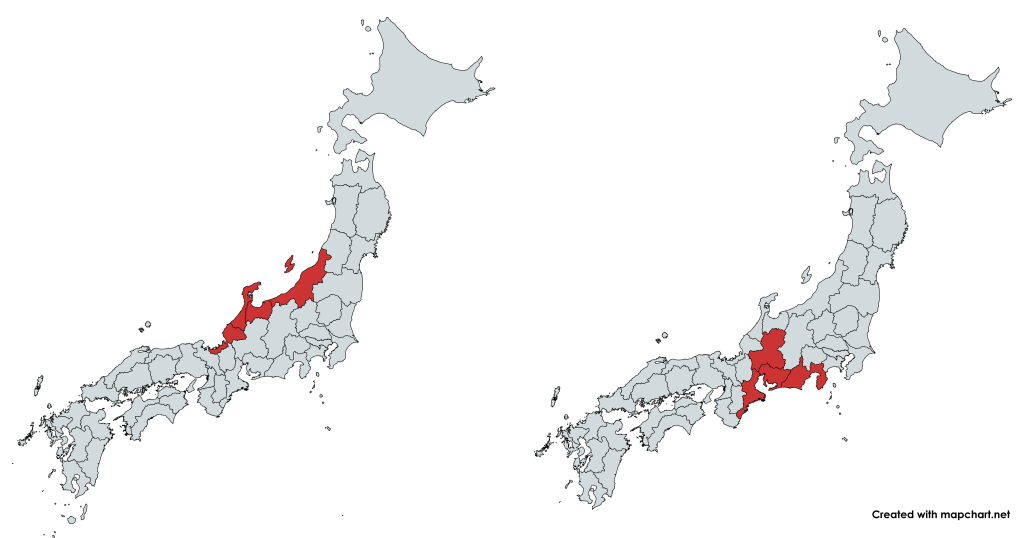
    For example, evidence of agriculture has been found in the Hokuriku region dating back to 380 to 300 BC. However, in the Tokai region, which is practically next door, the first evidence doesn’t appear until 220 BC in some areas, and as late as 50 BC in others.

    The Hokuriku Region (left) where evidence of agriculture dates back to 380 BC, and the Tokai region (left) where it didn’t appear until 330 years later.

    This inconsistent development isn’t as random as it may first appear. It is generally believed that the Yayoi peoples were a so-called “sea” people, meaning that they came across from Korea and Eastern China by boat (because how else are you going to do it?). It is then reasonable to assume that the transmission of Yayoi culture would follow coastal routes first, before spreading inland over the following decades.

    Rise of Yamatai

    One of the major problems we have with ancient civilisations (some of them, anyway) is that they didn’t write things down. Now, this is likely because they didn’t have a written language, but it’s still a pain. The Yayoi are one such example. What we know about them comes from the archaeological record, and although archaeologists are (usually) pretty good at what they do, without a clear written record, it can be challenging to figure out exactly how the Yayoi people saw themselves.

    Luckily for us, other people nearby did have writing, and they were kind enough to leave some records. The Chinese Han Dynasty kept copious amounts of records about their neighbours, and it is in these sources that we see the first mention of the Japanese islands.

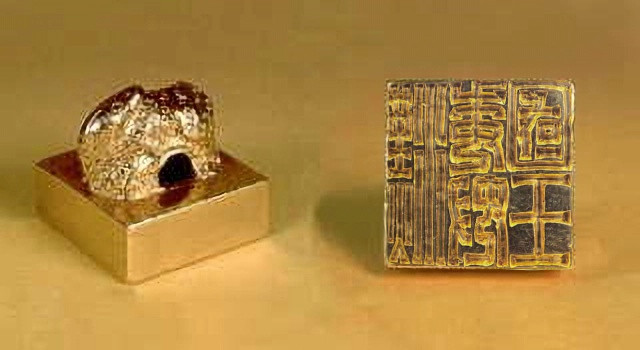
    In the Book of Later Han, in 57 AD, the Chinese Emperor Guangwu gave the Kingdom of Na a gold seal and some other fancy gifts in exchange for the King of Na recognising the Chinese as their overlords. For centuries, the seal, and indeed the Kingdom of Na, were considered to be semi-legendary, but then the seal itself was discovered by accident (by a farmer, apparently), confirming that the Chinese records were accurate and Na (Nakoku in Japanese) really existed.

    The golden seal of the Kingdom of Na. Found in a field in 1784, it confirmed the truth of the Chinese Records, and the existence of Nakoku.
    By Original uploader: User:金翅大鹏鸟 at zh.wikipedia – Transferred from zh.wikipedia to Commons by Shizhao using CommonsHelper., Public Domain, https://commons.wikimedia.org/w/index.php?curid=15840653

    There are sporadic records of other Kingdoms and Tribes existing around Japan (called ‘Wa’ by the Chinese), but their exact nature and even their locations are often a mystery. One state from that era that has had an enduring legacy is Yamatai (Yamataikoku in Japanese.)

    This state features prominently in contemporary Chinese records and was apparently ruled by Queen Himiko, or, in some cases, the “King of Wa,” suggesting that the Chinese believed Yamatai to be the rulers of the whole of Japan (as they understood it) or at least a Kingdom of preeminent power.

    We know very little about Yamatai itself, as the only documentary sources are Chinese records, and the archaeological record is unclear. We’re not even sure where Yamatai was located within Japan, with Northern Kyushu or the Kinai Region (near modern Kyoto, Osaka, and Nara) being proposed.

    The two proposed sites of Yamatai, Northern Kyushu (left, in purple) and Kinai (right, in green).
    By Flora fon Esth – Own work based on the image Provinces of Japan.svg (GFDL et CC-by-3.0), CC BY-SA 3.0, https://commons.wikimedia.org/w/index.php?curid=160605946

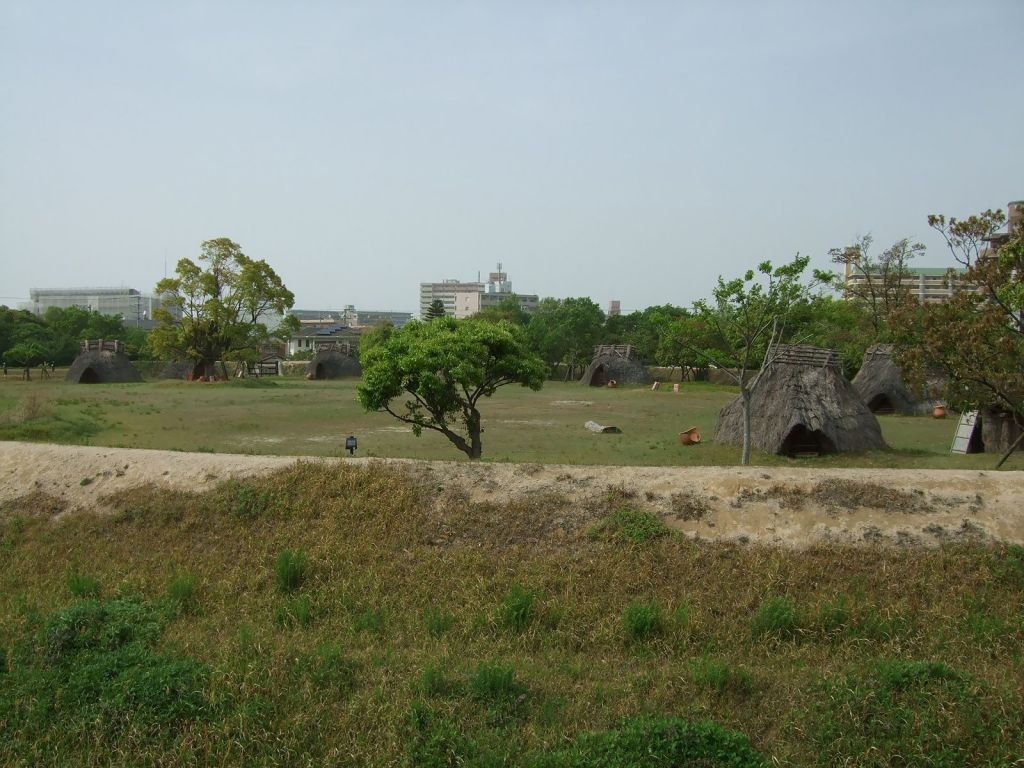
    The discovery of the Yoshinogari site in 1986 ignited the popular imagination, and Yamatai and Queen Himiko have been figures in popular culture ever since. Some have suggested that Yoshinogari is a good candidate for the supposed capital of Yamatai. However, this remains highly controversial, and most experts state that Yoshinogari is an important site, but there’s no evidence to support the assertion that it is the capital.

    The reconstructed village at Yoshinogari, and important site, but the capital of Yamatai? Most experts say not.
    By ja:User:Sanjo – Own work, Public Domain, https://commons.wikimedia.org/w/index.php?curid=4954364

    Queen Himiko is said to have died around 248 AD, after she was replaced, first by a King whose name is not recorded, and then by Toyo (Iyo in some records), about whom very little is known.

    When Himiko passed away, a great mound was raised, more than a hundred paces in diameter. Over a hundred male and female attendants followed her to the grave. Then a king was placed on the throne, but the people would not obey him. Assassination and murder followed; more than one thousand were thus slain. A relative of Himiko named Iyo [壹與], a girl of thirteen, was [then] made queen and order was restored. (Zhang) Zheng (張政) (an ambassador from Wei), issued a proclamation to the effect that Iyo was the ruler.

    Tsunoda, Ryusaku, tr (1951), Goodrich, Carrington C (ed.), Japan in the Chinese Dynastic Histories: Later Han Through Ming Dynasties, South Pasadena: PD and Ione Perkins, taken from Wikipedia.

    Ultimately, Yamatai would disappear from the records shortly after Iyo came to the throne, and, as with any records over such long periods of time, we should take the details with a grain of salt.

    That being said, thanks to Chinese records and the hard work of local archaeologists, we know that by the end of the Yayoi Period, kingdoms had begun to emerge across Japan. Like the preceding Jomon Period, the Yayoi Period can’t really be said to have ended, so much as it transitioned into something else.

    Some scholars suggest that Yamatai lent its name to the following Yamato Period, although the exact etymology isn’t clear (nothing ever is with this stuff.)

    Next time, we’ll take a look at the Yamato Period, Japan’s first Imperial State.

    Sources

    https://en.wikipedia.org/wiki/Yamatai https://en.wikipedia.org/wiki/Yoshinogari_site https://en.wikipedia.org/wiki/Nakoku https://en.wikipedia.org/wiki/Yayoi_period https://en.wikipedia.org/wiki/Yayoi_people https://www.cambridge.org/core/journals/antiquity/article/regional-variations-in-the-demographic-response-to-the-arrival-of-rice-farming-in-prehistoric-japan/7E6D28520A04B2F07DDD36908F291808 https://www.cambridge.org/core/journals/evolutionary-human-sciences/article/japan-considered-from-the-hypothesis-of-farmerlanguage-spread/BD91E69AEA3CCAEDC567519EF7F5AA97