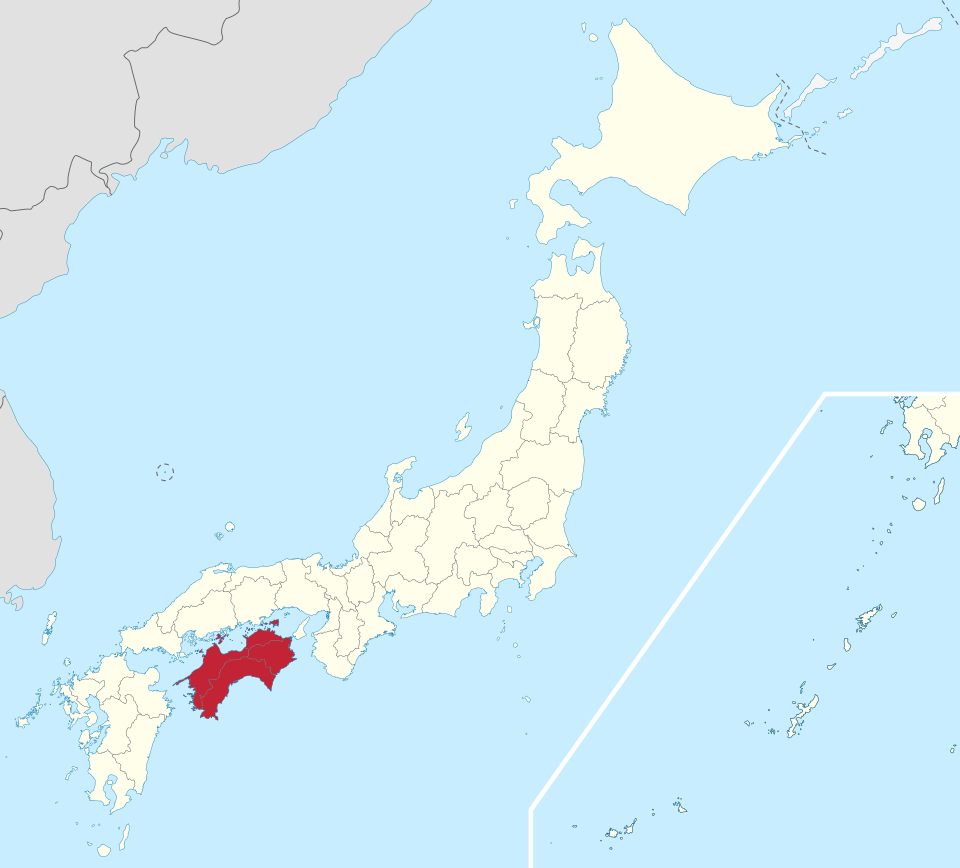
You probably already know that Japan is made up of four main islands, Honshu, Kyushu, Hokkaido, and Shikoku. Most of the history we have looked at so far took place on Honshu, the main island, and we’ve mentioned Kyushu in passing once or twice. In the pre-modern era, Hokkaido was barely considered to be part of Japan at all, which leaves the smallest of the four main islands, Shikoku, a name which means ‘Four Provinces,’ so named, because it has, wait for it, four provinces!
By TUBS – This vector image includes elements that have been taken or adapted from this file:, CC BY-SA 3.0, https://commons.wikimedia.org/w/index.php?curid=16385942
Shikoku itself had rarely been at the centre of events in the centuries before the Sengoku Jidai, but that doesn’t mean it wasn’t occasionally the site of some significant events. In the 12th century, the Taira Clan would flee to Shikoku with the Emperor Antoku, shortly before the fateful Battle of Dan-no-Ura.
During Ashikaga Shogunate rule, the island was split between the Hosokawa and Kono Clans, and the Hosokawa would have a clan under them who would go on to play a major role in the history of Shikoku, the Chosokabe.
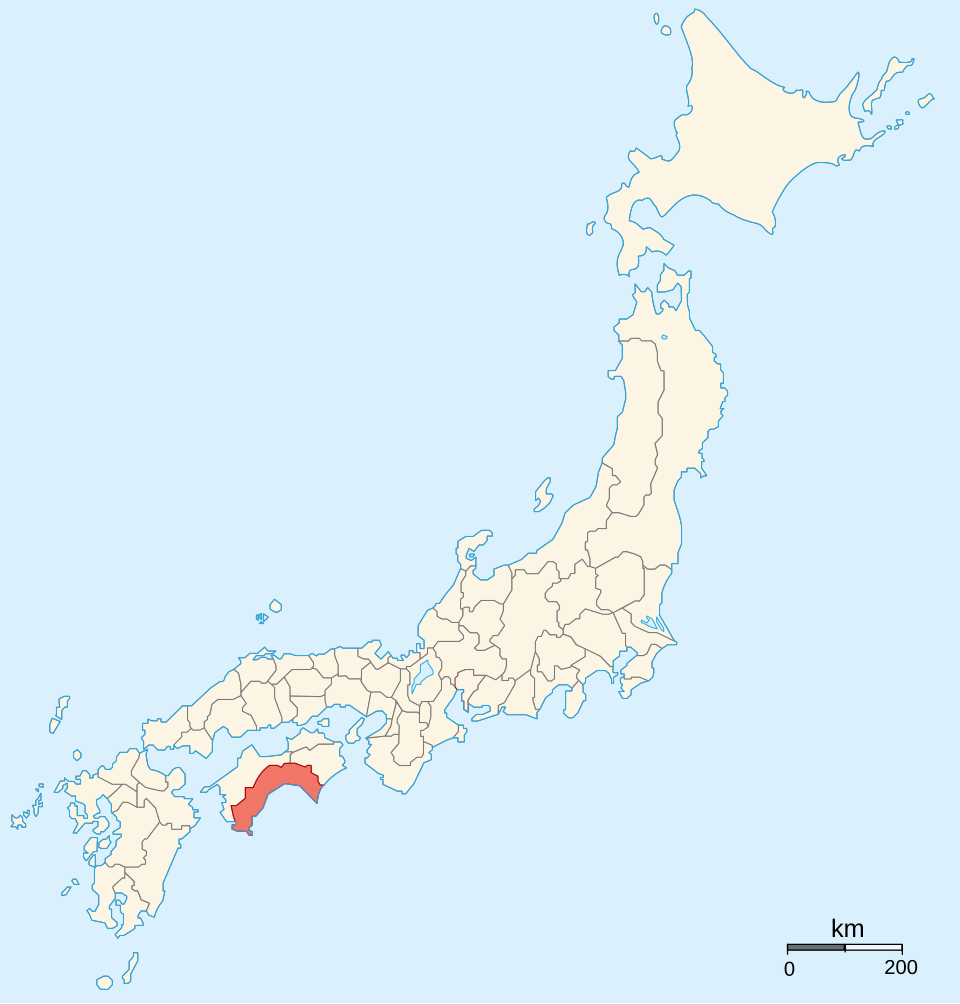
The Chosokabe were a relatively minor clan until the mid-1400s, when Hosokawa Masamoto launched a coup which left him in effective control of the government in Kyoto. This was important for the Chosokabe because Masamoto was the nominal shugo of Tosa Province, where the Chosokabe were based. The head of the clan, Kanetsugu, was appointed Masatomo’s deputy, and since his master was practically never away from Kyoto, Kanetsugu was allowed to run things as he saw fit.
By Ash_Crow – Own work, based on Image:Provinces of Japan.svg, CC BY 2.5, https://commons.wikimedia.org/w/index.php?curid=1691856
Kanetsugu seems to have been a fairly capable administrator, but an ongoing war with several local clans and an increasingly arrogant attitude due to the backing he received from Masatomo made Kanetsugu increasingly unpopular, and when his patron was assassinated in 1507, the now unprotected Kanetsugu was surrounded by vengeful enemies, and the Chosokabe were all but wiped out by 1509. Whether or not Kanetsugu survived the fall of his clan is a matter of some debate; the traditional view is that he either died in battle or else took his own life, but more modern research suggests he may have survived until at least 1512, when the leadership of the clan was handed over to his son, Kunichika.
Kunichika certainly survived the fall of the clan and sought refuge with the nearby Ichijo Clan, where he would be protected until he came of age, and in 1518, he was able to reclaim his family’s castle at Okoto. Despite this restoration, however, the Chosokabe would remain a fairly minor clan, and it became Kunichika’s life’s work to not just hold onto what his clan had, but expand it.
Reggaeman – 投稿者自身による著作物, CC 表示-継承 3.0, https://commons.wikimedia.org/w/index.php?curid=6986404による
Between 1518 and 1560, Kunichika led the Chosokabe from being a clan that struggled to retain control of a solitary fortress to being the leading power in Tosa Province. During more than 40 years of struggle, Kunichika subjugated his neighbours and engaged in a long-term war with the Motoyama Clan, who would prove to be the only other clan that could match the Chosokabe for strength and tenacity.
At the Battle of Nagahama in May 1560, a Motoyama force of some 2000 men faced off against a Chosokabe army that was half its size. Despite this, Kunichika won a decisive victory, seriously weakening the Motoyama considerably. Unfortunately for Kunichika, he fell ill and died shortly after this victory, and was unable to completely destroy the Motoyama.
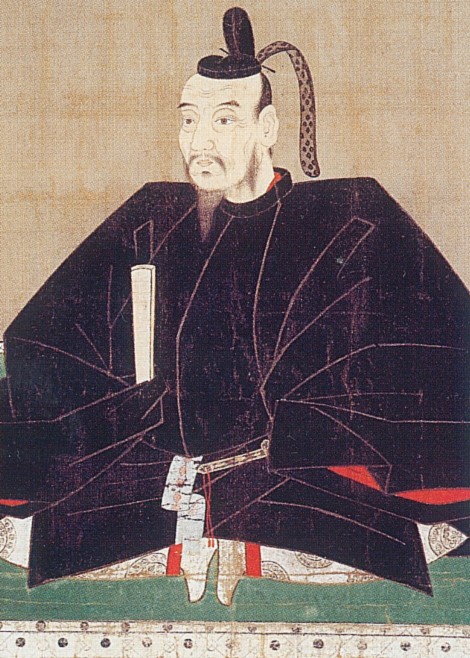
Despite the sudden death of their lord, the Chosokabe were now in a strong position, and Kunichika’s son, Motochika, stepped into his father’s shoes, continuing the war against the Motoyama and driving them back to their fortress at Asakura by late summer 1562. Though an attack on the fortress would fail, Chosokabe’s control of the surrounding countryside meant that the Motoyama began shedding vassals, who were quick to bow to the new power in the region.
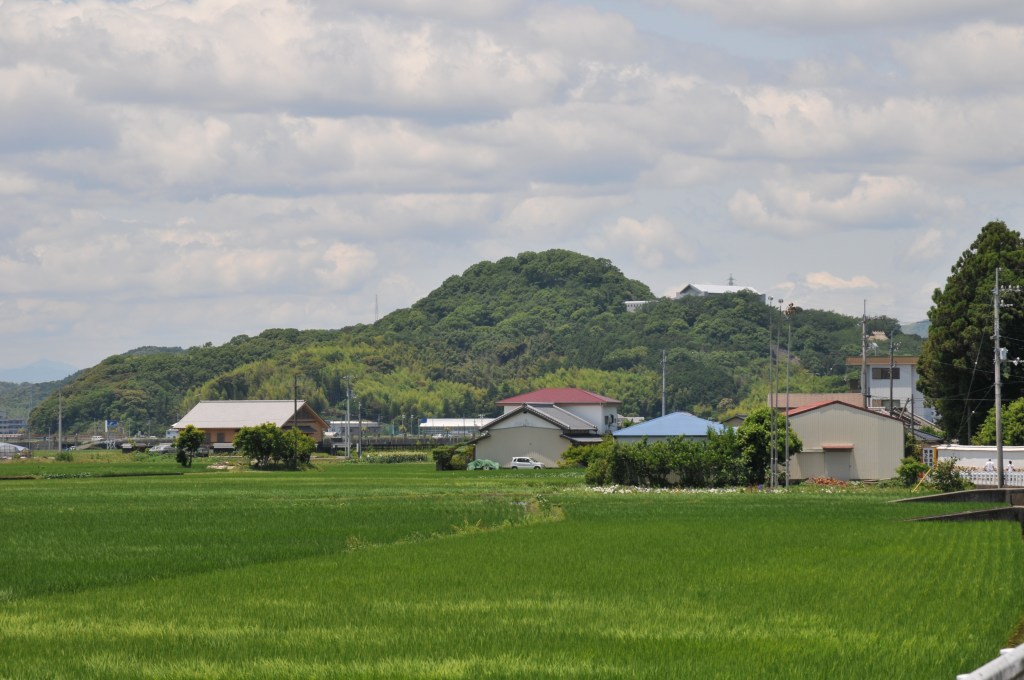
In early 1563, the lord of the Motoyama, Shigetatsu, fled Asakura for Motoyama Castle, from which he launched a counterattack against the Chosokabe. The attack failed, and Shigetatsu retreated again, this time to his clan’s last bolt hole at Uryuno Castle, intending to fight to the death. Shigetatsu was denied his wish when he died of illness not long afterwards, and although his son continued the fight, the Motoyama were finally forced to surrender in 1568, after which Tosa was more or less pacified.
Meanwhile, an attack launched by the Mori Clan in 1567 had seriously weakened the Ichijo Clan, who were still nominal overlords of the Chosokabe. Taking advantage, Motochika launched a campaign that crushed other Ichijo vassals still residing in Tosa, and in 1574 he intervened in an outbreak of civil war within the Ichijo clan (rival claimants to the leadership, unsurprisingly) and established control of the whole of Tosa, which was confirmed in 1575, when an attempt by the Ichijo to recover their position was decisively defeated. The first of the four provinces of Shikoku was now his.
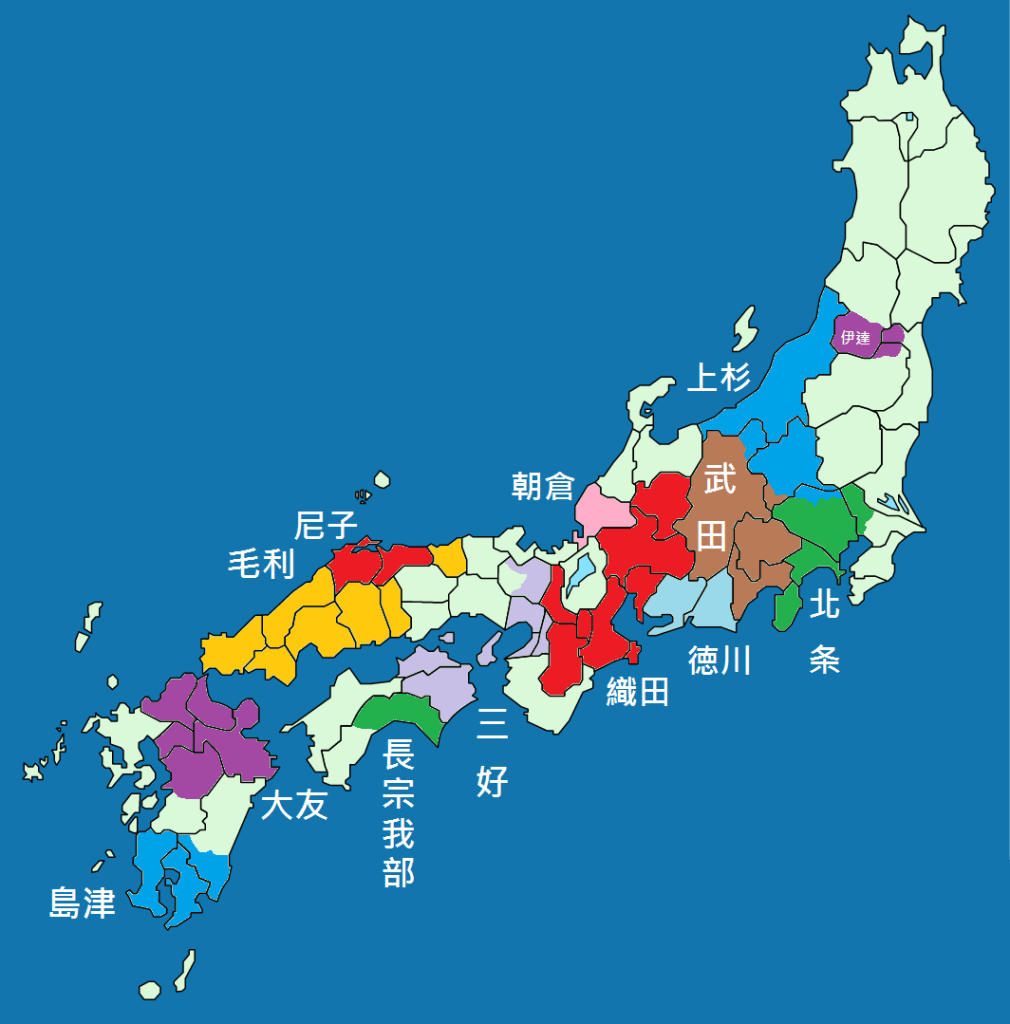
With Tosa, and by extension, southern Shikoku now secured, Motochika formed an alliance with Oda Nobunaga, who had already begun his own path to unifying the realm in the area around Kyoto. In the 1570s, the Chosokabe and Oda had a mutual enemy in the Miyoshi Clan, who controlled a large territory that included the lands to the west of Kyoto, Osaka Bay, and the two provinces in the east of Shikoku, Awa, and Sanuki.
By Alvin Lee – Own work, CC BY-SA 4.0, https://commons.wikimedia.org/w/index.php?curid=39200928
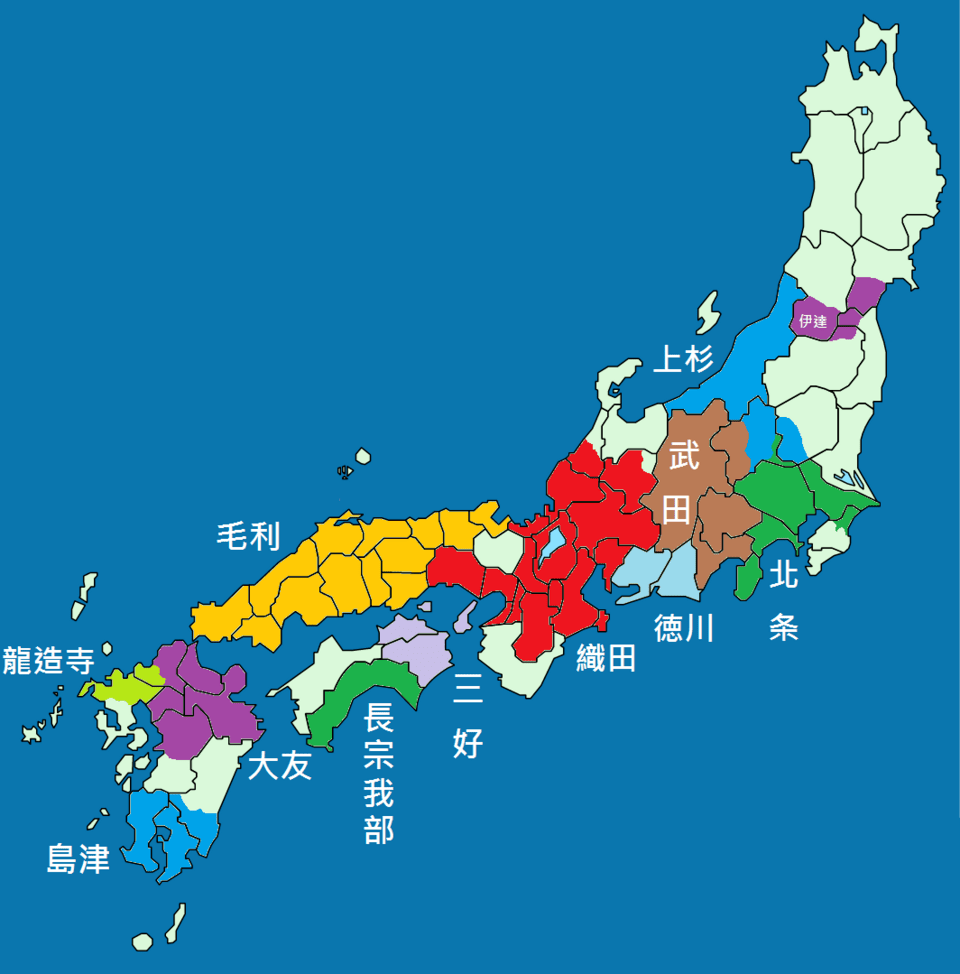
The Miyoshi had once been a pre-eminent power in the region, but had been in a long decline, which both clans did much to accelerate. In 1576, Motochika launched an invasion of both provinces, and although his initial efforts were repulsed, a second effort in 1577 was more successful, and by 1580, a combination of diplomacy, defection, and brute force saw the Chosokabe in effective control of both Awa and Sanuki Provinces.
By Alvin Lee – Own work, CC BY-SA 4.0, https://commons.wikimedia.org/w/index.php?curid=39198356
At the same time, diplomatic and military efforts in Iyo, the last of the four provinces, saw large parts of it come under Chosokabe control. However, intervention and support from the Mori Clan across the Inland Sea meant that Chosokabe’s control of Iyo was tenuous, and the pacification campaign dragged on for far longer than the rest of the island.
As 1580 went on, the strategic situation in the rest of the realm had shifted against the interests of the Chosokabe. The alliance with Oda Nobunaga had always been one of convenience, with Nobunaga happy to see Motochika crushing the Miyoshi, but when it became clear that the Chosokabe were going to extend their control over the whole of Shikoku, Nobunaga changed his mind.
In late 1580, he sent a demand that Motochika give up three of the four provinces and limit Chosokabe’s control to Tosa Province. Motochika refused, and in response, Nobunaga began funnelling resources to those clans on Shikoku who were still opposing the Chosokabe. Throughout 1581, tensions continued to grow, and it became obvious that Nobunaga was going to invade.

By Alvin Lee – Own work, CC BY-SA 4.0, https://commons.wikimedia.org/w/index.php?curid=39198356
Fate intervened, however, when Nobunaga was betrayed and killed at the Honnoji Incident in June 1582, and in the chaos that followed, the forces assigned to the invasion were needed elsewhere, and for now, at least, the Chosokabe were safe.
Safe, but not idle, however, Nobunaga’s death meant that his support for rival factions on Shikoku came to an end, and Motochika was able to launch a concerted campaign into Awa Province, in south-east Shikoku, bringing it completely under his control and removing the last of Nobunaga’s supporters.
The immediate aftermath of Nobunaga’s death was a time of chaos on the mainland, and Motochika took advantage of this to extend his control of Shikoku even further. The most prominent of Nobunaga’s successors was Hashiba Hideyoshi, and he made arrangements with several remaining clans opposed to the Chosokabe. Though attacks were launched against the Chosokabe-held castles in Sanuki Province, they were defeated, and for a time, at least, Hideyoshi was too distracted by events elsewhere to do anything about it.

By Alvin Lee – Own work, CC BY-SA 4.0, https://commons.wikimedia.org/w/index.php?curid=39198356
That would change after 1584, but we’ll talk about that next time.
Sources
https://en.wikipedia.org/wiki/Ch%C5%8Dsokabe_Motochika
https://ja.wikipedia.org/wiki/%E9%95%B7%E5%AE%97%E6%88%91%E9%83%A8%E5%85%83%E8%A6%AA
https://en.wikipedia.org/wiki/Awa_Province_(Tokushima)
https://en.wikipedia.org/wiki/Ch%C5%8Dsokabe_Kunichika
https://ja.wikipedia.org/wiki/%E5%AE%89%E5%BE%B3%E5%A4%A9%E7%9A%87
https://ja.wikipedia.org/wiki/%E9%95%B7%E5%AE%97%E6%88%91%E9%83%A8%E5%85%BC%E5%BA%8F
https://ja.wikipedia.org/wiki/%E9%95%B7%E5%AE%97%E6%88%91%E9%83%A8%E6%B0%8F
https://ja.wikipedia.org/wiki/%E9%95%B7%E5%AE%97%E6%88%91%E9%83%A8%E5%9B%BD%E8%A6%AA
https://ja.wikipedia.org/wiki/%E9%95%B7%E6%B5%9C%E3%81%AE%E6%88%A6%E3%81%84
https://ja.wikipedia.org/wiki/%E6%9C%AC%E5%B1%B1%E5%9F%8E_(%E5%9C%9F%E4%BD%90%E5%9B%BD)
https://ja.wikipedia.org/wiki/%E5%9B%9B%E5%9B%BD
https://en.wikipedia.org/wiki/Shikoku
https://en.wikipedia.org/wiki/List_of_daimy%C5%8Ds_from_the_Sengoku_period
 Chris Perry, Author
Leave a comment