Author: Chris Perry

  • Ritsuryo – Empire & Reform.

    “The bureaucracy is expanding to meet the needs of the expanding bureaucracy.” – Oscar Wilde

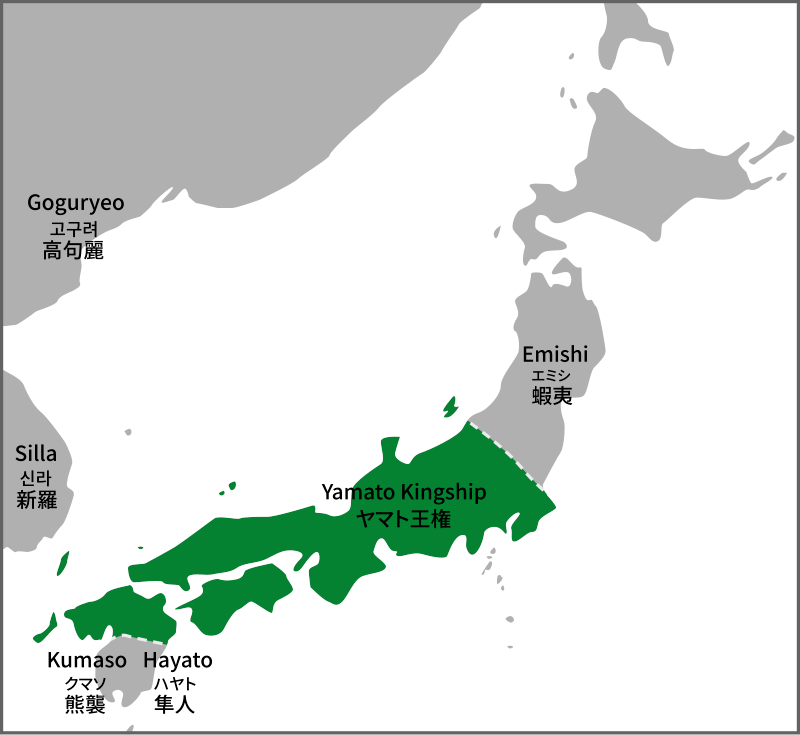
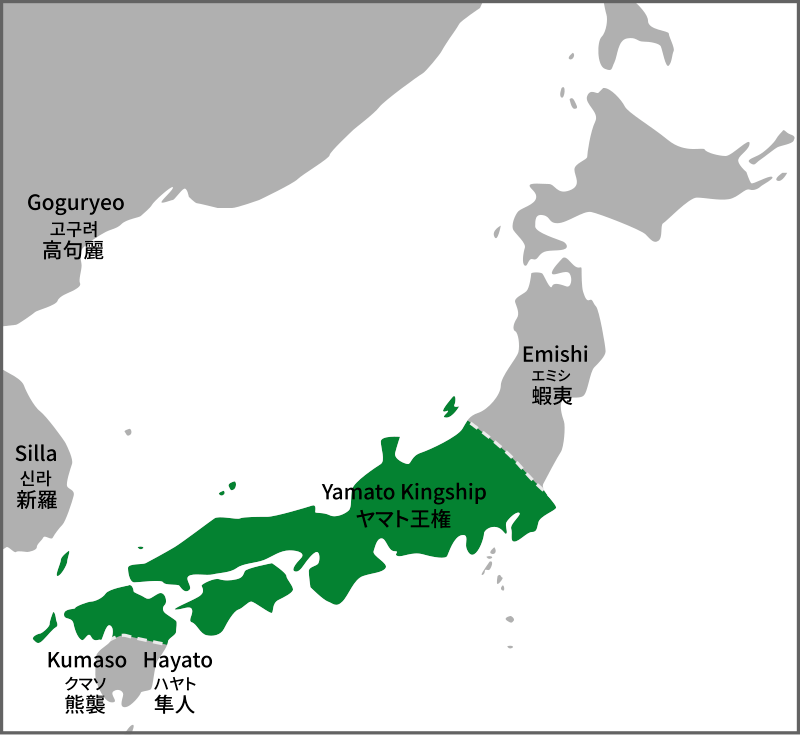
    By the mid-6th century, the Yamato state had undergone a period of extensive centralisation, and although they didn’t rule the entirety of what we now call Japan, they came to control the largest state the land had yet seen.

    The Yamato State at its greatest extent.
    By Samhanin – Own work, source: Yamato ja.png, CC BY 3.0, https://commons.wikimedia.org/w/index.php?curid=121731575

    We briefly discussed the emergence of monarchy last time, but to recap, during the early Yayoi Period, settlements became larger and more sophisticated, leading to the rise of formal power structures. Chinese sources from the time also make mention of specific Kings and Queens from the lands of “Wa” (their name for Japan).

    Traditional Japanese historiography tells us that the first ‘Emperor’ of Japan was Jimmu, who is supposed to have ruled from 660-585 BC. Jimmu was the great-great-grandson of the sun goddess Amaterasu and lived for about 126 years, which isn’t all that impressive if you consider his divine origins.

    Most scholars agree that Jimmu and the following 28 Emperors were legendary figures. However, there is evidence to suggest that the 21st Yuryaku (r. 456-479) really existed, though it isn’t until Emperor Kinmei, who took the throne in 540, that we have a ruler who is considered genuinely historical.

    The other issue is that we shouldn’t really call these early rulers ‘Emperor’ at all. The title Tenno (literally meaning Heavenly Sovereign) wasn’t used until the 7th century when it was also applied retroactively. Before that, the rulers of the Yamato state were referred to as Okimi (translated as Great King).

    Heavenly Origins

    So why the change? Well, like almost everything else at that time, it was because of China. Since around 1000 BC, the Chinese Emperor was referred to as the Son of Heaven, and each Dynasty drew legitimacy by having the Mandate of Heaven. Even though Chinese Dynasties rose and fell all the time, each new ruler would take the title of Son of Heaven and claim the mandate for himself.

    The early Yamato rulers saw this and thought they’d get in on the act. After all, if claiming divine origins worked for China, why not for Japan? So, the Great King became the Heavenly Sovereign. The difference (which will become important later) was that the newly dubbed “Emperor” of Yamato didn’t rule by Divine Mandate; he was said to be a literal son of heaven, descended from Amaterasu, with his rule legitimised by his divine bloodline.

    As settlements grew and powerful families emerged, they would join together with others (willingly or not), leading to proto-states that centred around one or a small number of powerful local families, which would, in turn, be absorbed or conquered by more powerful neighbours.

    While the exact details of this process of conquest and consolidation aren’t entirely clear, later (often legendary) sources make reference to military campaigns uniting the lands around modern-day Nara, which would become the centre of the later Yamato state.

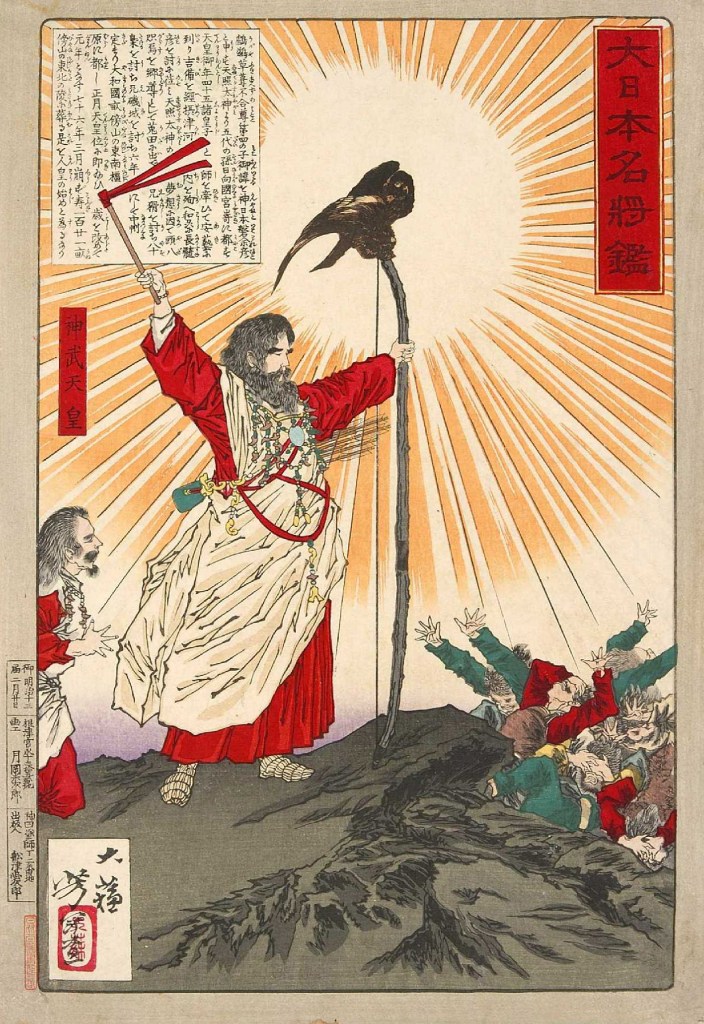
    Emperor Jimmu casts down his enemies with his legendary bow, and bird companion (the three-legged Yatagarasu).

    Although these sources (the Nihon Shoki and Kojiki) aren’t reliable histories in the academic sense, they do suggest a cultural memory of war and conquest, which means it isn’t too much of a stretch to imagine that the original rulers were highly successful militarily.

    Game of Thrones

    The rule of Emperor Kinmei (the first historical Emperor) coincided with the arrival and gradual spread of Buddhism in Japan. Now, we’ll discuss the ‘Buddhaisation’ of Japan at a later date, but the short version is that Buddhism is said to have officially arrived in Japan in 552 when the King of Baekje (a Korean kingdom) sent a statue of the Buddha to the Yamato Court.

    Other sources say that Buddhism actually arrived in Japan in 538, but either way, this new religion caused a deep rift to form between the two most powerful families at court, the Soga and the Mononobe.

    The Soga were supporters of Buddhism, and they had the advantage at court. The Emperor had two Soga wives, and his father-in-law, Soga no Iname, was the first Omi, a title which suggests power second only to the King (Okimi). However, when Emperor Kinmei died, his non-Soga son, Bidatsu, was selected to succeed him. Bidatsu’s rule would be marked by the ongoing conflict around Buddhism, as the Soga were violently opposed by the Mononobe, advocates of Japan’s traditional religion (Shinto).

    Bidatsu died in 585 (maybe of Smallpox), and another power struggle broke out. The Soga, now led by Imane’s son, Umako, were victorious, and their candidate was enthroned as Emperor Yomei.

    That might have been the end of it, but Yomei ruled for less than two years, and upon his death, both sides went at it again. The resulting conflict took place in early July 587, and the Mononobe were initially successful, driving the Soga back in a series of minor battles until they were caught in the area around Mt Shigi.

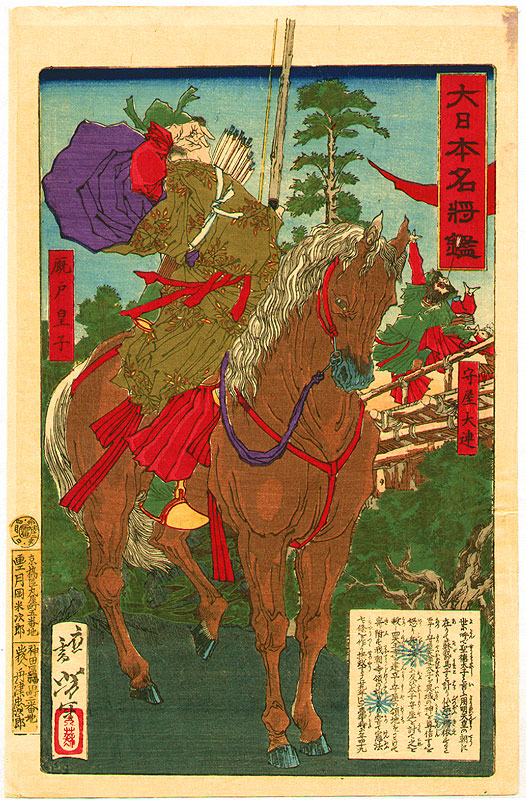
    At this point, the leader of the Soga forces, Prince Shotoku, is supposed to have promised to build a temple on the site of the battle if they were victorious. This apparently did it, and the Soga turned things around, defeating the Mononobe. The resulting defeat led to the deaths of most of the Mononobe leadership, and their power at court was broken.

    Prince Shotoku kills the leader of the Mononobe (Mononobe no Moriya) at the Battle of Mt Shigi.

    The Soga spent the next 60 years effectively unchallenged as the power behind the throne. They controlled the court through political acumen and intimidation and secured their influence over the Throne by ensuring the reigning monarch was either a member of the Soga Clan or a descendant of one.

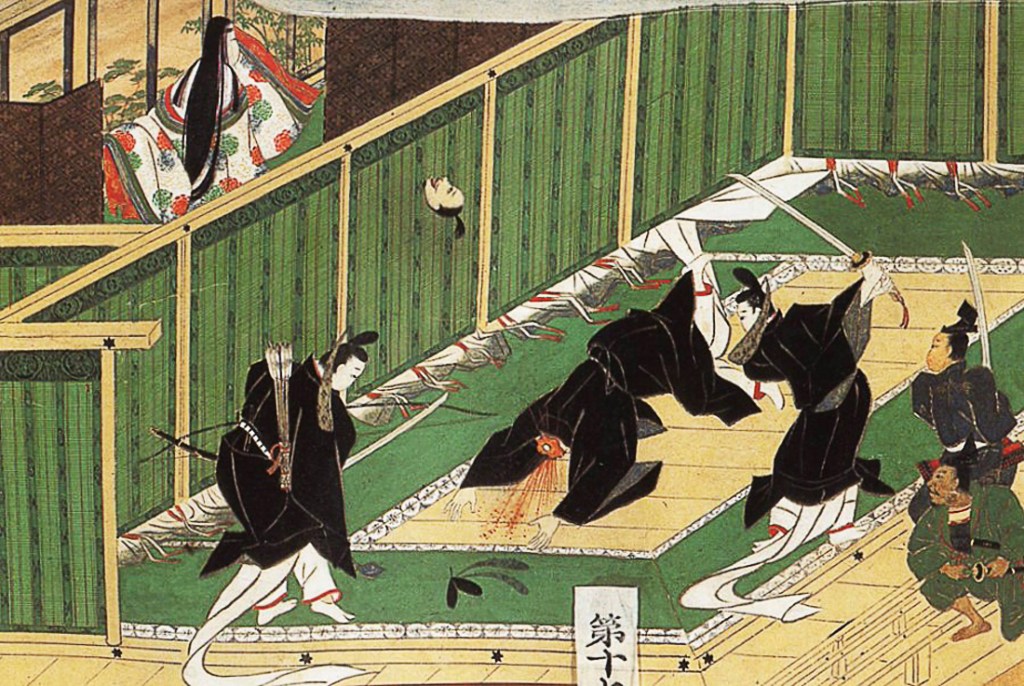
    It’s tough at the top, though, and Soga dominance generated deep resentment amongst the other noble clans, and members of the Imperial Family itself. In July 645, a conspiracy, set into motion by Prince Naka no Oe (later Emperor Tenji) and Nakatomi no Kamatari (the founder of the Fujiwara Clan, who will become really important later), ended with the assassination of Soga no Iruka, and the suicide of his father, Soga no Emishi. The so-called Isshi Incident (named for the year it happened) broke the power of the Soga and led to the re-establishment of royal power.

    The Isshi incident. Prince Naka no Oe lops off Soga no Iruka’s head. The Empress Kogyoku can be seen fleeing the scene on the top left. She would abdicate shortly afterwards, and can you blame her?

    Imperial Reform

    In the immediate aftermath of the Isshi Incident, Empress Kogyoku abdicated, and Emperor Kotoku (not her son) ascended the throne on the insistence of the conspirators. Kotoku and his supporters set about reforming the royal government with the intention of centralising and enhancing the power of the throne.

    Given that China had been the source of culture and religion, it is perhaps no surprise to find out that reformers looked there for inspiration; in fact, most of the new systems put in place in Japan at that time were direct copies of those already in use in China.

    Now, when we speak of ‘reform,’ we should remember that we’re not talking about a single reform but actually a series of laws, proclamations, and modifications over many years, leading to the system of administration known as Ritsuryo.

    Ritsuryo as a term is made up of two words, Ritsu, meaning a criminal code, and Ryo, meaning an administrative one, and there was no single Ritsuryo ‘Code’. Rather, the system was defined by a series of law codes issued between 669 and 757, which followed on from and built on each other over time.

    The actual law codes unfortunately no longer exist (and they’d likely make for fairly dull reading besides), so below is a broad summary of what the reforms actually were.

    Land Reform

    As we mentioned earlier, the power of the nobility came from their control of fortified settlements and the lands that surrounded them. So, how do you deal with that? Simple, take control of all the land. Some of the earliest reforms dealt with land reform, dividing Japan into provinces, and organising surveys (supposed to take place every six years) for the purposes of taxation and conscription.

    Land was also nationalised, but before you get the idea that this was some egalitarian attempt at land redistribution, ‘nationalised’ in this context means ‘belongs to the King’. It was the Court that decided who got what land, and each province was ruled by a governor appointed by and answerable only to the King.

    Taxation and Conscription (for both labour and military service) were formalised based on the Chinese model, with everyone expected to either pay their share or serve their time in the army or on royal construction projects.

    The royal capital was established at Nara, and a new city, based on the Chinese capital at Xian, was built (previously, the capital had been wherever the King was.)

    The provinces of Yamato Japan. The areas in northern Japan and Hokkaido remained outside their control for now.

    New Government

    As for the word ‘King’, from now on, the King would be an Emperor, and the previous system of government was now to be based on the Chinese model, too, with some notable exceptions.

    Firstly, there was the division of government into different departments. The two major offices were the Jingi-kan, which was responsible for religious matters, and the Daijo-kan, which was further subdivided into eight departments that dealt with actually running the state.

    There was also the establishment of a formal system of ranks for the nobility. Divided into nine ranks, which were then subdivided into four (with the exception of the top three, which only had two sub-divisions). Each rank carried an increased prestige and a larger salary, another novelty which was supposed to tie the nobility closer to the throne, as it was the monarch who now dispensed wealth and title.

    Although practically a direct copy of Chinese law, there were exceptions or adaptations to Ritsuryo. There were two that would prove to be significant in the long term. First, as we mentioned earlier, the newly dubbed Emperor did not hold the Mandate of Heaven as his Chinese counterpart did. Instead, he was the literal son of heaven, a status that could not be transferred or lost. This had the convenient side effect of meaning that a Japanese Emperor could not be overthrown and replaced by a ‘new’ dynasty.

    Secondly, the Imperial Rank system in China was (at least in theory) based on merit, with the famous Imperial Examinations ensuring that only the best and brightest could gain prestigious positions. The Japanese, however, limited access to formal rank to offspring of noble families, ensuring that the same clans would, over time, come to dominate certain departments of the government and eventually, the throne itself.

    Law & Order

    As the reforms sought to centralise control of land and title, so to did they seek to impose rigid control on wider Yamato society. The new provinces were now to be overseen by governors appointed by the court, taking the application of law out of the hands of powerful local families (at least in theory.) The new Imperial Court also reserved the right of appeal for itself; now (also in theory), anyone could petition the Emperor about injustice in their local area.

    Along with the ‘nationalisation’ of land, the common people, too, became the direct subjects of the Emperor. Whilst technically removing them from the local dominance of the nobility, the system was no liberation of the people.

    On the one hand, the land reform directly benefited common people, as every citizen was now entitled to a certain amount of land, which they could own for their lifetime, and would be taxed according to crop yield. However, upon their death, the land would return to the ownership of the state and couldn’t be passed on to children. Additionally, women were only entitled to 2/3 the land of men.

    There was also the matter of the caste system. Everyone was divided into one of two castes, the Ryomin or the Senmin. Each caste was further divided (four for Ryomin, Five for Senmin), and there were clear distinctions. Ryomin were made up of the ruling class, the wealthy, and those involved in court functions. The Senmin, very broadly, were subservient to the Ryomin, with the bottom two levels, the Kunuhi and Shinuhi being slaves. It was perhaps slightly better to be a Kunuhi since they were slaves at court instead of out in the countryside, but I imagine the distinction was pretty meaningless to the slaves themselves.

    There was some mobility within the caste system, with slaves being able to earn freedom and Ryomin being reduced to Senmin status for certain crimes, but overall, it was a fairly rigid system, at least at first.

    On the subject of crime, the reforms established a five-tier system of punishment, with caning being the most minor, escalating to execution (either by hanging or beheading) for serious crimes, and speaking of really serious crimes, the reform took the Ten Abominations of the Chinese legal code and reduced them to eight.

    So, while things like Rebellion, Murder, and a lack of filial piety (respect for your parents) could get you beheaded, the Japanese dropped the rules about familiar discord and, for some reason, incest.

    Trouble ahead.

    The reforms were intended to centralise and formalise Imperial rule in Japan on the same basis as the Chinese system, and in the short term, it was pretty successful. Land distribution meant a steady tax base, and conscription meant that military power was focused in the hands of the Emperor rather than regional strongmen.

    But the reforms had unwittingly sowed the seeds of the eventual downfall of Imperial authority. By concentrating political power in the hands of the nobility rather than a merit-based bureaucracy, powerful families would come to dominate the levers of power and the Emperor himself.

    Land reform, too, would backfire. Initially, citizens were forbidden from bringing new land into cultivation, but as the population expanded, the agricultural base failed to keep up. Changes were made, and the people were permitted to claim new land for themselves as long as they cultivated it themselves.

    Although a well-meanimg attempt to grow the food supply, what actually happened was powerful local families, with resources and manpower, snapped up the good land, and when the law was changed to allow for land to be inherited by three generations (and eventually without limit) the seeds were literally sown for a powerful, land-based aristocracy, far from, and no longer under the control of the Imperial Court.

    Ooooh, foreshadowing…

    Sources

    https://en.wikipedia.org/wiki/Taika_Reform
    https://en.wikipedia.org/wiki/List_of_emperors_of_Japan
    https://en.wikipedia.org/wiki/Emperor_Jimmu
    https://en.wikipedia.org/wiki/Emperor_of_Japan
    https://en.wikipedia.org/wiki/Yatagarasu
    https://en.wikipedia.org/wiki/Asuka_period
    https://en.wikipedia.org/wiki/Isshi_incident
    https://en.wikipedia.org/wiki/Emperor_Kinmei
    https://en.wikipedia.org/wiki/Soga_no_Iname
    https://en.wikipedia.org/wiki/Soga%E2%80%93Mononobe_conflict
    https://en.wikipedia.org/wiki/Emperor_Bidatsu
    https://en.wikipedia.org/wiki/Emperor_Y%C5%8Dmei
    https://en.wikipedia.org/wiki/Taih%C5%8D_Code
    https://en.wikipedia.org/wiki/Ritsury%C5%8D
    https://en.wikipedia.org/wiki/Department_of_Divinities
    https://en.wikipedia.org/wiki/Daij%C5%8D-kan
    https://en.wikipedia.org/wiki/Provinces_of_Japan
    https://en.wikipedia.org/wiki/Japanese_castes_under_the_Ritsury%C5%8D
    https://en.wikipedia.org/wiki/Ritsury%C5%8D

  • Yamato – So it Begins.

    The Wa dwell on mountainous islands southeast of Han [Korea] in the middle of the ocean, forming more than one hundred communities. From the time of the overthrow of Chaoxian [northern Korea] by Emperor Wu (BC 140–87), nearly thirty of these communities have held intercourse with the Han [dynasty] court by envoys or scribes. Each community has its king, whose office is hereditary. The King of Great Wa [Yamato] resides in the country of Yamadai.

    Goodrich, Carrington C, ed. (1951). Japan in the Chinese Dynastic Histories: Later Han Through Ming Dynasties. Translated by Tsunoda, Ryusaku. South Pasadena: PD and Ione Perkins. Taken from Wikipedia.

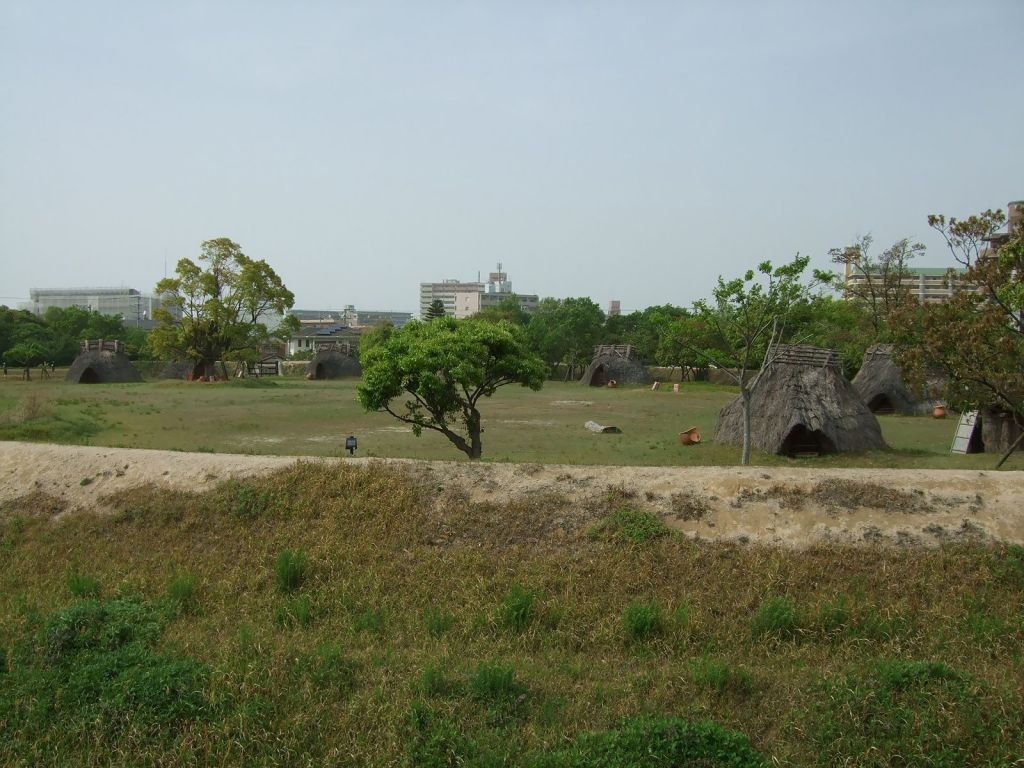
    At the back end of the Yayoi Period (c. 300 BC to 300 AD), the first petty kingdoms began to emerge. These communities initially started out based on agriculture and shared culture (cemeteries and other ritual sites, for example), but by the late Yayoi period, we begin to see evidence of defences being constructed.

    The reconstructed defences at Yoshinogari. Evidence of the changing situation in the Late Yayoi Period.
    By Flamebroil at the English-language Wikipedia, CC BY-SA 3.0, https://commons.wikimedia.org/w/index.php?curid=4443146

    Now, it may seem obvious, but you don’t need defences unless you think someone is going to attack you, and you can’t typically organise coordinated attacks against defended places without someone calling the shots.

    So now, the age-old question, which came first, the Kings or the Wars? Humans have never needed much of an excuse to start killing each other, and evidence for violent deaths reaches back to the Jomon period.

    Violence, however, is not the same thing as war. The marshalling of resources, and the building of defences require organisation, and organisation in those days meant monarchy.

    These days, we tend to associate Monarchs with pomp and ceremony but usually (at least in Europe) very little actual power. In the ancient world, however, you didn’t get to be King or Queen without power, and that power usually came from one of two places.

    Either you were the biggest and the strongest, and you simply killed anyone who got in your way, or you relied on more spiritual power, either magic or religion.

    Now, the late Yayoi people didn’t have writing, so we don’t know very much about how they saw themselves, but the Chinese sources suggest that monarchy and magic were tightly linked.

    When speaking of Himiko, the legendary Queen of Yamatai, the sources speak of a Queen who:

    occupied herself with magic and sorcery, bewitching the people. Though mature in age, she remained unmarried. She had a younger brother who assisted her in ruling the country. After she became the ruler, there were few who saw her. She had one thousand women as attendants, but only one man. He served her food and drink and acted as a medium of communication. She resided in a palace surrounded by towers and stockades, with armed guards in a state of constant vigilance.

    Goodrich, Carrington C, ed. (1951). Japan in the Chinese Dynastic Histories: Later Han Through Ming Dynasties. Translated by Tsunoda, Ryusaku. South Pasadena: PD and Ione Perkins. Taken from Wikipedia.

    If we ignore the trope of any woman in power obviously being a witch, this source tells us that Himiko was viewed as being a user of magic who remained aloof from her people, surrounded by towers, stockades, and armed guards. It is often difficult to separate fact from fiction when it comes to such ancient sources, but the mention of elaborate defences tallies with the archaeological evidence.

    Even if Himiko herself is mythical, the fact that Late Yayoi settlements were being defended by armed guards seems to support the idea that Japan was becoming a more centralised but also more violent place.

    Monumental Tombs

    Another example of centralisation is the emergence of monumental tombs called Kofun. Like the Pyramids of Egypt, Kofun started out as burial chambers of important, presumably royal figures, and they represent significant investments of time and resources.

    The Daisenryo Kofun in Sakai. The largest kofun, it is believed to be the burial place of the semi-legendary Emperor Nintoku, who is said to have died in 399 AD. By Copyright © National Land Image Information (Color Aerial Photographs), Ministry of Land, Infrastructure, Transport and Tourism, Attribution, https://commons.wikimedia.org/w/index.php?curid=120737378

    Kofun can be found across Japan (about 160,000 of them!) with the densest concentration being in modern day Hyogo Prefecture. While these tombs vary widely in their construction the basic idea remains the same, a tomb, grave goods (often looted, unfortunately) and a mound.

    Burial mounds aren’t unique to Japan, but it is a general rule that the more elaborate the grave, the more resources the one who built it has. Now, this sounds obvious: rich people are rich, but being able to marshall sufficient manpower at a time when communication relied entirely on word of mouth demonstrates just how wealthy these kingdoms were becoming.

    It is also important to note that they only started as tombs for important figures. By the later Yamato Period, there is evidence of (admittedly smaller) Kofun being built for relatively low status people, suggesting that wealth and resources had ceased to be the sole domain of monarchs.

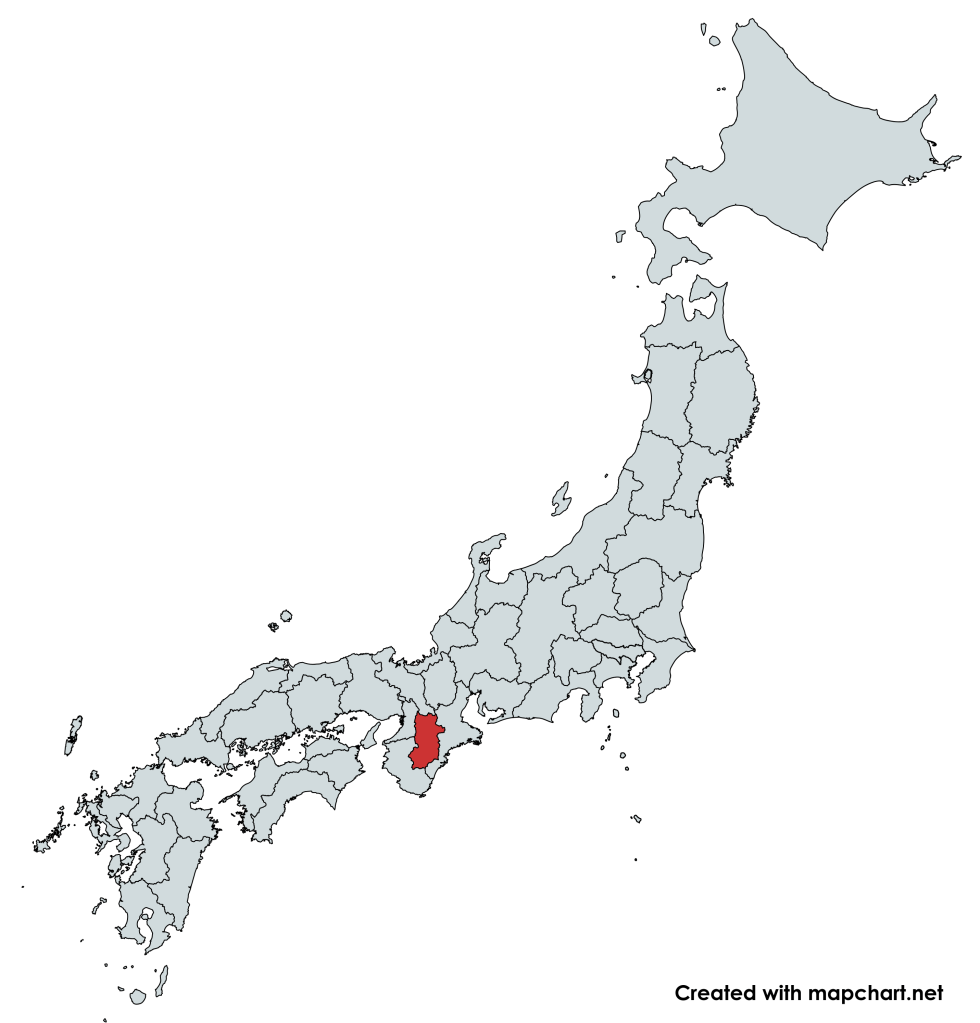
    It was modern-day Nara Prefecture, however, where the most powerful and longest-lasting Kingdom got its start.

    Modern Nara Prefecture, centre of the Yamato Kingdom.

    Difficult beginnings

    The actual rise of the Yamato Kingdom is obscure (sorry, I know this keeps happening.) Since we rely almost entirely on Chinese sources to tell us what was going on in the earlier parts of this era, it is perhaps telling that they have relatively little to say about the origins of Yamato.

    Although we don’t know for certain, it is suggested by some that this period was one of violence as rival kingdoms sought to assert dominance over their neighbours. Whilst we may never know for sure, by the early 5th Century, the Yamato Kingdom had risen to dominate most of central Japan.

    Although the first power to dominate a significant part of Japan, the Yamato didn’t have it all their own way. On Kyushu, the Azumi and Hayato peoples were in control. The Azumi were apparently peerless seafarers and seem to have served as the first naval force of the Yamato. The Hayato, though also listed as loyal to the Yamato, were apparently a more tempestuous people, and there are records of several rebellions/wars between the Yamato and Hayato, with the Hayato eventually being subjugated and their population scattered throughout Japan.

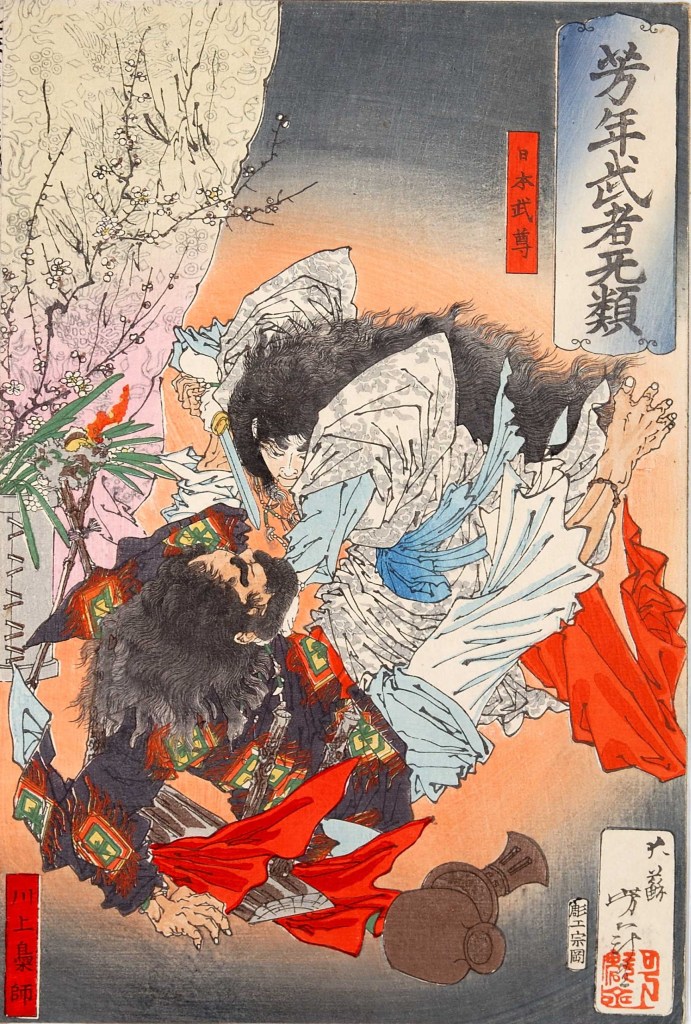
    These people may have been related to or be the basis for the mythical Kumaso. Also, natives of Kyushu, the Kumaso, are supposed to have been implacable and dangerous foes of the Yamato, described as ‘bear-like’ (the word ‘Kuma’ means bear in Japanese) and monstrous. The story goes that the Kumaso were eventually defeated by the legendary Yamato Takeru, who killed their last leader by disguising himself as a woman at a feast, which is quite a way to go about it.

    Yamato Takeru ruins the last Kumaso leader’s dinner.

    Chinese Influence

    The Yamato State was heavily influenced by contemporary Chinese culture. This arrived in Japan through trade, cultural exchange, and waves of immigrants. For much of pre-modern history, China was viewed as the centre of the world, especially in Asia, and during these formative years, the Yamato people looked to China as the source of culture and learning.

    Japan maintained direct maritime links with the Chinese Song Dynasty (possibly facilitated by the aforementioned Azumi), but also had close ties to the Kingdoms of Korea. Some sources even go so far as to suggest that hundreds of the noble families of this period actually originated in Korea. In fact, it is speculated (somewhat controversially) that, if the genealogy of the Imperial Family can be believed, they are of Korean origin as well.

    How much we can believe ancient, often conflicting sources is a matter of debate, but we know for certain that Chinese and Korean culture was hugely influential in early Japan. Grave goods uncovered in Kofun show either direct Chinese and Korean origin or are heavily inspired by the same.

    We also know that the early Yamato Kingdom based itself politically on China. It is known that early Yamato rulers petitioned the Chinese Emperors for royal titles, and the Chinese seem to have been happy to oblige.

    In turn, the Yamato Kings bestowed titles of nobility on their subjects, including those in Kyushu, far from the centre of Yamato Power.

    These clans varied in power, but drew legitimacy from the King. Each clan seems to have been ruled by a patriarch, who was responsible for keeping the Clan in line, but also took on a religious role, making sure the Gods (or Kami) of their Clan were kept happy. This is the role of the King in miniature and shows how formalised Yamato society had become. The King was at the top, responsible for the well being of the nation, and he would intercede with the Gods on the Kingdoms behalf.

    Other Chinese innovations taken to by the Japanese were Buddhism (which I know is actually from India, but it arrived in Japan in its Chinese form) and, much to the lamentation of anyone who has ever tried to study Japanese, a written language, the origins of Kanji, Chinese written characters adapted to Japanese speech.

    We’re actually going to continue this look at the deeper impact of Chinese culture next time, as the introduction of new religious and political ideas led to the Taika Reforms, which really deserves its own post.

    Sources
    https://royalsocietypublishing.org/doi/10.1098/rsbl.2016.0028
    https://en.wikipedia.org/wiki/Himiko
    https://en.wikipedia.org/wiki/Yamato_period
    https://en.wikipedia.org/wiki/Azumi_people
    https://en.wikipedia.org/wiki/Yamato_Kingship
    https://en.wikipedia.org/wiki/Hayato_people
    https://en.wikipedia.org/wiki/Kumaso
    https://en.wikipedia.org/wiki/Five_kings_of_Wa
    https://en.wikipedia.org/wiki/Asuka_period

  • Yayoi: How Soggy Fields Changed Japan Forever.

    Last time, we talked about the Jomon People, Japan’s first inhabitants. Those folk existed primarily as Hunter-Gatherers, but around the year 900 BC, a new wave of culture crossed the Tsushima Strait from Korea. No, it’s not some prehistoric version of BTS (can you even imagine?), but settled villages, metalwork, and, most significantly, rice.

    Nowadays, we arguably take agriculture for granted; unless you live and work in the countryside, you may never think about it at all, but the ability to cultivate land and produce crops on it changed humanity. For the first time, our ancestors could produce more food than they needed, and if one man could produce enough food for himself and four or five others (mileage may vary), then those four or five others are no longer needed in the fields, which means they can spend their time doing other things, like art, music, war, and ruling over the farmers. (Ok, so it’s not all good.)

    Agricultural revolutions occurred pretty much everywhere at different times, but the Yayoi period is generally thought to have begun around 300 BC. Now, I have to point out that that is not an exact chronology, firstly, because these things never are, and secondly, because the exact transition between the Jomon and Yayoi periods is pretty murky in some places.

    For example, at the Itazuke Site in Fukuoka Prefecture, the earliest remains of rice paddies have been found in contexts that put them more in the Jomon period than the Yayoi, leading some scholars to suggest that the Yayoi period should actually be dated as starting as early as 800 BC, or perhaps even earlier. However, this remains controversial, and there’s never likely to be an exact timeline.

    The site at Itazuke represents possibly the earliest examples of rice farming yet found, although its exact context remains controversial.
    By Muyo – Own work, CC BY-SA 3.0, https://commons.wikimedia.org/w/index.php?curid=15136810

    While Itazuke probably represents a transitional site, it does raise some interesting questions. For example, was the appearance of irrigated rice paddies a case of technological spread, or was it brought over by waves of immigration? The answer, broadly, is a bit of both.

    The thing with ancient, pre-literate societies is that they weren’t generally big on keeping written records, and something as formal as a census was right out. Consequently, it’s pretty difficult to guess exactly how many people were living in Yayoi Japan; it’s also tricky to figure out where they came from.

    The first suggestion is that the Yayoi peoples represented a series of massive waves of migration over a 500 to 600-year period. Some estimates put the population of Japan at somewhere around 6 million by the end of the Yayoi Period in 300 AD. This represents a population increase of more than 4 million over that period, which some scholars suggest is impossible to explain as being a result of immigration alone.

    Now, this isn’t the sort of blog that’s going to go into where babies come from (there’s plenty enough of that sort of thing on the internet already), but a basic rule of thumb for any society is that food surplus = people surplus. If you have a reliable food source and aren’t running for your life from sabertooth tigers and the like, you’re more likely to have a baby, and what’s more, that baby is more likely to survive to adulthood.

    For archaeologists, the next step is trying to figure out who is having the babies. It’s the women, obviously, but the Yayoi people represent an interesting example of how populations change over time.

    Genetically speaking, you can divide the Yayoi into three broad groups: Early, Middle, and Late. So named because they came to Japan at different times (guess which is which!)

    All three groups share similar genetic traits, suggesting shared ancestry, but while human remains of early Yayoi people show a larger percentage of Jomon DNA, suggesting that immigrants and locals were pretty friendly, the later generation shows much less Jomon DNA, and much more from groups that inhabited Korea at the same time.

    Now, does that mean that the later waves of immigrants were pickier in their partners, or, does it mean that by the later Yayoi Period, anyone with large amounts of Jomon DNA had already moved away, or, to put it bluntly, been bred out of existence?

    The answer is unclear, but probably. We know that the Yayoi and Jomon populations were genetically distinct. We can also estimate that the population during the Jomon Period was around 75,000, whereas by the end of the Yayoi Period, it was 6 million. Outside of Hokkaido, then, it seems reasonable to state that Jomon people were simply swamped.

    Yayoi Culture

    Whilst the Jomon and Yayoi peoples were playing a long-term game of “Kiss, Marry, Avoid” (I know that’s not what it’s really called, but I’m trying to keep things PG), Yayoi culture and language were beginning to spread across the land. It should be pointed out, however, that the spread was not even, nor was it universal. Whilst Yayoi culture came to dominate in Kyushu, in Honshu, the adoption of rice farming and other Yayoi hallmarks was pretty inconsistent.

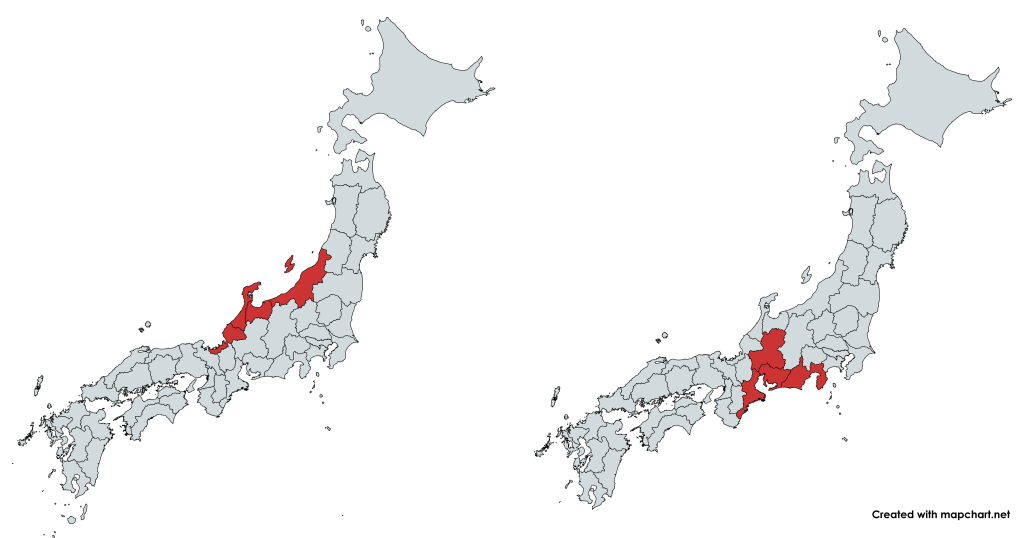
    For example, evidence of agriculture has been found in the Hokuriku region dating back to 380 to 300 BC. However, in the Tokai region, which is practically next door, the first evidence doesn’t appear until 220 BC in some areas, and as late as 50 BC in others.

    The Hokuriku Region (left) where evidence of agriculture dates back to 380 BC, and the Tokai region (left) where it didn’t appear until 330 years later.

    This inconsistent development isn’t as random as it may first appear. It is generally believed that the Yayoi peoples were a so-called “sea” people, meaning that they came across from Korea and Eastern China by boat (because how else are you going to do it?). It is then reasonable to assume that the transmission of Yayoi culture would follow coastal routes first, before spreading inland over the following decades.

    Rise of Yamatai

    One of the major problems we have with ancient civilisations (some of them, anyway) is that they didn’t write things down. Now, this is likely because they didn’t have a written language, but it’s still a pain. The Yayoi are one such example. What we know about them comes from the archaeological record, and although archaeologists are (usually) pretty good at what they do, without a clear written record, it can be challenging to figure out exactly how the Yayoi people saw themselves.

    Luckily for us, other people nearby did have writing, and they were kind enough to leave some records. The Chinese Han Dynasty kept copious amounts of records about their neighbours, and it is in these sources that we see the first mention of the Japanese islands.

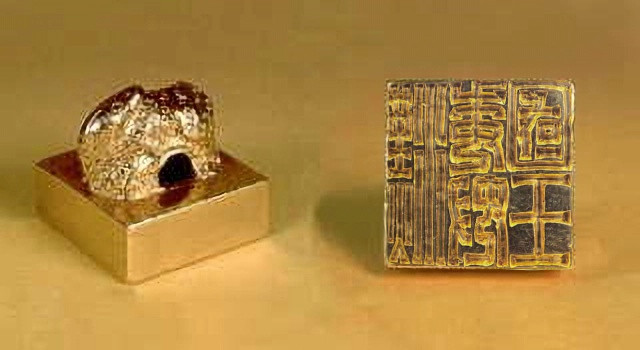
    In the Book of Later Han, in 57 AD, the Chinese Emperor Guangwu gave the Kingdom of Na a gold seal and some other fancy gifts in exchange for the King of Na recognising the Chinese as their overlords. For centuries, the seal, and indeed the Kingdom of Na, were considered to be semi-legendary, but then the seal itself was discovered by accident (by a farmer, apparently), confirming that the Chinese records were accurate and Na (Nakoku in Japanese) really existed.

    The golden seal of the Kingdom of Na. Found in a field in 1784, it confirmed the truth of the Chinese Records, and the existence of Nakoku.
    By Original uploader: User:金翅大鹏鸟 at zh.wikipedia – Transferred from zh.wikipedia to Commons by Shizhao using CommonsHelper., Public Domain, https://commons.wikimedia.org/w/index.php?curid=15840653

    There are sporadic records of other Kingdoms and Tribes existing around Japan (called ‘Wa’ by the Chinese), but their exact nature and even their locations are often a mystery. One state from that era that has had an enduring legacy is Yamatai (Yamataikoku in Japanese.)

    This state features prominently in contemporary Chinese records and was apparently ruled by Queen Himiko, or, in some cases, the “King of Wa,” suggesting that the Chinese believed Yamatai to be the rulers of the whole of Japan (as they understood it) or at least a Kingdom of preeminent power.

    We know very little about Yamatai itself, as the only documentary sources are Chinese records, and the archaeological record is unclear. We’re not even sure where Yamatai was located within Japan, with Northern Kyushu or the Kinai Region (near modern Kyoto, Osaka, and Nara) being proposed.

    The two proposed sites of Yamatai, Northern Kyushu (left, in purple) and Kinai (right, in green).
    By Flora fon Esth – Own work based on the image Provinces of Japan.svg (GFDL et CC-by-3.0), CC BY-SA 3.0, https://commons.wikimedia.org/w/index.php?curid=160605946

    The discovery of the Yoshinogari site in 1986 ignited the popular imagination, and Yamatai and Queen Himiko have been figures in popular culture ever since. Some have suggested that Yoshinogari is a good candidate for the supposed capital of Yamatai. However, this remains highly controversial, and most experts state that Yoshinogari is an important site, but there’s no evidence to support the assertion that it is the capital.

    The reconstructed village at Yoshinogari, and important site, but the capital of Yamatai? Most experts say not.
    By ja:User:Sanjo – Own work, Public Domain, https://commons.wikimedia.org/w/index.php?curid=4954364

    Queen Himiko is said to have died around 248 AD, after she was replaced, first by a King whose name is not recorded, and then by Toyo (Iyo in some records), about whom very little is known.

    When Himiko passed away, a great mound was raised, more than a hundred paces in diameter. Over a hundred male and female attendants followed her to the grave. Then a king was placed on the throne, but the people would not obey him. Assassination and murder followed; more than one thousand were thus slain. A relative of Himiko named Iyo [壹與], a girl of thirteen, was [then] made queen and order was restored. (Zhang) Zheng (張政) (an ambassador from Wei), issued a proclamation to the effect that Iyo was the ruler.

    Tsunoda, Ryusaku, tr (1951), Goodrich, Carrington C (ed.), Japan in the Chinese Dynastic Histories: Later Han Through Ming Dynasties, South Pasadena: PD and Ione Perkins, taken from Wikipedia.

    Ultimately, Yamatai would disappear from the records shortly after Iyo came to the throne, and, as with any records over such long periods of time, we should take the details with a grain of salt.

    That being said, thanks to Chinese records and the hard work of local archaeologists, we know that by the end of the Yayoi Period, kingdoms had begun to emerge across Japan. Like the preceding Jomon Period, the Yayoi Period can’t really be said to have ended, so much as it transitioned into something else.

    Some scholars suggest that Yamatai lent its name to the following Yamato Period, although the exact etymology isn’t clear (nothing ever is with this stuff.)

    Next time, we’ll take a look at the Yamato Period, Japan’s first Imperial State.

    Sources

    https://en.wikipedia.org/wiki/Yamatai https://en.wikipedia.org/wiki/Yoshinogari_site https://en.wikipedia.org/wiki/Nakoku https://en.wikipedia.org/wiki/Yayoi_period https://en.wikipedia.org/wiki/Yayoi_people https://www.cambridge.org/core/journals/antiquity/article/regional-variations-in-the-demographic-response-to-the-arrival-of-rice-farming-in-prehistoric-japan/7E6D28520A04B2F07DDD36908F291808 https://www.cambridge.org/core/journals/evolutionary-human-sciences/article/japan-considered-from-the-hypothesis-of-farmerlanguage-spread/BD91E69AEA3CCAEDC567519EF7F5AA97

  • The Jomon Period – Japan before it was Japan.

    In the beginning…

    In the beginning, there was an egg, thus answering that age old question at least.

    Actually, it wasn’t really an egg, but chaos in the shape of an egg, and all was silent. Then, things began to happen, and three layers were formed. At the top was light, then came Takamagahara, the High Plane of Heaven, and beneath that was the ‘huge, dark mass’ of Earth.

    Next, when the land was young, resembling floating oil and drift like a jellyfish, there sprouted forth something like reed shoots. From these came into existence the deity UMASI-ASI-KABI-PIKODI-NO-KAMI; next, AME-NO-TOKO-TATI-NO-KAMI. These two deities also came into existence as single deities, and their forms were not visible.

    Kojiki, translated by DONALD L. PHILIPPI

    What followed were the Kamiyonanayo, the Seven Generations of Gods. There are a lot of stories about what these guys got up to, which we’ll cover in a different article, but for our purposes, the most important are the last two, Izanagi and Izanami. Now, just so we’re clear, Izanagi and Izanami were husband and wife and brother and sister, but I’m told that kind of thing is cool when it comes to the Gods, apparently.

    Fun fact: Their names literally mean “Male who invites” and “Female who invites” so there’s that…

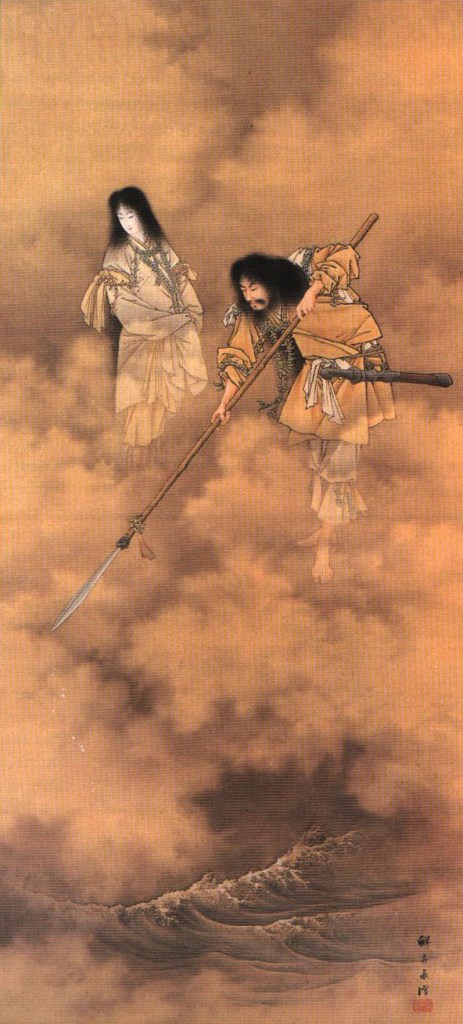
    Anyway, at that time, the earth, ‘huge and dark’ as it was, looked like floating oil and “drifted like a jellyfish”, so Izanagi was given Tenkei, the Heavenly Spear. He used it to stir up the primordial soup, and when he drew the spear out, a drop of water fell back, and created the island of Onogoroshima, the first of the Japanese Isles.

    Izanagi and Izanami stirring the primordial soup.

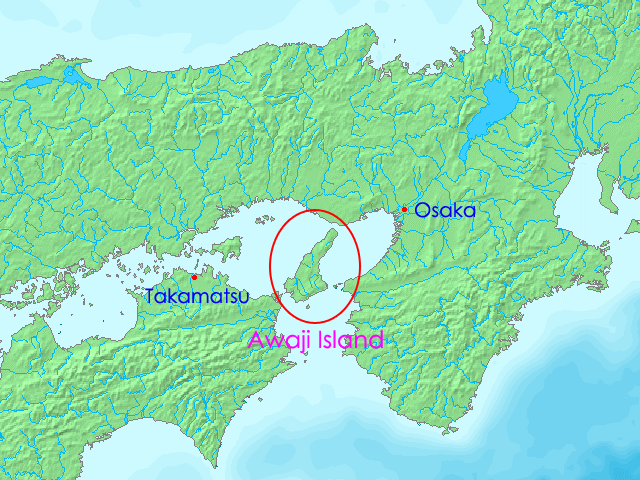
    Just in case you were wondering, no, you can’t visit Onogoroshima. Scholars aren’t sure which of the current Japanese islands represents the mythical “first island”, but it’s generally thought to be one of the small islands that surround Awaji-shima, if it exists at all.

    Awaji Island. Could it, or one of the smaller island around it, have been the first?

    There are plenty of other stories about Izanagi and Izanami, like how, upon erecting a holy pillar, they realised they needed to procreate (stop laughing), but all you need to know for now is that Izanagi and his sister-wife are considered to be the progenitors of the Japanese pantheon, and through their daughter Amaterasu (the Sun Goddess), the Japanese Imperial Family.

    Mythology aside, archaeologists generally agree that the first people arrived on what is now the Japanese Archipelago sometime around 36,000 BC, when Japan was still attached to mainland Asia by a land bridge.

    There are few remains of these people, largely because the soil in Japan is highly acidic, but also because it is probable that they lived in coastal areas which are now under water. The only artefacts that have remained are stone tools, and Japan has some of the oldest on record, with some possibly dating to as early as 30,000 BC, a full 20,000 years before appearing in other places.

    There are, however, some big question marks over the actual age of human habitation in Japan, and that is because of…

    The Japanese Paleolithic Hoax

    The short version of this story is that, during the 1970s and 80s, an amateur archaeologist by the name of Shinichi Fujimura began finding artefacts at sites in Miyagi Prefecture, which he claimed to be dated to the Palaeolithic Period. Fujimura quickly earned a reputation as one of Japan’s most prolific archaeologists, and despite concerns raised by some academics, he rose to become Deputy Director of the Tohoku Palaeolithic Institute. His research seemed to suggest that human habitation of Japan stretched back as far as 600,000 years, and several of his sites were listed as being of national importance.

    The problem, as you’ve probably already guessed, was that he made it up. In late 2000, the Mainichi Shimbun newspaper broke the story that Fujimura had been planting artefacts. He would take items from other sites, bury them secretly, and then “discover” them later. After a thorough review of his work, the Japanese Archaeological Agency reported that almost all Fujimura’s work had been based on faked finds, setting back Palaeolithic research in Japan by decades, and forcing the academic community to reassess everything they thought they knew about the period.

    So what do we know?

    Of the Palaeolithic Japanese? Not much, honestly. Japan’s acidic soil and the high level of coastal erosion over the last 30,000 years has meant that human remains are few and far between, and even real artefacts are limited to stone tools. In short, we know that people were here, but who they were, and how they lived, is open to conjecture.

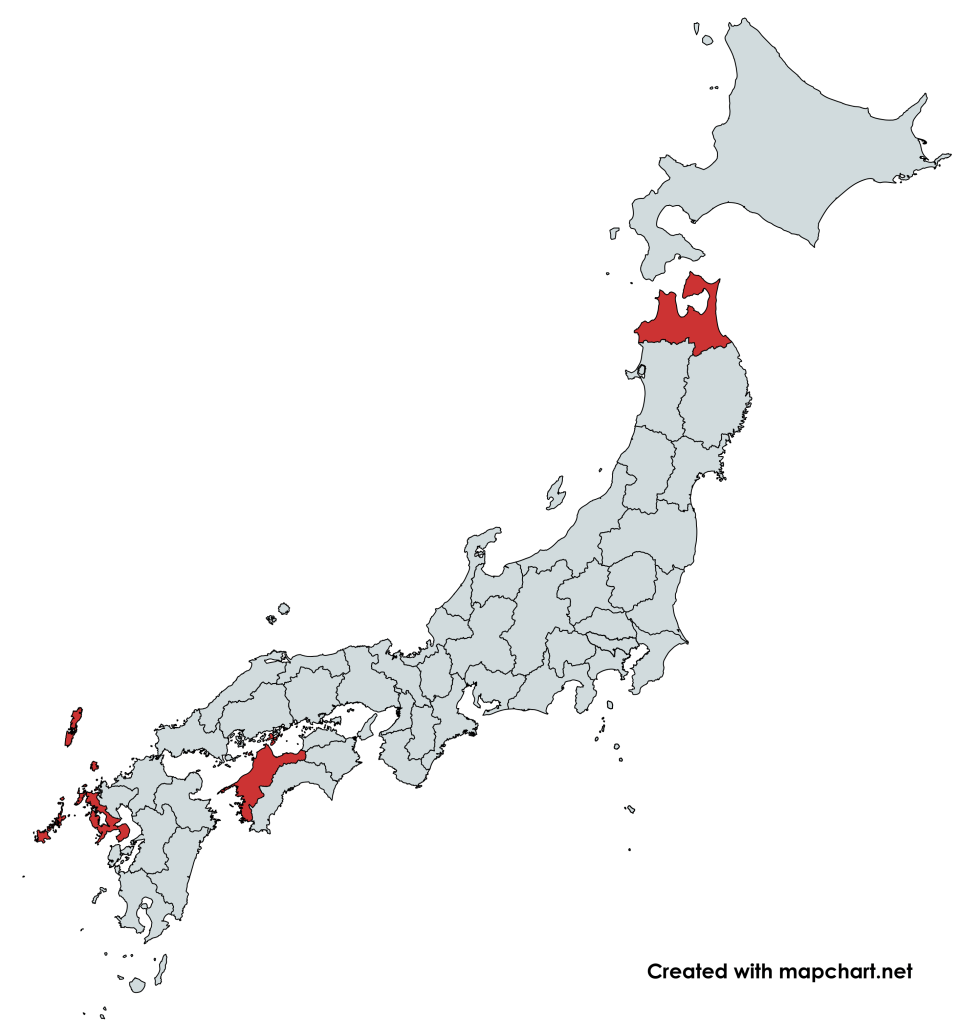
    After about 14,000 BC, however, the record becomes a lot clearer. Fragments of pottery, uncovered in 1998 in Aomori Prefecture, have been dated as early as 14,500 BC, and the distinctive “Cord Marked” (Jomon, in Japanese) style has also been found in Ehime and Nagasaki Prefectures, suggesting that the Jomon people represent the first ‘Japanese’ civilisation.

    The locations of Nagasaki, Ehime, and Aomori Prefectures, highlighting just how widespread the Jomon culture was.

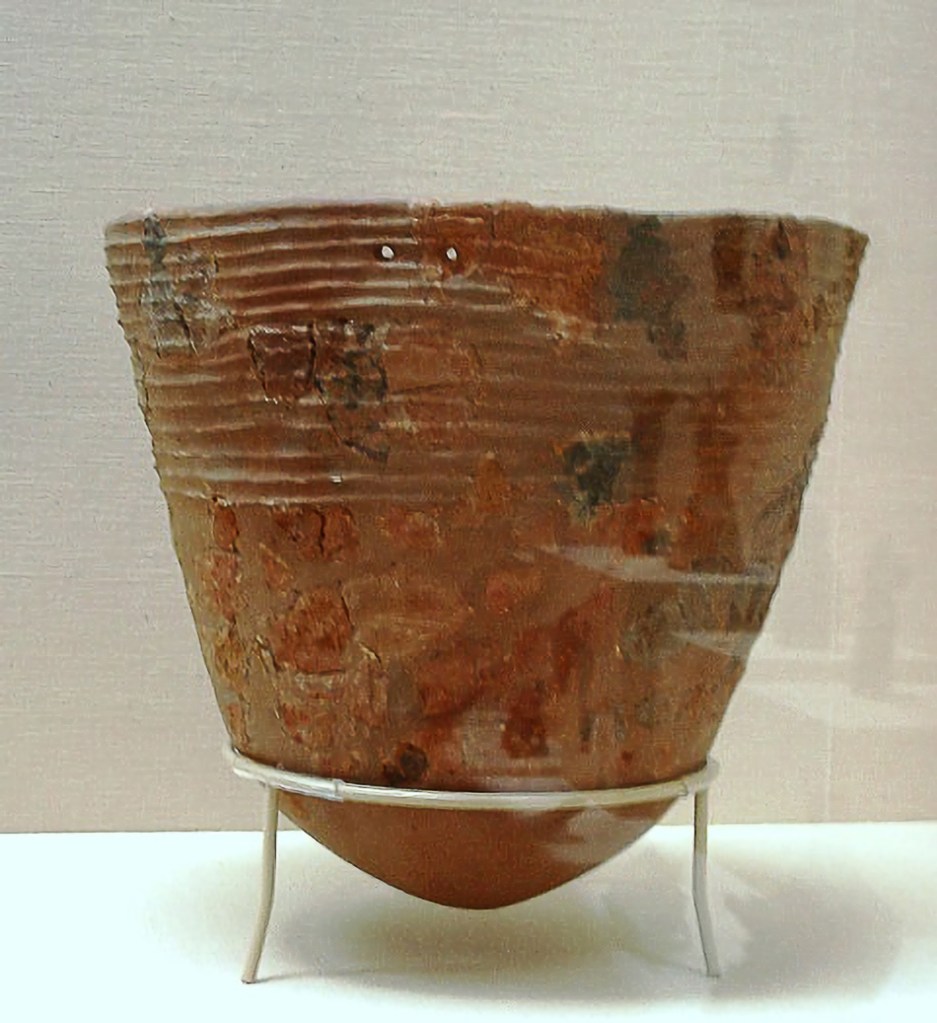
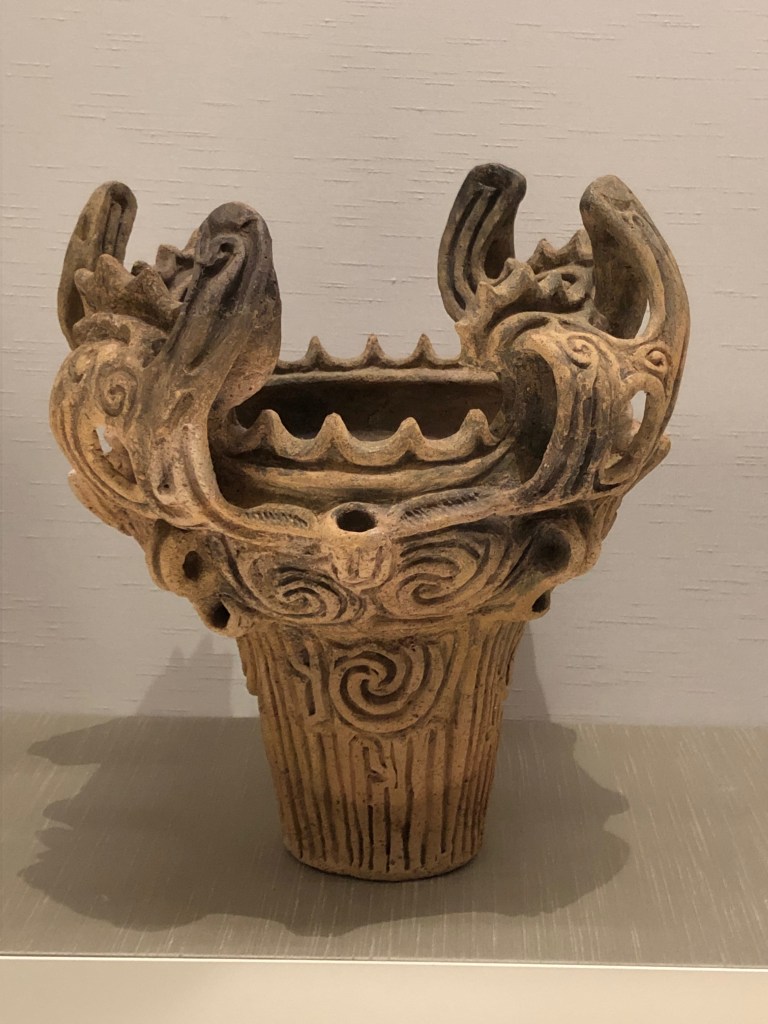
    So why is pottery important? Well, the short answer is, pots mean settlement. Why? Because pots break easily. The larger and fancier the pot, the greater the chances that its maker was planning to stay in one place for a while. Early Jomon pottery (around 14,000 BC) is decorated, but still fairly rudimentary, but by 3000 BC, they’re creating works that are almost absurdly flamboyant.

    Early Jomon Pottery, nice decoration, but nothing that’d you’d regret smashing on the kitchen floor.
    Jomon “Flame Style” Pottery from around 3000 BC. The challenge here being to take a sip without lacerating your face.
    By Netherzone – Own work, CC BY-SA 4.0, https://commons.wikimedia.org/w/index.php?curid=158990309

    The first Jomon people, with their basic pots, were mostly hunter-gatherers, and Japan in 14,000 BC was a pretty sweet place to be a hunter-gatherer. The end of the Ice Age brought on a figurative explosion of life, with widespread forests bringing forth more nuts than you could shake a stick at which, incidentally, is how you harvest them.

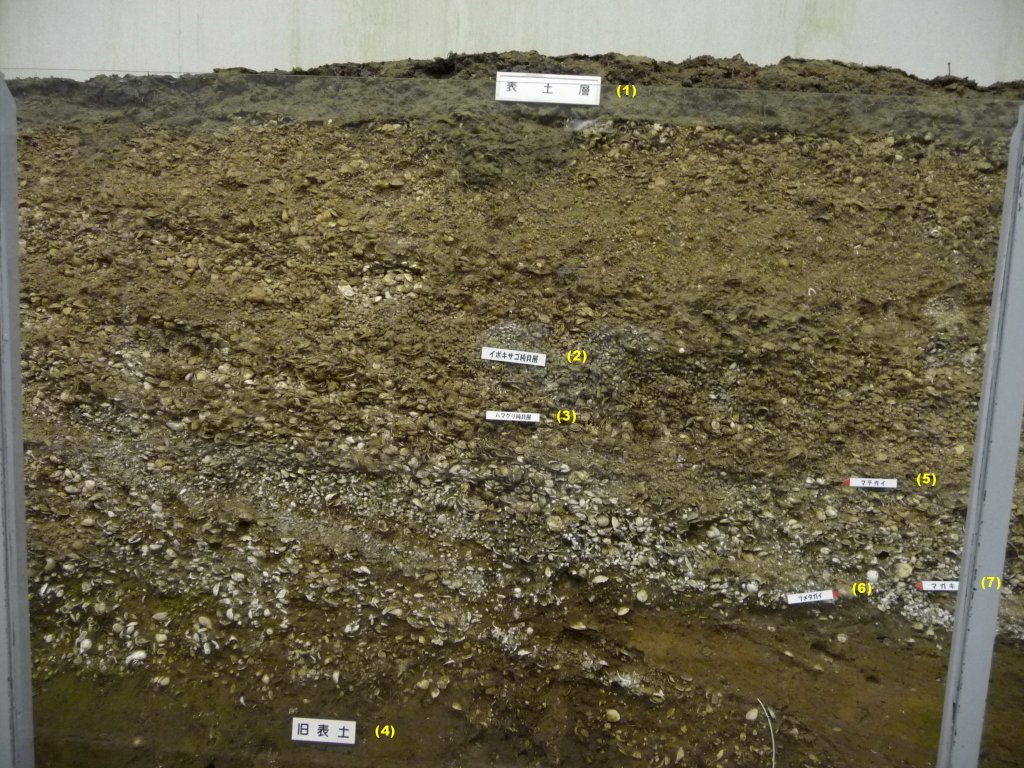
    This abundant plant life also meant abundant animal life, and deer, boar, and smaller creatures formed a large part of the Jomon diet, along with fish, and huge amounts of shellfish in the coastal regions.

    The Kasori Shellmound. Despite taking around 1000 years to form, it gives you an idea of how key shellfish were to the Jomon diet.
    By Namazu-tron – Self shot and numbers with parenthesis added, CC BY-SA 3.0, https://commons.wikimedia.org/w/index.php?curid=6685921

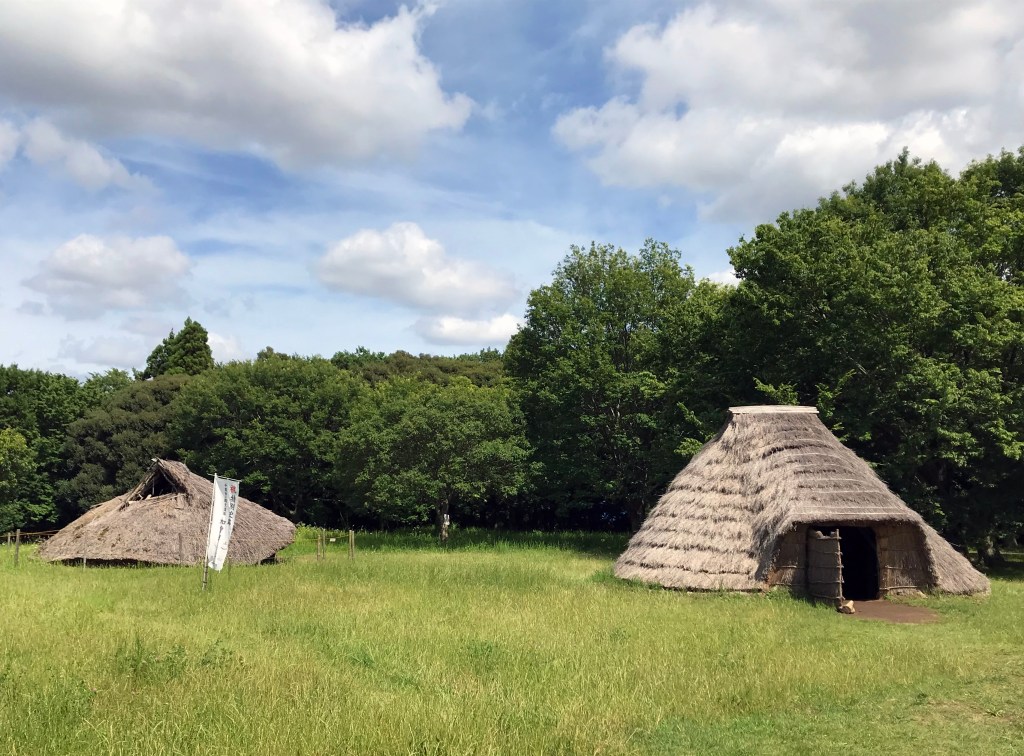
    Early Jomon people lived in rudimentary Pit Dwellings (literally holes in the ground with a roof), which are not thought to have been permanent or even particularly long-lasting structures. Instead, they suggest that these people were seasonally settled, most likely taking to their villages in the cooler months, before setting out to hunt and gather in more agreeable weather.

    Reconstructed pit dwellings at Kasori.
    By Xser21 – Own work, CC BY-SA 4.0, https://commons.wikimedia.org/w/index.php?curid=78835425

    Settlements developed slowly over time, but gradually became more sophisticated. Around 5000 BC, the first cemeteries appear, but the people themselves seem to have continued to rely on pits as temporary housing, as well for storage of food and other items. This is further evidence that the earlier Jomon people were only semi-sedentary, returning to their buried food supplies periodically, and hopefully not opening the wrong pits!

    By around 3000 BC, however, the Jomon appear to have settled down more permanently. Research at the Sannai-Maruyama Site in Aomori has uncovered examples of raised storehouses replacing pits during this period. Homes, too, appear to have become more complex, with large, wooden longhouses appearing, suggesting not only more settled people but a significant population increase as well. Large-scale building of this type requires considerable manpower, after all.

    A reconstructed storehouse at Sannai-Maruyama. Anyone who has ever built a shed can tell you that this kind of work requires more than one pair of hands.
    By I, Perezoso, CC BY-SA 3.0, https://commons.wikimedia.org/w/index.php?curid=2509930

    Big Eyes, Big Hips

    An increase in settlement also led to an increase in material culture. It’s easy to imagine early peoples limiting themselves to bashing out stone axes and antler arrowheads, but we already know that the Jomon people created pottery that was remarkably complex.

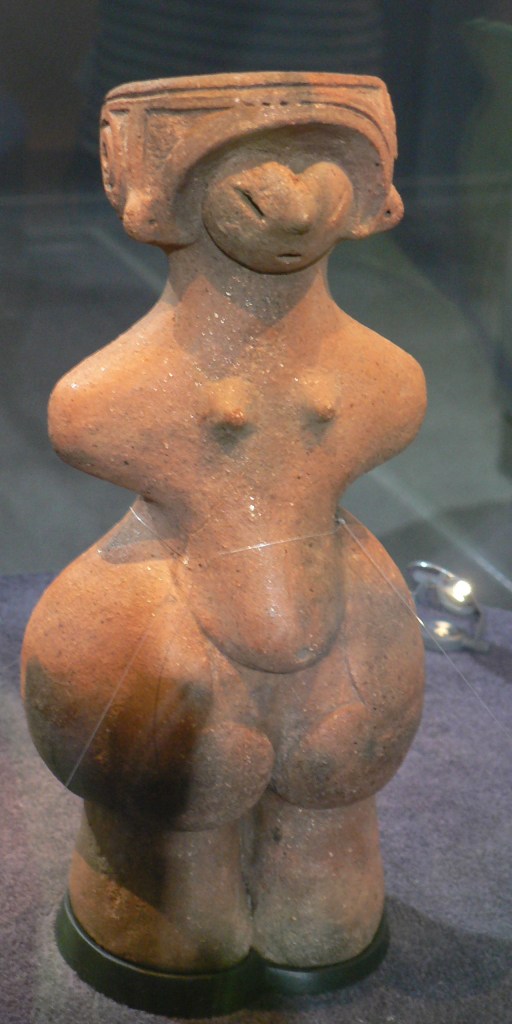
    Other art styles emerged during the later Jomon era as well. Clay figurines called Dogu begin to appear, mostly depicting human (typically female) figures, with exaggerated features, which scholars suggest means they represent some kind of Divine Figure, or are possibly associated with magic and healing.

    Due to the passage of time, many dogu are in poor shape, often missing pieces or smashed to shards. Some, however, remain in relatively good condition, and there is evidence of some having limbs deliberately cut off, giving rise to the belief that these figurines might have been used to “take” illness or injury, which was then removed from the figurine in an attempt to heal its human counterpart. (I don’t know if that worked, but I’m guessing, probably not.)

    The stylised female attributes, (typically consisting of big eyes, small waists, and large hips/buttocks) lead to the conclusion that many of these figurines were related either directly to fertility or to the worship of some kind of mother goddess, which aligns with the interpretations of similar items found around the world.

    The Jomon Venus, an unusually well-preserved example discovered in 1986, is typical of the accentuated female form found in many dogu.
    By Takuma-sa – File:Dogū of Jōmon Venus.JPG, CC BY-SA 3.0, https://commons.wikimedia.org/w/index.php?curid=30994656

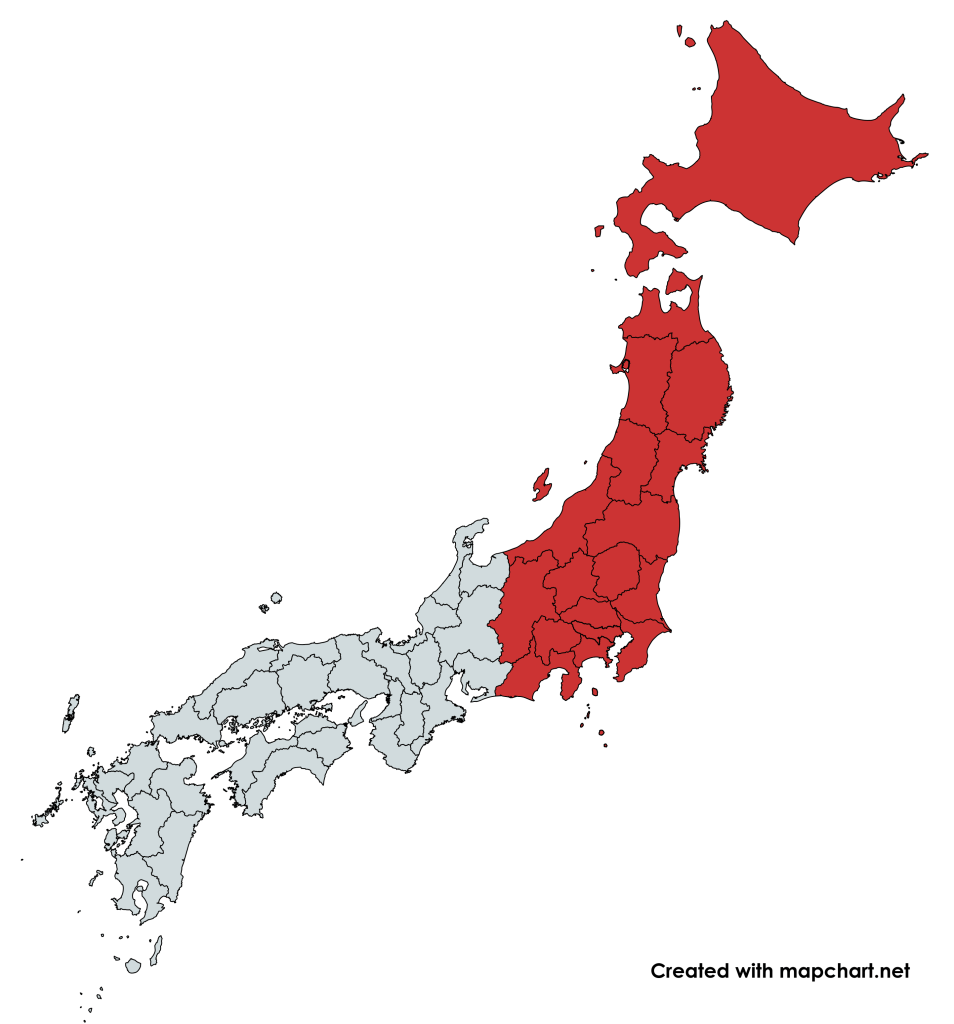
    Somewhere between 15 and 18,000 individual Dogu have been found across Japan, from Hokkaido to Kyushu (although not Okinawa), with the richest deposits coming from the north and eastern parts of Japan. It is apparently rarer to find examples of Dogu in other parts of the country, which isn’t surprising, given the population concentrations that current archaeological evidence points to.

    Eastern Japan, the area currently most associated with Jomon Culture.

    Where were they from?

    People move. Sometimes one by one (like a wide-eyed 20-something moving to the other side of the world) and sometimes in groups. In the modern world, we tend to associate large movements of people with refugees, people fleeing war, famine, plague, or natural disasters, but when it comes to talking about the world of 20,000 years ago, things are much murkier.

    So, the question is posed, “Where did the Jomon People come from?” The answer will surprise you!

    Not really, they came from Asia.

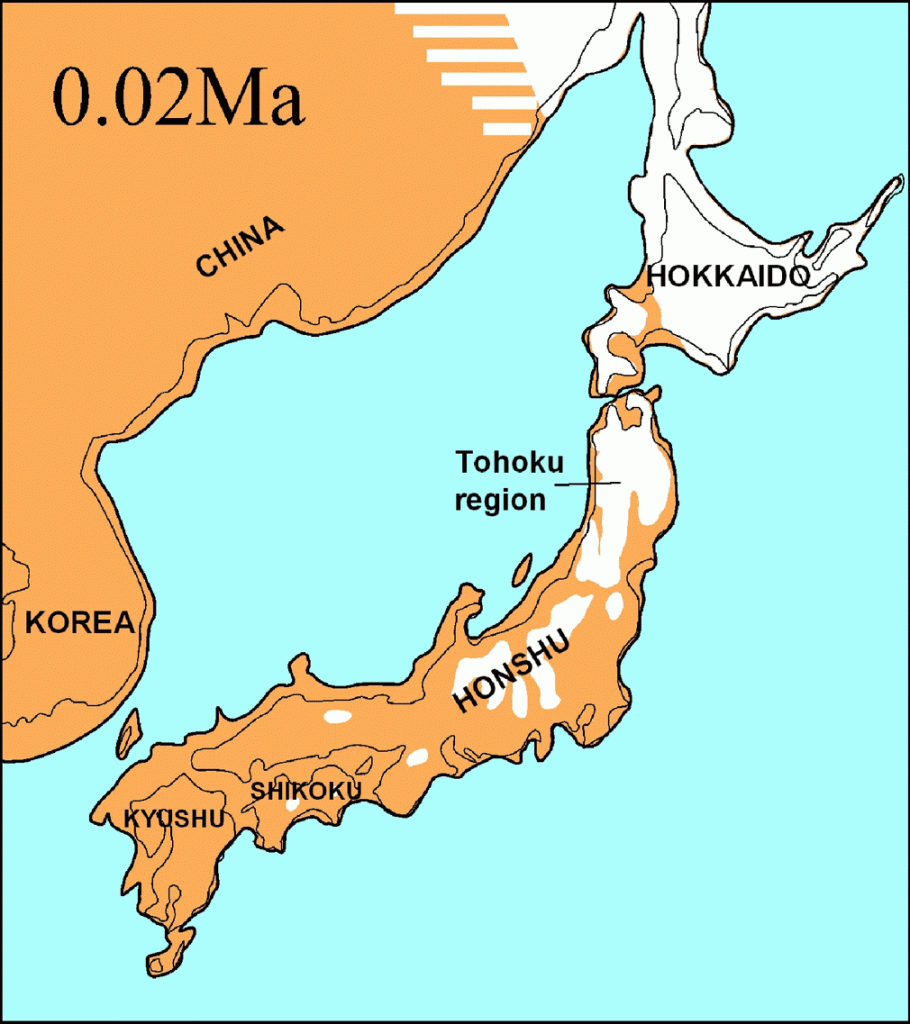
    Japan around 20,000 BC, showing the landbridge to Asia.
    Davison A, Chiba S, Barton NH, Clarke B. (2005) “Speciation and Gene Flow between Snails of Opposite Chirality” (in English). PLoS Biology 3 (9, e282). doi:10.1371/journal.pbio.0030282 [1]

    Japan is now, of course, an archipelago made up of over 14,000 islands of various sizes, shapes, and habitability. But before the end of the last Ice Age, it was attached to Asia, and at the time of the Last Glacial Maximum (which is the scientific way of saying “just before the ice melted”), the landbridge stretched from Hokkaido into modern Russia.

    Paleoarchaeologists (experts in old bones, for experts in new bones, you need the Police) have been able to study the remains of Jomon people and have suggested that, instead of a single, homogeneous migration, the Jomon people represent a pretty diverse group of origins.

    Now, genetics are a tricky thing, but people in the know (otherwise known as scientists) hypothesise that the ancestors of the Jomon People had their origins in South-East Asia, before joining a general migration of people following a coastal route that is now in Eastern China and Korea, before finally arriving in Japan.

    Although we’re reasonably certain of when the Jomon People arrived in Japan, the question of how isn’t as clear. There are basically two theories, which needn’t be mutually exclusive.

    The first theory is that the Jomon arrived via boat, travelling from the coast of what is now China, up the Okinawan Island chain, and arriving in Kyushu and Southern Honshu. The second theory is that their ancestors continued up the coast into what is now the Russian Far East, before travelling south across the remains of the land bridge into Hokkaido and Northern Honshu.

    Given that the majority of sites excavated so far have been in the northern parts of the country, the land bridge theory would appear to be the most plausible. Indeed, the 17 sites collectively known by UNESCO as the Jōmon Prehistoric Sites in Northern Japan are all located in the north (as the name suggests).

    However, even the sites already discovered have produced relatively scant remains, and it’s perfectly possible that more Jomon settlements existed in southern and western Japan, sites that are either lost due to natural changes or buried deep beneath Japan’s bustling modern cities, and some, that are just waiting to be discovered.

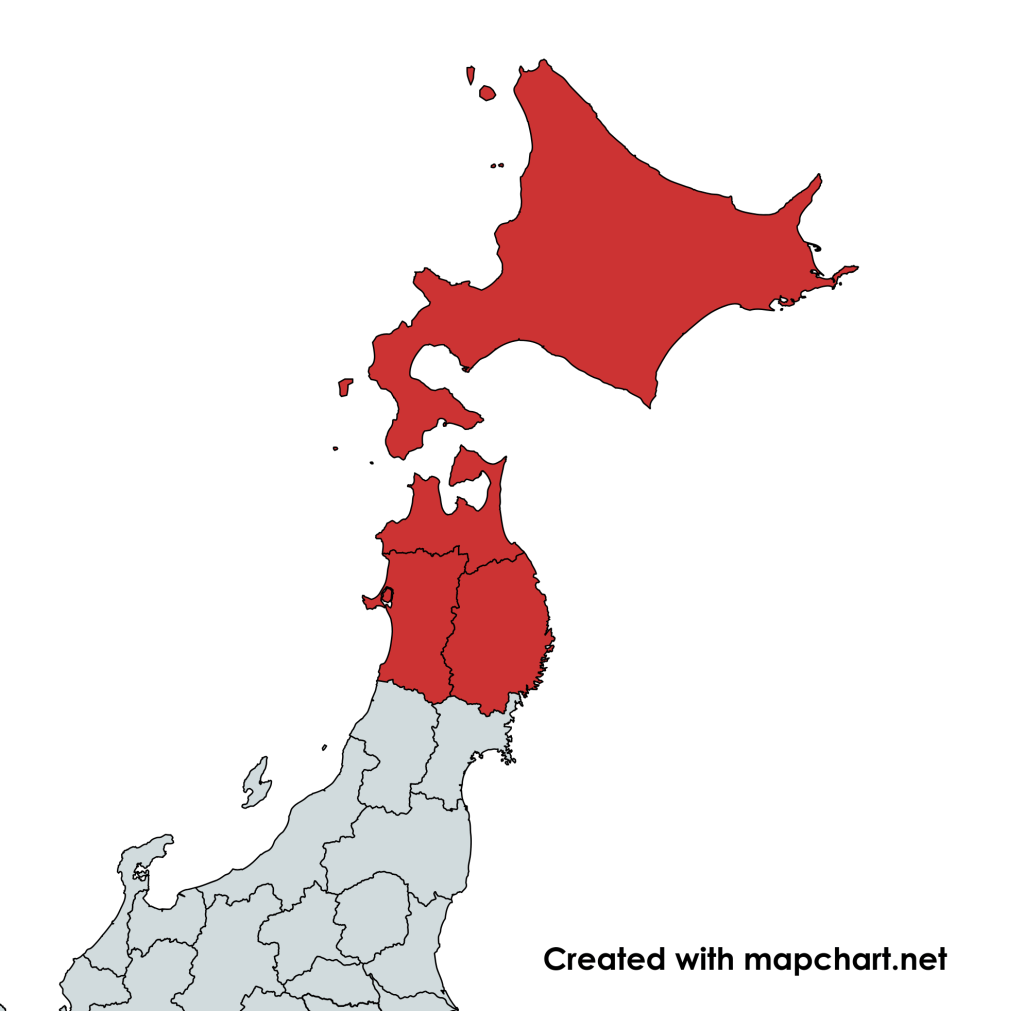
    Hokkaido, Aomori, Iwate, and Akita, the fourth northernmost prefectures of Japan, and the apparent centre of Jomon culture.

    The Jomon Today

    We know that the Jomon were eventually supplanted by the incoming Yayoi People (who we will talk about in a later post), but what became of the Jomon themselves? Well, like with so many other ancient peoples, their exact fate is open to debate.

    A common suggestion is that, when faced with the incoming Yayoi, the Jomon either migrated or were driven to the northern regions of Japan, where they gradually became the Emishi (another people we’ll discuss later), and the Ainu.

    Now, the exact origins of both these peoples are murky, and there is even debate over whether they were different tribes of the same people, or distinct groups that share distant but common ancestry. It is also possible that the Emishi were a cultural “missing link” between the Jomon and the modern Ainu, but we can save that particular rabbit hole for later.

    The historic homelands of the Ainu, with the pink area a suggested maximum range, based on toponymic (place names) and historical records.
    By Kwamikagami – This image has been extracted from another file, CC BY-SA 3.0, https://commons.wikimedia.org/w/index.php?curid=13262173

    While it will probably never be known for certain how the Jomon became the Emishi, or indeed the Ainu, DNA studies suggest that modern Ainu populations share up to 70% of their DNA with the Jomon, supporting the idea that they are indeed the modern descendants of these ancient people.

    We’ll cover the details of the Ainu in another post, but they represent the most concentrated examples of Jomon DNA in modern Japan, so if there can really be said to be modern Jomon, it’s them.

    What about the modern ‘Japanese’, though? Well, that’s a bit harder to nail down. Firstly, the Jomon themselves don’t seem to have been a single ethnic group, but rather a mixture of different groups arriving at different times.

    There’s also the so-called “admixture paradox”, which is a noticeable imbalance in the amount of paternal (30%) and maternal (15%) DNA, which suggests some fairly obvious patterns in the inter-mingling between Jomon and later Yayoi. As with all things to do with ethnicity and race, there’s a lot of interpretation, and while Jomon DNA has definitely been passed down to modern Japan in one way or another, Jomon Culture has disappeared entirely.

    Or has it?

    Nope.

    Allow me to elaborate. Firstly, the Jomon people themselves had no written language (scholars even disagree over whether the Jomon languages relate to modern Japanese at all) so everything we know, or think we know about them comes from archaeological records.

    Now, archaeology isn’t always an exact science, and particularly when it comes to very ancient sources, there’s a lot of guesswork involved. However, we do know that the Jomon peoples had some sort of religious belief system. They buried their dead in specific ways, and the existence of Dogu suggests some kind of worship, although the specifics aren’t clear.

    Some scholars suggest the origins of the Shinto belief can be found in the Jomon period, as Shintoism is based heavily on traditions of shamanism and reverence for the natural world, it isn’t hard to imagine that having sprouted from an ancient belief in some kind of mother goddess, like the Jomon Venus (I do love a call back).

    There are other, more tangible examples of how Jomon culture influenced modern Japan as well. Archery first appeared during the Jomon era, and although bows and arrows are hardly unique to Japan, the significance that the bow would have for the later development of Samurai culture could conceivably be said to have started with the Jomon.

    Too tenuous for you? Ok, how about Lacquerware? Yeah, that made you pay attention, didn’t it? Lacquerware is something quintessentially Japanese, and it has its origins with the Jomon peoples.

    Tsugaru-nuri. Lacquerware from modern Aomori Prefecture.
    By Kaburamata – Own work, CC BY-SA 4.0, https://commons.wikimedia.org/w/index.php?curid=41576897

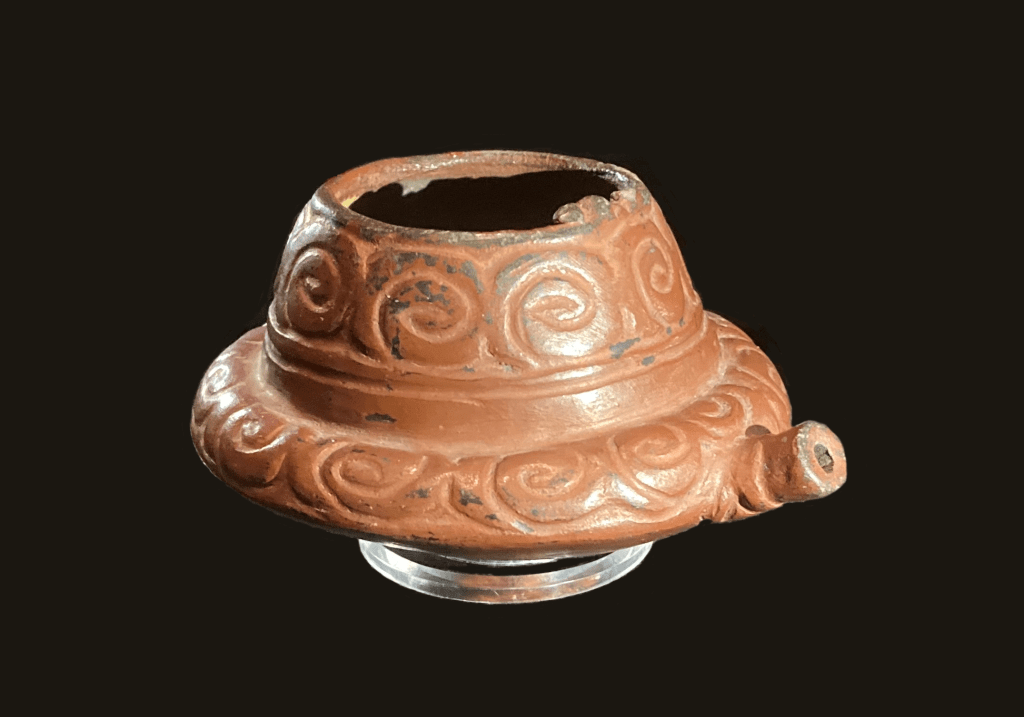
    We know this because surviving examples of it have been found at the Kakinoshima Archaeological Site in Hokkaido. Lacquerware has been found there that has been dated to over 9000 years old, making it the oldest examples of the craft in the world.

    Red Lacquerware like this was found at Kakinoshima in Hokkaido, representing the oldest examples of the craft.
    By Mccunicano – Own work, CC BY-SA 4.0, https://commons.wikimedia.org/w/index.php?curid=97142451

    End of an era.

    As with most historical periods, the Jomon Period didn’t just “end”. The year is usually given as being around 300 BC, but this is more for modern convenience than anything. After around 1500 BC, the climate began to shift again, cooling down significantly, and putting serious pressure on societies that relied on seasonal hunting and gathering. As the climate got cooler and wetter, the food supply got smaller, the population started to contract sharply, and settlements began to shrink, or be abandoned entirely.

    During this period (around 900 BC), increasing contacts with, and migration from, what is now Korea, led to a gradual, but dramatic shift in culture. These newcomers brought new agricultural techniques like wet rice farming, which does better in damper climates, as well as the first examples of metalwork found in Japan.

    Although the incoming people (called Yayoi) and the Jomon lived side by side for a long time, eventually, the Jomon were either driven out or absorbed by the new culture, with the last vestiges appearing to survive in Hokkaido until around the 7th Century.

    That, as they say, is that. Next time, we’ll take an in-depth look at the people who replaced the Jomon, the Yayoi.

    Sources:

  • The Beginning

    心のままに生きることが一番の幸せ

    To live according to your heart is the greatest happiness

    So we begin, as they say, at the beginning.

    What is my name? What is my quest? What is the air-speed velocity of an unladen swallow?

    I can convincingly answer at least two of these questions, and as for the third, I can promise you, dear reader, that that will be the last Python quote.

    What is my name?

    My name is Chris Perry, and for as long as I can remember, I have been fascinated by Japan. People have different paths when it comes to developing affection for the land of the rising sun, some follow popular culture, anime, manga, and the like. For others, it is Martial Arts, Karate, Judo, and Kendo being popular across the world and all have their origins here.

    For me, however, it was the history. I will admit from the off that my passion for history has always bordered on the obsessive. I consume historical facts as though my life depends on it, and from the moment I learned to read, I have absorbed information from sources as wide-ranging as the Horrible History series (the books, that is, the TV show, excellent though it is, came along later) to obscure Wikipedia articles about battles fought in places long-forgotten.

    Like many boys, I developed an early and somewhat morbid fascination with World War 2. Growing up in Britain, with grandparents who were young people themselves during those years, I was surrounded by stories of the Battle of Britain, Dunkirk, El-Alamein, and D-day, and the vague but absolute certainty that the British were the good guys and the Germans were dastardly blackguards, who got what they deserved.

    So it begins…

    It was Britain’s other enemy, however, that really drew my interest. For a child growing up in the mid-90s, when having a PC at home, let alone the internet, was considered cutting-edge, Japan might as well have been on Saturn for all I knew about it and an understanding of Japanese history and culture? Forget about it.

    So, you can imagine the fascination that came when I first learned about Kamikaze. How was it, I wondered, that men could be so fanatically devoted to their cause that they would willingly fly their planes into American warships? The answer, I found, was Bushido.

    There will be time enough to discuss the ins and outs of the Japanese warrior code, but in those far-off days, it was the Samurai that captured my imagination. Of course, at that age, I quickly developed a rather stereotypical image of them: stoic, invincible warriors, utterly fearless, and possessing swords that were halfway to being magical. Years of reading have long since done away with those ideas, but I’d be lying if I said the appeal and mystique of the Samurai has ever really left me.

    I read anything I could get my hands on, and by the time my teens arrived, I considered myself the ‘expert’ on all things Samurai. I was, of course, woefully mistaken, but one of the beauties of being a teenager is the opportunity to be confidently wrong, and I was no different.

    Then came Shogun: Total War. A video game, yes, but one set in the period that I loved best; I was hooked, to say the least. I played it religiously, and although a video game is a poor substitute for historical research, it exposed me to the characters, events, and geography of medieval Japan in a way that nothing else had.

    Musashi, Hizen, Mutsu, and dozens of others were words that meant nothing to me, but Nagasaki, Tokyo, and Fukushima? These names I could understand, and so, slowly, I learned to trace the historical events to their modern locations, and my fascination only grew.

    First Steps

    My first trip to Japan came in April 2006, and alongside my father, I was finally able to see these mystical places in person. We went to Tokyo, of course, and Hiroshima, but we also visited Nikko, a small town nestled in the mountains of Tochigi Prefecture, home to the Edo-Mura outdoor museum, a place where the Edo period (1603-1868) is brought to life.

    Like so many others, I left Japan with a reverence for the place that went far beyond what I had expected, and as soon as I could, I returned, this time alone, revisiting many of the places I had been to previously, and uncovering a few new ones as well. (On this trip, I decided to walk through the infamous Kabukicho neighbourhood in Tokyo and discovered I wasn’t as brave as I’d thought.)

    When I went to university, I made it my mission to learn the language as best I could (a mission that is still ongoing nearly 20 years later), but in 2010, I was fortunate enough to get a place as a foreign exchange student at Daito Bunka University in Saitama, and I arrived in Japan for the third time.

    Anyone who has ever been an international student can tell you that it is a unique experience, and I enjoyed it. However, my time was cut short by the events of March 2011, when a major earthquake and tsunami struck Fukushima. Although Saitama was far from danger (though not violent shaking), my home university erred on the side of caution and brought us all home.

    There are rarely straight roads anywhere in life, and this setback was a blow but one I recovered from. Upon graduating in the summer of 2012, I made it my mission to return to Japan for the fourth (and, as it turned out, final) time.

    There and Back Again…

    On August 31st, 2012, I returned to Japan, securing work at an International preschool in Western Tokyo. By the time I moved on in 2015, I had met the woman who would become my wife; we married in 2016 and welcomed our first child in 2017, followed by our second in 2020.

    And so we come to, as the great poet Homer (Simpson) once called it, “the lousy, stinking now”, and to the answer to the second question, “What is my quest?”

    The answer to that is two-fold; first, I want to share with you all my obsession love of Japanese history; can I claim to know everything? No. Can I claim to research everything I write carefully? Eh…a bit. Look, full disclosure: I’m not a professional historian. I’m an amateur at best, but a more enthusiastic amateur you’ll never meet, so I can at least promise that I’ll never intentionally mislead for personal, political, or professional gain. If I make a mistake, I’ll do my best to correct it.

    As to the second part? Well, that’s a bit trickier, you see, in the post-covid world, with tourism skyrocketing in Japan again, I’ve noticed a worrying trend on places like Tik-Tok, Instagram, and other Social Media sights in which earnest young people will tell you “Ten things you must never do in Japan,” only for them to then list things I see Japanese doing all the time. It is my humble intention to help you discover what Japan is, what it isn’t, and how you can experience Japan in a way that will leave your wonder intact while keeping the locals reasonably happy.

    So, we begin. Good Luck, Everyone.