History often focuses on the rich and powerful doing rich and powerful things. Kings, Emperors, Shoguns, and Daimyo ride around on magnificent horses, hacking each other to bits with their swords, while hundreds of thousands of anonymous lower-class types charge into certain death for the honour and glory of whoever paid for the records to be written.
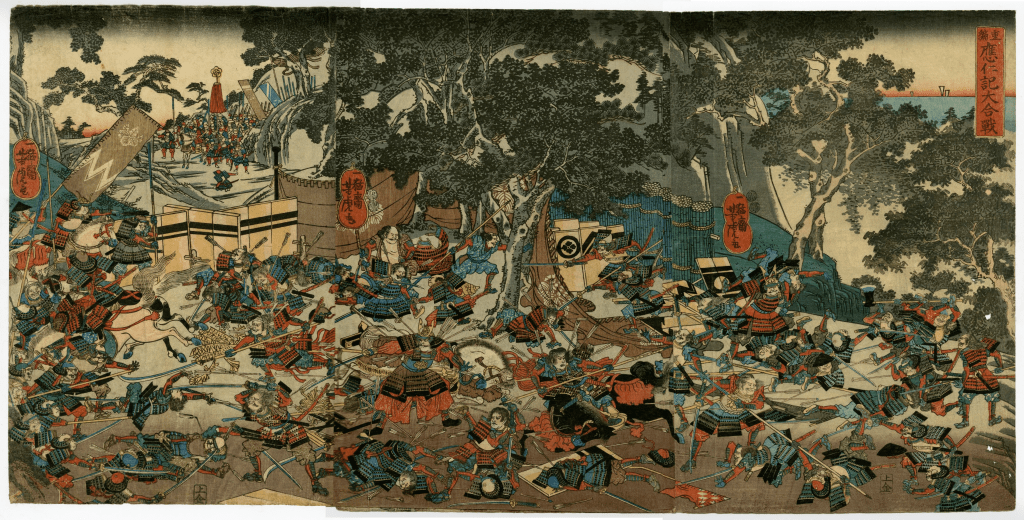
While this particular version of history is suitably exciting and dramatic, it does tend to overlook those anonymous lower-class types. Sometimes, however, those same lower-class types take matters into their own hands, pick up whatever weapons are to hand, and do some hacking of their own.
As Japan collapsed into the chaotic violence of the Sengoku Jidai, peasants, priests, and clergymen found themselves at the mercy of local Samurai lords who sought to exploit their labour, or burn their homes, and sometimes both. Many peasants found themselves (willingly or otherwise) in the service of one such lord or another, forming the Ashigaru who would eventually go on to form the backbone of most armies in the later Sengoku Period.
Some, however, weren’t keen on dying for some rapacious shugo or in the service of a Shogun who was so far removed he might as well have been on the moon. These peasants formed what would become known as Ikko-shu, which is often translated as “Single Minded Schools”. Often inspired by religious teachings and based at fortified temples, the ikko-shu were quite diverse in their objectives, but were often motivated by local defence and what we might now think of as social justice.
The religious component of the ikko-shu is debated even today. The progenitor of the movement was a monk called Rennyo, who became the abbot of the Honganji Temple, espousing the Jodo Shinshu sect. Rennyo was a charismatic guy, perhaps best highlighted by the fact he ended up with five wives and 27 children, three of whom were born when he was already in his 80s, which suggests he was more than a little compelling.
Profound reproduction aside, Rennyo preached a doctrine that was incredibly radical for its time. It would take far too long to explore the complete details of his preaching, but for the purposes of this post, the key idea is that faith, not social class, defines a person’s worth.

This was an explosive idea in a society that was as rigidly stratified as medieval Japan. Rennyo would go on to preach the ideas of spiritual equality, communal support, and collective morality, a powerful combination of ideas that found many willing followers amongst the peasantry, who were often victimised by a warrior and noble class who justified their oppression in spiritual and religious terms (the Emperor was a literal son of heaven, after all.)
Rennyo himself was no revolutionary, even by the standards of the time. Though his ideas were radical, he preached order and obedience in accordance with the beliefs of Jodo Shinshu, emphasising the importance of peace and harmony, even at a time when the country was already tearing itself apart. His followers initially followed these teachings quite closely. The growing communities of ikko-shu were self-reliant, but largely peaceful.
Unfortunately, peaceful intentions don’t necessarily result in peaceful outcomes. The autonomy of the ikko-shu inevitably attracted the ire of the powerful Daimyo, who would not tolerate any group of peasants defying their will. Peasant uprisings in and of themselves were nothing new; Japan, much like most medieval states, had a long history of often violent tension between ruler and ruled.
What made the ikko-shu different was their belief that everyone, regardless of education or social class, had the potential for divine salvation. This upset just about everybody in the upper classes, and opposition to the ikko-shu became one of the few things that rival factions could agree on.
One aspect of the early Sengoku Period, especially around Kyoto, was the presence of rival temples, which would often have cadres of warrior monks at their disposal. Honganji would become the target of the Enryakuji Temple in 1465, when the monks there declared that Rennyo and his followers were enemies of Buddhism.
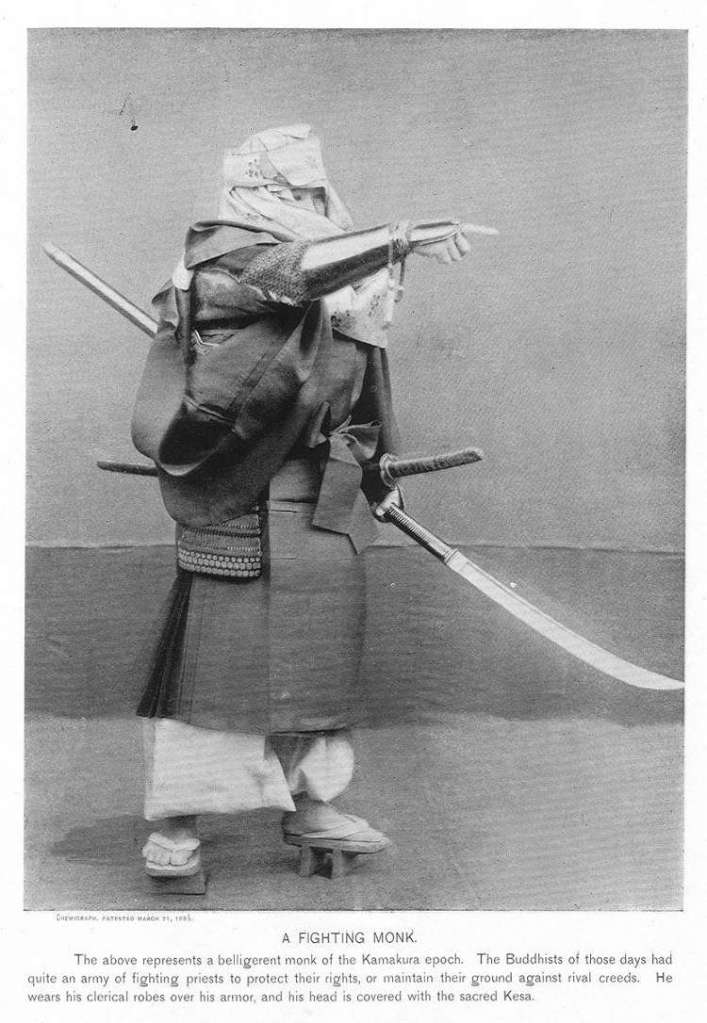
It might seem slightly strange to think of Buddhist monks being so militant, but it is important to remember that the temples of this period were political players in their own right; some would even go on to have power rivalling later Daimyo. In this context, then, it isn’t so unusual for one of them to have decided to destroy Honganji and remove the threat of the ikko-shu.
The attack was largely successful, and Rennyo and his followers were forced to flee. This actually turned out to be good for them in the long term, as Rennyo was able to find supporters amongst the enemies of Enryakuji, leading to the establishment of several new temples loyal to Rennyo and his teachings.
The profile of the ikko-shu would continue to rise, and they were often viewed as a potent counterweight to other Buddhist sects, which had already proved themselves willing and able to meddle in the ongoing political chaos. In 1474, the guardian of Kaga Province, Togashi Masachika, called on Rennyo to support him in a conflict within the wider Togashi clan. Rennyo agreed when he learned that a rival sect had taken the side of Masachika’s opponents.
The intervention of the ikko-shu was decisive, and Masachika was able to overcome his foes. However, he began to sour on the support of Rennyo and his followers as he began to worry that their egalitarian message would spread amongst the peasants of Kaga Province.
He was right to worry, although Rennyo himself departed the area shortly after the fighting, and would go on to establish several other temples, his followers remained in Kaga, and their teachings indeed proved popular with the locals, swelling their numbers and establishing several fortified temples in the province.
The wider ikko-shu movement would continue to grow under Rennyo’s leadership, but we’re going to focus on Kaga Province in particular. As we’ve mentioned, although previously happy to make use of the military strength of the ikko-shu, Togashi Masachika grew increasingly alarmed about the spread of the movement.
In 1475, he drove the ikko-shu out of Kaga, forcing them to seek refuge in neighbouring Etchu Province. Just like Masachika before him, the shugo (governor) of Etchu, Ishiguro Mitsuyoshi, was alarmed by the presence of the ikko-shu and sought to suppress them. However, when he launched an attack in 1481, he was defeated, and the ikko-shu, basing themselves at the Zuisenji Temple, took control of large parts of the province.
Back in Kaga, events elsewhere in Japan led Masachika to impose increasingly burdensome taxes on the population, and in 1488, a similar revolt broke out amongst the peasantry, willingly aided by the ikko-shu crossing back from Etchu. Although the events in Etchu resulted in the first widely recognised independent action of the ikko-shu, the revolt in Kaga is typically considered to be the first example of Ikko-Ikki, that is, “Single Minded Uprising”, and a catch-all name that would eventually refer to the movement as a whole.
Rennyo himself actually spoke out against the rebellion and attempted to persuade his followers not to support it, but the die had been cast, and although the initial uprising would not lead to complete Ikko control of Kaga by 1506, Kaga Province was being referred to as “ruled by peasants” in contemporary sources.
Rennyo died in 1499, and with his passing, the Ikko-Ikki movement transitioned from simple self-defence to full participation in the Sengoku Period’s many wars. As early as 1494, there had been attempts to provoke similar uprisings in neighbouring provinces, with limited success; even when the uprisings had been triggered, they were often badly organised and swiftly put down.
In 1506, the Kaga Ikko-Ikki decided on a more direct approach and invaded neighbouring Echizen Province, home of the Asakura Clan. Some sources estimate the Ikko Army had as many as 300,000 peasant warriors, and although this is certainly an exaggeration, it goes some way towards highlighting the anxiety shown towards the popularity and relative success of the movement.
The invasion was stopped by the Asakura Clan, and the defeat of the Ikko-Ikki is supposed to have cost them 100,000 casualties (perhaps interpretable as a third of their army). Regardless of the actual numbers, the victory gave the Asakura the momentum to issue an edict banning the Ikko-shu ideology in their lands.
Edicts alone didn’t do much to stop the popularity of the movement, though there was another serious uprising near Kyoto in 1531 (the Tenbun Disturbance) and a supporting uprising in Nara the next year.
Other parts of Japan would also suffer serious outbreaks of Ikko-Ikki, most significantly in 1563-4, when a major uprising in Mikawa Province would sorely test Tokugawa Ieyasu (then using the clan name Matsudaira), who was able to achieve a military victory but would be forced to deal with the political fallout of the uprising for nearly 30 years after the event.

Probably the most famous of the Ikko-Ikki conflicts would be the one against Oda Nobunaga. Actually several conflicts the ongoing feud between Nobunaga and the Ikko-Ikki, would lead to some of the bloodiest episodes in an already bloody period.
In 1568, Nobunaga arrived in Kyoto, nominally to support the last of the Ashikaga Shoguns but in reality to rule himself. In response, the Ikko-shu leaders at Ishiyama (in modern Osaka) issued a 1570 decree stating that Nobunaga was an enemy of the movement and should be opposed.
Nobunaga was naturally taken aback by that and responded by laying siege to Ishiyama. He simultaneously launched attacks against other Ikko establishments, notably at Nagashima (near modern Nagoya) in a siege that lasted until 1574, and cost the lives of 20,000 or more Ikko-shu adherents.
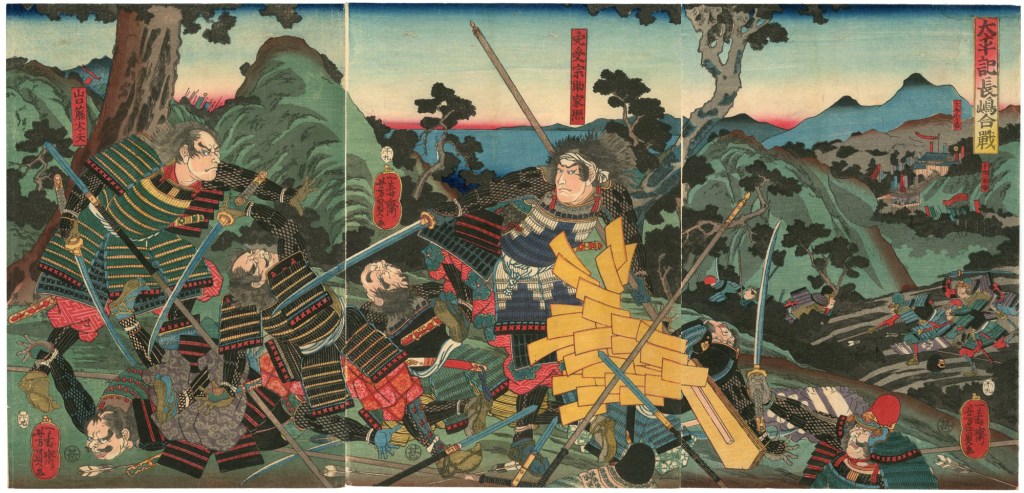
He would continue his attacks on the movement throughout 1574 and beyond, advancing against them in Echizen as part of his conquest of that province, before finally reducing the great fortress temple at Ishiyama in 1580, after a ten-year siege (the longest in Japanese history), but a fire broke out shortly before peace could be finalised. Sources disagree on the origin of the blaze, but it destroyed Ishiyama and tore the spiritual heart out of the Ikko movement.
Later, in one of his last campaigns, Nobunaga sent his subordinates to put down the Ikko-Ikki in Kaga, where it was finally crushed in March 1582, and the “Province ruled by peasants” was brought to an end after almost a century of independence.
Though the political independence of the Ikko movement would not survive the end of the Sengoku Period, the religion itself endured, though not without difficulty. After Nobunaga’s suppression, the movement made a comeback under Toyotomi Hideyoshi, gaining lands and privileges in Kyoto.
There would be a doctrinal and later physical split in the 17th Century, and an East Honganji and West Honganji (named after their relative locations in Kyoto) would emerge. In the modern period, changes in laws, customs, and further factional splits mean there are now dozens of sects of various sizes, all claiming to be descended from the original Jodo Shinshu, which is now the most widespread Buddhist Sect in Japan, with more than 22,000 temples associated with it in one form or another

By 663highland, CC BY 2.5, https://commons.wikimedia.org/w/index.php?curid=56357164
Sources
https://en.wikipedia.org/wiki/Ikk%C5%8D-ikki
https://en.wikipedia.org/wiki/Ikk%C5%8D-sh%C5%AB
https://ja.wikipedia.org/wiki/%E4%B8%80%E5%90%91%E4%B8%80%E6%8F%86
https://ja.wikipedia.org/wiki/%E9%95%B7%E5%B3%B6%E4%B8%80%E5%90%91%E4%B8%80%E6%8F%86
https://ja.wikipedia.org/wiki/%E8%B6%8A%E5%89%8D%E4%B8%80%E5%90%91%E4%B8%80%E6%8F%86
https://ja.wikipedia.org/wiki/%E7%9F%B3%E5%B1%B1%E5%90%88%E6%88%A6
https://ja.wikipedia.org/wiki/%E4%B8%89%E6%B2%B3%E4%B8%80%E5%90%91%E4%B8%80%E6%8F%86
https://ja.wikipedia.org/wiki/%E4%B9%9D%E9%A0%AD%E7%AB%9C%E5%B7%9D%E3%81%AE%E6%88%A6%E3%81%84
https://ja.wikipedia.org/wiki/%E5%8A%A0%E8%B3%80%E4%B8%80%E5%90%91%E4%B8%80%E6%8F%86
https://ja.wikipedia.org/wiki/%E8%B6%8A%E4%B8%AD%E4%B8%80%E5%90%91%E4%B8%80%E6%8F%86
https://ja.wikipedia.org/wiki/%E7%9C%9F%E5%AE%97%E5%A4%A7%E8%B0%B7%E6%B4%BE%E4%BA%95%E6%B3%A2%E5%88%A5%E9%99%A2%E7%91%9E%E6%B3%89%E5%AF%BA
https://ja.wikipedia.org/wiki/%E5%AF%8C%E6%A8%AB%E6%94%BF%E8%A6%AA
https://ja.wikipedia.org/wiki/%E6%9C%AC%E9%A1%98%E5%AF%BA%E3%81%AE%E6%AD%B4%E5%8F%B2
https://ja.wikipedia.org/wiki/%E4%B8%80%E5%90%91%E5%AE%97
https://ja.wikipedia.org/wiki/%E4%B8%80%E6%8F%86
https://ja.wikipedia.org/wiki/%E8%93%AE%E5%A6%82
https://en.wikipedia.org/wiki/Hongan-ji